Inicio Blog Página 608

Trump rushes final campaign hours to attack Harris in Georgia

Trump
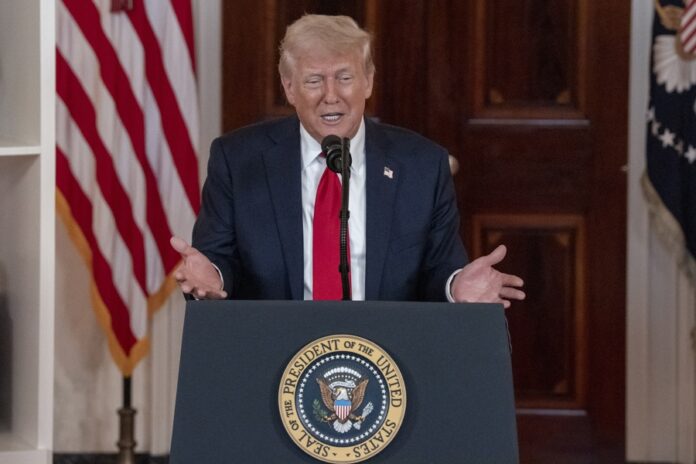
Former US President and current Republican presidential candidate Donald Trump addresses supporters at a campaign rally in Lititz, Pennsylvania, USA, 03 November 2024. EFE/JIM LO SCALZO

Miami.- United States Republican presidential candidate Donald Trump doubled down Sunday on his attacks on Democratic counterpart rival Kamala Harris at a rally in the key state of Georgia.

«Go away. Go away. You’re fired,» after calling her «the worst vice president in the history» of the country.

«Kamala talks about fixing the economy, but why doesn’t she do it? She’s not going to do anything. She’s incapable of doing it. Her plan will impose the largest tax increase in US history on families,» the former president said in the city of Macon, in the swing state of Georgia.

He then ridiculed the Democratic presidential candidate for having said in a recent television interview that she would not do anything different from what President Joe Biden did.

«Is our country 90 percent on the wrong path, the highest in the history of our country, and she says ‘oh, I wouldn’t do anything different’?» Trump said, two days before the presidential election.

The former president held rallies in three small towns in decisive ‘swing’ states to mobilize, in particular, rural voters, a significant part of his electoral base.

On Sunday morning in Lititz, Pennsylvania – the swing state that provides the most electoral votes at 19 – Trump said he should not have left the White House after losing the 2020 elections, a defeat he has never recognized. In the evening in Macon, he said Tuesday «will be Liberation Day» for the US.

He accused Harris of leading a Democratic campaign based solely on «hate» and «demonization.»

The two central themes that Trump returned to again and again during his rally in Georgia were illegal immigration, which has turned the US into «an occupied country,» and the economy, which suffers from «rampant inflation.»

«We will manage inflation. We will drill, drill. We will pay off the debt. We will reduce your taxes even more. We will get the biggest tax cut in history,» said Trump, who added that this week the US had «the worst jobs report in modern history, with only 12,000 anemic jobs created.»

Trump and Harris continued to wage an intense battle Sunday for a handful of key swing states, with polls showing a very tight scenario.

This close fight has caused both political rivals to focus in recent days on the seven swing states: Pennsylvania, which provides the most electoral votes; North Carolina and Georgia with 16, Michigan with 15), Arizona with 11, Wisconsin with 10 and Nevada with six.

The average of polls compiled by FiveThirtyEight show technical ties and within the margin of error between Trump and Harris, so victory could be determined by very narrow margins or require recounts to see who reaches the necessary 270 electoral votes.

With polls showing a technical tie in the seven key states, everything is open.

HARRIS-WALZ campaign day ahead for monday, november 4

Harris’ campaign on Wednesday said it had raised $36 million in the first 24 hours after she tapped Walz. (Photo: AP)

Vice President Harris will start the day at a canvass kickoff in Scranton before delivering remarks at a rally in Allentown. She will later travel to rallies and concerts in Pittsburgh and Philadelphia as a part of the Harris-Walz campaign’s final Get Out The Vote organizing effort ahead of Election Day. The Pittsburgh and Philadelphia events are part of a series of simultaneous organizing events the campaign is holding in all seven battleground states to capture grassroots enthusiasm and to mobilize voters ahead of Election Day.

Governor Tim Walz and Mrs. Gwen Walz will host a meet and greet with fellow Minnesotans as they depart St. Paul en route to Wisconsin, where they will rally supporters and get out the vote in La Crosse, Stevens Point, and Milwaukee. In Milwaukee, Governor and Mrs. Walz will be joined by Eric Benét as part of the Harris-Walz campaign’s final Get Out The Vote organizing effort ahead of Election Day. In the evening, the Governor and Mrs. Walz will deliver remarks at a rally in Detroit, Michigan with musical performances by the Detroit Youth Choir, Jon Bon Jovi, and The War and Treaty.

Second Gentleman Emhoff will deliver remarks at a canvass launch in Greenville, North Carolina before heading to Pennsylvania to join Vice President Harris for rallies in Pittsburgh and Philadelphia.  

Just a few examples of additional events happening across the battlegrounds:

ARIZONA

  • Actor and producer Sophia Bush, Senator Mark Kelly, former Congresswoman Gabby Giffords, former Ambassador Susan Rice, and GIFFORDS Executive Director Emma Brown in Tempe for a ‘Fighting for Reproductive Freedom’ bus tour stop at Arizona State University.
  • La Original Banda El Limón in Phoenix for an Election Eve concert and rally.

GEORGIA

  • Senator Reverend Raphael Warnock in Macon for a Get-Out-The-Vote press conference and canvass launch.
  • 2 Chainz, F.L.Y., Joy of Jesse & Joy, Keyshia Cole, KP The Great, Morehouse House of Funk Marching Band, Pastor Troy, and Tamar Braxton in Atlanta for an Election Eve concert and rally.

MICHIGAN

  • Michigan Governor Gretchen Whitmer in Novi and Detroit on her Get-Out-The-Vote bus tour.
  • Former Republican Congressman Fred Upton, Senator Debbie Stabenow, Congresswoman Hillary Scholten, and Michigan state Senate Majority Leader Winnie Brinks in Grand Rapids for a press conference calling on Michiganders to turn the page on Donald Trump and elect Vice President Harris.
  • Congressman Dan Kildee, Flint Mayor Sheldon Neeley, and Flint City Council President Ladel Lewis in Flint for a press conference calling on Michiganders to turn the page on Donald Trump and elect Vice President Harris.
  • Tony award-winning actor Leslie Odom Jr. will fire up volunteers at canvass launches in Lansing and Grand Rapids.

NEVADA

  • Christina Aguilera, Los Tigres Del Norte, and SOFI TUKKER in Las Vegas for an Election Eve concert and rally.
  • Actors and advocates Dulé Hill and Rosario Dawson to launch canvasses across Las Vegas.
  • Nevada state Assemblywoman Angie Taylor and Assembly candidate Erica Roth in Washoe County to launch canvasses and phone banks.

NORTH CAROLINA

  • First Lady Jill Biden in Carrboro for a Women for Harris-Walz phone bank launch and in Winston-Salem and Durham for canvass launches.
  • Sugarland, Remi Wolf, and James Taylor in Raleigh for an Election Eve concert and rally.
  • North Carolina Governor Roy Cooper in RaleighFayetteville, and Durham for canvass launches.

PENNSYLVANIA

  • Pennsylvania Governor Josh Shapiro and award-winning actors Robert De Niro and Sam Waterston in Harrisburg for a New Way Forward Get-Out-The-Vote rally.
  • New Way Forward Get-Out-The-Vote canvass launch in Erie.

WISCONSIN

  • Wisconsin Lt. Governor Sara Rodriguez in Washington County for a canvass launch.
  • Wisconsin Secretary of State Sarah Godlewski in Viroqua and Richland for canvass launches.
  • Comedian Paul Scheer in Madison for a canvass launch.
  • Milwaukee Mayor Cavalier Johnson in Milwaukee for a canvass launch.
  • Wisconsin Democratic Party Chair Ben Wikler in Ozaukee for a canvass launch.
  • Milwaukee County Executive David Crowley in Wauwatosa for a canvass launch.
  • Former Wisconsin Lt. Governor Mandela Barnes in Oshkosh for a canvass launch.

**Please email press@kamalaharris.com for any questions**

Kamala Harris, la mujer que podría hacer historia

Kamala Harris
Atlanta (United States), 03/11/2024.- Maya Harris, Democratic presidential candidate US Vice President Kamala Harris sister', speaks before Democratic vice presidential nominee and Minnesota Governor Tim Walz and Second Gentleman Doug Emhoff during a get-out-the-vote-rally in the Cobb County area of Atlanta, Georgia, USA, 03 November 2024. Walz is the running mate of US Vice President Harris. The US presidential election is 05 November 2024. (Foto: EFE/ERIK S. LESSER)

Kamala Harris podría hacer historia como la primera mujer afroamericana y primera persona de origen sudasiático en llegar a la Casa Blanca. Lo hace sin apenas aludir a su género o raza y con la promesa de abrir un «nuevo capítulo» en la política de Estados Unidos.

La trayectoria de Harris, de 60 años, ha estado marcada por las primeras veces: fue la primera fiscal de distrito negra y la primera mujer en ejercer como fiscal general en California; la primera india-estadounidense en llegar al Senado y, cuando Joe Biden la eligió, la primera mujer en la Vicepresidencia.

Sin embargo, ha preferido no hacer énfasis en el carácter histórico de su posible llegada a la Casa Blanca, en contraste con la campaña de Hillary Clinton en 2016.

En su biografía, ‘The Truths We Hold’ (La verdad que sostenemos), explica que prefiere describirse simplemente como «una estadounidense» y afirma sentirse a gusto con su identidad como mujer de raza mixta, pese a los ataques de Trump, quien ha puesto en duda que sea lo suficientemente afroamericana.

Harris está orgullosa de su herencia afroamericana e india. Su nombre, que algunos republicanos fingen no saber pronunciar para atacarla, significa «flor de loto», una planta que emerge a la superficie solo cuando sus raíces están bien ancladas.

Nacida el 20 de octubre de 1964 en Oakland (California), es la hija mayor de Shyamala Gopalan, una investigadora contra el cáncer de la India, y Donald Harris, un economista jamaicano, quienes se divorciaron cuando ella tenía siete años.

Su madre, fallecida en 2009, fue una figura central en su vida y la persona a quien acudió en un momento determinante para su futuro.

Durante su adolescencia, su mejor amiga del instituto le confesó haber sido víctima de abuso sexual por parte de su padrastro. Harris no dudó en llamar por teléfono a su madre para que su amiga pudiera mudarse con ellas.

Fue entonces cuando encontró su vocación y decidió dedicarse a proteger a las víctimas de cualquier crimen, lo que la impulsó hasta convertirse en fiscal de distrito en San Francisco (2004-2011) y después en fiscal general de California (2011-2017).

En 2016 logró un escaño en el Senado y rápidamente se destacó por sus preguntas incisivas a miembros del Gobierno de Trump (2017-2021), así como a dos jueces nominados por él para el Tribunal Supremo, entre ellos Brett Kavanaugh, acusado de abusos sexuales.

En 2020 se lanzó para competir por la nominación presidencial demócrata, pero tuvo dificultades para definir sus propuestas. Biden acabó siendo el candidato del partido y la eligió para la Vicepresidencia.

Harris, casada desde 2014 con el abogado Douglas Emhoff, apenas pudo brillar en la Casa Blanca. Biden le encargó atajar las «causas raíces» de la migración en Centroamérica, un tema maldito en la política de EE. UU. que lleva décadas sin solución.

Como parte de esa labor, viajó a Guatemala, donde protagonizó uno de sus momentos más controvertidos al decirle a los migrantes que intentan entrar en Estados Unidos: «No vengan».

Tras una ola de críticas por la aparente falta de empatía, Harris se replegó de la luz pública. Volvió a salir cuando el Supremo anuló en junio de 2022 el derecho al aborto a nivel federal, canalizando la indignación de millones de mujeres.

De esa forma, cuando en julio de este año Biden puso fin a su carrera electoral, Harris construyó rápidamente su candidatura en torno al concepto de libertad: libertad para que las mujeres decidan sobre sus cuerpos y para que cada estadounidense aspire a una vida mejor.

Al ritmo de la canción ‘Freedom’ (Libertad) de Beyoncé, ha recorrido el país gritando «no vamos a retroceder» y proclamando que EE.UU. debe decidir en las urnas si quiere un país de «caos» y «odio» como el que instauró Trump o uno de «libertad» y «esperanza».

Su promesa ha sido la de unir a la nación tras años de crispación y para ello ha recurrido a símbolos patrióticos, llenando sus mítines de banderas de EE. UU. y sumando apoyos de figuras republicanas como la excongresista Liz Cheney, hija del exvicepresidente Dick Cheney (2001-2009).

Harris, quien de niña trabajó en un McDonald’s, se ha posicionado como la candidata de la clase media con la voluntad de reducir los precios de la vivienda, los alimentos y los medicamentos.

Queda por ver si EE. UU. ha escuchado su mensaje y si esa determinación de cambiar el rumbo del país convence a suficientes votantes para hacer historia.

Beatriz Pascual Macías

What’s love got to do with it

Love
An Early Voting sign and a "No Campaigning within 150 feet of Polling Place" sign seen the polling station, Oct. 31, 2024, in Stockbridge, Ga. (Photo: AP/Jason Allen/File)

Some years ago, Tina Turner sang her iconic song, “What’s Love Got to Do With It.” That song always makes me reflect on love, life and work.

Recently, my good friend Diana Moller sent me this message:

«On a quiet Saturday evening, I started watching the documentary One Person, One Vote? on PBS’s Independent Lens. Lo and behold, Magdaleno ‘Leno’ Rose-Avila appears on my TV screen at a Halloween family party/Zoom meeting in the program! Leno said, ‘The power that we have over all the problems we face in this world is the power of our hearts and love. Voting is an action of love. I want people to demonstrate their love by voting and getting others to vote—we can change the world.’ Wise words, Leno! Do what Leno said — VOTE!»

I had forgotten that someone had filmed me years ago, speaking about the importance of voting and how it became such a significant part of my life.

It wasn’t until I was about 23 that I cast my first vote. At the time, I was with the United Farm Workers in Center, Colorado. The Union had decided that we should join other union offices in registering voters and encouraging them to vote. The six of us working out of the office had never voted ourselves. So we asked for training and a budget from Manuel Chavez, Cesar’s cousin, when he visited us. He told us, “You’re smart. You can figure out the Colorado regulations, and you can raise your own money to fund the registration.”

At first, we were in shock—no handbook, no plan, no money. NADA.

In the following weeks, we studied the laws and regulations, conducted in-house training, and strategized where we would send people across the state, while also figuring out who would offer us free housing and help us raise funds.

Once we were ready to send folks out to different areas, we decided to test our system in the town of Monte Vista. There we were, in the San Luis Valley, 7,000 feet up in southern Colorado, trying to do God’s work.

We got maps of the predominantly Chicano neighborhoods in Monte Vista and spent a weekend going door-to-door with our clipboards. Of course, we wore union buttons, and some of us had longer hair than the locals. The response was disappointing, we got minimal engagement. We were frustrated by the muted reaction from this economically challenged community. After two days of arguing, we started questioning whether we were the right people to knock on those doors. One of our team members said, “I have a grandmother who knows everyone in that community.” So, we reached out to her and other grandmothers, as well as stay-at-home moms, and gave them a workshop. None of them had ever voted before.

After a week, they had covered their blocks and wanted more work!

All the good things that happened that year reminded me that our families and friends care deeply about their communities and want to help. Those women of Monte Vista voted because of their love for their neighborhoods.

So, I am not motivated by hate, revenge, or violence in each election cycle. Love is my motivator. I love my country’s diversity, I love Mother Earth, I love the children and want the best for them, I love peace and equality, and, of course, I love voting. I even love those who disagree with me, and I want us all to be safe as we nonviolently express our beliefs. I love that women and young girls are gaining their rightful place in our society. There are so many things I love, and that makes it easy for me to vote. And knowing that I can challenge those who are elected, I also love the process itself.

We can change our world and make it better through love. Voting is truly an act of love.

Puerto Rico se prepara para las elecciones mientras un candidato de un tercer partido hace historia

Puerto Rico
Una valla publicitaria que promueve al Partido Independentista de Puerto Rico y al candidato a gobernador del Movimiento de Victoria Ciudadana, Juan Dalmau, se eleva sobre una carretera, en San Juan, Puerto Rico, el 2 de noviembre de 2024. (Foto: VOA)

Por primera vez en las elecciones para la gobernación de Puerto Rico, un candidato de un tercer partido ocupa un poderoso segundo sitio en las encuestas antes de la votación en este territorio estadounidense, programada para el martes.

Los dos partidos que han dominado la política puertorriqueña durante décadas están perdiendo su influencia mientras enfrentan la competencia más férrea hasta la fecha de una generación más joven harta de la corrupción en la isla, los constantes cortes de energía y la mala gestión de los fondos públicos.

Por primera vez en las elecciones para la gobernación de la isla, un candidato de un tercer partido ocupa un poderoso segundo sitio en las encuestas antes de la votación en este territorio estadounidense programada para el martes, y algunos expertos dicen que hay posibilidades de que pueda ganar.

“Esta elección ya es histórica”, dijo el analista político y profesor universitario Jorge Schmidt Nieto. “Ya marca un antes y un después”.

Juan Dalmau se postula por la alianza del Partido Independentista Puertorriqueño y el Movimiento Victoria Ciudadana, apenas fundado en 2019. Una encuesta internacional de Gaither realizada este mes muestra a Dalmau acercándose a Jenniffer González, del Partido Nuevo Progresista y actual comisionada residente por Puerto Rico en la Cámara de Representantes de Estados Unidos. González venció al gobernador Pedro Pierluisi en las primarias de su partido en junio.

La encuesta de Gaither muestra a Dalmau con el 29 % de apoyo frente al 31 % de González, ya que él casi la alcanzó desde que una encuesta diferente en julio le mostró con sólo el 24 % en comparación con el 43 % de la congresista. En tercer lugar se ubicaba Jesús Manuel Ortiz, del Partido Popular Democrático, seguido por Javier Jiménez del Proyecto Dignidad, un partido conservador fundado en 2019.

Bajo presión

La política puertorriqueña gira en torno al estatus de la isla. Hasta 2016, el Partido Nuevo Progresista, que apoya la estadidad, y el Partido Popular Democrático, que respalda el status quo, se repartían al menos el 90 % de todos los votos durante las elecciones generales, detalló Schmidt.

Pero ese año, el Congreso estadounidense creó una junta de control federal para supervisar las finanzas de Puerto Rico después que el gobierno anunciara que no podía pagar una deuda pública de más de 70.000 millones de dólares. En 2017, Puerto Rico se declaró en la mayor quiebra municipal de la historia de Estados Unidos.

La deuda se acumuló a través de décadas de corrupción, mala gestión y solicitud excesiva de préstamos. La Autoridad de Energía Eléctrica de Puerto Rico aún lucha por reestructurar su deuda de más de 9.000 millones de dólares, la mayor de cualquier agencia gubernamental.

Los puertorriqueños han rechazado y resentido en gran medida la presencia de la junta, creada un año antes de que el huracán María azotara la isla con fuerza de categoría 4, arrasando la red eléctrica.

En 2020, Pierluisi ganó pero recibió apenas el 33 % de los votos. Su oponente del Partido Popular Democrático obtuvo el 32 %. Fue la primera vez que ninguno de los partidos alcanzó el 40 % de los sufragios.

Los cortes de energía que han persistido desde las elecciones, junto con el ritmo lento de la reconstrucción después del paso del huracán, han frustrado y enfurecido a los votantes. Bajo Pierluisi, el gobierno firmó contratos con dos compañías, Luma Energy y Genera PR, que juntas supervisan la generación, transmisión y distribución de energía. Los cortes han persistido, y las compañías han culpado a una red que ya se estaba desmoronando antes de que el huracán golpeara debido a falta de mantenimiento e inversión.

“Han ocurrido cosas desastrosas durante este mandato de cuatro años, especialmente con la energía eléctrica”, dijo Schmidt. “Ha afectado a todos, independientemente de la clase social.”

Los votantes, dijo, están viendo las elecciones del martes “como un momento de venganza.”

Dalmau ha prometido expulsar a ambas compañías de manera “organizada” en seis meses si se convierte en gobernador. Ortiz dijo que cancelará el contrato de Luma, al tiempo que González ha pedido la creación de un “zar de la energía” que revise posibles incumplimientos contractuales de Luma mientras se encuentra a otro operador.

Sin embargo, ningún contrato puede ser cancelado sin la aprobación previa de la junta de control federal y el Negociado de Energía de Puerto Rico.

Los candidatos también están bajo presión para crear viviendas asequibles, reducir las facturas de energía y el costo general de la vida, disminuir los crímenes violentos, impulsar la economía de Puerto Rico —la isla está bloqueada en los mercados de capitales desde 2015—, y mejorar un sistema de salud ruinoso mientras miles de médicos emigran al territorio continental de Estados Unidos.

Dalmau —que suspendió su campaña durante dos semanas a mediados de octubre luego que su esposa se sometió a una cirugía cerebral de emergencia— también ha dicho que eliminará las exenciones fiscales para los estadounidenses adinerados que vienen del territorio continental de Estados Unidos.

Predomina la apatía

A pesar de sus promesas de cambiar Puerto Rico, los candidatos enfrentan una persistente apatía de los votantes.

En las elecciones de 2008 participaron 1,9 millones de un total de 2,5 millones de votantes registrados, en comparación con 1,3 millones de un total de 2,3 millones en 2020.

Este año, casi 99.000 nuevos votantes se registraron y más de 87.000 reactivaron su estatus, según la Comisión Estatal de Elecciones de Puerto Rico.

“Se esperaba un número mucho mayor”, subrayó Schmidt.

Señaló que los de mediana edad y mayores favorecen a González y su partido proestadidad, mientras que los menores de 45 años “abrumadoramente” favorecen a Dalmau, lo que significa que si una mayoría de votantes jóvenes participan el martes y menos de los mayores lo hacen, él podría tener una oportunidad de ganar.

El factor Bad Bunny

Los meses previos a las elecciones del 5 de noviembre han sido conflictivos.

La superestrella del reguetón Bad Bunny pagó por docenas de anuncios en vallas publicitarias en los que criticaba a los dos principales partidos de Puerto Rico. En respuesta, el partido del gobernador, el Partido Nuevo Progresista, financió un anuncio en una valla publicitaria sugiriendo una obscenidad en referencia a Bad Bunny.

El viernes, el cantante publicó una carta de una página en un periódico local criticando al partido proestadidad de González.

Aunque el artista no ha respaldado a ningún funcionario local, la única persona que recientemente comenzó a seguir en Instagram fue a Dalmau.

El domingo se presentó brevemente en el cierre de la campaña de Dalmau. El silencio se apoderó de una multitud de decenas de miles de personas mientras Bad Bunny hablaba antes de cantar, diciendo que él no respalda a ningún candidato ni partido específicos.

“Mi partido es el pueblo… mi partido es Puerto Rico”, declaró, y posteriormente elogió la alianza entre el Partido Independentista Puertorriqueño y el Movimiento Victoria Ciudadana.

Una pregunta persistente

A los votantes el martes también se les consultará por séptima vez cuál debería ser el estatus político de Puerto Rico.

El referéndum no vinculante ofrecerá tres opciones: estadidad, independencia e independencia con libre asociación, bajo la cual se negociarían cuestiones como las relaciones exteriores, la ciudadanía estadounidense y el uso del dólar.

Independientemente de cuál sea el resultado, un cambio de estatus requiere la aprobación del Congreso de Estados Unidos.

“Para mucha gente, es un ejercicio desmoralizador votar en un referéndum no vinculante”, dijo Christina Ponsa-Kraus, profesora de la Facultad de Derecho de Columbia. “La razón por la que los puertorriqueños han votado siete veces es que cada vez que votan, el Congreso no hace nada”.

La presión por un cambio de estatus no depende de si Kamala Harris o Donald Trump ganan la presidencia en la parte continental de Estados Unidos.

“Lo que está en juego va más allá de quién se convierte en presidente, sino quién controla el Congreso”, explicó Ponsa-Kraus, al hacer un llamado al Congreso estadounidense para que le ofrezca a Puerto Rico “opciones no coloniales”.

Dijo también que es difícil decir si la candidatura a gobernador de Dalmau, quien ha representado durante mucho tiempo al Partido Independentista Puertorriqueño, afectará el voto del plebiscito.

“Mi sensación es que… la gente puede distinguir entre un candidato y una opción de estatus”, afirmó. “Creo que los puertorriqueños históricamente no han apoyado la independencia porque no quieren perder su ciudadanía ni la capacidad de moverse libremente entre la parte continental de Estados Unidos y la isla.”

Here’s what to watch as Election Day approaches in the U.S.

Election Day
This combination of file photos shows Democratic presidential nominee Vice President Kamala Harris, left, speaking at a campaign rally in Charlotte, N.C., on Sept. 12, 2024, 2024, and Republican presidential nominee former President Donald Trump speaking a town hall campaign event in Warren, Mich., on Sept. 27, 2024. (Photo: AP)

Election Day is nearly upon us. In a matter of hours, the final votes in the 2024 presidential election will be cast.

In a deeply divided nation, the election is a true toss-up between Democrat Kamala Harris and Republican Donald Trump.

We know there are seven battleground states that will decide the outcome, barring a major surprise. But major questions persist about the timing of the results, the makeup of the electorate, the influx of misinformation — even the possibility of political violence. At the same time, both sides are prepared for a protracted legal battle that could complicate things further.

Here’s what to watch on the eve of Election Day 2024:

History will be made either way

Given all the twists and turns in recent months, it’s easy to overlook the historical significance of this election.

Harris would become the first female president in the United States’ 248-year history. She would also be the first Black woman and person of South Asian descent to hold the office. Harris and her campaign have largely played down gender and race fearing that they might alienate some supporters. But the significance of a Harris win would not be lost on historians.

A Trump victory would represent a different kind of historical accomplishment. He would become the first person convicted of a felony elected to the U.S. presidency, having been convicted of 34 felony counts in a New York hush-money case little more than five months ago.

Trump, who is still facing felony charges in at least two separate criminal cases, argued that he is the victim of a politicized justice system. And tens of millions of voters apparently believe him — or they’re willing to overlook his extraordinary legal baggage.

How long will it take to know the winner?

Election Day in the United States is now often considered election week as each state follows its own rules and practices for counting ballots — not to mention the legal challenges — that can delay the results. But the truth is, nobody knows how long it will take for the winner to be announced this time.

In 2020, The Associated Press declared President Joe Biden the winner on Saturday afternoon — four days after polls closed. But even then, The AP called North Carolina for Trump 10 days after Election Day and Georgia for Biden 16 days later after hand recounts.

Four years earlier, the 2016 election was decided just hours after most polls closed. The AP declared Trump the winner on election night at 2:29 a.m. (it was technically Wednesday morning on the East Coast).

This time, both campaigns believe the race is extremely close across the seven swing states that are expected to decide the election, barring a major surprise: Arizona, Georgia, Michigan, Nevada, North Carolina, Pennsylvania and Wisconsin.

The size of the map and the tightness of the race make it hard to predict when a winner could be declared.

Where can I find early clues about how the contest might unfold?

Look to two East Coast battleground states, North Carolina and Georgia, where the results could come in relatively quickly. That doesn’t mean we’ll get the final results in those states quickly if the returns are close, but they are the first swing states that might offer a sense of what kind of night we’re in for.

To go deeper, look to urban and suburban areas in the industrial North and Southeast, where Democrats have made gains since 2020.

In North Carolina, Harris’ margins in Wake and Mecklenburg Counties, home to the state capital of Raleigh and the state’s largest city, Charlotte, respectively, will reveal how much Trump will need to squeeze out of the less-populated rural areas he has dominated.

In Pennsylvania, Harris needs heavy turnout in deep blue Philadelphia, but she’s also looking to boost the Democrats’ advantage in the arc of suburban counties to the north and west of the city. She has campaigned aggressively in Bucks, Chester, Delaware and Montgomery counties, where Biden improved on Clinton’s 2016 winning margins. The Philadelphia metro area, including the four collar counties, accounts for 43 percent of Pennsylvania’s vote.

Elsewhere in the Blue Wall, Trump needs to blunt Democratic growth in Michigan’s key suburban counties outside of Detroit, especially Oakland County. He faces the same challenge in Wisconsin’s Waukesha County outside of Milwaukee.

Where are the candidates?

Trump will likely spend the very early hours of Election Day in Michigan, where he is scheduled to hold a final late-night rally in Grand Rapids as has become his tradition.

The Republican candidate plans to spend the rest of the day in Florida, where he is expected to vote in person — despite previously saying he would vote early. He’s scheduled to hold a campaign watch party in Palm Beach Tuesday night.

Harris plans to attend an Election Night party at Howard University in Washington, a historically Black university where she graduated with a degree in economics and political science in 1986 and was an active member of Alpha Kappa Alpha sorority.

Aside from Howard, she has no public schedule announced for Election Day.

Harris said Sunday that she had “just filled out” her mail-in ballot and it was “on its way to California.”

Who’s left to show up on Election Day?

On the eve of Election Day, it’s unclear which voters will show up to cast ballots on Tuesday.

More than 77 million people participated in early voting — either in person or through the mail. So many people already cast ballots that some officials say the polls in states like Georgia might be a “ghost town” on Election Day.

One major reason for the surge is that that Trump has generally encouraged his supporters to vote early this time, a reversal from 2020 when he called on Republicans to vote only in-person on Election Day. The early vote numbers confirm that millions of Republicans have heeded Trump’s call in recent weeks.

The key question, however, is whether the surge of Republicans who voted early this time will ultimately cannibalize the number of Republicans who show up on Tuesday.

There are also shifts on the Democratic side. Four years ago, as the pandemic lingered, Democrats overwhelmingly cast their ballots early. But this time around, without the public health risk, it’s likely that more Democrats will show up in person on Election Day.

That balance on both sides is critical as we try to understand the early returns. And it’s on the campaigns to know which voters they still need to turn out on Tuesday. On that front, Democrats may have an advantage.

Trump’s campaign and the Republican National Committee have outsourced much of their get-out-the-vote operation operation to outside groups, including one funded largely by billionaire Trump ally Elon Musk that’s facing new questions about its practices. Harris’ campaign, by contrast, is running a more traditional operation that features more than 2,500 paid staffers and 357 offices in battleground states alone.

Could there be unrest?

Trump has been aggressively promoting baseless claims in recent days questioning the integrity of the election. He falsely insists that he can lose only if Democrats cheat, even as polls show that show the race is a true toss-up.

Trump could again claim victory on election night regardless of the results, just as he did in 2020.

Such rhetoric can have serious consequences as the nation saw when Trump loyalists stormed the Capitol on Jan. 6, 2021 in one of the darkest days in modern American history. And unfortunately, there is still a potential of further violence this election season.

The Republican National Committee will have thousands of “election integrity” poll monitors in place on Tuesday searching for any signs of fraud, which critics fear could lead to harassment of voters or election workers. In some key voting places, officials have requested the presence of sheriff deputies in addition to bulletproof glass and panic buttons that connect poll managers to a local 911 dispatcher.

At the same time, Trump allies note that he has faced two assassination attempts in recent months that raise the possibility of further threats against him. And police in Washington and other cities are preparing for the possibility of serious Election Day unrest.

As always, it’s worth noting that a broad coalition of top government and industry officials, many of them Republicans, found that the 2020 election was the “most secure” in American history.”

Harris and Trump will both make a furious last-day push before Election Day

Harris
Republican presidential nominee former President Donald Trump and Democratic presidential nominee Vice President Kamala Harris shake hands before the start of an ABC News presidential debate at the National Constitution Center, Tuesday, Sept. 10, 2024, in Philadelphia. (Photo: AP/Alex Brandon)

A presidential campaign that has careened through a felony trial, an incumbent president being pushed off the ticket and multiple assassination attempts comes down to a final push across a handful of states on the eve of Election Day.

Kamala Harris will spend all of Monday in Pennsylvania, whose 19 electoral votes offer the largest prize among the states expected to determine the Electoral College outcome. The vice president and Democratic nominee will visit working-class areas including Allentown and end with a late-night Philadelphia rally that includes Lady Gaga and Oprah Winfrey.

Donald Trump plans four rallies in three states, beginning in Raleigh, North Carolina and stopping twice in Pennsylvania with events in Reading and Pittsburgh. The Republican nominee and former president ends his campaign the way he ended the first two, with a late Monday night event in Grand Rapids, Michigan.

About 77 million Americans already have voted early, but Harris and Trump are pushing to turn out many millions more supporters on Tuesday. Either result on Election Day will yield a historic outcome.

A Trump victory would make him the first incoming president to have been indicted and convicted of a felony, after his hush-money trial in New York. He will gain the power to end other federal investigations pending against him. Trump would also become the second president in history to win non-consecutive White House terms, after Grover Cleveland in the late 19th century.

Harris is vying to become the first woman, first Black woman and first person of South Asian descent to reach the Oval Office, four years after she broke the same barriers in national office by becoming President Joe Biden’s second in command.

The vice president ascended to the top of the Democratic ticket after Biden’s disastrous performance in a June debate set into motion his withdrawing from the race. That was just one of a series of convulsions that have hit this year’s campaign.

Trump survived by millimeters a would-be assassin’s bullet at a rally in Butler, Pennsylvania. His Secret Service detail foiled a second attempt in September when a gunman had set up a rifle as Trump golfed at one of his courses in Florida.

Harris, 60, has played down the historic nature of her candidacy, which materialized only after the 81-year-old president ended his reelection bid after his June debate against the 78-year-old Trump accentuated questions about Biden’s age.

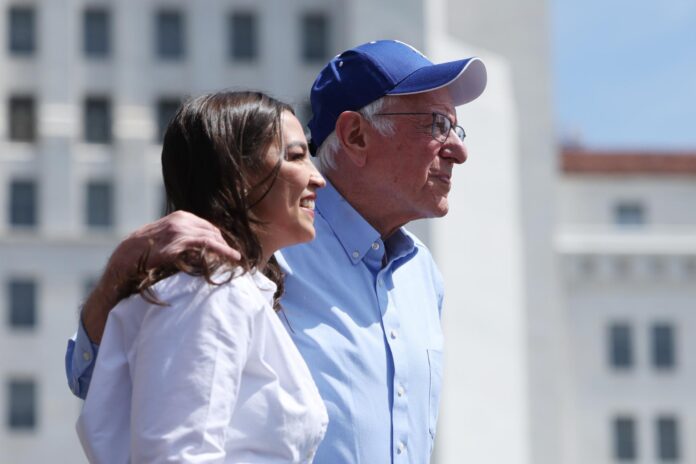
Instead, Harris has pitched herself as a generational change, emphasized her support for abortion rights after the Supreme Court’s 2022 decision ending the constitutional right to abortion services, and regularly noted the former president’s role in the Jan. 6 attack on the U.S. Capitol. Assembling a coalition ranging from progressives like Rep. Alexandria Ocasio-Cortez of New York to Republican former Vice President Dick Cheney, Harris has called Trump a threat to democracy and late in the campaign even embraced the critique that Trump is accurately described as a “fascist.”

Heading into Monday, Harris has mostly stopped mentioning Trump. She is promising to solve problems and seek consensus, while sounding an almost exclusively optimistic tone reminiscent of her campaign’s opening days when she embraced “the politics of joy” and the campaign theme “Freedom.”

“From the very start, our campaign has not been about being against something, it is about being for something,” Harris said Sunday evening at Michigan State University.

Trump, renewing his “Make America Great Again” and “America First” slogans, has made his hard-line approach to immigration and withering criticisms of Harris and Biden the anchors of his argument for a second administration. He’s hammered Democrats for an inflationary economy, and he’s pledged to lead an economic “golden age,” end international conflicts and seal the U.S. southern border.

But Trump also has veered often into grievances over being prosecuted after trying to overturn Biden’s victory and repeatedly denigrated the country he wants to lead again as a “failed nation.” As recently as Sunday, he renewed his false claims that U.S. elections are rigged against him, mused about violence against journalists and said he “shouldn’t have left” the White House in 2021 — dark turns that have overshadowed another anchor of his closing argument: “Kamala broke it. I will fix it.”

The election is likely to be decided across seven states. Trump won Pennsylvania, Michigan and Wisconsin in 2016 only to see them flip to Biden in 2020. North Carolina, Georgia, Arizona and Nevada add the Sun Belt swath of the presidential battleground map.

Trump won North Carolina twice and lost Nevada twice. He won Arizona and Georgia in 2016 but saw them slip to Democrats in 2020.

Harris’ team has projected confidence in recent days, pointing to a large gender gap in early voting data and research showing late-deciding voters have broken her way. They also believe in the strength of their campaign infrastructure. This weekend, the Harris campaign had more than 90,000 volunteers helping turn out voters — and knocked on more than 3 million doors across the battleground states. Still, Harris aides have insisted she remains the underdog.

Trump’s team has projected confidence, as well, arguing that the former president’s populist appeal will attract younger and working-class voters across racial and ethnic lines. The idea is that Trump can amass an atypical Republican coalition, even as other traditional GOP blocks — notably college-educated voters — become more Democratic.

Dos enfoques sobre Puerto Rico: la agenda de Kamala Harris vs. el legado de Donald Trump

Combinación de fotografía donde se observa a los candidatos a la presidencia de Estados Unidos: Donald Trump y Kamala Harris. (Foto: AP)

En los últimos años Puerto Rico ha enfrentado una serie de desafíos, desde devastadores huracanes hasta crisis económicas agravadas por el abandono político. En medio de este contexto, la vicepresidenta Kamala Harris se ha convertido en un símbolo de esperanza para la isla, en marcado contraste con el abandono y la falta de respeto mostrados por el expresidente Donald Trump.

El compromiso de Harris con Puerto Rico se refleja en su enfoque proactivo para reconstruir la infraestructura y la economía de la isla. Tras el impacto catastrófico del huracán María, que dejó a miles sin electricidad ni bienes básicos, Harris ha sido una firme defensora de un alivio equitativo para los desastres. Ha trabajado junto al presidente Biden para desbloquear miles de millones en fondos previamente retenidos, y asegurar que los puertorriqueños reciban el apoyo que tanto necesitan. Este financiamiento no es solo un salvavidas, sino que representa un compromiso para modernizar la red eléctrica, mejorar los sistemas de salud e invertir en programas de desarrollo económico que beneficiarán a los residentes de la isla.

En total contraste, el mandato de Trump estuvo marcado por comentarios despectivos sobre Puerto Rico y su gente. No bastó la infame referencia a la isla como “sucia” y “pobre”; llegó a sugerir que podría intercambiarse por Groenlandia. La respuesta de su administración al huracán María fue ampliamente criticada por su ineficacia, con informes de que él mismo bloqueó miles de millones en ayuda urgente. En lugar de ofrecer un apoyo genuino, sus visitas a la isla se caracterizaron por gestos superficiales, como lanzar rollos de papel higiénico a la multitud, lo que solo subrayó su falta de empatía con los puertorriqueños.

Harris busca revitalizar la economía y la infraestructura de la isla

La visión de Harris incluye la creación de un Grupo de Trabajo para una Economía de Oportunidades en Puerto Rico, destinado a fomentar un enfoque integral para la revitalización económica. Este grupo se enfocará en fortalecer la economía de la isla, con apoyo a las pequeñas empresas e inversión en industrias del futuro, como la energía limpia y las biociencias. Al simplificar los procesos federales y reducir la burocracia, Harris pretende agilizar los proyectos de recuperación ante desastres y crear una red energética resistente capaz de soportar futuras tormentas.

Además, Harris reconoce la importancia de la educación y el desarrollo de la fuerza laboral para el futuro de Puerto Rico. Ha propuesto ampliar el acceso a una educación bilingüe de alta calidad y programas de STEM (ciencia, tecnología, ingeniería y matemáticas), para asegurar que la próxima generación de puertorriqueños tenga las habilidades necesarias para competir en una economía global. Al fomentar alianzas entre escuelas secundarias, empresas locales e instituciones de educación superior, Harris aspira a crear vías para que los estudiantes obtengan empleos bien remunerados.

En su reciente discurso de cierre de campaña, Harris destacó el palpable contraste entre sus valores y el enfoque de Trump. Declaró que la principal prioridad de Donald Trump en un segundo mandato sería atacar y enjuiciar a quienes considera “enemigos”, y afirmó: “Donald Trump tiene una lista de personas a las que quiere procesar”. También señaló que Trump ha dado prioridad a “otorgar libertad a los extremistas violentos que atacaron a las fuerzas del orden el 6 de enero”. Harris recordó a los estadounidenses que Trump pretende utilizar al Ejército contra ciudadanos que simplemente no están de acuerdo con él, refiriéndose a ellos como “el enemigo interno”.

Harris aseveró que Trump es alguien “inestable, obsesionado con la venganza, consumido por el resentimiento y en busca de un poder sin límites”. En sus palabras: “Ha pasado más de una década manteniendo a los estadounidenses divididos y temerosos unos de otros. Ese es él”.

Además de sus iniciativas educativas, Harris está comprometida con mejorar el acceso a servicios bancarios y préstamos para emprendedores puertorriqueños. Su plan incluye ofrecer préstamos condonables a aquellos que históricamente han enfrentado barreras para iniciar o hacer crecer sus negocios. Este apoyo financiero es crucial para empoderar a los emprendedores locales y estimular el crecimiento económico en la isla. Al trabajar con bancos comunitarios e instituciones financieras de desarrollo, Harris busca crear un entorno en el que las pequeñas empresas puedan prosperar y generar empleos.

El caótico legado de Trump

El contraste entre el enfoque de Harris y el legado de Trump no podría ser más pronunciado. Mientras Harris busca relacionarse con las comunidades puertorriqueñas y atender sus necesidades, la Administración Trump con frecuencia ignoró las dificultades de la isla. Sus comentarios despectivos y la falta de acciones sustanciales dejaron a muchos puertorriqueños con una sensación de abandono y de irrespeto.

Harris enfatizó su compromiso de cerrar estas divisiones, asegurando a los estadounidenses: “Estoy aquí esta noche para decirles: él no es quienes somos”. Instó a un futuro libre del caos y la división que representa Trump, señalando: “Sabemos lo que Donald Trump tiene en mente: más caos, más división y políticas que benefician a los de arriba mientras perjudican a todos los demás”.

Puerto Rico se encuentra en una encrucijada, y el liderazgo de Kamala Harris ofrece una renovada esperanza y posibilidad. Su compromiso de invertir en la infraestructura, la educación y la economía de la isla refleja una profunda comprensión de los desafíos que enfrentan sus residentes. Al priorizar el apoyo equitativo y fomentar un enfoque colaborativo, Harris trabaja para reconstruir Puerto Rico y empoderar a su gente para que puedan cumplir sus sueños y aspiraciones.

Harris se comprometió a buscar un terreno común y soluciones pragmáticas que mejoren vidas, no para ganar puntos políticos, sino en aras del progreso: “Me comprometo a escuchar a los expertos, a quienes se verán afectados por mis decisiones y a quienes discrepan conmigo”. Harris enfatizó que, a diferencia de Trump, no considera enemigos a quienes disienten, y aseguró: “Él quiere encarcelarlos; yo les daré un lugar en mi mesa”.  Prometió ser una presidenta para todos los estadounidenses, poniendo al país por encima del partido o de la ambición personal: “Prometo siempre poner al país por encima del partido y de mí misma”.

El futuro de Puerto Rico se vislumbra más brillante bajo el liderazgo de la vicepresidenta Kamala Harris, cuyo enfoque es lo opuesto al descuido mostrado por Donald Trump. A medida que la isla se recupera, el compromiso de crear una Economía de Oportunidades será crucial para asegurar que los puertorriqueños puedan prosperar y tener éxito en los años venideros. La visión de Harris es de empoderamiento, resiliencia y esperanza: un cambio prometedor para el pueblo de Puerto Rico.

A tale of two visions: Kamala Harris’s agenda for Puerto Rico vs. Donald Trump’s legacy

Combinación de fotografía donde se observa a los candidatos a la presidencia de Estados Unidos: Donald Trump y Kamala Harris. (Foto: AP)

In recent years, Puerto Rico has faced a myriad of challenges, from devastating hurricanes to economic struggles exacerbated by political neglect. Amidst this backdrop, Vice President Kamala Harris has emerged as a beacon of hope for the island, contrasting sharply with the abandonment and disrespect shown by former President Donald Trump.

Harris’s commitment to Puerto Rico is evident in her proactive approach to rebuilding the island’s infrastructure and economy. Following the catastrophic impact of Hurricane Maria, which left thousands without power and basic necessities, Harris has been a staunch advocate for equitable disaster relief. She has worked alongside President Biden to unlock billions in funding that had been previously withheld, ensuring that Puerto Ricans receive the support they desperately need. This funding is not just a lifeline; it represents a commitment to modernizing the electrical grid, enhancing healthcare systems and investing in economic development programs that will uplift the island’s residents.

In stark contrast, Trump’s tenure was marked by a series of disparaging remarks about Puerto Rico and its people. He infamously referred to the island as “dirty” and “poor,” suggesting at one point that it could be traded for Greenland. His administration’s response to Hurricane Maria was widely criticized for its inadequacy, with reports indicating that he blocked billions in much-needed aid. Instead of offering genuine support, Trump’s visits to the island were characterized by superficial gestures, such as tossing paper towels to a crowd, which only served to highlight his lack of understanding and empathy for the struggles faced by Puerto Ricans.

Harris seeks to revitalize the island’s economy and infrastructure

Harris’s vision for Puerto Rico includes the establishment of a Puerto Rico Opportunity Economy Task Force, aimed at fostering a comprehensive approach to economic revitalization. This task force will focus on rebuilding the island’s economic strength, supporting small businesses and investing in industries of the future, such as clean energy and biosciences. By streamlining federal processes and cutting red tape, Harris aims to expedite disaster recovery projects and create a resilient energy grid that can withstand future storms.

Moreover, Harris recognizes the importance of education and workforce development in shaping Puerto Rico’s future. She has proposed expanding access to high-quality bilingual education and STEM programs, ensuring that the next generation of Puerto Ricans is equipped with the skills necessary to compete in a global economy. By fostering partnerships between high schools, local businesses and higher education institutions, Harris aims to create pathways for students to secure good-paying jobs right out of school.

In her recent campaign closing speech, Harris outlined a sharp contrast between her values and Trump’s approach to governance. She stated that Donald Trump’s main priority in a second term would be to target and prosecute those he views as “enemies,” saying, “Donald Trump has a list of people he wants to prosecute.” She also pointed out that Trump has made it a top priority to “grant freedom to violent extremists who attacked law enforcement on January 6.” Harris reminded Americans that Trump aims to use the military against fellow citizens who simply disagree with him, referring to them as “the internal enemy.”

She went on to say that Trump is someone who is “unstable, obsessed with vengeance, consumed by grievance, and in pursuit of unchecked power.” In Harris’s words, “He’s spent over a decade keeping Americans divided and afraid of each other. That’s who he is.”

In addition to educational initiatives, Harris is committed to enhancing access to banking and lending for Puerto Rican entrepreneurs. Her plan includes providing forgivable loans to those who have historically faced barriers to starting or growing their businesses. This financial support is crucial for empowering local entrepreneurs and stimulating economic growth on the island. By working with community banks and development financial institutions, Harris seeks to create an environment where small businesses can thrive, ultimately leading to job creation and increased economic stability.

Trump’s legacy: a different approach

The stark contrast between Harris’s approach and Trump’s legacy could not be more pronounced. While Harris actively seeks to engage with Puerto Rican communities and address their needs, Trump’s administration often turned a blind eye to the island’s struggles. His dismissive comments and lack of substantial action left many Puerto Ricans feeling abandoned and disrespected.

Harris emphasized her commitment to bridging these divides, assuring Americans, “I am here tonight to tell you: he is not who we are.” She urged for a future free from the chaos and division that Trump represents, noting, «We know what Donald Trump has in mind: more chaos, more division, and policies that help those at the top while harming everyone else.”

As Puerto Rico stands at a crossroads, the leadership of Kamala Harris offers a renewed sense of hope and possibility. Her commitment to investing in the island’s infrastructure, education and economy reflects a deep understanding of the challenges faced by its residents. By prioritizing equitable support and fostering a collaborative approach, Harris is not only working to rebuild Puerto Rico but also to empower its people to realize their dreams and aspirations.

To Americans, Harris committed to seeking common ground and pragmatic solutions that would improve lives, not to score political points but to ensure progress. She assured voters, “I pledge to listen to the experts, to those who will be affected by my decisions, and to those who disagree with me.” Harris emphasized that, unlike Trump, she does not see dissenters as enemies, promising, “He wants to jail them; I will give them a place at my table.”

Harris vowed to be a president for all Americans, placing the country above party or personal ambition. In her words, “I pledge to always put country above party and above myself.”

The future of Puerto Rico looks brighter under the leadership of Vice President Kamala Harris, who contrasts sharply with the neglect shown by Donald Trump. As the island continues to recover and rebuild, the commitment to creating an Opportunity Economy will be pivotal in ensuring that Puerto Ricans can thrive and succeed in the years to come. Harris’s vision is one of empowerment, resilience, and hope—a stark departure from the past and a promising path forward for the people of Puerto Rico.

A presidential campaign unlike any other ends on Tuesday. Here’s how we got here

campaign
Voters are reflected in a window near an American flag as they mark their ballots during early voting in the general election, Friday, Nov. 1, 2024, at City Hall in Providence, R.I. (Photo: AP/Steven Senne)

It’s the election that no one could have foreseen.

Not so long ago, Donald Trump was marinating in self-pity at Mar-a-Lago after being impeached twice and voted out of the White House. Even some of his closest allies were looking forward to a future without the charismatic yet erratic billionaire leading the Republican Party, especially after his failed attempt to overturn an election ended in violence and shame. When Trump announced his comeback bid two years ago, the New York Post buried the article on page 26.

At the same time, Kamala Harris was languishing as a low-profile sidekick to President Joe Biden. Once seen as a rising star in the Democratic Party, she struggled with both her profile and her portfolio, disappointing her supporters and delighting her critics. No one was talking about Harris running for the top job — they were wondering if Biden should replace her as his running mate when he sought a second term.

But on Tuesday, improbable as it may have seemed before, Americans will choose either Trump or Harris to serve as the next president. It’s the final chapter in one of the most bewildering, unpredictable and consequential sagas in political history. For once, the word “unprecedented” has not been overused.

“If someone had told you ahead of time what was going to happen in this election, and you tried to sell it as a book, no one would believe it,” said Neil Newhouse, a Republican pollster with more than four decades of experience. “It’s energized the country and it’s polarized the country. And all we can hope is that we come out of it better in the end.”

History was and will be made. The United States has never elected a president who has been convicted of a crime. Trump survived not one but two assassination attempts. Biden dropped out in the middle of an election year and Harris could become the first female president. Fundamental tenets about democracy in the most powerful nation on earth will be tested like no time since the Civil War.

And that’s not to mention the backdrop of simultaneous conflicts in Europe and the Middle Easthacking by foreign governments, an increasingly normalized blizzard of misinformation and the intimate involvement of the world’s richest man, Elon Musk.

For now, the only thing the country can agree on is that no one knows how the story will end.

Trump rebounded from disgrace to the Republican nomination

Republicans could have been finished with Trump after Jan. 6, 2021.

That’s the day he fired up his supporters with false claims of voter fraud, directed them to march on the U.S. Capitol while Congress was ceremonially certifying Biden’s election victory, and then stood by as rioting threatened lawmakers and his own vice president.

But not enough Republicans joined with Democrats to convict Trump in an impeachment trial, clearing a path for him to run for office again.

Trump started planning a comeback even as some leaders in his party hoped he would be eclipsed by Ron DeSantis, the Florida governor, or Nikki Haley, the former South Carolina governor who served as Trump’s ambassador to the United Nations.

In the year after Trump announced that he would run against Biden, he faced criminal charges four times. Two of the indictments were connected to his attempts to overturn his election defeat. Another involved his refusal to return classified documents to the federal government after leaving office. Trump has pleaded not guilty to all the charges, and none of those cases have been resolved.

However, a fourth indictment in New York led to Trump becoming the first president in U.S. history to be criminally convicted. A jury found him guilty on May 30 of falsifying business records over hush money payments to a porn star who claimed they had an affair.

None of it slowed Trump, who practically ignored his opponents during the primary as he barreled toward the Republican presidential nomination. A mugshot from one of his arrests was adopted by his followers as a symbol of resisting a corrupt system.

Trump’s candidacy capitalized on anger over inflation and frustration about migrants crossing the southern border. He also hammered Biden as too old for the job even though he’s only four years younger than the president.

But Democrats also thought Biden, 81, would be better off considering retirement than a second term. So when Biden struggled through a presidential debate on June 27 — losing his train of thought, appearing confused, stammering through answers — he faced escalating pressure within his party to drop out of the race.

As Biden faced a political crisis, Trump went to an outdoor rally in Butler, Pennsylvania on July 13. A young man evaded police, climbed to the top of a nearby building and fired several shots with a semiautomatic rifle.

Trump grabbed at his ear and dropped to the stage. While Secret Service agents crowded around him, he lurched to his feet with a streak of blood across his face, thrust his fist in the air and shouted “fight, fight, fight!” An American flag billowed overhead.

It was an instantly iconic moment. Trump’s path to the White House seemed clearer than ever — perhaps even inevitable.

Harris gets an unexpected opportunity at redemption

The vice president was getting ready to do a puzzle with her nieces on the morning of July 21 when Biden called. He had decided to end his reelection bid and endorse Harris as his replacement.

She spent the rest of the day making dozens of phone calls to line up support, and she had enough to secure the nomination within two days.

It was a startling reversal of fortune. Harris had flamed out when running for president four years earlier, dropping out before the first Democratic primary contest. Biden resuscitated her political career by choosing her as his running mate, and she became the first woman, Black person and person of South Asian descent to serve as vice president.

But Harris’ struggles did not end there. She fumbled questions about immigration, oversaw widespread turnover in her office and faded into the background rather than use her historic status as a platform.

All of that started to change on June 24, 2022, when the U.S. Supreme Court overturned the nationwide right to abortion enshrined by Roe v. Wade. Harris became the White House’s top advocate on an issue that reshaped American politics.

She also proved to be more nimble than before. Shortly after returning from a weeklong trip to Africa, her team orchestrated a spur-of-the-moment venture to Nashville so Harris could show support for two Tennessee lawmakers who had been expelled for protesting for gun control.

Meanwhile, Harris was networking with local politicians, business leaders and cultural figures to gain ideas and build connections. When Biden dropped out, she was better positioned than many realized to seize the moment.

The day after she became the candidate, Harris jetted to Wilmington, Delaware to visit campaign headquarters. Staff members had spent the morning printing “Kamala” and “Harris for President” signs to tape up next to obsolete “Biden-Harris” posters.

There were 106 days until the end of the election.

The battle between Trump and Harris will reshape the country

While speaking to campaign staff in Wilmington, Harris used a line that has become a mantra, chanted by supporters at rallies across the country. “We are not going back,” she declared.

It’s a fitting counterpoint to Trump’s slogan, “make America great again,” which he has wielded since launching his first campaign more than eight years ago.

The two candidates have almost nothing in common, something that was on display on Sept. 10, when Harris and Trump met for the first time for their only televised debate.

Harris promised to restore abortion rights and use tax breaks to support small businesses and families. She said she would “be a president for all Americans.”

Trump took credit for nominating the justices that helped overturn Roe, pledged to protect the U.S. economy with tariffs and made false claims about migrants eating people’s pets. He called Harris “the worst vice president in the history of our country.”

Harris was widely viewed as gaining the upper hand. Trump insisted he won but refused a second debate. The race remained remarkably close.

Pundits and pollsters have spent the final weeks straining to identify any shift in the candidates’ chances. Microscopic changes in public opinion could swing the outcome of the election. It might take days to count enough votes to determine who wins.

The outcome, whenever it becomes clear, could be just another surprise in a campaign that’s been full of them.