

2.3 C
Philadelphia
spot_img
Inicio Blog Página 591

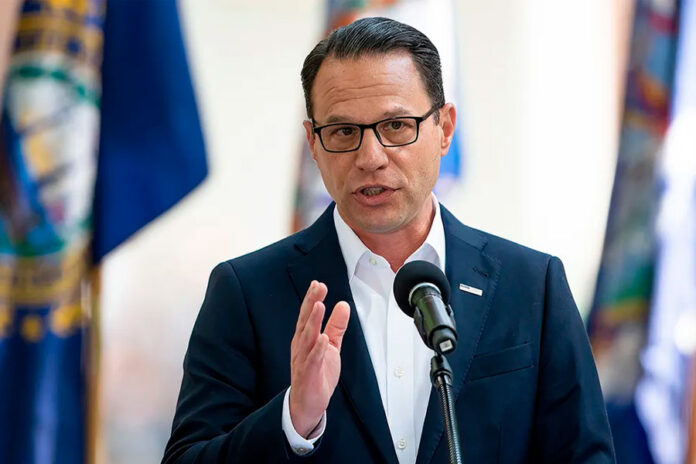
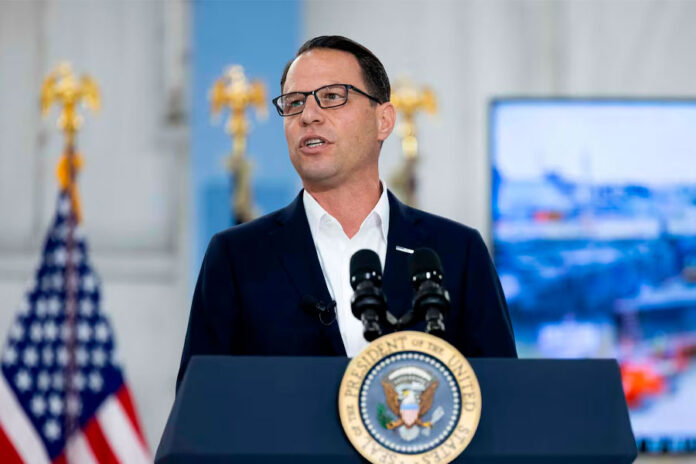
Gov. Shapiro celebrates the historic budget allocation for public K-12 education in Reading

Shapiro signs Senate Bill 700, known as 'Act 55' into law at gymnasium of Amanda Stout Elementary School. (Photo Matias Demichelis)

As the governor began his remarks, he signaled towards the scoreboard in Amanda Stout’s gymnasium, saying, “I did take note of the scoreboard up there; it is 2024.  I am the 48th governor, and let me be clear: I’m glad I’m just in the first quarter of being your governor.  I love being your governor!” 

Prominent figures in local offices, such as State Representative Manny Guzman and State Senator Judy Schwank, preceded the governor’s speech.  Extending support from people involved in education, also speaking at today’s event was the Superintendent at Reading School District, Jennifer Murray, Pennsylvania’s Secretary of Education, Khalid Mumin, Reading Education Association President Brian Benkert, and 11th grader from Reading High School, Jose Martinez, who introduced the governor.

Reading High School rising-junior Jose Martinez speaks before introducing Gov. Shapiro (Photo Matias Demichelis)

Today, the governor crafted a bread-and-butter narrative of economic issues that seemed like, to borrow a football analogy, a playbook for the Democratic campaign’s upcoming strategy in the Fall.  The governor touted his signing of this year’s budget and the bipartisan negotiations it took to pass.  “I’m the only governor in the entire country with a divided legislature…  Here in Pennsylvania, we have shown that we can bring Democrats and Republicans together to solve problems and get things done for our kids.” 

The governor reminded audience members that during his administration, Pennsylvania’s budgets included historic levels of funding.  “We are spending more money on police and community-based services to reduce violence and on infrastructure than ever before…  We brought Democrats and Republicans together and passed the largest tax cut for seniors in 20 years…  We passed the largest childcare tax cut in the history of Pennsylvania…  Here in Pennsylvania, we’re showing that you can do common sense things…  We can all come together to get stuff done.” 

He was not shy to hint at his famous message of being someone who likes to “get stuff done,” and he is acutely aware that voters take note of that kind of appeal. 

Local Latino community members invited to attend the governor’s event were happy to share their thoughts on his remarks. 

Answering questions jointly, Representatives Manny Guzman and Johanny Cepeda-Freytiz gave their thoughts as to how they believed events like the Governor’s remarks on education funding could increase voter outreach, especially to disenfranchised groups within the Latino community who might have been disengaged before Joe Biden stepped down. 

Manny Guzman was quick to answer, “It means a lot.  It’s a good day when you have the Governor of any state come into your community; it means the Latino community continues to be at the forefront.  Reading is almost 80% Latino, and we’re going to be one of those cities that decides who is the next president.”

Gov. Shapiro interacts with students at Amanda Stout Elementary School. (Photo Matias Demichelis)

Representative Cepeda-Freytiz added to those comments. “These events are necessary because knowledge is power.  So, with more information that we are disseminating to our community, it’s crucial to know how we’re going to move forward.  Because who are we without our community?”

Mayor Eddie Morán adds, “Our communities are paying attention.  They want to be here; they want to be heard, and they want to see elected officials in their community.  We need to get people into our community so that our community can see that they are being listened to, they are being cared for, and they are willing to be heard.”

Governor Shapiro’s remarks today set into motion a strategy that not only seeks to cast the opposing side as “weird” and antithetical to what America stands for but instead offers up a positive vision for the future of America with policies championed by Democrats.   “When we put some points on the board for our kids, when we move the ball down the field, we should celebrate that, and we should be proud of that as Pennsylvania.  It’s where we can come together and solve problems.”  

Shapiro’s speech goes beyond the historic education funding and a secure safety net; it encompasses the Democrats’ campaign message for the months before the election.

For more information on how the 2024-25 budget will create opportunities for Pennsylvanians, visit shapirobudget.pa.gov(opens in a new tab)

Ganadores de medallas en los Juegos Olímpicos de París. Viernes, 09 de agosto

Juegos Olímpicos

El equipo de Estados Unidos sigue al frente del medallero de los Juegos Olímpicos de París 2024 los mismos oros (33) que el de China y con un total 111 trofeos a falta de dos jornadas para el final.

Los estadounidenses suman 33 otos, 39 platas y 39 bronces, mientras que los chinos atesoran ya 33 primeros puestos, 27 segundos y 23 terceros.

El podio lo completa Australia con 18 medallas de oro, 16 de plata y 14 de bronce.

La dominicana Marileidy Paulino celebra tras ganar los 400 metros en el atletismo de los Juegos Olímpicos de París, el viernes 9 de agosto de 2024, en Saint-Denis, Francia. (AP Foto/Ashley Landis)

– Medallero:

OroPlataBronceTotal
1Estados Unidos333939111
2China33272383
3Australia18161448
4Japón1681337
5Gran Bretaña14202357
6Francia14202256
7Corea del Sur138728
8Países Bajos1361029
9Alemania129829
10Italia11121336
11Canadá761124
12Nueva Zelanda67215
13Hungría55515
14Uzbekistán5038
15España43815
16Irlanda4037
17Brasil36918
18Ucrania34411
19Suecia34310
20Rumanía3418
21Bulgaria3137
22Bélgica3069
23Irán2428
24Azerbaiyán2215
25Croacia2136
25Cuba2136
25Kenia2136
28Serbia2103
29Austria2024
29Hong Kong2024
29Filipinas2024
32Rep. Checa2013
32Indonesia2013
34Argelia2002
35Israel1416
36Kazajistán1337
37Jamaica1326
37Tailandia1326
39Suiza1258
40Dinamarca1225
40Sudáfrica1225
42Ecuador1214
42Georgia1214
44Grecia1168
45Polonia1157
46Argentina1113
46Noruega1113
46Túnez1113
49Baréin1102
49Chile1102
49Santa Lucía1102
49Eslovenia1102
49Uganda1102
54Taiwán1056
55Rep. Dominicana1023
56Guatemala1012
56Marruecos1012
58Botsuana1001
58Dominica1001
58Pakistán1001
61Turquía0336
62México0325
63Colombia0303
64Corea del Norte0246
65Lituania0224
66Armenia0213
66Portugal0213
68Etiopía0202
69India0156
70Kirguistán0134
70Moldavia0134
72Kosovo0112
73Chipre0101
73Fiyi0101
73Jordania0101
73Mongolia0101
77Tayikistán0033
78Granada0022
78Malasia0022
80Cabo Verde0011
80Egipto0011
80Equipo de refugiados0011
80Perú0011
80Singapur0011
80Eslovaquia0011
80Zambia0011

ATLETISMO

400m vallas

ORO: Rai Benjamin, Estados Unidos

PLATA: Karsten Warholm, Noruega

BRONCE: Alison dos Santos, Brasil

Relevo 4×100 hombres

ORO: Canadá (Aaron Brown, Jerome Blake, Brendon Rodney, Andre de Grasse)

PLATA: Sudáfrica (Bayanda Walaza, Shaun Maswanganyi, Bradley Nkoana, Akani Simbine)

BRONCE: Reino Unido (Jeremiah Azu, Louie Hinchliffe, Richard Kilty, Nethaneel Mitchell-Blake, Zharnel Hughes)

Salto triple hombres

ORO: Jordan Díaz, España

PLATA: Pedro Pichardo, Portugal

BRONCE: Andy Díaz, Italia

10.000 metros mujeres

ORO: Beatrice Chebet, Kenya

PLATA: Nadia Battocletti, Italia

BRONCE: Sifan Hassan, Holanda

400m mujeres

ORO: Marileidy Paulino, República Dominicana

PLATA: Salwa Eid Naser, Bahréin

BRONCE: Natalia Kaczmarek, Polonia

Relevo 4×100 mujeres

ORO: Estados Unidos (Melissa Jefferson, Twanisha Terry, Gabrielle Thomas, Sha’carri Richardson)

PLATA: Reino Unido (Dina Asher-Smith, Bianca Williams, Imani Lansiquot, Amy Hunt, Daryll Neita, Desiree Henry)

BRONCE: Alemania (Alexandra Burghardt, Sophia Junk, Lisa Mayer, Gina Lueckenkemper, Rebekka Haase)

Heptatlón mujeres

ORO: Nafissatou Thiam, Bélgica

PLATA: Katarina Johnson-Thompson, Reino Unido

BRONCE: Noor Vidts, Bélgica

Bala mujeres

ORO: Yemisi Ogunleye, Alemania

PLATA: Maddison-Lee Wesche, Nueva Zelanda

BRONCE: Jiayuan Song, China

___

BREAKING

B-Girls

ORO: Ami, Japón

PLATA: Nicka, Lituania

BRONCE: 671, China

___

BOXEO

71kg hombres

ORO: Asadkhuja Muydinkhujaev, Uzbekistán

PLATA: Marco Verde, México

BRONCE: Omari Jones, Estados Unidos

BRONCE: Lewis Richardson, Reino Unido

92kg hombres

ORO: Lazizbek Mullojonov, Uzbekistán

PLATA: Loren Berto Alfonso, Azerbaiyán

BRONCE: Davlat Boltaev, Tayikistán

BRONCE: Enmanuel Reyes Pla, España

50kg mujeres

ORO: Yu Wu, China

PLATA: Buse Naz Cakiroglu, Turquía

BRONCE: Nazym Kyzaibay, Kazajistán

BRONCE: Aira Villegas, Filipinas

66kg mujeres

ORO: Imane Khelif, Argelia

PLATA:Liu Yang, China

BRONCE: Janjaem Suwannapheng, Tailandia

BRONCE: Nien Chin Chen, Taiwán

___

CANOTAJE SPRINT

Canoa individual 1000m hombres

ORO: Martin Fuksa, República Checa

PLATA: Isaquias Queiroz, Brasil

BRONCE: Serghei Tarnovschi, Moldavia

Kayak doble 500m hombres

ORO: Alemania (Jacob Schopf, Max Lemke)

PLATA: Hungría (Bence Nadas, Sandor Totka)

BRONCE: Australia (Jean van der Westhuyzen, Tom Green)

Cano doble 500m mujeres

ORO: China (Shixiao Xu, Mengya Sun)

PLATA: Ukraine (Liudmyla Luzan, Anastasiia Rybachok)

BRONCE: Canadá (Sloan Mackenzie, Katie Vincent)

Kayak doble 500m

ORO: New Zelanda (Lisa Carrington, Alicia Hoskin)

PLATA: Hungría (Tamara Csipes, Alida Dora Gazso)

BRONCE: Alemania (Paulina Paszek, Jule Marie Hake, Noemi Pupp, Sara Fojt)

___

CICLISMO PISTA

Velocidad hombres

ORO: Harrie Lavreysen, Holanda

PLATA: Matthew Richardson, Australia

BRONCE: Jack Carlin, Reino Unido

Madison mujeres

ORO: Italia (Chiara Consonni, Vittoria Guazzini)

PLATA: Reino Unido (Elinor Barker, Neah Evans)

BRONCE: Holanda (Lisa van Belle, Maike van der Duin)

___

CLAVADOS

Trampolín 3 metros mujeres

ORO: Yiwen Chen, China

PLATA: Maddison Keeney, Australia

BRONCE: Yani Chang, China

___

ESCALADA DEPORTIVA

Boulder & Lead hombres

ORO: Toby Roberts, Reino Unido

PLATA: Sorato Anraku, Japón

BRONCE: Jakob Schubert, Austria

___

FÚTBOL

Hombres

ORO: España

PLATA: France

BRONCE: Morocco

___

GIMNASIA RÍTMICA

Concurso completo individual

ORO: Darja Varfolomeev, Alemania

PLATA: Boryana Kaleyn, Bulgaria

BRONCE: Sofia Raffaeli, Italia

___

HALTEROFILIA

89kg hombre

ORO: Karlos May Nasar, Bulgaria

PLATA: Yeison López, Colombia

BRONCE: Antonino Pizzolato, Italia

71kg mujeres

ORO: Olivia Reeves, Estados Unidos

PLATA: Mari Leivis Sánchez, Colombia

BRONCE: Angie Dajomes, Ecuador

___

HOCKEY CÉSPED

Mujeres

ORO: Holanda

PLATA: China

BRONCE: Argentina

___

NATACIÓN AGUAS ABIERTAS

10km hombres

ORO: Kristof Rasovszky, Hungría

PLATA: Oliver Klemet, Alemania

BRONCE: David Betlehem, Hungría

___

TAEKWONDO

-80kg hombres

ORO: Firas Katoussi, Túnez

PLATA: Mehran Barkhordari, Irán

BRONCE: Edi Hrnic, Dinamarca

BRONCE: Simone Alessio, Italia

-67kg mujeres

ORO: Viviana Marton, Hungría

PLATA: Aleksandra Perisic, Serbia

BRONCE: Sarah Chaari, Bélgica

BRONCE: Kristina Teachout, Estados Unidos

___

TENIS DE MESA

Equipos hombres

ORO: China (Zhendong Fan, Long Ma, Chuqin Wang)

PLATA: Suecia (Anton Kallberg, Kristian Karlsson, Truls Moregard)

BRONCE: Francia (Simon Gauzy, Alexis Lebrun, Felix Lebrun)

___

VELA

Kite hombres

ORO: Valentin Bontus, Austria

PLATA: Toni Vodisek, Eslovenia

BRONCE: Maximilian Maeder, Singapur

___

VÓLEIBOL DE PLAYA

Mujeres

ORO: Brasil (Ana Patricia Silva Ramos, Eduarda Santos Lisboa)

PLATA: Canadá (Melissa Humana-Paredes, Brandie Wilkerson)

BRONCE: Suiza (Tanja Hueberli, Nina Brunner)

Shapiro administration awards nearly $7.3 million to provide fresh fruits and vegetables in schools

Alimentos básicos de la dieta mediterránea. EFE/Paco Torrente/Archivo

Funds will help schools provide fresh fruits and vegetables to students in addition to universal free breakfast

Harrisburg, PA – The Pennsylvania Department of Education (PDE) today announced that 268 schools across the Commonwealth will receive funding to provide fruits and vegetables to students. Nearly $7.3 million in grant funding will be awarded under the federal Fresh Fruit and Vegetable Program (FFVP). This funding is in addition to the universal free breakfast program that Governor Shapiro championed throughout the budget process and has secured two years in a row.

“Access to healthy food options gives our students the fuel they need in order to learn, grow, and achieve,” said Secretary of Education Dr. Khalid N. Mumin. “The Fresh Fruit and Vegetable Program helps learners across the Commonwealth access nutritious foods and create healthy habits that benefit them both in the classroom and at home – at no cost to students or their families.”

The list of awardees can be found on PDE’s website.

Under the program, selected schools receive reimbursement for the cost of making free fresh fruits and vegetables available to students during the school day. These fresh fruits and vegetables must be provided separately from the lunch or breakfast meal, in one or more areas of the school during the school day.

The goal of FFVP is to introduce children to fresh fruits and vegetables, to include new and different varieties, and to increase overall acceptance and consumption of fresh, unprocessed produce. Additionally, the program promotes nutrition education, resulting in healthier school environments for learners.

To be eligible, schools must participate in the National School Lunch Program. FFVP prioritizes schools with the highest percentage of children eligible for free and reduced-price meals in order to give children from low-income families more opportunities to consume fresh produce on a regular basis.

In the 2024-25 budget, Governor Shapiro secured a $6.3 million increase in funding for school food services. This follows last year’s budget in which the governor fought for and obtained a $46.5 million increase in funding to continue the Free School Breakfast Program, which makes universal free breakfast available to 1.7 million students across Pennsylvania. Since its implementation, the program has served more than 23 million breakfasts to students across the Commonwealth. The Free School Breakfast Program ensures that students have access to a healthy, nutritious meal to start the school day and eliminates the stigma associated with free and reduced-price breakfast that may deter eligible students from participating. 

Montgomery county man charged with election fraud offenses

election
United States Attorney Jacqueline C. Romero. (Photo: File)

PHILADELPHIA. – United States Attorney Jacqueline C. Romero announced that Philip C. Pulley, 62, of Huntington Valley, Pennsylvania, was charged by information with falsely registering to vote, double voting, and election fraud.

The information charges that in 2018, while registered to vote in Montgomery County, Pennsylvania, defendant Pulley also registered to vote in Broward County, Florida. In 2020, defendant Pulley, who was already registered to vote in Montgomery County and Broward County, allegedly registered to vote in Philadelphia County, Pennsylvania, using a false home address in Philadelphia and social security number. In the 2020 general election, which included the election for President and Vice President of the United States, it is alleged that Pulley requested a mail-in ballot to vote in Philadelphia, and voted in both Broward County and Montgomery County. In the 2022 general election, which included the election for United States Senator, Pulley allegedly voted in both Montgomery and Philadelphia Counties.

If convicted, on each count of the information the defendant faces a maximum possible sentence of five years of imprisonment, three years of supervised release, a $10,000 to 250,000 fine, and a $100 special assessment.

The case was investigated by the Federal Bureau of Investigation and the Pennsylvania Attorney General’s Office and is being prosecuted by Assistant United States Attorney Nancy E. Potts and Mark B. Dubnoff, with support from James Price, Senior Deputy Attorney General and Special Assistant United States Attorney.

An indictment, information, or criminal complaint is an accusation. A defendant is presumed innocent unless and until proven guilty.

Venta de vehículos nuevos en Puerto Rico decreció un 7,5 % en julio de 2024 frente a 2023

Puerto Rico

San Juan, Puerto Rico.- La venta de vehículos nuevos en julio decreció un 7,5 % en Puerto Rico en comparación con el mismo mes de 2023, informó este viernes el Grupo Unido de Importadores de Automóviles (GUIA), organización que representa la industria automotriz en la isla.

Un total de 9.806 unidades se vendieron en Puerto Rico el mes pasado, un 7,47 % menos de las 10.598 vendidas en julio de 2023, según detalló GUIA, presidida por José R. Ordeix, en un comunicado de prensa.

«Este decrecimiento en ventas en el mes de julio contrasta con el patrón de crecimiento de los pasados seis meses en este canal, pero en términos generales ha presentado un crecimiento importante para el mercado de forma acumulada en el año», indicó Ordeix en la nota.

En términos acumulados hasta el mes de julio pasado, las ventas totales en el año alcanzaron las 70.832 unidades, reflejando una disminución de 2,5 % ante las 72.630 vendidas en ese mismo periodo de 2023.

Uno de los segmentos que obtuvo un impacto negativo en el mes fue el full y medium sedan con una merma en comparación con el mismo mes el año pasado de 61,8 %, seguido por los sport y sport premium con una disminución de 33 %.

Sin embargo, el segmento minivan tuvo un aumento de un 118,1 %, seguido por el segmento vanes con un incremento de 49,6 % en comparación con el mismo mes del pasado año.

GUIA es una organización independiente, sin fines de lucro, que se creó en el 2006 con el fin de atender asuntos que atañen directamente a la industria automotriz, así como asuntos relacionados a la economía general de Puerto Rico

Former Philadelphia correctional officer charged with violating the constitutional rights of an inmate

Philadelphia

PHILADELPHIA. – United States Attorney Jacqueline C. Romero announced that Ivory S. Cousins, 35, of West Deptford, New Jersey, was arrested and charged by indictment with violating the constitutional rights of a prison inmate by ignoring his significant injuries from an assault by other inmates, pepper spraying him, helping another inmate to steal from him, and obstructing the investigation of what happened to him.

According to the indictment, the defendant was a correctional officer employed by the Philadelphia Department of Prisons in August 2019. While on duty at the Curran-Fromhold Correctional Facility, the indictment alleges that the defendant became aware that an inmate had been assaulted by other inmates and had serious injuries, but she was deliberately indifferent to his serious medical needs, failed to get him medical attention, and prevented a superior officer from discovering the inmate’s injuries. After her partner discovered the injured inmate and called for medical attention, but before assistance arrived to escort him to the medical unit, the indictment charges that the defendant subjected the injured inmate to excessive force, that is, she unreasonably pepper sprayed him. When the injured inmate had been escorted out of the area for medical attention, the indictment alleges that the defendant further violated the injured inmate’s constitutional rights by helping one of the inmates involved in his assault to steal his personal belongings from his cell. When she later completed a report about the incident, the indictment charges that the defendant provided false information about the injured inmate being aggressive, engaging in a fight, and using a weapon.

If convicted, the defendant faces a maximum possible sentence of up to 41 years’ imprisonment, three years of supervised release, a $1 million fine, and a $400 special assessment.

The case was investigated by the Federal Bureau of Investigation, with assistance from the Philadelphia Department of Prisons, and is being prosecuted by Assistant United States Attorneys Nancy E. Potts and Everett R. Witherell.

An indictment, information, or criminal complaint is an accusation. A defendant is presumed innocent unless and until proven guilty.

Irán acelera actividad cibernética para interferir en elecciones de EE. UU., advierte Microsoft

elecciones
Un iPhone muestra la aplicación de Facebook, el 11 de agosto de 2019, en Nueva Orleans. (Foto: AP/Jenny Kane/Archivo)

Irán está intensificando su actividad en internet con el objetivo aparente de interferir en las próximas elecciones en Estados Unidos y, en un caso, dirigió un ataque de phishing por correo electrónico contra el equipo de una campaña presidencial, informó Microsoft el viernes.

Según el gigante tecnológico, grupos iraníes también han dedicado los últimos meses a crear páginas de noticias falsas y a suplantar la identidad de activistas, sentando así las bases para avivar la división e influir potencialmente en los votantes estadounidenses este otoño, especialmente en los estados indecisos.

Las conclusiones del último informe de inteligencia sobre amenazas de Microsoft muestran cómo Irán, que ha participado activamente en ciclos electorales estadounidenses anteriores, está perfeccionando sus tácticas para otras elecciones que probablemente tendrán implicaciones mundiales. El informe va un paso más allá de lo que los servicios de inteligencia de Estados Unidos han revelado, dando ejemplos concretos de grupos iraníes y de las acciones que han llevado a cabo hasta ahora. La misión de Irán ante Naciones Unidas negó que tuviera planes de interferir o lanzar ciberataques en las elecciones presidenciales de noviembre.

El informe no especifica las intenciones de Irán aparte de sembrar el caos en Estados Unidos, aunque funcionarios estadounidenses habían insinuado antes que Irán se opone especialmente al expresidente Donald Trump. Además, han expresado su alarma ante los intentos de Teherán de buscar represalias por un ataque en 2020 ordenado por Trump contra un general iraní. Esta semana, el Departamento de Justicia desprecintó cargos criminales contra un paquistaní vinculado a Irán que supuestamente urdió planes para asesinar a varios funcionarios, entre los que podría encontrarse Trump.

El informe también revela que Rusia y China están explotando la polarización política de Estados Unidos para promover sus propios mensajes divisivos en un año electoral trascendental.

El informe de Microsoft destaca cuatro ejemplos de actividad iraní reciente que la empresa prevé que aumenten a medida que se acerquen las elecciones de noviembre.

En primer lugar, indica que un grupo vinculado a la Guardia Revolucionaria iraní atacó en junio a un alto cargo de la campaña presidencial estadounidense con un correo electrónico de phishing, una forma de ciberataque utilizada a menudo para recabar información sensible. En el informe no se identifica el equipo electoral atacado. De acuerdo con Microsoft, el grupo ocultó el origen del mensaje enviándolo desde la cuenta de correo electrónico pirateada de un exasesor de alto nivel.

Días después, el grupo iraní intentó acceder a una cuenta que pertenecía a un excandidato presidencial, pero no lo consiguió, según el informe de Microsoft. La empresa informó a los destinatarios del ataque.

En otro episodio, un grupo iraní creó páginas web que se hacen pasar por portales de noticias estadounidenses dirigidos a votantes de extremos opuestos del espectro político.

Una página de noticias falsas dirigida a un público de izquierdas insulta a Trump llamándole “loco de atar” y sugiriendo que consume drogas, según el informe. Otro sitio destinado a atraer a lectores republicanos se centra en cuestiones LGBTQ y de cirugía de reafirmación de género.

Un tercer ejemplo citado por Microsoft concluyó que grupos iraníes se están haciendo pasar por activistas estadounidenses, lo que podría sentar las bases para realizar operaciones de interferencia en fechas más próximas a las elecciones.

Por último, otro grupo iraní comprometió en mayo una cuenta de un empleado del gobierno de un estado indeciso, según el informe. No estaba claro si ese ciberataque estaba relacionado con los esfuerzos de interferencia electoral.

La misión iraní ante la ONU envió a The Associated Press un comunicado por correo electrónico en el que afirmaba: “Irán ha sido víctima de numerosas operaciones cibernéticas ofensivas dirigidas contra su infraestructura, centros de servicios públicos e industrias. Las capacidades cibernéticas de Irán son defensivas y proporcionales a las amenazas a las que se enfrenta. Irán no tiene intención ni planes de lanzar ciberataques. Las elecciones presidenciales estadounidenses son un asunto interno en el que Irán no interfiere”.

Según el reporte de Microsoft, mientras Irán intensifica su influencia cibernética, actores vinculados a Rusia también han reorientado sus campañas de interferencia para centrarse en las elecciones estadounidenses, mientras que actores vinculados al Partido Comunista de China han aprovechado las protestas universitarias propalestinas y otros acontecimientos de actualidad en Estados Unidos para tratar de aumentar las tensiones políticas.

Microsoft indicó que ha seguido vigilando cómo los enemigos extranjeros están utilizando la tecnología de IA generativa. Estas herramientas, cada vez más baratas y de fácil acceso, pueden generar imágenes, fotos y videos falsos y realistas en cuestión de segundos, lo que hace temer a algunos expertos que puedan utilizarse para engañar a los votantes en este ciclo electoral.

Aunque muchos países han experimentado con la IA en sus operaciones de interferencia, según la empresa, esos esfuerzos no han tenido mucho impacto hasta ahora. De acuerdo con el informe, como resultado, algunos actores “han vuelto a las técnicas que han demostrado su eficacia en el pasado: simples manipulaciones digitales, caracterización errónea de contenidos y uso de etiquetas o logotipos de confianza para presentar información falsa”.

El reporte de Microsoft coincide con las recientes advertencias de los servicios de inteligencia estadounidenses, que afirman que los rivales de Washington parecen decididos a inundar internet de afirmaciones falsas e incendiarias antes de las elecciones de noviembre.

Altos funcionarios de los servicios de inteligencia afirmaron el mes pasado que Rusia sigue representando la mayor amenaza en lo que respecta a la desinformación electoral, mientras que hay indicios de que Irán está ampliando sus esfuerzos, a la vez que China actúa con cautela de cara a las elecciones de 2024.

Los esfuerzos de Irán parecen dirigidos a socavar a los candidatos que se consideran más propensos a aumentar la tensión con Teherán, dijeron los funcionarios. Esa descripción encaja con Trump, cuyo gobierno puso fin a un acuerdo nuclear con Irán, restableció las sanciones y ordenó el asesinato del principal general iraní.

Los esfuerzos de interferencia también coinciden con un momento de fuerte tensión entre Irán e Israel, cuyo ejército cuenta con el firme apoyo de Estados Unidos.

La directora nacional de Seguridad, Avril Haines, declaró el mes pasado que el gobierno iraní ha apoyado de forma encubierta las protestas estadounidenses contra la guerra librada en Gaza por Israel contra Hamás. Grupos vinculados a Irán se han hecho pasar por activistas digitales, han alentado protestas y han proporcionado apoyo financiero a algunos grupos de protesta, según Haines.

Los adversarios de Estados Unidos, Irán entre ellos, tienen un largo historial de tratar de influir en las elecciones estadounidenses. En 2020, grupos vinculados a Irán enviaron correos electrónicos a votantes demócratas en un aparente intento de intimidarlos para que votaran por Trump, dijeron funcionarios de inteligencia.

El poder latino no solo está en el voto, sería la quinta economía del mundo

latino
Dentro de los asistentes se encontraron, Adonis Banegas, CEO, Concilio, Emilio Buitrago, fundador y expresidente, Casa de Venezuela, Rafael Collazo, director de Asuntos Políticos, UnidosUS, Debora Carrera, directora de Educación, Ciudad de Filadelfia, Jannette Díaz, presidenta y directora ejecutiva, Congreso, Will González, director ejecutivo de CEIBA, Jose R. Lopez, presidente de Spanish American Civic Association, Angel Ortiz-Siberon, vicepresidente de asuntos estratégicos de Esperanza, Joel Berrocal Rivera, director ejecutivo, The National Puerto Rican Chamber of Commerce, Pedro Rivera, presidente de Thaddeus Stevens College of Technology, Nilda Ruiz, presidenta y CEO de APM, Mike Toledo, presidente y CEO del Centro Hispano, Christina Vega de Love Shouldn’t Hurt – Philly. (Foto: Suministrada por UnidosUS)

A finales de julio la organización nacional UnidosUS (anteriormente conocida como La Raza) organizó una mesa redonda centrada en su más reciente informe económico, el cual analiza la situación económica de los latinos desde la pandemia hasta ahora.

El anfitrión fue Concilio, uno de los afiliados de UnidosUS en Filadelfia. En su sede dio la bienvenida a líderes comunitarios, funcionarios electos locales y estatales, incluidos la concejala Quetcy Lozada, el senador Bob Casey Jr., y Neera Tanden, directora del Consejo de Política Nacional de la Casa Blanca.

El informe, titulado “De la pandemia al presente: forjando un camino desde la recuperación hasta la prosperidad”, mostró que los latinos son un motor fundamental del crecimiento económico y la prosperidad de EE. UU., con 63 millones de latinos que contribuyen colectivamente con $3.2 billones a la economía de nuestra nación.

“Sabemos que los latinos son un motor crucial para la economía. Nuestro nuevo informe económico latino lo valida y muestra el impacto positivo que tuvo el alivio de la pandemia en el bienestar financiero de nuestra comunidad. No obstante, a pesar de los avances económicos, los altos costos de vida y la falta de inversiones federales pueden poner en peligro este progreso”, señala el informe.

Además, casi el 80 % de todos los nuevos trabajadores que se incorporen a la fuerza laboral en los próximos 10 años serán latinos. La pandemia causó graves problemas económicos a la comunidad, con una tasa de desempleo que alcanzó un pico del 18.9 % en 2020 y un 68 % de los latinos preocupados por no poder pagar los gastos básicos debido a la pérdida de empleos o ingresos. Las políticas implementadas durante la pandemia, como los pagos de estímulo, el crédito fiscal por hijo y el seguro de desempleo mejorado, tuvieron un impacto positivo significativo en los latinos.

Además, casi el 80 % de todos los nuevos trabajadores que se incorporen a la fuerza laboral en los próximos 10 años serán latinos. La pandemia causó graves problemas económicos a la comunidad, con una tasa de desempleo que alcanzó un pico del 18.9 % en 2020 y un 68 % de los latinos preocupados por no poder pagar los gastos básicos debido a la pérdida de empleos o ingresos. Las políticas implementadas durante la pandemia, como los pagos de estímulo, el crédito fiscal por hijo y el seguro de desempleo mejorado, tuvieron un impacto positivo significativo en los latinos.

Estos programas sacaron de la pobreza a 1.3 millones de niños latinos, aumentaron los salarios reales en un 2.2 % y la riqueza latina en un 47 %, lo que ayudó a reducir modestamente la brecha racial de riqueza.

El nuevo informe económico de UnidosUS resalta el impacto positivo de los apoyos durante la pandemia, cómo lo sienten los latinos hoy y qué más se debe hacer para ayudar a los latinos a prosperar. Esto incluye garantizar que se tengan en cuenta todos los segmentos de la comunidad latina, tanto la clase trabajadora como los latinos con educación universitaria, al proponer nuevas políticas que mejoren el bienestar financiero.

Los participantes subrayaron la importancia de reconocer las contribuciones económicas de los latinos a la nación y a la economía de Pensilvania. Destacaron, además, la necesidad de abordar la crisis de la vivienda, invertir en el desarrollo de la fuerza laboral, incluidas la capacitación y la brecha digital, y garantizar que se aborden los problemas educativos para los niños latinos.

Según UnidosUS, es fundamental que se aborde “el problema actual de la oferta de vivienda, posiblemente mediante el empoderamiento de nuestras Corporaciones de Desarrollo Comunitario (CDC) para que produzcan más viviendas de manera sostenible. También debemos invertir en la preparación de la comunidad latina para los empleos, creando una vía para garantizar que tengan las habilidades necesarias para ingresar a la fuerza laboral en cualquier etapa de sus vidas. La microcapacitación y el microaprendizaje son cruciales para construir nuestro grupo de trabajadores, pero requiere múltiples inversiones que incluyen acceso al idioma y competencias culturales”.

UnidosUS, en el anuncio de su encuentro, subraya que además de preparar a la fuerza laboral latina, se debe asegurar que tenga acceso a empleos, particularmente para aquellas personas acreditadas en su país de origen, pero no en Estados Unidos (enfermeras, médicos, etc.).

Los participantes también destacaron la importancia de abordar la brecha digital. La administración puede y debe trabajar con socios comunitarios para defender soluciones a esta brecha. En lo que respecta a la educación, la pandemia causó una pérdida de aprendizaje significativa que debe superarse para asegurar que todos los niños se pongan al día, se encaminen hacia el éxito y contemplen graduarse de una carrera universitaria.

El senador Casey reconoció los problemas planteados y destacó la gran oportunidad para mejorar la economía de los latinos y abordar estos problemas a través de reformas fiscales en el Congreso el próximo año. Señaló el potencial de asegurar un Crédito Tributario por Hijos más sólido, expandir la vivienda para personas de bajos ingresos y desarrollar la fuerza laboral en Filadelfia. También se discutieron nuevas leyes críticas que están invirtiendo recursos federales en comunidades y estados para reconstruir y reinvertir en la infraestructura de la nación, revitalizar la fabricación nacional y transformar la economía para enfrentar los efectos del cambio climático.

UnidosUS se comprometió a seguir trabajando con las partes interesadas en los ámbitos local, estatal y nacional para garantizar que la comunidad latina tenga los recursos, el acceso y la oportunidad no solo para sobrevivir, sino para prosperar en la economía actual.

“Visitamos Filadelfia para reunir a líderes y funcionarios electos y discutir las diversas trayectorias económicas de los latinos después de la pandemia. Al reunir a socios y escuchar las diversas necesidades y desafíos directamente de los miembros de la comunidad, comenzamos a encontrar soluciones para asegurarnos de que los avances económicos logrados por los latinos después de la pandemia sean permanentes”, señala el informe.

Janet Murguía, presidenta y directora ejecutiva de UnidosUS, agradeció al senador Casey por unirse a lo que calificó como una conversación poderosa, así como a sus afiliados, aliados y socios que colaboran con su misión de generar riqueza dentro de la comunidad latina.

Los hispanos buscan firmeza y justicia, no crueldad ante la crisis migratoria

Sobre la importancia del voto latino, la líder nacional Murguía mencionó que los latinos reconocen la importancia de las próximas elecciones, y que parte de los esfuerzos que están haciendo para activarlo a través de UnidosUS Action Fund es informar y concientizar, especialmente a los jóvenes y a las mujeres, poniendo énfasis en lo definitorio que será el voto en Pensilvania. Insistió en que hay mucho en juego y que existe un gran contraste entre las dos opciones. Sobre Kamala Harris, dijo que conocen bien su trayectoria y que ella podría ser la primera presidenta hija de migrantes.

Respecto a la crisis migratoria, reconoció que es un tema de preocupación nacional y que los hispanos están a favor del orden en la frontera, pero rechazan políticas crueles. Murguía considera que están buscando un candidato que ofrezca un balance entre estas dos inquietudes.

Harris campaign sends a bold message with choice of Walz as running mate

Harris
Temple University’s Liacouras Center, Philadelphia, PA. 08/06/2024 (Photos Impacto staff)

The atmosphere at Temple University’s Liacouras Center on Tuesday evening resembled the excitement of a Taylor Swift concert more than a typical political rally. Spectators, many of whom were young and college-aged, wore flashing LED bracelets, adding to the concert-like ambiance. This spectacle marked the official debut of Minnesota Governor Tim Walz as Kamala Harris’s choice for Democratic Vice-Presidential candidate. For the first time since Joe Biden suspended his presidential campaign, the nation now has two competing formulas for the U.S. Presidency.

With a star-studded lineup of Democratic officials, Walz was introduced as Harris’s running mate in Philadelphia. This represents Harris’s first major decision as the Democratic nominee for President, and one that her advisers hope will help her become the first woman and person of color to occupy the Oval Office.

Since the presidential debate in late June between Donald Trump and President Joe Biden, the Democratic Party has undergone significant changes. Harris, who was previously Biden’s running mate, has stepped into the role of party nominee. As Vice President, the administration has touted the record of the “Biden-Harris” campaign and has given the Vice President multiple policy roles to oversee, many with somewhat mixed results given her very limited constitutional authority in her current role.

In Philadelphia, Kamala Harris completed her ticket with a choice that had been outside recent speculation. Initially, Tim Walz was not a frontrunner for Harris’s running mate. Although not without supporters, other prominent figures, such as Arizona Senator Mark Kelly and Pennsylvania Governor Josh Shapiro, were considered stronger candidates. Over the weekend, rumors emerged that Kelly was no longer in contention, and by Monday night, it appeared Harris would choose Shapiro. However, Walz’s selection surprised many.

There are reasons why Harris and Shapiro may have mutually agreed that it was best for the governor to remain in Harrisburg and continue campaigning in the state—reasons that may never be fully known. Shapiro was met with thunderous applause for several minutes, during which he loudly proclaimed, “I love you, Philly! And you know what else I love? Being your governor!” It was clear to everyone present that Shapiro was not leaving, and his presence at the rally reinforced the message of Democratic unity that the Harris-Walz campaign aims to broadcast.

Harris

In what appeared to be a response to critics or perhaps even supporters who questioned his selection, Shapiro addressed the crowd: “My faith teaches me that no one is required to complete the task, but neither are we free to refrain from it. That means each of us has a responsibility to get off the sidelines, to get in the game, and to do our part.” He concluded his defense of his faith by stating, “I am proud of my faith. I lean on my family, and I lean on my faith, which calls me to serve.”

Shapiro was highly supportive of Walz as the choice for Vice President, stating, “Tim Walz is a great man… an outstanding governor… a teacher… a guardsman. Tim Walz is a great patriot.” The decision to exclude a governor from a key swing state from the Democratic ticket remains a point of debate, and it is uncertain whether this choice will achieve the desired outcome for Harris on November 5th.

Mark Kelly, another potential Vice Presidential candidate, seemed to fall off the list for the Harris campaign by Sunday. Although his background as an astronaut and Senator from a swing state was considered as a counterbalance to concerns about Harris being too liberal, the Senator from Arizona was ultimately overlooked.

The Harris campaign appears to have strategically decided to minimize discussion on immigration. With Mark Kelly no longer a candidate, issues such as immigration reform, southern border restrictions, and funding increases for Border Patrol agents and immigration judges may also be omitted from the campaign’s focus. Democrats have regularly examined polls showing vulnerabilities among voters on immigration and border issues. The strategy of remaining silent on these issues and failing to substantiate the benefits of immigration with facts could potentially backfire, affecting not only Latino voters.

After hearing speeches from Philadelphia Mayor Cherrelle Parker, Pennsylvania Senators Bob Casey and John Fetterman, and Pennsylvania Governor Josh Shapiro, the packed crowd of around 14,000 grew increasingly energized with each address. Among the attendees was DNC Chair Jaime Harrison, who, when asked about Walz’s role on the ticket, replied, “I’ve known Tim Walz for almost 20 years. He’s an amazing guy. He’s a great complement to the Vice President.”

By the end of the night, the Democratic nominees for President and Vice President took the stage to thunderous applause. The two candidates appeared together, holding hands, sharing laughs, and waving to the audience. Kamala Harris spoke first, introducing Tim Walz as her running mate for the first time. She highlighted many of Walz’s accomplishments:

“Tim is more than a governor. To his wife, Gwen, he is a husband. To his kids, Hope and Gus, he is a dad. To his fellow veterans, he is Sergeant Major Walz. To the people of Southern Minnesota, for 12 years, he was a congressman. To his former high school students, he was Mr. Walz. And to his former high school football players, he was a coach. And in 91 days the nation will know coach Walz by another name: Vice President of the United States.”

This choice reflects the Harris campaign’s strategy of presenting a Midwestern progressive with a solid governing record in Minnesota. Walz’s “strong dad” persona is intended to resonate with voters who might be disillusioned by perceived weaknesses in Harris and, previously, Biden. Additionally, Walz embodies the “happy warrior” attack-dog personality expected of a vice-presidential candidate. Referring to his Midwestern roots, Walz stated, “Those are the same values I learned on the family farm and tried to instill in my students. I took it to Congress and to the state capitol, and now Vice President Harris and I are running to take those very values to the White House.”

The Harris campaign clearly recognized the appeal of the positive message embodied by Tim Walz when making their choice. With a gleam in his eye, Walz highlighted the strengths he brings to the ticket, saying, “Minnesota’s strengths come from our values, our commitment to working together. To see past our differences and always be willing to lend a helping hand.” 

Walz further elaborated, stating, “In Minnesota, we respect our neighbors and the personal choices that they make.” These are precisely the qualities the Harris campaign hoped to showcase with Walz. A joyful, spirited, energetic, and commanding presence, Walz drew on his background as a football coach and classroom teacher, rousing the crowd toward the end of his speech by declaring that in Minnesota, “There’s a golden rule: mind your own damn business!”

This strategy is already a key part of the campaign, which believes it can secure victory by leveraging Walz’s attractive personality traits. The campaign is currently enjoying a honeymoon period with positive media coverage and increased scrutiny of the Republican ticket.

In essence, the choice of Walz appears to achieve the campaign’s goals. It helps create a narrative that Democrats are empowered and gaining momentum. The perception is that Harris deliberately avoided selecting a moderate governor from a swing state, like Shapiro, or an astronaut from a border state, like Kelly, because those options weren’t bold enough. Instead, she chose a governor who can be known as coach, sergeant major, dad, teacher—or perhaps Vice President. That’s the bold strategy Harris is banking on.

But be careful, Walz has taken an unkind approach in his «vibes» offensive by labeling Republican Vice-Presidential nominee J.D. Vance and Republicans in general as «weird.» «I’ve got to tell you; I can’t wait to debate the guy. These guys are creepy and, yes, just weird as hell,» Walz said about Vance.

While Walz’s use of the term «creepy» might resonate more appropriately than «weird,” there are potential pitfalls. People with certain conditions, such as those on the autism spectrum and their loved ones, might feel targeted by such language. Additionally, continuing to use «weird» could backfire for a party that many rural and middle-class Americans already perceive as «weird» due to its support of LGBTQ+ policies in schools.

The Harris campaign’s bold choice of Walz as running mate reflects a strategic move to energize their base and differentiate themselves from the Republican ticket. However, Harris is acutely aware that her base alone may not be enough to secure victory against Trump. To win, the campaign must go beyond its traditional supporters and reach out to new demographics, particularly those who have historically been disengaged from the political process.

This includes convincing young voters who must be registered and will be voting for the first time—many of whom are Latino. Engaging these voters is crucial, as they represent a growing and influential demographic that could tip the scales in a tight race. The Harris-Walz ticket also needs to inspire the undecided voters, who are often skeptical.

Harris hopes to build a coalition broad enough to overcome the challenges Trump’s fervent base poses. The campaign’s success will hinge on its ability to mobilize the new, undecided, and independent voters, transforming them into powerful forces at the polls.

The overlooked economic strength of Latinos and Hispanic immigrants

Latinos

The migration crisis is one of the main focal points of the Republican campaign. It keeps MAGA voters motivated and wins over more independent and undecided voters concerned about what they insist on calling an invasion.

Earlier this year, the crisis could have been effectively addressed through a bipartisan agreement between Republicans and Democrats. However, former President Trump alerted his followers in Congress to block the bipartisan agreement, allowing him to continue capitalizing on the crisis in his bid to reclaim the White House.

In addition to blaming migrants for a rise in violence—which doesn’t exist, as this administration has actually seen a decrease—they are also blaming undocumented migrants for inflation. The economy is another priority issue for most Americans. Despite global post-pandemic problems and ongoing wars, the U.S. economy remains more solid compared to the rest of the world.

While global concerns about increased migration due to various crises are legitimate, the case of the United States is a clear example of how migration has been an economic booster and a remedy for some regions or suburbs that were becoming semi-abandoned, helping them regain economic and commercial vitality.

Regarding Hispanic immigrants in particular, studies show their unique ability to revitalize finances, boost commerce, lower labor costs, multiply and bring services closer, recreate gastronomic and entertainment offerings and invigorate many other fields.

According to Pew Center data, between 2000 and 2023, Philadelphia’s Latino population grew from 129,000 residents to 244,000; a growth larger than that of all other immigrant groups and much higher than that of the city’s native white and black populations, which are actually shrinking. Dominicans stand out in this growth, with about 23,000 new immigrants to Philadelphia between 2018 and 2023.

A study published in July by the Institute on Taxation and Economic Policy (ITEP) shows that in 2022, undocumented immigrants paid $96.7 billion in taxes, and the country would receive an additional $40.2 billion if these immigrants were granted work permits and residency. Moreover, these figures do not include the spillover benefits in job creation, new services and the overall increase in economic activity.

This week, a stock market drop alarmed international markets, which could be a major blow to the Democratic campaign led by Vice President Harris, as employment and hiring figures remain fragile and the government is held responsible. However, the reality is that the U.S. economy continues to show greater stability than other regions, and many experts predict that this moment of nervousness will be quickly overcome.

In this edition, we present an analysis that can help put this into perspective.

In times of uncertainty, it is worth remembering that in Philadelphia and its surrounding districts, the arrival of Latino immigrants has been a major factor in economic revitalization, reversing demographic decline, reviving and energizing several commercial corridors, and generating benefits that extend throughout the city.

This week, the HARRIS-WALZ campaign started with great enthusiasm in Philadelphia, but they did not mention anything about Latinos or immigration. However, data published on Tuesday, August 6, by the national organization UnidosUS highlight the Latino power, not only in voting but also in the economy.

Their latest economic report analyzes the economic situation of Latinos from the pandemic to now. The 63 million Latinos collectively contribute $3.2 trillion to the nation’s economy; additionally, nearly 80% of all new workers entering the labor force in the next 10 years will be Latinos.

With these verifiable figures and data, it is difficult to explain why they don’t defend the truth with arguments, instead of avoiding the topic, especially Democrats, as Republicans continue to boast about the increasing number of Latino supporters.