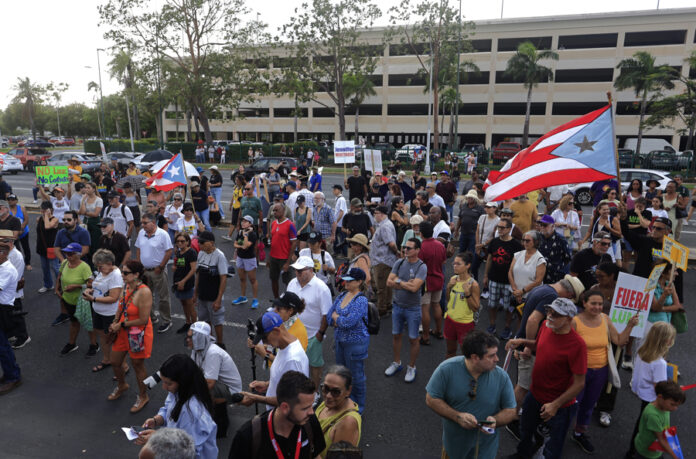
Personas participan en una manifestación en contra de la compañía Luma Energy este martes, en la Plaza Las Américas en San Juan (Puerto Rico). (Foto: EFE/Thais Llorca)
San Juan.– Varias organizaciones de artistas y activistas puertorriqueños se concentraron este martes para protestar de nuevo contra la compañía Luma Energy, a cargo de la transmisión y distribución de la energía eléctrica de Puerto Rico y Genera PR, responsable del 60 % de la generación de energía en la isla, frente al centro comercial Plaza Las Américas en San Juan.
«Desde que entró LUMA Energy han subido los precios de la luz, los apagones son cada vez más frecuentes, ha muerto gente y no responde nadie, se dañan los enseres y no responde nadie, ellos están cobijados por un contrato en donde cobran 10 veces más de lo que cobraban los puertorriqueños que hacían esas funciones antes», explicó a EFE Raquel González, portavoz del Junte de Artistas Boricuas, una de las organizaciones que llevó a cabo el evento.
Los manifestantes también criticaron en la protesta que inició a las 16:00 hora local (20:00 GMT), a la empresa New Fortress Energy (NFE) que suple de gas a la Central de San Juan.
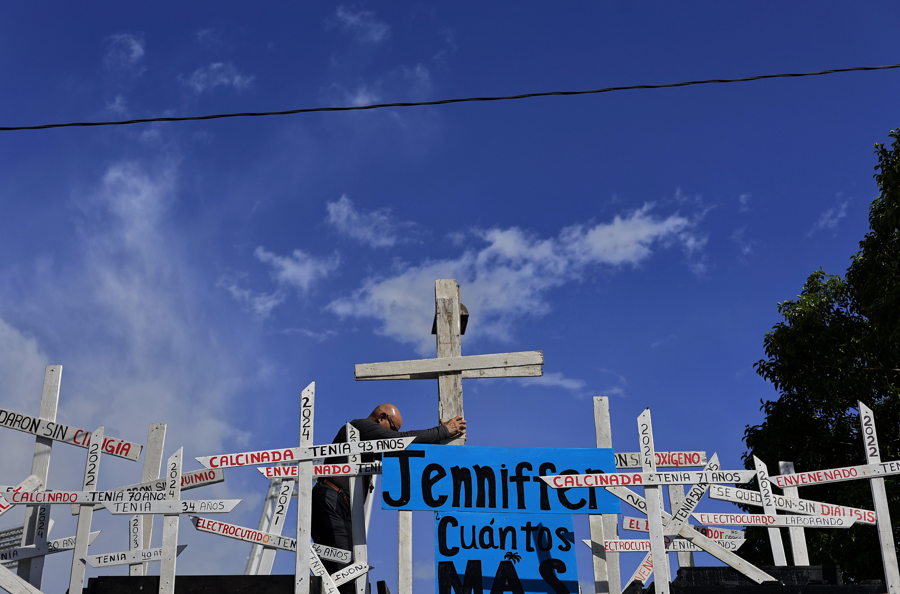
Una persona sostiene una cruz durante una manifestación en contra de la compañía Luma Energy este martes, en la Plaza Las Américas en San Juan (Puerto Rico). (Foto: EFE/Thais Llorca)
«Estando secuestrados por los intereses privados de estas tres empresas, el pueblo de Puerto Rico se manifiesta para que se cancelen los contratos y regrese la honestidad pública, pero no politizada, limpia de corrupción, pero en manos de los que sí que saben lo que están haciendo», añadió González.
Los asistentes se quejaron de la gestión del servicio eléctrico al grito de «Luma pal carajo» y al son del cuatro puertorriqueño, considerado como el instrumento de cuerda nacional, tocado por el cuatrista Tony Mapeyé y al ritmo de los barriles de bomba puertorriqueña, un género musical autóctono que tiene sincretismo de la cultura taína, africana y española y que nació entre los esclavos.
«Luma no suma, nos quita», es uno de los versos de la décima puertorriqueña, una forma poética de diez versos octosílabos, que compuso Mapeyé para denunciar la crisis energética que sufren los ciudadanos de Puerto Rico.
Por su parte, Reinaldo Ortiz, puertorriqueño y maquillador teatral en el municipio de Aguada, ubicado en el noroeste de la isla, afirmó que viajó hasta San Juan porque la situación de la red eléctrica «es insostenible».
Personas sostienen carteles durante una manifestación en contra de la compañía Luma Energy este martes, en la Plaza Las Américas en San Juan (Puerto Rico). (Foto: EFE/Thais Llorca)
«Estoy aquí apoyando que saquen a Luma porque LUMA está trabajando muy mal en Puerto Rico y engañó al pueblo de Puerto Rico diciendole que íbamos a estar mejor con ellos y eso es mentira», subrayó Ortiz, ataviado con una pancarta que rezaba: «Fuera Luma y Genera».
Los constantes apagones que ocurren a diario en la isla desde que en junio de 2021 Luma empezó a trabajar en Puerto Rico y los aumentos de la factura pese a las interrupciones eléctricas son las principales causas que provocan que los puertorriqueños se echen a las calles a protestar.
La red eléctrica puertorriqueña es muy frágil desde que quedó destrozada por el huracán María en 2017 y, desde entonces, los apagones son frecuentes en la isla.
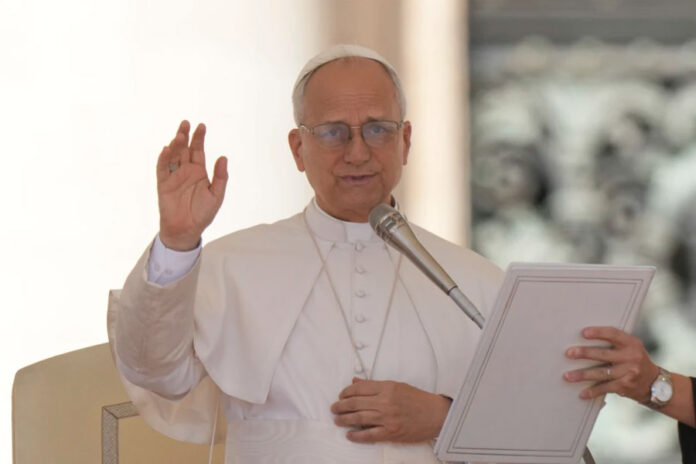
El papa León XIV, durante su audiencia semanal en la Plaza de San Pedro del Vaticano, el 30 de julio de 2025. (Foto: AP/Andrew Medichini)
El papa León XIV pidió el miércoles un compromiso renovado con la diplomacia para resolver los conflictos, al conmemorar el 50 aniversario de los Acuerdos de Helsinki, el histórico acuerdo de la Guerra Fría que marcó el inicio de una nueva era de seguridad y derechos humanos.
Al final de su audiencia general, el primer pontífice estadounidense de la historia dijo que el 1 de agosto es el aniversario de la conclusión de la cumbre de 35 naciones celebrada en Finlandia de la que salió el Acta Final de Helsinki, que años después contribuyó al nacimiento de la Organización para la Seguridad y la Cooperación en Europa.
“Hoy más que nunca es esencial preservar el ‘Espíritu de Helsinki’, perseverar en el diálogo, fortalecer la cooperación y hacer de la diplomacia la vía privilegiada para prevenir y resolver los conflictos», afirmó León, renovando su llamado por la paz en el mundo.
En el apogeo de la distensión de la Guerra Fría en la década de 1970, el presidente de Finlandia, Urho Kekkonen, fue anfitrión de una cumbre entre Estados Unidos y la Unión Soviética donde el estadounidense Gerald Ford, el soviético Leonid Brezhnev y otros firmaron un compromiso histórico con la paz, los contactos entre Oriente y Occidente, la seguridad europea y los derechos humanos.
León dijo que los acuerdos “inauguraron una nueva era geopolítica, favoreciendo un acercamiento entre Oriente y Occidente. También marcó un renovado interés por los derechos humanos, con especial atención a la libertad religiosa, considerada uno de los pilares de la emergente arquitectura de cooperación desde Vancouver hasta Vladivostok».
Con la guerra de Rusia en Ucrania en curso, Leo recordó que la Santa Sede había enviado una delegación a la cumbre finlandesa encabezada por el futuro secretario de Estado, el arzobispo Agostino Casaroli, mejor conocido por promover y seguir una política de Ostpolitik, o apertura y diálogo con Europa del Este.
En otros comentarios el miércoles, el papa manifestó también su horror por el “brutal” ataque a una iglesia católica en el este de la República Democrática de Congo por parte de rebeldes respaldados por Estado Islámico. Al menos 38 personas, entre las que había 15 mujeres y nueve niños, fueron asesinadas en la iglesia durante una vigilia de oración el fin de semana.
“Mientras encomiendo a las víctimas a la misericordia amorosa de Dios, rezo por los heridos y por los cristianos de todo el mundo que siguen sufriendo violencia y persecución, instando a cuantos tienen responsabilidades a nivel local e internacional a colaborar para prevenir tragedias similares», declaró el pontífice.
La audiencia general del miércoles supuso la reanudación del encuentro semanal del papa con los fieles tras un receso de varias semanas durante el verano. La Plaza de San Pedro estaba especialmente llena, dada la llegada de decenas de miles de peregrinos a la ciudad para una celebración del Año Santo de una semana dedicada a los jóvenes católicos.
El portavoz del Kremlin, Dmitri Peskov. (Foto: EFE/PAVEL BEDNYAKOV)
El Kremlin no se inmutó hoy ante el nuevo ultimátum del presidente de Estados Unidos, Donald Trump, que dio a Rusia diez días para detener la guerra en Ucrania.
«Continuamos registrando todas las declaraciones que realiza el presidente Trump», dijo Dmitri Peskov, portavoz presidencial, durante su rueda de prensa telefónica diaria.
Ante la insistencia de los periodistas, añadió: «No puedo decir nada más».
A su vez, en alusión a las sanciones y aranceles secundarios con los que Trump amenazó a Rusia, aseguró que este país ha desarrollado «cierta inmunidad».
Mientras, desde Ginebra la presidenta del Senado, Valentina Matviyenko, aseguró que los ultimátum «no son un método muy eficaz para la solución de conflictos».
«Si lanzamos, como usted dice, ultimátum, entonces deberíamos dirigirlos a la parte ucraniana, ya que son ellos los que están torpedeando las negociaciones de paz», dijo.
El presidente ruso, Vladímir Putin, no ha hecho ninguna alusión en las últimas tres semanas a los ultimátum estadounidenses.
Trump aseguró el martes que el 29 de julio comenzó el ultimátum de diez días que concedió a Putin para cesar las hostilidades en Ucrania.
«Diez días desde hoy», se escuchó decir a Trump a bordo del avión presidencial Air Force One, que lo llevaba de regreso a Washington D.C. tras una visita a Escocia.
De acuerdo a la nueva fecha, Rusia deberá alcanzar un acuerdo con Ucrania antes del 8 de agosto si desea evitar sanciones y la imposiciones de aranceles secundarios a sus importadores de petróleo, según dijo Trump, que el pasado 14 de julio había dado 50 días de plazo al Kremlin.
El secretario de Economía, Marcelo Ebrard (c), el director de Enterprise LATAM NVIDIA, Marcio Aguiar (d) y el presidente del Consejo Coordinador Empresarial, Francisco Cervantes (i), participan durante una rueda de prensa este martes, en Ciudad de México (México). (Foto: EFE/ Isaac Esquivel)
Ciudad de México.– México anunció este martes que trabaja en el desarrollo de un lenguaje propio de inteligencia artificial (IA), con el que se integrará a un nuevo orden económico global basado en datos y talento, y que lo posicionará como líder tecnológico en América Latina.
El proyecto, respaldado por la empresa Nvidia, será presentado oficialmente en noviembre y buscará incorporar elementos culturales e incluso lenguas indígenas mexicanas.
Durante la conferencia “México IA: Inversión Acelerada”, el secretario de Economía del Gobierno de México, Marcelo Ebrard, subrayó que la creación de un modelo lingüístico nacional es una condición imprescindible para competir en la nueva economía digital.
“La inteligencia artificial es el alfabeto moderno. O nos apuramos para manejar ese alfabeto o va a ser una desventaja muy grande en el nuevo acomodo que estamos viendo, que está surgiendo hoy”, afirmó.
En este marco, inscribió el evento llamado ‘México IA + INversión Acelerada’, a celebrarse en Expo Santa Fe los días 12 y 13 de noviembre, y que contará con más de 100 conferencistas globales y servirá como plataforma de lanzamiento del modelo lingüístico nacional y como plataforma de la región en la materia.
“Estamos organizando el esfuerzo para que en dos años México tenga resultados visibles y tangibles en esta transformación tecnológica”, declaró.
Ebrard explicó que México ya cuenta con las herramientas necesarias para detonar un ecosistema propio de IA, y destacó la meta gubernamental de hacer llegar sus aplicaciones a más de 5 millones de estudiantes universitarios y más de 5 millones de empresas.
“Es un efecto multiplicador gigantesco el que tenemos que hacer, pero factible. No quiere decir que nada más va a depender de que nosotros lo hagamos. De hecho, ya lo están haciendo muchas instituciones. Hay que organizar el esfuerzo y tener una meta para que esto se logre en 2 años”, urgió.
La infraestructura será clave en este proceso y ante este escenario, el Consejo Coordinador Empresarial (CCE) estimó que la inversión en centros de datos podría alcanzar los 9.200 millones de dólares, y podría generar hasta 27.000 millones en impacto económico indirecto.
Lo anterior podrían significar más de 70 centros de datos de colocación o que ofrezcan servicios en la nube, según explicó a EFE Adriana Rivera Cerecedo, directora de la Asociación Mexicana de Data Centers.
México también se une a la iniciativa Latam-GTP
La iniciativa se inscribe a la par de un proyecto que acompaña Nvidia y un fondo del Gobierno chileno, llamado Latam-GPT, que busca desarrollar modelos de lenguaje adaptados a la cultura de los países de habla hispana.
“México solamente va a agregar más conocimiento de la lengua mexicana (…) es para nosotros muy bonito de ver porque son varios países de lengua hispana que están colaborando con este Latam-GPT”, dijo en entrevista con medios Marcio Aguiar, director de Nvidia para América Latina.
Detalló además que la colaboración entre científicos de México, Chile y otros países de la región está dando forma a un sistema cada vez más innovador, en donde incluso se puedan aplicar en lenguas indígenas, siendo que solo en México se tienen actualmente activas 68.
Aguiar señaló que un modelo paragüayo ya es referencia, pues busca enseñar a cualquier persona que quiera aprender su lengua guaraní, mientras que imaginó que esto podría ocurrir con las lenguas mixtecas, zapotecas y el nahuátl.
Kyle Schwarber de los Filis de Filadelfia celebra con Brandon Marsh la victoria ante los Medias Blancas de Chicago el martes 29 de julio del 2025. (Foto: AP/Nam Y. Huh)
Kyle Schwarber conectó un jonrón de dos carreras, Jesús Luzardo lanzó siete brillantes entradas y los Filis de Filadelfia vencieron el martes 6-3 a los Medias Blancas de Chicago.
Brandon Marsh también conectó un cuadrangular de dos carreras para Filadelfia, que se recuperó después de perder el lunes el primer partido de la serie. Schwarber, Marsh y Trea Turner tuvieron cada uno dos hits.
Luzardo (9-5) permitió dos hits, ponchó a cuatro y dio una base por bolas.
Los Medias Blancas anotaron tres veces en la novena contra Daniel Robert. Colson Montgomery impulsó una carrera con un rodado, y el venezolano Lenyn Sosa conectó un jonrón de dos carreras.
Por los Medias Blancas, los cubanos Edgar Quero de 4-2 con una anotada, Miguel Vargas de 4-0, Luis Robert Jr. de 3-1 con una anotada. El venezolano Lenyn Sosa de 4-2 con una anotada y dos remolcadas.
El artista puertorriqueño Bad Bunny. (Foto: EFE/Thais Llorca/Archivo)
San Juan.– Dos ciudadanas denunciaron este martes haber sido timadas en la compra de taquillas para los conciertos de la residencia de Bad Bunny, en querellas reportadas en Río Piedras y en Hato Rey.
En Río Piedras, policías municipales de San Juan entrevistaron a la querellante, de 22 años de edad, que indicó que compró unas taquillas para una de las funciones de Bad Bunny por la cantidad de 380 dólares.
Las taquillas que recibió ya estaban vendidas a otra persona. De acuerdo a la perjudicada, esto ocurrió el pasado 26 de julio, a las 12:48 de la tarde.
La estafa reportada en Hato Rey se produjo a través de las redes sociales. La querellante, de 56 años, informó que compró las entradas por Facebook y envió la cantidad de 600 dólares por la aplicación de ATH Móvil.
Según la perjudicada, luego que hizo el pago, los contactos dejaron de contestar sus llamadas y mensajes.
Los padres preocupados se apresuran a vacunar a sus hijos, temiendo que futuros cambios en la política federal limiten el acceso a las vacunas gratuitas. (Erin Hooley/Chicago Tribune/Tribune News Service via Getty Images)
Durante dos décadas, la pediatra Lanre Falusi, de Washington D.C., ha asesorado a los padres sobre el calendario de vacunas que deben recibir sus hijos, la seguridad de la vacunación y sus efectos secundarios.
Pero dijo que este año las charlas han cambiado.
“Por primera vez, los padres de recién nacidos me preguntan si en el futuro sus bebés podrán seguir recibiendo las vacunas”, contó Falusi.
A lo largo del país, pediatras dicen que padres ansiosos están preocupados por si continuará habiendo acceso a las vacunas infantiles de rutina. Los más intranquilos son aquellos con hijos en Medicaid, el programa del gobierno que ofrece seguro médico para familias de bajos ingresos y personas con discapacidades.
Medicaid cubre a 4 de cada 10 niños en el país.
“El problema realmente surgió cuando RFK Jr. asumió el cargo de secretario de Salud y Servicios Humanos (HHS)”, afirmó Deborah Greenhouse, pediatra de Carolina del Sur.
La preocupación aumentó tras la reestructuración, en el mes de junio, de un órgano asesor clave sobre vacunas de los Centros para el Control y Prevención de Enfermedades (CDC). Millones de familias temen que en un futuro cercano tengan que pagar de su bolsillo las vacunas que actualmente están cubiertas por su seguro médico.
El secretario de Salud y Servicios Humanos, Robert F. Kennedy Jr., conocido activista antivacunas, destituyó a los 17 miembros del Comité Asesor sobre Prácticas de Inmunización (ACIP), el grupo responsable de recomendar las vacunas que deberían ser incluidas en los calendarios nacionales de inmunización para niños y adultos.
Kennedy sustituyó a los miembros del panel por otros nuevos, afines a sus puntos de vista, lo que generó alarma entre profesionales médicos y los expertos en salud pública.
“La gente debería preocuparse por lo que va a pasar con la disponibilidad de vacunas para los niños”, afirmó Jennifer Tolbert, directora adjunta del Programa sobre Medicaid y Personas sin Seguro Médico de KFF.
En virtud de la Ley de Cuidado de Salud a Bajo Precio (ACA), las aseguradoras médicas actualmente están obligadas a cubrir todas las vacunas recomendadas por el ACIP. Además, los estados y otras jurisdicciones utilizan el calendario de vacunación infantil para establecer los requisitos de inmunización de los escolares.
Las recomendaciones del ACIP también determinan qué vacunas están cubiertas por el programa Vaccines for Children (VFC), una iniciativa financiada por los CDC que proporciona dosis gratuitas a niños de familias de bajos ingresos y sin seguro médico.
La mitad de los niños del país son elegibles para este programa.
Si los nuevos miembros del ACIP retiraran su apoyo a una vacuna concreta y el director de los CDC estuviera de acuerdo, las consecuencias serían inmediatas, aseguró Tolbert. “Eso afectaría automáticamente qué vacunas están cubiertas y, por lo tanto, cuáles se encuentran disponibles para los niños beneficiarios de Medicaid”, explicó.
(Foto: Ilustrativa/Pexels)
Las aseguradoras aún no han dicho cómo modificarían la cobertura, pero Tolbert afirmó que una medida de ese tipo abriría la puerta a que los planes de salud privados se negaran a cubrir la vacuna.
Los pediatras temen que en el futuro los padres se vean obligados a elegir entre pagar cientos de dólares de su bolsillo por las vacunas o dejar a sus hijos desprotegidos.
Por su parte el AHIP, la asociación nacional que agrupa a la industria de seguros médicos, dijo que los planes “siguen cumpliendo los requisitos federales relacionados con la cobertura de las vacunas recomendadas por el ACIP y seguirán apoyando el amplio acceso a servicios preventivos críticos, incluidas las vacunas”.
Los pediatras también dicen que las noticias sobre la nueva ley presupuestaria del presidente Donald Trump, que se espera que reduzca el gasto en Medicaid en aproximadamente $1.000 millones durante la próxima década, también han generado mucha inquietud entre los padres.
En realidad, aunque pueden estar preocupados por perder su Medicaid, Tolbert advirtió que la ley no menciona las vacunas ni cambia los requisitos de elegibilidad o las prestaciones de Medicaid para los niños. Sin embargo, menos financiación federal significa que los estados tendrán que tomar decisiones sobre a quiénes seguirán cubriendo y qué servicios se les ofrecerá.
Para tener los fondos necesarios para pagar Medicaid, los estados podrían aumentar los impuestos y destinar a este programa fondos destinados a otras áreas, como la educación o el sistema penitenciario. Pero lo más probable es que opten por reducir el gasto en Medicaid.
“También podrían hacerlo recortando la elegibilidad de poblaciones opcionales, recortando servicios que son opcionales o reduciendo los pagos a los proveedores”, argumentó Tolbert. “No está claro cómo se desarrollará esto, y es probable que sea diferente en cada uno de los estados”.
En junio, Kennedy anunció en una publicación en X que los CDC ya no recomiendan la vacuna contra covid-19 para niños sanos y embarazadas. La medida provocó una demanda judicial por parte de la Academia Americana de Pediatría y otras asociaciones de médicos que buscan frenar la directiva de Kennedy.
También ese mes, los nuevos miembros del ACIP nombrados por Kennedy votaron a favor de recomendar que los adultos y los niños ya no reciban vacunas contra la gripe con timerosal, un conservante que rara vez se utiliza en vacunas contra la gripe.
Los activistas antivacunas, entre ellos Kennedy, llevan décadas manifestándose contra el timerosal, alegando que está relacionado con el autismo, a pesar de que no existe evidencia científica que respalde esa relación.
“No hay motivo de preocupación”, afirmó en un comunicado Emily Hilliard, vocera del Departamento de Salud y Servicios Humanos. “Como ha declarado el secretario Kennedy, no se negará a nadie el acceso a una vacuna autorizada si decide recibirla”.
“Cuando el comité del ACIP se reunió en junio, reafirmó que las vacunas contra la gripe seguirán siendo accesibles y estarán dentro de la cobertura. Por otra parte, hizo hincapié en la seguridad garantizando que estas vacunas no contienen mercurio”, escribió Hilliard.
“El programa Vaccines for Children sigue proporcionando vacunas contra covid-19 sin costo alguno para los niños que cumplen los requisitos cuando los padres, el proveedor y el paciente consideren que la vacunación es adecuada. Medicaid seguirá reembolsando los gastos de administración”.
Sin embargo, la posibilidad de que una vacuna sea restringida o deje de estar cubierta ya está cambiando la forma en que los padres abordan la inmunización. En el consultorio de Falusi, están programando citas para que la vacunación coincida exactamente con los requisitos de elegibilidad de sus hijos, a veces incluso en la misma semana de su cumpleaños.
En Albuquerque, Nuevo México, la pediatra Melissa Mason, ha atendido algunos pacientes que contrajeron sarampión durante el brote en varios estados que comenzó en Texas.
Teme que nuevas limitaciones a la vacunación derive en más enfermedad y muertes.
Desde enero, se han registrado a nivel nacional más de 1.300 casos de sarampión, según los CDC. “Estamos viendo este brote porque las tasas de vacunación son demasiado bajas y eso permite que el sarampión se propague en la comunidad”, dijo Mason.
Los niños y adolescentes representan el 66% de los casos de sarampión, indican los CDC. En respuesta, Mason ha comenzado a ofrecer la vacuna contra el sarampión a bebés de tan solo 6 meses, medio año antes de lo habitual, aunque dentro de las directrices federales.
El año pasado, las tasas generales de vacunación en los jardines de infantes descendieron en el país, y el número de niños con exención de vacunación escolar siguió aumentando.
Mason teme que, si se restringe el acceso a las vacunas, las comunidades vean el regreso de otras enfermedades prevenibles que se han mantenido bajo control durante mucho tiempo, especialmente en estados como Nuevo México, donde el 61% de los niños están bajo Medicaid.
(Foto: Ilustrativa/Pexels)
La tos ferina, otra enfermedad que puede ser mortal para los niños más pequeños, también se está propagando. Según informaron los CDC, hasta el 5 de julio se habían identificado más de 15.100 casos. Mason explicó que la tos ferina es especialmente peligrosa para los bebés demasiado pequeños para recibir la vacuna.
Por ahora, los pediatras están tratando de subrayar la urgencia sin provocar pánico en la población.
En Columbia, Carolina del Sur, Greenhouse solía ofrecer a las familias un rango de edad flexible para las vacunas de rutina.
“Ya no digo eso”, expresó la pediatra.
Ahora, la médica recomienda a los padres a vacunar a sus hijos tan pronto como puedan hacerlo.
Muchos de ellos le han preguntado si la vacuna contra el VPH, que ayuda a prevenir el cáncer de cuello uterino, se puede administrar a niños menores de la edad recomendada, que es de 9 años.
“De hecho, hoy mismo dos padres me han preguntado si sus hijos de 7 u 8 años podían recibir la vacuna contra el VPH”, contó Greenhouse. “Tuve que responderles que no está permitido”.
Dado que la vacuna requiere varias dosis aplicadas con meses de diferencia, Greenhouse teme que se acabe el tiempo para que las familias puedan cubrir la serie con el seguro de salud. Algunas familias pueden decidir no comprar la segunda dosis si tienen que pagarla de su bolsillo. Si ya no está cubierta por el seguro, esa segunda dosis podría costar alrededor de $300.
“No puedo estar 100% segura de cómo será el futuro de algunas de estas vacunas”, reflexionó Greenhouse. “Lo que sí puedo decir es que es una situación muy aterradora”.
Se espera que el comité asesor sobre vacunas que nombró recientemente el secretario Kennedy realice su próxima reunión pública en agosto.
KFF Health News es una redacción nacional que produce periodismo en profundidad sobre temas de salud y es uno de los principales programas operativos de KFF: la fuente independiente de investigación sobre políticas de salud, encuestas y periodismo.
Ghislaine Maxwell, exnovia y cómplice del delincuente sexual Jeffrey Epstein, exigió este martes inmunidad o un indulto a cambio de testificar ante el Congreso de Estados Unidos, como pidió un comité de la Cámara de Representantes en medio de la renovada polémica del caso durante la Administración de Donald Trump.
La defensa de la mujer, quien cumple una condena de 20 años por tráfico sexual en Florida, respondió con una lista de condiciones a la petición que hizo la semana pasada el presidente del Comité de Supervisión de la Cámara, James Comer, quien la citó a declarar el 11 de agosto para que aporte nueva información sobre el caso.
Como principal petición, el abogado David Markus exigió que le concedan inmunidad y que la comparecencia ocurra en Washington y no en la Institución Correccional Federal de Tallahassee, capital Florida, donde cumple su sentencia, según solicitó el comité.
«Si la Sra. Maxwell recibiese clemencia, ella tendría la voluntad y estaría ansiosa de testificar abiertamente y honestamente en público ante el Congreso en Washington D.C. Ella da la bienvenida a la oportunidad de compartir la verdad», establece la carta que compartió el jurista.
Las condiciones se difunden un día después de que Maxwell pidió a la Corte Suprema de EE. UU. revocar su sentencia de 20 años de cárcel por ser cómplice de Epstein, magnate acusado de pederastia y tráfico sexual de menores de edad que se suicidó en una prisión de Nueva York en 2019, y que previamente había sido condenado en Florida por hechos relacionados.
La defensa ha visto como una «oportunidad» las reuniones que tuvieron ella y el fiscal general adjunto de Estados Unidos, Todd Blanche, el jueves y viernes pasado mientras sube la presión ciudadana, en particular de los simpatizantes de Trump, para que la actual Administración revele todos los archivos del caso.
Como segunda condición, el abogado Markus solicitó que el Congreso le proporcione con antelación las preguntas que le harán para que se prepare «de forma significativa» y aliste los documentos que corroborarán sus respuestas.
Y, por último, pidió que la audiencia ocurra después de que la Corte Suprema de EE. UU. analice la revocación de la sentencia, con el argumento de que Epstein hizo un acuerdo en 2007 en el Distrito del Sur de Florida en el que el Gobierno «acuerda que no instituirá ningún cargo criminal en contra de cualquier posible cómplice».
«Ella merece alivio. Estamos abiertos a trabajar con el comité para encontrar un camino hacia adelante que respete sus derechos constitucionales y le permita asistir al pueblo estadounidense y al Comité en esta importante misión de vigilancia», concluyó la defensa.
La polémica sobre el caso de Epstein se reavivó el 7 de julio tras un memorando en el que el DOJ y el FBI concluyen que el magnate no mantenía una «lista de clientes» famosos a quienes ofrecía menores de edad y que sí se suicidó, lo que contradice una teoría de la conspiración popular entre los simpatizantes de Trump.
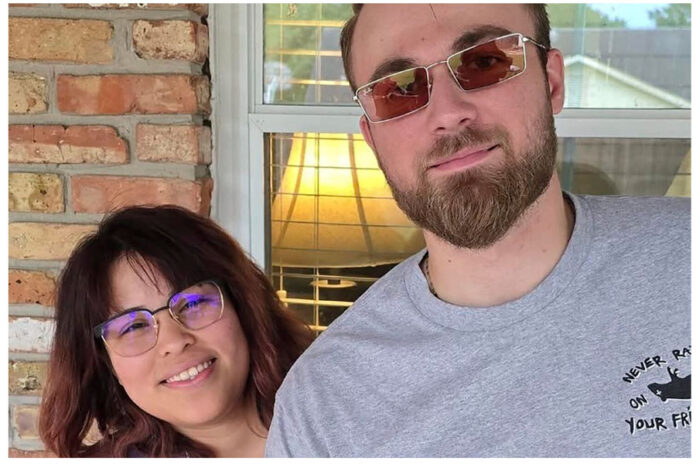
Adrian Clouatre se toma una selfie con su esposa, Paola, el 26 de mayo de 2024, en Baton Rouge, Luisiana. (Foto: AP/Adrian Clouatre/Archivo)
La esposa de un veterano del Cuerpo de Infantería de Marina de Estados Unidos ha sido liberada de la detención del Servicio de Inmigración y Control de Aduanas tras la intervención del senador John Kennedy, un republicano de Luisiana que apoya la estricta política de inmigración del presidente Donald Trump.
Hasta esta semana, la ciudadana mexicana Paola Clouatre había sido una de las decenas de miles de personas que se encuentran bajo custodia del Servicio de Inmigración y Control de Aduanas (ICE, por sus siglas en inglés), mientras el gobierno federal continúa presionando a los agentes de inmigración para arrestar a 3.000 personas al día sospechosas de estar en Estados Unidos ilegalmente.
Correos electrónicos revisados por The Associated Press muestran que la oficina de Kennedy solicitó el viernes al Departamento de Seguridad Nacional (DHS, por sus siglas en inglés) su liberación después de que un juez detuviera su orden de deportación a principios de esa semana. Para el lunes, ella había salido de un centro de detención remoto del ICE en el norte de Luisiana y estaba en casa en Baton Rouge con su esposo, el veterano Adrian Clouatre, y sus dos hijos pequeños.
La representante de servicios a los constituyentes de Kennedy, Christy Tate, felicitó a Adrian Clouatre por la liberación de su esposa y le agradeció por su servicio militar. «Estoy muy feliz por ti y tu familia», escribió Tate en un correo electrónico enviado a Adrian Clouatre. «¡Dios es realmente grande!».
La oficina de Kennedy fue «fundamental» en la interacción con el Departamento de Seguridad Nacional, según Carey Holliday, el abogado de la familia. La oficina de Kennedy no proporcionó más comentarios.
Otro republicano de Luisiana, el líder de la mayoría de la Cámara de Representantes, Steve Scalise, también intervino recientemente con el DHS para asegurar la liberación de una madre iraní de la detención del ICE que causó indignación generalizada. La mujer ha vivido durante décadas en Nueva Orleans.
Kennedy ha sido un firme defensor de las políticas de inmigración de Trump.
«La inmigración ilegal es ilegal — duh», publicó Kennedy en su página de Facebook el 17 de julio, en medio de una serie de apariciones en los medios criticando los esfuerzos para evitar que los agentes del ICE realicen arrestos. Sin embargo, en abril criticó al gobierno de Trump por deportar erróneamente a un hombre de Maryland.
La oficina del senador solicita la liberación de la madre de familia de la custodia del ICE
El Departamento de Seguridad Nacional le dijo previamente a la AP que consideraba que Clouatre estaba «ilegalmente» en el país.
Una cadena de correos electrónicos compartida por Adrian Clouatre muestra que el abogado de la familia se comunicó con la oficina de Kennedy a principios de junio después de que Paola Clouatre fuera detenida a finales de mayo.
Tate recibió los documentos judiciales de Paola Clouatre a principios de julio y dijo que luego contactó al ICE, según el intercambio de correos electrónicos.
El 23 de julio, un juez de inmigración detuvo la orden de deportación de Paola Clouatre. Después de que Adrian Clouatre notificara a la oficina de Kennedy, Tate dijo que «envió la solicitud de liberación» de Paola Clouatre al DHS y compartió una copia de la moción del juez con la agencia, de acuerdo con los correos electrónicos.
En un correo electrónico enviado varios días después, Tate dijo que el ICE le informó que «continúa tomando decisiones de custodia caso por caso basándose en las circunstancias específicas de cada caso» y había recibido la decisión del juez de la oficina de Kennedy «para su consideración».
Al siguiente día hábil, Paola Clouatre fue puesta en libertad.
«Continuaremos manteniéndolos a usted, su familia y a otros que están experimentando los mismos problemas en nuestras oraciones», escribió Tate en un correo electrónico a Adrian Clouatre. «Si necesita nuestra asistencia en el futuro, por favor contáctenos».
De vuelta con sus hijos
Paola Clouatre había sido detenida por los agentes del ICE el 27 de mayo durante una cita relacionada con su solicitud de tarjeta de residencia permanente, también conocida como «green card».
Ella había ingresado al país como menor con su madre desde México hace más de una década y fue procesada legalmente mientras buscaba asilo, según ella, su esposo y su abogado. Pero la madre de Clouatre no se presentó a una audiencia en la corte, lo que llevó a un juez a emitir una orden de deportación contra Paola Clouatre en 2018, aunque para ese entonces ella se había distanciado de su madre y estaba sin hogar.
El Departamento de Seguridad Nacional no respondió de inmediato a una solicitud de comentarios sobre la liberación de Clouatre.
Adrian Clouatre señaló que desearía que la agencia «realmente considerara las circunstancias» antes de detener a personas como su esposa. «No debería ser simplemente como un ‘Oh, son ilegales, póngalos bajo custodia del ICE'».
Después de reunirse con su hija lactante y de acurrucarse con su hijo pequeño, Paola Clouatre comentó a la AP que se siente como una madre de nuevo.
«Me sentía mal», dijo sobre la detención. «Sentía que le había fallado a mis hijos».
Probablemente será un proceso judicial de varios años hasta que los procedimientos de la corte de inmigración de Paola Clouatre se cierren formalmente, pero las cosas parecen prometedoras, y debería poder obtener su “green card” eventualmente, dijo su abogado.
Por ahora, porta una tobillera de rastreo, pero aún puede retomar la vida donde la dejó, dice su esposo. El día de su arresto en Nueva Orleans, la pareja había planeado probar algunos de los famosos pasteles franceses de la ciudad conocidos como beignets y su esposo dice que finalmente tendrán esa oportunidad de nuevo: «Vamos a recuperar ese día».
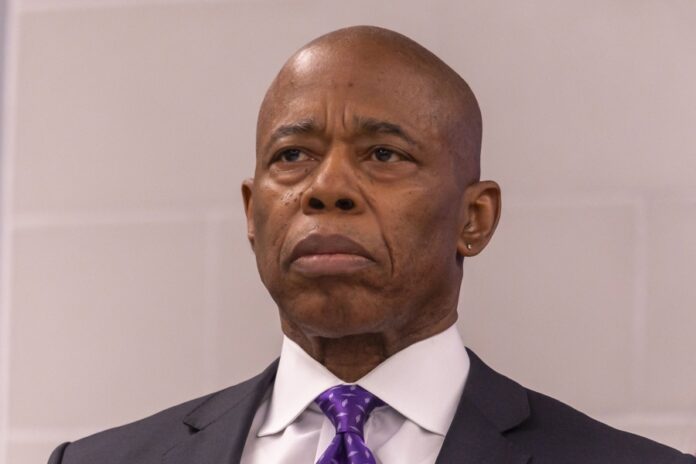
Alcalde de Nueva York, Eric Adams, durante un acto público en Manhattan (NY, EE. UU.). (Foto: EFE/Sarah Yenesel/Archivo)
Al menos cuatro personas, incluído un policía, murieron y otra resultó herida en un tiroteo en el barrio de Manhattan en Nueva York, informó el alcalde de la ciudad Eric Adams, que agregó que el tirador también murió por lo que pareció ser un disparo que se infligió a sí mismo.
«Cinco inocentes fueron baleados esta noche. Perdimos cuatro vidas -dos hombres y dos mujeres- en otro acto de violencia con armas de fuego sin sentido, incluyendo a un oficial miembro del Departamento de Policía de la Ciudad de Nueva York», dijo Adams en una rueda de prensa.
La persona herida se encuentra en condición crítica «luchando por su vida», agregó.
El alcalde agregó que el tirador murió «por una aparente herida de bala autoinfligida».
La comisionada de Policía de Nueva York, Jessica S. Tisch, dijo que el incidente comenzó alrededor de las 18:20 hora local (22:20 GMT) cuando el atacante salió de un vehículo negro que estacionó cerca de un edificio de oficinas en la zona de Midtown, al cual entró con un arma larga en el brazo.
Allí entró al lobby del edificio y disparó al oficial de Policía fallecido. Posteriormente disparó a una mujer y a un guardia de seguridad, tras lo que subió en ascensor al piso 33 y comenzó a disparar a medida que avanzaba.
«Luego, (el agresor) avanzó por un pasillo y se disparó en el pecho», explicó Tisch.
El atacante fue identificado como Shane Devone Tamura, un joven de 27 años que viajó en su propio coche desde Las Vegas hasta Nueva York, donde llegó este lunes. Según la comisionada, el hombre «tiene antecedentes de salud mental documentados», y agregó que todavía están tratando de aclarar los motivos del ataque.
En el vehículo, la Policía halló «un estuche de fusil con munición, un cargador de revólver cargado, una mochila y medicamentos recetados a Devone Tamura».
Además, Tisch aclaró que otras cuatro personas están siendo atendidas de heridas que recibieron durante la huida.
El oficial de Policía fallecido es Didarul Islam, de 36 años y con tres años de experiencia en el cuerpo, informó Adams.
El tiroteo tuvo lugar en un rascacielos que alberga la sede de empresas como el gigante de inversiones Blackstone, la Liga Nacional de Fútbol Americano (NFL, en inglés) y la firma de asesoría contable y financiera KPMG, entre otras.
Se trata del tiroteo masivo número 254 en Estados Unidos este año, según datos del Gun Violence Archive, que contabiliza este tipo de incidentes y considera como tiroteo masivo aquellos en los que el número de muertos o heridos es de cuatro o superior, sin incluir al tirador.