-4.2 C
Philadelphia
spot_img
Inicio Blog Página 495

Muere a los 63 años Fernando Valenzuela, legendario lanzador mexicano de los Dodgers

El exbeisbolista mexicano Fernando Valenzuela murió este martes. EFE/ Isaac Esquivel

 El mexicano Fernando Valenzuela, emblemático lanzador de los Dodgers y de las Grandes Ligas, falleció este martes a los 63 años.

«Los Dodgers lamentan el fallecimiento del legendario lanzador Fernando Valenzuela. Fernandomanía por siempre, Fernandomanía forever», publicó el equipo angelino en la red social X con una imagen del pícher zurdo.

La MLB también se hizo eco de la pérdida irreparable del símbolo del béisbol latinoamericano, quien con el dorsal 34 y apodado ‘el Toro’ se convirtió en un ídolo en Los Ángeles.

“Nos entristece profundamente enterarnos del fallecimiento del ex gran jugador de los Dodgers, Fernando Valenzuela”, publicó en un comunicado la MLB.

Nacido el 1 de noviembre de Navajoa, Valenzuela falleció este martes por presuntas complicaciones hepáticas que habrían causado un colapso multiorgánico.

El fallecimiento de Valenzuela se produce a solo tres días del inicio de la Serie Mundial, en la que sus amados Dodgers enfrentarán a los Yanquis de Nueva York.

Más allá de las 11 temporadas en las que mostró su talento en el terreno para los Dodgers, tras su retiro, Valenzuela tomó el micrófono y por los últimos 22 años como locutor en español del conjunto angelino, que el año pasado retiró el número 34 que utilizó el estelar serpentinero mexicano en su etapa como jugador.

Como pocos peloteros pueden hacerlo, Valenzuela marcó su terreno desde su llegada a las Grandes Ligas en 1981, con la “Fernandomanía”, cuando a sus 20 años comenzó su primera temporada completa con marca de 8-0 y efectividad de 0.50, para terminar con un registro de 13-7, mientras lideró la Liga Nacional en aperturas (25), juegos completos (11) blanqueadas (8), entradas lanzadas (192.1) y ponches.

Esta actuación lo llevó a conquistar los premios Novato del Año de la Liga Nacional y el premio Cy Young, siendo además una figura determinante para llevar a Los Ángeles a la conquista del título de Serie Mundial en 1981, en una postemporada en la que tuvo marca de 3-1, con 2.21 de efectividad en cinco partidos.

A lo largo de sus 17 temporadas en las Grandes Ligas, Valenzuela dejó un récord de 173-153, con un porcentaje de carreras limpias permitidas de 3.54 en 453 partidos, de los cuales inició 424, compilando 2.930 entradas lanzadas, en las que recetó 2.074 ponches, mientras vistió las franelas de Dodgers, Padres de San Diego, Angelinos de California, Cardenales de San Luis, Filis de Filadelfia y Orioles de Baltimore.

Valenzuela lideró la Liga Nacional con 21 victorias en 1986, mismo año en el que lanzó 20 partidos completos.

El histórico lanzador mexicano fue parte del Juego de Estrellas en las seis ediciones que fueron celebradas de 1981 al 1986.

How to vote by mail in Pennsylvania: a step-by-step

(Foto: Archivo)

Guide

Did you know that any eligible voter in Pennsylvania can vote by mail? That’s right! With just a few simple steps, you can ensure your voice is heard without the hassle of waiting in line on Election Day.

Step 1: Request Your Mail-In Ballot

The first thing you need to do is request your mail-in ballot. The deadline to apply for a mail ballot is Tuesday, October 29. But don’t wait! Do it now. You have three options to apply for a mail ballot:

1. Online: Visit vote.pa.gov to request your ballot easily.

2. By Mail: Fill out a form and send it in.

3. In Person: Head to your county election office for assistance.

Step 2: Fill Out Your Ballot

When your ballot arrives, take your time to make your selections carefully. Here’s how to prepare it for submission:

1. Place the completed ballot in the secrecy envelope.

2. Then, put the secrecy envelope inside the return envelope.

3. Don’t forget to sign and date the return envelope where indicated! If you skip this step, your vote won’t count.

Step 3: Return Your Ballot

Now that your ballot is ready, it’s time to return it. You have several options:

By Mail: Drop your return envelope in a mailbox.

In Person: Bring it to your county election office.

Drop Box: In some counties, you can also use designated mail ballot drop boxes.

Important Note

If you’re returning your ballot in person, remember that you can only return your own ballot. However, if you have a disability, you can designate someone to return it on your behalf. Learn how at the Pa. Department of State website.

Final Deadline

Make sure your county receives your ballot by 8 p.m. on Election Day. This is crucial for ensuring that your vote counts! If it’s getting close to Election Day, November 5, and you don’t want to risk the postal service not delivering your ballot on time, you can hand deliver your ballot to your county’s elections office. Some counties also provide drop boxes, which provide direct delivery to the elections office. Find out where your county accepts hand delivery at this link.

Need Help?

If you encounter any voting problems or have questions, don’t hesitate to reach out. You can call or text the nonpartisan Election Protection Hotline at 866-OUR-VOTE (866-687-8683) for assistance.

Get Ready to Vote!

As we approach November 5th, remember the rallying cry, “Todos PA’ las Urnas!” Make sure your vote counts and participate in shaping the future of your community.

For additional resources on voting rights and information, visit ACLU-PA’s Voting Rights page.

More Republicans are voting early, helping break records. Nearly 19 million ballots cast so far

voting
Students at The University of Wisconsin-Madison fill out ballots during the first day of Wisconsin's in-person absentee voting on the campus in Madison, Wisc., Tuesday, Oct. 22, 2024. (Photo: AP/John Hart, Wisconsin State Journal)

With former President Donald Trump’s encouragement, Republicans are voting early again, flocking to the polls for in-person voting a head of Election Day and helping push the national number to nearly 19 million.

The early turnout is breaking records in swing states such as Georgia and North Carolina.

The GOP hopes this surge of early votes will fix a mechanical problem that some in the party blame for costing it the 2020 presidential election and key races in 2022. Campaigns usually want their voters to cast ballots ahead of Election Day so they can focus their resources on getting more marginal supporters to the polls at the last minute.

Republicans excelled at that before Trump turned against early in-person and mail voting in 2020, as he spun wild conspiracies about the process and convinced his supporters to wait until Election Day to cast their ballots. But the party is again pushing its voters to cast their ballots early, and the former president is largely encouraging the change.

“I am telling everyone to vote early,” Trump said on a podcast last week hosted by conservative Dan Bongino, who has widely spread false information about early voting and the 2020 election.

Campaign signs for candidates cast a shadow on the street during early voting at Lark Library, Oct. 21, 2024, in McAllen, Texas. (Photo: AP/Delcia Lopez/The Monitor/File)

Republicans seem to be responding. In Nevada, where Democrats for decades relied on a robust early vote to counter the GOP on Election Day, about 6,000 more Republicans than Democrats had actually cast early ballots this year as of Tuesday, according to Associated Press research.

It’s unclear what this means for the election, however. The early vote data only reveals whether voters are registered with a party, not who they are voting for, and the early electorate can change from day to day as more people vote early.

The surge in 2020 Democratic early voting was largely a reaction to a pandemic that no longer exists, skewing historic comparisons. And what might seem like demographic trends in the early vote can suddenly disappear once Election Day votes are factored in.

It also is still very early in the voting process. The last of the seven swing states, Wisconsin, kicked off its early voting Tuesday morning, and the 17.4 million voters who already have cast ballots this year represent only about 11% of the number of total ballots in the 2020 presidential election. Parties can run up leads in the early vote and then see them vanish on Election Day because all their supporters have already cast ballots and the other side has not.

“The Democrats are still, as far as I can tell, banking more early votes. It’s just less of a disadvantage for Republicans,” said Michael McDonald, a political scientist at the University of Florida who carefully tracks the early vote. But, McDonald cautioned, “we don’t know if this is a shifting of furniture yet or an added strength for Republicans.”

Local candidates are seen under a patriotic canopy during early voting at the Hidalgo County Annex, Oct. 21, 2024, in Edinburg, Texas. (Photo: Delcia Lopez/The Monitor/File)

One thing is clear — the return to bipartisan early voting has helped bust records. North Carolina and Georgia both reported record turnout on their first day of in-person early voting, despite the destruction caused by Hurricane Helene, and it has spilled over into states that aren’t competitive at the presidential level, such as South Carolina, which reported its own record when it opened early voting Monday.

James Blair, the political director for Trump’s campaign, said its data shows that more of its low-propensity voters are casting ballots early than those who might be expected to support Vice President Kamala Harris.

“The starting point is, we’re in a strong spot,” Blair said.

The Harris campaign did not immediately respond to a request for comment.

Republicans still seem to have an aversion to mail balloting. They’ve improved their share of the mail vote in several states but still lag Democrats. That’s particularly true in Pennsylvania, the biggest electoral prize among the seven swing states and one that does not have a traditional early in-person voting option.

Democrats there have sent in about 350,000 more mail ballots than Republicans as of Tuesday. But the GOP is making up ground by voting early in-person in most competitive states.

People lineup to vote on the first day of Wisconsin’s in-person absentee voting at the Madison Public Library in Madison, Wisc., Tuesday, Oct. 22, 2024. (Photo: AP/John Hart, Wisconsin State Journal)

Nonetheless, years of sowing conspiracy theories about early and mail voting have taken a toll on the conservative electorate. At Elon Musk’s first solo event in support of Trump last week, he encouraged the crowd to vote early, an entreaty that some in the audience responded to by shouting back, “Why?”

Even with those reservations, some analysts said Republicans would rather have an early vote parity than not.

John Couvillon, a Louisiana pollster who usually works for the GOP and carefully tracks the early vote, noted that Democrats have dominated the early vote during recent election cycles. Their current position, Couvillon said, “is the equivalent of being down three touchdowns at halftime and thinking you can score four touchdowns in the second half.”

Tom Bonier, a Democratic data analyst, contended that everyone expected Republicans to return to early voting and the pandemic-inspired gaps to close. He said he’s not concerned.

People walk past a Vote sign on the first day of early voting in the general election, Oct. 21, 2024, in Miami. (Photo: AP/Lynne Sladky/File)

“I’m impressed the Democratic numbers are as strong as they are,” he said.

The main takeaway, Bonier said, is that the high rates of voting show an enthusiastic electorate on both sides.

“If either side thought the other side would stay home this election, that’s obviously not the case,” he said.

Penn State agrees to pay $1.25 million to resolve false claims act allegations relating to Non-Compliance with contractual cybersecurity requirements

Penn

PHILADELPHIA. – United States Attorney Jacqueline C. Romero announced that The Pennsylvania State University (Penn State) has agreed to pay $1,250,000 to resolve allegations that it violated the False Claims Act by failing to comply with cybersecurity requirements in 15 contracts or subcontracts involving the Department of Defense (DoD) or National Aeronautics and Space Administration (NASA).

The settlement resolves allegations that, between 2018 and 2023, Penn State failed to implement cybersecurity controls that were contractually required by DoD and NASA and did not adequately develop and implement plans of action to correct deficiencies it identified. DoD requires contractors to submit summary level scores reflecting the status of their compliance with applicable cybersecurity requirements on covered contracting systems used to store or access covered defense information. The United States alleged that Penn State submitted cybersecurity assessment scores to DoD that reflected it had not implemented certain controls, but misrepresented the dates by which it would implement them and did not pursue plans of action to do so. The United States also alleged that in performing certain of the contracts and subcontracts Penn State did not use an external cloud service provider that met DoD’s security requirements for covered defense information.

“Federal contractors who store or access covered defense information must take required steps to protect that sensitive information from bad actors,” said U.S. Attorney Romero. “When they fail to meet their cybersecurity obligations, we and our law enforcement partners will use every available tool to remedy the situation.”

“As our cyber adversaries become increasingly sophisticated, the importance of cybersecurity in safeguarding Department of Defense research, development and acquisitions information cannot be overstated,” said Special Agent in Charge Greg Gross, Naval Criminal Investigative Service Economic Crimes Field Office. “NCIS, along with our federal partners, are committed to investigating entities who fail to implement contractual requirements designed to protect Department of the Navy critical information.”

“Protecting the integrity of Department of Defense (DoD) procurement activities is a top priority for the DoD Office of Inspector General’s Defense Criminal Investigative Service (DCIS),” stated Special Agent in Charge Patrick J. Hegarty, DCIS Northeast Field Office. “Failing to comply with DoD contract specifications and cybersecurity requirements puts DoD information and programs at risk.  We will continue to work with our law enforcement partners and the Department of Justice to investigate allegations of false claims on DoD contracts.”

“Safeguarding sensitive NASA and DoD data is crucial to ensuring that it does not fall into the hands of our adversaries or bad actors,” said Assistant Inspector General for Investigations Robert Steinau of NASA. “The University’s inability to adequately address known deficiencies not only put sensitive information at risk but also undermined the integrity of our government’s cybersecurity efforts. We remain committed to holding entities accountable when they fail to meet critical security standards, as demonstrated by this case.”

On October 6, 2021, Deputy Attorney General Lisa Monaco announced the department’s Civil Cyber-Fraud Initiative, which aims to hold accountable entities or individuals that put sensitive information at risk by knowingly providing deficient cybersecurity products or services, knowingly misrepresenting their cybersecurity practices or protocols, or knowingly violating obligations to monitor and report cybersecurity incidents. Information on how to report cyberfraud can be found here.

The settlement resolves a lawsuit filed under the whistleblower provisions of the False Claims Act, which permit private parties to sue on behalf of the government when they believe that a defendant has submitted false claims for government funds and receive a share of any recovery. The settlement in this case provides for the whistleblower, Matthew Decker, former Chief Information Officer for Penn State’s Applied Research Laboratory, to receive a $250,000 share of the settlement amount. The qui tam case is captioned U.S. ex rel. Decker v. Pennsylvania State University., No. 2:22-cv-03895 (E.D Pa.).

The resolution obtained in this matter was the result of a coordinated effort between the United States Attorney’s Office for the Eastern District of Pennsylvania and the Justice Department’s Civil Division, Commercial Litigation Branch, Fraud Section, with assistance from NCIS, NASA-OIG, Department of Defense Office of Inspector General, Defense Criminal Investigative Service, Army Criminal Investigation Division, Naval Audit Service, the Defense Contract Management Agency’s Defense Industrial Base Cybersecurity Assessment Center, and the Air Force Material Command.

The matter was handled in the U.S. Attorney’s Office for the Eastern District of Pennsylvania by Assistant U.S. Attorneys Rebecca S. Melley and Peter Carr and Auditor Dawn Wiggins.

The claims resolved by the settlement are allegations only and there has been no determination of liability.

Former Montgomery County Restaurant Owner sentenced to 21 months’ imprisonment for PPP and RRF loan fraud

sentenced
(Foto: Ilustrativa/Pexels)

PHILADELPHIA. – United States Attorney Jacqueline C. Romero announced that Giuseppina “Josephine” Leone, 62, of North Wales, Pennsylvania, was sentenced today by United States District Court Judge Gerald A. McHugh to 21 months in prison, one year of supervised release, a $50,000 fine and $300 special assessment for pandemic program fraud. The Court denied the defendant’s request for a non-custodial sentence. The defendant has also paid full restitution in the amount of $972,861.75.

Leone was charged by indictment on May 16, 2024, with three counts of wire fraud for making false representations in documents relating to the Paycheck Protection Program (“PPP”) and Restaurant Revitalization Fund (“RRF”) program, which provided emergency financial assistance to business owners suffering the economic effects of the COVID-19 pandemic. She pleaded guilty to those charges on May 23.

Leone and her husband were owners of Ristorante San Marco (“RSM”), an Italian restaurant located in Ambler, Pa. Leone and her husband executed an Agreement for Sale of Real Property dated October 20, 2019, listing themselves as the “Sellers” of the RSM property and a third party as the “Buyer” for a purchase price of $1,575,000. Subsequently, on or about March 18, 2020, Leone posted on the restaurant’s Facebook page informing the public that RSM would be temporarily closed due to the COVID-19 pandemic. RSM remained closed and never reopened.

Despite the restaurant not being in operation in April 2020, Leone submitted a fraudulent application for a PPP loan in the amount of $138,000. This application misrepresented that RSM, which had been closed for approximately a month, had 17 employees, and would use the loan for payroll and other operating expenses. The fraudulent application was approved, and the loan funds were deposited into RSM’s bank account later that month. The loan was subsequently forgiven based on further misrepresentations by Leone.

In January 2021, while the restaurant was still not in operation, Leone submitted another fraudulent application for a PPP loan, this time seeking $120,000. The application made similar misrepresentations and was approved, resulting in the requested funds being deposited into RSM’s bank account in February 2021. Again, the PPP loan was forgiven due to misrepresentations by Leone.

Finally, Leone defrauded another COVID-19 relief program. While RSM was still not in operation in May 2021, Leone submitted a fraudulent application for a grant under the RRF program, requesting $699,196 for restaurant operations. This RRF application mispresented that RSM, which had not been operating since March 2020, was in operation and that the money would be used to pay employee wages. As a result of this deception, the request was approved, and the funds were deposited into RSM’s bank account later in May 2021. One month later, in June 2021, Leone closed on the sale of RSM. Nonetheless, over a year later, Leone misrepresented to the federal government that the RRF funds had been used for eligible purposes, even though RSM was never reopened by Leone.

“PPP and the other covid relief programs were meant to provide emergency aid to businesses and employees financially flattened by the pandemic,” said U.S. Attorney Romero. “My office and our partners won’t stand for opportunists like Mrs. Leone thinking they can defraud the federal government, pocket taxpayers’ money, and get away with it. We’ll continue to aggressively pursue and prosecute anyone foolish enough to do so.”

The case was investigated by the Small Business Administration Office of Inspector General, the FBI, and Homeland Security Investigations, and is being prosecuted by Assistant United States Attorney Angella Middleton.

Vermont man sentenced to more than 22 years in prison for child pornography offenses

pornography

Defendant Took Part in Online Catfishing Scheme to Sexually Exploit Underage Boys

PHILADELPHIA .– United States Attorney Jacqueline C. Romero announced that Patrick Knauss, 35, of Essex Junction, Vermont, was sentenced today by United States District Court Judge Mark A. Kearney to 265 months’ imprisonment, 15 years of supervised release, $3,000 in restitution, and a $300 special assessment for child pornography offenses.

Knauss was charged by indictment in February of this year with one count each of conspiracy to manufacture child pornography, conspiracy to receive and distribute child pornography, and receipt of child pornography. He pleaded guilty to all three charges in June.

Over a period of more than two years, the defendant and his co-conspirators, Andrew Wolf and Kray Strange, operated an elaborate online child exploitation catfishing scheme to entice minor boys to self-produce sexually explicit images and send them to the defendants over the internet. At the time, Wolf was in his 18th year as a middle school teacher at Springside Chestnut Hill Academy in Philadelphia and Strange was a young adult living in Carthage, New York.

Together, the three targeted boys with large social media followings, as well as dozens of Wolf’s own middle school students. Throughout their years of near-daily communications, which amount to nearly 2,000 pages, the defendant and his co-conspirators also discussed their shared sexual interest in children and traded images and videos of child sexual abuse material (“CSAM”).

Wolf and Strange both pleaded guilty to the catfishing scheme in June of 2022. On February 16, 2023, Wolf was sentenced to 466 months’ imprisonment and five years of supervised release. On March 31, 2023, Strange was sentenced to 396 months’ imprisonment, to be followed by lifetime supervised release. They were ordered to pay a total of $324,320 in restitution to six minor victims who sought restitution.

“For more than two years, Patrick Knauss took part in a scheme that victimized dozens of children,” said U.S. Attorney Romero. “Knauss not only encouraged his co-conspirator, teacher Andrew Wolf, to catfish his own students, he even suggested some strategies for doing so. Know that my office and the FBI will never stop working to hold predators like this accountable and protect our children from sexual exploitation.”

“The online exploitation of children is one of the most egregious crimes the FBI investigates,” said Wayne A. Jacobs, Special Agent in Charge of FBI Philadelphia. “This sentencing underscores that FBI and our partners are committed to safeguarding children and ensuring that those who harm them will face consequences.”

This case was brought as part of Project Safe Childhood, a nationwide initiative to combat the growing epidemic of child sexual exploitation and abuse launched in May 2006 by the Department of Justice. Led by United States Attorneys’ Offices and the Criminal Division’s Child Exploitation and Obscenity Section (CEOS), Project Safe Childhood marshals federal, state, and local resources to better locate, apprehend, and prosecute individuals who exploit children via the internet, as well as to identify and rescue victims. For more information about Project Safe Childhood, please visit projectsafechildhood.gov.

The case was investigated by the FBI with assistance from the Vermont Attorney General’s Office and is being prosecuted by Assistant United States Attorney Kelly Harrell.

Shapiro Administration Reminds Voters of the Oct. 29 Deadline to Apply for a Mail Ballot for the Nov. 5 General Election

Mail Ballot
This is an official Pennsylvania mail-in ballot in Pittsburgh, Oct. 3, 2024. (Photo: AP/Gene J. Puskar/File)

Harrisburg, PA – Registered Pennsylvania voters planning to vote by mail ballot in the Nov. 5 general election have one week remaining to apply for their ballot online or in person, Secretary of the Commonwealth Al Schmidt said today.

The official deadline to apply for a mail ballot is Oct. 29, though Schmidt urges those who want to vote by mail to apply for and return their completed ballot as soon as possible to ensure their vote is counted.

«With just one week left to apply for a mail ballot, if you plan to vote by mail, you should apply online or in person today so that you have enough time to receive your ballot, complete it, and return it to your county elections office by 8 p.m. on Election Day,» Schmidt said. «Also, remember that if you apply for your mail ballot in person at your county elections office, you can complete it and return it all in one visit through Oct. 29.»

To date, more than 1,786,799 Pennsylvanians have applied for a mail ballot, which includes no-excuse mail-in and absentee ballots. The Department of State’s Elections Data page links to a downloadable Daily Mail Ballot Report, which provides point-in-time transactional data with an overview of the processing of mail-in and absentee ballots by county elections offices.

Whether they complete their mail ballot at home or at their county elections office, voters should follow these easy steps to ensure their ballot can be counted:

·    Read all instructions enclosed with the ballot.

·    Fill out the ballot by following the instructions on how to mark selections. Check both sides of the ballot in case there are races listed on the second page.

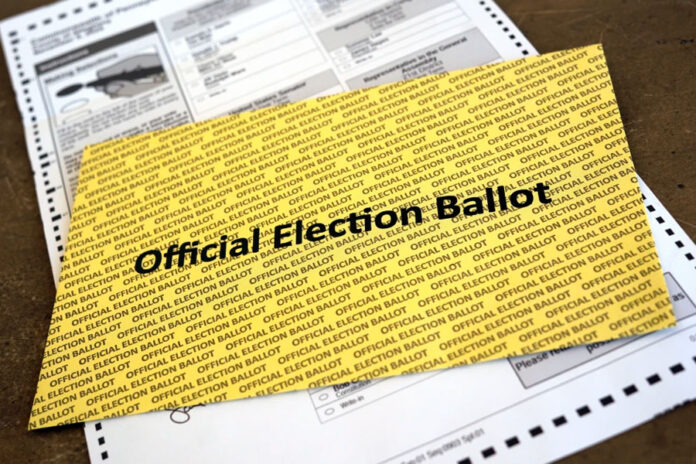
·    Seal the ballot in the yellow inner secrecy envelope marked «official election ballot.» Do not make any stray marks on the envelope.

·    Seal the yellow inner secrecy envelope in the pre-addressed outer return envelope.

·    Sign and write the current date on the voter’s declaration on the outer return envelope.

·    Mail or hand deliver the completed ballot to their county elections office, or hand deliver the ballot to an officially designated satellite office or drop box.

Under Pennsylvania law, a voter may hand deliver only their own ballot. The only exceptions to this rule are for voters with a disability who have designated someone in writing to deliver their ballot and for voters who need an emergency absentee ballot.

County elections offices must receive all completed mail ballots – whether they are mail-in or absentee ballots – by 8 p.m. on Election Day, Nov. 5. Mail ballots returned after that time, even if postmarked by 8 p.m. Nov. 5, will not count.

Polls will be open 7 a.m. through 8 p.m. on Election Day for registered voters who want to vote in person.

Voters who received an absentee or mail-in ballot may vote in person on Election Day if they bring their mail ballot materials with them to be voided.

Voters who requested a mail ballot and did not receive it or do not have it to surrender may vote by provisional ballot at their polling place. The provisional ballot will be reviewed by their county board of elections after Election Day to determine whether it can be counted.

The Department of State’s voter information website vote.pa.gov – available in English, Spanish, and Chinese – offers mail ballot applications, a polling place locator, and contact information for county elections offices. It also includes tips for first-time votersmail-in and absentee voterselderly and disabled voters, and members of the military.

While there are no constitutional amendments or statewide ballot questions on the ballot this general election, voters should refer to their county elections board for more information on any local ballot referendums or special elections in their voting district.

For more information on voting and elections, visit vote.pa.gov or call the Department of State’s year-round hotline, 1-877-VOTES-PA (1-877-868-3772), which offers information and interpretation services in more than 200 languages.

Shapiro administration invests more than $3.2 million to Bolster Drug-Related Overdose prevention efforts in Pennsylvania

 Drug-Related

Leveraging federal funding will help build on Shapiro Administration’s efforts to save lives.


Harrisburg, PA – The Pennsylvania Department of Health (DOH) today announced investments of more than $3.2 million to combat the drug-related overdose epidemic through 13 organizations that will help residents connect with the care they need, such as receiving overdose prevention and reversal tools, treatment options, drug checking equipment, and educational services. 

“Many overdoses are preventable or reversible. The organizations receiving this funding will provide services and resources to help prevent and reverse overdoses and ultimately save the lives of Pennsylvanians,” said Secretary of Health Dr. Debra Bogen. “This is another example of how the Shapiro Administration is committed to helping people who use drugs get the services and care they deserve, where and when they need it.”

The funding comes from the Centers for Disease Prevention and Control (CDC) via the Overdose Data to Action in States cooperative agreement to expand drug-related overdose surveillance and prevention efforts over five years. 

These grants are just the latest effort in the Shapiro Administration’s whole-of-government approach to combatting the overdose crises, with an emphasis on directly engaging individuals with substance use disorder to prevent overdoses and provide accessible treatment. The following programs will receive funding, which will be distributed through the Department’s Office of Drug Surveillance and Misuse Prevention (ODSMP).

PA-SUN

The Pennsylvania Substance Use Navigation Program (PA-SUN) grantees will implement health system-wide capacity to screen, diagnose, and support care for opioid use disorder and stimulant use disorder, as well as support recovery. 

The goal of this funding is to support emergency department linkage to care via multidisciplinary teams (including navigators to help guide people through the health care system), to enhance universal screening for substance use disorder among patients presenting for other reasons to the emergency department, and to identify new opportunities to engage and link patients to care. 

Total award amounts:

  • Allegheny-Singer Research Institute (Allegheny County): $301,470.26
  • Geisinger Clinic (Lackawanna County): $315,139.97
  • Temple University Hospital (Philadelphia County): $323,579.59
  • University of Pittsburgh Medical Center (Allegheny County): $324,997.74

Harm Reduction Organizations

Organizations focused on harm reduction will expand drug-related overdose education and naloxone distribution programs and use navigators to connect people who use drugs to services — including overdose prevention and reversal tools, such as test strips and naloxone — treatment options, and drug checking equipment. 

This funding prioritizes serving people who are at the greatest risk of experiencing or witnessing an overdose and supporting increased capacity for harm reduction organizations to connect people to care. 

Total award amounts:

  • AIDS Care Group (Delaware County): $306,000.00
  • Drexel University (Philadelphia County): $303,760.67
  • Lancaster Harm Reduction Project (Lancaster County): $266,859.81
  • Lehigh Valley Hospital (Lehigh County): $288,248.09 

Community-Based Organizations

Community-based organizations will work to connect individuals in their community to overdose prevention and substance use disorder services. For example, one community-based organization will prioritize outreach activities to Black men, as local overdose trends demonstrate higher rates of overdose among this group.

The funding will build capacity in communities to help connect people with substance use disorder to services and remain connected to them while integrating health equity and stigma reduction. The organizations can also use funds to create post-overdose outreach teams to connect with individuals within 72 hours of suspected overdose and/or develop case management systems to help individuals navigate the processes by which care may be accessed. 

Total award amounts: 

  • Men of the Community (Erie County): $310,650.20
  • Public Health Management Corporation (Philadelphia County): $312,500.00


Additional funding in this category will be announced at a later date.

Biosurveillance

The ODSMP, in collaboration with DOH Bureau of Laboratories (BOL), launched a new overdose biosurveillance program to enhance surveillance of suspected unintentional overdose-related emergency department visits in Pennsylvania. 

The program aims to identify new and novel substances introduced into the drug supply, analyze comprehensive toxicology data on drugs contributing to non-fatal overdose, and inform data-driven response strategies. 

Participating health systems identify, store, and ship leftover biological specimens from suspected unintentional overdoses to the DOH BOL for toxicology testing. 

Findings from this program will enable stakeholders – including local public health practitioners, harm reduction partners, and health care providers – to better understand the drug supply in Pennsylvania along with social determinants and/or physical health conditions that place individuals at a disproportionate risk for non-fatal overdose.

Participating Health Systems will receive up to $50,000 each to support expenses associated with this program:  

  • Penn State Health (Dauphin County)
  • Temple University Hospital (Philadelphia County)
  • University of Pittsburgh Medical Center (Allegheny County)

Additional funding in this category will be announced at a later date. 

More information about the DOH’s efforts to combat overdoses in Pennsylvania can be found on the Department’s website

Trump redobla sus ataques e insultos contra Harris durante mitin con latinos en Miami

Trump
(Foto: EFE/CRISTOBAL HERRERA-ULASHKEVICH)

El expresidente de EE. UU. y candidato republicano Donald Trump volvió este martes a insultar y atacar a su rival en las próximas elecciones generales, la demócrata Kamala Harris, durante un encuentro que sostuvo en Miami con líderes latinos.

«No necesitamos otra persona con bajo coeficiente intelectual, tuvimos una durante cuatro años, no necesitamos otra», dijo el exmandatario (2017-2021) durante una mesa redonda celebrada en el Trump National Doral Miami, en el sur de Florida (EE. UU.).

En este encuentro con líderes del tejido empresarial hispano, Trump llamó además «perezosa» a la también vicepresidenta y, como ha hecho en anteriores actos de campaña, calificó de «lamentable» la situación nacional en materia económica, social y política.

Advirtió que, a su juicio, Estados Unidos se juega su futuro en las elecciones del próximo 5 de noviembre y que las consecuencias serían negativas si es que su rival resultara ganadora: «Dicen que es posible que nunca volvamos a tener elecciones en este país», alertó, sin presentar pruebas.

(Foto: EFE/CRISTOBAL HERRERA-ULASHKEVICH)

El exmandatario se explayó en sus críticas contra los coches eléctricos, y dedicó buena parte de su discurso a la crisis en la frontera sur, esto a pesar de que las cifras de detenciones de migrantes han bajado a promedios de 2019, cuando el republicano estaba en la Presidencia.

Y una vez más echó sombras sobre los resultados de de 2020 y en especial en el caso de Georgia, donde tras tres procesos electorales para elegir presidente ese año el actual mandatario de Estados Unidos, el demócrata Joe Biden, se hizo con el estado por apenas una diferencia de casi 12.000 votos.

Tras aludir a un sondeo de opinión del Atlanta Journal-Constitution, el principal diario de ese sureño estado, que le concede una ventaja de cuatro puntos porcentuales, el expresidente dijo que era necesario mantenerse vigilantes.

«La última vez sucedieron cosas muy, muy malas», señaló el expresidente, quien adelantó que su campaña tiene un «gran número de abogados» en Georgia.

Tras la alocución del expresidente tomaron la palabra varios de los invitados, entre los que figuraron el presidente ejecutivo de la compañía de alimentos Goya, y el actor mexicano Eduardo Verástegui, ambos declarados partidarios del republicano.

(Foto: EFE/CRISTOBAL HERRERA-ULASHKEVICH)

Entre los asistentes estuvieron el alcalde de Miami, Francis Suárez, su homóloga de Doral, Christi Fraga, y Estevan Bovo, alcalde de Hialeah, ciudad al oeste de Miami que acoge una gran comunidad de residentes de origen cubano.

Trump tiene previsto ofrecer un mitin hoy en Carolina del Norte, otro estado clave, mientras que Harris ofrecerá una entrevista a periodistas de la cadena NBC y su filial hispana Telemundo, en un claro esfuerzo por ganar terreno entre los votantes latinos.

Ambos candidatos apuran los actos de campaña, en especial en los estados claves que pueden decidir al próximo inquilino en la Casa Blanca, a falta de 14 días de las elecciones presidenciales, cuyo proceso de voto anticipado ha comenzado ya en varios estados y con cifras récord.

Según recogen medios estadounidenses, unos 15 millones de personas han sufragado ya en estados como Florida, Georgia y Texas, entre otros.

El festival de cine latino de Nueva York estrena una edición en Puerto Rico

Puerto Rico
(Foto: EFE/Kristy Sparow/Archivo)

San Juan.– El ‘New York Latino Film Festival’ (NYLFF) anunció este martes que presentará una muestra de películas en Puerto Rico de diversos países, entre ellas, la colombiana ‘Pimpinero. Sangre y gasolina’, en la que el cantautor colombiano Juanes hace su debut en la gran pantalla.

La muestra se llevará a cabo del 31 de octubre al 2 de noviembre próximos en el Caribbean Cinemas VIP, localizado en el Distrito T-Mobile en San Juan, informó en un comunicado Calixto Chinchilla, fundador y director ejecutivo del NYLFF.

«Estamos encantados de traer esta edición especial de nuestro festival de cine insignia a la vibrante y cultural isla de Puerto Rico», resaltó Chinchilla en la nota.

«Este evento, que esperamos sea el primero de muchos, destaca las contribuciones creativas de la comunidad puertorriqueña, tanto en la isla como en toda la diáspora de la industria cinematográfica», añadió.

La cita inaugurará con la presentación de la película ‘Emilia Pérez’ (2024), protagonizada por Zoe Saldaña, Karla Sofía Gascón, Selena Gómez y Adriana Paz.

Este musical es la historia de la poderosa abogada Rita (Zoe Saldaña) que asume una misión inesperada: ayudar a un líder de un cartel mexicano (Gascón) a fingir su muerte y someterse a operaciones de reasignación de sexo.

‘Pimpinero: Sangre y Gasolina’, por su parte, presenta un apasionante thriller que se desarrolla en el desierto que se encuentra entre la frontera de Colombia y Venezuela, donde los contrabandistas de gasolina o pimpineros arriesgan sus vidas transportando combustible ilegal.

La cultura indígena wayúu, las expresiones, la gastronomía e incluso las peleas de gallos, muy comunes en las zonas rurales de Colombia, son algunos de los ingredientes que hacen de la película una muestra del país andino.

El festín cinematográfico estrenará el filme ‘Bella’, del director Bruno Irizarry, que relata el viaje de Carlos y Marena para adoptar un bebé en medio de la crisis de la covid-19.

También se presentará la película dominicana ‘La Bachata de Bionico’ (2024) la historia de amor de Bionico, un romántico empedernido adicto al crack, que junto a Calvita, su compañera de drogas, intenta conseguir un trabajo, una casa y un anillo de bodas para casarse con La Flaca, su prometida.

Además, el NYLFF San Juan presenta ‘Enviando amor a la isla’ una proyección de cortometrajes premiados que se filmaron en la isla y todos fueron dirigidos por cineastas puertorriqueños.

Entre ellos se encuentran: Ceiba Y Sus Raíces Taínas, de la directora Brithney Rivera (4 min.); Mara Tiene Tres Trabajos en San Juan, Puerto Rico (11 min.) y Te Llaman Las Olas (11 min.), ambas dirigidas por Ana Verde.

Así como los cortometrajes de Punta Salinas (16 min.) de la directora María del Mar Rosario; Primos (22 min.) dirigida por Ricardo J. Varona; Hija del Mar (19 min.) de la directora Alexis García; y Melao (24 min.) de la directora Val Vega.