Inicio Blog Página 467

El Salvador National Charged with illegal possession of firearms

sentenced
(Foto: Ilustrativa/Pexels)

An El Salvador national was arrested and charged with possessing firearms as an illegal alien, U.S. Attorney Alina Habba announced.

Jose Manuel Menjivar Viera, a/k/a Jose Manuel Mejiva, 35, a citizen and national of El Salvador and most recently of Long Branch, New Jersey, was charged by complaint with one count of being an illegal alien in possession of firearms. Viera made his initial appearance before U.S. Magistrate Judge J. Brendan Day in Trenton federal court and was detained.

According to documents filed in this case and statements made in court:

On December 11, 2024, at approximately 3:00 a.m., law enforcement officers in Long Branch responded to multiple calls for service regarding gunshots fired in a suburban neighborhood. Shortly after officers arrived, they observed an individual, later identified as Jose Manuel Menjivar Viera, riding a bicycle and carrying a large black bag. Officers followed Viera before he dismounted from the bike and fled into the exterior property of a nearby residence. Officers searched the area where Viera fled and eventually recovered his bicycle and the bag he was carrying. The bag contained two firearms, a semiautomatic rifle and a loaded handgun, firearm magazines, ammunition, and a machete. A short time later, officers discovered Viera hiding in the truck-bed of a pickup truck parked in the driveway next to the residence. Viera was subsequently identified by agents with the Department of Homeland Security, Immigration and Customs Enforcement, as being an El Salvador national and citizen and without any legal status to be in the United States.

The alien in possession of a firearm charge carries a maximum potential penalty of 15 years in prison and a fine of up to $250,000.

U.S. Attorney Habba credited deportation officers of the United States Immigration and Customs Enforcement, Enforcement and Removal Operations Newark, under the direction of Field Office Director John Tsoukaris, with the investigation leading to the charges. She also thanked the Federal Bureau of Investigation, under the direction of Acting Special Agent in Charge Terence G. Reilly in Newark, the Long Branch Police Department, under the direction of Officer-in-Charge Jorge Silverio, and the Monmouth County Prosecutor’s Office, under the direction of Prosecutor Raymond S. Santiago, for their assistance in the investigation.

The government is represented by Special Assistant U.S. Attorney Jonathan S. Garelick of the U.S. Attorney’s Office Criminal Division in Trenton.

The charges and allegations contained in the complaint are merely accusations, and the defendant is presumed innocent unless and until proven guilty.

2 killed and 9 injured in a Memorial Day shooting at a Philadelphia park

shooting
Philadelphia Mayor Cherelle L. Parker speaks at a press conference about a mass shooting that erupted at Fairmount Park on Memorial Day, in Philadelphia, May 27, 2025. (Jessica Griffin/The Philadelphia Inquirer via AP)

PHILADELPHIA (AP) — There are no excuses for violence like the Memorial Day shooting at a Philadelphia park that killed two people and injured nine, the city’s mayor said Tuesday.

Two young adults died after the Monday night shooting in Fairmount Park, police Commissioner Kevin Bethel said Tuesday. Those injured in the Memorial Day shooting were listed in stable condition, he said. Police said no arrests have been made.

“This is a heinous act of violence that was inhumane. No regard for life,» Mayor Cherelle Parker said at a news conference. “We will not be held hostage by anyone who decides that they want to get assault-like, warlike weaponry.»

It wasn’t yet clear what led up to the shooting or whether those who were shot were targeted, the police commissioner said. No weapons had been recovered, but investigators found casings from three weapons, Bethel said. From the rapid-fire gunshots heard in videos shared on social media, he said they can determine that a switch, which automates a semiautomatic weapon, was used.

“That’s the sound of war. When you have an automatic weapon that you can empty a magazine — a 20-clip magazine — in seconds,» Bethel said. «It is meant to kill, to create carnage and to hit as many people as possible. And in this case, you see, it was able to do that.”

Police identified those killed as Amya Devlin, 23, and Mikhail Bowers, 21. The wounded include a 15-year-old boy and two girls, ages 16 and 17, police said. The other injured people, four women and two men, range in age from 18 to 28.

Bethel did not know how many people were at the park at the time of the shooting, but noted that estimates were in the hundreds. The shooting occurred despite officers’ presence in the park, Bethel said.

“We try to manage the crowds as they unfold, but at the same token, it is a challenge when individuals decide that they’re going to fire into a crowd,” Bethel said.

Officers were called in to disperse crowds earlier in the evening and met with adults, who agreed to start shutting down, but Bethel said it took time and there a large number of young people blended into the crowd.

Bethel has noticed concerns about the Roots Picnic music festival, which is planned in Fairmount Park next weekend, but explained that such an event with significant planning is different from an unplanned one, as there was Monday night. Starting next weekend, Bethel said the department will boost deployments in the park and work to identify problems ahead of time, Bethel said.

Shapiro Administration reminds drivers to put down the phone

Pensilvania
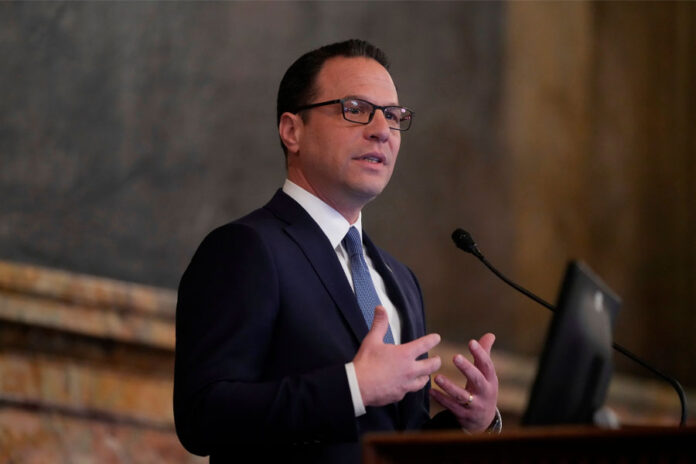
Governor Josh Shapiro’s. (Photo: File)

Signed by Governor Shapiro last year, the new hands-free law bans hand-held cell phone use while driving and increases transparency and accountability at traffic stops

Harrisburg, PA – Today, in keeping with Governor Shapiro’s commitment to safety on Pennsylvania roads, the Shapiro Administration urged drivers to put down the phone while driving, ahead of the June 5 effective date for “Paul Miller’s Law,” which makes it illegal to use a hand-held cell phone while driving. The Pennsylvania Department of Transportation (PennDOT), Pennsylvania State Police (PSP), Pennsylvania Turnpike Commission (PA Turnpike), and Pennsylvania Insurance Department (PID) joined Senator Rosemary Brown and national advocate Eileen Miller to urge drivers to make safe choices behind the wheel.

As part of his mission to provide a safe transportation system for all Pennsylvanians, Governor Josh Shapiro signed Senate Bill 37 into law on June 5, 2024. Effective June 5, 2025, the law – known as “Paul Miller’s Law” – prohibits the use of hand-held devices while driving, even while stopped temporarily due to traffic, a red light, or other momentary delay. Pennsylvania already enforces a texting-while-driving ban that prohibits drivers from using mobile devices to send, read, or write text-based communications while their vehicle is in motion. Beginning June 5, 2025, law enforcement will begin issuing written warnings for violations of Senate Bill 37. Law enforcement will have the ability to issue summary citations to violators beginning June 6, 2026.

“Paul Miller’s Law is about saving lives,” said PennDOT Secretary Mike Carroll. “Your choices behind the wheel can change lives forever. Make the safe choice. Put your phone out of reach and don’t text and drive. One text, one glance down – it could kill someone. And it’s not worth it.”

Under Paul Miller’s Law, drivers can still use their phones to alert emergency responders and, if they are using hands-free technology, to make phone calls, use a GPS, and listen to music.

“The Pennsylvania State Police will enforce the new law to its full extent,” said PSP Commissioner Colonel Christopher Paris. “Distracted driving is not a minor offense. Just one second of inattention can result in irreversible consequences. We urge all drivers to stay focused behind the wheel.”

«Distracted driving is a serious issue that undermines PennDOT and the PA Turnpike’s collective effort to create safe driving experiences for our travelers,» said PA Turnpike CEO Mark Compton. «Safety is the driving force of what we do at the Pennsylvania Turnpike, and the Paul Miller Law is a meaningful step towards safer roads for everyone.»

“Focusing on the road while driving is one of the best ways to ensure your safety and the safety of those around you,” said Pennsylvania Insurance Commissioner Michael Humphreys. “Safe driving can also help reduce the cost of your insurance as insurers factor your accident and driving history into their ratemaking. We encourage consumers to speak with their insurance provider to learn more about the benefits of safe driving, the discounts they could receive, and how they can start saving today.”

“As the Prime-Sponsor of Senate Bill 37, now Act 18 of 2024, seeing this law go into effect is incredibly rewarding knowing it will save lives,” said State Senator Rosemary Brown (R- Lackawanna, Monroe, Wayne). “Since day one I have always believed in this commonsense policy. It’s important that drivers remember that the cell phone has become the most consistent, repetitive, and lengthy distraction behind the driver’s wheel causing significant public safety concerns. This law will change behaviors and save lives. The legislature passed Senate Bill 37, now Act 18, with overwhelming bi-partisan support, and I am confident that my efforts, along with the efforts of my friend Eileen Miller, have Pennsylvania going in the right direction for public safety.”

The law is named for Paul Miller, Jr., who was tragically killed in a crash with a tractor trailer in 2010 in Monroe County, as the result of a distracted driver who reached for their phone while driving. Since his death, Paul’s mother Eileen Miller has become a national advocate for stronger laws to curb distracted driving.

“Nearly 15 years ago, two Dunmore state troopers knocked on my door to tell me that my son was killed,” said Eileen Miller, Paul Miller, Jr.’s mother. “My son did everything right – he was killed by someone else’s unsafe choices behind the wheel. This law is for every family in Pennsylvania that doesn’t have to experience two state troopers knocking on their door to tell them that their loved one was killed by distracted driving. Paul Miller’s Law will be a beacon of protection for every driver and passenger in Pennsylvania.”

Paul Miller’s Law will also work to prevent bias in policing by requiring law enforcement to collect data on drivers pulled over during traffic stops, including race, ethnicity, and gender. The data will be made publicly available in an annual report. This amendment – which the Governor advocated for in conjunction with the Legislative Black Caucus – builds on the Shapiro Administration’s work to ensure Pennsylvanians can have the utmost faith in the law enforcement officers serving and protecting them every day.

According to PennDOT data, in 2024 there were 9,950 crashes involving a distracted driver, resulting in more than 6,000 injuries and 49 fatalities. Distracted driving crash data is believed to be underreported due to many drivers’ reluctance to admit to being distracted at the time of a crash.

If you are the driver, follow these steps for a safe drive:

  • If you are expecting a text message or need to send one that can’t wait, pull over and park your car in a safe location before using your device.
  • Ask a passenger to be your “designated texter.” Allow them access to your phone to respond to calls or messages.
  • Do not engage in social media scrolling or messaging while driving.
  • Cell phone use is habit-forming. Struggling to not text and drive? Activate your phone’s “Do Not Disturb” feature, silence notifications, or put your phone in the trunk, glove box, or back seat of your vehicle until you arrive at your destination.

Cell phone use is not the only distraction while driving. Anything that takes your attention away from driving, your eyes off the road, or your hands off the wheel is a distraction. Driver behavior is the leading factor in 83% of the crashes that occur annually in Pennsylvania. These behaviors include driving distracted, impaired, or aggressive.

For more information on distracted driving, visit www.PennDOT.pa.gov/safety.

US measles case count climbs slightly to 1,046 cases, while Indiana’s outbreak ends

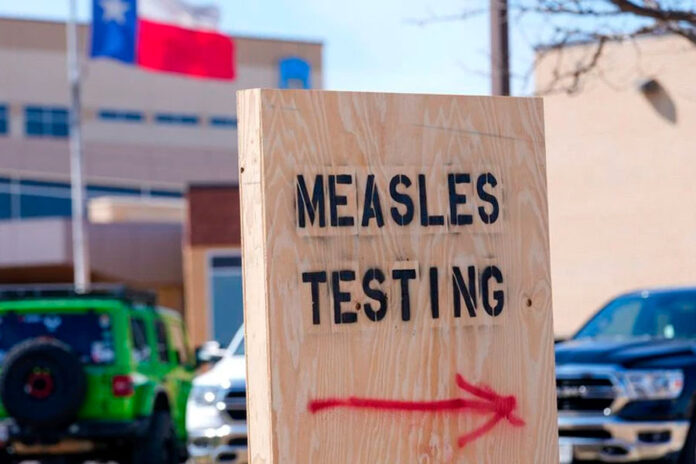
A sign is seen outside of Seminole Hospital District offering measles testing, Feb. 21, 2025, in Seminole, Texas. (Photo: AP/Julio Cortez/File)

The U.S. saw a small increase in measles cases last week, an indicator that outbreaks are slowing down, though exposures at a busy airport in Colorado and a Shakira concert in New Jersey are keeping public health experts on their toes.

The Centers for Disease Control and Prevention said Friday that there are 1,046 confirmed measles cases, up 22 from last week. Texas, where the nation’s biggest outbreak raged during the late winter and spring, reported one additional case on Tuesday for a total of 729.

There are three other major outbreaks in North America. One in Ontario, Canada, has resulted in 1,795 cases from mid-October through May 20, an increase of 173 cases in a week. Another in Alberta, Canada, has sickened 538 as of Thursday. And the Mexican state of Chihuahua had 1,578 measles cases and three deaths as of Friday, according to data from the state health ministry.

Since the outbreak in the southwest U.S. began, two elementary school-aged children in the epicenter in West Texas and an adult in New Mexico have died of measles. All were unvaccinated.

But that outbreak, which affects Texas, New Mexico and Oklahoma, appeared to be “leveling off» last week, U.S. Centers for Disease Control and Prevention incident manager Dr. Manisha Patel said on May 15. But she noted that it’s still “travel season” and there is «a lot of global measles activity right now.”

Other states with active outbreaks — which the CDC defines as three or more related cases — include Kansas, Michigan, Montana, North Dakota, Ohio, Pennsylvania and Tennessee. Indiana’s outbreak was declared over this week.

Measles is caused by a highly contagious virus that’s airborne and spreads easily when an infected person breathes, sneezes or coughs. It is preventable through vaccines, and has been considered eliminated from the U.S. since 2000. Here’s what else you need to know about measles in the U.S.

How many measles cases are there in Texas?

There are a total of 729 cases across 34 counties, most of them in West Texas, state health officials said Friday.

One more person was hospitalized, for 94 total throughout the outbreak.

State health officials estimated less than 1% of cases — fewer than 10 — are actively infectious. Fifty-six percent of Texas’ cases are in Gaines County, population 22,892, where the virus started spreading in a close-knit, undervaccinated Mennonite community. The county has had 408 cases since late January — just over 1.7% of the county’s residents.

The April 3 death in Texas was an 8-year-old child, according to Health Secretary Robert F. Kennedy Jr. Local health officials said the child did not have underlying health conditions and died of “what the child’s doctor described as measles pulmonary failure.” A unvaccinated child with no underlying conditions died of measles in Texas in late February; Kennedy said the child was 6.

How many measles cases are there in New Mexico?

New Mexico added one new case since Friday for a total of 79.

Seven people have been hospitalized since the outbreak started. Most of the state’s cases are in Lea County. Sandoval County near Albuquerque has six cases, Eddy County has three, Doña Ana County has two and Chaves and Curry counties have one each.

An unvaccinated adult died of measles-related illness March 6. The person did not seek medical care.

How many cases are there in Oklahoma?

Oklahoma held steady Friday with a total of 14 confirmed and three probable cases.

The state health department is not releasing which counties have cases.

How many cases are there in Kansas?

Kansas has a total of 58 cases across 10 counties in the southwestern part of the state, with two hospitalizations. All but two of the cases are connected, and most of the cases are in Gray County.

How many cases are there in Indiana?

All of Indiana’s cases — eight — were in Allen County in the northeast part of the state. The county health department said the cases had no known link to other outbreaks, and there’ve been no new ones since April 21, leading officials declare the outbreak over.

How many cases are there in Michigan?

Michigan has eight confirmed cases of measles, with an outbreak of four connected cases in Montcalm County in the western part of the state that health officials say is tied to the Ontario outbreak.

How many cases are there in Montana?

Montana has 10 measles cases as of Thursday. The state’s only outbreak started in mid-April in southwestern Gallatin County — Montana’s first measles cases in 35 years.

Flathead and Hill counties also have one case each.

Health officials said there is no known local spread of measles, but did note the outbreaks in neighboring North Dakota and the Canadian provinces of Alberta, British Columbia and Saskatchewan.

How many cases are there in North Dakota?

North Dakota, which hadn’t seen measles since 2011, is up to 23 cases as of Monday. One person has been hospitalized, and all of the people with confirmed cases were not vaccinated.

There are 13 cases in Williams County in western North Dakota on the Montana border, and seven cases in Cass County on the eastern side of the state. Grand Forks County also has three cases.

How many cases are there in Ohio?

Ohio remained steady Thursday at 34 measles cases and one hospitalization, according to the Ohio Department of Health. That count includes only Ohio residents.

The state has two outbreaks: Ashtabula County near Cleveland has 16 cases, and Knox County in east-central Ohio has 20 — 14 among Ohio residents and the rest among visitors.

Allen, Cuyahoga, Holmes and Defiance counties have one case each.

How many cases are there in Pennsylvania?

Pennsylvania has 15 cases overall in 2025 as of May 16, including international travel-related cases in Montgomery County and one in Philadelphia.

The outbreak of eight measles cases in Erie County in far northwest Pennsylvania has remained steady since it began in mid-April.

How many cases are there in Tennessee?

Tennessee had six measles cases as of early May. Health department spokesman Bill Christian said all cases are the middle part of the state, and that “at least three of these cases are linked to each other” but declined to specify further. The state also did not say whether the cases were linked to other outbreaks or when Tennessee’s outbreak started.

Where else is measles showing up in the U.S.?

Measles cases also have been reported in Alaska, Arkansas, California, Colorado, Florida, Georgia, Hawaii, Illinois, Iowa, Kentucky, Louisiana, Maryland, Minnesota, Missouri, Nebraska, New Jersey, New York, Rhode Island, Vermont, Virginia and Washington.

Cases and outbreaks in the U.S. are frequently traced to someone who caught the disease abroad. The CDC says more than twice as many measles have come from outside of the U.S. compared to May of last year, and most of those are in unvaccinated Americans returning home. In 2019, the U.S. saw 1,274 cases and almost lost its status of having eliminated measles.

What do you need to know about the MMR vaccine?

The best way to avoid measles is to get the measles, mumps and rubella vaccine. The first shot is recommended for children between 12 and 15 months old and the second between 4 and 6 years old.

Getting another MMR shot as an adult is harmless if there are concerns about waning immunity, the CDC says. People who have documentation of receiving a live measles vaccine in the 1960s don’t need to be revaccinated, but people who were immunized before 1968 with an ineffective vaccine made from “killed” virus should be revaccinated with at least one dose, the agency said.

People who have documentation that they had measles are immune, and those born before 1957 generally don’t need the shots because so many children got measles back then that they have “presumptive immunity.»

Measles has a harder time spreading through communities with high vaccination rates — above 95% — due to “herd immunity.” But childhood vaccination rates have declined nationwide since the pandemic and more parents are claiming religious or personal conscience waivers to exempt their kids from required shots.

What are the symptoms of measles?

Measles first infects the respiratory tract, then spreads throughout the body, causing a high fever, runny nose, cough, red, watery eyes and a rash.

The rash generally appears three to five days after the first symptoms, beginning as flat red spots on the face and then spreading downward to the neck, trunk, arms, legs and feet. When the rash appears, the fever may spike over 104 degrees Fahrenheit, according to the CDC.

Most kids will recover from measles, but infection can lead to dangerous complications such as pneumonia, blindness, brain swelling and death.

How can you treat measles?

There’s no specific treatment for measles, so doctors generally try to alleviate symptoms, prevent complications and keep patients comfortable.


Juez acusa al gobierno de Trump de “fabricar” caos en caso de deportación de migrantes

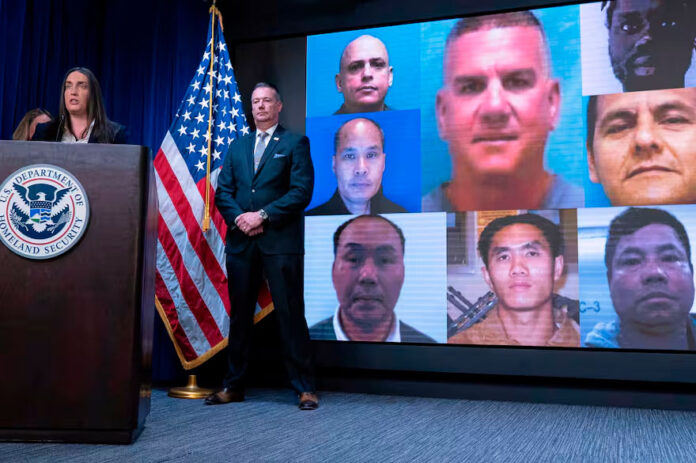
La subdirectora del Servicio de Control de Inmigración y Aduanas de Estados Unidos (ICE, por sus siglas en inglés) Madison Sheahan, junto con el director interino de ese organismo, Todd Lyons, habla en una conferencia de prensa en las oficinas generales del ICE en Washington, el miércoles 21 de mayo de 2025. (Foto: AP/Jose Luis Magana)

Un juez federal indicó que el gobierno del presidente Donald Trump estaba “fabricando” caos y dijo esperar que “la razón prevalezca sobre la retórica” en una mordaz orden en un caso sobre los esfuerzos del gobierno para deportar a un puñado de migrantes de distintos países a Sudán del Sur.

En la orden, publicada el lunes por la noche, el juez Brian Murphy escribió que le dio a la administración de Trump “una flexibilidad notable con una supervisión mínima” en el caso y enfatizó las numerosas veces que intentó trabajar con el gobierno.

“Por la conducta ejercida, es difícil llegar a cualquier conclusión que no sea que los Demandados invitan a la falta de claridad como un medio de evasión”, escribió Murphy, residente de Boston, en la orden de 17 páginas.

El juez supervisa un caso en el que defensores de la inmigración intentan evitar que el gobierno de Trump envíe a migrantes que trata de deportar de Estados Unidos a países de los que no son originarios sin darles una oportunidad significativa de protestar por su expulsión.

El juez dijo que los hombres no podían abogar por sí mismos

En una audiencia realizada la semana pasada y convocada para abordar informes de que ocho inmigrantes habían sido enviados a Sudán del Sur, Murphy dijo que los hombres no habían podido argumentar que la deportación podría ponerlos en peligro.

Pero en lugar de ordenar al gobierno que los devolviera a Estados Unidos para participar en audiencias, como querían los demandantes, le dio la opción de realizar las audiencias en Yibuti, donde el avión había volado en su camino a Sudán del Sur, siempre que los hombres permanecieran bajo custodia del gobierno estadounidense. Días después, el gobierno de Trump presentó otra moción diciendo que Murphy les exigía mantener a “criminales peligrosos en un lugar sensible”.

Pero en su orden del lunes, enfatizó repetidamente que fue “sugerencia” del propio gobierno que se le permitiera procesar las reclamaciones de los hombres mientras aún estaban en el extranjero.

“Resulta que tener procedimientos de inmigración en otro continente es más difícil y logísticamente más engorroso de lo que previeron los demandados”, escribió Murphy.

El gobierno ha argumentado que los hombres tenían antecedentes con el sistema de inmigración, y que habían tenido oportunidades para expresar su temor de ser deportados a un país fuera de su tierra natal. También ha dicho que el país de origen de los inmigrantes —Cuba, Laos, México, Myanmar, Vietnam y Sudán del Sur— no los aceptaría de regreso.

El gobierno también ha enfatizado repetidamente los antecedentes penales de los hombres en Estados Unidos y los ha presentado como amenazas a la seguridad nacional.

El gobierno se apoya en terceros países

La administración de Trump ha dependido cada vez más de que terceros países acepten a inmigrantes que no pueden ser enviados a sus naciones de origen por diversas razones. Algunas simplemente se niegan a aceptar a sus ciudadanos deportados, mientras que otras reciben a algunos, pero no a todos. Y otros más no pueden ser enviados a sus países de origen debido a preocupaciones de que serán torturados o lastimados.

Históricamente, eso ha significado que las autoridades de inmigración han tenido que liberar en Estados Unidos a personas a las que quieren deportar, pero no pueden.

Pero el gobierno de Trump ha presionado a otros países para que los acepten. En el hemisferio occidental, El Salvador, Costa Rica y Panamá han acordado aceptar a algunas personas que están siendo deportadas de Estados Unidos, siendo El Salvador el ejemplo más controvertido porque retiene a personas deportadas de Estados Unidos en una notoria prisión.

El gobierno de Trump ha dicho que estudia a otros terceros países para enviar allí a los deportados.

Murphy dijo en su orden que a los 8 hombres se les informó inicialmente el 19 de mayo que irían a Sudáfrica y luego, ese mismo día, se les dijo que serían enviados a Sudán del Sur. Señaló que el gobierno de Estados Unidos “ha emitido advertencias severas” con respecto a ese país.

Afirmó que los hombres tuvieron menos de 16 horas entre el momento en que les informaron que serían expulsados y su llegada al aeropuerto, “la mayoría de las cuales fueron horas no laborables” y que tuvieron una posibilidad “limitada, como máximo” de hablar con la familia o un abogado. “Dada la totalidad de las circunstancias, es difícil tomar en serio la idea de que los Demandados pretendían que estos individuos tuvieran alguna oportunidad real de hacer una reclamación válida”, escribió el juez.

2 muertos y 9 heridos en un tiroteo en un parque de Filadelfia

FILADELFIA.— Dos personas murieron y nueve resultaron heridas, incluidos tres adolescentes, en un tiroteo en un parque de Filadelfia, informó la policía.

El comisionado de policía Kevin Bethel dijo en una conferencia de prensa el martes que un hombre y una mujer fallecieron en el tiroteo del lunes por la noche en Fairmount Park. Los heridos se encontraban en condición estable, manifestó.

El tiroteo, en el feriado del Día de los Caídos en Guerras, ocurrió a pesar de la presencia de oficiales en el parque, comentó Bethel.

«Tratamos de manejar a las multitudes a medida que crecen, pero al mismo tiempo, es un desafío cuando individuos deciden disparar contra una multitud», expresó Bethel.

Bethel afirmó que no había nadie bajo custodia, informó WPVI-TV.

El comisionado dijo que la policía aún no había recuperado ninguna arma. Los investigadores aún no saben si hubo más de un arma involucrada, señaló Bethel, pero destacó que hubo disparos rápidos en los videos publicados en las redes sociales.

Medidas migratorias de Trump inquietan a exiliados cubanos protegidos de la deportación en EE. UU.

Trump
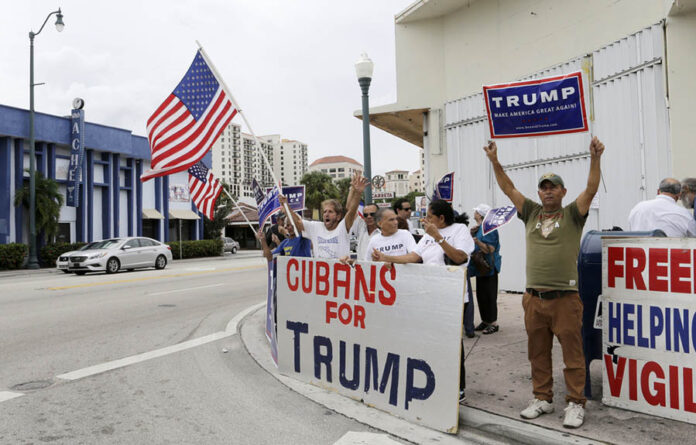
Cubano-estadounidenses gritan consignas a favor del candidato republicano a la presidencia Donald Trump, en Miami, el 28 de octubre de 2016. (AP Foto/Alan Diaz, Archivo)

MIAMI— Funcionarios de inmigración de Estados Unidos dijeron que Tomás Hernández trabajó en puestos de alto nivel para la agencia de inteligencia extranjera de Cuba durante décadas antes de emigrar al territorio estadounidense para perseguir el sueño americano.

En marzo, el hombre de 71 años de edad fue detenido por agentes federales afuera de su casa ubicada en el área metropolitana de Miami y fue acusado de ocultar sus vínculos con el Partido Comunista de Cuba cuando obtuvo la residencia permanente.

Los cubano-estadounidenses del sur de Florida han pedido durante mucho tiempo una mano más firme sobre La Habana, y las detenciones recientes de Hernández y de varios otros exfuncionarios cubanos para su deportación han sido extremadamente populares entre la poderosa comunidad de exiliados políticamente activa.

«Es un regalo político para los intransigentes cubano-estadounidenses», señaló Eduardo Gamarra, experto en América Latina en la Universidad Internacional de Florida. Pero muchos cubanos temen que ellos puedan ser los próximos en la lista del presidente estadounidense Donald Trump, comentó, y «algunos en la comunidad lo ven como una traición».

Entre los simpatizantes de Trump algunos están complacidos, otros preocupados

Mientras que la promesa de deportación masiva de Trump ha asustado a migrantes de muchas naciones, ha sido algo sorprendente para los 2,4 millones de cubano-estadounidenses, quienes apoyaron firmemente al republicano dos veces y han gozado durante mucho tiempo de un lugar privilegiado en el sistema de inmigración de Estados Unidos.

En medio de llegadas récord de migrantes desde la isla caribeña, Trump revocó en marzo el permiso humanitario temporal para unos 300.000 cubanos. Muchos han sido detenidos ante la posible deportación.

Entre los que enfrentan la deportación se encuentra un rapero cubano pro-Trump detrás de la exitosa canción «Patria y Vida», la cual se convirtió en el himno no oficial de las protestas anticomunistas en la isla en 2021 y recibió elogios de figuras como el entonces senador republicano Marco Rubio, quien ahora funge como secretario de Estado. Eliéxer Márquez, quien rapea bajo el nombre de El Funky, dijo que recibió un aviso este mes de que tenía 30 días para salir de Estados Unidos.

Gracias a las leyes de la Guerra Fría destinadas a quitar del cargo a Fidel Castro, los migrantes cubanos disfrutaron durante muchas décadas de un estatus de refugiado casi automático en Estados Unidos y podían obtener tarjetas de residencia un año después de su entrada, a diferencia de los migrantes de prácticamente cualquier otro país.

El apoyo a Trump entre los votantes cubano-estadounidenses de Miami estaba en un máximo histórico en vísperas de las elecciones del año pasado, según una encuesta de la Universidad Internacional de Florida, que ha estado rastreando a la comunidad cubano-estadounidense desde 1991. Trump rara vez menciona a los cubanos en sus ataques a objetivos migrantes, incluidos venezolanos y haitianos. Eso ha dado a muchos cubanos la esperanza de que permanecerán exentos a las medidas de migración.

Política de acciones fuertes

Mientras tanto, los demócratas han estado tratando de sacar provecho de las medidas enérgicas en torno a la migración. En abril, grupos de base erigieron dos vallas publicitarias gigantes en las autopistas de Miami llamando a Rubio y a los representantes republicanos Mario Diaz-Balart, Maria Elvira Salazar y Carlos Gimenez «traidores» a la comunidad cubano-estadounidense por no proteger a decenas de miles de migrantes de las políticas de inmigración de Trump.

El arresto de exagentes estatales cubanos es una forma de fortalecer a los aliados de Trump, dijo Gamarra.

En marzo, Gimenez envió una carta a la secretaria de Seguridad Nacional, Kristi Noem, con los nombres de 108 personas que, según él, eran antiguos agentes estatales cubanos o funcionarios del Partido Comunista que vivían ilegalmente en Estados Unidos.

«Es imperativo que el Departamento de Seguridad Nacional haga cumplir las leyes existentes de Estados Unidos para identificar, deportar y repatriar a estas personas que representan una amenaza directa para nuestra seguridad nacional, la integridad de nuestro sistema de inmigración y la seguridad de los exiliados cubanos y ciudadanos estadounidenses por igual», señaló Gimenez y agregó que Estados Unidos sigue siendo un «faro de esperanza y libertad para aquellos que escapan de la tiranía».

Una misión para derrocar al gobierno

La lista de objetivos de Gimenez fue compilada por Luis Domínguez, quien dejó Cuba en 1971 y ha hecho de su misión derrocar al gobierno de Cuba. En 2009, cuando el internet aún era una novedad en Cuba, Domínguez dijo que se hizo pasar por una periodista deportiva colombiana de 27 años para atraer al hijo de Castro, Antonio, a un romance en línea.

«Algunas personas sueñan con ganar dinero, o con envejecer e irse de vacaciones», comentó Domínguez, quien vive en Connecticut. «Yo sueño con ver a mi país libre».

Con el apoyo de la Fundación para los Derechos Humanos en Cuba, de derecha, comenzó a revisar las redes sociales y a confiar en una bien engrasada red de fuentes antisocialistas, dentro y fuera de Cuba, para exponer a funcionarios supuestamente detrás de abusos a los derechos humanos y violaciones de normas democráticas. Hasta la fecha, su sitio web, Represores Cubanos, ha identificado a más de 1.200 de estos agentes estatales, unos 150 en Estados Unidos.

«Están persiguiendo el sueño americano, pero anteriormente lo condenaron mientras perseguían el sueño cubano», dijo Domínguez. «Es la típica doble vida de cualquier régimen comunista. Cuando estaban en el poder criticaban todo sobre Estados Unidos. Pero ahora que están aquí, lo aman».

Domínguez, de 62 años, dijo que comparte regularmente sus hallazgos con las fuerzas del orden federales, pero un portavoz del Servicio de Inmigración y Control de Aduanas (ICE, por sus siglas en inglés) no comentó sobre la relación de la agencia con el activista.

Un departamento de espías de élite

Enrique García, un excolega, dijo que estudió con Hernández en la antigua Unión Soviética en la década de 1970. Al regresar, Hernández fue enviado a trabajar en el departamento de élite «Norteamérica» de la agencia de espionaje, comentó García.

García, quien desertó a Estados Unidos en la década de 1990 y se ha dedicado a ayudar a los cazadores de espías estadounidenses a desenmascarar a agentes cubanos, señaló que algunos agentes cubanos han infiltrado la actual ola migratoria mientras ocultan sus lealtades pasadas e incluso actuales al gobierno cubano.

«No puedes estar en los dos lados al mismo tiempo», dijo.

No se sabe cuándo entró Hernández a Estados Unidos y por qué. La ley de inmigración estadounidense generalmente prohíbe la entrada a las personas que han pertenecido a partidos comunistas. Cualquiera que sea sorprendido mintiendo en su solicitud de tarjeta de residencia puede ser deportado o procesado.

Pero deportar a los cubanos que ya no son bienvenidos en Estados Unidos podría resultar un desafío.

El gobierno de Trump envía un solo avión de 60 pasajeros a Cuba cada mes como parte de su campaña de deportación, sin cambios respecto al promedio del año pasado, según Witness at the Border, que rastrea vuelos de deportación. A ese ritmo, tomaría casi 700 años enviar de regreso a los aproximadamente 500.000 cubanos que llegaron durante el gobierno del expresidente Joe Biden y ahora carecen de protecciones temporales.

Inquietudes entre los fanáticos leales

En el Restaurante Versailles, el epicentro de la Pequeña Habana de Miami, pocos entre su clientela anticomunista parecían dispuestos a volverse contra Trump, quien visitó el icónico café dos veces durante la reciente campaña presidencial. Un jubilado que acude a menudo al establecimiento, Rafael Nieto, de 83 años, incluso llevaba un enorme sombrero y pin de Trump 2024.

La mayoría de los exiliados envejecidos celebraron las medidas enérgicas de Trump en torno a la migración, pero hubo algunas grietas en la armadura del Partido Republicano. A medida que la charla de la tarde cambiaba entre hablar de complots de la CIA para asesinar a Castro y el fracaso del expresidente John F. Kennedy para proporcionar cobertura aérea durante la invasión de Bahía de Cochinos en 1961, un jubilado se levantó y se alejó silenciosamente de sus amigos.

Tony Freitas, quien llegó a Estados Unidos de Cuba en el éxodo del Mariel de 1980, dijo en voz baja: «La gente está temblando. Por cualquier cosa puede ser deportado».

Trump conmemora el Día de los Caídos en Guerras en el Cementerio Nacional de Arlington

Día de los Caídos
Soldados esperan el arribo del presidente Donald Trump para pronunciar el discurso del Día de los Caídos en Guerras, en el Cementerio Nacional de Arlington, el 26 de mayo de 2025, en Virginia. (AP Foto/Julia Demaree Nikhinson)

ARLINGTON, Virginia, EE. UU.— El presidente Donald Trump rindió homenaje a los miembros del servicio militar durante una ceremonia el lunes por el Día de los Caídos en Guerras en el Cementerio Nacional de Arlington, llamándolos «grandes, grandes guerreros» que fueron «los mejores y más valientes de Estados Unidos».

«Simplemente reverenciamos su increíble legado», dijo Trump. «Los saludamos en su gloria eterna y perpetua. Y continuamos nuestra búsqueda implacable del destino de Estados Unidos mientras hacemos que nuestra nación sea más fuerte, más orgullosa, más libre y más grande que nunca».

El discurso de Trump se desvió brevemente hacia lo político, refiriéndose a la república «que estoy arreglando después de cuatro años largos y difíciles». Dijo que en este día conmemorativo, sus arreglos no eran para discutir hoy.

Antes de hablar, Trump participó en la tradicional ceremonia de colocación de una corona de flores en la Tumba del Soldado Desconocido, una tradición solemne para los presidentes de Estados Unidos. Hizo una pausa después de colocar la corona, luego retrocedió y saludó. El vicepresidente JD Vance y el secretario de Defensa Pete Hegseth lo acompañaron.

Trump contó la historia de la suboficial Shannon Kent, muerta junto con otros tres estadounidenses en un ataque suicida en 2019 en Siria, y quien dejó atrás a su esposo, su hijo de 3 años y su hijo de 18 meses.

Ella estaba en su quinto despliegue de combate, relató el presidente, integrada en un equipo que perseguía a extremistas del Estado Islámico en Siria, sirviendo como lingüista, traductora y técnica de criptología trabajando junto a las fuerzas especiales. “Fue una de las primeras mujeres en hacerlo, y lo hizo mejor que nadie”, dijo.

La multitud también escuchó hablar del sargento mayor Elroy Harworth, quien cayó en territorio enemigo durante la Guerra de Vietnam, muriendo mientras su esposa estaba embarazada de siete meses. Su hijo siguió el camino de su padre y lleva 20 años en el Ejército.

Vance dijo que la lección de estas historias y de todas las lápidas es: “Debemos ser cautelosos al enviar a nuestra gente a la guerra”.

Más adelante en sus comentarios, Trump señaló una “gran, gran celebración” el próximo año cuando Estados Unidos conmemore sus 250 años, bromeando que “de alguna manera, me alegro de haberme perdido ese segundo mandato” cuando perdió ante Joe Biden.

“Porque yo no sería presidente para eso”, dijo Trump, mientras la multitud se reía. “Además, tenemos la Copa del Mundo y tenemos los Juegos Olímpicos. ¿Se imaginan? Me perdí esos cuatro años. Y ahora miren lo que tengo, lo tengo todo. Es increíble la forma en que funcionan las cosas”.

El presidente comenzó el día con un tono decididamente diferente. En un mensaje en su red social escrito en mayúsculas, Trump arremetió contra el expresidente Joe Biden, llamándolo «ESCORIA QUE PASÓ LOS ÚLTIMOS CUATRO AÑOS TRATANDO DE DESTRUIR NUESTRO PAÍS A TRAVÉS DE MENTES RADICALES Y DISTORSIONADAS DE IZQUIERDA» y acusándolo de permitir «UNA FRONTERA ABIERTA QUE SOLO UN PRESIDENTE INCOMPETENTE APROBARÍA».

También atacó a los jueces federales que han obstaculizado los esfuerzos para implementar su agenda de deportación masiva, llamándolos «MONSTRUOS QUE QUIEREN QUE NUESTRO PAÍS SE VAYA AL INFIERNO».

Antes de eso, publicó otro mensaje proclamando «¡HAPPY MEMORIAL DAY!». Decir “happy” o “feliz” al Día de los Caídos en Guerras se considera inapropiado porque es cuando se recuerda a los militares muertos en servicio.

The Digital Equity Act tried to close the digital divide. Trump calls it racist and acts to end it

Free Geek employee Ashley Martinez points to the screen while helping John Castro during a keyboard basics class offered by Free Geek on Thursday, May 15, 2025, in Portland, Ore. (Photo: AP/Jenny Kane)

One program distributes laptops in rural Iowa. Another helped people get back online after Hurricane Helene washed away computers and phones in western North Carolina. Programs in Oregon and rural Alabama teach older people, including some who have never touched a computer, how to navigate in an increasingly digital world.

It all came crashing down this month when President Donald Trump — on his own digital platform, Truth Social — announced his intention to end the Digital Equity Act, a federal grant program meant to help bridge the digital divide. He branded it as “RACIST and ILLEGAL” and said it amounts to “woke handouts based on race.” He said it was an “ILLEGAL $2.5 BILLION DOLLAR giveaway,» though the program was actually funded with $2.75 billion.

The name seemed innocuous enough when the program was approved by Congress in 2021 as part of a $65 billion investment meant to bring internet access to every home and business in the United States. The broadband program itself was a key component of the $1 trillion infrastructure law pushed through by the administration of Democratic President Joe Biden.

The Digital Equity Act was intended to fill gaps and cover unmet needs that surfaced during the massive broadband rollout. It gave states and tribes flexibility to deliver high-speed internet access to families that could not afford it, computers to kids who did not have them, telehealth access to older adults in rural areas, and training and job skills to veterans.

Whether Trump has the legal authority to end the program remains unknown. But for now the Republican administration can simply stop spending the money.

“I just felt my heart break for what we were finally, finally in this country, going to address, the digital divide,» said Angela Siefer, executive director of the National Digital Inclusion Alliance, a nonprofit that was awarded — but has not received — a $25.7 million grant to work with groups across the country to help provide access to technology. “The digital divide is not just physical access to the internet, it is being able to use that to do what you need to do.”

The word ‘equity’

While the name of the program likely got it targeted — the Trump administration has been aggressively scrubbing the government of programs that promote diversity, equity or inclusion — the Digital Equity Act was supposed to be broader in scope.

Though Trump called it racist, the words “race” or “racial” appear just twice in the law’s text: once, alongside “color, religion, national origin, sex, gender identity, sexual orientation, age, or disability,” in a passage stating that no groups should be excluded from funding, and later, in a list of covered populations, along with older adults, veterans, people with disabilities, English learners, people with low literacy levels and rural Americans.

“Digital Equity passed with overwhelming bipartisan support,” said Democratic Sen. Patty Murray of Washington, the act’s chief proponent, in a statement. “And that’s because my Republican colleagues have heard the same stories as I have — like kids in rural communities forced to drive to McDonalds parking lots for Wi-Fi to do their homework.

«It is insane — absolutely nuts — that Trump is blocking resources to help make sure kids in rural school districts can get hot spots or laptops, all because he doesn’t like the word equity!”

The National Telecommunications and Information Administration, which administers the program, declined to comment. It’s not entirely clear how much of the $2.75 billion has been awarded, though last March the NTIA announced the allocation of $811 million to states, territories and tribes.

‘More confident’

On a recent morning in Portland, Oregon, Brandon Dorn was among those taking a keyboard basics class offered by Free Geek, a nonprofit that provides free courses to help people learn to use computers. The class was offered at a low-income housing building to make it accessible for residents.

Dorn and the others were given laptops and shown the different functions of keys: control, shift and caps lock, how to copy and paste. They played a typing game that taught finger and key placement on a color-coded keyboard.

Dorn, 63, said the classes helped because “in this day and age, everything has to go through the computer.” He said it helped him feel more confident and less dependent on his children or grandchildren to do things such as making appointments online.

“Folks my age, we didn’t get this luxury because we were too busy working, raising the family,” he said. “So this is a great way to help us help ourselves.”

Juan Muro, Free Geek’s executive director, said participants get the tools and skills they need to access things like online banking, job applications, online education programs and telehealth. He said Trump’s move to end funding has put nonprofits such as Free Geek in a precarious position, forcing them to make up the difference through their own fundraising and “beg for money to just provide individuals with essential stuff.»

Sara Nichols works for the Land of Sky Regional Council, a multicounty planning and development organization in western North Carolina. On the Friday before Trump’s inauguration in January, the organization received notice that it was approved for a grant. But like other groups The Associated Press contacted, it has not seen any money.

Land of Sky had spent a lot of resources helping people recover from last year’s storms. The award notice, Nichols said, came as “incredible news.”

“But between this and the state losing, getting their letters terminated, we feel just like stuck. What are we going to do? How are we going to move forward? How are we going to let our communities continue to fall behind?”

Filling unmet needs

More than one-fifth of Americans do not have broadband internet access at home, according to the Pew Research Center. In rural communities, the number jumps to 27 percent.

Beyond giving people access to technology and fast internet, many programs funded by the Digital Equity Act sought to provide “digital navigators” — human helpers to guide people new to the online world.

“In the United States we do not have a consistent source of funding to help individuals get online, understand how to be safe online and how to use that technology to accomplish all the things that are required now as part of life that are online,” said Siefer of the National Digital Inclusion Alliance.

This includes everything from providing families with internet hot spots so they can get online at home to helping seniors avoid online scams.

“Health, workforce, education, jobs, everything, right?” Siefer said. “This law was going to be the start for the U.S. to figure out this issue. It’s a new issue in the big scheme of things, because now technology is no longer a nice-to-have. You have to have the internet and you have to know how to use the technology just to survive, let alone to thrive today.”

Siefer said the word “equity” in the name probably prompted Trump to target the program for elimination.

“But it means that he didn’t actually look at what this program does,» she said. «Because who doesn’t want grandma to be safe online? Who doesn’t want a veteran to be able to talk to their doctor rather than get in a car and drive two hours? Who doesn’t want students to be able to do their homework?”

Russia dismisses Trump’s ‘crazy’ Putin remark as ‘emotional’ reaction

[FILE] US President Donald J. Trump (L) and his Russian counterpart Vladimir Putin (R) hold a joint press conference after their formal summit at the Presidential Palace in Helsinki, Finland, July 16, 2018. (Foto: EFE/Anatoly Maltsev)

The Kremlin Monday defended its recent large-scale airstrikes on Ukraine, dismissing US President Donald Trump’s criticism as an “emotional reaction.”

Presidential spokesperson Dmitry Peskov said Russian President Vladimir Putin is taking the necessary steps to ensure the country’s security.

“President Putin makes the decisions that are necessary to ensure the security of his country,” Peskov told reporters during his daily press briefing.

He was responding to comments made by Trump, who said Putin “has gone absolutely CRAZY” following the latest Russian aerial assault on Kyiv. Peskov said such remarks were driven by heightened emotions.

“This is a very important moment, closely tied to the emotional toll on everyone and the emotional reactions that follow,” he said.

Trump posted his criticism on Monday on Truth Social, shortly after Ukrainian President Volodymyr Zelenskyy expressed frustration over what he described as “silence” from Washington.

Trump said Putin was “needlessly killing a lot of people, and I’m not just talking about soldiers.”

“Missiles and drones are being shot into cities in Ukraine, for no reason whatsoever. I’ve always said that he wants ALL of Ukraine, not just a piece of it, and maybe that’s proving to be right, but if he does, it will lead to the downfall of Russia.”

Peskov, meanwhile, acknowledged US efforts to facilitate talks between Moscow and Kyiv, calling the launch of negotiations “an important achievement” made possible in part by the White House.

“We are grateful to the Americans and to President Trump for their contribution to the organization and launch of the negotiating process,” he said.

He also accused Ukraine of threatening foreign leaders who traveled to Moscow for Russia’s Victory Day celebrations on May 9.

“Such attempts are continuing. We are forced to take measures, and President Putin is doing what he must to ensure Russia’s security,” Peskov stressed.

Trump, who did not support the European Union’s latest sanctions on Russia, also told reporters at Andrews Air Force Base that he is considering US sanctions over Russia’s continued aggression.