1.2 C
Philadelphia
spot_img
Inicio Blog Página 137

Palabras como balas o como agua: tú decides

Mientras vemos las noticias hoy en día, creo que muchos nos preguntamos cómo es posible que haya tanta rabia y odio saliendo de los medios. La cantidad de coraje, cinismo y resentimiento que sale de nuestras pantallas puede ser abrumadora. Por suerte, ahora tenemos más control sobre lo que consumimos: las redes sociales, los podcasts y los medios independientes nos dan el poder de “hacer clic” y buscar nuestra versión de la “verdad”, o mejor, vemos Netflix.

Así que, mientras tratamos de reacomodar lo que antes llamábamos “normalidad”, la pregunta sigue ahí: ¿Podemos todavía crear un mundo donde las conversaciones se centren en el amor, la bondad y la esperanza?

Leí en algún lugar que “las palabras son como balas”. Este proverbio africano nos recuerda el impacto y la permanencia de las palabras. Una vez dichas, las palabras —al igual que las balas— no se pueden devolver. Hieren, golpean, y pueden dejar cicatrices que duran años. Pero, ¿y si le diéramos la vuelta a la analogía? ¿Y si, en vez de balas, nuestras palabras fueran como agua, de modo que las palabras puedan nutrir?

El agua nutre; toma una semilla en tierra fértil y, con paciencia, la convierte en una planta llena de vida. Las palabras pueden hacer lo mismo. Pueden ayudar a alguien a desarrollarse al máximo, a fortalecer su confianza y a cultivar su resiliencia. Igual que el agua sostiene la vida, el lenguaje positivo puede sostener la esperanza.

El reto es que, en el clima político y cultural actual, las palabras negativas parecen pesar más, y los comentarios hirientes dominan los titulares. Tristemente, la gente suele prestarle más atención al lenguaje dañino y negativo. Entonces, ¿cómo seguimos firmes?. Con paciencia y persistencia. Igual que el regar y cuidar una semilla requiere disciplina y constancia, usar palabras positivas de forma consistente también requiere esfuerzo sostenido e intención. Y aunque los resultados no siempre sean inmediatos, el crecimiento es real.

Esta idea de usar palabras positivas todo el tiempo no es nueva. Los educadores lo saben bien. Los maestros usan el lenguaje positivo como base para el aprendizaje y el crecimiento personal. Como afirma la autora Alicia Ortego, las palabras que usan los padres pueden moldear la autoestima y la fortaleza emocional de un niño. Frases de aliento siembran la creencia de que los retos se pueden superar con esfuerzo y determinación.

La ciencia lo confirma. Investigaciones demuestran que las palabras positivas pueden literalmente cambiar la química del cerebro: liberar hormonas que nos hacen sentir bien, bajar el estrés e incluso fortalecer el sistema inmunológico. El blog Smiling Mind señala que algo tan simple como elegir un lenguaje amable y afirmativo en nuestras conversaciones diarias puede levantar el ánimo y mejorar nuestro bienestar general.

Por eso no propongo una bandera blanca de rendición, sino una bandera blanca de paz; un compromiso de ser conscientes de cómo nos hablamos. Vamos a elegir nuestras palabras como si fueran agua: refrescantes, que dan vida y que sostienen.

Y en tiempos como estos, elegir nutrir puede ser el acto más radical de esperanza que nos quede. Que cada palabra que usemos sea un bloque, una columna para construir esperanza, bondad y empatía.

Filadelfia celebra una década como la primera Ciudad Patrimonio Mundial de Estados Unidos

Filadelfia
David L. Cohen.

La Asociación Global de Filadelfia organiza la 10.ª Celebración Anual de la Ciudad Patrimonio Mundial en honor al Embajador David L. Cohen

FILADELFIA, PA — El miércoles 3 de septiembre de 2025, la Asociación Global de Filadelfia (GPA, por sus siglas en inglés) celebrará su 10.ª edición anual de la Celebración de la Ciudad Patrimonio Mundial en el Crystal Tea Room, conmemorando diez años desde que Filadelfia recibió la distinción de ser la primera ciudad de Estados Unidos designada como Ciudad Patrimonio Mundial. El evento se llevará a cabo de 5:30 p.m. a 8:30 p.m. y promete una velada de reflexión, reconocimiento y celebración cultural.

David L. Cohen.

Este año, el homenajeado será David L. Cohen, ex Embajador de Estados Unidos en Canadá (2021–2025), cuya carrera abarca el derecho, la diplomacia y el liderazgo corporativo. Cohen es ampliamente reconocido por sus contribuciones a la vida cívica, la promoción de la diversidad y la colaboración internacional. Antes de su servicio diplomático, ocupó cargos ejecutivos en Comcast Corporation y fue jefe de Gabinete del alcalde Ed Rendell.

“Me siento honrado de ser reconocido por una organización que desempeña un papel tan vital en fortalecer la posición de Filadelfia en el escenario mundial”, expresó el Embajador Cohen. “Ha sido un honor servir a la comunidad local de Filadelfia y representar a nuestro país en el extranjero, abogando por el compromiso global, el intercambio cultural y los valores democráticos que definen nuestra ciudad.”

La velada incluirá una charla junto al fuego con el Embajador Cohen, moderada por Andrea Mitchell, corresponsal principal en Washington y corresponsal principal de Asuntos Exteriores de NBC News. Los asistentes también disfrutarán de una cena servida y presentaciones culturales en vivo, creando un ambiente vibrante que refleja la rica herencia y las conexiones globales de Filadelfia.

La presidenta de GPA, Zabeth Teelucksingh, destacó la importancia de este hito: “La celebración de este año es más que un aniversario: es un recordatorio poderoso de lo que es posible cuando las ciudades lideran con cultura, diplomacia y visión global. Nos emociona conmemorar una década como Ciudad Patrimonio Mundial con el liderazgo inspirador de David L. Cohen y una comunidad que continúa elevando la influencia internacional de Filadelfia.”

Daniel J. Hilferty.

El evento está copresidido por dos de los líderes cívicos más respetados de Filadelfia: Madeline Bell, presidenta y directora ejecutiva del Hospital Infantil de Filadelfia, y Daniel J. Hilferty, presidente y director ejecutivo de Comcast Spectacor y homenajeado del año pasado. Hilferty también preside el comité anfitrión de la Copa Mundial de la FIFA 2026™ en Filadelfia, consolidando aún más el protagonismo global de la ciudad.

Martin Alfaro.

Representando a la próxima generación de liderazgo están los Copresidentes Jóvenes Profesionales Martin Alfaro y Pailyn Singhapakdi. Alfaro, fundador y director ejecutivo de Alfaro Media Consulting, es un estratega galardonado y presidente del capítulo de Filadelfia de la Asociación Nacional de Periodistas Hispanos. Singhapakdi, presidenta de Preserve St. Peter’s, es una líder cívica comprometida con la preservación histórica y el diálogo internacional.

Mientras Filadelfia se prepara para ocupar un lugar central durante el Semiquincentenario de Estados Unidos en 2026, la Celebración de la Ciudad Patrimonio Mundial sirve como un homenaje oportuno al legado duradero de la ciudad en democracia, cultura y liderazgo global.

Para más información y compra de boletos, visite: https://globalphiladelphia.org/world-heritage-city-celebration

Juez impide a Trump recortar fondo a 34 ciudades santuario de EE. UU.

trump
EFE/EPA/ANNABELLE GORDON / POOL

Un juez federal detuvo este viernes la intención del presidente de Estados Unidos, Donald Trump, de negar fondos a ciudades consideradas «santuario» como Chicago, Los Ángeles, Denver y otras 31 más de todo el país.

El togado William Orrick de San Francisco ordenó de forma preliminar que los fondos federales no pueden ser cortados a las ciudades consideradas «santuario» y frenó la polémica política de Trump que pretendía afectar a aquellos distritos que no han apoyado las iniciativas en materia de inmigración durante la nueva Administración.

Con esta nueva resolución, ciudades como Boston, Santa Fé, Los Ángeles, Portland, Chicago, Oakland, Sacramento, San Diego y dos decenas más seguirán siendo sostenidas por fondos federales porque a criterio del juez, cortarles los fondos es «inconstitucional».

Hace tres meses, el Departamento de Seguridad Nacional (DHS) publicó una lista de más de 500 “jurisdicciones santuario”, y dijo que cada una de ellas recibiría una notificación formal de que el gobierno las había considerado en incumplimiento.

El Gobierno de Trump utilizó esta presión económica contra aquellas ciudades que no ponían sus gobiernos locales en función de los operativos y planes del Servicio de Inmigración y Control de Aduanas (ICE).

En 2017, el juez Orrick se había opuesto por primera vez a la intensión de Trump, en su primer mandato, de cortar fondos federales, asegurando que esta medida aparte de inconstitucional, viola «la independencia de poderes».

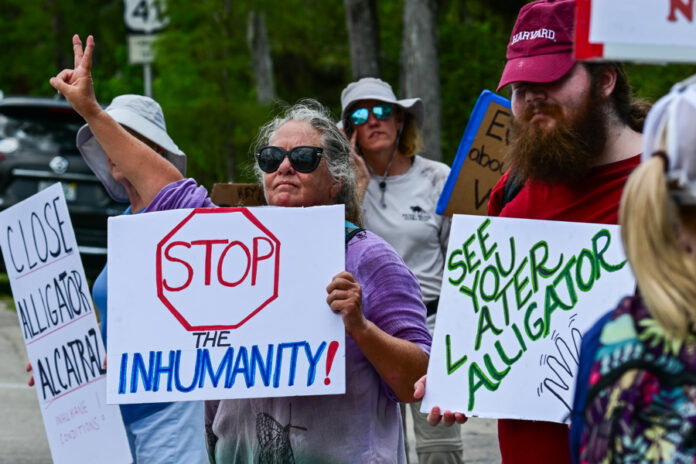
Este es el segundo reves judicial que recibe Trump en 24 horas porque este jueves una jueza de Florida ordenó el cierre de la cárcel Alligator Alcatraz en los próximos 60 días y agregó que ningún migrante más puede ser trasladado a este centro.

From outsider to inspiration: The rise of Philadelphia native Sky Lakota-Lynch on Broadway

Broadway
Sky Lakota-Lynch outside Bernard B. Jacobs Theatre celebrating The Outsiders Tony Award for Best Musical (Photo: Courtesy/Faith Lara)

Philadelphia-born Sky Lakota-Lynch burst onto the Broadway scene with his debut on June 12, 2018. Six years later, he earned a Tony Award nomination for Best Performance by an Actor in a Featured Role in a Musical, captivating audiences as Johnny Cade in the Broadway phenomenon The Outsiders

From a boy growing up in the suburbs of Philadelphia to an inspiring role model, Sky Lakota-Lynch’s journey is as powerful as the characters he brings to life, not only for his unforgettable performances on stage, but for his own story of living as an outsider.

Before the bright lights of Broadway, Sky Lakota-Lynch was just a teenager in the Philadelphia suburbs—more at home in a stadium crowd than in the quiet anticipation before a curtain rose.

He was Homecoming King in his senior year at North Penn High School in 2010, but the crown didn’t hide the weight of his struggles.

From his Native American and Ethiopian background, Sky navigated a world that often told him he wasn’t “enough” of either. As he once shared in an interview, “I am not Black enough. I’m not Native American enough, so I was truly an outsider.”

Seqouiia meeting fans after a show, starting his journey on Broadway. (Photo: Courtesy/Faith Lara)

The sting of racism and the cruelty of bullying left deep marks, making his eventual portrayal of Johnny Cade in The Outsiders all the more haunting. Johnny, like Sky, was a young man defined by misunderstanding, living in a world split between the outcast Greasers and the privileged Socs. The loneliness, the longing for more, Sky infused every moment on stage with an authenticity born from lived experience.

But just as Johnny found a family in his friends, Sky found his home in the theatre. A chance encounter with musical theatre in high school ignited a passion that could not be dimmed. Teachers and classmates recognized his rare talent, and that spark led him to train at AMDA College and Conservatory of the Performing Arts, setting him on the path to the Broadway stage

The road to Broadway was not paved in gold for Sky Lakota-Lynch, it was built through years of struggle, resilience, and an unwavering belief in the power of storytelling. There were moments when the weight of rejection made him consider walking away, but his resolve carried him forward. His breakthrough came with Dear Evan Hansen, where he was the first male cast member of color to join the production.

The cast of The Outsiders taking a bow on July 20th. (Photo: Courtesy/Faith Lara)

In 2018, Sky began work on a musical adaptation of The Outsiders. That first attempt never reached the stage, but fate had other plans. The production was reborn at San Diego’s La Jolla Playhouse, where its raw energy caught the eye of producer Angelina Jolie. So moved by what she saw, she helped bring the show to the bright lights of New York City.

Today, Sky Lakota-Lynch is living proof that with passion, persistence, and heart, even the most distant dream can step into the spotlight.

Through his journey, Sky Lakota-Lynch has shown his bullies, himself, and countless others that while life can be hard, it can also be deeply beautiful, and with the right mindset, you truly can do anything you set your heart on.

On July 20, I had the privilege of seeing The Outsiders at a 3 p.m. matinee. Watching Sky—and the rest of the cast—bring these characters to life was more than just entertainment. It was a reminder of what the story stands for: the “outsiders” of the world, the people who don’t quite fit the checklist society has written, still belong. It showed that even those who seem “socially acceptable,” like the Socs, have struggles of their own. Their lives aren’t as perfect as they appear, and beneath the surface, we are all more alike than we are different. 

It doesn’t matter what your skin color is, where in the world you live, the clothes you wear, or the way you speak, your story matters. It deserves to grow beyond the expectations others have placed on you.

That same night was also a milestone for another performer: Sequoiia, a young understudy playing Dallas Winston, who made his Broadway debut. The passion and raw intensity with which he played the troublemaking Greaser made it seem as though he had been doing this role for years.

At the stage door, his joy was unmistakable, smiling from ear to ear, marker in hand, ready to sign Playbills. He took the time to greet each person, humbly accepting compliments. When I told him how much his character reminded me of my brother and how emotional his performance had made me, he shook my hand, asked for my name, and introduced himself as though I hadn’t just seen him give a powerhouse performance minutes earlier.

Moments like these remind me how truly remarkable Broadway actors are, and how The Outsiders continues to inspire, both the audience and the performers themselves — to “stay gold.” 

A quiet exodus: How immigration policies and federal cuts are reshaping classrooms 

Escuela elemental de Georgetown, DE. (Foto: Virginia Esteban–Somalo)

Emily is 8 years old and eager to return to school. This year, she will enter 3rd grade at the elementary school in Georgetown, DE.

She’s especially excited to reunite with her friends.

However, although she doesn’t know it yet, not all of her classmates may return to school this year.

The public school Emily attends has a student population that is 54.2% Hispanic. Some immigrant families informed teachers last spring that they would not be enrolling their children this school year. Miss Susan was one of the teachers who received the news.

“Some parents contacted me and shared that they wouldn’t be enrolling their children this year because the families had decided to return to their countries of origin.”

Some families chose to self-deport under the CBP Home program. Others returned to their countries as quietly as they arrived. And some, like Katy’s family, opted to move to neighboring states in an effort to disappear from the radar after receiving letters summoning them to immigration court.

Mía’s father, who is 9 years old, was recently deported to Mexico after spending several weeks in a detention center in Pennsylvania. Her mother is torn between leaving the country with her daughter to reunite with her husband or staying and living in fear of being detained.

These and similar situations are now compounded by additional challenges.

On one hand, there’s the cut in federal funding for Head Start and other educational programs, set to take effect on September 11. This prompted the governors of Pennsylvania and Kentucky, along with the Attorney General of Delaware, to file a lawsuit against the federal government on August 15. This new lawsuit joins a previous one filed on July 21 by a coalition of 20 states (including Maryland and New Jersey), arguing that the federal government acted illegally by issuing changes to educational funding without following the procedures required by the Administrative Procedure Act (PRWORA) and misapplied the law to entire programs instead of individual benefits.

It’s estimated that these cuts will affect over $11 million in federal grants in Delaware alone, impacting more than 250 educational programs and serving over 50,000 Delaware residents, including adult learners, children in foster care, and homeless children. (See report from the National Institute For Early Education Research).

On the other hand, there’s growing concern that Delaware may be choosing to apply federal restrictions to state-funded programs, even when there is no legal mandate to do so.

Directora ejecutiva de LACC, María Matos. (Foto: Cortesía/LACC)

The alarm was raised by María Matos, Executive Director of the Latin American Community Center (LACC) in Wilmington, DE, which oversees early education centers La Fiesta 1, 2, and 3. Recently, LACC received a letter from the Delaware Department of Education that sparked urgent concern.

La Fiesta 2 el día de su inauguración en 2023. (Foto: José Somalo)

The letter stated that due to a recent departmental directive, the center was required to revoke the enrollment of children born outside the United States in its state-funded early care and education program at La Fiesta 2. The justification was that the center also receives federal funds through Early Head Start.

Gráfica correspondiente a Pensilvania del reporte “El estado de Head Start y Temprano Early Head Start: buscando equidad” producido por el Instituto Nacional para la Investigación de la Educación Temprana.

In a statement expressing her concern, Matos asked:

“Why are federal guidelines, intended for only 27 children funded with federal dollars, being used to deny services to the other 77 children who are supported solely by state funds?”

La Fiesta 2 is an early education center serving children ages 24 months to 4 years. More than a daycare, it offers dual-language education in English for older children and Spanish immersion for infants and toddlers. Eligible applicants include children from families at or below the federal poverty level, children in foster care, homeless children, and children with documented delays or disabilities (IFSP and IEP).

The veteran executive director has urged authorities for an immediate clarification, as the DOE directive mentioned in the letter could potentially deny access to state-funded early learning opportunities for immigrant children across Delaware.

“Is Delaware choosing to apply federal restrictions to state-funded programs, even when there is no legal mandate to do so?” Matos asks.

“Must any organization receiving both state and federal funds now apply federal eligibility guidelines across the board, simply because services are provided under the same roof?”

Early education centers serving immigrant students, like La Fiesta II, await answers and will begin the school year under a cloud of sadness, shock, and disbelief.

“This is a matter of justice, equity, and well-being,” Matos emphasizes.

ICE detiene a 25 albañiles de México y Centroamérica en Pensilvania

Pensilvania
Miembros de la comunidad de la Red de Respuesta Rápida del Condado de Centre, Pensilvania, se han organizado para patrullar las áreas afectadas para prevenir más arrestos por parte de ICE. (Foto: Tom Mihalek/EFE)

La comunidad hispana de Pensilvania ha recibido con consternación la noticia de que 25 trabajadores inmigrantes, procedentes de México, Guatemala, Nicaragua, El Salvador y Honduras, obreros de construcción, fueron detenidos en 2 lugares distintos por agentes de inmigración en una carretera estatal de Pensilvania, cuando se dirigían a sus labores. Los trabajadores fueron detenidos la mañana del martes 19 de agosto.

Se sabe que algunos fueron enviados al Centro de Procesamiento de Moshannon Valley, denunció en un comunicado la directora ejecutiva de la Coalición de Inmigración de Pensilvania, Jazmine Rivera.

El primer arresto tuvo lugar a las 7 de la mañana, cuando un Policía Estatal detuvo un vehículo y pidió la identificación al conductor y a los que lo acompañaban. Luego de proveer sus documentos, los agentes de inmigración intervinieron y arrestaron a 22. Solo uno de los trabajadores, por ser ciudadano estadounidense, fue dejado en libertad.

Una hora después, la organización Red de Respuesta Rápida del Condado Centre, de Pensilvania, recibió una llamada de un miembro de la comunidad que les informó que vio a 6 agentes de inmigración detener a 3 latinos que viajaban en otro vehículo.

Todos eran compañeros de trabajo y participaban como obreros en la construcción del Hospital Mount Nittany, agrega el comunicado.También indica que días antes de los arrestos, trabajadores habían denunciado que sospechaban que los agentes del Servicio de Inmigración y Control de Aduanas ICE, vigilaban la obra donde trabajaban y que los habían seguido al culminar su jornada laboral.

Gracias a esa vigilancia, ICE los pudo localizar camino a su trabajo, destacó Rivera.

Los activistas están intentando identificar a los arrestados. Además, la Red de Respuesta Rápida del Condado de Centre, en colaboración con el Frente de Defensa del Pueblo y el Comité Estudiantil para la Defensa y la Solidaridad han movilizado a miembros de la comunidad para patrullar las áreas afectadas para prevenir más violencia contra los inmigrantes por parte de ICE.

Los casos Epstein y Maxwell: Verdad, poder y la balanza rota de la justicia

Ghislaine Maxwell, cómplice de Jeffrey Epstein, aseguró que el financiero no tenía una lista de clientes durante una entrevista de dos días con el Departamento de Justicia de EE.UU, cuya transcripción fue entregada hoy a un Comité del Congreso que estudia el caso del millonario.

Es asombroso escuchar todas las mentiras que Trump y su equipo utilizan para intentar desmantelar la verdad sobre él, Epstein y, especialmente, la super reclutadora y abusadora de menores Ghislaine Maxwell.

Durante años, Trump y la derecha exigieron que se hicieran públicos los archivos de Epstein, afirmando que así se demostraría cómo los demócratas preparaban y abusaban de niños. Pero, tras ser elegido por segunda vez, Trump guardó silencio sobre el asunto.

El fuego ya se había encendido, y hasta en el mundo MAGA muchos querían saber qué había en esos archivos, con la esperanza de seguir demostrando que los villanos eran los demócratas. Se cree en muchos círculos que en esos archivos, fotos y videos hay participantes de todos los bandos y tendencias políticas. Y hasta el día de hoy siguen apareciendo más imágenes y videos que sugieren que al menos Trump sabía lo que ocurría y no hizo nada para proteger a las menores.

Como es bien sabido, fue juzgado y condenado por agresión sexual contra una mujer, y hay muchas más que lo han acusado de agredirlas sexualmente.

El Departamento de Justicia actual revisó los archivos para ver si Trump era mencionado, y encontró más de 50 referencias. Entonces el presidente comenzó a decir que Obama y el exdirector del FBI, Comey, inventaron esas mentiras y que no había nada de cierto en esos reportes. Pero si Trump tuviera razón, entonces Obama debe haber pasado demasiadas noches editando fotos de Trump con Jeffrey y las menores.

Ahora el FBI estaría tachando su nombre de cada archivo. En algún momento, algunos de los agentes que trabajaron en este asunto escribirán sus libros para ganar dinero y contarán parte de la verdad sobre cómo la Administración Trump intentó encubrirla.

Lo que resulta aún más preocupante es que el número dos del DOJ, Todd Blanche pasó dos días entrevistando a Ghislaine Maxwell, y luego la enviaron a una prisión de mínima seguridad en Texas con mejores comodidades. Esto es un abuso de la letra de la ley y debe ser investigado.

Muchas víctimas y sus abogados están protestando contra esta acción, porque envía un mensaje equivocado a los criminales y podría ser el primer paso de muchos que tome Trump para avanzar hacia un indulto o conmutación de pena. Trump ha dicho que no sabía nada ni tuvo que ver con el traslado de Ghislaine Maxwell a la prisión de Texas. Pero muchos sospechan que Trump miente y que ella no habría sido trasladada sin su aprobación. Tenemos un presidente que comenta los monólogos de los comediantes, pero ahora dice no saber lo que ocurre con el asunto más candente sobre su escritorio.

Otros depredadores y abusadores probablemente se pregunten por qué ellos no tienen derecho a ir a Texas. Al tratar así a Maxwell, la Casa Blanca está haciendo el “Taco-tango”, intentando evadir que la verdad salga a la luz. “TACO” era un apodo que le daban a Trump en Wall Street, diciendo que “Trump Always Chickens Out” (Trump siempre se acobarda).

Necesitamos que todos los que tengan una historia que contar la lleven a los medios, para que podamos hacer tropezar a Trump mientras intenta bailar rápido y lograr que olvidemos la larga y sucia historia que tuvo con Epstein, Maxwell y los otros demás hombres que formaban parte de esa cloaca de la humanidad.

Mientras tanto, la Administración Trump intenta lograr la divulgación del testimonio del gran jurado, con la esperanza de demostrar que no está implicado. Pero, como muchos saben, la información del gran jurado trata únicamente de Epstein y Maxwell.

El juez federal Paul Engelmayer no mostró ninguna simpatía por el intento de la “Administración de controlar daños, e incluso sugirió que la solicitud del Departamento de Justicia “no buscaba ‘transparencia’, sino distracción; no buscaba divulgación completa, sino la ilusión de ella”.

“Contrario a la descripción del Gobierno, el testimonio del gran jurado de Maxwell no es un asunto de significativa relevancia histórica ni de interés público… Consiste en un testimonio rutinario resumido por dos agentes de la ley. Y la información que contiene ya es, casi en su totalidad, un hecho de dominio público desde hace tiempo,” dijo Engelmayer. “Sin necesidad de revisar los materiales del gran jurado, el público puede evaluar por sí mismo las bases que el Gobierno alega para presentar esta moción”.

Al mismo tiempo, el Departamento de Justicia tiene en su poder miles de páginas de información perjudicial que podría dar a conocer. Y a esos evangélicos que aún apoyan a Trump se les debe preguntar por qué dicen que son provida y defensores de los valores familiares, pero apoyan a un hombre que probablemente fue parte de una de las mayores redes de abuso pedófilo, y no confrontan a este abusador y a sus seguidores.

La industria de la pedofilia está muy extendida, y debe ser desmantelada, y quienes participen, condenados e ingresados en prisión. Y este “Taco-tango” debe llegar a su fin.

Necesitamos su ayuda, y mientras tanto, piense en esto:

¿Qué haría usted si su hijo o hija hubieran sido abusados por Epstein y su grupo de hombres blancos adinerados?

Esperanza Academy opens new elementary school: A milestone for Hunting Park

El corte de cinta dio paso a la apertura oficial de Esperanza Academy. (Foto: Haydeé Rosario/ Impacto/Staff)

In an atmosphere filled with enthusiasm and pride, Esperanza Academy Charter School officially celebrated the grand opening of its new elementary school on Thursday, August 21. The modern facility will serve more than 750 students from kindergarten through fifth grade in the heart of Hunting Park, in North Philadelphia.

Early in the morning, special guests were invited to tour the school, led by Dr. Evelyn Núñez, Chief Executive Officer and Superintendent of Esperanza Academy: “With this opening, we complete our vision of an integrated educational experience under one system, rooted in academic excellence, cultural respect, and real opportunity for our students.”

Dr. Evelyn Núñez, CEO and Superintendent, addressing a group at the 2024 welcome event. (Photo: Esperanza Academy)

Later, the inaugural ceremony was hosted by 6ABC news anchor Walter Pérez, who welcomed the audience. The event brought together school leaders, faculty, local officials, families, students, and neighbors gathered to celebrate a project that promises to transform access to quality education.

“Today, we’re not just celebrating the opening of a building, but the realization of a dream that began over two decades ago,” said Rev. Luis Cortés, founder and CEO of Esperanza, the nonprofit that established the school and serves as its management company. “This new space represents the promise of an excellent education for the youngest members of our community, starting with their first steps in school.”

Elementary school students engage in classroom activities. (Photo: Esperanza Academy)

A building designed for excellence

Located at 201 W. Hunting Park Avenue, the new school building spans over 73,000 square feet and was thoughtfully designed to provide a comprehensive educational experience. It includes modern classrooms, STEAM labs, art and music rooms, a fully equipped gym, a state-of-the-art kitchen, and a flexible multipurpose space with movable walls for school and community events.

During the ribbon-cutting ceremony, parents eagerly explored the facilities that will welcome their children for years to come.

Anthony Ramos, father of two students, shared: “It’s a proud moment to finally have a space like this for our children. I’m happy because Esperanza upholds values that will give them access to a good education.”

Elementary school students engage in classroom activities. (Photo: Esperanza Academy)

Since its founding in 2000, Esperanza Academy has made a significant impact on Philadelphia’s Latino community. Currently, 92% of its students are Hispanic, many from low-income families. 85% receive free or reduced-price lunch, 27% are English language learners, and 21% receive special education services.

Students participating in the “Toros Celebration” event, showcasing positive behavior. (Photo: Esperanza Academy)

Despite these challenges, 93% of students graduate within four years, and 61% go on to college. The integration of the elementary level into the K-12 system aims to strengthen these opportunities from the earliest stages of learning.

Students participating in the “Toros Celebration” event, showcasing positive behavior. (Photo: Esperanza Academy)

“You can’t tell a child they can be anything they want in life and then not give them the tools to achieve it,” said Rev. Danny Cortés, Executive Vice President and COO of Esperanza. “This building is not just concrete and glass; it’s a statement of values. Here, we believe all our children deserve the best—regardless of their ZIP code or background.

Science Club students conduct experiments to build scientific skills. (Photo: Esperanza Academy)

Beyond the classroom

In addition to its cutting-edge infrastructure, the new elementary school will offer extracurricular programs, personalized support services, and a focus on developing students’ social, cultural, spiritual, and technological skills.

Esperanza Academy is also known for offering 13 curricular concentrations in its middle and high schools, and up to 15 Advanced Placement (AP) courses—more than any other charter school in Philadelphia. With the full integration of the elementary level, the school lays the foundation for a continuous, coherent, and rigorous academic path.

Last spring, students organized a book drive for St. Christopher’s Children’s Hospital.      (Photo: Esperanza Academy)

An investment in the future

The opening of this new facility is not only an investment in education, but also in the future of Hunting Park and Philadelphia’s Latino community. As Rev. Luis Cortés said in a statement to Impacto: “This building is a promise—a promise to our children that they will find the tools here to dream, build, and lead. A promise to our families that they are not alone. And a promise to our community that the future is already here, and it begins in these classrooms.”

This student at the kindergarten promotion ceremony. (Photo: Esperanza Academy)

A promising future for Hunting Park

With this new building, Esperanza Academy not only expands its educational capacity but also reaffirms its mission to foster a community defined by hope, quality, and opportunity. This opening stands as a symbol of tangible progress; a pillar of community transformation that confirms that in Philadelphia, quality education is within everyone’s reach.

For more information about the curriculum and educational programs, visit: www.esperanzaacademycs.org

The importance of epistemology, ontology, and critical thinking in defending democracy

To gain a deep understanding of political systems such as fascism and democracy, it is essential to turn to epistemology, ontology, and critical thinking. Epistemology allows us to question how political knowledge is constructed, which sources are valid, and how beliefs are justified. Ontology helps us understand the nature of power, the State, and political institutions. Critical thinking, in turn, is fundamental for analyzing discourse, identifying biases, and making informed decisions as citizens. These philosophical tools strengthen the understanding and defense of democratic systems and help us recognize the dangers of authoritarian regimes.

Political violence is undermining our democracies

Political violence has been spreading across many nations in the Americas, leaving deep scars on our democracies. It is no longer a distant phenomenon; it has become a tragic and recurring element in our political landscapes. Each act of violence sends a chilling message: that fear and hatred can replace dialogue, and that bullets can silence the voices meant to protect the ballot box. Democracy cannot flourish where violence becomes a political tool, and we are witnessing the high cost this imposes on societies striving to remain free and open.

Colombia offers a painful example of this tragedy. The recent assassination of candidate Miguel Uribe is not an isolated incident, but part of a long history of violence against political leaders in that country. To make this loss even more heartbreaking, his mother was also murdered when he was just four years old. A family marked twice by the same violent forces shows how deep and generational the wounds of political terror can be. This is not just the silencing of a candidate: it is the interruption of a legacy, a dream, and a democratic promise.

Sadly, political violence does not begin with a weapon; it starts with words. Across the Americas, including the United States, political rhetoric has become increasingly toxic. Hatred has seeped into the language of our leaders, normalizing contempt, defamation, and division. When public discourse is steeped in anger and dehumanization, it fosters a climate in which violence is justified and normalized.

In these times, it is imperative not only to wish for peace but to educate for peace. Democracy is not perfect, but it is the best achievement we have conquered as societies. We need to defend it.

Words as bullets or as water: you decide

(Foto: Ilustrativa/Pexels)

As we watch the news today, I think most of us scratch our heads at how much anger and hatred is coming out of the media. The amount of anger, cynicism, and hate spilling from our screens can be overwhelming.

Thankfully, we now have more control over what we consume—social media, podcasts, and independent outlets give us the power to “click” our way toward our version of the “truth”.

So, as we pick up the pieces and try to re-arrange what we all used to call “normality”, the question remains: Can we still create a world where conversations are centered on love, kindness, and hope?

I read somewhere that “words are like bullets”. This African proverb emphasizes the impact and lasting nature of words. Once spoken, words—like bullets—can’t be taken back. They pierce, the hit, they wound, and can leave damage that lingers for years. But what if we flipped the analogy? What if, instead of bullets, our words were like water, that can be nourishing?

Water nourishes. It takes a seed in fertile soil and, with patience, turns it into a thriving plant. Words can do the same. They can help someone grow into their fullest self, nurture their confidence, and encourage resilience. Just as water sustains life, positive language can sustain hope.

The challenge is that in our current political and cultural climate, negative words seem to carry more weight. Demeaning comments dominate headlines. (The 2024 election results revealed that we took reality TV’s lessons to heart – Opinion). Unfortunately, people pay more attention to «negative» harmful language. So how do we stay the course? …with some patience and persistence, I believe. Just as watering a seed in fertile ground requires patience and discipline, using positive words consistently also requires sustained effort and intentionality. And while the results may not be immediate, the growth is real.

This idea of using positive words all the time is nothing new. Educators have long understood this. Teachers use positive language as the foundation for learning and personal growth. As children’s book author Alicia Ortego notes, the words parents use can shape a child’s self-esteem and emotional resilience. Encouraging phrases plant the belief that challenges can be overcome with effort and determination.

Science backs this up. Research shows that positive words can literally change brain chemistry—releasing feel-good hormones, lowering stress, and even strengthening the immune system.  Smiling Mind Blog points out that something as simple as choosing kind, affirming language in daily conversations can lift moods and improve overall well-being.

That’s why I’m offering not a white flag of surrender, but a white flag of peace—a commitment to be mindful of how we speak to one another. Let’s choose our words as if they were water: refreshing, life-giving, and sustaining.

And in times like these, choosing nourishment might be the most radical act of hope we have left. That every word we use be building blocks and columns of hope, kindness and empathy.