Philadelphia Police officers and detectives look over evidence at the scene of a shooting in Philadelphia, Sunday, June 5, 2022. (Photo: AP)
PHILADELPHIA.— Authorities say one person is in custody and and another is being sought in the multiple shootings that killed three people and wounded 11 in a popular Philadelphia entertainment district over the weekend — but no charges have yet been filed in any of the shooting deaths.
Police officers patrolling the South Street area in central Philadelphia at about 11:30 p.m. Saturday raced to the scene after hearing multiple shots and found several people with gunshot wounds lying on the sidewalk and in the street. Seeing a man on a corner firing a handgun at people about half a block away, one officer opened fire, and that man dropped his handgun onto the sidewalk and fled, authorities said.
Assistant District Attorney Joanne Pescatore said authorities have identified that man as Quran Garner, and he faces multiple charges including aggravated assault and aggravated assault on law enforcement officers. An attempted murder arrest warrant has been approved for another individual who wasn’t named.
Authorities have said the gunfire started with a physical altercation between two people, both of whom then began firing a total of 17 shots at each other. One man, 34-year-old Gregory Jackson, was killed and the other was wounded; no charges are planned against him since both men had permits to carry and that shooting is considered self-defense. A man who was with Jackson at the time of the altercation is the other person sought.
Police said Garner then began firing back at the area of the initial confrontation until he was wounded in the hand by fire from the police officer. He fled and surrendered to other police officers at the scene of an earlier shooting nearby.
Authorities have said that the other two people killed by the gunfire, 27-year-old Alexis Quinn and an unidentified 22-year-old man, as well as many of the other people wounded by gunfire — who ranged in age from 17 to 69 — are believed to have been innocent bystanders.
It’s unclear whether Garner has an attorney and a listed number in his name couldn’t be found Monday.
District Attorney Larry Krasner said he went to the scene the morning after what he called “a horrific and a senseless act of violence» and found it “chilling — no less chilling that it happened in more than 10 places around the country over the space of a few days.»
The city’s police commissioner, Danielle Outlaw, called it “a dark day” for the city. Mayor Jim Kenney called the shooting “beyond devastating.”
South Street is known for its entertainment venues and night life with multiple bars, restaurants and businesses. Surveillance video from local businesses showed scores of people fleeing as the gunfire broke out. Police are also investigating several other nearby shootings, one fatal, to see whether they might be related, officials said.
Miami, EE.UU.– Un joven canadiense fue detenido por amenazar con disparar a los participantes de un evento LGBTQ+ organizado en Florida (EE.UU.) y tras una investigación internacional que involucró a varias agencias del orden, anunciaron este lunes las autoridades.
El arresto del adolescente de 17 años, aún sin identificar, fue anunciado este lunes en una rueda de prensa por el subjefe del Departamento de Policía de West Palm Beach (WPBPD), Rick Morris, a quien se unieron representantes de las organizaciones LGBTQ Compass y Transpire Help.
Según un comunicado del mismo departamento policial, el sospechoso «blandía un arma en el video, dijo que vivía en el condado de Palm Beach, hizo comentarios anti-LGBTQ+ y también dijo que iba a cometer un tiroteo masivo ese día en ese evento».
Se trata del evento Pride on the Block 2022, que se realizó en la mencionada ciudad al norte de Miami este domingo.
De acuerdo con las autoridades, en la madrugada de este lunes el joven fue arrestado en Canadá por hacer las amenazas en la plataforma de video chat Omegle.
Las autoridades canadienses acusaron al sospechoso de amenazas de cometer un tiroteo masivo.
Los cargos, indicó el comunicado, están pendientes de realizar por el Departamento de Policía de West Palm Beach y se basan en el «Estatuto del Estado de Florida 836.10: Amenazas escritas o electrónicas de matar, causar lesiones corporales o realizar un tiroteo masivo o un acto de terrorismo».
Según detalles de las autoridades, el pasado domingo el Departamento de Policía de Miami notificó de las amenazas del joven a sus colegas de West Palm Beach, que iniciaron una investigación criminal.
«Además de aumentar el plan de seguridad existente para el evento con oficiales adicionales uniformados, encubiertos y SWAT (fuerzas especiales), el Centro de Inteligencia Estratégica (STIC) del WPBPD desarrolló información que finalmente identificó la ubicación del sospechoso», añadió el comunicado.
Asimismo, la investigación internacional contó con la colaboración del Departamento de Policía de Nueva York (NYPD), el Servicio de Policía de Toronto y la Policía Regional de Peel y el FBI estadounidense.
Tanto el video como el arma que el joven mostró en el video fueron recuperados por la policía canadiense.
El Alcalde de Los Ángeles, Eric Garcetti, en entrevista con la Voz de América. (Foto: VOA/Nelson Vignoles)
En el marco de la Cumbre de las América, que se celebra estos días en la ciudad estadounidense, Eric Garcetti conversa con VOA sobre los lazos económicos y sociales con la región y sobre cómo se debe seguir trabajando para combatir el cambio climático.
Los Ángeles, EE.UU. — A propósito del desarrollo de la IX Cumbre de Las Américas, en Los Ángeles, el alcalde de esta ciudad, Eric Garcetti, dice que este es el lugar idóneo para el evento, debido a que hay un grueso de población latina que vive allí y son muchos los temas que se tienen en común con la región.
«Los Ángeles es natural para esta cumbre porque estamos en la capital norteña de Latinoamérica y tenemos poblaciones de todos estos países, y hay un centro también aquí de cultura, de intercambio de la economía y también de los problemas de las Américas», dijo el alcalde, entrevista con la Voz de América, al referirse, además, a la inmigración y el cambio climático.
Garcetti, precisamente, fue quien impulsó que este importante foro regional se llevara a cabo en su ciudad.
De acuerdo con la Casa Blanca, la ciudad fue elegida como sede porque, entre otros factores, “los intereses vitales de Estados Unidos están íntimamente ligados al destino de nuestros vecinos más cercanos en el continente americano”.
Actualmente, casi la mitad de los cuatro millones de habitantes de Los Ángeles son hispanos, convirtiendo a la región en el hogar más grande de los migrantes en Estados Unidos. Incluso, alberga el tercer cuerpo consular más grande del mundo.
Según Garcetti, un 63% de la población en Los Ángeles son inmigrantes o hijos de inmigrantes. El alcalde asegura que su visión está muy estrecha a las Américas, debido a su ascendencia.
«Yo soy un nieto de inmigrantes de México, que son un parte integral de mi identidad y también de mi visión. Yo quiero un una ciudad, pero también un mundo donde toda la gente pertenece… porque, cuando nosotros tenemos este sentimiento, tenemos la oportunidad para invertir en la ciudad, en la solución de nuestros problemas y también para ver nuestras familias en las Américas como líderes», dijo el alcalde.
El cambio climático, uno de los retos
Sobre la importancia de abordar la implementación de medidas para combatir el cambio climático, una de las razones de la migraciónmasiva de Centroamérica, Garcetti enfatiza en que las Américas «están en el frente de batalla» contra este problema y destaca el trabajo de otras naciones al respecto.
«Los Ángeles y otras ciudades en Sudamérica, Centroamérica, México, en Canadá, tenemos las soluciones porque los alcaldes y alcaldesas también tienen el poder con los edificios, con la energía y la electricidad, con sistemas de transporte público. Necesitamos traer estas soluciones durante esta cumbre, aquí en Los Ángeles, a todas partes de las Américas, porque este es una crisis… y pueden matar la gente en nuestros países, cada día, cada mes, cada año», señaló.
Además, destacó el trabajo de su ciudad al trabajar con una compañía de electricidad pública, y cómo, hace dos décadas, se ha transformado esta energía de carbón a energía limpia: «62% por ciento de nuestra electricidad ahora es sin carbón».
Para combatir la emergencia climática, hace siete años, el alcalde lanzó un plan de ciudad sostenible, ampliando la infraestructura de energía solar y vehículos eléctricos. Además, ha liderado
Impacto de la migración
Sobre cómo el Gobierno estadounidense y la ciudad debe y puede ayudar a la comunidad de migrantes, el alcalde es claro en decir que se necesita un liderazgo, a nivel federal.
«Finalmente, con el Congreso va a tener leyes mejores para la inmigración, pero, como una ciudad, tenemos mucho poder para ayudar a los inmigrantes, para coexistir con la ciudadanía», puntualiza.
Pero reconoce que tanto en Los Ángeles como al otro lado de la frontera existen grupos que ayudan a los migrantes, pero que es necesario que se conecten y adelanten un trabajo de ayuda conjunto.
«Necesitamos a conectar estos grupos, conectar esta visión y finalmente necesitamos leyes que trabajen. Ahora, el sistema está roto, en mi opinión, y necesitamos el liderazgo de dos partidos en Washington, los demócratas y los republicanos finalmente para resolver esos problemas», añade Garcetti.
La IX Cumbre de las Américas se realiza en Estados Unidos desde hoy, lunes, hasta el próximo viernes 10 de junio, y contará con la participación de importantes líderes, a nivel mundial.
Entre los 15 proyectos, se destacan dos: uno para la central eléctrica de Aguirre en Salinas, para los que se asignaron 13,4 millones de dólares para la instalación de equipos de filtración para el sistema de tratamiento de aguas residuales, así como para el condensador de la bomba de agua. Imagen de archivo. (Foto: EFE/Thais Llorca)
San Juan, Puerto Rico.- El Gobierno de Puerto Rico anunció este lunes que espera que la Agencia Federal para el Manejo de Emergencias (FEMA, en inglés) apruebe 107,3 millones de dólares para restaurar 15 proyectos de la red eléctrica de la isla.
Según explicó en un comunicado de prensa el gobernador de Puerto Rico, Pedro Pierluisi, será a través de estos proyectos bajo la Estrategia de Obligación Acelerada de FEMA, conocida como FAASt, que se restaurará el sistema de generación, transmisión y distribución eléctrica de la isla.
El anuncio se da varios días después de que Pierluisi viajara a Washington DC y se reuniera con varios altos funcionarios del Gobierno estadounidense, entre ellos, la secretaria de Energía federal, Jennifer Granholm, sobre la reconstrucción y resiliencia de la red eléctrica local.
La mitigación de riesgos es pieza clave como una medida adicional para proteger la inversión federal, según se especificó en el comunicado.
De igual manera, esto permite que se usen materiales de mayor calidad, entre otras medidas de planificación que consideran los riesgos asociados a una futura emergencia.
Hasta el momento, FEMA ha aprobado 9,2 millones de dólares adicionales en fondos de mitigación para proyectos de energía, dijo en el comunicado el coordinador federal de Recuperación de Desastres de FEMA, José G. Baquero.
Entre los 15 proyectos, se destacan dos: uno para la central eléctrica de Aguirre en Salinas, para los que se asignaron 13,4 millones de dólares para la instalación de equipos de filtración para el sistema de tratamiento de aguas residuales, así como para el condensador de la bomba de agua.
Estas reparaciones ayudan a aumentar la producción de energía y son elementos esenciales para una red más eficiente.
Además de los proyectos del FAASt, se otorgaron otros 8,7 millones para las instalaciones de la Autoridad de Energía Eléctrica (AEE) -compañía estatal encargada de la generación de la red- en la planta Costa Sur en Guayanilla para atender los daños causados por los terremotos de 2020.
«La misión de la AEE es proveer un servicio de electricidad de la manera más eficiente, segura, económica, confiable, favorable para el ambiente y que responda a las necesidades de nuestros clientes», sostuvo el director ejecutivo de la AEE, Josué A. Colón.
El funcionario informó que la corporación pública lleva a cabo un programa agresivo y transformador de reparación de toda la flota generatriz que asciende a 1.500 millones de dólares aproximadamente.
Esto permitirá, según Colón, «aumentar la disponibilidad confiable de nuestras unidades generatrices más económicas, disminuyendo considerablemente, tanto la probabilidad de apagones por falta de generación, como la utilización de las unidades menos económicas».
En cuanto a los proyectos del sistema de transmisión y distribución, manejados por Luma Energy -empresa encargada de la transmisión y distribución de la electricidad en Puerto Rico-, recientemente se aprobaron fondos para reparar los alimentadores de distribución en Caguas y Ponce.
Ambos sistemas transfieren energía a negocios, hogares y otras instalaciones.
De igual manera, FEMA asignó una partida para trabajos en la subestación de Manatí para reemplazar interruptores y otros equipos que ayudan a prevenir cortocircuitos y fallos que causan averías.
Asimismo, se aprobó una partida federal de más de 20,9 millones para modernizar y reforzar la subestación de Cataño, que incluye 6,8 millones para actividades de mitigación a fin de evitar que ocurran daños similares en el futuro.
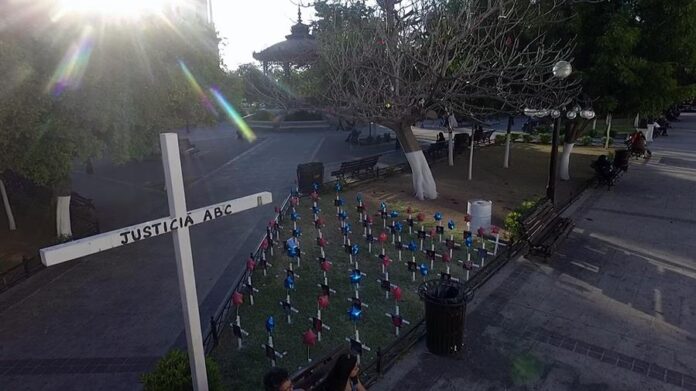
Crosses bearing the names of the victims killed in the school shooting are seen through a balloon at a memorial at Robb Elementary School in Uvalde, Texas, on June 1, 2022. (Photo: AP/Jae C. Hong/File)
NEW YORK, EE.UU. — As a knot of journalists stood across from a mortuary witnessing a funeral for a child killed in the Uvalde school massacre, some people passing by didn’t disguise their anger.
“Y’all are the scum of the Earth,” said one woman, surveying the cameras.
When tragedy comes to town in the 21st century, the media follows, focusing the world’s eyes on a community during its most difficult hours. Columbine, Sandy Hook, now Uvalde, Texas — the list of places synonymous with horrible mass killings keeps growing.
Journalists are called upon to explain what happened, and sometimes to ask uncomfortable questions in places where many people want to be left alone to grieve. Is it possible to do it better, to co-exist within a moment no one wants to be part of?
Tempers have flared in Uvalde. One female journalist was told, “I hope your entire family dies in a massacre.” Some are threatened with arrest for trespassing while on public property. A group called “Guardians of the Children” blocked camera views, often with the encouragement of police.
Yet there are also people like Ben Gonzalez, who approached reporters near the mortuary after hearing the woman lash out to say that she doesn’t speak for everyone. “Thank you for documenting this tragedy,” he said. “We’ll look back at the photos you take and appreciate it.”
The shady courthouse square in Uvalde has been dotted by canopies erected by TV news crews. Journalists have been stationed at Robb Elementary School, where the shooting took place, near a makeshift memorial piled with flowers, stuffed animals and messages. At the local Starbucks, where many journalists go to work, tables are set aside for Uvalde residents.
These are the typical signs of the invasion of journalists that accompany such events.
“I respect the wishes of people if they want me to leave,” said Guillermo Contreras, a senior writer at the San Antonio Express-News. “By the second day (after the shooting), the people were overwhelmed. The town has been overrun by reporters. There was pretty much nowhere you could go without running into the media.”
Like most colleagues, Contreras tries to be sensitive to what Uvalde’s people are enduring. He has a 10-year-old daughter at home.
“When you are at the epicenter of a situation like that, you really do need protection,” said Michele Gay, who lost her daughter Josephine in the Newtown school shooting a decade ago. “You are really not in a state of mind to be offering your feelings in front of the camera.”
Gay said she had no idea of the extent of attention given to the story until the state trooper assigned to protect her family drove them around town to see the memorials.
“At first, I was angry,” said Gay, co-founder and executive director of Safe and Sound Schools, an advocacy group. “It felt invasive. It felt hurtful … At the same time, there were members of the media who were so thoughtful, caring and compassionate.”
The sensitivity that most journalists try to bring to such assignments can be undermined by those who stick cameras in the faces of people crying, or ask a grieving parent how it feels. One parent who lost a child in Newtown saw someone outside her home with a camera peering into a window, said Monsignor Robert Weiss of the town’s St. Rose of Lima Parish.
In general, journalists do a poor job explaining what they do and a poor job putting themselves in the shoes of the people they are interviewing, many on the worst day of their lives, said Joy Mayer, a former journalism professor.
“It’s really valid for people in that community to feel overwhelmed and resentful,” said Mayer, the director of Trusting News, which helps members of the media improve their relationship with the public.
Kelly McBride, an expert on journalism ethics at the Poynter Institute for Media Studies, advises news organizations to better prepare when assigned to these stories. Most interviews on the street indicate this work hasn’t been done; people in shock and trauma, she said, shouldn’t have to make an on-the-spot decision about dealing with a reporter.
She praised CNN for sensitively handling the interview of a young survivor of the shooting who smeared herself in the blood of a dead classmate to appear dead. CNN reported on what the girl said, but didn’t show her or play her voice.
Ana Rodriguez, who lost her daughter Maite in the shooting, sat at her dining room table to tell The Associated Press about how the girl aspired to become a marine biologist. She didn’t want her face to appear on camera to divert attention from her daughter.
Sometimes there’s little time to prepare. Tony Dokoupil of CBS News was told to get on a plane to Texas. Fast. Dokoupil said he tried to get away from the pack and knock on doors; in one case, he came upon someone close to a child who died who helped arrange an interview with her parents.
He found residents polite and respectful even when they didn’t want to talk. He was thanked by some people for being there and telling the stories.
Gay recommends journalists focus their attention on people who have lost their lives, not perpetrators. There has been a marked effort on the part of news organizations to minimize mentions of shooters, although Gay was concerned that she had seen more after Uvalde.
In Uvalde, questions raised about the police response to the shooting have lengthened the time the shooting has lingered in the news and increased hostility toward journalists. CNN used a tag team to stake out Pete Arredondo, the schools police chief who directed operations, and get an ambush interview.
“You have people who are supportive of law enforcement,” Contreras said. “It’s a small town; people know each other. All of a sudden people are pointing fingers at the officers you know, so there’s a division.”
For people in communities like Newtown and Uvalde in the immediate aftermath of these stories, the sheer repetitiveness is often wearing.
“If there’s been one interview out here there’s been 150,” said one downtown shopkeeper who, like many in Uvalde, didn’t want his name in a news story. “I mean, how many times can you interview people who don’t know nothing?”
There are some suggestions of what is known in the industry as a pool — where a handful of reporters ask questions of officials and report answers to a larger group. This is used most famously at the White House.
But McBride said this inevitably leads to less aggressive journalism. Most reporters are driven by the impulse to get things their competitors don’t. It was tried in a few instances in Uvalde and proved unsatisfying, Contreras said.
Things grew quieter in Uvalde by this past weekend. Only a television satellite truck remained at the Robb school, and just a handful of journalists were at the courthouse square Saturday as a Hawaiian group presented a giant lei and sang songs.
There’s no avoiding the shock an influx of journalists brings to a quiet community. Weiss recalls being swarmed by reporters after emerging from a meeting with parents. He didn’t know what to say. But in general, the Catholic monsignor said he found the press respectful and has come to understand the importance of its role.
“We needed to get the story out there and we needed to keep this story out there,” Weiss said. “Because in 10 years, what has changed? If anything, it has gotten worse.”
Tuesday, June 14th is the deadline for local small business owners to apply for funding from the Comcast RISE Investment Fund. This program, launched in 2021, awards $10,000 to each selected small business. In the first round of funding, 1100 awards were made in targeted metropolitan areas, spreading $11 million in total funding across the country. In this second round, a total of 500 grants, or $5 million, will be awarded across 5 cities – with 100 of those grants, or $1 million, to be awarded in Philadelphia. Other cities include Atlanta, GA; Detroit, MI; Minneapolis, MN; and Pittsburgh, PA. Businesses must meet certain criteria in order to be eligible to apply for the grant. Applicants must be in business for at least 3 years and have between 1-25 employees. Also, businesses must be owned at least 51%, or a majority, by people who identify as individuals of color (Black, Latino, Native American/Indigenous, Asian American) and/or women. Small business owners interested in applying should visit https://www.comcastrise.com/investment-fund/, and click on Apply Now. In addition to monetary awards, selected recipients will receive capacity building and technical assistance support from experts in various relevant disciplines such as technology, marketing, and media.
Early in the pandemic, Philadelphia’s hometown corporation Comcast stepped up to the challenges of an unprecedented time, to support small businesses hit hard by quarantine closures. In 2020, the media and technology giant launched the capacity building expert advising program called Comcast RISE (Representation, Investment, Strength and Empowerment) with the goal of providing support to thousands of small businesses both locally and nationwide. The focus of this initiative was on businesses owned by people of color, who were experiencing disproportionately greater challenges as a result of Covid-19. Compared to a decline of 21% of small businesses overall during the pandemic, Latino and black-owned businesses declined by 32% and 41% respectively. The RISE program was intended to help staunch these losses and stabilize the small business economies for these groups. In November of that year, Comcast announced a targeted expansion focused on small businesses owned by women, based on some compelling data about women-owned businesses in America. According to the data Comcast gathered through an independent research source, 42% of the nation’s small businesses are owned by women, and around 1,800 new ventures are started every year by women entrepreneurs. However, women-owned businesses grow at about half the rate of enterprises owned by men, due to greater difficulty in accessing capital and other resources and supports.
The Investment Fund component was added in 2021, to provide struggling small businesses with the infusion of capital they needed to stay afloat and position themselves for long term sustainability and growth. Comcast’s support is intended to be holistic, not only investing financially in the health and long-term future of small businesses across the country, but also helping small business owners to build their skills and improve their operations. It is our hope that the Comcast RISE Investment Fund will continue to support our Philadelphia small businesses in the months and years to come, as businesses continue to recover from the long-lasting impacts of the Covid-19 crisis. Our small businesses will need supporters alongside them for the road ahead, and Comcast can help set an example for other corporations and entities that have the capacity to lend a helping hand. Only together can we all RISE, recover, and keep growing!
Los Ángeles, en California, es la sede de la IX Cumbre de las Américas de 2022.
El gobierno de Joe Biden ha tomado la decisión final de excluir a los gobiernos de Cuba, Venezuela y Nicaragua de la Cumbre de las Américas.
El presidente de México, Andrés Manuel López Obrador, anunció que no asistirá a la Cumbre de las Américas en Los Ángeles, California, y en su lugar estará el canciller Marcelo Ebrard.
La confirmación de parte de López Obrador llega después que con conocimiento directo de la decisión confirmaron a la Voz de América el domingo por la noche que finalmente no serían invitados representantes de los gobiernos de Cuba, Venezuela y Nicaragua.
Fuentes familiarizadas con el tema también habían informado el domingo en la noche la desición a Reuters. Así se cierra una polémica que ha tenido en vilo al evento hemisférico tras las amenazas del presidente de México de no asistir a la reunión que comienza este lunes, a menos que todos los países del hemisferio occidental fueran invitados.
A poco tiempo de comenzar la reunión todavía no es claro si el presidente mexicano, Andrés Manuel López Obrador, y algunos otros mandatarios viajarán o no a Los Ángeles, sede del encuentro.
Funcionarios estadounidenses determinaron que las preocupaciones sobre los derechos humanos y la falta de democracia en los tres países pesaban demasiado en contra de invitarlos, dijo a Reuters una fuente con sede en Washington a última hora del domingo.
La exclusión de Venezuela y Nicaragua, liderados por partidos de izquierda, ya había sido señalada en las últimas semanas.
Fuentes de la oposición venezolana liderada por Juan Guaidó indicaron que hasta la mañana de este lunes no habían sido invitados al encuentro en Los Ángeles.
Para esta cumbre, la Casa Blanca se ha propuesto crear un futuro sostenible resiliente y equitativo.
Perspectiva histórica
Viendo en perspectiva, los retos hemisféricos han crecido desde que, en su primera versión, el foro regional se llevó a cabo en Miami, en 1994. Esa vez, faltó Cuba, el resto de los países participantes habían sido elegidos a través de elecciones libres.
«La cumbre era de alguna manera un club con una visión, no solamente económica, sino también política, un club de países donde la democracia era esencial y fundamental”, dijo a la Voz de América Santiago Cantón, analista de Diálogo Interamericano.
Este miércoles, por primera vez en tres décadas, Estados Unidos vuelve a ser anfitrión de la Cumbre de las Américas en un contexto más complejo para la democracia, de acuerdo a analistas, en parte por el giro político en algunos países de la región y hechos documentados en varias naciones que atentan contra la democracia.
«Por lo tanto, la cumbre de las Américas que tuvo su origen en ese renacimiento democrático de la región, hoy en día no lo tiene, y eso la devalúa bastante a esta cumbre”, agregó Cantón.
Relaciones diplomáticas Vs. ideología
La situación política de Nicaragua, Venezuela y Cuba ha estado en el centro del debate en la preparación de esta novena cumbre auspiciada por EEUU.
En el centro del debate ha estado la pregunta: ¿Invitar o no a los gobiernos que no cumple estándares democráticos?
Aurelio Suárez profesor y experto en asuntos latinoamericanos lo explicó en estos términos: «Las relaciones diplomáticas deben darse entre los países independiente de sus ideologías e incluso, independiente de sus formas de gobierno”.
El analista de Diálogo Interamericano, Santiago Cantón, también se inclina por «el diálogo» y el compromiso mutuo.
«Uno tiene que buscar acercarse, no se puede nunca descartar el diálogo, pero siempre tiene que haber respuestas concretas, liberar presos políticos, dejar de torturar, y toda una serie de cosas que, lamentablemente, no están pasando y hacen muy difícil avanzar en ese diálogo», afirmó.
«Darle esa plataforma sin ningún tipo de reciprocidad por parte de estos países, no es bueno”, agrega.
La relación de EEUU y otras pruebas
La relación de EEUU con la región no es lo único que estará a prueba en esta cumbre. Expertos también han planteado la necesidad de reevaluar la existencia misma del mecanismo, pasando por la elaboración de agendas «renovadoras y una nueva iniciativa para las Américas».
«La cumbre posiblemente no se extinga, pero su efectividad está claramente debilitada. Esperemos a ver qué pasa con esta cumbre, si sale algo concreto”, alentó Cantón en conversación con la VOA.
David Harrington poses for a photograph in Philadelphia, on Wednesday, March 23, 2022. Harrington spent a tense eight months in a Philadelphia jail when he was a teenager — the result of a robbery charge in 2014 that automatically sent his case to the adult court system under state law.(Photo: AP/Matt Rourke)
David Harrington spent a tense eight months in a Philadelphia jail when he was a teenager — the result of a robbery charge in 2014 that automatically sent his case to the adult court system under state law.
Only 16 at the time, he said he got into fights and spent time in isolation. He missed his sophomore year in high school and the birth of his child. He was facing five to 10 years in prison. He was on a path, he said, toward more trouble with the law.
“I think if I would have stayed in the adult system, I would have came home probably a little worse,” said Harrington, now 24, who works as an advocate for young offenders. “I would have came home (after) listening to the ways on how to get better at … certain illegal things, and I would have came home and been doing nonsense.”
Instead, he was able to convince a judge to send his case down to juvenile court. He spent a month in a juvenile detention center before a judge found he did take part in the robbery and sent him home under house arrest, probation and a $3,000 restitution order. He was allowed to see his family and friends and finish high school.
Harrington’s case from 2015 is indicative of a significant shift away from the “get tough” philosophy of the 1980s and ’90s for youth offenders, which has resulted in far fewer children being prosecuted in U.S. adult courts. That has meant second chances for untold thousands of youths.
Data reported to the FBI each year by thousands of police departments across the country shows the percentage of youths taken into custody who were referred to adult courts dropped from 8% in 2010 to 2% in 2019. The percentage dropped to 1% in 2020, although that year’s data is considered unusual because of the coronavirus pandemic, which closed many courts.
Instead, more teenagers are being sent to juvenile courts or community programs that steer them to counseling, peer mediation and other services aimed at keeping them out of trouble.
The shift has been mostly supported by law enforcement officials around the country. But some worry that leniency has emboldened a small number of young criminals, including in Connecticut, where state lawmakers passed legislation to clamp down on youth crime.
States around the country have been raising the age of adult criminal responsibility to 18 for most crimes. Only three states — Georgia, Texas and Wisconsin — continue to prosecute every 17-year-old in adult courts, according to The Sentencing Project, a Washington-based group that advocates for minimal imprisonment of youth and adults.
The “raise the age” movement has been spurred by research showing teens’ brains haven’t yet fully developed key decision-making functions. Other studies show locking young people up in adult systems can be harmful — physically and psychologically — in addition to putting them at more risk to commit more crimes.
“We see across the board for young folks, regardless of what they may be charged with, that what works is community-based intervention, what works is connecting young folks with people in their own communities, letting communities lead reform efforts,” said Naomi Smoot Evans, executive director of the Coalition for Juvenile Justice, a Washington-based nonprofit working to prevent children from being involved in the courts.
In a country where an estimated 250,000 minors were charged as adults each year in the early 2000s, the number dropped in 2019 to about 53,000, according to the nonprofit National Center for Juvenile Justice in Pittsburgh.
That corresponds with a general decrease in crime across the country, including a 58% drop in youth arrests between 2010 and 2019, according to Justice Department estimates. In 2019, an estimated 696,620 youths were arrested.
Harrington, who denied the robbery allegation, was sent initially to the juvenile section of an adult jail, the Philadelphia Industrial Correctional Center, under a state law that automatically sends youths to adult court for certain serious crimes. He faced the possibility of five to 10 years in prison.
He said he constantly had to watch his back to guard against aggression by others and got into two fights. After one, he said he was kept in solitary confinement for 30 days, which affected his mental health.
“Your hair is growing all out. You barely getting any showers. You’re just in the dark in a bed. They’re not really hearing you out back there,” he said.
The Philadelphia Department of Prisons said in a statement that it acknowledges Harrington’s recollection but “there is no documentation” of the experiences he described. The agency said he was housed in disciplinary segregation — not solitary confinement — because of the fights he was involved in.
The robbery charge is being expunged from Harrington’s juvenile record after he filed a request, he said.
Harrington works for the Youth Art & Self-Empowerment Project, a Philadelphia group that provides art, music and other programs in jail for teenagers charged as adults and advocates against prosecuting them in adult court. He is involved in efforts to repeal the law that automatically sent him to adult jail.
“You’d rather be at a juvenile facility getting the proper care and treatment there,” he said. “The juvenile system … it’s better because you’re able to go home and be with your family.”
Some officials, however, including lawmakers and police chiefs, argue aspects of the reform have gone too far.
In Connecticut, the death of a pedestrian who was struck and killed in New Britain last year by a stolen car driven by a repeat teenage offender sparked calls by police officials and Republican state lawmakers to pass tougher youth crime laws — including more detention for repeat offenders.
The 17-year-old driver of the stolen car that killed Henryk Gudelski in New Britain had been arrested 13 times before on charges including reckless driving and assault.
New Britain’s police chief, Christopher Chute, believes the teen would have been detained in the adult system for those previous crimes before Connecticut raised the age of adult criminal responsibility to 18 a decade ago. He also said state judges have been rejecting many police requests to detain youth offenders.
“Talk about a broken juvenile justice system,” Chute said. “Most of us in law enforcement refer to this system as the arrest, release, repeat.”
Giovanni Circo, a University of New Haven criminal justice professor, authored a 2019 study that found no link between raising the age of adult criminal liability to 18 and crime increases.
“Not discounting anything that some of these communities are dealing with, which I’m sure is really frustrating and dangerous, but when we look at more widespread impacts of these sort of policies we just don’t really find any evidence that it has any sort of impact on overall crime rates,” he said.
For Harrington, prisons and jails are not places for children, period.
“When you’re in jail, no matter how much you stay out of trouble, trouble will find you,” Harrington said. “You’ve got to go into survival mode at a very young age. That’s not a place … for a kid.”
Bryson Stott, de los Filis de Filadelfia, es bañado con hielo por sus compañeros después de que conectara un jonrón de tres carreras que dejó sembrados a los Angelinos de Los Ángeles en Filadelfia, el domingo 5 de junio de 2022. (Foto: AP/Derik Hamilton)
PHILADELPHIA.— Bryson Stott hit a game-winning, three-run homer with two outs in the ninth inning after Bryce Harper tied it with a grand slam in the eighth, and the Philadelphia Phillies rallied for a 9-7 victory Sunday that sent slumping Mike Trout and the Los Angeles Angels to their 11th straight defeat.
It was the fourth victory in a row for the Phillies, who have won all three games under interim manager Rob Thomson since he took over when Joe Girardi was fired Friday. Philadelphia outscored the Angels 26-9 while sweeping the three-game series.
Trout went 0 for 3 and is hitless in his last 26 at-bats, the longest drought of his decorated career. The three-time MVP did walk and score a run for the Angels, whose last win came on May 24.
A native of nearby Millville, New Jersey, the nine-time All-Star finished the series 0 for 11 with four strikeouts against his hometown team and is 2 for 20 with seven strikeouts in five career games in Philadelphia.
The Angels are on their longest losing streak since an 11-game slide in August 2016.
After blowing a 6-2 lead in the eighth, the Angels went ahead 7-6 in the ninth against Corey Knebel (2-4) when Matt Duffy made up for a costly fielding error at third base with a two-out RBI single.
Singles by Alec Bohm and Didi Gregorius off Los Angeles closer Raisel Iglesias (1-4) put runners on first and second with two outs. Angels manager Joe Maddon, who summoned Iglesias with one out in the eighth, brought in Jimmy Herget to face Stott. The rookie connected on a full-count curveball clocked at 74 mph and sent the home team — and crowd — into a raucous celebration when he cleared the wall in right field.
It was the second career homer for Stott, who also went deep in Philadelphia’s series-opening 10-0 win on Friday night.
Harper also doubled, Bohm had three singles and Nick Castellanos and J.T. Realmuto drove in runs for the Phillies.
Jared Walsh had two RBIs, and Jo Adell, Kurt Suzuki and Brandon Marsh also knocked in runs for Los Angeles.
The Angels appeared on their way to finally winning a game when they were ahead 6-2 entering the eighth.
Aaron Loup started the inning and allowed a leadoff single to Odubel Herrera that was followed by an error by Duffy, who threw the ball into the outfield while trying to get Herrera on a force at second on Johan Camargo’s grounder. With the bases loaded, one out and the Angels still ahead by four, Maddon brought in Iglesias to attempt a five-out save.
Iglesias, making his first appearance since May 27, struck out Rhys Hoskins and then had Harper in an 0-2 hole. But the reigning NL MVP worked the count back to 3-2 before launching an 89 mph pitch into the second deck in right field for his 13th homer of the season and sixth career grand slam.
It was the second blown save in 13 chances for Iglesias.
The Angels went ahead with five runs in the fourth off Kyle Gibson.
Duffy’s leadoff single, Shohei Ohtani’s double and a walk to Trout loaded the bases with no outs. Walsh’s single to right scored two runs, RBI singles by Adell and Suzuki plated two more and it was 5-0 after Marsh scored on Tyler Wade’s bunt.
The Phillies got a pair of runs back in the fifth off starter Patrick Sandoval on a sacrifice fly by Castellanos and Realmuto’s RBI groundout.
Sandoval was lifted with two outs in the fifth and allowed two runs on four hits with four strikeouts and four walks.
Gibson gave up six runs on five hits with three strikeouts and two walks.
TRAINER’S ROOM
Angels: Put OF Taylor Ward (right hamstring tightness) on the 10-day injured list and recalled Adell from Triple-A.
Phillies: Placed INF Nick Maton (right shoulder sprain) on the 10-day injured list, retroactive to Saturday, and activated Gregorius (sprained left knee), who had been sidelined since May 5. Gregorius replaced Camargo in the field in the ninth inning after Camargo appeared to injure himself rounding first base in the eighth.
UP NEXT
Angels: Return home Monday night to begin a four-game series against Boston. RHP Noah Syndergaard (4-3, 4.02 ERA) opposes Red Sox RHP Michael Wacha (3-1, 2.43).
Phillies: After an off day, Philadelphia starts a three-game series at NL Central-leading Milwaukee on Tuesday night. Phillies LHP Ranger Suarez (4-3, 4.69 ERA) faces Brewers RHP Jason Alexander (0-0, 2.57).
Philadelphia Police officers and detectives look over evidence at the scene of a shooting in Philadelphia, Sunday, June 5, 2022. (Photo: AP)
Actualización- La Policía de Filadelfia (Pensilvania) cree que el tiroteo masivo que anoche dejó tres muertos y 11 heridos en un popular barrio de la ciudad se produjo a raíz de una discusión entre dos individuos que llevaban armas de fuego.
«Estos individuos empezaron a dispararse el uno al otro, y ambos sufrieron heridas, uno de ellos mortales», explicó la comisaria de la Policía de Filadelfia, Danielle Outlaw, durante una rueda de prensa en la tarde de este domingo.
Las autoridades han ofrecido información sobre las tres personas fallecidas: dos hombres y una mujer afroamericanos de edades comprendidas entre los 22 y los 34 años.
También sufrieron heridas otras 11 personas, entre ellas cuatro menores de edad.
La comisaria Outlaw relató cómo un agente de policía que estaba presente en el lugar en el momento del tiroteo disparó a uno de los atacantes, al que probablemente hirió.
El atacante dejó caer su arma y huyó, y todavía no ha sido identificado ni apresado.
Las autoridades ofrecen una recompensa de 20.000 dólares a quien ofrezca información que lleve a la captura del sospechoso.
«Estamos usando todos los recursos disponibles para determinar qué ha ocurrido, no solo anoche, sino lo que hay detrás de la violencia con armas de fuego en esta ciudad», defendió la comisaria.
De las dos armas de fuego requisadas tras el tiroteo de anoche en Filadelfia, una contaba con un cargador extendido.
Los agentes de policía patrullaban el área de South Street en el centro de Filadelfia alrededor de las 11:30 p.m. sábado cuando escucharon múltiples disparos. Corriendo al lugar, encontraron a varias personas con heridas de bala tiradas en la acera y en la calle y comenzaron a prestar ayuda, dijo la comisionada de policía Danielle Outlaw.
Otro oficial que respondió vio a un hombre en la esquina de una calle disparando una pistola a una gran multitud a media cuadra de distancia, dijo Outlaw. El oficial sacó su arma y disparó varias veces, y la policía cree que el hombre fue golpeado antes de dejar caer su arma en la acera y huir, dijo Outlaw.
Un comunicado de la policía dijo que los muertos eran Gregory Jackson, de 34 años, Alexis Quinn, de 27 años, y un hombre de 22 años que no fue identificado. Los investigadores creen que uno de los tres asesinados estuvo involucrado en «un altercado físico» con otro hombre, y los dos comenzaron a dispararse el uno al otro, y ambos fueron alcanzados por disparos, dijo Outlaw.
Se cree que las otras dos personas que murieron y varios heridos, que tenían entre 17 y 69 años, eran transeúntes inocentes, dijo Outlaw. Ella lo llamó «un día oscuro» para la ciudad cuando muchas personas que disfrutaban de una hermosa noche fueron víctimas de «actos horrendos e impensables… en un lugar de reunión local y turístico muy popular».
“Es importante que hagamos justicia a las víctimas, sus familias y nuestra comunidad”, dijo.
El inspector jefe Frank Vanore dijo que los investigadores saben por la evidencia en la escena que un total de cinco armas estaban involucradas. Además, la policía está investigando varios otros tiroteos antes y después, uno fatal, para ver si pueden estar relacionados.
El portavoz del Hospital Universitario Thomas Jefferson, Damien Woods, dijo que 10 pacientes acudieron a ese hospital; tres murieron, seis en condición estable y otro ya ha sido dado de alta.
Outlaw dijo que la policía planeaba reforzar los recursos disponibles el domingo por la noche en esa área, así como en el área cercana de Penn’s Landing a lo largo del río Delaware que separa Pensilvania de Nueva Jersey.
South Street es conocida por sus lugares de entretenimiento y vida nocturna con múltiples bares, restaurantes y negocios. El video de vigilancia de un negocio local publicado por WTXF-TV mostró a decenas de personas dando vueltas en las aceras y en la calle, y luego huyendo cuando estallaron los disparos. La policía estaba buscando imágenes de videovigilancia de negocios en el área.
El alcalde Jim Kenney calificó el tiroteo como «más que devastador».
“Una vez más, vemos vidas perdidas sin sentido y heridos en otro horrendo, descarado y despreciable acto de violencia armada”, dijo en un comunicado el domingo por la mañana. “Mi corazón está con la familia, amigos, seres queridos de los perdidos o heridos, y con todos los afectados por esta terrible tragedia”.
Kenney dijo que el aumento de la violencia armada en la ciudad y en todo el país “no solo me rompe el corazón, sino que me enoja”. Sin embargo, dijo que luchar contra esta violencia sería “una batalla cuesta arriba” sin medidas para abordar la “disponibilidad y facilidad de acceso a armas de fuego”.
Eric Walsh, testigo de esa noche, le dijo a The Philadelphia Inquirer que la escena era un «caos». Dijo que vio a una mujer joven colapsar en el suelo en la esquina.
“La gente salía de la calle con salpicaduras de sangre en zapatillas blancas y rodillas y codos lastimados”, dijo Walsh. “Literalmente estábamos haciendo bolitas de servilletas, mojándolas y entregándoselas a la gente”.
Blood is seen at the scene of a fatal overnight shooting on South Street in Philadelphia, Sunday, June 5, 2022. (AP Photo/Michael Perez)
El de Filadelfia es tan solo uno de los múltiples tiroteos masivos -aquellos en los que se ven afectadas cuatro o más personas, además del atacante- que han tenido lugar en las últimas 24 horas en Estados Unidos.
En Chattanooga (Tennessee) 3 personas murieron y 14 resultaron heridas en un tiroteo en un club nocturno, y en Phoenix (Arizona), una adolescente murió y otras ocho personas resultaron heridas en un tiroteo en un centro comercial.
El debate sobre el control de las armas de fuego se ha reactivado en el país después de la muerte el pasado 24 de mayo de 19 niños y dos profesoras en una escuela de primaria de Uvalde (Texas) por disparos de un joven de 18 años.
Está previsto que esta próxima semana la Cámara de Representantes del país vote un paquete de medidas de control de armas que contempla, entre otras cosas, la prohibición de los cargadores de más de diez balas.
La división entre demócratas y republicanos hace difícil que se aprueben medidas de control de armas en el Congreso, aunque existen expectativas después de que un grupo de senadores de ambos partidos haya mantenido reuniones en las últimas semanas para tratar de acordar legislación sobre el tema.
El propio presidente de Estados Unidos, Joe Biden, ha urgido a los legisladores a que «hagan algo» frente a lo que considera «una epidemia de violencia con armas» en Estados Unidos.
Reacciones de los senadores
Senadores clave dijeron el domingo que existe un impulso creciente para forjar una respuesta bipartidista del Congreso a los recientes tiroteos masivos que podrían endurecer las leyes federales sobre armas por primera vez en una generación. Pero advirtieron que aún no se ha llegado a un acuerdo, y se espera que las delicadas conversaciones continúen durante varios días más, mientras los negociadores buscan obtener suficiente apoyo republicano para obtener un proyecto de ley de compromiso en el Senado.
Si se llega a un acuerdo, seguramente no cumplirá los parámetros que el presidente Joe Biden expuso en un discurso de la Casa Blanca el pasado jueves, cuando pidió renovar la prohibición federal de armas de asalto que expiró en 2004, así como expandir significativamente verificaciones federales de antecedentes para los compradores de armas y la eliminación de la inmunidad de la industria de las armas de fuego frente a las demandas.
Pero una propuesta que alentaría a los estados a establecer leyes de bandera roja que permitirían a las autoridades mantener las armas alejadas de las personas que se cree que son una amenaza para sus comunidades o para ellos mismos sigue siendo objeto de un intenso debate, al igual que las medidas que abordan la seguridad escolar y la salud mental, según a las personas involucradas en las discusiones. “Es realmente difícil andar en trineo. Pero nunca antes había sido parte de conversaciones tan serias y reflexivas, y sé que todos los republicanos y demócratas que están en la mesa están ahí con total sinceridad para llegar a un acuerdo”, reporta el The Inquirer que el senador Chris Murphy (Conn.) , el negociador demócrata, dijo en una entrevista el domingo.
El senador Pat Toomey, (R., Pa.), otro miembro del pequeño grupo de senadores que analizan un posible acuerdo, dijo en «Face The Nation» de CBS que las discusiones, aunque «intensas», no «garantizan ningún resultado». .” “Pero me parece que estamos más cerca de lo que hemos estado desde que estoy en el Senado”, dijo Toomey, quien codirigió un esfuerzo fallido de 2013 para ampliar las verificaciones de antecedentes penales para los compradores de armas después de la Escuela Primaria Sandy Hook.
Con información de agencias AP, EFE y The Inquirer