

Inicio Blog Página 1146

What to Watch: Clues about voter sentiment could emerge from Kentucky, Pennsylvania primaries

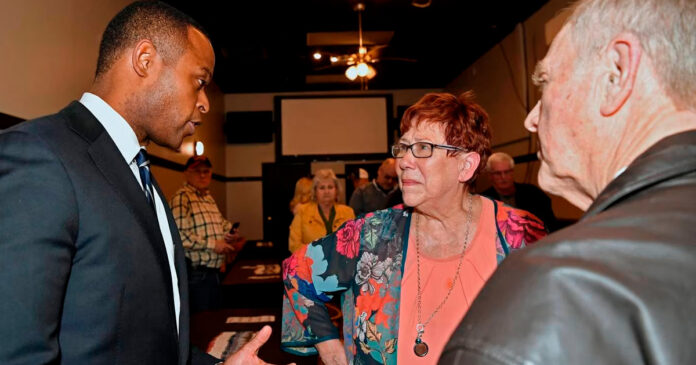
Kentucky Attorney General and Kentucky gubernatorial candidate Daniel Cameron speaks with supporters during a campaign stop in Richmond, Ky., May 3, 2023. The Kentucky Republican gubernatorial primary is being held on Tuesday, May 16. (Photo: AP/Timothy D. Easley/File)

Off-year elections on Tuesday in Kentucky and Pennsylvania could send early signals about the mood of voters ahead of next year’s races for the White House and Congress.

The Kentucky governor’s race is a table-setter for what should be a bruising general election contest. Republican voters will settle on a nominee to challenge incumbent Democratic Gov. Andy Beshear, who has enjoyed high approval ratings but will have to fend off a GOP challenge in a state Republicans usually dominate. Two candidates with ties to former President Donald Trump are contenders in a 12-candidate field.

A special legislative race in the Philadelphia suburbs could determine whether Democrats retain a one-vote majority in Pennsylvania’s House of Representatives, and the outcome could demonstrate how voters are feeling in a crucial region of a swing presidential state. Both parties will choose nominees for the Pennsylvania Supreme Court, and Philadelphia voters will cast ballots in mayoral primaries.

What to watch in Tuesday’s primaries:

KENTUCKY REPUBLICANS PICK A CHALLENGER FOR POPULAR DEMOCRAT

A fierce Republican primary for governor comes to a head in red-leaning Kentucky, where a flurry of attacks has overshadowed candidates’ plans for governing.

Attorney General Daniel Cameron turned away from a bid for reelection to run for governor, a race many Republicans think is ripe for the taking, but the primary campaign has been unexpectedly feisty. Cameron snagged the campaign’s biggest endorsement from Trump and touted his legal fights defending Kentucky’s anti-abortion laws, all the while challenging policy decisions by Beshear and working to tie him to President Joe Biden’s administration.

With a primary win, Cameron would become the state’s first Black nominee for governor by either major political party.

His main rival, Kelly Craft, mounted an aggressive campaign backed by her family’s fortune. Craft pointed to her experience as ambassador to Canada and later at the United Nations during Trump’s presidency. She touts her ties with government and business leaders, which she says would benefit Kentucky.

The campaign escalated into a slugfest between the Craft and Cameron camps. A pro-Craft group ridiculed Cameron as an “establishment teddy bear.» Cameron backers criticized Craft’s tenure as ambassador.

Another GOP gubernatorial contender, state Agriculture Commissioner Ryan Quarles, stayed out of the fray, hoping to win over Republican voters turned off by the attacks.

As the campaign entered the stretch run, Craft had loaned her campaign more than $9 million. She was on the air for months before Cameron and Quarles ran TV ads. Cameron got a boost from a well-financed outside group.

Beshear, expected to cruise through the primary over two nominal opponents, looks to draw on his family’s political brand to counter the state’s GOP tilt. He was attorney general four years ago when he defeated then-Republican Gov. Matt Bevin. Before Bevin’s single term, Steve Beshear, the current governor’s father, served two terms as governor.

Andy Beshear has presided over record economic growth. His term also has been marked by a series of crises — the pandemic, tornadoes, flooding and a mass shooting that killed one of his closest friends. He has received consistently high voter approval ratings, in part by settling into a role as the state’s consoler in chief.

INCUMBENT SECRETARY OF STATE FACES REMATCH WITH ELECTION DENIER

Republican incumbent Michael Adams will face two challengers in the GOP primary for Kentucky secretary of state, including a former opponent who has raised his profile by denying election victories by Democrats.

Adams, a lawyer, has worked with Beshear across party lines on election reform and soundly defeated challenger Steve Knipper in the GOP primary four years ago. Knipper is back for another run along with a third Republican, Allen Maricle, a former state representative and TV executive. The winner will face Democrat Buddy Wheatley, a former legislator who narrowly lost reelection.

Other statewide offices also are on the ballot.

PENNSYLVANIA HOUSE ON THE LINE

Special legislative elections could determine if Democrats remain in control of the Pennsylvania House of Representatives.

They won a one-seat majority in November after 12 years. On Tuesday, voters will fill two empty seats, with most of the attention focused on a seat in Philadelphia’s suburbs left vacant by a Democrat who resigned. The contest pits Democrat Heather Boyd, a former legislative and congressional aide, against Republican Katie Ford, a military veteran, school volunteer and behavioral therapist.

Control of the House will affect how partisan measures are handled, from abortion rights, gun rights and election law to the coming year’s budget, which will be lawmakers’ focus through June.

PHILADELPHIA MAYOR

In heavily Democratic Philadelphia, voters will likely choose the next mayor of the nation’s sixth most-populous city from a crowded field of candidates in Tuesday’s primary. The election comes as the city faces upticks in gun violence and safety concerns.

Five frontrunner candidates including former city council members, former city officials and a grocery store franchiser, have sought to differentiate themselves in a tight contest.

They are vying to replace Mayor Jim Kenney, a Democrat who is term-limited. The winner will go up against the lone Republican candidate, David Oh, a former city councilmember, in November.
Pennsylvania House control up for grabs yet again in special elections

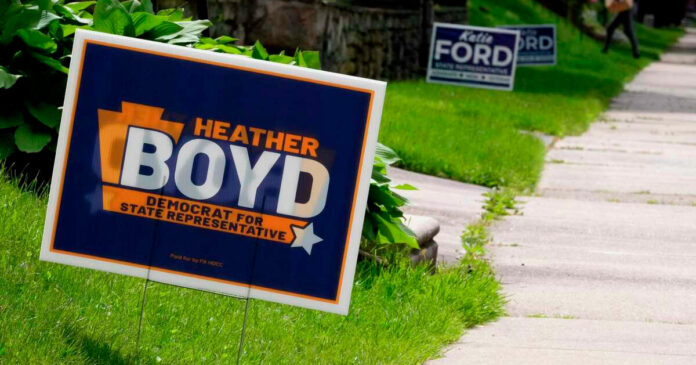
Campaign signs for Heather Boyd and Katie Ford are seen, Thursday, May 4, 2023, in Aldan, Pa. The two are running in a special election in the Philadelphia suburbs that will determine whether Democrats in the Pennsylvania House of Representatives will maintain control of the chamber or if Republicans will reclaim the majority control they held for 12 years until this January. (Photo: AP/Matt Slocum)

HARRISBURG, Pa. — Democrats’ narrow majority in the Pennsylvania House of Representatives is on the line Tuesday with two special elections that will determine which party controls the chamber.

One of those special elections is expected to swing Republicans’ way, but the other in Delaware County, in the Philadelphia suburbs, will be more competitive. It’s the second time this year that Democrats have sweated the outcome of House special elections, and they hope to be just as lucky as before.

The stakes are high: A Democratic victory in Delaware County would give first-term Democratic Gov. Josh Shapiro at least one chamber to aid his agenda going into the final month of budget negotiations. The results could also affect a proposed constitutional amendment on abortion rights that legislative Republicans are one House vote away from putting before voters as a referendum.

In that race, Democrat Heather Boyd, a former congressional and state legislative aide, will be going up against Republican Katie Ford, a military veteran, school volunteer and behavioral therapist. The seat opened up in March after the resignation of Democratic Rep. Mike Zabel, who was accused by a labor lobbyist of sexual harassment.

Zabel flipped what had been a reliably Republican district when he was elected in 2018, thanks in part to a voting pattern shift in recent years toward Democrats in Delaware County and the other Philadelphia ring counties of Bucks, Chester and Montgomery. The district gave its vote by comfortable margins last year to Zabel as well as Shapiro and Democratic U.S. Senate candidate John Fetterman.

In the second House special election Tuesday in central Pennsylvania, candidates will be competing to succeed Republican Lynda Schlegel Culver, who resigned after winning a special election in January to fill a state Senate vacancy. The district consists of Montour County and parts of Northumberland County.

Democrats took control of the chamber in November for the first time in 12 years and then had to sweep three special elections earlier this year to hold onto their edge. The House’s breakdown currently sits at 101 Democrats and 100 Republicans, with the two vacancies.

Control of Pennsylvania’s House remains a key prize ahead of the 2024 presidential election, which could pivot on the Keystone State. Although the state will remain under divided partisan control, with a Democratic governor and a Republican-majority Senate, a GOP-led House could give Republicans more leverage in battles over voting procedures and even who is allocated the state’s electors.

Reflecting the stakes, President Joe Biden endorsed fellow Democrat Boyd on Monday, calling her “an experienced public servant who will protect a woman’s right to make her own health care decisions, stand up for common sense gun safety laws and expand access to voting rights.”

In the Delaware County race, Boyd has emphasized protection of abortion rights, drawing a contrast with Ford, who is personally against abortion but says she does not want to change existing state law. Ford has also said she will vote against her fellow Republicans if they continue to advance the constitutional amendment that says the Pennsylvania Constitution does not guarantee any rights relating to abortion or public funding of abortions.

Ford has criticized Boyd, who has been a leading Democratic Party official in Delaware County, for not doing more in response when she learned about the allegations against Zabel. Boyd said she respected the lobbyist’s request for confidentiality about her claim that Zabel caressed her leg while they discussed legislation outside the Capitol in 2018 and did not stop when she moved away from him.

“Common sense says that if someone comes to you and says that they’re being sexually harassed, you do something about it,” Ford said during a televised debate. “You don’t just let it go.” Boyd responded that she did not endorse or support Zabel after hearing of the lobbyist’s account, and says she tried unsuccessfully to find someone to run against Zabel.

Races for 4 court seats, including 1 on Supreme Court, lead statewide Pennsylvania primary ballots

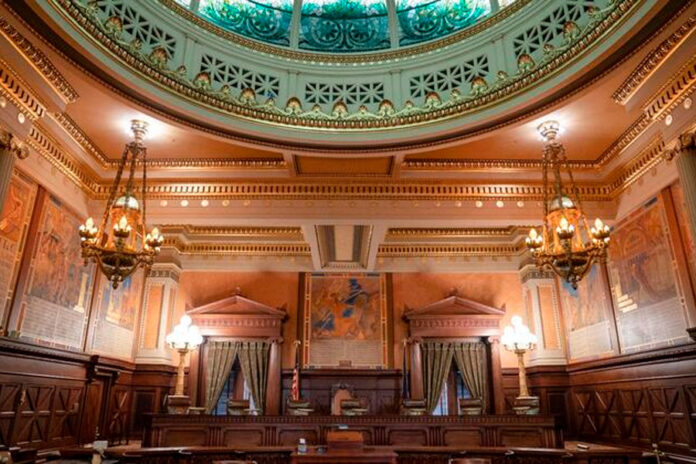
Shown is the Supreme Court of Pennsylvania chamber at the Capitol in Harrisburg, Pa., Tuesday, Feb. 21, 2023. Primary elections are scheduled for May 16, 2023 for Democratic and Republican voters to determine their parties nominees in the general election for offices including the state Supreme Court. (Photo: AP/Matt Rourke/File)

HARRISBURG, Pa. — Party nominees for four statewide judicial posts, including one on the Supreme Court, will be settled in Tuesday’s primary election in Pennsylvania.

Democrats currently hold a 4-2 majority on the state’s highest court, which is playing a prominent role in settling disputes over voting rights, abortion rights and gun rights in the presidential battleground state.

Running on the Democratic ticket are Dan McCaffery of Philadelphia and Deborah Kunselman of Beaver County. Both of them currently sit on the state Superior Court, a statewide appellate body that handles appeals from county courts in criminal and civil cases.

Competing on the Republican ticket are Carolyn Carluccio, a Montgomery County judge; and Patricia McCullough, a judge on the Commonwealth Court, a statewide appellate court that handles cases involving government agencies or challenges to state laws.

McCullough, of Allegheny County, also ran for state Supreme Court in 2021 and lost in the primary.

The high court seat is open following the death last year of Max Baer, who was chief justice.

The court has handled a number of hot-button issues over the past few years. It is currently examining a challenge to a state law that restricts the use of public funds to help women get an abortion, as well as Philadelphia’s challenge to a state law that bars it and other municipalities from restricting the sale and possession of guns.

In recent years, justices rejected a request to invalidate the state’s death penalty law and upheld the constitutionality of the state’s expansive mail-in voting law.

The court also turned away challenges to the 2020 presidential election from Republicans who wanted to keep Donald Trump in power, and ruled on a variety of lawsuits filed over gray areas in the mail-in voting law.

In one 2020 election case, the court ordered counties to count mail-in ballots that arrived up to three days after polls closed, citing delays in mail service caused by disruptions during the COVID-19 pandemic. The ruling spurred an outcry among Republicans, who challenged the decision to the U.S. Supreme Court.

The nation’s highest court ultimately declined to take the case. Still, the ballots — nearly 10,000 of them — were never tabulated or added to vote counts because the election was certified while their fate remained in legal limbo. State elections officials said the votes weren’t enough to change the results of a federal election.

Five candidates are running for two open seats on the Superior Court, from which one judge retired and where another will reach the mandatory retirement age of 75 later this year.

On the Democratic ticket are Jill Beck, Pat Dugan and Timika Lane. Dugan is president judge of the Philadelphia Municipal Court, Lane is a Philadelphia Common Pleas Court judge and Beck, of Pittsburgh, is a lawyer in private practice who has clerked on the state Superior and Supreme courts.

Both Beck and Lane ran for an open seat on the Superior Court in 2021 but lost, Beck in the primary and Lane in the general election.

On Republican ballots will be Harry Smail, a Westmoreland County judge, and Marie Battista, a Clarion County lawyer.

Battista is a former county prosecutor who ran unsuccessfully for Clarion County district attorney in 2019.

For Commonwealth Court, one seat is open after Republican judge Kevin Brobson was elected to the state Supreme Court in 2021.

On Democratic ballots is Matt Wolf, a Philadelphia Municipal Court judge, and Bryan Neft, a trial lawyer from Pittsburgh.

On Republican ballots are Megan Martin, who spent more than a decade as parliamentarian of the state Senate, and Joshua Prince, a Berks County lawyer best known for taking on gun rights cases.

ACNUR celebra el fin del Título 42 en EE. UU. porque «traficantes se beneficiaron» de él

La Alta Comisionada Adjunta para los Refugiados (ACNUR), Kelly Clements, habla durante una entrevista con EFE hoy, en Ciudad de Panamá (Panamá). EFE/ Bienvenido Velasco

El Alto Comisionado de las Naciones Unidas para los Refugiados (ACNUR) celebró este lunes el levantamiento del polémico Título 42 en Estados Unidos, que «separó a las familias», «mandó un mensaje terrible al resto del mundo» y- además- «los traficantes se beneficiaron» de él.

«Por supuesto damos la bienvenida al levantamiento del Título 42. Ese Título 42 separó familias, forzó a familias a realizar viajes muy peligrosos, los traficantes se beneficiaron y, lo que es más importante, le mandó un mensaje terrible al resto del mundo, al contravenir el derecho internacional en materia de refugiados y de derechos humanos», dijo en una entrevista a EFE la Alta Comisionada Adjunta de ACNUR, Kelly Clements.

Precisamente el pasado jueves concluyó el llamado Título 42, una norma sanitaria de EE. UU. por la pandemia de la covid-19 que permitía expulsar en caliente a migrantes indocumentados sin posibilidad de pedir asilo.

El Título 42, con el que se expulsaron a unos 2,5 millones de migrantes, se adoptó durante la pandemia bajo el Gobierno de Donald Trump (2017-2021) y después continuó con el presidente Joe Biden.

Ahora se aplica el Título 8 que, a diferencia del 42, permite a los migrantes pedir asilo al llegar a la frontera, pero tienen que cumplir varios requisitos, entre ellos haberlo solicitado en los países por donde han pasado o de lo contrario pueden ser deportados rápidamente.

DARIÉN: POSIBLE DISMINUCIÓN DE MIGRANTES DEL LADO COLOMBIANO

Clements advirtió que «todavía es muy temprano» para ver las posibles consecuencias del fin del Título 42 en la selva del Darién, la peligrosa frontera natural entre Panamá y Colombia que es usada diariamente por cientos de migrantes en su camino hacia Estados Unidos.

«Todavía es muy temprano. Por supuesto, el Título 42 acaba de ser levantado. Debo decir que solo en relación a los números que vimos en el Darién en los últimos días, hemos visto un promedio de unas 1.300 personas que lo atraviesan a diario», destacó la Alta Comisionada.

Sin embargo, apuntó que creen que ha bajado la cantidad de familias intentando cruzar desde Colombia: «Lo que hemos escuchado incluso esta mañana, es que en el lado colombiano el número ahora de las familias que están tratando de cruzar en realidad ha disminuido».

Este año, solo en los primeros cuatro meses, más de 127.000 migrantes que se dirigen a EE. UU. llegaron a Panamá tras cruzar la jungla, un número seis veces superior al mismo periodo de 2022, que cerró con la cifra récord de más de 248.000 personas en tránsito.

Los migrantes que atraviesan el Darién, uno de los pasos migratorios más peligrosos del mundo, se enfrentan a los riegos naturales propios de una selva pero, además, muchos denuncian ser víctimas de violaciones, extorsiones y robos.

Clements se encuentra en Panamá de visita oficial desde el pasado viernes, tras estar en Brasil. En el país centroamericano ha visitado los albergues migratorios de Darién, y se ha reunido con población refugiada y solicitante de asilo.

Embajador mexicano visita Filadelfia

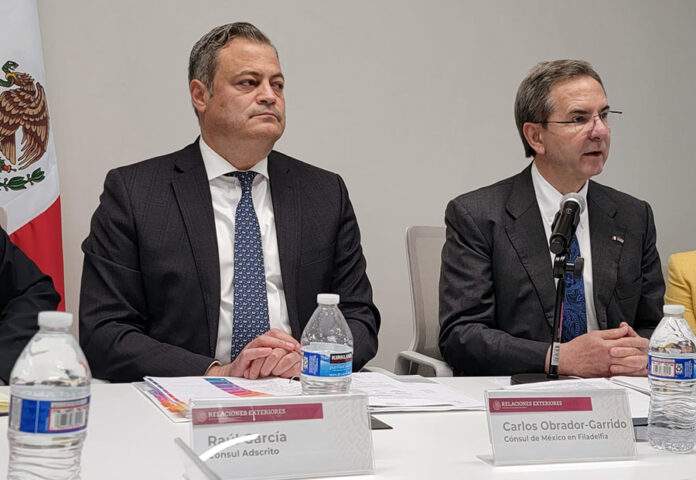
El embajador Esteban Moctezuma y el cónsul Carlos Obrador Garrido, Foto Impacto staff

El consulado mexicano dio a conocer que Esteban Moctezuma se encuentra de visita en Filadelfia, en compañía del cónsul, Carlos Obrador Garrido. Dentro de su itinerario incluyó una reunión con los líderes comunitarios, empresarios mexicanos y autoridades locales.

El embajador Moctezuma, dentro del programa, visito el Consulado de México para escuchar las necesidades y experiencias de la comunidad mexicana, que se beneficia de programas y servicios consulares. Asimismo, una reunión con líderes comunitarios mexicanos de la región, para discutir sus aportaciones y escuchar sus perspectivas.

Otra actividad del programa es la reunión con el alcalde de Filadelfia, Jim Kenney, sobre las aportaciones que hace la comunidad migrante mexicana al desarrollo de la ciudad y las oportunidades de cooperación con México en diversos ámbitos. Discutiendo vías para proteger los derechos de los migrantes, y los avances en la cooperación bilateral para combatir el consumo de drogas sintéticas y el tráfico ilícito de armas hacia México.

El Embajador Moctezuma, como parte de esta visita, programo reunirse con empresarios mexicanos para visitar diferentes negocios emblemáticos mexicanos localizados en el corredor del sur de Filadelfia. Y ver sus aportaciones económicas y culturales a Estados Unidos.

En el itinerario se incluyó, asistir a la organización Mighty Writers, que brinda cursos y asesoría escolar a estudiantes de primaria y apoyo a padres de familia mexicanos. Durante esta visita el embajador Moctezuma promueve la lectura al entregar libros de texto a niñas y niños presentes, para conmemorar el Día del Maestro y resaltar la importancia de la educación.

¿Qué características tiene el fusil AR-15 que lo hacen tan letal?

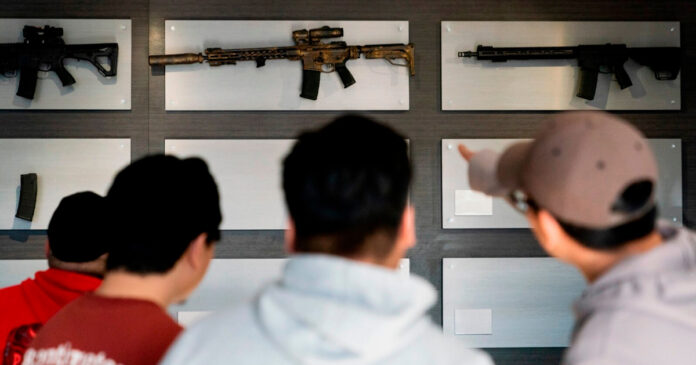
Varias personas miran los fusiles en una pared de exhibición en una tienda en Auburn, EE. UU. (Foto: VOA)

En cada nueva masacre y tiroteo masivo en EE. UU. aparece el fusil AR-15 como el arma utilizada. Originalmente diseñado para el ejército, el AR-15 usa cartuchos de pólvora más grande y con más carga que otras armas, lo que produce destrucción masiva y reduce las posibilidades de supervivencia. 

En cada nueva masacre o tiroteo masivo en Estados Unidos aparece una y otra vez el fusil semiautomático AR-15. ¿Qué características tiene este fusil que lo hacen tan letal?

A diferencia de un disparo con arma corta, como una pistola de 9 milímetros, que deja un orificio de entrada con trayectoria recta hacia otro orificio igual de salida del mismo tamaño —lo que permite con atención médica urgente aumentar las posibilidades de supervivencia de un disparo—, los disparos de AR-15 destrozan completamente a la salida de la bala, lo que produce sangrados y destrucción masiva de tejidos, señalan expertos.

El impacto de un disparo de AR-15 puede “demoler” órganos internos y huesos. Esto reduce las posibilidades de supervivencia, según cirujanos de emergencias.

Aunque la bala del AR-15 es de menor tamaño que la de una pistola de 9mm, el cartucho de pólvora es más grande y con más carga, lo que permite impulsarla a una velocidad mucho mayor y generar una presión que hace al explosivo más letal al impactar en el blanco.

El doctor Ernest E. Moore, cirujano de urgencias y ex médico militar, dijo a CNN que con frecuencia utiliza la analogía de que la lesión en el hígado con un rifle AR-15 «sería similar a tomar una sandía y dejarla caer sobre el concreto».

En la jerga de las armas llaman al AR-15 “lego”, por las múltiples piezas de ensamblaje que ofrecen los fabricantes, entre estas cargadores de mayor capacidad, mirillas telescópicas, culatas más anchas y elementos de ensamblaje en la zona de cañón y sobre la cámara de recarga, además de corazas de camuflaje. Aunque este fusil no es automático —el tirador debe apretar cada vez para disparar— la recamara de balas se carga automáticamente.

El AR-15 fue diseñado en 1959 por el creador de armas Eugene Stoner con la empresa ArmaLite como un fusil semiautomático para el Ejército de Estados Unidos.

Sin embargo, las ventas iniciales no fueron exitosas y el fabricante vendió la patente a la empresa de armas Colt Manufacturing Company, en activo en la industria de defensa desde 1836, la que poco después de comprar los derechos ofreció una versión automática en 1963 para reforzar a las tropas en la Guerra de Vietnam (1955 – 1975), la que denominó M16.

La versión semiautomática AR-15 se ofreció poco después para venta a civiles. El fusil siempre ha estado en la mirilla de los que piden más control de las armas de fuego, tanto así que en 1994 durante la gestión del presidente Bill Clinton se creo una ley que vetó por 10 años su venta, tenencia, intercambios y portación por civiles.

La Ley de Protección del Uso de Armas de Fuego Recreativas y Seguridad Pública, firmada por Clinton, cambió el código penal federal «para prohibir la fabricación, transferencia o posesión de un arma de asalto semiautomática», pero en 2004 el presidente George W. Bush levantó la restricción y el fusil volvió al mercado.

El fabricante Colt anunció en septiembre de 2019 que suspendía la fabricación de este fusil para venta a civiles aduciendo cambios en la demanda de los consumidores y un mercado ya saturado con armas similares y dijo que se centraría en cumplir con los clientes militares y de la policía.

Se estima que siete fabricantes de armas producen el AR-15.

En cada nueva masacre, que han dejado centenares de víctimas y familias devastadas —la más reciente en Texas la semana pasada— vuelve a colación el efecto destructor causado por los disparos de este fusil.

El Gun Violence Archive da cuenta de los tiroteos masivos en EE. UU. Estas son algunas de las masacres más letales registradas en la última década en el país donde se ha utilizado este fusil:

Datos de la industria armamentística estiman que podrían haber al momento en circulación en EE. UU. entre 5 y 10 millones de fusiles AR-15 en manos de civiles.

Las iniciativas para restringir su venta y posesión encuentran cada vez más resistencia, como ocurrió este martes en Texas al presentarse en la legislación estatal una propuesta de controles para la posesión de esta arma.

Pennsylvania’s mail-in voting law gets beaten up on GOP campaign trail

Pennsylvania

Election integrity and Pennsylvania’s mail-in voting law are prominent subjects in the state’s Republican primary contest for an open state Supreme Court seat, as Donald Trump continues to baselessly claim that the 2020 election was stolen.

This year, two GOP primary rivals for the state Supreme Court seat in Tuesday’s primary election are signaling their disapproval of Pennsylvania’s expansive mail-in voting law.

In one appearance last month, Carolyn Carluccio, a Montgomery County judge, called the mail-in voting law “bad” for the state and for faith in elections. She suggested elections are too “secretive” and promised that if the law comes before the high court “I’m going to be happy to take a look at it.”

Meanwhile, Patricia McCullough, a judge on the statewide Commonwealth Court, repeatedly highlights her rulings in election-related cases, including voting to throw out the mail-in voting law.

“Election integrity, that seems to be like the most important issue to the people right now,” McCullough told an interviewer on public access television in Erie last month.

Both parties will pick a high court nominee to run in November’s general election. The state’s highest court currently has four justices elected as Democrats and two as Republicans. The seat is open following the death of Chief Justice Max Baer last fall.

Allegations about election fraud and opposition to Pennsylvania’s mail-in voting law have persisted in Republican primaries in 2021 and 2022, demonstrating just how influential Trump’s extreme and baseless election claims are to the GOP campaign trail.

In last year’s governor’s race, for instance, every candidate in the GOP’s nine-person field vowed to repeal the 2019 law that established no-excuse mail-in voting in Pennsylvania.

A third Republican-backed challenge to the mail-in voting law is pending in state courts, while Republicans have repeatedly gone to court to try to ensure that ballots cast by legal, eligible voters are thrown out for technical errors, like a missing envelope, signature or date.

Trump’s baseless claims about election fraud have tended to target mail-in ballots and big cities including Philadelphia.

On the campaign trail, McCullough has repeatedly told of presiding over a 2020 post-election legal challenge that sought to invalidate the mail-in voting law and tilt victory to Trump in the presidential battleground state.

“I was the only judge in 2020 in the presidential election in the entire country to order the governor to stop certifying the election because of the constitutional challenges to the mail-in ballot law,” she told the crowd at a rally in Greencastle in March.

That drew cheers and applause.

The lawsuit had asked the court to throw out 2.5 million mail-in votes — roughly 70% of which were cast by Democrats. The state’s high court quickly overturned McCullough’s order.

McCullough participated last year in a 3-2 Commonwealth Court decision granting a separate challenge by Republican lawmakers to invalidate the law. The judges’ vote was party line — Republicans declaring it unconstitutional, Democrats declaring it constitutional — as was a reversal by the state’s Democratic-majority high court.

At the time, then-Gov. Tom Wolf, a Democrat, accused Republicans of trying to kill the law “in the service of the ‘big lie’” of Trump’s baseless election fraud claims.

In an Erie County GOP forum last month, Carluccio seemed to suggest that she would be hostile to the mail-in voting law — called Act 77 — should another challenge come to the high court.

“I would welcome that to come up before me again, let’s put it that way. Not much I can say, but I can tell you that Act 77 has been very bad for our Commonwealth. It has been very bad for just faith in our system,” Carluccio told the crowd in response to a question about the law.

She criticized how the state Supreme Court has ruled in cases involving mail-in ballots and suggested that elections are too secretive to be trusted.

“We should be able to go to the polls and understand that our vote counts and understand that there’s not going to be some hanky-panky going on in the back,” she told the crowd.

Asked to clarify her Carluccio’s comments, her campaign responded that she was referring to “conflicting, and sometimes unclear” court decisions on mail-in ballots with handwritten dates and “numerous anecdotal comments she’s heard from election volunteers being shut out of polling places” in Philadelphia.

Biden is just ‘pop’ at granddaughter Maisy Biden’s graduation from the University of Pennsylvania

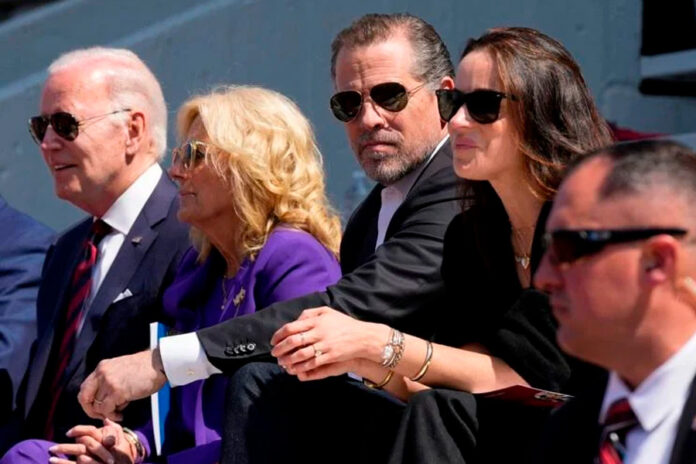
President Joe Biden attends his granddaughter Maisy Biden's commencement ceremony with first lady Jill Biden and children Hunter Biden and Ashley Biden at the University of Pennsylvania in Philadelphia, Monday, May 15, 2023. (Photo: AP/Patrick Semansky)

PHILADELPHIA. — Joe Biden took a brief break from being president on Monday to focus on being “pop,” attending his granddaughter Maisy Biden’s graduation from the University of Pennsylvania.

Maisy is the youngest daughter of Hunter Biden and his former wife, Kathleen Buhle, who both attended the ceremony. Also present were Maisy’s older sisters, Naomi and Finnegan, first lady Jill Biden, and the Bidens’ daughter, Ashley Biden.

Hunter Biden, son of President Joe Biden, talks with his sister Ashley Biden as they attend his daughter Maisy Biden’s commencement ceremony at the University of Pennsylvania in Philadelphia, Monday, May 15, 2023. (Photo: AP/Patrick Semansky)

Before the commencement, some students waved at the president and took photos. He waved back and pumped his fist. But other than that, Biden was just another face in the crowd, albeit a very recognizable one. The family sat stage left, apart from the rest of the audience.

President Joe Biden and first lady Jill Biden depart after having lunch with family at Vietnam Cafe in Philadelphia, Monday, May 15, 2023, after attending their granddaughter Maisy Biden’s commencement ceremony at the University of Pennsylvania. (Photo: AP/Patrick Semansky)

Idina Menzel, the actress and singer, delivered the commencement address, even belting out a few lines of a song from the musical “Rent.”

After the ceremony, Biden and his family went to a lunch at a Vietnamese restaurant.

El grupo puertorriqueño Plena Libre celebra 30 años de carrera musical con un nuevo álbum

Fotografía de archivo del grupo puertorriqueño Plena Libre. (Foto: EFE/Miguel Rajmil)

San Juan, Puerto Rico.- El grupo puertorriqueño Plena Libre celebra su 30 aniversario con el lanzamiento este lunes de su nuevo álbum «Cuatro Esquinas», que plasma experiencias personales en una mezcla de canciones tradicionales.

El fundador, director de orquesta y bajista Gary Núñez destacó en un comunicado que el disco refleja situaciones personales, universales, acompañadas de los sonidos únicos de los ritmos puertorriqueños de la bomba y la plena.

El título del álbum, ya disponible en todas las plataformas digitales, se inspiró en la juventud de Núñez, que creció en un barrio puertorriqueño en donde «cuatro esquinas» aludía a un punto de encuentro local.

«En mi adolescencia, las cuatro esquinas solía ser el punto de encuentro en mi barrio, con algo de mala fama. En cada esquina había un bar o negocio. Era el lugar en donde se reunían todo tipo de personajes y reemplazaban sus penas por alguna alegría, romance, aventura o consuelo», explicó Núñez.

«Cuatro Esquinas» es una representación de algunas de esas experiencias, plasmadas en una mezcla de canciones «tradicionales» y originales; con cuatro vocalistas y un estilo que equilibra lo tradicional con lo contemporáneo, lo global y lo local.

«Dedicamos esta grabación al público y a todas aquellas personas que han apoyado a Plena Libre a lo largo de estos 30 años. A todos los músicos que son y han sido parte de esta experiencia, les estamos más que agradecidos», añadió Núñez.

Los otros integrantes del grupo son Víctor Vélez (voz/percusión), Luisga Núñez (voz/percusión), Rafi Falú (requinto), Miguel de Jesús (voz/percusión), Alex López (voz/percusión), Rafy Torres, Randy Román y Kevin Ortiz en trombones, Pedro Dominicci (timbales), Manuel Rivera (congas), Karla Martínez al piano y Yanira Torres, coros.

Durante su prolífica carrera, Plena Libre ha sido nominada a múltiples premios Grammy y ha publicado 16 álbumes, llevando su música a distintos países.

La plena es un género de música, canto y baile originario de Puerto Rico que tiene sus raíces en los esclavos y trabajadores de caña de azúcar, los agricultores y otros emigrantes a las zonas urbanas de la isla.

Hackeo interrumpe operaciones del Philadelphia Inquirer

Una máquina vendedora del diario Philadelphia Inquirer en Filadelfia, el 30 de noviembre de 2006. (Foto: AP/Matt Rourke)

FILADELFIA. — El Philadelphia Inquirer dijo que experimentó la peor interrupción de sus operaciones en sus 27 años debido a un ciberataque.

La compañía trataba de restaurar las operaciones de imprenta tras un hackeo que impidió imprimir los ejemplares de la edición dominical, reportó el Inquirer en su website.

El portal en la red funcionaba el domingo, aunque las actualizaciones tardaban más de lo normal, reportó el diario.

La directora del Inquirer, Lisa Hughes, declaró el domingo que “en estos momentos no podemos dar un cronograma exacto” para la restauración de los sistemas del diario.

“Agradecemos a todos su paciencia y comprensión mientras tratamos de restablecer el sistema y completamos esta investigación lo más pronto posible”, dijo Hughes en un email en respuesta a preguntas provenientes de la sala de redacción.

El ciberataque fue detectado el sábado en la mañana, cuando los empleados descubrieron que el sistema de contenidos del diario no estaba funcionando.

El Inquirer “descubrió actividad anómala en ciertos sistemas computarizados e inmediatamente desconectó esos sistemas”, expresó Hughes.

El ciberataque fue la mayor perturbación de la principal organización periodística de Pensilvania desde la tormenta invernal de enero de 1996, reportó el Inquirer.

El ciberataque ocurre poco antes de unas elecciones primarias que se realizarán el martes para los escoger candidatos a la alcaldía. Hughes aseguró que el hecho no afectará la cobertura de las elecciones, aunque los periodistas no podrán usar la sala de redacción la noche de las elecciones.