Inicio Blog Página 1121

¿Qué significa ser un refugiado y por qué se les dedica un día mundial?

ARCHIVO: Halime Adam Moussa, un sudanés que busca refugio en Chad por segunda vez, espera con otros refugiados para recibir una porción de alimentos del Programa Mundial de Alimentos (PMA), cerca de la frontera entre Sudán y Chad en Koufroun, Chad, el 9 de mayo de 2023.

El número total de desplazados en el mundo ya sobrepasaba los 110 millones a fines de mayo de 2023, el registro más alto hasta el momento según las Naciones Unidas, que informó de un salto de 19 millones con respecto a 2021.

Los venezolanos María Fernanda Artigas y Endry Cordero Ávila pasaron años saltando de un país a otro, desde que dejaron su natal Venezuela con la esperanza de encontrar una mejor vida.

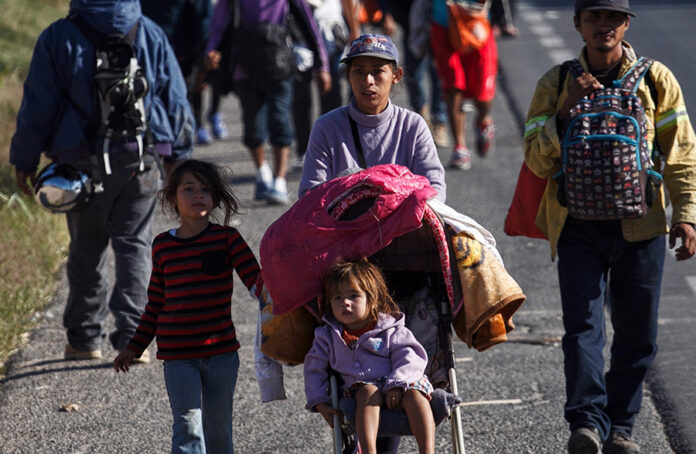
Su abrazo emocionado, en una estación de autobuses en Cali, Colombia, rodeados por sus escasas pertenencias y junto su hija de poco más de un año, refleja el drama que viven cientos de miles de desplazados alrededor del mundo.

Sólo de Venezuela han salido 5,5 millones de refugiados, según cifras de fines de 2022 registradas por la Agencia para los Refugiados de las Naciones Unidas (ACNUR), en un fenómeno que no es ni de lejos el único. La guerra en Ucrania y el reciente conflicto en Sudán han incrementado dramáticamente los números de personas a las que la violencia y las crisis humanitarias les han cambiado la vida.

Cifras alarmantes

Los refugiados están entre las personas más vulnerables del mundo. Obligados a dejar sus vidas, sus hogares ancestrales y medios de sustento, millones buscan cobijo en otros países huyendo de guerras y violencia.

A fines de 2022, más de 35 millones de refugiados vivían fuera de sus naciones, a las que probablemente solo unos pocos regresarán. De acuerdo a la ACNUR esto significa un aumento de más de 8 millones en comparación a 2021 y el mayor salto del que se tiene registro.

Este incremento se debe principalmente a los afectados por la invasión rusa a Ucrania. En total, el 52 % de personas refugiadas y con protección internacional proviene de tres países: Siria (6,5 millones), Ucrania (5,7 millones) y Afganistán (5,7 millones). A esto se le une el éxodo de Venezuela, entre los de más rápido crecimiento en los últimos años.

En su más reciente informe, la ACNUR situó en 108,4 millones el número de desplazados por guerras, persecución, violencia y violaciones de los derechos humanos, la cifra más alta de la que se tiene registro y un aumento de 19,1 millones comparado con 2021.

En lo que va de 2023 esta tendencia no ha hecho sino crecer. El estallido del conflicto en Sudán ha elevado la cifra de desplazamientos a 110 millones hasta el pasado mayo.

“110 millones de personas han huido de conflictos, persecuciones, discriminación y otras formas de violencia, que se combinan con otros factores, como el impacto del cambio climático”, dijo el alto comisionado de las Naciones Unidas para los Refugiados, Filippo Grandi.

Para Grandi, «tener que reportar un hecho de este tipo es sintomático de un mundo que debe cambiar”.

Protección a los más vulnerables

El mundo comenzó a entender que los países debían establecer normas y reglas para proteger a poblaciones enteras desplazadas a la fuerza tras el final de la Primera Guerra Mundial (1941 – 1918),un conflicto que cambió el rostro de Europa y obligó a millones a abandonar sus hogares.

En ese momento varios países acordaron una serie de pactos internacionales por los que se reconocía a estas personas como refugiados, los primeros en ser tratados como tales en el siglo XX.

El drástico incremento en las cifras de desplazados tras la Segunda Guerra Mundial (1939-1945) probó aún más esta necesidad, que funcionaría mucho mejor en forma de respuesta concertada entre las naciones.

El esfuerzo por redactar leyes y convenciones para proteger los derechos humanos elementales de estas personas fue de larga data. La Liga de las Naciones comenzó en 1921 a dar forma a un sistema de directrices y leyes que tuvieron su culminación en la Convención sobre el Estatuto de los Refugiados, aprobada en 1951 como parte de un consenso en la entonces joven Organización de Naciones Unidas.

Este instrumento, considerado el que mejor ha codificado de manera completa qué es un refugiado, la protección legal y las asistencia a la que tiene derecho, amplía instrumentos internacionales anteriores. En 1967 se estableció un Protocolo para complementarlo.

La ACNUR es el organismo «guardián» de estos estatutos, por el que se rigen la gran mayoría de los países.

¿Refugiados, desplazados, asilados?

En el complejo entramado legal existen varios términos y delimitaciones sobre las diferentes figuras en relación a las víctimas de conflictos y violaciones de derechos humanos.

Las personas que han sido forzados a dejar sus hogares debido a conflictos, crisis humanitarias o ecológicas están consideradas como personas desplazadas, algunas de manera interna dentro de sus propios países, o externa, hacia otras naciones.

De acuerdo a la Convención de 1951, un refugiado es una persona que “debido a fundados temores de ser perseguida por motivos de raza, religión, nacionalidad, pertenencia a determinado grupo social u opiniones políticas, se encuentre fuera del país de su nacionalidad y no pueda o, a causa de dichos temores, no quiera acogerse a la protección de tal país; o que, careciendo de nacionalidad y hallándose, a consecuencia de tales acontecimientos, fuera del país donde antes tuviera su residencia habitual, no pueda o, a causa de dichos temores, no quiera regresar a él”.

La guerra y la violencia étnica, tribal y religiosa son las principales razones por la que los refugiados huyen de sus países.

Ahora, un asilado es una persona que sale de su país de origen y solicite el derecho a ser reconocido como refugiado y recibir protección legal y asistencia material. Un solicitante de asilo debe demostrar que su temor de persecución en su país de origen está bien fundado.

Según explica Amnistía Internacional, un solicitante de asilo aún no ha sido reconocido legalmente como refugiado y está esperando recibir una decisión. Quienes presentan esta solicitud lo hacen ya dentro del país.

Por otra parte, la diferencia fundamental entre asilo y refugio es que el primero se otorga generalmente a un individuo, sin que el Estado que lo acoge tenga que explicar las razones para ofrecerlo o negarlo. En cambio, el refugio tiene carácter humanitario y se le otorga principalmente a un grupo de personas.

El término migrante y refugiado en algunas ocasiones se utilizan como sinónimos, aunque en este caso muchos de los que salen de sus países no lo hacen porque sean perseguidos o tengan temor de permanecer en sus hogares, por lo que en este caso no se pueden considerar ni refugiados, ni asilados ni desplazados.

¿Por qué es necesario un Día del Refugiado?

Todos los 20 de junio el mundo conmemora el Día del Refugiado. Esta fecha sirve para fomentar la comprensión y la empatía hacia las personas refugiadas y desplazadas, al mismo tiempo que arroja luz sobre las complejas y difíciles circunstancias en las que viven.

Esta jornada también pone de relieve la capacidad de resiliencia en la reconstrucción de sus futuros.

Se observa como celebración mundial desde el 2001, cuando la ONU lo proclamó como tal en honor a los cincuenta años de la Convención de 1951. Antes de eso se le conocía como el Día de los Refugiados de África.

Generalmente en esta celebración se realizan eventos de apoyo a las comunidades más afectadas y son los propios refugiados los que lideran y participan en las actividades.

«Cabe resaltar que aún queda mucho por hacer para acabar con los conflictos y eliminar los obstáculos que impiden a las personas refugiadas volver a sus hogares de manera voluntaria y en condiciones dignas y seguras”, ha declarado el alto comisionado de las Naciones Unidas para los Refugiados, Filippo Grandi.

El Departamento de Salud rociará larvicida para mosquitos en el norte Filadelfia

(Foto: Captura/Youtube)

FILADELFIA. – El personal de Control de Vectores del Departamento de Salud tiene previsto aplicar un tratamiento larvicida para el control de mosquitos a primera hora de la mañana del miércoles 21 de junio, antes del amanecer, en un sector del norte de Filadelfia, cerca de la calle 5. Vea el mapa a continuación para ubicaciones específicas.

Este aerosol es parte de un programa financiado por el estado para reducir el número de mosquitos en áreas que tuvieron mosquitos positivos para el virus del Nilo Occidental en los últimos años, como parte del continuo mosquito de múltiples capas actividades de control. Cada temporada de mosquitos, el Departamento de Salud trabaja para reducir el número de larvas de mosquitos tratando las entradas de alcantarillado y alentando a los residentes a verter agua estancada, monitorea los mosquitos positivos para el virus del Nilo Occidental y, ocasionalmente, rocía para matar mosquitos adultos.

Las imágenes de video de la fumigación montada en el camión realizada durante las horas del día se pueden encontrar en elCanal de YouTube del departamento.

Ciertas especies de mosquitos portan el virus del Nilo Occidental. Ese virus puede causar encefalitis del Nilo Occidental, que es una infección que puede provocar inflamación del cerebro. Las personas deben tomar precauciones para evitar ser picado por mosquitos. Muchos mosquitos son más activos al atardecer y al amanecer. Asegúrese de usar  repelente de insectos con un ingrediente activo registrado por la EPA y use mangas largas y pantalones o considere quedarse en casa durante estas horas.

Los residentes pueden ayudar a eliminar las áreas de reproducción de mosquitos alrededor de la casa al:

  • Eliminar las cosas que pueden atrapar y retener agua, como basura, lata, recipientes de plástico o ollas.
  • Perforación de agujeros en el fondo de botes de basura al aire libre y contenedores de reciclaje.
  • Voltear piscinas de plástico para bebés al final del día.
  • Eliminación de neumáticos viejos.Limpiar las canaletas obstruidas del techo; Las canaletas de techo pueden producir millones de mosquitos cada una estación.
  • Cambiar el agua en los bebederos con frecuencia.
  • Limpieza y cloración de piscinas; una piscina dejada sin cuidar por una familia en las vacaciones durante un mes pueden producir suficientes mosquitos para dar lugar a un vecindario problema.

Usted puede evitar ser picado por mosquitos al:

  • Asegurarse de que las pantallas se ajusten firmemente a las puertas y ventanas para mantener a los mosquitos fuera de su hogar.
    Use camisas de manga larga, pantalones largos y calcetines cuando esté al aire libre, especialmente al atardecer y al amanecer, cuando los mosquitos son más activos.
  • Use repelentes de insectos de acuerdo con las instrucciones del fabricante. Un repelente eficaz
    contienen DEET, picaridina o aceite de eucalipto de limón.
  • Consulte con un pediatra o médico de familia sobre el uso de repelente en niños. (El repelente no se recomienda para niños menores de dos meses).

Para obtener más información sobre el virus del Nilo Occidental y el programa de vigilancia y control del estado, vaya a www.westnile.state.pa.us. Para preguntas sobre el programa del virus del Nilo Occidental o para informar sobre mosquitos infestaciones en Filadelfia, llame al 215-685-9000.

Probe blames Pennsylvania county’s November ballot paper shortage on inexperience, poor training

storm

HARRISBURG, Pa.— A prosecutor’s review of voting problems in a Pennsylvania swing county where ballot paper ran out last year found no evidence of criminal activity or purposeful efforts to prevent voting, according to a new report that blamed inexperienced supervisors.

Luzerne District Attorney Sam Sanguedolce’s 24-page review said only one Elections Bureau supervisor had more than a month’s experience when the November vote was held — and that person had only been there about a year. He said inexperience and inadequate training created a vicious cycle.

Luzerne was won by Democrat Josh Shapiro by barely one percentage point in the November contest for governor. In the most recent presidential contests in the northeastern Pennsylvania county, Donald Trump easily beat Hilary Clinton in 2016 and Joe Biden in 2020.

“As personnel and experience dwindles, the work is accumulated among the fewer and fewer remaining workers or new workers making the tasks on each person more voluminous, the job more stressful and the position less attractive to potential employees,” he wrote in the report, which was also signed by two of his deputy prosecutors and five county detectives.

Sanguedolce said Tuesday that meetings about the next steps are ongoing, including “how to move forward and prevent it from happening again.” That may include deploying county workers in other departments to help with elections as well as potentially hiring a consultant to improve procedures.

What Sanguedolce’s report called a “catastrophic oversight» resulting in the Election Day shortfall of paper for ballots in Luzerne, a swing county in northeastern Pennsylvania, was also the subject of a three-hour hearing in March by the U.S. House Administration Committee.

The ballot paper problems prompted a judge to keep polls open for two extra hours, contributed to a delay in reporting election results and was the topic of contentious public meetings, as well as Sanguedolce’s investigation. He blamed the lack of sufficient paper on incompetence and said he found no evidence of any sort of cover-up.

“Although a glaring mistake, the omission was not intentional,” the report concluded. “The parties involved were obviously distressed by the error and resulting effects.”

Ballot paper problems caused voting to stop, at least briefly, in 16 of the county’s 143 polling locations, in some cases just until they could turn to the use of emergency or provisional ballots, Sanguedolce’s investigative team found.

“The steps of ensuring the correct paper was on hand, ordering that paper if not on hand, and then loading sufficient quantities of that paper into the cabinets were missed by all officials tasked with such responsibilities throughout the process,” investigators concluded. In prior elections, that duty had been performed by the county’s elections director, who at the time of the November election was a woman in the position for just a couple months.

Sanguedolce, an elected Republican, said there was no basis for some claims that the problems were concentrated in GOP areas.

The review also found nothing to support claims that voting machines had been tampered with, that paper had been removed intentionally or that there was a deliberate effort to not order sufficient ballot paper.

“We find the allegation that the shortage was the result of a premeditated plan to be unsupported by any evidence,” according to the report.

The report said there was validity to a complaint aired during the congressional hearing — that a voter arrived at a Hazleton polling place shortly after 8 p.m. but the doors were locked, even though a judge had extended voting until 10 p.m. In that case, the judge of elections told investigators no one was able to stay past 8 p.m. and they were unable to reach the county elections office, the report said.

EE. UU.: Niño de 7 años mata a balazos a otro de 5 años

Un niño de 7 años baleó fatalmente a otro de 5 años en una vivienda en el este de Kentucky, dijo la policía el martes.

De acuerdo con la investigación inicial, el hecho se produjo de manera accidental el lunes por la noche en una vivienda en McKee, dijo la policía estatal en un comunicado.

Se intentó salvar la vida del niño herido, pero el forense del condado de Jackson lo declaró muerto en el lugar, dijo la policía, que no identificó a los niños.

En lo que va del año, se han registrado en Estados Unidos más de 150 casos en que niños balean de manera no intencional a otras personas, con un saldo de 58 muertos y 101 heridos, según el grupo Everytown for Gun Safety, que aboga por la seguridad en las armas.

Kentucky no impone penas a quienes dejan un arma desatendida y sin seguro, según el Centro de Derecho Giffords. El estado sí prohíbe entregar un arma de manera “intencional, consciente o imprudente” a un menor, salvo que este tenga permiso legal para poseer un arma.

Inicia proceso para retirar licencia a un abogado de Trump

John Eastman, abogado del entonces presidente Donald Trump, en Washington el 16 de marzo de 2017. (Foto: AP/Susan Walsh)

Comenzó el martes en Los Ángeles el proceso para retirarle la licencia al abogado John Eastman, quien en 2020 elaboró una lista de maneras para mantener en el poder al entonces presidente Donald Trump.

Se preveía que Eastman pasara el día declarando ante el Colegio de Abogados de California en un proceso que podría desembocar en el retiro de su licencia. Enfrenta 11 cargos disciplinarios en su contra por elaborar una estrategia legal para hacer que Trump siga siendo presidente a pesar de haber perdido las elecciones.

Si el tribunal del Colegio de Abogados halla a Eastman culpable podría recomendar la suspensión o revocación de su licencia. La decisión final la tendrá la Corte Suprema de California.

Eastman declarará en su defensa el martes. El proceso, que se prevé durará ocho días, contará con declaraciones de testigos tales como Greg Jacob, exabogado del entonces vicepresidente Mike Pence, quien se opuso al plan de Eastman de hacer que Pence detuviera la certificación de la victoria electoral de Joe Biden.

Eastman era uno de los abogados de Trump durante las elecciones. En ese entonces escribió un memorándum diciendo que Pence podría mantener a Trump en el poder si revocaba los resultados electorales en una sesión conjunta del Congreso convocada para contar los votos electorales. Hay quienes consideran que eso equivaldría a un golpe de Estado.

Eastman violó el código de ética profesional de California al hacer declaraciones falsas y engañosas que constituyeron actos de “bajeza moral, deshonestidad y corrupción”, dice el acta de acusación. Añade que al hacerlo, Eastman “violó su deber al actuar a favor de un intento por usurpar la voluntad del pueblo estadounidense y contradecir los resultados de unas elecciones para el máximo cargo del país, lo que constituyó un ataque flagrante y sin precedentes contra nuestra democracia”.

El abogado de Eastman ha dicho que éste disputará “todos los aspectos” de la acusación.

El proceso “es parte de una campaña nacional por usar el proceso disciplinario en contra de los abogados que en las elecciones pasadas se opusieron a la administración actual. Los ciudadanos de ambos partidos deben estar consternados por esa politización de los colegios abogados nacionales”, declaró el abogado de Eastman, Randall A. Miller, cuando se revelaron las acusaciones en enero.

Eastman es miembro del Colegio de Abogados de California desde 1997, según el website de la entidad. Fue asistente del juez de la Corte Suprema Clarence Thomas y director fundador del Center for Constitutional Jurisprudence, un bufete de abogados vinculado al Claremont Institute. Se postuló para fiscal general de California en 2010, llegando de segundo en la primaria republicana.

New study says high housing costs, low income push Californians into homelessness

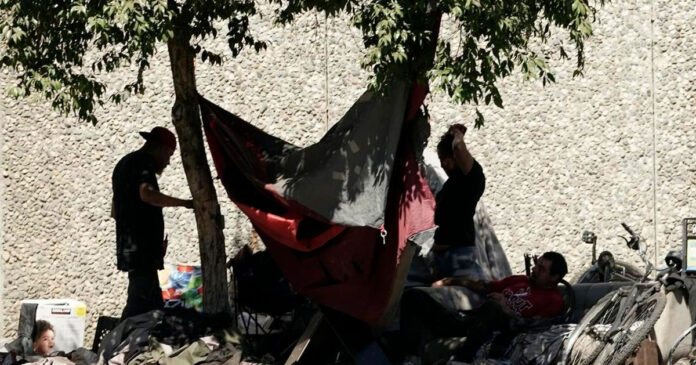
A homeless encampment is shaded by a tree in Sacramento, Calif., Friday, Aug. 12, 2022. Homeless people in California are already a vulnerable group, often struggling with poor health, trauma and deep poverty before they lose their housing, according to a new study on adult homelessness released Tuesday, June 20, 2023, by the University of California, San Francisco, aimed at capturing a comprehensive picture of how people become homeless in California. (Photo: AP/Rich Pedroncelli/File)

Homeless people in California are already a vulnerable group, often struggling with poor health, trauma and deep poverty before they lose their housing, according to a new study on adult homelessness.

The study released Tuesday by the University of California, San Francisco attempts to capture a comprehensive picture of how people become homeless in California, and what impeded their efforts at finding permanent housing. The representative survey of nearly 3,200 homeless people found that when they lost housing, their median household income was $960 a month, and for renters on leases it was $1,400 a month, of which on average half went to rent.

Homelessness is a national crisis, and all too pervasive in California, where an estimated 171,000 people — or 30% of all homeless people in the U.S. — are homeless. Political leaders are divided over how to address the crisis, with some, including Democratic Gov. Gavin Newsom, favoring tent encampment sweeps and a tough-love approach toward those with mental health and addiction issues.

A homeless woman moves her belongings after being approached by the San Francisco Homeless Outreach Team’s Encampment Resolution Team in San Francisco, on Dec. 13, 2022. Homeless people in California are already a vulnerable group, often struggling with poor health, trauma and deep poverty before they lose their housing, according to a new study on adult homelessness released Tuesday, June 20, 2023, by the University of California, San Francisco, aimed at capturing a comprehensive picture of how people become homeless in California. (Photo: AP/Godofredo A. Vásquez/File)

It it not groundbreaking news that the state’s exorbitant housing costs are a major driver behind homelessness, but researchers at the UCSF’s Benioff Homelessness and Housing Initiative hope that the study will strengthen public support for policies that focus on offering housing and emergency rental assistance — rather than policies emphasizing punishment or stigma.

“People are homeless because their rent is too high. And their options are too few. And they have no cushion,” said Dr. Margot Kushel, initiative director and lead investigator. “And it really makes you wonder how different things would look if we could solve that underlying problem.”

Kushel’s team surveyed nearly 3,200 adults around California, and followed up to conduct in-depth interviews with 365 people, between October 2021 and November 2022.

A homeless man sleeps on a discarded mattress in Los Angeles, July 21, 2022. Homeless people in California are already a vulnerable group, often struggling with poor health, trauma and deep poverty before they lose their housing, according to a new study on adult homelessness released Tuesday, June 20, 2023, by the University of California, San Francisco, aimed at capturing a comprehensive picture of how people become homeless in California. (Photo: AP/Jae C. Hong/File)

The study found that Black people made up 26% of the homeless population in a state where they are only 6% of the general population. About 90% of participants were living in California when they became homeless. Half reported an inability to work due to age, health or disability. The median length of homelessness was a little under two years.

More than a third of adults surveyed met the criteria for chronic homelessness, meaning they had a disabling condition and were homeless for at least 1 year — or were homeless four times in the previous three years totaling more than 12 months.

In Los Angeles in 2015, Sage Johnson’s mother was evicted from their apartment when she was unable to meet rent that had increased to $1,200. In disability pay, she received about $1,340 a month. She bounced around, from LA’s notorious Skid Row to various convalescent homes while her daughter lived at a shelter.

Later, Johnson, 28, was able to place her mother in a home, where she stayed for about two years. In 2018 though, her mother died from a debilitating stroke.

Johnson, who now has stable housing, wishes she could have done more.

“But in the end, she did have a bed. She was inside. She didn’t have any more strokes outside. And she was able to regenerate and rejuvenate and restore some of her life while in the convalescent home,” said Johnson, a co-chair for one of the study’s advisory boards.

Robert Mason, a 56-year-old homeless man, warms up a piece of doughnut over a bonfire he set to keep himself warm on Skid Row in Los Angeles, on Feb. 14, 2023. Homeless people in California are already a vulnerable group, often struggling with poor health, trauma and deep poverty before they lose their housing, according to a new study on adult homelessness released Tuesday, June 20, by the University of California, San Francisco, aimed at capturing a comprehensive picture of how people become homeless in California. (Photo: AP/Jae C. Hong/File)

Among study participants, substance abuse and issues with mental health were common and predated becoming homeless. Of those surveyed, 45% reported current, regular use of cocaine, amphetamines and opioids or heavy episodic drinking. Participants described how heavy substance use contributed to losing their homes, but also how methamphetamine usage allowed them to stay alert to protect themselves from assault or theft.

Nearly half of the adults surveyed were not on a lease in the six months prior to becoming homeless, and had likely moved in with family or friends, contributing to rent when they could. Nearly a quarter cited conflict among housemates, desire for more space or not wanting to impose any longer on family and friends as primary reasons they left.

On average, people surveyed who were not on leases received only one day of warning before needing to move out.

Among people on rental lease agreements, more than 20% cited income loss or reduction as the primary reason they lost housing. “So it wasn’t so much that their housing costs increased, it’s that they could no longer keep up with it,” said Kushel.

California ranks as the most unaffordable state when it comes to housing, according to an annual report by the National Low Income Housing Coalition. A person earning an hourly minimum wage of $15.50 would have to work nearly 90 hours a week to afford the statewide average for a modest one-bedroom rental, which is nearly $1,800 a month, the coalition states.

People ride their bikes past a homeless encampment set up along the boardwalk in the Venice neighborhood of Los Angeles on June 29, 2021. Homeless people in California are already a vulnerable group, often struggling with poor health, trauma and deep poverty before they lose their housing, according to a new study on adult homelessness released Tuesday, June 20, 2023, by the University of California, San Francisco, aimed at capturing a comprehensive picture of how people become homeless in California. (Photo: AP/Jae C. Hong/File)

The study was requested by Newsom’s administration, which has made addressing homelessness a priority, but the state did not fund it so didn’t play a role in analyzing data or interpreting the findings.

The report makes many recommendations, including deep expansion of rental assistance and pilot programs to facilitate shared housing for people seeking to get out of homelessness — and a rental stipend program for people living temporarily with family or friends.

Johnson said she hopes the public will find the report’s findings to be evidence that tax dollars are being put to good use in social safety net spending. She also hopes that people will support robust mental health and addiction treatment services along with affordable housing options.

“I don’t want to set anyone up for failure,” she said. “And I’m sure many of my peers can agree that folks need time to practice going back to, like, regular society life.”

Eviction filings are 50% higher than they were pre-pandemic in some cities as rents rise

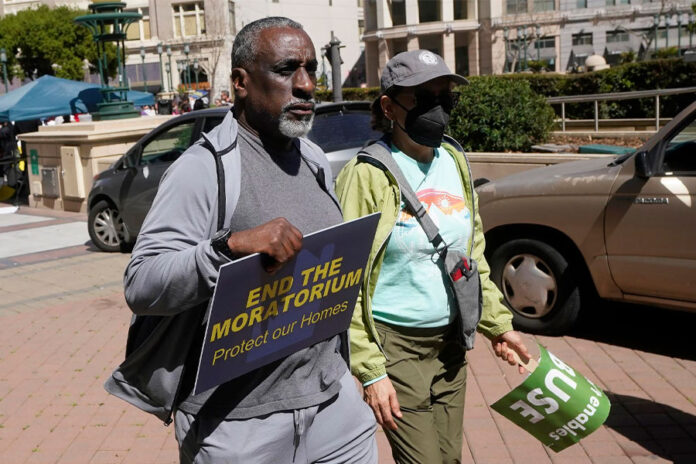
John Williams, left, walks leaves a rally calling for an end to the eviction moratorium before a special community and economic development committee by the Oakland City Council at City Hall in Oakland, Calif., Tuesday, April 11, 2023. Some landlords have gone without rental income for more than three years after Oakland, California approved an eviction moratorium in March 2020. (Photo: AP/Jeff Chiu)

Entering court using a walker, a doctor’s note clutched in his hand, 70-year-old Dana Williams, who suffers serious heart problems, hypertension and asthma, pleaded to delay eviction from his two-bedroom apartment in Atlanta.

Although sympathetic, the judge said state law required him to evict Williams and his 25-year-old daughter De’mai Williams in April because they owed $8,348 in unpaid rent and fees on their $940-a-month apartment.

They have been living in limbo ever since.

They moved into a dilapidated Atlanta hotel room with water dripping through the bathroom ceiling, broken furniture and no refrigerator or microwave. But at $275-a-week, it was all they could afford on Williams’ $900 monthly social security check and the $800 his daughter gets biweekly from a state agency as her father’s caretaker.

Maria Jackson, right, moves into a room at a home with the help of friend David Mcfarlan Monday, May 8, 2023, in Las Vegas. Jackson, a longtime massage therapist, lost her customers when the pandemic triggered a statewide shutdown in March 2020 and was evicted from her apartment earlier this year. (Photo: AP/John Locher)

“I really don’t want to be here by the time his birthday comes» in August, De’mai Williams said. «For his health, it’s just not right.”

The Williams family is among millions of tenants from New York state to Las Vegas who have been evicted or face imminent eviction.

After a lull during the pandemic, eviction filings by landlords have come roaring back, driven by rising rents and a long-running shortage of affordable housing. Most low-income tenants can no longer count on pandemic resources that had kept them housed, and many are finding it hard to recover because they haven’t found steady work or their wages haven’t kept pace with the rising cost of rent, food and other necessities.

Homelessness, as a result, is rising.

“Protections have ended, the federal moratorium is obviously over, and emergency rental assistance money has dried up in most places,” said Daniel Grubbs-Donovan, a research specialist at Princeton University’s Eviction Lab.

Dana Williams and his daughter De’mai Williams stand outside a low-cost hotel in Atlanta on May 18, 2023. The two have been looking for an affordable place to live ever since they were evicted from their two-bedroom apartment in April. (Photo: AP/R.J. Rico)

“Across the country, low-income renters are in an even worse situation than before the pandemic due to things like massive increases in rent during the pandemic, inflation and other pandemic-era related financial difficulties.”

Eviction filings are more than 50% higher than the pre-pandemic average in some cities, according to the Eviction Lab, which tracks filings in nearly three dozen cities and 10 states. Landlords file around 3.6 million eviction cases every year.

Among the hardest-hit are Houston, where rates were 56% higher in April and 50% higher in May. In Minneapolis/St. Paul, rates rose 106% in March, 55% in April and 63% in May. Nashville was 35% higher and Phoenix 33% higher in May; Rhode Island was up 32% in May.

The latest data mirrors trends that started last year, with the Eviction Lab finding nearly 970,000 evictions filed in locations it tracks — a 78.6% increase compared to 2021, when much of the country was following an eviction moratorium. By December, eviction filings were nearly back to pre-pandemic levels.

Michelle Hailey reacts while listening to speakers during a rally to end the eviction moratorium outside City Hall in Oakland, Calif., Tuesday, April 11, 2023. Some landlords have gone without rental income for more than three years after Oakland, California approved an eviction moratorium in March 2020. (Photo: AP/Jeff Chiu)

At the same time, rent prices nationwide are up about 5% from a year ago and 30.5% above 2019, according to the real estate company Zillow. There are few places for displaced tenants to go, with the National Low Income Housing Coalition estimating a 7.3 million shortfall of affordable units nationwide.

Many vulnerable tenants would have been evicted long ago if not for a safety net created during the pandemic.

The federal government, as well as many states and localities, issued moratoriums during the pandemic that put evictions on hold; most have now ended. There was also $46.5 billion in federal Emergency Rental Assistance that helped tenants pay rent and funded other tenant protections. Much of that has been spent or allocated, and calls for additional resources have failed to gain traction in Congress.

“The disturbing rise of evictions to pre-pandemic levels is an alarming reminder of the need for us to act — at every level of government — to keep folks safely housed,» said Democratic U.S. Rep. Ayanna Pressley of Massachusetts, urging Congress to pass a bill cracking down on illegal evictions, fund legal help for tenants and keep evictions off credit reports.

Seneca Scott, top left, yells as Pamela Haile, middle, holds up a sign with others during a Oakland City Council special community and economic development committee at City Hall in Oakland, Calif., Tuesday, April 11, 2023. Some landlords have gone without rental income for more than three years after Oakland, California approved an eviction moratorium in March 2020. (Photo: AP/Jeff Chiu)

Housing courts are again filling up and ensnaring the likes of 79-year-old Maria Jackson.

Jackson worked for nearly two decades building a loyal clientele as a massage therapist in Las Vegas, which has seen one of the country’s biggest jumps in eviction filings. That evaporated during the pandemic-triggered shutdown in March 2020. Her business fell apart; she sold her car and applied for food stamps.

She got behind on the $1,083 monthly rent on her one-bedroom apartment, and owing $12,489 in back rent was evicted in March. She moved in with a former client about an hour northeast of Las Vegas.

“Who could imagine this happening to someone who has worked all their life?” Jackson asked.

Last month she found a room in Las Vegas for $400 a month, paid for with her $1,241 monthly social security check. It’s not home, but “I’m one of the lucky ones,” she said.

“I could be in a tent or at a shelter right now.»

In upstate New York, evictions are rising after a moratorium lifted last year. Forty of the state’s 62 counties had higher eviction filings in 2022 than before the pandemic, including two where eviction filings more than doubled compared to 2019.

“How do we care for the folks who are evicted … when the capacity is not in place and ready to roll out in places that haven’t experienced a lot of eviction recently?” said Russell Weaver, whose Cornell University lab tracks evictions statewide.

Housing advocates had hoped the Democrat-controlled state Legislature would pass a bill requiring landlords to provide justification for evicting tenants and limit rent increases to 3% or 1.5 times inflation. But it was excluded from the state budget and lawmakers failed to pass it before the legislative session ended this month.

People take part in a Oakland City Council special community and economic development committee at City Hall in Oakland, Calif., Tuesday, April 11, 2023. Earlier this year, small property landlords took to City Hall to demand an end to the eviction ban. They said they were going into debt or facing foreclosure while tenants with jobs skipped out on rent. (Photo: AP/Jeff Chiu)

“Our state Legislature should have fought harder,” said Oscar Brewer, a tenant organizer facing eviction from the apartment he shares with his 6-year-old daughter in Rochester.

In Texas, evictions were kept down during the pandemic by federal assistance and the moratoriums. But as protections went away, housing prices skyrocketed in Austin, Dallas and elsewhere, leading to a record 270,000 eviction filings statewide in 2022.

Advocates were hoping the state Legislature might provide relief, directing some of the $32 billion budget surplus into rental assistance. But that hasn’t happened.

“It’s a huge mistake to miss our shot here,” said Ben Martin, a research director at nonprofit Texas Housers. “If we don’t address it, now, the crisis is going to get worse.”

Still, some pandemic protections are being made permanent, and having an impact on eviction rates. Nationwide, 200 measures have passed since January 2021, including legal representation for tenants, sealing eviction records and mediation to resolve cases before they reach court, said the National Low Income Housing Coalition.

These measures are credited with keeping eviction filings down in several cities, including New York City and Philadelphia — 41% below pre-pandemic levels in May for the former and 33% for the latter.

Chris Moore, middle, of the East Bay Rental Housing Association board, holds up signs with others during a Oakland City Council special community and economic development committee at City Hall in Oakland, Calif., Tuesday, April 11, 2023. Some landlords have gone without rental income for more than three years after Oakland, California approved an eviction moratorium in March 2020. (Photo: AP/Jeff Chiu)

A right-to-counsel program and the fact that housing courts aren’t prosecuting cases involving rent arears are among the factors keeping New York City filings down.

In Philadelphia, 70% of the more than 5,000 tenants and landlords who took part in the eviction diversion program resolved their cases. The city also set aside $30 million in assistance for those with less than $3,000 in arears, and started a right-to-counsel program, doubling representation rates for tenants.

The future is not so bright for Williams and his daughter, who remain stuck in their dimly-lit hotel room. Without even a microwave or nearby grocery stores, they rely on pizza deliveries and snacks from the hotel vending machine.

Williams used to love having his six grandchildren over for dinner at his old apartment, but those days are over for now.

“I just want to be able to host my grandchildren,” he said, pausing to cough heavily. “I just want to live somewhere where they can come and sit down and hang out with me.”

Educación y xenofobia, un desafío para la niñez migrante venezolana en Suramérica

ARCHIVO/EFE/María de la Luz Ascencio

La ONG Plan Internacional divulgó un estudio este lunes que destaca las barreras y desafíos que enfrenta la niñez venezolana migrante y refugiada en Suramérica para acceder a servicios de educación equitativos, inclusivos y de calidad, un problema que afecta por igual a las comunidades de acogida.

El informe «Barreras para el acceso, transición, finalización y aprendizaje de niñas, niños y adolescentes refugiados, migrantes y la comunidad de acogida en la región, desarrollado en Colombia, Ecuador y Perú» por Plan junto con el Grupo Regional de Educación (Grelac), encontró que el 35,9 % de los hogares consideran difícil matricular a los menores migrantes.

La encuesta realizada entre agosto y noviembre de 2022 incluyó como población objetivo a adultos cuidadores de niños, niñas y adolescentes migrantes provenientes de Venezuela y de la comunidad de acogida en edades escolares y autoridades educativas.

El estudio organiza los hallazgos por país y por los momentos de la trayectoria educativa, que van desde la matrícula de los Niños, Niñas y Adolescentes (NNA) hasta las amenazas u obstáculos que las familias consideran que tienen que sortear para terminar el proceso educativo.

La Plataforma de Coordinación Interagencial para Refugiados y Migrantes (R4V), citada en el informe, detalla que los tres países latinoamericanos que más acogen población venezolana migrante son Colombia con 2,5 millones, seguido de Perú con 1,5 millones y Ecuador con 502.200 migrantes.

La investigación destaca que del total de hogares que atraviesan dificultades, el 79,5 % corresponde a hogares migrantes que citan como principal obstáculo los requisitos de documentación exigidos por los establecimientos educativos.

También reveló que el 26,4% de los hogares encuestados están de acuerdo en que es difícil para sus hijos continuar en la escuela.

Esta situación, según Plan, obedece a problemas económicos, dificultades para encontrar cupos escolares, obstáculos relacionados con los documentos migratorios y la falta de conocimiento sobre los sistemas educativos locales.

«En los países se deben construir sistemas y políticas educativas resistentes a las crisis que se basen en las experiencias y soluciones identificadas por la niñez y la juventud desplazada. Estos sistemas y políticas deben ser adaptables, flexibles e innovadoras y garantizar la protección de los derechos de las niñas», manifestó la directora de Plan Internacional para la Subregión de Sudamérica, Verónica Zambrano.

Esto permitirá, afirmó Zambrano, «ofrecer una educación inclusiva y de calidad para garantizar la continuidad de la educación en contextos de movilidad humana».

El informe señala por su parte que en el caso de las niñas y adolescentes migrantes y refugiadas, la violencia de género a la que están expuestas también tiene un efecto perjudicial en su educación, obligándolas a abandonar la escuela, faltar a clase o tener un bajo rendimiento debido a traumas físicos y emocionales.

Respecto a la permanencia, se tiene que 26,4% de las familias encuestadas están de acuerdo o totalmente de acuerdo en que es difícil continuar en el colegio en el país en el que viven.

Adicionalmente, 6,6% considera que al menos un NNA a su cargo se enfrenta a algún tipo de amenaza para culminar su proceso educativo.

En el caso de las niñas, el informe resalta que el embarazo adolescente y la falta de recursos son factores que las obligan a abandonar sus estudios.

Sobre la exclusión educativa, se identificó que está presente en todos los miembros de la comunidad educativa: 8,8% de las familias ha identificado rechazo por parte de docentes, 4,3% por parte de otros miembros de la comunidad educativa y 15,1% afirma que estos comportamientos suceden entre los mismos NNA.

En este punto el estudio señala que las brechas percibidas de acceso y permanencia en la educación permitió identificar que «un reto que permanece entre los tres países a pesar de los esfuerzos es la xenofobia (…) un reto que requiere de esfuerzos importantes a nivel central y apoyo de la cooperación internacional».

EE. UU. destinará ayuda millonaria a comunidades para combatir cambio climático

ARCHIVO - Casas frente al mar tapadas detrás de una montañas de arena reforzada como preparativos para enfrentar una tormenta en la playa de Long Beach, California, el 9 de septiembre de 2022.

El anuncio del presidente Joe Biden coincide con una ola de temperaturas extremas en el sureste del país, que espera una reforzada ola de calor e intensas lluvias en los próximos días.

El presidente de Estados Unidos, Joe Biden, anunciará una ayuda de unos 600 millones de dólares que ofrecerá a comunidades vulnerables las herramientas necesarias para combatir y prepararse ante los «crecientes impactos del cambio climático», informó este lunes la Casa Blanca.

Biden adelantará en la tarde de este lunes la presentación de lo que la administración llama Desafío Regional de Resiliencia Climática, con un compromiso de 575 millones de dólares, para asistir a comunidades costeras a adaptarse y enfrentar fenómenos como la subida del nivel del mar, inundaciones y el azote de tormentas.

La financiación de este programa y otras iniciativas se incluye dentro de un histórico paquete de leyes, aprobado por el Congreso de EE. UU. y firmado por el presidente en agosto pasado, que destinará unos 430 miles de millones de dólares para afrontar el reto del cambio climático.

El anuncio se realizará durante la visita del presidente a una comunidad costera en California que lucha por proteger su ecosistema e infraestructura frente a los embates de los cada más vez más serios fenómenos climáticos, indicó la Casa Blanca.

Como parte de esta inversión, California también recibirá 67,4 millones de los dólares, con la capacidad de solicitar financiamiento adicional, para modernizar su red eléctrica frente al clima extremo, desastres naturales e incendios forestales, y garantizar la confiabilidad del sector eléctrico del estado.

«La financiación apoyará soluciones innovadoras de adaptación y resiliencia costera, como la construcción de infraestructura natural, planificación y preparación para la reubicación dirigida por la comunidad», indicó la Administración.

Estos anuncios coinciden con una ola de calor que azota el sureste de EE. UU., donde las temperaturas alcanzaron más de 38 grados Celsius y se han desencadenado tormentas eléctricas que provocaron cortes del suministro eléctrico desde Oklahoma hasta Mississippi y provocaron vientos que generaron amenazas de incendios forestales en Arizona y Nuevo México.

Como parte de su «iniciativa verde», la Casa Blanca también anunció que a fines de año el presidente Biden acogerá una cumbre que reunirá a líderes estatales, locales, tribales y territoriales para discutir la gestión del impacto del cambio climático a través de sus experiencias.

More than 1 million people are dropped from Medicaid as states start a post-pandemic purge of rolls

Gary Rush poses for a photo outside the Pennsylvania Capitol, June 7, 2023, in Harrisburg, Pa. Rush was demonstrating with the advocacy group Power to the People against the state removing people from Medicaid and says he's worried about losing his medical coverage under the program. (AP Photo/Marc Levy)

More than 1 million people have been dropped from Medicaid in the past couple months as some states moved swiftly to halt health care coverage following the end of the coronavirus pandemic.

Most got dropped for not filling out paperwork.

Though the eligibility review is required by the federal government, President’s Joe Biden’s administration isn’t too pleased at how efficiently some other states are accomplishing the task.

“Pushing through things and rushing it will lead to eligible people — kids and families — losing coverage for some period of time,” Daniel Tsai, a top federal Medicaid official recently told reporters.

Already, about 1.5 million people have been removed from Medicaid in more than two dozen states that started the process in April or May, according to publicly available reports and data obtained by The Associated Press.

Florida has dropped several hundred thousand people, by far the most among states. The drop rate also has been particularly high in other states. For people whose cases were decided in May, around half or more got dropped in Arkansas, Idaho, Kansas, Nevada, New Hampshire, Oklahoma, South Dakota, Utah and West Virginia.

By its own count, Arkansas has dropped more than 140,000 people from Medicaid.

The eligibility redeterminations have created headaches for Jennifer Mojica, 28, who was told in April that she no longer qualified for Medicaid because Arkansas had incorrectly determined her income was above the limit.

She got that resolved, but was then told her 5-year-old son was being dropped from Medicaid because she had requested his cancellation — something that never happened, she said. Her son’s coverage has been restored, but now Mojica says she’s been told her husband no longer qualifies. The uncertainty has been frustrating, she said.

“It was like fixing one thing and then another problem came up, and they fixed it and then something else came up,” Mojica said.

Arkansas officials said they have tried to renew coverage automatically for as many people as possible and placed a special emphasis on reaching families with children. But a 2021 state law requires the post-pandemic eligibility redeterminations to be completed in six months, and the state will continue “to swiftly disenroll individuals who are no longer eligible,” the Department of Human Services said in statement.

Arkansas Gov. Sarah Huckabee Sanders has dismissed criticism of the state’s process.

“Those who do not qualify for Medicaid are taking resources from those who need them,” Sanders said on Twitter last month. “But the pandemic is over — and we are leading the way back to normalcy.”

More than 93 million people nationwide were enrolled in Medicaid as of the most recent available data in February — up nearly one-third from the pre-pandemic total in January 2020. The rolls swelled because federal law prohibited states from removing people from Medicaid during the health emergency in exchange for providing states with increased funding.

Now that eligibility reviews have resumed, states have begun plowing through a backlog of cases to determine whether people’s income or life circumstances have changed. States have a year to complete the process. But tracking down responses from everyone has proved difficult, because some people have moved, changed contact information or disregarded mailings about the renewal process.

Before dropping people from Medicaid, the Florida Department of Children and Families said it makes between five and 13 contact attempts, including texts, emails and phone calls. Yet the department said 152,600 people have been non-responsive.

Their coverage could be restored retroactively, if people submit information showing their eligibility up to 90 days after their deadline.

Unlike some states, Idaho continued to evaluate people’s Medicaid eligibility during the pandemic even though it didn’t remove anyone. When the enrollment freeze ended in April, Idaho started processing those cases — dropping nearly 67,000 of the 92,000 people whose cases have been decided so far.

“I think there’s still a lot of confusion among families on what’s happening,” said Hillarie Hagen, a health policy associate at the nonprofit Idaho Voices for Children.

She added, “We’re likely to see people showing up at a doctor’s office in the coming months not knowing they’ve lost Medicaid.”

Advocates fear that many households losing coverage may include children who are actually still eligible, because Medicaid covers children at higher income levels than their parents or guardians. A report last year by the U.S. Department of Health and Human Services forecast that children would be disproportionately impacted, with more than half of those disenrolled still actually eligible.

That’s difficult to confirm, however, because the federal Centers for Medicare & Medicaid Services doesn’t require states to report a demographic breakdown of those dropped. In fact, CMS has yet to release any state-by-state data. The AP obtained data directly from states and from other groups that have been collecting it.

Medicaid recipients in numerous states have described the eligibility redetermination process as frustrating.

Julie Talamo, of Port Richey, Florida, said she called state officials every day for weeks, spending hours on hold, when she was trying to ensure her 19-year-old special-needs son, Thomas, was going to stay on Medicaid.

She knew her own coverage would end but was shocked to hear Thomas’ coverage would be whittled down to a different program that could force her family to pay $2,000 per month. Eventually, an activist put Talamo in contact with a senior state healthcare official who confirmed her son would stay on Medicaid.

“This system was designed to fail people,” Talamo said of the haphazard process.

Some states haven’t been able to complete all the eligibility determinations that are due each month. Pennsylvania reported more than 100,000 incomplete cases in both April and May. Tens of thousands of cases also remained incomplete in April or May in Arizona, Arkansas, Indiana, Iowa, New Mexico and Ohio.

“If states are already behind in processing renewals, that’s going to snowball over time,» said Tricia Brooks, a research professor at the Georgetown University Center for Children and Families. «Once they get piles of stuff that haven’t been processed, I don’t see how they catch up easily.”

Among those still hanging in the balance is Gary Rush, 67, who said he was notified in April that he would lose Medicaid coverage. The Pittsburgh resident said he was told that his retirement accounts make him ineligible, even though he said he doesn’t draw from them. Rush appealed with the help of an advocacy group and, at a hearing this past week, was told he has until July to get rid of about $60,000 in savings.

Still, Rush said he doesn’t know what he will do if he loses coverage for his diabetes medication, which costs about $700 a month. Rush said he gets $1,100 a month from Social Security.

In Indiana, Samantha Richards, 35, said she has been on Medicaid her whole life and currently works two part-time jobs as a custodian. Richards recalled receiving a letter earlier this year indicating that the pandemic-era Medicaid protection was ending. She said a local advocacy group helped her navigate the renewal process. But she remains uneasy.

“Medicaid can be a little unpredictable,” Richards said. “There is still that concern that just out of nowhere, I will either get a letter saying that we have to reapply because we missed some paperwork, or I missed a deadline, or I’m going to show up at the doctor’s office or the pharmacy and they’re going to say, ‘Your insurance didn’t go through.’”