


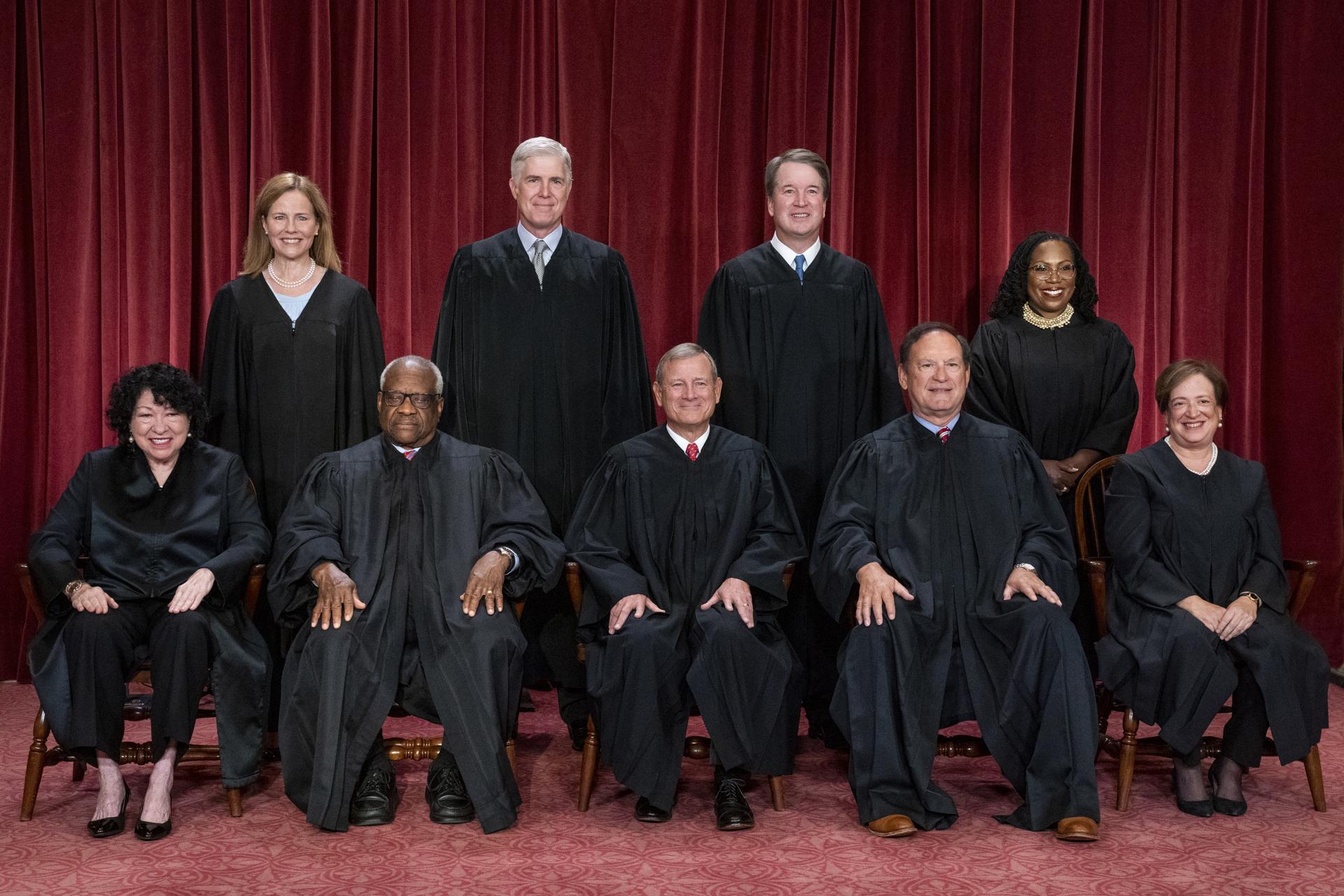
The League of United Latin American Citizens (LULAC) welcomed the United States Supreme Court’s decision in Trump v. Barbara, in which the Court ruled 6-3 that the executive order seeking to end birthright citizenship is unconstitutional.
Writing for the majority, Chief Justice John G. Roberts Jr. reaffirmed that the Fourteenth Amendment guarantees citizenship to nearly all children born on American soil, preserving a constitutional principle that has defined the nation for well over a century.
LULAC emphasized that it was the first organization to challenge the executive order, filing suit within hours of its signing on January 20, 2025, and serving as a lead plaintiff on behalf of the families and children whose rights were at stake. The organization said the ruling demonstrates that the Constitution and civil rights can prevail even before the nation’s highest court.
«The Court’s decision sends a clear message: a child born on American soil is an American citizen,» LULAC stated. The ruling protects approximately 250,000 children born each year who would otherwise have been affected by the executive order. The organization reiterated that no family should have to question whether a newborn belongs to this nation because of a parent’s immigration status.
LULAC also noted that birthright citizenship is firmly grounded in the Fourteenth Amendment, ratified in 1868, and supported by more than 125 years of legal precedent, including United States v. Wong Kim Ark (1898), reaffirming that the Constitution—not political convenience—defines who is an American.
As a longstanding nonpartisan civil rights organization, LULAC stressed that its participation in the case was driven solely by its commitment to defending the Constitution and the rights of children, not by any political party or candidate.
The organization further emphasized that the ruling strengthens a principle that protects the entire American family, including more than three million U.S. citizens living in Puerto Rico. Representing members in all fifty states and Puerto Rico, LULAC reaffirmed its commitment to ensuring that every American child—both in the mainland United States and in the territories—continues to receive the full and equal protection of citizenship.
Although three justices dissented, LULAC noted that the majority included justices appointed by presidents of both political parties, underscoring the broad constitutional consensus supporting birthright citizenship beyond political ideology.
LULAC concluded by pledging to closely monitor implementation of the decision to ensure that no family encounters barriers when documenting a child’s citizenship. The organization thanked its legal coalition, community partners, and especially the families who served as plaintiffs, reaffirming its nearly century-long commitment to protecting the civil rights of all Americans.