

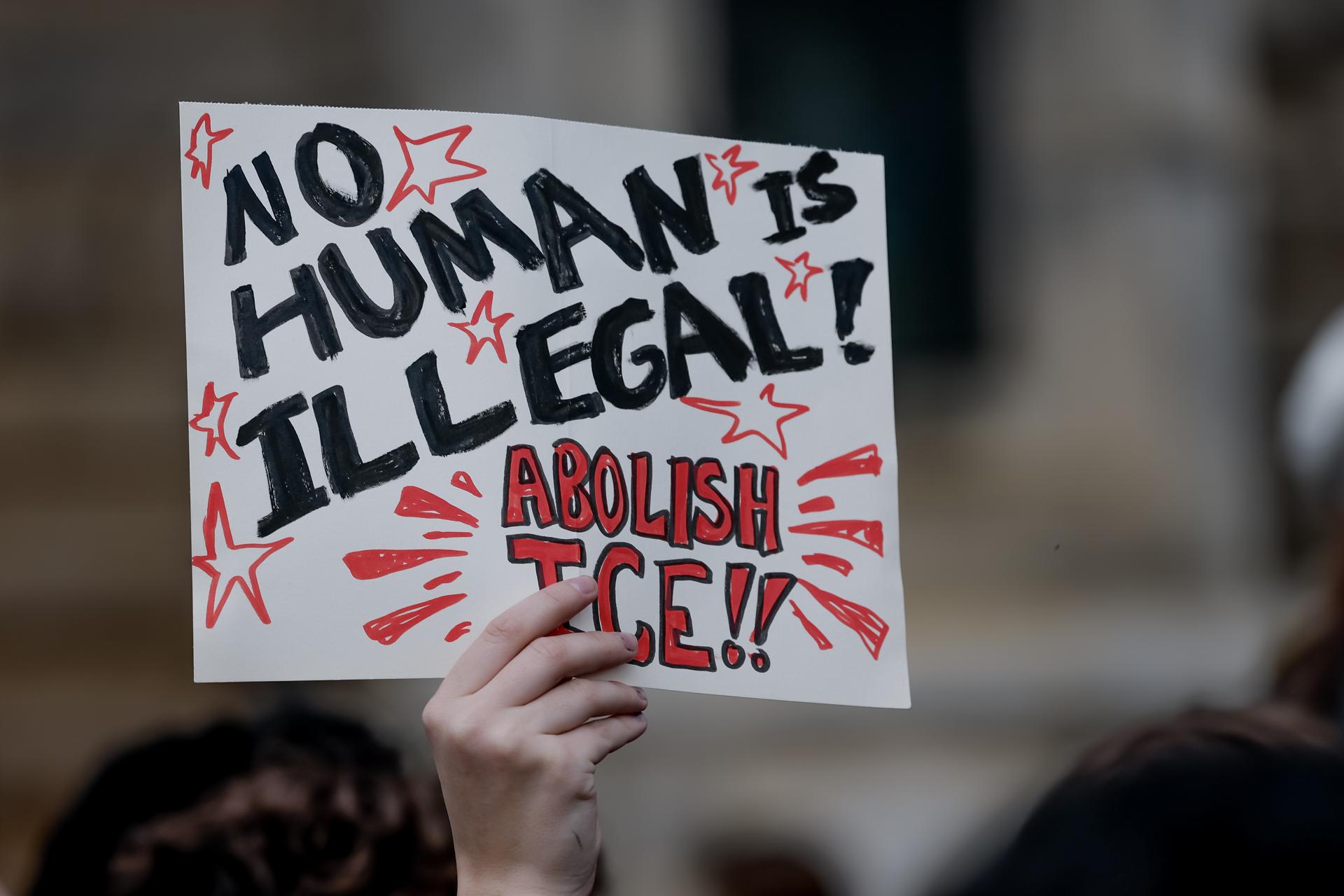
This past January 2026 Minority Leader Kendra Brooks and Democratic Councilmember At-Large Rue Landau announced a collaborative package of legislation titled ICE OUT for Philadelphia.
The legislation was brought up after the uprising attacks ICE authorities have caused after Trump signed the OBBBA (One, Big, Beautiful Bill Act) reconciliation bill into law in the summer of 2025. Part of the Big, Beautiful Bill, to increase ICE raids nationwide to detain undocumented immigrants no matter the status. This bill increased the funding towards Immigration authorities making it $100 million in one year to what they have referred to as a «wartime recruitment» campaign.
It’s been reported by The Guardian that by the end of 2025, death by ICE agents increased by nearly 200%, reaching a two-decade high.
At least 32 to 33 individuals died in the U.S. Immigration and Customs Enforcement (ICE) custody in 2025, making it the agency’s deadliest year in more than two decades.
Recently this spring 2026 Congress moved forward in providing more funding to Immigration Customs Authority making it about $70 million in yearly funding till up to 2029. On top of the $170 million already provided last year.
Councilmember Kendra Brooks highlighted community concerns about the climate of fear created by ICE enforcement while introducing the bill.
In 2001, Mayor John Street implemented the first major measures to ensure that city agencies, including police, kept immigration-related information confidential. In 2014, Mayor Michael Nutter signed an executive order restricting ICE from operating in designated protected spaces, a move that helped popularize the term “sanctuary city.” In 2016, Mayor Jim Kenney reaffirmed and expanded this approach, openly embracing the designation during his administration.
Now, as Donald Trump begins a second term in office, this legislation seeks to reinforce those protections and respond to growing concerns over ICE enforcement in the city.
Details of the ICE OUT Package include:
- Prohibits ICE and other law enforcement agents from concealing their identities with face masks or unmarked vehicles and requires officers to display badges
- Codifies executive orders banning 287(g) agreements, which allow local police to act as ICE agents
- Prohibits city agencies from collaborating with ICE
- Prevents city agencies from collecting citizenship or immigration status information or sharing personal data with ICE
- Prohibits discrimination or denial of services based on citizenship or immigration status by the City, employers, housing providers, or private businesses.
- Prohibits ICE from using city-owned properties as staging locations for raids.
- Bars city employees from granting ICE access to city-owned spaces—such as libraries, shelters, health centers, and recreation centers—without a judicial warrant.
Modeled on successful legislation from cities and states across the country, the ICE OUT package enshrines existing policies into law and establishes clear limits on how ICE can operate within Philadelphia.
As of April 2026, the bill was passed with the positive vote of the City Councils.
On the evening of this Monday June 15th HIAS Pennsylvania had the opportunity to host a webinar with both Minority Leader Kendra Brooks and Democratic Councilmember At-Large Rue Landau to explain better about the bill and answer any questions the public had.
What does it say? What does it do, and how does it make our community safer?
Kendra Brooks started off with the reason why and how this legislation was created. As the series of events that happened here in Philadelphia with Unmask ICE agents, or people posing as ICE agents terrorizing communities in 2025/2026, it created a big concern that needed to either be stopped or restricted to prevent more harm.
“So, it actually started off with a series of training called ICE Out Trainings where we train people in the community how to be supportive in any event that ICE showed up at their door, their business, or a workplace.” She responded.
Little by little it formed into a legislation using the help of partners located in different parts of the United States like Minnesota and California who had this legislation passed in the past.
What are the most significant changes made by the legislation, and why do they matter?
The core of the legislation is ICE, prohibiting the city from entering into any cooperation agreements with ICE, like a 287 G agreement.
A 287(g) agreement is a formal partnership under Section 287(g) of the Immigration and Nationality Act that delegates federal immigration enforcement authority to state and local law enforcement officers. The program allows designated, ICE-trained officers to perform immigration functions, such as interrogating individuals about their status and executing federal detainers.
This legislation prevents it from happening. It prohibits the city from collecting immigration data and sharing it with ICE. It stops ICE from coming into Philadelphia city-owned areas, public property and it also reinforces non-discrimination provisions so that everybody can have equal access to city services.
It also prevents anyone who is an ICE agent from being identified and not masked up. Making it easier to identify the agent in case a raid does happen.
“These people are running around like vigilantes, picking people up, masked up and unidentified. Most people on the street don’t know the difference between Philadelphia Police, State Police, ICE, SEPTA, they just know it’s the cops.” states Rue Landau during the meeting. “This is not good for the cops, I think that, this was a very, very good piece, and as council member Brooks said, extremely important for the community”
How did community advocates and immigrant residents help shape the final package?
“They actually had been involved from the beginning. I think one of the things about how our office moved is that any piece of legislation that we move through council, we worked directly with the activist organizers and advocates to make sure that it’s what the people want and need.” Kendra Brooks responded. “They’re also involved when it’s time to kind of negotiate, you know, the final outcome of the package.”
With organizations such as PIC (Pennsylvania Immigrant Coalition), Juntos, to name a few, provided insight in this legislation making sure it created the security of safety for the community as it should have been since 2001 when the City was named as a sanctuary city.
Cathryn Miller-Wilson was able to ask the questions everyone was thinking. Will this legislation help the community when ICE is still a threat to society? Is there something the community can do if they’re on their way to work and are encountered by ICE officials?
“I think that’s where the training came in,” said Kendra Brooks. “Preparedness, combined with legislation, is what we’ve consistently heard from community members as essential to feeling safe—knowing what to do if ICE shows up at your home or workplace. Do not let them in. That’s one of the key steps emphasized in the trainings we launched ahead of this legislation. Safety comes from both: people knowing how to respond and having laws in place to protect them when something goes wrong. One argument we heard was that incidents like these haven’t happened in Philadelphia. Our response was clear: we are not going to wait for something to happen before putting this legislation in place.”
Philadelphia’s «ICE Out» legislation package takes effect on July 6, 2026. As Philadelphia will be one of the hosts for the FIFA world cup, this legislation eases the fear most immigrant community members feared as they prepared to celebrate their countries during the world cup, and be able to live an everyday life without the fear that a group of masked people will come and terrorize the city or that ICE will be able to enter anywhere without restrictions.
For the full information of this bill and webinar you can visit https://hiaspa.org