

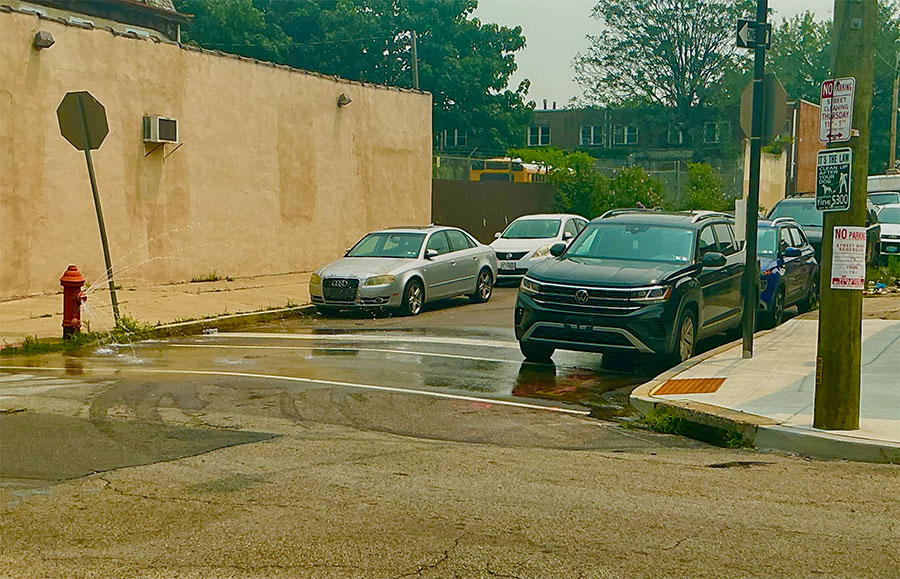
Over the course of several weeks in July, a group of youth from in and around the Hunting Park neighborhood participated in a study about the impacts of climate change on community health and well-being, using Photovoice. Photovoice is a research method where participants take photos about a topic and then use those photos to reflect about what is happening in their lives and their community, to understand and document challenges and think about opportunities together to act for positive change.
The Photovoice project is part of a larger study that I lead at Esperanza, supported by the Robert Wood Johnson Foundation’s Evidence for Action program (Grant #84014). The views expressed here do not necessarily reflect those of the Foundation.
These youth, ranging from 14 years to 19 years old, were part of a paid internship program at Esperanza funded by the City of Philadelphia. This study was one of many activities and experiences that the youth were engaged in this summer. They also participated in door-to-door canvassing for trees, community garden maintenance, heat-related data collection, and field trips.
For the Photovoice project, the youth were first introduced to the project, the study questions, and trained in good photography techniques by Photography Without Borders. The questions were: 1) How has climate change affected your health/well-being? 2) What helps or prevents people in our community from coping with the effects of climate change? Afterward, the youth were able take photos using their own phones for about a week, responding to the study questions. Once the photo-taking was complete, they participated in individual, one-on-one interviews with me, to talk about their photos and select their favorites. Finally, the youth gathered a group to share their photos, collectively tell stories about what the photos mean, then identify themes or ideas together. The youth enjoyed participating; one of them, Amari Spain-Croxton, said when reflecting on her experience that “sometimes the bigger picture comes from the smallest plant.”
The youth had a lot to say about extreme heat in Hunting Park and how it affects people who need to try to stay cool. They also talked about air quality and what people breathe in, including smoke from wildfires. Their ideas for solutions included planting more trees, maintaining green spaces, cleaning up trash, keeping people from idling in their cars, and providing more options for people to cope with heat in a healthy way. At the end of the project, the youth also brainstormed different ways to share their photos and stories with others, including people in positions of power who can make change. One idea that was popular was a public photo exhibition in an art gallery.
Esperanza will complete Photovoice with more cohorts of youth over the next year or so, which means there will be more opportunities for additional youth to share their stories through photographs and help researchers and other stakeholders understand what their climate change and health experiences are in Hunting Park and what can be done to make things better.