

Easton, PA – Every 10 years, Pennsylvania redraws the political maps that decide which neighborhoods vote together and which lawmakers represent them.
That may sound technical, but the idea is simple: first, the Census counts people. Then population numbers are used to redraw voting districts. Those districts help determine who represents residents in the Pennsylvania House, Pennsylvania Senate and U.S. House of Representatives. Pennsylvania is required to redraw its state legislative districts after each federal census.
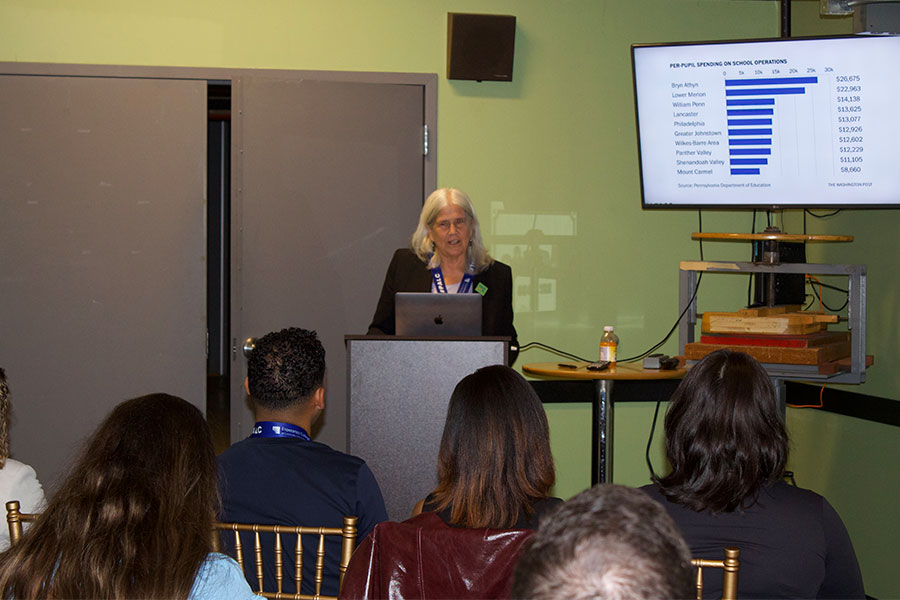
For Pennsylvania’s Latino community, that connection was the focus of a Politics & Civic Engagement presentation at the 2026 Pennsylvania Latino Convention led by Dr. Carol Kuniholm, co-founder and chair of Fair Districts PA. The 2020 Census counted 1,049,615 Hispanic or Latino residents in Pennsylvania, out of a total population of just over 13 million.
Those numbers matter because redistricting happens after the Census. If one part of Pennsylvania gains a lot of people while another loses population, the political map may need to change so districts continue representing roughly similar numbers of residents.
That is where redistricting comes in. Redistricting simply means redrawing the boundaries of political districts. A district is the geographic area represented by a particular elected official.
The controversy begins when those lines are intentionally drawn to give a political party or group an advantage. That is commonly known as gerrymandering.
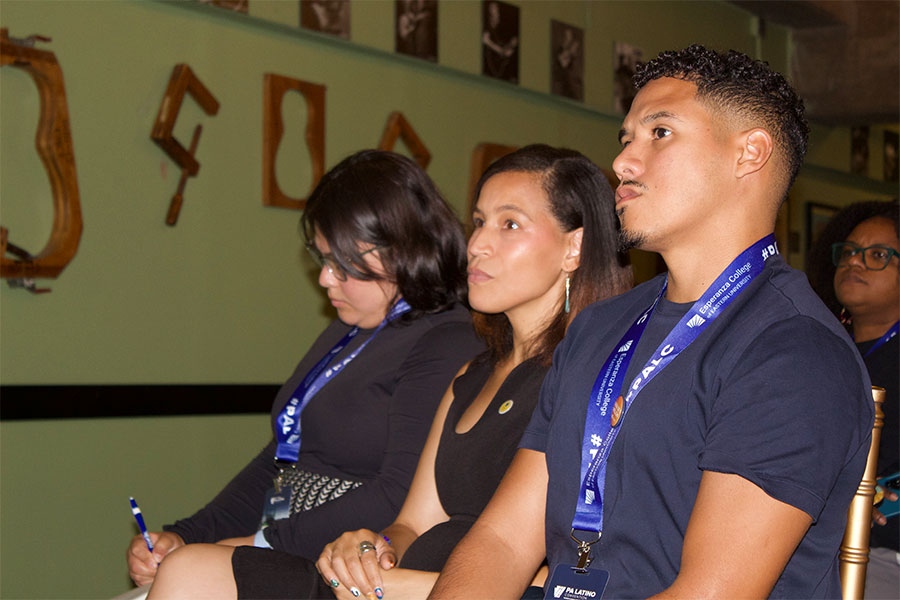
Imagine a community with a large Latino population. Depending on where the district lines are placed, that community could remain together in one district or be divided among several districts. Those choices can affect how communities are represented and how their votes are distributed among different districts.
During the presentation, Kuniholm described gerrymandering as the “keystone of cronyism and control,” presenting the argument that politicians should have less influence over the process of drawing political maps.
Pennsylvania currently uses two different systems.
For the Pennsylvania House and Senate, a five-member Legislative Reapportionment Commission draws the districts. Four members are the Republican and Democratic floor leaders of the state House and Senate, or people they appoint. Those four choose a fifth person to chair the commission. If they cannot agree, the Pennsylvania Supreme Court selects the chair.
Congressional districts work differently. Those maps are normally created through legislation passed by the Pennsylvania General Assembly and presented to the governor.
Kuniholm discussed House Bill 31 and Senate Bill 131, proposals that would change that system.
The proposals would establish an 11-member Independent Redistricting Commission responsible for drawing both state legislative and congressional districts. Under House Bill 31, four commissioners would be registered with Pennsylvania’s largest political party, four with the second-largest party and three with neither of those two parties.
The proposed system also includes public participation and new rules governing how maps would be created.
But there is an important distinction: these proposals are not law.
As of September 2026, House Bill 31 remained in the House State Government Committee, while Senate Bill 131 remained in the Senate State Government Committee. However, both proposals were effectively dead for the 2025–2026 legislative session because they could no longer meet the constitutional deadline required for proposed amendments to be considered in the next election cycle.
The conversation also matters for younger Pennsylvanians.
You do not have to be old enough to vote for the Census to affect your future political representation.
A teenager counted in the 2030 Census could become a voter only a few years later while still living under political maps created using that Census data.
In other words: you count before your vote.
That may be one of the simplest ways to understand why the Census and redistricting matter.
The process is not only about politicians or complicated maps; it is about whether neighborhoods remain together, whether communities are divided, who residents vote alongside and which elected officials are responsible for representing them.
For Pennsylvania’s Latino communities, the question is therefore larger than how many Latinos live in the Commonwealth.
It is what happens after they are counted.
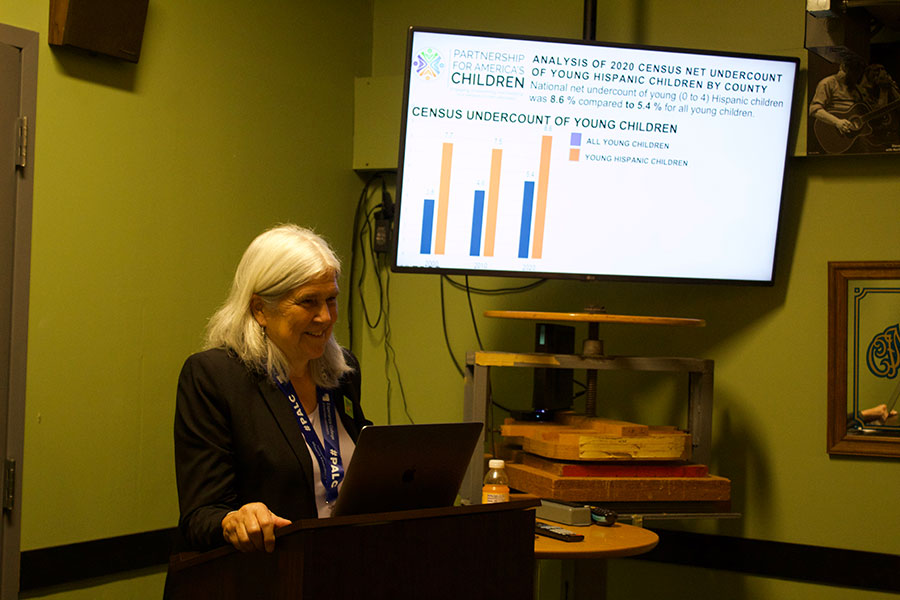
For Latinos, the issue is about more than population growth. It is also about what happens to that population when political boundaries are redrawn. More than one million Hispanic or Latino Pennsylvanians were counted in the 2020 Census, meaning their communities were part of the population data used to build the political maps that will remain in place for much of the decade.
Where those lines are placed can matter for Latino neighborhoods. A community may remain largely together within one district or be divided among several. During Pennsylvania’s last redistricting process, Latino organizations and residents raised concerns about keeping Latino “communities of interest” together and protecting their ability to participate meaningfully in the political process. Other testimony also examined circumstances where different district configurations could create opportunities for Latino influence. That means there is not always one simple answer to what the “right” map looks like, but Latino communities have a direct stake in how those decisions are made.
For a Latino family, that can make an issue that looks like lines on a map much more personal. Those boundaries help determine which neighborhoods share representatives and which elected officials residents turn to in Harrisburg or Washington. It is one reason understanding the Census matters even for people who do not follow politics closely: being counted is part of the process that shapes representation for the next decade.
Where are the lines drawn? Who draws them? And how will those decisions shape representation for the next decade?
Kuniholm’s presentation asked attendees to pay attention to a process that rarely becomes part of everyday conversation. The lines may look like shapes on a map, but inside those lines are families, neighborhoods and communities.