


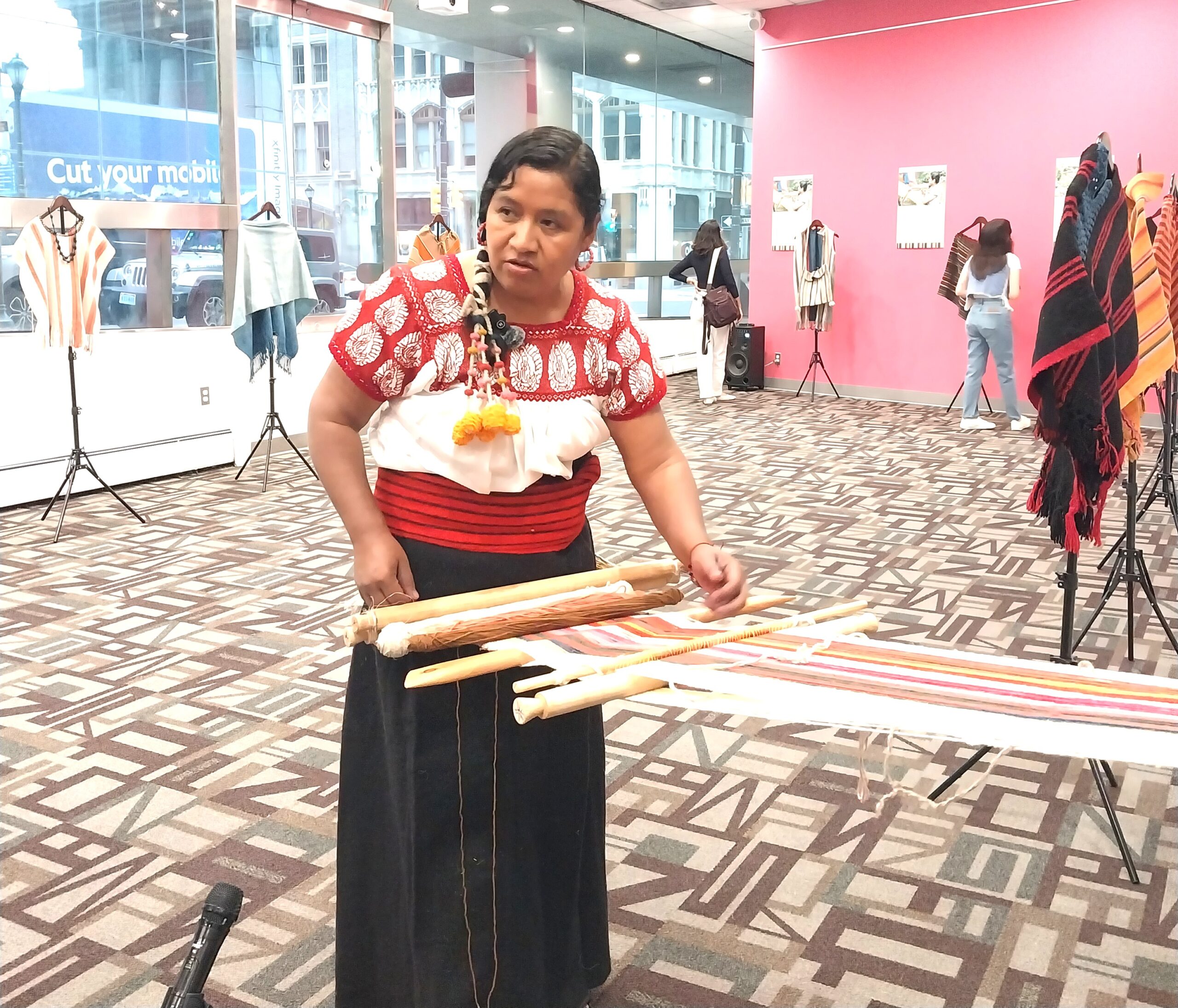
The Mexican Consulate in Philadelphia is contributing to the preservation of the indigenous identity of the state of Puebla through the exhibition “Weaving Roots” by master artisan Avelina Martínez García and the hands-on workshops she led in Philadelphia and the city of Reading.
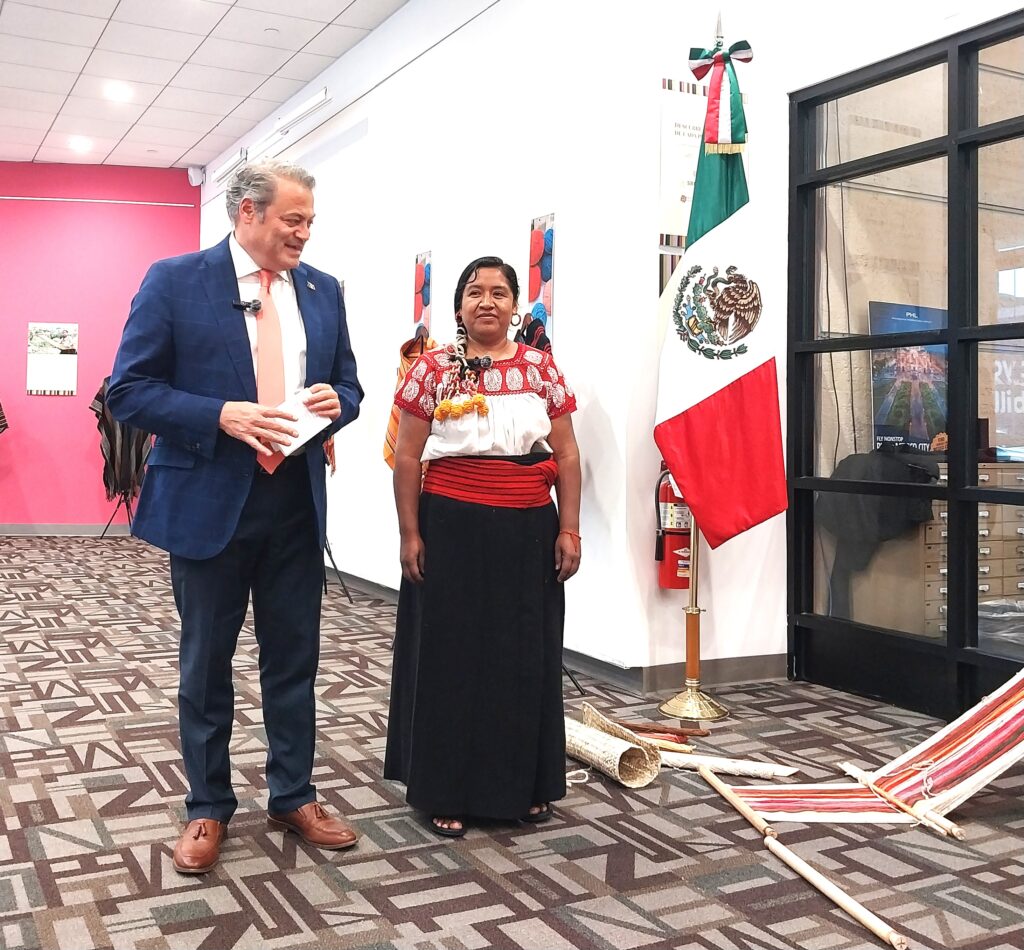
Mexico’s Consul in Philadelphia, Carlos G. Obrador Garrido Cuesta, served as presenter and host. During a demonstration of the backstrap loom on June 10 at the consulate headquarters in downtown Philadelphia, the proud guardian of cultural traditions stated, “It is an honor to share the tradition of my teacher and aunt-in-law, Trinidad Rodríguez Carmona. She is the one who taught me the knowledge of the backstrap loom.”
This loom is made of cedar, pine, or oak wood. It is secured to the weaver’s waist and attached by a rope to a fixed post or wall. Each component works in balance to create the textile, while the artisan’s body serves as the element that maintains tension in the threads, allowing control over the thickness and design of the fabric.
The main material used for traditional garments is sheep’s wool, in its natural white, black, and raw tones. Avelina dyes the fibers using natural pigments derived from indigo, cochineal, and brazilwood. She also uses walnut shells, marigold flowers, guava leaves, and other organic materials. The dedicated artisan learned through observation and experimentation, a process that has enabled her to produce textiles rich in color.
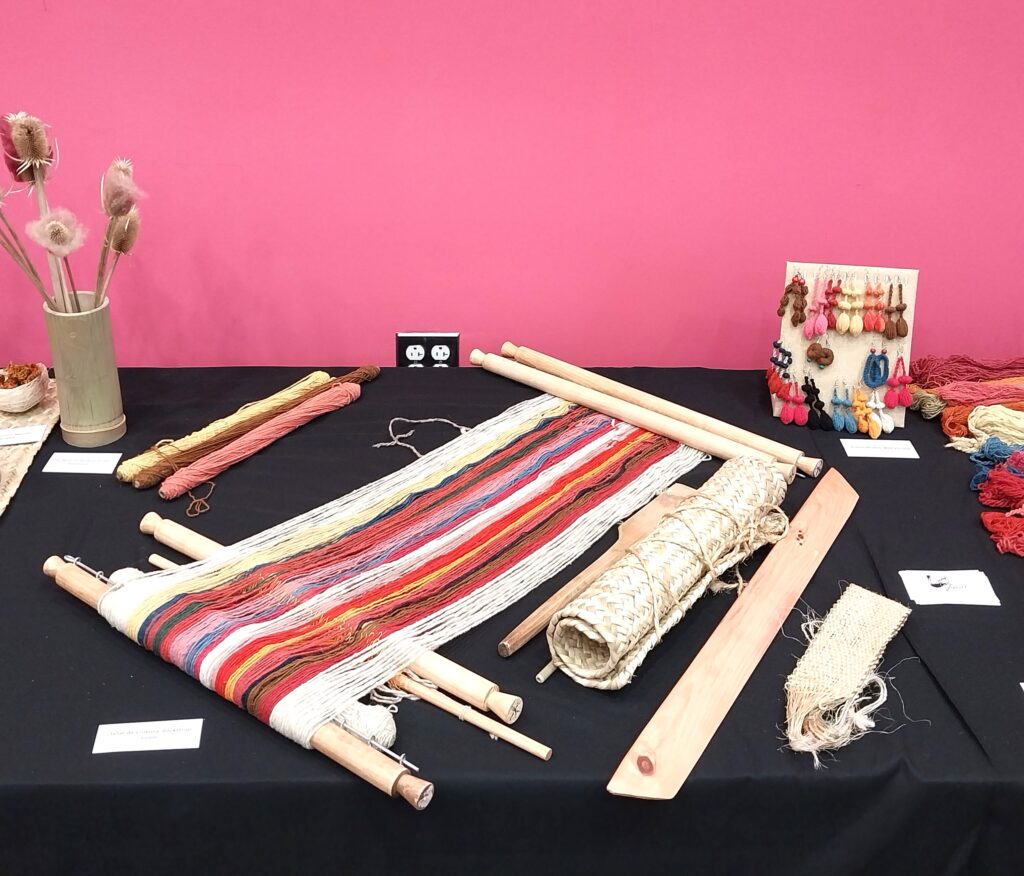
Preparing these dyes requires a high level of isolation and concentration. As she noted with both humor and firmness, she cannot be interrupted while working. Each color carries deep symbolic meaning; for example, her favorite color is red, commonly used in traditional belts, symbolizing women’s fertility.
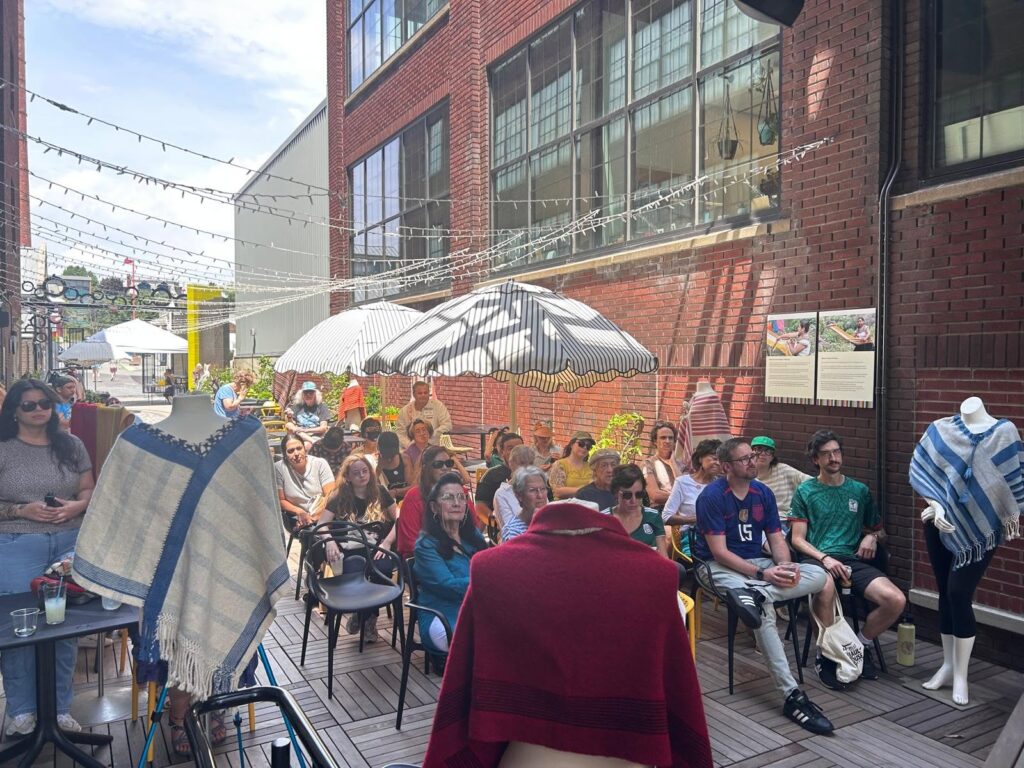
How she began weaving
Originally from the community of Santa Cruz Cuautomatitla, in the municipality of Tochimilco, Puebla, Avelina shared:
“My aunt-in-law would always lend me her wool shawl in December, because it gets extremely cold there being so close to the Popocatépetl volcano. One day I asked her to make one for me, but my husband suggested that instead of making it, she should teach me how to weave it. That’s how I learned.”
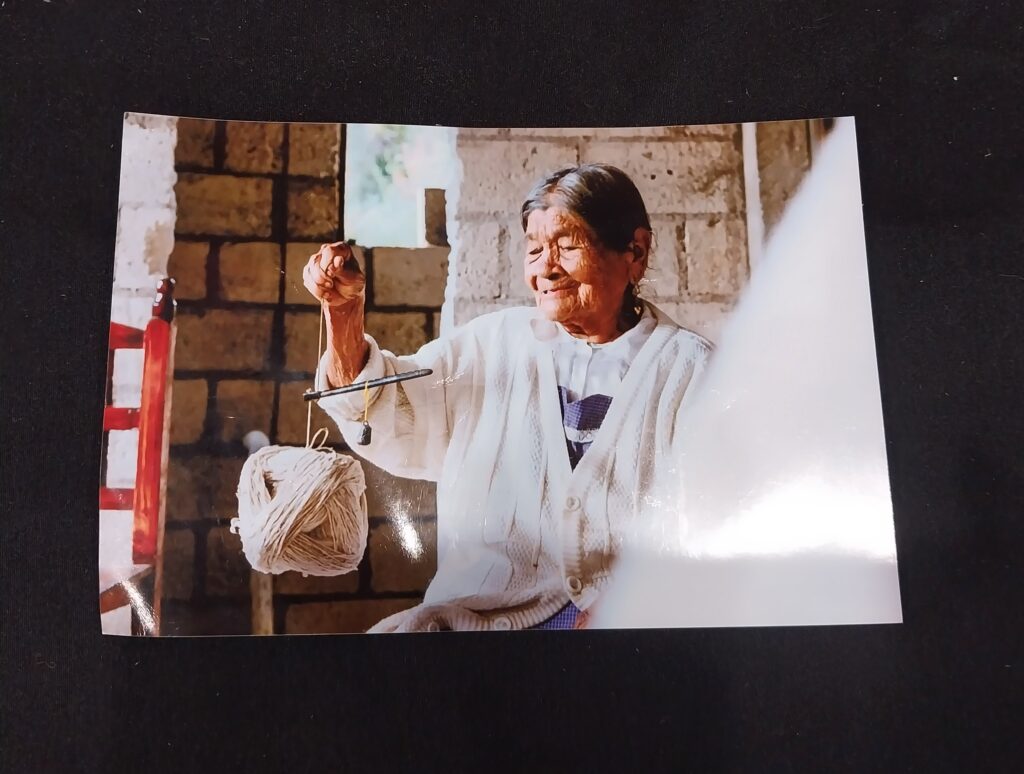
She still remembers her mentor’s teaching: “If you like it, you’ll learn quickly; if you don’t, no matter how much I teach you, you won’t learn.” Avelina mastered the craft in just two months. When her teacher could no longer weave at age 90, Avelina continued the tradition.
“Right now we are in a process of recovery, because unfortunately much of our traditional craftsmanship is being lost. I am working hard to preserve it so it won’t disappear. I am the fourth generation in this tradition, and now I am teaching my daughter how to use the backstrap loom, and we want to reach more young people.”
Over time, her work has been recognized within her community and across Puebla through the State Tourism Office.
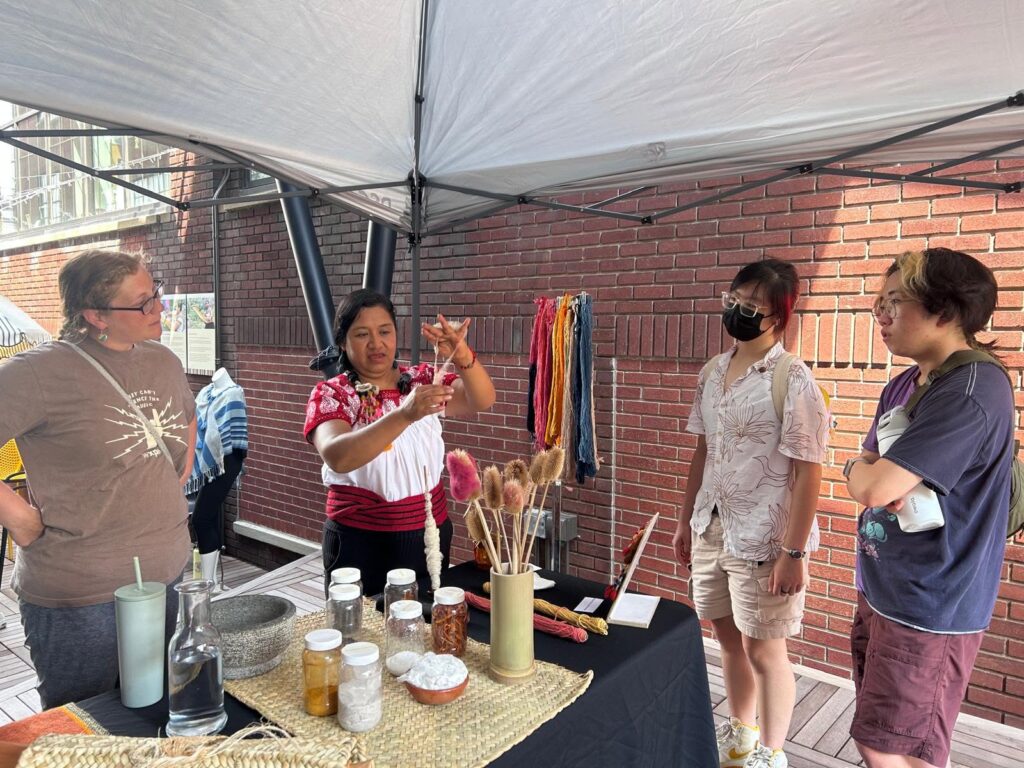
Cultural legacy
Avelina is a Nahua woman, part of the largest Indigenous group in Mexico and direct descendants of ancient Mesoamerican civilizations such as the Mexica and Aztecs. They speak various forms of the Náhuatl language, and their culture is distinguished by strong agricultural traditions, craftsmanship, worldview, and a lasting influence on global cuisine.
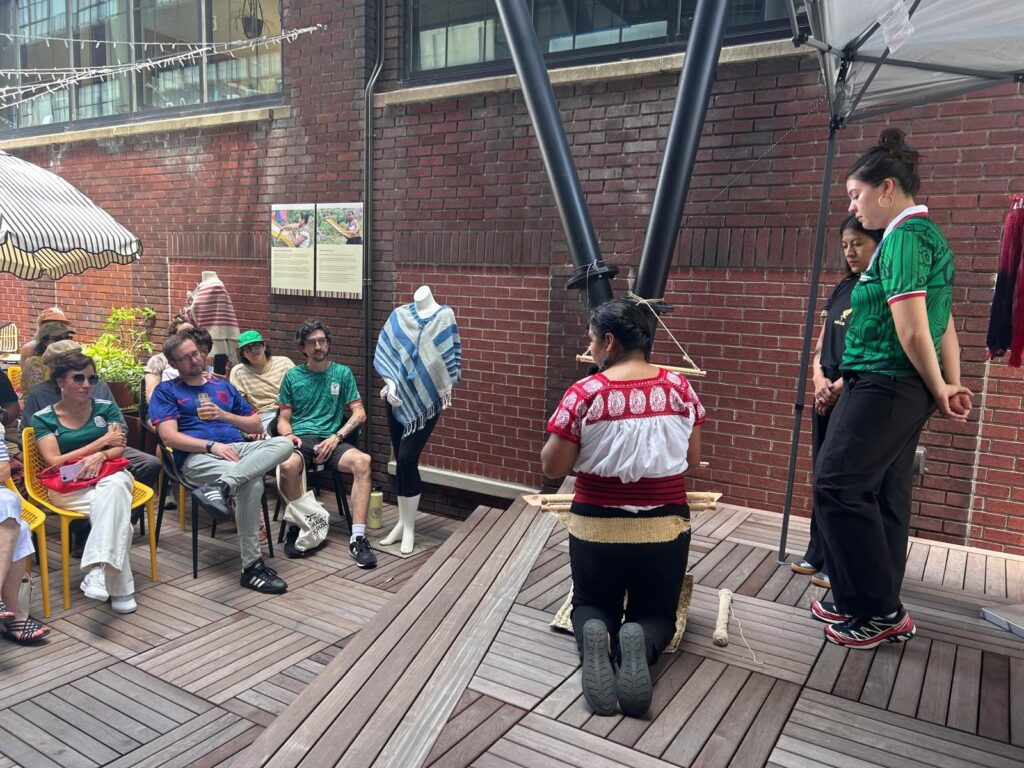
The exhibition
The exhibition “Weaving Roots” at the Mexican Consulate features 15 unique pieces displayed in the gallery, including fine shawls, men’s coats, vests, and quechquemitls (traditional capes).
The cultural ambassador from Puebla states:
“Through this exhibition, I honor the women who came before me—grandmothers, mothers, aunts, and teachers who taught me the backstrap loom and the language of threads. In every textile lives their memory and a heritage that continues to grow stronger from generation to generation.”
She emphasized the importance of valuing handmade garments:
“Because in each one there is a piece of our lives—of the strain in our waists, backs, and hands.”
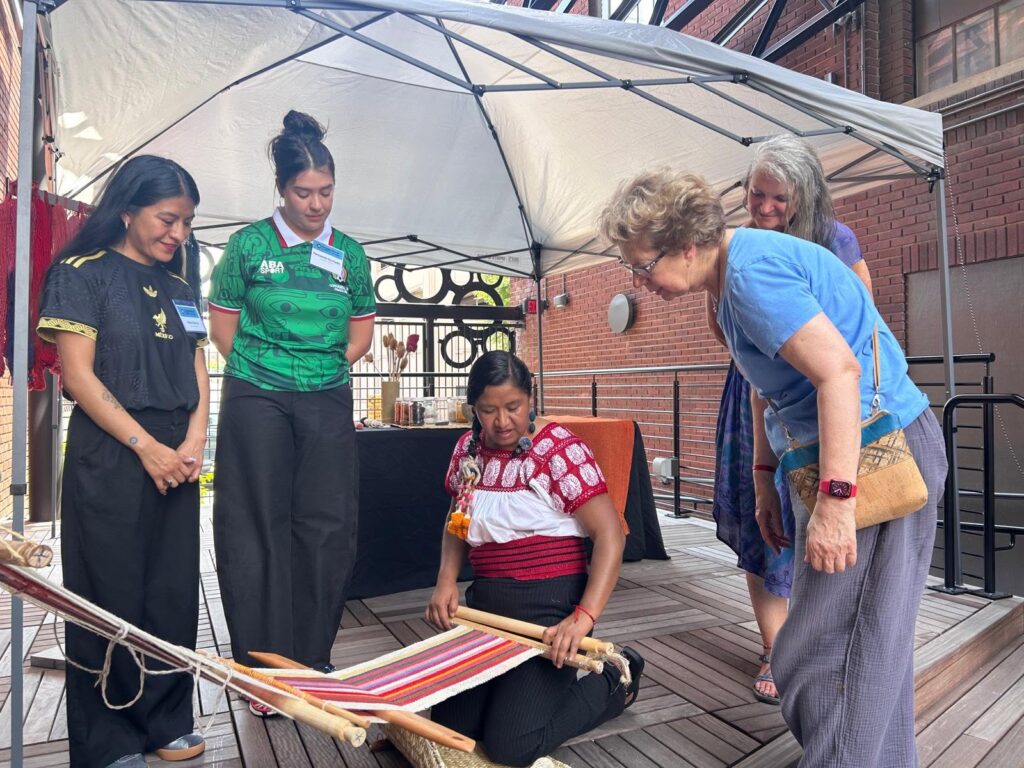
Through the efforts of The Americas Research Network and the support of institutions such as GoggleWorks Center for the Arts, this initiative not only showcased the aesthetic richness of Mexican textile art, but also raised awareness about the urgency of preserving it across generations.
At the end of her presentations, Avelina informed attendees that all of her garments and handicrafts are offered for sale as a way to self-finance her work and support her commitment to preserving this centuries-old cultural expression.
The preservation of Mexico’s Indigenous peoples is vital because they represent the country’s historical roots and cultural identity. Protecting them is essential to safeguarding the biodiversity of key ecosystems, preserving ancestral medicinal knowledge, and ensuring linguistic diversity, which embodies unique worldviews