

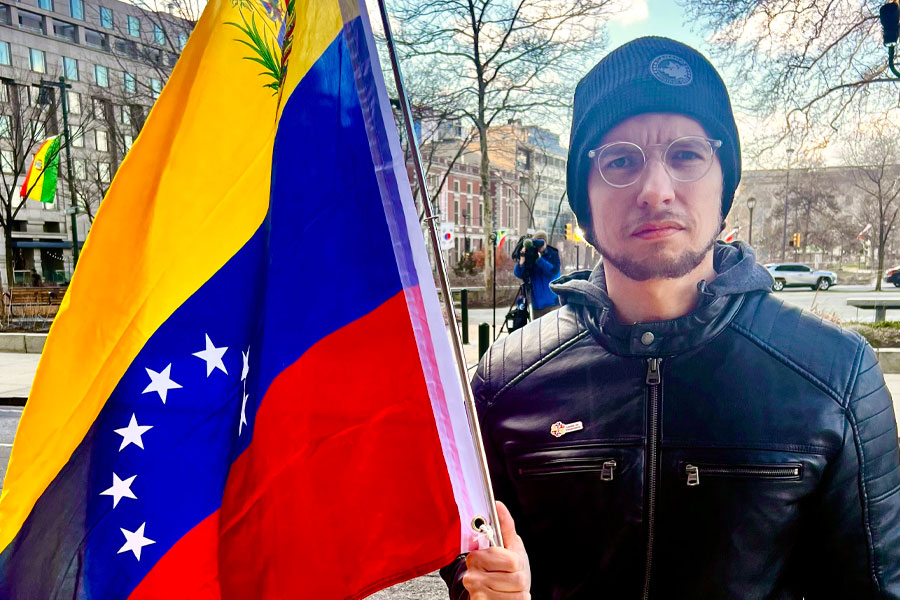
Venezuelans living in the Philadelphia area are expressing a mix of hope, surprise, and cautious reflection following reports of a dramatic political shift in Venezuela earlier this month. In response to the latest developments, Gente de Venezuela, in collaboration with Casa de Venezuela, organized a Mass at the Basilica of Saints Peter and Paul in Philadelphia. The gathering served as a moment of prayer, unity, and collective reflection.
According to U.S. government announcements and international media reports, on January 3, 2026, the United States carried out a military intervention in Venezuela that resulted in the removal of Nicolás Maduro from power. Maduro, whose presidency has been considered fraudulent by segments of the international community and Venezuelan opposition groups, was captured and transferred to New York along with his wife, Cilia Flores, to face federal narcotrafficking-related charges.
For Venezuelans in the diaspora—many of whom fled political repression, economic collapse, and insecurity—the news marked a moment long imagined but never guaranteed.
Alex Moreno, president of Gente de Venezuela, a Philadelphia-based organization, said “reactions within the local community have been largely hopeful, though tempered by the fact that, regardless of Maduro’s capture, his regime continues in office. Moreno emphasized that removing a single leader does not dismantle the broader political system that has shaped Venezuela for decades. “The head of the regime was removed, but the body is still there, said Moreno. Removing Maduro is not enough.” When I asked about whether the leadership of the United States’ motive was to help the people or themselves, regarding the country’s oil resources, Moreno responded, “There are many conflicting interests, but the true motivation of the Venezuelan people is to become a democracy—one where people can speak freely without fear of political arrests or incarceration.”
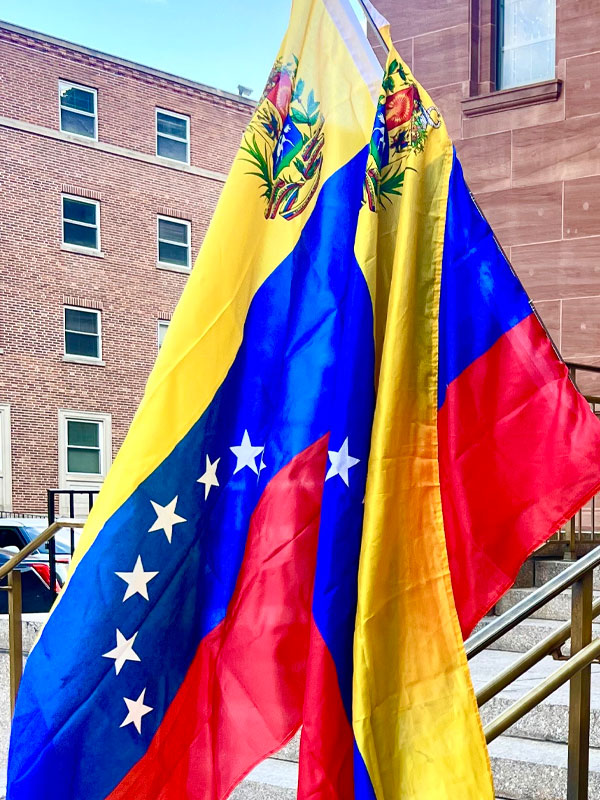
Emilio Buitrago echoed the sentiment that the brutal Maduro dictatorship should end and that Venezuelans are hopeful for a new democratic government. The roots of Venezuela’s crisis date back to Hugo Chávez’s rise in 1999. Chávez ushered in a political movement known as *Chavismo*, marked by sweeping nationalizations, centralized power, and an anti-U.S. stance.
While early years were buoyed by oil wealth and social programs, critics say democratic institutions were steadily weakened, the judiciary politicized, and opposition voices increasingly suppressed. After Chávez died in 2013, Nicolás Maduro assumed power amid a disputed election. Under Maduro, Venezuela’s economic and humanitarian conditions deteriorated sharply.
Hyperinflation rendered salaries nearly worthless, shortages of food and medicine became widespread, public services collapsed, and millions of Venezuelans fled the country. Political dissent was often met with arrests, exile, or imprisonment, according to human rights organizations. These lived experiences shaped Venezuelans’ reactions in Philadelphia.
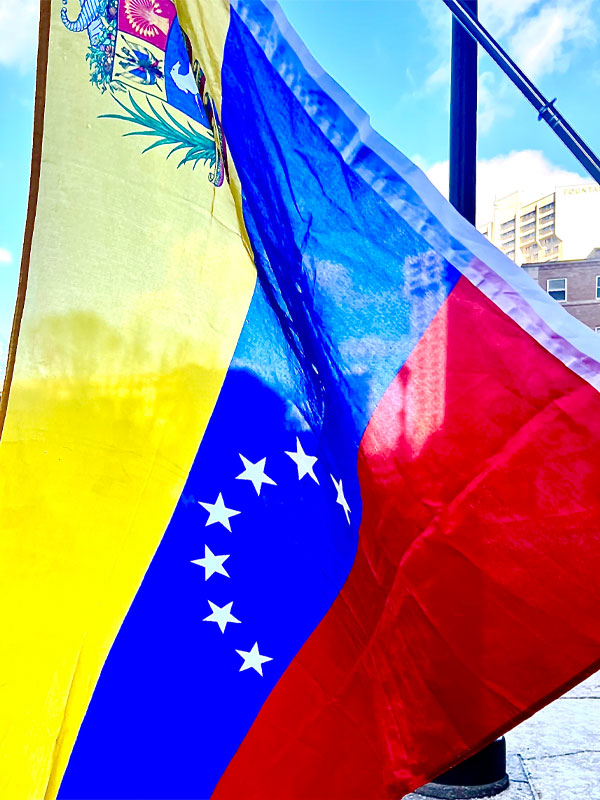
Arturo Guillen, a community member who attended the service, described the event as an act of solidarity. “This gathering was a way for Venezuelans in the Philadelphia area to give witness to our story and our experience,” Guillen said. He recalled hearing the surprising news on January 3 with disbelief. “I always hoped for an American intervention and the removal of Maduro,” he said. “But I never knew if it would actually happen.” Like Moreno, Guillen cautioned that leadership change alone will not bring lasting reform. “Removing Maduro is not enough to change the actions of the regime,” Guillen said. “The entire government structure needs to be overhauled to bring democracy and prosperity to Venezuela.”
As prayers echoed through the chapel in the Basilica, community leaders stressed that the coming months will be critical—not only politically, but morally and humanitarianly. “This moment brings hope,” Moreno said, “but also responsibility—to ensure that what follows truly restores dignity to the Venezuelan people.”