

Inicio Blog Página 966

Incoming Philadelphia mayor taps the city’s chief of school safety as next police commissioner

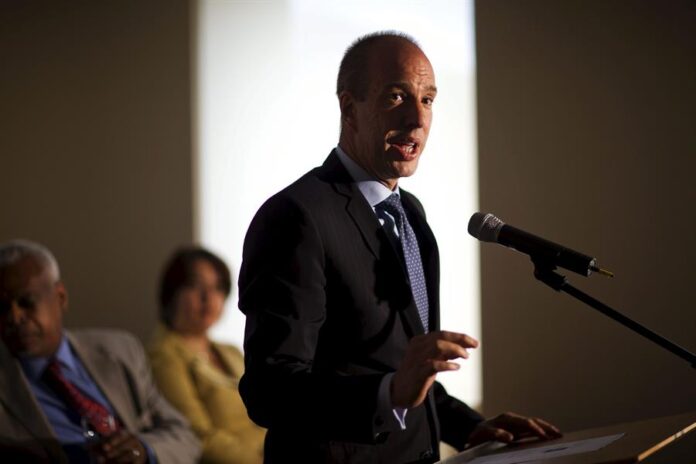
FILE - Deputy Police Commissioner Kevin Bethel speaks during a news conference, Nov. 4, 2015, in Philadelphia. Philadelphia Mayor-elect Cherelle Parker has selected Bethel to become the next police commissioner of the nation’s sixth most populous city. Parker announced the decision Wednesday, Nov. 22, 2023. (AP Photo/Matt Rourke, File)

Philadelphia Mayor-elect Cherelle Parker, who won her post by promising gun-violence-weary residents to get tough on crime, on Wednesday selected longtime police official Kevin J. Bethel to become the next police commissioner of the nation’s sixth most populous city.

The move is Parker’s first major personnel decision in a heavily Black city where her campaign tried to connect with voters who are increasingly worried about public safety as well as quality-of-life issues, from faulty streetlights to trash collection. On the stump, Parker argued that her mayoral administration can both invest in policing and address broader societal problems at the same time.

In an interview with ABC Philadelphia announcing the decision, Parker said Bethel is “a leader who is not afraid to make the tough decisions that we need to bring some order back to our city.”

Bethel, 60, is a former deputy police commissioner in Philadelphia who since 2019 has served as the chief of safety in the city’s school district, where Bethel earned a reputation as a reformer interested in breaking the school-to-prison pipeline in the majority Black district.

In 2008, Bethel became a deputy police commissioner in charge of patrol operations in the city and in 2016 went to work for the nonprofit Stoneleigh Foundation, where he worked on policies to create alternatives to sending juveniles into the criminal justice system.

During a press conference Wednesday, Bethel described himself as data-driven, saying that will guide where to put police officers and direct efforts.

“I’m proud to be a cop. But we’re not your enemy. We’re here to serve. We have our issues and we can address them,” he said. “Give us the opportunity to be what you want us to be.”

Parker, a former state legislator and City Council member, has said she wants to hire hundreds of additional police officers to walk their beats and get to know residents. The Democrat wants to devote resources to recruiting more police and says officers should be able to stop and search pedestrians if they have a legitimate reason to do so.

Parker said she started holding informal meetings with candidates in her backyard over the summer. She was impressed Bethel came well-versed with her neighborhood safety and community policing plan.

In addition to hiring 300 more officers, her public safety plan also called for fixing broken streetlights, removing graffiti and investing in programs for at-risk youth. She promised a well-trained police force that is engaged with the community along with mental health and behavioral support.

Parker also defended her support for “Terry stops,” or for officers to use “just and reasonable suspicion” to stop pedestrians. She and other candidates faced criticism including a protest at City Hall during the primary campaign from those opposed to “stop and frisk.”

The policy has riled the city in the past, with critics saying it was used disproportionately against people of color. The ACLU sued to stop the practice and monitors police use of stop and frisk under a settlement with the city.

Philadelphia has been buffeted by violent crime, tallying a record number of homicides in 2021, most of them gun-related. That number fell from 562 to 516 in 2022 but was still significantly higher than pre-pandemic levels, and advocates have said they are on track to decrease further this year.

“Let me be clear: The challenges that our city faces are significant, but they’re solvable,” Bethel said. “Experience has taught me that the right strategy, the right tactics and solid solutions will deliver a safe city and will make our police department the best police department in the nation.”

Bethel will lead a 6,000-member force that has been hit with morale problems, clashed with the city’s progressive prosecutor Larry Krasner and seen a parade of officers being prosecuted.

Officers also have been killed and wounded this year, including last month when officers Richard Mendez and Raul Ortiz confronted several people breaking into a vehicle at Philadelphia International Airport. Mendez was shot multiple times, dying shortly afterward, and Ortiz was shot once in his arm, police said.

Philadelphia drew headlines in September for what authorities called social media-fueled mayhem in which groups of thieves smashed their way into stores in several areas of the city, stuffing plastic bags with merchandise and fleeing.

In July, Philadelphia was the site of the nation’s worst violence around the July Fourth holiday when a gunman went on a shooting rampage that left five people dead and four others wounded, while a 2-year-old boy and a 13-year-old youth were also wounded by gunfire.

Bethel will succeed Danielle Outlaw, who stepped down in September to take a top position with the Port Authority of New York and New Jersey, a New York-area transit system. Outlaw, the first Black woman to hold the position, was hired from Portland, Oregon.

Parker will take office in January. Outgoing Mayor Jim Kenney named First Deputy John M. Stanford Jr. as interim police commissioner.

Papa Francisco provoca revuelo tras reunirse con israelíes y palestinos en el Vaticano

Miembros de la comunidad palestina asisten a la audiencia general del papa Francisco en la plaza de San Pedro del Vaticano, el miércoles 22 de noviembre de 2023. (Foto: AP/Andrew Medichini)

El papa Francisco se reunió por separado el miércoles con familiares de rehenes israelíes en Gaza y palestinos que viven en Gaza, y provocó gran revuelo al emplear términos que la diplomacia vaticana generalmente evita: “terrorismo” y, según los palestinos, “genocidio”.

Francisco habló sobre el sufrimiento de israelíes y palestinos tras sus reuniones, organizadas antes de que se anunciaran un acuerdo de canje de prisioneros de Israel y Hamás y un cese el fuego temporal. El papa no mencionó el acuerdo, el mayor progreso diplomático desde el estallido de la guerra con la incursión de Hamás en el sur de Israel el 7 de octubre.

Francisco se reunió durante 20 minutos en el Vaticano con 12 familiares de algunos de los 240 rehenes mantenidos en cautiverio por Hamás. Por separado se reunió durante un lapso similar con 10 palestinos cuyos familiares han muerto o de alguna manera se han visto afectados por la guerra en Gaza, y con sacerdotes que ofician allí.

El papa habló sobre las reuniones al final de su audiencia general semanal. En los asientos de primera fila de la plaza de San Pedro había personas con banderas y bufandas palestinas, así como pequeños carteles que mostraban fotos de cadáveres en una zanja y la palabra “genocidio” escrita debajo.

“Aquí hemos ido más allá de las guerras, esto no es hacer la guerra, esto es terrorismo”, dijo Francisco. “Avancemos por la paz, recen por la paz, recen mucho por la paz”.

También pidió a Dios que ayudara a los pueblos palestino e israelí a “resolver los problemas y a no seguir adelante con las pasiones que al final matan a todos”.

Francisco ha pedido de forma reiterada el final de la guerra y ha intentado mantener la neutralidad diplomática habitual del Vaticano en los conflictos. El Vaticano está especialmente preocupado por la situación de los cristianos en Gaza.

El ataque de Hamás el mes pasado mató a 1.200 personas en Israel. La represalia israelí en Gaza ha matado a más de 11.000 personas, según las autoridades de salud palestinas.

Los miembros de la delegación palestina dijeron que estaban asombrados por el profundo conocimiento del papa sobre los sufrimientos que la guerra ha causado al pueblo de Gaza y que lo calificó de “genocidio” durante su encuentro a puertas cerradas.

Los periodistas no pudieron asistir a las reuniones.

“Sabía que Gaza no tiene agua”, dijo Shireen Hilal, que vive en Belén, Cisjordania, pero formó parte de la delegación. “Sabía que no hay electricidad. Sabía que no hay medicamentos”.

El vocero del Vaticano, Matteo Bruni, puso en duda que Francisco usara ese término. “Usó los términos que usó en la audiencia general y que a pesar de todo representan la situación terrible que vive Gaza”, dijo Bruni.

Pero los palestinos insistieron. “Diez personas lo escucharon”, dijo otra participante de la delegación, Suhair Anastas, a quien se le permitió salir de Gaza con su hija porque tiene pasaporte canadiense.

Francisco suele causar revuelo con sus declaraciones improvisadas. Habló de “genocidio” en relación con los ataques turcos contra los armenios en la era otomana y, en términos menos formales, asintió cuando se le preguntó si los abusos de los católicos contra los indígenas en Canadá equivalían a un genocidio.

Los parientes de los israelíes agradecieron a Francisco que los recibiera, pero algunos expresaron su consternación porque no tuvo tiempo para escuchar a todos los miembros de la delegación. También cuestionaron el empleo de la palabra “terrorismo” sin decir quién lo había cometido. Expresaron la esperanza de que usara su autoridad moral para ayudar a liberar a los rehenes.

La rusa Evgeniia Kozlova, madre de Andrey Kozlov, de 27 años, secuestrado por Hamás el 7 de octubre en el festival musical en el sur de Israel, teme que el acuerdo de canje de rehenes deje a su hijo en manos de Hamás durante años.

“Conocemos las condiciones de canje de 50 rehenes. Son mujeres y niños”, dijo. Recordó que Israel necesitó cinco años para lograr la liberación del soldado Gilad Shalit, y dijo que “si a cada uno de los rehenes restantes los liberan de a uno cada cinco años, mi hijo regresará dentro de 1.000 años”.

Rachel Goldberg, cuyo hijo Hersh Goldberg-Polin también fue secuestrado en el festival musical, exhortó a Francisco y al resto del mundo a trabajar por la liberación de todos los rehenes.

“Y mientras tanto, quisiéramos que la Cruz Roja Internacional o cualquier otra organización de ayuda humanitaria en el planeta Tierra vaya a ver a cada rehén y nos informe: ¿están vivos? ¿Han recibido tratamiento? ¿Reciben la atención que necesitan?”

EE. UU. recuerda a Kennedy, su expresidente más popular, 60 años después de su asesinato

Fotografía cedida hoy por la Biblioteca y Museo Presidencial de John F. Kennedy donde aparece el mandatario (c-d) mientras saluda a la multitud antes del inicio de un mitin, el 22 de noviembre de 1963 en el estacionamiento del Hotel Texas en Fort Worth, Texas (EE.UU). EFE/Biblioteca y Museo Presidencial de John F. Kennedy /Cecil Stoughton

Estados Unidos recuerda este miércoles en el 60 aniversario de su magnicidio al expresidente John F. Kennedy, todavía muy presente en la cultura popular por la fascinación que generó su asesinato pese a que cada vez son menos los que vivieron ese trágico día.

Con un 90 % de aprobación entre los estadounidenses de acuerdo a un reciente sondeo de Gallup, Kennedy es el expresidente con mayor popularidad, seguido a distancia por Ronald Reagan (69 %), George Bush padre (66 %) y Barack Obama (63 %).

Esa popularidad refleja un sentimiento casi unánime en la sociedad estadounidense hacia el mito de Kennedy, asesinado hace hoy 60 años en las calles de Dallas (Texas), en lo que fue el crimen político más notorio del siglo XX en el país norteamericano.

Tanto el Centro Kennedy de Washington, como la Biblioteca Presidencial Kennedy de Boston, como el Museo del Sexto Piso de Dallas, ubicado en el edificio desde el que Lee Harvey Oswald mató al entonces presidente, han organizado eventos conmemorativos para la ocasión.

En la capital federal se ha inaugurado la exposición permanente «Artes e Ideales» que utiliza lo último en tecnología digital para explorar cómo las artes infundieron la Presidencia de Kennedy (1961-1963).

Por su parte, en su natal Boston, se exponen artículos de su funeral y otros recuerdos en una exhibición temporal, mientras que en el museo de Dallas la exhibición «2 días en Texas» repasa las últimas horas del expresidente recorriendo el estado sureño.

El aniversario esta vez se ve algo ensombrecido por la polémica campaña presidencial de uno de sus sobrinos, Robert F. Kennedy, que empezó compitiendo en las primarias demócratas pero que el pasado mes de octubre optó por postularse como candidato independiente.

La familia en su mayoría ha rechazado la candidatura que bajo el histórico nombre de la saga política Kennedy está abrazando teorías conspirativas o promoviendo el movimiento antivacunas.

El nieto del expresidente, Jack Schlossberg, ha calificado la candidatura de Robert como «una vergüenza».

La efeméride también ha servido para que salga a la luz nueva información relacionada con el asesinato de Kennedy, algo que con el paso de las décadas es cada vez más difícil pero que sigue alimentando la fascinación por el evento.

En este caso, el exagente del Servicio Secreto Paul Landis, que ese 22 de noviembre de 1963 tenía 28 años y trabajaba en el dispositivo de seguridad de Kennedy, y hoy tiene 88 años, ha roto un silencio de décadas con sus memorias «Último Testigo» («Last Witness»).

Landis pone en cuestión las ya de por sí cuestionadas conclusiones de la Comisión Warren, que fue creada por el sucesor de Kennedy, Lyndon B. Johnson, para esclarecer lo ocurrido ese día en Dallas.

La Comisión estableció que Lee Harvey Oswald actuó en solitario al matar a tiros a Kennedy cuando la comitiva con la limusina descapotable pasó por el Depósito de Libros Escolares de Texas, en cuyo sexto piso estaba el presunto asesino.

Sin embargo, Oswald murió dos días después que Kennedy asesinado por el empresario Jack Ruby, por lo que no pudo ser sometido a un juicio y muchas preguntas quedaron en el aire.

El testimonio de Landis abriría la puerta a que hubiese habido un segundo tirador, ya que, según su versión, encontró una bala en la limusina que habría sido disparada desde el ángulo opuesto al que Oswald se encontraba.

Aunque es improbable que el testimonio de Landis aclare nada a estas alturas, servirá para alimentar las teorías que durante décadas han fomentado el mito del asesinato de Kennedy, desde el complot de la CIA, a un plan del entonces vicepresidente Johnson, una operación de KGB y el líder cubano de Fidel Castro o una venganza de la mafia.

El secuestro: una “dinámica preocupante” que se incrementa en América Latina

Una mujer cuelga un retrato de una persona desaparecida en una línea improvisada a lo largo de la Avenida Reforma, en conmemoración del Día Internacional de los Desaparecidos, en la Ciudad de México, el miércoles 30 de agosto de 2023.

Analistas consultados por la VOA señalan que el secuestro es un delito que no da tregua en la región. Países como Ecuador y Chile han registrado el incremento de este flagelo, antes común en Colombia y México.

BOGOTÁ —  El secuestro en América Latina se ha incrementado y se sigue fortaleciendo a causa, entre otras cosas, de las dinámicas del narcotráfico, y ha aparecido en países donde poco se hablaba de él, según analistas consultados por la Voz de América.

El panorama no es nada alentador. Según registros de Control Risks, durante los primeros tres trimestres de 2023, la región registró el segundo mayor número de secuestros a nivel mundial, solo por debajo de África subsahariana.

Eduardo Arcos, analista sénior de Análisis de Riesgos Especiales de Control Risks explicó que América Latina sufre de altos niveles de criminalidad en general y el secuestro es una entre muchas otras actividades llevadas a cabo por grupos criminales.

La región, indica, es un bastión de algunas de las redes criminales más grandes del mundo.

Luis Alberto Villamarín Pulido, especialista en geopolítica, estrategia y defensa nacional, explicó que el delito del secuestro “está disparado en América Latina porque se relaciona muchísimo con el narcotráfico y con otros delitos conexos”, como la trata de personas, el lavado de activos y el tráfico de armas.

“Esta diversidad de actividades delictivas es común en muchos países de la región, ya que los delincuentes buscan constantemente nuevas fuentes de ingresos. Además, las fuerzas de seguridad de varios países de América Latina carecen de recursos suficientes y, en algunos casos, no pueden combatir eficazmente las grandes redes criminales, especialmente en múltiples frentes y regiones”, añadió el analista de Control Risks.

Opinión que comparte Diego Quintero, coordinador regional para los Andes y el Cono Sur del Área del Crimen Organizado en la Oficina contra la Droga y el Delito de Naciones Unidas (UNODC): “Creemos que tiene mucho que ver con el actuar de organizaciones multicrimen. Ya hoy en día nosotros no podemos hablar de organizaciones que se dediquen única y exclusivamente al narcotráfico, porque los delitos vinculados al crimen organizado son delitos que buscan una ganancia”.

Cifras en aumento

Para Arcos, durante gran parte de las últimas dos décadas, México y Colombia tuvieron la mayor incidencia de secuestro en la región como resultado de las actividades de los grupos criminales transnacionales, así como de las guerrillas que operan dentro de sus fronteras.

Sin embargo, agregó el analista, la dinámica ha cambiado desde los efectos socioeconómicos desestabilizadores del COVID-19 y la delincuencia ha aumentado notablemente en países como Haití y Ecuador, impulsados por el auge de las pandillas criminales en sus principales ciudades después de la pandemia.

Aunque no existe una compilación reciente de estadísticas que den cuenta de este delito a nivel regional, países como México y Colombia tiene un largo historial de secuestros, y otros como Perú, Ecuador y Chile han reportado incrementos de los mismos.

En octubre, el Ministerio de Defensa de Colombia reportó un aumento del 83 % en los casos de secuestros en los primeros nueve meses del año, con respecto al mismo periodo del año anterior. Es decir, 183 casos frente a 142 en 2022. En México, el más reciente informe publicado por la organización civil “Alto al Secuestro”, en agosto de 2023 ocurrieron dos secuestros diarios en ese país.

Según Quintero, en Ecuador se ha presentado este flagelo por el incremento del crimen organizado vinculado al narcotráfico. En Perú, añadió, es un poco más constante y viene del pasado y, en Chile, se están empezando a presentar en algunas partes del norte del país.

“Es una dinámica que preocupa en la región”, afirmó Quintero, quien además señaló que hay organizaciones criminales pequeñas que están creciendo en América Latina y están aprendido de esa práctica. “Infortunadamente nosotros vemos que el saber criminal se exporta”.

Según las denuncias en las fiscalías de Perú por delitos de violación de la libertad personal, se registraron 2.991 casos este 2023 que, de acuerdo con el Ministerio Público, están tipificados como secuestros.

En Ecuador, país azotado por la violencia, la Unidad Antisecuestros y Extorsión (Unase) cuantificó, de enero a septiembre de 2023, 67 casos. Es decir, registró un incremento del 347 %, en comparación a 2022, cuando se registraron (bajo denuncias), tan solo 19.

La fiscalía nacional de Chile informó recientemente del aumento considerable de los casos de secuestros en el país desde 2017. Las denuncias pasaron de 492 a 826 entre los años 2021 y 2022, mostrando un alza cercana al 62 %.

El más reciente informe de la Oficina de Naciones Unidas contra la Droga y el Delito (UNODC), correspondiente a 2018, indica que EcuadorMéxico y Haití son los países, en cada subregión, con mayores tasas de secuestro por cada 100.000 habitantes.

Analistas consultados por la VOA indican que las estadísticas varían de país a país porque los conceptos, los reportes y penalidades del delitos son diferentes, las familias no denuncian y prefieren pagar o es difícil la recolección de datos.

Además, existen países que ni siquiera tienen algún registro al respecto, como Venezuela, a pesar de las continuas denuncias de violación de los derechos humanos en dicho país.

En este sentido, dijo Quintero, la UNODC está trabajando en la Clasificación Internacional de Delitos con propósitos estadísticos de las Naciones Unidas que busca establecer unos parámetros que permitan encasillar las conductas.

Para Arcos, cabe aclarar que el número de grupos delictivos que se dedican exclusivamente al secuestro es relativamente bajo y son principalmente pandillas urbanas pequeñas y medianas.

En la mayor parte de la región, añadió el analista, el secuestro es una fuente de ingresos relativamente menor para los delincuentes, especialmente en comparación con la producción o el tráfico de drogas.

“En los últimos tres años, hemos visto que la incidencia del secuestro fluctúa en consonancia con la evolución del entorno general de seguridad y, como resultado, se encuentra en un estado de constante cambio”.

Dinámicas diferentes

Para Quintero, el secuestro no un fenómeno aislado y se presenta de diferentes maneras. En Colombia, explicó, es donde se tiene “más experiencia en el tema”. Hay secuestros exprés, por un corto período de tiempo, o más elaborados, que tienen relación con grupos de crimen organizado, que representan pagos más grandes o que, incluso, venden a la persona a un grupo guerrillero o a una banda con mayor control.

También existe otro tipo de secuestro que, según el coordinador de la UNODC, ejecutan de manera directa o por encargo de otras bandas pequeñas. En el caso de los grupos armados organizados como el Clan del Golfo, guerrillas de largo aliento, tienen como su principal soporte el control territorial, debido en parte a la poca presencia de las autoridades en áreas rurales.

“En Colombia, donde todavía existen guerrillas comunistas, como el ELN y las FARC, lo emplean para financiarse de manera extorsiva o para presionar, en el caso de que lo hacen con algunos dirigentes políticos o para hacerse sentir en las mesas de conversación, siempre con una objetividad política”, agregó Villamarín, coronel retirado del ejército colombiano.

En lugares como Chile, explicó Quintero, se han reportado secuestros extorsivos “que se hacen a funcionarios judiciales y penitenciarios a cambio de que ellos hagan algo… con la amenaza de secuestrar a algún familiar o alguna persona cercana. Y generalmente eso no tiene denuncia”.

Otros grupos usan el secuestro “para cobrar cuentas”, explicó Villamarín, como las maras salvadoreñas, en Centroamérica, en Honduras, en Guatemala. Lo mismo en México.

Y en Venezuela y Brasil, agregó, ocurren muchas mixturas por narcotráfico, minería ilegal, mafias que mueven diferentes escenarios de actividades criminales.

Según el coronel retirado, en países como Chile, Argentina y Bolivia, las bandas criminales se han multiplicado con la llegada de migrantes, esto sumado a las mafias de Albania, de Italia, que “se han regado por esa zona y han afectado a otro país: Ecuador”, donde muchos delitos se manejan desde las cárceles.

Otros países afetados por el secuestro, añadió, son Haití e, incluso, República Domincana, “donde funciona muy exprés y muy calladito”.

La policía dice que se dispararon unas 70 balas en el tiroteo en el norte de Filadelfia

Philadelphia Interim Police Commissioner John M. Stanford Jr. Archivo (AP Photo/Tassanee Vejpongsa)

La policía dice que se dispararon unas 70 balas en el tiroteo en el norte de Filadelfia que dejó 2 muertos y 5 heridos
La investigación de la policía de Filadelfia sobre el tiroteo contra siete hombres, incluidos dos que murieron, continuó el miércoles, pero las autoridades dijeron que no se han realizado arrestos.

Se recuperaron varias armas del lugar y la policía dijo que se dispararon al menos 70 balas alrededor de las 8:30 p.m. el martes, dejando agujeros de bala en vehículos y edificios cercanos.

El comisionado interino de policía, John Stanford, dijo en el lugar de los hechos en Fairhill Street, en el norte de Filadelfia, que también se habían encontrado drogas, aunque la policía «no está realmente segura de todo lo que ha ocurrido aquí».

“Este es un bloque que ha tenido cierta actividad narcótica”, dijo. «No es un bloque con el que no estemos familiarizados».

Los dos hombres que murieron, de 31 y 38 años, tenían múltiples heridas de bala y fueron declarados muertos en el Hospital Universitario de Temple alrededor de las 9 p.m. Martes.

Las otras víctimas, de entre 19 y 30 años, estaban siendo tratadas por heridas de bala y se consideraban en condición crítica o estable, dijo la policía el miércoles. Los nombres no fueron revelados.

Police say some 70 bullets fired in North Philadelphia shooting that left 2 dead, 5 wounded

woman

The Philadelphia police investigation into the shooting of seven men, including two who died, continued Wednesday but authorities said no arrests have been made.

Several guns were recovered from the scene and police said at least 70 rounds were fired around 8:30 p.m. Tuesday, leaving bullet holes in vehicles and nearby buildings.

Interim Police Commissioner John Stanford said at the scene on Fairhill Street in North Philadelphia that drugs had also been found, although police are “not really sure of all that has occurred out here.”

“This is a block that has had some narcotics activity,” he said. “It’s not a block that we aren’t familiar with.”

The two men who died, ages 31 and 38, both had multiple bullet wounds and were pronounced dead at Temple University Hospital around 9 p.m. Tuesday.

The other victims, ages 19-30, were being treated for gunshot wounds and considered to be in critical or stable condition, police said Wednesday. Names were not released.

Eagles host Bills in matchup of two of NFL’s top quarterbacks

Buffalo Bills tight end Dalton Kincaid (86) is tackled by New York Jets safety Tony Adams (22) during the first half of an NFL football game in Orchard Park, N.Y., Sunday, Nov. 19, 2023. The Bills won 32-6. (Photo: AP/Adrian Kraus)

BUFFALO (6-5) at PHILADELPHIA (9-1)

Sunday, 4:25 p.m. EST, CBS

OPENING LINE: Eagles by 3, according to FanDuel Sportsbook.

AGAINST THE SPREAD: Buffalo 4-7; Philadelphia 6-2-2

SERIES RECORD: Eagles lead 8-6.

LAST MEETING: On Oct. 27, 2019, Eagles QB Carson Wentz threw for 172 yards and a TD in Philadelphia’s 31-13 win at Buffalo.

LAST WEEK: Bills beat the Jets 32-6; Eagles won at Kansas City 21-17.

EAGLES OFFENSE: OVERALL (9), RUSH (8), PASS (12), SCORING (5).

EAGLES DEFENSE: OVERALL (14), RUSH (1), PASS (28), SCORING (16).

BILLS OFFENSE: OVERALL (6), RUSH (11), PASS (7), SCORING (7).

BILLS DEFENSE: OVERALL (10), RUSH (16), PASS (10), SCORING (4).

TURNOVER DIFFERENTIAL: Bills even; Eagles minus-1.

EAGLES PLAYER TO WATCH: QB Jalen Hurts continues to lead the Eagles to victories at an amazing rate, as Philadelphia is 26-2 in Hurts’ past 28 regular-season starts. Hurts wasn’t statistically stellar against the Chiefs, passing for 150 yards and rushing for 29, but he made big plays at key times to lead Philadelphia to the victory on Monday night in a rematch of last season’s Super Bowl. Philadelphia’s quarterback brings a streak of 13 consecutive victories against teams with winning records into Sunday’s matchup against the Bills.

BILLS PLAYER TO WATCH: QB Josh Allen rediscovered his form in Sunday’s rout of the Jets in the first game under new offensive coordinator Joe Brady, who replaced fired Ken Dorsey. Allen threw for 275 yards and three TDs, including an 81-yard TD pass to Khalil Shakir that is the longest scoring play from scrimmage in the NFL this season. Allen leads the NFL with 22 TD passes and is fourth in passing yards with 2,875 entering Week 12.

KEY MATCHUP: Bills secondary vs. Eagles receivers. The Bills have several injuries in their secondary, which has a tall task in defending DeVonta Smith and A.J. Brown. Smith turned Monday night’s game in Philadelphia’s favor with a stellar, 41-yard reception late in the fourth quarter to the Chiefs 1-yard line that led to Hurts’ go-ahead tush-push touchdown run. He finished with six catches for 99 yards. Brown, the NFL’s second-leading receiver (1,013 yards), likely will be smarting after making just one catch for 8 yards and being involved in miscommunication with Hurts that led to an interception against Kansas City.

KEY INJURIES: Bills safety Taylor Rupp (neck) was placed in an ambulance after a collision against the Jets, but coach Sean McDermott indicated on Monday that Rupp has a chance to play against the Eagles. Defensive backs Dane Jackson and Taron Johnson both are in concussion protocol. Safeties Micah Hyde (stinger) and Cam Lewis (shoulder) are day to day. TE Dawson Knox (wrist) is eligible to be activated off injured reserve but is unlikely to suit up on Sunday, McDermott said. … Eagles tight end Dallas Goedert (forearm), DE Derek Barnett (personal reasons) and S Justin Evans (knee) didn’t play versus Chiefs. Backup TE Grant Calcaterra hurt his ankle in the third quarter.

SERIES NOTES: Sunday marks just the 15th meeting between the clubs. The Bills have made six trips to Philadelphia, last winning in the City of Brotherly Love on Nov. 10, 1996. One of the Eagles’ memorable plays in franchise history came on Dec. 2, 1990, when QB Randall Cunningham connected with WR Fred Barnett on a 95-yard touchdown pass in a 30-23 defeat at the Bills.

STATS AND STUFF: McDermott attended high school in Philadelphia at La Salle College High School and began his coaching career with the Eagles, where he coached from 1998-2010. McDermott has defeated 29 of the other 31 NFL teams, with only the Eagles and Cardinals not on the list. … Buffalo has scored an NFL-leading 65 points off 19 takeaways. … RB James Cook is one of four players with at least 650 rushing yards and 250 passing yards. He has 688 on the ground and 251 through the air. … Buffalo rushed 38 times against the Jets, its most attempts on the ground in a game since Jan. 2, 2022. … CB Rasul Douglas, a 2017 third-round pick of the Eagles, had two interceptions and a fumble recovery against the Jets in his third game since being acquired in a trade from Green Bay. … Philadelphia is the first team to win at least nine of its first 10 games in consecutive seasons since the Colts in 2005 and ’06. The Eagles are 9-1 through 10 games for the seventh time in club history. … DE Brandon Graham will set a franchise mark for most games in team history when he takes the field against the Bills for the 189th time in an Eagles uniform. The 14-year veteran is fourth in Philadelphia history with 72 sacks. … The Eagles lead the NFL in third down conversion rate (48.2 percent) and fourth down rate (76.5). … Philadelphia will wear its throwback “kelly green” jerseys for the second time this season.

FANTASY TIP: Stars such as Hurts, Brown, Smith, Allen and Stefon Diggs all are fixtures in fantasy lineups. Looking for someone off the waiver wire? With limited production at tight end because of injuries, WR Julio Jones could have a bigger role this week for Philadelphia. The seven-time Pro Bowl receiver signed with the Eagles earlier this season and has four receptions and one TD in four games. But he could be a big target over the middle that Hurts is missing in the absence of Goedert and Calcaterra.

El Ayuntamiento está más cerca de aprobar una legislación que prohíba la “deportación médica”

El 28 de septiembre se presentó al Concejo Municipal de Filadelfia un proyecto de ley que tiene como objetivo poner fin a la práctica ilegal de deportaciones médicas o abandono internacional de pacientes. Si se aprueba, la ordenanza crearía el primer marco legal en los EE. UU. para evitar que los hospitales deporten a pacientes que están enfermos o gravemente heridos, con el objetivo de evitar pagar su atención médica a largo plazo.

Presentado por el concejal Jim Harrity, el proyecto de ley crearía un protocolo obligatorio para cualquier hospital de Filadelfia que intente repatriar pacientes a su país de origen, una práctica legítima cuando se realiza con el consentimiento informado del paciente pero que a menudo se convierte en deportaciones médicas ilegales, cuando un inmigrante en vías de regularización es removido mediante consentimiento forzado.

Durante meses los activistas han venido realizando campañas de concientización sobre el tema, y haciendo reuniones organizativas y para amplificar sus voces.

En una audiencia pública este 21 de noviembre, los concejales sponsors de la iniciativa, Harrity, Johnson, Vaughn, Gauthier, y Lozada; pudieron escuchar testimonios de quienes han pasado por la experiencia.

La concejala Quetcy Lozada agradeció a los participantes por compartir su experiencia, y se dijo optimista de que Filadelfia haga historia y se convierta en la primera ciudad que pase una ley (probablemente se vote el 7 o 14 de diciembre) que ponga el fin de la deportación médica.

Los activistas que han abogado por esta resolución son al menos 40 organizaciones y profesionales cualificados que han venido alzando sus voces frente a la alcaldía de la ciudad.

La ordenanza sería pionera en el país, ya que defensores, abogados y académicos han documentado que las deportaciones médicas forzadas a menudo se disfrazan de repatriaciones voluntarias, incluso cuando la falta de protocolos hace imposible determinar si los pacientes son informados sobre sus opciones de atención médica y cómo. en los EE. UU. y su país de origen.

La ordenanza requeriría que los hospitales obtengan el consentimiento por escrito del paciente o de su representante después de explicar el proceso de repatriación en su idioma. Si un paciente se ha negado a dar su consentimiento a la repatriación, El hospital no puede tomar medidas adicionales, establece el proyecto de ley. En cambio, el hospital debe determinar la elegibilidad del no ciudadano para un programa (local, estatal o federal) que cubra su atención y ayudarlo a él o a su cuidador a inscribirse en él.

La ordenanza también requeriría que el hospital informe el cumplimiento del protocolo de repatriación al Departamento de Salud Pública de Filadelfia y proporcione un resumen anual de repatriación al Comité de Salud Pública y Recursos Humanos del Concejo Municipal. También permitiría a los pacientes demandar a un hospital por daños físicos, emocionales o económicos causados por la violación del protocolo.

Los no ciudadanos, especialmente los indocumentados, a menudo son engañados mediante falsas promesas de cobertura médica en sus países de origen para aceptar su deportación, según un informe de 2021 de Free Migration Project.

Los hospitales también han intentado sacar a los pacientes no ciudadanos incluso cuando podían acceder a programas para pagar su atención médica. En diciembre de 2022, se programó el traslado de una mujer dominicana de 46 años a un hospital en Allentown, Pensilvania, a pesar de estar en coma. Ahora recibe atención a largo plazo en los EE. UU.

En Pensilvania, la Asistencia Médica de Emergencia está disponible para una emergencia médica específica por un tiempo limitado para pacientes inmigrantes, independientemente de su estatus migratorio. La ordenanza requeriría que los hospitales de Filadelfia exploren este tipo de asistencia.

Cumplir con este requisito podría ser la diferencia entre la vida y la muerte para los no ciudadanos. Los pacientes inmigrantes a menudo mueren debido a la mala atención médica en sus países de origen después de ser deportados.

El abandono de pacientes en los EE. UU. está penalizado por la Ley de Trabajo y Tratamiento Médico de Emergencia, que obliga a los hospitales a tener un plan de alta y ayudar a los pacientes o sus representantes a seleccionar médicos de cuidados intensivos a largo plazo. Después de que se aprobara esta ley en 1986, los pacientes han demandado con éxito a los hospitales después de haber sido dados de alta ilegalmente. Por ejemplo, en el otoño de 2022, dos hospitales de Kentucky se vieron obligados a pagar 2,4 millones de dólares cada uno como compensación después de dar de alta a los pacientes porque no podían pagar la atención o habían alcanzado los límites de su cobertura de seguro.

Sin embargo, según David Bennion, director ejecutivo del Free Inmigration Project, en declaraciones para Prism, no se ha documentado ningún caso de un no ciudadano que haya demandado exitosamente a un hospital después de haber sido deportado ilegalmente.

Editorial Roundup: Pennsylvania

storm

Altoona Mirror. November 18, 2023

Editorial: Regional road projects, sadly, still on hold

Some people old enough to remember the late 1960s and 1970s might recall a Pennsylvania highway funding “tidbit” of that time.

The essence of it was that once the major highway projects in and around the state’s big cities were completed, construction attention would shift to places such as the six-county Southern Alleghenies region.

The trouble was that when it was this part of the state’s turn to be accorded deserved attention, funding started to dry up, and much of the promised attention was put on hold until some future time.

Fifty or more years later, it is difficult to assess how much highway funding — for new construction or maintenance — never materialized because of the lesser political clout that this region wielded.

Progress has been achieved to a degree in the decades since, but the region still is lacking on numerous fronts, including completion of the southernmost leg of Route 219 in Somerset County, as well as in regard to Route 22 east of Hollidaysburg. Back then, who would have thought a half-century would pass without either of those projects getting the attention they deserve.

At this time, it is reasonable to ponder how much economic development might have been lost because those projects have remained in limbo — as well as Route 219 north to Interstate 80. Promises made, and promises not kept.

But can there truly be hope that a new development on the state front will give a fair shake to the Southern Alleghenies? Probably all that can be said is “we’ll see.”

The issue at hand is the weaning of the state police from Motor License Fund subsidies, allowing that money to be put to the use for what it no doubt was intended initially, maintaining and building roads.

Pennsylvania Transportation Secretary Mike Carroll said during a visit to PennDOT District 9 headquarters in Hollidaysburg on Nov. 3 that the change regarding state police funding would allow more attention to maintaining secondary roads and upgrading PennDOT’s fleet.

According to PennDOT officials, the funds in question will be distributed across the state by a formula based on the number of road miles and bridges and their conditions along with vehicle miles traveled.

How this region will fare under the formula in question remains to be seen, but there seems to be grounds for cautious optimism about what will take place, going forward.

According to Carroll, the “financial ability to take on new capacity projects is not in the mix.”

He said the smart thing to do is to maintain the network currently in place. He added strict attention to maintenance is just as necessary for roads and bridges as it is for private homes.

Considerable progress has been made on the maintenance front since the 1990s and early 2000s, but there is plenty more to do. However, PennDOT also needs to direct close attention to any opportunities for new construction that might be financially feasible.

Many Pennsylvania residents, seeing new construction in other states, often wonder why that can take place in those states but not here. Whatever the reason regarding specific ventures elsewhere, the Keystone State needs to do better.

The federal Bipartisan Infrastructure Law and now the money being weaned from state police funding are providing highway project funding opportunities that might not be available again for decades.

Fix some roads; save some lives.

___

Pittsburgh Post-Gazette. November 20, 2023

Editorial: Reliable power means shoring up natural gas infrastructure

While Pennsylvania’s power grid is gradually shifting towards renewable energies, the state continues to rely heavily on natural gas to meet its power needs. In this transitional period, ensuring the reliability of the power grid is crucial — and expanding existing oversight might be necessary.

The US electric grid has been correctly identified as a modern-day necessity that must be reliable for users, and the federal government has ensured robust reliability standards. Since 2006, the federally-recognized North American Electric Reliability Corporation has developed and enforced compliance across US electric grids.

For regional enforcers, this includes everything from auditing utility companies, handling internal cybersecurity, cutting back overgrown vegetation near power lines, and preparing the electric power grid for severe weather.

But none of these same stringent standards are applied to the natural gas grid. That’s a major problem, because natural gas is the largest power source underpinning electricity production. Over half of all electricity is generated through the use of natural gas, and as long as the gas network is unreliable, the electric grid will be, too.

The consequences of an unreliable power grid are dire. When severe weather hits unprepared and unregulated infrastructure, it leads to scenarios like the Texas outages in 2021, in which catastrophic power losses resulted in up to 800 deaths. Texas had famously avoided federal regulation of its power grid for decades leading up the storm. Pennsylvania’s own power grid experienced some of the same failures last year during Winter Storm Elliott, albeit on a much smaller scale, as many power plants couldn’t start up or broke down in the extreme cold. Seventy percent of outages came from the natural gas sector.

It could have been much worse, and experts know it. “We narrowly dodged a crisis last year,” Jim Robb, president and CEO of the NERC, said in written remarks accompanying the final report on the lessons learned from Elliot. He said the breakdown of the system reflected the “extraordinary interconnectedness of the gas and electric systems,” as well as their “combined vulnerability.”

It also underscores the need for congressional and state legislation to establish reliability rules for natural gas infrastructure, and to increase communication between natural gas suppliers and electric grid operators during extreme weather events. These systems are inextricably linked, and addressing the reliability of only one will never be sufficient.

Natural gas, for better or worse, is our most reliable source of energy for the time being, and its infrastructure must be handled with the same responsibility and regulation as the electrical grid.

___

Pittsburgh Tribune-Review. November 16, 2023

Editorial: Could pension increase prompt a new pension crisis for Pennsylvania?

Pensions for state employees and teachers have been a wrench in the gears of Pennsylvania government for decades.

In 2001, Gov. Tom Ridge signed a law that expanded pensions for those employees by 25% — and even more for state lawmakers. He was thrilled to do it, saying it was something he’d waited years to accomplish.

But that law had two problems.

First, it set in motion a pension problem that became a full-blown crisis because of the Great Recession of 2008. The surpluses of 2001 had disappeared and markets were no longer stable. From 2010 to 2016, taxpayer contributions ballooned by 400%.

That meant years of school districts trying to pare budgets to cover their shares of something the state obligated them to do. It was also a contributing factor for multiple budget showdowns between lawmakers and governors.

Second, there were the people it left out of the increase. On the one hand, maybe that wasn’t a problem given how much worse it could have made the way school districts were drowning in contribution demands. But people who had already retired definitely had a reason to be angry that they weren’t included.

Are lawmakers setting up a replay? On Tuesday, the state House of Representatives approved a $1.8 billion increase in pensions f or state and school retirees by a margin of 140-63. It wasn’t a party-line vote, but every Democratic legislator supported it.

There is no doubt that the 69,000 affected public servants don’t deserve “to be marred by financial hardship,” as sponsor Rep. Steve Malagari, D-Montgomery, said. No one wants that.

But after years of pension-induced panic in every school district in the state, it’s hard to see this proposal and not brace for a gut punch.

Passage in the GOP-led Senate is much less certain. Discussion there, however, should include deeper dives into the cost of the increases for both the districts and the individual property-owning taxpayers.

Should those retirees who were left out of increases under Ridge see a way to better cope with rising costs and inflation? Probably — although it is worth noting that anyone qualifying for a pension also should be seeing such a cost-of-living adjustment with their Social Security checks.

But Pennsylvania taxpayers have been owed tax reform for far longer.

___

Uniontown Herald-Standard. November 19, 2023

Editorial: Lung cancer report offers encouraging news for Pennsylvania

It wasn’t that long ago that the distinctive odor of cigarette smoke – and the way it would burn the throats of nonsmokers – was an everyday part of life.

People smoked in restaurants. They smoked on planes. They smoked at concerts of all types. They smoked at shopping centers. They even smoked in movie theaters.

Now, smoking is prohibited in most public places, and legions of adult Americans have either quit smoking or have never taken up the habit. In 1970, close to half of American adults smoked. Now, it’s just 14%. That is an undeniably positive development for public health, lifespans, and our pocketbooks, given the toll smoking exacts on both individuals and the wider public in the form of increased health care costs.

It’s long been known that smoking is the leading cause of lung cancer, and this week the American Lung Association released its annual report on the state of lung cancer in Pennsylvania, and it contains plenty of encouraging news. The commonwealth is eighth in the nation for screening, 10th for survival and seventh for treatment. It puts Pennsylvania in the top rank of states in combating lung cancer.

Aimee VanCleave, the director of advocacy for the American Lung Association in Pennsylvania, said that more people are surviving lung cancer because of increased awareness, research into new treatments and improved health care access. But, VanCleave noted that lung cancer remains the leading cause of cancer deaths both here and across the country – more people die of lung cancer in any year than cancers of the prostate, breast and colon combined – and that “we have more work to do to defeat lung cancer….”

To this end, the American Lung Association is supporting legislation being put forward by state Rep. Dan Frankel that would end smoking in casinos, bars and other establishments where it is still allowed. Frankel, a Democrat whose district includes parts of Pittsburgh, points out that smoking in casinos and bars endangers the workers who toil in those establishments. Frankel and supporters of the proposed revision to the state’s indoor air laws contend that, rather than harming business at the commonwealth’s casinos, it would actually get a boost from customers who don’t want to inhale smoke while they try their luck at the slots or table games. They also cite a finding from the American Society of Heating, Refrigerating and Air-Conditioning Engineers, who say that ventilation systems in casinos are not effective when it comes to secondhand smoke.

“This legislation is not just good for health, it’s also good for business,” Frankel said.

We look with some amazement now at how many people smoked 50 years ago. Fifty years from now, it could be so rare that most people will probably wonder why anyone ever took up such a deadly habit in the first place.

___

Scranton Times-Tribune. November 19, 2023

Editorial: Harrisburg should make Level Up school funding a priority

The state Senate got its priorities wrong when it approved a school-funding bill last week that added $150 million in tax credits to a program that largely subsidizes private-school tuition but neglected to include $100 million in Level Up funding for the state’s poorest school districts.

The Level Up spending supported by House Democrats would go to the 100 districts with the biggest funding shortfalls — those whose property values fail to generate adequate local taxes when compared to wealthier districts.

Those 100 districts serve a majority of Pennsylvania’s students of color, English language learners and families who live below the poverty level.

Fifteen of the Level Up districts are in Carbon, Lackawanna, Luzerne and Schuylkill counties. They would receive nearly $8 million in extra funding this year under Level Up.

Pennsylvania’s antiquated school funding system, with its reliance on local property revenues that vary wildly between its 500 public school districts, combined with a decades-long decline in the share of education funding provided through state subsidies, has left its least affluent districts in a bind. The districts with the greatest need have the fewest resources.

But the Level Up funding withheld in the Senate bill would be just a stopgap.

An analysis presented to a bipartisan legislative commission in September found that 412 of the state’s 500 districts are inadequately funded. The commission is exploring ways to conform to a Commonwealth Court ruling that found the state’s school funding system violates the state constitution because “students attending low wealth districts are being deprived of equal protection of law.”

The end goal is to equalize spending per pupil across the Commonwealth.

But until Pennsylvania reaches the promised land of full and fair funding of education, Harrisburg has an obligation to reverse years of chronic underfunding that has disadvantaged generations of students in the 100 Level Up districts.

The state House, Senate and the Shapiro administration should prioritize passing Level Up funding as soon as possible and sever the issue from other less-pressing education issues, such as private school tax breaks and vouchers, which affect relatively few of Pennsylvania’s students and families.

Under the current system, 83 percent of the Commonwealth’s public school students live in underfunded districts, according to the analysis presented to the Basic Education Funding Commission. That is a sign of an education funding system in crisis. Our legislators ought to act accordingly.

Biden’s plan would raise salaries for Head Start teachers but could leave fewer spots for kids

Teacher Dawn Hill works with children during a preschool class at the Life Learning Center - Head Start, in Cincinnati, Tuesday, Nov. 21, 2023. A new plan from the Biden administration could significantly increase salaries for hundreds of low-paid early childhood teachers caring for the country's poorest children but might also force some centers to cut enrollment. (Photo: AP/Carolyn Kaster)

A new plan from the Biden administration could significantly increase salaries for thousands of low-paid early childhood teachers caring for the country’s poorest children but might force some centers to reduce their enrollment.

The Health and Human Services agency’s proposed federal rule would require Head Start programs, which are struggling nationwide with staffing shortages, to raise teachers’ salaries to put them on par with local public schoolteachers, and to beef up benefits. The requirement could raise wages by as much as $10,000 for Head Start teachers over the next seven years, the agency estimates.

“Early educators make poverty wages in many places,» said Anna Markowitz, a University of California Los Angeles professor who has studied Head Start turnover and wages. “There are real consequences to these low wages.” She said «it’s unfortunate we had to wait for the turnover to become a major crisis.”

Head Start teachers, many of whom are required to have a bachelor’s degree, make about $39,000 a year on average — far less than educators with similar credentials. Head Start teacher turnover has doubled over the last decade, with the federal government estimating 1 out of every 5 Head Start teachers left their classroom last year.

Toddler teacher Janice Bradley blows bubbles with a toddler group at the Life Learning Center – Head Start, in Cincinnati, Tuesday, Nov. 21, 2023. A new plan from the Biden administration could significantly increase salaries for hundreds of low-paid early childhood teachers caring for the country’s poorest children but might also force some centers to cut enrollment. (Photo: AP/Carolyn Kaster)

That’s created problems for the country’s youngest learners: Waitlists are ballooning and classrooms are closing. As many as 275,000 infants, toddlers and preschoolers are on waitlists nationwide, according to the National Head Start Association. The federally funded program is designed to give free education and care to infants, toddlers and preschoolers in locally run classrooms situated in public schools, community centers and private daycares or preschools. Taxpayers spend about $12 billion for Head Start to serve roughly 1 million children.

The number of kids in classrooms could shrink, though, if teacher salaries are raised and Congress doesn’t grant more money for the program. Biden asked Congress for an additional $1 billion for Head Start this year.

“As a result of these necessary reforms, one potential impact could be a reduction in Head Start slots in some programs in order to ensure the quality of services delivered,” the rule says.

Renee Daniel, the vice president for early childhood education at the Cincinnati-Hamilton County Community Action Agency talks with a student at the Life Learning Center – Head Start, in Cincinnati, Tuesday, Nov. 21, 2023. A new plan from the Biden administration could significantly increase salaries for hundreds of low-paid early childhood teachers caring for the country’s poorest children but might also force some centers to cut enrollment. (Photo: AP/Carolyn Kaster)

In Cincinnati, Head Start should be able to help nearly 2,000 students but right now just over 1,500 kids are in classrooms because of staffing shortages, said Renee Daniel, vice president for early childhood education at the Cincinnati-Hamilton County Community Action Agency.

Daniel was “jumping up and down” when she read the administration’s proposal to raise wages and add heartier benefits for Head Start staff. But without additional federal money, she would have to permanently cut as many as 800 seats to pay for those increases.

“Right now we’re suffering, and we’re not serving the children anyway, because we don’t have the staff,” Daniel said.

Daniel said in recent years, teachers have left to work in the health care sector or at Amazon. Daniel recently raised teacher salaries to start at $21 an hour. But to match local public school teacher salaries, pay will need to be about $33 per hour. The rule also suggests adding retirement benefits to teacher compensation, a new perk she’d have to offer.

Renee Daniel, the vice president for early childhood education at the Cincinnati-Hamilton County Community Action Agency talks with a student at the Life Learning Center – Head Start, in Cincinnati, Tuesday, Nov. 21, 2023. A new plan from the Biden administration could significantly increase salaries for hundreds of low-paid early childhood teachers caring for the country’s poorest children but might also force some centers to cut enrollment. (Photo: AP/Carolyn Kaster)

“How am I going to create parity with that, if I don’t get any new money?” she asked. Daniel said she plans to weigh in on the proposed rule, with the federal government accepting comments on the plan until Jan. 19.

Health and Human Services is counting on Congress to provide additional money to Head Start, which is why it’s giving programs until 2031 to fully up their salaries to match local teacher pay. The administration also believes the program can «maintain its current capacity» with the wage increases, Katie Hamm, deputy assistant secretary for the Office of Early Childhood Development, said in an email.

“The proposed changes are necessary to stabilize the Head Start program, which is facing a severe workforce shortage because staff can earn higher wages from other employers,” Hamm said.

Life Learning Center – Head Start principal Michael Turnbow tries to persuade a student to enter a preschool class at the Life Learning Center – Head Start, in Cincinnati, Tuesday, Nov. 21, 2023.A new plan from the Biden administration could significantly increase salaries for hundreds of low-paid early childhood teachers caring for the country’s poorest children but might also force some centers to cut enrollment. (Photo: AP/Carolyn Kaster)

If Head Start programs do raise their wages, their jobs could become coveted in communities where daycare workers and early childhood educators are meagerly paid, said Markowitz, the UCLA researcher. The average median wage for childcare workers sat at $13.71 per hour in May 2022, falling behind average pay for retail or food and beverage workers.

“It’s definitely going to have impacts throughout the sector,” Markowitz said. “Ideally, it’s going to be part of a broader sea change where child care educators are compensated at a fair level.»