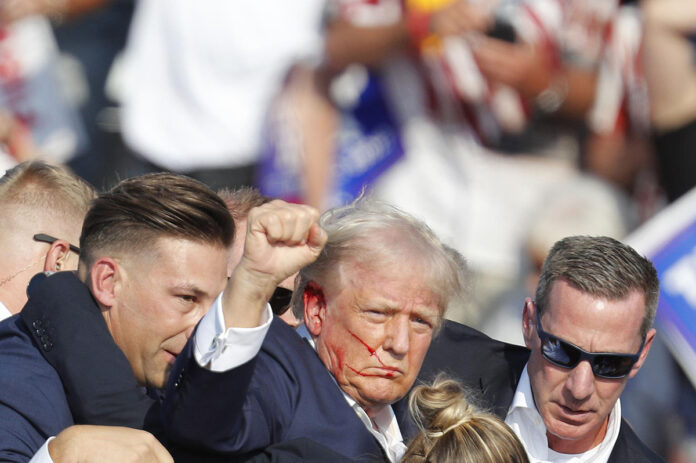
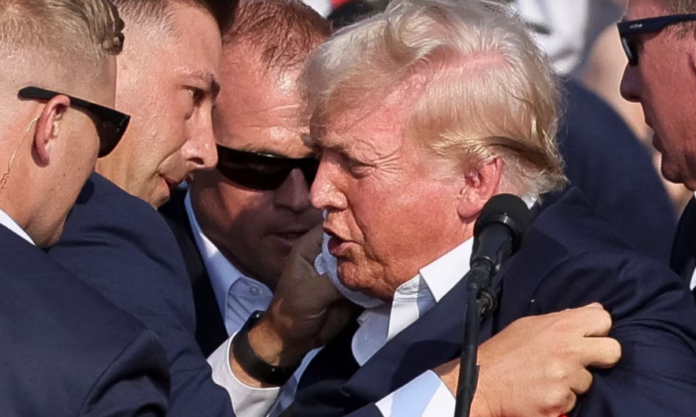
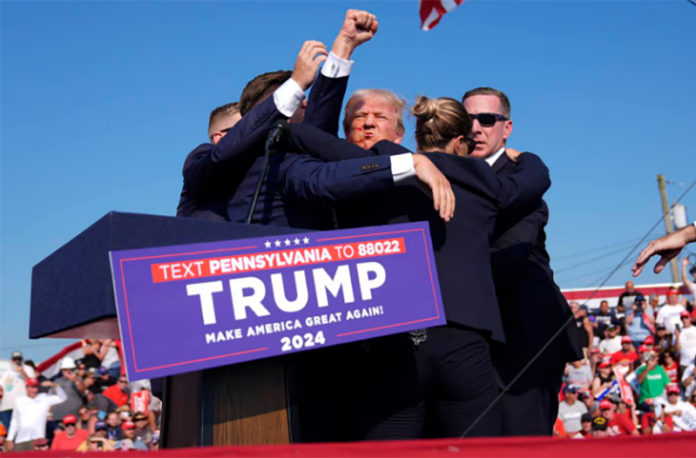
El expresidente de EE.UU., Donald Trump es evacuado de un mitin en Butler Pensilvania /EE.UU.) después de que se escucharan tiros en lugar y que lo alcanzaron a herir. EFE/EPA/DAVID MAXWELL
Butler.- El expresidente y aspirante republicano a la presidencia de EE. UU. Donald Trump fue evacuado de emergencia este sábado con herida de sangre en la oreja derecha tras escucharse varios disparos cuando acababa de empezar su mitin en la localidad de Butler (Pensilvania), dos días antes de la Convención Nacional Republicana.
Agentes del Servicio Secreto, postrados en el tejado de un granero tras el atril donde Trump se estaba dirigiendo a unos 15.000 asistentes, según la organización, respondieron al intento de ataque mientras el exmandatario, el público y la prensa permanecían en el suelo.
Según la oficina del Fiscal General de Butler, el tirador fue abatido y hay otro fallecido y Trump fue rozado por una bala, algo que confirmarían la imágenes del lado derecho de la cara ensangrentada de Trump.
El suceso apenas se prolongó un minuto, en el que volvió a escucharse otra deflagración, y después Trump se levantó por su propio pie con la oreja ensangrentada y el puño en alto y fue escoltado hasta un vehículo oficial para ponerlo a salvo y someterse a pruebas médicas, constató EFE.
Posteriormente, las autoridades confirmaron que, por el momento, el altercado ha dejado dos muertos -incluido el tirador- y fuentes de la campaña de Trump informaron que el exmandatario está «bien» y «a salvo».
Varias sirenas de ambulancia se escucharon poco después de que se declarara como «zona de crimen» y un par de helicópteros sobrevolaron la zona para garantizar la seguridad de los asistentes.
Miembros del Servicio Secreto gritaron «el tirador a caído», al tiempo que sacaban rodeado por agentes a Trump, que se mostró desafiante, con el puño en alto, pese al riesgo de exponerse a un nuevo ataque.
Completamente atónitos con lo ocurrido, la mayoría de los asistentes estaba utilizando sus teléfonos móviles para comunicar a sus familiares que no habían sufrido ningún daño, pero una minoría embravecida -de unas 30 personas- decidió entonces cargar contra la prensa.
«Es su culpa», «hijos de puta» o «cerdos manipuladores de izquierdas» fueron algunos de los insultos que profirieron a los periodistas antes de irse directamente contra ellos y agentes de Policía tuvieron que intervenir para que no se desatara la violencia física.
El mitin de este sábado de Trump, en el que todas las miradas estaban puestas en si el expresidente desvelaría finalmente quién era su elegido para la vicepresidencia si regresa a la Casa Blanca, se celebraba en un lugar destino a la celebración de la feria agrícola anual de Butler.
Este condado de Pensilvania, cercano a la frontera con Ohio, es predominantemente rural y conformado principalmente por familias blancas de clase trabajadora.
En los escasos diez minutos que duró el mitin, Trump se había dedicado a criticar duramente a la «migración».
Tras las deflagraciones, los más de 10.000 asistentes y el exmandatario se echaron al suelo, mientras reinaba la incertidumbre y agentes de seguridad parecían tratar de neutralizar al presunto tirado, que algunas imágenes mostraron abatido en un punto alto cerca de la zona del mitin.
Minutos después, Trump se puso en pie -entonces fue cuando se le vio herido- y salió escoltado a toda prisa hasta un vehículo oficial que lo ha trasladado a un centro de emergencias cercano donde, según su campaña y el Servicio Secreto, se ha constatado que está «bien» de salud y ha sido ingresado para ser revisado por médicos «locales».
«Vamos a tener un buen sábado a y a disfrutar, porque la semana que viene voy a ser nominado oficialmente», había dicho el líder republicano antes del suceso.
Para añadir casi inmediatamente: «La era con menor inmigración de la historia de nuestro país va a comenzar muy pronto (…) Los voy a deportar a todos. Probablemente sean 20 millones de personas, entre criminales peligrosos y narcotraficantes que no deberían estar aquí. Mirad en qué han convertido nuestro país».
Tras esto, se escucharon los disparos y se desató pero afortunadamente los asistentes evacuaron la zona sin riesgo y algunos incluso se paraban de regreso a comprar ‘merchandising’ de Trump.
«Ha sobrevivido porque es un héroe, nuestro héroe. No hay nadie mejor para resucitar este país, es lo que necesitamos», dijo Dave McCormick, un lugareño de 50 años, a EFE tras el tiroteo.
A lo que su esposa, Jada Collins, añadió: «Esto lo va a hacer incluso más fuerte. El regreso a la Casa Blanca está más cerca que nunca».
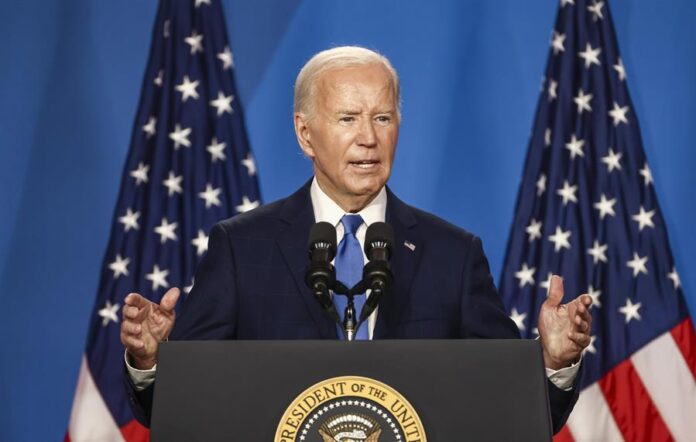
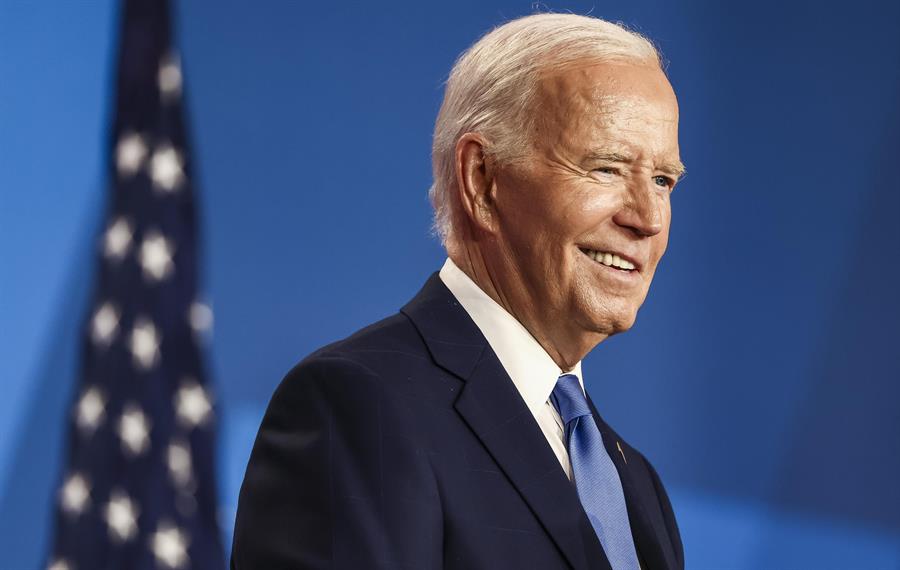
Fotografía de archivo del presidente de EE.UU., Joe Biden. EFE/EPA/JIM LO SCALZO
Washington.- El presidente de Estados Unidos, Joe Biden, condenó el atentado contra Donald Trump, este sábado durante un mitin en Pensilvania, y dijo alegrarse de que el aspirante republicano a la presidencia esté «bien» tras haber sido evacuado con éxito.
«Me alegra saber que está a salvo y que se encuentra bien. Estoy rezando por él y por su familia y por todos los que estaban en el mitin», afirmó el gobernante en un comunicado.
«No hay lugar para este tipo de violencia en Estados Unidos. Debemos unirnos como una sola nación para condenarla», agregó el político demócrata, quien agradeció al Servicio Secreto por haber puesto al republicano a salvo.
La Casa Blanca anunció además que el mandatario planea dar un discurso a la nación en breve.
Trump se encontraba dando un mitin en Butler (Pensilvania) cuando tuvo que ser evacuado del podio tras sufrir un atentado.
El aspirante republicano llevaba solo diez minutos cuando fue aparentemente alcanzado por una bala en la oreja derecha y fue evacuado por el Servicio Secreto con sangre en la mejilla del mismo lado.
El portavoz del republicano, Steven Cheung, aseguró en un comunicado que Trump «está bien y está siendo atendido en una instalación médica local».
Dos personas murieron en el tiroteo, incluido el presunto autor de los disparos, según fuentes de la fiscalía del condado de Butler citadas por medios locales.
BUTLER, Pa. (AP) — The shooting at former President Donald Trump’s rally in Pennsylvania is being investigated as an attempted assassination of the former president and presumptive Republican nominee, law enforcement officials say. It was not immediately clear whether Trump was shot, but the former president’s campaign quickly said that he was “fine.”
A local prosecutor said the suspected gunman and at least one attendee are dead.
“President Trump thanks law enforcement and first responders for their quick action during this heinous act,” spokesman Steven Cheung said in a statement. “He is fine and is being checked out at a local medical facility. More details will follow.”
The Secret Service said in a statement that “the former President is safe.”
Two officials spoke to The Associated Press on the condition of anonymity to discuss the ongoing investigation. They said the shooter was not an attendee at the rally and was killed by U.S. Secret Service agents.
The officials said the shooter was engaged by members of the U.S. Secret Service counterassault team and killed. The heavily armed tactical team travels everywhere with the president and major party nominees and is meant to confront any active threats while other agents focus on safeguarding and evacuating the person at the center of protection.
Butler County district attorney Richard Goldinger said in a phone interview that the suspected gunman was dead and at least one rally attendee was killed.
Trump, the presumptive Republican nominee, was showing off a chart of border crossing numbers during his last rally before the Republican National Convention opens Monday when the apparent shots began.
As Trump was talking, a popping sound was heard, and the former president put his right hand up to his right ear, as people in the stands behind him appeared to be shocked.
As the first pop rang out, Trump said, “Oh,” and grabbed his ear as two more pops could be heard and he crouched down. More shots are heard then.
Someone could be heard saying near the microphone at Trump’s lectern, “Get down, get down, get down, get down!” as agents tackled the former president. They piled atop him to shield him with their bodies, as is their training protocol, as other agents took up positions on stage to search for the threat.
Screams were heard in the crowd of several thousand people. A woman is heard screaming louder than the rest.Afterward, voices were heard saying “shooter’s down” several times, before someone asks “are we good to move?” and “are we clear?” Then, someone orders “Let’s move.” He could be heard on the video saying at least twice, “Let me get my shoes, let me get my shoes,” with another voice heard saying, “I’ve got you sir.”
Trump got to his feet moments later and could be seen reaching with his right hand toward his face. There appeared to be blood on his face. He then pumped his fist in the air and appeared to mouth the word “Fight” twice his crowd of supporters, prompting loud cheers and then chants of “USA. USA. USA.”
The crowd cheered as he got back up and pumped his fist.
His motorcade left the venue moments later. Video showed Trump turning back to the crowd and raising a fist right before he is put into a vehicle.
Police began vacating the fairgrounds shortly after Trump left the stage in what local officers described as a crime scene.
President Joe Biden was briefed on the incident, the White House said. He received an updated briefing from Kimberly Cheatle, the director of the United States Secretary Service, Homeland Security Secretary Alejandro Mayorkas, and White House homeland security adviser Liz Sherwood-Randall.
Trump’s eldest son, Donald Trump Jr., posted a photo on X of Trump, his fist raised and his face bloody in front of an American flag, with the words: “He’ll never stop fighting to Save America.»
North Dakota Gov. Doug Burgum, Florida Sen. Marco Rubio and Ohio Sen. JD Vance, the three men on Trump’s shortlist for vice president, all quickly sent out statements expressing concern for the former president, with Rubio sharing an image taken as Trump was escorted off stage with his fist in the air and a streak of blood on his face along with the words “God protected President Trump.”
Pennsylvania Gov. Josh Shapiro, a Democrat, said in a statement on X that he had been briefed on the situation and Pennsylvania state police were on hand at the rally site.
“Violence targeted at any political party or political leader is absolutely unacceptable. It has no place in Pennsylvania or the United States,” he said.
El candidato presidencial republicano y expresidente estadounidense Donald Trump es asistido por guardias durante un mitin de campaña en el Butler Farm Show en Butler, Pensilvania, EEUU, el 13 de julio de 2024. REUTERS/Brendan McDermid
Se escucharon varios disparos en el mitin de Donald Trump en Pensilvania el sábado, y el candidato presidencial republicano levantó el puño mientras era escoltado hasta un vehículo por el Servicio Secreto de Estados Unidos.
Donald Trump fue sacado del escenario en un mitin en Butler, Pensilvania, después de que se escucharan fuertes ruidos entre la multitud. Su comitiva abandonó el lugar.
Se escucharon varios sonidos de lo que parecían disparos en el mitin de Donald Trump en Pensilvania el sábado, y el candidato presidencial republicano levantó el puño mientras era escoltado hasta un vehículo por el Servicio Secreto de Estados Unidos, según mostraron imágenes de vídeo del evento.
El vídeo parecía mostrar sangre en su oreja y agentes de la ley armados fueron vistos en un tejado cerca del escenario donde estaba Trump.
El presidente de Estados Unidos, Joe Biden, dijo que no le informaron sobre el tiroteo denunciado, hablando con los periodistas mientras salía de una iglesia en Delaware.
La cadena Fox reportó que el expresidente está bien.
La Casa Blanca dijo que el presidente recibió una información inicial sobre el incidente en el mitin del expresidente Trump.
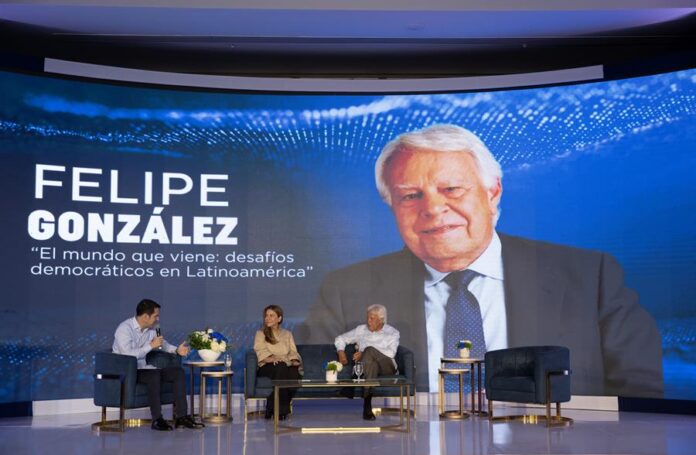
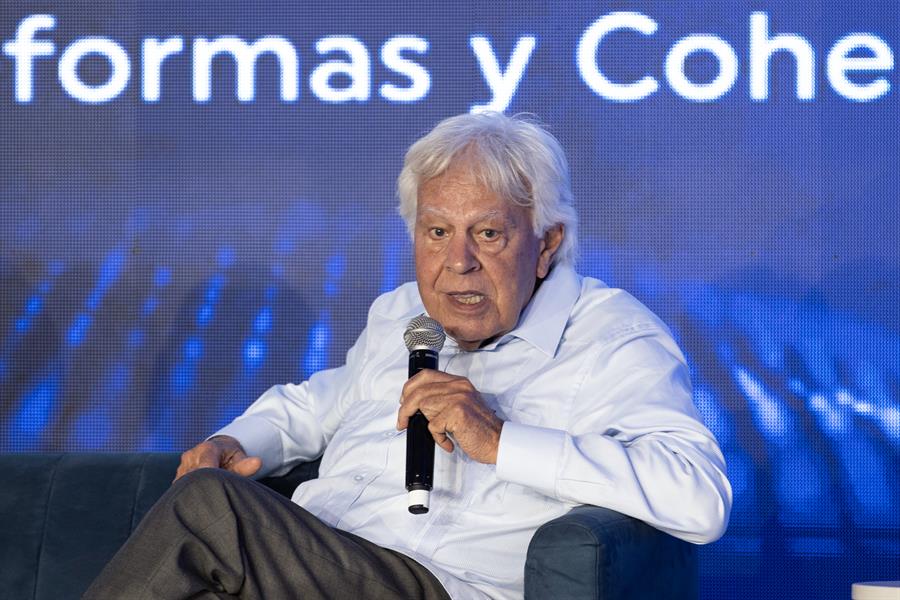
El expresidente del Gobierno español Felipe González participa en el seminario internacional de 'Excelencia legislativa: Innovación, Reformas y Cohesión Partidaria' este 13 de julio de 2024, en Santo Domingo (República Dominicana). (Foto: EFE/Orlando Barría)
Santo Domingo.- El expresidente del Gobierno español Felipe González afirmó este sábado que «la democracia está en retroceso» en un momento en el que «vivimos geopolíticamente una de las épocas más difíciles, llena de contradicciones».
Así lo manifestó al intervenir en un seminario internacional de excelencia legislativa celebrado en un hotel de Santo Domingo, en el que también participan la expresidenta de Ecuador Rosalía Arteaga y el expresidente colombiano Andrés Pastrana, entre otros.
«Hemos avanzado mucho durante muchos años en los valores democráticos, en la recuperación de las libertades, de la democracia, en la superación de la dictadura. Y hoy veo con tristeza que eso está retrocediendo. También en América», dijo.
El expresidente del Gobierno español Felipe González habla en el seminario internacional de ‘Excelencia legislativa: Innovación, Reformas y Cohesión Partidaria’ este 13 de julio de 2024, en Santo Domingo (República Dominicana). (Foto: EFE/Orlando Barría)
La voracidad de Putin
Para González, «vivimos un momento geopolíticamente muy complicado», porque «se olvidan algunos valores», y en particular «se olvida que la integridad territorial de cada nación, grande, pequeña o mediana, tiene que ser respetada. No se puede agredir», señaló en referencia a la guerra de Ucrania y a la «voracidad» del presidente ruso, Vladimir Putin.
A un depredador, «si lo acostumbra a quedarse con un pedazo de carne, volverá inmediatamente a por otro, a por otro y por otro. Entonces los países que crean en los valores de la democracia defenderán la integridad de los territorios» porque es un bien común «sagrado para la perdurabilidad de los pueblos».
Por tanto, «frente a una agresión de esa naturaleza, no cabe ese buenismo profesional de decir, bueno, que se pongan de acuerdo aunque le tengan que ceder parte. Eso nos llevó a la Primera y a la Segunda Guerra Mundial», apuntó.
Al hablar de Putin, el expresidente español se refirió a los vínculos con Venezuela, señalando que «los que mandan, no digo los que gobiernan, los que mandan» en el país latinoamericano «son pro Putin, por no decir que son hijos de Putin. Ahora el héroe es Putin. Y es lógico que sea el héroe» del presidente venezolano, Nicolás Maduro, opinó.
Venezuela se ha hecho vieja
Desde que gobierna Maduro, señaló, la riqueza que produce Venezuela por año ha disminuido al 25 %, y se ha ido el 25% de la población, principalmente los jóvenes, «así que el país se ha hecho viejo de pronto, porque los jóvenes se van, ahora se quieren llevar a la familia, no la quieren dejar en el paraíso de Maduro».
«La gente dice que es el fracaso de la democracia. No. La democracia no fracasa. Fracasamos los gobernantes y los representantes» porque «olvidamos cosas muy elementales», como que «la primera obligación de los representantes y de los Gobiernos es darle a la gente seguridad física y seguridad jurídica. Las dos cosas. Uno no se siente libre si no se siente seguro», afirmó.
Asimismo, expuso su concepto de liderazgo: «comprometerse con un proyecto en el que se cree a cambio de nada, es decir, tiene que ser un proyecto no mercenario», teniendo presente que «los votos siempre son prestados» y siendo consciente del estado de ánimo de la gente, porque «el estado de ánimo influye en su capacidad para desarrollarse», afirmó.
Biden-Trump
Además, «el liderazgo político siempre comporta la coordinación de equipos humanos. Solo sabiendo coordinar equipos humanos se avanza. Si no, nos encontramos con Donald Trump, que cree que va solo», argumentó González, que también aludió a la importancia de la capacidad para procesar la información y obtener resultados.
Siguiendo con el momento político en Estados Unidos, «cuando se discute qué podría hacer un americano a la hora de votar», González opinó que el actual presidente Joe Biden «nos puede fallar porque ya no está ágil neurológicamente» pero es que Trump «ya nos falló. Biden es un riesgo, Trump es un siniestro. Por lo tanto, entre el riesgo y el siniestro me quedo con el riesgo».
Organizado por el gobernante Partido Revolucionario Moderno (PRM), el evento también cuenta con la participación del economista y conferenciante español Marc Vidal, así como de diversos miembros de la directiva de la formación política, mientras que el presidente del país, Luis Abinader, acudirá a la clausura.
Republican presidential candidate former President Donald Trump is surrounded by U.S. Secret Service agents at a campaign rally, Saturday, July 13, 2024, in Butler, Pa. (AP Photo/Evan Vucci)
BUTLER, Pa. (AP) — Donald Trump’s campaign said in a statement that he was “fine” after being whisked off the stage at a rally in Butler, Pennsylvania after apparent gunshots rang through the crowd.
“President Trump thanks law enforcement and first responders for their quick action during this heinous act,” spokesman Steven Cheung said in a statement. “He is fine and is being checked out at a local medical facility. More details will follow.”
The former president and presumptive Republican nominee was showing off a chart of border crossing numbers during his last rally before the Republican National Convention opens Monday when bangs started ringing through the crowd. Trump could be seen reaching with his right hand toward his neck. There appeared to be blood on his face.
He quickly ducked behind the riser as agents from his protective detail rushed the stage and screams were heard in the crowd of several thousand people. The bangs continued as agents tended to him on stage.
The crowd cheered as he got back up and pumped his fist.
His motorcade has since left the venue. His condition was not immediately known.
Police began vacating the fairgrounds shortly after Trump left the stage in what local officers described as a crime scene.
The U.S. Secret Service and other law enforcement agencies did not immediately respond to messages.
Leaving Mass in Rehoboth Beach, President Joe Biden simply responded, “No,” when asked if he’d been briefed about the incident.
House Speaker Mike Johnson posted on X, the website formerly known as Twitter, that he was praying for Trump.
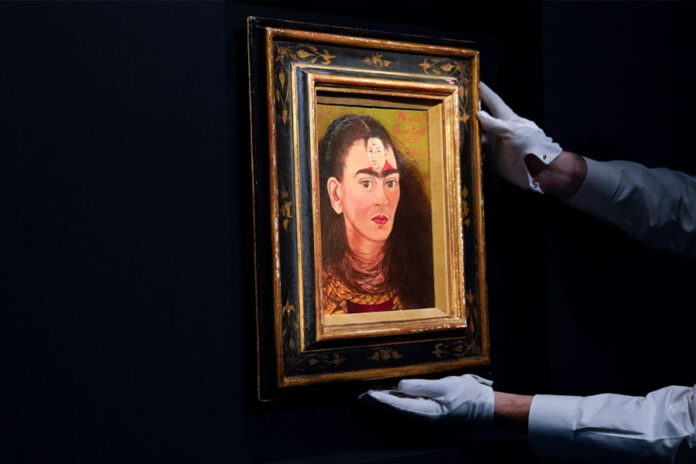
An art handler adjusts Frida Kahlo's “Diego and I” on display at Sotheby's auction house during a press preview for the Modern Evening auction, Nov. 5, 2021, in New York. The 70th anniversary of Kahlo’s death is on July 13, 2024. (Photo: AP/Mary Altaffer/File)
MEXICO CITY. — Frida Kahlo had no religious affiliation. Why, then, did the Mexican artist depict several religious symbols in the paintings she produced until her death on July 13, 1954?
“Frida conveyed the power of each individual,” said art researcher and curator Ximena Jordán. “Her self-portraits are a reminder of the ways in which we can exercise the power that life — or God, so to speak — has given us.”
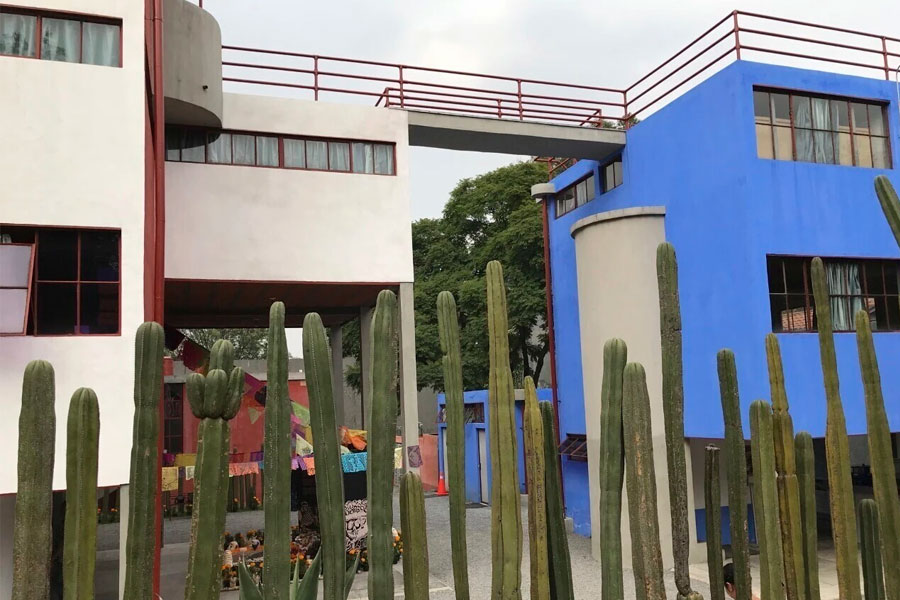
Born in 1907 in Mexico City — where her “Blue House” remains open for visitors — Kahlo used her own personal experiences as a source of inspiration for her art.
The bus accident that she survived in 1925, the physical pain that she endured as a consequence and the tormented relationship with her husband — Mexican muralist Diego Rivera — all nurtured her creativity.
The house where Frida Kahlo once lived, called the Diego Rivera and Frida Kahlo House and Studio Museum, is linked with a walkway bridge to a white and pink house-studio once occupied by her husband Diego Rivera, in Mexico City, Oct. 31, 2017. The 70th anniversary of Kahlo’s death is on July 13, 2024. (Photo: AP/Anita Snow/File)
Her take on life and spirituality sparked a connection between her paintings and her viewers, many of whom remain passionate admirers of her work on the 70th anniversary of her death.
One of the keys to understand how she achieved this, Jordán said, lies in her self-portraits.
Kahlo appears in many of her paintings, but she did not portray herself in a naturalistic way. Instead, Jordán said, she “re-created” herself through symbols that convey the profoundness of interior human life.
“Diego and I” is the perfect example. Painted by Kahlo in 1949, it sold for $34.9 million at Sotheby’s in New York in 2021, an auction record for a work by a Latin American artist.
In the painting, Kahlo’s expression is serene despite the tears falling from her eyes. Rivera’s face is on her forehead. And, in the center of his head, a third eye, which signifies the unconscious mind in Hinduism and enlightenment in Buddhism.
According to some interpretations, the painting represents the pain that Rivera inflicted on her. Jordán, though, offers another reading.
“The religiosity of the painting is not in the fact that Frida carries Diego in her thoughts,” Jordán said. “The fact that she bears him as a third eye, and Diego has a third eye of his own, reflects that his affection for her made her transcend to another dimension of existence.”
In other words, Kahlo portrayed how individuals connect to their spirituality through love.
“I connected with her heart and writings,” said Cris Melo, a 58-year-old American artist whose favorite Kahlo work is the aforementioned painting. “We had the same love language, and similar history of heartache.”
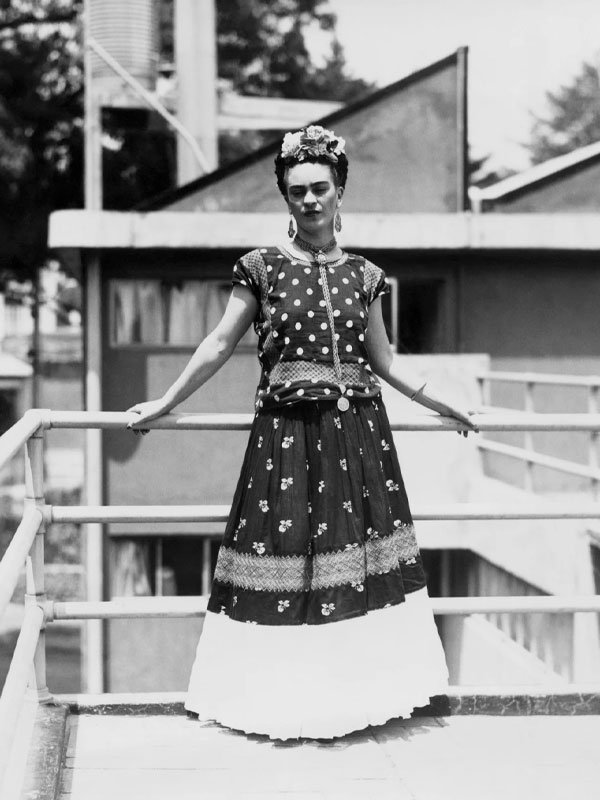
Frida Kahlo, Mexican painter and surrealist, poses at her home in Mexico City, April 14, 1939. The 70th anniversary of Kahlo’s death is on July 13, 2024. (Photo: AP/File)
Melo, unlike Kahlo, did not go through a bus accident that punctured her pelvis and led to a life of surgeries, abortions and a leg amputation.
Still, Melo said, she experienced years of physical pain. And in the midst of that suffering, while fearing that resilience might slip away, she said to herself: “If Frida could handle this, so can I.”
Even if most of her artwork depicts her emotional and physical suffering, Kahlo’s paintings do not provoke sadness or helplessness. On the contrary, she is seen as a woman — not only an artist — strong enough to deal with a broken body that never weakened her spirit.
“Frida inspires many people to be consistent,” said Amni, a London-based Spanish artist who asked to be identified only by his artistic name and reinterprets Kahlo’s works with artificial intelligence.
“Other artists have inspired me, but Frida has been the most special because of everything she endured,” Amni said. “Despite her suffering, the heartbreak, the accident, she was always firm.”
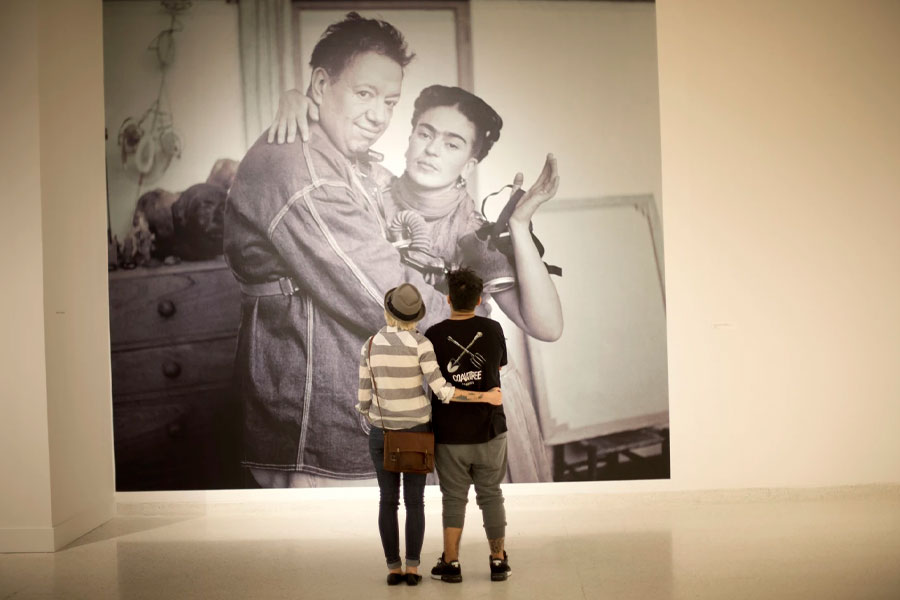
Autumn Williams and Mateo Londono view a 1938 photo by Nickolas Muray titled «Frida and Diego with Gas Mask» at the Frida Kahlo and Diego Rivera art show hosted by the NSU Art Museum in Fort Lauderdale, Florida, March 10, 2015. The 70th anniversary of Kahlo’s death is on July 13, 2024. (Photo: AP/J Pat Carter/File)
For him, as for Melo, Kahlo’s most memorable works are those in which Rivera appears on her forehead, like a third eye.
According to Jordán, Kahlo touched a chord that most artists of her time did not. Influenced by revolutionary nationalism, muralists like Rivera or David Alfaro Siqueiros kept a distance from their viewers though intellectual works that mainly focused on their social, historic and political views.
Kahlo, on the other hand, was not shy in portraying her physical disabilities, her bisexuality and the diversity of beliefs that weigh on the human spirit.
In “The Wounded Deer,” for example, she is transformed into an animal whose body bleeds after being shot by arrows. And just like a martyr in Catholic imagery, Kahlo’s expression remains composed.
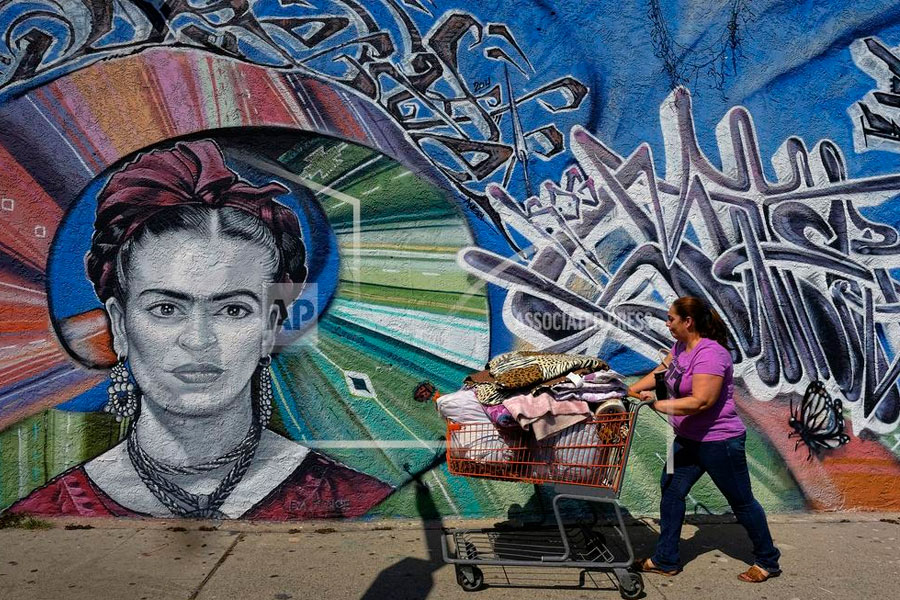
A mural of Mexican painter Frida Kahlo, painted by Los Angeles muralist Levi Ponce, decorates the Pacoima section of Los Angeles, known as Mural Mile, June 6, 2015. The 70th anniversary of Kahlo’s death is on July 13, 2024. (Photo: AP/Richard Vogel/File)
Aligned with a Marxist ideology, Kahlo thought that the Catholic Church was emasculating, meddlesome and racist. But in spite of her disdain toward the institution, she understood that devotion leads to a beneficial spiritual path.
A decade after her accident, probably overwhelmed by the fact that she survived, Kahlo started collecting votive offerings — tiny paintings that Catholics offer as gratitude for miracles. In her Blue House, the 473 votive offerings are still preserved.
Kahlo might have regarded her survival as a miracle, Jordán said. “The only difference is that she, due to her context, did not attribute that miracle to a deity of Catholic origin, but to the generosity of life.”
Perhaps that’s why, in her final days, she decided to paint a series of vibrant, colorful watermelons that would be her last work.
In that canvas, over a split watermelon lying underneath a clouded sky, she wrote: “Vida la vida,” or “Long live life.”
El presidente de EE. UU., Joe Biden y el exmandatario Donald Trump (2017-2021), que buscan la reelección en noviembre próximo, causan "vergüenza" a la mayoría de los votantes, según una encuesta del Centro Pew. La encuesta realizada del 1 al 7 de julio entre 9.424 adultos, encontró que el 68% dice que no está satisfecho con las opciones que existen para los comicios.
Biden sent a letter to congressional Democrats saying it was time to «put an end» to the pressure for him to step aside. Former Speaker of the House Nancy Pelosi said last week that «time is running out» for Biden to make a decision about staying in the race. She suggested that further discussion about Biden’s political future should be «postponed» until after the NATO conference.
President Joe Biden’s campaign team presented a plan on Thursday, ahead of Biden’s press conference marking the close of NATO’s 75th-anniversary meeting, detailing how he could secure re-election by winning the states of Wisconsin, Pennsylvania, and Michigan, asserting that no other Democrat could do better in the November elections.
Wisconsin, Pennsylvania, and Michigan — some call them “The Blue Wall” — lead to “the clearest path” to victory, according to a memo stating that Biden could secure the 270 electoral votes in various ways, but these three states are crucial. This is why Biden has prioritized these areas in his recent travels.
The memo, sent by campaign chair Jen O’Malley Dillon and campaign manager Julie Chávez Rodríguez, also asserts that Biden remains the strongest Democratic opponent against Donald Trump, the presumptive Republican nominee.
“Likewise, there is no indication that anyone else could outperform the president against Trump,” the memo reads. “The hypothetical selection of alternative nominees is always unreliable, and polls do not account for the negative media environment that any Democratic nominee would face. The only Democratic candidate who is already prepared is President Biden.”
Despite criticisms, particularly about his age and vigor, most Democrats publicly view Biden as the leader who can continue guiding the country on the path of progress and stability.
A demonstration of continued support for Biden was seen at an event in Madison, Wisconsin, where more than a thousand supporters gathered to hear him. This occurred after his criticized performance in the first debate against Trump. Despite Trump also failing to maintain coherence in his responses, dodging questions with mixed and nonsensical answers, he did not attract the same level of attention.
Democratic leaders have reaffirmed their commitment to his leadership. Senator Alex Padilla, a member of the National Advisory Council, emphasized on MSNBC that Biden is “the leader of our party” and stressed the importance of ensuring that Donald Trump does not return to the White House.
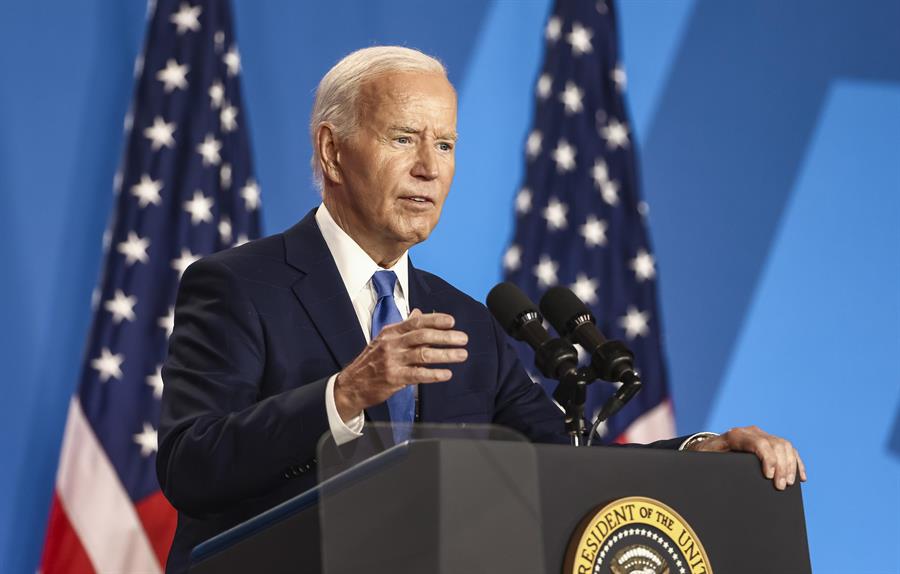
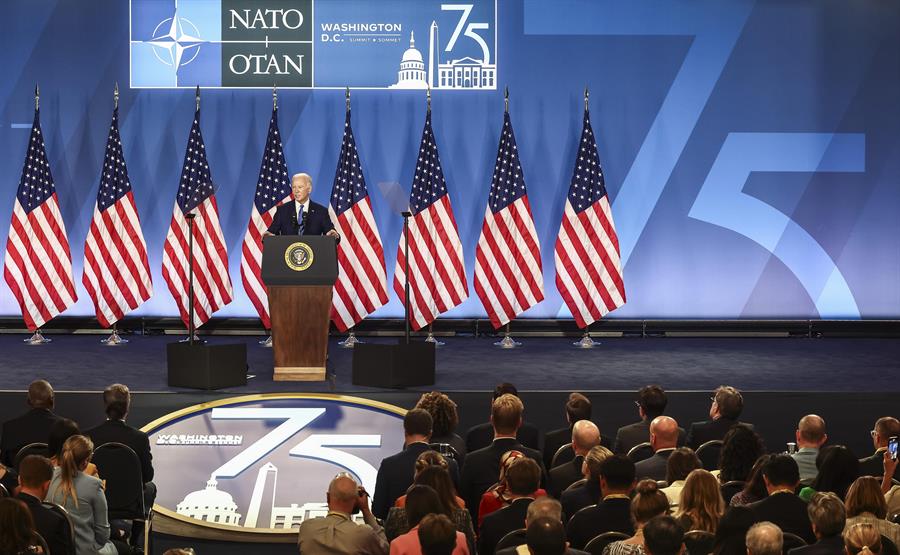
El presidente de Estados Unidos, Joe Biden, habla durante una conferencia de prensa al margen de la Cumbre de la OTAN en Washington DC (EE. UU.). (Foto: EFE/JIM LO SCALZO)
REACTIONS IN PENNSYLVANIA
Many top Democrats in Pennsylvania also remain on Biden’s side despite calls within the party for the president to drop his re-election bid due to his performance in the June 27th debate.
Support from Pennsylvania’s delegates and powerful politicians in the largest swing state is crucial for Biden. Several members of the state’s congressional delegation are supporting the president, who has insisted he will remain in the 2024 race.
Senator John Fetterman and U.S. Senator Bob Casey joined Biden on Sunday, July 7th, as he campaigned in Pennsylvania, shortly after news of a recent written interview the president gave to a Black radio station in Philadelphia sparked concerns about how Biden’s team tries to protect him. Fetterman told CNN that the president appeared «clear and engaged» during the visit, like the «Joe Biden I’ve always seen.»
Casey, who is facing David McCormick in one of the country’s most competitive Senate races, has said Biden can still win Pennsylvania but warned that «it will be tough,» according to The Hill.
Philadelphia U.S. Representatives Brendan Boyle and Dwight Evans also back Biden. «I urged him to run in 2020 and was a steadfast supporter from day one. And I remained a steadfast supporter even when the odds seemed high. So I am confident that I will not abandon Joe Biden now,» Boyle said in a post on X.
Most Democrats seem to have «come back to the fold,» but voices like Lehigh Valley Representative Susan Wild, who is running for re-election, remain among several Democratic lawmakers who have expressed concerns about Biden’s «electability.»
Representative Chrissy Houlahan, a Democrat representing Chester County, told the Inquirer she is still contemplating her continued support for Biden.
Although Governor Josh Shapiro had not taken a stance at the time of this publication, he stated in a press release, «The president has the responsibility to assure the good people of Pennsylvania and the people of this country that he can defeat Donald Trump.»
Some Pennsylvania delegates have told the press that replacing Biden on the ticket is a far-fetched and «cumbersome» idea.
Diane Ellis-Marseglia, delegate and chair of the Bucks County Board of Commissioners, told Axios it was «painful» to watch the debate, but Biden has alleviated many of her concerns in recent appearances. «It was an overreaction,» she said. «I believe in his family, his wife. I don’t think they would let this happen if they thought something was wrong [with him].»
Bob Brady, head of the Philadelphia Democratic City Committee, claims party members in the city remain deeply loyal to Biden, calling the president «our favorite son.» «Those people who say he should step aside do so at their own risk,» he said. “Our people are not disloyal, and it’s a disgrace.»
(Foto: EFE/JIM LO SCALZO)
EXPERIENCE, ACHIEVEMENTS AND CONTRASTS
Biden has the experience and a record of significant achievements during his first term, say his supporters. From reducing unemployment to improving the economic situation, Democrats highlight how his leadership has benefited millions of Americans. In an interview with CNN, Senator Chris Murphy described Biden as “one of the most effective presidents” he has worked with, citing his crucial role in passing the 2022 gun control law.
The contrast between Biden and Trump is a recurring theme in Democratic discourse. Congresswoman Debbie Dingell noted on CNN the importance of reminding voters of Trump’s actions and policies, describing him as someone who wants to be a dictator. Meanwhile, Congressman Al Green emphasized on MSNBC that Biden “stands for democracy, freedom, and justice for all,” while Trump represents autocracy and chaos.
Biden’s supporters highlight his administration’s efforts to support disadvantaged communities and promote equality. Congresswoman Nikema Williams noted on MSNBC the positive impact of Biden’s policies, such as the $16 billion investment in historically Black colleges and universities (HBCUs) and the growth of Black-owned businesses.
Biden’s commitment to social justice and equity is another strong point of his candidacy. Senator Bernie Sanders, known for his progressive stances, highlighted on CNN Biden’s policies aimed at benefiting the majority of Americans, such as the expansion of Medicare and the child tax credit. According to Sanders, these initiatives reflect Biden’s vision of a government that works for everyone. Former ambassador and Senator Carol Moseley Braun stated on CNN that Biden “has delivered results for all communities.”
On the international stage, Biden has worked to repair the U.S.’s reputation and strengthen alliances. His recent visit to Ukraine and his role in maintaining NATO cohesion testify to his ability to handle complex international relations. Congressman John Garamendi highlighted on CNN Biden’s “wisdom and experience” in global affairs.
(Foto: EFE/JIM LO SCALZO)
TIME WAITS FOR NO ONE
Though there is little dispute over the most diverse cabinet in U.S. history and the achievements of his administration — tackling post-pandemic global crises and two major new wars — several prominent figures insist that, for the good of the country, Biden should step aside and let his legacy continue. They begin to extol the greater chances of victory for his vice president Kamala Harris, and even Michelle Obama‘s name has been floated.
Without a name emerging as a probable substitute, long-time supporter actor George Clooney also weighed in, writing in The New York Times: «I love Joe Biden… But the only battle he cannot win is against time.»
Writer Stephen King tweeted: «Joe Biden has been a good president, but it’s time for him to announce that he won’t run for re-election, for the good of the America he loves so much.» Stephen Colbert commented on his show: «Biden is a good enough man to put the country’s needs above his ego.»
Director Michael Moore even accused the Democratic Party of «elder abuse» for pushing Biden to run again. Screenwriter Damon Lindelof called for a «DEMbargo» on donations until a new candidate is selected, echoing Abigail Disney’s — Walt Disney’s grandniece — warning that Republicans will win if no change is made.
Polls on the matter continue to emerge, although there is still no consensus when considering all of them. However, among the most relevant, a recent Washington Post-ABC News-Ipsos poll states that 56% of Democrats believe that, given Biden’s performance in the debate, he should step aside and let someone else run. Nevertheless, Biden’s campaign points to this poll to argue that despite the «greater anxiety» after the debate, his performance was not leading to a “drastic change in the voting percentage.”
According to a CNN/SSRS poll, most Democrats believe the party has a better chance of winning the presidency in November with a different candidate. And around 6 out of 10 voters, including roughly one-quarter of Democrats, said re-electing Biden as president this November would be a risky choice for the country rather than a safe one, according to a New York Times/Siena College poll.
In the coming days, the public scrutiny of every Biden appearance will continue, as he is a sitting president with a busy agenda and also the weight of an intense re-election campaign. As time goes by, it will become clearer how far both his opponents and supporters are willing to go.
A City-wide Heat Health Emergency means that the city will open 153 cooling centers and extend hours at Free Library locations. Pixabay, pexels
These past few weeks, Philadelphia experienced an extreme heat wave, with temperatures above 90 degrees for more than two days. The City issues multiple excessive heat warnings as part of the Heat Health Emergency notice on June 23rd, and has issued more warnings since then.
A City-wide Heat Health Emergency means that the city will open 153 cooling centers and extend hours at Free Library locations, pools, spray grounds, older adult centers and more. Residents can call 3-1-1 to find a cooling center near them; in 19140, the cooling site is at Stenton Park (4600 N 16th St.), according to the City’s website.
The Philadelphia Water Department pauses utility shutoffs, to help more people stay cool on the hottest days. PECO also halts new shutoffs, but it will not restore service to customers whose electricity was already shut off when the emergency is declared.
Excessive heat can be very dangerous to health. Heat exhaustion happens when your body loses a lot of water and salt (dehydration), usually from sweating.
Heat stroke is more serious. Heat stroke is a medical emergency and can happen when the body’s temperature rises to 104 degrees and can damage the heart, kidneys, lover, lungs and brain. Symptoms include headache, dizziness, nausea, confusion, muscle weakness or cramps and losing consciousness. On hot days, some people are at greater risk for health-related illness, including people and children with asthma, pregnant women, infants and young children and people 65 years and older.
Heat is not experienced the same by everyone in the city, although the response from the Philadelphia Department of Public Health is city-wide. Neighborhoods like Hunting Park in North Philadelphia are hotter on average than other neighborhoods in the city, because of low tree coverage, lack of green space, more cement cover, and unjust zoning and housing regulation stretching back decades that create heat islands.
In Hunting Park, Jennifer Santiago, a local block captain told us that “There are no options for trees to block the sun. Some areas on the street don’t have space for trees.” Gail Pryor, another block captain, told us that she is getting ready to roll-out trainings about heat safety because, “The heat is smothering. This is the hottest summer I’ve ever experienced while living in Philadelphia for the past 30 years.”
Efforts are underway in Hunting Park to combat extreme heat in our community and help prevent hot days in the future.
On June 20th, Esperanza’s Housing and Economic Development Division installed gator bags on 21 trees that were planted by the City of Philadelphia on Wyoming Avenue, including new trees planted next to the SEPTA facility on the corner of 3rd and Wyoming Avenue as part of the Trees on the Commercial Corridor program. These gator bags will help water and keep the trees alive in the extreme heat.
This summer is expected to be scorching, with more extreme heat on the way as climate change makes heat waves longer and hotter.
Philadelphia residents can call the city’s HeatLine at 215-765-9040 for health and safety tips or to talk with a medical professional if you suspect heat-related illness.
Fotografía de archivo de los logotipos de Facebook y WhatsApp. EFE/Patrick Pleul
Una medida cameral en Puerto Rico espera por la firma del gobernador de la isla, Pedro Pierluisi, para decretar que a los 18 años será la edad mínima para que una persona pueda activar una cuenta en cualquier red social.
El Proyecto de la Cámara 262, de la autoría del representante José Meléndez, del gobernante Partido Nuevo Progresista, fue aprobada unánimemente en el Senado con votos de 26 a 0 el pasado 25 de junio.
«No cabe duda de que el uso de las redes sociales como es el caso de Facebook, Instagram. TikTok y Snapchat, entre otros, son un asunto de responsabilidad de los padres y sus hijos», opinó Meléndez en un comunicado de prensa.
La pieza legislativa también busca, entre otras cosas, que los padres aprueben que sus hijos menores de edad puedan tener cuentas en las plataformas de redes sociales con todos los filtros de seguridad disponibles, indicó Meléndez.
«Debe haber una edad mínima para que estos jóvenes puedan entrar a las redes», enfatizó.
El legislador indicó que, en mayo pasado, congresistas estadounidenses radicaron un proyecto para establecer la edad mínima que un menor puede ingresar a las redes sociales en 13 años.
Esto sucede como consecuencia directa del contenido de adultos que los menores se exponen y los famosos ‘retos’, al igual que lo crudo de mucho material gráfico ha hecho que el Congreso actúe, pues han determinado que es un asunto de salud mental de los niños.
«Aquí en Puerto Rico tenemos la herramienta para enfrentar esto con la aprobación del Proyecto 262», afirmó Meléndez.
En el 2023, el legislador puertorriqueño sostuvo varias reuniones con congresistas para, entre otros asuntos, dialogar sobre mayores controles a menores para acceso a las redes sociales, incluyendo orientación a padres y/o tutores sobre los riesgos que representan estas plataformas.
«Este proyecto de ninguna forma pretende que el Gobierno intervenga en asuntos personales de ninguna persona, pero sí busca crear un marco para que los padres y/o tutores actúen para evitar que los menores sean objetivo de materiales dirigidos a adultos», agregó.
Mencionó además que, a principios de 2023, el estado de Montana aprobó una medida para prohibir el uso de TikTok en todo dispositivo, la primera jurisdicción estadounidense en hacerlo.