Allegheny County Election Division Deputy Manager Chet Harhut explains the process of sorting mail-in and absentee ballots in preparations for Pennsylvania's primary election on April 23, at the Elections warehouse in Pittsburgh, April 18, 2024. Pennsylvania election officials said Wednesday, May 8, 2024 that the number of mail-in ballots rejected for technicalities, like a missing date, saw a significant drop in last month's primary election after state officials tried anew to help voters avoid mistakes that might get their ballot thrown out. (AP Photo/Gene J. Puskar, file)
HARRISBURG, Pa.— Pennsylvania election officials said Wednesday that the number of mail-in ballots rejected for technicalities, like a missing date, saw a significant drop in last month’s primary election after state officials tried anew to help voters avoid mistakes that might get their ballots thrown out.
The success of the mail-in vote could be critical to determining the outcome of November’s presidential election in Pennsylvania when the state is again expected to play a decisive role in the contest between Democratic President Joe Biden and former President Donald Trump, a Republican.
Pennsylvania’s top election official, Secretary of State Al Schmidt, said counties reported a 13.5% decrease in mail-in ballots that were rejected for reasons the state had tried to address with a redesigned ballot envelope and instructions for voting by mail. That drop was calculated in comparison to the 2023 primary election.
Those reasons included voters writing an incorrect date on the outer “declaration” envelope; forgetting to write a date or put their signature on the outer declaration envelope; or failing to insert their ballot into an inner “secrecy” envelope.
Challenges and Successes in Pennsylvania’s Mail-In Voting
Schmidt credited the redesign with the reduced error rate, and said he didn’t think the drop was a coincidence or the result of a different or better-educated electorate.
“It’s always challenging to determine causality, but I think what we have here is clear and reliable data indicating that there was a decrease in ballots being rejected because of the issues the Department of State sought to address with the redesign of the secrecy envelope and the declaration envelope,” Schmidt said in an interview.
Last month’s primary election was the first use of the redesigned envelope and instructions. The Department of State compared rejection rates to 2023’s primary because the two elections were the only elections where counties had identical rules for which mail-in ballots should be counted and which should be rejected.
Pennsylvania vastly expanded voting by mail in 2019, and lawsuits quickly followed over whether counties should be throwing out ballots with missing or incorrect dates, questionable signatures or missing secrecy envelopes.
Federal courts are still considering litigation over whether it is unconstitutional for counties to throw out a mail-in ballot because of a missing or wrong date.
Meanwhile, Trump’s baseless claims that voting by mail is riddled with fraud have fueled a partisan stalemate in the Legislature over fixing glitches and gray areas in Pennsylvania’s mail-in voting law.
That includes legislation long sought by counties seeking help to more quickly process huge influxes of mail-in ballots during presidential elections and to avoid a repeat of 2020’s drawn-out vote count.
Trump and his allies tried to exploit the days it took after polls closed in Pennsylvania to tabulate more than 2.5 million mail-in ballots to spread baseless conspiracy theories and cast doubt on the legitimacy of the election.
The bill faces long odds in the Republican-controlled Senate, where top Republicans insist that Pennsylvania must toughen in-person voter identification requirements as a companion to any election legislation — a demand Republicans have made since 2021.
Democrats have opposed such a change, saying there is scant record of in-person voting fraud and that it will only prevent some registered voters from voting.
HARRISBURG. — Pennsylvania’s state House of Representatives on Wednesday approved legislation aimed at regulating how online social media platforms interact with children, although its provisions are similar to those in state laws being blocked in federal courts or in a case before the U.S. Supreme Court.
The bill passed nearly along party lines, 105-95, with 10 Republicans voting with most Democrats for it and seven Democrats voting with most Republicans against it.
It faces an uncertain future in the Republican-controlled state Senate, and the nation’s highest court may soon decide whether state-level provisions like the ones in the bill can be enforced.
The bill would require social media platforms to allow users to report“hateful conduct,” such as threats or bullying, and publicize a policy for how they will respond to such reports. It also would require users under 18 to get parental consent and bar the platforms from “data mining” users under 18, or sifting through their user data to find specific information or develop insight into patterns or habits.
Bill Would Require Social Media Platforms to Allow Users to Report «Hateful Conduct
The sponsor, Rep. Brian Munroe, D-Bucks, said the concepts in the bill are nothing new and similar to age-related restrictions that the government has put on movies, driving, drinking alcohol or smoking, or the parental permissions that are required for things like field trips or school sports.
“Time and time again, we’ve acted in the best interests of children by looking at the exposure to potentially harmful activities and said, ‘not at that age and not without your parents’ OK,’” Munroe told colleagues during floor debate.
Parents and children are asking for such regulation, Munroe said.
The Washington-based Computer and Communications Industry Association — whose members include Google, owner of YouTube, and Meta, owner of Facebook and Instagram — pointed out that the legislation, called House Bill 2017, has similarities to laws in other states that are being challenged in court.
“While the goal of protecting younger users is commendable, HB2017 risks infringing upon younger users’ ability to access and engage in open online expression and could cut off access to communities of support,” the association said in a statement. “There are also significant data privacy and security concerns associated with the data collection that would be required to verify a user’s age and a parent/legal guardian’s relationship to a minor.”
California-based Meta has said parental supervision tools and other measures already are in place to ensure teens have age-appropriate experiences online, and that algorithms are used to filter out harmful content.
Last year, Utah became the first state to pass laws that require minors to get parental consent before using social media. That law has been challenged in federal court by the trade group NetChoice.
Also, last year, federal judges put on hold an Arkansas law that required parental consent for children to create social media accounts and a California law barring tech companies from profiling children or using personal information in ways that could harm children physically or mentally.
Earlier this year, the U.S. Supreme Court heard arguments in a case that sprang from legal challenges to state laws in Florida and Texas that seek to regulate Facebook, TikTok, X and other social media platforms.
The details of the two laws vary, but both sought to prevent the social media companies from censoring users based on their viewpoints.
PHILADELPHIA – Today, the City of Philadelphia completed a month-long encampment resolution process in Kensington on the 3000-3100 blocks of Kensington Avenue. A total of 59 people accepted housing and services through the 34-day process, including 19 who came in today, Wednesday, May 8. There will continue to be outreach and engagement teams working on a daily basis to connect individuals to housing and treatment throughout the community. This resolution was part of the City’s continuing efforts in combating the overdose crisis in Philadelphia.
Mayor Parker praised the work of every City worker and agency involved in the effort. Encampment resolutions are not new in Philadelphia; the City has long been addressing encampments that threaten communities’ public health and safety. To date, the City as engaged in over 25 encampment resolutions; 10 have taken place in Kensington.
City’s Efforts in Combating the Kensington Encampment Issue
“We’re proud of all of the City Departments that worked together to resolve the encampment on two blocks in Kensington that were creating a public safety and health threat to the neighborhood,” said Adam Geer, Chief Public Safety Director who briefed the press following the encampment resolution completion. “Throughout the process, no one was arrested, and 59 people came off the streets and into care. That’s in line with Mayor Parker’s vision for the restoration of Kensington and any neighborhood where people are suffering and in need.”
Services Provided
Since Thursday, April 4, City employees from the Office of Homeless Services, Department of Behavioral Health and Intellectual DisAbility Services in partnership with neighborhood-based non-profits and social services staff have been working to connect people to treatment, shelter and medical care. The City does not require anyone to accept treatment or housing; it is voluntary.
A total of 59 individuals accepted services during the 30 days. Of those:
55 people connected to housing assistance including three couples.
Housing assistance includes offers of low barrier shelter, recovery focused shelter, safe havens, and respite.
Four people connected to drug and alcohol services.
In addition, the City was able to care for those suffering from wounds even if they did not accept other services. Wounds cared for ranged from minor cuts to serious necrotic wounds and the following patients were seen during extended evening outreach from April 9-May 7:
88 Patients, 12 of which are new patients seen for the first time during extended outreach.
1,242 Wounds treated.
Outreach teams have been engaging people daily, providing services, offering resources since the winter months and will continue to do so. For the first time the City piloted an extended outreach effort that started April 9th and included interagency outreach teams to engage from 4 to 8 p.m. three days a week in addition to their regularly scheduled outreach efforts – 32 of our placements came directly from that effort.
“Our outreach teams are Philadelphia’s unsung heroes, and they all put their heart and soul into every engagement,” said Noelle Foizen, Overdose Response Unit (ORU) Director. “Teams work tirelessly to support each person including addressing anything that could be a barrier to placement such as accessibility, mobility, pets, couples, etc. and work hard to find the right resource in challenging situations where at times they are threatened and harassed. They are brave and strong and represent the best of us and Mayor Parker’s vision to connect people to long term care, treatment and housing opportunities.”
Last night, Mayor Parker and the Parker Administration Cabinet, including Police Commissioner Kevin J. Bethel, Director of Public Safety Adam Geer, Managing Director Adam Thiel and others met with more than 250 community members during the Mayor’s One Philly Budget Town Hall stop in Kensington. During the town hall, Mayor Parker used budget figures to outline her broader vision to restore Kensington and other neighborhoods ravaged by drug dealing, including the building of a comprehensive, long-term system of care, treatment and housing for people suffering from addiction to substances, mental health challenges and experiencing homelessness.
“Do I have your permission to develop and implement that Plan for Philadelphia?” the Mayor asked the audience. She received a rousing ovation.
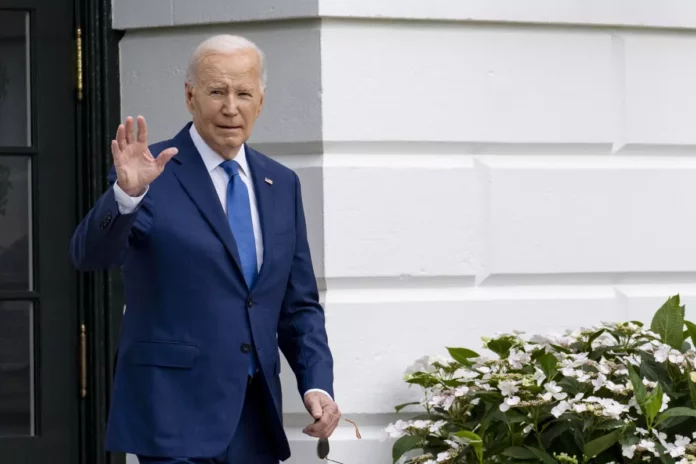
El presidente Joe Biden saluda mientras camina hacia el helicóptero Marine One para partir desde el jardín sur de la Casa Blanca, el 8 de mayo de 2024, en Washington. (Foto: Alex Brandon)
Estados Unidos detuvo un envío de bombas a Israel la semana pasada ante la inminente decisión israelí de lanzar un asalto a gran escala en Rafah, ciudad en el sur de Gaza, en contra de los deseos de Washington, dijo el miércoles el secretario de Defensa, Lloyd Austin.
Se suponía que el envío constaría de 1.800 bombas de 900 kilos (2.000 libras) y 1.700 bombas de 225 kilos (500 libras), según un funcionario que habló bajo condición de anonimato. El foco de preocupación de Estados Unidos fueron los explosivos más grandes y cómo podrían usarse en un entorno urbano denso como Rafah, donde más de 1 millón de civiles se están refugiando después de evacuar otras partes de Gaza en medio de la guerra de Israel contra Hamás.
“Vamos a seguir haciendo lo que sea necesario para garantizar que Israel tenga los medios para defenderse”, dijo Austin. “Pero dicho esto, actualmente estamos revisando algunos envíos de asistencia de seguridad a corto plazo en el contexto de los acontecimientos que se desarrollan en Rafah”.
EE. UU. reevalúa ayuda militar a Israel por posibles violaciones
Históricamente, Estados Unidos ha proporcionado enormes cantidades de ayuda militar a Israel. Eso se aceleró tras el ataque de Hamás el 7 de octubre que mató a unas 1.200 personas en Israel y la captura de unos 250 rehenes. La pausa en el envío de ayuda es la manifestación más llamativa del creciente desacuerdo entre los gobiernos del primer ministro israelí, Benjamin Netanyahu, y del presidente Joe Biden, que ha pedido a Israel que haga mucho más para proteger la vida de civiles inocentes en Gaza.
También se produce cuando la administración Biden debe emitir un veredicto formal, el primero de su tipo, esta semana sobre si los ataques aéreos en Gaza y las restricciones a la entrega de ayuda han violado las leyes internacionales y estadounidenses diseñadas para salvar a los civiles de los horrores de la guerra.
Una decisión contra Israel aumentaría aún más la presión sobre Biden para que frene el flujo de armas y dinero al ejército de Israel.
Los funcionarios estadounidenses se habían negado durante días a comentar sobre detención de envíos, mientras que Biden describió el martes el apoyo de Estados Unidos a Israel como “férreo, incluso cuando no estemos de acuerdo”.
El embajador de Israel ante Naciones Unidas, Gilad Erdan, en una entrevista con el Canal 12 de la televisión israelí, dijo que la decisión de suspender el envío fue “una decisión muy decepcionante, incluso frustrante”. Sugirió que la medida se debió a la presión política sobre Biden por parte del Congreso, las protestas en universidades estadounidenses y las próximas elecciones.
Biden ha enfrentado la presión de algunos de la izquierda y la condena de los críticos de la derecha que dicen que el presidente ha entibiado su apoyo a un aliado esencial en Medio Oriente.
“Si detenemos las armas necesarias para destruir a los enemigos del Estado de Israel en un momento de gran peligro, pagaremos un precio”, expresó el senador Lindsey Graham, republicano por Carolina del Sur, alzando la voz con ira durante un intercambio con Austin. “Esto es obsceno. Es absurdo. Denle a Israel lo que necesita para librar una guerra que no puede permitirse perder”.
El senador independiente Bernie Sanders, de Vermont, aliado de Biden, dijo en un comunicado que la pausa en las grandes bombas debe ser un “primer paso”.
“Nuestra influencia es clara”, indicó Sanders. “A lo largo de los años, Estados Unidos ha proporcionado decenas de miles de millones de dólares en ayuda militar a Israel. Ya no podemos ser cómplices de la horrible guerra de Netanyahu contra el pueblo palestino”.
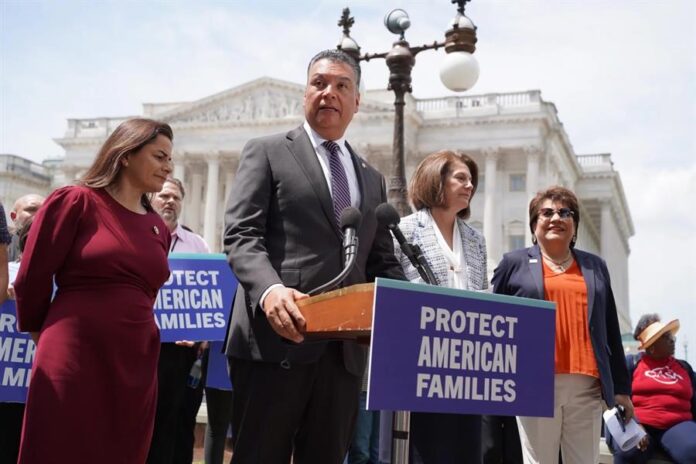
Fotografía cedida por la Oficina del senador demócrata de California, Alex Padilla (c), donde aparece mientras habla junto a sus colegas durante una conferencia de prensa este miércoles en el predio del Capitolio en Washington. EFE/Oficina Alex Padilla
Washington.- Legisladores y activistas, temerosos por lo que una segunda presidencia de Donald Trump pueda significar para los indocumentados, instaron este miércoles al presidente Joe Biden a decretar medidas ejecutivas que protejan a millones de inmigrantes sin estatus, especialmente aquellos que han vivido y aportado a la economía por largo tiempo.
«La amenaza es real», afirmó el senador Cory Booker, demócrata de Nueva Jersey en una conferencia de prensa en el predio del Capitolio. «Trump ha hablado acerca de la deportación de miles y miles de personas que han estado, en su mayoría, aquí por la mayor parte de sus vidas».
El senador Alex Padilla, demócrata de California, urgió a Biden a que «tome acción ejecutiva para proteger a los inmigrantes indocumentados que llevan años esperando una reforma migratoria en este país».
«A pesar de todo lo que los inmigrantes aportan a nuestra economía hemos visto propuestas migratorias en los últimos meses que han dejado atrás a estas comunidades», añadió.
Padilla, Booker, junto con la senadora Catherine Cortez Masto, demócrata de Nevada; el senador Ben Luján, demócrata de Nuevo México, y miembros de la cámara de Representantes, insistieron en que el presidente Biden tiene atribuciones para decretar medidas que amparen a los indocumentados y los extranjeros con diversos tipos de visas temporales.
«Por lo menos un permiso de trabajo sería una bendición para mi. Llevo más de 20 años aquí aportando y esperando un alivio migratorio pero nada. Yo creo que nos merecemos que al menos nos protejan de la deportación a los que no tenemos delitos», dijo a EFE la guatemalteca Alicia Marroquín.
Biden dispuesto a escuchar
Janet Murguía, presidenta de la organización UnidosUS, quien se reunió con el mandatario el miércoles pasado, dijo que «el presidente está dispuesto a tomar acción y pidió propuestas más específicas y vamos a dárselas».
«El presidente tiene hoy, bajo la ley actual, de ofrecer a algunas personas indocumentadas un camino hacia el estatus legal», añadió Murguía. «Permisos de trabajo y estar libres de deportación. Le pedimos al presidente que use su poder para dar alivio a estas familias».
Por su parte Gustavo Torres, el director ejecutivo de la organización CASA, instó al presidente a que «use su poder para actuar», como lo hizo el expresidente Barack Obama (2009-2017) cuando emitió la Acción Diferida Para los Llegados en la Infancia (DACA)
«Que use su poder para proveer de estatus de protección temporal y deportaciones diferidas para residentes que han estado aquí por largo tiempo, personas que han estado aquí por más de 10 años», agregó Torres.
Por su parte, el senador Luján dijo que muchas de las personas a las que se refieren estos reclamos «han vivido en el país por años y años, han criado familias, han estudiado en las universidades y escuelas de oficios, han contribuido a nuestra economía».
«Nuestro sistema de inmigración está desbaratado», agregó Luján. «Necesitamos hacer algo para reparar este sistema pero algunos colegas republicanos extremistas están más interesados en ganar puntos políticos que en reparar un sistema desbaratado».
La petición de los legisladores y activistas se une a una solicitud enviada el mes pasado por un grupo de congresistas demócratas que pedían permiso de trabajos para los inmigrantes de larga data.
Otorgar permisos de trabajo a inmigrantes que han vivido en el país por largo tiempo podría aumentar los ingresos fiscales anuales en aproximadamente 13.800 millones de dólares.
Proponen establecer tres nuevos programas que otorgarían permisos de trabajo para cónyuges indocumentados de ciudadanos estadounidenses, para inmigrantes que llegaron siendo niños pero no fueron elegibles para el programa de DACA y para trabajadores que han pagado impuestos durante años.
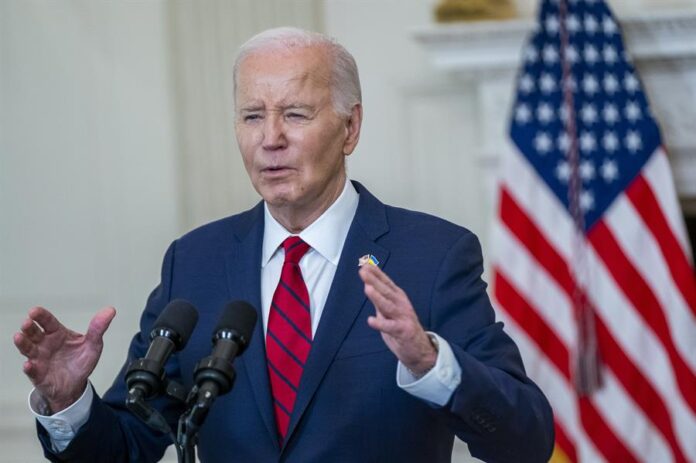
El presidente estadounidense Joe Biden en la Casa Blanca en Washington el 24 de abril del 2024. (Foto : Evan Vucci)
Frente a la presión por su apoyo militar a la guerra de Israel, el gobierno del presidente Joe Biden debe emitir esta semana un veredicto formal sin precedentes sobre si los bombardeos sobre Gaza y las restricciones a la entrega de ayuda han violado las leyes internacionales y estadounidenses diseñadas para proteger a los civiles de los horrores de la guerra.
Una decisión contra Israel, aliado de Estados Unidos, aumentaría la presión sobre el presidente Biden para frenar el flujo de armas y dinero al ejército israelí. El gobierno demócrata dio uno de los primeros pasos en esa dirección al pausar el envío de 3.500 bombas ante una inminente ofensiva israelí en Rafah, una ciudad del sur de Gaza habitada por más de un millón de palestinos, dijo un alto funcionario del gobierno.
El gobierno aceptó en febrero, ante la insistencia de los demócratas en el Congreso, negociar un acuerdo que le obligara a examinar si las fuerzas israelíes en Gaza habían utilizado armas y otra asistencia militar provista por Estados Unidos de manera legal.
Adicionalmente, según el acuerdo, debe informar al Congreso si considera que Israel ha actuado para “negar, restringir o impedir arbitrariamente, directa o indirectamente”, la entrega de cualquier ayuda humanitaria respaldada por Estados Unidos al interior de Gaza para los civiles hambrientos allí.
La fecha límite para el dictamen de Estados Unidos es el miércoles, aunque Matthew Miller, portavoz del Departamento de Estado, dijo a los periodistas el martes que “es posible que se retrase solo un poco”.
El gobierno se ve obligado a tomar una decisión cuando la agitación por las negociaciones para un alto al fuego mediadas internacionalmente y una inminente ofensiva israelí en Rafah —una medida a la que Estados Unidos se opone rotundamente— podrían cambiar tanto el curso de la guerra de Israel como el del apoyo de los estadounidenses hacia ella.
La campaña de Israel para aplastar al grupo armado palestino Hamás tras su ataque sorpresa en octubre, y el desastre que siguió para los civiles de Gaza, también han alimentado el debate dentro del gobierno de Biden y del Congreso sobre cuestiones más amplias: ¿Debería Estados Unidos actuar ante las graves violaciones de derechos humanos cometidas por uno de sus destinatarios extranjeros de apoyo militar cuando las identifica, como sus defensores dicen que exige la ley estadounidense? ¿O únicamente cuando considera que hacerlo es útil para los intereses estratégicos de Estados Unidos?
Los legisladores demócratas y republicanos formulan abiertamente la decisión actual en esos términos.
“Si bien los derechos humanos son un componente importante del interés nacional, las prioridades estadounidenses son mucho más amplias, particularmente en una era de competencia estratégica”, escribieron la semana pasada el senador Jim Risch, el miembro republicano de más alto rango de la Comisión de Relaciones Exteriores del Senado, y Michael McCaul, presidente republicano de la Comisión de Asuntos Exteriores de la Cámara de Representantes, para instar a Biden a derogar su directiva de febrero, conocida formalmente como Memorando de Seguridad Nacional 20.
Pero el senador Chris Van Hollen, el demócrata que encabezó las negociaciones del Congreso con la Casa Blanca para ordenar la revisión, dijo a los periodistas que temía que el viejo deseo de los gobiernos estadounidenses de mantener una sólida asociación de seguridad con Israel influyera en el resultado.
Israel es el mayor receptor de asistencia de seguridad estadounidense. El sufrimiento palestino en la guerra en Gaza ha provocado protestas y otros desafíos para Biden en el país y en el extranjero mientras busca la reelección contra el expresidente Donald Trump, un republicano.
En esta imagen, proporcionada por las Fuerzas de Defensa de Israel, un tanque con una bandera israelí entra al lado gazatí del paso fronterizo de Rafah, el 7 de mayo de 2024. (Foto: AP/Fuerzas de Defensa de Israel)
Cuestionamiento de las acciones de Israel
Las conclusiones del gobierno deben “ser vistas con base en hechos y leyes, y no basadas en lo que ellos desearían que fueran”, dijo Van Hollen a los periodistas la semana pasada.
En el momento en que la Casa Blanca aceptó la revisión, trabajaba para prevenir medidas de los legisladores demócratas y del senador independiente Bernie Sanders para comenzar a restringir los envíos de armas a Israel.
Israel lanzó su ofensiva después de que ataques liderados por Hamás mataron a unas 1.200 personas el 7 de octubre. Desde entonces, han muerto casi 35.000 palestinos, dos tercios de ellos mujeres y niños, según funcionarios de salud locales. Funcionarios estadounidenses y de la ONU dicen que se ha producido una hambruna total en el norte de Gaza debido tanto a las restricciones israelíes a los envíos de alimentos como a los combates.
Los grupos de derechos humanos llevan mucho tiempo acusando a las fuerzas de seguridad de Israel de cometer abusos contra los palestinos y a los líderes israelíes de no exigir cuentas a los responsables.
Israel dice que sigue todas las leyes estadounidenses e internacionales, que investiga las acusaciones de abuso por parte de sus fuerzas de seguridad y que su campaña en Gaza es proporcional a la amenaza existencial que, manifiesta, representa Hamás.
A medida que crece el sufrimiento de los civiles palestinos, Biden y su gobierno se alejaron de su inquebrantable apoyo público inicial a Israel y comenzaron a criticar su conducta en la guerra.
Biden dijo en diciembre que los “bombardeos indiscriminados” le costaban a Israel el respaldo internacional. Después de que las fuerzas israelíes tomaron como objetivo y mataron en abril a siete trabajadores humanitarios de World Central Kitchen —una organización no gubernamental sin fines de lucro que abastece comidas en todo el mundo tras desastres y situaciones excepcionales_, el gobierno de Biden señaló por primera vez que podría recortar la ayuda militar a Israel si no cambiaba su manejo de la guerra y de la ayuda humanitaria.
El republicano Ronald Reagan fue uno de los últimos presidentes que suspendió abiertamente parte del apoyo de Estados Unidos al ejército de Israel como una forma de presionar a Israel por sus ofensivas.
Pero los críticos dicen que Biden y otros presidentes recientes se han hecho de la vista gorda cuando las fuerzas de seguridad de Israel son acusadas de ejecuciones extrajudiciales y otros abusos contra los palestinos. Han aceptado las garantías israelíes sobre presuntos abusos graves que provocarían la suspensión de ayuda militar a cualquier otro socio militar extranjero, dijeron dos exfuncionarios del Departamento de Estado quienes abandonaron el gobierno el año pasado. El gobierno niega que exista un doble estándar.
No obstante, ahora el Congreso obliga al gobierno a presentar su evaluación más pública en décadas sobre si Israel ha utilizado el apoyo militar estadounidense legalmente.
Según un acta del Congreso de 1997 conocida como Ley Leahy, cuando Estados Unidos encuentra evidencia creíble de que una unidad de seguridad de fuerzas extranjeras ha cometido graves abusos contra los derechos humanos, se supone que cualquier ayuda estadounidense a esa unidad se suspende automáticamente.
Antony Blinken, el secretario de Estado, escribió la semana pasada a Mike Johnson, presidente de la Cámara de Representantes, que Estados Unidos encontró creíbles las pruebas de tales abusos por parte de una unidad israelí en particular. Blinken añadió que Israel aún tenía que rectificar las malas acciones de esa unidad, algo que según la Ley Leahy debe ocurrir para que se levante cualquier suspensión de ayuda militar. Blinken dijo que, en lugar de suspender la ayuda, Estados Unidos trabajaría con Israel para “participar en la identificación de un camino para la remediación efectiva de esta unidad”.
Los funcionarios israelíes la han identificado como la unidad de infantería Netzah Yehuda, que está acusada de la muerte de un palestino estadounidense y de otros abusos en la Cisjordania ocupada por Israel antes de que estallara la guerra en Gaza.
Tim Rieser, un miembro veterano del personal de política exterior del Senado, quien ayudó al senador Patrick Leahy, ahora retirado, a redactar la ley, opinó que, si se hubiera aplicado a Israel, “tal vez hubiera sido un elemento disuasivo”.
En cambio, “lo que hemos visto es que los abusos contra los palestinos rara vez son castigados”, agregó Rieser a la AP.
Si bien un fallo contra Israel con base en el memorando de seguridad nacional no obligaría al gobierno a comenzar a recortar el apoyo militar a Israel, aumentaría la presión sobre Biden para hacerlo.
Un informe dirigido al gobierno por un panel no oficial de expertos militares y exfuncionarios del Departamento de Estado, incluidos Josh Paul y Charles Blaha, señala ataques israelíes específicos contra caravanas de ayuda, periodistas, hospitales, escuelas, centros de refugiados y otros objetivos protegidos por la ley. El informe sostiene que el gobierno debe encontrar que la conducta de Israel en Gaza ha violado la ley. Amnistía Internacional ha sostenido lo mismo.
Las elevadas cifras de muertes de civiles en los ataques de Israel van mucho más allá de las leyes de proporcionalidad, dicen los críticos estadounidenses y los grupos de derechos humanos. Señalan un ataque del 31 de octubre contra un edificio de apartamentos de seis pisos en Gaza que mató al menos a 106 civiles. Los críticos dicen que Israel no proporcionó ninguna justificación inmediata para ese ataque.
“Están tomando lo que hicimos en Mosul y Raqqa, y lo llevan diez veces más lejos”, exceden incluso lo que estaba permitido bajo las reglas de enfrentamiento de Estados Unidos en ese momento en la llamada guerra contra el terrorismo, dijo Wes Bryant, quien trabajó en la Fuerza Aérea como experto en el establecimiento de objetivos y dirigió células de ataque contra el Estado Islámico y otros grupos extremistas en Afganistán, Irak y Siria. Está entre quienes instan a Estados Unidos a condicionar el apoyo militar a Israel.
“Si este es el nuevo estándar para la guerra en el siglo XXI, bien podríamos regresar a la Segunda Guerra Mundial”, opinó Bryant.
Israel y el gobierno de Biden dicen que la presencia de Hamás en túneles a lo largo de toda Gaza y su presunta presencia en hospitales y otros sitios protegidos dificultan que las fuerzas israelíes eviten un gran número de bajas civiles.
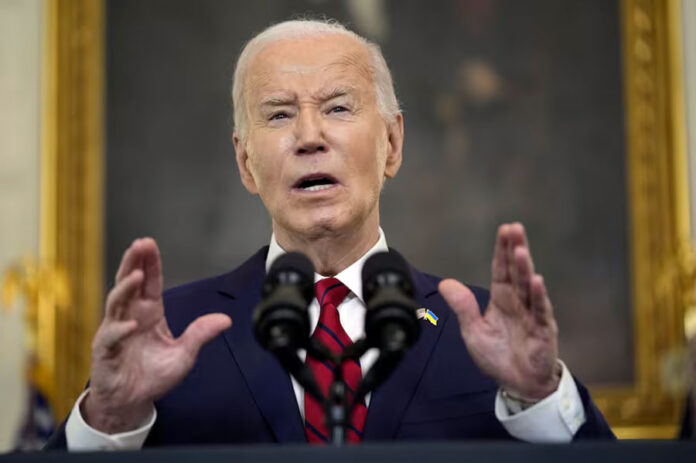
US President Joe Biden delivers remarks on the National Security Supplemental in the State Dining Room of the White House in Washington, DC, US, 24 April 2024. Photo by: SHAWN THEW
Washington.- United States President Joe Biden signed a law on Tuesday aimed at protecting children from online abuse and sexual exploitation by imposing fines on technology companies that deliberately fail to report such content hosted on their platforms.
According to a statement from the White House, Biden signed the legislation on Tuesday, automatically putting it into effect after it had been approved unanimously by both the Senate, where Democrats hold the majority, and the House of Representatives, controlled by Republicans.
The bill, spearheaded by Georgia Democratic Senator Jon Ossoff and Tennessee Republican Senator Marsha Blackburn, is the first significant legislation in years to establish enforcement mechanisms and accountability for social media platforms.
Legislation to Protect Children Online: Biden Signs Groundbreaking Law
According to a statement from Jon Ossoff’s office, the legislation, for the first time, requires websites and social media platforms to report crimes related to child trafficking and exploitation to the National Center for Missing and Exploited Children.
In addition, the law will increase fines for companies that knowingly and deliberately fail to report child sexual abuse material on their platforms and will also require the preservation of potential evidence of a crime for an extended period, thus giving law enforcement more time to investigate these potential crimes.
“My bipartisan law with Senator Blackburn will ensure tech companies are held accountable to report and remove child sex abuse material and to strengthen protection for kids online,» said Ossoff.
Blackburn emphasized the importance of this legislation being passed at a time when «children are increasingly looking at screens,» which inevitably «leaves more innocent kids at risk of online exploitation.»
Social media companies, such as Instagram, TikTok, or Facebook, are under increasing scrutiny by the US Congress for the impact their use has on minors’ mental health.
According to a 2022 study by the Pew Research Center, 35% of American teens say that social media has a negative impact on their lives.
In addition, some teenagers, especially girls, avoid posting certain things on social media for fear of feeling embarrassed, according to Pew.
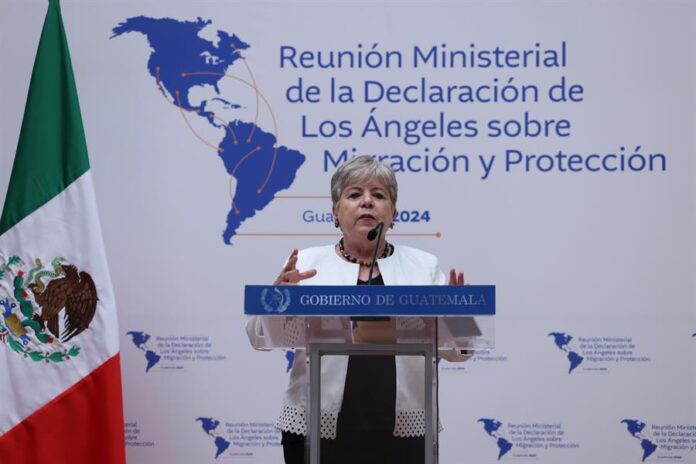
La secretaria de Relaciones Exteriores de México, Alicia Bárcenas, participa en una rueda prensa en el marco de la Reunión Ministerial de la Declaración de Los Ángeles sobre Migración y Protección este martes, en la ciudad de Guatemala (Guatemala). EFE/ Mariano Macz
Ciudad de Guatemala.- La canciller de México, Alicia Bárcena, aseguró este martes que su país, junto a Estados Unidos y Guatemala, acordaron durante una reunión trilateral mejorar las condiciones de seguridad fronteriza y trabajar en las causas de origen de la migración irregular.
Bárcena indicó que durante su visita a Guatemala se afinaron detalles para la reunión sobre seguridad fronteriza que sostendrá el presidente mexicano, Andrés Manuel López Obrador, y su homólogo guatemalteco, Bernardo Arévalo de León, el próximo 17 de mayo en Tapachula,Chiapas, en México.
La canciller mexicana aseguró que lo que les interesa del trabajo entre países vecinos es «proteger la frontera de estructuras de tráfico de personas y mejorar la infraestructura de los principales cruces fronterizos».
Las declaraciones de Bárcena tuvieron lugar después de una reunión sostenida con el canciller de Guatemala, Carlos Ramiro Martínez, y el secretario de estado de los Estados Unidos, Antony Blinken, en Ciudad de Guatemala.
Durante la reunión se destacó como prioridad generar condiciones para que empresas mexicanas y estadounidenses puedan reclutar fuerza laboral en Guatemala, según los detalles brindados por Bárcena.
«Acabamos de firmar un acuerdo con Guatemala y Honduras para compartir nuestros servicios consulares en diferentes ciudades de Estados Unidos y mejorar la atención a sus ciudadanos», puntualizó la canciller mexicana.
El encuentro entre los funcionarios de las tres naciones se dio en el marco de la Declaración de Los Ángeles (Estados Unidos) sobre Migración y Protección, que fue suscrita por 21 países en junio de 2022 para reconocer los derechos de las personas que transitan por el continente en busca de mejores oportunidades.
La declaración cuenta con un plan de implementación basado en cuatro pilares: estabilidad y asistencia para las comunidades, promover vías regulares de migración y protección, gestión humanitaria de fronteras y respuesta de emergencia coordinada.
En el año fiscal 2023 de Estados Unidos se registraron más de 2,4 millones de detenciones de migrantes en la frontera sur de Estados Unidos, una cifra récord.
La cuestión migratoria se ha convertido en uno de los temas más importantes de las elecciones presidenciales estadounidenses de noviembre próximo.
Sylvester Stallone Photo by: Everett Kennedy Brown
New York.- Actor Sylvester Stallone is set to auction off 11 prized timepieces from his personal collection, valued at a staggering $6 million.
Among the horological marvels is the iconic Patek Philippe Grandmaster Chime, a symbol of precision and craftsmanship, poised to make history as it goes under the hammer at Sotheby’s gallery in New York on June 5, The Hollywood Reporter said.
The Grandmaster Chime, hailed as one of the most intricate wristwatches in the world, originally sold for $2.5 million.
This marks the first occasion a Grandmaster Chime has been featured in a commercial auction, the magazine noted, citing the 2019 charity event Only Watch, where a unique steel model of the Grandmaster Chime set a staggering record of $31 million.
Stallone’s Million-Dollar Timepiece: Hollywood Legend Auctions Patek Philippe Grandmaster Chime
Stallone’s Grandmaster Chime is estimated to range between $2.5 million and $5 million, but experts anticipate it will exceed these figures.
According to The Hollywood Reporter, Stallone’s longstanding passion for Patek watches is well-documented, as he disclosed in a video shared by Sotheby’s.
He recounted the tale of acquiring his Grandmaster Chime by personally writing to the company’s board, who agreed to sell it to him.
The «Cobra» star initially acquired the watch as a collector’s piece, likening its significance to that of a Monet painting “work of art.”
Stallone’s Grandmaster Chime remains untouched, preserved in its original packaging, accompanied by paperwork and a lavish presentation box bearing the actor’s name.
He has included two other Patek Philippe timepieces from his collection in the auction.
La servilleta en la que se firmó el primer contrato de Leo Messi con el Barcelona sale a subasta este miércoles en Londres con un precio de salida de 300.000 libras (348.000 euros). Foto por: ANDY RAIN
Londres.- La servilleta en la que se firmó el primer contrato de Leo Messi con el Barcelona sale a subasta este miércoles en Londres con un precio de salida de 300.000 libras (348.000 euros).
La servilleta, que data de diciembre del 2000, cuando Messi tenía apenas trece años, supone el compromiso de un contrato con el Barcelona y estaba firmada en bolígrafo azul por Carles Rexach, por entonces director deportivo de los ‘Blaugrana’.
La servilleta en la que se firmó el primer contrato de Leo Messi con el Barcelona Foto por: Andy Rain
Esta pieza, en poder del agente argentino Horacio Gaggioli, será ofrecida en una subasta ‘online’ por la casa Bonhams, que ha exhibido la misma en los últimos meses en París, Nueva York y Londres.
La subasta se extenderá desde este 8 de mayo a las 12:00 hora del Reino Unido hasta el próximo 17 de mayo.
El contrato con el FC Barcelona en 2000 cambió la suerte del club catalán y también del propio Messi, que se ha convertido en uno de los mejores jugadores de todos los tiempos, con numerosos títulos con el Barcelona y la selección argentina, como la Copa América y el Mundial de Fútbol de Catar, así como ocho Balones de Oro.
La servilleta de Messi: Un símbolo histórico del nacimiento de una leyenda
La servilleta en la que se firmó el primer contrato de Leo Messi con el Barcelona sale a subasta este miércoles en Londres con un precio de salida de 300.000 libras (348.000 euros). Video por: ANDY RAIN
«En Barcelona, a 14 de diciembre del 2000 y en presencia de los Srs. Minguella y Horacio, Carles Rexach, secretario técnico del FC Barcelona, se compromete bajo su responsabilidad y a pesar de algunas opiniones en contra a fichar al jugador Lionel Messi siempre y cuando nos mantengamos en las cantidades acordadas», dice la servilleta.