2.1 C
Philadelphia
spot_img
Inicio Blog Página 860

Cerca de trece millones de niños afectados por la inseguridad alimentaria en 2022 en EE. UU.

(Foto: EFE/RICARDO MALDONADO ROZO/Archivo)

La inseguridad alimentaria en los hogares estadounidenses aumentó en 2022 con cerca de trece millones de niños viviendo en una familia que tuvo problemas para conseguir alimentos en algún momento ese año, reveló este miércoles un informe del Departamento de Agricultura (USDA).

Al menos 12,8% de las familias en EE. UU. -17 millones de hogares- tuvieron problemas para conseguir alimentos en 2022, un aumento del 2,6 con respecto al 2021 (10,2%) y de 2,3 con el porcentaje de 2020 (10,5%).

El incremento de 2022 rompió una tendencia de reducción de inseguridad alimentaria constante entre 2011 y 2021, destacó el informe de USDA.

Esta cifra, incluye siete millones de hogares que enfrentaron una seguridad alimentaria muy baja, que es el rango más grave de clasificación de USDA en el que uno o más miembros del hogar experimentan una ingesta reducida de alimentos en ocasiones debido a la escasez de dinero y otros recursos para obtener alimentos.

El 8,8% de los hogares con niños -3,3 millones de familias- sufrieron inseguridad alimentaria en algún momento en el 2022, frente al 6,2% (2,3 millones de hogares) en 2021.

«Estos hogares con inseguridad alimentaria entre los niños no pudieron en ocasiones proporcionar alimentos adecuados y nutritivos a sus hijos», dice el informe.

Los investigadores de USDA subrayaron que de 2021 a 2022 hubo aumentos estadísticamente significativos en la inseguridad alimentaria en casi todos los subgrupos de clasificaciones de hogares, como los encabezados por madres solteras o de grupos minoritarios.

Al respecto, Lisa Davis, vicepresidenta de Share Our Strength, que encabeza la campaña «No Kid Hungry», calificó las cifras como «una realidad desgarradora y una tragedia evitable».

Davis advirtió de que todo el progreso logrado, incluso durante la pandemia se ha deteriorado desde que se pusieron fin a programas de inversión para luchar contra el hambre en los niños y las familias de bajos recursos.

Defendió la inversión en programas de nutrición, comidas escolares y de verano, y beneficios tributarios, que en algunos casos fueron cancelados después de la pandemia

«Este tipo de inversiones son especialmente críticas para las comunidades de color que experimentan disparidades persistentes», dijo la activista.

Más de 210.000 nuevos empleos, el saldo de las inversiones en energía limpia de Biden

El presidente de Estados Unidos, Joe Biden. (Foto: EFE/Chris Kleponis/Archivo)

Las inversiones en energía limpia de la Ley de Reducción de la Inflación aprobada en agosto del año pasado por los demócratas han creado más de 210.000 nuevos empleos en todo Estados Unidos, según un nuevo informe del grupo Climate Power.

Muchos de estos trabajos, además, se localizan en comunidades rurales, que han recibido más de 35.000 millones de dólares en nuevas inversiones desde que entró en vigor la ambiciosa ley de gasto climático y sanitario, impulsada por el Gobierno de Joe Biden.

«En los pueblos pequeños, las grandes ciudades, y cualquier sitio entre medias, los estadounidenses se están beneficiando de nuestra economía de la energía limpia en alza», dijo en un comunicado el asesor de Climate Power Alex Wall.

En concreto, desde que se aprobó la ley, se han puesto en marcha 388 proyectos de energía limpia a lo largo de todo el país (incluido Puerto Rico), entre plantas de fabricación de baterías, fábricas de vehículos eléctricos, o plantas solares y de energía eólica.

En las comunidades rurales, el número de proyectos puestos en marcha desde agosto del año pasado alcanza ya 70, lo que ha supuesto la creación de 33.578 nuevos puestos de trabajo.

El grupo destaca en su informe que muchos de estos proyectos se encuentran en distritos representados en el Congreso por republicanos, que desde que recuperaron la mayoría en la Cámara Baja, en noviembre del año pasado, han tratado de revertir las inversiones en energía limpia de los demócratas.

Logran el apoyo de tres congresistas republicanos al proyecto de estatus de Puerto Rico

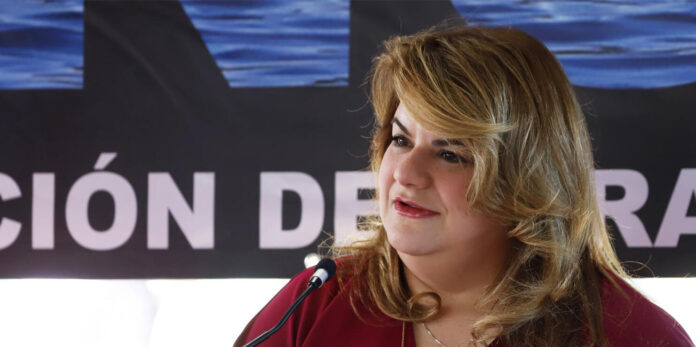
Fotografía de archivo de la representante de Puerto Rico ante el Congreso de Estados Unidos, Jenniffer González. (Foto: EFE/Thais Llorca)

La comisionada residente en Washington, Jenniffer González Colón, anunció este miércoles que otros tres congresistas republicanos se han sumado como coautores a la Ley de Estatus de Puerto Rico H.R.2757, que busca celebrar un referendo sobre el futuro político de la isla.

El apoyo de Nicole Malliotakis, del distrito 11 de Nueva York; Bill Posey, del distrito 8 de la Florida, y James Moylan, delegado del territorio americano de Guam, puede suponer un impulso debido a que mayoritariamente son los republicanos los que se muestran más reacios a aprobar este proyecto de estatus.

«Siempre dije que aumentar el apoyo a favor de la causa de la ‘estadidad’ (anexión de Puerto Rico a Estados Unidos) sería parte central de mi agenda legislativa, y así lo hemos cumplido», dijo la comisionada en un comunicado.

González Colón y el Partido Nuevo Progresista (PNP) al que pertenece apoyan la «estadidad», pero el proyecto de ley incluye también en el eventual referendo las opciones de independencia y soberanía en libre asociación.

La comisionada agradeció a los congresistas republicanos su respaldo a «este importante proyecto de ley para los ciudadanos americanos en Puerto Rico».

«Seguiré a paso firme recabando dentro y fuera del Congreso apoyo para las aspiraciones de igualdad expresadas por nuestra gente, según el mandato que nos dieron al respaldar mayoritariamente la ‘estadidad’ en el plebiscito (no vinculante) de noviembre del 2020», agregó.

La semana pasada, González Colón, tras sostener conversaciones y reuniones con congresistas en Washington, anunció que los republicanos Milke Lawler del estado de Nueva York, Bill Huizenga del estado de Míchigan, y Amata Coleman Radewagen de American Samoa se sumaron igualmente como coasupiciadores de la medida.

La Ley de Estatus de Puerto Rico, conocida de manera técnica como H.R. 2757, volvió a introducirse formalmente el pasado abril, después de que la victoria de los republicanos en el Congreso obligara a iniciar el proceso pese a que el proyecto original había sido aprobado en diciembre de 2022.

El siguiente paso sería que el proyecto fuera estudiado y votado en el Comité de Recursos Naturales para que luego hubiera un voto en el pleno, pero el proceso se encuentra estancado.

Pennsylvania court permanently blocks effort to make power plants pay for greenhouse gas emissions

In this file photo from June 10, 2021, a flume of emissions flow from a stack at the Cheswick Generating Station, a coal-fired power plant, in Springdale, Pa. Pennsylvania cannot enforce a regulation to make power plant owners pay for their planet-warming greenhouse gas emissions, a state court ruled Wednesday, Nov. 1, 2023, dealing another setback to the centerpiece of former Gov. Tom Wolf's plan to fight global warming. (Photo: AP/Keith Srakocic/File)

HARRISBURG, Pa. — Pennsylvania cannot enforce a regulation to make power plant owners pay for their planet-warming greenhouse gas emissions, a state court ruled Wednesday, dealing another setback to the centerpiece of former Gov. Tom Wolf’s plan to fight global warming.

The Commonwealth Court last year temporarily blocked Pennsylvania from becoming the first major fossil fuel-producing state to adopt a carbon-pricing program, and the new ruling makes that decision permanent.

The ruling is a victory for Republican lawmakers and coal-related interests that argued that the carbon-pricing plan amounted to a tax, and therefore would have required legislative approval. They also argued that Wolf, a Democrat, had sought to get around legislative opposition by unconstitutionally imposing the requirement through a regulation.

The court agreed in a 4-1 decision.

It would be up to Wolf’s successor, Democratic Gov. Josh Shapiro, to decide whether to appeal the decision to the state Supreme Court. Shapiro’s administration had no immediate comment on the ruling, and Shapiro hasn’t said publicly if he would follow through on it.

Republican lawmakers hailed the decision and urged Shapiro not to appeal it. Critics had said the pricing plan would raise electricity bills, hurt in-state energy producers and drive new power generation to other states while doing little to fight climate change.

Opponents also included natural gas-related interests in the nation’s No. 2 gas state, industrial and commercial power users and labor unions whose members work on pipelines and at power plants and refineries.

The regulation written by Wolf’s administration had authorized Pennsylvania to join the multistate Regional Greenhouse Gas Initiative, which imposes a price and declining cap on carbon dioxide emissions from power plants.

Backers of the plan had called it the biggest step ever taken in Pennsylvania to fight climate change and said it would have generated hundreds of millions of dollars a year to promote climate-friendly energy sources and cut electricity bills through energy conservation programs.

The plan’s supporters included environmental advocates as well as solar, wind and nuclear power producers.

Ahyda Esther Anaya de García 1938-2023

Impacto le extiende nuestro más sentido pésame a la familia García Anaya, en especial a Eduardo García, nuestro compañero y amigo, por la sensible perdida de su madre la señora Ahyda Esther Anaya de García, que el 31 de octubre del 2023 partió a mejor vida.

La familia García Anaya, originaria de Colombia, entre las muchas contribuciones que han dado su descendencia, está Impacto, periódico de origen comunitario y administración familiar, dirigido por Napoleon por casi dos décadas, que, junto con sus hermanos, posicionaron el semanario en el Valle Delaware.

Agradecidos por sus continuas contribuciones a la comunidad latina de Filadelfia, les abrazamos en su perdida, y les deseamos pronta resignación, con el alivio que les da, el que doña Ahida vivió una vida plena, de servicio, y que sus frutos hablan de su fe en Cristo Jesús. En paz descanse.

Editorial Roundup: Pennsylvania

LNP/LancasterOnline. October 27, 2023

Editorial: Automatic voter registration in Pennsylvania boosts GOP voter rolls. Will Republicans now back other pro-democracy measures?

We have been saying this all along: Measures that make voter registration and casting ballots easier benefit both parties and, most importantly, benefit democracy.

This is why last month we lauded Shapiro’s implementation of automatic voter registration as a great step forward. And it’s why we continue to champion no-excuse mail-in voting, which Republicans also favored in 2019 when they voted with Democrats to enable it under Pennsylvania law.

Unfortunately, since Donald Trump lost the 2020 presidential election, many Republicans have sought to cast suspicion on measures that expand voter access.

So we weren’t surprised that Republican state Rep. David Zimmerman of East Earl Township decried the implementation of automatic voter registration. As WITF’s Robby Brod reported, Zimmerman called the new system “quite the cover for what could be making a gateway for illegal aliens to vote.”

That is a ridiculous assertion.

Secretary of the Commonwealth Al Schmidt, who formerly served as a Philadelphia city commissioner, is the rare modern-day Republican who is eager to make the democratic process more accessible. Before taking on the role of overseeing Pennsylvania’s elections, Schmidt led the nonpartisan good-government group the Committee of Seventy. In a news release last month, Schmidt called registering eligible commonwealth residents to vote during their visits to PennDOT centers “a commonsense action,” with an “extremely secure” verification process.

In an interview with The Philadelphia Inquirer, Schmidt noted that automatic voter registration would improve “voter access and election integrity at the same time.”

He and other election officials pointed out that if a noncitizen or anyone ineligible to vote applies for a driver’s license or photo ID, the option to register to vote will simply not appear on the PennDOT screen.

There is reason to trust Schmidt on this. In the face of death threats, he was a courageous defender of democracy and the legitimacy of the 2020 presidential election when other Republicans pushed the Big Lie that it had been stolen from Trump.

And, as the Inquirer reported, Schmidt was — as a longtime Philadelphia Republican commissioner overseeing elections in that city — “the main voice in Pennsylvania pushing for changes to the state’s motor voter registration process to prevent noncitizens from getting onto the voter rolls. The Department of State said it fixed the issue in 2017.” And Schmidt said he’s now confident that it has indeed been fixed.

Just as there are plenty of reasons to trust Schmidt when he vouches for automatic voter registration, there are plenty of reasons to distrust Zimmerman’s claims denouncing it.

Zimmerman’s record on democracy is abysmal. He voted against the 2019 law that enabled no-excuse mail-in voting. He was a 2020 presidential election denie r who joined other GOP state lawmakers in calling for the creation of an investigatory committee with subpoena power to conduct an unnecessary audit of the 2020 election results. And in opposing automatic voter registration, he has proven himself to be wrong again.

It’s too early to say whether making it more convenient to register to vote will lead more people to actually cast ballots in Pennsylvania. But it can’t hurt.

We’d like to see other measures implemented to encourage voter participation.

Some possibilities were laid out in a Sept. 24 Sunday LNP ‘ LancasterOnline column written by Pat Christmas, the former chief policy officer of the Committee of Seventy. Among them: counting mail-in ballots that are returned without inner privacy envelopes or a handwritten date on the outer return envelope. As Christmas wrote, “These issues are immaterial to ballot integrity, yet upward of 16,000 Pennsylvanians didn’t have their votes counted in the 2022 midterms because of one or the other issues.”

To reject a mail-in ballot because the voter made a minor mistake is wrong and antidemocratic.

At a news conference Oct. 19, Schmidt said county election officials should do “everything they can” to help remedy mistakes made in mail-in ballots for the Nov. 7 municipal election, including sending corrected ballots to voters.

This is particularly relevant in Lancaster County, where erroneous instructions relating to the envelopes in the mail-in ballot materials were sent to about 24,000 voters.

As LNP ‘ LancasterOnline reported, the Lancaster County Board of Elections announced a policy allowing voters who believe they may have made a mistake caused by the inaccurate instructions to receive a new ballot, but only if they come to the Lancaster County Government Center by Nov. 6 with proper ID and an election worker verifies that their ballot contains an error related to the faulty instructions.

The county decided against sending replacement ballots to the affected voters — even though county officials clearly failed in the proofreading and quality control process to spot the erroneous instructions before they were mailed to voters. The offered remedy is minimal.

The onus remains on voters to take action if they believe the bungled instructions caused them to make an error in the way they returned their mail-in ballots. As Mary Grill of the League of Women Voters of Lancaster County told the county elections board at its Oct. 18 meeting, the board’s supposed remedy is “kind of disingenuous because we’re asking the voter for more responsibility than the people in this room.”

She was right, of course.

Other Pennsylvania counties allow what is known as ballot curing; that is, they permit voters to fix minor errors on their ballots. But not Lancaster County, where Democratic Commissioner John Trescot’s ballot curing proposal was rejected last spring.

Here, mistakes only can be overlooked when they’re made by county officials. And measures to make the voting process easier — from registration to making sure that ballots are counted — continue to face resistance and suspicion, to the detriment of democracy.

___

Pittsburgh Post-Gazette. October 25, 2023

Editorial: Pandemic-era Medicaid and CHIP enrollments must stay

Children are once again at the front lines of pandemic-era social service cuts, this time in the form of Medicaid restarting its annual eligibility checks, which has resulted in many eligible children losing their benefits.

Altogether, around half of the children losing Medicaid have done so for administrative reasons, not because they have been proved ineligible. The state must ensure the accuracy of Medicaid enrollments, but it shouldn’t be doing so by carelessly erring on the side of ending benefits for vulnerable people who may well still be eligible.

The state’s “unwinding” of the pandemic rules, which allowed continuous coverage without renewal procedures, has resulted in a messy administrative backlog since the process began nationwide in April. In particular, families who moved during the pandemic, switched jobs or are receiving other government benefits are now getting lost in a bureaucratic maze trying to receive the care they previously had access to.

But other Medicaid recipients — in Pennsylvania, a maximum of 100,000 people may have been affected — have gotten kicked off the rolls because the state’s automatic system doesn’t assess eligibility on an individual basis, but only through households. This led the state, and 30 others, to incorrectly remove coverage from entire families if even just one person in the household is ineligible.

Caseworkers now have to manually collect data to approve each individual case. As of Oct. 23, no one in Pennsylvania affected by the glitch had been re-enrolled.

The hope was that children losing Medicaid might transition to other forms of coverage. However, CHIP (Children’s Health Insurance Program) enrollment has stayed flat, indicating that children getting removed from Medicaid remain uninsured, or that their parents are opting for pricier private coverage.

Restoring automatic renewals based on reliable data the government already collects would be the obvious and least labor-intensive solution, at least until a better eligibility assessment system can be built. Right now, only 4% of Pennsylvania’s renewals go through this automatic process, the third-lowest rate in the nation.

Children’s health insurance doesn’t have to be this complicated. In late September, the Biden administration sent a letter to all states ordering 12 months of continuous Medicaid coverage for children, regardless of parents’ fluctuating incomes, starting in January 2024. This will buy time for states to staff up and fix their own Medicaid systems. However, families who have already been removed, or are currently in administrative limbo, won’t find relief until then.

The benefits of health insurance — benefits which help not just the child and family but society — are undermined when coverage is inconsistent. Developing relationships with primary care providers and removing the price burden for routine appointments results in better health outcomes and fewer emergency room visits.

Governor Josh Shapiro has emphasized streamlining government agencies, and the failure in “unwinding” Medicaid is a conspicuous example of the inadequacy of the bureaucracy he inherited. The state must provide support for families who have been erroneously removed from the rolls through the end of the year — while building out a modern, efficient and above all accurate system for determining eligibility moving forward. Children’s well-being depends on it.

___

Pittsburgh Tribune-Review. October 29, 2023

Editorial: Should Pennsylvania require schools to have armed security?

Whether we are talking about individual incidents or the attacks with high casualty numbers like those in Uvalde, Texas, or Newtown, Conn., everyone agrees that children should be safe at school.

They just don’t agree on how to make that happen. Some want more gun control. Some want more mental health solutions. Others want more guns but in different hands.

On Tuesday, the Senate Education Committee approved a measure introduced by state Sen. Mike Regan, R-Cumberland/York. If adopted, Senate Bill 907 would require a school to “certify to the School Safety and Security Committee that an armed school security personnel” be present during the regular instructional day. A district could make its own decisions about security for extracurricular hours.

The personnel might be police officers, school resource officers or security guards. That would accommodate places that have their own police departments, relationships with municipal departments or contracts for private armed security. It would force the issue for districts that don’t use any such options.

Sometimes that is because there are opponents of having armed personnel in schools. They may argue that such a presence didn’t help at the 2018 Parkland, Fla., shooting in which a school resource officer was on site but faced negligence and felony child neglect charges when he failed to act. He was acquitted in June.

But arguing whether a proactive measure would help is not productive. Taking any steps to protect kids is worth discussing.

The real issue is the logistics.

Not every district has that kind of room in the budget. In fact, few do, making this yet another unfunded state mandate. It’s easy to demand action when you aren’t paying the bill. Making this a requirement could force districts to pull the money from elsewhere, possibly affecting education.

Then there is the fact schools already are having trouble finding people for other jobs like substitutes and bus drivers. For that matter, so are police departments and prisons, other government agencies that would pull from the same pool.

One line in the bill says “school security personnel may have other duties as assigned by the school entity.” Would that allow the district to satisfy the law by having a teacher or janitor deputized to fulfill the requirement and carry a weapon?

Regan seems aware there are issues.

“Is it perfect? No. Is it going to be comprehensive? No. But it will give our kids a chance if there’s an armed intruder or an armed person within the school,” he told Pennlive.com.

No solution will be perfect, and we should never let striving for perfection stand in the way of just doing better. But it is important to consider whether all 500 Pennsylvania school districts could provide what would be required — especially as more police departments are closing for lack of funds and personnel.

___

Uniontown Herald-Standard. October 26, 2023

Editorial: This is no time to move up the 2024 Pennsylvania presidential primary. But what about for 2028?

Despite Pennsylvania’s recurring importance in picking the president in the general election, the state falls considerably short when it comes to deciding the nominees.

Joe Biden became the presumptive 2020 Democratic nominee in April – about two weeks before the Pennsylvania primary was scheduled. The primary had been moved up a month to allow voters a better shot at meaningful participation, but the COVID-19 pandemic interfered, and the primary took place in June.

Donald Trump became the 2016 Republican nominee about a week after the Pennsylvania primary, but that was largely semantic. Of 56 primaries and caucuses in U.S. states and territories that year, Trump won 41. Hillary Clinton didn’t secure her Democratic slot until June 2016.

The state has made nods to this over the years. While off-year primaries take place in mid-May, presidential primaries are moved up to April in an effort to be part of the conversation.

In 2024, however, the move to April 23 has a second problem. It will put people going to the polls during Passover, which some – including Gov. Josh Shapiro – worry could depress participation. That has prompted questions about moving the primary even earlier. The House of Representatives would like April 2; the state Senate would prefer March 19.

But the County Commissioners Association of Pennsylvania said in a letter to lawmakers and the governor that it just won’t work.

“While we thank the General Assembly and the administration for their thoughtful discussions around this matter, at this date counties can no longer guarantee there will be sufficient time to make the changes necessary to assure a primary on a different date would be successful,” Executive Director Lisa Schaefer wrote.

This is an all-too-common issue with government. Enthusiasm for an idea has to be balanced with the ability to implement it – or the wherewithal to overcome those limitations.

The state might make the decisions about when an election is held and set certain rules about it, but making it happen falls to the counties.

That is not to say Pennsylvania shouldn’t consider moving primaries to early April, March or even earlier. But this isn’t a decision to make in late 2023 for 2024. It’s a decision to think about now regarding 2028. Passover will be April 10-18 that year, so it will only be a factor if the primary is moved up without adequate consideration. The desire to be more active in the presidential nominating process will still be on the table.

Changes need to happen thoughtfully, proactively and with enough time to see them implemented without an undue burden on the counties.

END

Grupo de defensa de medios acusa a Israel y Hamás de crímenes de guerra tras muerte de 34 reporteros

En esta imagen de archivo, reporteros observan mientras palestinos inspeccionan un edificio alcanzado por un bombardeo israelí en la Ciudad de Gaza, 8 de octubre de 2023. El limitado número de periodistas que están en Gaza tratan de informar sobre la guerra con Israel mientras sufren los mismos problemas que la asediada población palestina de la Franja. (Foto: AP/Fatima Shbair/ Archivo)

La guerra entre Israel y Hamás se ha cobrado la vida de 34 reporteros, según dijo el miércoles un grupo que defiende la libertad de prensa, que acusó a ambos bandos de posibles crímenes de guerra.

Reporteros Sin Fronteras pidió a la Corte Penal Internacional (CPI) que investigue los asesinatos. La organización dijo que ya había presentado una denuncia sobre ocho periodistas palestinos que según dijo murieron en bombardeos israelíes sobre zonas civiles en la Franja de Gaza y un reportero israelí asesinado durante el ataque sorpresa de Hamás en el sur de Israel.

“La escala, la gravedad y el carácter recurrente de los crímenes internacionales contra periodistas, especialmente en Gaza, exigen una investigación prioritaria por parte del fiscal de la CPI”, dijo Christophe Deloire, director del grupo. La organización tiene su sede en Francia.

Esta es la tercera demanda de este tipo presentada por RSF desde 2018 por supuestos crímenes de guerra contra periodistas palestinos en la Franja. Israel dice que hace todo lo posible por evitar la muerte de civiles y acusa a Hamás de poner a la población en peligro al operar en zonas residenciales.

La nueva denuncia también menciona “la destrucción deliberada, total o parcial, de las oficinas de más de 50 medios en Gaza” desde que Israel declaró la guerra a Hamás por el cruento ataque del grupo miliciano el 7 de octubre, indicó la organización.

Otra organización de libertad de medios, el Comité para Proteger a los Periodistas, dijo el miércoles que investigaba reportes de periodistas “asesinados, heridos, detenidos o desaparecidos” en la guerra, lo que incluía casos en Líbano. Su cifra preliminar de muertos era de al menos 31 periodistas y trabajadores de medios.

“El CPP recalca que los periodistas son civiles haciendo una labor importante en momentos de crisis y no deben ser blanco de bandos enfrentados”, dijo Sherif Mansour, coordinador de programa para Oriente Medio y Norte de África de la organización sin fines de lucro.

La fiscalía de la CPI ya investigaba las acciones de las autoridades israelíes y palestinas desde la guerra entre Israel y Hamás en 2014. La pesquisa también puede valorar las acusaciones de delitos cometidos en la guerra actual.

Durante una visita al paso fronterizo de Rafah el domingo, el fiscal de la Corte Penal Internacional Karim Khan pidió a Israel que respete el derecho internacional pero no llegó a acusar al país de crímenes de guerra. Describió el ataque de Hamás del 7 de octubre como una violación del derecho internacional humanitario.

Israel alega que la CPI no tiene jurisdicción en el conflicto porque Palestina no es un estado soberano independiente. Israel no forma parte del tratado que respalda la corte internacional y no es uno de sus 123 estados miembros.

Reporteros Sin Fronteras dijo el domingo que los ataques que alcanzaron este mes a un grupo de periodistas en el sur de Líbano y mataron a una persona eran dirigidos y no accidentales, y que los periodistas estaban claramente identificados como miembros de la prensa.

La organización publicó conclusiones preliminares de una investigación aún en marcha, basadas en pruebas de video y declaraciones de testigos, sobre dos ataques que mataron al camarógrafo de Reuters Issam Abdallah e hirieron a seis periodistas de Reuters, AFP y Al Jazeera cuando cubrían los enfrentamientos en la frontera sur libanesa el 13 de octubre.

Philadelphia picks winning design for Harriet Tubman statue after controversy over original choice

Artist, Alvin Pettit speaks at the podium as his winning sculpture of Harriet Tubman is unveiled on Monday, Oct. 30, 2023, at Philadelphia City Hall in Philadelphia. (Jose F. Moreno/The Philadelphia Inquirer via AP)

PHILADELPHIA. — The city of Philadelphia has picked the winning design for a Harriet Tubman statue outside City Hall after facing criticism over its original choice of a white artist who’d been selected without competition.

Alvin Pettit beat out four other semifinalists with a design called “A Higher Power: The Call of a Freedom Fighter.» His nearly 14-foot bronze statue — the first of a Black woman who is a historical figure in the city’s public art collection — will portray Tubman as a military leader and freedom fighter.

The famed abolitionist — who escaped slavery and led other enslaved Black women and men to freedom on the Underground Railroad — worked as a scout, spy and nurse for the Union Army during the Civil War, and helped lead 150 Black soldiers on a gunboat raid in South Carolina.

«She is shown in majestic prayer. Perhaps she is calling upon her faith or contemplating a battle,” said Pettit, a Baltimore-bred artist based in Jersey City, New Jersey, at a news conference Monday as a clay model of the forthcoming sculpture was unveiled at City Hall.

“This woman was a soldier, a scout, a union spy, a military strategist, and a war hero,” he said. “Therefore I captured a moment in time that shows her as a conqueror.”

Last year, Philadelphia city officials offered the commission to another artist, Wesley Wofford, a white sculptor from North Carolina. The city contacted Wofford after a traveling version of his 2017 statue of Tubman appeared at City Hall. A group of artists and activists protested, saying the city should have held an open competition to give a chance to other artists, including Black artists — especially since it was for a piece of public art.

“As an artist, it’s hurtful and it is traumatizing,” Dee Jones, a textile artist, told city officials and Wofford during a community meeting in June 2022, The Philadelphia Inquirer reported. “If it was an open call, and Wesley was chosen, it would be fine. But because the process wasn’t open, that’s the big issue.”

Wofford ultimately dropped out, and the city’s Office of Arts, Culture and the Creative Economy, known as Creative Philly, issued an open call in August 2022 that attracted dozens of submissions.

After the finalists were chosen, the public got a chance to weigh in. City officials and the city’s African American Statue Advisory Committee, which included members of Tubman’s family, made the final selection.

Previously, Pettit has made monumental sculptures celebrating other historic Black figures, including educator and philanthropist Mary McLeod Bethune and iconic singer Marian Anderson.

Pettit’s small-scale mockup shows Tubman with her hands folded in prayer and a rifle slung over her back. Leaning forward, she stands on a pile of broken shackles with a pistol tucked in her waistband and the edge of the Confederate flag visible underneath her foot.

“Just to see the intricate details in her face. The bravery, the strength and the resilience, that she’s going to fight for her life,” Danetta Green Johnson, one of Tubman’s descendants, told NBC10 Philadelphia.

The $500,000 project budget includes artist payment, site work and modeling, engineering, materials and fabrication costs. The money comes from the city’s operating budget. The project is scheduled to be completed in 2025.

4 Pennsylvania universities closer to getting millions after House OKs bill on state subsidies

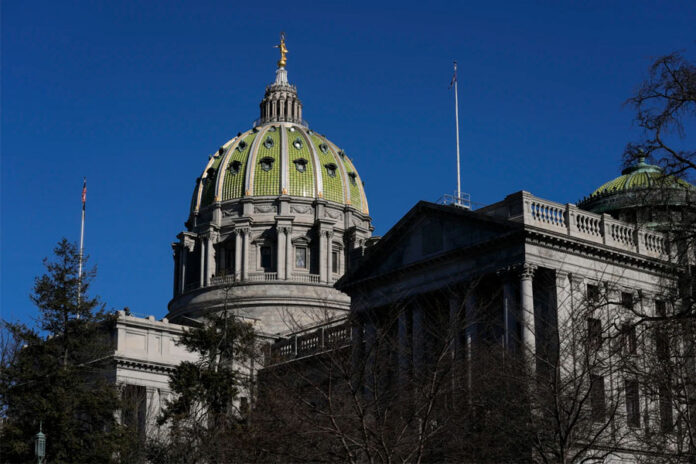
FILE - The Pennsylvania Capitol is seen, Dec. 16, 2021, in Harrisburg, Pa. Four of Pennsylvania’s top universities are getting closer to receiving their overdue state subsidies after the state House of Representatives passed their appropriation on Tuesday, Oct. 31, 2023, with the caveat the schools must freeze tuition next year. (AP Photo/Matt Rourke, File)

HARRISBURG, Pa. (AP) — Four of Pennsylvania’s top universities edged closer to receiving overdue state subsidies when the state House of Representatives approved their annual state subsidies on Tuesday, setting a condition that the schools freeze tuition next year.

The appropriation of about $643 million passed the House 145-57 and was sent to the state Senate, which is due back in session Nov. 13.

Funding for Penn State, Temple and Lincoln universities and the University of Pittsburgh has been snarled in the Legislature for months over a partisan dispute involving fetal tissue research and public disclosure of school records.

Republicans have repeatedly stopped the appropriation from receiving the required supermajority to get it out of the Democratic-majority House. Critics chafed at the proposed 7% increase in light of rising tuition costs and said the universities should be held to higher transparency standards.

On Monday, the House approved a bill that would expand what the universities must disclose about their finances and budget under the Right-to-Know Law, addressing one of the Republicans’ concerns. The universities say they support the transparency changes.

A proposal to require the universities to freeze tuition for the 2024-25 academic year was a late addition to the bill, particularly lauded by Republicans.

“The days of blank checks to these universities must come to an end, and passing this legislation with a tuition freeze in it is good policy for our students and their families,” said Republican Leader Rep. Bryan Cutler of Lancaster County.

Democrats, who tried to circumvent the necessary two-thirds vote for the state-related schools earlier this month, called the latest vote «option C.”

“We’re able to deliver for the universities, but we’re able to deliver for the students,” said Majority Leader Rep. Matt Bradford, of Montgomery County.

Pennsylvania ranks near the bottom in just about every measure for college affordability. Tuition rates are comparatively high, students tend to leave encumbered with more debt and the state provides a smaller subsidy for higher education.

Advocates say a lack of state aid is a big reason for Pennsylvania’s higher tuition rates.

“We can’t tell our young people that they should go to institutions of higher education, particularly our institutions here in Pennsylvania, and then make it unattainable because it’s unaffordable,” said Rep. Jordan Harris, D-Philadelphia.

Last week, the universities had sent a joint letter to leadership urging them to pass the funding, saying they were feeling strained without the money that helps pay in-state tuition. They said they had “done our very best” to address concerns about tuition increases, transparency measures and accountability.

“We hope these actions demonstrate our desire to be good partners with the Commonwealth,” they wrote.

El director del FBI alerta del riesgo de amenazas terroristas en EE. UU. inspiradas por Hamás

EFE/EPA/JIM LO SCALZO

Washington, (EFE).- El director del FBI, Christopher Wray, alertó este martes que su agencia ha detectado un mayor riesgo de amenazas terroristas en Estados Unidos inspiradas por el ataque del grupo islamista Hamás en Israel el pasado 7 de octubre.

Durante una audiencia en un comité del Senado, aseguró que el FBI ha determinado que las acciones de Hamás «servirán como inspiración» como no se ha visto «desde que el grupo Estado Islámico lanzó su llamado califato hace años».

En las últimas semanas, detalló el funcionario, la Inteligencia estadounidense ha detectado que «varias organizaciones terroristas» han instado a ataques contra estadounidenses y Occidente».

La guerra en Israel y la Franja de Gaza, explicó Wray, ha elevado las amenazas de un ataque terrorista contra los estadounidenses en su propio territorio «a otro nivel».

«No podemos ni debemos descartar la posibilidad de que Hamás u otra organización terrorista se aproveche del conflicto actual para llevar a cabo ataques aquí en nuestro propio suelo», subrayó.

Sin embargo, el encargado de liderar el FBI aseguró que hasta el momento no tienen información que indique que el grupo islamista palestino tenga la intención o la capacidad de llevar a acabo ataques dentro de EE.UU.

Wray mencionó que su agencia ha detectado que tanto el Estado Islámico como Al Qaeda han ya lanzado llamamientos a la acción en contra de estadounidenses y comunidades judías tanto en territorio norteamericano como en Europa.

El pasado 7 de octubre, un ataque sorpresa de Hamás en Israel acabó con la vida de más de 1.400 personas, además de la captura de 239 rehenes, según la cifra actualizada este fin de semana por el Ejército israelí.

En represalia, el Gobierno israelí ha lanzado una dura ofensiva contra la Franja de Gaza con el objetivo de «destruir a Hamás» que ha causado ya más de 8.000 muertos y casi 19.000 heridos en estos 23 días de guerra.