


6.6 C
Philadelphia
spot_img
Inicio Blog Página 791

In Pennsylvania’s Senate race, McCormick elevates the Israel-Hamas war in a bid for Jewish voters

senate
David McCormick, a Republican candidate for U.S. Senate in Pennsylvania, speaks during a discussion with military veterans organized by his campaign at an American Legion hall, Jan. 18, 2024, in Harrisburg, Pa. (Photo: AP/Marc Levy)

HARRISBURG, Pa. — A Republican running for the U.S. Senate in Pennsylvania is escalating criticism of Democrats over the Israel-Hamas war and has traveled to the Israel-Gaza border to make the case that the Biden administration hasn’t backed Israel strongly enough since the Oct. 7 attack by Hamas.

The criticism by GOP candidate David McCormick reflects the delicate political challenge facing both President Joe Biden and incumbent Democratic Sen. Bob Casey in a state Democrats can’t afford to lose in 2024.

Biden, who is seeking a second term as president, has been criticized from the left for being too pro-Israel in his response to its war on Hamas and for not doing enough to address the burgeoning humanitarian crisis among Palestinians in Gaza.

McCormick’s attacks echo those voiced on the GOP’s presidential campaign trail where candidates have portrayed Biden’s policy on Iran — a key financial backer of Hamas — as too weak to frighten what the U.S. calls the world’s leading state sponsor of terrorism.

McCormick said the U.S. should impose sanctions to cut off Iran’s oil sales and mount a more muscular response to attacks on U.S. targets in the Middle East to restore an order upended by what he called Biden administration mistakes going back to an incompetent withdrawal from Afghanistan.

“The key to America’s role in the world is peace through strength,» McCormick said in an interview Thursday. “And so I think what we’re seeing is the failure of deterrence. I think what we’re seeing is a belief, across the world, among our adversaries, that America’s a little flat-footed. America’s weak.”

Neither Casey nor McCormick are likely to face serious opposition in Pennsylvania’s April 23 primary before facing off against each other in November’s general election.

McCormick’s focus on the issue comes as a barrage of U.S., coalition and militant attacks in the Middle East are compounding U.S. fears that Israel’s war on Hamas in Gaza could expand.

David McCormick, a Republican candidate for U.S. Senate in Pennsylvania, laughs during a discussion with military veterans organized by his campaign at an American Legion hall, Jan. 18, 2024, in Harrisburg, Pa. (Photo: AP/Marc Levy)

The Biden administration’s support for Israel has been complicated politically in other states the president is counting on in his reelection bid. In Michigan, for example, Democrats worry that losing support among the state’s large Arab-American population over the war could damage their prospects. Michigan also has an open Senate seat on the ballot this year.

Pennsylvania and Michigan, along with Wisconsin, are indispensable parts of a “ blue wall ” of Rust Belt states that helped Biden defeat former President Donald Trump in 2020 after Trump won those states in 2016.

In the Senate, Democrats maintain a narrow majority, one that became more perilous late last year with the retirement of West Virginia Sen. Joe Manchin. That makes Casey’s seat even more pivotal to his party’s efforts to maintain control of the chamber.

McCormick’s effort to highlight his support for Israel is unique thus far in this year’s high-profile Senate contests, and it could become a test case for Republicans in fall general election contests.

McCormick hopes to peel off not only swing voters in Pennsylvania, but also members of the state’s relatively large Jewish community who vote predominantly Democratic — but could make a difference in a close election.

Even though the war has divided both Democrats and Jews, taking votes from Casey poses a formidable challenge. The incumbent senator is well-regarded by Pennsylvania’s Jewish community and has been a reliable ally in Congress for Israel and its fight against Hamas.

Vowing solidarity with Israel, McCormick took a two-day trip to Israel where he visited a kibbutz that was attacked by Hamas and met with government officials, hostage families and survivors of the Oct. 7 attacks.

McCormick, a former hedge fund CEO, told reporters that the fight against Hamas is between “the West versus evil.” He followed the trip with a media blitz and a letter to what his campaign said were tens of thousands of “persuadable” voters in Pennsylvania.

In the letter, McCormick quotes an orthodox rabbi known for his outreach to secular Jews and the Jewish scholar Hillel.

“Israel needs America’s firm and unequivocal support,” McCormick wrote. “Hamas must be destroyed. The lesson of October 7 is clear — the Middle East respects strength and that is why Israel must win. America’s mission must be to help Israel win. It’s that simple.”

McCormick did not mention Casey in the two-page letter. But he separately accused Casey and Biden of “appeasement” of Iran, going back to what he called the “original sin” of Casey’s support for the Iran nuclear deal under President Barack Obama in 2015 that critics say gave Iran the cash it needed to fund terror.

Casey countered that he has fought for years to back Israel in its fight against Hamas and that the Iran nuclear deal had been working — until Trump withdrew the U.S. from the agreement.

“That’s the type of reckless policy my opponent supports,» Casey said in a statement.

On policy, Casey’s and McCormick’s positions on Israel have a lot in common.

They both support military aid to Israel, backing Israel’s mission to destroy Hamas and putting aside allegations of Israeli war crimes, saying they are convinced Israel has gone to great lengths to avoid civilian casualties.

Both have slammed the savagery of the Hamas attack, and accused it of using civilians as human shields. Arab nations that publicly criticize Israel’s counterattack on Gaza privately tell their Israeli, U.S. and European counterparts that they want Hamas gone, Casey said on CBS News’ podcast “The Takeout.”

“They’re all saying, ‘please take out Hamas,’” Casey said.

Casey has not joined some of his Democratic colleagues in calling for a ceasefire, putting conditions on U.S. military aid to Israel or criticizing Israel for a bombing campaign that the the Hamas-controlled government says has killed more than 24,000 Palestinians. He also has not echoed Biden administration unease over the scale of Israel’s military operation.

Casey, running for a fourth-term, is endorsed by the fundraising powerhouse, the American Israel Public Affairs Committee, or AIPAC, and the former chairman of a Foreign Relations subcommittee on the Middle East has visited Israel six times over his 17-year Senate career.

In recent days and weeks, Casey visited a Jewish Community Center in Pittsburgh, attended the “March for Israel” on Washington’s National Mall and spoke at a synagogue in Philadelphia to denounce antisemitism.

For McCormick, foreign policy is a strength of his and a cornerstone of his campaign, something of a rarity in the current era. The decorated Army veteran held senior posts in the administration of President George W. Bush, including deputy national security adviser for international economic policy, and served on a defense policy board under Trump.

Republicans see Pennsylvania as a battleground state with a significant enough Jewish population — around 400,000, by their estimate — to swing an election decided by tens of thousands of votes.

For Jewish voters, Israel is not the only issue they care about, but it is a higher priority after the attack by Hamas, said Christopher Borick, director of the Muhlenberg College Institute of Public Opinion in Allentown.

Jewish voters typically vote overwhelmingly Democratic, and Democrats right now are trying to balance their interest in protecting Israel with that of younger voters, who have been sympathetic to Palestinians, he said.

“That’s something, of course, Democrats have to address in keeping their coalition together,” Borick said. “Jewish voters have been one of their most loyal supporter groups. Although not a gigantic segment of the population, it’s nonetheless crucial given the nature of tight elections in Pennsylvania.”

Nikki Haley, tras la retirada de DeSantis: «Ya solo quedamos un hombre y una mujer»

nikki haley
(Foto: EFE/MICHAEL REYNOLDS)

La aspirante presidencial republicana Nikki Haley recalcó este domingo que las primarias de su partido se dirimirán entre ella y el expresidente de Estados Unidos Donald Trump, después de que el gobernador de Florida, Ron DeSantis, se haya retirado de la contienda.

En un acto de campaña en Seabrook (Nuevo Hampshire) tras hacerse pública la renuncia del floridano, Haley deseó «lo mejor» a DeSantis, de quien dijo ha «hecho una gran carrera y está siendo un gran gobernador».

«Dicho esto, ya solo quedamos un hombre y una mujer» en las primarias republicanas, subrayó Haley, quien fuera embajadora estadounidense ante la ONU entre 2017 y 2018.

Ron DeSantis anunció este domingo por sorpresa que abandona las primarias y dio su respaldo a Trump, cuando quedan solo dos días para la cita clave de Nuevo Hampshire.

«No tenemos un camino claro para la victoria. Por eso, hoy suspendo mi campaña», reconoció en un video.

El gobernador de Florida dijo que apoya a Trump, el gran favorito en el proceso interno, para evitar que regrese «la vieja guardia republicana» y arremetió contra Haley, a quien considera cercana a la ideología ‘woke’ (progresista).

DeSantis, gobernador de Florida desde 2019 y representante del ala dura del partido, lanzó su candidatura en mayo de 2023, cuando las encuestas lo situaban como el único capaz de batir a Trump en las primarias, pero su imagen se ha ido desinflando en el último año.

En lo caucus de Iowa del pasado 15 de enero, la primera cita de la contienda republicana, De Santis logró el segundo puesto, por detrás de Trump y por delante de Haley.

Sin embargo, los sondeos lo sitúan en el tercer lugar, muy por detrás de sus dos rivales, en las primarias clave de Nuevo Hampshire, que se celebrarán el próximo martes.

Aunque Trump es el gran favorito de las primarias, Nikki Haley se ha volcado en la campaña en Nuevo Hampshire para recortar distancias y erigirse como la alternativa a Trump dentro del partido.

Sean Desai, coordinador defensivo de Eagles, fue despedido por Nick Sirianni, dice fuente de AP

eagles
Sean Desai, coordinador defensivo de Eagles. (Foto: AP/Archivo)

Nick Sirianni, head coach de los Eagles de Filadelfia, despidió al coordinador defensivo Sean Desai, una persona con conocimiento de la decisión dijo a The Associated Press.

La persona habló en condición de anonimato debido a que el equipo no ha anunciado oficialmente el movimiento.

Desai perdió la tarea de mandar las jugadas defensivas ante el coach asistente Matt Patricia en diciembre. Los Eagles pasaron de un arranque con marca de 10-1 a perder en la ronda de comodines contra Tampa Bay luego de terminar 11-6 la temporada regular.

NFL Network fue el primer medio en reportar el cese de Desai.

Desai remplazó a Jonathan Gannon, quien dejó a Filadelfia para convertirse en el entrenador en jefe de Arizona después de que los Eagles perdieron con los Chiefs en el Super Bowl.

Desai fue asistente defensivo en Seattle en 2022 y previamente pasó nueve temporadas en Chicago, incluido un año como coordinador defensivo en 2021.

Eagles defensive coordinator Sean Desai has been fired by coach Nick Sirianni, AP source says

eagles
(Photo: AP/File)

Philadelphia Eagles coach Nick Sirianni has fired defensive coordinator Sean Desai, a person familiar with the decision told The Associated Press on Sunday.

The person spoke on condition of anonymity because the team hasn’t announced the move.

Desai lost his play calling duties to assistant coach Matt Patricia in December. The Eagles went from 10-1 to losing in the wild-card round to Tampa Bay after finishing 11-6 in the regular season.

NFL Network first reported Desai’s firing.

Desai replaced Jonathan Gannon, who left Philadelphia to become the head coach in Arizona after the Eagles lost to the Chiefs in the Super Bowl.

Desai was a defensive assistant in Seattle in 2022 and previously spent nine seasons in Chicago, including one year as defensive coordinator in 2021.

¿Qué sucedería si Biden o Trump se retirara de las elecciones de 2024?

elecciones
Combinación fotográfica muestra al presidente de EE. UU., Joe Biden, y al expresidente Donal Trump, quienes hasta ahora se proyectan como los rivales en las elecciones presidenciales de 2024. (Foto: VOA)

Los pronósticos y las proyecciones indican que el presidente Joe Biden y el expresidente Donald Trump volverán a enfrentarse en las elecciones de EE. UU. en noviembre de 2024. ¿Qué sucedería si alguno se retira? La VOA se lo explica.

El presidente Joe Biden y el expresidente Donald Trump están en camino de una revancha en las elecciones presidenciales del 5 de noviembre. Las encuestas muestran que Trump tiene una ventaja dominante sobre todos los demás candidatos republicanos, mientras que ninguna figura demócrata importante está desafiando a Biden por la nominación de su partido.

Sin embargo, las preguntas sobre las dificultades legales de Trump y las edades de ambos candidatos acechan en el fondo. Trump enfrenta 91 cargos por delitos graves y se espera al menos un juicio penal este año. Y los problemas de salud podrían afectar a Trump, de 77 años, o a Biden, de 81.

¿Qué pasaría si alguno de ellos se viera obligado a abandonar la carrera por motivos de salud, legales o de otro tipo? La respuesta depende de cuándo se produzca tal escenario.

Entre el 15 de enero y las convenciones del partido

Los estados celebran asambleas electorales y elecciones primarias entre el 15 de enero y el 4 de junio de 2024. Los dos candidatos que obtengan la mayor cantidad de delegados se convertirán oficialmente en los nominados de sus partidos durante las convenciones.

La Convención Nacional Republicana se llevará a cabo del 15 al 18 de julio en Milwaukee, Wisconsin. La Convención Nacional Demócrata se llevará a cabo del 19 al 22 de agosto en Chicago, Illinois.

Se espera que tanto Trump como Biden sean nominados por sus respectivos partidos. Pero si uno abandona entre el inicio de la temporada de primarias y el inicio de la convención de su partido, algunos estados pueden extender los plazos de presentación de candidatos y las fechas de las primarias para permitir que más personas participen en la carrera, dependiendo de cuándo ocurra.

Es más probable que tales extensiones ocurran con los demócratas, ya que Biden no tiene un competidor importante. Sus rivales, el representante Dean Phillips y la autora Marianne Williamson, carecen de reconocimiento de nombre y ya no califican para aparecer en las boletas electorales de varios estados.

“Querrían que hubiera algo parecido a las primarias”, dijo John C. Fortier, investigador especializado en elecciones y continuidad del gobierno en el American Enterprise Institute. «Sería un aviso muy breve, pero podrían presentarse ante la gente», dijo a la Voz de América.

Incluso con procesos implementados, puede que no haya tiempo para cambiar los nombres en las boletas, y los votantes primarios pueden terminar viendo el nombre de un candidato fallecido o incapacitado cuando votan. Dado que algunos estados permiten la votación anticipada, es posible que un candidato que se retire ya haya acumulado votos.

En ese caso, los estados pueden promulgar cambios de emergencia en las leyes para permitir que los delegados cambien sus votos a un nuevo candidato durante la convención. Para ganar la nominación, un candidato republicano necesita al menos 1.215 de 2.429 delegados, y un candidato demócrata necesita 1.969 de 3.936.

«Puede que no sea alguien que esté actualmente en la carrera», dijo Michael Thorning, director de democracia estructural del Bipartisan Policy Institute. “Podría ser alguien que la convención determine que es el mejor abanderado del partido y la persona con más probabilidades de ganar en las elecciones generales”, dijo a la VOA.

Entre las convenciones y el día de las elecciones

Cada partido tiene su propio conjunto de reglas en caso de que su candidato abandone durante este período, pero en esencia reemplazaría el nombre del candidato en la boleta presidencial. Es posible que se requieran cambios de emergencia en algunas leyes estatales.

«Existe un proceso técnico en el que no toda la convención, sino un grupo más pequeño de personas que dirigen el partido, personas que en realidad no son conocidas por los estadounidenses, pueden tomar la decisión de nombrar a otra persona como nominado», dijo Fortier.

Añadió que los partidos probablemente tendrían que hacer un llamamiento al pueblo estadounidense y explicarle por qué el nuevo candidato tiene legitimidad.

Si bien a la vicepresidenta Kamala Harris se le podría pedir que encabece la lista demócrata, por ejemplo, la ley no lo exige.

«El estatus de compañero de fórmula en ese momento no confiere ninguna garantía de que accedan a la presidencia», dijo Thorning.

Una vez más, puede que no haya tiempo para reemplazar el nombre del ex candidato en las papeletas, y es posible que ese candidato ya tenga votos debido a las encuestas anticipadas.

Entre el día de las elecciones y la reunión del Colegio Electoral

Una vez resueltas las dudas o impugnaciones sobre los resultados electorales, los electores de cada estado se reunirán el 17 de diciembre para seleccionar al presidente electo y al vicepresidente electo.

Si Trump o Biden murieran o quedaran incapacitados durante este tiempo, su vicepresidente electo no sería automáticamente el sustituto, ya que las disposiciones de la ley de línea de sucesión presidencial aún no se aplican.

El proceso de reemplazo durante este período es esencialmente el mismo: los electores del presidente electo votarían por un nuevo candidato. No existe una guía federal sobre el proceso y algunos estados tienen sus propias reglas sobre cómo votan los electores.

El vicepresidente electo sería una elección lógica pero no garantizada por la ley.

Si los electores no pueden ponerse de acuerdo sobre un nuevo presidente electo, según la 12ª Enmienda, la Cámara de Representantes elegiría al presidente y el Senado elegiría al vicepresidente, en un procedimiento conocido como “elección contingente”.

Hasta que el Congreso nombre a un nuevo presidente electo, según la Vigésima Enmienda, el vicepresidente electo se convierte en presidente interino el día de la toma de posesión.

Entre la reunión del Colegio Electoral y la certificación del Congreso

No está claro qué sucedería si un candidato muere o queda incapacitado entre la reunión de electores del 17 de diciembre y el recuento y certificación de los votos electorales del 6 de enero en el Congreso.

Entre la certificación del Congreso y el día de la toma de posesión

Según la Vigésima Enmienda, el vicepresidente electo asumiría el cargo de presidente el 20 de enero de 2025 si el presidente electo muere o queda incapacitado después de que el Congreso certifique el resultado de las elecciones.

En cada período, existe la posibilidad de que se produzca una crisis legal y política, especialmente si el resultado de las elecciones se impugna como lo fue en 2020. Como los demócratas tienen una escasa mayoría en el Senado y los republicanos en la Cámara de Representantes, determinar quién se convertiría en el próximo presidente podría convertirse en un proceso extremadamente complicado que se prolongaría en los tribunales.

Y como presenció el país durante el asedio del Capitolio por parte de los partidarios de Trump el 6 de enero de 2021, la situación podría volver a tornarse sangrienta.

Tormenta de nieve deja un intenso frío y causa muertes y accidentes en EE. UU.

nieve
(Foto: EFE/Octavio Guzmán)

Millones de personas en Estados Unidos se han visto afectadas por tormentas de nieve, el frío, la lluvia y el viento gélido que desde hace dos semanas afectan gran parte del país causando muertes, cancelaciones de vuelos, cortes de luz, cierre de escuelas y accidentes de tránsito.

De acuerdo con diversos medios, unas 89 personas han muerto en al menos 13 estados debido a la primera ola invernal del año, que ha llevado la sensación térmica a temperaturas bajo cero.

Tennessee, que declaró el pasado miércoles el estado de emergencia, ha acumulado el mayor número de víctimas, con 25, desde que el sistema invernal comenzó a afectar ese estado el 14 de enero, según datos del Departamento de Salud citados por medios locales.

Las muertes han ocurrido por hipotermia, accidentes de tránsito por carreteras que resbalan tras la nevada, y problemas con el sistema de calefacción.

Los residentes de Tennessee han tenido que lidiar con nueve pulgadas de nieve (22,8 cm). La Oficina para el Manejo de Emergencias del estado advirtió en su página que muchas carreteras, especialmente las rutas secundarias, siguen viéndose afectadas ya que aún hay nieve y frío extremo y exhortó a que se conduzca con cuidado.

Se han reportado además muertes en Oregón, con al menos 16 víctimas, incluidos tres adultos que perdieron la vida el miércoles cuando un árbol cayó sobre su coche, de acuerdo con la cadena CBS.

Oregón, donde las escuelas tuvieron que cerrar y más de 45.000 personas quedaron a oscuras, también continua el estado de emergencia.

Se han reportado otros cortes de energía en Pensilvania, California, Nuevo México e Indiana, debido a las malas condiciones del tiempo que se espera continúen hasta inicios de esta semana.

También se han reportado muertes en Illinois, Pensilvania, Misisipí, Kentucky y Wisconsin, entre otros, aunque algunas siguen bajo investigación para confirmar que están relacionadas con el clima que afecta al país.

De acuerdo con el Servicio Nacional de Meteorología se espera que una serie de frentes y sistemas de baja presión traigan aire más cálido a la mitad oriental de Estados Unidos a mediados de la próxima semana.

Trump el negacionista climático en jefe

climático
Antonieta Cádiz es actualmente la directora general de asuntos latinos para Climate Power. (Foto: Archivo)

Tras los resultados del caucus de Iowa esta semana, quedó claro que Donald Trump retornó con fuerza y probablemente será el candidato del Partido Republicano. En su discurso de victoria, lejos de hablar de una visión de un país que cumpla con su parte para hacer frente a la crisis climática, aseguró que una de las prioridades de una futura administración sería «Drill, baby, drill», es decir, aumentar las operaciones de gas y petróleo, los mayores contaminantes responsables de las emisiones que provocan el cambio climático.

Tan sólo pensar en una presidencia de Trump es aterrador, pero para quienes necesitan refrescar su memoria, sobre todo cuando se trata de clima…. Recordemos que su respuesta ante un huracán de las proporciones de María fue ir a Puerto Rico a lanzar toallas de papel. Recordemos que él nos sacó del Acuerdo de París y desmanteló más de 100 disposiciones medioambientales necesarias para proteger nuestro medioambiente y salud. La lista es larga y estos son sólo algunos ejemplos de una verdad inequívoca. Trump es un negacionista climático y bajo su liderazgo la crisis climática no tendrá solución.

El año 2023 fue el más caluroso jamás registrado. A través del país se experimentaron desde incendios forestales mortales en Hawái hasta un tramo récord de 31 días a 110 °F o más en Arizona. Y a sólo pocos días de comenzar el 2024, los científicos afirman que este año podría ser aún más caluroso que el 2023. Esta tendencia se puede convertir en la norma, si la extracción de combustibles fósiles no disminuye significativamente antes de 2030.

Desde temperaturas récord en Iowa esta semana hasta tornados y fuertes vientos, todo el país se ha visto afectado por condiciones meteorológicas extremas. La crisis climática sigue llamando a la puerta de los votantes, y cada vez es más amplio el consenso en que el próximo presidente debe tomar medidas para abordar el cambio climático.

El año pasado, EE. UU. experimentó 28 desastres meteorológicos y climáticos diferentes que costaron miles de millones de dólares. Esto supera a 2020 -que tuvo 22 eventos- para el récord del mayor número de desastres de millones de dólares en los EE. UU.. El clima extremo exacerbado por el cambio climático es letal y costoso para los contribuyentes.

Trump ya ha convertido la negación sobre el cambio climático en una parte central de su tercera campaña para la Casa Blanca, difundiendo falsedades respaldadas por las grandes petroleras sobre la energía limpia, los precios del gas y los vehículos eléctricos, mientras ignora la realidad científica del cambio climático. Una vez más, sostiene que el calentamiento global causado por el hombre es un engaño y que el camino a seguir es «perforar, perforar, perforar».

Una presidencia más de Trump significaría un gran paso atrás en todo el progreso que hemos logrado. Una presidencia de Trump significaría retomar la producción total de combustibles fósiles, lo peor posible para nuestro planeta.

No podemos permitirnos deshacer el progreso que hemos alcanzado, que es bueno para nuestro planeta, nuestras comunidades y nuestros bolsillos. El Plan de Energía Limpia del presidente Biden ya ha generado la creación de más de 211.000 nuevos puestos de trabajo en energías limpias, incluido un crecimiento significativo del empleo en los estados clave como Arizona, Nevada, Michigan y Georgia. Durante la presidencia de Trump, por el contrario, se cerraron fábricas de automóviles y desaparecieron puestos de trabajo.

En Estados Unidos millones de votantes latinos ponen al cambio climático como uno de los temas más importantes en su agenda política y sabemos que 2024 será un año donde los Latinos tendremos que elegir entre dos extremos: un negacionista climático como Trump o un presidente como Biden, que ha liderado avances enormes para mitigar y protegernos del cambio climático a través de su Plan de Energía Limpia. La opción es clara.

Pensilvania es el octavo mejor estado en el manejo del trastorno por uso de sustancias (TUS) y rehabilitación de salud mental

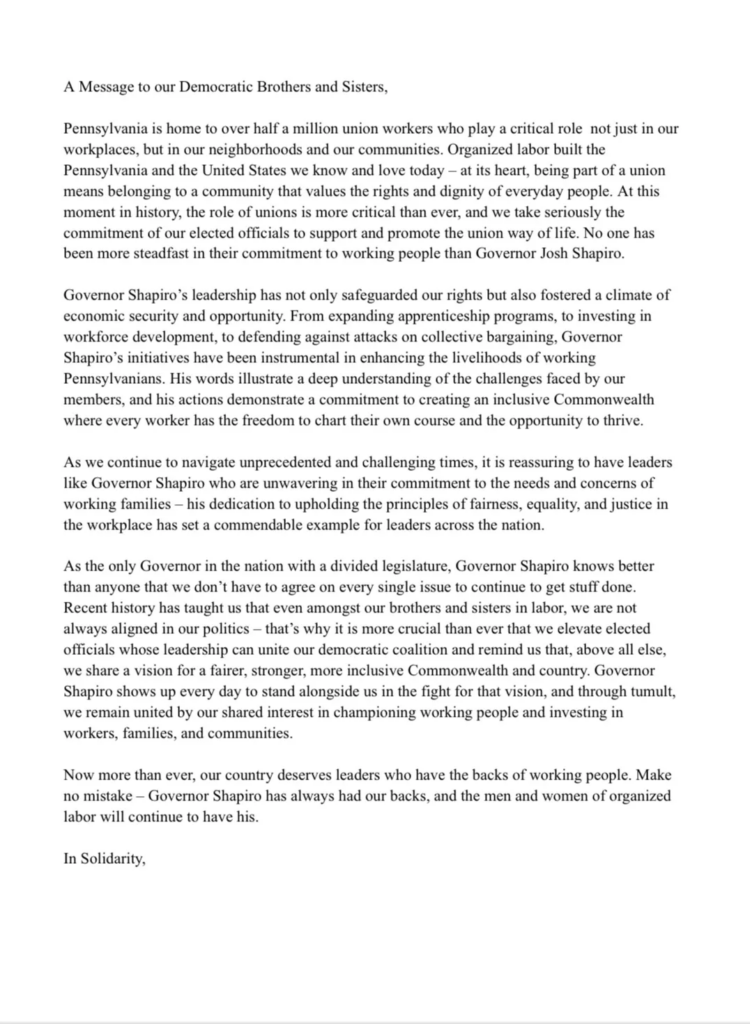
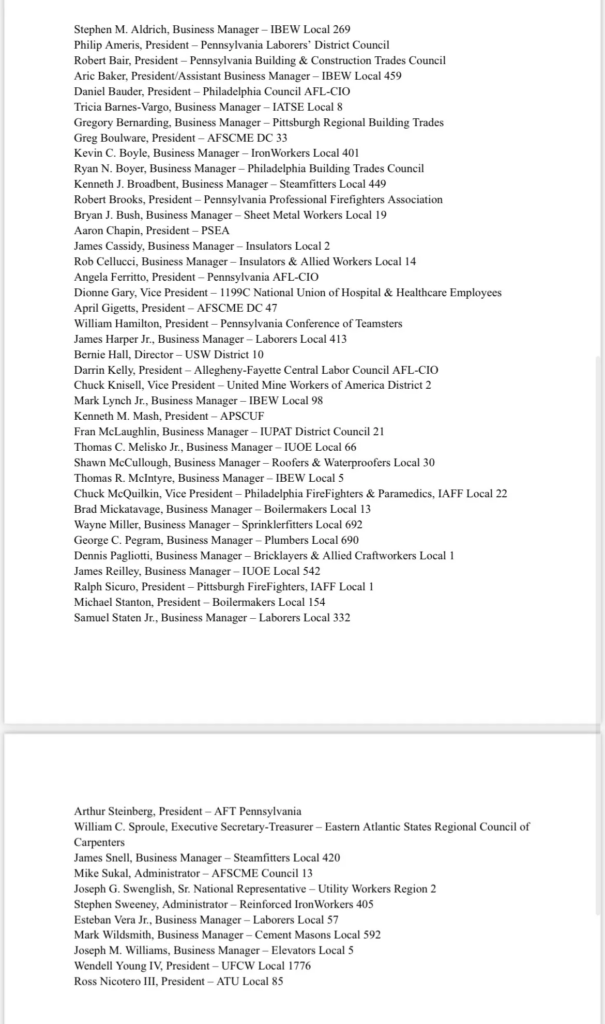
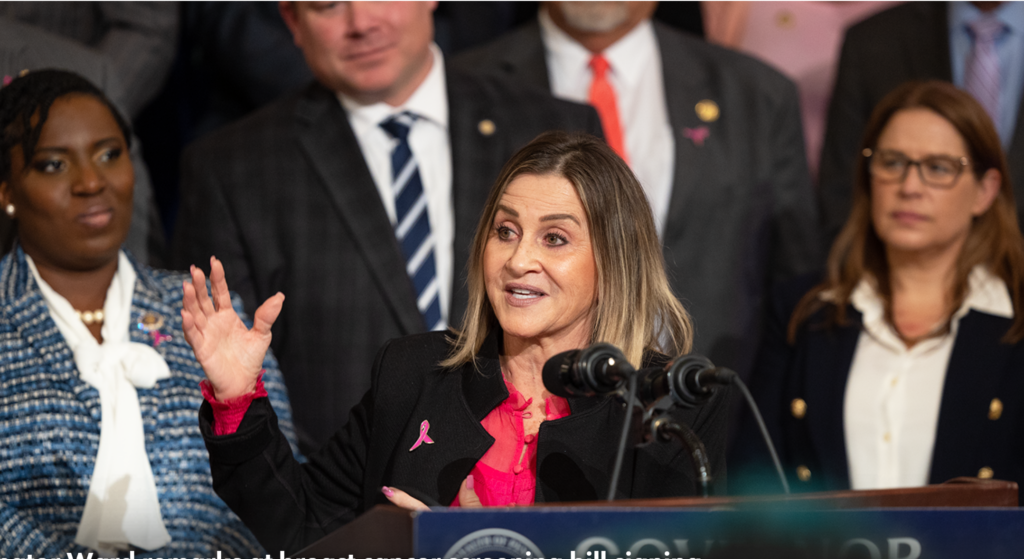
Governor Josh Shapiro signed an Executive Order directing Commonwealth agencies to collaborate with mental health and substance use disorder stakeholders to streamline and improve the accessibility of mental health and substance use disorder (SUD) services across the Commonwealth. The Council is the first-of-its-kind for the Commonwealth and will develop and recommend to the Governor a statewide action plan to address any gaps in access, affordability, or delivery of services, with the goal of removing silos across state agencies, healthcare providers, payers, state and local government sectors, and decreasing the wait time for services for Pennsylvanians in need. OCTOBER 11, 2023 - HARRISBURG, PA

Pensilvania clasificado como uno de los 10 mejores estados en cuanto a acceso e inversiones a tratamientos de salud mental y trastornos por uso de sustancias

El Departamento de Programas de Drogas y Alcohol de Pensilvania (DDAP) anunció esta semana por medio de un comunicado, que según un estudio reciente que utiliza datos de la Administración de Servicios de Salud Mental y Abuso de Sustancias (SAMHSA), Pensilvania se ubica como el octavo mejor estado de los EE. UU. para trastorno por uso de sustancias (TUS) y rehabilitación de salud mental.

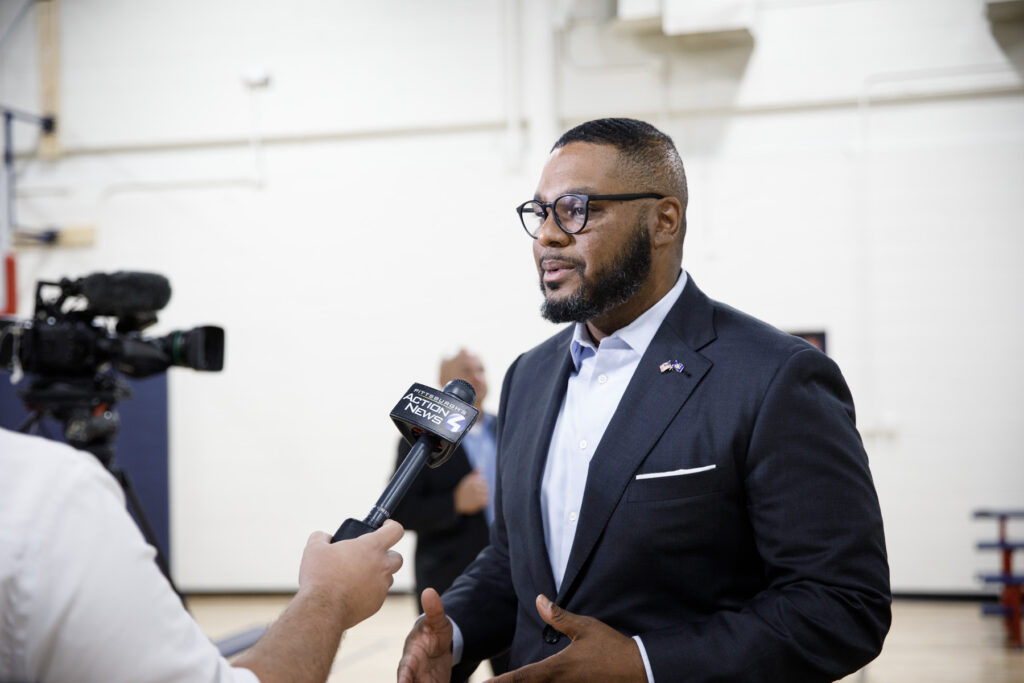
“Es alentador ver a Pensilvania entre los diez primeros del país en cuanto a acceso e inversiones al tratamiento del trastorno por uso de sustancias. Realmente confirma nuestro compromiso con la misión y los valores del departamento y con las sólidas asociaciones que tenemos en el campo”, dijo la secretaria del DDAP, Dra. Latika Davis-Jones. «La Administración Shapiro se esfuerza continuamente por tener el tratamiento más accesible, equitativo y de mayor calidad disponible para quienes más lo necesitan en Pensilvania».

Para extraer los hallazgos del estudio se utilizaron datos de SAMHSA, la agencia del Departamento de Salud y Servicios Humanos de EE. UU. que lidera los esfuerzos de salud pública para promover la salud conductual de la nación. El estudio fue publicado por el centro de tratamiento de SUD de Maryland, The Freedom Center, y se basó en un análisis de la cantidad de centros de tratamiento en cada estado a partir de 2023 combinado con la cantidad de fondos que cada uno gastó en esfuerzos de salud conductual ese año también.

Según el estudio, Pensilvania tiene cuatro centros de tratamiento de TUS por cada 100.000 personas y gasta 281,86 dólares per cápita en salud conductual.

Dr. Davis-Jones has extensive experience in behavioral health including most recently from Highmark Wholecare, a Medicaid managed care provider in Southwest PA where she served as the senior director of behavioral health.
(DDAP Secretary Latika Davis-Jones. Credit: Commonwealth Media Services)

Las personas que buscan tratamiento por uso de sustancias o recursos de recuperación para ellos o para un ser querido también pueden conectarse a los recursos locales de SUD llamando a la línea de ayuda gratuita PA Get Help Now al 1-800-662-HELP (4357). Esta línea de ayuda es confidencial, está disponible las 24 horas del día, los 365 días del año y cuenta con profesionales capacitados que conectarán a las personas que llaman con los recursos de su comunidad. Además, las personas que llaman pueden acceder a financiación si necesitan ayuda para pagar el tratamiento.

Además, los residentes de Pensilvania también pueden utilizar Treatment Atlas, un recurso gratuito en línea para encontrar de forma confidencial un tratamiento para el SUD que satisfaga sus necesidades.

Treatment Atlas permite a las personas y a sus seres queridos encontrar y comparar instalaciones de tratamiento para pacientes hospitalizados, residenciales, ambulatorios y ambulatorios intensivos. Las personas pueden buscar utilizando criterios como ubicación, uso de mejores prácticas, tipos de servicios de tratamiento, opciones de pago, aseguradoras aceptadas, poblaciones especializadas atendidas y experiencia del paciente. Treatment Atlas también incluye una evaluación para comprender el nivel adecuado de atención que puede ser necesario.

Actualmente, el 81 por ciento de las instalaciones de tratamiento autorizadas en Pensilvania han enviado información para ser incluida en el Atlas de Tratamiento. Desde su lanzamiento en Pensilvania en junio de 2021, casi 600 centros de tratamiento de SUD con licencia DDAP en todo el estado se han inscrito en la plataforma.

En 2023, la Administración Shapiro superó sus objetivos de inscripción de proveedores para Treatment Atlas, poniendo más proveedores a disposición de los residentes de Pensilvania que buscan servicios Treatment Atlas también contiene la información de contacto de todos los centros de tratamiento autorizados en Pensilvania, incluso aquellos que no se han inscrito.

How to stay healthy during cold, flu and COVID-19 season

COVID-19
FILE - A pedestrian wears a heavy coat against the cold in New York, Tuesday, Jan. 11, 2022. January can be the worst month for respiratory illnesses and vaccination rates are low. When relatives, friends and co-workers are coming down with coughs, nasal congestion, fatigue and fever, keeping viruses at bay means thorough hand-washing, good ventilation and wearing a mask in crowded areas. (AP Photo/Seth Wenig, File)

Winter is here, inflicting its usual array of symptoms — coughs, nasal congestion, fatigue and fever — and, this year, a new COVID-19 variant is dominating the scoreboard.

COVID-19 is leading hospital admissions among the respiratory viruses, according to the U.S. Centers for Disease Control and Prevention.

Last week, 25 U.S. states had high or very high levels for respiratory illnesses with fever, cough and other symptoms. That’s down from 37 states the week before, the CDC said.

Since the beginning of October, there have been at least 16 million illnesses, 180,000 hospitalizations, and 11,000 deaths from flu so far this season. The CDC said 47 children have died of flu.

January can be the worst month for these illnesses. With vaccination rates low, what can you do to protect yourself from respiratory viruses, including influenza, COVID-19 and RSV?

BACK TO BASICS

Hand-washing remains crucial to reducing the spread of viral infections. Take your time at the sink. Twenty seconds is recommended. If you feel silly singing “Happy Birthday” twice while you scrub with soapy water, count to 20. Slowly.

Use hand sanitizer with 60% alcohol when you don’t have access to soap and water.

Also, wear a mask in crowded areas. Increase ventilation in your workplace and home.

NOT TOO LATE TO VACCINATE

In the United States, only 17% of those eligible have received the updated COVID-19 vaccine, which provides good protection against the now-dominant JN.1 variant.

It’s not too late to roll up your sleeve. While you’re at it, make sure you’ve had your annual flu shot. Those 60 and older may want to get the RSV vaccine, which also is recommended during pregnancy to prevent RSV in infants.

WHEN YOU HAVE CHILDREN AT HOME

Young children seem to pick up every germ going around. Can their parents avoid getting sick?

This time of year, children are indoors in close quarters with other kids, touching the same toys and surfaces, said Jennifer Sonney of University of Washington School of Nursing in Seattle. Some haven’t learned to cover their coughs and they simply haven’t been exposed to many illnesses, so their immune systems are still developing.

It’s important to take care of yourself if you’re a parent or caregiver of young children, said Sonney who is immediate past president of the National Association of Pediatric Nurse Practitioners.

“We know if you are sleep deprived or dehydrated or experiencing a lot of stress, that can compromise your immune function,” Sonney said.

Having young children is very demanding, “so all of this advice needs to be interpreted within the context of reality,» she said. «Despite doing everything right, kids are still going to get colds.”

A special note if your baby is sick: It’s a good idea to have saline drops and a bulb syringe at home. They can be used to clear mucus from tiny nostrils.

“A couple drops of saline into one nostril and suction it and then do the other side,” Sonney said. “Doing that before eating and sleep is going to help a lot.”

A home kit for children could also include acetaminophen or ibuprofen for fevers, tissues for runny noses and water bottles of sippy cups for staying hydrated.

TEST TO TREAT

If you do get sick, prompt testing can help determine whether you have COVID-19 or influenza. That’s important to see if you need one of the medicines that can help prevent severe illness: Paxlovid for COVID-19 and Tamiflu for flu.

If you don’t have a test kit at home, look for a test-to-treat site at a pharmacy clinic or health center near your. There is also a free home-based test-to-treat program for adults who are uninsured or rely on government health insurance.

Biden and Netanyahu have finally talked, but their visions still clash for ending Israel-Hamas war

ARCHIVO - El presidente Joe Biden es recibido por el primer ministro israelí Benjamin Netanyahu tras llegar al aeropuerto internacional Ben Gurion, el 18 de octubre de 2023, en Tel Aviv. (AP Foto/Evan Vucci)

Biden and Netanyahu finally spoke in direct communication during which fundamental differences have come into focus over a possible pathway to Palestinian statehood

President Joe Biden and Israeli Prime Minister Benjamin Netanyahu finally spoke Friday after a glaring, nearly four-week gap in direct communication during which fundamental differences have come into focus over a possible pathway to Palestinian statehood once the fighting in Gaza ends.

Biden and his top aides have all but smothered Netanyahu with robust support, even in the face of global condemnation over the mounting civilian death toll and humanitarian suffering in Gaza as the Israelis have carried out military operations in the aftermath of the Oct. 7 attack on Israel.

But the leaders’ relationship has increasingly shown signs of strain as Netanyahu has repeatedly rebuffed Biden’s calls for Palestinian sovereignty, gumming up what the U.S. president believes is the key to unlocking a durable peace in the Middle East — the oft-cited, elusive two-state solution.

Neither side shows signs of budging.

Friday’s phone call came one day after Netanyahu said that he has told U.S. officials in plain terms that he will not support a Palestinian state as part of any postwar plan. Biden, for his part, in Friday’s call reaffirmed his commitment to work toward helping the Palestinians move toward statehood.

“As we’re talking about post-conflict Gaza … you can’t do that without also talking about the aspirations of the Palestinian people and what that needs to look like for them,” said National Security Council spokesman John Kirby.

The leaders spoke frequently in the first weeks of the war. But the regular cadence of calls between Biden and Netanyahu, who have had a hot-and-cold relationship for over three decades, has slowed considerably. Their 30- to 40-minute call Friday was their first conversation since Dec. 23.

Both sides are hemmed in by domestic political considerations.

There is also growing impatience with Netanyahu in Israel over the lack of progress in freeing dozens of hostages still held by Islamic militants in Gaza.

“There is certainly a reason to be concerned,” says Eytan Gilboa, an expert on U.S.-Israeli relations at Israel’s Bar-Ilan University, “The more and more we see political considerations dominating the relationship between Biden and Netanyahu, which is likely to continue because of the upcoming presidential election and the weakness of both leaders, the more we will see them pulling apart.”

In their most recent calls, Biden’s frustration with Netanyahu has grown more evident, even though the U.S. leader has been careful to reaffirm his support for Israel at each step, according to U.S. officials who requested anonymity to discuss the leaders’ private interactions.

Yet, Biden, at least publicly, has not given up on the idea of winning over Netanyahu. Asked by a reporter on Friday if a two-state solution is impossible while Netanyahu is in office, Biden replied, “No, it’s not.”

Aides insist Biden understands the political box Netanyahu finds himself in with his hard-right coalition and as he deals with ongoing corruption charges that have left the prime minister fighting for his freedom, not just his political future.

Meanwhile, Biden faces American voters in November in a likely rematch with former President Donald Trump. Netanyahu and Trump forged a close relationship during the Republican’s term in office. Biden faces criticism from some on his left who believe he hasn’t pushed the Israelis hard enough to demonstrate restraint as it carries out military operations.

Key Democratic lawmakers, including Massachusetts Sen. Elizabeth Warren and Connecticut Sen. Chris Murphy, this week warned that Netanyahu’s position on statehood could complicate negotiations in the Senate on a spending package that includes military aid for Israel.

Expect Netanyahu to “use every trick that he has to keep his coalition together and avoid elections and play out the clock,” said Michael Koplow, chief policy officer at the Israel Policy Forum. ”And I’m sure that part of it is a conviction that if he waits until November, he may end up with Donald Trump back in the Oval Office.”

Expect Netanyahu to “use every trick that he has to keep his coalition together and avoid elections and play out the clock,” said Michael Koplow, chief policy officer at the Israel Policy Forum. ”And I’m sure that part of it is a conviction that if he waits until November, he may end up with Donald Trump back in the Oval Office.”
EFE/EPA/SHANNON STAPLETON / POOL

In recent weeks, some of the more difficult conversations have been left to Ron Dermer, a top aide to Netanyahu and former Israeli ambassador to the U.S., and Biden’s national security adviser, Jake Sullivan. The two top aides talk almost daily — sometimes multiple times during a day, according to a U.S. official and an Israeli official, who were not authorized to comment publicly and spoke on the condition of anonymity.

Other senior Biden administration officials including Secretary of State Antony Blinken and Defense Secretary Lloyd Austin, as well as senior advisers Brett McGurk and Amos Hochstein, have been at the forefront of the administration’s push to engage the Israelis and other Middle East allies as the Biden-Netanyahu dialogue has become less constructive.

Netanyahu, who has opposed calls for a two-state solution throughout his political career, told reporters this week that he flatly told U.S. officials he remains opposed to any postwar plan that includes establishment of a Palestinian state.

The prime minister’s latest rejection of Biden’s push in that direction came after Blinken this week said at the World Economic Forum in Davos that Israel and its Middle East neighbors had “a profound opportunity” to solve the generational Israel-Palestinian conflict. Asked if he thought Netanyahu was up to making the most of the moment, Blinken demurred.

“Look, these are decisions for Israelis to make,” Blinken said. “This is a profound decision for the country as a whole to make: What direction does it want to take? Does it see — can it seize — the opportunity that we believe is there?”

Netanyahu publicly resisted, before eventually relenting to, Biden’s calls on the Israelis to wind down a May 2021 military operation in Gaza. And in late 2019, during a question and answer session with voters on the campaign trail, Biden called Netanyahu an “extreme right” leader.

The path to a two-state solution — one in which Israel would co-exist with an independent Palestinian state — has eluded U.S. presidents and Middle East diplomats for decades.

But as the war grinds on, Biden and his team have pressed the notion that there is a new dynamic in the Middle East in which Israel’s Arab and Muslim neighbors stand ready to integrate Israel into the region once the war ends, but only if Israel commits to a pathway to a Palestinian state.

Biden has proposed that a “revitalized” Palestinian Authority, which is based in the West Bank, could run Gaza once combat ends. Netanyahu has roundly rejected the idea of putting the Palestinian Authority, which is beset by corruption, in charge of the territory.

Netanyahu argues that a Palestinian state would become a launchpad for attacks on Israel. So Israel “must have security control over the entire territory west of the Jordan River,” Netanyahu said. “That collides with the idea of sovereignty. What can we do?”

White House officials have sought to play down Netanyahu’s public rejection of Biden’s call for a two-state solution, noting that the prime minister’s rhetoric is not new.

They hold out hope Israel could eventually come around to accepting a Palestinian state that comes with strong security guarantees for Israel.

«I don’t think Biden has any illusions about Netanyahu,” said Daniel Kurtzer, who served as U.S. ambassador to Egypt during the Bill Clinton administration and to Israel under George W. Bush. “But I don’t think he’s ready to slam the door on him. And that’s because he gets the intersection between the policy and the politics.

AP writers Julia Frankel in Jerusalem and Ellen Knickmeyer, Seung Min Kim and Colleen Long in Washington contributed reporting.