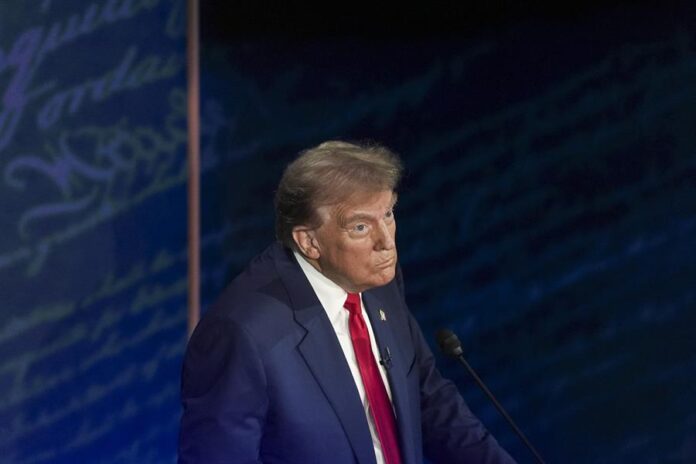
Pese a que está imputado por su posible participación en el asalto al Capitolio de 2021, el expresidente Donald Trump insistió este martes en el primer debate presidencial que no fue responsable de lo sucedido y acusó a quienes estaban encargados de la seguridad, entre ellas a la entonces líder de la cámara de Representantes, Nancy Pelosi.
«No tuve nada que ver con eso, aparte de que me pidieron que hiciera un discurso (…) Dije que creía que iba a ser grande y fui a ver a Nancy Pelosi y a la alcaldesa de Washington», relató.
Les pidió 10.000 guardias nacionales o soldados, pero le rechazaron, continuó. «Nancy Pelosi me rechazó (…) Nunca hubiera sucedido si Nancy Pelosi y la alcaldesa hubieran hecho su trabajo. Yo no era responsable de la seguridad», afirmó.
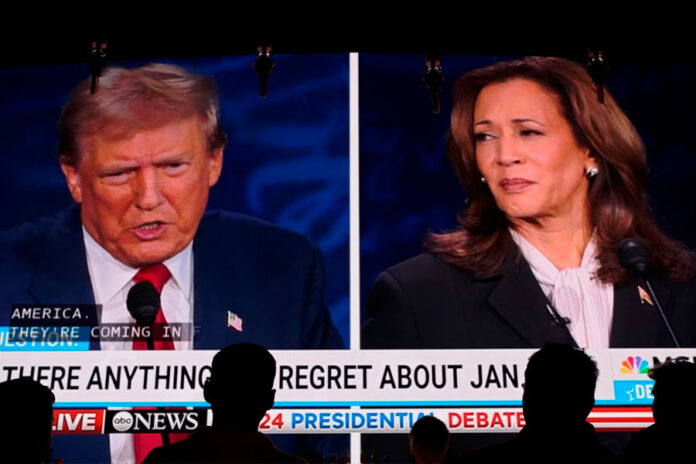
Trump fue cuestionado por los moderadores de si se arrepentía de algo de lo sucedido entonces y, aunque al principio trató de evitar la pregunta hablando de su tema predilecto, la inmigración, acabó respondiendo a la repregunta y evadiendo responsabilidades.
La vicepresidenta, Kamala Harris, recordó que ese 6 de enero de 2021 ella estaba en el Capitolio como vicepresidenta electa y también como senadora interina. Aquel día «el presidente de Estados Unidos incitó a una turba violenta a atacar la capital de nuestra nación, a profanar la capital de nuestra nación», dijo.
La candidata demócrata recordó que 140 agentes de la ley resultaron heridos y algunos murieron, y subrayó que «el expresidente ha sido acusado y enjuiciado exactamente por esa razón».
Trump, prosiguió, «ha dicho que en estas elecciones habrá un baño de sangre si el resultado no es de su agrado. Pasemos página. No retrocedamos. Tracemos un rumbo para el futuro y no retrocedamos al pasado», clamó la vicepresidenta.
El magnate neoyorquino se convirtió a finales de mayo en el primer expresidente estadounidense en ser condenado por un delito. Un jurado de Nueva York lo declaró culpable de 34 cargos por falsificar registros comerciales para encubrir el pago a la actriz porno Stormy Daniels durante la campaña de 2016.
La vista judicial en la que se dictará sentencia está fijada para el 26 de noviembre, justo después de las elecciones del 5 de ese mismo mes.
Gran parte del futuro judicial de Trump se decidirá precisamente en las urnas, ya que si regresa a la Presidencia podría presionar al Departamento de Justicia –en teoría un órgano independiente– para que retire los cargos en su contra.
Además del caso en Nueva York, en los últimos meses se ha enfrentado a otros tres casos penales: uno en Washington D.C. por sus esfuerzos para revertir su derrota frente a Biden en 2020; otro en Georgia por las acciones que tomó con ese objetivo en ese estado; y otro en Florida por almacenar ilegalmente material clasificado en su mansión de Mar-a-Lago tras dejar la Presidencia (2017-2021).
Sin embargo, el caso de Georgia está en un impasse sin avances, el de Florida fue desestimado por una jueza nombrada por el propio Trump durante su mandato y el de Washington D.C. enfrenta complicaciones luego de que la mayoría conservadora del Tribunal Supremo otorgara a Trump inmunidad total por las acciones oficiales realizadas durante su presidencia.
Personas miran el debate presidencial el martes 10 de septiembre de 2024, en Las Vegas, EE. UU. (Foto: VOA)
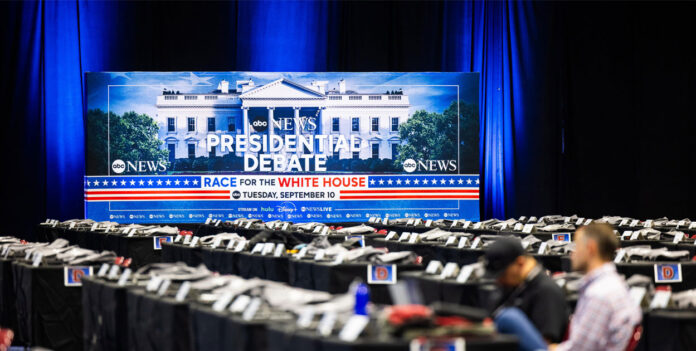
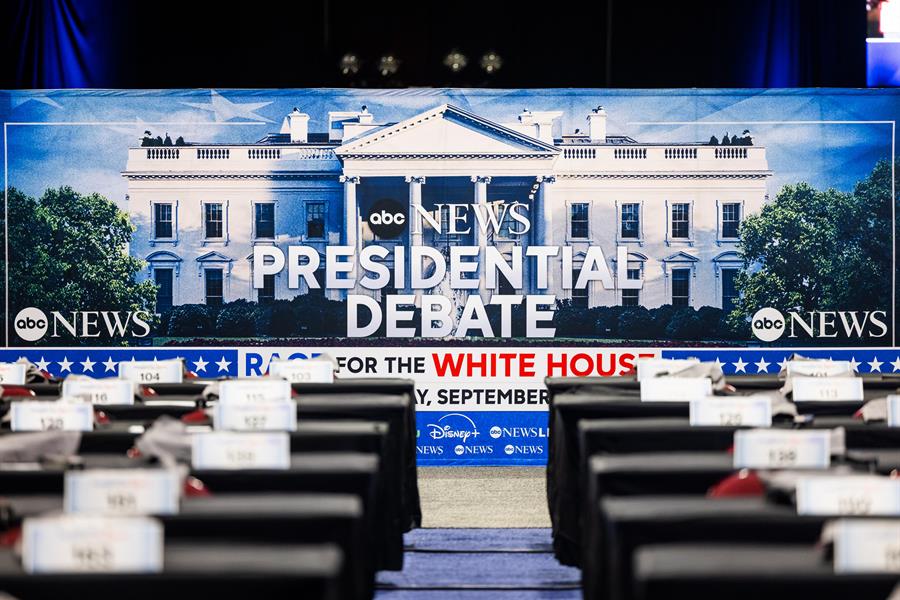
Donald Trump y Kamala Harris se encontraron por primera vez en Filadelfia para el debate presidencial de ABC News. El encuentro comenzó bajo el enfoque económico y se movió hacia la inmigración, que fue eje de pullas y menciones a Venezuela. Aborto y democracia también estuvieron en la conversación.
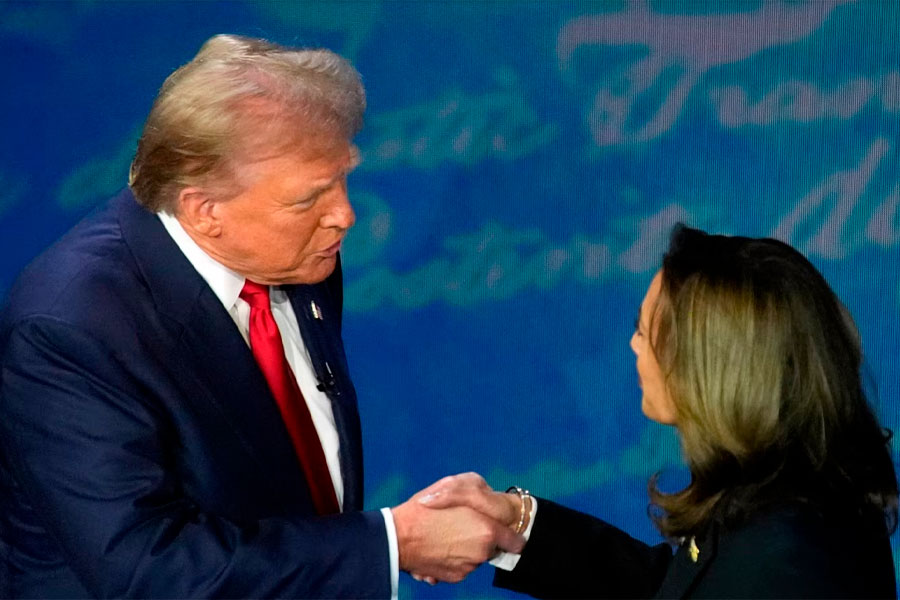
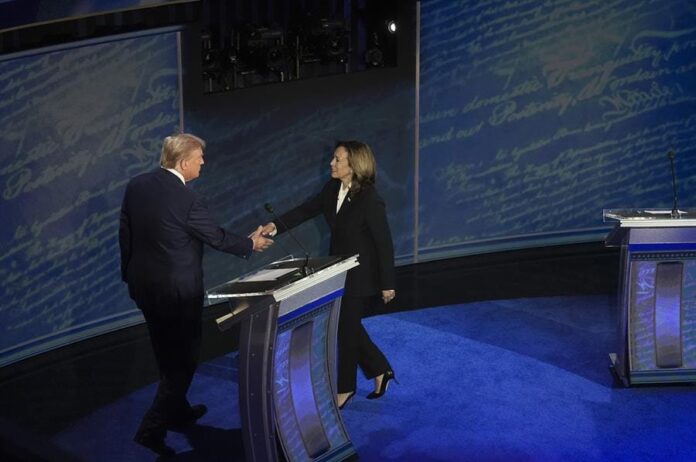
El primer debate presidencial entre el candidato republicano a la presidencia, Donald Trump, y la candidata demócrata, Kamala Harris, comenzó con economía como el primer tema principal de conversación. Al entrar al escenario, el martes 10 de septiembre, Harris se acercó a Trump y ofreció un saludo.
El debate se realizó ocho semanas antes de las elecciones del 5 de noviembre, y días antes de que comience la votación anticipada en algunos estados. Fue el primer debate presidencial para Harris, de 59 años, y el séptimo para Trump, de 78 años, teniendo en cuenta sus campañas desde 2016, que lo convierte en el candidato con más debates presidenciales en la historia estadounidense.
El costo de vida y el aborto fueron los dos primeros temas del debate, que después se movió hacia la inmigración, un tema que ambos candidatos repitieron en múltiples ocasiones durante el evento.
Inmigración divide a los candidatos
El tema de la inmigración comenzó con Harris, quien fue cuestionada sobre su trabajo para atender las raíces de la migración irregular. Al preguntarle por qué la administración esperó para imponer restricciones al asilo, Harris comenzó hablando sobre su récord como fiscal, asegurando que es “la única persona en este escenario que ha procesado a organizaciones criminales transnacionales por tráfico de armas, drogas y seres humanos”.
Harris habló sobre que un acuerdo bipartidista en el Senado que habría incluido estándares de asilo más estrictos y la contratación de más agentes fronterizos, jueces de inmigración y funcionarios de asilo estaba a punto de ser aprobado por el Congreso antes de que Trump se manifestara en contra de él.
“Habla de personajes ficticios como Hannibal Lecter. Habla de que los molinos de viento causan cáncer. Y lo que también notarán es que la gente empieza a marcharse de sus mítines temprano por cansancio y aburrimiento. Y les diré que de lo único de lo que no le oirán hablar es de ustedes mismos. No le oirán hablar de sus necesidades, sus sueños, sus necesidades y sus deseos”, dijo Harris.
Durante debates y discursos de campaña, Trump ha dicho sin datos concretos que los migrantes irregulares son los causantes de crímenes o actos violentos en ciudades estadounidenses, asegurando que estos “vienen de cárceles e instituciones mentales”.
Seis de cada 10 estadounidenses dicen que lidiar con la inmigración debería ser una prioridad para quien gane la presidencia, según el Centro de Investigación Pew.
Venezuela toma protagonismo
Trump, en su turno, dijo sin fundamento que los inmigrantes irregulares están “comiéndose las mascotas” de personas en ciudades como Springfield, donde líderes municipales han dicho que no hay pruebasde que esto esté ocurriendo.
“Ella está destruyendo este país, y si llega a ser presidenta, este país no tiene ninguna posibilidad de éxito, no sólo el éxito, terminará siendo Venezuela en esteroides”, dijo.
Trump, además, fue cuestionado sobre su plan de lanzar el mayor esfuerzo de deportación en la historia de Estados Unidos, centrándose en los criminales pero con el objetivo de enviar a millones de personas de regreso a sus países de origen.
“Ellos permitieron que entraran criminales, muchos, muchos millones de criminales. Permitieron que entraran terroristas. Permitieron que entraran delincuentes callejeros comunes. Permitieron que entraran personas, traficantes de drogas, a nuestro país, y ahora en Estados Unidos, y en países como Venezuela, les dicen que no regresen nunca más o los vamos a matar”, apuntó Trump.
El expresidente continuó mencionando a Venezuela como un “ejemplo” del crimen que se está, según él, representando en Estados Unidos.
“Nunca se había hecho algo así. Han destruido el tejido social de nuestro país. Millones de personas han entrado y en todo el mundo la delincuencia ha disminuido, excepto aquí, donde la delincuencia ha aumentado y se ha disparado”, agregó el expresidente.
Estudios apuntan a que los migrantes irregulares no están dados a cometer más crímenes que los estadounidenses. Un estudio de la universidad de Oxford encontró que las personas indocumentadas son 33 % menos propensas a ser encarceladas que los nacidos en el país.
“Creo que esto es muy enriquecedor viniendo de alguien que ha sido procesado por delitos de seguridad nacional, delitos económicos, interferencia electoral, ha sido declarado responsable de agresión sexual”, respondió Harris. Trump, por su parte, aseguró que estos casos “fueron traídos” por la administración actual.
Economía al centro de la discusión
La primera pregunta del debate fue dirigida a Harris, a quien se le cuestionó si creía que la economía estaba mejor que hace cuatro años. La vicepresidenta comenzó con un recuento personal sobre su crianza en la clase media, asegurando que esto la inspiró a crear un plan de “economía de oportunidades”.
“Sabemos que las familias jóvenes necesitan apoyo para criar a sus hijos, y tengo la intención de extender un recorte de impuestos para esas familias de $6,000”, dijo Harris. La candidata demócrata aprovechó su intervención para atacar el plan de Trump, asegurando que este busca aumentar el precio de los productos básicos y aumentar beneficios a los millonarios.
Trump contestó asegurando que lo dicho por la vicepresidenta “era incorrecto” y comenzó asegurando que aumentaría los aranceles a países como China. “Hemos tenido una economía terrible… Tenemos una inflación que muy pocas personas han visto antes. Probablemente la peor en la historia de nuestra nación”.
El expresidente, además, tomó su tiempo para reiterar un mensaje que ha repetido durante su campaña sobre la llegada de migrantes irregulares a Estados Unidos, a quienes acusa de “quedarse con los trabajos” de los nacidos en el país.
“Están tomando las ciudades, están tomando edificios, están entrando violentamente. Éstas son las personas que ella y Biden trajeron a nuestro país y están destruyendo nuestro país”, dijo Trump.
Harris, en su respuesta, aseguró que durante el debate se escucharía a un Trump con “el mismo manual de siempre, un montón de mentiras, quejas e insultos. Lo que van a escuchar esta noche es un plan detallado y peligroso llamado Proyecto 2025 que el expresidente pretende implementar si es elegido nuevamente”.
Trump aseguró que “no tengo nada que ver” con el Proyecto 2025, asegurando que nunca lo ha leído.
Según el Centro de Investigación Pew, la principal ventaja de Trump es la economía, que los votantes consideran el tema más importante este año. Una mayoría del 55 % de los votantes dice que confía mucho o algo en que Trump tome buenas decisiones sobre política económica, en comparación con el 45 % que dice lo mismo de Harris.
Trump acusó a Harris de tener una “copia” del plan económico de Biden, y repitió en múltiples ocasiones que la vicepresidenta ha tenido la oportunidad durante los últimos años de la administración Biden de tomar acciones sobre la “más alta inflación en la historia”.
Aunque su micrófono estaba apagado debido a las reglas del debate, mientras el expresidente hablaba sobre la venta de chips, Harris se escuchaba a lo lejos decir: “eso no es cierto”.
Derechos reproductivos en la boleta
La primera pregunta sobre el acceso al aborto fue para Trump, quien cuestionó por qué los votantes debían confiar en él para abordar este tema. El expresidente comenzó asegurando, sin pruebas, que los demócratas tienen un “plan para que se pueda abortar después de los nueve meses”.
“Los demócratas son radicales en ese sentido. Y su candidato a vicepresidente, que creo que es una elección horrible, por cierto, para nuestro país, porque está realmente fuera de lugar. Pero su candidato a vicepresidente dice que el aborto en el noveno mes está absolutamente bien”, dijo Trump.
Harris miraba al expresidente con gestos que buscaban expresar su desacuerdo con lo que este decía. Trump, además, reiteró que está de acuerdo con excepciones por violaciones, incesto y la vida de la madre.
En los dos años transcurridos desde que la Corte Suprema revocó el fallo Roe vs. Wade de 1973 que había convertido el aborto en un derecho constitucional, muchos estados de Estados Unidos han aprobado leyes restrictivas sobre el aborto.
Trump ha dicho que debería dejarse en manos de los estados decidir si deben perseguir a las mujeres por abortos o si deben monitorear sus embarazos.
“Como dije, van a escuchar un montón de mentiras y eso no es realmente un hecho sorprendente”, respondió Harris en su turno. “Donald Trump seleccionó a mano a tres miembros de la Corte Suprema de los Estados Unidos con la intención de que deshagan las protecciones de Roe v Wade”.
Harris acusó a Trump de ser el responsable de que en algunos estados no existan excepciones por violación o incesto. “Donald Trump ciertamente no debería decirle a una mujer qué hacer con su cuerpo”, agregó. Además, la vicepresidenta dijo buscar que el Congreso pase una ley para hacer el aborto accesible a nivel nacional.
El expresidente Donald Trump estrecha la mano de la vicepresidenta Kamala Harris, durante el debate presidencial de ABC News, el martes 10 de septiembre de 2024, en Filadelfia. (Foto: VOA)
Democracia y asalto al Capitolio
El asalto al Capitolio de EE. UU. el 6 de enero de 2021 también fue cuestionado al expresidente Trump al preguntarle si se arrepentía de sus mensajes ese día. “No tuve nada que ver con eso, excepto que me pidieron que hiciera un discurso”, dijo Trump.
Al inicio de su respuesta, Trump tomó el tiempo para retomar la conversación de nuevo hacia la inmigración, asegurando que “me sorprende que no estés hablando de la frontera todavía. Eso es porque ella sabe el mal trabajo que han hecho”. Además aseguró que él no era responsable por la seguridad.
Trump ha llamado a los participantes del asalto como “patriotas”.
Harris, por su parte, hizo un recuento de su experiencia al interior del Capitolio, donde se encontraba como senadora el día de la conmoción. “Yo estaba allí y ese día el presidente de los Estados Unidos incitó a una turba violenta a atacar la capital de nuestra nación, a profanarla. Ese día, 140 agentes de la ley resultaron heridos y algunos murieron, y entiendo que el expresidente ha sido acusado y enjuiciado precisamente por esa razón”, dijo Harris.
La vicepresidenta aprovechó el momento para reiterar su mensaje de campaña de “no regresar atrás” y “voltear la página” para “proteger la democracia”.
Trump, por su parte, llamó al debate una “pérdida de tiempo” y llamó a Harris a “ir a Washington a firmar una ley para cerrar la frontera”, desviándose de nuevo del tema sobre el asalto al Capitolio.
Harris y Trump se lanzan pullas
Previo a esto, Harris fue cuestionada sobre sus cambios de posición en asuntos como la fracturación hidráulica o la inmigración, en la que ha tomado posiciones más fuertes que en el pasado. La vicepresidenta aseguró que “sus valores no han cambiado”, y que su posición es “invertir en diversas fuentes de energía para reducir nuestra dependencia del petróleo extranjero”, sin responder al asunto de inmigración.
En su respuesta, Trump aseguró que Harris era una “liberal peligrosa”. Durante la intervención del expresidente, Harris dijo “eso no es cierto”, a lo que Trump respondió “estoy hablando ahora… ¿suena familiar?”, en referencia a una conocida expresión de Harris durante el debate vicepresidencial de 2020.
Trump también fue cuestionado sobre sus falsas declaraciones de haber ganado las elecciones en 2020. “Hay muchas pruebas. Todo lo que hay que hacer es mirarlas y deberían haberlas enviado de vuelta a las legislaturas para su aprobación. Obtuve casi 75 millones de votos, la mayor cantidad de votos que haya obtenido un presidente en funciones. Me dijeron que si obtenía 63, que fue lo que obtuve en 2016, no podrían derrotarme en las elecciones”, dijo el expresidente.
El expresidente, además, aseguró que este era un “tema de viejas noticias” y que las personas debían “enfocarse en nuestra nación en decadencia”.
Harris, por su parte, aseguró que “Trump fue despedido por 81 millones de personas, así que seamos claros al respecto, y claramente él está teniendo muchas dificultades para procesar eso”.
La vicepresidenta miró directamente a Trump para decir que “los líderes mundiales se están burlando” de él. “Cuando usted habla de esta manera en un debate presidencial y niega una y otra vez lo que son casos judiciales, que ha perdido porque, de hecho, perdió esa elección, eso me lleva a creer tal vez no tenemos en el candidato a mi derecha el temperamento o la capacidad para no estar confundidos sobre los hechos”.
Trump también cuestionó la salida de Biden de la contienda, asegurando que de no ser por su “desastrosa” actuación en el debate anterior, sería él quien estaría buscando la reelección.
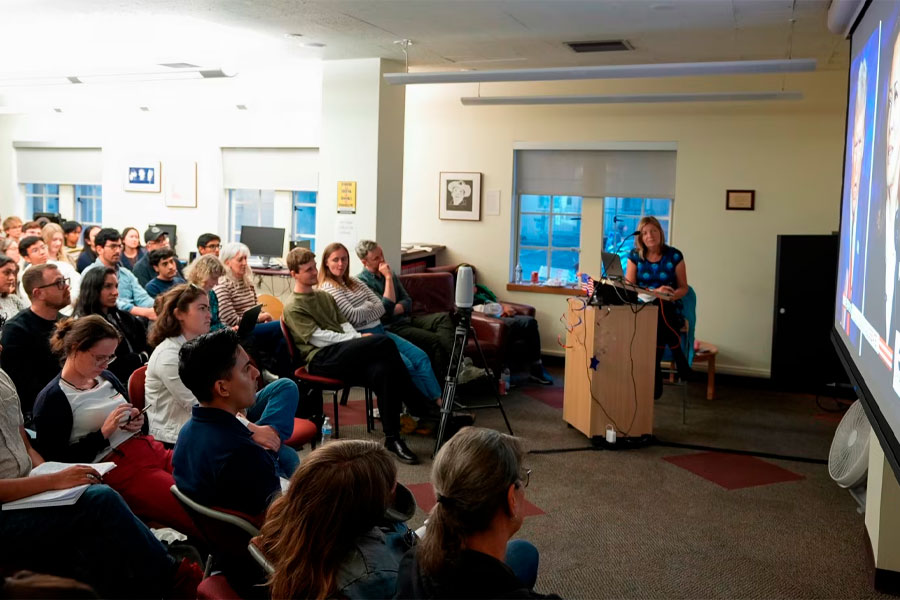
Estudiantes de la Universidad de Berkeley observan el debate presidencial el martes 10 de septiembre de 2024, en Berkeley, California. (Foto: VOA)
Visiones opuestas en política exterior
La situación actual en Gazatambién fue parte del debate, con la primera pregunta para Harris ante la falta de un acuerdo de cese al fuego en Gaza. La vicepresidenta inició con un resumen de lo ocurrido el 7 de octubre en Israel, cuando Hamás asesinó a 1.200 israelíes, hecho que desató la guerra actual. Además, reconoció la muerte de “palestinos inocentes”.
“Lo que sabemos es que esta guerra debe terminar. Debe terminar de inmediato y la manera de terminar es que necesitamos un acuerdo de alto el fuego y que los rehenes salgan, por lo que seguiremos trabajando día y noche”, dijo Harris, quien además mostró apoyo a una solución de dos estados.
Harris dice que Israel tiene derecho a defenderse y ha denunciado repetidamente a Hamás como una organización terrorista. Pero la vicepresidenta también podría haber ayudado a desactivar algunas reacciones negativas de los progresistas al ser más clara sobre la necesidad de proteger mejor a los civiles durante los combates en Gaza.
Más de 40.000 palestinos han muerto en la guerra entre Israel y Hamás en Gaza, según el Ministerio de Salud del territorio controlado por Hamás, pero se desconoce cuántos son civiles.
Trump, por su parte, reiteró que de haber sido el presidente, el ataque de Hamás en Israel del 7 de octubre, no habría ocurrido. Así como, según él, tampoco habría ocurrido la invasión de Rusia a Ucrania.
“Odia a Israel. Si ella es presidenta, creo que Israel no existirá dentro de dos años”, dijo Trump.
El expresidente ha expresado su apoyo a los esfuerzos de Israel por “destruir” a Hamás, pero también ha criticado algunas de las tácticas de Israel. Dice que el país debe terminar el trabajo rápidamente y volver a la paz. Ha pedido respuestas más agresivas a las protestas pro-Palestina en los campus universitarios y ha aplaudido los esfuerzos de la policía por desalojar los campamentos.
Sobre el conflicto en Ucrania, Trump dijo querer que “termine la guerra” y “salvar vidas”, pero cuestionó la cantidad de ayuda financiera que Estados Unidos ha provisto al gobierno ucraniano, asegurando que está en el “mejor interés” de los estadounidenses terminar la guerra.
“Ellos me respetan. No respetan a Biden. ¿Cómo lo respetarías? ¿Por qué? ¿Por qué? Ni siquiera ha llamado por teléfono a Putin en dos años, no ha hablado con nadie. Ni siquiera intentan conseguirlo. Esa es una guerra que se muere por resolver”, agregó Trump.
Harris, por su parte, dijo a Trump: “es importante recordarle al expresidente que no se está postulando contra Joe Biden, se está postulando contra mí. Creo que la razón por la que Donald Trump dice que esta guerra terminará en 24 horas es porque simplemente se rendiría”.
Trump acusó a Harris de ser “la peor vicepresidenta en la historia de EE. UU.” y aseguró que esta se reunió con el presidente ruso Vladimir Putin, a lo que la vicepresidenta llamó una “mentira”.
Luego, los candidatos se enfrentaron a preguntas sobre la salida de tropas estadounidenses de Afganistán, que ha sido ampliamente cuestionada por los republicanos. “Estuve de acuerdo con la decisión del presidente Biden de retirarse de Afganistán… como resultado, los contribuyentes estadounidenses no están pagando los 300 millones de dólares diarios que pagábamos por esa guerra interminable”, dijo Harris.
Además, la vicepresidenta cuestionó a Trump por negociar con el Talibán durante su administración.
“Los talibanes mataban a nuestros soldados, muchos de ellos con francotiradores. Y me involucré con los talibanes porque eran ellos los que mataban. Esa es la fuerza combatiente dentro de Afganistán”, respondió Trump.
El expresidente criticó a la administración actual por “dejar atrás 85 mil millones de dólares en equipo militar nuevo y hermoso”.
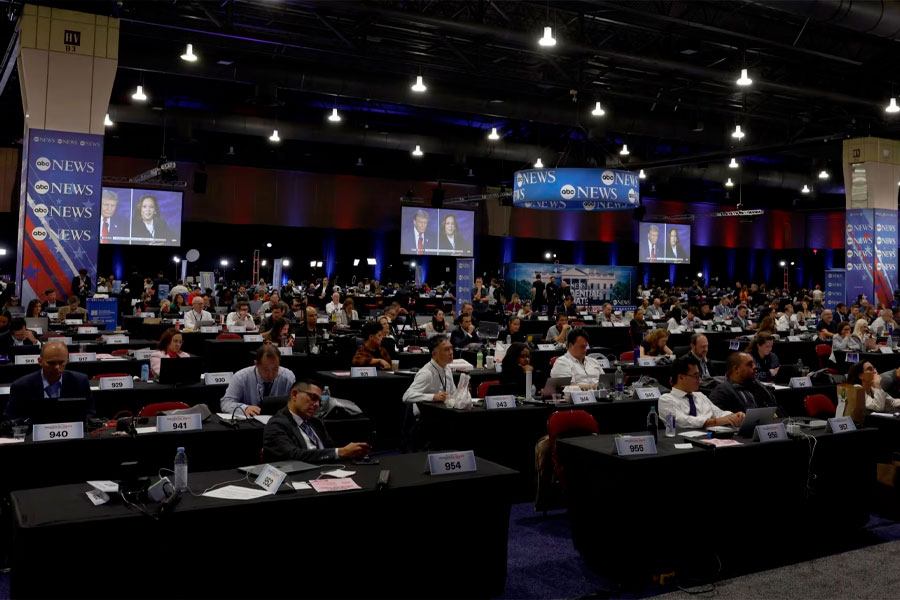
Pantallas muestran el debate presidencial organizado por ABC entre Donald Trump y Kamala Harris en Filadelfia, Pensilvania, el 10 de septiembre de 2024.(Foto: VOA)
Identidad racial de Harris
El expresidente Trump fue cuestionado por los moderadores por decir hace algunas semanas sobre Harris que “no sabía que ella era negra hasta hace unos años, cuando se volvió negra, y ahora quiere ser conocida como negra”.
Trump aseguró que no le importa la identidad racial de su oponente, y que esto fue “agrandar” un asunto que “no me puede importar menos».
“Todo lo que puedo decir es que leí que ella no era negra, que lo había dicho, y lo diré, y luego leí que era negra, y eso está bien. Cualquiera de las dos cosas me pareció bien. Eso depende de ella”, agregó.
Harris, por su parte, dijo creer que “es una tragedia que tengamos a alguien que quiere ser presidente y que, de manera constante a lo largo de su carrera, ha intentado usar la raza para dividir al pueblo estadounidense”.
La vicepresidenta tomó la oportunidad para asegurar que los estadounidenses buscaban en un líder una persona que no se enfoca en “odio y división”.
Trump, además, dijo que la administración actual es la más “divisiva en la historia del país”.
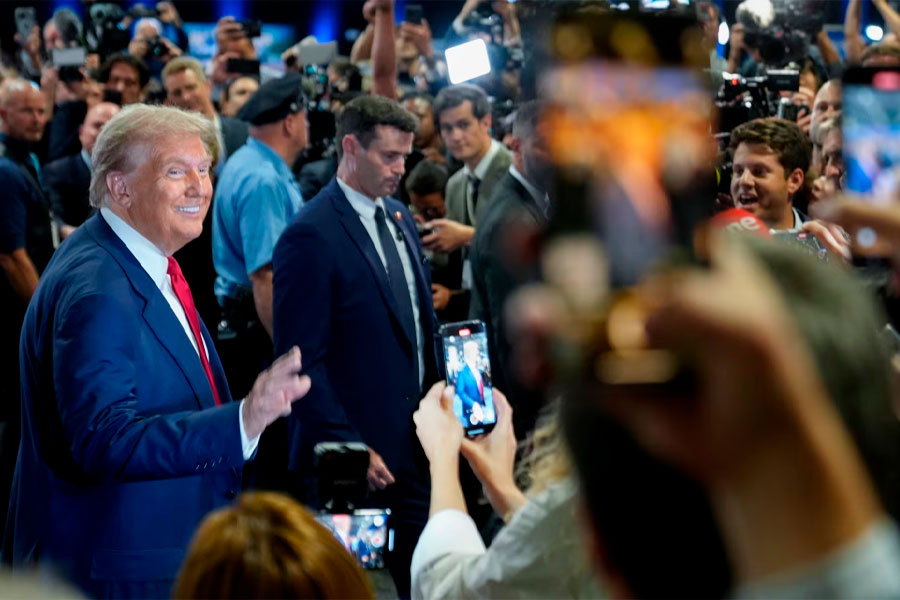
El candidato presidencial republicano y expresidente Donald Trump habla con periodistas en la sala de prensa después del debate presidencial con la candidata presidencial demócrata, la vicepresidenta Kamala Harris, el martes 10 de septiembre de 2024, en Filadelfia. (Foto: VOA)
Cambio climático y energía limpia
La situación medioambiental tomó relevancia en la última media hora de debate, donde Harris comenzó criticando a Trump por llamar el cambio climático un “engaño”.
“Los jóvenes de Estados Unidos se preocupan profundamente por este tema y estoy orgulloso de que, como vicepresidente, en los últimos cuatro años hayamos invertido un billón de dólares en una economía de energía limpia”, apuntó Harris.
La vicepresidenta agregó que bajo la administración actual se ha aumentado la producción de gas y creado trabajos de manufactura, un hecho que Trump refutó.
“Todos se están yendo. Están construyendo grandes plantas automotrices en México, en muchos casos, propiedad de China. Están construyendo estas plantas gigantescas y creen que van a vender sus autos en los Estados Unidos gracias a esta gente”, dijo Trump.
Trump ha centrado los esfuerzos de Biden en materia de vehículos eléctricos en su campaña como una amenaza para la industria automotriz y la economía estadounidense en su conjunto, y se ha comprometido a revocar todos los esfuerzos de Biden en este ámbito.
En su campaña de 2020, la plataforma de Harris pidió aumentar la producción de vehículos eléctricos, algo que se ha convertido en una piedra angular de la presidencia de Biden.
Por otro lado, el acceso a cuidado médico se adentró a la conversación. Trump aseguró que el cuidado a la salud “no es muy bueno actualmente” y aceptó que no tiene un plan completo para atender el acceso médico sino “conceptos de un plan”.
Harris, por su parte, dijo apoyar “absolutamente las opciones de atención médica privada, pero lo que debemos hacer es mantener y hacer crecer la Ley de Atención Médica Asequible”. Ley, que según Harris, Trump intentó revocar.
Ambos candidatos intentaron múltiples veces refutar las declaraciones del otro, a pesar de tener los micrófonos apagados.
El orden de las declaraciones finales fue definido al azar y Harris estuvo a cargo de las primeras. En estas, la vicepresidenta aseguró que durante el debate se escucharon “dos visiones muy diferentes para el país” y se enfocó en su mensaje de “no volver atrás”.
“Tengo la intención de ser un presidente para todos los estadounidenses y centrarme en lo que podemos hacer en los próximos 10 y 20 años para reconstruir nuestro país invirtiendo ahora mismo en ustedes, el pueblo estadounidense”, dijo Harris.
La vicepresidenta aseguró que buscaría crear oportunidades económicas, invertir en pequeños negocios y proteger a los ciudadanos mayores. Además, dijo creer en fortalecer la milicia y “trabajar por los estadounidenses”.
Trump, encargado del mensaje final, comenzó cuestionando por qué Harris “no ha hecho” lo que promete en su campaña durante los últimos años en los que ha sido vicepresidenta.
“Han tenido tres años y medio para arreglar la frontera, han tenido tres años y medio para crear empleos y todas las cosas de las que hablamos. ¿Por qué no lo ha hecho?”, dijo el expresidente, quien finalizó el debate con la expresión: “Ella está permitiendo que millones de personas entren a nuestro país. Muchos de ellos son criminales y están destruyendo nuestro país. El peor presidente y la peor vicepresidente en la historia de nuestro país”.
Trump y Harris salieron del escenario sin mirarse o dirigirse la palabra. Sin embargo, minutos después de la conclusión, el expresidente hizo una aparición en la sala de prensa de la sede del debate, donde aseguró que Harris «quiere otro debate» pues este lo había «perdido muy mal».
Esta afirmación fue contrastada por la campaña de Harris en mensajes enviados al finalizar el evento, en el que aseguraron que el debate «fue un desastre para Trump».
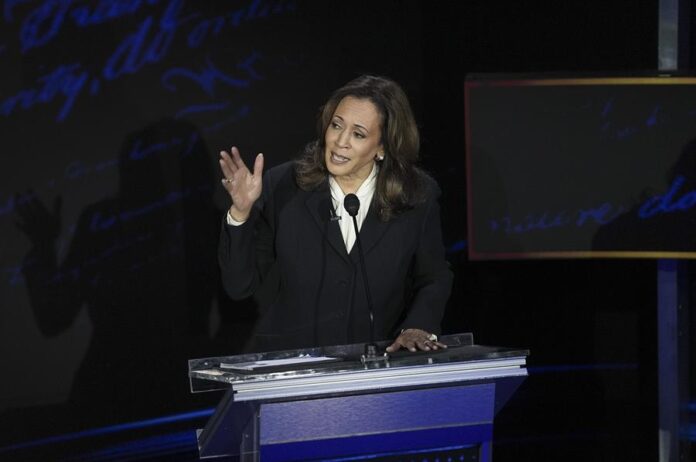
La candidata presidencial demócrata, la vicepresidenta estadounidense Kamala Harris, responde al candidato presidencial republicano Donald J. Trump durante un debate presidencial organizado por ABC News en el Centro Nacional de la Constitución en Filadelfia, Pensilvania. EFE/EPA/DEMETRIUS FREEMAN / POOL
Filadelfia.- La vicepresidenta estadounidense, Kamala Harris, subrayó este martes la necesidad de que la guerra en Gaza acabe de inmediato, mientras su rival en las elecciones del 5 de noviembre, el exmandatario Donald Trump, tachó su postura de débil e insinuó que bajo su mandato desaparecería Israel.
«Demasiados inocentes palestinos han sido asesinados. Lo que sabemos es que esta guerra debe acabar. Debe acabar de inmediato. Y para hacerlo necesitamos un acuerdo de alto el fuego y a los rehenes fuera. Seguiremos trabajando en ello», dijo la candidata demócrata en el primer debate presidencial entre ambos, celebrado en Filadelfia.
El Gobierno demócrata ha mostrado un firme apoyo a la ofensiva israelí sobre la Franja de Gaza invocando el derecho de Israel a defenderse, aunque con el paso del tiempo ha protagonizado roces con el primer ministro israelí, Benjamín Netanyahu, por el elevado número de bajas civiles y el bloqueo a la ayuda humanitaria.
Harris ha mantenido la misma postura que su Ejecutivo, asegurando que siempre defenderá el derecho de Israel a defenderse y subrayando que, junto a Joe Biden, está trabajando para «acabar con la guerra en Gaza» y para alcanzar la solución de dos Estados.
En su opinión, Trump es «flojo y está equivocado» en materia de política exterior.
El magnate republicano no es ningún abanderado de la causa palestina y cuando estuvo en la Casa Blanca (2017-2021) decidió impulsar la normalización de relaciones entre Israel y sus vecinos árabes, dejando a un lado la solución de dos Estados.
Este jueves por la noche, advirtió de las consecuencias de un eventual mandato de Harris: «Si ella es presidenta, Israel no existirá en un plazo de dos años. Soy bastante bueno haciendo predicciones y espero no equivocarme en eso», dijo.
Comienza el debate entre Trump y Harris con un apretón de manos y una presentación formal
Filadelfia.- Con un apretón de manos y una presentación formal arrancó este martes el primer debate entre los dos candidatos a la presidencia de Estados Unidos, Kamala Harris y Donald Trump, quienes discutirán durante noventa minutos sobre sus principales propuestas para llegar a la Casa Blanca.
Pese a llevar décadas en política y meses intercambiando feroces críticas mutuas, esta ha sido la primera vez que ambos se encontraban en persona, un cruce que se ha producido en el Centro Nacional de la Constitución de Filadelfia, frente a los moderadores del debate, los periodistas de ABC News David Muir y Linsey Davis. «Kamala Harris», se ha presentado ella.
Harris es la primera en tomar la palabra. Tendrá dos minutos para responder, Trump le seguirá con otros dos minutos y luego habrá un minuto adicional para hacer seguimiento.
Tal y como sucedió en el cara a cara entre Trump y el presidente, Joe Biden, los micrófonos de quien no tiene el turno de palabra estarán silenciados y los presentadores no tendrán la oportunidad de refutar a los candidatos.
Trump aterrizó este martes por la tarde, unas tres horas antes del debate, en Filadelfia, mientras que Harris llegó ayer. La demócrata lleva desde el jueves pasado en el estado de Pensilvania, encerrada con su equipo preparando una de las citas más importantes de su carrera.
Una de las llamadas que recibió estos días, apuntó hoy CNN, fue con Hillary Clinton, quien ya tuvo la experiencia de enfrentarse contra Donald Trump en la campaña de 2016 de unas elecciones que acabó perdiendo contra el republicano.
Pese a que la campaña de Harris ha querido marcar una gran diferencia con la de Clinton intentando no destacar el hecho de que la demócrata sea mujer, en el debate muchas miradas estarán centradas en cómo Trump trata a Harris, observando si le grita o usa su gran tamaño (1,90 metros) para intentar intimidarla.
En cuanto a los temas de la noche, ambos candidatos lucharán para que el asunto que más les beneficia sea el predominante. Así, previsiblemente Trump atacará a Harris por su papel como la «zarina de la frontera» en la Administración de Biden, refiriéndose a su responsabilidad de abordar las causas de la migración desde Centroamérica hacia EE.UU., aunque nunca tuvo a su cargo la gestión directa de la frontera.
Harris, por su parte, recordará a los votantes que fue Trump (2017-2021) quien nombró a los tres jueces del Tribunal Supremo que derogaron el fallo ‘Roe vs. Wade’ en junio de 2022, que durante medio siglo protegió el derecho federal al aborto.
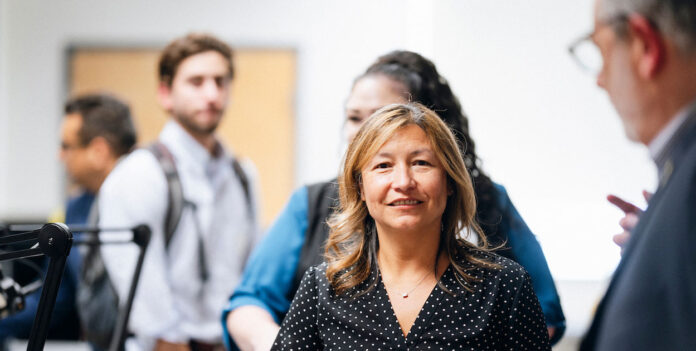
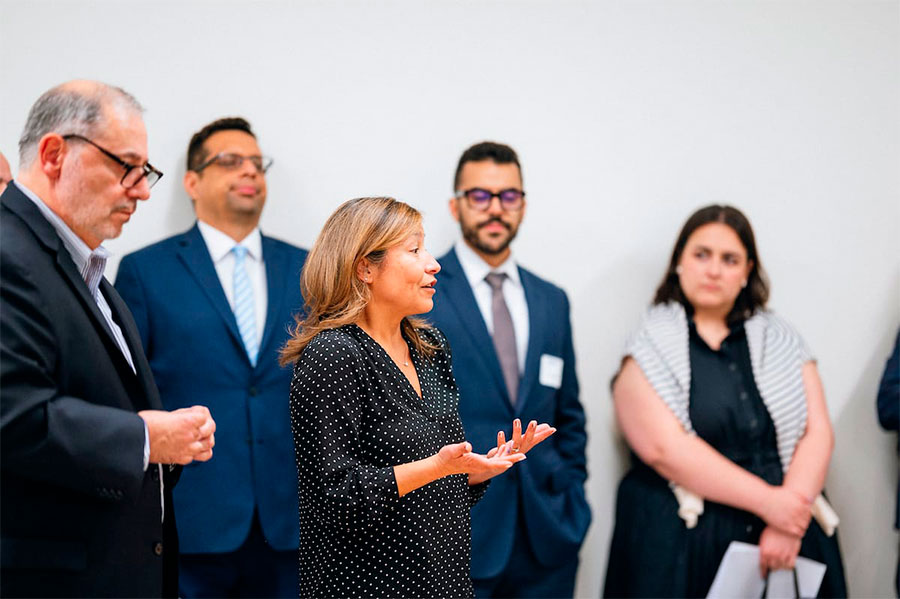
El pasado 4 de septiembre, Julie Chávez Rodríguez, directora nacional de la Campaña Harris-Walz 2024 y nieta del líder sindical latino César Chávez, llegó al norte de Filadelfia para un histórico foro comunitario organizado por Impacto Media. (Foto: Staff/Impacto)
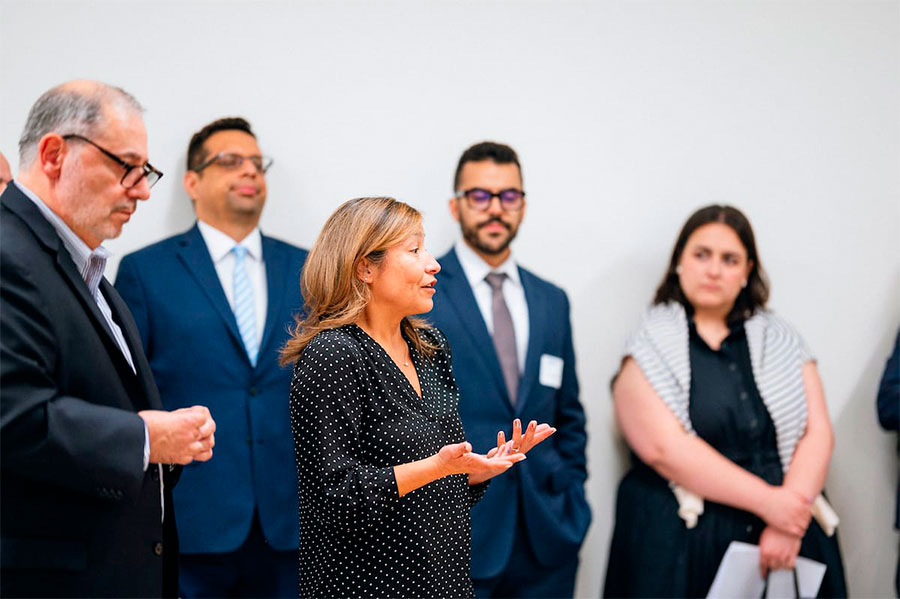
PHILADELPHIA, PA — On September 4th, Julie Chávez Rodríguez, national director of the Harris-Walz 2024 Campaign and granddaughter of Latino labor leader César Chávez, arrived in North Philadelphia for a historic event. The gathering brought together 150 Latino leaders from across Pennsylvania to hear Chávez Rodríguez present the campaign’s vision for Latinos in this key state and to share their most pressing concerns with her.
Among the groups she engaged with were members of Hispanic evangelical churches, Latino public officials, business owners, leaders of non-governmental organizations, college students and community organizers.
Rev. Luis Cortés, founder of the Hispanic Clergy of Philadelphia, remarked: “This was a truly historic visit. I’ve been working in this community for more than forty years. I have not seen a national head of any presidential campaign visit El Barrio to hear directly from the community. It also shows the critical role Latinos in Philadelphia could play in elections. I’m grateful to Julie Chávez and to those who attended the forum. We will see how the community responds to the efforts in November.”
Rev. Luis Cortés, founder of the Hispanic Clergy of Philadelphia, remarked: “This was a truly historic visit…» (Photo: Staff/Impacto)
Before she visited Philadelphia, Julie Chávez spoke with Impacto in a Labor Day virtual interview, where she expressed her excitement to address the Latino community she is a part of.
As a former senior advisor to President Biden, she knows well that Latinos could play a decisive role in the upcoming elections. Though Latinos don’t vote as a bloc, their majority could tip the balance, especially among young Latinos, who represent the largest group reaching voting age but have shown apathy toward the process.
Intending to continue to prioritize firsthand engagement, Julie arrived this week in Philadelphia’s Latino neighborhood, predominantly Puerto Rican, to meet with various community representatives from the city and surrounding areas.
“It’s an honor to be here with the Latino community and also with different faith leaders,” she affirmed.
In her interview with Impacto during her visit to the city’s Latino neighborhood, Chávez Rodríguez shared why she feels excited and confident that her candidate, Kamala Harris, has a long history of advocating for the rights of Latinos and immigrants, as she is the daughter of immigrants.
“We’re thinking about some of the most important issues for our families right now… matters related to reducing costs, ensuring access to quality education, and affordable healthcare.” According to Julie, they are working to lower housing and rental costs and addressing other everyday challenges she believes families care about most.
She emphasized that Vice President Kamala Harris stands apart from previous administrations due to her background as a prosecutor. “As someone who advocated for people day in and day out in the courts, defending the rule of law… this is an important aspect she brings to the job. She continues to show that she’s fighting for the people. For our communities. For our families.”
The Harris-Walz campaign leader recognizes that one of the challenges is voter registration in many key states, particularly among young people aged 18 to 24 and Latina women, but she insists that this is changing. “We’re really encouraged by the voter registration rates we’re seeing right now. But we have to keep reaching out to young people, students, in their workplaces too… in the digital communities where they are… we have different ads in Spanglish because many of them are bicultural and bilingual.”
Latino voters, particularly in swing states that are not firmly Republican or Democrat, have drawn the attention of both candidates, who are in a tight race. Twenty-one percent of Latino voters are expected to head to the polls for the first time.
The challenge is considerable, as across the country, 55% of Latino voters report not having been contacted by either party about registering to vote.
The Harris-Walz campaign leader recognizes that one of the challenges is voter registration in many key states, particularly among young people aged 18 to 24 and Latina women, but she insists that this is changing. (Photo: Staff/Impacto)
The Latino community is the fastest-growing in Pennsylvania, with its presence having increased by 40% since 2010 in this state of 13 million people. In this election, nearly 600,000 Latinos are eligible to vote—almost seven times the margin of 82,000 ballots (1.17% of the total vote) by which Joe Biden won the state in 2020.
The Harris-Walz campaign is heavily investing in connecting with and winning over Latino voters. They’ve opened a WhatsApp channel and established more than 50 offices across the state, including in cities with significant Hispanic populations like Norristown, Reading, and Allentown.
Although the Harris campaign, which launched less than two months ago, has reclaimed some of the Latino vote that was shifting away from the Democrats under Biden, the so-called honeymoon period for Kamala Harris, as she steps into the presidential race, is coming to an end.
Trump has made gains over the past four years, and Hispanic voters traditionally turn out at lower rates than other voting groups.
In 2020, 69% of this electorate supported Joe Biden, while only 27% favored Trump. A Quinnipiac poll in August showed 49% leaning toward Harris—a significant increase from the 39% backing the Democratic ticket before Biden withdrew from the race, though still below what the party needs to win Pennsylvania, particularly among younger Latino men.
Recognizing that the Latino community is diverse, Vice President Kamala Harris and Governor Tim Walz are touring key states during Hispanic Heritage Month and the days following the first presidential debate. Harris will kick off the tour in North Carolina on Thursday, before returning to Pennsylvania on Friday, where she has been since the Monday leading up to the debate in Philadelphia.
The event gathered 150 Latino leaders from across Pennsylvania to hear Chávez Rodríguez discuss the campaign’s vision for Latinos in this key state and to share their most urgent concerns with her. (Photo Impacto staff)
From Thursday, September 12, to Sunday, September 15, the «A New Path Forward» tour will continue its campaign efforts.
Events will include over 50 Latino debate watch parties across the country, including Arizona, California, Florida, Nevada, North Carolina, Pennsylvania, and Texas. These gatherings will take place in family homes, community centers, and small Latino-owned businesses. Additional events will range from rallies and community gatherings to bus tour stops, with more programming specifically aimed at key voting groups, culminating on the first day of Hispanic Heritage Month.
“These elections are about two very different visions for Latino families and our country. Donald Trump and JD Vance want to take us backward with the dangerous and extremist agenda of Project 2025. Vice President Harris and Governor Walz are fighting for a new path forward that protects our fundamental freedoms, strengthens our democracy, and ensures that everyone can pursue the American dream and not just survive but thrive,” said Maca Casado, Communications Director for the Harris-Walz Campaign Coalitions.
“With early voting about to start and less than 60 days until Election Day, our campaign is taking Vice President Harris’s message directly to Latino voters wherever they are: in the media, at their doors, and online—in Spanish, English, and Spanglish. With so much at stake in this election, we are investing in key states and putting everything on the line,” Casado concluded.
El pasado 4 de septiembre, Julie Chávez Rodríguez, directora nacional de la Campaña Harris-Walz 2024 y nieta del líder sindical latino César Chávez, llegó al norte de Filadelfia para un histórico foro comunitario organizado por Impacto Media. (Foto: Staff/Impacto)
FILADELFIA, PA — El pasado 4 de septiembre, Julie Chávez Rodríguez, directora nacional de la Campaña Harris-Walz 2024 y nieta del líder sindical latino César Chávez, llegó al norte de Filadelfia para un encuentro. El evento reunió a 150 líderes latinos de varios lugares de Pensilvania para escuchar a Chávez Rodríguez hablar sobre la visión de la campaña para los latinos en este estado clave y compartir con ella sus preocupaciones más urgentes.
Entre los grupos con los que dialogó se encontraban miembros de iglesias evangélicas hispanas, funcionarios públicos latinos, empresarios, líderes de organizaciones no gubernamentales, estudiantes universitarios y organizadores comunitarios.
El fundador del Clero Hispano de Filadelfia, el reverendo Luis Cortés, compartió: “Esta fue una visita histórica. He trabajado en esta comunidad durante más de cuarenta años. Nunca había visto a un jefe nacional de una campaña presidencial visitar el barrio para escuchar directamente a la comunidad. También demuestra el papel fundamental que los latinos de Filadelfia podrían desempeñar en las elecciones. Estoy agradecido con Julie Chávez y con quienes asistieron al foro. Veremos cómo responde la comunidad a estos esfuerzos en noviembre”.
El fundador del Clero Hispano de Filadelfia, el reverendo Luis Cortés, compartió: “Esta fue una visita histórica. He trabajado en esta comunidad durante más de cuarenta años. Nunca había visto a un jefe nacional de una campaña presidencial visitar el barrio para escuchar directamente a la comunidad…» (Foto: Impacto/Staff)
Previo a su visita a Filadelfia, durante el Día del Trabajo, Julie Chávez conversó con Impacto en una entrevista virtual, donde expresó la emoción que le provocaba dirigirse a la comunidad latina de la que forma parte.
Quien fuera consejera senior del presidente Biden, sabe bien que los latinos pueden jugar un papel trascendental en las próximas elecciones, pues, aunque los latinos no votan en bloque, lo que haga su mayoría podría inclinar la balanza, en especial los jóvenes latinos, quienes son los que más han cumplido la edad para votar, pero se han mostrado apáticos.
Con la intención de seguir priorizando recibir inquietudes de primera mano, Julie llegó esta semana al barrio latino de Filadelfia, con una prevalente población de origen puertorriqueño, y se reunió con diversos representantes de la comunidad latina de la ciudad y sus alrededores.
“Es un honor estar aquí con la comunidad latina y también con los diferentes líderes de fe”, afirmó.
En la entrevista con Impacto durante su visita al barrio latino de la ciudad, Chávez Rodríguez compartió por qué se siente entusiasmada y segura de que su candidata, Kamala Harris, tiene una larga trayectoria en la defensa de los derechos de los latinos y los migrantes, siendo ella misma hija de migrantes.
La líder de la campaña Harris-Walz reconoce que uno de los retos es el registro de votantes en muchos de los estados clave, especialmente entre jóvenes de 18 a 24 años y latinas, pero asegura que esto está cambiando. (Foto: Impacto/Staff)
“Pensamos en algunos de los temas más importantes en este momento para nuestras familias… cuestiones relacionadas con la reducción de costos y la garantía de brindar educación de calidad y atención médica asequible”. Según Julie, se están asegurando de reducir el costo del alquiler y la vivienda, y abordando otros problemas cotidianos que considera que las familias valoran más.
Destacó que la vicepresidenta Kamala Harris se diferencia de administraciones anteriores debido a sus orígenes en su carrera como fiscal. “Como alguien que defendía a la gente día tras día en los tribunales defendiendo el Estado de derecho… es un aspecto realmente importante que ella aportará a este trabajo. Ella continúa demostrando que está luchando por el pueblo, por nuestras comunidades, por nuestras familias”.
La líder de la campaña Harris-Walz reconoce que uno de los retos es el registro de votantes en muchos de los estados clave, especialmente entre jóvenes de 18 a 24 años y latinas, pero asegura que esto está cambiando. “Estamos alentados por la tasa de registro de votantes que estamos viendo en este momento. Pero debemos seguir asegurándonos de alcanzar a los jóvenes, los estudiantes, en sus trabajos también… en las comunidades digitales donde ellos están… tenemos diferentes anuncios en spanglish porque muchos de ellos son biculturales y bilingües”.
El voto de los latinos, en específico en los estados bisagra o péndulo, que no están definidos ni como republicanos ni como demócratas, ha captado la atención de ambos candidatos, quienes se encuentran en empate técnico. Un 21 % de los votantes latinos está llamado a las urnas por primera vez.
El reto es considerable, pues en todo el país el 55 % de los electores latinos afirma que no ha sido contactado por ninguno de los partidos para registrarse para votar.
La comunidad latina es la de más rápido crecimiento en Pensilvania. Desde 2010 su presencia ha aumentado un 40 % en este estado de trece millones de personas. En estas elecciones, cerca de 600.000 latinos pueden votar, casi siete veces más que el margen de 82.000 papeletas (un 1,17 % del total de los sufragios) por el que Joe Biden ganó el estado en 2020.
La campaña Harris-Walz está invirtiendo considerablemente en acercarse y ganar el apoyo de los votantes latinos. Han abierto un canal de WhatsApp y han establecido más de medio centenar de oficinas en todo el estado, incluidas ciudades con una importante población hispana como Norristown, Reading y Allentown.
Aunque la campaña de Harris, que lleva menos de dos meses, ha recuperado parte del voto latino que estaba abandonando a los demócratas cuando el candidato era nuevamente Biden, la llamada luna de miel de Kamala Harris, que incursiona como candidata presidencial, está llegando a su fin.
El evento reunió a 150 líderes latinos de varios lugares de Pensilvania para escuchar a Chávez Rodríguez hablar sobre la visión de la campaña para los latinos en este estado clave, y presentar a su personal en Pensilvania. (Foto: Impacto/Staff)
Trump ha logrado avances en los últimos cuatro años, y tradicionalmente los votantes hispanos acuden a las urnas en menor proporción que otros grupos del electorado.
En 2020 el 69 % de este electorado apoyó a Joe Biden, mientras que solo el 27 % lo hizo por Trump. Una encuesta de Quinnipiac en agosto señalaba que el 49 % se inclina por Harris, un avance considerable respecto al 39 % que respaldaba la fórmula demócrata antes de que Biden renunciara a la reelección, pero aún por debajo de lo que necesita ese partido para ganar Pensilvania, especialmente entre los varones latinos más jóvenes.
Consciente de que la comunidad latina no es monolítica, la vicepresidenta Kamala Harris y el gobernador Tim Walz recorren los estados clave durante el Mes de la Herencia Hispana y en los días posteriores al primer debate presidencial. Harris iniciará la gira en Carolina del Norte el jueves, antes de regresar a Pensilvania el viernes, donde estuvo desde el lunes previo al debate en Filadelfia.
Desde el jueves 12 de septiembre hasta el domingo 15 de septiembre el “tour” Un Nuevo Camino Hacia Adelante continuará los esfuerzos de la campaña.
Los eventos incluyen más de 50 fiestas latinas para ver el debate en todo el país, entre ellas en Arizona, California, Florida, Nevada, Carolina del Norte, Pensilvania y Texas, y se realizarán en hogares familiares, en espacios comunitarios y en pequeños negocios latinos. Los eventos adicionales variarán entre mítines y eventos comunitarios, paradas adicionales de la gira en autobús, y más programación dirigida específicamente a grupos de votantes clave, y concluirá justo el primer día del Mes de la Herencia Hispana.
“Estas elecciones se tratan de dos visiones muy diferentes para las familias latinas y nuestro país. Donald Trump y JD Vance quieren hacernos retroceder con la peligrosa y extremista agenda del Proyecto 2025. La vicepresidenta Harris y el gobernador Walz están luchando por un nuevo camino hacia adelante que proteja nuestras libertades fundamentales, fortalezca nuestra democracia y garantice que cada persona tenga la oportunidad de seguir el sueño americano y no solo sobrevivir, sino también salir adelante”, declaró Maca Casado, directora de Medios de Comunicación de las Coaliciones de la Campaña Harris-Walz.
“Con la votación temprana a punto de comenzar y a menos de 60 días del día de las elecciones, nuestra campaña llevará el mensaje de la vicepresidenta directamente a los votantes latinos dondequiera que estén: en los medios, en las puertas y en Internet en español, inglés y también spanglish. Con tanto en juego en estas elecciones, estamos invirtiendo en los estados clave y dejándolo todo sobre el terreno”, puntualizó.
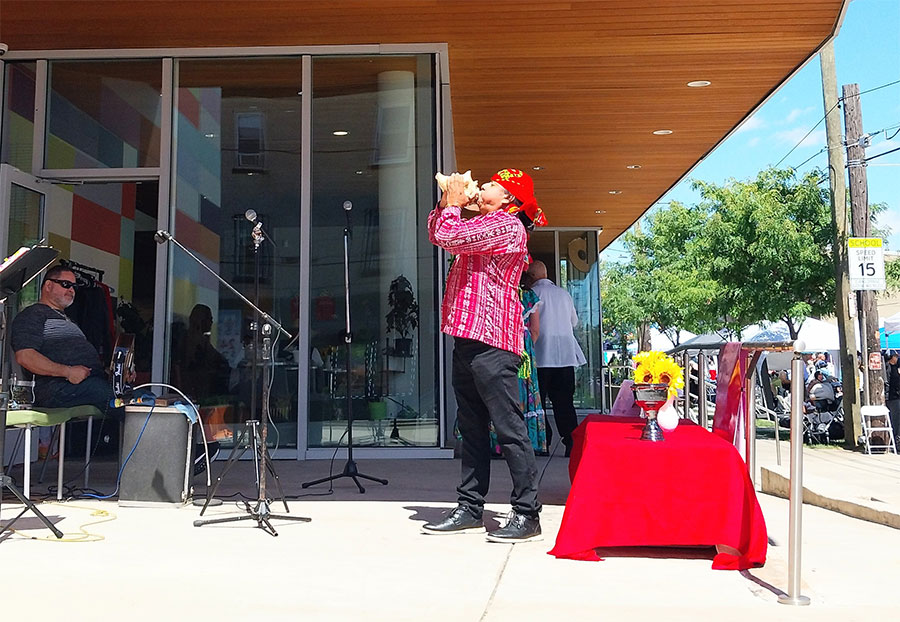
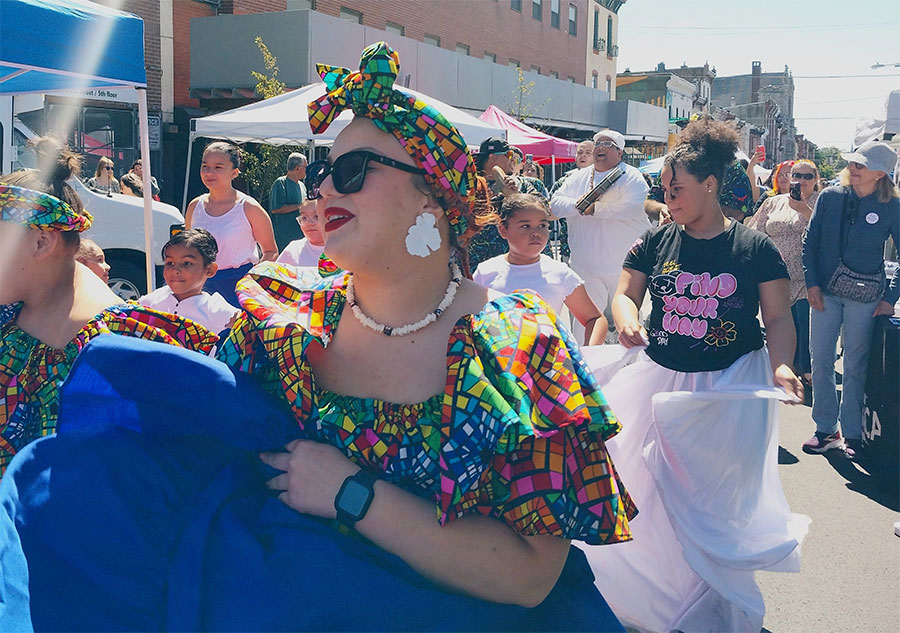
Desde hace cuatro décadas la “Feria del Barrio” ofrece un espacio de convivencia, música, baile y cultura en el corazón boricua de la ciudad. Con el paso del tiempo se han integrado al evento comunidades latinas de otros países; en sus inicios, en 1979, era un encuentro emblemático de los residentes puertorriqueños del norte de Filadelfia.
Taller Puertorriqueño es el principal organizador, junto con otras asociaciones culturales y de servicios, entre ellas la Asociación de Puertorriqueños en Marcha (APM), Congreso de Latinos Unidos, HACE, y Raíces Culturales Latinoamericanas.
Erikka Goslin, directora ejecutiva interina del Taller, asumió el cargo a principios de 2024. Desde Vermont llegó a Filadelfia a los 12 años con su familia. Creció rodeada de parientes dominicanos y puertorriqueños, quienes la inspiraron a trabajar en el Taller.
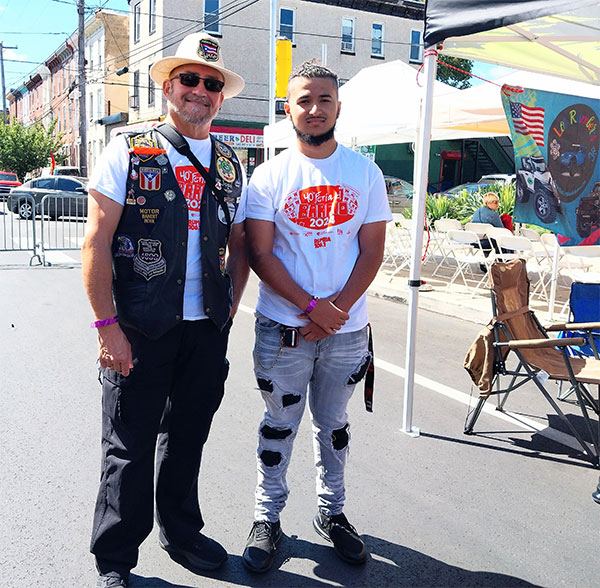
José Figueroa con su nieto Josh Figueroa, voluntarios del evento. (Foto: Leticia Roa Nixon)
Al iniciar la celebración de la Feria del Barrio agradeció a los participantes y colaboradores que ayudaron a su equipo a llevar a cabo este evento tan esperado por la comunidad.
La directora y productora Kristal Sotomayor, dando a conocer su filme. (Foto: Leticia Roa Nixon)
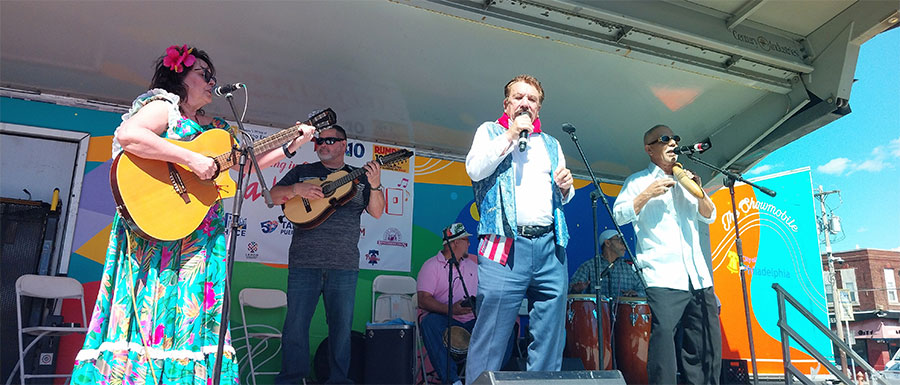
El pasado domingo 8 de septiembre, en la calle 5 Norte, Johnny Cruz y su esposa Aida ya estaban listos para interpretar música jíbara, como lo han hecho durante décadas, como parte del grupo Raíces Culturales Latinoamericanas, fundado en 1991.
Raíces Boricuas fue uno de los grupos musicales presentes. (Foto: Leticia Roa Nixon)
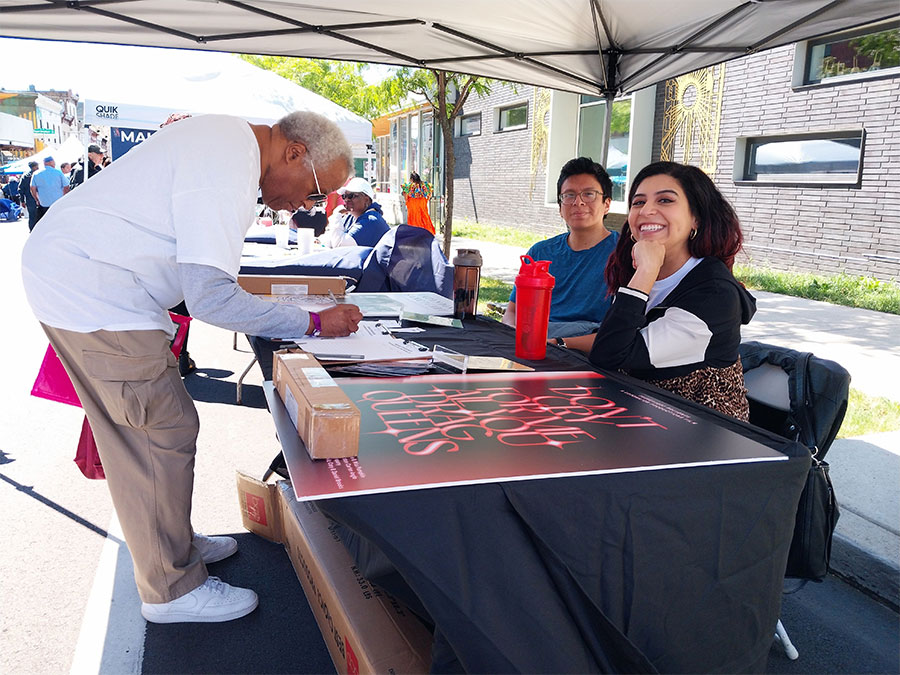
Hubo mesas informativas, actividades manuales, venta de artesanías y registro de votantes para las próximas elecciones presidenciales del 5 de noviembre, entre otras.
Varios oficiales de policía se encargaron de la seguridad. (Foto: Leticia Roa Nixon)
Kristal Sotomayor, directora y productora del filme Expanding Sanctuary, estuvo presente para conectar con las organizaciones comunitarias.
Yolanda Alcora, cofundadora y vicepresidenta de la organización Raíces Culturales Latinoamericanas, presentó nuevamente a las tejedoras de textiles en telar de cintura de la cooperativa Tejiendo para el Futuro, y a la marimba maya AWAL.
Julia Sánchez, tejedora maya, se siente orgullosa de sus raíces. (Foto: Leticia Roa Nixon)
Representantes del Museo de Arte compartieron información sobre la celebración del Mes de la Herencia Hispana el 20 de septiembre, cuyo acceso será bajo la modalidad de contribución voluntaria. El evento incluirá talleres de artes manuales, visitas guiadas, ofertas gastronómicas y la presentación del grupo “Guachinangos”, que fusiona cumbia con son jarocho.
Taller Puertorriqueño es el organizador principal de la feria. (Foto: Leticia Roa Nixon)
Por su parte, la Sociedad Histórica de Pensilvania informó que tiene un sitio web nuevo llamado Neighbors-Vecinos, el cual explora los 200 años de historia puertorriqueña en Filadelfia. El proyecto, dirigido por miembros de la comunidad, es el resultado de una colaboración entre esta organización y el Taller Puertorriqueño.
El evento se inició con la comparsa camino al escenario. (Foto: Leticia Roa Nixon)
Además, colaborarán para una charla con Juan González, periodista, autor y activista, quien hablará sobre la historia de la migración puertorriqueña desde la isla a Pensilvania. La charla está programada para el 26 de septiembre, de 6:30 p. m. a 8 p. m., en la Sociedad Histórica de Pensilvania, ubicada en la calle Locust 1300.
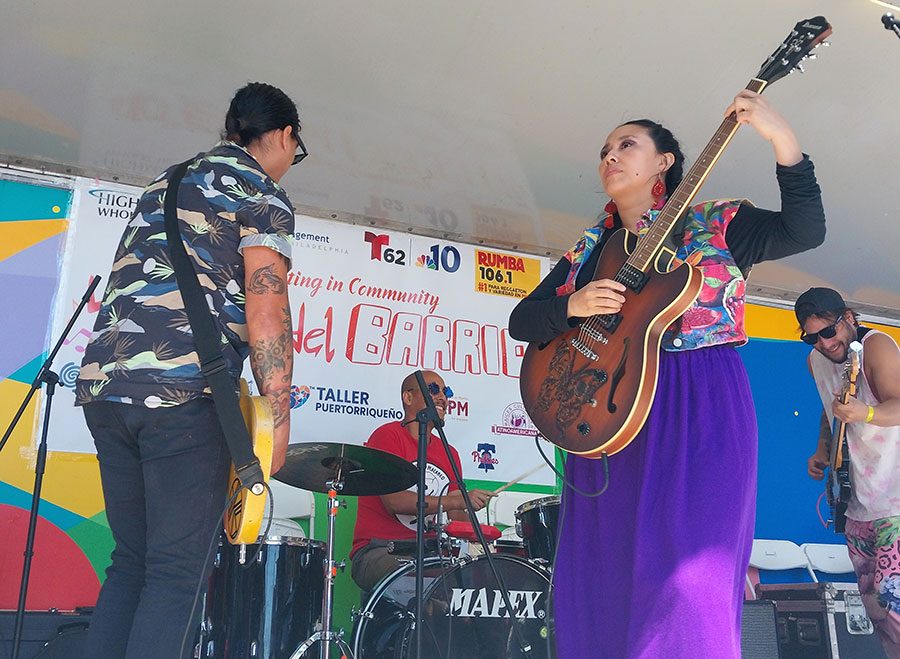
Integrantes del grupo de cumbia y punk Mariposas Galácticas. (Foto: Leticia Roa Nixon)
Como en años anteriores, la policía estuvo a cargo de la seguridad de los asistentes. José Figueroa, exmiembro de la Spanish American Law Enforcement Association, que cuenta con más de 50 años de existencia, fue uno de los policías encargados de vigilar que el evento transcurriera sin incidentes. Este año caminaba por la feria en compañía de su nieto, Josh. “Estoy aquí, disfrutando del ambiente festivo como voluntario de esta bonita Feria del Barrio”, comentó.
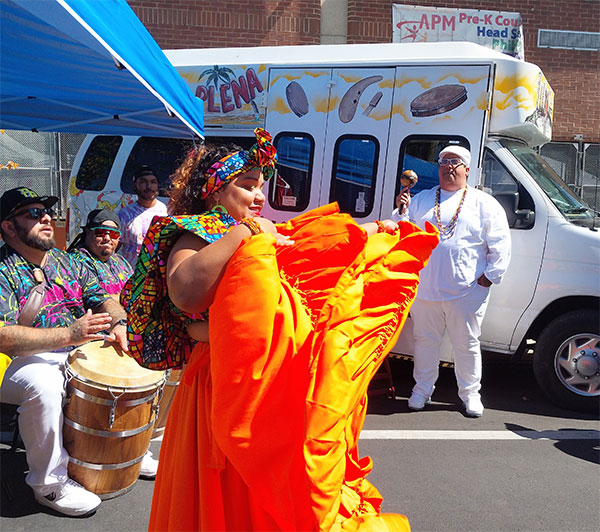
Los Bomberos de la Calle ofrecieron un excelente taller. (Foto: Leticia Roa Nixon)
El programa musical y cultural incluyó la comparsa encabezada por “Los Bomberos de la Calle”, la presentación de Los Pueblitos, un taller infantil del Taller Puertorriqueño, la música de cumbia y punk de Mariposas Galácticas, el grupo de cumbia Son Colombiano Las Américas, la música jíbara de Raíces Boricuas, los bailes del Conjunto Folklórico Ritmos y Danzas de Panamá y el grupo de bomba y plena Bomberos de la Calle. El programa concluyó con Bachata Chula, que abrió para Tino Serrano y Su Orquesta Salsa Dura.
La vicepresidenta Kamala Harris y el exmandatario Donald Trump se enfrentarán esta noche en Filadelfia en un debate que podría ser decisivo para las elecciones del 5 de noviembre y que llega en un momento crucial de la campaña con las encuestas reflejando un escenario sumamente ajustado.
El debate, que comenzará a las 21:00 hora local (01:00 GMT del miércoles), tendrá como escenario la ciudad de Filadelfia, en el estado clave de Pensilvania. Está organizado por la cadena de televisión ABC y podría ser el único cara a cara entre Trump y Harris, quienes se conocerán formalmente esta noche, ya que nunca antes habían conversado.
Estas son las seis claves del debate:
1) La dinámica de género
El debate de esta noche estará marcado por la dinámica de género. Muchas miradas estarán centradas en cómo Trump trata a Harris, observando si la grita o usa su gran tamaño, pues mide 1,90 metros, para intentar intimidarla.
El comportamiento de Trump en los debates de 2016 aún está presente en la mente de los espectadores. En aquella ocasión, el republicano se colocó en varias ocasiones detrás de la entonces candidata demócrata Hillary Clinton, lo que reforzó la imagen de que era irrespetuoso con las mujeres.
Clinton, en sus memorias publicadas en 2017, reconoció que cada vez que Trump se situaba tras ella se sentía extremadamente incómoda y se le ponía «la piel de gallina».
(Foto: EFE/JIM LO SCALZO)
2) La oratoria de Harris como fiscal
En todos los debates de su carrera, Harris se ha distinguido por un enfoque agresivo pero calibrado, similar al que usa un fiscal ante un jurado. De hecho, durante la campaña, ha utilizado su experiencia como fiscal para trazar un contraste con Trump, el primer presidente de EE.UU. condenado por delitos graves.
Además, Harris ha demostrado que es capaz de dar respuestas que luego se hacen virales en redes sociales.
El propio presidente estadounidense, Joe Biden, sufrió esa habilidad en sus propias carnes durante un debate de las primarias demócratas para las elecciones de 2020, cuando Harris le criticó duramente por sus ideas pasadas sobre el racismo, comparándolas con su experiencia como una de las primeras niñas afroamericanas en vivir la desegregación escolar.
3) La imprevisibilidad y caos de Trump
En contraste, la principal ventaja de Trump es su capacidad para sorprender al adversario, rompiendo con las reglas tradicionales de la política: suele atacar de forma imprevisible, usando apodos despectivos, mentiras o teorías conspirativas, según lo que cree que tendrá más impacto en cada momento.
Jason Miller, uno de los asesores del exmandatario, ha comparado a Trump con boxeadores como Floyd Mayweather o Muhammad Ali, asegurando que para Harris es imposible prepararse para un debate en el que no se sabe desde qué «ángulo» vendrán los ataques.
Además, Trump tiene más experiencia televisiva que Harris, ya que durante años fue una estrella de telerrealidad con programas como ‘The Apprentice’. Este es su séptimo debate electoral general desde 2016 y, en cada mitín, demuestra que es capaz de convertir todo en un espectáculo centrado en su figura.
(Foto: EFE/JIM LO SCALZO)
4) Micrófonos silenciados
A favor de Trump podría jugar una de las reglas más controvertidas del debate: los micrófonos se silenciarán al final de cada intervención para permitir que el otro candidato responda sin interrupciones.
Esta norma fue propuesta por la campaña demócrata cuando Biden era el candidato, pero el equipo de Harris hubiera preferido que los micrófonos estuvieran activos en todo momento para mostrar a Trump como un candidato incapaz de controlarse, interrumpiendo sin cesar y sin la templanza necesaria para regresar a la Casa Blanca.
5) Aborto vs. Inmigración
En cuanto a los temas del debate, ambos candidatos lucharán para que el asunto que más les beneficia sea el predominante.
Trump atacará a Harris por su papel como la «zarina de la frontera» en la Administración Biden, refiriéndose a su responsabilidad de abordar las causas de la migración desde Centroamérica hacia EE.UU., aunque nunca tuvo a su cargo la gestión directa de la frontera.
Harris, por su parte, recordará a los votantes que fue Trump quien nombró a los tres jueces del Tribunal Supremo que derogaron el fallo ‘Roe vs. Wade’, que durante medio siglo protegió el derecho federal al aborto.
6) Los votantes indecisos
El debate tendrá como audiencia principal a un puñado de votantes indecisos que podrían decidir las elecciones en siete estados clave: Pensilvania, Wisconsin, Míchigan, Carolina del Norte, Georgia, Arizona y Nevada.
A todos esos votantes, les une una preocupación principal: la economía. Por eso, tanto Trump como Harris han presentado propuestas con medidas populistas para atraerlos, como la exención de impuestos sobre las propinas.
Fotografía cedida por el Inter Miami CF donde aparece el astro argentino Lionel Messi mostrando su camiseta número 10 del club, durante una rueda de prensa el 17 de agosto de 2023 en la sede del equipo en Fort Lauderdale, Florida (EE. UU.). (Foto: EFE/Inter Miami )
La llegada del astro argentino Leo Messi al Inter Miami en 2023 y la creciente influencia de las audiencias hispanas han disparado no solo la popularidad del fútbol, sino que está transformando la cultura deportiva en Estados Unidos, según un informe divulgado este martes por la consultora Nielsen.
El estudio ‘Fanáticos: El libro de las jugadas de Nielsen sobre audiencias hispanas, deportes y compromisos con los medios’ detalla, entre otros aspectos clave, que la final de la Copa América 2024 atrajo a más de 12 millones de espectadores en EE. UU., de los cuales el 53 % eran hispanos, lo que la convierte en la más vista en la historia del país.
También la final de la Liga de Campeones de la UEFA del pasado 1 de junio entre el Real Madrid y el Dortmund, con victoria del primero, estableció un récord, con 9,5 millones de espectadores, de los cuales el 40 % eran latinos, según el análisis a cargo de Inteligencia Diversa.
Las audiencias hispanas están calando con fuerza la cultura deportiva en Estados Unidos, y el ‘efecto’ Messi no es ajeno a este fenómeno.
La llegada de Messi al combinado de Miami y el aumento de un 300 % de la audiencia en EE. UU. durante su partido debut marcó «un momento crucial en la evolución de los deportes estadounidenses» y «redefinió la cultura deportiva estadounidense dominante», según el informe.
La presencia de Messi está trascendiendo los límites del fútbol como «deporte nicho» seguido principalmente para aficionados hispanos, hasta el punto que hoy atrae a una audiencia más amplia que incluye a jóvenes y espectadores no hispanos, agrega.
El primer partido que jugó Messi también impulsó un aumento del 270 % de la audiencia en los canales de Univision y TUDN y de un 32 % del total de minutos de televisión vistos un sábado sin partido en vivo de fútbol.
Según los datos de audiencia de Nielsen, el porcentaje de espectadores hispanos en los últimos tres torneos de la Copa América ha pasado del 73 % al 53 %, lo cual no significa que ha descendido el número de hispanos viéndolo, sino que este torneo «ha ganado popularidad entre los espectadores no hispanos», impulsada por el «entusiasmo de los fanáticos hispanos».
Y el partido en el que la Selección Nacional Femenina de Fútbol de Estados Unidos ganó la medalla de oro en los Juegos Olímpicos de París, tras derrotar a Brasil, alcanzó el récord de nueve millones de espectadores en Estados Unidos.
Un éxito de audiencia que Nielsen atribuye, en parte, «al entusiasmo de una creciente base de seguidores hispanos».
Pero el creciente apetito por el fútbol no se detuvo ahí. A los récords históricos de audiencia hispana en la final de la Copa América y la Liga de Campeones de la UEFA se les suma un aumento del 354 % de audiencia latina en el campeonato femenino de baloncesto de la NCCA entre 2021 y 2024.
En cuanto al peso de la población hispana en la demografía y economía de este país, el informe apunta que esta comunidad ha superado los 65 millones (19 % de la población), fue responsable del 71 % del crecimiento de la población estadounidense entre 2022 y 2023 y su poder adquisitivo alcanzó en 2023 los 3,4 trillones de dólares.
Las audiencias totales en Estados Unidos de eventos deportivos tradicionalmente arraigados en la cultura hispana están creciendo: las finales de la Clausura de la Liga MX aumentaron un 74 % entre 2016 y 2023, y un 9 % entre 2021 y 2023.
Según Nielsen, para los amantes de los deportes, el fanatismo es mucho más profundo que el resultado final.
«Dentro de los grupos minoritarios, los deportes también pueden proporcionar una manera natural de una inmersión en la cultura local, fortalecer las comunidades y fomentar una mejor representación mediática tanto para los atletas que juegan como para los fanáticos que los apoyan».
Program underscores multi-agency commitment during National Recovery Month to raise awareness that people can and do recover from substance use disorders.
Harrisburg, PA – The Pennsylvania Department of Labor & Industry (L&I) and the Department of Drug and Alcohol Programs (DDAP) today announced the availability of a free, virtual training series to help employers create and maintain recovery-friendly workplaces. In partnership with Penn State College of Medicine, the training series, titled “Shatter the Stigma: Supporting Recovery in the Workplace ECHO,” will educate employers on valuable tools to support employees in recovery from substance use disorders (SUD), provide strategies to reduce stigma in the workplace, and help prevent unnecessary terminations.
«Employment plays a crucial role in stabilizing recovery and mitigating the effects of the opioid crisis,» said L&I Secretary Nancy A. Walker. «By equipping employers with the knowledge and tools to foster supportive work environments for individuals in recovery, we can not only reduce turnover and training costs but also retain valuable skills within our workforce. This approach supports both the well-being of individuals in recovery and the long-term stability and productivity of the employer.”
The launch of the training series coincides with National Recovery Month, which is an annual recognition observed throughout the month of September to highlight the gains made in the lives of individuals living in recovery from SUD and show that every day, people can and do recover from the disease of addiction. The 2024 National Recovery Month theme is “Recovery is For Everyone: Every Person, Every Family, Every Community.”
“I applaud the Department of Labor & Industry for addressing stigma head on. We know that, unfortunately, stigma still casts a shadow over people battling substance use disorder and programs like this will help reverse that trend,” said DDAP Secretary Dr. Latika Davis-Jones. “We know there is still work to be done, and we are looking forward to seeing the results of this new partnership the Shapiro Administration has forged to do the critical work of stigma reduction in the workplace.”
Project ECHO – Extension for Community Healthcare Outcomes – is funded by the U.S. Department of Labor through the Workforce Innovation and Opportunity Act (WIOA) Grant, with funding totaling more than $214,000. Through Project ECHO, L&I and Penn State College of Medicine aim to help employers improve employee well-being, increase productivity, and ultimately strengthen the Commonwealth’s workforce.
“Our Project ECHO team is honored to partner with L&I in supporting individuals with OUD by providing their employers with essential education, resources, and research-driven solutions,” said Project ECHO Director Jennifer L. Kraschnewski, MD, MPH. «As a result of this funding, an expanding network of over 180 employers across the Commonwealth will have an opportunity to learn from experts and peers in the field to ultimately enhance recovery outcomes and strengthen workplace well-being.”
The program will be offered twice a month, starting in September through December 2024 and again in February through May 2025. Through virtual lectures, presentations, and training sessions, employers can learn more about recovery-friendly workplaces from healthcare providers and experts in addiction medicine, social work, human resources, and law enforcement. The virtual sessions occur bi-monthly from 8 AM to 9 AM.
Life Unites Uslaunched in September 2020 and utilizes social media to spread stories of individuals and their family members battling OUD, hosts webinars sharing tools and information to effectively reduce stigma and maintains an interactive data dashboard detailing the campaign’s progress.