12.2 C
Philadelphia
spot_img
Inicio Blog Página 703

Pennsylvania flooded by applications for student-teacher stipends in bid to end teacher shortage

pennsylvania

HARRISBURG, Pa. — A Pennsylvania state agency received thousands of applications Thursday for the state’s first-ever student-teacher stipends, many times more than the available stipends approved by lawmakers last year as a way to help fill a teacher shortage.

The Pennsylvania Higher Education Assistance Agency reported receiving 3,000 applications by 11 a.m., just two hours after the window for applications opened. The $10 million approved by lawmakers for the stipends last year, however, was only expected to serve about 650 student-teachers.

Stipends are awarded on a first-come, first-served basis, the agency said.

To encourage more college students to become teachers, lawmakers created a program to give a stipend of at least $15,000 to student-teachers in districts that attract fewer student-teachers or have a high rate of open teaching positions. A student-teacher in other districts would receive a minimum stipend of $10,000.

Stipend recipients must commit to teaching in Pennsylvania for three years after completing their teaching certification.

The stipends are aimed at easing a hardship for college students finishing up a teaching degree who currently must teach in schools for 12 weeks without pay.

Numerous schools are having difficulty hiring or retaining teachers, and that student-teaching requirement prompts some college students to switch degree programs and pursue a different career, teachers’ unions say.

The state’s largest teachers’ union, the Pennsylvania State Education Association, said the response to the stipends shattered expectations.

“Unfortunately, this astonishing demand means that most students who applied for stipends won’t get them, because there is only $10 million available for the program this year,» the union’s president, Aaron Chapin, said in a statement.

Chapin said the state must increase funding for the program to $75 million next year to make sure every student-teacher who needs a stipend can get one.

César Millán cree que el ser humano debe aprender de la lealtad y el amor de los perros

perros
El 'encantador de perros' César Millán posa con sus dos perros después del iluminado del Empire State Building para celebrar sus 20 años en televisión y la nueva temporada de su programa 'Mejor humano, mejor perro' , en el icónico edificio de Nueva York (EE. UU). EFE/Ángel Colmenares

Nueva York.- El «encantador de perros» César Millán cree que las personas deben aprender de la lealtad, el liderazgo «saludable», el amor y la forma de vivir «simple y natural» de los canes, que en el fondo tienen una forma de relacionarse muy similar a la del ser humano.

«El perro no busca la fama, el dinero ni el poder», dice a EFE el entrenador canino, que celebró en el histórico Empire State Building de Nueva York sus 20 años en televisión y la nueva temporada de su programa «Mejor humano, mejor perro», que se emitirá en el canal National Geographic el 12 de abril.

Cuando Millán habla de las personas, tiende a utilizar términos propios de los animales, y, en específico, de los canes, que comparten con los humanos más similitudes de las que pueden observarse en un primer vistazo.

«Nosotros buscamos la familia, la manada. Antes yo era seguidor de mi abuelo y mi papá, y ahora, como padre, soy líder. Es una tradición bonita que los animales tienen, simplemente ellos no crean problema, nosotros sí», explica el domador.

Dos décadas de prolífica carrera

Para homenajear sus dos décadas cosechando éxitos en televisión, el icónico Empire State Building encargó al mexicano la tarea de iluminar el edificio, que se tiñó de naranja, amarillo y azul para celebrar su carrera profesional.

El entrenador canino celebró sus 20 años de trayectoria mientras en los altavoces sonaba la canción «New York, New York» de Frank Sinatra, a la que acompañó un coro de ladridos armonizado por dos de sus perros, que acudieron al evento.

Millán, oriundo de Culiacán (México), emigró a Los Ángeles con 21 años en busca de una vida mejor, y la encontró: «Mi vida ha sido increíble desde que llegué a América», asegura a la prensa antes de la iluminación del edificio.

Y atribuye el éxito en su carrera, que le ha llevado a obtener tres nominaciones a los premios Emmy, a su conexión con el público: «Yo no adiestro perros, adiestro humanos. Mucha gente cuando me ve me dice ‘yo no tengo perro pero aprendo bastante de los humanos'», afirma.

«Cuando vas a criar un niño o un perro tu energía va a estar reflejada en él, por eso yo me enfoco en lo humano. Adiestrar perros es fácil, pero para ganarte la confianza y el respeto se necesita otra cosa», añade.

Millán ha aprendido a «trabajar con el humano» y «adaptarse» a su propia especie: «Dependiendo de donde vives en el mundo, tu cultura y tus tradiciones te hacen ver cosas diferentes», mientras que, con un perro, no existen barreras socioculturales o lingüísticas.

«Yo puedo ir a Rusia y hablar con un perro sin saber ruso», explica al respecto.

Nueva temporada, nuevos retos

En la cuarta entrega del programa, que se desarrolla en el Centro Psicológico del Perro que Millán tiene en Santa Clarita (California), el entrenador se enfrenta a nuevos obstáculos, como intentar domar a un can muy agresivo que también es ciego y sordo: «El reto está en cómo le hago para ganarme su confianza cuando no dispone de esos sentidos», explica.

Además, el público verá una nueva faceta del domador, que en esta temporada se convierte en «matchmaker» o alcahuete entre participantes del programa y perros: «Yo escojo tres perros para que tú te relaciones con ellos y te digo cuál te beneficia», explica.

U.S. Department of Justice Awards Shapiro Administration $825,000 to Improve Supports for At-Risk and System-Involved Youth

justice
(Photo: File)

PCCD will use the funding to evaluate gaps in policies and practices to prevent young people from being unnecessarily involved in the juvenile justice system.

Harrisburg, PA – Today, the Pennsylvania Commission on Crime and Delinquency (PCCD) welcomed the U.S. Department of Justice, Office of Juvenile Justice and Delinquency Prevention (OJJDP) to announce the federal Building Local Continuums of Care to Support Youth Success funding awarded to state and local projects, including $825,000 to PCCD and $450,000 to the City of Philadelphia. This initiative helps states and local communities evaluate their current practices to develop evidence-based prevention and intervention services to prevent young people from entering the juvenile justice system and give them the tools to lead safe and healthy lives.

«At its core, the continuum of care framework is a holistic approach that is community-driven, leverages local insights and addresses youth needs through mentoring, after-school programs and other prosocial activities,” said Liz Ryan, OJJDP Administrator. “Serving youth well strengthens communities and contributes to public safety.”

Thanks to more than a decade of reforms and efforts at the state and local levels, Pennsylvania has seen steady and sustained decreases in the number of young people involved at every level of the juvenile justice system. However, skyrocketing mental and behavioral health needs, gun violence, racial and ethnic disparities, underutilization of pre-arrest diversion, and workforce challenges continue to be serious concerns impacting youth safety and well-being.

“We’ve taken significant steps to improve the juvenile justice system in Pennsylvania, but we know there is more to be done,” said Mike Pennington, PCCD Executive Director. “We’ve always looked for ways to improve and with this federal grant, we’ll be able to create a comprehensive statewide plan centered around the voices and experiences of impacted youth and families to offer funding, policy, and program recommendations to guide Pennsylvania’s youth-focused services. We are grateful for this funding from OJJDP to better understand the needs of our youth and set them up for lives of opportunity.”

PCCD was awarded $825,000 in federal funds to support an 18-month statewide planning and assessment initiative conducted in partnership with WestEd’s Justice & Prevention Research Center. A primary goal of this new initiative is to prevent unnecessary involvement of youth within the juvenile justice system by identifying critical gaps in both state and local systems that create barriers for youth and families. Using this funding, PCCD will take a three phased approach— data gathering, mapping and assessment, and developing PA’s Continuum of Care Statewide Plan— with a focus on:

Centering the voices and experiences of impacted youth, families, and other key stakeholders within the planning, assessment, and decision-making process.
Amplifying racial equity principles within the assessment and planning process to inform policies, practices, services, and programming at the state and local levels.
Building a framework for systematically assessing needs, resources, and opportunities at the state and local levels.
Defining what a ‘continuum of care’ for youth should look like in Pennsylvania focused on key system ‘intercepts’ and identify state-level strategies (policy, funding, programmatic) across juvenile justice and other youth-serving systems.

Additionally, the City of Philadelphia’s Office of Public Safety was awarded $450,000 under this solicitation. The city plans to work with technical assistance providers Drexel University Juvenile Justice Research and Reform Lab, the National Assessment Center Association, Juvenile Law Center’s Youth Advocacy Program, and Philadelphia Family Voices through the assessment and planning process to generate a comprehensive system of support for youth and their families in Philadelphia.

“This is a critical opportunity to re-align Philadelphia’s systems and processes to ensure they are family and youth centered as well as guarantee that the array of services offered to our youth matches their needs at all points throughout the juvenile justice system,” said Lisa Varon, Deputy Director for the Philadelphia Office of Criminal Justice. “The City will work to ensure that diversion and community-based alternatives are available whenever appropriate, and that through a holistic prevention, intervention and restorative lens, public safety is at the forefront of this endeavor.”

These efforts align with recommendations recently made by Pennsylvania’s Juvenile Justice and Delinquency Prevention Committee, under PCCD, in its latest 2023 Juvenile Justice Plan for Pennsylvania. This plan highlights the key challenges and opportunities facing the Commonwealth and lays out recommendations to address some of these issues in the short-term. The funding announced today will build on those efforts by coordinating a plan for the broader ‘ecosystem’ of justice, behavioral health, education, workforce, public health, and other youth-serving systems.

El papel de las remesas para la recuperación económica de América Latina: “La migración es clave” según analistas

remesas
El crecimiento sostenido de las remesas se ha debido a la migración continua, el aumento del monto promedio enviado y el incremento en el número de personas que envían remesas. (Foto: VOA)

Las remesas enviadas a América Latina y el Caribe superaron los 160.000 millones de dólares, constituyendo el 5 % del ingreso total de la región y continuando un patrón de crecimiento de años anteriores.

En 2023 las remesas a América Latina y el Caribe superaron los 160.000 millones de dólares representando el 5 % del ingreso total de la región, lo que marca una continuación en el patrón de crecimiento de años anteriores.

Este fenómeno no solo destaca la importancia económica de las remesas para los países receptores sino que también subraya la vitalidad de las redes transnacionales que las sustentan de acuerdo con Manuel Orozco, director de Migraciones, Remesas y Programas de Desarrollo de Diálogo Interamericano, un centro de pensamiento con sede en Washington.

La participación de una diversidad competitiva de operadores de transferencia de dinero ha sido un factor clave en este crecimiento regional, ofreciendo a los usuarios una variedad de opciones para el envío de fondos.

“Los últimos años han sido un período muy importante para las remesas en América Latina y el Caribe, en cuanto al peso económico que representa para las economías nacionales. Ha sido un tercer año consecutivo en el que el peso económico de este flujo de dinero ha sido bastante significativo”, indica Orozco.

Sobre eso, asegura que el 2024 podría estar marcando “un punto de inflexión” en los factores subyacentes que impulsan el crecimiento de las remesas debido “a la migración continuada” y “el aumento del monto promedio enviado, así como del incremento de personas que envían remesas”.

“En los últimos años, más de tres cuartas partes del crecimiento se explican por la migración y las nuevas personas que llegan”, exponía subrayando que “este año será interesante reflexionar sobre hasta qué punto este flujo de dinero continuará por la migración y cómo será”.

Tradicionalmente, el aumento continuo en la migración, el incremento en el principal remitido, la aparición de nuevos emisores de remesas y los incentivos del mercado han sido determinantes clave del crecimiento de las remesas.

“La masa crítica del volumen está teniendo un impacto, y gran parte de ello está relacionado particularmente con la intermediación y el papel que las empresas monetarias están desempeñando de manera significativa, asegurando que el flujo de dinero sea líquido e impactante”, agregó al respecto Manuel Orozco convencido de que este año se podría observar “un poco de crecimiento, pero no de la misma manera que en 2020”, cuando estalló la crisis sanitaria por el coronavirus.

Nuevas políticas en EE. UU.

En particular, en Estados Unidos se presentan desafíos políticos que podrían tener implicaciones profundas para el futuro de las remesas a la región. Por un lado, se ha propuesto imponer un impuesto a las remesas en Florida, una medida que, de ser implementada, podría desincentivar el envío de dinero hacia América Latina y el Caribe desde uno de los estados con mayor población de migrantes en los Estados Unidos. Este tipo de política podría aumentar los costos de transacción y, potencialmente, podría llevar a los remitentes hacia canales menos formales o más costosos, afectando tanto a los emisores como a los receptores de remesas.

Por otro lado, las políticas migratorias más estrictas de la administración Biden presentan un reto adicional. Estas políticas podrían limitar la capacidad de los migrantes de trabajar en los Estados Unidos y, por lo tanto, su capacidad para enviar dinero a casa. La reducción en el número de migrantes o la limitación de su acceso al mercado laboral estadounidense podría tener un efecto directo en los flujos de remesas, considerando que la diáspora es una de las principales fuentes de estos fondos.

Ambos desarrollos plantean interrogantes sobre la resiliencia y adaptabilidad del sistema de remesas ante cambios políticos y regulatorios. Aunque las remesas han demostrado ser sorprendentemente resistentes a lo largo de los años, enfrentando desde crisis económicas hasta desastres naturales, las políticas dirigidas específicamente hacia ellas o hacia los migrantes que las envían pueden probar ser un desafío de una naturaleza diferente.

Para mitigar los posibles impactos negativos de estos cambios, será crucial un enfoque coordinado entre los países de origen y destino, así como entre los operadores de transferencia de dinero. La innovación en los servicios de remesas, como las transferencias digitales y el uso de tecnologías de criptomonedas, podría ofrecer alternativas más económicas y eficientes. Además, las políticas que faciliten, en lugar de restringir, el flujo de remesas podrían ayudar a asegurar que forma de vida económica para muchas familias en América Latina y el Caribe se mantenga robusto.

Un motor para la región

El execonomista jefe para América Latina y el Caribe del Banco Mundial Martín Rama en conversación con la Voz de América puso de manifiesto “la importancia” que tienen las remesas para la economía de la región.

“Las remesas son extraordinariamente importantes: muchos latinoamericanos trabajan en Estados Unidos”, dijo Rama y “con un poco de suerte, la economía estadounidense, que es una economía muy dinámica y muy flexible, va a empezar a recuperarse”.

Recordó que los migrantes de esa región “suelen trabajar en condiciones muy flexibles”, algo que podría acabar beneficiando a esta comunidad a la hora de volver a regresar a sus puestos de trabajo, y ya eso se está viendo.

Tiroteo en evento musulmán de Culminación del Ayuno deja 3 heridos y 5 detenidos en Filadelfia

Esta fotografía muestra objetos personales dejados en el sitio donde se registró un tiroteo en un evento de la festividad musulmana de Fin del Ayuno en Filadelfia, el miércoles 10 de abril de 2024. (Foto: AP/Matt Rourke)

FILADELFIA. — Una alegre celebración por el fin del Ramadán se convirtió en pánico el miércoles en Filadelfia, después de que grupos rivales intercambiaron disparos que dejaron al menos tres heridos y obligaron a cientos de padres y niños a huir para ponerse a salvo.

El evento anual de Aíd al Fitr, celebrado frente a una gran mezquita en el vecindario de Parkside, tuvo un fin repentino cuando se escucharon unos 30 disparos alrededor de las 2:30 de la tarde, informó la policía de Filadelfia.

Cinco personas fueron detenidas más tarde, incluido un joven de 15 años que recibió disparos de la policía en la pierna y el hombro y fue trasladado al hospital por un agente, según las autoridades. La policía dijo que el chico llevaba un arma.

Además, un hombre recibió un disparo en el abdomen y un menor sufrió una herida en la mano, según la policía.

Kevin Bethel, comisionado de la Policía de Filadelfia, confirmó en rueda de prensa que un vehículo policial que respondía a las llamadas de auxilio recibidas en el número de emergencias 911 atropelló a una chica de 15 años que huía del parque. Añadió que la niña sufrió una herida en la pierna.

Los testigos describieron cómo corrieron hacia las carpas instaladas cerca del parque, se escondieron detrás de los árboles y se tiraron sobre el pavimento para evitar los disparos, tratando de proteger a los niños. Otros asistentes corrieron al interior de la escuela y la mezquita cercanas y comenzaron a buscar desesperadamente a sus hijos y seres queridos.

Según las autoridades, cerca de 1.000 personas participaban en la celebración. Varios testigos dijeron que volvieron al parque horas después del tiroteo para tratar de encontrar sus zapatos o celulares luego de correr varias calles para ponerse a salvo.

“El 99% de los asistentes a este evento eran buenas personas que querían pasar un buen rato”, dijo Bethel, señalando que los funcionarios municipales ofrecían su apoyo a la comunidad islámica.

3 shot and 5 in custody after gunfire disrupts Philadelphia Eid event, police say

gunfire
People gather in the aftermath of a shooting at an Eid al-Fitr event in Philadelphia, Wednesday, April 10, 2024. (Photo: AP/Matt Rourke)

PHILADELPHIA. — A joyful celebration of the end of Ramadan devolved into panic Wednesday in Philadelphia after rival groups exchanged gunfire, leaving at least three people injured and hundreds of parents and children to flee in search of safety.

The annual Eid al-Fitr event, held outside a large mosque in the city’s Parkside neighborhood, came to a sudden end when some 30 shots rang out at about 2:30 p.m., Philadelphia police said.

Five people were later taken into custody, including a 15-year-old boy who sustained leg and shoulder wounds when he was shot by police and was taken to the hospital by an officer, authorities said. Police said he was carrying a gun.

Additionally, one man was shot in the stomach and a juvenile victim had a wound to the hand, police said.

Philadelphia Police Commissioner Kevin Bethel confirmed at a news conference that a police vehicle responding to the 911 calls for help struck a 15-year-old girl who was fleeing the park. He said the child suffered a leg injury.

Investigators work the scene of a shooting at an Eid al-Fitr event in Philadelphia, Wednesday, April 10, 2024. (Photo: AP/Matt Rourke)

Witnesses described running to tents set up near the park, hiding behind trees and dropping to the pavement to avoid the gunfire, trying to shield children. Other attendees ran inside the nearby school and mosque and began frantically searching for their children and loved ones.

Authorities said nearly 1,000 people attended the event. Several witnesses said they came back to the park hours after the shooting to try to find their shoes or cellphones after running several streets away to safety.

“Ninety-nine percent of the people attending this event were good people who wanted to have a good time,” Bethel said, noting that city officials were offering their support to the Islamic community.

Police investigated the aftermath late Wednesday afternoon at Clara Muhammad Square, which was strewn with debris including blankets, strollers, coolers and a number of shoes, left behind by celebrants. A doll with a plastic wrapper nearby lay abandoned in the grass near a playground surrounded by police tape and guarded by officers. A few tables with aluminum containers of food to break the fast of Ramadan sat in the middle of the park, surrounded by yellow crime scene tape. Two tubs of melted bright red water ice were spilled onto the sidewalk.

Around 4 p.m., members of the Masjid began pushing large brooms to clean up the debris left in the street and on the sidewalk. A handful of young women dressed in bright colors picked up valuables — a bag, a cellphone, shoes — and set them aside for people to claim. Others waited for police to allow them to gather their purses or lawn chairs from the park.

People gather in the aftermath of a shooting at an Eid al-Fitr event in Philadelphia, Wednesday, April 10, 2024. (Photo: AP/Matt Rourke)

Zania Weatherford had just gone to her car for a moment when she heard the gunfire and saw people running across the street. She called relatives at the event to make sure they were safe.

“Last year, someone set off firecrackers and scared everyone,” Weatherford said. “This is just a celebration of life for God to forgive us for our sins. There’s one month that God chains the devil down, so whoever did this can’t even blame the devil.”

Thomas Allen, who was at the Philadelphia Masjid located next the park, said the scene during the shooting was “pandemonium.”

«And we’re hearing that they were children, you know, they were children. And it’s a sad thing,” Allen said, referring to the suspects.

“All my years of living in Philadelphia, I’ve never seen nothing like this, especially at the masjid,» he said. «Just as much crime as it may be in Philadelphia. It was always separated from the masjid.”

A cartridge case lies at the scene of a shooting at an Eid event in Philadelphia, Wednesday, April 10, 2024. (Photo: AP/Matt Rourke)

The motive for the shooting was not immediately clear. The suspects include four males and a female, Bethel said.

Eid al-Fitr is an Islamic holiday marking the end of Ramadan, the month when devout Muslims fast daily from dawn to sunset. Ramadan is a time of increased worship, charity, and good deeds. Eid al-Fitr means the feast, or festival, of breaking the fast.

Más acceso a préstamos para reducir la contaminación

El mes de la Tierra partió con un inmenso regalo de aniversario este año. La administración Biden-Harris anunció $20 mil millones de dólares en subvenciones federales del Fondo de Reducción de Gases de Efecto Invernadero (GGRF, por sus siglas en inglés), destinados a reducir las emisiones que causan el calentamiento global y favorece a las comunidades más impactadas por la contaminación.

Este fondo asignó los recursos a ocho aplicantes, en su mayoría organizaciones sin fines de lucro, que pondrán en marcha una amplia gama de proyectos, desde financiación para electrodomésticos más ecológicos en los hogares hasta energía solar comunitaria y otros proyectos que ayuden a que la energía limpia sea más viable económicamente para las familias de bajos ingresos. La idea es crear una red nacional de instituciones financieras lideradas por la comunidad que respaldarán este tipo de proyectos, una red de bancos verdes que trabajen para todos.

Esto beneficia especialmente a los latinos, porque nuestras comunidades tienden a gastar más de nuestro presupuesto familiar en energía. También nos enfrentamos a más obstáculos financieros para instalar energías limpias en nuestros hogares. Esta iniciativa facilitará el acceso y eso nos permitirá ahorrar en nuestras facturas de electricidad.

Los beneficiarios del Fondo Nacional de Inversiones Limpias (NCIF, por sus siglas en inglés), uno de los seleccionados por GGRF, colaborarán con el sector privado para proporcionar financiación asequible a decenas de miles de proyectos de energía limpia en todo el país, llegando intencionalmente a nuestras comunidades.

Climate United, que recibió $6.970 millones del Fondo Nacional de Inversiones Limpias, trabajará con Rio Grande Valley Multibank, que presta ayuda para adquirir viviendas y da préstamos a los consumidores, y Come Dream Come Build, uno de los mayores productores sin fines de lucro de residencias unifamiliares en el estado de Texas. El Rio Grande Valley cuenta con más de un 90% de población latina.

Para poner las cosas en su justa medida, es importante mostrar un contraste real, basado en números. Mientras el Presidente Biden ha dedicado su presidencia a liderar en acción climática y gracias a eso está invirtiendo $20 mil millones de dólares en las comunidades más impactadas por la contaminación, Trump dedicó su presidencia a beneficiar a los grandes contaminadores. El Presidente Trump dio a la industria del gas y petróleo $25 mil millones en ahorros fiscales. Nuestro planeta no puede resistir cuatro años más de Trump, el fiel amigo de las grandes petroleras.

Cuando se trata del clima, las diferencias entre los dos candidatos presidenciales son claras y según los datos, los latinos prefieren la agenda climática del Presidente Biden. Es lógico, Biden es el presidente que más avances ha logrado para reducir el cambio climático y la contaminación que afecta a millones de familias Latinas.

Para todos aquellos que hemos sufrido con un evento de clima extremo, o quienes luchan por pagar sus cuentas de energía, o que se angustian por la salud de nuestros niños al estar expuestos a agua y aire contaminados, para todos nosotros Biden ha liderado un cambio concreto que nos da esperanza. GGRF es un ejemplo más de este liderazgo. Uno basado en las personas y no en inflar ganancias para los ejecutivos de las grandes corporaciones.

2 heridos por disparos en evento del Eid al-Fitr en Filadelfia

disparos

FILADELFIA.— Al menos dos personas fueron alcanzadas por disparos en un evento del Eid al-Fitr en Filadelfia, informó un oficial el miércoles.

De momento no estaba claro por qué ocurrió el tiroteo o cuántas personas estuvieron involucradas.

El oficial informó a The Associated Press bajo la condición del anonimato porque no estaba autorizado a dar información.

Los heridos fueron trasladados a hospitales, pero por el momento se desconocía su condición médica.

El tiroteo ocurrió en un área donde la gente se reunió por las celebraciones del Eid al-Fitr, cuando concluye el mes santo del Ramadán.

Editorial Roundup: Pennsylvania

Altoona Mirror. April 6, 2024

Last weekend’s front-page Mirror article “No gray area for mandated reporters” should have been a must-read for everyone, since virtually everyone has indirect or direct contact with children.

The article in question should have “opened a lot of eyes” regarding safeguards already in place to combat or address unseemly situations that could endanger or damage a child’s life and possibly have negative implications even after that child reaches adulthood.

However, the article also exposed possible issues that, if addressed, could help in the battle against dangerous people or situations.

For example, the article reviewed training requirements for people designated as mandated reporters — people who are required by law to report child abuse to ChildLine when they have reasonable cause to suspect that a child is being abused.

The reasonable response to the requirements currently in place is whether they are adequately comprehensive.

The fact is that they could be made better.

ChildLine is described as being part of a mandated statewide child protective services program designed to receive child abuse referrals and general concerns about child well-being. When information is received, ChildLine transmits it quickly to the appropriate investigating agency.

ChildLine is responsible for receiving verbal and electronic referrals 24 hours a day, seven days a week. The toll-free hotline is 1-800-932-0313.

Some mandated reporters must complete required training every five years or two years. It is not unreasonable to suggest that training be required every year.

For example, some, if not all, casinos require annual training for all employees each year on the same topics related to their operations and the state laws under which they operate — and, of course, their operations are not open to children.

But the training in question keeps those topics fresh in the minds of employees.

Shouldn’t training aimed at protecting children always be fresh in mandated reporters’ minds?

Meanwhile, according to last weekend’s article, not everyone who is a mandated reporter is required to receive mandated reporter training. Perhaps that is OK in many circumstances, but that needs to undergo a total re-examination, considering the scope of the child-abuse problem even here in the Southern Alleghenies region.

The case that is the main point of focus in last weekend’s article was just one despicable example of what has been witnessed in this region in recent years. No doubt some cases — perhaps much more serious cases — of abuse have never been reported and prosecuted.

The article in question made clear that in Pennsylvania child welfare is a county-administered and state-supervised system, and that every allegation of child abuse is investigated. However, that system is not beyond undergoing a total re-examination every five years or so to determine what might be improved, based on the kinds and number of cases surfacing.

Consider who would have imagined a case like the one on which last weekend’s article centered — a 12-year-old boy allegedly sexually assaulting other children on a school bus. It is maddening to think that the situation could have persisted for so long.

Yes, there must be no gray area for mandated reporters.

___

LNP/LancasterOnline. April 7, 2024

We’re democracy nerds, so we love elections. We hope you do, too.

While we know campaigns are long and tedious — especially in presidential-election years — and so many political ads seem designed to either bore us or scare us to tears, elections offer us a vital opportunity to have our say. For too many Americans, the vote was hard-won, and we shouldn’t squander it.

Unlike the Nov. 5 general election, only registered Democrats and Republicans can vote in the April 23 primary. This is unfortunate because, especially in Lancaster County, where registered Republicans continue to outnumber registered Democrats, elections often are decided in the primary — and we believe it’s unfair for unaffiliated and third-party voters to have no voice in choosing the elected officials whose salaries they’ll pay. And, to add insult to injury, as we’ve noted before, their tax dollars help to pay for the primaries from which they are excluded.

So we’ll keep making the case for open primaries.

In the meantime, if you’re not registered with either of the two major parties, you still can register — but Monday is the last day to do so if you want to vote April 23 (go to vote.pa.gov ).

As the LNP ‘ LancasterOnline 2024 Primary Voters Guide pointed out Wednesday, “Democratic and Republican voters in Lancaster County are preparing to select candidates for state and national offices, including a U.S. senator and congressman, Pennsylvania House and Senate lawmakers, three state executives: attorney general, auditor general and treasurer; and, of course, the U.S. presidency.”

Both parties will choose delegates to their national presidential nominating conventions.

GOP voters will also select hundreds of regional committee members for the Republican Committee of Lancaster County. Those committee people are the ones who vet primary candidates and issue endorsements, which continue to carry weight among GOP primary voters. So the committee plays a critical role in actually determining who gets elected in Lancaster County.

While many of the intraparty races are uncontested, GOP voters in the 100th state House District will choose between incumbent House Republican Leader Bryan Cutler and Dave Nissley, a Sadsbury Township landscaper.

Now on to some other election-related matters.

Choose reliable sources

As Al Schmidt, Pennsylvania’s secretary of State — or secretary of the Commonwealth (they’re the same thing) — writes in a column published in this newspaper today, it’s imperative that we be “astute consumers of election information,” and that we guard against misinformation and disinformation.

To the list of reliable sources Schmidt provides, we’d add this newspaper’s excellent voters guide. It was rigorously reported and fact-checked by LNP ‘ LancasterOnline news journalists, and it offers a trove of information.

Now, and particularly as November nears, we all need to be on the lookout for deepfakes — videos, photos and robocalls that seem to be legitimate, but have been manipulated with artificial intelligence. Some deepfakes are so sophisticated that you’d swear that they’re real, but they’re not.

As Steven Sloman, a cognitive psychologist at Brown University, told the journal Science, content that’s repeated “becomes ingrained in people’s heads,” and even more so when it’s conveyed in images and video. So we may end up unintentionally sharing fake information. And this sows uncertainty about legitimate information.

If you sense something is “off” — or seems almost too perfect — it might be. So retain a healthy skepticism and don’t believe everything you see or hear. If you receive a robocall or text or email telling you that your polling place has been changed, check its veracity with the Lancaster County Voter Registration & Elections Office.

As Schmidt writes in his column, he is leading a new election threats task force to mitigate threats — including misinformation — to the election process.

While we need to be careful consumers of election information, please don’t buy into fearmongering about the legitimacy of our elections. County and state elections officials are working hard to protect the sanctity of your vote. Our votes are safe in their hands.

Mail-in voting

While disinformation and misinformation may seem uncontrollable, there are things you can control when it comes to voting, and among them is how you complete your mail-in ballot if that’s the voting method you choose.

Lancaster County elections officials have helpfully prepared videos ( lanc.news/electionvideos ) that will help you through the process of applying for, completing and returning mail-in ballots, and answer some common questions. We thank them for this excellent public service.

Be sure to place your completed ballot in the yellow secrecy envelope that reads “Official Election Ballot”; then place the yellow envelope in the white return envelope that bears the county elections office address. Sign the voter declaration on the back of the return envelope and date it correctly.

An accurate date is imperative. A 3rd U.S. Circuit Court of Appeals panel recently ruled 2-1 that requiring a date to be correctly written on the return envelope, as Pennsylvania does, is not a violation of a civil rights law aimed at prohibiting arbitrary barriers to voting.

Last week, the Lancaster County Board of Elections “formally approved a measure stipulating the window of allowable dates that can be written on mail-in ballots,” LNP ‘ LancasterOnline’s Tom Lisi reported. “Elections director Christa Miller said ballots must be dated between March 7, the day the county first sent out military and overseas ballots, and April 23, the day of the primary.”

It’s essential that you promptly complete and return your mail-in ballot; it must arrive at the county elections office by 8 p.m. April 23.

Recall that 268 Lancaster County votes in November’s municipal election were not counted because they were inexplicably, and inexcusably, delivered late by the U.S. Postal Service.

Don’t tempt fate or the vagaries of the Postal Service. Be sure to put a first-class stamp on the return envelope and mail it as quickly as possible, or drop it off to the county elections office in person.

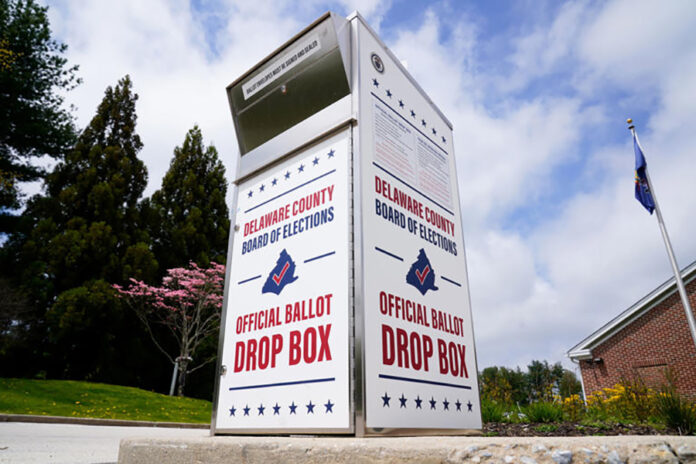
As Lisi reported, voters can visit that downtown Lancaster office during business hours and apply in person for a mail-in ballot. “State law permits election staff to process the application on the spot and allow voters to fill out the ballot in the office,” he noted. “Voters can then put the ballot into a mail-ballot envelope and hand it back to the elections office in the same visit.”

Take note, though: April 16 is the last day to vote in person by mail ballot.

That’s Pennsylvania’s narrow version of “early voting.” It’s something, at least.

However we choose to cast our ballots, we should appreciate the wonder of our democracy. And we should vow to do everything we can to protect it.

___

Pittsburgh Post-Gazette. April 6, 2024

State Rep. Scott Conklin, D-Centre, recently broke the charging port in his cell phone. (We won’t ask him how.) But when the manufacturer told him the part could not be repaired, he had no option but to buy a new phone. The replacement was more than a thousand dollars.

“Now, phones are a necessity, and especially so for residents in rural Pennsylvania,” Mr. Conklin said. “We cannot wait for manufacturers to take a long time to repair consumers’ devices at exponentially high costs.”

Mr. Conklin spoke outside a House Commerce Committee informational meeting discussing Senate Bill 744, Pennsylvania’s Right to Repair legislation. The Right to Repair movement argues, rightly, that because consumers own their products, they deserve to be able to get their products repaired (or to repair them themselves) at a reasonable price.

But as more and more products include proprietary parts, especially software, manufacturers have increasingly forced consumers to come to them for repairs and updates — or, as in the case of Mr. Conklin’s phone, to replace the product entirely.

SB 744 would require makers of “digital electronic equipment to make available to owners and independent repair providers, on fair and reasonable terms, documentation, parts and tools used to diagnose, maintain and repair digital electronic equipment.”

This is a good first step — and is worth passing into law — but the Senate’s proposal, sponsored by Mike Regan, R-Cumberland, can and should go further.

The legislation exempts some of the worst right-to-repair offenders: medical devices and agricultural equipment.

Medical devices may seem like a logical exception — after all, you don’t want a non-expert tinkering with an MRI machine before getting a scan. But during the COVID pandemic, onerous requirements that devices like ventilators be serviced only by the manufacturer kept many life-saving devices off-line. Designing devices that can be fixed by anyone with the proper training on the ground could be a matter of life and death.

As for agricultural equipment, behemoths like John Deere have made big profits by forcing farmers — who used to be the ultimate tinkerers — to pay for expensive, exclusive maintenance. High-tech tractors will even lock out their owners until a manufacturer’s representative puts in the right code to get back to harvesting. In an industry where a day’s delay can mean spoiling a year of work, the right to repair is essential.

After the manufacturer declined to fix his charging port, Mr. Conklin should have had the right to see if anyone else could fix it, saving him money and the landfill from electronic waste. If you can’t get something repaired on your own, did you ever really own it to begin with?

Biden dice que el enfoque de Netanyahu en su guerra contra Hamás es un «error»

guerra
Un hombre reacciona junto al cuerpo de un niño asesinado por un bombardeo israelí sobre la Franja de Gaza, en el hospital de al Aqsa, en Deir al Balah, Gaza, el 9 de abril de 2024. (Foto: AP/Abdel Kareem Hana)

TEL AVIV, Israel. — El presidente de Estados Unidos, Joe Biden, calificó la gestión del primer ministro de Israel, en la guerra de Gaza de errónea y pidió que su gobierno inunde el arrasado territorio con ayuda humanitaria. Las palabras del mandatario elevaron la presión para que las autoridades israelíes alcancen un alto el fuego y agrandaron la brecha abierta por el conflicto entre los dos firmes aliados.

En la Franja, los palestinos iniciaron la celebración del Eid al-Fitr en silencio, con los padres visitando las tumbas de sus hijos muertos en la guerra. Después de la oración matinal, es habitual que los musulmanes visiten el lugar donde descansan sus seres queridos durante los tres días que dura la fiesta que marca el final del mes sagrado del ayuno, el Ramadán.

En un cementerio en Deir al-Balah, en el centro del territorio, Samahir Za’neen se agachó junto a la lápida de su hijo de 20 años, que murió en un ataque aéreo en enero mientras caminaba por la ciudad. “Su Eid (es) en el paraíso, si Dios quiere», dijo.

Biden ha apoyado abiertamente la guerra de Israel contra Hamás tras el letal asalto del grupo insurgente el 7 de octubre, pero en las últimas semanas su paciencia con Netanyahu parece haber disminuido y su gobierno ha adoptado una posición más firme hacia Israel, amenazando una alianza de décadas y ampliando el aislamiento internacional de Israel debido al conflicto.

Su mayor desacuerdo gira en torno a los planes de Israel para lanzar una ofensiva sobre Rafah, la ciudad más meridional de Gaza, y las desavenencias han aumentado desde entonces, agravadas por el ataque israelí de la semana pasada contra un convoy de ayuda humanitaria que mató a siete trabajadores de la ONG World Central Kitchen, en su mayoría extranjeros. Israel dijo que las muertes no fueron intencionadas pero Biden mostró su indignación por lo ocurrido.

En la una entrevista emitida el martes en la noche, Biden destacó las diferencias entre los dos países en cuanto a la ayuda humanitaria a la población de Gaza, donde los más de seis meses de guerra han encendido las alarmas sobre una inminente hambruna.

“Lo que está haciendo es un error. No estoy de acuerdo con su enfoque», dijo Biden a la televisora estadounidense en español Univision en una entrevista gravada el 3 de abril, dos días después de un ataque israelí a un convoy de la ONG World Central Kitchen. El mandatario respondía a una pregunta sobre si Netanyahu prioriza su supervivencia política sobre el interés nacional.

Biden apuntó que Israel debía pactar un alto el fuego, inundar Gaza con ayuda humanitaria durante las próximas seis u ocho semanas y permitir que los países de la región ayuden en su distribución, “Debería hacerse ahora”, señaló.

El hambre en Gaza está eclipsando el Eid al-Fitr, una festividad musulmana normalmente alegre en la que las familias celebran el final del mes sagrado del Ramadán.

Palestinos caminan entre edificios destruidos tras una ofensiva aérea y terrestre israelí en Jan Yunis, en el sur de Gaza, el 8 de abril de 2024. (Foto: AP/Fatima Shbair)

Israel interrumpió la entrega de ayuda humanitaria a Gaza en los primeros días de la guerra pero, ante la presión de Estados Unidos, ha aumentando lentamente el número de camiones que acceden al territorio. Los grupos de ayuda, por su parte, se quejan de que los suministros no llegan con suficiente rapidez a la desesperada población, algo que achacan a las restricciones israelíes, y algunos países han buscado métodos alternativos como lanzar los alimentos en paracaídas o trasladarlos por mar.

Israel afirma que durante la guerra se ha producido un incremento constante de los suministros que entran en la Franja, con la apertura de más puertos de entrada para hacer que los camiones lleguen a zonas especialmente afectadas como el norte de Gaza. Y culpa a las ONG de ser muy lentas en el reparto. Según los grupos, los problemas logísticos y la precaria situación de seguridad — acentuada por el ataque a WCK — complican la distribución.

Israel y Hamás participan en conversaciones para alcanzar un alto el fuego a cambio de la liberación de los rehenes capturados en el asalto insurgente, pero siguen distanciados en cuestiones clave como el regreso de los palestinos al norte de la Franja, que quedó prácticamente arrasada en la ofensiva.

Netanyahu ha prometido una “victoria total” en la guerra, con la destrucción de las capacidades militares y de gobierno de Hamás para evitar que se repita el asalto del 7 de octubre, y el regreso de los rehenes.

Un tanque israelí circula por las inmediaciones de la frontera entre Gaza e Israel, visto desde el sur de Israel, el 9 de abril de 2024. (Foto:AP/Leo Correa)

Israel inició la guerra en respuesta al asalto transfronterizo de Hamás en el que los insurgentes mataron a alrededor de 1.200 personas, en su mayoría civiles, además de tomar a unas 250 más como rehenes, según funcionarios israelíes.

La incesante campaña terrestre y aérea de su ejército en Gaza se ha cobrado la vida de más de 33.300 palestinos, de acuerdo con el Ministerio de Salud de la Franja, que no distingue entre víctimas civiles y combatientes en su conteo, pero afirma que dos tercios de los muertos son mujeres y menores. Por su parte, Israel sostiene, sin ofrecer pruebas, que ha matado a alrededor de 12.000 insurgentes.

La guerra ha desencadenado una catástrofe humanitaria: la mayor parte de la población se ha visto obligada a abandonar sus hogares y los combates han arrasado grandes tramos del paisaje urbano gazatí y dejaron muchas zonas inhabitables.