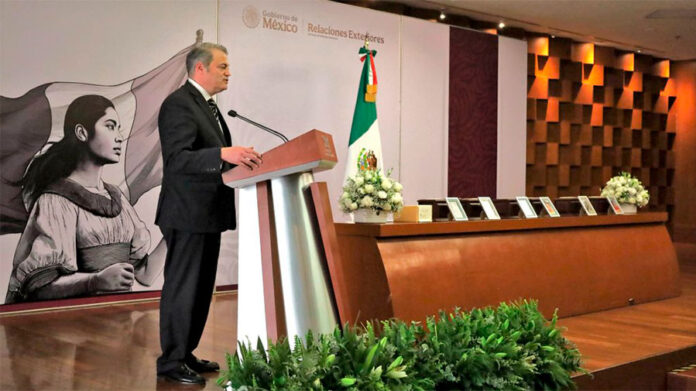
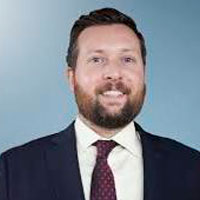
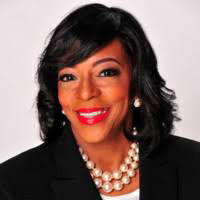
El cónsul Carlos Obrador durante el evento, destacó el trabajo conjunto entre las autoridades mexicanas y las estadounidenses (Foto: RRSS/SRE)
La Secretaría de Relaciones Exteriores (SRE) de México llevó a cabo un acto solemne en el que repatrió los restos de seis ciudadanos mexicanos que perdieron la vida en un trágico accidente aéreo en Filadelfia, ocurrido el 31 de enero de 2025.
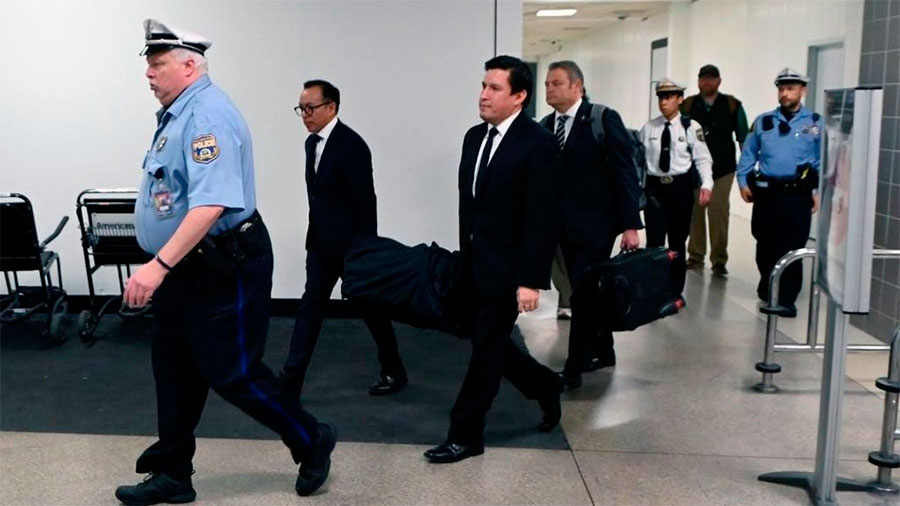
El pasado 4 de abril, el cónsul de México en Filadelfia, Carlos Obrador, trasladó personalmente las urnas con los restos de las víctimas desde Filadelfia hacia la Ciudad de México. En un emotivo acto en las instalaciones de la Secretaría de Relaciones Exteriores, las urnas fueron entregadas a los familiares de las víctimas, quienes recibieron las condolencias y el apoyo de los funcionarios mexicanos.
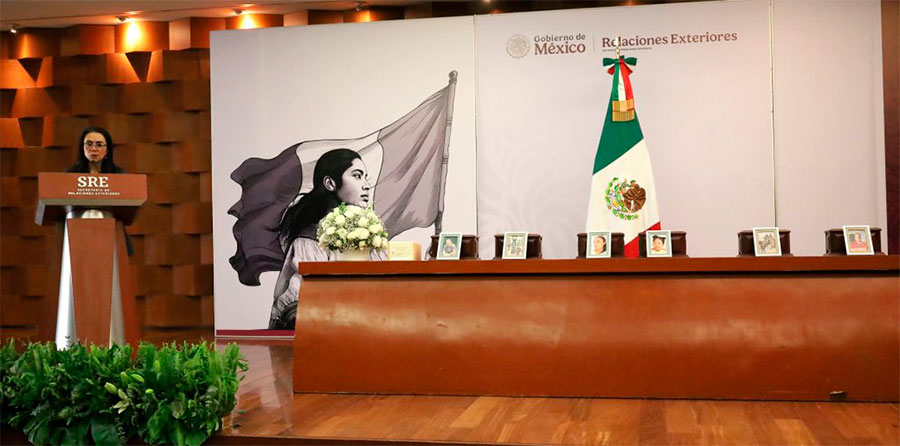
La ceremonia estuvo encabezada por Vanessa Calva Ruiz, directora general de Protección Consular y Planeación Estratégica, en representación del canciller Juan Ramón de la Fuente, y contó con la presencia del cónsul Carlos Obrador. Durante el evento, se destacó el trabajo conjunto entre las autoridades mexicanas y las estadounidenses, quienes trabajaron de manera coordinada para la identificación de los cuerpos y la repatriación digna de las víctimas.
El cónsul de México en Filadelfia, Carlos Obrador, trasladó personalmente las urnas con los restos de las víctimas desde Filadelfia hacia la Ciudad de México (Foto: RRSS/SRE)
El accidente: una tragedia en Filadelfia
El accidente ocurrió el 31 de enero de 2025, cuando un avión Learjet 55, que operaba para la empresa mexicana Jet Rescue Air Ambulance, se estrelló poco después de despegar del Aeropuerto del Noreste de Filadelfia. El avión tenía como destino final Tijuana, México, con una escala en Springfield, Misuri. En la aeronave viajaban seis personas de nacionalidad mexicana: Valentina Guzmán Murillo, de 11 años; su madre Lizeth Murillo Ozuna; el médico Raúl Meza Arredondo; el paramédico Rodrigo López Padilla; el piloto Alan Alejandro Montoya Perales; y el copiloto Josué de Jesús Juárez Juárez.
Valentina Guzmán Murillo viajaba con su madre para regresar a México después de recibir tratamiento médico en Filadelfia para tratar su espina bífida, una condición que la había mantenido en el hospital de esa ciudad. La tragedia también cobró la vida de una persona en tierra y dejó a 19 personas heridas, varias de ellas con graves quemaduras y otros traumas. Además, el accidente causó daños a varias viviendas y negocios en la zona, lo que incrementó la magnitud del desastre.
La ceremonia estuvo encabezada por Vanessa Calva Ruiz, directora general de Protección Consular y Planeación Estratégica (Foto: RRSS/SRE)
Investigación en curso
La Junta Nacional de Seguridad en el Transporte (NTSB) de Estados Unidos está llevando a cabo una investigación para determinar las causas del accidente. Se ha informado que el registrador de voz de cabina del avión no estaba funcionando y probablemente no había operado durante varios años, lo que podría complicar la recolección de datos cruciales para la investigación.
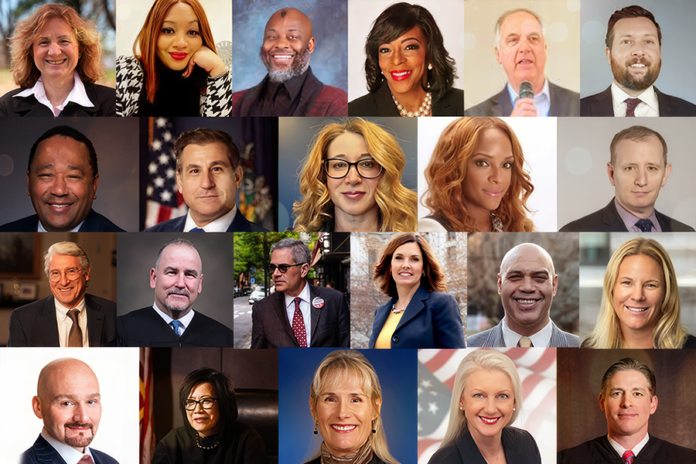
Residentes de Pensilvania acudirán a las urnas el 20 de mayo de 2025 para elegir a los candidatos de sus partidos para cargos municipales y judiciales. En Impacto estaremos informando sobre los candidatos, sus campañas y prioridades.
En esta ocasión, los votantes de Filadelfia podrán escoger sus candidatos, ya sean demócratas o republicanos, para que se enfrenten en las elecciones del próximo mes de noviembre.
A continuación, te damos información general para que conozcas un poco más sobre los escaños, candidatos y alguna prioridad de sus respectivas campañas, y tengas más elementos para decidir por quién votar.
El Tribunal Superior tiene un puesto vacante. Una vez seleccionados en mayo, este y los otros tribunales tendrán elecciones de retención para mandatos que vencen a fines de 2025; estas tendrán lugar en las elecciones de noviembre. Dentro de las funciones del Tribunal están las apelaciones sobre asuntos relacionados con niños y familias.
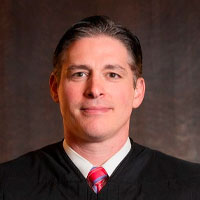
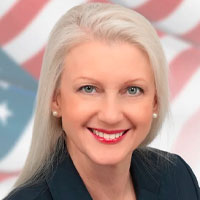
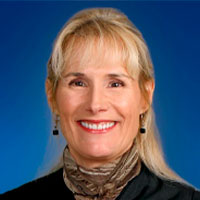
Estos son los candidatos, demócrata y republicanos para el de Juez Tribunal Superior donde solo podrás votar por uno.
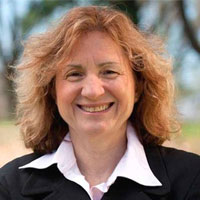
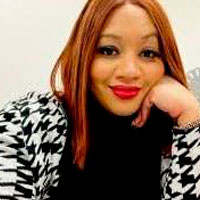
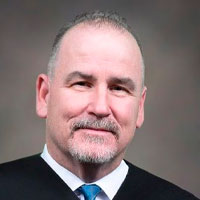
Brandon Neuman (Demócrata): “Elegirme para el Tribunal Superior asegurará a los habitantes de Pensilvania que su voz será escuchada por un juez justo e imparcial. Espero ganarme la confianza de los votantes”.
María Battista (Republicana): “Las opiniones emitidas por nuestros tribunales de apelaciones tienen un impacto de gran alcance en cada una de nuestras vidas. Mis años de experiencia en derecho civil, penal y administrativo me hacen especialmente calificada para servir en el Tribunal Superior”.
Ann Marie Wheatcraft (Republicana): “Durante mi tiempo en el banquillo, he impuesto consistentemente algunas de las sanciones más severas a los criminales violentos”.
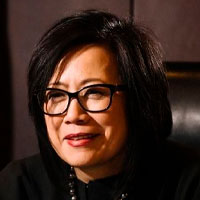
Corte Superior de la Mancomunidad. Estos son los candidatos demócratas y republicanos para el de Juez Tribunal Superior donde solo podrás votar por uno.
Stella Tsai (Demócrata): “Mis principios y mis raíces están basados en la integridad, la transparencia, la consistencia y la empatía. Creo que nuestro sistema legal debe ser accesible y justo para todos los habitantes de Pensilvania”.
Joshua Prince (Demócrata): “La judicatura es la última línea de defensa de los ciudadanos para que defiendan su libertad y sus derechos sean respetados y reivindicados”.
Matt Wolford(Republicano): “Soy un profesional legal calificado y experimentado, listo para llevar mi profundo conocimiento de las acciones gubernamentales y las burocracias al Tribunal de la Mancomunidad”.
El Tribunal Municipal de Filadelfia es un tribunal de jurisdicción limitada, compuesto por 27 jueces. Está organizado en tres divisiones:
La División Penal se encarga de juzgar los casos penales de adultos con una pena máxima de prisión de cinco años o menos. El Tribunal Municipal también tiene jurisdicción inicial para procesar todos los arrestos penales en Filadelfia y lleva a cabo juicios por delitos menores y audiencias preliminares para todos los casos de delitos graves.
La División Civil es la jurisdicción para casos civiles donde el monto en controversia es de $12,000 o menos para reclamos menores; monto ilimitado en dólares para casos de propietario e inquilino y $15,000 en casos de bienes raíces e impuestos escolares.
La División de Tráfico juzga las infracciones de tráfico.
En estas primarias 5 candidatos se postulan para 3 escaños vacantes y todos son demócratas. Sherrie Cohen, Amanda Davison, Cortez Patton, Shawn Page y Qawi Abidul –Rahman.
El Juez de Primera Instancia o los Tribunales de Causas Comunes son los tribunales de Pensilvania con jurisdicción de juicio general y están organizados en 60 distritos; el distrito más pequeño tiene un juez y el más grande, que es el de Filadelfia, tiene 101. Cada uno de estos tribunales esta supervisado por un juez presidente elegido por sus pares del distrito; escuchan casos penales y civiles sobre una variedad de temas y asuntos que involucran a niños y familias, así como apelaciones de tribunales menores (Tribunal Municipal de Filadelfia).
El Tribunal de Primera Instancia de Filadelfia está organizado en tres divisiones:
La División de Juicios es responsable de la mayoría de los casos penales graves y de los casos civiles más importantes.
La División de Familia es responsable de los asuntos de la rama de Relaciones Domésticas (divorcio, paternidad, custodia, manutención de los hijos y violencia doméstica) y de los casos de la rama de Menores (delincuencia, dependencia y adopciones).
La División del Tribunal de Huérfanos lleva a cabo procedimientos relacionados con herencias, testamentos y fideicomisos.
En estas primarias 12 candidatos se postulan para 9 escaños vacantes y todos son demócratas. Aquí la lista de candidatos:
Will Braveman: “Las personas en los tribunales a menudo están en crisis. Merecen un sistema que ofrezca dignidad, empatía y respeto para todos”.
Irina Ehrlich: «Mi experiencia legal, compromiso con la justicia y compasión por los demás me convertirán en un juez justo que tratará a todos con respeto».
Larry Farnese: «Nuestros tribunales deben reflejar la simple creencia de que todos merecen imparcialidad, respeto y resoluciones rápida «.
Kia Ghee: «Filadelfia necesita líderes que comprendan los desafíos que enfrentan nuestras comunidades y estén comprometidos con la justicia y la equidad».
Sarah Jones: «De ser electa voy a servir a los ciudadanos de Filadelfia con un enfoque en la equidad, la integridad y la compasión».
Leon A. King, II: «Yo lo he vivido, así que puedo empatizar con muchas personas y con las cosas por las que he pasado. «Soy auténtico y estoy comprometido».
Brian Kisielewski: «La justicia debe ser accesible, imparcial y centrada en lo que realmente importa”.
Anthony Stefanski: “Mi objetivo es simple: asegurarme de que cada persona que entre a su tribunal ya sea acusada de un delito o buscando justicia, tenga una oportunidad justa».
Deborah Watson- Stokes: “Siempre te encontrarás con obstáculos, y siempre habrá personas que no te vean cómo te ves a ti mismo. Siempre tendrás lo que necesitas si no te rindes».
Qawi Abdul-Rahman: “Elígeme para tener un cambio en nuestro sistema judicial”.
Sherrie Cohen: «Lucharé por el preescolar universal para todos los niños de 3 y 4 años, la financiación completa de las escuelas, la equidad educativa, una moratoria sobre las chárter, el fin de los conflictos de interés y la selección arbitraria de sus cuerpos estudiantiles».
Taniesha Henry: “Quiero garantizar los asuntos delicados para que se manejen con cuidado e integidad, porque tengo la capacidad para tomar decisiones sabias y tratar a todos con respeto”.
La Fiscalía de Distrito procesa los delitos cometidos en el condado y colabora estrechamente con las fuerzas del orden locales, estatales y federales para garantizar el cumplimiento de las leyes de la Mancomunidad de Pensilvania y la protección de los ciudadanos. Tiene autoridad sobre las investigaciones y los procesos penales en el condado, incluyendo audiencias preliminares, conferencias previas al juicio, declaraciones de culpabilidad, juicios y apelaciones. El fiscal de Distrito es elegido en toda la ciudad por un período de cuatro años, sin límite de mandatos. Estos son los candidatos para este cargo donde solo podrás votar por uno.
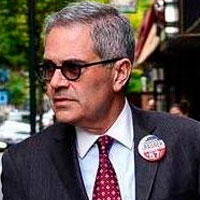
Pat Dugan (Demócrata): “He respondido al llamado de servir toda mi vida para proteger a nuestros ciudadanos”.
Larry Krasner (Demócrata): “Voy a continuar atacando la encarcelación masiva y trabajar para prevenir la violencia”.
La Contraloría Municipal realiza auditorías y análisis independientes que brindan información objetiva a los funcionarios municipales y al público en general sobre las finanzas municipales, así como sobre cómo mejorar las operaciones municipales y el uso de los recursos públicos. El Contralor es elegido por toda la ciudad para un mandato de cuatro años, sin límite de mandatos. Aquí los candidatos para el cargo de Contralo Municipal donde solo podrás votar por uno (1).
Christy Brady (Demócrata): “Unir a las personas para resolver problemas difíciles y entregar resultados para los ciudadanos de Filadelfia».
Ari Patrinos (Republicano): “Tracemos un nuevo rumbo, juntos”.
Comisión Electoral, cuyo líder es el máximo responsable de la gestión de un centro de votación y del personal que trabaja en él. Debe prestar juramento para admitir únicamente a los votantes debidamente registrados y con derecho a votar, para prevenir fraudes, engaños o abusos, y para garantizar que todos los votos al final del día sean contabilizados con precisión. El Juez también es responsable de la apertura y el cierre de las urnas, así como de toda la documentación necesaria el día de las elecciones. Los candidatos que se postulen para este cargo deben residir en el recinto electoral, y su mandato es de cuatro años sin límite de mandatos. Este es elegido por distrito y división.
Inspector de Elecciones de Mayoría y Minoría que generalmente se encarga de verificar los documentos de registro de los votantes y de preparar los certificados que los autorizan a emitir su voto. Garantiza la legalidad y la imparcialidad del proceso electoral verificando las firmas de los votantes al firmar el libro de votación, con los nombres de los votantes. Los inspectores también son responsables de verificar la exactitud de los números de las máquinas de votación al final del día. Los candidatos a este cargo deben residir en el recinto electoral, y su mandato es de cuatro años sin límite de mandato.
Te seguiremos informando, y recuerda que ¡tu voto es tu voz, vota y haz que cuente!
Fuente: Committee of seventy. Philadelphia City Commissioners.
Este contenido forma parte de Every Voice, Every Vote, un proyecto colaborativo gestionado por The Lenfest Institute for Journalism. El apoyo principal para Every Voice, Every Vote en 2024 y 2025 lo proporciona William Penn Foundation con fondos adicionales de The Lenfest Institute for Journalism, Comcast NBC Universal, The John S. and James L. Knight Foundation, Henry L. Kimelman Family Foundation, Judy y Peter Leone, Arctos Foundation, Wyncote Foundation, 25th Century Foundation y Dolfinger-McMahon Foundation. Para obtener más información sobre el proyecto y ver una lista completa de los patrocinadores, visite Every Voice, Every Vote . El contenido editorial es creado sin intervención de los donantes del proyecto.
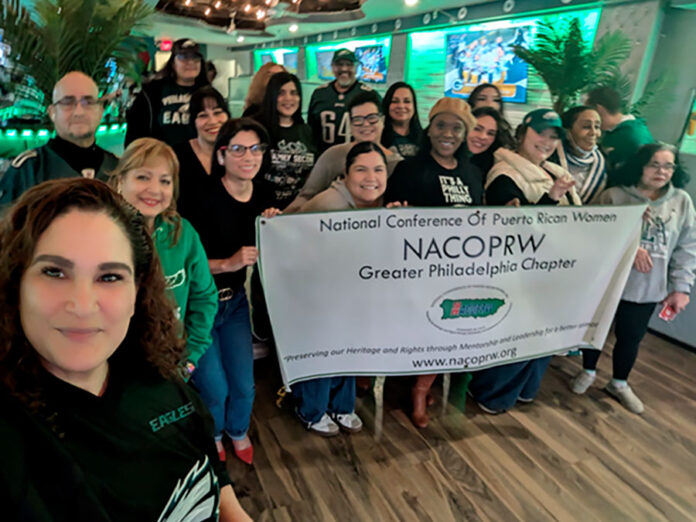
LuzSelenia Loeb and other sisters of NACOPRW Philly were among the main hosts of the program. (Photo: Bianca L. Rodríguez)
On Saturday, April 5th, beneath a soft drizzle and that unmistakable Philly chill, the Greater Philadelphia Chapter of the National Conference of Puerto Rican Women (NACOPRW Philly) brought the comunidad together at ASPIRA Educational Campus for “Making HerStory”—a day rooted in «cultura, propósito, y acción colectiva».
“HerStory” was more than just a theme, it was a call to action. A sacred space for journaling, reflection, sisterhood, and vision. A forum where Boricua and Latina women could gather to share thoughts, dreams, and aspirations of what it means to be us, in Philadelphia, in the diaspora, and on the island. Each journal, pen, and question held the intention of creating sacred space for Puertorriqueña and Latina women to pause, dream, and write themselves into the future. Prompts like “Mi Isla, Mi Barrio” and “Seeds of Change” were created to ignite a vision of a future guided by intergenerational strength, where abuelas, madres, hijas y nietas come together to support one another, preserve ancestral roots, and push forward toward lasting change.
In a powerful show of unity, Philly Boricuas, Keystone Health, and ASPIRA joined NACOPRW Philly to co-host the day rooted in comunidad and collective care, one part reflection, one-part direct service, all heart. While one side of the room offered space for visioning, the other buzzed with activity for the prom wear giveaway, showcasing stunning gowns, fancy suits, sparkling jewelry, rows of shoes, lively music, and pure joy.
The scents and the tastes of the island were present around the table filled with typical dishes. (Foto: Impacto/Files)
Teens lit up as they tried on prom wear, standing taller in their reflection, beaming under the love of their families and comunidad. It wasn’t just about the clothes, it was about confidence, visibility, and knowing they matter. This is HerStory in motion, where leaders meet people where they are and remind them of their worth and potential to walk the very same path.
At the heart of it all were Charito Morales of Philly Boricuas, Joanne Esquilin of ASPIRA, and LuzSelenia Loeb of NACOPRW Philly—three Puertorriqueñas ponderosas, whose names are synonymous with grassroots leadership in Philadelphia. Together, they’re the kind of leaders this city craves—las que trabajan con alma y sin pausa. Whether it’s passing out prom dresses, delivering resources, or simply reminding someone they matter, their impact runs deep. It’s not about the photo op, it’s about real transformation, powered by love and purpose, and wrapped in an unshakable belief in the power of comunidad and preserving cultura day in and day out.
The ultimate highlight? The delicious food, filling the air with scents familiar to so many Boricuas. Catered by Chef José “Caballo” Santiago, the typical tastes of the island brought everyone together around the table, a hug from our culture in the form of arroz con gandules, pollo guisado, and ensalada de papa. Each plate told a story of tradition, rooted in pride and sabor.
LuzSelenia Loeb, President of NACOPRW Philly, explained, “Philadelphia is home to the second-largest Puerto Rican population outside of Puerto Rico, but there are still too few spaces dedicated to the empowerment of Puerto Rican women and girls. Like many in our community, we’re working fiercely to rebuild post Hurricane Maria and the Pandemic, to fill that gap—with joy, justice, and generational impact.”
Loeb further detailed how NACOPRW Philly plans to help that goal come to fruition, “As we look forward to celebrating our 40th anniversary this August, NACOPRW Philly’s focus is to build a leadership pipeline rooted in mentorship and culture, where Boricua women rise to the highest levels of leadership, from city government to global spaces. As our chapter has done for the last 40 years, we’re working hard to create opportunities for women to access tools in financial wellness, civic engagement, education, wellness, and entrepreneurship at all stages of life with an intergenerational approach, from elementary school to retirement, and everything in between. We’ve also made great strides to be in touch with new groups of Puertorriqueñas thanks to technology expanding our reach exponentially for recruitment and interaction with other Boricuas around the world. Our virtual presence is growing daily on Instagram, Facebook, and LinkedIn—and we’re turning those online connections into real-life impact by showing up in local neighborhoods, hosting events, and building coalitions across the Greater Philadelphia region. La sazón Boricua runs deep—and we’re just getting started.”
Meanwhile, on the opposite side of Philadelphia, nuestras hermanas Latinas stood in solidarity at the “Hands Off!” protest at City Hall, defending dignity and autonomy, which are values that align with all of the organizations present.
Eso es poder colectivo.Somos fuertes. Somos cultura. Somos HerStoryen acción.—con alma y sin permiso. Ahora más que nunca, this is how we rise.
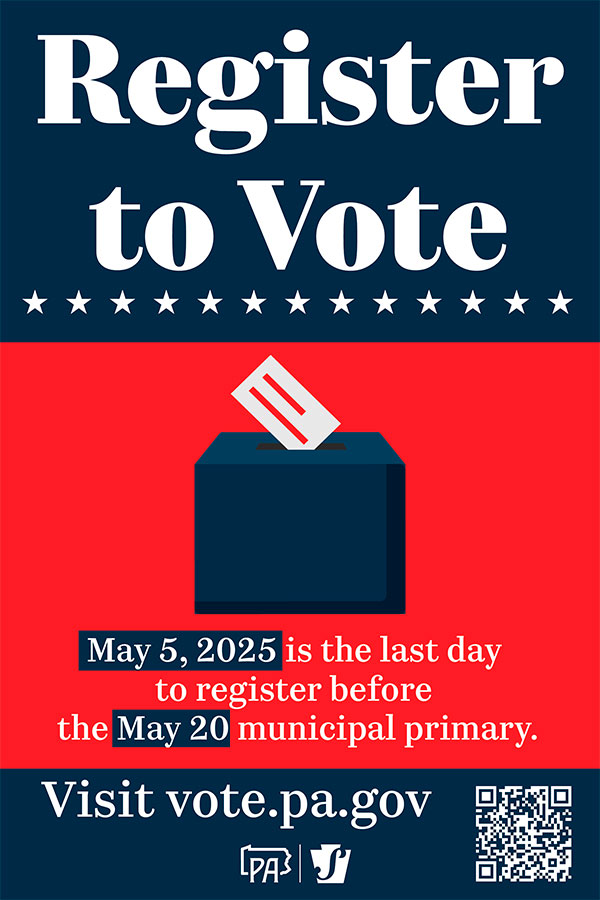
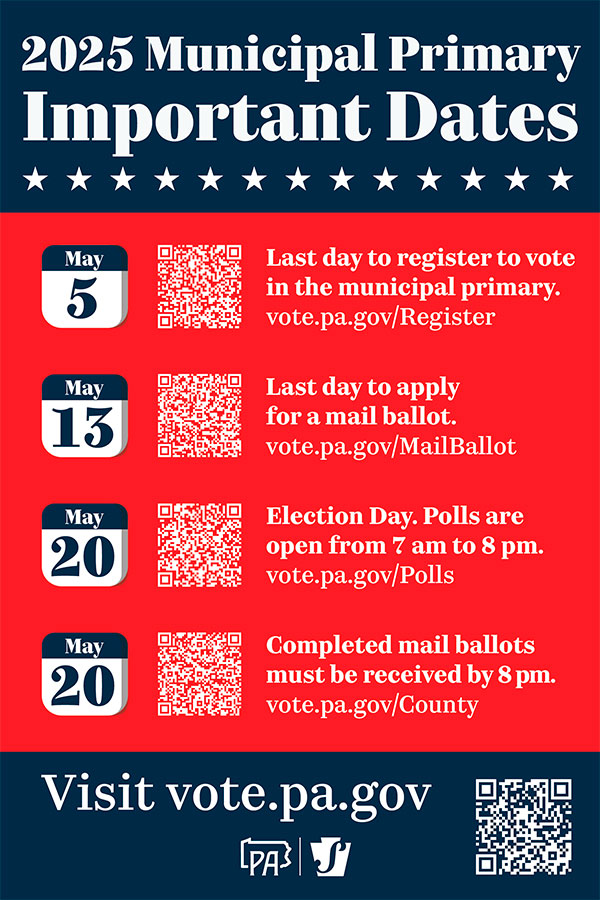
Residents of Pennsylvania will head to the polls on May 20, 2025, to choose their candidates for municipal and judicial offices. This is your chance to decide the future of your family and community. That’s why we’re sharing some tips to make this process easier for you.
To register for the 2025 Philadelphia primary elections, you can follow these steps:
Check Your Eligibility: You must be a U.S. citizen for at least one (1) month before the election, a resident of Philadelphia and your voting district for at least thirty (30) days before the election, and at least 18 years old on the election date.
Eligible citizens must submit a voter registration application to register.
Before starting, find your Pennsylvania driver’s license or PennDot identification card.
You can register online through the Pennsylvania Department of State website. You can also register in person at your county election office. https://vote.phila.gov
Confirm Your Registration: After submitting your application, you can check your registration status on the Pennsylvania Department of State website.
The City Commissioners’ office will receive applications until fifteen (15) days before the upcoming election.
You are not eligible to register and vote if you are currently incarcerated for a felony and will not be released before the next election.
You can obtain voter registration forms at U.S. Postal Service offices, Philadelphia public libraries, state liquor stores, or other state offices. Also, this spring, you will be able to use the C70 Interactive Voter Guide to research your ballot and find information about candidates, their campaigns and priorities, and their responses to the C70 candidate questionnaire.
Remember that specific dates for registration and elections may vary, so it’s a good idea to stay alert to official announcements. If you need more help, you can visit the Voter Registration Office at 520 N Columbus Boulevard, 15th floor, Philadelphia, PA 19123 or contact them directly at (215) 686-159.
Source: Voter Guide, Philadelphia City Commissioner.
This content is a part of Every Voice, Every Vote, a collaborative project managed by The Lenfest Institute for Journalism. Lead support for Every Voice, Every Vote in 2024 and 2025 is provided by the William Penn Foundation with additional funding from The Lenfest Institute for Journalism, Comcast NBC Universal, The John S. and James L. Knight Foundation, Henry L. Kimelman Family Foundation, Judy and Peter Leone, Arctos Foundation, Wyncote Foundation, 25th Century Foundation, and Dolfinger-McMahon Foundation. To learn more about the project and view a full list of supporters, visit www.everyvoice-everyvote.org. Editorial content is created independently of the project’s donors.
Los residentes de Pensilvania acudirán a las urnas el 20 de mayo de 2025 para elegir a los candidatos de sus partidos para cargos municipales y judiciales. Esta es la oportunidad que tienes para decidir el destino de tu familia y tu comunidad. Por eso compartimos algunos consejos para que se haga más fácil este proceso.
Para registrarte en las primarias de Filadelfia en 2025, puedes seguir estos pasos:
1. Verifica tu elegibilidad: Debes ser ciudadano de EE. UU durante como mínimo un (1) mes antes de la elección, ser residente de Filadelfia y de su distrito electoral como mínimo treinta (30) días antes de la elección y tener al menos 18 años para la fecha de la elección.
2. Los ciudadanos elegibles deben presentar una solicitud de registro electoral para registrarse.
3. Antes de comenzar busca tu su licencia de conducir de Pensilvania o la tarjeta de identificación de PennDot.
4. Puedes registrarte en línea a través del sitio web del Departamento de Estado de Pennsylvania. También puedes registrarte en persona en la oficina de elecciones de tu condado. https://vote.phila.gov
5. Confirma tu registro: Después de enviar tu solicitud, puedes verificar tu estado de registro en el sitio web del Departamento de Estado de Pennsylvania.
6. La oficina de Comisionados de la Ciudad recibirá las solicitudes hasta quince (15) días antes de la próxima elección.
7. No se es elegible para registrarse y votar si actualmente se está recluido en un centro penitenciario por un delito grave y no será liberado hasta después de las próximas elecciones.
Las solicitudes de registro electoral están disponibles en las oficinas Postales, bibliotecas públicas de Filadelfia, tiendas de licores u otras oficinas estatales. Además esta primavera, podrán usar la Guía Interactiva del Votante de C70 para conocer los detalles de su papeleta electoral y obtener información sobre los candidatos, sus campañas, prioridades, y sus respuestas al cuestionario de candidatos de C70.
Recuerda que las fechas específicas para el registro y las elecciones pueden variar, así que es buena idea estar muy pendiente a los anuncios oficiales. Si necesitas más ayuda puedes visitar la oficina de Registro Electoral en 520 N Columbus Boulevard l5Th piso Filadelfia, PA 19123 o comunicarte directamente (215) 686-159.
Fuente: Voter Guide, Philadelphia City Commisioners.
Este contenido forma parte de Every Voice, Every Vote, un proyecto colaborativo gestionado por The Lenfest Institute for Journalism. El apoyo principal para Every Voice, Every Vote en 2024 y 2025 lo proporciona William Penn Foundation con fondos adicionales de The Lenfest Institute for Journalism, Comcast NBC Universal, The John S. and James L. Knight Foundation, Henry L. Kimelman Family Foundation, Judy y Peter Leone, Arctos Foundation, Wyncote Foundation, 25th Century Foundation y Dolfinger-McMahon Foundation. Para obtener más información sobre el proyecto y ver una lista completa de los patrocinadores, visite Every Voice, Every Vote . El contenido editorial es creado sin intervención de los donantes del proyecto.
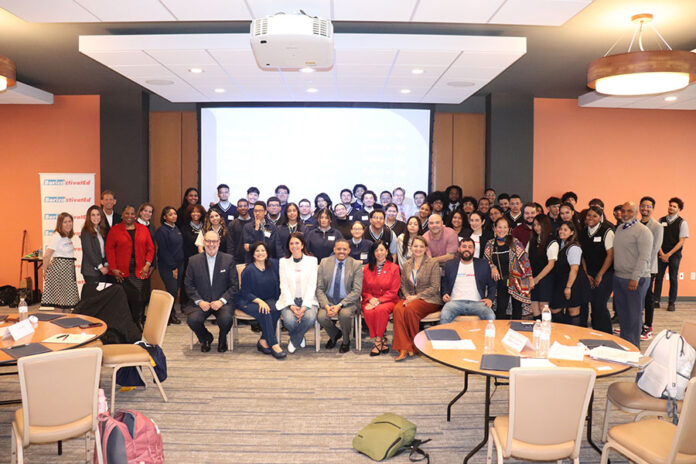
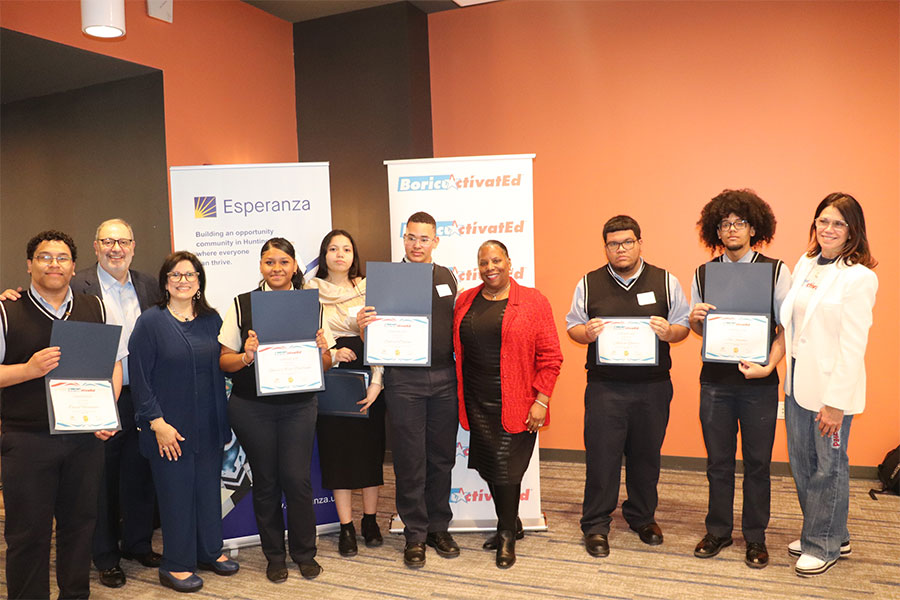
Participantes del taller Boricuactivated. (Foto: Cortesía/Alliyah Maduro-Ramos)
La culminación del curso de Compromiso Cívico 101 de Primavera y el evento culminante de BoricuActivated celebraron su cuarto (4º) año de asociación con Esperanza Academy.
Expresando su gratitud al fundador y director ejecutivo, Rev. Luis Cortés, de Esperanza, Jennice Fuentes declaró: «Por creer en nuestra misión de empoderar a los jóvenes a través del compromiso cívico y por darnos el privilegio de enseñar a los estudiantes de Esperanza la importancia de abogar por los temas que más les importan».
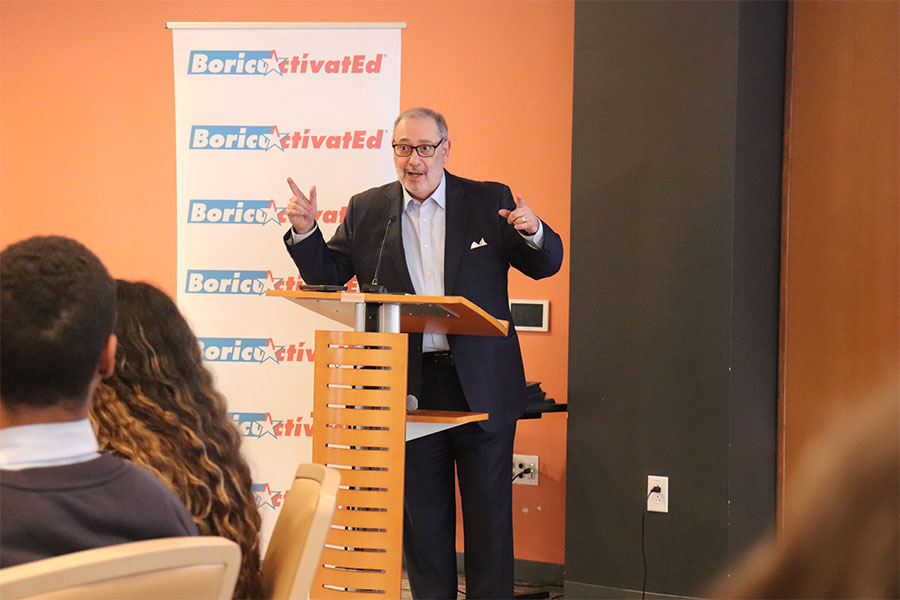
Rev. Luis Cortés, fundador y director ejecutivo de Esperanza. (Foto: Cortesía/Alliyah Maduro-Ramos)
Fuentes, la fundadora de BoricuActivated, se mantiene profundamente enfocada en su misión: capacitar a las comunidades a lo largo de los Estados Unidos que deseen comprender mejor cómo funciona la relación con los funcionarios electos. «A veces las personas votan o se registran para votar, los candidatos son elegidos y hasta las próximas elecciones no se sabe nada. Con esta iniciativa, el objetivo es que los estudiantes empiecen a establecer ese diálogo esencial a través de la capacitación y el compromiso cívico», explicó la fundadora.
Por su parte, el Rev. Luis Cortés comentó: «Entre los servidores públicos presentes, muchos de ellos trabajaron en Esperanza, y ellos, junto con todos los presentes en el evento, tienen algo en común: el compromiso de servir a la comunidad, incluso más allá de aquí. Cuando eres de Esperanza, puedes tomar liderazgo, representar los intereses de tu comunidad y vecindario, y ser parte del proceso del gobierno de los Estados Unidos».
Rev. Luis Cortés, Nilda Ruíz, Kathryn Mckenzie-Zeigler, Jennice Fuentes y estudiantes de Esperanza Academy. (Foto: Cortesía/Alliyah Maduro-Ramos)
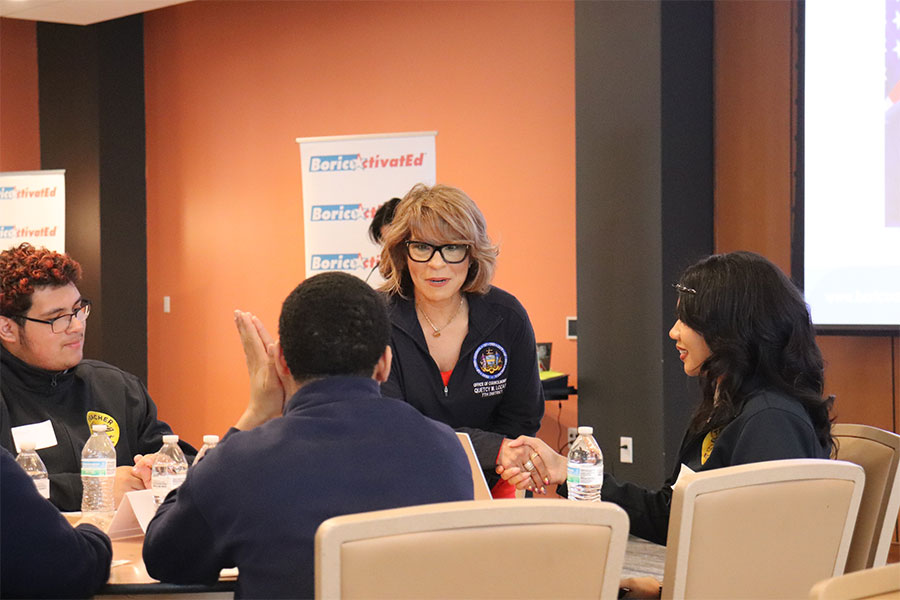
El evento fue dinámico, ya que los estudiantes tuvieron la oportunidad de tomar notas, intercambiar impresiones, hacer solicitudes y pedir respuestas durante casi 20 minutos. Luego, cada funcionario electo o los miembros de su equipo hablaron sobre las acciones necesarias para abordar las inquietudes de los estudiantes. Entre los funcionarios electos y/o representantes presentes estuvieron: Scott Heppard (jefe de Gabinete) – Oficina del congresista Brendan Boyle, Tyrone Manning (gerente de Asuntos de Defensa) – Oficina del senador Art Haywood, Beth Connor (defensora de los constituyentes) – Oficina del senador Dave McCormick, Kathryn McKenzie-Zeigler (asistente del Congreso) – Oficina del representante Dwight Evans, Quetcy Lozada (concejala del 7mo Distrito), Eduardo Ramírez (asesor de Servicios a los Constituyentes) – Oficina del representante Danilo Burgos, y William García (director de Asuntos Latinos) –Alcaldia de Filadelfia.
Quetcy Lozada, concejala del 7mo Distrito. (Foto: Cortesía/Alliyah Maduro-Ramos)
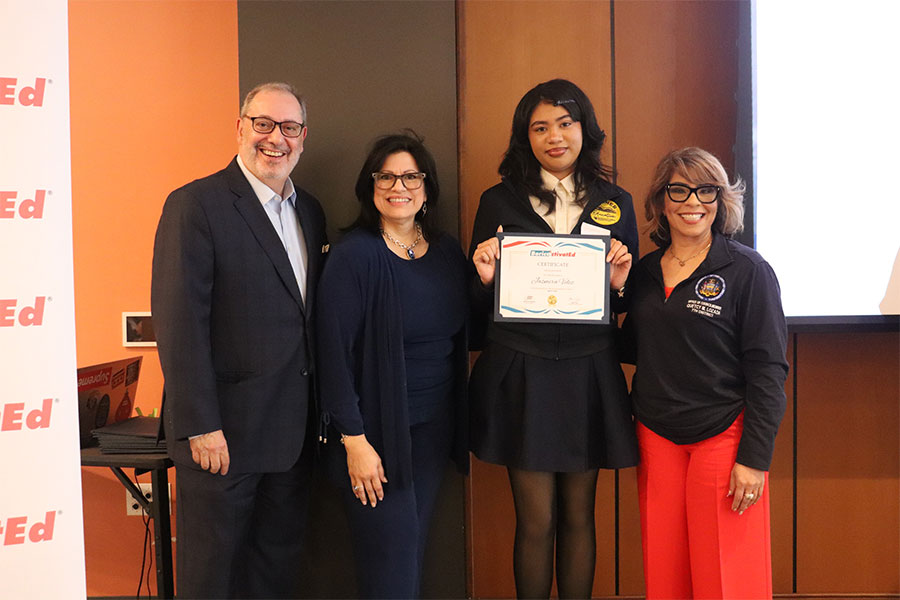
El evento sirvió para honrar a un grupo de estudiantes, y se les hizo entrega de certificados como símbolo de la culminación de la capacitación realizada durante las pasadas tres semanas, que les acercó el Gobierno a través de sus representantes.
Rev. Luis Cortés, Nilda Ruíz, Jasmira Vélez y Quetcy Lozada. (Foto: Cortesía/Alliyah Maduro-Ramos)
Para aquellos interesados en conocer los próximos talleres y proyectos, pueden visitar: www.boricuactivated.org o seguirlos en redes sociales @boricuactivated.
Integrantes del Centro de Bienvenida de las Hermanas de San José. (Foto: Cortesía de Sisters of St. Joseph Welcome Center)
Por lo general los agentes de la Oficina de Inmigración y Control de Aduanas (por su acrónimo en inglés ICE), al igual que otros agentes de la Ley, no están autorizados a entrar a los hogares y a espacios privados de edificios públicos como iglesias, sin que muestren una orden firmada por un juez federal. A partir de marzo de este año, ICE se encuentra bajo una orden judicial y que le permitiría ingresar a cualquier lugar de culto de una lista específica de aproximadamente 1,400 lugares en 36 estados.
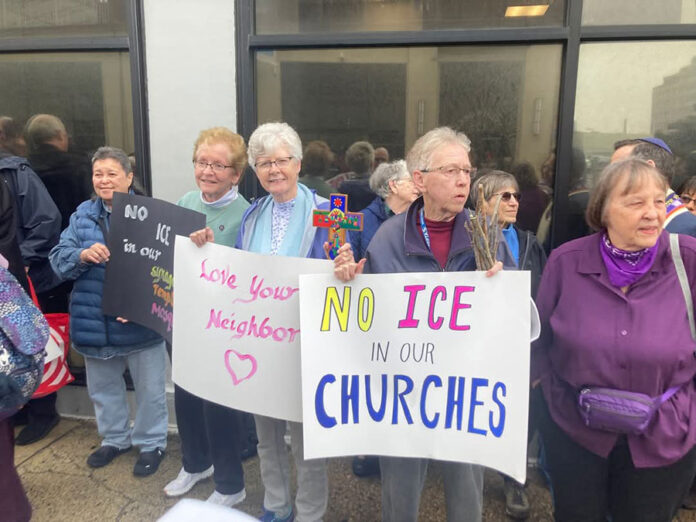
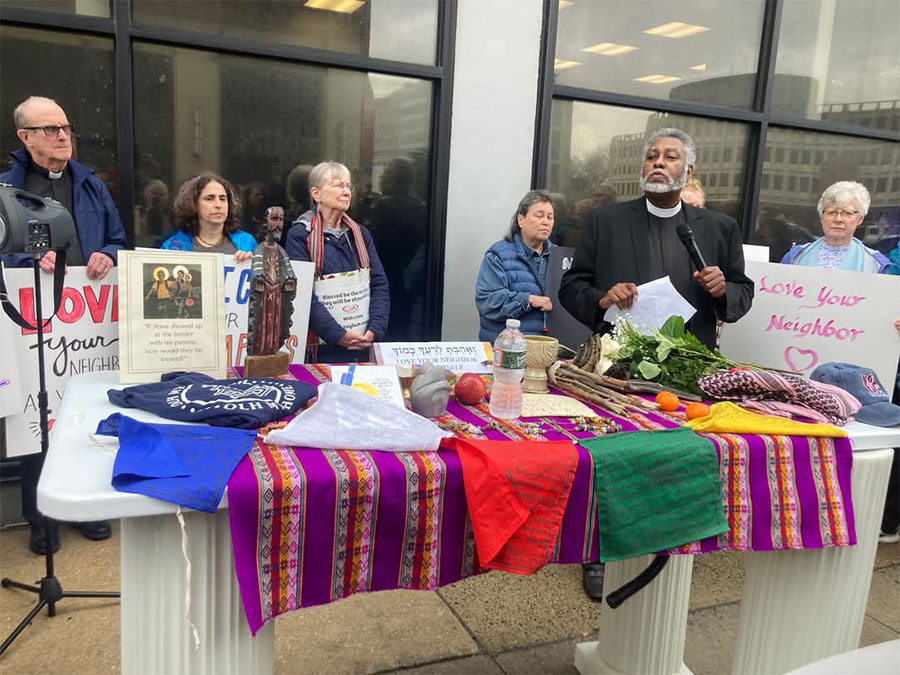
Para dejar claro el respeto que deberían tener los lugares sagrados, Nuevo Movimiento Santuario (por su acrónimo en inglés NSM), una organización interreligiosa de justicia para inmigrantes realizó una acción enfrente de ICE 114 N.8th St., en el centro de la ciudad, el pasado 3 de abril, en la cual participaron representantes de más 30 de congregaciones de fe. “Juntos construimos un altar para mostrar que los espacios de culto, no solo son seguros sino sagrados y nosotros definimos esos espacios, no Trump”, afirmó Peter Pedemonti, el cofundador de NSM.
Miembros de Granny Peace Brigade participaron activamente. (Foto: Cortesía/Granny Peace Brigada)
En esta manifestación pacífica participaron docenas de miembros del clero, así como la rabina Linda Holzman, fundadora del grupo Tikkun Olam Chavurah, quienes pidieron que “los impuestos de los contribuyentes se dediquen a construir vivienda para todos en vez de financiar centros de detención, que nuestros líderes en el Gobierno de la ciudad se opongan a las leyes federales injustas y que todos denunciemos cualquier injusticia que presenciemos”.
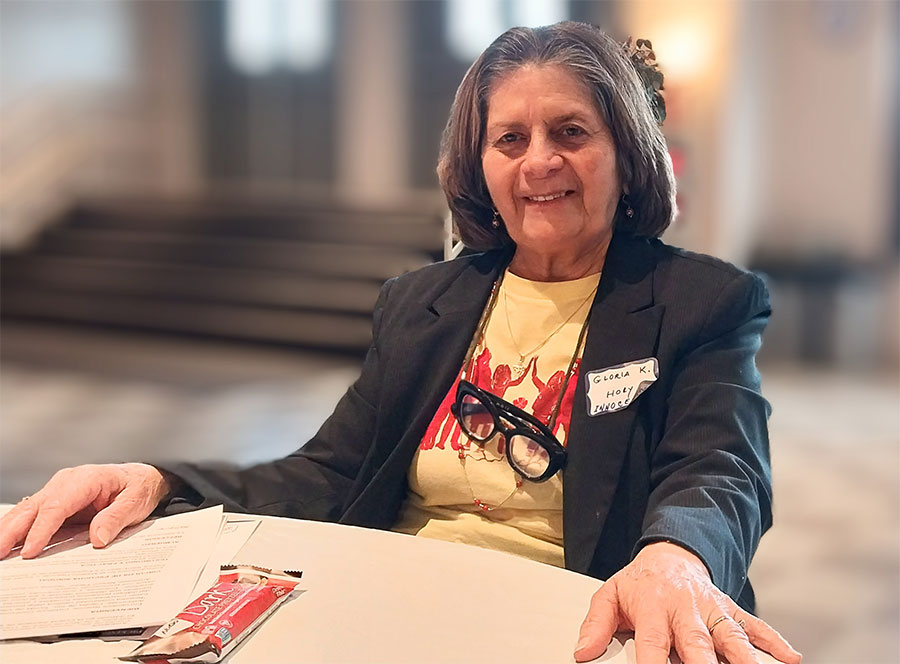
Gloria Katbeh, voluntaria de NSM y participante en esta actividad, en entrevista con Impacto compartió su sentir, “para mí fue una acción de fe cuyo mensaje llegó claro a la comunidad y a ese nevo Gobierno acerca de lo que está pasando. Como siempre lo decimos, las familias inmigrantes venimos a este país a trabajar y a dar a este país frutos. Nuestra fe no tiene qué ver con la política, aquí estamos para defender ese espacio que Dios nos dio a nosotros y lo vamos a defender siempre”. Gloria nació en Venezuela, es una feligresa activa en la Iglesia de los Santos Inocentes.
Gloria Katbeh vino a Estados Unidos por una mejor vida. (Foto: Leticia Roa Nixon)
Nuevo Movimiento Santuario pelea y gana campañas de justicia para inmigrantes con sus congregaciones aliadas, más allá de nacionalidad, religión, clase social y estatus migratorio, y fue establecida en 2007.
Sus cofundadores son Peter Pedemonti y Blanca Lucía Pacheco, y sus oficinas están en 2601 Potter Stt., Philadelphia, PA 19125; 215-279-7060.
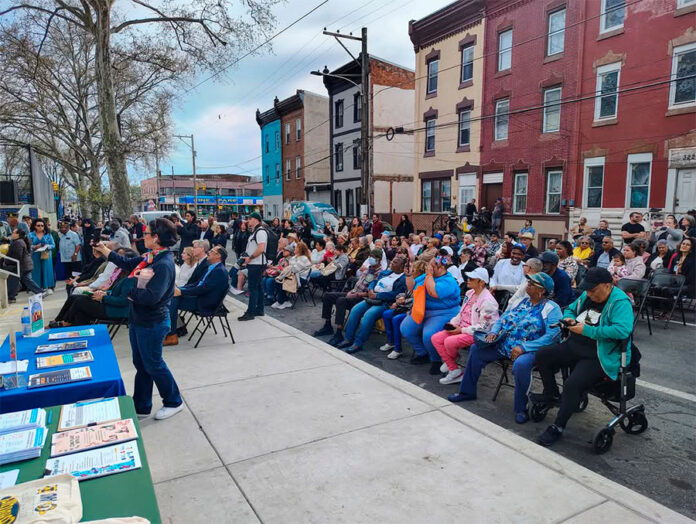
La comunidad de Fairhill disfrutó la apertura de los centros. (Foto: Cortesía/Charito Morales)
En el vecindario de Fairhill se celebró la finalización de uno de los proyectos de remodelación de Rebuild Renovation más grande hasta la fecha.
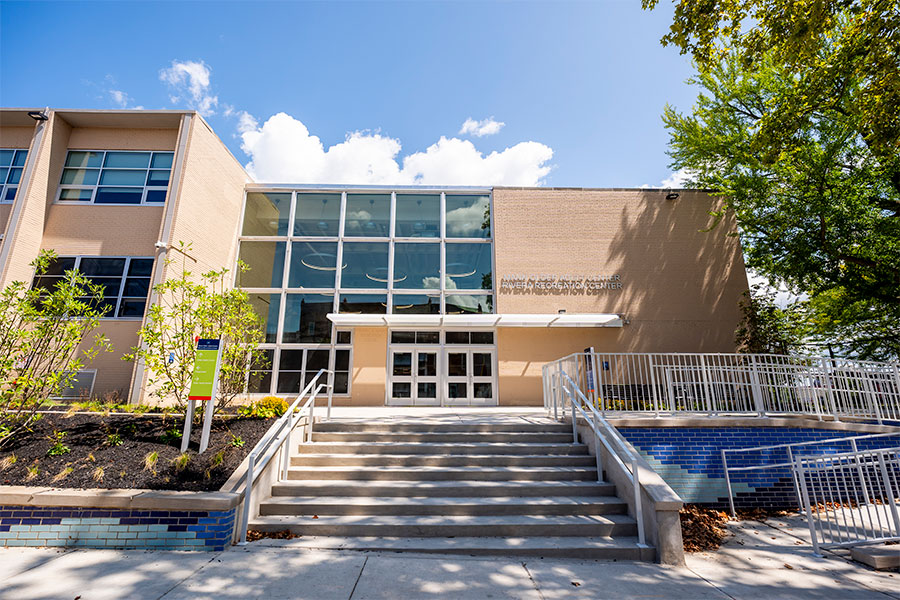
El 4 de abril, funcionarios de la Ciudad, de Rebuild Philaldelphia, Las Águilas de Filadelfia, HACE CDC, Creative Philadelphia y OACCE cortaron el listón de las instalaciones del Centro Recreativo Rivera y el Centro Mann Older Adult cuyo costo de renovación fue de $16.8 millones.
Gracias a la contribución de $200,000 aportada por el equipo Las Águilas (Philadelphia Eagles) y la Fundación NFL, la comunidad cuenta ahora con un campo para futbol americano y soccer con pasto natural, amplia iluminación y cámaras de seguridad, en un espacio apto para que los niños y jóvenes jueguen seguros después de clases.
El edificio que alberga a los dos centros está en el 3201 N. 5th St. (Foto: Cortesía/Salam Bustanji)
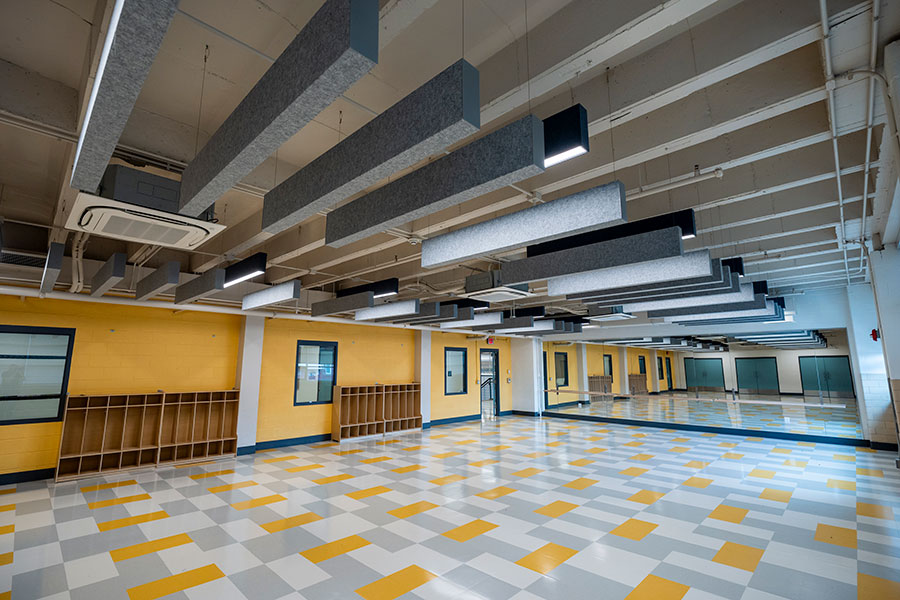
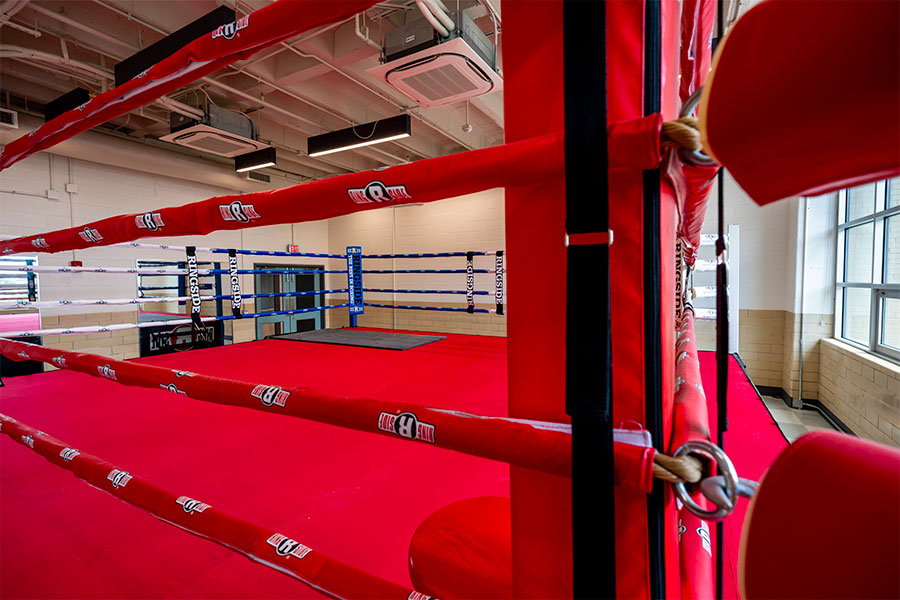
Los miembros de la comunidad celebraron con gusto la renovación, que tiene un gimnasio, un centro de computación público, un gimnasio de boxeo, un salón de levantamiento de pesas y salones multiusos; instalaciones que servirán mejor a los residentes del vecindario.
La alcaldesa Cherelle Parker aseveró que los residentes de Filadelfia merecen tener acceso a parques, centros recreativos y bibliotecas de alta calidad, sin importar el código postal del vecindario.
Remodelación de uno de los salones multiusos. (Foto: Cortesía/Salam Bustanji)
Por su parte la concejala del Distrito 7 Quetcy Lozada expresó, “me siento muy emocionada de dar la bienvenida a los residentes del barrio Fairhill al Centro Recreativo Rivera y el Centro Mann Older Adult. Abrimos las puertas al espacio que es verdaderamente de ellos, un lugar de conexión, actividad y comunidad”. Añadió que esta transformación de dichos centros es una prueba de la resiliencia y visión de la comunidad. También puntualizó su profundo agradecimiento por la paciencia de todos en este proceso, ya que el inicio de la renovación fue en mayo de 2021.
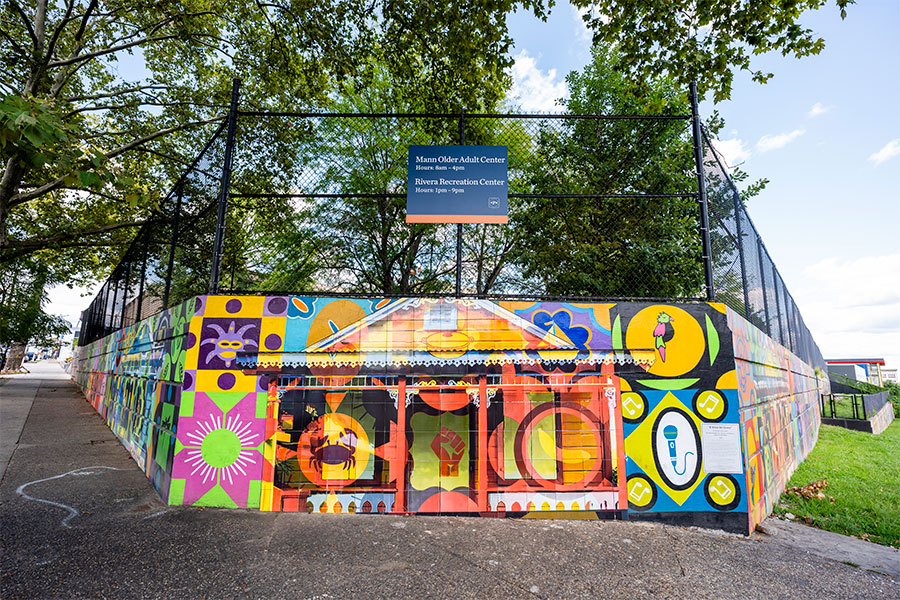
El mural “Ritmo del Centro” está pintado en un muro de retención a lo largo de la calle 5 y la avenida Allegheny. (Foto: Cortesía/Salam Bustanji)
María N. González, presidenta y directora ejecutiva de HACE CDC, señaló que este proyecto es un ejemplo lo que se puede lograr con colaboraciones entre la Ciudad, organizaciones comunitarias, financiadores y residentes trabajando juntos con la meta común de mejorar la calidad de vida de las comunidades. La recreación y espacios abiertos son esenciales para comunidades saludables y vibrantes”, agregó.
Cuadrilátero para boxeo nuevo. (Foto: Cortesía Salam Bustanji)
El equipo de Rebuild Philadelphia realizó eventos interactivos para que la comunidad participara en el proyecto de remodelación. De hecho, las imágenes del mural de 5, 000 pies cuadrados, comisionado a City’s Percent for Art Program, llamado “El Ritmo del Centro”, se inspiró en los dibujos de niños y envejecientes del vecindario. El mural fue diseñado por Linda Fernández, Keir Johnston y Ernel Martínez de “Amber Art and Design”.
El nombre del centro recreativo es en honor a las contribuciones de la puertorriqueña Ramonita Negrón Rivera a la comunidad hispana del norte de la ciudad.
There is one open seat. Once selected in May, this and other court positions will undergo retention elections in November for terms expiring at the end of 2025. The Superior Court also hears appeals on matters involving children and families.
You may vote for only one candidate from the list below:
Brandon Neuman (Democrat): “Electing me to the Superior Court will ensure that Pennsylvanians have their voices heard by a fair and impartial judge. I hope to earn the voters’ trust”.
Maria Battista (Republican): “The opinions issued by our appellate courts have a far-reaching impact on all of our lives. My years of experience in civil, criminal, and administrative law make me especially qualified to serve on the Superior Court”.
Ann Marie Wheatcraft (Republican): “During my time on the bench, I have consistently imposed some of the harshest penalties on violent criminals”.
Commonwealth Court
Here are the Democrat and Republican candidates for this seat (vote for one):
Stella Tsai (Democrat): “My principles and roots are based on integrity, transparency, consistency, and empathy. I believe our legal system must be accessible and fair for all Pennsylvanians”.
Joshua Prince (Democrat): “The judiciary is the last line of defense to protect citizens’ freedom and ensure their rights are upheld”.
Matt Wolford (Republican): “I am a qualified and experienced legal professional, ready to bring my deep knowledge of government actions and bureaucracy to the Commonwealth Court”.
Philadelphia Municipal Court
The Philadelphia Municipal Court is a limited jurisdiction court made up of 27 judges, divided into three divisions:
Criminal Division handles adult criminal cases with a maximum penalty of five years. It also handles all initial criminal arrests in the city, misdemeanor trials, and preliminary hearings for felony cases.
Civil Division handles civil cases involving: a. Claims under $12,000 b. Unlimited dollar amounts in landlord-tenant disputes c. $15,000 limits in real estate and school tax cases
Traffic Division handles traffic violations.
In this primary, five Democratic candidates are running for three open seats:
Sherrie Cohen
Amanda Davison
Cortez Patton
Shawn Page
Qawi Abidul-Rahman
Court of Common Pleas
These courts have general trial jurisdiction and are organized into 60 districts. Philadelphia’s is the largest, with 101 judges. Each court is overseen by a President Judge, elected by peers.
They handle:
Criminal and civil cases
Family and child matters
Appeals from lower courts (like the Municipal Court)
Philadelphia’s Court of Common Pleasis divided into three:
Trial Division: Handles major criminal and civil cases
Family Division: Oversees divorce, paternity, custody, child support, domestic violence, juvenile matters, dependency, and adoptions
Orphans’ Court Division: Handles wills, estates, and trusts
TwelveDemocratic candidates are running fornine seats. Meet them below:
Will Braveman: “People in court are often in crisis. They deserve a system that offers dignity, empathy, and respect for all”.
Irina Ehrlich: “My legal experience, commitment to justice, and compassion will make me a fair judge who treats everyone with respect”.
Larry Farnese: “Our courts must reflect the belief that everyone deserves fairness, respect, and swift resolutions”.
Kia Ghee: “Philadelphia needs leaders who understand our community’s challenges and are committed to justice and equity”.
Sarah Jones: “If elected, I’ll serve the people of Philadelphia with a focus on fairness, integrity, and compassion”.
Leon A. King II: “I’ve lived it. I can empathize with many people and what they’ve gone through. I’m authentic and committed”.
Brian Kisielewski: “Justice must be accessible, fair, and focused on what really matters”.
Anthony Stefanski: “My goal is simple: to ensure that every person who enters my courtroom—whether accused or seeking justice—has a fair chance”.
Deborah Watson-Stokes: “There will always be obstacles and people who don’t see you the way you see yourself. But you will always have what you need if you don’t give up”.
Qawi Abdul-Rahman: “Elect me to bring change to our judicial system”.
Sherrie Cohen: “I’ll fight for universal pre-K for all 3- and 4-year-olds, full school funding, education equity, a moratorium on charter schools, and an end to conflicts of interest and arbitrary student selection”.
Taniesha Henry: “I want to make sure sensitive issues are handled with care and integrity because I have the wisdom to make fair decisions and treat everyone with respect”.
District Attorney
The District Attorney prosecutes crimes in the county and works with local, state, and federal law enforcement to ensure public safety and legal compliance.
This position is elected citywide every four years, with no term limits. You may vote for one:
Pat Dugan (Democrat): “I’ve answered the call to serve my entire life to protect our citizens”.
Larry Krasner (Democrat): “I’ll continue to fight mass incarceration and work to prevent violence”.
City Controller
The City Controller performs independent audits and analysis of city finances and helps identify ways to improve operations and spending.
This position is elected citywide for four years, with no term limits.
Candidates (vote for one):
Christy Brady (Democrat): “Bringing people together to solve tough problems and deliver results for the citizens of Philadelphia.”
Ari Patrinos (Republican): “Let’s chart a new course, together”.
Election Officials
Judge of Elections: The lead official at a polling place, responsible for opening/closing the polls, overseeing staff, verifying voters, and preventing fraud. Must live in the precinct and is elected for a four-year term (no term limits).
Majority & Minority Inspectors of Elections: Verify voter registration documents and signatures, prepare certificates, ensure the legality of the process, and confirm vote machine numbers at the end of the day. Also elected for four years with no term limits.
Many of these candidates are highly recommended by the PA Bar JEC (Judicial Evaluation Commission), which reviews candidates for appellate court positions.
We’ll keep you informed. And remember: Your vote is your voice—make it count!
This content is a part of Every Voice, Every Vote, a collaborative project managed by The Lenfest Institute for Journalism. Lead support for Every Voice, Every Vote in 2024 and 2025 is provided by the William Penn Foundation with additional funding from The Lenfest Institute for Journalism, Comcast NBC Universal, The John S. and James L. Knight Foundation, Henry L. Kimelman Family Foundation, Judy and Peter Leone, Arctos Foundation, Wyncote Foundation, 25th Century Foundation, and Dolfinger-McMahon Foundation. To learn more about the project and view a full list of supporters, visit www.everyvoice-everyvote.org. Editorial content is created independently of the project’s donors.
El Centro de Arte Esperanza, en colaboración con Philadelphia Ballet, presentará “De Cerca”, una presentación íntima y dinámica el 12 de abril, pero ya no hay boletos disponibles. El público que adquirió a tiempo sus entradas tendrá la oportunidad de ver a poca distancia a los bailarines, creando una conexión más profunda entre los artistas y la comunidad. Después de la función habrá una plática con los artistas.
Este Ballet, reconocido a nivel mundial cuenta, con un número significativo de bailarines latinos provenientes entre otros países, de Brasil, Cuba, España y México.
“Como artista español, entiendo profundamente el poder de la danza para conectar a las culturas y reunir a la gente”, comparte Ángel Corella el director artístico de esta Compañía; y agrega que “De Cerca” es más que una presentación de ballet“, es una oportunidad para compartir la belleza y la narración de historias mediante el ballet, en un escenario íntimo, en el cual las audiencias pueden verdaderamente sentir la emoción y la energía de los bailarines. El ballet pertenece a todos. Y estoy muy agradecido por la oportunidad de conectarme con esta comunidad a través del arte que ha moldeado mi vida”.
El Centro de Arte Esperanza trae a los residentes del norte de Filadelfia diferentes expresiones artísticas no solo de Latinoamérica y del Caribe, sino de otras partes del mundo; por lo que para saber de próximos eventos hay que mantenerse alerta a las redes de la organización cultural que trae gratis o a precios muy accesibles, eventos de primer nivel al barrio latino de la ciudad.
“Inauguramos el Centro de Arte Esperanza y nuestro Teatro Esperanza en 2018 para crear una plataforma para celebrar a los artistas latinos e inspirar a las siguientes generaciones”, expresó el Rev. Luis Cortés, Jr., fundador y director ejecutivo de Esperanza. Comentó que el Philadelphia Ballet ha sido un colaborador increíble para la visión del Centro. “Durante los últimos cinco años, han traído presentaciones increíbles al escenario y trabajado con los estudiantes de nuestras escuelas. Esta colaboración es un ejemplo verdadero de lo que es posible cuando tenemos una intención en común y nos aseguramos de que todos disfruten el arte”.
El programa incluirá una selección de baile clásico y contemporáneo por bailarines hispanos y latinos resaltando la gracia, el atletismo y habilidad artística que define a la Compañía.
El próximo evento en el Esperanza Arts Center, será el 26 de abril con la premier mundial de Perú Negro, donde la pianista Priscila Navarro hará un homenaje del compositor Jimmy López a la música afroperuana. Incluye el estreno de Perú Negro en una versión para dos pianos y dos percusiones con seis danzas afroperuanas, en lo que López describe como un «deseo personal de asimilar la música folclórica peruana hasta integrarla a la perfección con su propio idioma».