12.2 C
Philadelphia
spot_img
Inicio Blog Página 59

Why the Philadelphia Eagles’ ‘tush push’ play is causing such a stir

Eagles
Philadelphia Eagles quarterback Jalen Hurts reacts following an NFL football game against the Cincinnati Bengals, Sunday, Oct. 27, 2024, in Cincinnati. The Eagles won 37-17. (Photo. AP/Jeff Dean)

The tush push has proved hard to stop, difficult to decipher and almost impervious to officiating in 2025.

When the Green Bay Packers last offseason proposed banning the play that was perfected by the defending Super Bowl champion Philadelphia Eagles, the counterargument basically was this:

If you aren’t a fan of the play, then put a stop to it on the field itself, not in the rule book.

Rendered ineffective, the tush push might just get relegated to the NFL’s dust bin alongside the banned trio of horse-collar tackles, hip-drop stops and clothesline trip-ups.

Yet, even as teams come up with ways to stuff the tush push, officials have let the Eagles get away with infractions on the play. The Eagles’ offensive linemen routinely appear to get a head-start on the play without getting whistled for a false start. Sometimes, they’ve lined up offsides. And now, even a fumble was nullified by an early whistle Sunday.

In Philadelphia’s 38-20 win over the New York Giants on Sunday, Jalen Hurts lost the ball when he stretched his arms after gaining a first down on a tush push on fourth-and-1 from the Giants’ 11-yard line.

Kayvon Thibodeaux ripped the ball out of Hurts’ hands and recovered it in a game that was tied at 7-7 at the time. A whistle could be heard on replay about the same time or after the ball came out but officials ruled Hurts’ forward progress had been stopped. The Eagles kept the ball and finished the drive with a touchdown.

“To me, he is pushing forward, he is reaching,” Fox rules analyst Dean Blandino said on the broadcast. “That is an early whistle in my opinion.”

“The refs have a hard job because they don’t know when to stop it,” Thibodeaux said about the tush push.

The latest tush push stir was one of several erroneous whistles in Week 8, including one that took away a defensive touchdown from the Tampa Bay Buccaneers.

But the whistle that negated Hurts’ fumble was in the spotlight because so many times this season the Eagles have benefitted from questionable rulings on the play, which is typically run at the goal line.

Giants coach Brian Daboll tried to challenge the ruling on the field but the officiating crew told him he couldn’t challenge whether or not it was a fumble because the whistle had blown the play dead. The Giants chose to challenge the spot and they lost that argument, too.

After losing the game and standout rookie running back Cam Skattebo to a devastating ankle injury, Daboll declined to criticize the officials.

“Yeah, I’ll just say our guys upstairs were pretty adamant about challenging the play. I have a lot of trust and faith in them and it didn’t work out,» Daboll said. «Not going to get into any particulars though with it.”

The non-fumble was all the talk around the NFL on Monday, but Daboll was still shush on the tush push.

“No, I haven’t heard from the league about it,” Daboll said.

Pressed if he had reached out to the league about it, Daboll said, «Any of those penalties or officiating, I’m not going to comment on.»

Daboll is doing well to avoid a fine but the tush push is going to remain a hot topic as long as it remains so troublesome, and chances are good it’ll get brought up again in the offseason and maybe all the brouhaha surrounding the play this season will force owners to take another look at banning it altogether.

Which might be the only way it can be stopped.

Get your COVID-19 vaccine now to stay well in the winter

COVID-19
Fotografía de archivo de la vacuna Pfizer-Biontech. (Foto: EFE/DANIEL POCKETT)

The weather is turning colder (finally!), and we are heading into the winter months. This is a time when respiratory illnesses, like the common cold, flu, RSV, and COVID-19, are more widespread.

The federal government, under the direction of the Health and Human Services Secretary Robert F. Kennedy Jr., has created confusion around vaccines, especially the COVID-19 vaccine. They have also made it more difficult for people to get vaccinated, with new restrictions from the Federal Drug Administration (FDA).

Here’s what you need to know about getting your COVID-19 vaccine this fall. The updated vaccines have been approved by the FDA only for those who are 65 years of age or older. People with existing health conditions or who are immuno-compromised (moderately or severely) are also eligible for the vaccine. Most of these conditions are chronic and include asthma, cancer, chronic kidney disease, chronic liver disease, diabetes, obesity, and some disabilities (like Down syndrome and autism).

Three COVID-19 vaccines have been approved:

  • Moderna was approved for children 6 months and older with an underlying condition and people over 65.
  • Pfizer was approved for children 5 and older with an underlying condition and people over 65.
  • Novavax was approved for children 12 and older with an underlying condition and people over 65.

No matter the federal government’s opinions on vaccines—most of which are not based on scientific evidence or recommendations from qualified public health professionals—COVID-19 vaccines remain safe and effective when it comes to preventing serious sickness and death from the virus. If you do not fall within the groups identified by the federal government as eligible for the vaccine, you can talk to a healthcare provider and decide with them about getting vaccinated. They can even administer the vaccine to you or your children right then! Doctors, registered nurses and pharmacists are providers.

In Philadelphia, you can get your COVID-19 vaccine at city health centers, doctor’s offices and pharmacies. COVID-19 vaccines are free for children and adult vaccines are covered by health insurance. If you do not have insurance, you can get free vaccines at city health centers, as of October 17th, 2025. They are located in different locations across the city. For those in North Philadelphia, the closest is Health Center 10 (2230 Cottman Ave, Philadelphia, PA 19149). Don’t forget to bring proof of your residency in Philadelphia to the health center you choose. With seasonal illness just around the corner, getting vaccinated is an important medical decision that we can make for ourselves and our families.

How Hispanics’ views of Trump have changed since January, according to a new AP-NORC poll

Trump
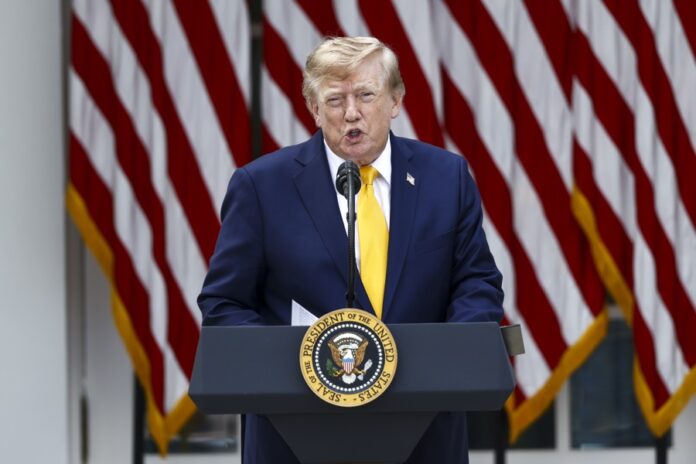
El presidente de Estados Unidos, Donald Trump. (Foto: EFE/Francis Chung)

President Donald Trump’s favorability has fallen among Hispanic adults since the beginning of the year, a new AP-NORC poll shows, a potential warning sign from a key constituency that helped secure his victory in the 2024 election.

The October survey from The Associated Press-NORC Center for Public Affairs Research finds that 25% of Hispanic adults have a “somewhat” or “very” favorable view of Trump, down from 44% in an AP-NORC poll conducted just before the Republican took office for the second time. The percentage of Hispanic adults who say the country is going in the wrong direction has also increased slightly over the past few months, from 63% in March to 73% now.

The shift could spell trouble for Republicans looking to cement support with this group in future elections. Many Hispanic voters were motivated by economic concerns in last year’s election, and the new poll shows that despite Trump’s promises of economic revitalization, Hispanic adults continue to feel higher financial stress than Americans overall. Hispanic voters made up 10% of the electorate in 2024, according to AP VoteCast, a survey of interviews with registered voters, and the number of eligible Hispanic voters has been growing rapidly in recent decades.

Alejandro Ochoa, 30, is a warehouse worker in Adelanto, California. He identifies as a Republican and voted for Trump last year, but he’s now unhappy with the president. He criticized some of Trump’s budget cuts, adding that the cost of groceries is too high and buying a home is still unattainable for him.

“He was kind of relying on essentially the nostalgia of, ‘Hey, remember, before COVID? Things weren’t as expensive,’” Ochoa said. “But now it’s like, OK, you’re in office. I’m still getting done dirty at the grocery store. I’m still spending an insane amount of money. I’m trying to cut corners where I can, but that bill is still insanely expensive.”

Declining approval on economy and immigration

Hispanic voters shifted toward Trump in the last election, though a majority still backed Democrat Kamala Harris: 43% of Hispanic voters nationally voted for Trump, according to AP VoteCast, up from 35% in the 2020 presidential election, which he lost to Democrat Joe Biden.

But the poll now finds that Hispanic adults are slightly less likely to approve of Trump’s handling of the economy and immigration — two issues that were major strengths for him in last year’s presidential campaign — and their views of his overall presidential performance have slipped a little as well.

In March, 41% of Hispanic adults approved of the way Trump was handling his job as president, but now that has fallen to 27%.

Over the past few months, Hispanic communities have also been a target of the president’s hard-line immigration tactics. The poll found that Hispanic adults’ approval of his handling of immigration has declined slightly since March.

Some see the two issues as linked. Trump’s attacks on immigration have affected low-wage and high-skilled workers alike, at a moment when the economy is already uncertain because of his erratic trade policies.

Fel Echandi, of Winter Haven, Florida, is a behavioral specialist who identifies as a Democrat but sometimes votes for Republican candidates. He said he appreciates Trump’s views on transgender issues, including restroom access for transgender women.

But he’s concerned that Trump’s immigration policies leave many people living in fear, with negative effects on the economy.

“A lot of people rely on immigrants to do labor in certain areas,” Echandi said. “When that gets affected, all prices go up. Our food costs more because of the costs to get people to do that work.”

The poll found particularly high levels of financial stress among Hispanic adults, compared with the rest of the country. More Hispanics say the cost of groceries, housing and health care and the amount of money they get paid are “major” sources of stress, compared with U.S. adults overall.

Favorability among Hispanic Republicans drops slightly

Views of Trump have even soured a little among Hispanic Republicans.

In the latest poll, 66% of Hispanic Republicans said they have a “very” or “somewhat” favorable view of Trump. That’s a slight shift compared with where Trump stood in an AP-NORC poll from September 2024, when 83% of Hispanic Republicans viewed him at least “somewhat” favorably. About 8 in 10 white Republicans had a favorable view of Trump in the new poll, which was unchanged from the year before.

In another potentially worrying sign for the president, younger Hispanics and Hispanic men — two groups that swung particularly dramatically toward him in last year’s election — also see him a bit more negatively.

About two-thirds of Hispanic adults under age 45 and Hispanic men now view Trump unfavorably, according to the new poll. That’s a slight uptick from September 2024, when about half in both groups had a negative opinion of him.

Other concerns about Trump’s chaotic second term emerged in interviews.

Teresa Covarrubias, a 65-year-old retired schoolteacher from Los Angeles, feels things are going in the wrong direction and said she was troubled by how some of Trump’s actions have defied norms and may impact social safety net programs.

“My major concern is the disregard for the Constitution and the law, and then also the level of cronyism,” said Covarrubias, who is an independent voter. “The people at the top are just grifting and taking, and then there’s the rest of us.”

Hispanic adults are more likely to prioritize immigration

There are signs in the poll that Trump’s tough immigration approach may be alienating some Hispanic adults. Over the past few months, the president has doubled down on his pledge of mass deportations, with escalating crackdowns in Latino neighborhoods in cities including Chicago.

The poll found that, in general, Hispanic adults are more likely to say immigration is an important issue to them personally. About two-thirds of Hispanic adults prioritize immigration, compared with about 6 in 10 white adults and about half of Black adults.

And although their views on immigration enforcement aren’t uniform, Hispanic adults are much less likely than U.S. adults overall to favor deporting all immigrants living in the U.S. illegally. About one-quarter of Hispanic adults support this policy, the new poll found, while roughly half of them are opposed and the rest don’t have an opinion. Among U.S. adults overall, about 4 in 10 favor deporting all immigrants in the U.S. illegally, while 34% are opposed and about 2 in 10 don’t have an opinion.

Rick Alvarado, 63, a Republican who lives in San Diego, says he still supports Trump and praised his actions to cut public spending. Alvarado, a property manager, is behind Trump’s immigration crackdown in cities including Los Angeles and Chicago, saying he believes some immigrants are involved in organized crime.

But he added that he would like to see a solution for those without criminal records to obtain legal residency status.

“The people who are productive should have a pathway to stay here somehow,” Alvarado said.

Inflación 

A pesar del cierre del gobierno federal en Estados Unidos, la Oficina de Estadísticas Laborales la semana pasada divulgó las cifras mensuales sobre inflación en septiembre, requeridas para ajustar las pensiones a los aumentos en el costo de vida. En contraste, las cifras sobre empleo en septiembre aún no han sido divulgadas.

Los precios al consumidor aumentaron levemente en septiembre, 3 por ciento desde el año pasado, más que 2.9 por ciento en agosto. Este aumento, alejándose de la meta de 2 por ciento, todavía es visto como favorable para el recorte de la tasa de interés esperado al fin de la reunión del banco central, que comienza hoy en Washington. Además, este leve aumento de los precios al consumidor puede indicar que los aranceles impuestos por la Casa Blanca aún no generan presiones inflacionarias significativas. Aún así, en septiembre algunos productos sensibles a los aranceles registraron alzas de precios superiores al promedio, tales como el mobiliario, las prendas de vestir y los artículos deportivos.

No obstante, entre los inversionistas persiste la fuga hacia la seguridad, como lo ilustra el alza en el precio del oro encima de $4,000, el cual retrocedió esta semana. La volatilidad también ha retornado a las bolsas de valores. Después de seis meses de alzas récord, generadas por el auge de la inteligencia artificial, algunos analistas las consideran indicativas de una burbuja. Finalmente, debido al cierre del gobierno, las cifras sobre empleo no están disponibles, pero fuentes privadas han revelado que persiste la desaceleración en el mercado laboral, causada primordialmente por las redadas en contra de trabajadores extranjeros.

*Analista y consultor internacional, ex-director de la Oficina de la CEPAL en Washington. Comentarista de economía y finanzas de CNN en Español TV y radio, TELEMUNDO, UNIVISION y otros medios.

OpenAI reorganiza su estructura de propiedad y convierte negocio en corporación de beneficio público

El logo de OpenAI se ve en un celular ante una pantalla con datos binarios aleatorios, el 9 de marzo de 2024 en Boston. (Foto/: AP/Michael Dwyer/Archivo)

OpenAI anunció el martes que ha reorganizado su estructura de propiedad y ha convertido su negocio en una corporación de beneficio público, y una reguladora crucial, la fiscal general de Delaware, dijo que aprobó el plan.

La reestructuración allana el camino para que el creador de ChatGPT pueda obtener ganancias más fácilmente de su tecnología de inteligencia artificial, incluso mientras permanece técnicamente bajo el control de una organización sin fines de lucro.

La fiscal general de Delaware, Kathy Jennings, afirmó en un comunicado que no se opuso a la propuesta, aparentemente poniendo fin a más de un año de negociaciones y anuncios sobre el futuro de la gobernanza de OpenAI y el poder que los inversores con fines de lucro y su junta directiva sin fines de lucro tendrán sobre la tecnología de la organización.

La empresa también dijo que ha firmado un nuevo acuerdo con su antiguo patrocinador Microsoft, que otorga al gigante del software aproximadamente un 27% de participación en la nueva corporación con fines de lucro de OpenAI, pero cambia algunos de los detalles de su estrecha asociación.

Los fiscales generales de Delaware, donde OpenAI está incorporada, y de California, donde tiene su sede, habían dicho que están investigando los cambios propuestos. La oficina del fiscal general de California, Rob Bonta, no respondió a una solicitud de comentarios.

OpenAI anunció que completó su reestructuración «después de casi un año de diálogo constructivo» con las oficinas en ambos estados.

«OpenAI ha completado su recapitalización, simplificando su estructura corporativa», declaró en un blog Bret Taylor, presidente de la junta directiva de OpenAI. «La organización sin fines de lucro sigue en control de la entidad con fines de lucro y ahora tiene un camino directo hacia recursos importantes antes de que llegue la IAG».

IAG significa inteligencia artificial general, que OpenAI define como «sistemas altamente autónomos que superan a los humanos en la mayoría de los trabajos económicamente valiosos». OpenAI fue fundada como una organización sin fines de lucro en 2015 con la misión de construir de manera segura la IAG para el beneficio de la humanidad.

OpenAI había dicho anteriormente que su propia junta decidirá cuándo se alcanza la IAG, terminando efectivamente su asociación con Microsoft. Pero ahora dice que «una vez que OpenAI declare la IAG, esa declaración será verificada por un panel de expertos independiente,» y que los derechos de Microsoft sobre los métodos de investigación confidenciales de OpenAI «permanecerán hasta que el panel de expertos verifique la IAG o hasta 2030, lo que ocurra primero». Microsoft también retendrá algunos derechos comerciales sobre los productos de OpenAI «después de la IAG».

Microsoft emitió el mismo anuncio sobre la asociación revisada el martes, pero declinó hacer más comentarios.

En el futuro, la organización sin fines de lucro se llamará Fundación OpenAI y Taylor dijo que otorgará 25.000 millones de dólares para la salud y la cura de enfermedades y para proteger contra los riesgos de ciberseguridad de la IA. No especificó en qué período de tiempo se distribuirán esos fondos.

Robert Weissman, copresidente de la organización sin fines de lucro Public Citizen, comentó que este arreglo no garantiza la independencia de la organización sin fines de lucro, comparándolo con una fundación corporativa que servirá a los intereses de la entidad con fines de lucro.

Aunque la junta de la organización sin fines de lucro pueda técnicamente seguir en control, Weissman señaló que ese control «es ilusorio porque no hay evidencia de que la organización sin fines de lucro haya impuesto alguna vez sus valores a la entidad con fines de lucro».

From rugby and soccer to the NFL: How the league is finding talent in unexpected places

Offensive lineman Leander Wiegand, of Germany, participates in a drill at the NFL international scouting combine at Tottenham Hotspur Stadium in London, Tuesday, Oct. 4, 2022. (Photo: AP/Steve Luciano/File)

The NFL’s search for elite talent has taken scouts far beyond the football fields of the United States and Canada.

Basketball courts and soccer, rugby and Gaelic football pitches in such places as Australia, Germany, Ireland, Nigeria, the United Kingdom and Zimbabwe have become breeding grounds for potential running backs, wide receivers, tight ends, kickers, linebackers and offensive and defensive linemen.

The NFL started its International Player Pathway (IPP) program in 2017 to identify athletes who show promise as potential professional American football players, but otherwise wouldn’t have an opportunity to enter the league.

“These are the athletes,” said Pat Long, the NFL’s director of international football development, «who, even without a whole top order high school, NCAA run up, still have that potential to make the transition and jump up into being an NFL-caliber, at that point, no longer just an athlete but a player.”

When the IPP program began, the NFL allocated international athletes to just one division. It has steadily grown and, starting in 2024, all 32 NFL teams have been eligible to add one international player to their practice squad.

Who qualifies for the IPP?

An athlete whose citizenship and principal place of residence are outside the United States and Canada and has a maximum of two years of high school experience in the U.S. can qualify for the program. They also have to satisfy all NFL player eligibility rules and have been eligible for a previous NFL draft. They can also play any position, from quarterback to punter.

“These guys being able to have this experience and then being able to leverage this experience to move forward as a leader in their community, I think is really cool,” said Skyler Fulton, the NFL’s head of the International Player Pathway program. “And that’s probably the part of the IPP program that doesn’t really get a lot of attention is this isn’t judged on how many guys make it to the NFL. It’s judged on how many lives are we changing?”

How do they join the program?

The journeys for players often start by word of mouth, with athletes sometimes even contacting the NFL looking for an opportunity.

Helped in large part by Mark Dulgerian, the NFL’s director of international scouting, the league scouts players, builds a database of prospects from around the world and holds regional workouts — similar to the NFL combine held in Indianapolis before the draft — and film sessions in places such as Loughborough University in the United Kingdom, as well as Mexico, Africa, South and Central America and Australia/New Zealand.

“It’s an opportunity for us to spend extended time and to get our decision-makers all in one place where we can be around these guys, watch them operate,” Fulton said.

What comes next?

The list is whittled down and a small group of athletes is selected for the program — 13 from 12 nations were in the 2025 class — and invited to train in American football starting in January at IMG Academy in Bradenton, Florida.

“What that entails is a 10-week intensive training camp where they’re really living, breathing, sleeping, eating football,” Long said.

Some will participate in the NFL combine in Indianapolis, where kicking specialists are invited to join as members of that year’s IPP class. Athletes also showcase their skills in the University of South Florida’s pro day in March, where they’ll be seen by NFL team scouts.

Players can then be drafted, if eligible, by NFL teams or signed as free agents. Each team is allowed one roster exemption for an international player during the offseason and that player can then be signed to an exempt 17th roster spot on the practice squad in the regular season.

What IPP alums were drafted?

Eagles left tackle Jordan Mailata was the first player from the program drafted by an NFL team, when the former rugby league standout in Australia was taken by Philadelphia in the seventh round in 2018.

Offensive lineman Travis Clayton from the U.K. was drafted by Buffalo in the seventh round last year. The former rugby union standout is currently on the Bills’ practice squad.

Other notable players

Nearly 100 international players have participated and more than 40 have signed with NFL teams since the IPP’s inception.

In addition to Mailata, defensive end Efe Obada (Nigeria/United Kingdom), fullback Jakob Johnson (Germany), tight end Sammis Reyes (Chile), defensive tackle David Bada (Germany) and tight end Thomas Odukoya (Netherlands) have played in regular-season games.

Class of 2025

Five players from this year’s class of IPP athletes are currently on NFL practice squads: Atlanta Falcons kicker Lenny Krieg (Germany), Washington Commanders defensive end T.J. Maguranyanga (Zimbabwe/South Africa), Carolina Panthers linebacker Mapalo “Maz” Mwansa (United Kingdom/Zambia), Las Vegas Raiders offensive lineman Laki Tasi (Australia) and New York Jets offensive lineman Leander Wiegand (Germany).

“Whenever people ask me how is it, I always say it’s a blessing and a grind because there’s definitely a lot of work that comes with it,” Wiegand said. “And like they say, pressure is a privilege. And I really started to understand that the bigger league you play, the more pressure it is. But it’s been amazing.”

Lanzan campaña en español para votar a favor de nuevos mapas electorales en California

(Foto: EFE/JOHN G MABANGLO/Archivo)

El Sindicato de Trabajadores Agrícolas (UFW) y la organización Voto Latino lanzaron este martes una campaña radial en español en el estado de California (EE. UU.) para movilizar a los latinos a votar a favor de la Proposición 50, que permitiría una redistribución de distritos congresionales que beneficiaría al Partido Demócrata.

La Proposición 50, que se votará el próximo 4 de noviembre, busca que se apruebe una redistribución temporal de los mapas electorales con el objetivo de poner la balanza a favor de cinco puestos congresionales de los 52 que tiene California.

La medida respondió directamente a una iniciativa liderada por el presidente Donald Trump, en el estado de Texas, donde los republicanos están empeñados en asegurar al menos cinco escaños adicionales redistribuyendo los distritos electorales, lo que facilitaría que ese partido retenga la Cámara Baja en las votaciones de medio término de 2026.

Bautizada como ‘La Neta’, la nueva campaña radial insta a los votantes hispanos de California a alzar su voz en las votaciones y apoyar la proposición, impulsada por el gobernador Gavin Newsom.

El anuncio de 30 segundos aborda directamente los desafíos que enfrentan las familias latinas —desde el aumento de los costos hasta las amenazas a la representación de su comunidad— y subraya que los hispanos han estado bajo ataque en el Gobierno Trump.

“Los descarados intentos de los republicanos de manipular los distritos electorales para su propio beneficio político constituyen un ataque directo a nuestro derecho fundamental a elegir a quienes reflejen nuestros valores”, dijeron las dos organizaciones en un comunicado.

El anuncio se transmitirá desde hoy hasta el 4 de noviembre por Radio Campesina, llegando a los votantes latinos de todo el Valle Central, una comunidad eminentemente agrícola que ha sido un bastión republicano en el estado.

Amazon cuts 14,000 corporate jobs as spending on artificial intelligence accelerates

Logo de Amazon. (Foto: EFE/EPA/CRISTOBAL HERRERA-ULASHKEVICH/Archivo)

Amazon will cut about 14,000 corporate jobs as the online retail giant ramps up spending on artificial intelligence while cutting costs elsewhere.

Teams and individuals impacted by the job cuts will be notified on Tuesday. Most workers will be given 90 days to look for a new position internally, Beth Galetti, Senior Vice President of People Experience and Technology at Amazon, wrote in a letter to employees on Tuesday. Those who can’t find a new role at the company or who opt not to look for one will be provided transitional support including severance pay, outplacement services and health insurance benefits.

Amazon has about 350,000 corporate employees and a total workforce of approximately 1.56 million. The cuts announced Tuesday amount to about a 4% reduction in its corporate workforce.

In June CEO Andy Jassy, who has aggressively sought to cut costs since becoming CEO in 2021, said that he anticipated generative AI would reduce Amazon’s corporate workforce in the next few years.

Jassy said at the time that Amazon had more than 1,000 generative AI services and applications in progress or built, but that figure was a “small fraction” of what it plans to build.

Amazon has announced plans to invest $10 billion building a campus in North Carolina to expand its cloud computing and artificial intelligence infrastructure.

Since 2024 started, Amazon has committed to about $10 billion apiece to data center projects in MississippiIndianaOhio and North Carolina as it builds up its infrastructure to try to keep up with other tech giants making leaps in AI. Amazon is competing with OpenAI, Google, Microsoft, Meta and others. In a conference call with industry analysts in May, Jassy said that the potential for growth in the company’s AWS business is massive.

“If you believe your mission is to make customers’ lives easier and better every day, and you believe that every customer experience will be reinvented with AI, you’re going to invest very aggressively in AI, and that’s what we’re doing. You can see that in the 1,000-plus AI applications we’re building across Amazon. You can see that with our next generation of Alexa, named Alexa+,” he said.

Amazon’s workforce doubled during the pandemic as millions stayed home and boosted online spending. In the following years, big tech and retail companies cut thousands of jobs to bring spending back in line.

The cuts announced Tuesday suggests Amazon is still trying to get the size of its workforce right and it may not be over. It was the biggest culling at Amazon since 2023, when the company cut 27,000 jobs. Those cuts came in waves, with 9,000 jobs trimmed in March of that year, and another 18,000 employees two months later. Amazon has not said if more job cuts are on the way.

Yet the jobs market which has for years been a pillar in the U.S. economy, is showing signs of weakening. Layoffs have been limited, but the same can be said for hiring.

Government hiring data is on hold during the government shut down, but earlier this month a survey by payroll company ADP showed a surprising loss of 32,000 jobs losses in the private sector in September.

Many retailers are pulling back on seasonal hiring this year due to uncertainty over the U.S. economy and tariffsAmazon Inc. said this month, however, that it would hire 250,000 seasonal workers, the same as last year’s holiday season.

Neil Saunders, managing director of GlobalData, said in a statement that the layoffs “represent a deep cleaning of Amazon’s corporate workforce.”

“Unlike the Target layoffs, Amazon is operating from a position of strength,” he said. “The company has been producing good growth, and it still has a lot of headroom for further expansion in both the U.S. and overseas.”

But Saunders noted that Amazon is not immune to outside factors, as global markets tighten and underlying costs climb.

“It needs to act if it wants to continue with a good bottom-line performance. This is especially so given the amount of investment the company is making in areas like logistics and AI. In some ways, this is a tipping point away from human capital to technological infrastructure,” he said.

Amazon will post quarterly financial results on Thursday. During its most recent quarter, the company reported 17.5% growth for its cloud computing arm Amazon Web Services.

Vacúnese contra la COVID-19 ahora para mantenerse bien en invierno

COVID-19
Vista de una dosis de la vacuna contra la covid-19 de Pfizer (Foto: EFE/Etienne Laurent)

El clima se está volviendo más frío (¡por fin!) y nos acercamos a los meses de invierno. Esta es una época en la que las enfermedades respiratorias, como el resfriado común, la gripe, el VRS y la COVID-19, están más extendidas.

El gobierno federal, bajo la dirección del secretario de Salud y Servicios Humanos, Robert F. Kennedy Jr., ha generado confusión en torno a las vacunas, especialmente la vacuna contra la COVID-19. Además, ha dificultado la vacunación, con nuevas restricciones de la Administración Federal de Medicamentos (FDA).

Esto es lo que necesita saber sobre cómo vacunarse contra la COVID-19 este otoño. Las vacunas actualizadas han sido aprobadas por la FDA solo para personas mayores de 65 años. Las personas con afecciones preexistentes o inmunodeprimidas (moderadamente o gravemente) también pueden vacunarse. La mayoría de estas afecciones son crónicas e incluyen asma, cáncer, enfermedad renal crónica, enfermedad hepática crónica, diabetes, obesidad y algunas discapacidades (como el síndrome de Down y el autismo).

Se han aprobado tres vacunas contra la COVID-19:

  • Moderna fue aprobada para niños de 6 meses o más con una enfermedad subyacente y personas mayores de 65 años.
  • Pfizer fue aprobada para niños de 5 años o más con una enfermedad subyacente y personas mayores de 65 años.
  • Novavax fue aprobada para niños de 12 años o más con una enfermedad subyacente y personas mayores de 65 años.

Independientemente de las opiniones del gobierno federal sobre las vacunas —la mayoría de las cuales no se basan en evidencia científica ni en recomendaciones de profesionales de la salud pública cualificados—, las vacunas contra la COVID-19 siguen siendo seguras y eficaces para prevenir enfermedades graves y la muerte a causa del virus. Si no se encuentra entre los grupos identificados por el gobierno federal como elegibles para la vacuna, puede hablar con un profesional de la salud y decidir con él si debe vacunarse. ¡Incluso pueden administrarle la vacuna a usted o a sus hijos en ese mismo momento! Los médicos, enfermeros titulados y farmacéuticos son proveedores.

En Filadelfia, puede vacunarse contra la COVID-19 en los centros de salud, consultorios médicos y farmacias de la ciudad. Las vacunas contra la COVID-19 son gratuitas para niños y las vacunas para adultos están cubiertas por el seguro médico. Si no tiene seguro, puede vacunarse gratuitamente en los centros de salud de la ciudad, desde el 17 de octubre del 2025. Están ubicados en diferentes puntos de la ciudad. Para quienes viven en el norte de Filadelfia, el más cercano es el Centro de Salud 10 (2230 Cottman Ave, Filadelfia, PA 19149). No olvide llevar un comprobante de residencia en Filadelfia al centro de salud que elija. Con las enfermedades estacionales a la vuelta de la esquina, vacunarse es una decisión médica importante que podemos tomar por nosotros y nuestras familias.

El GPS y otros sistemas de navegación satelital funcionan sobre la luna, según un estudio

(Foto: EFE/ Ballesteros/Archivo)

La señal de sistemas de navegación satelital como el GPS o el Galileo europeo pueden ser usados más allá de la órbita terrestre y sobre la superficie de la luna, según un estudio publicado este martes por la Agencia Espacial Italiana (ASI).

El hallazgo ha sido posible gracias al proyecto LuGRE (Lunar GNSS Receiver Experiment), realizado entre la ASI y la NASA para analizar las conexiones posibles sobre la luna en el marco del programa Artemis, que quiere llevar al hombre de nuevo a su superficie.

«Por primera vez las señales de navegación utilizadas sobre la Tierra han sido recibidas y analizadas sobre la luna. Se trata de un resultado que abre el camino a nuevas tecnologías para la misión Artemis», anunció la ASI en un comunicado.

El experimento LuGRE se encuentra a bordo del módulo ‘Blue Ghost’ lanzado sobre la luna en enero de este año por la empresa Firefly Aerospace y, en estos meses, ha recibido señales GNSS (Global Navigation Satellite System) o del proyecto europeo Galileo.

Las señales han sido detectadas tanto durante el viaje del módulo hacia la luna como tras su aterrizaje, estableciendo un nuevo récord de distancia en su recepción en 400.000 kilómetros de la Tierra.

La ASI cree que este resultado «abre el camino a un futuro» en el que los astronautas y vehículos espaciales como los róver «podrán utilizar los mismos sistemas de navegación satelital» usados cada día sobre el planeta, «mejorando notablemente su capacidad de orientación y la seguridad operativa sobre la superficie lunar».

El uso en la luna de señales como el GPS estadounidense o Galileo europeo representa «una solución inmediata» a la hora de planificar futuros recorridos por la superficie del satélite.

Al menos a la espera de que se culmine la futura constelación de la Agencia Espacial Europea (ESA), ‘Moonlight’, pensada para brindar servicios de comunicación y navegación en las futuras misiones.

El director de Ingeniería y Tecnología de la ASI, Roberto Formaro, ha celebrado que el experimento haya demostrado el uso conjunto de señales GPS y Galileo a «distancias nunca antes probadas».

Los resultados del experimento han sido puedas a disposición de la comunidad científica internacional para su consulta.