

1.3 C
Philadelphia
spot_img
Inicio Blog Página 588

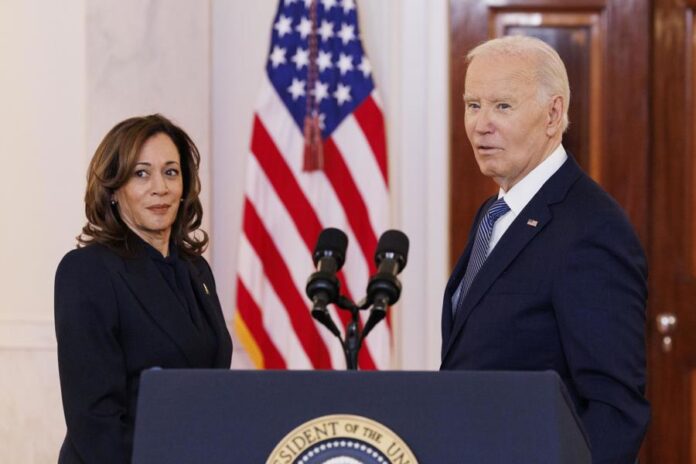
Harris – Walz, una fórmula mágica

Harris

El Equipo Harris-Walz ha visto un entusiasmo extraordinario apenas unos días después de unirse a la candidatura, la popularidad del gobernador Walz ya está aumentando, y las encuestas empiezan a mover la balanza.

Según datos de la campaña, en las primeras 24 horas después de que se anunciara al gobernador Walz como compañero de fórmula de la vicepresidenta Harris, el Equipo Harris-Walz recaudó $36 millones de dólares impulsados ​​por donantes de base, además de una enorme avalancha de apoyo y elogios de funcionarios electos demócratas, republicanos, independientes y líderes tanto empresariales como laborales.

Este dinero se destinará a llegar a los votantes y crear presencia de campaña en cada comunidad para elegir demócratas a lo largo y ancho del país.

La vicepresidenta Harris y el gobernador Walz atrajeron multitudes históricas durante la gira por los estados clave, incluidas más de 14.000 personas en Filadelfia, más de 12.000 personas en Eau Claire y más de 15.000 personas en Detroit y Arizona.

El sábado expusieron sus argumentos ante más de 12.000 nevadenses durante uno de los eventos políticos más grandes en la historia política moderna de Nevada. Fue el séptimo viaje de Harris a Nevada este año, pero el primero como candidata presidencial demócrata. E

Además de la amplia cobertura de medios masivos y locales, los “rallies” también recibieron atención en las redes sociales, sumando 54 millones de impresiones en ambos discursos (Eau Claire y Detroit) el miércoles, y las redes sociales de la vicepresidenta Harris en todas las plataformas registraron 70 millones de impresiones.

Durante estos días se sumaron miles de nuevos voluntarios.

Esta semana también lazaron un nuevo anuncio de televisión y el primer anuncio dirigido a votantes latinos que destaca que Kamala Harris es hija de una inmigrante, y sus raíces en la clase media.

Obtuvieron  el apoyo laboral sin precedentes, incluido el reciente respaldo de la Unión (Sindicato) de Trabajadores Culinarios y el Sindicato de Bartenders Local 165, y LULAC.

Además de la inversión en publicidad en medios masivos, cuentan ya con más de 1.500 empleados, más de 265 oficinas coordinadas.

El Equipo Harris-Walz en Nevada reclutó 4.300 inscripciones de turnos voluntarios en el evento, el número más alto de cualquier evento de campaña de esta semana.

La candidata presidencial demócrata Kamala Harris habla en un acto de campaña en la Universidad de Nevada, Las Vegas, el 10 de agosto de 2024. (AP Foto/Jae Hong)

El apoyo a la campaña presidencial de la vicepresidenta Kamala Harris también ha aumentado entre los latinos y las organizaciones latinas.

Según datos de la organización Climate Power, a la tercer semana de la campaña demócrata, una nueva encuesta de BSP Research encontró que Harris aventaja a Trump por casi 20 puntos entre los latinos en estados disputados, y Harris está viendo una mejora notable en Arizona y Nevada.

Varias organizaciones latinas han mostrado su apoyo a Harris, incluida LULAC la mayor y más antigua organización latina de derechos civiles, que no ha apoyado oficialmente a ningún candidato presidencial en su historia.  

Esto se da mientras más de 350 defensores de la justicia ambiental, legisladores y políticos anunciaron su apoyo a Harris la semana pasada, lo que demuestra que los grupos latinos y climáticos son una fuente importante y sólida de apoyo entre la amplia coalición que está respaldando a Harris.

La intersección de estos grupos también presenta un ángulo que podría animar aún más a los votantes latinos, ya que los latinos son más propensos que cualquier otro grupo racial o étnico en los EE.UU. a estar preocupados por la crisis climática, en gran parte porque se encuentran entre los más afectados por ella.

Una encuesta realizada entre votantes de 9 estados disputados reveló que el 79% de los votantes latinos cree que Estados Unidos debería aumentar el uso de energía limpia y renovable.

La administración Biden-Harris ha impulsado más de 300 acciones climáticas y ambientales. El plan de energía limpia, también conocido como la Ley para la Reducción de la Inflación, promulgado por el presidente Biden, celebra su segundo aniversario esta semana que empieza.

El plan ha creado más de 300.000 nuevos puestos de trabajo en energía limpia y ha estimulado cientos de miles de millones de dólares en inversiones del sector privado.

Más del 40% de estos empleos, unos 127.900, se han creado en comunidades de comunidades racializadas y de bajos ingresos.

Harris ha insistido en sus discursos que aunque está mejorando su posición en las encuestas, no hay que confiarse, por lo que seguirán todos los días buscando movilizar y concretar ese entusiasmo y esperanza renovada el 5 de noviembre en las urnas.

US surgeon general was warned by his mom to avoid politics, but he jumped into the fray anyway

politics
Surgeon General Dr. Vivek Murthy poses for a portrait at the home of his parents, Tuesday, July 16, 2024, near Miami, Fla. (Photo: AP/Rebecca Blackwell)

The gold and silver trophies packed in the china cabinet of Dr. Vivek Murthy’s childhood home boast the surgeon general’s many talents, from dance performances to math competitions.

Growing up in a Florida suburb, it seemed to his family that Murthy could succeed at just about anything.

But when a middle school world history teacher suggested he might make a good secretary of state, his mom intervened.

“She got really worried,” Murthy told The Associated Press last month, while his mom giggled. “She called my dad. She said, ‘you need to come home and talk to him because he’s thinking about going into politics.”

Now, in his second term as the “Nation’s Doctor,” Murthy hasn’t run from the political, as his mother hoped. He’s charged toward it.

He’s taken on powerful tech companies, accusing their addictive algorithms and dangerous content of making the country’s children mentally sick. He’s asked Congress to approve a warning label on social media on platforms such as Instagram or TikTok. In June, Murthy released his most politically charged report, declaring that gun deaths and injuries had become a public health crisis.

Myetraie Murthy stands beside a display cabinet holding trophies and awards earned in his youth by her son, Surgeon General Dr. Vivek Murthy, inside her home, Tuesday, July 16, 2024, near Miami, Fla. (Photo: AP/Rebecca Blackwell)

A focus on guns

Murthy attracted Democratic President Barack Obama’s attention while Murthy was an internist at Brigham and Women’s Hospital in Boston, when he organized doctors to lobby for passage of the Affordable Care Act. The group also lead him to his wife, Alice Chen, who signed onto his letters from Los Angeles, where she was a doctor. The two bonded over text messages and phone calls.

Nominated by Obama as surgeon general, Murthy made comments calling guns a health care issue, something that delayed his confirmation until late 2014. He was fired from the post by Republican President Donald Trump but returned to the job under the Biden administration in 2021. He collects an annual salary of $191,900 in the position.

As surgeon general, Murthy largely stayed quiet on gun violence, until now.

He says gun deaths and injuries had increased so much that he could not ignore it. Firearm injuries are now the leading killer of U.S. children, surpassing car crashes and cancer.

“When you hear these stories again and again from middle school students, from high school students and college students, those stories stick with you,” Murthy said. “It was inescapable to me that we had to do something about this.”

Murthy called on Congress to ban large-capacity magazines for civilian use, require universal background checks for gun purchases, restrict their use in public spaces and penalize people who fail to safely store their weapons.

Doctors and Democrats praised the surgeon general’s report. Republicans jeered. The National Rifle Association called it a “war on law-abiding citizens.” Sen. Mike Braun, R-Ind., accused him of “flip-flopping,” noting that Murthy had told him gun violence wouldn’t be a focus of his term.

Murthy believes his recommendations, which have no teeth, might move the conversation. He sat down with the AP just four days after Trump had been nicked in the ear with a bullet from a would-be assassin during a campaign rally in Pennsylvania.

“My hope is that we can shift looking at it as a polarizing and political issue and see it for what it is, which is a public health issue that affects all of us, from people in small communities in America to people … running for high office in our land,” Murthy said.

The surgeon general also emphasized another side effect of gun violence in his report: the mental health toll. He noted that half of U.S. teenagers 14 to 17 worry about school shootings.

Surgeon General Dr. Vivek Murthy, left, and his mother Myetraie Murthy serve up food as friends and family gather at his parents’ home, Tuesday, July 16, 2024, near Miami, Fla. (AP Photo/Rebecca Blackwell)

Americans’ declining mental health

Murthy didn’t expect to tackle mental health when he was first appointed to the job a decade ago.

But loneliness skyrocketed during the COVID-19 pandemic, when people spent just 20 minutes every day with friends, a historic low. Loneliness can increase the risk of premature death by roughly 30%, he noted in 2023.

Murthy spent his time during the pandemic and in between terms consulting, raking in $2 million working with companies such as Netflix, Airbnb and Carnival Cruises, and writing a book, “Together,» focused on loneliness.

As a young doctor, he felt unprepared to handle the impact loneliness had on his patients, he shares in his book. It’s why he thinks his report on the topic resonates with doctors.

“And I have a theory as to why,» he said, “which is that doctors are actually seeing loneliness and mental health challenges on the front lines themselves in exam rooms, in hospitals each and every day.”

After his term ends in March, Murthy doesn’t know what’s next. But he says he wants to keep focusing on mental health and loneliness.

An official portrait of Surgeon General Dr. Vivek Murthy hangs on the wall of his parents’ home, as family members make dinner, Tuesday, July 16, 2024, near Miami, Fla. (Photo: AP/Rebecca Blackwell)

‘People are everything’

Murthy traces his interest in eradicating loneliness back to the Miami suburbs, where he retreated last month with his wife and two young children to spend a few summer days under the palm trees of his childhood home alongside his parents, sister and grandmother.

It’s where he learned about the power of relationships. First, from watching his parents, immigrants from India, carve out a community in a city where they knew no one when they arrived. Then, as he grew older, helping his parents visit patients’ homes for his dad’s medical practice.

“Whenever they had a patient who was in need, a friend who lost a job or lost a loved one, they would be there on the phone or in person, bringing food or just sitting by the bedside and holding their hand,» Murthy said of his parents, Myetraie and Hallegere.

Even in the July humidity and heat, his family crowds around the kitchen to fry dosas, an Indian crepe, and kesari bath, a sweet raisin wheat mix, over the hot oven. His mother stuffs plastic bags full of food, insisting visitors take one home. Murthy’s 7-year-old son wraps himself around his father -– and won’t let go -– as dinner is served in the kitchen.

Family meals are a longstanding tradition that Hallegere Murthy passes on to his patients.

“Family unity and family interaction is very important, especially if the only time you all can be interacting is during the dinner time,” he said.

Ganadores de medallas en los Juegos Olímpicos de París. Sábado, 10 de agosto

Juegos Olímpicos

A falta de una jornada para el final de los Juegos Olímpicos de París 2024, el equipo de China ha recuperado el primer puesto del medallero al sumar 39 oros, uno más que el de los Estados Unidos, que acumula un total de 122 metales.

Los chinos totalizan 90 medallas, repartidas en 39 oros, 27 platas y 24 bronces. Recupera el primer puesto por el número de oros, el que establece el orden del medallero.

Pese a sumar un total de 122 metales, Estados Unidos cede el liderato con 38 oros, a los que se añaden 42 platas y 42 bronces.

Australia sigue en el podio con 50 trofeos en total (18-18-14), mientras el anfitrión, Francia, es quinto con 62 (16-24-22).

España se mantiene en la decimoquinta plaza con 17 medallas: 5 de oro, 4 de plata y 8 de bronce.

La medallista de oro Li Qian en Roland Garros en Paris. EFE/EPA/YAHYA ARHAB

– Medallero

OroPlataBronceTotal
1China39272490
2Estados Unidos384242122
3Australia18181450
4Japón18121343
5Francia16242262
6Gran Bretaña14222763
7Corea del Sur138930
8Países Bajos1371232
9Alemania1211831
10Italia11131539
11Canadá971127
12Nuea Zelanda97218
13Uzbekistán82313
14Hungría57618
15España54817
16Suecia44311
17Kenia42410
18Noruega4138
19Irlanda4037
20Brasil371020
21Ucrania35412
22Irán35210
23Rumanía3418
24Georgia3216
25Bélgica31610
26Bulgaria3137
27Rep. Checa3025
28Azerbaiyán2226
29Cuba2158
30Croacia2136
31Serbia2114
32Eslovenia2103
33Taiwán2057
34Austria2035
35Hong Kong2024
35Filipinas2024
37Argelia2013
37Indonesia2013
39Israel1517
40Polonia1359
41Kazajistán1337
42Jamaica1326
42Sudáfrica1326
42Tailandia1326
45Dinamarca1258
45Suiza1258
47Ecuador1225
48Portugal1214
49Etiopía1203
50Grecia1168
51Argentina1113
51Baréin1113
51Egipto1113
51Túnez1113
55Botsuana1102
55Chile1102
55Santa Lucía1102
55Uganda1102
59República Dominicana1023
60Guatemala1012
60Marruecos1012
62Dominica1001
62Pakistán1001
64Turquía0358
65México0325
66Armenia0314
67Colombia0303
68Kirguistán0246
68Corea del Norte0246
70Lituania0224
71India0156
72Moldavia0134
73Kosovo0112
74Chipre0101
74Fiyi0101
74Jordania0101
74Mongolia0101
74Panamá0101
79Tayikistán0033
80Granada0022
80Malasia0022
82Albania0011
82Costa de Marfil0011
82Cabo Verde0011
82Equipo de refugiados0011
82Perú0011
82Puerto Rico0011
82Catar0011
82Singapur0011
82Eslovaquia0011
82Zambia0011

ATLETISMO

MARATÓN

ORO: Tamirat Tola, Etiopía

PLATA: Bashir Abdi, Bélgica

BRONCE: Benson Kipruto, Kenia

800M hombres

ORO: Emmanuel Wanyonyi, Kenya

PLATA: Marco Arop, Canadá

BRONCE: Djamel Sedjati, Argelia

5000M hombres

ORO: Jakob Ingebrigtsen, Noruega

PLATA: Ronald Kwemoi, Kenia

BRONCE: Grant Fisher, Estados Unidos

Salto de altura hombres

ORO: Hamish Kerr, Nueva Zelanda

PLATA: Shelby McEwen, Estados Unidos

BRONCE: Mutaz Barshim, Qatar

4X400M hombres

ORO: Estados Unidos

PLATA: Botsuana

BRONCE: Reino Unido

4X400M mujeres

ORO: Estados Unidos

PLATA: Holanda

BRONCE: Reino Unido

1.500M mujeres

ORO: Faith Kipyegon, Kenia

PLATA: Jessica Hull, Australia

BRONCE: Georgia Bell, Reino Unido

Jabalina mujeres

ORO: Haruka Kitaguchi, Japón

PLATA: Jo-Ane van Dyk, Suáfrica

BRONCE: Nikola Ogrodnikova, República Checa

100M vallas mujeres

ORO: Masai Russell, Estados Unidos

PLATA: Cyréna Samba-Mayela, Francia

BRONCE: Jasmine Camacho-Quinn, Puerto Rico

___

BALONCESTO

Hombres

ORO: Estados Unidos

PLATA: Francia

BRONCE: Serbia

___

BOXEO

57KG hombres

ORO: Abdumalik Khalokov, Uzbekistán

PLATA: Munarbek Seiitbek Uulu, Kirguistán.

BRONCE: Charlie Senior, Australia y Javier Ibáñez, Bulgaria

57KG mujeres

ORO: Lin Yu-ting, Taiwán

PLATA: Julia Szeremeta, Polonia

BRONCE: Nesthy Petecio, Filipinas y Esra Yildiz Kahraman, Turquía

92KG hombres

ORO: Bakhodir Jalolov, Uzbekistán

PLATA: Ayoub Ghadfa, España

BRONCE: Djamili-Dini Aboudou Moindze, Francia y Nelvie Raman Tiafack, Alemania

75KG mujeres

ORO: Li Qian, China

PLATA: Atheyna Bylon, Panamá

BRONCE: Caitlin Parker, Australia y Cindy Ngamba, Refugiados

___

BREAKING

B-BOYS

ORO: Phil Wizard (Philip Kim), Canadá

PLATA: Dany Dann (Danis Civil), Francia

BRONCE: Víctor (Víctor Montalvo), Estados Unidos

___

CLAVADOS

Plataforma 10 metros hombres

ORO: Cao Yuan, China

PLATA: Rikuto Tamai, Japón

BRONCE: Noah Williams, Reino Unido

___

CANOTAJE

Kayak individual 1.000 metros hombres

ORO: Josef Dostal, República Checa

PLATA: Adam Varga, Hungría

BRONCE: Balint Kopasz, Hungría

Kayak individual 1.000 metros mujeres

ORO: Lisa Carrington, Nueva Zelanda

PLATA: Tamara Csipes, Hungría

BRONCE: Emma Jorgensen, Dinamarca

Kayak individual 200 metros mujeres

ORO: Katie Vincent, Canadá

PLATA: Nevin Harrison, Estados Unidos

BRONCE: Yarisleidis Cirilo, Cuba

___

CLAVADOS

Plataforma 10 metros hombres

ORO: Cao Yuan, China

PLATA: Rikuto Tamai, Japón

BRONCE: Noah Williams, Reino Unido

___

CICLISMO PISTA

Madison hombres

ORO: Iúri Leitão y Rui Oliveira, Portugal

PLATA: Simone Consonni y Elia Viviani, Italia

BRONCE: Niklas Larsen y Michael Mørkøv, Dinamarca

___

ESCALADA DEPORTIVA

Boulder y Lead mujeres

ORO: Janja Garnbret, Eslovenia

PLATA: Brooke Raboutou, Estados Unidos

BRONCE: Jessica Pilz, Austria

___

FÚTBOL

Mujeres

ORO: Estados Unidos

PLATA: Brasil

BRONCE: Alemania

___

HÁNDBOL

Mujeres

ORO: Noruega

PLATA: Francia

BRONCE: Dinamarca

___

GIMNASIA RÍTMICA

Grupo concurso completo

ORO: China

PLATA: Israel

BRONCE: Italia

___

GOLF

Individual mujeres

ORO: Lydia Ko, Nueva Zelanda

PLATA: Esther Henseleit, Alemania

BRONCE: Lin Xiyu, China

___

HALTEROFILIA

102KG hombres

ORO: Liu Huanhua, China

PLATA: Akbar Djuraev, Uzbekistán

BRONCE: Yauheni Tsikhantsou, AIN

+102KG hombres

ORO: Lasha Talakhadze, Georgia

PLATA: Varazdat Lalayan, Armenia

BRONCE: Gor Minasyan, Bahréin

81KG mujeres

ORO: Solfrid Koanda, Noruega

PLATA: Sara Ahmed, Egipto

BRONCE: Neisi Dajomes, Ecuador

___

LUCHA

74KG libre hombres

ORO: Razambek Zhamalov, Uzbekistán

PLATA: Daichi Takatani, Japón

BRONCE: Chermen Valiev, Albania y Kyle Dake, Estados Unidos

62KG libre mujeres

ORO: Sakura Motoki, Japón

PLATA: Iryna Koliadenko, Ucrania

BRONCE: Aisuluu Tynybekova, Kirguistán, Grace Bullen, Noruega

125KG Libres hombres

ORO: Geno Petriashvili, Georgia

PLATA: Amir Hossein Zare, Irán

BRONCE: Giorgi Meshvildishvili, Azerbaiyán y Taha Akgul, Turquía

___

NADO ARTÍSTICO

DUETOS

ORO: China (Wang Liuyi y Wang Qianyi)

PLATA: Reino Unido (Kate Shortman e Isabelle Thorpe)

BRONCE: Holanda (Bregje de Brouwer y Noortje de Brouwer)

___

PENTATLÓN MODERNO

Hombres

ORO: Ahmed Elgendy, Egipto

PLATA: Taishu Sato, Japón

BRONCE: Giorgio Malan, Italia

___

TAEKWONDO

+80KG hombres

ORO: Arian Salimi, Irán

PLATA: Caden Cunningham, Reino Unido

BRONCE: Cheick Sallah Cisse, Costa de Marfil y Rafael Alba, Cuba

+67KG mujeres

ORO: Althea Laurin, Francia

PLATA: Svetlana Osipova, Uzbekistán

BRONCE: Lee Dabin, Corea del Sur y Nafia Kus Aydin, Turquía

___

TENIS DE MESA

Equipos mujeres

ORO: China

PLATA: Japón

BRONCE: Corea del Sur

___

VOLEIBOL

Hombres

ORO: Francia

PLATA: Polonia

BRONCE: Estados Unidos

___

VOLEIBOL DE PLAYA

Hombres

ORO: Suecia (David Ahman y Jonatan Hellvig)

PLATA: Alemania (Nils Ehlers y Clemens Wickler)

BRONCE: Noruega (Anders Mol y Christian Sorum)

___

WATER POLO

Mujeres

ORO: España

PLATA: Australia

BRONCE: Holanda

Trump is putting mass deportations at the heart of his campaign. Some Republicans are worried

El expresidente estadounidense y candidato presidencial republicano Donald Trump en un acto de campaña el 31 de julio de 2024 en Harrisburg (EE.UU.). EFE/EPA/MICHAEL REYNOLDS

By STEPHEN GROVES

WASHINGTON (AP) — “Mass Deportation Now!” declared the signs at the Republican National Convention, giving a full embrace to Donald Trump’s pledge to expel millions of migrants in the largest deportation program in American history.

Some Republicans aren’t quite ready for that.

Lauren B. Peña, a Republican activist from Texas, said that hearing Trump’s calls for mass deportations, as well as terms like “illegals” and “invasion” thrown around at the convention, made her feel uncomfortable. Like some Republicans in Congress who have advanced balanced approaches to immigration, she hopes Trump is just blustering.

“He’s not meaning to go and deport every family that crosses the border, he means deport the criminals and the sex offenders,” Peña said.

But Trump and his advisers have other plans. He is putting immigration at the heart of his campaign to retake the White House and pushing the Republican Party towards a bellicose strategy that hearkens back to the 1950s when former President Dwight D. Eisenhower launched a deportation policy known by a racial slur — “Operation Wetback.”

Trump, when pressed for specifics on his plan in an interview with Time Magazine this year, suggested he would use the National Guard, and possibly even the military, to target between 15 million and 20 million people — though the government estimated in 2022 there were 11 million migrants living in the U.S. without permanent legal permission.

His plans have raised the stakes of this year’s election beyond fortifying the southern border, a longtime conservative priority, to the question of whether America should make a fundamental change in its approach to immigration.

After the southern border saw a historic number of crossings during the Biden administration, Democrats have also moved rightward on the issue, often leading with promises of border security before talking about relief for the immigrants who are already in the country.

And as the November election approaches, both parties are trying to reach voters like Peña, 33. Latino voters could be pivotal in many swing states.

Trump won 35% of Hispanic voters in 2020, according to AP VoteCast, and support for stronger border enforcement measures has grown among Hispanic voters. But an AP analysis of two consecutive polls conducted in June by the AP-NORC Center for Public Affairs Research shows that about half of Hispanic Americans have a somewhat or very unfavorable view of Trump.

Still, Peña, who described herself as a multiracial Hispanic person, has become a new and enthusiastic recruit for the GOP. She was drawn to Trump after seeing people debilitated by drugs in the public housing complex where she lives in Austin. She feels that government programs have failed low-income people and that the recent migration surge has put a pinch on public assistance like food stamps.

But Peña said she also feels concern when her fellow Republicans discuss ideas like barring children who don’t have permanent legal status from public schooling.

“Being Hispanic, it’s a difficult topic,” she said. “I feel like we need to give these people a chance.”

Still, GOP lawmakers have largely embraced Trump’s plans. “It’s needed,” House Speaker Mike Johnson, R-La., said at a July interview at the conservative Hudson Institute.

Some, however, have shown tacit skepticism by suggesting more modest goals.

Sen. James Lankford, an Oklahoma Republican, pointed to over 1 million people who have already received a final order of removal from an immigration judge and said, “There’s a difference between those that are in the process right now and those that are finished with the process.»

Lankford, who negotiated a bipartisan border package that Trump helped defeat earlier this year, added that it would be a “huge” task both logistically and financially just to target that group.

Other Republicans, including Floridians Sen. Marco Rubio and Rep. Mario Diaz Balart, suggested Trump in the White House would prioritize migrants with criminal backgrounds.

Indeed, Trump entered office in 2016 with similar promises of mass deportation but only succeeded in deporting about 1.5 million people.

This time, though, there’s a plan.

Trump has worked closely with Stephen Miller, a former top aide who is expected to take a senior role in the White House if Trump wins. Miller describes a Trump administration that will work with “utter determination” to accomplish two goals: “Seal the border. Deport all the illegals.”

To accomplish that, Trump would revive travel bans from countries deemed undesirable, such as majority-Muslim countries. He would launch a sweeping operation by deputizing the National Guard to round up immigrants, hold them in massive camps and put them on deportation flights before they could make legal appeals.

Beyond that, Trump has also pledged to end birthright citizenship — a 125-year-old right in the U.S. And several of his top advisers have laid out a sweeping policy vision through the Heritage Foundation’s Project 2025 that would choke off other forms of legal migration.

The Trump administration, under those plans, could also grind to a halt temporary programs for over 1 million migrants, including recipients of the Deferred Action for Childhood Arrivals program, Ukrainians and Afghans who fled recent conflicts as well as others who receive temporary protection due to unrest in their home country.

The policies would have far-reaching disruptions in major industries like housing and agriculture, including in key battleground states.

“If the 75,000-plus immigrants who perform the hardest of work in Wisconsin’s dairy and agriculture were gone tomorrow, the state economy would tank,” said Jorge Franco, the CEO of the Hispanic Chamber of Commerce of Wisconsin.

Rep. Maria Elvira Salazar, a Florida Republican who has pushed legislation that would allow a path to citizenship for longtime residents, argued that large-scale deportations were now necessary because of recent surges in border crossings under President Joe Biden. But she also hoped that Trump could see the difference between recent arrivals and longtime residents.

“There is a group of congresspeople that will make sure that the new administration understands it because there’s another aspect: the business community,” she said. “The developers in construction … and the farmers, what are they going to say? They need hands.”

Meanwhile, Democrats feel that Trump’s threats are now motivating Latino voters.

“The mass deportation put a lot of people on high alert,” said María Teresa Kumar, the CEO of Voto Latino, a leading voter registration organization that is backing Democrat Kamala Harris.

Like many other groups aligned with Harris, Voto Latino has seen an outpouring of interest since she rose to the top of the Democratic ticket. Kumar said the organization has registered nearly 36,000 voters in the weeks since Biden left the race — almost matching its tally from the first six months of the year.

In a heavily Latino House district on the southern tip of Texas, Democratic Rep. Vicente Gonzalez said voters want to see better management of the border, but at the same time, many also have friends or family members who don’t have their immigration documentation in order.

“Much more could be done, in terms of good policy, that would help control surges at the border,» Gonzalez said. «But mass deportation, it just gives people heartburn.”

Trump puso las deportaciones masivas en el centro de su campaña, algunos republicanos están preocupados

Donald Trump centra su campaña presidencial en la inmigración, proponiendo deportar millones y empujando al Partido Republicano hacia una estrategia agresiva. Esto eleva la importancia de las elecciones más allá de la seguridad fronteriza.

Sin embargo, algunos republicanos no están del todo preparados para eso.

Lauren B. Peña, activista republicana de Texas, dijo que escuchar los llamados de Trump a las deportaciones masivas, así como los términos como “ilegales” e “invasión” que se usaron en la convención, la hizo sentir incómoda. Al igual que algunos republicanos en el Congreso que han propuesto enfoques equilibrados sobre la inmigración, ella espera que Trump sólo esté fanfarroneando.

“No tiene intención de ir a deportar a cada familia que cruce la frontera, quiere decir deportar a los criminales y a los agresores sexuales”, dijo Peña.

Pero Trump y sus asesores tienen otros planes. El expresidente está poniendo la inmigración en el centro de su campaña para recuperar la Casa Blanca y está empujando al Partido Republicano hacia una estrategia que se remonta a la década de 1950, cuando el expresidente Dwight D. Eisenhower lanzó una política de deportación conocida por un insulto racial: “Operación Espalda Mojada”.

Cuando se le presionó para que diera detalles sobre su plan en una entrevista con la revista Time este año, sugirió que usaría la Guardia Nacional, y posiblemente incluso el ejército, para atacar a entre 15 y 20 millones de personas, aunque el gobierno estimó que en 2022 había 11 millones de inmigrantes viviendo en Estados Unidos sin permiso legal permanente.

Después de que la frontera sur registrara una cantidad histórica de cruces durante la administración Biden, los demócratas también se han inclinado hacia la derecha en el tema, a menudo comenzando con promesas de seguridad fronteriza antes de hablar de alivio para los inmigrantes que ya están en el país.

Y a medida que se acercan las elecciones de noviembre, ambos partidos están tratando de llegar a votantes como Peña, de 33 años. Los votantes latinos podrían ser fundamentales en muchos estados clave.

Trump ganó el 35 % de los votantes hispanos en 2020, según AP VoteCast, y el apoyo a medidas más estrictas de control fronterizo ha crecido entre los votantes hispanos. Pero un análisis de AP de dos encuestas consecutivas realizadas en junio por el Centro de Investigación de Asuntos Públicos AP-NORC muestra que aproximadamente la mitad de los hispanoamericanos tienen una visión algo o muy desfavorable de Trump.

Fotografía de archivo de la palabra «Inmigrantes» instalada durante una conferencia de prensa por el décimo aniversario de la promulgación del programa Acción Diferida para los Llegados en la Infancia (DACA), celebrada cerca del edificio del Congreso en Washington (Estados Unidos). EFE/ Lenin Nolly

Aun así, Peña, que se describió a sí misma como una persona hispana multirracial, se ha convertido en una nueva y entusiasta recluta para el Partido Republicano. Se sintió atraída por Trump después de ver a personas debilitadas por las drogas en el complejo de viviendas públicas donde vive en Austin.

Aun así, los legisladores republicanos han adoptado en gran medida los planes de Trump. «Es necesario», dijo el presidente de la Cámara de Representantes, Mike Johnson, republicano por Luisiana, en una entrevista en julio en el conservador Hudson Institute.

Algunos, sin embargo, han mostrado un escepticismo tácito al sugerir objetivos más modestos.

El senador James Lankford, un republicano de Oklahoma, señaló a más de 1 millón de personas que ya han recibido una orden final de deportación de un juez de inmigración y dijo: «Hay una diferencia entre los que están en el proceso ahora mismo y los que han terminado con el proceso».

Otros republicanos, incluido el senador floridano Marco Rubio y el representante Mario Díaz Balart, sugirieron que Trump en la Casa Blanca priorizaría a los inmigrantes con antecedentes penales.

Trump ha trabajado en estrecha colaboración con Stephen Miller, un ex asistente principal que se espera que asuma un papel de alto nivel en la Casa Blanca si Trump gana. Miller describe una administración Trump que trabajará con «absoluta determinación» para El objetivo es lograr dos objetivos: “cerrar la frontera y deportar a todos los ilegales”.

Para lograrlo, Trump reactivaría las prohibiciones de viaje a países considerados indeseables, como los de mayoría musulmana. Lanzaría una operación de gran alcance al designar a la Guardia Nacional para que arrestara a los inmigrantes, los retuviera en campamentos masivos y los pusiera en vuelos de deportación antes de que pudieran presentar apelaciones legales.

Además de eso, Trump también se ha comprometido a poner fin a la ciudadanía por nacimiento, un derecho que existe desde hace 125 años en Estados Unidos. Y varios de sus principales asesores han presentado una visión política de gran alcance a través del proyecto de la Heritage Foundation.

Gov. Shapiro celebrates the historic budget allocation for public K-12 education in Reading

Shapiro signs Senate Bill 700, known as 'Act 55' into law at gymnasium of Amanda Stout Elementary School. (Photo Matias Demichelis)

As the governor began his remarks, he signaled towards the scoreboard in Amanda Stout’s gymnasium, saying, “I did take note of the scoreboard up there; it is 2024.  I am the 48th governor, and let me be clear: I’m glad I’m just in the first quarter of being your governor.  I love being your governor!” 

Prominent figures in local offices, such as State Representative Manny Guzman and State Senator Judy Schwank, preceded the governor’s speech.  Extending support from people involved in education, also speaking at today’s event was the Superintendent at Reading School District, Jennifer Murray, Pennsylvania’s Secretary of Education, Khalid Mumin, Reading Education Association President Brian Benkert, and 11th grader from Reading High School, Jose Martinez, who introduced the governor.

Reading High School rising-junior Jose Martinez speaks before introducing Gov. Shapiro (Photo Matias Demichelis)

Today, the governor crafted a bread-and-butter narrative of economic issues that seemed like, to borrow a football analogy, a playbook for the Democratic campaign’s upcoming strategy in the Fall.  The governor touted his signing of this year’s budget and the bipartisan negotiations it took to pass.  “I’m the only governor in the entire country with a divided legislature…  Here in Pennsylvania, we have shown that we can bring Democrats and Republicans together to solve problems and get things done for our kids.” 

The governor reminded audience members that during his administration, Pennsylvania’s budgets included historic levels of funding.  “We are spending more money on police and community-based services to reduce violence and on infrastructure than ever before…  We brought Democrats and Republicans together and passed the largest tax cut for seniors in 20 years…  We passed the largest childcare tax cut in the history of Pennsylvania…  Here in Pennsylvania, we’re showing that you can do common sense things…  We can all come together to get stuff done.” 

He was not shy to hint at his famous message of being someone who likes to “get stuff done,” and he is acutely aware that voters take note of that kind of appeal. 

Local Latino community members invited to attend the governor’s event were happy to share their thoughts on his remarks. 

Answering questions jointly, Representatives Manny Guzman and Johanny Cepeda-Freytiz gave their thoughts as to how they believed events like the Governor’s remarks on education funding could increase voter outreach, especially to disenfranchised groups within the Latino community who might have been disengaged before Joe Biden stepped down. 

Manny Guzman was quick to answer, “It means a lot.  It’s a good day when you have the Governor of any state come into your community; it means the Latino community continues to be at the forefront.  Reading is almost 80% Latino, and we’re going to be one of those cities that decides who is the next president.”

Gov. Shapiro interacts with students at Amanda Stout Elementary School. (Photo Matias Demichelis)

Representative Cepeda-Freytiz added to those comments. “These events are necessary because knowledge is power.  So, with more information that we are disseminating to our community, it’s crucial to know how we’re going to move forward.  Because who are we without our community?”

Mayor Eddie Morán adds, “Our communities are paying attention.  They want to be here; they want to be heard, and they want to see elected officials in their community.  We need to get people into our community so that our community can see that they are being listened to, they are being cared for, and they are willing to be heard.”

Governor Shapiro’s remarks today set into motion a strategy that not only seeks to cast the opposing side as “weird” and antithetical to what America stands for but instead offers up a positive vision for the future of America with policies championed by Democrats.   “When we put some points on the board for our kids, when we move the ball down the field, we should celebrate that, and we should be proud of that as Pennsylvania.  It’s where we can come together and solve problems.”  

Shapiro’s speech goes beyond the historic education funding and a secure safety net; it encompasses the Democrats’ campaign message for the months before the election.

For more information on how the 2024-25 budget will create opportunities for Pennsylvanians, visit shapirobudget.pa.gov(opens in a new tab)

Ganadores de medallas en los Juegos Olímpicos de París. Viernes, 09 de agosto

Juegos Olímpicos

El equipo de Estados Unidos sigue al frente del medallero de los Juegos Olímpicos de París 2024 los mismos oros (33) que el de China y con un total 111 trofeos a falta de dos jornadas para el final.

Los estadounidenses suman 33 otos, 39 platas y 39 bronces, mientras que los chinos atesoran ya 33 primeros puestos, 27 segundos y 23 terceros.

El podio lo completa Australia con 18 medallas de oro, 16 de plata y 14 de bronce.

La dominicana Marileidy Paulino celebra tras ganar los 400 metros en el atletismo de los Juegos Olímpicos de París, el viernes 9 de agosto de 2024, en Saint-Denis, Francia. (AP Foto/Ashley Landis)

– Medallero:

OroPlataBronceTotal
1Estados Unidos333939111
2China33272383
3Australia18161448
4Japón1681337
5Gran Bretaña14202357
6Francia14202256
7Corea del Sur138728
8Países Bajos1361029
9Alemania129829
10Italia11121336
11Canadá761124
12Nueva Zelanda67215
13Hungría55515
14Uzbekistán5038
15España43815
16Irlanda4037
17Brasil36918
18Ucrania34411
19Suecia34310
20Rumanía3418
21Bulgaria3137
22Bélgica3069
23Irán2428
24Azerbaiyán2215
25Croacia2136
25Cuba2136
25Kenia2136
28Serbia2103
29Austria2024
29Hong Kong2024
29Filipinas2024
32Rep. Checa2013
32Indonesia2013
34Argelia2002
35Israel1416
36Kazajistán1337
37Jamaica1326
37Tailandia1326
39Suiza1258
40Dinamarca1225
40Sudáfrica1225
42Ecuador1214
42Georgia1214
44Grecia1168
45Polonia1157
46Argentina1113
46Noruega1113
46Túnez1113
49Baréin1102
49Chile1102
49Santa Lucía1102
49Eslovenia1102
49Uganda1102
54Taiwán1056
55Rep. Dominicana1023
56Guatemala1012
56Marruecos1012
58Botsuana1001
58Dominica1001
58Pakistán1001
61Turquía0336
62México0325
63Colombia0303
64Corea del Norte0246
65Lituania0224
66Armenia0213
66Portugal0213
68Etiopía0202
69India0156
70Kirguistán0134
70Moldavia0134
72Kosovo0112
73Chipre0101
73Fiyi0101
73Jordania0101
73Mongolia0101
77Tayikistán0033
78Granada0022
78Malasia0022
80Cabo Verde0011
80Egipto0011
80Equipo de refugiados0011
80Perú0011
80Singapur0011
80Eslovaquia0011
80Zambia0011

ATLETISMO

400m vallas

ORO: Rai Benjamin, Estados Unidos

PLATA: Karsten Warholm, Noruega

BRONCE: Alison dos Santos, Brasil

Relevo 4×100 hombres

ORO: Canadá (Aaron Brown, Jerome Blake, Brendon Rodney, Andre de Grasse)

PLATA: Sudáfrica (Bayanda Walaza, Shaun Maswanganyi, Bradley Nkoana, Akani Simbine)

BRONCE: Reino Unido (Jeremiah Azu, Louie Hinchliffe, Richard Kilty, Nethaneel Mitchell-Blake, Zharnel Hughes)

Salto triple hombres

ORO: Jordan Díaz, España

PLATA: Pedro Pichardo, Portugal

BRONCE: Andy Díaz, Italia

10.000 metros mujeres

ORO: Beatrice Chebet, Kenya

PLATA: Nadia Battocletti, Italia

BRONCE: Sifan Hassan, Holanda

400m mujeres

ORO: Marileidy Paulino, República Dominicana

PLATA: Salwa Eid Naser, Bahréin

BRONCE: Natalia Kaczmarek, Polonia

Relevo 4×100 mujeres

ORO: Estados Unidos (Melissa Jefferson, Twanisha Terry, Gabrielle Thomas, Sha’carri Richardson)

PLATA: Reino Unido (Dina Asher-Smith, Bianca Williams, Imani Lansiquot, Amy Hunt, Daryll Neita, Desiree Henry)

BRONCE: Alemania (Alexandra Burghardt, Sophia Junk, Lisa Mayer, Gina Lueckenkemper, Rebekka Haase)

Heptatlón mujeres

ORO: Nafissatou Thiam, Bélgica

PLATA: Katarina Johnson-Thompson, Reino Unido

BRONCE: Noor Vidts, Bélgica

Bala mujeres

ORO: Yemisi Ogunleye, Alemania

PLATA: Maddison-Lee Wesche, Nueva Zelanda

BRONCE: Jiayuan Song, China

___

BREAKING

B-Girls

ORO: Ami, Japón

PLATA: Nicka, Lituania

BRONCE: 671, China

___

BOXEO

71kg hombres

ORO: Asadkhuja Muydinkhujaev, Uzbekistán

PLATA: Marco Verde, México

BRONCE: Omari Jones, Estados Unidos

BRONCE: Lewis Richardson, Reino Unido

92kg hombres

ORO: Lazizbek Mullojonov, Uzbekistán

PLATA: Loren Berto Alfonso, Azerbaiyán

BRONCE: Davlat Boltaev, Tayikistán

BRONCE: Enmanuel Reyes Pla, España

50kg mujeres

ORO: Yu Wu, China

PLATA: Buse Naz Cakiroglu, Turquía

BRONCE: Nazym Kyzaibay, Kazajistán

BRONCE: Aira Villegas, Filipinas

66kg mujeres

ORO: Imane Khelif, Argelia

PLATA:Liu Yang, China

BRONCE: Janjaem Suwannapheng, Tailandia

BRONCE: Nien Chin Chen, Taiwán

___

CANOTAJE SPRINT

Canoa individual 1000m hombres

ORO: Martin Fuksa, República Checa

PLATA: Isaquias Queiroz, Brasil

BRONCE: Serghei Tarnovschi, Moldavia

Kayak doble 500m hombres

ORO: Alemania (Jacob Schopf, Max Lemke)

PLATA: Hungría (Bence Nadas, Sandor Totka)

BRONCE: Australia (Jean van der Westhuyzen, Tom Green)

Cano doble 500m mujeres

ORO: China (Shixiao Xu, Mengya Sun)

PLATA: Ukraine (Liudmyla Luzan, Anastasiia Rybachok)

BRONCE: Canadá (Sloan Mackenzie, Katie Vincent)

Kayak doble 500m

ORO: New Zelanda (Lisa Carrington, Alicia Hoskin)

PLATA: Hungría (Tamara Csipes, Alida Dora Gazso)

BRONCE: Alemania (Paulina Paszek, Jule Marie Hake, Noemi Pupp, Sara Fojt)

___

CICLISMO PISTA

Velocidad hombres

ORO: Harrie Lavreysen, Holanda

PLATA: Matthew Richardson, Australia

BRONCE: Jack Carlin, Reino Unido

Madison mujeres

ORO: Italia (Chiara Consonni, Vittoria Guazzini)

PLATA: Reino Unido (Elinor Barker, Neah Evans)

BRONCE: Holanda (Lisa van Belle, Maike van der Duin)

___

CLAVADOS

Trampolín 3 metros mujeres

ORO: Yiwen Chen, China

PLATA: Maddison Keeney, Australia

BRONCE: Yani Chang, China

___

ESCALADA DEPORTIVA

Boulder & Lead hombres

ORO: Toby Roberts, Reino Unido

PLATA: Sorato Anraku, Japón

BRONCE: Jakob Schubert, Austria

___

FÚTBOL

Hombres

ORO: España

PLATA: France

BRONCE: Morocco

___

GIMNASIA RÍTMICA

Concurso completo individual

ORO: Darja Varfolomeev, Alemania

PLATA: Boryana Kaleyn, Bulgaria

BRONCE: Sofia Raffaeli, Italia

___

HALTEROFILIA

89kg hombre

ORO: Karlos May Nasar, Bulgaria

PLATA: Yeison López, Colombia

BRONCE: Antonino Pizzolato, Italia

71kg mujeres

ORO: Olivia Reeves, Estados Unidos

PLATA: Mari Leivis Sánchez, Colombia

BRONCE: Angie Dajomes, Ecuador

___

HOCKEY CÉSPED

Mujeres

ORO: Holanda

PLATA: China

BRONCE: Argentina

___

NATACIÓN AGUAS ABIERTAS

10km hombres

ORO: Kristof Rasovszky, Hungría

PLATA: Oliver Klemet, Alemania

BRONCE: David Betlehem, Hungría

___

TAEKWONDO

-80kg hombres

ORO: Firas Katoussi, Túnez

PLATA: Mehran Barkhordari, Irán

BRONCE: Edi Hrnic, Dinamarca

BRONCE: Simone Alessio, Italia

-67kg mujeres

ORO: Viviana Marton, Hungría

PLATA: Aleksandra Perisic, Serbia

BRONCE: Sarah Chaari, Bélgica

BRONCE: Kristina Teachout, Estados Unidos

___

TENIS DE MESA

Equipos hombres

ORO: China (Zhendong Fan, Long Ma, Chuqin Wang)

PLATA: Suecia (Anton Kallberg, Kristian Karlsson, Truls Moregard)

BRONCE: Francia (Simon Gauzy, Alexis Lebrun, Felix Lebrun)

___

VELA

Kite hombres

ORO: Valentin Bontus, Austria

PLATA: Toni Vodisek, Eslovenia

BRONCE: Maximilian Maeder, Singapur

___

VÓLEIBOL DE PLAYA

Mujeres

ORO: Brasil (Ana Patricia Silva Ramos, Eduarda Santos Lisboa)

PLATA: Canadá (Melissa Humana-Paredes, Brandie Wilkerson)

BRONCE: Suiza (Tanja Hueberli, Nina Brunner)

Shapiro administration awards nearly $7.3 million to provide fresh fruits and vegetables in schools

Alimentos básicos de la dieta mediterránea. EFE/Paco Torrente/Archivo

Funds will help schools provide fresh fruits and vegetables to students in addition to universal free breakfast

Harrisburg, PA – The Pennsylvania Department of Education (PDE) today announced that 268 schools across the Commonwealth will receive funding to provide fruits and vegetables to students. Nearly $7.3 million in grant funding will be awarded under the federal Fresh Fruit and Vegetable Program (FFVP). This funding is in addition to the universal free breakfast program that Governor Shapiro championed throughout the budget process and has secured two years in a row.

“Access to healthy food options gives our students the fuel they need in order to learn, grow, and achieve,” said Secretary of Education Dr. Khalid N. Mumin. “The Fresh Fruit and Vegetable Program helps learners across the Commonwealth access nutritious foods and create healthy habits that benefit them both in the classroom and at home – at no cost to students or their families.”

The list of awardees can be found on PDE’s website.

Under the program, selected schools receive reimbursement for the cost of making free fresh fruits and vegetables available to students during the school day. These fresh fruits and vegetables must be provided separately from the lunch or breakfast meal, in one or more areas of the school during the school day.

The goal of FFVP is to introduce children to fresh fruits and vegetables, to include new and different varieties, and to increase overall acceptance and consumption of fresh, unprocessed produce. Additionally, the program promotes nutrition education, resulting in healthier school environments for learners.

To be eligible, schools must participate in the National School Lunch Program. FFVP prioritizes schools with the highest percentage of children eligible for free and reduced-price meals in order to give children from low-income families more opportunities to consume fresh produce on a regular basis.

In the 2024-25 budget, Governor Shapiro secured a $6.3 million increase in funding for school food services. This follows last year’s budget in which the governor fought for and obtained a $46.5 million increase in funding to continue the Free School Breakfast Program, which makes universal free breakfast available to 1.7 million students across Pennsylvania. Since its implementation, the program has served more than 23 million breakfasts to students across the Commonwealth. The Free School Breakfast Program ensures that students have access to a healthy, nutritious meal to start the school day and eliminates the stigma associated with free and reduced-price breakfast that may deter eligible students from participating. 

Montgomery county man charged with election fraud offenses

election
United States Attorney Jacqueline C. Romero. (Photo: File)

PHILADELPHIA. – United States Attorney Jacqueline C. Romero announced that Philip C. Pulley, 62, of Huntington Valley, Pennsylvania, was charged by information with falsely registering to vote, double voting, and election fraud.

The information charges that in 2018, while registered to vote in Montgomery County, Pennsylvania, defendant Pulley also registered to vote in Broward County, Florida. In 2020, defendant Pulley, who was already registered to vote in Montgomery County and Broward County, allegedly registered to vote in Philadelphia County, Pennsylvania, using a false home address in Philadelphia and social security number. In the 2020 general election, which included the election for President and Vice President of the United States, it is alleged that Pulley requested a mail-in ballot to vote in Philadelphia, and voted in both Broward County and Montgomery County. In the 2022 general election, which included the election for United States Senator, Pulley allegedly voted in both Montgomery and Philadelphia Counties.

If convicted, on each count of the information the defendant faces a maximum possible sentence of five years of imprisonment, three years of supervised release, a $10,000 to 250,000 fine, and a $100 special assessment.

The case was investigated by the Federal Bureau of Investigation and the Pennsylvania Attorney General’s Office and is being prosecuted by Assistant United States Attorney Nancy E. Potts and Mark B. Dubnoff, with support from James Price, Senior Deputy Attorney General and Special Assistant United States Attorney.

An indictment, information, or criminal complaint is an accusation. A defendant is presumed innocent unless and until proven guilty.

Venta de vehículos nuevos en Puerto Rico decreció un 7,5 % en julio de 2024 frente a 2023

Puerto Rico

San Juan, Puerto Rico.- La venta de vehículos nuevos en julio decreció un 7,5 % en Puerto Rico en comparación con el mismo mes de 2023, informó este viernes el Grupo Unido de Importadores de Automóviles (GUIA), organización que representa la industria automotriz en la isla.

Un total de 9.806 unidades se vendieron en Puerto Rico el mes pasado, un 7,47 % menos de las 10.598 vendidas en julio de 2023, según detalló GUIA, presidida por José R. Ordeix, en un comunicado de prensa.

«Este decrecimiento en ventas en el mes de julio contrasta con el patrón de crecimiento de los pasados seis meses en este canal, pero en términos generales ha presentado un crecimiento importante para el mercado de forma acumulada en el año», indicó Ordeix en la nota.

En términos acumulados hasta el mes de julio pasado, las ventas totales en el año alcanzaron las 70.832 unidades, reflejando una disminución de 2,5 % ante las 72.630 vendidas en ese mismo periodo de 2023.

Uno de los segmentos que obtuvo un impacto negativo en el mes fue el full y medium sedan con una merma en comparación con el mismo mes el año pasado de 61,8 %, seguido por los sport y sport premium con una disminución de 33 %.

Sin embargo, el segmento minivan tuvo un aumento de un 118,1 %, seguido por el segmento vanes con un incremento de 49,6 % en comparación con el mismo mes del pasado año.

GUIA es una organización independiente, sin fines de lucro, que se creó en el 2006 con el fin de atender asuntos que atañen directamente a la industria automotriz, así como asuntos relacionados a la economía general de Puerto Rico