Philadelphia Eagles linebacker Zack Baun (53) celebrates after intercepting a pass during the first half of the NFL Super Bowl 59 football game against the Kansas City Chiefs, Sunday, Feb. 9, 2025, in New Orleans. (Photo: AP/Matt Slocum)
All-Pro linebacker Zack Baun is staying with the Philadelphia Eagles.
The Super Bowl champions announced Wednesday they’ve agreed on a three-year deal with Baun through the 2027 season. A person familiar with the details told The Associated Press that Baun’s contract is worth $51 million, including $34 million guaranteed. The person spoke on condition of anonymity because the terms weren’t released.
Baun, who mostly played on special teams for the New Orleans Saints, was a key part of defensive coordinator Vic Fangio’s unit last season in his first year in Philadelphia.
He had 151 tackles, 3 1/2 sacks and one interception in the regular season and also had a pick against Patrick Mahomes in the Eagles’ 40-22 victory in the Super Bowl last month.
Baun finished fifth in voting for the AP Defensive Player of the Year award, earning two first-place votes.
He would’ve been a free agent next week but passed up an opportunity to test the open market to remain in Philadelphia.
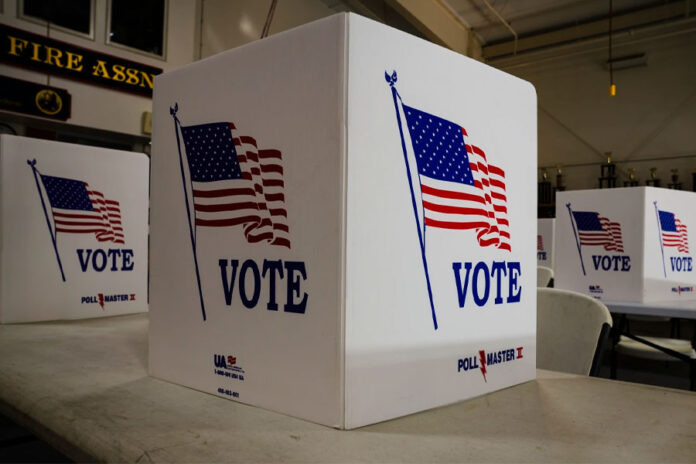
Voting booths are set up at a polling place in Newtown, Pa., Tuesday, April 23, 2024. (Photo: AP/Matt Rourke/File)
HARRISBURG, Pa. — Pennsylvania is spending more than $10 million to replace its electronic voter registration database with an election management system that will also provide election night results and handle campaign finance filings and lobbyist registration.
Secretary of State Al Schmidt announced Wednesday the Civix system should be fully in use by the time of the next presidential election in 2028, replacing the existing Statewide Uniform Registry of Electors, or SURE system.
Election management is closely watched in Pennsylvania, a perennial swing state where the two major parties are constantly seeking an edge in state and national contests.
State officials say the Civix system’s functions for public use will provide information about voter registration, coming elections and voting data.
The SURE system, used by counties to record, update and verify voter registration information, has been in place since 2003 and is widely considered to be outdated.
“That doesn’t mean it’s not reliable,” said Schmidt, who compared using the existing system to the frustrations of having a 20-year-old phone. «It is safe and secure. We are always having to make upgrades.”
It’s not clear how much the Civix software will also require hardware changes, Schmidt said.
“As the project develops, it will become more clear the extent to which new hardware is needed,” he said.
Forrest Lehman, who has served as Lycoming County’s elections director for about a decade, said there is a widespread feeling among county elections officials that the SURE system is in need of replacement.
“We all want this to succeed,” Lehman said. “We want a new voter registration system that can move this state and the counties that use it into the 21st century
Imagen de archivo de la coordinadora del Consejo Asesor de Desarrollo Económico Regional y Relocalización del gobierno de México, Altagracia Gómez Sierra. EFE/ Isaac Esquivel
Ciudad de México.- El sector empresarial mexicano manifestó este miércoles su disposición para trabajar en conjunto con el gobierno de la presidenta Claudia Sheinbaum y conformar un frente común en las negociaciones con Estados Unidos para eliminar los aranceles del 25 % a las exportaciones mexicanas.
A su salida del Palacio Nacional, tras una reunión de 40 empresarios con la mandataria mexicana, Altagracia Gómez, coordinadora del Consejo Coordinador de Desarrollo Económico de la Presidencia de México, reafirmó frente a medios el compromiso del sector privado con el llamado ‘Plan México’ y destacó la importancia de fortalecer el mercado nacional en el actual entorno comercial.
“Estamos listos para trabajar en conjunto, para acelerar el Plan México (…) pero sobre todo con la necesidad y la conveniencia de que ante cualquier dificultad apostemos, desde luego por el país, pero también por las empresas y los empresarios mexicanos”, expresó.
El aplazamiento, buena noticia
Por su parte, Francisco Cervantes, presidente del Consejo Coordinador Empresarial (CCE), calificó como una “buena noticia” el aplazamiento hasta el 2 de abril de la imposición de los aranceles, lo que brinda tiempo para avanzar en las negociaciones.
“El sector automotriz es uno de los más importantes entre todos los sectores industriales y principalmente que México es el sexto país exportador de vehículos en el mundo”, dijo el líder del CCE, que agrupa a las principales asociaciones y organismos empresariales responsables del 80 % del producto interno bruto (PIB) nacional.
No obstante, Cervantes enfatizó que la iniciativa está concentrada en un frente común con la presidenta mexicana Sheinbaum para lograr “un buen avance”.
El dirigente empresarial resaltó la comunicación fluida entre Sheinbaum y su homólogo estadounidense, Trump, al tiempo que recordó que este jueves sostendrán otra llamada para dar seguimiento a las discusiones comerciales.
Asimismo, subrayó la estrecha integración de las economías de ambos países, particularmente en 37 sectores industriales, lo que genera preocupación tanto en México como en Estados Unidos ante la posibilidad de que los aranceles entren en vigor.
Cervantes mencionó que las conversaciones con la Cámara de Comercio de EE. UU. (US Chamber of Commerce), el Business Roundtable y la Asociación Nacional de Manufactureros de EE. UU. (NAM en inglés) «se mantienen constantes» y que estos organismos también han expresado su inquietud «sobre los efectos adversos» que los aranceles podrían traer a las grandes empresas estadounidenses con operaciones en México.
Confío en que este diálogo empresarial en ambos lados de la frontera ayude a que se reviertan las medidas arancelarias que impulsa el gobierno de Trump a su principal socio comercial.
Entre los temas clave que se abordan en la agenda bilateral destacan el incremento del contenido nacional en la producción manufacturera, el déficit comercial, la migración y la seguridad.
“La presidenta está muy comprometida con esta agenda”, afirmó Cervantes al tiempo que reconoció que su postura frente a las demandas del Gobierno estadounidense da una mejor perspectiva para México en las negociaciones con Washington.
Cervantes estimó que unos 300 empresarios mexicanos podrían acudir el próximo domingo al Zócalo de la capital mexicana, la plaza pública más grande del país, para respaldar las medidas arancelarias y no arancelarias que propondrá Sheinbaum como respuesta al embate de la administración Trump que amenaza con una recesión para la economía mexicana, entre otros posibles efectos.
El martes, la Conferencia Nacional de Gobernadores (Conago) que agrupa a los 32 mandatarios estatales, manifestó también su respaldo a la defensa de los intereses del Gobierno mexicano ante los aranceles de EE. UU.
“Manifestamos nuestro respaldo al Gobierno de México en las acciones que emprenda para defender a los sectores productivos del país y proteger a los trabajadores y consumidores de ambas naciones”, señaló la Conago en un posicionamiento.
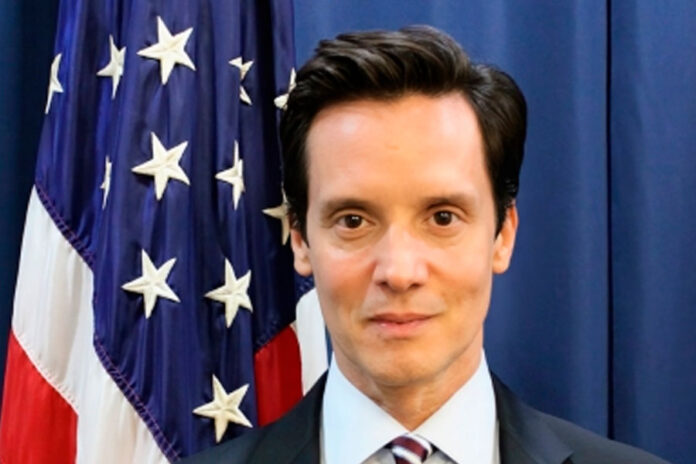
John Giordano was appointed by Attorney General Pamela Bondi as the 64th United States Attorney for the District of New Jersey. Mr. Giordano was officially sworn in on March 3.
“I thank President Donald Trump and Attorney General Pam Bondi for their trust and confidence in me,” stated Mr. Giordano. “Serving President Trump and the citizens of my home state of New Jersey is the honor of a lifetime and a privilege I do not take lightly. Together with the dedicated and highly skilled men and women of the U.S. Attorney’s Office, I am committed to tirelessly protecting our citizens and ensuring swift justice for those who violate the laws of the United States of America. Our immediate focus will be to aggressively confront violent gang activity, dismantle human trafficking networks, and eliminate the ability of cartels to flood our streets with fentanyl and other deadly drugs.”
A native of Burlington County, Mr. Giordano brings a depth of high-level experience from both the public and private sectors. His career includes extensive work within the Department of Justice as Counselor to the Assistant Attorney General for the Environment and Natural Resources Division, and as a prosecutor in the U.S. Attorney’s Office for the Eastern District of Virginia, where he handled complex federal felony matters, including national security violations, narcotics trafficking, violent crimes, and government theft. Mr. Giordano also served as Assistant Commissioner for Compliance and Enforcement at the New Jersey Department of Environmental Protection.
In addition, Mr. Giordano was previously appointed by President Trump to serve as Representative of the United States to the 74th Session of the United Nations General Assembly, where he focused on issues directly impacting the national security of the United States, including human trafficking and counterterrorism. He has also shared his extensive knowledge of federal law as an Adjunct Professor at Rutgers University School of Law and as a Lecturer in Law at the University of Pennsylvania Law School.
A Phi Beta Kappa graduate of Villanova University in 1998, Mr. Giordano earned his law degree from Villanova University School of Law in 2002. Following law school, he clerked for United States District Judge Joseph E. Irenas in the District of New Jersey before entering private practice.
As the U.S. Attorney for the District of New Jersey, Mr. Giordano oversees all federal criminal prosecutions and civil litigation involving federal interests in the State. With offices in Newark, Camden, and Trenton, he supervises a dedicated staff of approximately 153 federal prosecutors and 104 support personnel.
Fotografía cedida por Universal Music Latin Entertainment (UMLE) donde aparecen los integrantes de la agrupación Los Tigres del Norte. EFE/ Universal Music Latin Entertainment
Miami.- La banda de música mexicana Los Tigres del Norte anunció este miércoles las nuevas fechas de su nueva gira por Estados Unidos, ‘La lotería’, que comenzará en Albuquerque (Nuevo México) y terminará en Grand Rapids (Michigan).
La gira recorrerá 32 ciudades, comenzando el próximo 14 de marzo en Albuquerque (Nuevo México), y concluyendo el 30 de noviembre en Grand Rapids (Michigan), detalla un comunicado de prensa.
Producida por Zamora Live, la gira viene después de su anterior tour ‘Aquí mando yo’, que como esta llevará un repertorio que ha trascendido generaciones y letras que han servido como himnos de identidad y lucha.
Los Tigres del Norte, reconocidos por Billboard como «el grupo más influyente de la música regional mexicana», ha dejado una huella en la música latina debido también a su profundo vínculo con las vivencias de la comunidad inmigrante.
Su estilo, que fusiona el tradicional género norteño con mensajes de conciencia social, «ha elevado el corrido a la categoría de arte, convirtiendo sus canciones en himnos de identidad y lucha que han trascendido generaciones», indica la nota.
Desde sus humildes inicios en San José (California), Los Tigres del Norte han conquistado escenarios en Estados Unidos, Latinoamérica, Europa y Asia, han ganado múltiples premios Grammy y Latin Grammy, y han vendido millones de discos en todo el mundo .
Las ciudades incluyen Memphis, Atlantic City, Las Vegas, Chicago, Indianápolis, Columbus, Nueva York y Denver, entre otras metrópolis.
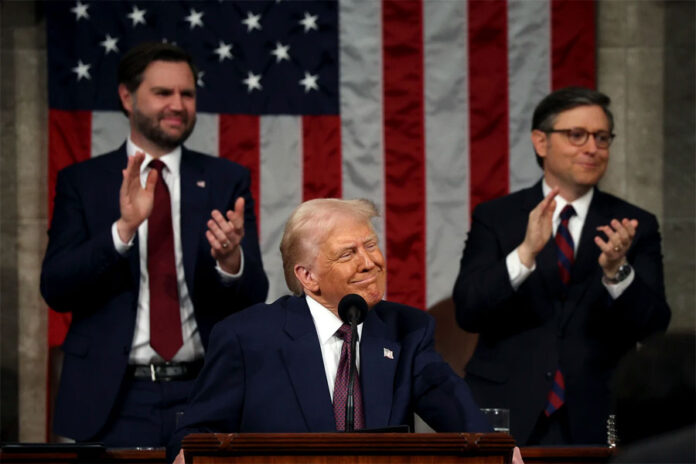
Anoche, el presidente Trump pronunció un discurso ante la sesión conjunta del Congreso, en el que destacó su visión de poner a Estados Unidos primero, renovar el sueño americano y marcar el comienzo de la edad de oro de Estados Unidos.
Un portavoz de la Alianza para la Reforma Farmacéutica emitió la siguiente declaración tras el discurso del presidente Trump:
«Tenemos algunas sugerencias para construir sobre el camino a seguir que el presidente Trump esbozó anoche.
Para seguir poniendo a Estados Unidos en primer lugar, instamos al presidente Trump a hacer frente al hecho de que las Big Pharma cobren a los estadounidenses más del triple por el mismo medicamento que a los consumidores en el extranjero. Estos fabricantes de medicamentos no deberían poder salirse con la suya.
Para renovar el sueño americano, el presidente Trump debe frenar las subidas de precios fuera de control de las Big Pharma, que hacen que los medicamentos sean menos asequibles y estén menos disponibles para los americanos de a pie. Reducir el costo de los medicamentos recetados traerá alivio financiero a muchos americanos, dándoles mayor seguridad financiera y la capacidad de alcanzar el sueño americano.
Para marcar el comienzo de la edad de oro de Estados Unidos, el presidente Trump debe hacer que las Big Pharma rindan cuentas por sus prácticas que, durante demasiado tiempo, han puesto a los estadounidenses en último lugar. Marcar el comienzo de nuestra edad de oro y hacer que Estados Unidos vuelva a ser saludable empieza por poner freno a sus estrategias de precios anticompetitivas y antiamericanas, que perjudican injustamente a los consumidores americanos.
Instamos al presidente Trump y al secretario Kennedy a poner fin a los malos tratos de las Big Pharma tomando medidas sobre la reforma de sentido común de los precios de los medicamentos. No hay mejor momento que el presente para actuar».
Funding secured in “Big Four” opioid settlement by then-Attorney General Josh Shapiro continues to help Pennsylvanians with full spectrum of substance use disorder treatment and recovery supports.
Harrisburg, PA – Today, the Department of Drug and Alcohol Programs (DDAP) announced an investment of more than $2 million in grant funding for five Pennsylvania organizations to help improve Pennsylvanians’ access to substance use disorder (SUD) recovery houses that are licensed through DDAP. DDAP licensed recovery houses provide assurance and peace of mind to family members, so they know where their loved one is living following SUD treatment, and further help to decrease overdose trends and deaths.
Funding for these grants is provided from the “Big Four” opioid settlement funding that was appropriated to DDAP by the General Assembly. The funding was the result of a multistate investigation of opioid manufacturers and distributors spearheaded by then-Attorney General Josh Shapiro that led to settlement agreements worth billions of dollars—most of which goes directly to counties to meet local needs. Settlement money is to be invested in opioid remediation programs and initiatives.
“These organizations understand the intersection between individuals with an SUD and housing insecurity,” said DDAPSecretary Dr. Latika Davis-Jones. “This funding will help provide another resource for individuals, whether they are in outpatient or residential SUD treatment, to access safe and supportive housing through a DDAP-licensed recovery house—an essential part of their recovery journey. By making this investment, we’re contributing to the positive outcomes for those in recovery, including decreased substance use, reduced likelihood to return to use, lower rates of incarceration, higher income, increased employment, and improved family relationships.”
DDAP is awarding five grants of up to $500,000 each to the following community-based organizations:
The Bridge Foundation: Philadelphia
The Worx!: Allegheny County
Sage’s Army: Allegheny, Westmorland, Fayette, Washington counties
“Having a safe and stable place to live is one of the most important pieces of the recovery journey. Too often, people struggle to find quality recovery housing, which can put their progress in sustaining their recovery at risk,” said Janice Olson, Sage’s Army Director of Operations. “With this funding from DDAP, Sage’s Army can help connect more individuals to supportive housing that fosters accountability, personal growth, and a strong recovery community.”
Theorganizations are charged with leading initiatives to link individuals with opioid use disorder (OUD) and any co-occurring SUD or mental health condition to DDAP-licensed recovery houses. They must also ensure these individuals have access to case management and peersupport services while residing in a recovery house and access to financial assistance for those who are not able to pay the full cost of residing in a recovery house. In addition, all five grantees must have a plan to increase services to underserved populations and have a training plan to ensure staff are well-prepared to serve them.
Currently, there are about 400 DDAP-licensed recovery houses across the Commonwealth. The purpose of the licensure program is to help empower sustained recovery for individuals with SUD by ensuring a network of safe drug and alcohol recovery houses. Individuals can find a listing of licensed recovery houses on DDAP’s website.
Since day one, the Shapiro Administration has prioritized a focus on and investments in sustained recovery and expanding access to equitable prevention and treatment services by:
Awarding more than $40 million to retain professionals working in Pennsylvania’s drug and alcohol field through DDAP’s student loan repayment program;
Awarding nearly $7 million to administer the operations of DDAP’s current Get Help Now hotline for a five-year period;
Awarding more than $6 million for 19 organizations to establish or expand SUD services, community outreach and education to underrepresented communities of color;
Awarding $4 million for the establishment of regional recovery hubs to enhance resources for individuals in recovery and promote recovery within communities across Pennsylvania; and
Awarding more than $1 million to expand or enhance community-based harm reduction services for individuals who use opioids and other drugs, particularly in underserved areas.
Learn more about DDAP’s efforts in combating overdoses at ddap.pa.gov.
With nearly 600 vacancies in the Commonwealth workforce, Governor Shapiro’s Executive Order seeks to capitalize on federal layoffs by accepting federal work experience as equivalent to state experience for the state’s top recruitment needs.Shapiro Administration to begin aggressive hiring campaign to recruit the best and brightest federal employees to serve Pennsylvania.
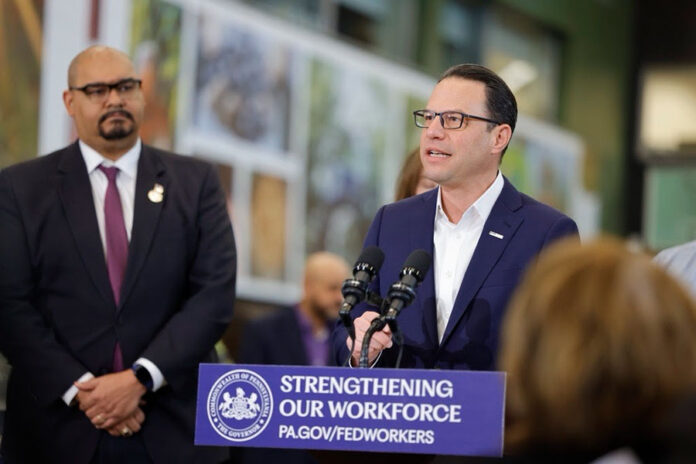
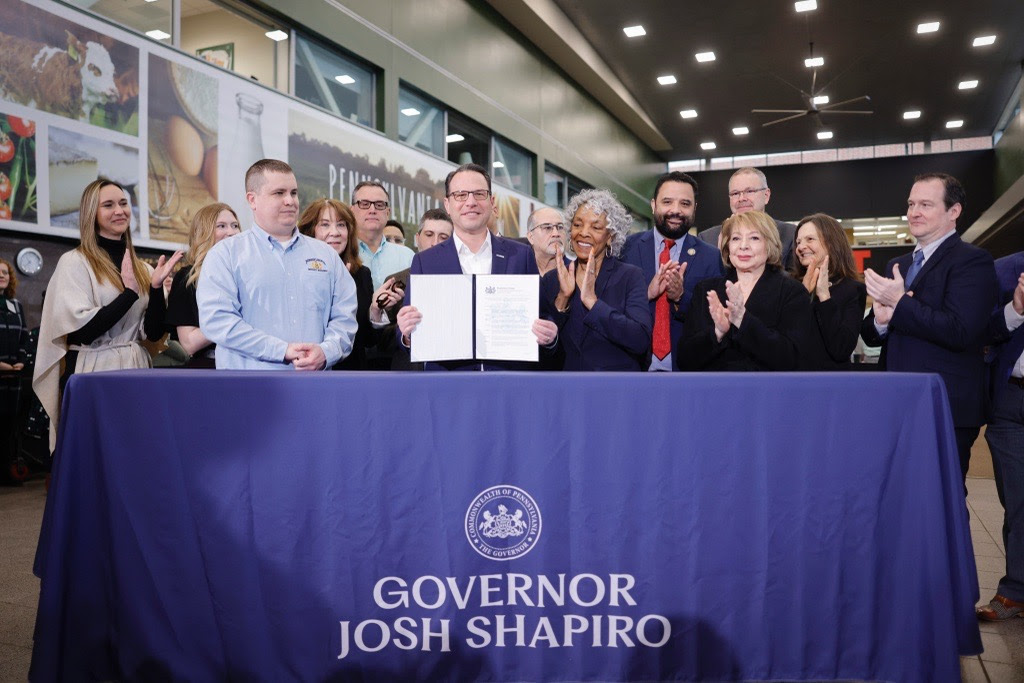
Harrisburg, PA – Today, Governor Josh Shapiro signed Executive Order 2025-01 to help fill critical vacancies in the Commonwealth workforce with experienced former federal employees who have specialized expertise in important fields like civil engineering, nursing, corrections, accounting, and more. The Governor’s Executive Order directs the Office of Administration to accept federal government experience as equivalent to Commonwealth work experience for civil service roles, ensuring former federal employees with valuable experience can more easily apply for essential vacantpositions with the Commonwealth. The Executive Order focuses on adding workforce in already-funded job positions to serve Pennsylvanians more efficiently and effectively.
Working with legislative leaders, Governor Shapiro will also push for commonsense updates to civil service hiring processes through the Civil Service Modernization Act, updating an 84-year-old law and opening doors of opportunity for those who want to serve the Commonwealth.
As part of this Executive Order, the Shapiro Administration will also begin an aggressive effort to recruit federal employees into Pennsylvania’s workforce, launching a new website with key information about exciting state government opportunities that align with their experience and hosting virtual and in-person job fairs for federal employees. That effort builds on the Shapiro Administration’s work to streamline Commonwealth hiring processes, open the doors of opportunity for those who want to serve, and recruit a team that represents all of Pennsylvania. As a result of that work so far, the Shapiro Administration has reduced hiring times by 32 percent and filled nearly 600 previously vacant permitting, licensing, and certification (PLC) jobs.
The Governorsigned the Executive Order at the second annual Commonwealth Job Fair in Harrisburg, where over 40 state agencies provided job seekers with information about public service careers and hundreds of open positions to nearly 900 registered attendees.
“Under my Administration, we’ve worked to speed up hiring, fill essential vacancies, and recruit more qualified employees who have helped us cut processing times, reduce wait lists, and deliver results for the people of Pennsylvania,” said Governor Shapiro. “Right now, Pennsylvania still has 540 critical jobs to fill – and we have an opportunity to recruit federal workers and veterans who have significant experience and expertise in all of these fields because they’ve held these jobs already at the federal level or in the military. Under this Executive Order, my Administration will consider relevant federal work experience as equivalent to Commonwealth work experience so skilled, experienced federal employees can pre-qualify for existing open positions with the Commonwealth — while continuing to protect pathways for veterans to continue their service.”
Since taking office, Governor Shapiro has worked to create real opportunities for hardworking Pennsylvanians to serve in state government. On his first full day in office, the Governor signedExecutive Order 2023-03, which eliminated the college degree requirement for 92 percent of state government jobs and announced that the Pennsylvania State Police will remove the college credit requirement for those who wish to serve as state troopers.
Last year, the Governor established the Hire, Improve, Recruit, Empower (HIRE) Committee through Executive Order 2024-01 to expand opportunity for Pennsylvanians seeking careers in public service. These efforts have made Pennsylvania a more competitive employer that can now fill vacancies faster with highly qualified applicants.
With 104,000 federal employees in Pennsylvania, many possessing in-demand skills, the Executive Order directs the Office of Administration to:
Match federal job titles with state job classifications so workers can easily identify how their experience translates into state government roles.
Host in-person and virtual recruitment events to connect federal employees directly with state job opportunities.
Create a new website for former federal employees, which includes:
·
An overview of Pennsylvania’s hiring process
·
Information on civil service vs. non-civil service jobs
·
Details about the benefits of working for the Commonwealth
·
A list of 23 high-priority, hard-to-fill state jobs and their federal equivalents
·
Information for veterans and military service members and direct access to recruiter contacts for additional support
“The federal public sector workforce is one of the most professional and qualified in the world, and we know that many federal jobs have similar duties to jobs performed by Commonwealth employees,” said Secretary of Administration Neil Weaver. “This Executive Order will help individuals with federal work experience find relevant job opportunities, continue their public service careers, and put their skills to work for the people of Pennsylvania.”
Jonathan Skripka, a Commonwealth employee and Director of Disaster Recovery Assistance at PEMA, shared how his experience working for the federal government prepared him to serve his fellow Pennsylvanians in state government.
«I’m honored to be here today to share how my experience as a former federal employee prepared me to serve the Commonwealth and help Pennsylvanians in times of crisis. From volunteering with my local fire department to working with FEMA as an emergency management specialist, my career has been driven by a desire to help others. When I had the opportunity to bring my expertise back home to Pennsylvania, I took it — because I wanted to make a difference here,” said Skripka. “The skills I gained in the federal government have helped me navigate complex policies and deliver disaster relief more efficiently to those in need. Governor Shapiro’s executive order creates a clear pathway for more federal employees to bring their talents to state service, ensuring that Pennsylvania continues to benefit from experienced, dedicated public servants — just as I have been fortunate to do.»
Commissioner Pam Iovino, of the State Civil Service Commission, discussed how her military experience prepared her for Commonwealth service and thanked Governor Shapiro for his commitment to Pennsylvania’s veterans, Commonwealth employees, and the civil service system.
«As a former State Senator, a proud 24-year Navy veteran, and a member of the Pennsylvania Civil Service Commission, I know that hiring veterans and experienced federal workers is always a smart investment. They bring world-class training, valuable skills, and a strong commitment to public service,” said Iovino. “With this executive order, Governor Shapiro is making it easier for highly qualified professionals to continue serving by bringing their expertise to Pennsylvania’s workforce—strengthening our government and expanding opportunities for those ready to step up and lead.»
Governor Shapiro also announced his support for the Civil Service Modernization Act (CSMA), a legislative initiative co-sponsored by Representatives Dave Madsen, Justin Fleming, and Nathan Davidson and Senator Patty Kim, which will finally modernize Pennsylvania’s civil service system — a structure that has remained largely unchanged for over 80 years.
The CSMA aims to streamline outdated hiring practices, expand access to state jobs, and improve recruitment and retention while preserving the integrity of merit-based hiring. By removing unnecessary qualifications, the CSMA will broaden the pool of qualified applicants, build on the Shapiro Administration’s commitment to skills-based hiring, and help the Commonwealth more quickly fill critical vacancies. Currently, 70 percent of all Commonwealth jobs are civil service positions, but outdated requirements and policies have slowed the hiring process, limiting opportunities for qualified job seekers.
Key aspects of the CSMA include:
Cutting hiring times: Current law requires job postings to stay open for at least 14 days, leading to hundreds of applications for certain roles and overwhelming HR teams. The CSMA introduces greater flexibility, ensuring agencies can fill positions faster.
Removing barriers to internal promotions: The CSMA eliminates outdated rules that prevent qualified Commonwealth employees from applying for internal job postings, allowing more employees to advance based on skills and experience.
Creating new pathways for individuals with disabilities: The CSMA establishes a state-level hiring program similar to the federal Schedule A model, making it easier for people with disabilities to secure Commonwealth jobs.
Easing residency requirements: Pennsylvania residency will be a preference, not a requirement, expanding the talent pool and making it easier for out-of-state candidates to apply and establish residency if selected.
Protecting veterans’ hiring preference: The CSMA maintains the 10-point exam boost for veterans and ensures they receive selection priority. Today, about 17 percent of Commonwealth employees are veterans.
Streamlining civil service appeals: The bill shortens appeal timelines, making the process more efficient and fairer.
“State government is the largest employer in my district, and I am proud to sponsor the Senate version of the Civil Service Modernization Act,” said Senator Kim. “The proposed reforms cut civil service red tape to improve talent recruitment, make hiring easier and more efficient, and remove unnecessary barriers that tie up state and local government. This modernization proposal allows government to keep pace and compete for talent in this rapidly changing employment market. It also puts the commonwealth in the lead for attracting the qualified talent pool of recently displaced federal workers.”
«The Civil Service Modernization Act is a long-overdue step toward building a 21st-century workforce for Pennsylvania,”said Representative Madsen. “By streamlining outdated hiring processes, expanding opportunities for both current employees and new talent, and making it easier to recruit the best and brightest, this legislation helps ensure we have a state government that truly works for the people it serves. This is about making sure the Commonwealth is not only a model employer but also a place where opportunity is open to everyone, including veterans, individuals with disabilities, and the next generation of public servants.”
«I’ve heard Governor Shapiro say many times that he’s building a Commonwealth that works for all — and with this executive order and the Civil Service Modernization Act, we’re building a Commonwealth where all can work,” said Representative Fleming. “While it’s unfortunate that many federal employees are facing uncertainty, Pennsylvania is seizing this moment to strengthen our workforce and bring in top talent. The Governor’s executive order is just the first step, and with the Civil Service Modernization Act, we can make the lasting changes needed to build a modern, effective workforce that delivers for the people of Pennsylvania.»
«I’m honored to stand alongside Governor Shapiro, my colleagues, and my team to support this executive order to recruit experienced, qualified federal workers to the Commonwealth, as well as Representative Madsen’s legislation to modernize our 84-year-old state civil service system. These much-needed reforms will help Pennsylvania attract top talent, expand opportunities for a diverse workforce, and ensure our agencies continue delivering the high-quality services our constituents deserve,” said Representative Carol Hill-Evans. “As chair of the House State Government Committee, I look forward to advancing this proposal, which reflects our shared commitment to open, efficient, and equitable government — one that removes unnecessary barriers to public service while upholding veterans’ preferences and creating new pathways for individuals with disabilities.”
Governor Shapiro’s Administration has made progress in workforce development by eliminating unnecessary barriers to public service careers, reducing hiring times, and expanding opportunities for Pennsylvanians. His Administration has:
Eliminated college degree requirements for most state jobs to prioritize skills and experience
Reduced hiring times by 32 percent, from 90 days to 61 days.
Filled nearly 600 previously vacant permitting, licensing, and certification (PLC) jobs, reducing vacancy rates by 64 percent.
With an unemployment rate of 3.6 percent and hundreds of Commonwealth job openings at any given time, Pennsylvania must remain competitive in today’s labor market. This Executive Order and Civil Service Modernization Act will ensure the Commonwealth continues to recruit top talent, remove unnecessary barriers, and build a modern workforce that reflects the skills of Pennsylvania’s residents and creates more opportunity for those seeking public service careers.
For more information on employment in the Commonwealth of Pennsylvania, visit employment.pa.gov.
La Casa Blanca anunció este miércoles que retrasará un mes la imposición de aranceles del 25 % sobre automóviles que entren en EE. UU. procedentes de México y Canadá después de que el presidente, Donald Trump, hablara con los tres mayores fabricantes estadounidenses que ensamblan vehículos en los dos países vecinos.
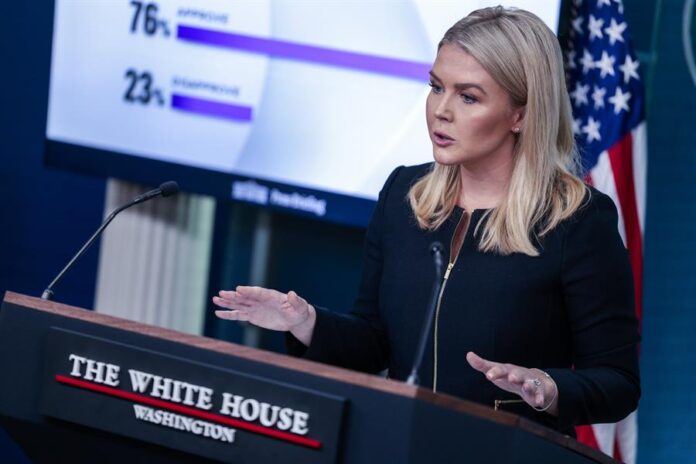
«Hemos hablado con los tres grandes vendedores de automóviles. Vamos a dar una exención (de aranceles) de un mes a todo automóvil que entre (en EE. UU) en el marco del T-MEC», explicó en rueda de prensa la portavoz de la Casa Blanca, Karoline Leavitt, al ser preguntada por un diálogo entre el Gobierno estadounidense y los llamados «big three» («tres grandes»).
Representantes de la Administración de Trump hablaron el martes con dirigentes de General Motors (GM), Ford y Stellantis, para abordar la situación creada en el sector ante la imposición de aranceles del 25 % que Washington empezó a aplicar el martes a las importaciones de México y Canadá por lo que Washington considera esfuerzos insuficientes para rebajar el tráfico de fentanilo.
La portavoz dijo que los «aranceles recíprocos seguirán entrando en vigor el 2 de abril». Hasta ahora, la Casa Blanca no había establecido una fecha exacta para la entrada en vigor de estos gravámenes contra países que Washington considere que aplican barreras arancelarias y no arancelarias contra sus bienes y servicios.
Sin embargo, Leavitt, que leyó un texto al respecto que le entregó el propio Trump, explicó que «por petición de las compañías asociadas al T-MEC (el tratado de libre comercio entre EE. UU., México y Canadá), el presidente les va a dar una exención durante un mes para que no se encuentren en desventaja económica».
«Las tres empresas con las que habló son Stellantis, Ford y General Motors. Ellos solicitaron la llamada, ellos hicieron la petición y el presidente está feliz de hacerlo; será una exención de un mes», puntualizó.
El posible retraso para el sector del automóvil, uno de los más afectados por la guerra comercial en Norteamérica, generó este miércoles un alza de los valores bursátiles de los tres fabricantes, que a falta de dos horas para el cierre en Wall Street sumaban escaladas de entre el 5 y el 8,5 %.
El sector del automóvil de EE. UU., Canadá y México está totalmente integrado, y algunas partes utilizadas para la fabricación de vehículos cruzan las fronteras hasta ocho veces durante el proceso manufacturero.
Desde su retorno a la Casa Blanca, Trump ha apostado por activar aranceles para corregir lo que considera déficits comerciales injustos para Washington, para atraer inversión de capital extranjera y, sobre todo, como medida de presión contra México, Canadá y China para reducir el flujo de fentanilo que entra por las fronteras estadounidenses.
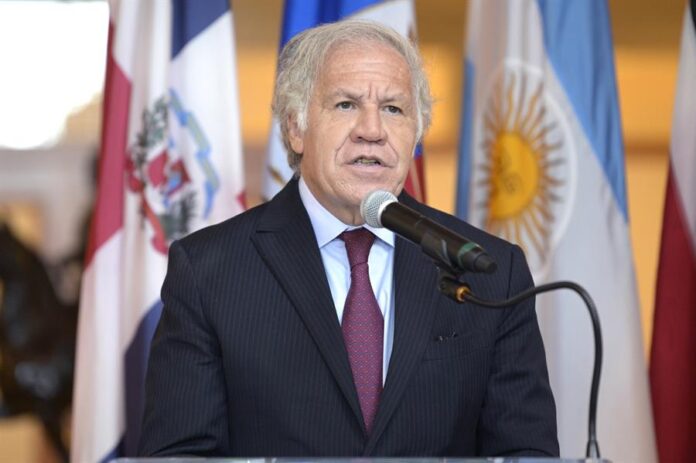
Secretario General de la OEA, Luis Almagro, hablando en la sede de la Organización de los Estados Americanos (OEA) en Washington (EE. UU). (Foto: EFE/Lenin Nolly/Archivo)
El Consejo Permanente de la Organización de los Estados Americanos (OEA) aprobó este miércoles una declaración que solicita a la Organización de Naciones Unidas (ONU) reconocer el español como el tercer idioma oficial en la Corte Internacional de Justicia (CIJ), además del inglés y el francés.
La resolución, aprobada cuatro días después de que el presidente de EE.UU., Donald Trump, decretara como idioma oficial del país el inglés, destaca la importancia del multilingüismo dentro de la ONU.
La medida de la OEA subraya además que el español es el idioma principal de comunicación para más de 600 millones de personas en el mundo.
Actualmente, la CIJ sólo contempla el inglés y el francés como idiomas oficiales, lo que ha generado desventajas para los países hispanohablantes en procesos judiciales internacionales. Desde 1948, estos países han participado en al menos 38 casos contenciosos ante la Corte.
La declaración enfatiza que la inclusión del español contribuiría al desarrollo progresivo de la CIJ y a una mayor equidad en el acceso a la justicia internacional.
Además, solicita al secretario general de la OEA, Luis Almagro, que transmita esta resolución al secretario general de la ONU, António Guterres, para su consideración.
El español es la segunda lengua más hablada de EE.UU. detrás del inglés, con 57,2 millones de hispanohablantes, y la población hispana es el grupo minoritario más grande, pues 63,7 millones de estadounidenses son de origen hispano, según el Instituto Cervantes.
Trump firmó el pasado sábado una orden ejecutiva en la que declaró el inglés como «lengua oficial de Estados Unidos», un título que nunca ha existido en la historia de la nación norteamericana.