-0.9 C
Philadelphia
spot_img
Inicio Blog Página 520

In Philadelphia, Chinatown activists rally again to stop development. This time, it’s a 76ers arena

Philadelphia
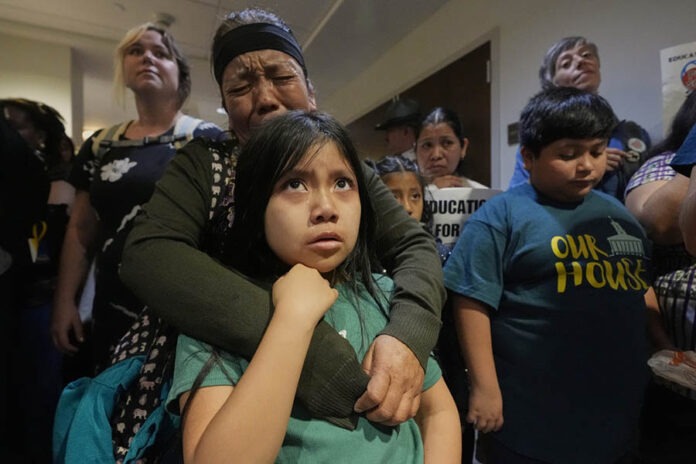
Supporters and Chinatown community leaders gathered during a "No Sixers arena rally" on Wednesday, Sept. 18, 2024, outside Philadelphia City Hall in Philadelphia. (Jose F. Moreno/The Philadelphia Inquirer via AP)

PHILADELPHIA— Vivian Chang works on a narrow Philadelphia street that would have been consumed by a Phillies stadium had Chinatown activists not rallied to defeat the plan in the early 2000s. Instead of 40,000 cheering fans, the squeals of young children now fill the playground at Folk Arts-Cultural Treasures Charter School, which opened in 2007.

“We’re standing right where the baseball stadium would have been,” Chang said in late September. “And now it’s 480 students — a lot of immigrants, a lot of students of color from across the city.”

Chang, 33, leads Asian Americans United, which flexed its political muscle during the stadium fight and is now experiencing déjà vu as it tries to stop a planned $1.3 billion basketball arena for the Philadelphia 76ers at the other edge of Chinatown.

Mayor Cherelle Parker hopes a glitzy, 18,500-seat arena can be the catalyst to revive a distressed retail corridor called Market East, which runs for eight blocks, from City Hall to the Liberty Bell. The plan now moves to city council for debate this fall. Team owners say they need the council’s approval for 76 Place by year’s end so they can move into their new home by 2031.

“I wholeheartedly believe this is the right deal for the people of Philadelphia,” Parker said in announcing her support in September, while pledging to protect what she called “the best Chinatown in the United States.”

Few would deny that Market East needs a savior. But some are less sure it should be the Sixers. Critics fear gridlock on game days and a dark arena at other times, along with gentrification, homogenization and rising rents. Chinatown sits just above Market East and the LGBTQ+ friendly “Gayborhood” a few blocks below it.

“The arena is a uniquely bad use for that land,” said local activist Jackson Morgan, who fears the Gayborhood could lose its identity. “It would make Center City virtually unlivable for hours at a time.”

Victor Matheson, an economics professor at the College of the Holy Cross who studies stadium issues, said arenas can bring an economic bounce to downtown business districts, but only a limited one.

«They don’t have much of an effect once you get beyond a couple of blocks,» he said.

Market East, a once-bustling stretch of historic Market Street, has withered over the last half-century amid a series of cultural shifts: the growth of suburban shopping malls in the 1960s and ’70s, the financial crises that crippled U.S. cities in the 1980s, and, more recently, the twin blows of online shopping and the pandemic.

And while much of Philadelphia is thriving as more young people settle downtown, Market East has resisted renewal efforts. All but one of its fabled department stores are long gone.

Enter the 76ers, owned by Harris Blitzer Sports & Entertainment, who want to shed their Wells Fargo Center lease with Comcast Spectacor and move from the city’s South Philadelphia sports complex to their own facility.

The partners, who also own the NHL’s New Jersey Devils and have a controlling interest in the NFL’s Washington Commanders, say the project will be privately financed and bring thousands of jobs and more than $2 billion in economic growth to downtown. They also hope to build an adjacent $250 million apartment tower.

“I think the arena is a good thing,” said Dante Sisofo, 28, who lives nearby. “I could see a lot of families gathering and getting a nice bowl of Vietnamese pho — my favorite dish — and then heading to the game.»

Parker shares his optimism, and has tried to address concerns by noting the $50 million in local benefits the team has promised, a sum that includes a $3 million loan fund for Chinatown businesses.

But others wonder if sports fans would really patronize mom and pop stores. Arenas, they say, are designed to keep fans inside, spending their money on increasingly upscale dining and entertainment.

“The Sixers’ owners, they don’t make money by people going to the quaint little sports bar across the street. They make money by having people buy those $14 beers inside the stadium,” Matheson said.

The owners have pledged not to ask the city for any construction funding, although they are free to seek state and federal funds. Instead of property taxes, they would pay about $6 million in annual Payments in Lieu of Taxes. Over the 30-year agreement, the potential savings to the team — and loss to the city and its cash-strapped schools — could be tens of millions of dollars or more, by some economists’ measure.

“Historically, city officials have been extremely poor poker players when it comes to staring down and bluffing billionaire sports owners,” Matheson said.

“And of course, that’s the exact reason why you have them playing footsie with Camden,” he said, referring to a last-minute flirtation from New Jersey to have the Sixers move across the Delaware River, where the team already has a practice facility, for $400 million in tax breaks.

Still, Parker called the deal the best ever struck with a city sports team, given that the three venues in South Philadelphia — the Wells Fargo Center, Citizens Bank Park and Lincoln Financial Field — were all built with huge public subsidies.

Back in Center City, rising rents already are a reality for Debbie Law’s family.

It ran a variety store in the heart of Chinatown for 35 years until the landlord tripled the rent in 2022, when the arena plan surfaced. The family reluctantly moved around the block to a smaller, less visible location that faces the hulking back side of the Pennsylvania Convention Center, another economic development project that hems in Chinatown.

“I grew up in that shop. It was a community center of sorts,” said Law, 42, as her aunt tended the register at the new store one recent day. Local residents, she said, rely on them for Chinese-language magazines, newspapers and cultural items they would struggle to find if the store is displaced again.

The Chinatown community, which dates to 1871, has worked to fend off sometimes dubious development since at least the 1960s: casinos, a prison, the stadium, a highway. They have won some fights and lost others. The six-lane, sunken Vine Street Expressway opened in 1991, cutting off the top of Chinatown, where the charter school sits. Only now are pedestrian overpasses being built to try to stitch the neighborhood back together.

“Every single time that Chinatown has been targeted for a project like this, people say Chinatown will survive,” Chang said. «But is that really how we should be treated as a community?”

Phillies waste splendid outing from ace Zack Wheeler as bats go cold in Game 1 loss to Mets

Zack Wheeler
Philadelphia Phillies' Bryce Harper, second right, looks on from the dugout with teammates during the ninth inning of Game 1 of a baseball NL Division Series against the New York Mets, Saturday, Oct. 5, 2024, in Philadelphia. (AP Photo/Chris Szagola)

PHILADELPHIA— Zack Wheeler touched 99 mph as he threw all 11 of his pitches for strikes in the first inning Saturday, the Philadelphia Phillies’ ace offering a tantalizing peek at his dominant playoff outing ahead.

Wheeler kept wheeling and dealing from there in the NL Division Series opener and stuck it to his old team, the New York Mets — nine strikeouts and a whopping 30 swings-and-misses over 111 pitches in seven shutout innings.

It was a bit of pitching mastery for the two-time All-Star.

“You can’t make mistakes in the playoffs,” Wheeler said.

Wheeler sure didn’t make many, lifted after he held the Mets to just one hit with Philadelphia clinging to a 1-0 lead.

But once he left, the wheels fell off for the Phillies.

Maybe it was the five-day layoff for the NL East champions, a spell of down time that also doomed a pair of 100-win Braves teams each of the last two seasons dumped by the Phillies in the Division Series.

Maybe the Mets are just riding the kind of late-season wave the Phillies enjoyed each of the last two years on their way to deep playoff runs.

Whatever the cause, the Phillies failed to solve Kodai Senga or the four Mets relievers who followed him, as they quieted the heart of Philadelphia’s batting order. All-Star relievers Jeff Hoffman and Matt Strahm folded in the eighth inning — five runs allowed after three straight batters reached following 0-2 counts — and let the Mets escape Saturday with a 6-2 win in Game 1.

“It was stunning, it was, to see Hoffy and Strahmy give it up like that,” Phillies manager Rob Thomson said. “But that’s baseball sometimes. They haven’t done that since we’ve had them, really.”

Thomson also gave props to Wheeler, though.

The right-hander, who left the Mets in free agency following the 2019 season, forced 14 swings-and-misses over the first three innings and deftly escaped his only jam in the fourth when he got Jose Iglesias to ground into an inning-ending double play.

“He was pretty nasty,” Mets manager Carlos Mendoza said. “When you’re throwing 98 (mph) and locating the way he was locating, up at the top of the zone, you know, in and out, and then the sweeper, the split. I mean, unbelievable. He was pretty much unhittable today. And that’s who he is.”

Kyle Schwarber backed Wheeler with a leadoff homer, a Schwarbomb that lived up to its name when he socked Senga’s third pitch into the second deck.

Schwarber, who hit 38 home runs in the regular season, including a record 15 leadoff homers, sent Phillies fans into a frenzy right away. Schwarber has 21 career playoff home runs in 66 games. That ranks fourth behind Manny Ramirez (29), Jose Altuve (27) and Bernie Williams (22).

Jimmy Rollins and Derek Jeter both had three career leadoff home runs during the playoffs.

From there, it was a dizzying repeat of the Phillies’ anemic offensive collapse at home in Games 6 and 7 of the NL Championship Series last season against Arizona. Schwarber added a bloop single in the third inning but none of the next 19 Phillies got a hit.

All-Stars Trea Turner and Alec Bohm were each hitless in four at-bats. Bryce Harper walked twice and doubled, while Nick Castellanos was 1 for 4 with two strikeouts.

“As an offense, we wasted that start,” Harper said. “It’s the same thing, man. Chasing balls in the dirt. Didn’t work deep in the counts like we should have. We’ve got to understand what they’re going to try to do to us and flip the switch as an offense.”

Philadelphia lost a Game 1 of any postseason series for the first time since the 2010 NLCS.

The Phillies won a Wild Card Series each of the last two seasons before they twice knocked out 100-win Atlanta teams in the NLDS. The Braves blamed a layoff as the root cause of their early exits, so the Phillies kept busy to avoid getting stale over five off days. The Phillies held an intrasquad scrimmage, took batting practice, had infield drills and pitchers’ fielding drills as they tried to keep a routine as close to normal as it gets during the regular season.

Thomson didn’t think the cold bats and ragged effort from the bullpen could be blamed on rust.

“I don’t think so. They pitched on Wednesday, and they threw the ball fairly well,” Thomson said. “I’d have to look at the tape. It’s probably about execution, and leaving some pitches in the middle of the zone.”

The Phillies have All-Star and new dad Cristopher Sánchez on the mound for Game 2.

“You can’t harp on this one,” Harper said. “You’ve got to flush it, come back tomorrow. Sanchy on the bump, looking forward to that.”

Trump urges his supporters to deliver victory in his return to scene of first assassination attempt

assassination
Republican presidential nominee former President Donald Trump arrives at a campaign rally at the Butler Farm Show, Saturday, Oct. 5, 2024, in Butler, Pa. (AP Photo/Evan Vucci)

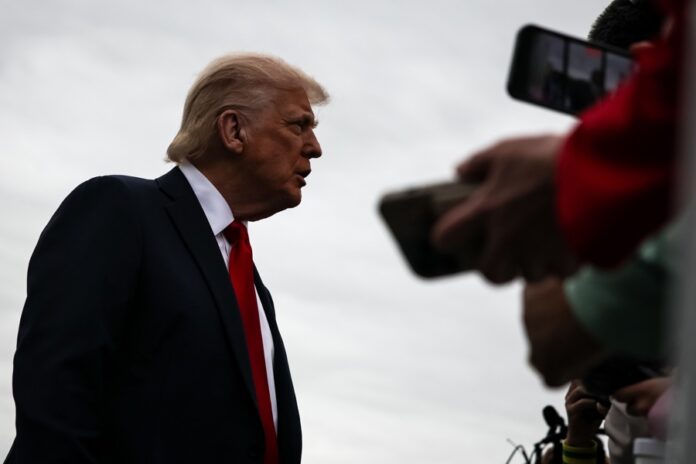
BUTLER, Pa.— Donald Trump returned on Saturday to the Pennsylvania fairgrounds where he was nearly assassinated in July, urging a large crowd to deliver an Election Day victory that he tied to his survival of the shooting.

The former president and Republican nominee picked up where he left off in July when a gunman’s bullet struck his ear. He began his speech with, “As I was saying,” and gestured toward an immigration chart he was looking at when the gunfire began.

“Twelve weeks ago, we all took a bullet for America,” Trump said. “All we are all asking is that everyone goes out and votes. We got to win. We can’t let this happen to our country.”

The Trump campaign worked to maximize the event’s headline-grabbing potential with just 30 days to go and voting already underway in some states in his race against his Democratic opponent, Vice President Kamala Harris. Musician Lee Greenwood appeared on stage and serenaded him with “God Bless the USA,” frequently played at his rallies, and billionaire Elon Musk spoke for the first time at a Trump rally.

“We fought together. We have endured together. We have pushed onward together,” Trump said. “And right here in Pennsylvania, we have bled together. We’ve bled.”

At the beginning of the rally, Trump asked for a moment of silence to honor firefighter Corey Comperatore, who died as he shielded family members from gunfire in July. Classical singer Christopher Macchio sang “Ave Maria” after a bell rung at the same time that gunfire began on July 13. Several of Comperatore’s family members were in attendance, including his widow, Helen, who stood during Trump’s remarks next to the former president’s daughter-in-law, Lara Trump.

Standing behind protective glass that now encases the stage at his outdoor rallies, Trump called the would-be assassin “a vicious monster” and said he did not succeed “by the hand of providence and the grace of God.” There was a very visible heightened security presence, with armed law enforcers in camouflage uniforms on roofs.

Trump honored Comperatore and recognized the two other July rallygoers injured, David Dutch and James Copenhaver. They and Trump were struck when 20-year-old shooter Thomas Matthew Crooks of Bethel Park, Pennsylvania, opened fire from an unsecured rooftop nearby before he was fatally shot by sharpshooters.

The building from which Crooks fired was completely obscured by tractor-trailers, a large grassy perimeter and a fence.

How Crooks managed to outmaneuver law enforcement that day and scramble on top of a building within easy shooting distance of the ex-president is among many questions that remain unanswered about the worst Secret Service security failure in decades. Another is his motive.

Pennsylvania is critical to both presidential campaigns

Trump lost Pennsylvania four years ago after flipping it to the Republican column in 2016. He needs to drive up voter turnout in conservative strongholds like Butler County, an overwhelmingly white, rural-suburban community, if he wants to win Pennsylvania in November after losing it four years ago. Harris, too, has targeted her campaign efforts at Pennsylvania, rallying there repeatedly as part of her aggressive outreach in critical swing states.

“Pennsylvania, clearly, is going to be the center of the universe for the next 30 days, for both sides, and we’re pretty bullish on where we are here organizationally, politically, and in terms of the resources that we’ve been able to commit here,” campaign senior adviser Chris LaCivita told reporters.

Trump highlighted Harris’ previous stance against fracking, a process of producing natural gas key to Pennsylvania’s economy, like he has done in the past. But then, he continued to spread falsehoods about the federal response to Hurricane Helene, further spreading a claim floating around that disaster survivors are only getting $750 from the Federal Emergency Management Agency. That figure refers to help the agency can give someone in an affected area for what they might need immediately.

Trump also claimed Harris had “lost more than 325,000 migrant children that are now dead, in slavery or just plain missing.” An August report from a government watchdog said those were cases where immigration officials were faulted for failing to consistently “monitor the location and status of unaccompanied migrant children” once they are released from federal government custody. Those figures also covered more than two years of the Trump administration.

Elon Musk made an appearance

One of the most anticipated guests of the evening was Musk, the CEO of SpaceX and Tesla and owner of X, formerly Twitter. Musk climbed onto the stage on Saturday jumping and pumping his fists in the air after Trump introduced him as a “great gentleman” and said he “saved free speech.”

“President Trump must win to preserve the Constitution. He must win to preserve democracy in America,” said Musk, who endorsed Trump after the assassination attempt. “This is a must-win situation.”

Musk, who has embraced conservative politics and is funding get-out-the-vote efforts for Trump in several swing states, met with Trump and his running mate, Ohio Sen. JD Vance, backstage, donning a black “Make America Great Again” hat. A billboard on the way into the rally said, “IN MUSK WE TRUST,” and showed his photo.

Earlier on Saturday, Vance got on stage and reflected on the events that day while severely criticizing Democrats for calling Trump “a threat to democracy,” saying that kind of language is “inflammatory.»

«You heard the shots. You saw the blood. We all feared the worst. But you knew everything would be OK when President Trump raised his fist high in the air and shouted, ‘Fight, fight!’» said Vance, who was chosen as his vice presidential nominee less than two days later.

Rallygoers said they felt secure coming back to Butler

Crowds were lined up as the sun rose Saturday. A large crowd packed bleachers, folding chairs and the expansive field stretching to the venue’s edges. Area hotels, motels and inns were said to be full and some rallygoers arrived Friday. Much of the crowd waited several hours for Trump. About half an hour into his speech, Trump paused his remarks for more than five minutes after an attendee had a medical issue and needed a medic.

Butler County, on the western edge of a coveted presidential swing state, is a Trump stronghold. He won the county with about 66% of the vote in both 2016 and 2020. About 57% of the county’s 139,000 registered voters are Republicans, compared with about 29% who are Democrats and 14% something else.

Chris Harpster, 30, of Tyrone, Pennsylvania, was accompanied by his girlfriend on Saturday as he returned to the scene. Of July 13, he said, “I was afraid” — as were his parents, watching at home, who texted him immediately after the shots rang out.

Heightened security measures were making him feel better now, as well as the presence of his girlfriend, a first-time rallygoer. Harpster said he will be a third-time Trump voter in November, based on the Republican nominee’s stances on immigration, guns, abortion and energy. Harpster said he hopes Pennsylvania will go Republican, particularly out of concern over gas and oil industry jobs.

Other townspeople were divided over the value of Trump’s return. Heidi Priest, a Butler resident who started a Facebook group supporting Harris, said Trump’s last visit fanned political tensions in the city.

“Whenever you see people supporting him and getting excited about him being here, it scares the people who don’t want to see him reelected,” she said.

Terri Palmquist came from Bakersfield, California, and said her 18-year-old daughter tried to dissuade her from traveling. “I just figure we need to not let fear control us. That’s what the other side wants is fear. If fear controls us, we lose,” she said.

She said she was not worried about her own safety.

“Honesty, I believe God’s got Trump, for some reason. I do. So we’re rooting for him.”

Biden pledged to campaign hard for Harris. So far, he’s been mostly a no-show

ampaign
Democratic presidential nominee Vice President Kamala Harris, left, and President Joe Biden attend a campaign event at the IBEW Local Union #5 union hall in Pittsburgh, on Labor Day, Sept. 2, 2024. (AP Photo/Jacquelyn Martin, File)

WASHINGTON— On the last day of August, President Joe Biden was asked about his fall campaign plans. He promised a Labor Day appearance in Pittsburgh and said he would be “on the road from there on.”

Biden did campaign with Vice President Kamala Harris on Labor Day, but he largely has been a campaign no-show since. Beyond that, sometimes his official events push hers to the background.

Case in point: After Hurricane Helene, Harris scrapped campaign events in Las Vegas to hurry back to Washington for a briefing at the Federal Emergency Management Agency. But as Harris stepped to a podium in the command center, Biden was delivering his own storm response comments from the Oval Office, pulling the political spotlight away from his intended successor.

The lack of presidential campaigning and occasional schedule clashes could matter not just for Harris but as Democrats try to hold control of the Senate and retake the House and compete in races further down the ballot.

Even former President Barack Obama announced he will campaign for Harris. Obama will appear in Pittsburgh on Thursday and plans to spend the remaining time before the Nov. 5 election traveling to battleground states. He also recorded ads promoting Democratic Senate candidates in Michigan, Maryland and Florida.

It can be tricky juggling being president and campaigning for someone new

It is not uncommon for a lame-duck president to struggle with finding the right balance between fulfilling the job and carving out a role in a would-be successor’s campaign. Biden’s situation is unusual because he was seeking a second term until his dramatic departure from the race left Harris with a condensed time frame for her own run.

“I think he’s doing his job as president,» White House press secretary Karine Jean-Pierre said Friday. “I think that’s the most important thing.”

Hurricane Helene has complicated matters in the short term. Biden canceled a campaign stop in Pennsylvania this past week and he and Harris made separate trips Wednesday to the Carolinas and Georgia, respectively, to survey the damage and offer support.

That time, their remarks did not overlap. But on Friday, while Harris was speaking about the importance of unions outside Detroit, Biden caused a stir by making a surprise appearance in the White House briefing room. It was the first of his presidency.

Biden has taken official trips to battleground states and he will be in suburban Philadelphia on Tuesday to campaign for Democratic Sen. Bob Casey. The Harris team had no comment on its hopes for Biden’s campaign role.

The president was born in Pennsylvania and maintains a strong connection to its union leaders and blue-collar voters, and former Democratic National Committee chief Donna Brazile said she would “put him on a bus” to campaign there.

“I would make sure he is out there in the closing weeks and days of the campaign,” Brazile said. “He connects with people she will need.”

Biden and Harris have appeared together at several other official events, including a recent one at the White House on combating gun violence, and at a health care-related event in August where Biden said, “We cannot let Kamala lose.” Both have been in the Situation Room frequently to discuss the growing conflict in the Middle East.

The lone joint campaign event by Biden and Harris was a little awkward

On Labor Day, when Biden and Harris made their lone joint political appearance since the vice president took over the top on the ticket, the White House asked that Biden introduce Harris. The break with protocol was meant to highlight her record of supporting union workers.

“If you elect Kamala Harris as president it will be the best decision you will have ever made,” Biden told the crowd.

But when he finished speaking, Biden began shaking hands with those around him — an awkward moment because Harris had yet to have her turn at the podium.

It is an open question whether Harris really wants Biden’s help, given that Democratic voters say they are far happier with her than they were with Biden as their nominee. Harris has praised the administration and her work in it, while also seeking to show distance on some key issues.

That includes her call for raising long-term capital gains taxes for wealthy Americans when Biden had pushed to lower them, getting tougher on the U.S.-Mexico border by potentially further stiffening limits for immigrants seeking asylum and talking up being a gun owner in ways Biden does not.

There are lots of other demands on Biden’s time

Biden’s campaign absence could now be compounded as his administration deals with the recovery effort after Helene and the expanding conflict in the Mideast.

“You don’t need to campaign when you’re just doing your job,” said Nikki Fried, chair of the Democratic Party in Florida. Biden visited parts of the state on Thursday, demonstrating, as Fried put it, that “the full force of the federal government stands with the people during times of heartbreak and uncertainty.»

But then there are always big demands on a president’s time — from the U.N. General Assembly meetings last month in New York to Biden’s upcoming travel to Germany and Angola. Though the White House says there will be more political events after that, the trip means he will not have time to turn his attention to campaigning for Harris until at least mid-October — just three weeks before Election Day,

Fried thinks Biden will make it work.

“Joe Biden loves being on the campaign trail,» she said. «You can see him walking around and talking to voters and to communities, and it certainly puts an extra lift in his step and a smile on his face.”

Sometimes staying out of it is good thing

There are times when a president’s absence can be helpful to that party’s candidate.

In 2008, the financial crisis sent President George W. Bush’s approval ratings crashing. Republican nominee John McCain distanced himself from the White House on the economy after criticizing the federal response to Hurricane Katrina and the Iraq War.

“If my showing up and endorsing him helps him — or if I’m against him and it helps him — either way, I want him to win,” Bush said.

In 2000, when Democratic Vice President Al Gore was seeking the White House, he criticized President Bill Clinton over the Monica Lewinsky scandal and took other steps to distance himself from Clinton. Some Democrats later speculated that was the reason Gore lost an exceedingly close race to Bush.

Paul Begala, a key architect of Clinton’s 1992 campaign, does not see a lot of parallels between Clinton and Biden.

“In 2000, Clinton was broadly popular,» Begala said. «Biden is not.”

Begala said Biden would do best to “focus on governing, and leave the campaigning to Kamala» and her top supporters.

“Lots of people can campaign for her: the Obamas, the Clintons, Oprah, Taylor Swift,” Begala said. “But only Joe Biden can be president.”

Ballet Hispánico de Nueva York: “voz y orgullo a la comunidad latina en EE. UU.”

Ballet
Presentación del Ballet Hispánico en el Festival Americano de Danza. [Foto: Cortesía Ben McKeown].

En el Mes de la Herencia Hispana, el Ballet Hispánico de Nueva York, reconocido como Tesoro Cultural de las Américas en EE. UU. busca transmitir no solo cultura sino también innovación.

La herencia hispana a través de la danza no solo es folclore sino también arte e innovación. Así es como el Ballet Hispánico de Nueva York define el trabajo que desarrolla como compañía, cuya misión es dar voz y presencia a los artistas latinoamericanos en Estados Unidos.

«Nosotros los latinos tenemos una música, tenemos un baile que no sólo somos folclore sino es algo que está en nuestros corazones. Y eso es lo importante de nuestra misión, seguir la conversación de la diversidad que se encuentra en la latinidad», dijo a la Voz de América Eduardo Vilaro, director artístico y presidente ejecutivo del Ballet Hispánico.

En el marco de las celebraciones por el Mes de la Herencia Hispana, el Ballet Hispánico visita el norte de Virginia no solo para mostrar su arte sino también continuar con la labor que lo mantiene en pie desde hace 55 años: romper estereotipos y crear oportunidades para los estudiantes y jóvenes talentos hispanos en el mundo de la danza.

«Nuestra misión es ayudar a nuestros estudiantes de danza a través de becas para que puedan desarrollar una carrera artística, pero también darles voz a nuestras culturas porque no somos una, somo muchas y a través de las voces de los coreógrafos y coreógrafas lo demostramos», señaló Eduardo Vilaro.

Desde su fundación, allá por los años 1970, por la reconocida bailarina y coreógrafa Tina Ramírez, el Ballet Hispánico de Nueva York ha sentado sus bases en la importancia de romper los estereotipos de lo que representa ser latino en Estados Unidos. “Hemos cumplido 55 años y seguimos en la misma lucha porque todavía tenemos inmigrantes que necesitan esa voz y el apoyo para difundir su arte”, afirma el director artístico.

Como parte del reconocimiento a su arduo trabajo en el mundo de las artes, la fundación Ford designó al Ballet Hispánico de Nueva York «Tesoro Cultural de América», en septiembre de 2020 por su «legado en 50 años vida como organización cultural transformadora para audiencias, familias y comunidades de todo nuestro país», se lee en el anuncio del premio.

Ballet Hispánico recorre el mundo

El Ballet Hispánico de Nueva York se ha convertido en un embajador de la comunidad hispana a nivel mundial. La compañía ha presentado sus coreografías a más de 2,5 millones de personas en tres continentes y recientemente ha llevado sus propuestas artísticas a Colombia, México, Puerto Rico y al Oriente Medio.

«Con esta compañía hemos tenido la oportunidad de integrar y mostrar lo que es la latinidad y el orgullo de lo nuestro por el mundo entero», afirma el director artístico.

Pero al mismo tiempo, señala que ha ha sido un gran desafío, especialmente cuando les toca mostrar su arte frente a un público culturalmente diferente como fue el caso en su reciente presentación en Abu Dhabi y Dubai.

«El público en Oriente Medio tiene sus costumbres muy diferentes a las nuestras, por nuestros movimientos y bailes, pero debemos respetar. A pesar de ello, nuestro espectáculo fue muy bien recibido, les gustó mucho porque vieron la esencia de lo que es nuestra sensualidad que no es ni sexual ni vulgar, es una esencia que viene de la fusión de las diásporas de las diferentes culturas que llevamos en nuestros cuerpos», comparte Eduardo Vilaro.

Educar y bailar

Como parte de su programa por el Mes de la Herencia Hispana, el Ballet Hispánico no sólo presentará un único espectáculo el sábado 5 de octubre en el Centro para las Artes de la Universidad George Mason sino también ha sido invitado por la casa de estudios para impartir talleres y compartir charlas interactivas con los estudiantes.

«Estamos entusiasmados de tener de regreso al Ballet Hispánico en nuestra comunidad para ayudarnos a celebrar la música latina, cultura a través de la danza y actividades de enriquecimiento cultural”, dijo Víctor Adebusola, Gerente de participación en el Centro de las Artes de la Universidad George Mason.

En esta oportunidad el repertorio del Ballet Hispánico promete ser muy variado con coreografías «del pasado y el presente. Con todo lo que nos gusta de nuestra cultura y nos une tradicionalmente», describió a la VOA el director artístico del Ballet Hispánico.

De esta manera presentarán una coreografía del coreógrafo venezolano Vicente Debrada, se une también «Sombrerísimo» de Annabelle López Ochoa, inspirada en el mundo surrealista del pintor belga René Magritte.

«Buscando a Juan» por Eduardo Vilaro, inspirado en la vida de Juan de Pareja, el pintor afrohispano que fue esclavizado en el estudio del pintor español Diego Velázquez durante más de dos décadas antes de convertirse en un artista por derecho propio y «Club Havana» de Pedro Ruíz, que transporta al público a través de la cultura cubana clásica con los embriagadores ritmos de conga, rumba, mambo y cha-cha-chá.

A través de estas danzas, el Ballet Hispánico promete mostrar «una sensualidad y amor de vida que llevamos muy adentro y que nos permite sobrevivir no solo en nuestros países sino también a lo lejos. Es un lenguaje que invita a todos a unirnos que para mí es algo muy lindo y que me da las fuerzas para levantarme cada día y seguir con nuestra misión de enseñarles a nuestros jóvenes lo que es nuestra latinidad», finalizó el director artístico del Ballet Hispánico, Eduardo Vilaro.

How do Pennsylvania military members and others who are overseas vote?

Military
An Allegheny County worker processes mail-in and absentee ballots in Pittsburgh, April 18, 2024. (AP Photo/Gene J. Puskar, File)

Military members stationed overseas face unique challenges when it comes to voting. They can’t, for instance, go to the polls or visit their county elections office. That’s why federal and Pennsylvania law provide these voters special accommodations to ensure they can cast ballots.

Federal law requires that states permit uniformed services members, their families and U.S. citizens living overseas to vote absentee in federal contests. In Pennsylvania, similar to most states, military voters and certain overseas civilian voters can also vote absentee in state and local elections.

“We get ballots to and from members of the military who are serving in active combat zones,» said Justin Levitt, a law professor at Loyola Marymount University and a former senior White House policy advisor. “It can be quite difficult to get mail reliably to and from those locations. And federal statutes require doing exactly that.”

This group of voters includes military service members who are stationed abroad or within the U.S. but outside their Pennsylvania precinct. It also includes their immediate families, along with students and other civilians who are overseas.

“They’re stuck somewhere in some foreign country,” said Forrest Lehman, Lycoming County’s director of elections and registration. “They really are depending on us more than a lot of our other voters to look out for them.”

Pennsylvania’s military and overseas civilian voters

While these voters can request their absentee ballot in a variety of ways, such as applying by mail, they typically use the Federal Post Card Application, Pennsylvania election officials say. This form, which doubles as a voter registration form, can be mailed or emailed to their local county elections office. Their request forms must arrive before Election Day.

As of Sept. 24, 11,922 military and overseas Pennsylvania voters had an approved mail ballot application for the 2024 general election, according to Matt Heckel, a spokesperson for the Pennsylvania Department of State.

These voters can choose to receive their ballot by email, but they can only return their absentee ballot by mail.

Military and overseas civilian voters must affirm that they mailed their ballots no later than the day before Election Day, and county election offices must receive their ballots no later than seven days after Election Day at 5 p.m.

Federal voters

Other voters who live overseas and do not intend to return to Pennsylvania are known as “federal voters.” They can vote only in federal contests, such as the presidential race. Federal voters are not allowed to register to vote in Pennsylvania or vote in state and local contests.

«These are people, like, who have moved to Costa Rica, and they’re like, ‘Costa Rica is amazing. I don’t know if I’m ever gonna come back,’” said Thad Hall, director of elections and voter registration in Mercer County.

Federal voters also face different deadlines in Pennsylvania than military voters and overseas civilian voters.

They must get their absentee ballot request in by the Tuesday before Election Day. And federal voters’ absentee ballots must get to county election offices by 8 p.m. on Election Day, according to the Pennsylvania Department of State.

As of Sept. 24, 10,890 federal voters had approved mail ballot applications for the upcoming election, according to Heckel.

“The key thing, you know, to remember is that they just need to make sure that they’re meeting the correct deadlines and to pay attention to what the deadlines are for them,” Hall said. “We encourage people to mail back their ballots as quickly as possible.»

Under MLB’s new playoff format, a little rest isn’t always best

Philadelphia Phillies' Bryce Harper looks on from the dugout before a baseball game against the Washington Nationals, Saturday, Sept. 28, 2024, in Washington. (Photo: AP/Nick Wass)

Shohei Ohtani has mashed 100 mph fastballs for homers, stolen bases against some of the game’s best catchers and recently wrapped up one of the best regular seasons in Major League Baseball history.

Now the Japanese superstar and his Los Angeles Dodgers have to face something that’s arguably even more daunting.

A five-day break.

Since MLB’s most recent 12-team playoff format took effect in 2022, five of the eight top seeds have lost in the Division Series, unable to capitalize on the supposed reward of earning a bye through the Wild Card Series.

This year, the Dodgers and Philadelphia Phillies have the top two seeds in the National League, while the New York Yankees and Cleveland Guardians are in the same position in the American League. That’s given all of them five days to prepare for the best-of-five Division Series that begin Saturday.

Sure, a few days to heal bumps and bruises while other teams fight it out is nice. But there’s also a downside.

“It’s not a vacation,” Phillies second baseman Bryson Stott said following a workout earlier this week.

Maybe more than any other professional sport, baseball is one that relies on rhythm and routine. MLB squeezes 162 regular-season games into 187 days over six months, meaning teams are playing games almost daily from April to September. Other than the All-Star break in July, there’s never two scheduled days off in a row.

Five days is a relative eternity. And it hasn’t always been a good thing.

“It’s a trade off,” said Chris Antonetti, Cleveland’s president of baseball operations. “The benefit is you get time off. The downside is you’re not in the major league environment facing live major league pitching in the normal cadence that you would be during the season.

«But on balance, I think I’d still take the tradeoff and want the bye.”

The Guardians have played simulated games the past three days to keep fresh. On Wednesday, they played in an empty Progressive Field with crowd noise piped in, giving it the same aura as the pandemic-marred 2020 season.

“What we’ve tried to do is be really deliberate this week about the environments we’re creating to keep our guys ready and ready to compete on Saturday,” Antonetti said.

The Yankees are one of the teams that have had success under the current playoff format, winning their 2022 Division Series against the Guardians following a five-day layoff. Manager Aaron Boone said last week that part of his plan was to bring some of the organization’s minor leaguers to New York so there were fresh arms for hitters to face while they wait for Saturday.

“We’ll do our best to prioritize taking advantage of the rest, which I’m sure several guys at this time of the year will benefit from,” Boone said. “But we’re also trying to make sure we keep that mental edge and keep guys as sharp as we possibly can with live looks.”

The Dodgers are the poster child for what can go wrong following a long break in October. They were the top NL seed in 2022 but lost in four games to the San Diego Padres. Last season, they also earned a bye before getting drilled by the Arizona Diamondbacks in a three-game sweep.

Now Los Angeles is back in the same position. The Dodgers are in a good spot in many ways — they’ve got one of the game’s best offensive lineups with Ohtani, Mookie Betts and Freddie Freeman, and have clinched home-field advantage throughout the playoffs thanks to a 98-64 record in the regular season.

They’ve also tweaked their routine during the five-day break compared to the previous two years, getting some swings against high-velocity pitching machines that mimic MLB pitchers. A few of the team’s players have also organized watch parties for the wild-card games in an effort to keep up camaradarie.

But one thing they won’t have on Saturday is momentum.

They’ll have to create it fast.

“I see some more hunger, I see some more edge. I like that,” Dodgers manager Dave Roberts said. “Not to say that guys weren’t prepared or trying or cared, but there’s a different level of intensity.”

Never Giving Up: Justin Toledo’s Journey to the Pros

Pros
Justin on the field playing for Esperanza Academy. (Credit: Unknown)

Ten years ago, you might have spotted young Justin Toledo playing baseball in local parks like Hunting Park, Lighthouse Field, and McVeigh Recreation Park. Today, Justin plays baseball professionally with los Búfalos de San Sebastián in Puerto Rico. His journey has been marked by hard work, perseverance, and overcoming challenges.

Justin’s family is Puerto Rican and he was born and raised in North Philadelphia. Despite the challenges of growing up in Philadelphia, Justin attributes his success to his strong family support system and the choices he made early on. “Growing up in Philadelphia wasn’t the easiest but it ultimately came down to decision making. I chose to play baseball, to sacrifice the childhood I may have wanted but wasn’t what I needed. Baseball kept me out of trouble and from the wrong crowds.” After his older brother tragically passed away from a brain tumor in 2014, Justin’s strong family relationships became even more important. “All of my relatives grew up really close and even closer with the passing of my brother. It’s a true blessing to have a supportive and united family growing up in a tough city.”

Justin as a high school senior accepting the Student Athlete award from Esperanza Academy baseball coach Kyle Riley. (Credit: Unknown)

Justin graduated in 2019, and despite having two All-Public Infielder awards, a Student Athlete award, and a batting average above .550 his senior year, he faced a series of unexpected roadblocks. He did not receive any college scholarship offers, so he decided to attend Flagler College without a scholarship. By mid-year, his plans changed yet again when Covid-19 turned the world upside down. After returning home to Philadelphia to continue his education at Manor College, he found out shortly after the start of the semester that the baseball season was canceled due to Covid. “I was devastated; I withdrew from college and thought my chances for baseball had come to an end. All this hard work to go unnoticed after high school. The Covid period made me contemplate my next step, whether I should stop baseball or continue.”

Justin made a bold move in January 2021 when he packed his things and headed to Florida by himself to join a team in Clearwater Beach, hoping to catch the attention of college scouts. When things didn’t go as planned, he moved to West Palm later that year to try again. That is when he finally caught a break. After being noticed by a professional sports agent, Justin hired the agent to represent him and got to work preparing to play professionally. “I had to learn so much to get ready for professional baseball; it was like learning the game all over again. With hard work, determination, and God’s grace, I was able to reach heights and meet goals I thought were crushed after Covid.”

Since then, Justin’s journey has transformed from a series of roadblocks to a series of breakthroughs. Since meeting his agent in 2021 he has played in two professional tours in the MLB partner leagues, played against World Series champion Pablo Sandoval, traveled to new places, met extraordinary people, and is now playing professionally in Puerto Rico. Justin reflects on where he is now and how far he has come: “To be able to play for the land my family comes from is my way of making my ancestors proud. It is truly an honor to compete in Puerto Rico. Let me be a testament to never give up on your dreams no matter how many roadblocks you hit, no matter what city you come from, and no matter if things go according to plan or not; it’s harder to quit than to just finish what you started.”

Justin preparing for his first season playing for los Búfalos de San Sebastián. (Credit: Unknown)

While Justin prepares for the upcoming baseball season in Puerto Rico, he is also thinking about what life may hold after baseball. “I plan on playing professional baseball for a few more years; maybe when I’m 26 or 27 I’ll hang up the cleats. But it’s all up to God when my time is finished on the field. My goal for the future is to get into the tech industry for a career. Then I can finally pursue my passion for videography and sports training and start my side businesses.” 

Justin’s journey has already taught him invaluable lessons. “My time at Esperanza Academy prepared me for detours in life. Up until my senior year, everything I had planned for my life was going accordingly. But what happens when it doesn’t go your way? Who do you become? What do you do? How do you see the light at the end of the tunnel? I asked myself these questions and I had to really digest my situation because it wasn’t what I had in mind. But if I didn’t have those detours and thoughts, I wouldn’t be who I am today.” Wherever Justin’s path goes, the resilience, dedication, and optimism that has brought him this far will continue to guide him. 

Shapiro administration invests half a million dollars in Flexopack USA to Build Company’s First American Manufacturing Facility in Lebanon County

Shapiro

The flexible package manufacturer, based in Greece, will build a new 107,000-square-foot facility in Lebanon County as part of its $33 million project

The Shapiro Administration is focused on expanding Pennsylvania’s manufacturing industry while continuing to create jobs throughout the Commonwealth

Harrisburg, PA – Today, Governor Josh Shapiro announced a significant investment of $500,000 from the Commonwealth to support Flexopack USA Inc. in establishing its first American manufacturing facility in Pennsylvania. This project will inject $33 million into the local economy and create at least 64 new, full-time jobs in Lebanon County.

Based in Greece, Flexopack USA will construct a 107,000-square-foot, rail-served facility at 3010 Hanford Drive in North Lebanon Township, the first phase of a three-phase project. This initiative will expand the company’s packaging product manufacturing footprint into the United States, including its role as the primary packaging supplier for Pennsylvania-based poultry company Bell & Evans.

“Pennsylvania is the best place in the country for businesses to grow, and I’m proud that Flexopack saw that when choosing the Commonwealth for its first U.S. manufacturing facility,” said Governor Shapiro. “I’m highly competitive, and I’m thrilled that our strong manufacturing and agriculture sectors helped us secure this project over Texas. We’re committed to making meaningful investments in our private sector to position Pennsylvania as an economic leader, create jobs, and bring manufacturing back to the United States.”

The company received a funding proposal from the Department of Community and Economic Development (DCED) for a $500,000 Pennsylvania First grant. The company was also encouraged to apply for the Manufacturing Tax Credit program (MTC), and the Rail Freight Assistance program (RFAP) through the Pennsylvania Department of Transportation (PennDOT).

“This project is a prime example of why the Shapiro Administration is focusing on the manufacturing and agriculture industries in Pennsylvania’s 10-year Economic Development Strategy,” said DCED Secretary Rick Siger. “We will continue to invest in companies like Flexopack to help strengthen these industries, grow our economy, and create real opportunity for Pennsylvanians.”

Manufacturing, which accounts for more than $116 billion in gross state product, and agriculture, which contributes $132.5 billion annually to Pennsylvania’s economy, both play a crucial role in our Commonwealth’s economy and are included in the five key industries highlighted in Governor Shapiro’s Economic Development Strategy.

“Keeping the supply chain short keeps more Pennsylvania dollars here at home,” said Agriculture Secretary Russell Redding. “Investing to bring a major food-packaging manufacturer here is a huge win for our food producers, for the communities they support, and for Pennsylvania.”

Flexopack, a subsidiary of Greek manufacturer Flexopack International Limited, is a wholesale distributor of flexible packaging with special emphasis in co-extrusion of barrier and non-barrier films. Flexopack’s primary market is the food industry, with emphasis in meat, poultry, cheese, and fish.

“Our new manufacturing facility in Lebanon County aims to strengthen the already significant commercial presence of Flexopack Group in the U.S. market,” said Stamatios Gkinosatis, CEO, Flexopack S.A. “We are thrilled about our decision to proceed with this investment in Lebanon which will also further support — through local manufacturing — the increased packaging material requirements of our close partner Bell and Evans. I would like to take this opportunity to personally thank my friend and partner Scott Sechler for the great and continuous support in our investment in Lebanon. Our cooperation with the local authorities of Lebanon and the Commonwealth of Pennsylvania has been excellent and as foreign investors we are very pleased with the warm welcome that we have received.”

“Bell & Evans is proud to have Flexopack as a vendor partner for over 10 years.” said Scott Sechler, Sr, Owner and Chairman, Bell & Evans. “Being a family-owned supplier, their focus on high quality, consistent materials align exceptionally well with Bell & Evans and our premium brand. We look forward to our continued long-term partnership and are thrilled to support them in their first USA facility, right here in Lebanon County, Pennsylvania.”

Since taking office, the Shapiro Administration has secured and announced over $2 billion in private sector investments.

“The Lebanon Valley Economic Development Corporation is pleased that Flexopack chose the Lebanon Rails Business Park for their expansion,” said Susan Eberly, President and CEO, Lebanon Valley Economic Development Corporation (LVEDC). “The land is owned by the LVEDC, and has the proper infrastructure, which helped to make this project happen.  Recruiting a company that was seeking rail makes the deal even sweeter. We are happy we could help bring this project to the area.”   

The2024-25 bipartisan budget delivers on Governor Shapiro’s key priorities to make Pennsylvania more competitive economically and includes:

  • $500 million for site development, including $400 million for the PA SITES (Pennsylvania Strategic Investments to Enhance Sites) program
  • $20 million for the Main Street Matters program to support small businesses and commercial corridors that are the backbone of communities across our Commonwealth
  • $20 million in state funding for small minority-owned businesses in Pennsylvania
  • $15 million for tourism marketing to boost our economy, attract more visitors, and support good-paying jobs — building on the Governor’s launch of the Great American Getaway brand to encourage tens of millions within a few hours’ drive to visit Pennsylvania

Read more about Pennsylvania’s first Economic Development Strategy in 20 years and how Governor Shapiro’s budget will create economic opportunity for all Pennsylvanians.

Uniting for Education

Education
Esperanza Cyber Charter School (ECCS) and ASPIRA Bilingual Cyber Charter School (ABCCS) unite at the Puerto Rican Day Parade on September 29, 2024. (Photo: Miguel A. Concepcion, NPRA-PA Treasurer)

Philadelphia’s streets came alive as the annual Puerto Rican Day Parade celebrated culture and community. This year, Esperanza Cyber Charter School and ASPIRA Bilingual Cyber Charter School joined forces, underscoring their commitment to quality education amid legislative challenges facing cyber schools in Pennsylvania. The theme «Alza tu bandera» (Raise your flag) embodies pride, unity, and resilience, making it particularly relevant for these institutions.

By marching together, Esperanza Cyber Charter School and ASPIRA Bilingual Cyber Charter School honored their cultural background while emphasizing the importance of quality education within the Latino community. Their collaboration signifies a stand against legislative challenges that threaten cyber education.

Students, families, and staff from both schools marched together, emphasizing unity and educational access while showcasing their strength in providing high-quality learning opportunities.

Both schools have encountered heightened scrutiny from proposals jeopardizing their funding and independence. Their joint participation aimed to highlight these challenges while celebrating the valuable contributions of cyber education.

«As educators, we believe in the potential of every student,» said an ASPIRA representative. «Today, we celebrate our heritage and stand up for the educational rights of our students.»

An Esperanza Cyber Charter School representative added, «Together, we are stronger. Our unified presence sends a clear message that we will advocate for our students and ensure they receive the education they deserve.»

The parade attracted thousands, celebrating Puerto Rican culture through music, dance, and community spirit. The participation of Esperanza and ASPIRA served as a beacon of hope, inspiring families to advocate for educational equity.

As they marched, the schools reaffirmed their commitment to the future of cyber education in Pennsylvania. Their collaboration exemplifies the determination that defines both schools and their communities.

*Maryelis Santiago Director of Family and Community Engagement (FACE) at Esperanza Cyber Charter School (ECCS)