1.2 C
Philadelphia
spot_img
Inicio Blog Página 501

Shapiro administration invests more than $8.6 million to help recruit mainspring energy to move to Pennsylvania, creating nearly 600 new Jobs in Allegheny County

mainspring
Mainspring designs and manufactures a linear generator that runs on almost any fuel.

Pennsylvania aggressively competed against other states and won this project, which will inject more than $109 million into the Commonwealth’s economy and create hundreds of new jobs in Coraopolis

Growing the energy and manufacturing industries in Pennsylvania is a top focus of the Shapiro Administration’s 10-year Economic Development Strategy

Harrisburg, PA – Today, Governor Josh Shapiro announced the Commonwealth’s investment of more than $8.6 million to bring Mainspring Energy (Mainspring), a manufacturer of innovative, fuel-flexible, power generators, to Pennsylvania. As part of its commitment to the Commonwealth, the company will invest more than $109 million to expand its U.S. clean-tech manufacturing in Allegheny County and create at least 597 new jobs.

Mainspring has developed and commercialized a linear generator that delivers onsite electric power to commercial businesses, from grocery stores to data centers to trucking companies. The company plans to construct a 292,000-square-foot facility in the Northfield Industrial Park in Findlay Township, Coraopolis on land owned by the Allegheny County Airport Authority.

The Commonwealth successfully competed against other states for this project – and won, signaling once again that Pennsylvania is open for business under the Shapiro Administration.

“Pennsylvania is making strategic investments to boost key industries like energy and manufacturing, and Mainspring clearly recognizes that we’re the best state in the nation for companies that want to grow and thrive,” said Governor Josh Shapiro. “We’re doubling down and competing aggressively for great projects like this that are helping position Pennsylvania as a leader in economic development, job creation, and innovation. This major investment in energy and manufacturing will create hundreds of jobs and expand real opportunity for folks in Western Pennsylvania.”

Mainspring received a funding proposal from the Department of Community and Economic Development (DCED) for a $5,679,000 Pennsylvania First grant and a $3,000,000 Redevelopment Assistance Capital Program (RACP) award. Additionally, the company was encouraged to apply for tax deductions through the Qualified Manufacturing Innovation and Reinvestment Deduction (QMIRD) and Airport Land Development Zone (ALDZ) programs.

“Energy and manufacturing are two of the crucial industries the Shapiro Administration is focusing on in Pennsylvania’s 10-year Economic Development Strategy,” said DCED Secretary Rick Siger. “Mainspring’s expansion into Pennsylvania is a great example of what the Commonwealth has to offer to companies in these industries. We’re going to continue making significant investments to attract more companies like Mainspring to boost our economy and create real opportunity for Pennsylvanians.”

Established in 2010, Mainspring manufactures and delivers an innovative, fuel-flexible onsite power generator that rapidly adds new power capacity and accelerates the transition to the affordable, reliable, zero-carbon electric grid. The Mainspring Linear Generator delivers on the potential of green hydrogen, ammonia, biogas, and other fuels by generating low-cost, clean, resilient electricity. Customers include leading utilities and Fortune 500 companies.

“We’re thrilled to be coming to the Commonwealth of Pennsylvania for our first major manufacturing investment in the United States,” said Shannon Miller, Mainspring CEO and co-founder. “Southwestern Pennsylvania is the ideal region for us given its long history of energy, innovation, and manufacturing excellence.” 

Mainspring also received an $87 million grant from the U.S. Department of Energy to support its expansion into Pennsylvania. The company anticipates manufacturing up to 1,000 linear generators annually – the power equivalent to meet the electricity needs of up 250,000 U.S. homes.

«This is a game-changing investment for Allegheny County. With this funding, Mainspring Energy will create good-paying and high-skilled manufacturing jobs and continue Southwestern Pennsylvania’s legacy as an energy leader on the forefront of cutting-edge technology,” said Senator Bob Casey. “Pennsylvania workers are the best in the world and I will keep fighting for good paying manufacturing and construction jobs across our Commonwealth.»

“An historic hub of energy exploration and production, Pittsburgh today is a leader of energy transition. Adding Mainspring Energy to our portfolio of innovative companies – more than 70 strong – propelling a sustainable energy future further positions the region to accelerate this vital work,” said Allegheny Conference on Community Development CEO Stefani Pashman. “Uniquely, Pittsburgh can meet Mainspring where it needs to be to grow: in a location with a deep history and a future in both energy and manufacturing. We thank Mainspring for their vote of confidence in the region – not only in our proven capacity but also our drive to shape the future. And we thank the many partners, including those from the federal, state and local governments, who rallied to ensure that the support and assets needed to secure this win were all a part of the region’s value proposition.”

“Allegheny County is thrilled to be home to the expansion of Mainspring’s US clean-tech manufacturing, and we thank Governor Shapiro and his administration for helping deliver this project for our region,” said Allegheny County Executive Sara Innamorato. “The County is also investing grant funding to this project, and we look forward to working closely with Mainspring to develop innovative workforce development programs. Mainspring is part of our economic future and a transition to a more sustainable energy economy for our region and the entire country.”

“We are excited to welcome Mainspring Energy to the region, alongside the many partners we worked with to provide a pad-ready site with amenities that are only available on our airport campus,” said Christina Cassotis, CEO, Allegheny County Airport Authority. “With their strong spirit of innovation and bright future, this is another competitive asset to grow Pittsburgh’s economy.”

Energy and manufacturing are two of the important industries highlighted in Governor Shapiro’s Economic Development Strategy, the first plan of its kind in almost 20 years. Governor Shapiro and Secretary Siger unveiled the economic development strategy earlier this year, which will capitalize on the Commonwealth’s strengths and will reignite our economy by focusing on the Agriculture, Energy, Life Sciences, Manufacturing, and Robotics and Technology sectors.

Since taking office, the Shapiro Administration has secured and announced more than $2 billion in private sector investments.

The 2024-25 bipartisan budget delivers on Governor Shapiro’s key priorities to make Pennsylvania more competitive economically, and includes:

  • $500 million for site development, including $400 million for the PA SITES (Pennsylvania Strategic Investments to Enhance Sites) program;
  • $20 million for the Main Street Matters program to support small businesses and commercial corridors that are the backbone of communities across our Commonwealth; and
  • $15 million for tourism marketing to boost our economy, attract more visitors, and support good-paying jobs — building on the Governor’s launch of the Great American Getaway brand to encourage tens of millions within a few hours’ drive to visit Pennsylvania.

PennDOT adopts new automated vehicle guidelines for driverless operation

vehicle
(Photo: File)

Harrisburg, PA – The Pennsylvania Department of Transportation (PennDOT) today adopted new guidelines for the operation of highly automated vehicles (HAVs) on Pennsylvania roadways for the purposes of operations and testing.

The new guidelines update Publication 950 to allow certified users to operate autonomous vehicles on the road without a safety driver in the driver’s seat of the vehicle. Additionally, new language sets conditions for operations from a remote location. The new guidelines mark the first opportunity for certified driverless operations on roadways in Pennsylvania.

“As technology like driverless vehicles advances, Pennsylvania is staying at the forefront of ensuring public safety with a regulation and certification process for those interested in operating in the state,” said PennDOT Secretary Mike Carroll. “We are excited to continue our role as a crucial location for driverless training and operations.”

The guidelines were created in consultation with the AV industry and the Highly Automated Vehicle Advisory Committee and improved based on feedback from a public comment period.

The HAV Advisory Committee was created in 2018 to advise and consult the Secretary of Transportation on aspects of highly automated vehicles by developing technical guidance, evaluating best practices, reviewing regulations, and engaging in continuing research. The HAV Advisory Committee is comprised of department representatives, state and local elected officials and industry and non-profit experts.

Act 130 of 2022 advanced Pennsylvania’s position as a national leader in highly automated vehicle (HAV) research and development by providing for the regulation and operation of HAVs. The Act took effect in July 2023, designating PennDOT as the sole regulatory authority and directed the department to develop these guidelines for HAVs in the Commonwealth.

More information on automated vehicles, operations and testing, regulations and initiatives can be found on the PennDOT website.

Information about state infrastructure in Pennsylvania, including completed work and significant projects, is available at www.penndot.pa.gov/results. Find PennDOT’s planned and active construction projects at www.projects.penndot.gov. Subscribe to local PennDOT news or statewide PennDOT news on the department’s website.

Higher education, fresh optimism, more Democratic: Takeaways from a key county in Pennsylvania

education
Centre County Commissioner Mark Higgins stands in downtown Bellefonte, Pa., Friday, Oct. 18, 2024. (AP Photo/Gene J. Puskar)

WASHINGTON— One of the most important signs of how people will vote is how much education they have. Voters who attended college are much more likely to back Democrats, while those without degrees usually go Republican.

So as The Associated Press looked for places to explore this topic, we focused our attention on Centre County, Pennsylvania. The area is home to Pennsylvania State University, making it a classic blue dot in a red region.

But the county is attracting more people with college degrees, and small towns in the area are going from red to purple and purple to blue. Nothing is certain in this tumultuous election year, but the changes could help Kamala Harris counter Donald Trump’s margins in more rural areas. Here’s what we found in Centre County.

A traditional swing county is swinging in one direction

Centre County has 160,000 residents in the middle of Pennsylvania, and it’s been a traditional swing area over the years. But that’s changed, with Democratic presidential candidates winning consistently in recent elections and Democrats maintaining control over the county board of commissioners.

The shift is reflected in data on education. A decade ago, 39.4% of residents had a four-year college degree or more. Last year, it was up to 47.6%. County leaders are pushing to diversify the economy beyond Penn State, focusing on new attractions like an iron man triathlon and developments like expanded healthcare facilities.

‘Boomeranging’ back to Centre County

Mark Higgins, chair of the Centre County Board of Commissioners, said the area’s growth is fueled by “boomerangs.” That means people who grew up or went to school in the county are moving back to raise their families.

Cost of living is an important factor. People are moving from bigger cities to State College because it’s more affordable, and other people are moving from State College to the surrounding towns because it’s even cheaper. The result is that the blue dot is expanding in the county.

“You see an expansion of the university community and economy,” said Ezra Nanes, the Democratic mayor of State College. “It touches all parts of the county.”

Big change has come to small towns

Penn State is orbited by a series of small towns which have long had a conservative reputation. However, that’s been slowly changing.

Voters in Bellefonte, which has 6,000 residents, backed Trump in 2016 but supported Joe Biden in 2020. Once a struggling small town, it’s seen a wave of investment and new arrivals who have brought more liberal politics.

The change isn’t everywhere though. Philipsburg, with less than 3,000 residents, hasn’t yet seen the same renaissance. The decline of coal mining has sapped the town of jobs, and voters there chose Trump over Biden in 2020. “It’s a cute little town. It just needs help,» said Brittney Tekely, 31, who runs her own barber shop.

Campaigns hunting for votes

Democrats believe they can run up the score in Centre County. Their plans include engaging the left-leaning student population, which is vast but sometimes unresponsive during elections. There’s also an aggressive canvassing operation in the area. “Centre County could have thousands more votes than we did in 2020 or 2016,» said Abbey Carr, executive director of the county’s Democratic Party.

Republicans aren’t writing off the campus population, and they’ve held events geared toward energizing right-leaning students. Kush Desai, the Trump campaign’s Pennsylvania spokesman, said they’re doing outreach at college football tailgates and focusing on winning votes from young men who are frustrated with progressive culture. “A lot of people who are rubbing elbows are starting to chip away and come to our side instead,” he said.

What happens if a ballot in Pennsylvania is damaged?

Pennsylvania
This is an official Pennsylvania mail-in ballot in Pittsburgh, Oct. 3, 2024. (AP Photo/Gene J. Puskar, File)

Local election officials in Pennsylvania say ballots don’t always arrive in the best condition. They may be ripped, stained by coffee or food, or even been burned on the edges. In these situations, officials can reconstruct the ballot in a duplicate to ensure that they are properly counted by election equipment.

The process, commonly referred to as “ballot duplication,” involves taking a damaged ballot that can’t be scanned by election machines and transcribing the votes onto a new, clean ballot that can be counted. The original ballot is preserved in this process. Ballot duplication can also be used if voters improperly marked their ballot, such as using the wrong type of writing tool.

“There’s always in every election some ballots that are damaged or unscannable, whether it was ripped or coffee spilled on the ballot, which made the scanner not be able to read it. There’s plenty of reasons why a ballot might need to be duplicated,” said Philadelphia City Commissioner Seth Bluestein, who serves on the board that oversees elections in the city. “Any ballot that is unscannable by the tabulation equipment would need to go through this process.”

Ballot duplication is used in 42 states, including Pennsylvania, according to the National Conference of State Legislatures. All of these states use duplication for damaged ballots, and 31 states duplicate both damaged and defective ballots, such as ballots with stray marks.

Tammy Patrick, chief program officer at the National Association of Election Officials and a former elections official for Arizona’s Maricopa County, said she’s encountered all kinds of damaged and improperly marked ballots.

“Literally, the dog ate my ballot. I’ve seen that,” Patrick said. ”You have individuals that use a marking device that is non-standard. So, literally, a crayon. I’ve seen lipstick. I’ve seen eyebrow pencil. I’ve seen all sorts of things on ballots. So those types of markings are not the sort of thing that normally a voting system would be able to read.”

In Berks County, ballot duplication is typically only used for mail and absentee ballots because the county uses ballot marking devices for in-person Election Day voting, according to Stephanie Nojiri, assistant director of elections for the county. It’s rare in Berks County for mail or absentee ballots to be returned mangled, but it does happen. Sometimes ripped ballots can be patched together with tape and successfully scanned, but otherwise officials will have to recreate the ballot, Nojiri added.

The exact procedures that Pennsylvania counties use in this process vary. Berks County, for instance, uses a ballot marking device to recreate damaged ballots, while Philadelphia election officials recreate such ballots manually.

Philadelphia election workers conduct ballot duplication and observers representing political parties or candidates can watch the process, said Commissioner Bluestein.

Pennsylvania state law prohibits election officials from opening mail or absentee ballots before 7:00 a.m. on Election Day. So Philadelphia election officials have to wait to process mail ballots that show obvious signs of damage, Bluestein added.

“There’s nothing we can do about those until after the polls open on Election Day,” he said.

Patrick said that ballot duplication processes are verifiable and reliable.

“Everything is recorded and documented and auditable and reviewable. So it’s not that they’re just taking random ballots, marking them and sending them through. They have to be tied specifically to the original ballot,» she said «You can always go back and pull up that original ballot and compare it to make sure that the team did, in fact, mark them appropriately.”

Shapiro administration First-Ever investment of $175 million to repair school buildings and ensure kids have safe, healthy learning environments through new initiative

Governor Shapiro has secured $275 million in his first two budgets to fund school infrastructure repairs, including heating and air conditioning upgrades, window replacement, lead and asbestos abatement, and other improvement projects

Harrisburg, PA – Today, Governor Josh Shapiro announced that the Commonwealth Financing Authority (CFA) has approved 208 investments in Pennsylvania school facilities, totaling $175 million, under the new Public School Facility Improvement Grant Program that was created by the 2023-24 bipartisan budget. This program, proposed by Governor Shapiro in his first budget address and secured in his first budget, provides grants of up to $5 million to public school districts and career and technical schools for critical safety and environmental repair projects — ensuring facilities are modern, safe, healthy, and conducive to learning.

Last month, Governor Shapiro also announced $75 million of new investments in 109 Pennsylvania school districts, career and technical education centers, and charter schools through the Department of Education’s new Environmental Repair Grant Program to eliminate lead, mold, asbestos, and other environmental hazards. Altogether, this brings the total investment in environmental repairs and upgrades for Pennsylvania schools to $250 million since Governor Shapiro took office, creating facilities that are safe and healthy for students and teachers alike.

The Governor and bipartisan group of legislators built on that progress by including another $25 million for Solar for Schools, in the 2024-25 budget.

“Our students deserve safe and healthy schools to learn in, and our teachers deserve modern and well-maintained classrooms to teach in, so when I took office, I worked to bring Democrats and Republicans together to invest in our kids and their future,” said Governor Shapiro. “In just two years, we’ve secured $275 million to repair and upgrade our schools – and we’re driving that out to hundreds of district across the Commonwealth. Here in Pennsylvania, we’re working together to get stuff done and deliver real results for the people we serve.”

The Department of Community and Economic Development announced the opening of the new program earlier this year. Eligible improvement projects included roof repairs and roof replacement; installation of HVAC equipment; installation of boilers; safety projects including lead and asbestos abatement; accessibility projects; and window repairs/replacement.

“Governor Shapiro knows that our young people are Pennsylvania’s most valuable resource, but learning can be difficult for them if their classrooms aren’t safe, healthy, and accessible,” said Department of Community and Economic Development Secretary Rick Siger. “The investments made today through the Public School Facility Improvement Grant Program will upgrade school facilities for thousands of students across the Commonwealth and make sure they have environments where they can learn, grow, and thrive.” 

A full list of the approvals is available on the CFA’s website, including these investments:

  • Allegheny County: $5 million to the Pittsburgh Area School District to install HVAC Digital Control Systems at its 11 school facilities replacing existing controls that are over 30 years old. The project will provide more effective control of indoor pollutants and control exhaust airflow. 
  • Berks County: $2.5 million to the Antietam School District for an emergency construction project at the Stony Creek K-3 Center stemming from the catastrophic flooding the district experienced in July 2023. Funding will be used to build a new K-3 addition to a building that wasn’t flood-damaged. The district also received nearly $7.9 million through PDE’s Environmental Repairs Grant program for repairs and construction at the site of the former Antietam Middle-Senior High School. Students are currently attending school in modular units and local churches.  
  • Erie County: $1 million to the Northwestern School District for roof replacement at Northwestern Middle School. The project will address a critical need to replace the building’s aging roof and ensure a warm, dry learning environment and improve indoor air quality.
  • Lackawanna County: $1 million to the Valley View School District for roof and window replacement projects at its High School/Middle School. The new roof and 80 new windows will increase the overall energy efficiency and security of the building.
  • Philadelphia County: $5 million to the School District of Philadelphia for several projects at the Overbrook High School auditorium including roof replacement, complete asbestos and lead paint abatement, installation of fire-retardant seats, repairs to water-damaged and moldy ceilings and walls, installation of new lighting fixtures, and a new HVAC unit. 
  • York County: $2.3 million to the York County School of Technology for replacement of 78 rooftop HVAC units and its original boiler unit. The upgrades will improve efficiency, temperature control, and indoor air quality.

“Students in every zip code across the Commonwealth deserve to learn in classrooms that are up-to-date, safe environments,” said Education Secretary Dr. Khalid Mumin. “Repairing and replacing old equipment and facilities helps to ensure that we can keep our kids learning in spaces that are safe, healthy, and productive for them. Today’s learners are the future of Pennsylvania, and we want to make sure we’re able to prepare them for a competitive future through a world-class education in school buildings and classrooms free from harmful materials.”

Since taking office, the Shapiro Administration has made a total of $275 million available for school infrastructure improvements across Pennsylvania, addressing key environmental hazards and ensuring safer learning spaces. Governor Shapiro is committed to continuing these vital investments, ensuring every student in Pennsylvania has the opportunity to thrive in safe and healthy learning environments.

This school year, students across the Commonwealth are benefitting from substantial new investments secured by Governor Shapiro that will give every student the freedom to chart their own course and the opportunity to succeed. The 2024-25 budget includes a historic $1.1 billion in total increases in K-12 public education funding, the largest year-over-year increase in Commonwealth history.    

To ensure that all districts get more of the support they need to serve our students, the 2024-25 budget includes funding for:   

  • Historic Basic Education Funding: Building on the investments in the Governor’s first budget, the 2024-25 budget makes another historic down payment in K-12 education funding in Pennsylvania with an increase of $1.1 billion. Of this funding, nearly $526 million will be distributed through a new adequacy formula to drive dollars to the schools that need them most.  
  • Increases to Special Education: Governor Shapiro’s budget increases special education funding by $100 million to ensure that school districts have the basic resources necessary to provide high-quality special education services to students with disabilities and special needs.   
  • Cyber Charter Reimbursement: The 2024-2025 budget sets aside $100 million to reimburse schools for payments they must make to cyber charter schools.  
  • Career and Technical Education and Dual Enrollment: Creating real opportunity for students includes expanding options for them to gain experience, training, and advanced credit for college while still in high school. The Governor’s budget includes a $30 million increase for Career and Technical Education and continues $7 million in support of dual enrollment.   
  • School Safety and Security and Mental Health Services: Every student deserves to be safe and feel safe in their school. The 2024-25 budget continues a $20 million annual investment in school safety and security improvements and provides $100 million in sustainable funding for environmental repairs and other facility projects in schools – $25 million of which is set aside for solar projects at schools. This budget also delivers $100 million to put more mental health and physical safety resources in our schools.  
  • Providing Period Products for Students: No student should have to miss school due to not being able to afford basic necessities like menstrual hygiene products. The Governor’s budget invests $3 million to provide menstrual hygiene products at no cost to students in schools.
  • Investing in Early Childhood Learning: Every child in Pennsylvania deserves the support and resources to succeed, from infancy through adulthood. The budget invests an additional $2.7 million in the Head Start Supplemental Assistance Program and an additional $15 million for the Pre-K Counts program. 
  • Universal Free Breakfast for Students: Students cannot be expected to focus, learn, and succeed on an empty stomach. The Governor’s budget ensures that 1.7 million students across Pennsylvania will receive free breakfast at school, regardless of their income.  
  • Supporting Student Teacher Stipends: To further strengthen the educator pipeline and address the education workforce shortage, the 2024-25 budget doubles funding for student teacher stipends, for a total of $20 million to support Pennsylvanian’s training to become certified and committed educators in the Commonwealth. 

In Pennsylvania, an influx of college graduates could push a key county toward Harris

college
Penn State students Baybars Charkas, left, of Lancaster, Pa., and James Wachtman, center, of Swarthmore, Pa., man a voter registration table on the Penn State campus in University Park, Pa., Friday, Oct. 18, 2024. (Photo: AP/Gene J. Puskar)

BELLEFONTE, Pa. — It was love at first sight when Ellen Matis pulled up to this small Pennsylvania borough on a dreary winter day almost eight years ago. The road into town curved along the creek and then climbed uphill to a historic square where she chatted with regulars over beers at the local pub.

“This is where we need to live,” she decided. Matis’ sister-in-law, who grew up in the area, was shocked. She remembered Bellefonte as a sleepy place with vacant storefronts and a drug problem so notorious that people sometimes overdosed in front of the courthouse.

But Matis, 33, saw potential in the town’s quaint brick buildings and scenic foothold in the Allegheny Mountains just a short drive from Pennsylvania State University. She settled in, started a social media marketing company and had two daughters with her husband.

“People are excited for change and what the future holds,” Matis said.

Matis’ journey to Bellefonte is one small measure of a larger evolution that’s reshaping the politics of Centre County, which is home to about 160,000 people in the middle of Pennsylvania, and could tilt this year’s closely fought presidential election.

The area has long been divided between the liberal university town of State College, which anchors the region, and the conservative hamlets that surround it. But now the blue dot is expanding as college-educated people spread throughout Centre County, drawn by the lower cost of living, more relaxed lifestyle and economic development that has breathed new life into depleted blue-collar communities.

Penn State students Baybars Charkas, left, of Lancaster, Pa., and James Wachtman, center, of Swarthmore, Pa., man a voter registration table on the Penn State campus in University Park, Pa., Friday, Oct. 18, 2024. (Photo: AP/Gene J. Puskar)

A college degree means more Democratic voters

Last year, 47.6% of county residents had a four-year college degree or more, up from 39.4% a decade ago. Because education levels tend to track partisan affiliation, Democrats have an increasing edge in a part of the state that has historically swung back and forth between the two parties. While in no way assured, the shift means Democratic nominee Kamala Harris could run up margins in small towns far from the big cities of Philadelphia and Pittsburgh, which traditionally get far more attention from presidential campaigns.

Harris’ potential strength here reflects an ongoing tectonic realignment in American politics, with Republicans expanding their outreach to the working class and Democrats relying more on upwardly mobile, college-educated people.

In Centre County, that means Republican nominee Donald Trump remains appealing to voters who feel like their communities haven’t benefited from the area’s changes. But places like Bellefonte are trending blue, backing Joe Biden four years ago after supporting Trump four years before that, and voters with more optimistic views, like Matis, are lining up behind Harris.

“She makes you feel hopeful,” Matis said. “I want a clean slate.”

The changing demographics in Centre County have already had an impact on local politics. Although control of the board of commissioners used to switch every election, it’s been reliably Democratic for almost a decade.

The county’s leaders are also pursuing a new development plan that’s intended to diversify its economy beyond the university and attract even more people to the region.

“We have that solid rock in Penn State,” said Mark Higgins, chair of the county board of commissioners. “This is more than just Penn State now.”

Several hotels are slated to open in the coming years. There’s a new hospital and another one is expanding. The population is expected to increase while Pennsylvania is losing residents overall. There are fresh attractions like arts festivals and an Ironman triathlon.

Higgins said Centre County’s growth is partially fueled by “boomerangs,” meaning people who grew up in the area or went to school at Penn State and then move back to raise their family there.

“It’s Wobegon,” he said, “except it’s real.”

Much like other areas of the country, inflation and the rising cost of living have been challenges, but the impact is felt differently. People who are weary of expensive big cities are moving to State College, and people who can’t afford State College are moving to the surrounding area. It’s an economic chain reaction that means there are more liberal-minded people in more towns around the county.

Downtown Philipsburg, Pa., is pictured, Thursday, Oct. 17, 2024. (Photo: AP/Gene J. Puskar)

People are ‘boomeranging’ back to Centre County

Derek and Lauren Ishler are the quintessential boomerang couple. They met while attending Penn State, and lived for several years in Alexandria, Virginia. But before having their two daughters, they relocated to State College to be close to their families.

“It’s grown but we still have that small-town feel,” Derek said. “We’re happy here.”

Derek, 42, does financial work for a logistics company and Lauren, 41, is an elementary school teacher. Both are voting for Harris.

“What world do I want my kids to grow up in?” he asked. “One is fear, fear, fear. The other is, ‘hey, let’s work together.’”

On a recent Friday night, they were in Bellefonte for an annual festival, where local vendors served gourmet food in a park under string lights while a band played nearby.

Stacy and Marc Counterman brought their five-month-old son in his stroller. They moved to town three years ago because Marc, 31, got a job as an academic adviser at Penn State.

They were so excited that they bought their house without seeing it in person, worried it would be snatched up before they arrived. Both of them are voting for Harris.

“She’s fighting for families,” said Stacy, 33, who works for an education nonprofit. “I’m hopeful she’ll fight for us.”

The ideological reshuffling is tied to State College, where the university is located. Some residents relocate there from what they call “Trump country” to be closer to the institution and its culture.

Alex Sterbenz, 31, came from Burnham, which is in the next county over.

“I figured it made sense to move here, instead of just coming up every weekend,” said Sterbenz, who works in a local music store and plays honkytonk songs on his 2021 Gretsch White Falcon. He tries not to talk politics with his friends and family back home.

But State College isn’t just attracting people; it’s also exerting a gravitational pull on surrounding towns.

Zeb Smoyer, 23, grew up in Bellefonte, where he joined the Boy Scouts and hunted whitetail deer. Like a lot of teenagers, he couldn’t wait to get out of town. But after he went to college elsewhere in Pennsylvania and spent some time traveling, he decided “Bellefonte is not a bad place.”

Now he lives there and works for an engineering company, which he helps comply with environmental regulations as it lays pipes for turning farmlands into housing developments. Smoyer hasn’t made up his mind about the election, but he previously voted for Biden.

Downtown Bellefonte, Pa. is pictured, Friday, Oct. 18, 2024. (Photo: AP/Gene Puskar)

The area is anchored by Penn State and its students

Ezra Nanes, the Democratic mayor of State College, said there’s been more overlap between his town and the surrounding area.

“You see an expansion of the university community and economy,» he said. «It touches all parts of the county.”

Nanes’ own journey to Centre County parallels the shifts in the region. A New York native, he was ready to make a change in his life and applied to Penn State’s MBA program. He moved to State College 14 years ago with his wife and baby daughter.

They fell in love with the community and the natural environment — “you can be in the mountains in 15 minutes,” he said — and never left. They now have two children. Nanes works at AccuWeather, a forecasting company, and his wife is a physical therapist who started her own business focused on women’s health.

Nanes was a delegate at the Democratic National Convention in Chicago, and he hopes “we can help run up the score here.”

“There’s a lot of focus on the big cities,” he said. “But this is an important place if you want to win.”

One challenge is engaging Penn State’s expansive student population.

“We’re not exactly known for having a very deep political involvement, which is a shame,” said Baybars Charkas, president of the Penn State College Democrats. Charkas calls Penn State «probably the most powerful university in the United States at the current moment» given its size and location in a key battleground state. Roughly 48,000 students are enrolled at the school’s State College campus.

Graduate student Sydney Robinson started her own organization dedicated to supporting Harris. Members make friendship bracelets to promote their candidate and send text messages to rally potential voters.

Robinson, who is applying to law school, is hopeful about the future.

“We just have so many opportunities,” she said. “We’re at a crucial turning point in history, but it’s exciting.”

She’s earned the nickname “voter girl” because she tries to always carry registration forms; she gets three or four people to sign up each week.

The Harris campaign has four staff members in Centre County, including a dedicated campus organizer, and said they’ve knocked on more than 9,000 doors and made more than 80,000 phone calls. They’re also advertising on radio stations to catch voters while commuting in and out of State College.

Trump’s campaign did not provide figures on voter outreach. But Kush Desai, the Trump campaign’s Pennsylvania spokesman, said his team is attending college football tailgates and focusing on appealing to male voters to cut into Harris’ support within the educated electorate.

Some of the effort focuses on the economy, with the traditional question of, “Are you better off now than you were four years ago?” Desai also suggested that Democrats have shifted too far left on cultural issues.

“I think there’s just a natural backlash here,” he said, and men “are starting to chip away and come to our side instead.”

Ryan Klein, president of the Penn State College Republicans, said the campus leans left but conservatives aren’t as outnumbered as many think. He pointed to strong turnout at last month’s event with Trump supporter Charlie Kirk, who runs Turning Point, an organization focused on rallying young right-leaning voters.

On most days, “there aren’t a lot of people who want to go out of their way to proudly don the red hat,» Klein said, but hundreds wore

“Make America Great Again” paraphernalia that day.

A historical marker stands in downtown Bellefonte, Pa., near the Centre County Courthouse, rear right, Friday, Oct. 18, 2024. (Photo: AP/Gene J. Puskar)

The county’s economic progress remains uneven

Republicans are much stronger in some of the rural areas surrounding State College that haven’t seen the same kind of development as Bellefonte.

One of those places is Philipsburg, with a postage-stamp-sized downtown where vacant storefronts remain common.

“It has potential,» said Brittney Tekely, 31. “It’s a cute little town. It just needs help.”

She saved up money to start her own barbershop there while working as a stylist during the day and in a Wal-Mart distribution warehouse at night. Tekely painted and decorated the place herself with model cars and other trinkets that she picked up at antique stores. She even went all the way to Niagara Falls to buy an old-fashioned cash register that dings loudly when opened. Her three dogs — Digger, Roxie and Mister Skunk — come to work with her and hang out in the back, where they bark when someone opens the front door.

But Tekely doesn’t see the same care being put into the rest of the town, saying, “There are buildings that no one is fixing up or tearing down.” She isn’t sure if she’ll vote this year, and many of her customers are vocal Republicans.

“They just go on and on and on,” Tekely said. “You’ve got to keep your two cents to yourself.”

Some of them, she said, “truly think if Trump becomes president again it will help the country and help prices.”

The town backed Trump over Biden four years ago, and there’s less of the optimism that characterizes Bellefonte’s renaissance.

Thomas Gette, 77, lives a few blocks from downtown with a Trump sign on the curb outside the front door. He’s retired after spending four decades as the manager of a local hardware store, and he just finished repainting his house.

Gette said voting for the Republican candidate is “a no-brainer,” especially with all the concerns about uncontrolled migration.

“Something has got to give,” he said, adding that if Trump doesn’t win, «I can’t imagine what it’s going to be like.”

In Gette’s mind, changes in the area have sapped the town of jobs and money.

“There were mines everywhere and the railroads were everywhere,” Gette said, and he’s worried that the transition away from fossil fuels is happening too fast.

And now, how would he describe Philipsburg?

“Pretty stagnant,” he said.

Un muerto y diez hospitalizados por brote de E. coli en hamburguesas de McDonald’s en EE.UU.

Archivo. EFE/EPA/ETIENNE LAURENT

Los Centros para el Control y Prevención de Enfermedades (CDC) informaron este martes de una alerta de seguridad alimentaria por un brote de E. coli vinculado con las hamburguesas Cuarto de Libra de la cadena de comida rápida de McDonald’s, que ha dejado hasta el momento un muerto, diez personas hospitalizadas y 49 casos en Estados Unidos.

«La mayoría de las personas afectadas por este brote informan haber comido hamburguesas Cuarto de Libra en McDonald’s antes de enfermarse», indicó los CDC en un comunicado.

Pese a que aún no se sabe qué ingrediente alimentario específico está contaminado, McDonald’s señaló que «puede estar relacionado con las cebollas en rodajas utilizadas en el Cuarto de Libra y obtenidas por un único proveedor que presta servicios a tres centros de distribución».

Razón por la que la cadena dejó de usar cebollas frescas en rodajas y hamburguesas de carne de un cuarto de libra en varios estados, mientras continúa la investigación.

Según la CNN, entre las diez personas que han sido hospitalizadas, se encuentra un niño y la mayoría de las enfermedades se dieron en los estados de Colorado y Nebraska.

Algunos de los síntomas del E. coli son fiebre, diarrea prolongada, vómitos o signos de deshidratación y, de acuerdo con los CDC, la mayoría de las personas «se recuperan sin tratamiento después de cinco a siete días».

El precio de las acciones de McDonald’s cayó más de un 5 % en las operaciones posteriores al cierre de la bolsa del martes.

iVoterGuide.com ofrece guías para votar y recursos en español para que los electores estén realmente informados

(Foto: Archivo)

Todos y cada uno de los votantes deberían poder saber a quién votar y para qué, y iVoterGuide ofrecea la comunidad hispanohablante los recursos y herramientas necesarias para que esto sea posible’

WASHINGTON — Más de 62 millones de hispanos residen actualmente en los Estados Unidos, y el número sigue creciendo. Las investigaciones muestran que los latinos son el segundo grupo étnico de más rápido crecimiento y se estima que 36.2 millones son elegibles para votar este año. A medida que este grupo demográfico crece, se hace más importante que estos votantes estén educados e informados. Sin embargo, existe una barrera lingüística que puede afectar la comprensión de los votantes sobre lo que aparece en la tarjeta electoral.

iVoterGuide.com ha venido trabajando para garantizar que los votantes en todas partes, sin importar su idioma principal, estén informados antes de dirigirse a las urnas.  

iVoterGuide.com, la principal guía de voto judeocristiana del país ofrece una amplia investigación sobre todos los candidatos para que los votantes puedan emitir el voto adecuado que refleje sus valores.

“Hace un año, sentí que Dios estaba llamando a iVoterGuide para proporcionar una versión en español de nuestras guías útiles del votante,” dijo la presidenta de iVoterGuide, Debbie Wuthnow. “Me di cuenta de que había toda una población de votantes que no podían acceder a nuestra información debido a la barrera del idioma. Poco después, fui abordada por una asistente en una conferencia que me informó que Dios le dijo que donara $10,000 dólares a iVoterGuide para que pudiéramos proporcionar nuestros materiales exclusivos en español. El mensaje era claro, y ahora todo el sitio web de iVoterGuide está disponible en español, incluyendo artículos educativos, recursos para compartir, y una investigación y evaluación detallada de más de 13,000 candidatos. Ahora, los estadounidenses de habla hispana tienen un recurso gratuito para obtener información confiable sobre los candidatos en su tarjeta electoral.”

La versión en español de fácil acceso ahora disponible en iVoterGuide.com, ofrece una tarjeta personalizada o un mapa para que los votantes puedan ver cada contienda en todos los estados. Los materiales promocionales, incluidos folletos o boletines de iglesia gratuitos e imprimibles y artículos educativos, también están ahora en español.

“Los estadounidenses de habla hispana representan un gran porcentaje de los votantes, pero lamentablemente se les ha pasado por alto cuando se trata de educarles sobre las elecciones,” dijo Wuthnow. “Cada votante elegible debería poder saber quiénes son los candidatos y qué están votando, y en iVoterGuide estamos encantados de poder proporcionar los recursos y herramientas necesarias para que esto sea posible para la comunidad hispanohablante.”

iVoterGuide también ofrece anuncios de servicio público en español para que las emisoras de radio y televisión hispanas los transmitan gratuitamente.

Para aquellos que no están seguros de qué candidatos merecen su voto, iVoterGuide.com, una división de AFA Action, proporciona información precisa y actualizada sobre miles de candidatos. La investigación y calificaciones de iVoterGuide.com pueden ser extremadamente valiosas para ayudar a los votantes a distinguir entre candidatos que compiten bajo el mismo partido.

iVoterGuide.com se dedica a equipar a los estadounidenses para ser votantes informados y educados, y es un recurso integral para calificaciones de candidatos e información electoral. iVoterGuide.com es conocido por su precisión e integridad al investigar y evaluar candidatos y equipar a los cristianos para votar sabiamente y ser buenos administradores de su ciudadanía.

Para más información sobre iVoterGuide.com, visita iVoterGuide.com o sigue a iVoterGuide.com en FacebookX o Instagram.

La mercancía electoral «hecha en China» inunda el mercado estadounidense

electoral
Productos de campaña para las campañas presidenciales de 2024 del expresidente Donald Trump y la vicepresidenta Kamala Harris. (Foto: VOA)

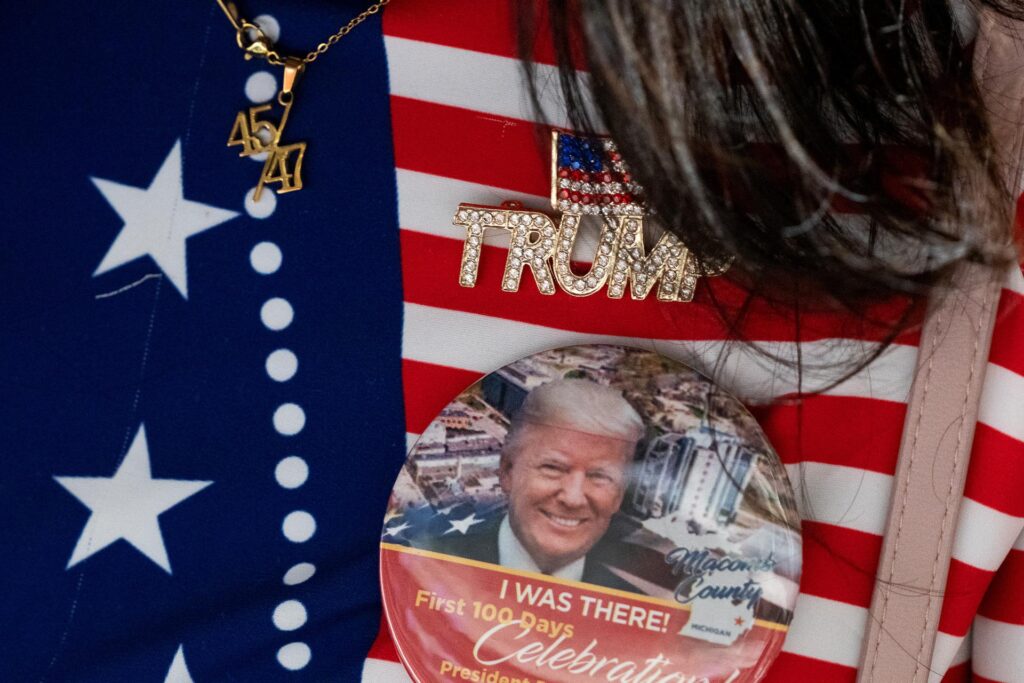
A pesar de la retórica contra China de las campañas presidenciales en EE. UU., los seguidores de la vicepresidenta demócrata Kamala Harris y el expresidente republicano Donald Trump demuestran su apoyo con mercancía electoral que muy probablemente fue fabricada en la nación asiática.

A medida que las elecciones presidenciales de Estados Unidos entran en su fase final, cada vez más votantes expresan apoyo a su candidato favorito con prendas y mercancías electorales.

Lo que quizás no sepan es que la gorra de Trump con la leyenda “Make America Great Again” (Hagamos grande a EE. UU. otra vez) o la camiseta “Childless Cat Lady for Harris” (Mujeres sin hijos y con gatos por Harris) que llevan puestas posiblemente se fabricaron en China.

Con la ayuda de las plataformas de comercio electrónico, los comerciantes chinos están inundando el mercado de productos electorales estadounidenses con manufactura barata. La evidencia anecdótica sugiere que los fabricantes estadounidenses de estos productos están teniendo dificultades para competir.

“Creo que la cantidad de cosas en Amazon y Etsy que llegan desde China y otros países en barcos de carga y se descargan en las costas estadounidenses está afectando drásticamente la capacidad de los fabricantes estadounidenses, como yo, de competir y hacer crecer nuestro propio negocio. Creo que es dramático”, dijo Ben Waxman, fundador y copropietario de American Roots, una empresa estadounidense de ropa.

Waxman no compartió las cifras de producción o ganancias con el Servicio Mandarín de la VOA por cuestiones de privacidad, pero dijo que sus camisetas de campaña hechas en Estados Unidos, por ejemplo, se venden por unos 15 dólares cada una, mientras que las del minorista chino en línea Temu se comercian por tan solo 3 dólares.

«Es más caro cuando pagas salarios más altos, salarios dignos y respetas las normas ambientales», dijo Waxman, refiriéndose a las críticas de larga data a las prácticas de fabricación de China.

Su empresa sindicalizada ha estado produciendo artículos de campaña para candidatos presidenciales desde 2016, principalmente camisetas y sudaderas, con todas las materias primas y la producción provenientes de Estados Unidos.

Inundando el mercado

El Servicio Mandarín de la VOA no pudo encontrar cifras totales de ventas de artículos electorales fabricados en Estados Unidos, en comparación con los hecho en China. Sin embargo, la enorme cantidad de productos electorales fabricados en la nación asiática que están actualmente a la venta en plataformas de comercio electrónico, incluidas Amazon y eBay, muestra que están inundando el mercado.

Solo en Temu, se han vendido decenas de miles de artículos con temas electorales a una fracción del precio de las versiones oficiales de las campañas.

Entre ellos, una gorra con la leyenda «Make America Great Again» cuesta menos de $4 dólares, mientras que el sitio web oficial de la tienda de la campaña del expresidente y candidato republicano Trump, – que presume de «Todos los productos fabricados en Estados Unidos»-, los vende por 10 veces más. El precio de cada artículo es de 40 dólares cada uno.

Asimismo, los sombreros “Kamala Harris 2024” de Temu se pueden vender por menos de 3 dólares cada uno, mientras que el sitio web oficial de la tienda de la campaña de la vicepresidenta demócrata Kamala Harris vende sombreros “Kamala” por 47 dólares cada uno.

La campaña de Harris también prometió vender solo productos fabricados en los EE. UU. en sus sitios web oficiales.

La VOA solicitó comentarios a ambas campañas, pero no recibió una respuesta al momento de la publicación.

El marcado contraste en los precios resalta los desafíos que enfrenta Estados Unidos para reducir su dependencia de los productos chinos y cerrar una laguna comercial, conocida como la laguna de minimis, que permite a las empresas chinas enviar productos por un valor inferior a 800 dólares a los EE. UU. sin pagar derechos de importación.

Kim Glas, presidenta y directora ejecutiva del Consejo Nacional de Organizaciones Textiles (NCTO en inglés), una organización alineada con los sindicatos, dijo que el abuso de la laguna de minimis es rampante y agregó que su grupo «perdió 21 operaciones de fabricación en los últimos 18 meses».

Glas dijo que algunos de los fabricantes miembros de NCTO encontraron que las ventas de productos de campaña son más lentas este año que en cualquier ciclo electoral anterior en los EE. UU.

VOA Mandarín se comunicó con Amazon y eBay para obtener comentarios sobre el volumen de productos de campaña presidencial importados de China en sus sitios web y sus regulaciones a los vendedores chinos, pero no recibió una respuesta al momento de la publicación.

Temu no hizo comentarios sobre las ventas de productos electorales en los EE.UU, pero el portavoz de la compañía respondió en un correo electrónico a VOA Mandarín: «El crecimiento de Temu no depende de la política de minimis. Los principales impulsores detrás de nuestra rápida expansión y aceptación en el mercado son las eficiencias de la cadena de suministro y las competencias operativas que hemos cultivado a lo largo de los años».

El portavoz agregó: «Estamos abiertos y apoyamos cualquier ajuste de política realizado por los legisladores que se alinee con los intereses de los consumidores».

Los representantes de la industria textil estadounidense destacan la ironía de que los dos candidatos presidenciales estadounidenses se muestren duros respecto del comercio con China, mientras sus propios seguidores compran productos fabricados en ese país para mostrarles su apoyo.

“Si alguien apoya a un candidato por su política económica y su postura en favor de mejorar nuestra economía, nuestro medio ambiente y nuestras condiciones laborales, y lo hace aumentando la cantidad de fabricación nacional, y luego apoya a un candidato comprando un producto fabricado en un país que defiende lo contrario, en realidad se está haciendo un flaco favor a sí mismo, al candidato y a la economía”, dijo Mitch Cahn, presidente de Unionwear, una empresa de ropa con sede en Nueva York que ha suministrado más de 300.000 gorras de béisbol a la campaña de Harris.

«Cualquiera puede fabricar el producto»

Cahn señala que cualquiera puede producir productos de campaña porque estas no controlan su propiedad intelectual. Creen que «es más valioso para ellos que una persona lleve el nombre de la campaña en la cabeza que ganar dinero vendiendo la mercancía».

“Cuando cualquiera puede fabricar el producto y venderlo, muchos de los productos terminarán siendo fabricados en China porque simplemente no hay muchos fabricantes aquí”, dijo a la VOA Mandarín.

La Associated Press informó el 18 de octubre que miles de las Biblias «God Bless America» (Dios bendiga a EE. UU.) de Donald Trump fueron impresas en China. La AP también señaló que la mayoría de las Biblias, no solo la respaldada por Trump, se fabrican en China.

Los críticos señalan que la promoción de Trump de los productos Made in the USA podría verse socavada por la revelación.

“En años [electorales] anteriores, esto habría sido un escándalo”, dice Marc Zdanow, consultor político y director ejecutivo de Engage Voters US “Creo que a los votantes de Trump simplemente no les importa. … Supongo que la pregunta es si esto llega a la cima para aquellos votantes que aún están indecisos. Este tema es ciertamente uno que podría ser suficiente para alejar a este grupo de Trump”.

Chris Tang, profesor de administración de empresas y gestión global en la Escuela de Administración Anderson de la UCLA, dijo a VOA Mandarín que el impacto de las mercancías fabricadas en China en la economía estadounidense no se debe simplemente a la pérdida unilateral de puestos de trabajo en el sector manufacturero. Los consumidores también obtienen estos productos a precios bajos.

“Si bien hay pérdidas de puestos de trabajo en el sector manufacturero, esto crea oportunidades para que las pequeñas empresas importen pequeñas cantidades rápidamente utilizando [vendedores chinos en línea como] Alibaba para encontrar proveedores que produzcan mercancías electorales rápidamente y las vendan en línea rápidamente”.

Tang dijo que Estados Unidos debería desarrollar un sector manufacturero que se centre en productos de alto valor, no en los baratos como las mercancías electorales estadounidenses.