El papa Francisco saluda a su llegada para presidir la audiencia general semanal en la plaza de San Pedro del Vaticano, este miércoles. (Foto: EFE/Maurizio Brambatti)
La lista de los 100 latinos más comprometidos frente a la crisis climática en 2024 integra a una amplia representación de la sociedad, la cultura y la economía latina: desde el papa Francisco al cantautor Carlos Vives, pasando por el empresario Ignacio Sánchez Galán, la ministra de Asuntos Indígenas de Brasil, Sônia Bone de Souza Silva Santos, o el presidente de la Agencia EFE, Miguel Ángel Oliver.
Decenas de líderes sociales, empresariales, científicos, políticos y comunicadores conforman una lista que cada año da a conocer la ONG ambientalista con sede en Miami Sachamama, con ocasión del Día Internacional contra el Cambio Climático, para recordar que el futuro del planeta depende de todos nosotros, según sus impulsores.
Siete españoles
Entre los 100 latinos frente a la crisis climática figuran siete españoles: la vicepresidenta tercera del Gobierno, Teresa Ribera; el presidente de Iberdrola, Ignacio Sánchez Galán; el presidente de EFE, Miguel Ángel Oliver; la activista de los océanos Olivia Mandle; las periodistas Marta Montojo (EFE) y Lorena Arroyo (América Futura); y el presidente de la Red Internacional de Escritores por la Tierra, Ángel Juárez Almendros.
A escala global, otros de los seleccionados son la congresista estadounidense por el distrito 14 de Nueva York Aleixandra Ocasio-Cortez; el activista indígena de Ecuador Alex Lucitante; la directora ejecutiva de Climate Power en Acción, Antonieta Cádiz, o la activista hondureña Bertha Zúñiga.
También destaca el científico Carlos Nobre de Brasil, la periodista climática chilena Catalina Droguett, la líder climática costarricense Christiana Figueres -una de las artífices del Acuerdo de París- o el fotoperiodista colombiano Federico Ríos.
Impulsada desde la ONG con sede en Miami Sachamama, la elección de estos líderes climáticos es el resultado de un proceso de nominación por más de 20 organizaciones sociales y ambientales que destacan su impacto en la lucha ambiental y las soluciones aportadas frente a la emergencia climática.
Diez jueces internacionales
Las candidaturas fueron posteriormente evaluadas por un panel de 10 jueces internacionales con una amplia trayectoria en el área del activismo climático, la comunicación ambiental, los derechos medioambientales, la promoción de políticas de sostenibilidad y la investigación científica.
Entre los jurados de esta sexta edición figuran Maximiliano Bello, experto internacional en políticas oceánicas; Tais Gadea, periodista independiente especializada en medioambiente, sostenibilidad y cambio climático; Helena Gualinga, activista indígena por la justicia climática; y Carlos Correa, exministro de Ambiente y Desarrollo Sostenible de Colombia.
Liderazgo climático latino
“A través de la plataforma Los 100 Latinos 2024 continuamos impulsando el liderazgo latino a nivel global. Este año avanzaremos activaciones digitales y presenciales, brindando oportunidades para fortalecer sus comunicaciones y, juntos, ejercer presión para la implementación efectiva del Acuerdo de París y el cumplimiento de los Objetivos de Desarrollo Sostenible 2030, metas que nos recuerdan que el futuro del planeta depende de cada uno de nosotros”, destacó el director Ejecutivo de Sachamama, Carlos Zegarra.
La iniciativa cuenta desde 2022 con el apoyo de EFE a través de su plataforma global de periodismo ambiental www.efeverde.com, donde puede consultarse el listado completo.
Democratic presidential nominee Vice President Kamala Harris speaks during a CNN town hall in Aston, Pa., Wednesday, Oct. 23, 2024, as moderator Anderson Cooper listens. (Photo: AP/Matt Rourke)
Kamala Harris went to a Philadelphia suburb on Wednesday night for a CNN town hall, where she faced questions from undecided voters. The event was arranged after Donald Trump declined to participate in a second debate with her.
With less than two weeks to go until the election, here are some key moments from the town hall.
Harris says Trump is a fascist
She left no doubt that she believes her opponent can be characterized by the far-right authoritarian ideology.
Asked by CNN’s Anderson Cooper if she thinks Trump is a fascist, Harris replied bluntly.
“Yes, I do,” she said. “Yes, I do.”
Her answer came shortly after John Kelly, Trump’s former chief of staff, used the same term to describe the Republican nominee.
Harris’ comments were a bolder version of an answer that she gave during an interview last week.
Radio host Charlamagne Tha God referred to Trump’s vision for the country as fascism and asked, “Why can’t we just say it?”
“Yes, we can say that,” Harris said.
Democratic presidential nominee Vice President Kamala Harris speaks during a CNN town hall in Aston, Pa., Wednesday, Oct. 23, 2024, as moderator Anderson Cooper listens. (AP Photo/Matt Rourke)
Harris widens her break with Biden
Ever since being catapulted to the top of the Democratic ticket, the vice president has struggled with questions about how she’s different from President Joe Biden. Harris has been reluctant to distance herself from him even though voters appear eager for a change in direction.
However, Biden recently gave her a rhetorical green light to break with him more, saying she would “cut her own path” if elected.
Harris appears to have tentatively embraced the opportunity. She repeatedly said Wednesday night that she would offer “a new approach» to governing when it came to caring for the elderly and bringing down consumer costs.
“I’m not going to shy away from saying, hey, these are still problems that we need to fix,» Harris said.
Democratic presidential nominee Vice President Kamala Harris speaks during a CNN town hall in Aston, Pa., Wednesday, Oct. 23, 2024. (Photo: AP/Matt Rourke)
Harris talks about her personal faith
The vice president doesn’t usually discuss her religion, but she revealed more during the town hall.
Cooper asked Harris to reflect on the day that Biden dropped his reelection bid and endorsed her, particularly a call that she had with her pastor.
“I needed that advice,» she said about her conversation with Rev. Dr. Amos Brown in San Francisco. «I needed a prayer.”
She also said, “I do pray every day, sometimes twice a day.”
Harris said she was raised with the understanding that “your faith is a verb,” meaning that it’s important to put beliefs into action to help others.
Harris’ background and personal life involves a blend of religions. She’s previously talked about attending services at a Baptist church and a Hindu temple while growing up in California. Her husband, Doug Emhoff, is Jewish.
Democratic presidential nominee Vice President Kamala Harris speaks during a CNN town hall in Aston, Pa., Wednesday, Oct. 23, 2024. (Photo: AP/Matt Rourke)
Harris was asked about her weaknesses
Candidates spend a lot of time talking about their strengths, so one of the voters asked Harris about her weaknesses.
“I am certainly not perfect, so let’s start there,” she said with a laugh.
Harris said she surrounds herself with “very smart people” whom she pushes for answers on complicated topics.
“I’m constantly saying, ‘Let’s kick the tires on that,'» she said. Harris said she’s cautious because “my actions have a direct impact on real people in a very fundamental way.”
It sounded like a classic politician dodge, like when a candidate says their biggest weakness is they care too much. But her answer hinted at real criticism that she’s faced over the years.
Sometimes Harris has been known to prepare to the point of paralysis, and she’s sometimes unwilling to take risks.
The PUC Supports Using LIHEAP Application Information to Streamline the Application Process for Public Utility Assistance; Continues Pennsylvania’s Efforts to Streamline Access to Vital Utility Assistance
HARRISBURG. – The Pennsylvania Public Utility Commission (PUC) reminds income-qualified families and individuals a new option is available to help them stay connected to essential public utility services. The option will make it easier for households receiving federal heating assistance to qualify for additional public utility assistance programs.
Consumers receiving Low Income Home Energy Assistance Program (LIHEAP) grants will now have the option to have the Department of Human Services (DHS) share their application information with their energy public utilities who will then assist with eligibility determinations and enrollment, making a direct connection and streamlining access to other public utility programs that can reduce monthly bills and enhance energy savings. For the 2024-25 LIHEAP season, the data sharing will only apply to participating electric and natural gas utilities.
“By simplifying the enrollment process for energy public utility assistance, it is easier for eligible consumers to access the full range of support available to them,” noted Stephen M. DeFrank, Chairman of the PUC. “This process will ensure that more Pennsylvania families have the resources they need to maintain vital public utility services.”
How the LIHEAP Data Sharing Will Work
Starting this year, LIHEAP applicants will be given the option to check a box on their LIHEAP application that allows DHS to share income and household data directly with the public utility selected to receive the LIHEAP grant.
The information will only be shared if the customer has been determined eligible for LIHEAP. This information will help public utilities enroll eligible customers in their other assistance programs without requiring duplicative documentation, if the customer provides their consent.
Assistance programs available through public utilities include:
Customer Assistance Programs (CAPs) – Lower monthly public utility bills and debt forgiveness for income-qualified households.
Weatherization Programs – Energy efficiency upgrades to help reduce energy usage.
Hardship Funds – Grants to help customers pay past-due energy bills.
Key Features of LIHEAP data sharing:
LIHEAP data sharing is optional and does not impact a household’s eligibility for a LIHEAP grant.
The information shared with the public utility will include the names and ages of household members, income, and public utility account information, which will only be used to determine eligibility for the public utility’s assistance programs.
Public utilities and DHS are required to protect the privacy of household data, which will not be sold or used for any purposes other than determining eligibility for public utility assistance programs.
Consumers that do not want their household data shared with their public utility can simply leave the checkbox unchecked on the LIHEAP application.
Expanding Access and Reducing Barriers
The new data-sharing feature builds on the long-standing relationship between DHS and the public utilities relative to LIHEAP. Currently, the new data-sharing feature is only available between DHS and Pennsylvania’s electric and natural gas public utilities.
The aim of LIHEAP data sharing is to significantly reduce barriers for households seeking public utility assistance by allowing them to bypass duplicative documentation processes and expedite eligibility determinations for and enrollment in public utility programs that can provide relief.
“Assistance programs like LIHEAP and individual programs offered by public utilities help individuals and families afford supports that help keep their homes warm and their energy connected – essential to a person’s health, wellbeing, and safety,” said DHS Secretary Dr. Val Arkoosh. “We understand that connecting to each of these programs can be confusing, and decentralization may cause a person to not know the full scope of resources available to them. This data sharing partnership will help ease some of those barriers and help eligible Pennsylvanians connect to services with greater ease.”
The LIHEAP 2024-2025 application season officially opens on November 4, 2024.
PUC Commissioner Kathryn L. Zerfuss, who joined Chairman DeFrank in March 2023 to offer a joint motion that led to the creation of a universal service working group that discussed this initiative, said: “I look forward to the start of LIHEAP data sharing and working collaboratively with DHS, utilities, advocates, and other vested partners in ensuring that this streamlined process will provide equitable access to essential programs for eligible customers. This new process will reduce barriers to customer assistance programs and result in cost savings that benefit customers and energy utilities alike.”
DHS is currently mailing pre-season LIHEAP applications to households who received LIHEAP assistance last season, and the data sharing option is included for people who choose to opt in. If a pre-season household wishes to apply through COMPASS, DHS’ online application portal, they will see the data sharing question as part of their application.
Additional information about LIHEAP is available online, or Pennsylvanians can visit their County Assistance Office, or contact the LIHEAP Hotline at 1-866-857-7095. Information about public utility assistance programs is available by contacting local public utilities or the PUC.
Scope and Impact of Utility Assistance Programs in Pennsylvania
The PUC underscores the significant role that public utility-operated assistance programs play in helping income-qualified households manage their utility bills. While federal LIHEAP assistance is crucial, the size, value, and scope of CAP programs often exceed the total dollar amount provided by LIHEAP, providing additional vital support to at-risk households across Pennsylvania. Additionally, the Low Income Usage Reduction Program (LIURP), which helps with energy efficiency efforts, and utility hardship funds provides further vital assistance.
Public utilities in Pennsylvania collectively provided approximately $654 million on universal service programs last year – often surpassing LIHEAP in terms of total value – creating a tremendous impact on communities throughout the Commonwealth. The combination of CAPs and LIHEAP helps reach hundreds of thousands of vulnerable households, keeping energy bills manageable, promoting weatherization, and ensuring families remain connected to essential utility services.
CAPs and other public utility universal assistance programs provide support to over 320,000 electric and 158,000 natural gas customers by offering reduced monthly bills, energy efficiency programs, and hardship funds for households that are income qualified. Together, these initiatives provide critical lifelines, helping families avoid service disconnections and maintain access to energy.
Consumers are encouraged to contact their public utilities for information on eligibility and enrolling in these assistance programs and exploring new payment plan options, which can help manage overdue balances and offer long-term solutions for energy costs.
PUC’s Commitment to Breaking Down Barriers to Public Utility Assistance
Recently, the PUC and its Universal Service Workgroup partners proposed a Common Application Form (CAF) design for all utilities to use to consolidate and simplify the application process for utility assistance programs. Utilities were encouraged to adopt the CAF design for their own assistance applications, with the goal of moving closer to implementing the CAF statewide.
When fully implemented, the CAF will help households apply for multiple public utility assistance programs using a single, unified application. By reducing the need for duplicative paperwork and making it easier for families to recertify their eligibility, the CAF will aim to cut red tape and ensure that more income-qualified Pennsylvanians can access the support they need to keep their homes safe, warm, and well-lit.
The CAF is one of several measures the PUC is working on to enhance the efficiency and reach of public utility assistance programs, ensuring that income-qualified households receive available support.
About the PUC
The Pennsylvania Public Utility Commission balances the needs of consumers and public utilities; ensures safe and reliable public utility service at reasonable rates; protects the public interest; educates consumers to make independent and informed utility choices; furthers economic development; and fosters new technologies and competitive markets in an environmentally sound manner.
Visit the PUC’s website at puc.pa.gov for recent news releases and videos of select proceedings. You can also follow us on X (formerly Twitter), Facebook, LinkedIn, Instagram and YouTube. Search for the “Pennsylvania Public Utility Commission” or “PA PUC” on your favorite social media channel for updates on public utility issues and other helpful consumer information.
Gillard Street Gang Operated in Philadelphia’s Port Richmond Section
PHILADELPHIA. – United States Attorney Jacqueline C. Romero announced that Diane Gillard, 41, of Philadelphia, Pennsylvania, was sentenced by United States District Court Judge John M. Gallagher to 192 months in prison, 10 years of supervised release, and $2,100 in restitution for drug trafficking and gun offenses.
On July 18, 2023, a grand jury in the Eastern District of Pennsylvania returned a 54-count superseding indictment charging Gillard, brother Phillip Gillard, and seven other codefendants with their participation in a large-scale drug trafficking organization operating in the Port Richmond section of Philadelphia, in the immediate vicinity of the Memphis Street Academy, a charter school located at 2950 Memphis Street.
In November 2023, Diane Gillard pleaded guilty to all charges in the superseding indictment.
Those charges arose from the FBI’s two-year investigation into the Gillard drug trafficking organization, which supplied other drug traffickers with wholesale quantities of methamphetamine, phencyclidine (“PCP”), fentanyl, and other narcotics.
Throughout the course of the investigation, law enforcement agents conducted surveillance and undercover sting operations, during which drugs were purchased from the defendants. The group maintained three separate properties in connection with their drug trafficking organization, all of which were less than 1,000 feet away from the Memphis Street Academy.
In total, the FBI confiscated over 20 pounds of pure methamphetamine, three gallons of PCP, one and a half kilograms of cocaine, 900 grams of crack cocaine, 400 grams of fentanyl, and 11 firearms.
Codefendants Sharif Jackson, Amin Whitehead, Cesar Maldonado, Terrence Maxwell, Raphael Sanchez, Melvin Dreher, and Arron Preno previously pleaded guilty and received prison sentences in this case. Jackson was sentenced to 180 months in prison, Whitehead to 138 months, Maldonado to 96 months, Maxwell to 93 months, Sanchez to 90 months, Dreher to 60 months, and Preno to six months. Phillip Gillard, who was convicted at trial in February, is scheduled to be sentenced in December.
“Diane Gillard was a central participant in the Gillard Street Gang’s trafficking, caught red-handed selling large amounts of drugs on multiple occasions,” said U.S. Attorney Romero. “This is a group that helped flood Philly’s streets with meth, PCP, fentanyl, and more. My office and our partners will continue to target those fueling our city’s drug epidemic and callously profiting from people’s pain and addiction.”
“Drugs like fentanyl, methamphetamine, and cocaine devastate communities across our nation and have no place in our city,” said Wayne A. Jacobs, Special Agent in Charge of FBI Philadelphia. “Today’s sentence is a culmination of a years-long investigation, and the tireless dedication of the FBI and our law enforcement partners in pursuit of those who bring these harmful drugs into our communities.”
“The interagency cooperation on this case has been truly outstanding,” said Edward V. Owens, Special Agent in Charge of HSI Philadelphia. “I commend the special agents and prosecutors who worked to ensure that these criminals and the dangerous drugs that they were trafficking will no longer threaten the American public.”
The case was investigated by the FBI, Philadelphia Police Department, and Homeland Security Investigations, with extraordinary cooperation from the Memphis Street Academy, and is being prosecuted by Assistant United States Attorneys Everett Witherell and Robert W. Schopf.
Mainspring designs and manufactures a linear generator that runs on almost any fuel.
Pennsylvania aggressively competed against other states and won this project, which will inject more than $109 million into the Commonwealth’s economy and create hundreds of new jobs in Coraopolis
Growing the energy and manufacturing industries in Pennsylvania is a top focus of the Shapiro Administration’s 10-year Economic Development Strategy
Harrisburg, PA – Today, Governor Josh Shapiro announced the Commonwealth’s investment of more than $8.6 million to bring Mainspring Energy (Mainspring), a manufacturer of innovative, fuel-flexible, power generators, to Pennsylvania. As part of its commitment to the Commonwealth, the company will invest more than $109 million to expand its U.S. clean-tech manufacturing in Allegheny County and create at least 597 new jobs.
Mainspring has developed and commercialized a linear generator that delivers onsite electric power to commercial businesses, from grocery stores to data centers to trucking companies. The company plans to construct a 292,000-square-foot facility in the Northfield Industrial Park in Findlay Township, Coraopolis on land owned by the Allegheny County Airport Authority.
The Commonwealth successfully competed against other states for this project – and won, signaling once again that Pennsylvania is open for business under the Shapiro Administration.
“Pennsylvania is making strategic investments to boost key industries like energy and manufacturing, and Mainspring clearly recognizes that we’re the best state in the nation for companies that want to grow and thrive,” said Governor Josh Shapiro. “We’re doubling down and competing aggressively for great projects like this that are helping position Pennsylvania as a leader in economic development, job creation, and innovation. This major investment in energy and manufacturing will create hundreds of jobs and expand real opportunity for folks in Western Pennsylvania.”
Mainspring received a funding proposal from the Department of Community and Economic Development (DCED) for a $5,679,000 Pennsylvania First grant and a $3,000,000 Redevelopment Assistance Capital Program (RACP) award. Additionally, the company was encouraged to apply for tax deductions through the Qualified Manufacturing Innovation and Reinvestment Deduction (QMIRD) and Airport Land Development Zone (ALDZ) programs.
“Energy and manufacturing are two of the crucial industries the Shapiro Administration is focusing on in Pennsylvania’s 10-year Economic Development Strategy,” said DCED Secretary Rick Siger. “Mainspring’s expansion into Pennsylvania is a great example of what the Commonwealth has to offer to companies in these industries. We’re going to continue making significant investments to attract more companies like Mainspring to boost our economy and create real opportunity for Pennsylvanians.”
Established in 2010, Mainspring manufactures and delivers an innovative, fuel-flexible onsite power generator that rapidly adds new power capacity and accelerates the transition to the affordable, reliable, zero-carbon electric grid. The Mainspring Linear Generator delivers on the potential of green hydrogen, ammonia, biogas, and other fuels by generating low-cost, clean, resilient electricity. Customers include leading utilities and Fortune 500 companies.
“We’re thrilled to be coming to the Commonwealth of Pennsylvania for our first major manufacturing investment in the United States,” said Shannon Miller, Mainspring CEO and co-founder. “Southwestern Pennsylvania is the ideal region for us given its long history of energy, innovation, and manufacturing excellence.”
Mainspring also received an $87 million grant from the U.S. Department of Energy to support its expansion into Pennsylvania. The company anticipates manufacturing up to 1,000 linear generators annually – the power equivalent to meet the electricity needs of up 250,000 U.S. homes.
«This is a game-changing investment for Allegheny County. With this funding, Mainspring Energy will create good-paying and high-skilled manufacturing jobs and continue Southwestern Pennsylvania’s legacy as an energy leader on the forefront of cutting-edge technology,” said Senator Bob Casey. “Pennsylvania workers are the best in the world and I will keep fighting for good paying manufacturing and construction jobs across our Commonwealth.»
“An historic hub of energy exploration and production, Pittsburgh today is a leader of energy transition. Adding Mainspring Energy to our portfolio of innovative companies – more than 70 strong – propelling a sustainable energy future further positions the region to accelerate this vital work,” said Allegheny Conference on Community Development CEO Stefani Pashman. “Uniquely, Pittsburgh can meet Mainspring where it needs to be to grow: in a location with a deep history and a future in both energy and manufacturing. We thank Mainspring for their vote of confidence in the region – not only in our proven capacity but also our drive to shape the future. And we thank the many partners, including those from the federal, state and local governments, who rallied to ensure that the support and assets needed to secure this win were all a part of the region’s value proposition.”
“Allegheny County is thrilled to be home to the expansion of Mainspring’s US clean-tech manufacturing, and we thank Governor Shapiro and his administration for helping deliver this project for our region,” said Allegheny County Executive Sara Innamorato. “The County is also investing grant funding to this project, and we look forward to working closely with Mainspring to develop innovative workforce development programs. Mainspring is part of our economic future and a transition to a more sustainable energy economy for our region and the entire country.”
“We are excited to welcome Mainspring Energy to the region, alongside the many partners we worked with to provide a pad-ready site with amenities that are only available on our airport campus,” said Christina Cassotis, CEO, Allegheny County Airport Authority. “With their strong spirit of innovation and bright future, this is another competitive asset to grow Pittsburgh’s economy.”
Energy and manufacturing are two of the important industries highlighted in Governor Shapiro’sEconomic Development Strategy, the first plan of its kind in almost 20 years. Governor Shapiro and Secretary Sigerunveiled the economic development strategy earlier this year, which will capitalize on the Commonwealth’s strengths and will reignite our economy by focusing on the Agriculture, Energy, Life Sciences, Manufacturing, and Robotics and Technology sectors.
Since taking office, the Shapiro Administration has secured and announced more than $2 billion in private sector investments.
The 2024-25 bipartisan budgetdelivers on Governor Shapiro’s key priorities to make Pennsylvania more competitive economically, and includes:
$500 million for site development, including $400 million for the PA SITES (Pennsylvania Strategic Investments to Enhance Sites) program;
$20 million for the Main Street Matters program to support small businesses and commercial corridors that are the backbone of communities across our Commonwealth; and
$15 million for tourism marketing to boost our economy, attract more visitors, and support good-paying jobs — building on the Governor’s launch of the Great American Getaway brand to encourage tens of millions within a few hours’ drive to visit Pennsylvania.
Harrisburg, PA – The Pennsylvania Department of Transportation (PennDOT) today adopted new guidelines for the operation of highly automated vehicles (HAVs) on Pennsylvania roadways for the purposes of operations and testing.
The new guidelines update Publication 950 to allow certified users to operate autonomous vehicles on the road without a safety driver in the driver’s seat of the vehicle. Additionally, new language sets conditions for operations from a remote location. The new guidelines mark the first opportunity for certified driverless operations on roadways in Pennsylvania.
“As technology like driverless vehicles advances, Pennsylvania is staying at the forefront of ensuring public safety with a regulation and certification process for those interested in operating in the state,” said PennDOT Secretary Mike Carroll. “We are excited to continue our role as a crucial location for driverless training and operations.”
The guidelines were created in consultation with the AV industry and the Highly Automated Vehicle Advisory Committee and improved based on feedback from a public comment period.
The HAV Advisory Committee was created in 2018 to advise and consult the Secretary of Transportation on aspects of highly automated vehicles by developing technical guidance, evaluating best practices, reviewing regulations, and engaging in continuing research. The HAV Advisory Committee is comprised of department representatives, state and local elected officials and industry and non-profit experts.
Act 130 of 2022 advanced Pennsylvania’s position as a national leader in highly automated vehicle (HAV) research and development by providing for the regulation and operation of HAVs. The Act took effect in July 2023, designating PennDOT as the sole regulatory authority and directed the department to develop these guidelines for HAVs in the Commonwealth.
More information on automated vehicles, operations and testing, regulations and initiatives can be found on the PennDOT website.
Information about state infrastructure in Pennsylvania, including completed work and significant projects, is available at www.penndot.pa.gov/results. Find PennDOT’s planned and active construction projects at www.projects.penndot.gov. Subscribe to local PennDOT news or statewide PennDOT news on the department’s website.
Centre County Commissioner Mark Higgins stands in downtown Bellefonte, Pa., Friday, Oct. 18, 2024. (AP Photo/Gene J. Puskar)
WASHINGTON— One of the most important signs of how people will vote is how much education they have. Voters who attended college are much more likely to back Democrats, while those without degrees usually go Republican.
So as The Associated Press looked for places to explore this topic, we focused our attention on Centre County, Pennsylvania. The area is home to Pennsylvania State University, making it a classic blue dot in a red region.
But the county is attracting more people with college degrees, and small towns in the area are going from red to purple and purple to blue. Nothing is certain in this tumultuous election year, but the changes could help Kamala Harris counter Donald Trump’s margins in more rural areas. Here’s what we found in Centre County.
A traditional swing county is swinging in one direction
Centre County has 160,000 residents in the middle of Pennsylvania, and it’s been a traditional swing area over the years. But that’s changed, with Democratic presidential candidates winning consistently in recent elections and Democrats maintaining control over the county board of commissioners.
The shift is reflected in data on education. A decade ago, 39.4% of residents had a four-year college degree or more. Last year, it was up to 47.6%. County leaders are pushing to diversify the economy beyond Penn State, focusing on new attractions like an iron man triathlon and developments like expanded healthcare facilities.
‘Boomeranging’ back to Centre County
Mark Higgins, chair of the Centre County Board of Commissioners, said the area’s growth is fueled by “boomerangs.” That means people who grew up or went to school in the county are moving back to raise their families.
Cost of living is an important factor. People are moving from bigger cities to State College because it’s more affordable, and other people are moving from State College to the surrounding towns because it’s even cheaper. The result is that the blue dot is expanding in the county.
“You see an expansion of the university community and economy,” said Ezra Nanes, the Democratic mayor of State College. “It touches all parts of the county.”
Big change has come to small towns
Penn State is orbited by a series of small towns which have long had a conservative reputation. However, that’s been slowly changing.
Voters in Bellefonte, which has 6,000 residents, backed Trump in 2016 but supported Joe Biden in 2020. Once a struggling small town, it’s seen a wave of investment and new arrivals who have brought more liberal politics.
The change isn’t everywhere though. Philipsburg, with less than 3,000 residents, hasn’t yet seen the same renaissance. The decline of coal mining has sapped the town of jobs, and voters there chose Trump over Biden in 2020. “It’s a cute little town. It just needs help,» said Brittney Tekely, 31, who runs her own barber shop.
Campaigns hunting for votes
Democrats believe they can run up the score in Centre County. Their plans include engaging the left-leaning student population, which is vast but sometimes unresponsive during elections. There’s also an aggressive canvassing operation in the area. “Centre County could have thousands more votes than we did in 2020 or 2016,» said Abbey Carr, executive director of the county’s Democratic Party.
Republicans aren’t writing off the campus population, and they’ve held events geared toward energizing right-leaning students. Kush Desai, the Trump campaign’s Pennsylvania spokesman, said they’re doing outreach at college football tailgates and focusing on winning votes from young men who are frustrated with progressive culture. “A lot of people who are rubbing elbows are starting to chip away and come to our side instead,” he said.
This is an official Pennsylvania mail-in ballot in Pittsburgh, Oct. 3, 2024. (AP Photo/Gene J. Puskar, File)
Local election officials in Pennsylvania say ballots don’t always arrive in the best condition. They may be ripped, stained by coffee or food, or even been burned on the edges. In these situations, officials can reconstruct the ballot in a duplicate to ensure that they are properly counted by election equipment.
The process, commonly referred to as “ballot duplication,” involves taking a damaged ballot that can’t be scanned by election machines and transcribing the votes onto a new, clean ballot that can be counted. The original ballot is preserved in this process. Ballot duplication can also be used if voters improperly marked their ballot, such as using the wrong type of writing tool.
“There’s always in every election some ballots that are damaged or unscannable, whether it was ripped or coffee spilled on the ballot, which made the scanner not be able to read it. There’s plenty of reasons why a ballot might need to be duplicated,” said Philadelphia City Commissioner Seth Bluestein, who serves on the board that oversees elections in the city. “Any ballot that is unscannable by the tabulation equipment would need to go through this process.”
Ballot duplication is used in 42 states, including Pennsylvania, according to the National Conference of State Legislatures. All of these states use duplication for damaged ballots, and 31 states duplicate both damaged and defective ballots, such as ballots with stray marks.
Tammy Patrick, chief program officer at the National Association of Election Officials and a former elections official for Arizona’s Maricopa County, said she’s encountered all kinds of damaged and improperly marked ballots.
“Literally, the dog ate my ballot. I’ve seen that,” Patrick said. ”You have individuals that use a marking device that is non-standard. So, literally, a crayon. I’ve seen lipstick. I’ve seen eyebrow pencil. I’ve seen all sorts of things on ballots. So those types of markings are not the sort of thing that normally a voting system would be able to read.”
In Berks County, ballot duplication is typically only used for mail and absentee ballots because the county uses ballot marking devices for in-person Election Day voting, according to Stephanie Nojiri, assistant director of elections for the county. It’s rare in Berks County for mail or absentee ballots to be returned mangled, but it does happen. Sometimes ripped ballots can be patched together with tape and successfully scanned, but otherwise officials will have to recreate the ballot, Nojiri added.
The exact procedures that Pennsylvania counties use in this process vary. Berks County, for instance, uses a ballot marking device to recreate damaged ballots, while Philadelphia election officials recreate such ballots manually.
Philadelphia election workers conduct ballot duplication and observers representing political parties or candidates can watch the process, said Commissioner Bluestein.
Pennsylvania state law prohibits election officials from opening mail or absentee ballots before 7:00 a.m. on Election Day. So Philadelphia election officials have to wait to process mail ballots that show obvious signs of damage, Bluestein added.
“There’s nothing we can do about those until after the polls open on Election Day,” he said.
Patrick said that ballot duplication processes are verifiable and reliable.
“Everything is recorded and documented and auditable and reviewable. So it’s not that they’re just taking random ballots, marking them and sending them through. They have to be tied specifically to the original ballot,» she said «You can always go back and pull up that original ballot and compare it to make sure that the team did, in fact, mark them appropriately.”
Governor Shapiro has secured $275 million in his first two budgets to fund school infrastructure repairs, including heating and air conditioning upgrades, window replacement, lead and asbestos abatement, and other improvement projects
Harrisburg, PA – Today, Governor Josh Shapiro announced that the Commonwealth Financing Authority (CFA) has approved 208 investments in Pennsylvania school facilities, totaling $175 million, under the new Public School Facility Improvement Grant Program that was created by the 2023-24 bipartisan budget. This program, proposed by Governor Shapiro in his first budget address and secured in his first budget, provides grants of up to $5 million to public school districts and career and technical schools for critical safety and environmental repair projects — ensuring facilities are modern, safe, healthy, and conducive to learning.
Last month, Governor Shapiro also announced$75 million of new investments in 109 Pennsylvania school districts, career and technical education centers, and charter schools through the Department of Education’s new Environmental Repair Grant Program to eliminate lead, mold, asbestos, and other environmental hazards. Altogether, this brings the total investment in environmental repairs and upgrades for Pennsylvania schools to $250 million since Governor Shapiro took office, creating facilities that are safe and healthy for students and teachers alike.
The Governor and bipartisan group of legislators built on that progress by including another $25 million for Solar for Schools, in the 2024-25 budget.
“Our students deserve safe and healthy schools to learn in, and our teachers deserve modern and well-maintained classrooms to teach in, so when I took office, I worked to bring Democrats and Republicans together to invest in our kids and their future,” said Governor Shapiro. “In just two years, we’ve secured $275 million to repair and upgrade our schools – and we’re driving that out to hundreds of district across the Commonwealth. Here in Pennsylvania, we’re working together to get stuff done and deliver real results for the people we serve.”
The Department of Community and Economic Developmentannounced the opening of the new program earlier this year. Eligible improvement projects included roof repairs and roof replacement; installation of HVAC equipment; installation of boilers; safety projects including lead and asbestos abatement; accessibility projects; and window repairs/replacement.
“Governor Shapiro knows that our young people are Pennsylvania’s most valuable resource, but learning can be difficult for them if their classrooms aren’t safe, healthy, and accessible,” said Department of Community and Economic Development Secretary Rick Siger. “The investments made today through the Public School Facility Improvement Grant Program will upgrade school facilities for thousands of students across the Commonwealth and make sure they have environments where they can learn, grow, and thrive.”
A full list of the approvals is available on the CFA’s website, including these investments:
Allegheny County: $5 million to the Pittsburgh Area School District to install HVAC Digital Control Systems at its 11 school facilities replacing existing controls that are over 30 years old. The project will provide more effective control of indoor pollutants and control exhaust airflow.
Berks County: $2.5 million to the Antietam School District for an emergency construction project at the Stony Creek K-3 Center stemming from the catastrophic flooding the district experienced in July 2023. Funding will be used to build a new K-3 addition to a building that wasn’t flood-damaged. The district also received nearly $7.9 million through PDE’s Environmental Repairs Grant program for repairs and construction at the site of the former Antietam Middle-Senior High School. Students are currently attending school in modular units and local churches.
Erie County: $1 million to the Northwestern School District for roof replacement at Northwestern Middle School. The project will address a critical need to replace the building’s aging roof and ensure a warm, dry learning environment and improve indoor air quality.
Lackawanna County: $1 million to the Valley View School District for roof and window replacement projects at its High School/Middle School. The new roof and 80 new windows will increase the overall energy efficiency and security of the building.
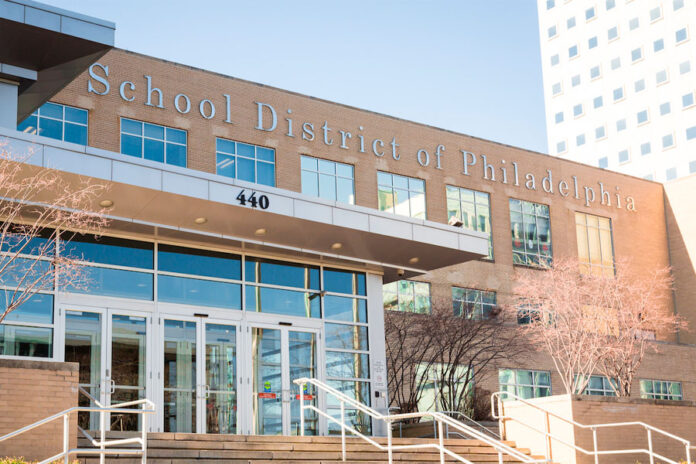
Philadelphia County: $5 million to the School District of Philadelphia for several projects at the Overbrook High School auditorium including roof replacement, complete asbestos and lead paint abatement, installation of fire-retardant seats, repairs to water-damaged and moldy ceilings and walls, installation of new lighting fixtures, and a new HVAC unit.
York County: $2.3 million to the York County School of Technology for replacement of 78 rooftop HVAC units and its original boiler unit. The upgrades will improve efficiency, temperature control, and indoor air quality.
“Students in every zip code across the Commonwealth deserve to learn in classrooms that are up-to-date, safe environments,” said Education Secretary Dr. Khalid Mumin. “Repairing and replacing old equipment and facilities helps to ensure that we can keep our kids learning in spaces that are safe, healthy, and productive for them. Today’s learners are the future of Pennsylvania, and we want to make sure we’re able to prepare them for a competitive future through a world-class education in school buildings and classrooms free from harmful materials.”
Since taking office, the Shapiro Administration has made a total of $275 million available for school infrastructure improvements across Pennsylvania, addressing key environmental hazards and ensuring safer learning spaces. Governor Shapiro is committed to continuing these vital investments, ensuring every student in Pennsylvania has the opportunity to thrive in safe and healthy learning environments.
This school year, students across the Commonwealth are benefitting from substantial new investments secured by Governor Shapiro that will give every student the freedom to chart their own course and the opportunity to succeed. The 2024-25 budget includes a historic $1.1 billion in total increases in K-12 public education funding, the largest year-over-year increase in Commonwealth history.
To ensure that all districts get more of the support they need to serve our students, the 2024-25 budget includes funding for:
Historic Basic Education Funding: Building on the investments in the Governor’s first budget, the 2024-25 budget makes another historic down payment in K-12 education funding in Pennsylvania with an increase of $1.1 billion. Of this funding, nearly $526 million will be distributed through a new adequacy formula to drive dollars to the schools that need them most.
Increases to Special Education: Governor Shapiro’s budget increases special education funding by $100 million to ensure that school districts have the basic resources necessary to provide high-quality special education services to students with disabilities and special needs.
Cyber Charter Reimbursement: The 2024-2025 budget sets aside $100 million to reimburse schools for payments they must make to cyber charter schools.
Career and Technical Education and Dual Enrollment: Creating real opportunity for students includes expanding options for them to gain experience, training, and advanced credit for college while still in high school. The Governor’s budget includes a $30 million increase for Career and Technical Education and continues $7 million in support of dual enrollment.
School Safety and Security and Mental Health Services: Every student deserves to be safe and feel safe in their school. The 2024-25 budget continues a $20 million annual investment in school safety and security improvements and provides $100 million in sustainable funding for environmental repairs and other facility projects in schools – $25 million of which is set aside for solar projects at schools. This budget also delivers $100 million to put more mental health and physical safety resources in our schools.
Providing Period Products for Students: No student should have to miss school due to not being able to afford basic necessities like menstrual hygiene products. The Governor’s budget invests $3 million to provide menstrual hygiene products at no cost to students in schools.
Investing in Early Childhood Learning: Every child in Pennsylvania deserves the support and resources to succeed, from infancy through adulthood. The budget invests an additional $2.7 million in the Head Start Supplemental Assistance Program and an additional $15 million for the Pre-K Counts program.
Universal Free Breakfast for Students: Students cannot be expected to focus, learn, and succeed on an empty stomach. The Governor’s budget ensures that 1.7 million students across Pennsylvania will receive free breakfast at school, regardless of their income.
Supporting Student Teacher Stipends: To further strengthen the educator pipeline and address the education workforce shortage, the 2024-25 budget doubles funding for student teacher stipends, for a total of $20 million to support Pennsylvanian’s training to become certified and committed educators in the Commonwealth.
Penn State students Baybars Charkas, left, of Lancaster, Pa., and James Wachtman, center, of Swarthmore, Pa., man a voter registration table on the Penn State campus in University Park, Pa., Friday, Oct. 18, 2024. (Photo: AP/Gene J. Puskar)
BELLEFONTE, Pa. — It was love at first sight when Ellen Matis pulled up to this small Pennsylvania borough on a dreary winter day almost eight years ago. The road into town curved along the creek and then climbed uphill to a historic square where she chatted with regulars over beers at the local pub.
“This is where we need to live,” she decided. Matis’ sister-in-law, who grew up in the area, was shocked. She remembered Bellefonte as a sleepy place with vacant storefronts and a drug problem so notorious that people sometimes overdosed in front of the courthouse.
But Matis, 33, saw potential in the town’s quaint brick buildings and scenic foothold in the Allegheny Mountains just a short drive from Pennsylvania State University. She settled in, started a social media marketing company and had two daughters with her husband.
“People are excited for change and what the future holds,” Matis said.
Matis’ journey to Bellefonte is one small measure of a larger evolution that’s reshaping the politics of Centre County, which is home to about 160,000 people in the middle of Pennsylvania, and could tilt this year’s closely fought presidential election.
The area has long been divided between the liberal university town of State College, which anchors the region, and the conservative hamlets that surround it. But now the blue dot is expanding as college-educated people spread throughout Centre County, drawn by the lower cost of living, more relaxed lifestyle and economic development that has breathed new life into depleted blue-collar communities.
Penn State students Baybars Charkas, left, of Lancaster, Pa., and James Wachtman, center, of Swarthmore, Pa., man a voter registration table on the Penn State campus in University Park, Pa., Friday, Oct. 18, 2024. (Photo: AP/Gene J. Puskar)
A college degree means more Democratic voters
Last year, 47.6% of county residents had a four-year college degree or more, up from 39.4% a decade ago. Because education levels tend to track partisan affiliation, Democrats have an increasing edge in a part of the state that has historically swung back and forth between the two parties. While in no way assured, the shift means Democratic nominee Kamala Harris could run up margins in small towns far from the big cities of Philadelphia and Pittsburgh, which traditionally get far more attention from presidential campaigns.
Harris’ potential strength here reflects an ongoing tectonic realignment in American politics, with Republicans expanding their outreach to the working class and Democrats relying more on upwardly mobile, college-educated people.
In Centre County, that means Republican nominee Donald Trump remains appealing to voters who feel like their communities haven’t benefited from the area’s changes. But places like Bellefonte are trending blue, backing Joe Biden four years ago after supporting Trump four years before that, and voters with more optimistic views, like Matis, are lining up behind Harris.
“She makes you feel hopeful,” Matis said. “I want a clean slate.”
The changing demographics in Centre County have already had an impact on local politics. Although control of the board of commissioners used to switch every election, it’s been reliably Democratic for almost a decade.
The county’s leaders are also pursuing a new development plan that’s intended to diversify its economy beyond the university and attract even more people to the region.
“We have that solid rock in Penn State,” said Mark Higgins, chair of the county board of commissioners. “This is more than just Penn State now.”
Several hotels are slated to open in the coming years. There’s a new hospital and another one is expanding. The population is expected to increase while Pennsylvania is losing residents overall. There are fresh attractions like arts festivals and an Ironman triathlon.
Higgins said Centre County’s growth is partially fueled by “boomerangs,” meaning people who grew up in the area or went to school at Penn State and then move back to raise their family there.
“It’s Wobegon,” he said, “except it’s real.”
Much like other areas of the country, inflation and the rising cost of living have been challenges, but the impact is felt differently. People who are weary of expensive big cities are moving to State College, and people who can’t afford State College are moving to the surrounding area. It’s an economic chain reaction that means there are more liberal-minded people in more towns around the county.
Downtown Philipsburg, Pa., is pictured, Thursday, Oct. 17, 2024. (Photo: AP/Gene J. Puskar)
People are ‘boomeranging’ back to Centre County
Derek and Lauren Ishler are the quintessential boomerang couple. They met while attending Penn State, and lived for several years in Alexandria, Virginia. But before having their two daughters, they relocated to State College to be close to their families.
“It’s grown but we still have that small-town feel,” Derek said. “We’re happy here.”
Derek, 42, does financial work for a logistics company and Lauren, 41, is an elementary school teacher. Both are voting for Harris.
“What world do I want my kids to grow up in?” he asked. “One is fear, fear, fear. The other is, ‘hey, let’s work together.’”
On a recent Friday night, they were in Bellefonte for an annual festival, where local vendors served gourmet food in a park under string lights while a band played nearby.
Stacy and Marc Counterman brought their five-month-old son in his stroller. They moved to town three years ago because Marc, 31, got a job as an academic adviser at Penn State.
They were so excited that they bought their house without seeing it in person, worried it would be snatched up before they arrived. Both of them are voting for Harris.
“She’s fighting for families,” said Stacy, 33, who works for an education nonprofit. “I’m hopeful she’ll fight for us.”
The ideological reshuffling is tied to State College, where the university is located. Some residents relocate there from what they call “Trump country” to be closer to the institution and its culture.
Alex Sterbenz, 31, came from Burnham, which is in the next county over.
“I figured it made sense to move here, instead of just coming up every weekend,” said Sterbenz, who works in a local music store and plays honkytonk songs on his 2021 Gretsch White Falcon. He tries not to talk politics with his friends and family back home.
But State College isn’t just attracting people; it’s also exerting a gravitational pull on surrounding towns.
Zeb Smoyer, 23, grew up in Bellefonte, where he joined the Boy Scouts and hunted whitetail deer. Like a lot of teenagers, he couldn’t wait to get out of town. But after he went to college elsewhere in Pennsylvania and spent some time traveling, he decided “Bellefonte is not a bad place.”
Now he lives there and works for an engineering company, which he helps comply with environmental regulations as it lays pipes for turning farmlands into housing developments. Smoyer hasn’t made up his mind about the election, but he previously voted for Biden.
The area is anchored by Penn State and its students
Ezra Nanes, the Democratic mayor of State College, said there’s been more overlap between his town and the surrounding area.
“You see an expansion of the university community and economy,» he said. «It touches all parts of the county.”
Nanes’ own journey to Centre County parallels the shifts in the region. A New York native, he was ready to make a change in his life and applied to Penn State’s MBA program. He moved to State College 14 years ago with his wife and baby daughter.
They fell in love with the community and the natural environment — “you can be in the mountains in 15 minutes,” he said — and never left. They now have two children. Nanes works at AccuWeather, a forecasting company, and his wife is a physical therapist who started her own business focused on women’s health.
Nanes was a delegate at the Democratic National Convention in Chicago, and he hopes “we can help run up the score here.”
“There’s a lot of focus on the big cities,” he said. “But this is an important place if you want to win.”
“We’re not exactly known for having a very deep political involvement, which is a shame,” said Baybars Charkas, president of the Penn State College Democrats. Charkas calls Penn State «probably the most powerful university in the United States at the current moment» given its size and location in a key battleground state. Roughly 48,000 students are enrolled at the school’s State College campus.
Graduate student Sydney Robinson started her own organization dedicated to supporting Harris. Members make friendship bracelets to promote their candidate and send text messages to rally potential voters.
Robinson, who is applying to law school, is hopeful about the future.
“We just have so many opportunities,” she said. “We’re at a crucial turning point in history, but it’s exciting.”
She’s earned the nickname “voter girl” because she tries to always carry registration forms; she gets three or four people to sign up each week.
The Harris campaign has four staff members in Centre County, including a dedicated campus organizer, and said they’ve knocked on more than 9,000 doors and made more than 80,000 phone calls. They’re also advertising on radio stations to catch voters while commuting in and out of State College.
Trump’s campaign did not provide figures on voter outreach. But Kush Desai, the Trump campaign’s Pennsylvania spokesman, said his team is attending college football tailgates and focusing on appealing to male voters to cut into Harris’ support within the educated electorate.
Some of the effort focuses on the economy, with the traditional question of, “Are you better off now than you were four years ago?” Desai also suggested that Democrats have shifted too far left on cultural issues.
“I think there’s just a natural backlash here,” he said, and men “are starting to chip away and come to our side instead.”
Ryan Klein, president of the Penn State College Republicans, said the campus leans left but conservatives aren’t as outnumbered as many think. He pointed to strong turnout at last month’s event with Trump supporter Charlie Kirk, who runs Turning Point, an organization focused on rallying young right-leaning voters.
On most days, “there aren’t a lot of people who want to go out of their way to proudly don the red hat,» Klein said, but hundreds wore
“Make America Great Again” paraphernalia that day.
A historical marker stands in downtown Bellefonte, Pa., near the Centre County Courthouse, rear right, Friday, Oct. 18, 2024. (Photo: AP/Gene J. Puskar)
The county’s economic progress remains uneven
Republicans are much stronger in some of the rural areas surrounding State College that haven’t seen the same kind of development as Bellefonte.
One of those places is Philipsburg, with a postage-stamp-sized downtown where vacant storefronts remain common.
“It has potential,» said Brittney Tekely, 31. “It’s a cute little town. It just needs help.”
She saved up money to start her own barbershop there while working as a stylist during the day and in a Wal-Mart distribution warehouse at night. Tekely painted and decorated the place herself with model cars and other trinkets that she picked up at antique stores. She even went all the way to Niagara Falls to buy an old-fashioned cash register that dings loudly when opened. Her three dogs — Digger, Roxie and Mister Skunk — come to work with her and hang out in the back, where they bark when someone opens the front door.
But Tekely doesn’t see the same care being put into the rest of the town, saying, “There are buildings that no one is fixing up or tearing down.” She isn’t sure if she’ll vote this year, and many of her customers are vocal Republicans.
“They just go on and on and on,” Tekely said. “You’ve got to keep your two cents to yourself.”
Some of them, she said, “truly think if Trump becomes president again it will help the country and help prices.”
The town backed Trump over Biden four years ago, and there’s less of the optimism that characterizes Bellefonte’s renaissance.
Thomas Gette, 77, lives a few blocks from downtown with a Trump sign on the curb outside the front door. He’s retired after spending four decades as the manager of a local hardware store, and he just finished repainting his house.
Gette said voting for the Republican candidate is “a no-brainer,” especially with all the concerns about uncontrolled migration.
“Something has got to give,” he said, adding that if Trump doesn’t win, «I can’t imagine what it’s going to be like.”
In Gette’s mind, changes in the area have sapped the town of jobs and money.
“There were mines everywhere and the railroads were everywhere,” Gette said, and he’s worried that the transition away from fossil fuels is happening too fast.