13.9 C
Philadelphia
spot_img
Inicio Blog Página 482

Shapiro administration urges voters to know their rights at the Polls

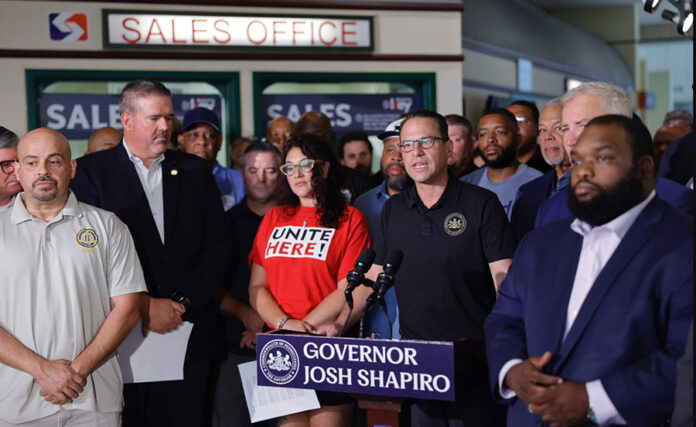
Shapiro
Governor Josh Shapiro. (Photo: File)

The Department’s website provides helpful information about voters’ rights on topics ranging from first-time voters bringing acceptable ID to how to identify and report potential intimidation

Harrisburg, PA – Secretary of the Commonwealth Al Schmidt today encouraged Pennsylvania voters to educate themselves about their rights before they vote in person on Nov. 5. Ensuring that our elections are conducted freely, fairly, and securely – and that every eligible voter can make their voice heard – are top priorities of the Shapiro Administration.

“It’s important that voters know their rights and are informed about how to cast their ballot and make their voice heard,” Schmidt said. “They can find a wealth of useful information at the Department of State’s voter information website, vote.pa.gov.”

Here are some important tips regarding voter rights in Pennsylvania:

  • First-time voters, or those voting for the first time in a new precinct, must show ID. Acceptable ID includes both photo and non-photo ID. First-time voters who do not bring ID to the polls can return with identification or must be offered a provisional ballot.
  • Voters who applied for a mail ballot and then decide they want to vote at the polls must bring their mail ballot – including the outer return envelope – with them to be voided.
  • If a voter applied for a mail ballot but – for any reason – no longer has the mail ballot and outer envelope, they may vote by provisional ballot at their polling place on Election Day. Their county elections office will then make a determination on whether their provisional ballot can be counted.
  • If a voter’s name is not in the poll book, poll workers can call the county elections office to see if the voter is registered in another precinct in the county. Registered voters who are in the wrong polling place should go to the correct polling place to vote, but a voter who believes they are registered in that precinct and should be listed in the poll book is entitled to cast a provisional ballot there.
  • Voters who moved within Pennsylvania but did not update their address in time before the election may vote one more time in their previous precinct, but they must update their address at the polling place.
  • If a voter is challenged based on their identity or residency, the voter may vote normally by signing a challenge affidavit and producing a witness who is also a registered voter in the precinct to vouch for them. If the voter cannot or does not want to produce a witness, the voter may cast a provisional ballot. Identity and residency are the only bases for challenging a voter at a polling place. 
  • Voters have the right to assistance at the polling place, including foreign language or literacy assistance. A voter may select any person to assist as long as the person is not their employer, their union representative, or the precinct’s Judge of Elections. Voters do not need to be designated as «assistance permitted» in the poll book to receive help.
  • Voters have the right to refuse assistance.
  • Voters have the right to vote without being subjected to intimidation, harassment, or discriminatory conduct. A voter who experiences intimidation should report it to the Judge of Elections, their county elections office, their county district attorney’s office, or the Department of State’s year-round voter hotline at 1-877-VOTESPA (1-877-868-3772). 

Schmidt also reminded Pennsylvanians who are voting by mail-in or absentee ballot to return their completed ballot immediately, either by delivering it in person to their county elections office or, if their county provides one, a ballot drop-box location.

The deadline for county elections offices to receive completed mail ballots is 8 p.m. Nov. 5. Completed mail ballots received after that time do not count, even if they are postmarked by then. Schmidt reminded voters who are returning completed mail ballots to sign and write the current date on the outer envelope to ensure their vote is counted.

The Department of State voter information website, vote.pa.gov, can help voters with election-related questions and information, including:

For more information on voting in Pennsylvania, follow #ReadyToVotePA on social media.

Harris reunirá a sus partidarios en Pittsburgh y Filadelfia con estrellas invitadas, te compartimos el enlace para registrarte

El cantante puertorriqueño Ricky Martin. EFE/Alberto Valdes/Archivo

El lunes 4 de noviembre, a víspera de las elecciones, la vicepresidenta Harris aparecerá en mítines en Pittsburgh y Filadelfia, Pensilvania, como parte del último esfuerzo de organización de la campaña Harris-Walz para que salgan a votar antes del día de las elecciones.

Los eventos son parte de la campaña en los siete estados en disputa para captar el entusiasmo de las bases y movilizar a los votantes antes del día de las elecciones.

Los eventos de organización de GOTV se unirán en un programa de transmisión en vivo nacional producido para llegar a los votantes de todo el país. La transmisión en vivo destacará los mítines, las presentaciones y los discursos de cada estado en disputa, donde todos los estadounidenses podrán sintonizar.

Esto servirá como una importante herramienta de organización durante el último fin de semana. Se ofrecerán asientos VIP a todas las personas que completen un turno de banca telefónica o de tocar puertas entre el 28 de octubre y el 3 de noviembre.

Estos artistas y figuras públicas son voces de confianza para millones de estadounidenses, que escuchan su música, los siguen en las redes sociales o se sienten inspirados por ellos. La campaña de Harris-Walz cree que al usar sus voces para exponer lo que está en juego en esta elección, alentará y movilizará aún más a las personas para que vayan a votar.

Los interesados ​​en asistir al mitin de Pittsburgh pueden confirmar su asistencia aquí.

Los interesados ​​en asistir al mitin de Filadelfia pueden confirmar su asistencia aquí.

Puede enviar un mensaje de texto con la palabra GO al 30330 para recibir actualizaciones adicionales.

Trump quiere que Harris pague un precio político por ofrecer salud a inmigrantes sin papeles

inmigrantes
EFE/EPA/Jeffrey Phelps

María Sánchez emigró al área de Chicago desde México hace unos 30 años. Ahora, a sus 87, sigue viviendo en Estados Unidos sin papeles. Como muchos inmigrantes de larga data, ha trabajado —y pagado impuestos, incluyendo para Medicare— durante todo ese tiempo.

Pero Sánchez nunca tuvo seguro médico, y cuando cumplió 65, no pudo inscribirse en Medicare. Nunca ha tenido atención preventiva ni exámenes. No ha tenido chequeos físicos, ni mediciones de colesterol, ni mamografías.

“Nada, nada, nada”, dijo.

Cuando enfermaba, tardaba en buscar atención médica hasta que estaba tan mal que fue hospitalizada dos veces por neumonía. Finalmente, el año pasado obtuvo cobertura a través de un programa pionero en Illinois para personas mayores indocumentadas que entró en vigencia en diciembre de 2020.

Estados liderados por demócratas, como Illinois, están abriendo cada vez más programas de seguros públicos a inmigrantes sin papeles. Una docena ya cubría a niños; aún más proporcionaban cobertura prenatal. Pero ahora,  están cubriendo a adultos que viven en el país sin autorización, y algunos están ampliando la cobertura para personas mayores, que son más costosos y representan un desafío político mayor que los niños.

Estas expansiones reconocen los costos que estos pacientes pueden imponer sobre los hospitales. Pero estas políticas están bajo dura crítica del ex presidente Donald Trump y otros republicanos, quienes buscan presentar a su oponente, la vicepresidenta Kamala Harris, como la cara de políticas de inmigración irresponsables.

Los republicanos señalan la expansión de la cobertura de Medi-Cal en el estado natal de Harris, California, a inmigrantes de todas las edades independientemente de su estatus legal, argumentando que esto afecta a los ciudadanos estadounidenses.

Es una queja frecuente de Trump. “Ella va por ahí diciendo, ‘Oh, Trump va a hacer cosas malas con la Seguridad Social’”, dijo sobre Harris en una conferencia de prensa el 13 de septiembre. “No, ella va a hacerlo porque está poniendo a estos inmigrantes ilegales en la Seguridad Social, en Medicare, y va a destruir esos programas, y la gente tendrá que pagar”.

La elección de Harris del gobernador de Minnesota, Tim Walz, como compañero de fórmula ha añadido combustible a los ataques republicanos en la intersección de la inmigración y la política de salud.

Con la esperanza de presentar a la candidata demócrata presidencial Kamala Harris como extrema en inmigración, el ex presidente Trump y sus partidarios han dicho que ella quería otorgar beneficios de salud gratuitos, pagados por los contribuyentes, a inmigrantes en el país sin permiso legal. Pero esta declaración omite detalles clave.

Bajo una ley firmada por Walz, los inmigrantes que viven sin documentos en Minnesota podrán obtener cobertura de salud a partir del próximo año a través del programa MinnesotaCare del estado para personas de bajos ingresos que no son elegibles para Medicaid.

El tema es de gran interés para algunos estadounidenses. En un foro en Las Vegas el 10 de octubre, una integrante del público identificada por Univision como Ivett Castillo le preguntó a Harris qué haría su administración respecto a la atención médica para personas como su madre, quien había emigrado de México sin autorización muchos años atrás, trabajado toda su vida ahasta su muerte este año sin haber recibido “el tipo de atención y servicio que necesitaba o merecía”.

“¿Cuáles son sus planes, o tienen planes, para apoyar a ese subgrupo de inmigrantes que han estado aquí toda su vida, o la mayoría de ellos, y tienen que vivir y morir en las sombras?”, preguntó Castillo.

Harris mencionó su apoyo anterior a un camino a la ciudadanía para residentes sin papeles, y a un proyecto de ley bipartidista de seguridad fronteriza que los republicanos del Senado bloquearon a principios de este año por insistencia de Trump.

“Este es un ejemplo de que hay personas reales que sufren debido a la incapacidad de anteponer soluciones a la política”, dijo Harris.

Incluso sin estas políticas, los inmigrantes pueden recibir atención primaria gratuita o económica en clínicas comunitarias en todo el país, asumiendo que saben que es una opción y se sienten seguros en las instalaciones.

Pero la atención primaria no puede cubrir todas las necesidades médicas, especialmente a medida que las personas envejecen y desarrollan problemas de salud y enfermedades crónicas más complejas. Así que los inmigrantes suelen depender de la atención caritativa, endeudarse o, como Sánchez, evadir al doctor. Algunos incluso regresan a sus países de origen para recibir atención.

Illinois, donde Sánchez obtuvo cobertura, fue pionero en la extensión de cobertura de seguros a migrantes no autorizados. Ahora, seis estados y el Distrito de Columbia —todos liderados por demócratas— cubren al menos a algunos inmigrantes mayores de bajos ingresos bajo Medicaid o exenciones de la Ley de Cuidado de Salud a Bajo Precio (ACA).

Minnesota se convertirá en el séptimo el próximo año. Para estas expansiones se utilizan fondos estatales, ya que los fondos federales generalmente no pueden cubrir a personas sin estatus legal.

Queda por ver si más estados seguirán esta tendencia y cuán rápido, y si Trump gana la Casa Blanca, es probable que su administración intente frenar esta tendencia, dado que ha prometido deportaciones masivas.

La cobertura para todos los inmigrantes sigue siendo una propuesta difícil tanto económica como políticamente, y la población no ciudadana no puede agradecer votando. Las iniciativas de salud para inmigrantes en varios otros estados han fracasado o se han reducido.

Maryland, por ejemplo, decidió abrir su mercado del Obamacare a personas que viven en el estado sin autorización a partir de 2026, pero sin subsidios de los contribuyentes para sus primas.

Aun así, hay suficiente actividad en los estados para que defensores de la salud de los inmigrantes crean que algo ha cambiado. La gravedad de la pandemia y su impacto desigual ayudaron a generar el apoyo para cubrir a inmigrantes mayores, dijo Lee Che Leong, defensora principal de políticas en Northwest Health Law Advocates en el estado de Washington.

“La gente está mirando a su alrededor y se da cuenta de que nuestra salud está interconectada, tanto global como localmente”, dijo Leong. “La pandemia realmente mostró eso, cuando miras las disparidades en quién se contagió de covid, quién estuvo expuesto a covid y quién murió por covid”.

Durante mucho tiempo, el acceso a la atención médica en el país ha sido un obstáculo para los inmigrantes, incluso aquellos que tienen papeles. Las personas con tarjetas de residencia deben esperar cinco años para obtener cobertura bajo Medicaid u otros programas de salud del gobierno. Algunos personas mayores con residencia tienen que pagar primas adicionales para Medicare Parte A —la parte que cubre la atención hospitalaria— si no han trabajado al menos 10 años en Estados Unidos.

Los nuevos programas de salud estatales cierran estas brechas, dijo Shelby Gonzales, vicepresidenta de política de inmigración en el Center on Budget and Policy Priorities.

En julio, el estado de Washington comenzó a cubrir a inmigrantes de bajos ingresos en un programa similar a Medicaid llamado Apple Health Expansion, utilizando una exención federal.

La inscripción es limitada y el programa se llenó rápidamente, pero se reservaron algunos lugares para personas de 65 años o más, dijo Leong. A principios de este año, el estado abrió su mercado de Obamacare a inmigrantes que viven en los EE. UU. sin autorización.

Oregon y Colorado ahora también ofrecen alguna cobertura a personas en sus estados que carecen de estatus legal, aunque el programa de Colorado no atrajo a muchos inmigrantes mayores, según datos presentados hace poco al comité de supervisión del mercado de ACA.

Nueva York ha cubierto a niños inmigrantes sin documentos durante años, y el programa de Medicaid del estado se abrió en enero para todos los inmigrantes adultos independientemente de su estatus. Aproximadamente 25,000 personas se inscribieron en los primeros cuatro meses, según el director de Medicaid de Nueva York, Amir Bassiri.

De vuelta en Illinois, María Sánchez dijo que su nueva cobertura ha cambiado su vida, y posiblemente le ha salvado la vida. Sus episodios de neumonía fueron graves, en parte porque retrasó la atención. Después de su segunda hospitalización, necesitó atención cardíaca de seguimiento. El hospital no le cobró por su estadía.

Pero ahora, con su “tarjeta médica”, puede ver a un médico. Su condición cardíaca está bajo control. Ha visto a un dentista. Va a tener una operación de cataratas. “Con mi tarjeta médica, tengo paz mental”, dijo Sánchez.

llinois ha agregado gradualmente cobertura para otros grupos de edad; en el verano de 2022, redujo la elegibilidad a los 42 años. Eso significa que inmigrantes como Gaby Piceno, de 45, pueden envejecer de manera más saludable.

“Ya no tengo que preocuparme”, dijo, refiriéndose no solo a sí misma, sino a su familia.

Pero la expansión de la cobertura ha costado más de lo proyectado en Illinois. Personas como Sánchez y Piceno, ya inscritas, siguen cubiertas, pero este año se frenó la nueva inscripción. Se inscribieron más personas de lo esperado, y muchas continuaron buscando atención en salas de emergencia de hospitales más costosos en lugar de en consultorios médicos, dijo la comisionada interina de seguros del estado, Ann Gillespie, quien era senadora estatal en Illinois cuando se estableció el programa.

El estado ahora está transfiriendo a los inmigrantes cubiertos a planes de atención administrada de Medicaid, con la esperanza de reducir el costo con el tiempo.

KFF Health News es una redacción nacional que produce periodismo en profundidad sobre temas de salud y es uno de los principales programas operativos de KFF, la fuente independiente de investigación de políticas de salud, encuestas y noticias.

When polls close in battleground states on Election Day

ARCHIVO - Un trabajador de la Junta de Empadronamiento y Elecciones del condado de Fulton procesa los votos postales en el State Farm Arena, el 2 de noviembre de 2020, en Atlanta. (Foto AP/John Bazemore, Archivo)

By MEG KINNARD Associated Press

WASHINGTON (AP) — The results on Election Day will come down to seven states: Arizona, Georgia, Michigan, Nevada, North Carolina, Pennsylvania and Wisconsin.

Vice President Kamala Harris and former President Donald Trump have visited them the most. Together, these states are likely to deliver the Electoral College votes needed for the winning candidate to get a majority of 270.

It will be a game of hopscotch to keep up with key times in each of the states, which stretch across four different time zones.

A look at the Election Day timeline across the seven, with all listings in Eastern Standard Time:

Arizona

Polls open at 8 a.m. in Arizona, which Joe Biden carried in 2020 by 0.3%. He was only the second Democratic presidential candidate to do so in nearly 70 years. Polls will close at 9 p.m.

Arizona does not release votes until all precincts have reported or one hour after all polls are closed, whichever is first.

In 2020, The Associated Press first reported Arizona results at 10:02 p.m. ET on Nov. 3, Election Day, and declared Biden the winner at 2:51 a.m. ET on Nov. 4.

Georgia

Polls open at 7 a.m. in Georgia, which played a key role in 2020. Biden was the first Democrat in a White House race to carry the state since Bill Clinton in 1992, defeating Trump by less than one-quarter of a percentage point, a margin of 11,779 votes.

Since then, Trump’s efforts to overturn those results have been at the heart of a criminal case in Fulton County. It is on hold while his legal team pursues a pretrial appeal to have District Attorney Fani Willis removed from the case and the indictment tossed. The Georgia Court of Appeals will hear those arguments after the election.

Georgia’s polls close at 7 p.m.

In 2020, the AP first reported Georgia results at 7:20 p.m. ET on Nov. 3 and declared Biden the state’s winner at 7:58 p.m. ET on Nov. 19, more than two weeks after Election Day.

Michigan

Polls open at 7 a.m. ET in Michigan, one of the “blue wall” states that went narrowly for Trump in 2016 after almost 30 years of voting for Democratic candidates. Biden won it back four years later. His margin was about 154,000 votes out of more than 5.5 million votes.

Michigan covers two time zones, but polls in most of the state close at 8 p.m. ET, with the rest at 9 p.m. ET.

In 2020, the AP first reported Michigan results at 8:08 p.m. ET on Nov. 3 and declared Biden the winner at 5:58 p.m. ET on Nov. 4.

Nevada

Polls open at 10 a.m. ET in Nevada, the smallest electoral vote prize of the battlegrounds. But it has one of the best track records as a presidential bellwether. The candidate who won Nevada has gone on to win the White House in 27 of the past 30 presidential elections.

Polls close at 10 p.m. ET. The state doesn’t release results until the last person in line has voted, so there’s usually been a wait between poll close and the first results.

In 2020, the AP first reported Nevada results at 11:41 p.m. ET on Nov. 3 and declared Biden the winner at 12:13 p.m. ET on Nov. 7.

North Carolina

Polls open at 6:30 a.m. ET in North Carolina, which has been carried by Democrats only two times in presidential elections since 1968. But the state has stayed competitive for both major parties. Trump’s 2020 victory in North Carolina, by about 1 percentage point, was his smallest winning margin in any state.

Polls close at 7:30 p.m. ET.

In 2020, the AP first reported results at 7:42 p.m. ET on Nov. 3 and declared Trump the winner at 3:49 p.m. ET on Nov. 13.

Pennsylvania

Polls open at 7 a.m. ET in Pennsylvania, another “blue wall» state. Biden’s 2020 margin in Pennsylvania was about 80,000 votes out of more than 6.9 million votes. This year, it’s the spot where Harris and Trump met for the first time at their sole debate in September in Philadelphia.

Polls close at 8 p.m. ET in a state with more electoral votes, 19, than any of the battlegrounds.

In 2020, the AP first reported results at 8:09 p.m. ET on Nov. 3 and declared Biden the winner at 11:25 a.m. ET on Nov. 7.

Wisconsin

Polls open at 8 a.m. ET in Wisconsin, the third “blue wall” state in this group. Wisconsin is no stranger to close elections; the margin of victory in the state was less than 1 percentage point in 2020, 2016, 2004 and 2000.

Polls close at 9 p.m. ET.

In 2020, the AP first reported Wisconsin results at 9:07 p.m. ET on Nov. 3 and declared Biden the winner at 2:16 p.m. ET on Nov. 4.

Harris aparece en «Saturday Night Live» como imagen en el espejo de Maya Rudolph

La candidata presidencial demócrata, la vicepresidenta Kamala Harris, a la derecha, en el programa "Saturday Night Live" con Maya Rudolph, el sábado 2 de noviembre de 2024, en Nueva York. (AP Foto/Jacquelyn Martin)

Por AAMER MADHANI, COLLEEN LONG, ZEKE MILLER y WILL WEISSERT Associated Press

NUEVA YORK (AP) — La vicepresidenta Kamala Harris se presentó sorpresivamente en el programa “Saturday Night Live” cuando faltan apenas unos días para las elecciones, interpretándose a sí misma como la imagen en el espejo de la versión que Maya Rudolph interpreta de ella.

Los aplausos ahogaron las primeras palabras que pronunció la candidata demócrata mientras se encontraba sentada frente a Rudolph.

“Me da gusto verte, Kamala”, le dijo Harris a Rudolph, “y sólo estoy aquí para recordarte que tú puedes”.

Al unísono, las dos dijeron que sus simpatizantes necesitan “Mantener a Kamala y seguir adelante”, declararon que comparten la “esperanza en la promesa de Estados Unidos” y pronunciaron la emblemática frase: ”¡En vivo desde Nueva York, es sábado por la noche!”.

A menos de una semana para las elecciones, Harris viajó sorpresivamente a la ciudad de Nueva York, alejándose brevemente de los estados sin clara preferencia política en donde se ha sumergido en una intensa campaña, para aparecer en el icónico programa de comedia, donde se presentó con la esperanza de generar expectación y atraer a una audiencia nacional.

Harris llegó a Nueva York a bordo del avión vicepresidencial luego de un acto campaña horas antes en Charlotte, Carolina del Norte. Originalmente tenía previsto viajar a Detroit, pero una vez en el aire, sus colaboradores informaron que haría una parada no programada y el avión aterrizó en el Aeropuerto LaGuardia.

Harris llegó a los estudios de SNL en 30 Rockefeller Plaza, en Manhattan, poco después de las 8 de la noche, con tiempo suficiente para un ensayo rápido antes de la emisión en vivo a las 11:30 de la noche. Es el último episodio de SNL antes de la jornada electoral del martes.

La visita no había sido anunciada con antelación y un funcionario al tanto de la agenda de Harris confirmó oficialmente su aparición en el programa a los reporteros que viajaban con la vicepresidenta momentos antes de la transmisión. El funcionario insistió en el anonimato a fin de discutir planes antes de que se hicieran públicos.

Harris se retiró inmediatamente después del segmento de apertura. Le dijo a los reporteros, ”¡Fue divertido!” mientras abordaba el avión para dejar Nueva York.

Jason Miller, un asesor del expresidente y candidato republicano, Donald Trump, expresó sorpresa ante la aparición de Harris en el programa, considerando lo que calificó como una representación poco halagadora de ella en el programa. Cuando se le preguntó si Trump había sido invitado a aparecer, respondió: “No lo sé. Probablemente no”.

Letter to My MAGA Neighbor

(Imagen en RRSS)

I’m reaching out here because it’s hard to talk to you face to face. Sometimes my appearance and accent make me feel insecure when I cross paths with you. I’ve heard how, at rallies for former President Trump and Vance, their supporters cheer loudest when they promise the largest deportation in history, starting from day one. Trump has admitted he plans to execute this promise by invoking the 1789 Alien Enemies Act.

Trump has outlined “Operation Aurora,” a plan to mobilize local police and U.S. armed forces on American soil for the “mother of all deportations.” To the MAGA movement, the migration crisis is an invasion. If implemented, Trump could hold unilateral power to track, detain and mass-deport foreign-born individuals—or even confine them in detention camps. Trump portrays cities as “war zones” of “immigrant crime.” Although the numbers don’t support this, the narrative of a “nation under siege” by millions of migrants—described as “animals,” “criminals,” “terrorists,” and “mentally ill,” who even “eat people’s pets”—has been planted in the minds of many Americans.

When we cross paths, I offer a quiet smile, while your gaze sometimes seems wary, other times even hostile. It’s disheartening that you and I are made to fear each other, each seeing the other as a potential threat.

I understand your fear—truly, I know well that feeling of insecurity and uncertainty; it’s what brought me here, after all.

I know you have reasons to mistrust politicians, parties, and leaders who show up when they need your vote and then forget us. I realize that other issues, like certain trends within the “woke” movement, also make MAGA appealing to you. I know the extremes can sometimes meet in a blind spot where fanaticism takes root.

I know you love your family and want to control your children’s education according to your values; my community, too, deeply values family. I know inflation affects nearly all of us, yet we’re still in the world’s strongest economy, recovering from the pandemic and endless wars.

Neighbor, I see how hard you work, how early you leave and how late you return. I’d love to genuinely chat with you one day, to share my concerns and hear yours. I think we’ve all been misled by disinformation and propaganda that cast us as enemies.

I wish the fog clouding our vision and trust would lift without erasing our differences. Like many immigrants, including your ancestors, I came here with a hope I still hold: to contribute to my new home and build a future.

The MAGA leaders who might soon govern with Trump are distant from us, the working class. Elon Musk, ineligible for the presidency himself, has secured a place in their potential administration. I heard him and others speak at a rally in New York, and none of them resemble you, MAGA neighbor. I only hope you didn’t cheer the insults they hurled that wounded so many of us. They view us as strangers, vastly different from them.

I’m secure in who I am, in my identity, and I celebrate diversity—it’s what makes cultures so rich. Like you, I am an American citizen, and I love this “nation of nations” where opportunity still prevails.

MAGA neighbor, on the island of Puerto Rico, I can’t vote for the president, but here, I can. And I will vote—not based on appearances or subjective perceptions, but with the conviction that ideas can be flawed when they’re built on misleading information. I will vote with a clear conscience, moved by love for my fellow human, and yes, as a believer, with love for my “enemy.” I will vote not out of fear or hatred. How about you?

P.S. If you can’t help but see me as an enemy, then consider me a necessary one. We Latinos in the United States represent the world’s fifth-largest economy, contributing $3.2 trillion and powering significant economic growth.

Listen to business owners and voters in Erie, Pennsylvania. They could help decide the White House.

Erie
Small business owner Michael Hooks works in the kitchen of his catering business in Erie, Pa. Friday, Nov. 1, 2024. (AP Photo/Gene J. Puskar)

ERIE, Pa.— It wasn’t much when he bought it, but Michael Hooks has made the old garage his own haven. And the city of Erie knows it. Half a dozen cars honk as they pass by one October afternoon, the people hanging out of car windows to wave hello at him.

About a dozen cars await servicing in the shop as a dog Hooks adopted the day before barks in its new cage. Exercise equipment, motorcycles and power tools abut the kitchen on the side of the renovated building where his wife cooks a meal. At 6 feet, 2 inches, and with a sturdy build, Hooks has a graying beard and a head of curls he says could be laced with snow flurries by this time of year.

“I’ve got to be one of the only Black businesses on this street,” he says, noting that his repair shop stands on Peach Street, one of the city’s main traffic arteries. He appreciates the greetings from passersby. But he says many people who know him from the neighborhoods where he grew up will never step foot in the shop. Almost all his customers are white.

Hooks, 58, is a member of a coveted demographic in this year’s election — a Black man and a business owner in a swing state. Both presidential campaigns have targeted Black entrepreneurs with their messaging, offering a range of economic policies and legislation that each side says will boost the careers and lives of African Americans.

How Erie business owners and voters such as Hooks view each candidate’s economic vision could determine control of the White House. Erie County has gone for the candidate who won Pennsylvania in every presidential election since 1992. Both Republican Donald Trump and Democrat Kamala Harris have visited the city of 94,000 in recent weeks.

“Erie is a pivot point,” said Rhonda Matthews, co-founder of Erie Black Wall Street, a business group that supports local Black entrepreneurs. From population rates to business startups, the future of Erie’s economy and politics have shown where the country may be heading. “I think if you want to know about what’s happening economically writ large in the country, you can look and see what’s happening in Erie.»

Concerns about ‘a lack of predictability’

Harris has rolled out a series of economic proposals meant to tackle affordability and boost small businesses. Trump has stressed his promise of sweeping tariffs, new corporate tax cuts and an unprecedented crackdown on illegal and legal immigration to the country.

Local leaders are weighing the impact of each agenda on their plans to renew the Rust Belt.

“A lack of predictability would be the worst possible thing,” said Drew Whiting, CEO of the Erie Downtown Development Corporation, which is directing more than $100 million in private investment to the downtown area.

Whiting praised federal policies such as Qualified Opportunity Zones, which are meant to spur economic development in low-income communities and were created as part of the Trump administration’s 2017 tax overhaul, as well as the investments in Erie enabled by the Bipartisan Infrastructure Law spearheaded by Democratic President Joe Biden.

But Whiting added that “broad brush” policies such as Trump’s proposed 20% tariffs on all foreign goods threatened to be “an inflation bomb that would crush small businesses” like those he works with. Whiting viewed Harris’ proposed investments for small businesses to be a potential boon. A no tax on tips policy, which both Harris and Trump favor, would be a welcome innovation for workers, he said.

The Harris campaign has zeroed in on affordability as a key concern of voters amid rising inflation. Her proposals to punish companies that gouge prices and her promises to expand support for health care and child care are issues where the campaign believes they can lower costs for working families. Trump, by contrast, would lower the corporate tax rate to 15%, extend his tax cuts and further cut other individual and family taxes, including by eliminating taxes on Social Security.

Most mainstream economists agree that Trump’s proposals would worsen inflation.

Local business owners who spoke with The Associated Press expressed cautious optimism about Harris’ proposals to support small businesses, though most were largely skeptical about the impact that federal policy could have on their lives.

“There’s just so many factors, things to consider from right here and global factors,” said Gus Paliouras, owner of New York Lunch, a local diner. Paliouras’ family immigrated to the United States from Greece and bought the diner in 1970, when it was one of dozens of bustling businesses on top of a post office, school and church. Now Paliouras’ diner is the only storefront left on the block.

“I try to keep it like Geneva in here,” he said, referring to the city in famously neutral Switzerland. “In this town, we could have Trump, Kamala and Kennedy supporters sitting right next to each other at the bar.” Independent Robert F. Kennedy Jr. was in the race until August, when he suspended his campaign and endorsed Trump.

One business owner sees his city’s divisions

Hooks considers himself a survivor.

Born and raised in Erie, Hooks grew up in poverty and with few options, support or direction for his life. At 23, he was sentenced to 30 years for dealing marijuana. He served eight years in prison, an experience he described as “the best thing that ever happened to me.”

Prison was the first place Hooks was exposed to scripture — the Bible and Quran — as well as stories about travel, business and history.

While he has transformed his circumstances and overcome “trials and tribulations that made me a better man,” he finds the distinctions that some draw between poor, working and middle-class people to be meaningless.

“It’s because we have people in this country that want to be better than someone else,” he said in a recent interview. “You drive a Toyota Camry, I drive the Lexus. It’s the same … car. It’s just a different name, but it’s a higher status.”

“For example, (Harris) says she wants to give us a $50,000 tax break or whatever,” he added, referring to the vice president’s proposed tax credit for new small businesses. “But that could never come into fruition with people that think they better than somebody, but you live next door to me, and your sign says Trump.”

In addition to his car care company, Hooks now runs a food catering business. On the weekends he goes back to the neighborhoods where he grew up to feed, clothe and cut hair for kids for free. His charity efforts are focused on making sure children never have the experiences he once faced.

Hooks is skeptical of the ability of politicians to change fundamental problems facing everyday Americans, but says he’ll be voting for Harris.

“Trump had the opportunity to be great,” Hooks said, but called Trump’s first term a “disaster.” Hooks said he preferred “going with someone who may at least try and help the little guy.”

Impacto Editorial Board Endorses Vice Presidente Kamala Harris

Democratic presidential nominee Vice President Kamala Harris and her running mate Minnesota Gov. Tim Walz speak at a campaign rally in Philadelphia, Tuesday, Aug. 6, 2024. (Photo Perla Lara)

At the Impacto Editorial Board, we’re convinced of who the best candidates are for Latinos, our communities, our state of Pennsylvania, and the country as a whole.

We endorse Democratic candidate Vice President Kamala Harris because her record, dating back to her time in the Senate, reflects her commitment to advancing Puerto Rican communities.

Harris and Walz are honorable citizens committed to unifying our nation and preserving our democracy. While we may have some differences, we share common values, and the Democratic team has shown openness to respectful dialogue.

As Latinos, we know character matters. The insults and threats aimed at our community disqualify the opposing ticket, whose messages reflect a discourse of hatred. As American citizens, we must ensure that we protect the rights of all, even those with whom we disagree.

We should vote for candidates who believe in the Constitution and the rule of law, and once elected, we must hold them accountable to their promises.

Vice President Harris, Governor Tim Walz, Senator Bob Casey, Eugene DePasquale for attorney general, and Malcolm Kenyatta for auditor general are candidates who have engaged with the Latino community and have shown interest in advancing Latino progress in Pennsylvania.

*This opinion reflects the views of a diverse group of individuals who currently work or reside within the newspaper’s main distribution area. They are not members of the newsroom but are engaged in discussing matters of public interest.

The Editorial Board*

El Consejo Editorial de Impacto respalda a la vicepresidenta Kamala Harris

Harris
Democratic presidential nominee Vice President Kamala Harris and her running mate Minnesota Gov. Tim Walz speak at a campaign rally in Philadelphia, Tuesday, Aug. 6, 2024. (Photo: AP/Joe Lamberti)

En el Consejo Editorial de Impacto estamos convencidos de quiénes son los mejores candidatos para los latinos, para nuestras comunidades, para nuestro estado de Pensilvania y para el país.

Respaldamos a la candidata demócrata, la vicepresidenta Kamala Harris, porque su trayectoria desde el Senado respalda su interés en promover el progreso de la comunidad puertorriqueña.

Harris y Walz son ciudadanos honorables, comprometidos en unificar nuestra nación y en preservar nuestra democracia. Aunque existan algunas diferencias, compartimos principios básicos, y la fórmula demócrata ha demostrado apertura para un diálogo respetuoso.

Como latinos, sabemos que el carácter importa. Los insultos y las amenazas a nuestra comunidad descalifican a la otra fórmula, cuyos mensajes reflejan un discurso de odio. Como ciudadanos estadounidenses debemos proteger los derechos de todos, incluso de aquellos con quienes no estamos de acuerdo.

Debemos votar por candidatos que crean en la Constitución y el estado de derecho, y, una vez elegidos, exigirles que cumplan las promesas hechas a los votantes.

La vicepresidenta Harris, el gobernador Tim Walz, el senador Bob Casey, Eugene DePasquale para fiscal general, y Malcolm Kenyatta para contralor son los candidatos que se han acercado a la comunidad latina y han expresado interés en acelerar el progreso de los latinos en Pensilvania.

Esta opinión la suscribe un grupo diverso de personas que actualmente trabajan o residen dentro de la zona de distribución principal del periódico. No forman parte de la redacción, pero se ocupan de debatir asuntos de interés público.

No solo Trump y Harris optan a ser presidente: la hazaña de ser candidato en EE.UU.

Archivo. EFE/EPA/ADAM DAVIS

El próximo 5 de noviembre no solo Donald Trump y Kamala Harris estarán en las papeletas electorales como candidatos a la presidencia de Estados Unidos. Nombres como Claudia de la Cruz, Jill Stein o Chase Oliver también aparecerán en algunos estados tras haber logrado el hito de convertirse en candidatos.

«Es muy evidente lo difícil que puede ser presentarse como candidato fuera del sistema bipartidista. Se crean toneladas de barreras que dificultan llegar a las urnas», cuenta a EFE Chase Oliver, candidato del Partido Libertario.

Gracias a una recaudación de unos 440.000 dólares –irrisoria, comparada con los 1.000 millones largos que han recaudado y gastado Trump o Harris-, Oliver ha logrado estar presente en 47 de los 50 estados. Todo ello tras superar las distintas leyes estatales para poder presentarse, que es a lo que ha destinado gran parte del dinero.

«El efecto saboteador a terceros partidos» existente en la democracia estadounidense deja fuera de juego a partidos menores y a candidatos independientes, afirma.

En un sistema electoral «de mayoría simple», creado para favorecer a los dos grandes partidos históricos, el Republicano y el Demócrata, es muy difícil tener alguna representación real, explica a EFE Kirk A. Randazzo, profesor de Ciencias Políticas de la Universidad de Carolina del Sur.

En los países que utilizan sistemas de «votación proporcional», sin embargo, los partidos más pequeños «tienen una probabilidad mucho mayor de lograr que sus candidatos sean elegidos porque necesitan márgenes más pequeños».

Chase señala también este como uno de los motivos. Igualmente la existencia de «la práctica de manipular los distritos electorales, donde los demócratas y los republicanos se crean distritos muy seguros para sí mismos».

Las trabas de republicanos y demócratas

Según recuerda a EFE el profesor de Ciencias Políticas de la Universidad de Florida Stephen C. Craig, «prácticamente todas las leyes estatales para acceder a una elección están escritas por republicanos y demócratas, que no quieren facilitar la competencia a partidos minoritarios o candidatos independientes».

Claudia de la Cruz, aspirante del Partido Socialismo y Liberación (PSL), estará en 21 estados. En su opinión, estar presentes en los escenarios políticos para poder impulsar los cambios es prácticamente imposible.

«El Partido Demócrata este ciclo electoral ha apartado 100 millones de dólares solamente para batallas legales para que los partidos de tercera línea no puedan participar», afirma a EFE.

«Hay una devoción de recursos de todo tipo desde el Partido Demócrata y el Partido Republicano para no tener esa presencia de partidos independientes dentro de los espacios de votación ni de los espacios de debate», agrega.

Es «un proceso bien antidemocrático que margina de muchas formas a los grupos independientes, las voces socialistas y las progresistas», afirma.

¿Tienen algún efecto en el resultado final los candidatos menores?

Aunque a priori los candidatos de partidos menores tienen imposible ganar, recuerda Thomas Whalen, profesor de Ciencias Sociales de la Universidad de Boston, «históricamente han marcado la diferencia».

Por ejemplo, Ralph Nader en 2000. «Aunque recibió solo el 1 % de los votos en Florida, eso fue suficiente para inclinar la balanza a favor de George W. Bush, que superó por poco a Al Gore en el Colegio Electoral y ganó la Casa Blanca».

O Ross Perot, que en 1992 le quitó suficientes votos a George H.W. Bush para permitir que Bill Clinton venciera.

El profesor Randazzo los bautiza como los «aguafiestas» de los partidos mayoritarios por los votos que les restan. Y recuerda a Jill Stein, candidata del Partido Verde, que fue clave para que Hillary Clinton perdiera en 2016.

Con las encuestas totalmente empatadas entre Harris y Trump, Stein vuelve a sonar como una posible piedra en el zapato para la demócrata, especialmente por el apoyo de EE.UU. a Israel en la guerra de Gaza.

En un encuentro virtual con un reducido grupo de medios en español, entre ellos EFE, arremetió contra quienes la critican por «robar» votos a los demócratas.

Su nombre figurará en las papeletas de una treintena de estados, incluido el decisivo Míchigan, que tiene una gran población árabe y donde los demócratas temen que el apoyo de la Administración de Joe Biden a la guerra de Gaza les pase factura.