

-2.7 C
Philadelphia
spot_img
Inicio Blog Página 454

Philly Gives launches new community fund to support NGOs in the region 

Philly Gives

The Philadelphia Foundation, in partnership with The Lenfest Institute for Journalism and with support from a grant by the William Penn Foundation, has announced the launch of «Philly Gives.» This new philanthropic initiative is a community-driven fund aimed at supporting and strengthening essential nonprofit organizations serving Philadelphia and its suburbs. Running from November 25, 2024, to January 31, 2025, the program will highlight nine selected organizations addressing the region’s most pressing needs, such as affordable housing, food security, healthcare access, youth development, and job training.

“This initiative represents a powerful opportunity for the community to come together and support organizations that are truly making a difference,” said Pedro Ramos, President and CEO of the Philadelphia Foundation. “Through this effort, we aim to connect donors with community-focused nonprofits on the front lines addressing our region’s most urgent needs. By supporting these organizations, we’re all investing in a brighter, more resilient future for our communities,» he added. 

Philly Gives was originally conceived by Janet Haas, Chair Emerita of the William Penn Foundation and a practicing physician. Her vision to foster Philadelphia’s spirit of solidarity inspired a unique collaboration among the region’s leading philanthropic and journalistic institutions. 

By connecting donors with nonprofit organizations, Philly Gives provides practical, essential services to individuals and families in need across the region. The initiative builds on the success of similar campaigns in cities like Seattle, Portland, and New York, where collaborations between community foundations, media, and the public have significantly boosted support for vital social services.

Jim Friedlich, Executive Director of The Lenfest Institute for Journalism, shared that just before the 2023 holidays, Janet Haas reached out to him, Pedro Ramos, and Shawn McCaney of the William Penn Foundation to explore how to further strengthen the culture of giving in Philadelphia. “We explored models from other cities and saw how these collaborations could inspire greater community investment in vital services,” he said. 

The purpose of Philly Gives is to amplify the voices of these critically important organizations through coverage in prominent regional media outlets, including the Philadelphia Inquirer, the Philadelphia Tribune, Impacto, WURD Radio, 6abc, and New Mainstream Press (Metro Chinese Weekly and Metro Viet News). The collaboration aims to raise awareness and foster community support for the selected beneficiaries, each of which provides direct and crucial services to individuals and families in need across the region. 

This year, the Philly Gives Fund will benefit nine nonprofit organizations selected by a diverse committee of recognized community and civic leaders. The recipients include GALAEI, the Ann Silverman Community Health Clinic, Hopeworks, ACLAMO, VietLead, Why Not Prosper, Domestic Violence Center of Chester County, YEAHPhilly!, and the YMWIC (Young Men & Women in Charge Foundation). Each was chosen for its practical and essential services as well as its dedication to creating a more equitable Philadelphia.

«Philly Gives presents an incredible opportunity for our community to unite in support of organizations doing outstanding and transformative work in our neighborhoods. For our Latino community, which continues to face significant challenges, this represents not only an opportunity to receive vital support but also a powerful step toward resilience and progress,» said Dr. Michelle Carrera, Executive Director of Xiente and a member of the nominations committee.  “We invite our entire community to come together and support organizations that are transforming lives,” said Martin Alfaro, Project Manager for Philly Gives. “By highlighting the power of collective giving, we ensure that every dollar goes directly to nonprofits working tirelessly to address critical needs across Greater Philadelphia. It’s an honor to provide a platform that amplifies their impact and connects them with the generosity of our region.” Alfaro concluded inviting supporters to learn more about each grantee and make their donations at phillygives.org

“Philly Gives” lanza nuevo fondo comunitario para apoyar ONG de la región

Philly Gives

La Fundación Filadelfia, en asociación con el Instituto Lenfest de Periodismo y con el apoyo de una subvención de la Fundación William Penn, anunció el lanzamiento de “Philly Gives”, nueva iniciativa filantrópica que consiste en un fondo impulsado por la comunidad, destinado a apoyar y fortalecer a organizaciones sin fines de lucro que prestan servicios esenciales en Filadelfia y sus suburbios.

El programa, que se llevará a cabo del 25 de noviembre de 2024 al 31 de enero de 2025, destacará a nueve organizaciones seleccionadas que atienden las necesidades más urgentes de la región, como vivienda asequible, seguridad alimentaria, acceso a atención médica, desarrollo juvenil y capacitación laboral. 

«Esta iniciativa representa una poderosa oportunidad para que la comunidad se una y respalde a organizaciones que están marcando verdaderamente la diferencia», dijo Pedro Ramos, presidente y director ejecutivo de la Fundación Filadelfia. «A través de este esfuerzo, buscamos conectar a los donantes con ONG centradas en la comunidad, que están en la primera línea atendiendo las necesidades más urgentes de nuestra región. Al apoyar a estas organizaciones, todos estamos invirtiendo en un futuro más brillante y resiliente para nuestras comunidades», acotó. 

Philly Gives es una idea original de Janet Haas, presidenta emérita de la Fundación William Penn y médica en ejercicio. Su visión de fomentar el espíritu de solidaridad de Filadelfia inspiró una colaboración muy eficaz entre las principales instituciones filantrópicas y periodísticas de la región. 

Al conectar donantes con organizaciones sin fines de lucro, Philly Gives asegura servicios prácticos y fundamentales a individuos y familias necesitados de la región. La iniciativa se basa en el éxito de campañas similares realizadas en ciudades como Seattle, Portland y Nueva York, donde colaboraciones entre fundaciones comunitarias, medios de comunicación y el público han amplificado el apoyo a los servicios sociales más indispensables. 

Jim Friedlich, director ejecutivo del Instituto Lenfest de Periodismo, explicó que poco antes de las fiestas de 2023 Janet se había puesto en contacto con él, con Pedro Ramos y Shawn McCaney de la Fundación William Penn, para preguntarles qué más podían hacer para fortalecer la cultura de donaciones en Filadelfia. “Exploramos modelos de otras ciudades y vimos cómo estas colaboraciones podían inspirar una mayor inversión comunitaria en servicios vitales”, dijo. 

El propósito de Philly Gives es amplificar las voces de estas organizaciones de importancia crítica a través de la cobertura en medios destacados de la región, que incluyen el Philadelphia Inquirer, el Philadelphia Tribune, Impacto, WURD Radio, 6abc y New Mainstream Press (Metro Chinese Weekly y Metro Viet News). Espera que esta colaboración ayude a crear conciencia y a fomentar el apoyo de la comunidad hacia los beneficiarios seleccionados, cada uno de los cuales proporciona servicios directos y cruciales para individuos y familias necesitadas de la región. 

En su programa de este año el Fondo Philly Gives beneficiará a nueve organizaciones sin fines de lucro, seleccionadas por un comité diverso de líderes comunitarios y cívicos reconocidos, que incluyen a GALAEI, la Ann Silverman Community Health Clinic, Hopeworks, ACLAMO, VietLead, Why Not Prosper, Domestic Violence Center of Chester County, YEAHPhilly! y la YMWIC (Young Men & Women in Charge Foundation). Cada una de estas organizaciones fue elegida por sus servicios prácticos y esenciales, así como por su dedicación a crear una Filadelfia más equitativa. 

«Philly Gives presenta una oportunidad increíble para que nuestra comunidad se una en apoyo a las organizaciones que están realizando un trabajo destacado y transformador en nuestros vecindarios. Para nuestra comunidad latina, que sigue enfrentando desafíos significativos, esto representa no solo una oportunidad para recibir apoyo vital, sino también un paso poderoso hacia la resiliencia y el progreso», expresó la Dra. Michelle Carrera, directora ejecutiva de Xiente y miembro del comité de nominaciones.

Por su parte, Martin Alfaro, gerente de proyecto de Philly Gives afirmó que “al destacar el poder de la donación colectiva garantizamos que cada dólar vaya directo a las organizaciones sin fines de lucro que trabajan incansablemente para abordar las necesidades críticas en el área de Greater Philadelphia”. Alfaro concluyó invitando a los interesados a obtener mayor información sobre estas organizaciones y también realizar donaciones a través la página de PhillyGives.org.

Con los ojos bien abiertos ante los retos por venir

retos
EFE/EPA/CRISTOBAL HERRERA-ULASHKEVICH

La Unión Americana de Libertades Civiles (ACLU, por sus siglas en inglés) es el principal guardián de la libertad en el país. Y tenemos fama de no ser partidistas. Pediremos cuentas a los funcionarios electos, republicanos y demócratas, si no están debidamente alineados con la libertad de las personas y los derechos civiles.

Sin embargo, esa postura de principios de apartidismo no nos hace ciegos o ingenuos ante los retos que plantean los funcionarios públicos.

Donald Trump nos ha dicho exactamente qué tipo de presidente piensa ser y le creemos. El hecho es este: una segunda administración Trump es un peligro claro y presente para las libertades civiles, para las comunidades a las que servimos y para la propia democracia.

En la ACLU de Pensilvania, estaremos preparados para tomar las medidas necesarias para frenar el régimen anti-libertades civiles de Trump a nivel estatal, del condado y municipal.

Y tenemos el historial para demostrarlo. Lo hicimos durante la primera administración Trump. Una semana después de su toma de posesión en 2017, ACLU-PA estaba en el Aeropuerto Internacional de Filadelfia, saludando a las personas que entraban en el país procedentes de países de mayoría musulmana a los que Trump había prohibido la entrada y acudiendo a los tribunales en su nombre.

Desafiamos las prácticas abusivas de ICE y cuando la policía estatal y local detuvo ilegalmente a personas para comprobar su estatus migratorio, las llevamos a los tribunales y ganamos.

En las elecciones de 2020, lideramos el desafío contra el intento de Trump de privar del derecho al voto a los electores y anular la voluntad de los votantes de Pensilvania.

Mis pensamientos en este momento están con las personas que van a ser perjudicadas por esta administración. Durante toda la campaña, Trump y otros republicanos claramente convirtieron a los inmigrantes, las personas transgénero y las personas de color en el blanco de su retórica deshumanizante. Mientras tanto, en cuanto a inmigración, los demócratas se inclinaron aún más hacia la criminalización de la inmigración y estuvieron casi totalmente en silencio (con algunas notables excepciones) sobre los derechos, la dignidad y la libertad de las personas trans.

Los candidatos que no apoyan los valores de la libertad y las libertades civiles ganaron las elecciones este mes. No podremos impedir todas las cosas terribles que harán Trump y los partidarios del trumpismo. Pero estamos listos y preparados para defender nuestras libertades civiles en Pensilvania y en todo el país. Será necesario que todos trabajemos juntos para frenar los peores impulsos del movimiento MAGA.

Los gobiernos estatales y locales tienen el poder de contraatacar cuando la administración Trump intenta arrebatarnos nuestros derechos. La ACLU ha preparado un libro de jugadas llamado «Firewall For Freedom» con docenas de ideas políticas para los funcionarios estatales y municipales. Por ejemplo, Trump no puede llevar a cabo su promesa de «deportación masiva» de millones de nuestros vecinos sin la cooperación de las fuerzas del orden estatales y locales. Y, sin embargo, no hay nada en la ley que obligue a las fuerzas del orden estatales y locales a cooperar con ICE. De hecho es justo lo contrario; la aplicación de la ley de inmigración es responsabilidad exclusiva del gobierno federal. El Firewall For Freedom contiene recomendaciones políticas sobre cómo nuestras agencias policiales estatales y locales pueden contraatacar a la administración Trump.

Las leyes estatales y locales también pueden proteger a las personas de la discriminación en el lugar de trabajo, la vivienda, los comercios abiertos al público y la educación. Pensilvania cuenta con una sólida ley contra la discriminación y muchos municipios, entre ellos Filadelfia, van aún más lejos en la protección de sus residentes contra el trato injusto por motivos de identidad. Firewall For Freedom tiene recomendaciones para defender estas leyes fundamentales para proteger a las personas en función de su raza, etnia, orientación sexual, sexo e identidad de género.

En 1967, mientras lidiaba con su desilusión con el panorama legal y político, el Dr. Martin Luther King Jr. escribió ¿A dónde vamos desde aquí: comunidad o caos? En él afirmó: “Así, Estados Unidos, con la obstrucción de los segregacionistas y la indiferencia de la mayoría, erosionó silenciosamente una promesa de verdadera igualdad que había llegado antes de su tiempo.” Durante la última década, esa erosión silenciosa ha sonado y se ha sentido como un martillo neumático rompiendo la promesa de nuestra nación. El Dr. King enmarcó este dilema de la confianza sacudida en las instituciones y la necesidad de tener fe en la democracia como una elección entre comunidad o caos.

Yo elijo la comunidad.

Creo que el amor vencerá a la retórica del odio y a las políticas que han impedido a demasiadas personas experimentar la vida como miembros libres e iguales de nuestra sociedad.

Trabajando juntos, nos enfrentaremos a los retos de hoy preservando el futuro de nuestra comunidad por encima del caos.

Eyes wide open about the challenges ahead

Challenges
EFE/JIM LO SCALZO

The American Civil Liberties Union is the nation’s foremost guardian of liberty. And we are famously nonpartisan. We’ll hold elected officials, Republicans and Democrats, accountable if they’re not properly aligned with freedom for the people and civil rights.

But that principled stance of nonpartisanship doesn’t make us blind or naive about what challenges officeholders present.

Donald Trump told us exactly what kind of president he plans to be, and we believe him. The fact is this: a second Trump administration is a clear and present danger to civil liberties, to communities we serve, and to democracy itself.

At the ACLU of Pennsylvania, we will be ready to take whatever action is necessary to grind the gears of Trump’s anti-civil liberties regime at the state, county, and municipal level.

And we have the record to prove it. We did it during the first Trump administration. A week after his inauguration in 2017, ACLU-PA was at the Philadelphia International Airport, greeting people entering the country from Muslim-majority countries that Trump had banned from entry and going to court on their behalf.

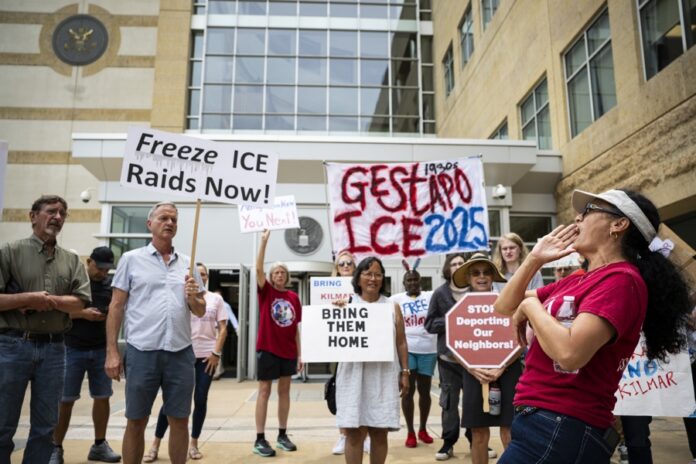
We challenged abusive ICE practices, and when state and local police unlawfully detained people to check their immigration status, we took them to court and won.

In the 2020 election, we led on challenging Trump’s attempt to disenfranchise voters and overturn the will of Pennsylvania’s voters.

My thoughts right now are with the people who are going to be hurt by this administration. Throughout the campaign, Trump and other Republicans clearly made immigrants, transgender people, and people of color a target of their dehumanizing rhetoric. Meanwhile, on immigration, Democrats pivoted harder to the criminalization of immigration and were almost (with a few notable exceptions) totally silent on the rights, dignity, and freedom of trans folks.

Candidates who do not support the values of freedom and civil liberties won elections this month. We won’t be able to stop every terrible thing that Trump and adherents to Trumpism will do. But we are ready and prepared to defend our civil liberties in Pennsylvania and across the country. It will take all of us working together to slow down the worst impulses of the MAGA movement.

State and local governments have the power to push back when the Trump administration tries to steal away our rights. The ACLU has prepared a playbook called “Firewall For Freedom” with dozens of policy ideas for state and municipal officials. For example, Trump cannot carry out his promise of  “mass deportation” of millions of our neighbors without cooperation from state and local law enforcement agencies. And yet there is nothing in law that requires state and local law enforcement agencies to cooperate with ICE. In fact, it’s just the opposite; immigration enforcement is the responsibility of the federal government alone. The Firewall For Freedom contains policy recommendations for how our state and local law enforcement agencies can push back against the Trump administration.

State and local laws can also protect people from discrimination in the workplace, housing, at businesses open to the public, and in education. Pennsylvania has a strong nondiscrimination law, and many municipalities, including Philadelphia, go even further in protecting their residents from unfair treatment based on their identity. The Firewall For Freedom has recommendations to uphold these critical laws to protect people on the basis of their race, ethnicity, sexual orientation, gender, and gender identity.

In 1967, while dealing with his disappointment with the legal and political landscape, Dr. Martin Luther King, Jr., penned «Where do we go from here: community or chaos?» He stated, «Thus, America, with segregationist obstruction and majority indifference, silently nibbled away at a promise of true equality that had come before its time.» Over the last decade, that silent nibble has sounded and felt like a jackhammer breaking our nation’s promise. Dr. King framed this dilemma of shaken trust in institutions and the necessity of faith in democracy as choosing community or chaos.

I choose community.

I believe that love will conquer hateful rhetoric and policies that have prevented far too many people from experiencing life as free and equal members of our society.

Working together, we will confront the challenges of today while preserving the future of our community over chaos.

Ciudad de Nueva York reduce a 60.000 la población de inmigrantes en los albergues

inmigrantes
EFE/ Ángel Colmenares

Nueva York.- La población de inmigrantes en los refugios de la ciudad de Nueva York, que han estado llegando en los últimos dos años, se ha reducido a unos 60.000 como resultado de la política de limitar su estadía a 30 días para solteros y a 60 para familias, dijo hoy el alcalde Eric Adams.

«Ya no estamos en situación de emergencia», afirmó Adams, que en octubre del 2022 declaró una emergencia calificando de «insostenible» el flujo de miles de migrantes y la demanda sobre la ciudad para proveer vivienda, alimentos, escuelas y otra ayudas.

«Gracias a programas como ese (limitar estadía) y a los servicios de apoyo, hemos podido reducir la población de migrantes de 220.000 (en su momento álgido) a unos 60.000», indicó Adams, que ha criticado a la Administración del saliente presidente demócrata Joe Biden por no conceder el dinero que la ciudad reclamó para afrontar la crisis humanitaria y económica que causó la llegada de miles de personas.

Con la administración entrante del presidente electo Donald Trump, asegura que su función como alcalde significa que habrá que «trabajar con ella».

«Lo que he dejado claro es que me he comunicado con el presidente entrante. Mi trabajo no es luchar contra la nueva administración, sino trabajar con ella. Y todas las conversaciones que he tenido con él han girado en torno a la forma de cumplir con Nueva York», reiteró durante una entrevista con la plataforma «The Reset Talk Show». .

Dos días después de las elecciones del 5 de noviembre Adams indicó que había llamado a Trump «para decirle que hay muchos problemas aquí en la ciudad que queremos abordar junto con la administración», pero no especificó qué problemas o si hablaron de las deportaciones masivas que el ahora presidente electo prometió durante su campaña electoral.

«Pagamos 6.400 millones de dólares de los contribuyentes para hacer frente a la crisis de los migrantes y los solicitantes de asilo. El gobierno federal sólo nos ha dado unos 200 millones de dólares. Eso es realmente lamentable y preocupante para mí y para muchos contribuyentes de la ciudad», indicó al reiterar hoy las críticas.

Adams agregó que cualquier conversación que tiene con el presidente entrante «es sobre cómo podemos ayudar a los neoyorquinos y cómo puedo trabajar con su administración para asegurarme de que la ciudad pueda seguir avanzando».

«Lamentablemente, hice 10 viajes a Washington bajo la actual administración pidiendo ayuda, y no la obtuvimos. Ahora tenemos una nueva administración y voy a seguir pidiéndole que nos ayude con los problemas de infraestructura, cómo recuperamos parte del dinero, cómo aseguramos nuestras fronteras y elaboramos una estrategia real para lidiar con quienes ingresan al país, para que puedan perseguir el sueño americano y no sean una carga para ciudades como Nueva York, Chicago y Denver», señaló.

«Creo en la ciudad y quienquiera que ocupe el cargo (presidencia), le mostraré el nivel de respeto que conlleva y no me quedaré sentado en una esquina haciendo pucheros durante cuatro años sin hacer nada por nuestra ciudad», sostuvo.

Jason Kelce’s wife announces she is pregnant with the couple’s fourth child

Kelce's
Jason Kelce and wife Kylie watch the women's field hockey match between the Argentina and United States, at the Yves-du-Manoir Stadium, at the 2024 Summer Olympics, Saturday, July 27, 2024, in Colombes, France. (AP Photo/Anjum Naveed, File)

Former Philadelphia Eagles center Jason Kelce’s wife announced Friday that she’s pregnant with the couple’s fourth child.

Kylie Kelce posted a photo on Instagram of the couple’s three young daughters reacting to the news. The oldest daughter, Wyatt, appears to be cupping her head in shock. The middle daughter, Elliotte, is smiling. The youngest, Bennett, is in tears. All three girls are wearing pink sweaters embroidered with “Big Sister.”

A caption attached to the photo reads: “I feel like we captured a very accurate representation of how each of the girls feel about getting another sister. At least Ellie, mom and dad are on the same page!”

The couple’s agent, Emily Ries, confirmed the pregnancy on Saturday.

Jason Kelce played 13 years with the Eagles before retiring this past March. He was named to the Pro Bowl seven times during his career. He appeared with the Eagles in Super Bowl LVII against the Kansas City Chiefs and his brother, Chiefs tight end Travis Kelce. The Chiefs ultimately defeated the Eagles 38-35.

Travis Kelce is dating pop superstar Taylor Swift.

Kylie Kelce’s post had garnered more than a million likes as of Saturday morning.

Pennsylvania governor taps federal highway aid to help Philadelphia transit system

Philadelphia
Pennsylvania Gov. Josh Shapiro speaks during a news conference in Philadelphia, Tuesday, July 30, 2024. (AP Photo/Matt Rourke, File)

HARRISBURG, Pa.— Gov. Josh Shapiro said Friday that he will divert more than $150 million in federal highway funding to provide a one-time injection of cash to help Philadelphia’s mass transit system avoid near-term service cutbacks and fare increases.

Shapiro’s announcement drew blowback from Republican lawmakers, who say their districts will lose money, and comes as many transit agencies are in a severe financial crunch

Federal COVID-19 relief for transit agencies is phasing out and the Southeastern Pennsylvania Transportation Authority and other major transit agencies around the country are struggling to regain ridership lost during the pandemic.

Shapiro, a Democrat, said the $153 million can help SEPTA maintain services and avoid steeper fare increases in hopes that he can come to an agreement on a wider transportation funding deal with state lawmakers by next summer.

But, he said, while mass transit agencies across Pennsylvania are struggling, SEPTA wasn’t going to make it to next summer without dramatically raising prices and significant cuts in services.

“I’m here to tell you, we can’t let that happen,” Shapiro told an audience of local and state officials at a news conference at a SEPTA transit station in northeast Philadelphia.

Shapiro also said Philadelphia and its four suburban counties had agreed to boost their contribution to SEPTA.

Shapiro said it is critical that SEPTA maintain services for everyday commuters and ahead of major tourism attractions, including events connected to the nation’s 250th anniversary celebration in 2026, the FIFA World Cup and Major League Baseball’s all-star game.

SEPTA’s board on Thursday approved an average fare increase of 7.5%, but the agency said the federal highway funding will allow it to hold off on a planned 21% increase scheduled for Jan. 1 and reconsider service cuts targeted to begin next summer.

The nation’s sixth-largest mass transit system, SEPTA is facing an annual structural budget deficit of $240 million.

SEPTA had characterized the need for fare increases and service cutbacks as a “death spiral,” while the region’s boosters and representatives had said the cutbacks would damage the local economy.

The service cuts were planned to take effect July 1 and were to include eliminating and shortening routes, and reducing the frequency of bus, trolley, subway, and Regional Rail service.

Shapiro said the federal highway dollars had been slated for seven projects — on Interstate 95 in Philadelphia and I-80 in Columbia County, I-79 in Mercer County, I-80 in Jefferson County, I-70 in Washington County and and I-83 in York County — that have not been bid out yet and that he pledged to still get done on time.

Diverting highway funds is allowable under federal law. Former Gov. Ed Rendell did it in 2005 and 2010 to help transit agencies, while shifting the money is routine in some other states.

Earlier this year, SEPTA lost out on about $161 million when the Republican-controlled state Senate didn’t go along with Shapiro’s proposal for $283 million in new state aid to public transit. Instead, lawmakers approved a one-time $80 million payment to the state trust fund for transit systems, of which SEPTA got $46 million.

Republican lawmakers have said that Shapiro must come up new money to pay for more transit aid and that extra transit aid must come packaged with more money for highway projects that will benefit the rest of Pennsylvania.

On Friday, Shapiro blamed the Senate’s Republican majority, saying he agreed to their demands but that “the Senate was never able to get it done.”

Republicans bristled at Shapiro’s characterization, suggested that SEPTA has structural problems that it must fix and criticized his move to divert highway money from Republican-represented areas of Pennsylvania.

“The action by the governor today will do nothing but harm millions of hard-working Pennsylvanians by depriving their areas of critical infrastructure,” Senate Majority Leader Joe Pittman, R-Indiana, said in a statement.

The Democratic-controlled House of Representatives passed Shapiro’s plan last March.

Impunity and violence against women in a divided America

violencia

Over the past decade, political polarization in the United States has deepened, taking on increasingly radical dimensions. Racial, political, gender and religious prejudices—among others—contribute to a parallel reality where no one truly wins, and everyone stands to lose significantly.

When these prejudices manifest as rejection or xenophobia toward those perceived as threats, the resulting reactions are often so visceral and aggressive that they spark a spiral of violence, harm, and criminal acts. This cycle invariably leads society toward chaos, with the weakest groups bearing the brunt of attacks on their dignity and constitutionally guaranteed rights.

One of the most affected groups is women, who face vulnerabilities in family, social, workplace, and political spheres.

Today, the cycle of domestic violence continues to harm thousands of women physically and sexually, with many also losing their lives. According to the World Population Observatory, in Pennsylvania alone, 4,351 women have been sexually assaulted so far in 2024—34 per 100,000 residents. Meanwhile, the National Sexual Violence Resource Center (NSVRC) reports that one in five women nationwide has experienced rape or attempted rape during her lifetime.

A pressing question arises: will Donald Trump’s recent victory exacerbate this dire situation? His dismissive comments about the seriousness of sexual assault, coupled with statements like, “I’ll take care of them, even if they don’t want me to,” raise legitimate concerns given his history.

Psychotherapist Harriet Fraad recently reflected on the liberation of women from traditional roles as housewives dependent on their husbands. She argues that this shift has left many men grappling with deep insecurity, fueling toxic, possessive, and often aggressive behaviors toward women who were once seen as private property.

With undertones of fanaticism and cult-like behavior, there is a discernible connection between misogyny, xenophobia, and other MAGA-driven phobias. Democratic Representative James Talarico of Texas, a rare dissenting voice among white evangelicals, highlights how Christian nationalism and the religious right played a pivotal role in Trump’s election. He criticizes the portrayal of Trump as divinely ordained, likening it to “Talibanizing” Christianity—weaponizing faith for political gain, delegitimizing opponents, and cloaking Trump in an unearned messianic mandate. Talarico warns of the potential for fascism in such a government.

Among Trump’s supporters are ordinary citizens driven by misinformation, but also numerous extremist groups with supremacist leanings. Emboldened by the victory of someone they feel represents them, these groups have marched under swastika-emblazoned flags, as seen recently in Ohio, Michigan and suburban Philadelphia.

Adding to this toxic environment are phone messages targeting racialized minorities and the widespread threats of sexual violence against students on social media—both of which have reached alarming levels.

This escalating situation demands coordinated, decisive responses to curb violence and protect victims.

The disturbing scenario should inspire those who truly love this country—especially Christians—to rise above and combat these violent outbreaks and hateful messages. Efforts must focus on rebuilding the social fabric of a nation that, through clouded judgment or corrupted principles, has elected Trump—a man found guilty of sexual abuse among other crimes. This outcome has left the world stunned and deeply concerned.

Democrat Bob Casey concedes to Republican David McCormick in Pennsylvania Senate contest

Bob Casey
Sen. Bob Casey, D-Pa., left, stops to speak to members of the media before voting, Tuesday, Nov. 5, 2024, in Scranton, Pa. (Photo: AP/Matt Rourke)

HARRISBURG, Pa. — Democratic Sen. Bob Casey of Pennsylvania conceded his reelection bid to Republican David McCormick on Thursday, as a statewide recount showed no signs of closing the gap and his campaign suffered blows in court in its effort to get favorable ballots counted.

Casey’s concession comes more than two weeks after Election Day, as a grindingly slow ballot-counting process became a spectacle of hours-long election board meetings, social media outrage, lawsuits and accusations that some county officials were openly flouting the law.

Republicans had been claiming that Democrats were trying to steal McCormick’s seat by counting “illegal votes.” Casey’s campaign had accused of Republicans of trying to block enough legitimate votes to prevent him from pulling ahead and winning.

In a statement, Casey, a stalwart of Pennsylvania’s Democratic establishment and the state’s longest serving Democrat ever in the Senate, said he had just called McCormick to congratulate him.

“As the first count of ballots is completed, Pennsylvanians can move forward with the knowledge that their voices were heard, whether their vote was the first to be counted or the last,» Casey said.

Casey’s campaign said the last of the ballots cast before polls closed on Nov. 5’s Election Day had finally been counted Thursday.

The Associated Press called the race for McCormick on Nov. 7, concluding that not enough ballots remained to be counted in areas Casey was winning for him to take the lead.

As of Thursday, McCormick led by about 16,000 votes out of almost 7 million ballots counted.

That was well within the 0.5% margin threshold to trigger an automatic statewide recount under Pennsylvania law.

But no election official expected a recount to change more than a couple hundred votes or so, and Pennsylvania’s highest court dealt Casey a blow when it refused entreaties to allow counties to count mail-in ballots that lacked a correct handwritten date on the return envelope.

Casey in the meantime had won efforts to get counties to tabulate thousands of provisional ballots that might otherwise have been thrown out because of an error by an election worker. That included voters whose registrations hadn’t been properly processed, the campaign said.

But the campaign lost other efforts to get counties to count ballots that were disqualified over garden-variety errors that voters made, like not signing a provisional ballot in two places or not putting the ballot into an inner “secrecy” envelope.

Republicans will have a 53-47 majority next year in the U.S. Senate.

McCormick, 59, recaptured a GOP seat in Pennsylvania after Republicans lost one in 2022, paying off a bet that party brass made when they urged McCormick to run and consolidated support behind him. It was McCormick’s second time running, after he lost narrowly to Dr. Mehmet Oz in 2022’s GOP primary.

McCormick, the former CEO of the world’s largest hedge fund, drew on tens of millions of dollars in campaign cash from allies from across the worlds of hedge funds and securities trading to help make the race the nation’s second-most expensive in the campaign cycle.

Beyond evangelicals, Trump and his allies courted smaller faith groups, from the Amish to Chabad

Trump
Members of the Amish community, Samuel Stoltzfus and his wife Lillian Stoltzfus, vote at a polling center at the Garden Spot Village retirement community in New Holland, Pa., Tuesday, Nov. 5, 2024. (Photo: AP/Luis Andres Henao)

A social-media tribute to Coptic Christians. A billboard in Amish country. A visit to a revered Jewish gravesite.

While Donald Trump’s lock on the white evangelical vote is legendary, he and his campaign allies also wooed smaller religious groups, far from the mainstream.

As it turned out, Trump won by decisive margins, but his campaign aggressively courted niche communities with the understanding that every vote could be critical, particularly in swing states.

Voter surveys such as exit polls, which canvass broad swaths of the electorate, aren’t able to gauge the impact of such microtargeting, but some backers say the effort was worth it.

Just one week before the election, Trump directed a post on the social-media platform X to Coptic Christians in the United States —- whose church has ancient roots in Egypt. He saluted their “Steadfast Faith in God, Perseverance through Centuries of Persecution and Love for this Great Country.”

“This was the first time seeing a major U.S. presidential candidate address the community in this manner,” said Mariam Wahba, a Coptic Christian and research analyst with the Foundation for Defense of Democracies, a Washington-based research institute. “It was really a profound moment.”

She said many Copts share the conservative social views of other Christian groups in the Republican constituency, and they may already have been Trump supporters. But the posting reinforced those bonds. Coptic bishops sent the president-elect congratulations after his victory and cited their “shared social and family values.”

Some Assyrian Christians — another faith group with Middle Eastern roots — similarly bonded with Trump, whose mispronunciation of “Assyrian” at a rally created a viral video moment and drew attention to their support.

Sam Darmo, a Phoenix real estate agent and co-founder of Assyrians for Trump, said many community members cited the economy, illegal immigration and other prominent voter issues. They echoed other conservative Christians’ concerns, he said, on issues such as abortion, gender identity and religious expression in public. But he said Trump supported various Middle Eastern Christians recovering from the Islamic State group’s oppressive rule.

Darmo also credited Massad Boulos, father-in-law to Trump’s daughter Tiffany, for mobilizing various Middle Eastern Christian groups, including Chaldean Catholics, and other voters, particularly in Michigan, such as Muslims.

“He brought all these minority groups together,» he said. “We’re hoping to continue that relationship.”

But members of Middle Eastern-rooted Christian groups, and their politics, are far from monolithic, said Marcus Zacharia, founder of Progressive Copts, a program of Informed Immigrants, an organization that promotes dialogue on sensitive topics among such groups in the United States and Canada.

He said many younger community members question Trump’s stances on issues such as immigration, and sense that conservatives sometimes tokenize them by focusing on the plight of persecuted Christians in the Middle East while neglecting wider issues of repression in countries there that the U.S. supports.

He said there needs to be more informed dialogue across the political divide in these communities. “There is no more high time than these next four years to have that way of conducting conversations,” he said.

Courting the Amish

Republicans also made an aggressive push for Amish voters, particularly in the swing state of Pennsylvania, where they are most numerous at about 92,000 (many below voting age).

The GOP has made similar efforts in the past, even though researchers have found that less than 10% of them typically vote, due to their separatism from society. But Republicans used billboards, mailers, ads and door-to-door campaigner to drive turnout in Lancaster County, home base to the nation’s largest Amish settlement.

On Election Day, Amish voters Samuel Stoltzfus and his wife Lillian Stoltzfus said they were supporting Trump, citing their anti-abortion beliefs.

“We basically look at it as murder,” Stoltzfus, 31, said outside a polling center in the Lancaster County community of New Holland, where dozens of other members of the local Amish community voted. Trump has wavered on the issue, dismaying some abortion opponents, though many have said Republicans still align more closely to their views.

Stolzfus added: “Make America great again and keep the moral values,” he said. “Let’s go back to the roots.”

Steven Nolt, a history professor at Elizabethtown College in Lancaster College who studies the Amish and their voting patterns, said that while it’s too early to say definitively without further research, he doesn’t see evidence of a larger turnout this year.

Lancaster County as a whole — most of which is not Amish — is a GOP stronghold that Trump won handily, though both parties’ votes edged up from 2020, according to unofficial results posted by the Pennsylvania Department of State.

Trump’s biggest increases were in urban or suburban areas with few Amish, while some areas with larger Amish populations generally saw a modest increase in the Trump vote, said Nolt, director of the college’s Young Center for Anabaptist and Pietist Studies.

“Bottom line, percentage-wise, not much change in the parts of Lancaster County where the Amish live,” he said.

Paying respects at a Chabad grave

Trump directly reached out to members of the Chabad Lubavitch movement, a prominent and highly observant branch of Orthodox Judaism.

On Oct. 7, the anniversary of the Hamas attack on Israel that triggered the Gaza war, Trump made a symbolically resonant visit to the “Ohel,” the burial site of the movement’s revered late leader, Rabbi Menachem M. Schneerson.

Wearing a yarmulke, the traditional Jewish skullcap, Trump, who has Jewish family members, brought a written prayer to the Ohel and laid a small stone at the grave in keeping with tradition. The site in New York City, while particularly central to Chabad adherents, draws an array of Jewish and other visitors, including politicians.

About two-thirds of Jewish voters overall supported Trump’s opponent, Democrat Kamala Harris, according to AP VoteCast, a survey of more than 120,000 voters. But the Trump campaign has made a particular outreach to Orthodox Jews, citing issues including his policies toward Israel in his first administration.

Rabbi Yitzchok Minkowitz of Chabad Lubavitch of Southwest Florida said it was moving for him to see images of Trump’s visit.

“The mere fact that he made a huge effort, obviously it was important to him,” he said.