El presidente estadounidense Donald Trump habla junto con el secretario de Comercio, Howard Lutnick, en la Oficina Oval de la Casa Blanca, el viernes 19 de septiembre de 2025, en Washington. (AP Foto/Alex Brandon)
En lo que parece ser el primer gran desafío al nuevo cargo de 100.000 dólares requerido para las solicitudes de visa H-1B de Estados Unidos, una coalición de proveedores de atención médica, grupos religiosos, profesores universitarios y otros presentaron una demanda federal el viernes para detener el cobro, afirmando que ha «sumido a empleadores, trabajadores y agencias federales en el caos».
El presidente estadounidense Donald Trump firmó una proclama el 19 de septiembre que requiere el pago del nuevo cargo debido a que, según dice, el programa de visas H-1B «ha sido deliberadamente explotado para reemplazar, en lugar de complementar, a los trabajadores estadounidenses con mano de obra menos remunerada y menos calificada». Los cambios estaban programados para entrar en vigor en 36 horas, lo que causó pánico entre los empleadores, quienes instruyeron a sus trabajadores a regresar a Estados Unidos de inmediato.
La demanda, presentada en la Corte de Distrito federal en San Francisco, afirma que el programa H-1B es una vía primordial para contratar trabajadores de la salud y educadores. Además, impulsa la innovación y el crecimiento económico en Estados Unidos y permite a los empleadores cubrir puestos en campos especializados, según la demanda.
«Sin alivio, los hospitales perderán personal médico, las iglesias perderán pastores, las aulas perderán maestros y las industrias en todo el país corren el riesgo de perder innovadores clave», afirmaron la Fundación Democracy Forward y el Centro de Acción por la Justicia en un comunicado de prensa. «La demanda solicita al tribunal que bloquee inmediatamente la orden y restaure la previsibilidad para empleadores y trabajadores».
Mensajes enviados en busca de comentarios del Departamento de Seguridad Nacional y de la Oficina de Aduanas y Protección Fronteriza de Estados Unidos, que son nombrados como demandados junto con Trump y el Departamento de Estado, no fueron respondidos de inmediato.
El programa de visas H-1B fue creado por el Congreso para atraer trabajadores altamente calificados para cubrir empleos que las empresas tecnológicas encuentran difíciles de llenar. Aproximadamente un tercio de los trabajadores H-1B son enfermeros, maestros, médicos, académicos, sacerdotes y pastores, según la demanda.
Los críticos dicen que el programa es un canal para trabajadores extranjeros que a menudo están dispuestos a trabajar por 60.000 dólares anuales, muy por debajo de los salarios de más de 100.000 que típicamente se pagan a los trabajadores tecnológicos en Estados Unidos.
Históricamente, las visas H-1B se han distribuido a través de un sorteo. Este año, Amazon, con sede en Seattle, fue por mucho el principal receptor de visas H-1B, con más de 10.000 otorgadas, seguido por Tata Consultancy, Microsoft, Apple y Google. Geográficamente, California tiene el mayor número de trabajadores H-1B.
Todd Wolfson, presidente de la Asociación Estadounidense de Profesores Universitarios, dijo que el cargo de 100.000 desalentará a las mentes más brillantes de traer a Estados Unidos investigaciones que salvan vidas.
Mike Miller, director de la Región 6 del sindicato Trabajadores Unidos del Automóvil, Aeroespaciales e Implementos Agrícolas de Estados Unidos, dijo que el plan de Trump «prioriza la riqueza y las conexiones sobre la capacidad científica y la diligencia».
Skye Perryman, presidenta y directora general de Democracy Forward, sostiene que el «cargo exorbitante» invita a la corrupción y es ilegal. Los grupos dijeron que el Congreso creó el programa y que Trump no puede reescribirlo de la noche a la mañana ni crear nuevos impuestos por orden ejecutiva.
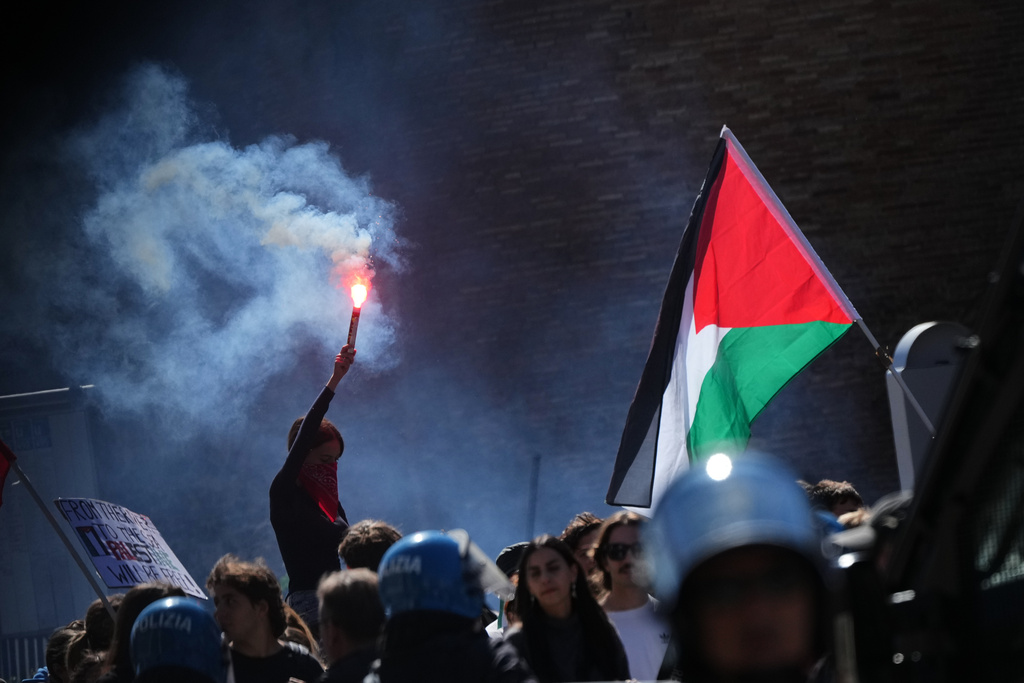
Manifestantes se reúnen para una protesta propalestina en Bolonia, Italia, el viernes 3 de octubre de 2025. (Guido Calamosca/LaPresse vía AP)
ROMA (AP) — Más de 2 millones de personas se manifestaron el viernes en más de 100 ciudades de Italia como parte de una huelga general de un día para apoyar a la población de Gaza y a una flotilla que llevaba ayuda humanitaria al territorio palestino pero fue interceptada por Israel, según informó el sindicato más grande de Italia.
Los sindicatos italianos proclamaron la huelga después de que la Flotilla Global Sumud, que intentaba romper el bloqueo naval de Israel para entregar ayuda en Gaza, fuera interceptada por las fuerzas armadas israelíes el miércoles por la noche. Desde entonces, han surgido protestas y manifestaciones en toda Europa y a nivel mundial, pero han sido particularmente fuertes en Italia.
La primera ministra italiana, Giorgia Meloni, criticó duramente la huelga. Afirmó que causaría una interrupción generalizada en todo el país y que estaba dirigida contra su gobierno de derecha.
Según el sindicato CGIL, 300.000 personas marcharon por las calles de Roma, mientras que la participación promedio en la huelga general a nivel nacional se situó en alrededor del 60%, paralizando sectores clave, como el transporte y las escuelas.
En Florencia, los manifestantes se acercaron a las puertas del centro de entrenamiento del equipo nacional de fútbol de Italia para exigir que no se juegue su próximo partido de clasificación para la Copa del Mundo contra Israel debido a la guerra en Gaza.
Manifestantes pro palestinos se reúnen para una huelga general nacional convocada por diferentes sindicatos para protestar contra la situación en Gaza dos días después de que las fuerzas israelíes interceptaran una flotilla de ayuda con destino a Gaza en el mar Mediterráneo, en Roma, el viernes 3 de octubre de 2025. (Foto AP/Alessandra Tarantino)
Italia tiene programado recibir a Israel en Udine el 14 de octubre. Pero la UEFA está considerando suspender a Israel debido a la guerra. Los jugadores no estaban en el centro de entrenamiento de Coverciano en Florencia, pero el equipo se reunirá allí el lunes.
Los manifestantes se ubicaron al otro lado de la calle del complejo de fútbol, sosteniendo en alto una pancarta que decía: «Detengamos el sionismo con la resistencia».
El viernes por la mañana, alrededor de 100.000 personas participaron en una manifestación en la ciudad norteña de Milán. Ahí se produjeron breves enfrentamientos después de que un grupo de manifestantes que bloqueaban la autopista de la ciudad comenzara a lanzar botellas a la policía, que respondió con bombas de humo.
También se produjeron escaramuzas aisladas en Turín, Bolonia y Nápoles, pero la mayoría de las protestas fueron pacíficas.
«Todavía creo que todo esto no trae ningún beneficio al pueblo palestino. Por otro lado, entiendo que causará muchos problemas al pueblo italiano», había comentado Meloni el jueves ante reporteros. «Las revoluciones y los fines de semana largos no van bien juntos».
La mandataria italiana ha estado enfrentando una creciente presión para retirar el tradicional apoyo de Italia a Israel, mientras surgen llamados para detener la crisis humanitaria que se desarrolla en Gaza.
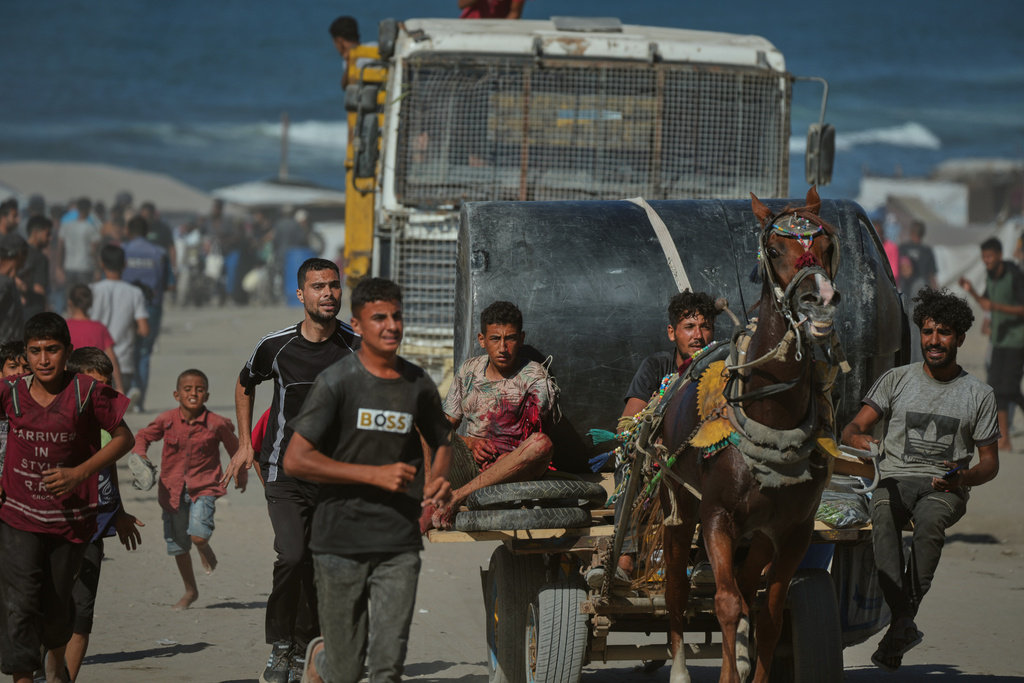
Un palestino herido por fuego de artillería israelí dirigido a un grupo de civiles que huían del norte de Gaza hacia el sur es evacuado en una carreta tirada por caballos, el miércoles 1 de octubre de 2025, en el centro de Gaza. (AP Foto/Jehad Alshrafi)
ARCHIVO - Edificios se reflejan detrás del logo de una tienda de Apple, el 19 de octubre de 2017, en el centro de Chicago. (AP Foto/Kiichiro Sato, archivo)
Apple y Google bloquearon las descargas de aplicaciones para teléfonos que informan de avistamientos de agentes de inmigración de Estados Unidos, tan sólo horas después de que el gobierno del presidente Donald Trump exigiera que se retirara una aplicación para iPhone particularmente popular.
La secretaria de Justicia Pam Bondi dijo que dicho seguimiento pone en riesgo a los agentes del Servicio de Inmigración y Control de Aduanas (ICE, por sus siglas en inglés). Pero los usuarios y desarrolladores de las aplicaciones dicen que la Primera Enmienda constitucional les garantiza su derecho de captar lo que el ICE está haciendo en sus vecindarios, y sostienen que la mayoría de los usuarios recurren a estas plataformas en un intento por proteger su propia seguridad a medida que Trump intensifica la aplicación enérgica de la ley de inmigración en todo el país.
ICEBlock, la aplicación de seguimiento del ICE más utilizada en la tienda de aplicaciones de Apple, es una de las aplicaciones que han sido retiradas. Bondi indicó que su oficina se comunicó con Apple el jueves «para exigir que eliminaran ICEBlock», y les dijo que «está diseñada para poner en riesgo a los agentes de ICE sólo por hacer su trabajo».
Apple cumplió pronto. El jueves le envió un correo electrónico al creador de la aplicación, Joshua Aaron, en el que decía que bloquearía más descargas de la misma porque la nueva información «proporcionada a Apple por las fuerzas policiales» mostró que la aplicación violaba las reglas de la tienda de aplicaciones.
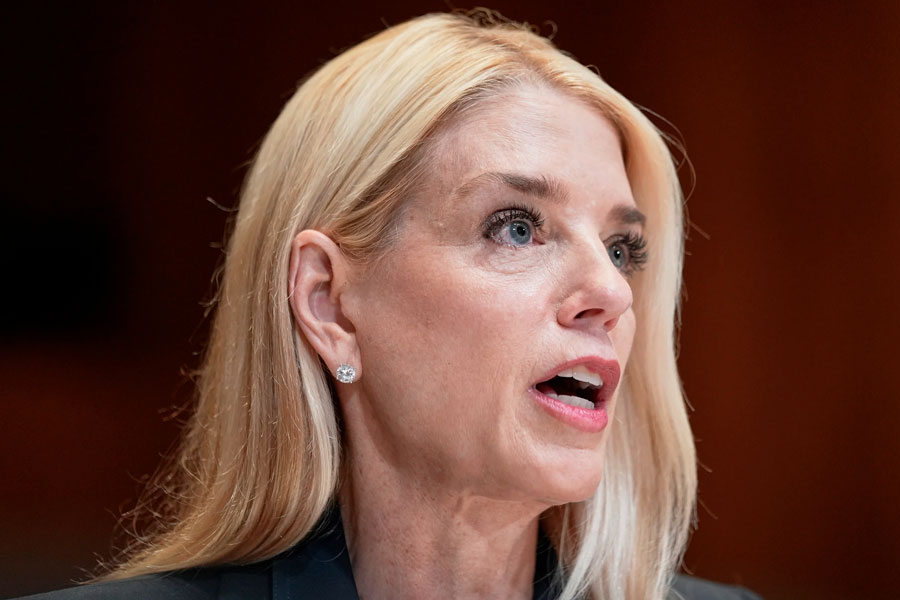
La secretaria de Justicia estadounidense Pam Bondi en el Congreso en Washington el 25 de junio del 2025. (Foto AP/Mariam Zuhaib)
Según el correo electrónico, que Aaron compartió con The Associated Press, Apple indicó que la aplicación violaba las políticas de la compañía “porque su propósito es proporcionar información de ubicación sobre agentes policiales que puede ser utilizada para dañar a dichos agentes individualmente o como grupo”.
En una entrevista el viernes, Aaron criticó a la compañía por doblegarse ante lo que dijo es «un régimen autoritario». Y defensores de los derechos de los inmigrantes como Kica Matos, presidenta del National Immigration Law Center —un grupo activista en pro de los inmigrantes—, añadieron que estas acciones marcan «un ejemplo preocupante de cómo las empresas tecnológicas están capitulando ante Trump» .
“Estas aplicaciones son un salvavidas para las comunidades que viven en incertidumbre y miedo de cuándo podría aparecer el ICE para destrozar a sus familias”, expresó Matos en un comunicado.
Las descargas de aplicaciones como ICEBlock han aumentado desde que Trump asumió la presidencia por segunda vez en enero de este año. Aaron indicó que lanzó la aplicación en abril como una forma de ayudar a las comunidades inmigrantes a protegerse de redadas sorpresa o acoso potencial. Tenía más de 1 millón de usuarios, según dijo.
Apple no especificó detalles sobre el número total de plataformas eliminadas, pero sí le confirmó a la AP el viernes que eliminó «aplicaciones similares» debido a posibles riesgos de seguridad planteados por las fuerzas policiales. Google siguió su ejemplo, diciendo que varias aplicaciones similares violaban sus políticas para plataformas Android.
Aunque algunos activistas no consideran que todas estas aplicaciones sean particularmente útiles —hacen notar que podrían generar desinformación y falsas alarmas—, hicieron eco de las críticas a las medidas para suprimirlas.
“Lo que realmente me preocupa es el tipo de precedente que esto establece”, en el que el gobierno puede “en esencia dictar qué tipos de aplicaciones tiene la gente en sus teléfonos”, señaló Alejandra Caraballo, abogada de derechos civiles que trabaja en la Clínica de Derecho Cibernético de la Universidad de Harvard.
Agentes policiales detienen a un manifestante cerca de una instalación del Servicio de Inmigración y Control de Aduanas (ICE, por sus siglas en inglés) en Broadview, Illinois, el viernes 3 de octubre de 2025. (AP Foto/Erin Hooley)
Caraballo dijo que, fuera de Estados Unidos, la presión gubernamental para bloquear aplicaciones ha sido “una especie de sello distintivo de un régimen autoritario”, como cuando la presión china en 2019 llevó a Apple a eliminar una aplicación que permitía a los manifestantes de Hong Kong rastrear a la policía.
Bondi advirtió durante el verano contra las aplicaciones que le permiten a las personas comunicarse para saber cuál es la ubicación de agentes policiales, y mencionó específicamente a Aaron de ICEBlock.
“Lo estamos investigando y más le vale tener cuidado porque eso no es libertad de expresión», manifestó Bondi en una entrevista en Fox News en julio.
Esas advertencias se intensificaron el mes pasado después de que un hombre armado abriera fuego contra una instalación del ICE en Dallas. Funcionarios, incluido el director del FBI, Kash Patel, dijeron que el hombre armado había buscado aplicaciones que rastreaban la presencia de agentes del ICE, aunque no han dicho si realmente usó una de las aplicaciones o si alguna de ellas desempeñó un papel en el ataque.
Aaron indicó que vincular al hombre armado con las aplicaciones no tenía mucho sentido, pues la aplicación sólo funciona si alguien más está informando sobre la actividad del ICE dentro de un radio de 8 kilómetros (5 millas) de otro usuario de iPhone.
“No necesitas una aplicación para saber que hay agentes del ICE en una instalación de detención del ICE”, expresó. “Esto es sólo una excusa fácil para que usen su poder e influencia para retirar algo que estaba exponiendo lo que están haciendo, y ese es el terror que están invocando en la gente de esta nación todos los días» .
Dijo también que la aplicación funcionaba de manera similar a aplicaciones populares de navegación como Waze, Google Maps y la propia aplicación Maps de Apple, que permiten a los usuarios informar sobre radares de velocidad de la policía.
“No es ilegal de ningún modo, forma o manera, ni tampoco expone a nadie”, apuntó, y añadió que ICEBlock también es “un sistema de alerta temprana para las personas”.
Aquellos que usan las aplicaciones u otros métodos en línea para monitorear la actividad del ICE dicen que la mayoría de las personas que las usan lo hacen por su propia seguridad o por preocupación por sus seres queridos.
“La gente está extremadamente asustada en este momento», señaló Sherman Austin, quien en febrero fundó Stop ICE Raids Alert Network, una plataforma que proporciona alertas y apoyo a personas afectadas por redadas del ICE. Puso de relieve el aumento de los temores en torno al perfil racial y los arrestos violentos que afectan a las familias.
“Ellos quieren saber qué está pasando en su vecindario y qué está pasando en su comunidad”, expresó Austin, y dijo que agentes del ICE han arrojado a personas violentamente al suelo a plena luz del día.
Conocida también como StopICE.Net, la plataforma de Austin también utiliza el “crowdsourcing” (colaboración abierta sin paga), pero en cambio permite a sus usuarios rastrear la actividad del ICE de manera más amplia en línea o a través de alertas de texto, sin necesidad de descargar una aplicación por separado. Austin dice que la plataforma ha alcanzado más de 500.000 suscriptores hasta el viernes.
El grupo también ha criticado al gobierno de Trump por lo que dice que son ataques de represalia dirigidos a aquellos que están ejerciendo sus derechos garantizados por la Primera Enmienda constitucional. El mes pasado, la plataforma indicó que se enteró de que el Departamento de Seguridad Nacional (DHS, por sus siglas en inglés) había citado a Meta para obtener datos sobre la cuenta en Instagram de StopICE.Net.
Austin señaló que StopICE.Net impugnó inmediatamente la acción, y el viernes agregó que ahora la citación está bloqueada temporalmente y pendiente de una audiencia con un juez.
Meta declinó hacer comentarios el viernes. El DHS no respondió directamente a una solicitud de comentarios sobre la citación el viernes, y en lugar de ello le hizo notar a la AP una declaración de la secretaria adjunta Tricia McLaughlin, quien reiteró que “las aplicaciones de seguimiento del ICE ponen en peligro las vidas de los hombres y mujeres de las fuerzas policiales», y criticó a los medios de comunicación por presentar ante el público que la “decisión correcta” de Apple de eliminar aplicaciones como ICEBlock equivale a «ceder a la presión en lugar de prevenir más derramamiento de sangre”.
Mientras tanto, desarrolladores como Austin dicen que las eliminaciones de estas aplicaciones y otras amenazas federales deberían alarmar a todos.
“Estamos enfrentándonos a un régimen, un gobierno que va a operar de cualquier manera que quiera, y amenaza a quien quiera para salirse con la suya, para controlar información y para controlar una narrativa», señaló. “Tenemos que impugnar esto y combatirlo de cualquier manera que podamos”.
___
Esta historia fue traducida del inglés por un editor de AP con la ayuda de una herramienta de inteligencia artificial generativa.
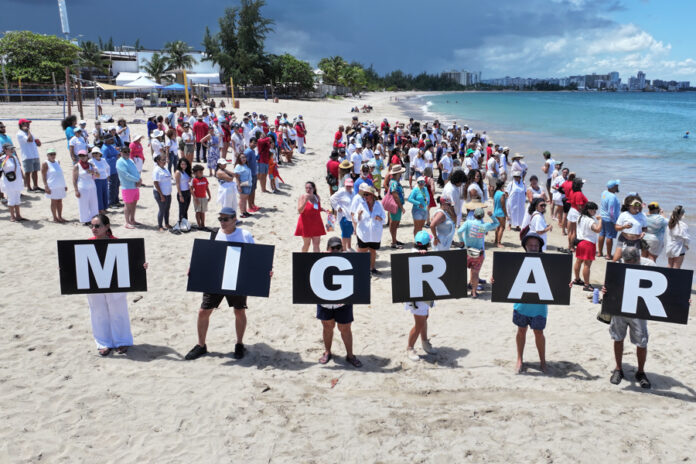
Fotografía cedida por las organizaciones Kilómetro 0, Amnistía Internacional de Puerto Rico, Comuna Caribe y la Unión Americana de Libertades Civiles (ACLU, en Inglés) que muestra a personas sosteniendo carteles durante una manifestación este sábado, en la playa balneario de Carolina (Puerto Rico). EFE/ Kilómetro 0/ Amnistía Internacional de Puerto Rico
BOSTON (AP) — Un tribunal federal de apelaciones en Boston dictaminó el viernes que el gobierno del presidente Donald Trump no puede negar la ciudadanía a los niños nacidos de personas que se encuentran en el país ilegal o temporalmente, sumando así otro revés jurídico a la orden del mandatario sobre la ciudadanía por nacimiento.
Un panel de tres jueces de la Corte Federal de Apelaciones del 1er Circuito se convirtió en el quinto tribunal federal desde junio en emitir o mantener órdenes que bloquean la orden del presidente sobre la ciudadanía por nacimiento. El tribunal concluyó que es probable que los demandantes tengan éxito en sus alegatos de que los niños descritos en la orden tienen derecho a la ciudadanía por nacimiento bajo la Cláusula de Ciudadanía de la 14ª Enmienda constitucional.
El panel mantuvo las medidas cautelares de los tribunales inferiores, que bloquearon la orden sobre la ciudadanía por nacimiento mientras avanzaban las demandas que la impugnaban. La orden, firmada el día en que el presidente asumió el cargo en enero, detendría la ciudadanía automática para los bebés nacidos de personas que se encuentran en Estados Unidos ilegal o temporalmente.
“Las ‘lecciones de la historia’ nos dan, por tanto, todas las razones para ser recelosos de bendecir ahora este esfuerzo más reciente por romper con nuestra tradición establecida de reconocer la ciudadanía por nacimiento y de hacer que la ciudadanía dependa de las acciones de los padres de uno en lugar de —en casi todas las circunstancias— el simple hecho de haber nacido en Estados Unidos”, escribió el tribunal.
El fiscal general de California, Rob Bonta —cuyo estado fue uno de los casi 20 que formaron parte de la demanda que impugnaba la orden—, acogió con satisfacción el fallo.
“El Primer Circuito reafirmó lo que ya sabíamos que era cierto: el ataque del presidente a la ciudadanía por nacimiento desafía flagrantemente la Decimocuarta Enmienda de la Constitución de Estados Unidos, y una orden judicial a nivel nacional es la única forma razonable de proteger contra sus implicaciones catastróficas”, declaró Bonta en un comunicado. “Nos alegra que los tribunales hayan seguido protegiendo los derechos fundamentales de los estadounidenses”.
Una segunda corte de apelaciones también falló el viernes a favor de varias organizaciones que impugnaron la orden presidencial sobre la ciudadanía por nacimiento. Los demandantes, incluidos los grupos activistas New Hampshire Indonesian Community Support y la Liga de Ciudadanos Latinoamericanos Unidos, fueron representados por la Unión Americana de Libertades Civiles (ACLU, por sus siglas en inglés).
“La corte federal de apelaciones reforzó hoy que esta orden ejecutiva es una violación flagrante de la Constitución de Estados Unidos, y estamos de acuerdo”, manifestó SangYeob Kim, abogado principal de la ACLU de Nueva Hampshire. “Nuestra Constitución es clara: ningún político puede decidir quién entre los nacidos en este país es digno de ciudadanía”.
(Foto: Ilustrativa/Archivo)
En septiembre, el gobierno de Trump le solicitó a la Corte Suprema que respaldara su orden sobre la ciudadanía por nacimiento. La apelación pone en marcha un proceso en el máximo tribunal que podría derivar en que los jueces emitan un fallo definitivo el próximo verano sobre si las restricciones a la ciudadanía son constitucionales.
“La corte está interpretando erróneamente la 14ª Enmienda. Esperamos ser reivindicados por la Corte Suprema”, dijo la portavoz de la Casa Blanca, Abigail Jackson, en un comunicado.
En julio, el juez federal de distrito Leo Sorokin en Boston emitió el tercer fallo judicial que bloquea la orden sobre la ciudadanía por nacimiento a nivel nacional, luego de una decisión clave de la Corte Suprema en junio. Menos de dos semanas después, un juez federal en Maryland también emitió una medida cautelar preliminar a nivel nacional contra la orden. Se prevé que el asunto regrese rápidamente al máximo tribunal del país.
Los jueces dictaminaron en junio que, en general, los tribunales inferiores no pueden emitir órdenes judiciales válidas a nivel nacional, pero no descartaron otras órdenes judiciales que podrían tener efectos en todo el país, incluidas demandas colectivas y aquellas presentadas por estados.
Un juez federal en Nueva Hampshire emitió posteriormente un fallo que prohíbe que la orden ejecutiva de Trump entre en vigor a nivel nacional en una nueva demanda colectiva, y un tribunal de apelaciones con sede en San Francisco confirmó una medida cautelar a nivel nacional de un tribunal inferior, en una demanda que incluía a estados entre los demandantes.
En el centro de las demandas que impugnan la orden de ciudadanía por nacimiento está la 14ª Enmienda de la Constitución, que incluye una cláusula sobre la ciudadanía que dice que todas las personas nacidas o naturalizadas en Estados Unidos, y sujetas a la jurisdicción del país, son ciudadanos.
Los demandantes en el caso de Boston —uno de los casos que el 1er Circuito examinó— dijeron a Sorokin que el principio de la ciudadanía por nacimiento está “consagrado en la Constitución”, y que Trump no tiene la autoridad para emitir la orden, de la que dijeron es un “intento flagrantemente ilegal de despojar a cientos de miles de niños nacidos en Estados Unidos de su ciudadanía en función de su ascendencia”.
Los abogados del Departamento de Justicia argumentaron que la frase “sujeto a la jurisdicción de Estados Unidos” en la enmienda significa que la ciudadanía no se confiere automáticamente a los niños sólo por su lugar de nacimiento.
En un caso histórico sobre la ciudadanía por nacimiento, en 1898 la Corte Suprema determinó que un niño nacido en San Francisco de padres chinos era ciudadano en virtud de haber nacido en suelo estadounidense.
____
Esta historia fue traducida del inglés por un editor de AP con la ayuda de una herramienta de inteligencia artificial generativa.
La secretaria de Seguridad Nacional de EEUU, Kristi Noem, habla durante una mesa redonda en el "Alcatraz de los Caimanes", una nueva cárcel para inmigrantes en las instalaciones del Aeropuerto de Formación y Transición de Dade-Collier, en Ochopee, Florida, el martes 1 de julio de 2025. (AP Foto/Evan Vucci)
Sin el terror explícito que se vive en otras regiones del mundo donde se llevan a cabo “limpiezas étnicas”, en Estados Unidos ya hay millones de personas que están dejando el país. No por guerra, sino por miedo. Miedo a ser detenidos por su apariencia, a ser interrogados por hablar español, a ser tratados como sospechosos por simplemente existir como latinos.
En un momento en que el ambiente antinmigrante y antihispano se intensifica en varios estados del país, donde basta con “parecer latino” para ser detenido o cuestionado sobre su estatus migratorio, otros territorios están dando pasos significativos hacia la inclusión y el reconocimiento.
Más de un millón de inmigrantes y sus hijos, muchos ya ciudadanos estadounidenses, han decidido abandonar estados hostiles por el temor constante, la discriminación y la falta de garantías. Esta migración interna está teniendo efectos económicos profundos, no solo en las regiones que pierden población activa, sino en todo el país. La economía se está resintiendo, y las repercusiones son extensas.
Desde enero de 2025, bajo el segundo mandato de Donald Trump, se han deportado aproximadamente 400,000 personas. A esto se suman 1.6 millones de salidas voluntarias de inmigrantes indocumentados que han optado por irse ante el endurecimiento de las políticas migratorias. En total, 2 millones de personas han abandonado EE. UU. en menos de un año. Esta cifra refleja no solo el impacto de las redadas y detenciones, sino también el miedo generalizado que se ha instalado en muchas comunidades latinas.
Sin embargo, en medio de este panorama preocupante, hay señales de esperanza. El estado de Nueva Jersey ha dado un paso histórico al aprobar una ley que exige que las escuelas públicas enseñen la historia y las contribuciones de los latinos como parte del currículo de Estudios Sociales, desde primaria hasta secundaria. Esta medida, firmada por el gobernador Phil Murphy, busca consolidar el legado de las comunidades latinas e hispanas en el estado.
La senadora Teresa Ruiz, una de las autoras del proyecto, destacó que el 87 % de los temas clave en la historia latina están ausentes o minimizados en los libros de texto. Esta invisibilización ha dejado un vacío profundo en la narrativa nacional. “Nuestros niños merecen ver esa historia reflejada con precisión y a los latinos representados en espacios excepcionales”, afirmó Ruiz.
Este nuevo currículo, que entrará en vigor en el año escolar 2026-2027, no solo reconoce el papel de los latinos en la construcción de EE. UU., sino que también reivindica su presencia en todos los ámbitos: desde las artes y las ciencias hasta el servicio público y la economía.
En Impacto, estamos comprometidos con seguir publicando la voz de los que no tienen voz. Lamentablemente, la situación actual ha generado un clima de miedo que impide que muchas personas se expresen libremente, por temor a represalias o a reclamos en su entorno, en un ambiente cada vez más polarizado. Hemos observado con preocupación cómo, incluso en manifestaciones públicas, la gente se muestra más reticente a ser fotografiada, cubriendo sus rostros con mascarillas para evitar ser identificada.
Pero no podemos sucumbir al silencio. El miedo no puede callar la verdad. Este es un momento para expresar y testificar, porque la historia nos reclama.
Por eso, hemos creado una nueva sección llamada “La Pajarita”, un espacio seguro donde cualquier persona puede enviarnos sus reflexiones, denuncias o testimonios sin necesidad de revelar su identidad. Queremos que este sea un canal de expresión libre, valiente y necesario.
Mientras algunos sectores insisten en frenar el crecimiento y la visibilidad de los latinos, otros celebran su aporte y trabajan por un futuro más inclusivo. La pregunta que debemos hacernos como comunidad es urgente y profunda:
¿Qué estamos haciendo para defender el valor que tenemos ante la embestida que pareciera estimular una especie de limpieza étnica silenciosa?
Los Ángeles (EE. UU.).- La concejal de Chicago, Jessie Fuentes, fue esposada y detenida en la sala de emergencia de un hospital de la ciudad cuando confrontó a agentes de inmigración que ingresaron al nosocomio para detener a un inmigrante herido, en medio de la escalada de las redadas en esa ciudad.
Fuentes se encontraba en la zona de Humboldt Park, que hace parte de su distrito, manifestándose de forma pacífica junto a otros funcionarios electos contra “las tácticas militares” usadas en el operativo desplegado que ha dejado a más de 900 detenidos en Chicago, según datos del Departamento de Seguridad Nacional (DHS, en inglés).
Un video publicado en sus redes sociales mostró como Fuentes estaba diciendo a dos agentes de inmigración que el inmigrante al que pretendían detener “tenía derechos constitucionales”, mientras el agente responde repetidamente que «no» y le ordena que abandone el área.
La concejal sigue preguntando al oficial por la orden de arresto firmada cuando es esposada y detenida, se observa en las imágenes.
“No te he tocado, no te he tocado. Solo he preguntado si tienes una orden de arresto contra él (el inmigrante), es una pregunta simple. Ese hombre tiene derechos constitucionales”, se oye decir de una forma calmada a la funcionaria, que ocupa el cargo desde 2023.
Fuentes fue detenida brevemente y liberada después frente al hospital.
La concejal denunció que los agentes también habían evitado que el inmigrante, que estaba siendo atendido en el hospital, se comunicara con su abogado.
El alcalde de Chicago, el demócrata Brandon Johnson, reaccionó tras la detención de Fuentes, calificándolas de “abusivas” y subrayando que los funcionarios tienen el derecho, amparado por la Primera Enmienda, de documentar las acciones de ICE e “informar a sus electores” sobre sus derechos sin interferencia federa.
“Cualquier intento de bloquear esta labor constituye un ataque directo a la rendición de cuentas democrática y un atentado contra los derechos de los ciudadanos de Chicago”, insistió el jefe del Ayuntamiento.
La tensión por las redadas migratorias ha aumentado en Chicago y sus alrededores, donde estuvo hoy presente la secretaria del DHS, Kristi Noem, en el centro de procesamiento del Servicio de Inmigración y Control de Aduanas (ICE) en Broadview (Illinois), que se ha convertido en el epicentro del descontento contra las política migratorias del presidente Donald Trump, que mantiene su amenaza de militarizar la ciudad.
Las protestas frente a ese centro se han extendido por semanas donde se han arrestado a varios ciudadanos estadounidenses, entre ellos veteranos del Ejército de los EE. UU.
Washington.- El Tribunal Supremo de Estados Unidos falló este viernes a favor de la Administración de Donald Trump y le permite de nuevo revocar el estatus de protección temporal (TPS) poniendo en riesgo de deportación a cerca de 300.000 migrantes venezolanos.
El tribunal falló, con seis votos a favor y tres en contra, dar la razón al Departamento de Seguridad Nacional, y contravenir la decisión de un tribunal de distrito de California que negó al gobierno de Donald Trump la posibilidad de suspender el TPS para unos 600.000 inmigrantes.
El fallo de hoy deja a 350.000 venezolanos en riesgo de detención y deportación inmediata, mientras otros 250.000 venezolanos quedarán desprotegidos el 7 de noviembre, fecha en que expirará el amparo para ese grupo, mientras que la decisión podría no afectar por el momento beneficiarios haitianos del TPS.
«Aunque las posturas en el caso han cambiado, los argumentos legales de las partes y los daños relativos no lo han hecho. El mismo resultado que se acordó en mayo es el apropiado», indica la opinión de la mayoría en referencia a una decisión anterior en el mismo caso que daba la razón al gobierno de Trump en el mismo caso por la vía de emergencia.
Las juezas progresistas Sonia Sotomayor, Elena Kagan y Ketanji Brown Jackson se opusieron a la decisión de la mayoría.
En su opinión contraria al fallo, Jackson aseguró que «no puedo estar de acuerdo con este interferencia repetitiva, gratuita y dañina en los casos que siguen pendientes en tribunales inferiores mientras hay vidas en la balanza».
El Gobierno pidió al Supremo a finales de septiembre que se le permitiera retirar las protecciones contra la deportación que había sido extendida por orden de un juez federal.
Ahilan Arulanantham, codirector del Centro de Derecho y Política de Inmigración (CILP) de la Universidad de California Los Ángeles, que hace parte de los abogados demandantes, calificó el fallo como “la señal más extrema» de que la Corte Suprema «ha abandonado el derecho por la política».
El fallo del Tribunal Supremo es parte de una disputa legal que inició contra el amparo concedido por el expresidente Joe Biden en 2021 y que amplió en 2023 para cobijar a un mayor número de inmigrantes, que ingresaron a EE.UU. de forma irregular.
En febrero pasado, la Casa Blanca anunció el fin del amparo, desde entonces, tribunales inferiores bloquearon la medida en varias ocasiones, generando un largo proceso de apelaciones que nuevamente parece concluir con la autorización del Supremo para revocar las protecciones a más de 600.000 migrantes.
Por su parte, Jéssica Bansal, abogada de la Red Nacional de Jornaleros (NDLON), que representa a los venezolanos, advirtió que «no permanecerán en silencio ante tal injusticia», por lo que invitan a los afectados y el público en general a la Semana de Acción para Proteger a las Familias del TPS del 6 al 10 de octubre.
Maridarlyn, of Dominican heritage and raised in Puerto Rico, has always celebrated the value of her “double cultural wealth.” (Photo: Courtesy/Maridarlyn Gonzalez)
During Hispanic Heritage Month, we honor Latinos who share their success with the community.
In a Charla de Impacto conversation with Impacto Media’s Editor-in-Chief Perla Lara, Maridarlyn Gonzalez, a young professional of Dominican descent raised in Puerto Rican culture, reflected on the powerful influence both islands have had on her life.
In Maridarlyn, Caribbean roots converge with a single purpose: serving the Latino community through knowledge, empathy, and civic engagement. The daughter of Dominican parents and raised by a Puerto Rican family, she embodies both the richness and complexity of Latino identity, as well as the drive of those who turn their personal stories into engines of social change.
Although she built her career in Philadelphia, her childhood was filled with the sounds of merengue and the rhythms of Puerto Rico’s Naranjito mountains.
“I grew up between two cultures, and that’s a blessing,” she says. “When I play dominoes, I use Puerto Rican words like chiva and capicúa. I’m proud to celebrate both cultures.”
Maridarlyn, of Dominican and Puerto Rican heritage, has always celebrated the value of her “double cultural wealth.” (Photo: Impacto Staff)
Maridarlyn graduated from Kensington High School, in North Philadelphia, where she learned a lesson that would shape her journey: “That with little, you can do a lot.” For her, every achievement is a collective one.
“It’s not just about my personal growth, but about representing those who come after me. My community taught me that there’s always something you can contribute.”
Today, she is part of the research team at The Pew Charitable Trusts, a global, nonpartisan philanthropic organization that strengthens cities through studies, grants, and support for public spaces. In her role, she analyzes data and trends that help guide government decision-making and provide valuable insights for community leaders and nonprofit organizations.
But her commitment to public service began long before. After graduating from Pennsylvania State University (Penn State), she worked at Women Against Abuse, where she helped survivors of domestic violence find safe housing. She later joined an energy company focused on helping low-income families improve their homes and eventually transitioned to the public sector, where she worked in urban planning.
“Working in planning was a wonderful experience because it allowed me to understand my city on a deeper level; to see its maps, its data, and how different layers of government connect,” she explains. “That prepared me for what I do now at Pew: analyzing data rigorously, but always keeping my feet –and my eyes– in the community.”
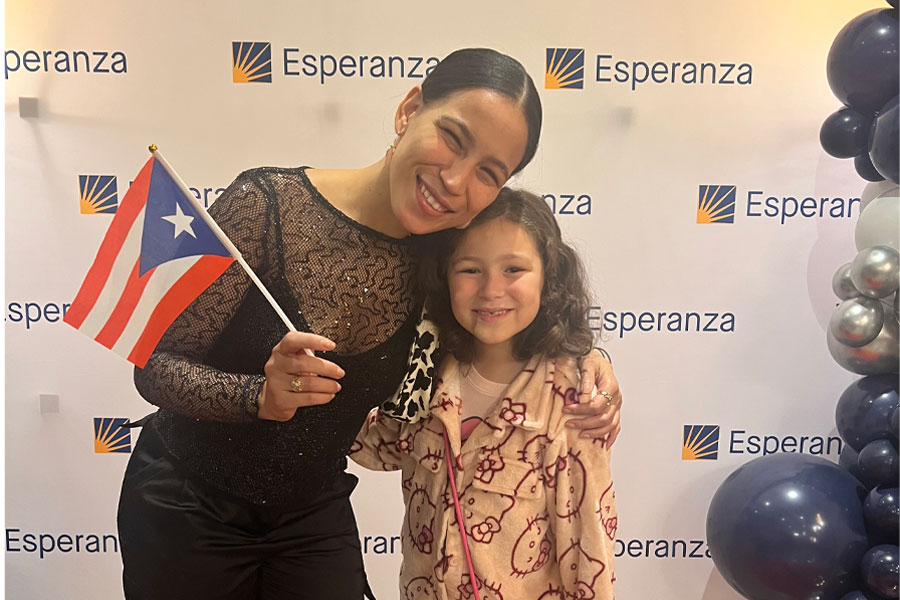
Maridarlyn with a student from Esperanza Academy. (Photo: Courtesy/Maridarlyn Gonzalez)
Latino poverty: a persistent challenge
At Pew, Maridarlyn has contributed to key research efforts aimed at understanding the economic realities of Latino families in Philadelphia. In 2017, the organization released the report Philadelphia’s Poor, which revealed that Latinos have the highest poverty rate among major demographic groups in the city, and that Philadelphia ranks among the poorest large cities in the United States.
“Between 2013 and 2023, that rate dropped by about eight percentage points, but the total number of people living in poverty didn’t change much,” she notes. “That suggests the Latino population is growing. There’s been some progress; for instance, more households now earn over $150,000 a year, but still, 59% of Latino households make less than the city’s median income of around $60,000.”
While at Women Against Abuse, Maridarlyn worked to reduce domestic violence. (Photo: Courtesy/Maridarlyn Gonzalez)
The report also highlights that households led by Latina women are more likely to live below the poverty line.
“Forty-one percent of Latinos living in poverty are children, and 64% of households in that situation are headed by single mothers. That reality underscores the urgent need to build community support networks and advocate for more effective public policies,” she explains.
Despite decades of work by Latino organizations, poverty remains a structural challenge with multiple causes.
“The median income for Latino households in poverty is about $14,490 a year, but the basic cost of living in Philadelphia exceeds $96,000. That gap is enormous. Plus, Pennsylvania still follows the federal minimum wage, which limits economic mobility. It’s not that there’s no work; it’s that available jobs don’t pay enough.”
For the young researcher, data must be a starting point for dialogue and action. “Our role at Pew is to present information objectively so that organizations, leaders, and the community can make informed decisions. Numbers aren’t the end of the conversation; they’re the beginning.”
“I’ve always identified as a proud Dominican-Boricua,” says Maridarlyn. (Photo: Courtesy/Maridarlyn Gonzalez)
Being Latina as a great blessing
For Maridarlyn, being Latina has always been a source of strength.
“I love our culture and our roots. It’s helped me value other cultures and connect with people from around the world,” she says. “For me, being Latina hasn’t been a struggle — it’s made my life richer and more meaningful. It’s helped me adapt, learn, and serve.”
She acknowledges that within the Latino community itself, diversity can sometimes present challenges, but insists that this plurality is one of its greatest strengths.
Her work in city planning gave Maridarlyn a deep understanding of how government operates. (Photo: Courtesy/Maridarlyn Gonzalez)
“We’re different, but we share common values: hard work, family, faith, solidarity… If I could choose, I’d choose to be Latina a thousand times over.”
Through her work at Pew and her deep commitment to service, Maridarlyn Gonzalez represents a new generation of Latino professionals who, without forgetting their roots, are determined to open doors for those who follow.
“My story isn’t just mine. It’s the story of many people who dreamed of a better future, and are now working to build it.”
This content is a part of Every Voice, Every Vote, a collaborative project managed by The Lenfest Institute for Journalism. Lead support for Every Voice, Every Vote in 2024 and 2025 is provided by the William Penn Foundation with additional funding from The Lenfest Institute for Journalism, Comcast NBC Universal, The John S. and James L. Knight Foundation, Henry L. Kimelman Family Foundation, Judy and Peter Leone, Arctos Foundation, Wyncote Foundation, 25th Century Foundation, and Dolfinger-McMahon Foundation. To learn more about the project and view a full list of supporters, visit www.everyvoice-everyvote.org. Editorial content is created independently of the project’s donors.
Marcelle McGuirk and her musical journey with Sonidos Latinos (Photo: Courtesy/Jason Chen Photography)
This Friday, October 10 at 7:00 p.m., Teatro Esperanza will be filled with history, poetry, and music during the concert “Sonidos Latinos”, a unique experience that revives and celebrates classical music from Puerto Rico and Latin America.
Puerto Rican-American soprano Marcelle McGuirk, recognized for her work in opera and classical music, leads this deeply personal artistic project. With roots in Yauco, Puerto Rico, Marcelle has spent the past two years researching Puerto Rican classical song, uncovering hundreds of compositions by Puerto Rican musicians that were never published or recorded and are rarely performed.
«It has been an eye-opening experience. These songs are a testament to the talent and sensitivity of composers who, for various historical reasons, were pushed aside from the classical canon,” says Marcelle.
A Latin American collaboration
“Sonidos Latinos” also features Brazilian pianist Gabriel Rebola and French Argentinian mezzo-soprano Eugenia Forteza, a Temple University alumna. Together, they will present a program of approximately 15 pieces, including duets, vocal solos, and piano works. Marcelle will primarily perform Puerto Rican classical songs, Eugenia Forteza will share art songs from her Argentinian heritage, and Gabriel Rebola will perform works by renowned Brazilian composer Heitor Villa-Lobos.
Marcelle McGuirk and her musical journey with Sonidos Latinos. (Photo: Courtesy/Jason Chen Photography)
A Rediscovered musical legacy
The Puerto Rican songs featured in the concert span a wide range of styles. Some are rooted in traditional genres like bomba and danza, while others adopt popular musical forms of their time.
One of the concert’s highlights will be the performance of a waltz by composer Hermógenes Álvarez, which uses poetry rich with symbolism to express Puerto Rico’s yearning for independence from Spanish colonial rule written before the U.S. occupation of the island.
A Message of Pride and Remembrance
More than just a concert, “Sonidos Latinos” seeks to reclaim the cultural and artistic value of Puerto Rican and Latin American composers who have long been historically overlooked.
“I hope the audience walks away with a deeper sense of pride in our rich musical heritage. This is a way to rescue silenced voices and give them the place they deserve in the history of classical music,” Marcelle concludes.
It promises to be an unmissable night for lovers of music, culture, and Latin American history. For more information or to purchase tickets, visit www.esperanzacenter.us