Inicio Blog Página 251

Plans to develop “Paseo Boricua” and restore the historic Teatro Puerto Rico unveiled by APM

Paseo Boricua
Members of the family of Felix Rodriguez, one of the former owners of Teatro Puerto Rico, pose in front of the historic building. (Photo: Vanessa Maria Graber)

Philadelphia, PA — At an event in August held at Teatro Puerto Rico, leaders of Asociación Puertorriqueños en Marcha (APM) shared their preliminary master plan for Paseo Boricua—APM’s bold reimagining of Germantown Avenue as a thriving corridor celebrating Puerto Rican culture, commerce, and community pride. The plan includes the restoration of the historic Teatro Puerto Rico, formerly known as the Diamond Theater, which was once a Spanish-language movie house and entertainment venue catering to the Puerto Rican community that lived in North Philadelphia from 1960 to 1975.

Teatro Puerto Rico, once owned and operated by Felix Rodriguez, was one of the few Spanish language theaters featuring Latino movie stars, singers, and wrestlers during that period. APM leaders hope to make the theater a functioning and successful event space again, with the restored venue serving as the anchor for the Puerto Rican arts and cultural development project, Paseo Boricua.

Teatro Puerto Rico was built in circa 1922 and was added to the Philadelphia Register of Historic Places in November 2024. Musician and organizer, Andy Molholt, nominated the building to be considered for a historic designation by the Philadelphia Historical Commission with the help of the Keep Society of Philadelphia. He talked about his motivation to save the theater from demolition. “I’ve been a long admirer of this building and of cinema palaces in general. There’s a rich history of cinema palaces in Philadelphia that, unfortunately, most of which are abandoned or have been destroyed. But this building is just so beautiful, and when researching the history of it, I just really thought it needed to be preserved.” 

APM staff and family members of Felix Rodriguez, one of the former owners of Teatro Puerto Rico, pose inside the lobby of Teatro Puerto. (Photo: Vanessa Maria Graber)

To many, Teatro Puerto Rico, is a symbol of Puerto Rican cultural resilience, artistic expression, and neighborhood identity.  APM President and CEO, Nilda Ruiz, spoke about the cultural significance of the theater, “This stage is where our stories are told. Spaces like this knit our community together. They reduce isolation, they create safer blocks. It turns pride into progress, and when we invest in a landmark, we invest in the people around it.”

Architect Antonio Fiol-Silva, whose firm SITIO was commissioned by APM to design the project, showed preliminary artist renderings of Paseo Boricua. Fiol-Silva, who led the renovation of the Fringe Arts building, said of the Teatro Puerto Rico renovation, “We’re going to see what is remaining and what we could save, and determine what elements of the stage we are going to lovingly bring back with that history and do justice to it. But we’re also going to modernize it and really make it to be a fantastic vessel for all of the things that are going to happen here, that are educational and so on.” Ruiz said the theater will be more than a performance venue. “It will be a learning space for after school programs, arts, technical theater training, digital media and mentorship programs.” 

Architect Antonio Fiol-Silva shows inspiration photos for «Paseo Boricua.» (Photo Vanessa Maria Graber)

Starting at the plaza located at 5th and Berks St., Paseo Boricua will feature an array of colorful kiosks for Latino food and beverage vendors, retail and merchandise businesses, community-oriented services, and kiosks that are interactive and experience based. The revitalization project will also include pocket parks, pedestrian friendly walkways, outdoor seating, arts walks, and the renovation of 611 Susquehanna Street, a vacant building which APM also acquired, to serve as a venue for food and entertainment.

Film & music clips showcasing rare archival footage, vintage Spanish-language cinema, and interviews with family members of the original owner, Felix Rodriguez, were on display in the theater’s lobby. And after Fiol-Silva unveiled plans for Paseo Boricua, event participants shared memories of the theater in its heyday and their visions for the future of the neighborhood. Ruiz says the project will bring in more foot traffic for the surrounding businesses, jobs during and after construction, and a new reason for visitors to discover the corridor.

APM has launched a capital campaign to raise more than $5 million in funds for the project and the amount of money raised in the next year will determine the timeline for Paseo Boricua’s completion. Theater renovations are set to begin immediately and APM staff are hopeful the community will come together to help support the project.

La Guagua 47 debuts at Feria del Barrio

Guagua 47
The performance is part of La Guagua Creativa, an artistic residency at El Taller Puertorriqueño. (Photo courtesy of La Guagua 47)

This Sunday, September 7, at Feria del Barrio at El Taller Puertorriqueño, the Orquesta La Guagua 47 will make its debut performance under the direction of Moroquito Ávila.

In an exclusive conversation with Impacto, project creator Alba Martínez shared:

“The orchestra will perform three songs from the musical, including two that will be heard live for the first time. This project is the result of a deep personal decision to devote myself fully to the arts to explore the idea of belonging.”

La Guagua 47 is an artistic project developed by Alba Martínez, which began as a salsa song, evolved into a community-based film (available on RitmoLab), and is now expanding into a full musical with 20 original songs and dialogue. The story follows Lucía, a young Puerto Rican girl who arrives in Philadelphia and embarks on a transformative journey along the route of bus 47.

The performance is part of La Guagua Creativa, an artistic residency at El Taller Puertorriqueño, designed to bring musical theater to the community through salsa, collective art, and active participation.

Everyone is Invited

This event marks the beginning of a series of La Guagua 47 activities happening throughout September in Philadelphia. The invitation is clear: join us this sunday at El Taller Puertorriqueño and be part of this special moment in support of a project created by and for the community.

Sunday, September 7

El Taller Puertorriqueño, 2600 N. 5th St, Philadelphia, PA

The orchestra performs at 4:00 p.m. Feria begins at 12:00 p.m.

www.laguaguamusical.com

La Guagua 47 con gran estreno en la Feria del Barrio

Guagua
1. La Guagua 47 es un proyecto artístico desarrollado por Alba Martínez. (Foto: cortesía La Guagua 47)

Este domingo 7 de septiembre, en la Feria del Barrio en El Taller Puertorriqueño, estrenará por primera vez la Orquesta La Guagua 47, dirigida por Moroquito Ávila.

Alba Martínez creadora del proyecto compartió: “La orquesta interpretará tres canciones del musical, incluyendo dos canciones inéditas por primera vez en vivo. Este proyecto es el resultado de una decisión profunda: dedicarse en cuerpo y alma al arte como una forma de explorar el sentido de pertenencia”.

La Guagua 47 es un proyecto artístico desarrollado por Alba Martínez, que comenzó como una canción de salsa, se transformó en una película comunitaria (disponible en RitmoLab) y ahora evoluciona en un musical completo con 20 canciones originales y diálogos. La historia sigue a Lucía, una niña boricua que llega a Filadelfia y emprende un viaje transformador a través de la ruta del autobús 47.

La presentación forma parte de La Guagua Creativa, una residencia artística en El Taller Puertorriqueño, que busca acercar el teatro musical a la comunidad a través de la salsa, el arte colectivo y la participación.

Todos están invitados

Este evento es solo el primero de muchas actividades que La Guagua 47 realizará durante septiembre en Filadelfia. La invitación es clara: acompáñanos este domingo en El Taller Puertorriqueño y sé parte de este momento especial, apoyando un proyecto hecho por y para la comunidad.

Domingo 7 de septiembre

El Taller Puertorriqueño, 2600 N. 5th St, Filadelfia, PA

La orquesta se presentará a las 4:00 p.m., pero la Feria comienza a las 12:00 p.m.

Para más información visita www.laguaguamusical.com

Donald Trump isolates the United States while the world repositions itself

El presidente de Rusia, Vladímir Putin, segundo por la izquierda, y el primer ministro indio, Narendra Modi, caminan para asistir en la Organización de Cooperación de Shanghái en Tianjin, China, el lunes 1 de septiembre de 2025. (Foto: AP/Alexander Kazakov, Sputnik, Kremlin)

In recent months, we have witnessed geopolitical movements that, although subtle in some cases and openly visible in others, are drawing a new map of global alliances and rivalries. Leaders of traditionally distrustful powers such as China, Russia, and India are meeting in increasingly friendly ways, sharing diplomatic, economic, and even military spaces. It seems we are witnessing the beginnings of a reconfiguration of the world order, while the United States watches warily from the sidelines.

The recent presence of North Korea’s leader at China’s military parade was a highly symbolic act, suggesting that Beijing, in addition to strengthening its regional influence, is openly flaunting its alliances—even with regimes that have been isolated for decades. These kinds of rapprochements do not bode well for the United States, which has historically favored containment and isolation of Pyongyang, and now sees its rival strategically opening the doors wide.

The scene contrasts with Donald Trump’s insistence on organizing a grand military parade that coincided with his recent birthday. Was that the kind of demonstration he desired? Probably yes: a show of strength and unity that, in the American case, fails to materialize amid internal divisions and unclear priorities.

Meanwhile, signals from the American continent also deserve attention. Secretary of State Marco Rubio recently visited Mexico and declared that our southern neighbor is now “our best ally.” Is this a sincere recognition or a preventive move to stop Mexico from deepening its ties with China. This country has quietly expanded its economic and technological presence in the region. The question is not trivial, as whoever controls supply chains, infrastructure, and technology in Latin America will hold a significant geopolitical advantage in the future.

Speaking of encirclements and tensions, the growing diplomatic and military pressure around Venezuela cannot be overlooked. Is the United States surrounding Caracas due to its alliances with Iran and Russia? Joint military maneuvers in the Caribbean, prolonged sanctions, and intermittent negotiations in exchange for energy concessions show that U.S. policy toward Venezuela oscillates between pressure and pragmatism, without a clear strategy or defined goals in sight.

On another front, questions arise: Is China gaining the upper hand over the United States in the field of artificial intelligence? China’s advances in this field, along with its massive data integration capabilities and centralized state strategy, contrast with regulatory debates and corporate tensions in the U.S. tech ecosystem. If the next global dominance is defined by the ability to master AI, the clock is ticking—and the U.S. may be falling behind.

The underlying question is: How much will the isolation of the United States unite the rest of the world? The narrative of blocs, which seemed to have faded after the Cold War, is reemerging with new protagonists, new rules, and above all, at a dizzying pace. On this chessboard, the United States risks becoming trapped in a policy of multiple containment: containing China in Asia, Russia in Europe, Iran in the Middle East, and Venezuela in its own neighborhood. But containment without bridges and without clear cooperation strategies hardly produces long-term stability.

The world is repositioning itself, and we’ll have to wait and see whether the United States will adapt to this new scenario—or continue betting on the idea of undisputed leadership, which may already belong permanently to the past.

Philly Launches ‘Ring It On’ to celebrate the U.S. 250th Anniversary in neighborhoods. Will it reach the northern part of the city?

PHILADELPHIA, Pa. — The City of Philadelphia has officially launched Ring It On! One Philly, A United Celebration, a bold and inclusive initiative that places Philadelphia’s neighborhoods at the heart of America’s 250th anniversary. With over $100 million in investments and partnerships with more than 60 community and cultural organizations, the city is preparing for a historic celebration that promises to leave a legacy well beyond 2026.

Mayor Cherelle L. Parker unveiled the initiative, emphasizing the city’s commitment to ensuring that every resident experiences the cultural, economic, and civic benefits of this milestone.

“Philadelphia is ready for America’s 250th – Ring it On!” said Mayor Parker. “We’re ensuring that everyone—residents and visitors alike—can see, touch, and feel the vibrancy of America’s 250th anniversary through stunning public art, unforgettable events, and much more. This is a celebration worthy of America’s Birthplace.”

Three Pillars of Ring It On!

The initiative is built around three transformative pillars:

Activations: A yearlong celebration of culture and community

Ring It On! will support a dynamic calendar of community festivals and cultural events throughout 2026. These activations aim to:

-Celebrate the diversity of Philadelphia’s neighborhoods

-Drive foot traffic to local businesses

-Build capacity for community organizations

Events will be featured in a public calendar, offering residents memorable experiences and attracting visitors to explore the city’s rich cultural landscape.

Beautifications: Revitalizing commercial corridors

In collaboration with the Philadelphia Department of Commerce and City Council district offices, 20 commercial corridors will receive targeted physical improvements, including:

Decorative banners and commemorative benches

Seasonal planters and streetscape enhancements

Custom neighborhood branding

These beautifications are designed to promote small business growth, improve quality of life, and encourage new commercial development.

Celebrations: Elevating Philly’s stories and spirit

Philadelphia’s neighborhoods will come alive with creative and engaging public programs:

Bells Across PA

In partnership with Mural Arts, 20 large replica Liberty Bells will be designed by local artists to reflect the unique identity of each neighborhood. These bells will form a citywide art trail, celebrating Philadelphia’s heritage and diversity.

Block Party Bonanza

A historic twist on a beloved tradition, 250 block parties will receive themed kits filled with decorations, games, and resources. The top 25 blocks in the “Most Beautiful Block” contest will enjoy enhanced parties with DJs, vendors, and entertainment—creating opportunities for local entrepreneurs.

Neighborhood Tour Series

A 20-week tour series will spotlight Philadelphia’s neighborhoods, showcasing local restaurants, parks, shops, and landmarks. Residents and historians will co-create the tours, building skills in tourism and hospitality while encouraging exploration beyond Center City.

A Citywide Collaboration for a Lasting Legacy

Acting Commerce Director Karen Fegely praised the initiative’s collaborative spirit:

“We’re creating vibrant, welcoming enhancements that celebrate the unique character of our neighborhoods while driving economic growth to our local businesses.”

Philadelphia250, a program of the Philadelphia Visitor Center, is the city’s implementation partner, helping raise philanthropic support and coordinate efforts. Key supporters include Comcast NBCUniversal, Independence Blue Cross, Fulton Bank, Wells Fargo, PCOM, ShopRite/Wakefern, and Hilco Global/The Bellweather District.

President & CEO Kathryn Ott Lovell of Philadelphia250 added:

“Mayor Parker’s Ring It On! is a bold promise that every neighborhood counts, every voice matters, and together, we are shaping a stronger, prouder, and more hopeful Philadelphia for the next 50 years.”

For updates and event details, visit phila.gov/2026.

What a state budget impasse means for you and your family

The community has been affected by delays at bus stops. (Photo: Haydeé Rosario/Impacto Staff)

Every year, by June 30, the Pennsylvania Legislature and governor must approve a budget that decides how the state spends its money—on schools, transportation, health care, community programs, and more. When they don’t reach an agreement, that funding doesn’t arrive on time. Schools go without the resources they need, transit systems like SEPTA face deep cuts, and programs supporting seniors, veterans, people with disabilities, and immigrant families can’t operate. 

Right now, political games in Harrisburg—especially Senate Republicans refusing to show up to do their jobs—are holding our communities hostage. Every day, more Pennsylvanians feel the effects: transit delays, disrupted education, and essential community services at risk. 

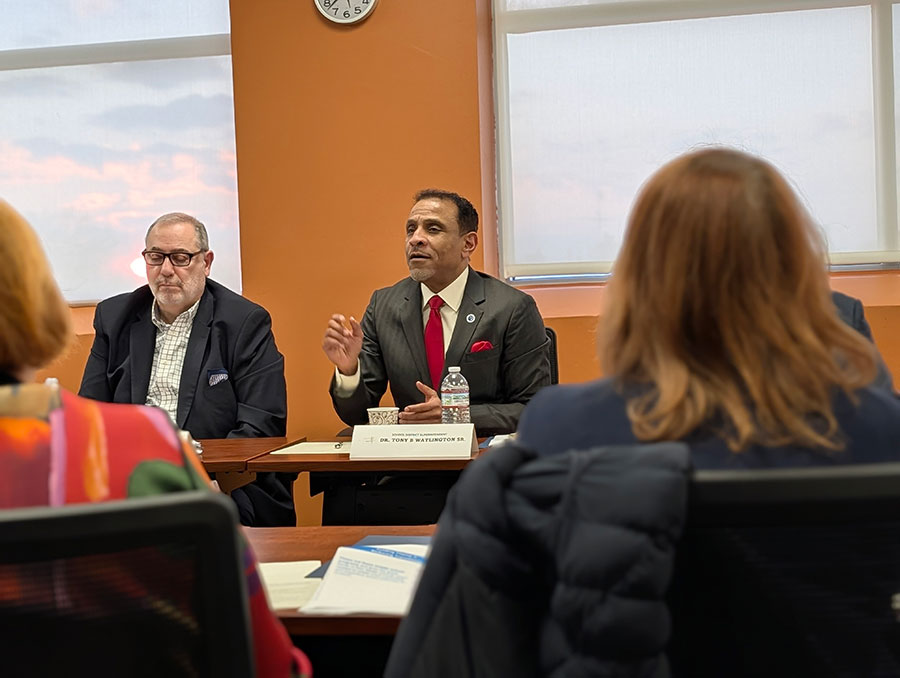
These cuts hit our children first. According to the Philadelphia Inquirer, 63% of city schools saw an increase in late arrivals, and 54% had more student absences in just the first three days of the 2025–26 school year. Philadelphia School District Superintendent Tony B. Watlington Sr. has stressed that a functioning SEPTA system is critical to the district’s academic goals. While temporary fixes exist, without proper transit funding, the long-term impact on our kids will be severe.

The PA House has sent five bipartisan bills to the state Senate to fund SEPTA, along with our proposed state budget. But the Senate has stayed on summer vacation instead of doing this crucial work. If even one transit-related bill passed, we could keep mass transit moving—getting workers to their jobs, kids to school, and seniors to their doctors.

The budget isn’t just about transit—it funds education, health care, public safety, social services, and more. Senate Republicans have rejected all proposed measures to keep these programs afloat, putting children, seniors, and everyday Pennsylvanians at risk.

House Democrats are working every day to keep Philadelphia and Pennsylvania thriving. After all the effort we’ve put into a fair state budget, it’s devastating to see these cuts hitting our communities. We even submitted a second budget that was $1 billion less than the governor’s proposal, aiming for compromise—but the Senate has refused to act.

When I became a state representative, I made a commitment to fight for our people—and that’s exactly what I’m doing. I’m fighting for our workers, our children, our elders, and everyone who relies on essential state services to live without worry. I am showing up for you every day. It’s time for Senate Republicans to do the same: control the agenda, come to work, and show up for the people of Pennsylvania. The time to act is now.

State Rep. Jose Giral is a Democrat representing the 180th Legislative District in the Pennsylvania House of Representatives, which includes parts of Philadelphia, and serves as vice chair of the Pennsylvania Legislative Latino Caucus.

Esperanza Arts Center launches its sixth season with a focus on Indigenous and Latino voices 

Bill Rhoads emphasizes how important it is to listen to and connect with people for the sake of the arts in our community. (Photo: Haydeé Rosario/Impacto staff)

Philadelphia, PA- Esperanza Arts Center kicks off its sixth season at Teatro Esperanza with a vibrant lineup that continues to grow, guided by its mission to offer culturally relevant experiences that reflect and serve the surrounding community. 

In an interview, Bill Rhoads, Senior Vice President of Esperanza Arts Center, shared that over 80% of last season’s performances were completely sold out, with most of the audience made up of residents. “It took us five years to build that connection, but now we see our community filling the seats,” he said. 

Since its inception, Teatro Esperanza offerings have been shaped by community conversations with community residents. Before any show was ever presented, the center held meetings with local leaders, teachers, students, and business owners, asking: “What would make this space feel like home to you?” The answer was clear: a place to see Latino artists from all disciplines, incorporating music, theater, and dance on the stage through live performances, recordings, live streams, and broadcasts. 

To sustain this connection, Esperanza Arts Center created an Arts Advisory Council made up of members of the Latino community who review and provide feedback on programming each year. “The community in 2018 is not the same as in 2025. Our job is to continue reflecting that evolution,” Rhoads added. 

This year, the season centers around two key themes: 

Indigenous Cultures and Traditions of Latin America, highlighting the ongoing presence of over 800 Indigenous groups and more than 45 million people throughout the region. 

The Latino Voice in the American Cultural Landscape, showcasing how genres like Latin jazz, salsa, and theater have helped shape American culture today. 

Programming is designed for all ages. One standout is Indigenous Stories from Latin America, led by author Alyssa Reynoso Morris, featuring stories, crafts, games, balloons, and food for children ages 4 to 8. 

Tickets are affordable, ranging from $5 to $15 per show, with several free events throughout the year, such as Navidad en el Barrio and Arte en las Calles. Students and seniors always attend for free.

You can even purchase a season pass for just $75, which includes access to all 18 performances of the season right in Hunting Park. “This is a theater built by and for the community,” says Rhoads. “The most important thing is for people to come, participate, and truly make it their own.”  The full season schedule is available at EsperanzaArtsCenter.us. Single tickets go on sale starting September 12

Oblea Fusion: Traditional Colombian flavor conquering Philadelphia

5. Although they don't have a physical store, connecting through social media has been their biggest success. (Photo: Courtesy/ Oblea_fusion)

In Philadelphia, Julián Ramos, a Colombian entrepreneur, is taking the tradition of the Colombian oblea to the next level with his innovative business “Oblea Fusion.” This project was born from his passion for sharing a typical sweet from his homeland and the need to offer something new and authentic to the local Hispanic community.

Besides being an entrepreneur, Julián is an economist and works as a recruiter, dedicating his efforts to supporting Hispanic families with children on the autism spectrum. This social commitment is reflected in the passion and dedication he puts into his venture, which started as a weekend side income and has now become a growing gastronomic offering.

 Although his business is small, he now plans a food trailer to take his business around the city. (Photo: Haydeé Rosario/Impacto/Staff)

The oblea is a thin and crispy wafer traditionally filled with arequipe, a popular Colombian milk sweet (“dulce de leche”). Julián has modernized this classic recipe by incorporating artisanal fillings like neutral-flavored cheese to balance the sweetness, homemade fruit sauces such as blackberry, and a variety of Colombian desserts like strawberries with cream, maracu-mango, and merengón, all part of his menu.

The oblea is a thin, crispy wafer traditionally filled with arequipe, a popular Colombian version of dulce de leche. (Photo: Courtesy/Oblea_fusion)

“In Colombia, obleas are usually eaten with just a napkin, but we want to offer a more polished presentation, serving them in a small bag so people can enjoy them comfortably,” Julián explains. He also points out that obleas are eaten fresh, at room temperature, without toasting or heating, ready to be enjoyed immediately.

A very popular oblea is the one filled with cheese, creating a contrast between sweet and salty. (Photo: Courtesy/Oblea_fusion)

The preparation starts with a generous layer of arequipe spread over the wafer, followed by a layer of neutral cheese that provides a sweet-and-salty contrast. Then, whipped cream is added on the second wafer, bringing freshness and balance to the mix. Julián also highlights the oblea’s versatility, which can be combined with other exotic flavors like passion fruit sauce or pulp (called  “maracuyá” in Colombia, “parcha” in Puerto Rico and “chinola” in D.R.).

Diversifying their product is an important part of the business—without losing the Colombian flavor. (Photo: Courtesy/Oblea_fusion)

Although there is no physical store yet, Julián sells his obleas at fairs, events, and provides catering for parties and weddings. He is currently in the process of acquiring a food trailer to increase his presence on the streets and extend service hours.

The acceptance has gone beyond the Hispanic community, with people from diverse cultures in Philadelphia now enjoying these sweets. Julián encourages other entrepreneurs to take the first step without fear: “The support is amazing; there are no limits to growth.”

Committed to the growth and well-being of our community, we reaffirm the importance of supporting local talents and businesses. From here, we say: Support local!

Oblea Fusion contact lines: Instagram, @oblea_fusion; Phone: (256) 800-0838.

Madres venezolanas deportadas piden ayuda a Melania Trump para reunirse con sus hijos

Un grupo de personas sostiene carteles con las imágenes de niños bajo custodia de Estados Unidos cuyos padres fueron deportados, en un mitin organizado por el gobierno en Caracas, Venezuela, el 10 de julio de 2025. (Foto: AP/Ariana Cubillos/Archivo)

Caracas, Venezuela.— María Alejandra Rubio no ha visto a su hijo en cinco meses. Fueron separados en Estados Unidos cuando fue detenida para ser deportada a su natal Venezuela y el menor fue enviado a vivir con un amigo de la familia.

Rubio dice que las autoridades estadounidenses de inmigración le hicieron creer que abordaría un avión a Venezuela con Anyerson, su hijo de ocho años. Pero el mes pasado, cuando hizo el viaje de varias horas, lo hizo sin él.

Con el corazón roto, Rubio ahora forma parte de un grupo de madres y abuelas venezolanas que apelan a la primera dama de Estados Unidos, Melania Trump, para que las ayude a ver a sus hijos y nietos nuevamente. Las integrantes del grupo, respaldadas por el gobierno de Venezuela, dicen que, el mes pasado, enviaron una carta a Trump solicitando su ayuda.

“Él me dice, ‘mamá quiero estar contigo. Quiero regresarme a mi país contigo’”, dijo Rubio sobre sus llamadas con Anyerson, quien está en Georgia. “Entonces, yo quisiera que en realidad la primera dama se ponga la mano en el corazón y nos responda la carta”.

Hasta el momento, la oficina del presidente Donald Trump no ha respondido a una solicitud de comentarios de The Associated Press con respecto a la carta. El gobierno de Venezuela dijo el jueves a la AP que la misiva, fechada el 18 de agosto, fue enviada a la Casa Blanca a través de un servicio privado de mensajería.

“Le pedimos como madres que eleve nuestra voz, que ayude a nuestros niños a regresar a sus hogares, que sea un puente para la justicia y la humanidad que usted misma invoca”, escribieron las integrantes del grupo, según una copia de la carta compartida con la AP. “Le pedimos que escuche el clamor de las familias, que esta política de separación no siga sucediendo, que simplemente deporten a las madres junto a sus hijos”.

Los venezolanos han sido expulsados de forma constante a su país de origen este año desde que el presidente venezolano Nicolás Maduro, bajo presión de la Casa Blanca, eliminó su política de larga data de no aceptar deportados de Estados Unidos. Los inmigrantes ahora llegan regularmente al aeropuerto situado en las afueras de Caracas, la capital, en vuelos operados por un contratista del gobierno estadounidense o por la aerolínea estatal de Venezuela.

El gobierno de Maduro ha dicho que más de 10.000 migrantes, incluidos varios niños, habían regresado al país sudamericano a mediados de agosto. Pero no todos los padres han viajado con sus hijos.

Entre los menores separados de sus padres estaba Maikelys Espinoza, de dos años. Permaneció en Estados Unidos después de que su madre fuera deportada a Venezuela y su padre fuera enviado a una prisión de máxima seguridad en El Salvador cuando Trump invocó una ley de tiempos de guerra del siglo XVIII para deportar rápidamente a cientos de inmigrantes.

El gobierno de Estados Unidos dijo que la separación de Maikelys estaba justificada porque las autoridades estadounidenses habían vinculado a sus padres con la pandilla Tren de Aragua, con sede en Venezuela, que el presidente republicano designó como organización terrorista. La niña se reunió con su madre a mediados de mayo en Venezuela y con su padre en julio, cuando fue liberado de la prisión salvadoreña.

Maduro agradeció públicamente al presidente Trump tras la llegada de Maikelys a Venezuela. Estados Unidos no reconoce a Maduro como presidente del país, pero ha negociado varias acciones con su gobierno este año, entre ellas, la liberación de varios estadounidenses detenidos en la nación sudamericana. Sin embargo, el gobierno de Estados Unidos ha dicho que el regreso de menores a Venezuela podría llevar tiempo.

“A diferencia del régimen ilegítimo de Maduro, Estados Unidos no utiliza a los niños como moneda de cambio, y no nos apresuraremos a trasladar a menores no acompañados antes de evaluar a fondo lo que es mejor para ellos”, publicó el 8 de agosto en X la Oficina de Asuntos del Hemisferio Occidental del Departamento de Estado.

Al igual que los funcionarios del gobierno venezolano, las madres y abuelas que firmaron la carta para solicitar el regreso de los niños a su país de origen califican su permanencia en Estados Unidos como un secuestro.

“Al tú no tener contacto con tu niño, al tú no saber dónde está tu niño, es un secuestro. Nosotros no sabemos dónde está”, dijo Syntia Cáceres el jueves, refiriéndose a su nieta Aurore, de cuatro años.

Cáceres dijo que su nieta fue colocada en un hogar de acogida en Georgia después de que su hijo fuera detenido en julio. Señaló que la familia que cuida de Aurore le permitió hablar con ella una vez el mes pasado, pero luego le informaron que los servicios de protección infantil le ordenaron a la familia que terminara cualquier contacto con la abuela.

Cáceres ahora quiere asegurarse de que su hijo y su nieta sean deportados juntos cuando llegue el momento.

“Si van a deportar a la gente, que la deporten, no importa, pero con sus hijos”, dijo. “Si (el presidente Trump) no nos quiere allá en su país, no importa, está bien. Depórtennos, mándennos de regreso, pero todos juntos”.

Versa: Bad Bunny’s residency inspires tattoos of cultural identity in the diaspora

Versa designed a collection of “flashes”—sheets featuring a variety of designs, including the flor de maga, Bad Bunny’s little house, and chairs as symbols of the residency. (Photo: Courtesy/823 Tattoo Studio)

During the cultural and economic phenomenon sparked by Bad Bunny’s residency in Puerto Rico, a talented Boricua artist has turned this historic moment into an opportunity to connect with the diaspora through body art. From Carolina, Puerto Rico, Versa—the artistic name of Adriana Toledo—has created a unique experience that has captured the hearts of hundreds, including many Puerto Ricans living abroad, such as in Philadelphia.

“We wanted to create something small but permanent,” Versa explained in an interview with Impacto, referring to her tattoo project inspired by Puerto Rican cultural symbols and Bad Bunny’s residency. The idea emerged during the pandemic, when tattooing started as a hobby and quickly became her passion and career.

Bad Bunny
The hat and machete evoke memories of grandparents in the countryside. (Photo: Courtesy/823 Tattoo Studio)

Together with her fellow artists, Versa designed a collection of “flashes”—sheets of pre-drawn tattoo designs—that pay tribute to Boricua identity. Among the designs are the Flor de Maga, a machete, a coffee greca, a domino tile, a traditional island home, and iconic Bad Bunny lyrics such as “While we’re alive, we have to live as much as we can.”

Bad Bunny
This drink, so representative of Puerto Rican culture, could not be left out. (Photo: Courtesy/823 Tattoo Studio)

Each design was crafted not just as a work of art but as a symbol of belonging, memory, and cultural pride. For many members of the diaspora who travel to the island for Bad Bunny’s concerts, these tattoos have become living souvenirs, permanent reminders etched in their skin of their connection to Puerto Rico.

Bad Bunny
Versa designed a collection of “flashes”—sheets featuring a variety of designs, including the flor de maga, Bad Bunny’s little house, and chairs as symbols of the residency. (Photo: Courtesy/823 Tattoo Studio)

“The idea was for each person to get something unique, even if it was part of the same collection. We didn’t want everyone to leave with the exact same design,” said Versa, who also credits her creative collaborators Alejandra Bechela, Peo Bet, and B.

The project has received widespread attention—even from non-Puerto Ricans—which, for Versa, validates the global cultural impact the island is currently having. “It fills my heart to see people from other countries wanting to carry a piece of Puerto Rico on their skin,” she shares proudly.

Bad Bunny
Versa designed a collection of “flashes”—sheets featuring a variety of designs, including the flor de maga, Bad Bunny’s little house, and chairs as symbols of the residency. (Photo: Courtesy/823 Tattoo Studio)
 

Although Versa has not yet met Bad Bunny in person, her artwork is undoubtedly part of the cultural wave the artist has ignited. From her studio in Puerto Rico, Versa continues to tattoo memories, connect generations, and prove that with needle and ink, Boricua history is also written across the diaspora.