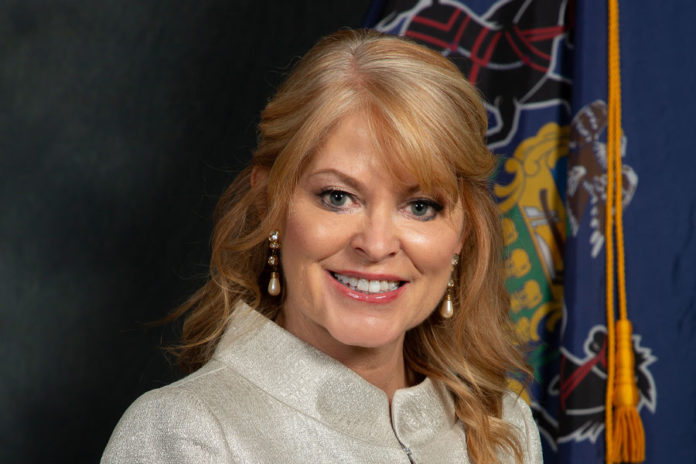
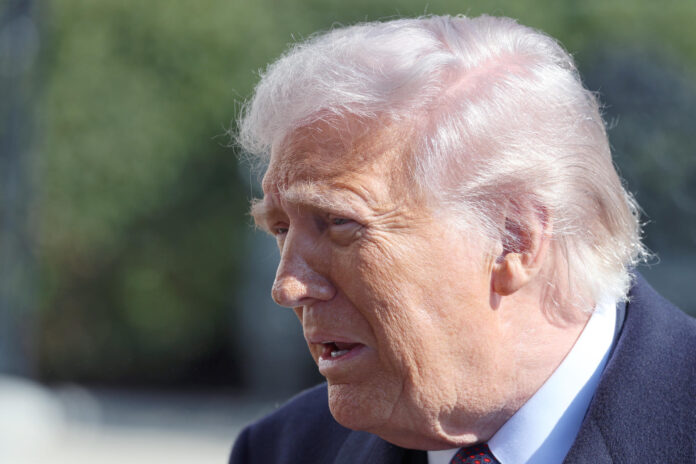
PENNSYLVANIA — La tesorera estatal Stacy Garrity enfrenta cuestionamientos por negarse a revelar cuál fue la pregunta que, según ella misma, le permitió obtener el respaldo del presidente Donald Trump en su campaña a la gobernación del estado.
De acuerdo con un reporte de WITF publicado el 27 de febrero por el periodista Jaxon White, Garrity comentó en una cena privada con líderes republicanos que consiguió el respaldo de Trump tras responder “una sola pregunta”. Sin embargo, no reveló cuál fue esa interrogante, y su campaña no ha respondido a solicitudes reiteradas de información al respecto.
El presidente del Partido Demócrata de Pensilvania, Eugene DePasquale, sostuvo que los votantes merecen conocer el contenido de esa conversación. “Los votantes deberían saber cuál fue la pregunta”, declaró. Agregó que, de haber sido algo favorable para la candidata, probablemente ya lo habría hecho público.
Los demócratas han publicado varios comunicados criticando a Garrity por no transparentar los detalles de su intercambio con Trump. La acusan de mostrar mayor lealtad a la agenda del presidente que a los intereses del estado. Según el partido, esta preocupación se suma a posturas previas de la funcionaria, entre ellas su apoyo a políticas federales que, afirman, han incrementado costos de salud y afectado empleos y agricultores en Pensilvania.
Garrity, aliada de larga data de Trump, busca desbancar al actual gobernador Josh Shapiro en las elecciones de noviembre. Hasta el momento, no enfrenta rivales en la primaria republicana programada para el 19 de mayo.
El portavoz de Shapiro, Manuel Bonder, también cuestionó públicamente a Garrity y al congresista Scott Perry —quien, según la candidata, habría transmitido la pregunta de Trump por teléfono— preguntando qué fue lo que se prometió a cambio del respaldo.
Mientras tanto, el debate político continúa intensificándose en un estado clave de cara a las próximas elecciones.
Durante décadas, a las mujeres se les enseñó a entrenar para encajar en una imagen. Rutinas orientadas a bajar de peso, reducir tallas o cumplir estándares estéticos dominaron la conversación. Hoy, esa narrativa está evolucionando: el movimiento ya no es solo apariencia, es autonomía, energía y longevidad, es amor propio.
A partir de los 40, la pérdida natural de masa muscular comienza a influir directamente en el metabolismo, el equilibrio hormonal, la densidad ósea y la capacidad funcional. Sin una estrategia consciente, el cuerpo entra en un proceso acelerado de desgaste que impacta la calidad de vida futura. Este escenario no es inevitable, pero sí requiere intención.
El empoderamiento femenino moderno también implica tomar decisiones informadas sobre el propio bienestar. Desde la perspectiva del biohacking, el ejercicio deja de ser rutina y se convierte en una herramienta estratégica para optimizar la salud, fortalecer la resiliencia física y sostener la energía en cada etapa.
Algunos enfoques clave incluyen:
-Fuerza intencional: entrenar resistencia, ya sea pesas, bandas o el peso del propio cuerpo, ayudando a preservar masa muscular, proteger huesos y mantener eficiencia metabólica y construyendo estabilidad metabólica y ósea.
-Movilidad consciente: trabajar el rango de movimiento permite que el cuerpo conserve fluidez, reduzca rigidez y evite limitaciones funcionales. La movilidad no es solo flexibilidad; es libertad para moverse sin restricciones con el paso del tiempo.
-Capacidad neuromuscular: ejercicios que integran coordinación, equilibrio o potencia fortalecen la comunicación entre sistema nervioso y cuerpo. Esto mejora la respuesta física y la seguridad en la vida diaria.
-Cardio inteligente: el enfoque ya no está en el desgaste excesivo, sino en entrenamientos cardiovasculares eficientes que acompañen la salud metabólica y energética.
-Recuperación estratégica: respiración, descanso y regulación del sistema nervioso son parte integral del rendimiento. Adaptarse al esfuerzo es lo que realmente construye resiliencia.
Construir fuerza no es solo preparación física; es una declaración de autonomía. Diseñar el bienestar con intención permite a cada mujer redefinir cómo quiere vivir sus próximas décadas. Entrenar deja de ser estética, se convierte en poder.
* Adriana Martín es experta en salud y biohacking y bio-estratega enfocada en el bienestar femenino. Creadora del programa Biohacking +40, un movimiento que integra bienestar y longevidad. Es colaboradora de Telemundo. Instagram y LinkedIn: @adrianamartinfit
María Méndez es presidenta y fundadora de Vacation is a Human Right (VIAHR). Dominicana residente en Nueva York. Ha trabajado con figuras y eventos internacionales como Beyonce, Frank Ocean, Joe Thomas, The Mavericks, Raul Di Blasio, Benicio del Toro y la SuperBowl.
Luisa ama enseñar. Sin embargo, hace meses que se levanta agotada. Corrige exámenes hasta la madrugada, responde mensajes fuera de horario y atiende exigencias administrativas que se acumulan. En el aula sostiene emociones ajenas, mientras intenta sostener las propias. Luisa no está simplemente cansada. Está viviendo un proceso de desgaste que tiene nombre: burnout.
El síndrome fue estudiado y conceptualizado por Christina Maslach, quien identificó tres dimensiones clave: agotamiento emocional, despersonalización y baja realización profesional. En el caso de los docentes, el agotamiento emocional suele ser el componente más predominante.
La Organización Mundial de la Salud reconoce el burnout como un fenómeno ocupacional, resultado del estrés laboral crónico que no ha sido gestionado con éxito. No es debilidad ni falta de vocación, sino la consecuencia de condiciones laborales sostenidas en el tiempo.
Los datos confirman la magnitud del problema. Según la OCDE, en su estudio internacional TALIS, alrededor del 18% de los docentes reporta experimentar mucho estrés en su trabajo, asociado principalmente a sobrecarga administrativa, presión por resultados y gestión de aula. Tras la pandemia, diversos estudios académicos han señalado un aumento significativo del agotamiento docente en distintos países.
La docencia es una profesión de alta carga emocional. No solo implica transmitir contenidos, sino contener conflictos, motivar en contextos adversos y cumplir tareas invisibles fuera del horario escolar. Cuando esa exigencia constante no se acompaña de pausas reales, autonomía y apoyo institucional, el desgaste se vuelve estructural.
El burnout docente no es un problema individual. Se asocia con mayor intención de abandono de la profesión, disminución del compromiso y afectación del clima escolar. Cuando un profesor se agota, el impacto alcanza a estudiantes y comunidades educativas.
Desde Vacation is a Human Right (VIAHR) afirmamos que el descanso no es un beneficio accesorio, sino una condición de sostenibilidad. En el ámbito educativo, esto implica revisar cargas administrativas, promover liderazgos empáticos y garantizar espacios de desconexión reales. Este año hemos anunciado la convocatoria académica “Sanando el mundo a través del poder transformador de la pausa”, con el objetivo de movilizar a la comunidad científica para transformar el bienestar.
Cuidar a quienes educan no es un gesto simbólico. Es proteger la calidad de la educación y el futuro de las aulas, porque enseñar no debería costar la salud.
* María Méndez es presidenta y fundadora de Vacation is a Human Right (VIAHR). Dominicana residente en Nueva York. Ha trabajado con figuras y eventos internacionales como Beyonce, Frank Ocean, Joe Thomas, The Mavericks, Raul Di Blasio, Benicio del Toro y la SuperBowl. https://www.viahr.org/
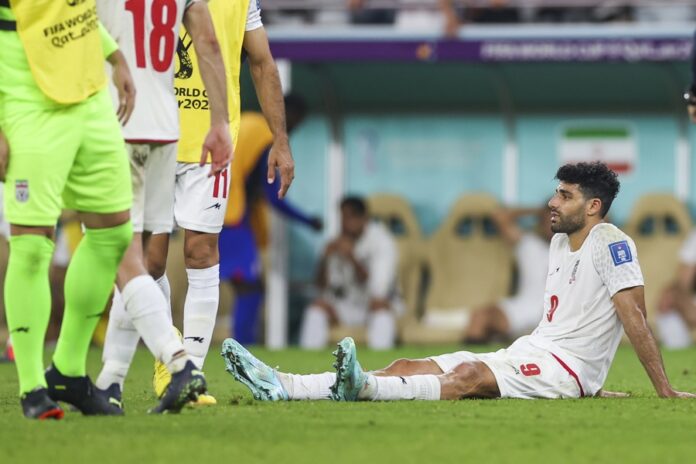
Mehdi Taremi, estrella de la selección iraní de fútbol. (Foto: EFE/JOSE SENA GOULAO)
El ataque a Irán, y la posterior respuesta del régimen persa, a poco más de tres meses del comienzo del Mundial 2026, enfrenta a la FIFA a distintos escenarios que van desde la retirada de la selección iraní, clasificada para la fase final, la sustitución de esta por otra o retos para aumentar la seguridad del torneo, en el caso de que el conjunto, que disputará sus tres partidos en Estados Unidos, decida continuar en la competición.
«Con lo que ha pasado… y con ese ataque de Estados Unidos, es poco probable que podamos esperar con ilusión el Mundial, pero son los dirigentes deportivos los que deben decidir al respecto». Mehdi Taj, presidente de la Federación Iraní, abrió la puerta el domingo a una posible retirada del equipo.
¿Qué ocurre si Irán decide no jugar?
El reglamento de competición del Mundial 2026 prevé una posible retirada de una selección en su artículo 6:
– Si anuncia su retirada con más de 30 días de antelación al comienzo del torneo, el próximo 11 de junio, la Comisión Disciplinaría le impondría a la Federación Iraní una multa, como mínimo, de 250.000 francos suizos (323.730,60 dólares).
– Si renuncia con menos de 30 días de antelación. La multa será como mínimo de 500.000 francos suizos (647.712 dólares).
Además, la Federación Iraní debería reembolsar todos los fondos recibidos de la FIFA para la preparación de su selección, así como los pagos de contribuciones relacionadas con la competición que hayan recibido de la Federación Internacional. El Consejo de la FIFA reunido en Doha el pasado 17 de diciembre acordó dar 1,5 millones de dólares a cada selección clasificada para cubrir gastos derivados de la preparación del torneo y un total de 10,5 millones de dólares por disputar el Mundial.
A estas sanciones económicas podrían unirse medidas disciplinarias como la exclusión de la federación de una competición futura organizada por la FIFA.
¿Podría sustituir a Irán otra selección?
El apartado 6.7 del reglamento especifica que «si una federación participante se retirara o quedara excluida del Mundial de la FIFA 26, la FIFA decidirá a su entera discreción al respecto y emprenderá las acciones que considere necesarias. La FIFA podrá decidir, en particular, sustituir dicha federación por otra».
¿Qué equipos podrían verse favorecidos por esa retirada? Si se mantiene el cupo otorgado a la Confederación Asiática (8.5 plazas), la mejor posicionada sería la selección de Irak, que se ganó el derecho a jugar la repesca internacional, el próximo 31 de marzo contra el ganador de la semifinal entre Bolivia y Surinam.
En ese caso, podría acudir a esa repesca el equipo de Emiratos Árabes, que perdió ante Irak el ‘play-off’ de la zona asiática.
En la historia de los Mundiales son numerosos los casos en los que fueron sustituidas selecciones por la renuncia de otras, como en 1930, cuando la deserción de potencias europeas (con Alemania e Italia a la cabeza), permitió la participación otros conjuntos como Yugoslavia, Rumanía o Bélgica. O en 1950, cuando India se clasificó automáticamente tras la retirada de todos sus rivales del grupo asiático (Filipinas, Indonesia y Birmania). Finalmente, India tampoco participó alegando problemas económicos y de preparación -aunque para la leyenda quedó que fue por la decisión de la FIFA de no permitir que jugasen descalzos-.
¿Y si decide participar?
La clasificación del conjunto persa para el Mundial ya planteó problemas diplomáticos, puesto que a sus ciudadanos se les prohibió viajar a Estados Unidos por motivos de seguridad nacional. Sin embargo, el Comité Organizador del Mundial de Estados Unidos logró que Donald Trump autorizase dar visados a jugadores y oficiales, aunque no a los aficionados.
Irán ha elegido como campamento base para entrenar y concentrarse durante el Mundial el Complejo Deportivo Kino de Tucson (Arizona) y encuadrada en el grupo G, la selección de Amir Ghalenoei debe jugar el 15 de junio contra Nueva Zelanda, en Los Ángeles, seis días después ante Bélgica, en la misma sede, y cerrará la fase de grupos el 26 de junio frente Egipto, en Seattle.
El partido ya ha provocado polémica antes de la crisis de Oriente Medio por haber sido encuadrado dentro de los actos del Fin de Semana del Orgullo, lo que motivó la protesta de ambas federaciones, al enfrentar a dos países que no reconocen los derechos del colectivo LGTBI.
El nuevo escenario que puede provocar el conflicto bélico de Oriente Medio, no obstante, aún no se ha planteado. «Mañana, nos ocuparemos de los partidos de fútbol. Esta noche celebramos la oportunidad de libertad del pueblo iraní», comentó tras los ataques Andrew Giuliani, jefe del grupo de trabajo de la Casa Blanca para la Copa del Mundo 2026.
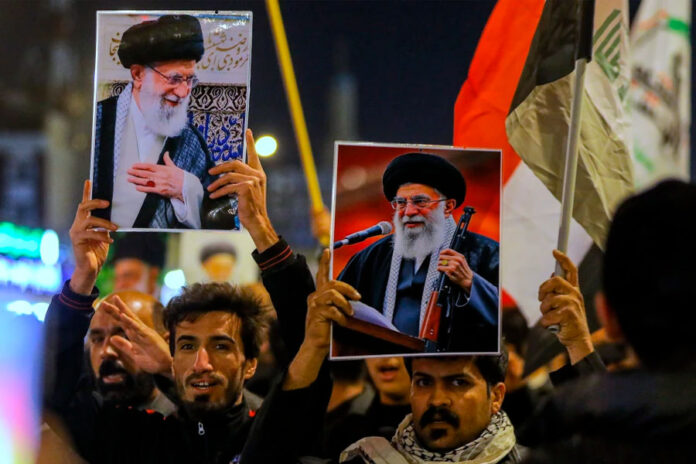
Chiíes iraquíes sostienen imágenes del líder supremo iraní, el ayatolá Alí Jamenei, que murió por un ataque estadounidense en Teherán, durante un funeral simbólico en Najaf, Irak, el domingo 1 de marzo de 2026. (Foto: AP/Anmar Khalil)
Irán y milicias respaldadas por Irán lanzaron misiles el lunes contra Israel y estados árabes que parecían haber alcanzado el complejo de la Embajada de Estados Unidos en Kuwait, e Israel y Estados Unidos atacaron objetivos en Irán mientras la guerra se expandía el lunes entre declaraciones de desafío y un aumento de las bajas.
La Media Luna Roja Iraní dijo que la campaña estadounidense e israelí ha matado al menos a 555 personas en Irán por ahora, y que más de 130 ciudades en todo el país han sido atacadas. Once personas han muerto en Israel, según las autoridades allí.
En Ciudad de Kuwait, mientras fuego y humo se elevaban desde el interior del complejo de la embajada de Estados Unidos, el Ejército estadounidense dijo que Kuwait había “derribado por error” tres aviones F15E Strike Eagles durante una misión de combate mientras Irán atacaba el país.
El Comando Central estadounidense dijo que el combate incluía aeronaves iraníes, misiles balísticos y drones, la primera vez que la envejecida flota iraní se ha utilizado en la guerra.
“Los seis tripulantes se eyectaron con seguridad, han sido recuperados con seguridad y están en condición estable. Kuwait ha reconocido este incidente y agradecemos los esfuerzos de las fuerzas de defensa kuwaitíes y su apoyo en esta operación en curso”, indicó el ejército.
La televisión estatal iraní afirmó que Irán había atacado aeronaves estadounidenses, sin dar más detalles. El ejército de Estados Unidos no respondió de inmediato a una solicitud de comentarios.
El complejo de la embajada fue alcanzado no mucho después de que Estados Unidos emitiera una advertencia a los estadounidenses allí para que se pusieran a cubierto y a otros para que se mantuvieran alejados del lugar. No hubo reportes inmediatos de daños o víctimas.
Mientras continuaban los ataques aéreos estadounidenses e israelíes, el principal funcionario de seguridad iraní, Ali Larijani, prometió desafiante en X que “no negociaremos con Estados Unidos”.
En Irak, una milicia proiraní se atribuyó un ataque con dron dirigido contra tropas estadounidenses en el aeropuerto de Bagdad, al día siguiente de afirmar que disparó contra una base estadounidense en la ciudad de Irbil, en el norte, y Chipre informó de un ataque con dron contra una base británica en la nación insular mediterránea.
Israel y Estados Unidos bombardearon emplazamientos de misiles iraníes y atacaron su Armada, afirmando que habían destruido su cuartel general y varios buques de guerra.
Irán amplía los ataques a la infraestructura petrolera regional
Con los mercados mundiales ya sacudidos por los combates y los precios del petróleo en auge, la refinería saudí de crudo de Ras Tanura fue atacada el lunes por drones, que fueron derribados por las defensas, según anunció un portavoz militar a través de la agencia estatal Saudi Press Agency.
Videos en línea del lugar parecían mostrar una espesa columna de humo negro elevándose tras el ataque. Incluso los drones interceptados con éxito provocan escombros que pueden iniciar incendios y herir a quienes están en el suelo.
Ras Tanura, cerca de la ciudad de Dammam en el este de Arabia Saudí, es una de las refinerías más grandes del mundo con una capacidad de más de medio millón de barriles de crudo al día. Fue cerrada temporalmente como precaución tras el ataque, informó la televisora estatal saudí.
Por otro lado, Omán dijo que un dron acuático cargado con bombas explotó contra un petrolero con bandera de las Islas Marshall en el golfo de Omán el lunes, frente a la costa de la capital del sultanato, Mascate, y mató a un marino a bordo. La agencia estatal Oman News Agency identificó la embarcación como el MKD VYOM y dijo que el tripulante fallecido era de India.
Irán ya ha estado amenazando a los barcos en el estrecho de Ormuz, la estrecha boca del Golfo Pérsico por la que pasa una quinta parte de todo el petróleo que se comercia. Varios barcos también han sido atacados allí.
Más temprano en el día, cayeron escombros sobre la refinería de crudo de Ahmadi, en Kuwait, que hirieron a dos trabajadores, después de que se derribaran drones, informó la agencia estatal de noticias KUNA.
La decisión de Irán de ampliar sus ataques a la principal infraestructura petrolera regional añade un nuevo elemento a la guerra que sacude Oriente Medio, al apuntar directamente al sustento de la economía de la zona.
“El ataque a la refinería de Ras Tanura de Arabia Saudí marca una escalada significativa, con la infraestructura energética del Golfo ahora claramente en la mira de Irán”, dijo Torbjorn Soltvedt, analista de la empresa de inteligencia de riesgos Verisk Maplecroft.
“Se avecina un período prolongado de incertidumbre mientras Irán busca imponer un alto costo económico poniendo en la mira a los petroleros, la infraestructura energética regional, las rutas comerciales y los socios de seguridad de Estados Unidos”, añadió.
A su vez, QatarEnergy, dijo el unes que detendría su producción de gas natural licuado debido a la guerra, lo que sacaba del mercado a uno de los principales proveedores del mercado. La compañía no dio una estimación de cuándo restablecería el servicio.
Sascha Bruchmann, analista de defensa del Instituto Internacional de Estudios Estratégicos en Bahréin, dijo a The Associated Press que el objetivo de Irán al golpear la infraestructura energética es “provocar una reacción global e imponer costos” al presidente de Estados Unidos.
Hasta ahora, sin embargo, “esto no es la destrucción total de infraestructura crítica que busca el régimen iraní”, dijo Bruchmann.
Mientras tanto, Reza Najafi, embajador iraní ante la agencia nuclear de la ONU, el Organismo Internacional de la Energía Atómica, dijo a periodistas que los bombardeos habían atacado el centro de enriquecimiento nuclear iraní de Natanz el domingo.
“Ayer volvieron a atacar instalaciones nucleares pacíficas de Irán”, dijo. “Su justificación de que Irán quiere desarrollar armas nucleares es simplemente una gran mentira”.
Israel y Estados Unidos no han mencionado impactos en el lugar, que fuerzas estadounidenses bombardearon en la guerra de 12 días entre Irán e Israel en junio. El ejército israelí tampoco comentó de inmediato la acusación de Najafi.
Israel no ha hecho públicos objetivos específicos en Irán, pero ha dicho que está apuntando al “liderazgo y la infraestructura nuclear”.
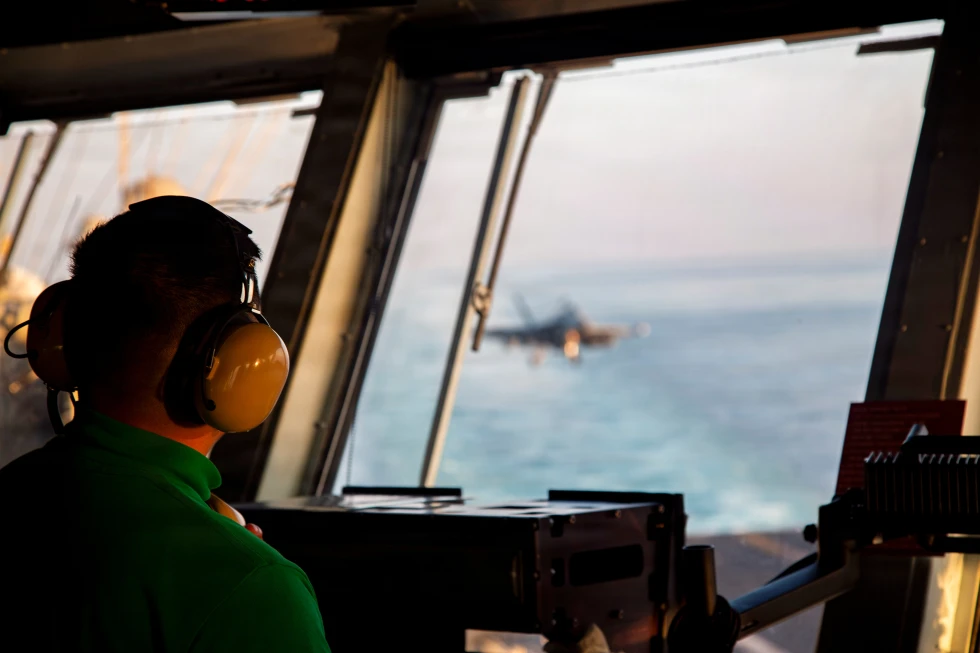
Esta imagen proporcionada por el Comando Central de Estados Unidos muestra a un marinero de la Armada observando operaciones de vuelo a bordo del USS Abraham Lincoln (CVN 72) en apoyo de la operación Furia Épica, el sábado 28 de febrero de 2026. (Foto: AP/Armada de EE. UU.)
Hezbollah dispara contra Israel, lo que provoca una respuesta masiva
Mientras continuaban los ataques a Irán, Hezbollah dijo que había disparado misiles desde Líbano hacia Israel a primera hora del lunes en respuesta a la muerte del líder supremo iraní, Alí Jamenei, y a “repetidas agresiones israelíes”. No hubo reportes de heridos ni de daños, e Israel dijo que interceptó un proyectil mientras varios cayeron en zonas abiertas.
Israel respondió con ataques contra Líbano, que mataron al menos a 31 personas e hiriendo a otras 149, según el Ministerio de Salud de Líbano. Alrededor de dos tercios de los muertos estaban en el sur del país.
El gobierno libanés dijo que considera la actividad militar de Hezbollah como un acto ilegal y dijo que el grupo político y militar debe entregar sus armas.
El primer ministro, Nawaf Salam, dijo que sólo el Estado debe decidir si va a la guerra u opta por la paz. Añadió que toda la actividad militar de Hezbollah está prohibida y el grupo debe operar sólo en política.
El gobierno pidió a as agencias de seguridad que impidan el lanzamiento de misiles o drones y detengan a los responsables.
Irán ha estado disparando misiles contra Israel y estados árabes en una contraofensiva desde el ataque conjunto estadounidense-israelí del sábado que mató a Jamenei y a muchos altos funcionarios iraníes.
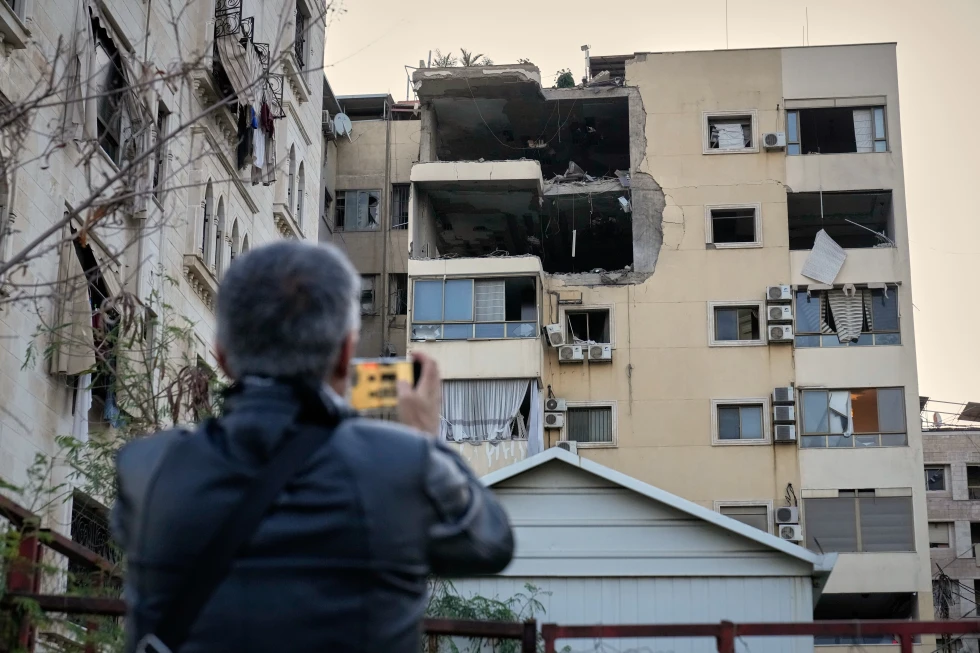
Un hombre toma fotos del daño en un edificio de apartamentos que fue impactado por un ataque aéreo israelí en Dahiyeh, un suburbio al sur de Beirut, Líbano, el lunes 2 de marzo de 2026. (Foto: AP/Hussein Malla)
Aumentan las bajas mientras los ataques se extienden
Los estados árabes del Golfo han advertido que podrían tomar represalias contra Irán tras ataques que alcanzaron sitios clave y mataron al menos a cinco civiles, y el presidente de Estados Unidos, Donald Trump, prometió que Washington “vengaría” las muertes de tres soldados estadounidenses que murieron en Kuwait, al tiempo que pronosticó más bajas.
“Lamentablemente, es probable que haya más antes de que termine”, manifestó Trump. “Así son las cosas”.
Trump ha instado a los iraníes a “tomar el control” de su gobierno y, aunque también ha señalado que estaría abierto al diálogo con un nuevo liderazgo allí tras la muerte de Jamenei, sugirió el domingo que no se vislumbra un final para las operaciones militares.
“Las operaciones de combate continúan en este momento con toda su fuerza, y continuarán hasta que se logren todos nuestros objetivos”, dijo en un mensaje de video. “Tenemos objetivos muy firmes”, añadió, sin dar más detalles.
El ejército de Estados Unidos dijo que bombarderos furtivos B-2 atacaron las instalaciones de misiles balísticos de Irán con bombas de 900 kilogramos (2.000 libras). Trump dijo en redes sociales que nueve buques de guerra iraníes habían sido hundidos y que el cuartel general de la Marina iraní había quedado “en gran medida destruido”.
Otros se han mantenido en gran medida al margen de la guerra y han presionado por la diplomacia. Pero como indicio de que el conflicto podría arrastrar a otras naciones, Reino Unido, Francia y Alemania dijeron el domingo que estaban listos para trabajar con Estados Unidos para ayudar a detener los ataques de Irán.
A primera hora del lunes, Chipre dijo que un dron no tripulado “causó daños limitados” cuando impactó una base aérea británica en la costa sur. No había más detalles disponibles de inmediato, pero ocurrió después de que el primer ministro británico, Keir Starmer, dijera que Reino Unido ayudaría a Estados Unidos en la guerra contra Irán.
Los ataques del fin de semana fueron la segunda vez en ocho meses que Estados Unidos e Israel colaboraban para atacar a Irán, en una impactante demostración de poderío militar para un presidente estadounidense elegido con un lema de “Estados Unidos primero” y que prometió evitar “guerras eternas”.
En la guerra de 12 días del pasado junio, los ataques israelíes y estadounidenses debilitaron en gran medida las defensas aéreas de Irán, su liderazgo militar y su programa nuclear. Pero la muerte de Jamenei, que gobernó Irán durante más de tres décadas, crea un vacío de liderazgo, lo que incrementa el riesgo de inestabilidad regional.
Los aliados iraníes se suman a la refriega
El lanzamiento de misiles de Hezbollah contra Israel es el primer ataque que se atribuye el grupo político y militar en más de un año.
Los aliados de Irán eran una gran preocupación para funcionarios estadounidenses e israelíes antes de que suspendieran las negociaciones con Irán la semana pasada y avanzaran con ataques contra Irán.
Israel dijo que Hezbollah se había “sumado a la campaña” junto a Irán mientras respondía con ataques contra Beirut, la capital de Líbano.
Periodistas de The Associated Press en Beirut se despertaron sobresaltados por una serie de fuertes explosiones que sacudieron edificios e hicieron que se rompieran ventanas. Se podía oír a aviones de guerra volando bajo por encima.
“Los ataques continúan”, dijo el mayor general Rafi Milo, jefe del Comando Norte de Israel. “Su intensidad aumentará”.
La milicia chií iraquí Saraya Awliya al-Dam se atribuyó el lunes un ataque con dron dirigido contra tropas estadounidenses en el aeropuerto de la capital iraquí, Bagdad, ampliando aún más la represalia por la muerte de Jamenei. Se había atribuido un ataque con dron el domingo contra una base aérea estadounidense en Irbil, en el norte de Irak.
El grupo es una de varias milicias chiíes que operan en Irak. Estados Unidos e Irak no comentaron de inmediato las afirmaciones.
En el Golfo Pérsico, los ataques de represalia de Irán empujaron el conflicto hacia ciudades que durante mucho tiempo se han promocionado como refugios seguros en la región. Se informó de tres muertos en Emiratos Árabes Unidos, uno en Kuwait y otro en Bahréin.
En Emiratos Árabes Unidos, las autoridades dijeron que la mayoría de los misiles y drones iraníes habían sido interceptados. Pero algunos lograron pasar o cayeron como escombros, causando las muertes y daños significativos. Bahréin y Kuwait dijeron que los ataques iraníes en ambos países alcanzaron objetivos civiles fuera de las bases estadounidenses donde Irán había prometido tomar represalias.
La OMS pide proteger a los civiles
Las calles de Teherán están en gran medida desiertas, ya que la gente ha buscado cobijo durante los ataques aéreos. La fuerza paramilitar Basij, que ha desempeñado un papel central en la represión de protestas recientes, instaló puestos de control por toda la ciudad, según testigos.
En la ciudad iraní septentrional de Babol, un estudiante que habló de forma anónima por temor a represalias dijo a la AP que la policía antidisturbios armada estaba en las calles la noche del sábado y hasta las primeras horas del domingo tras la muerte de Jamenei.
“No sabemos si estar felices por la eliminación de los criminales que nos oprimen o permanecer en silencio ante la guerra de Estados Unidos e Israel contra el país y sus intereses y el terror que está ocurriendo”, dijo.
En Israel, los servicios de rescate han confirmado que varios lugares han sido alcanzados por misiles iraníes, incluidos Jerusalén y una sinagoga en Beit Shemesh, donde nueve personas murieron y 28 resultaron heridas, elevando el número total de muertos en el país a 11.
El lunes, la Organización Mundial de la Salud pidió que se perdonara a los civiles y a las instalaciones de atención médica en Oriente Medio en medio del creciente conflicto.
“La protección de los civiles y la atención médica debe ser absoluta”, escribió en redes sociales Hanan Balkhy, dietista regional de la OMS. “Todas las partes deben (…) garantizar que las instalaciones médicas permanezcan protegidas”.
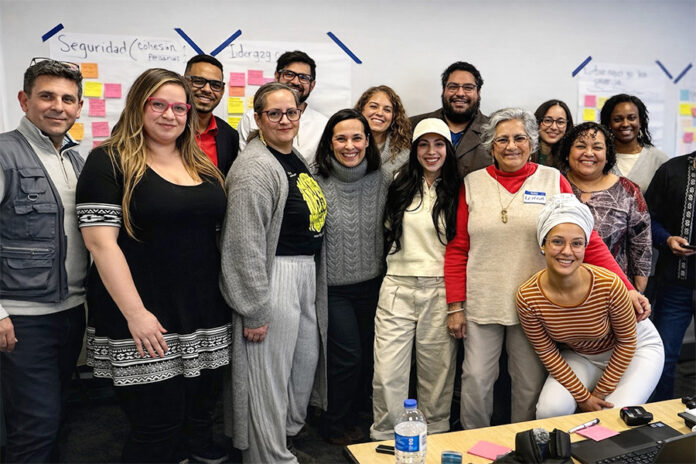
Miembros del proyecto colaborativo “Philly Comunicadores”. (Foto: Cortesía/Vanessa Maria Graber)
Vanessa Maria Graber, de la organización de medios Free Press, junto con PhillyCAM, el Centro Integral de la Mujer Madre Tierra y el Temple University Center for Community Engaged Media, lanzó recientemente un nuevo proyecto colaborativo dirigido a comunicadores y periodistas hispanohablantes.
“Queremos proveer entrenamiento y recursos en español sobre la libertad de expresión, los derechos de la prensa, la seguridad digital, temas legales, la política de inmigración y la preparación para emergencias y desastres”, afirmó la reconocida comunicadora.
Este colectivo busca ofrecer un espacio de apoyo para profesionales que aún no dominan el inglés. “Por mucha apertura que haya, cuando eres miembro de la comunidad hispana existen necesidades inherentes que no siempre comprenden los periodistas anglos, aunque tengan sensibilidad y disposición. No siempre se llega a un entendimiento de algunos temas vitales para nuestras comunidades”, comentó Arianne Bracho Hernández, fundadora y directora ejecutiva del Centro Integral de la Mujer Madre Tierra.
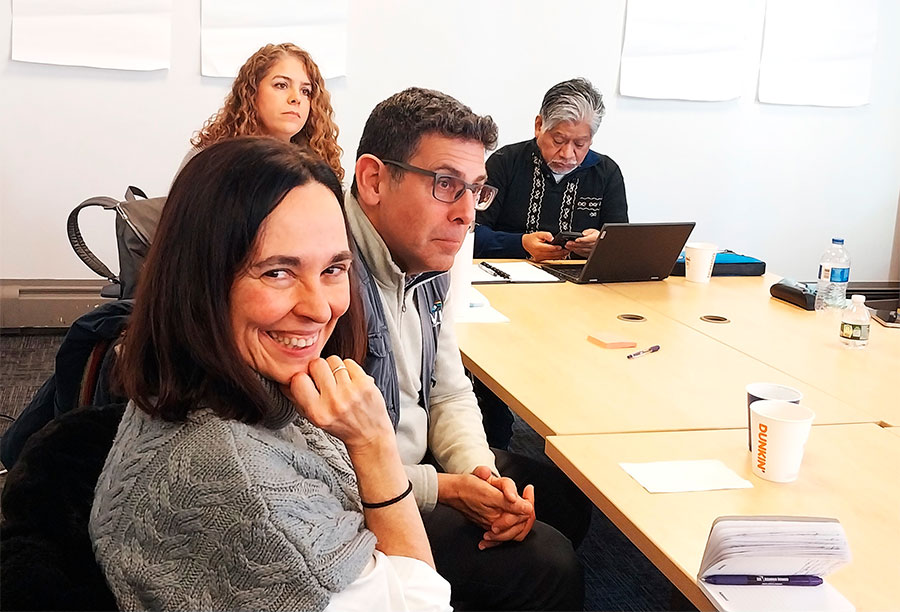
De izq. a der. Virginia Esteban-Somalo, José M. Somalo, Monserrat Mandri y Edgar Ramírez. (Foto: Leticia Roa Nixon)
Las 18 personas que asistieron al evento en PhillyCAM —un centro de medios comunitarios— incluyeron a periodistas con larga trayectoria y jóvenes talentos, creando un ambiente intergeneracional de camaradería.
Tras las presentaciones de los participantes, se les consultó qué recursos necesitan para desempeñar su trabajo en áreas como inmigración, seguridad digital y personal, desinformación, libertad de prensa, inteligencia artificial y propiedad intelectual.
De izq. a der. Lixandra Díaz Portuondo, Vanessa Maria Graber, Carmen Marcet y Arianne Bracho Hernández. (Foto: Cortesía)
Vanessa Maria añadió: “Informaremos sobre los próximos pasos para abordar las necesidades de información y las prioridades del grupo”. También compartirá recursos educativos, oportunidades de entrenamiento, estrategias para levantar fondos y apoyo legal. Además, los comunicadores expresaron su deseo de contar con una página web con listas de recursos y guías en español, de fácil acceso.
El colectivo está abierto a cualquier persona interesada en colaborar en la labor de comunicar a las comunidades hispanoparlantes de la región.
18 personas asistieron al evento, quienes forman parte de diversos grupos y organizaciones locales. Free Press, Centro Integral de Madre Tierra, Temple University Center for Community Engaged Media, Impacto, WHYY, Philatinos, Dos Puntos, Resolve Philly, PhillyCAM Atrévete, Hoy en Delaware, Huellas Media Lab, Raymond Right Now, y organizadores comunitarios.
El presidente de Estados Unidos, Donald Trump. EFE/ Octavio Guzmán
Solo uno de cada cuatro estadounidenses aprueba los ataques que el país lanzó el sábado junto a Israel contra Irán y que derivaron en la muerte del líder supremo de la República Islámica, el ayatolá Alí Jameneí, según una encuesta publicada este domingo por la empresa Ipsos y la agencia Reuters.
El 27 % de los encuestados aprueba los ataques, mientras que el 43 % los desaprueba y el 29 % dijo no estar seguro. Nueve de cada diez encuestados afirmaron haber escuchado algo sobre el operativo militar.
Entre los votantes registrados como republicanos, el 55 % aprueba los ataques y el 13 % los desaprueba. En el caso de los demócratas, el 7 % los aprueba y el 74 % los desaprueba.
La encuesta se realizó a 1.282 adultos, con un margen de error de tres puntos porcentuales. Se llevó a cabo durante el ataque y antes de que se conocieran las primeras bajas estadounidenses.
El presidente estadounidense, Donald Trump, ha ordenado en los últimos meses ataques contra Irán, Venezuela y Nigeria y ha afrontado algunas críticas dentro de sus propias bases, ya que hizo campaña prometiendo mantener a Estados Unidos alejado de guerras en el exterior.
Hasta ahora, Estados Unidos ha reportado la muerte de al menos tres militares desde el inicio, el sábado, de la operación Furia Épica, una serie de ataques conjuntos de Estados Unidos e Israel contra Irán, en los que fue asesinado el líder supremo, en el poder desde 1989, y buena parte de la cúpula militar de la República Islámica.
Irán ha prometido vengar la muerte de Jameneí y, hasta el momento, ha atacado a Israel, Emiratos Árabes Unidos, Catar, Baréin y Kuwait, entre otros aliados de Estados Unidos, donde este país mantiene bases militares.
Trump, que se encuentra en su residencia privada de Mar-a-Lago, en Florida, anunció en la madrugada del sábado el lanzamiento de la operación, cuyo objetivo es derrocar el régimen iraní, pese a que Washington y Teherán mantenían negociaciones para un nuevo pacto nuclear.
La oposición demócrata denuncia no haber sido informada previamente del ataque y acusa al Gobierno de haber iniciado una guerra encubierta sin la autorización del Congreso, que tiene la potestad de aprobar una intervención bélica en el exterior.
Orquesta Filarmónica de Puerto Rico. (Foto: EFE/Archivo)
San Juan.- La Orquesta Filarmónica de Puerto Rico ofrecerá una segunda función del espectáculo musical ‘Benito Filarmónico’, en el que interpreta canciones de Bad Bunny a su estilo clásico.
Esta nueva presentación se llevará a cabo el 21 de marzo próximo en la Sala de Festivales Antonio Paoli, en el Centro de Bellas Artes Luis A. Ferré, en Santurce (San Juan), donde mismo se llevó a cabo la primera función el 20 de febrero pasado, informó en un comunicado el productor del acto, Rafo Muñiz.
«Nos alegra poder anunciar esta segunda función luego de la respuesta tan especial del público. Este proyecto demuestra que la Orquesta puede seguir conectando con nuevas audiencias y que el proyecto de vida de Don Arturo Somohano seguirá vigente en su país», expresó Muñiz.
De acuerdo con Muñiz, ‘Benito Filarmónico’ es una propuesta concebida como experiencia orquestal que reinterpreta el repertorio de Bad Bunny desde el formato filarmónico.
La primera función reunió a una Sala de Festivales completamente llena, donde la orquesta interpretó temas como ‘Mónaco’, ‘Voy a llevarte pa PR’, ‘Callaíta’, ‘La noche de anoche’, ‘Ojitos Lindos’, ‘Neverita’, ‘Me fui de vacaciones’, ‘Weltita’, ‘La Mudanza’ y ‘DTMF’.
El cuatrista Luisito Sanz brilló en el instrumento nacional, con interpretaciones inolvidables en ‘Lo que le pasó a Hawaii’, tema del que fue arreglista original’ y ‘Baile Inolvidable’.
La producción cuenta con la dirección musical de José Manuel Febus e integra la participación de la Camerata Coral, dirigida por Amarilys Pagán.
Imagen de archivo del papa León XIV. EFE/EPA/FABIO FRUSTACI
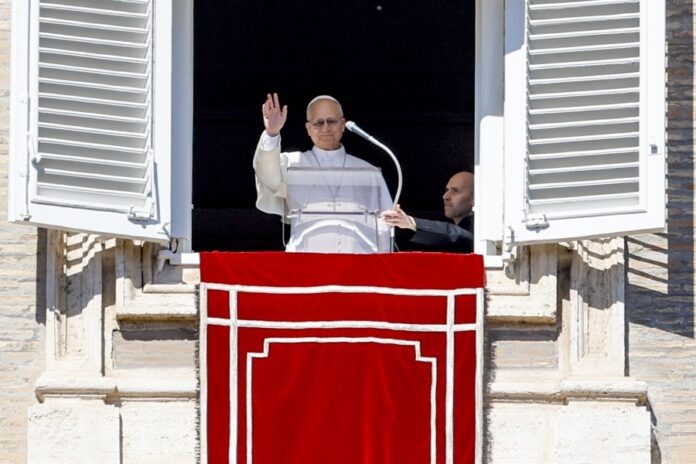
Ciudad del Vaticano.- El papa León XIV urgió este domingo a «detener la espiral de violencia» en Oriente Medio e Irán «antes de que se convierta en una vorágine irreparable», y apeló a la «responsabilidad moral» de las potencias implicadas en la crisis.
«Sigo con profunda preocupación todo lo que está ocurriendo en Oriente Medio y en Irán en estas horas dramáticas. La estabilidad y la paz no se construyen con amenazas recíprocas ni con armas que siembran destrucción, dolor y muerte», dijo el papa estadounidense desde la ventana del Palacio Apostólico tras el Ángelus.
La estabilidad, subrayó, «solo» puede construirse «a través de un diálogo razonable, auténtico y responsable».
Por eso, llamó a los países implicados en esta crisis, sin citarles expresamente, a adoptar la «responsabilidad moral» de acabar con una escalada bélica.
«Ante la posibilidad de una tragedia de proporciones enormes, dirijo a las partes implicadas un encendido llamamiento a asumir la responsabilidad moral de detener la espiral de la violencia antes de que se convierta en una vorágine irreparable», dijo, suscitando el aplauso de los fieles que le escuchaban desde la plaza de San Pedro.
Y agregó: «Que la diplomacia encuentre su papel y se promueva el bien de los pueblos que anhelan una convivencia pacífica fundada en la justicia», para acto seguido pedir oraciones por la paz.
El llamamiento del pontífice se produce solo un día después del ataque con el que Estados e Israel buscan tumbar el régimen iraní y que se ha saldado con la muerte, entre otros, del ayatolá Ali Jameneí después de 36 años en el poder de la República Islámica.
Desde Teherán, el secretario del Consejo Supremo de Seguridad Nacional, Ali Larijani, advirtió de que responderán a los atacantes con una contundencia «nunca antes experimentada».
Por su parte, el presidente estadounidense Donald Trump avisó de que atacarán Irán con «una fuerza nunca antes vista» si cumple su amenaza de responder a la ofensiva para vengar al líder asesinado.
La Guardia Revolucionaria Islámica (CGRI) ha anunciado ataques contra 27 bases militares de EE. UU. en Oriente Medio y objetivos de Israel en venganza por la muerte del líder supremo israelí.
Asimismo, la nación persa ha atacado Emiratos Árabes Unidos, Catar, Baréin, Kuwait y el Kurdistán iraquí, entre otros, aliados de Estados Unidos y donde esa potencia occidental tiene bases militares.
Tras la caída de Jameiní se ha nombrado un consejo interinó que rige la nación persa de forma transitoria, y que está compuesto por su presidente, Masud Pezeshkian; por el ayatolá Alireza Arafi y por el jefe del Poder Judicial iraní, Golamhosein Mohseni Eyei.
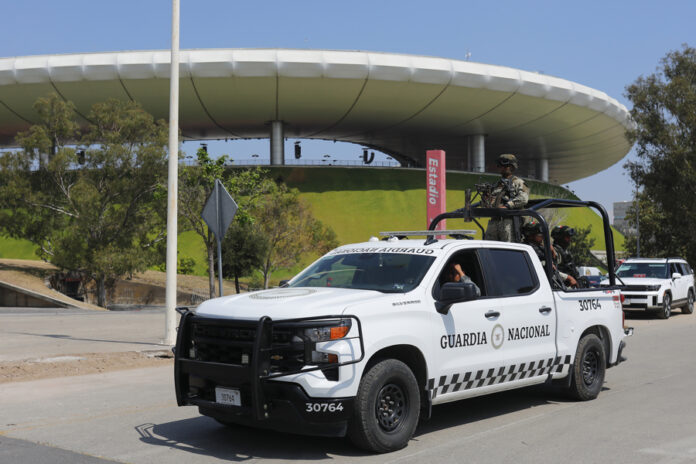
Integrantes de la Guardia Nacional custodian en las inmediaciones del Estadio Arkón este sábado, en Guadalajara, Jalisco (México). El trofeo de la Copa Mundial de la FIFA llegó a Guadalajara, una de las 16 ciudades sedes del torneo 2026, para iniciar su gira por México en donde visitará nueve ciudades para estar cerca de la afición mexicana. EFE/ Francisco Guasco
Guadalajara (México).- El trofeo de la Copa Mundial de la FIFA llegó el pasado sábado a Guadalajara, una de las 16 ciudades sedes del torneo 2026, para iniciar su gira por México en donde visitará nueve ciudades para estar cerca de la afición mexicana.
La presentación del trofeo fue realizada en medio de un amplio dispositivo de seguridad luego de los hechos violentos que tuvieron lugar el pasado 22 de febrero, tras la captura de Nemesio Oceguera, uno de los capos más buscados en México y Estados Unidos
La llegada de la copa estuvo resguardada por elementos del Ejército Mexicano, Guardia Nacional y policía estatal, quienes también custodiaron el circuito alrededor del recinto.
A 103 días del inicio de la justa mundialista, las autoridades y organizadores insistieron en dar un mensaje de tranquilidad y confianza tanto para la afición mexicana como para quienes visitarán este país para disfrutar alguno de los partidos de la fase eliminatoria.
La Secretaría de Gobernación de México, Rosa Isela Rodríguez, dijo que el país está “en paz y hay tranquilidad para disfrutar el fútbol” y para recibir a 5.5 millones de visitantes en las sedes de Guadalajara, Monterrey y Ciudad de México.
“Seremos los mejores anfitriones del mundo, porque ser anfitrión por tercera vez de la Copa del Mundo es la oportunidad de demostrarle al mundo que somos una nación capaz de crecer a través del deporte”, dijo.
Pablo Lemus, gobernador de Jalisco, estado del que es capital Guadalajara, enfatizó que la ciudad está en pie y funciona con normalidad gracias a las labores coordinadas con el Ejército y a “la valentía” con la que se ha conducido la ciudadanía.
“Hoy Jalisco, no tengo duda, está de pie y trabajando y consolidándose como la sede más mexicana del mundial aquí se va a vivir una gran fiesta deportiva, ciudadana”, afirmó.
En la ceremonia estuvieron Hugo Sánchez, cinco veces campeón de goleadores en la liga española, leyenda del Real Madrid; y el campeón con Brasil en Corea Japón 2002, Roque Júnior quien fue el encargado de develar el trofeo.
Patricio Caso, vicepresidente de asuntos públicos de comunicación y sostenibilidad de Coca Cola México, organizador de la gira, aseguró que la intención de llevar el trofeo a varias ciudades es hacer un homenaje a las mexicanas y mexicanos que trabajan por construir un país mejor y compartir la emoción que provoca el fútbol.
Destacó que el mundial de 2026 será el más grande en la historia y unirá a México, Canadá y Estados Unidos que tienen historia compartida y que han hecho un esfuerzo para poner la región en los ojos del mundo.
Señaló que iniciar la gira en Guadalajara significa que “México, está de pie, que Jalisco, está de pie y que Guadalajara, está de pie. Y vamos a hacer de este el mejor mundial que haya existido y Guadalajara va a ser la joya de la corona”, enfatizó.
Tras la inauguración cientos de personas entraron a admirar la Copa del Mundo y también a disfrutar de una experiencia en la que se muestran los balones, los afiches y diversos artículos que han sido utilizados en las diversas ediciones de la Copa del Mundo.
El trofeo estará en Guadalajara hasta el 2 de marzo, para luego visitar León, el 4 y 5 de marzo; Veracruz, el 6 y 7 de marzo; Chihuahua, el 9 y 10 de marzo; Querétaro, el 11 y 12 de marzo; Monterrey del 14 al 17 de marzo; Puebla, el 18 y 19 de marzo; Mérida 21 y 22 de marzo para finalizar en Ciudad de México del 5 al 8 de junio.