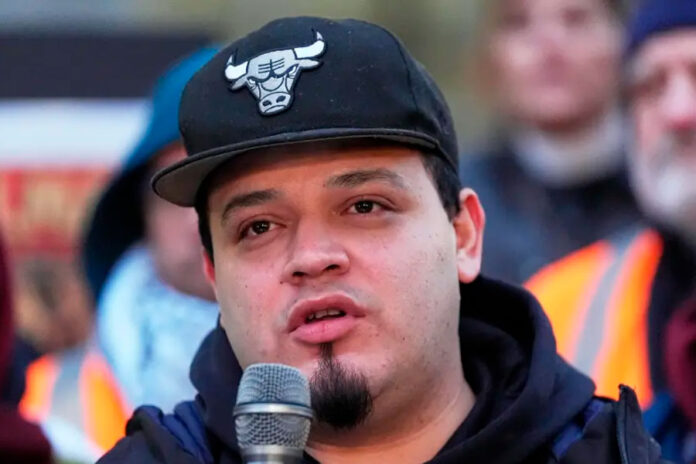
Kilmar Ábrego García habla en una concentración antes de acudir a una cita con el Servicio de Inmigración y Aduanas en Baltimore, Maryland, el 12 de diciembre del 2025. (Foto: AP/Stephanie Scarbrough)
El Servicio de Inmigración y Control de Aduanas no puede volver a detener a Kilmar Ábrego García porque el periodo de detención de 90 días ha expirado y el gobierno no tiene un plan viable para deportarlo, dictaminó una jueza federal el martes.
El caso del ciudadano salvadoreño se ha convertido en un tema de debate después de que el año pasado fuera deportado indebidamente a su país de origen. Desde su regreso, ha estado luchando contra una segunda deportación a una serie de países africanos propuesta por funcionarios del Departamento de Seguridad Nacional.
El gobierno “hizo una amenaza vacía tras otra para expulsarlo a países de África sin ninguna posibilidad real de éxito”, escribió en su orden del martes la jueza federal de distrito Paula Xinis, en Maryland. “Por lo tanto, el tribunal concluye fácilmente que no hay ‘buen motivo para creer’ que la expulsión sea probable en un futuro razonablemente previsible”.
La subsecretaria de Seguridad Nacional Tricia McLaughlin criticó el fallo en un correo electrónico.
“Si este asunto realmente se tratara de la ley o del debido proceso, Kilmar Ábrego García ya habría sido deportado y nunca volvería a poner un pie en este país; la jueza Xinis no estará satisfecha hasta que se le autorice a vivir en Estados Unidos para siempre”, escribió.
Ábrego García tiene una esposa y un hijo estadounidenses y ha vivido en Maryland durante años, pero inmigró a Estados Unidos de manera ilegal cuando era adolescente. En 2019, un juez de inmigración determinó que no podía ser deportado a El Salvador porque allí enfrentaba peligro por parte de una pandilla que había amenazado a su familia. Por error, aun así fue deportado allí el año pasado.
Ante la presión pública y una orden judicial, el gobierno del presidente Donald Trump lo trajo de vuelta en junio, pero sólo después de conseguir una acusación formal que lo imputa por tráfico de personas en Tennessee. Se ha declarado inocente. Mientras tanto, funcionarios de Trump han afirmado que no puede quedarse en Estados Unidos. En documentos presentados ante el tribunal, los funcionarios señalaron que pretendían deportarlo a Uganda, Esuatini, Ghana o Liberia.
En su orden del martes, Xinis señaló que el gobierno ha “deliberadamente —y sin motivo— ignorado el único país que de manera constante se ha ofrecido a aceptar a Ábrego García como refugiado, y al que él acepta ir”. Ese país es Costa Rica.
El abogado de Ábrego García, Simon Sandoval-Moshenberg, argumentó ante el tribunal que la detención migratoria no debe ser un castigo. Un inmigrante sólo puede ser detenido como una forma de facilitar su deportación y no puede ser detenido indefinidamente sin un plan viable de deportación.
“Desde que la jueza Xinis ordenó la liberación del señor Ábrego García a mediados de diciembre, el gobierno ha intentado un truco tras otro para tratar de que vuelva a ser detenido”, escribió Sandoval-Moshenberg en un correo electrónico el martes. “En su decisión de hoy, reconoció que si el gobierno realmente estuviera tratando de expulsar al señor Ábrego García de Estados Unidos, lo habría enviado a Costa Rica mucho antes de hoy”.
El gobierno ahora debería participar en un esfuerzo de buena fe para concretar los detalles de la expulsión a Costa Rica, escribió Sandoval-Moshenberg.
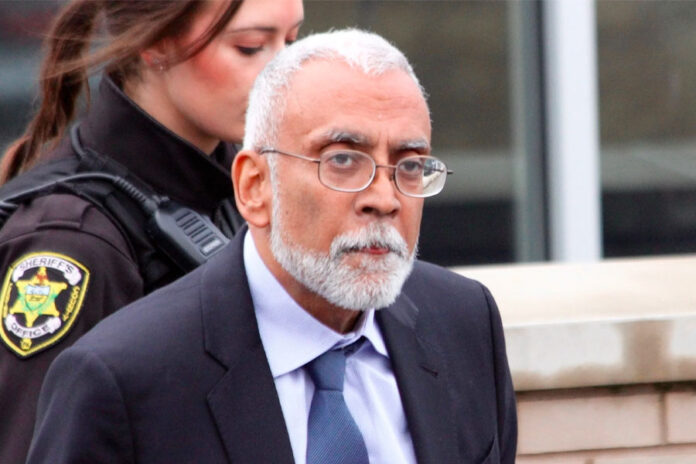
Subramanyam Vedam walks outside the Centre County Courthouse, Feb. 6, 2025, in Bellefonte, Pa, during a hearing over new evidence uncovered in his 1983 murder case. (Foto: AP/Geoff Rushton/StateCollege/File)
A Pennsylvania man who spent 43 years in prison before his murder conviction was overturned — only to be taken straight into immigration custody — was denied bail Tuesday while he fights deportation.
Subramanyam Vedam, 64, will remain in custody while he appeals a 1999 deportation order. The Board of Immigration Appeals agreed this month to hear his appeal based on what it called exceptional circumstances.
Vedam’s lawyer argued Tuesday that he would have likely been spared deportation and become a citizen if not for the murder case, given immigration laws in place at the time. Vedam would have left prison on a drug charge by 1992, lawyer Ava Benach said.
“It was delivery of LSD on a very small scale. This is not importing tons of cocaine,” Benach said Tuesday. “He is not a danger to the community. We are talking about offenses that occurred over 40 years ago.”
In August, a Pennsylvania judge threw out Vedam’s murder conviction in the 1980 death of a college friend, based on ballistics evidence that prosecutors hadn’t disclosed during his two trials. Supporters listening in remotely to the bail hearing included a Centre County prosecutor and the mayor of State College, where Vedam’s late father was a renowned professor at Penn State University, Benach said.
Immigration Judge Tamar Wilson, sitting in Elizabeth, New Jersey, said she believes detention to be mandatory given the felony drug conviction. Alternatively, she agreed with Department of Homeland Security officials who said he remains a safety risk.
“The fact he’s been a ‘model prisoner’ does not suggest that out in the general public he’s going to be safe,” Wilson said.
It’s not yet clear whether Wilson or another judge will hear the merits of the deportation case. No hearings have yet been scheduled.
“Subu is nothing if not resilient, and we’re resolved to emulate the example he sets for us by focusing on the next step in his fight for freedom. We continue to believe his immigration case is strong and look forward to the day we can be together again,” said his sister, Saraswathi Vedam, calling him by a family nickname.
She planned to bring him home when he was released from state prison on Oct. 3, only to see him taken into federal immigration custody. Vedam had come to the U.S. legally from India when he was 9 months old, when his parents returned to State College.
“He was someone who’s suffered a profound injustice,” Benach told The Associated Press last year. “Those 43 years aren’t a blank slate. He lived a remarkable experience in prison.”
Vedam is being held at an 1,800-bed U.S. Immigration and Customs Enforcement facility in central Pennsylvania.
“Criminal illegal aliens are not welcome in the U.S,” a Department of Homeland Security spokesperson said of the case last year.
Miguel Burgos es experto en impuestos de TurboTax.
A medida que avanza la temporada de impuestos, los niveles de estrés en Estados Unidos van en aumento. Y para muchos —especialmente para la Generación Z—, no se trata solo de números en un formulario. Según una encuesta reciente patrocinada por Intuit TurboTax y realizada a más de 1.000 adultos, casi la mitad de los estadounidenses (46%) afirma que la temporada de impuestos es el periodo financiero más estresante del año.
Esta ansiedad es aún más marcada entre los adultos jóvenes: alrededor del 62% de la Generación Z señala la temporada de impuestos como su principal fuente de estrés financiero, una cifra considerablemente más alta que la de generaciones mayores.
¿Por qué presentar impuestos genera tanto estrés?
Para muchos, el temor no se limita a deber dinero, sino a cometer errores. Casi la mitad de los encuestados teme presentar su declaración de impuestos de forma incorrecta, y esa preocupación es aún mayor entre los contribuyentes de la Generación Z.
Como contador público autorizado (CPA), veo esta falta de confianza con frecuencia. Los cambios en las leyes fiscales, las múltiples fuentes de ingresos y el lenguaje técnico poco familiar contribuyen a una sensación de agobio, especialmente entre quienes presentan sus impuestos por cuenta propia por primera vez.
De hecho, más de la mitad de los jóvenes declarantes reconoce que hacer los impuestos es una de las partes más difíciles de la “vida adulta”. Esto no resulta sorprendente, ya que muchas personas no comienzan a sentirse seguras de sus conocimientos fiscales hasta bien entrados los 20 o 30 años —si es que alguna vez lo logran—.
Reembolsos: alivio y presión
Hay una buena noticia en medio del estrés: la mayoría de los estadounidenses (52%) espera recibir un reembolso de impuestos este año. Y aunque muchos aún no saben cuánto recibirán, la mayoría planea presentar su declaración temprano para obtener su reembolso más rápido.
Para muchos hogares, ese dinero representa más que un simple ingreso adicional; es una herramienta financiera. Aproximadamente una cuarta parte planea ahorrar su reembolso, mientras que otro 24% tiene la intención de usarlo para pagar deudas. Estas son decisiones inteligentes que pueden fortalecer la estabilidad financiera.
Curiosamente, los adultos jóvenes son más propensos a ver su reembolso como “dinero extra”. Más de la mitad de los encuestados de la Generación Z afirma que así percibe su reembolso, y casi la mitad planea gastarlo en artículos no esenciales como ropa, electrónicos o viajes.
Pedir ayuda es más común de lo que se cree
A pesar del estrés, los contribuyentes rara vez enfrentan este proceso solos. La encuesta revela que alrededor del 60% de los estadounidenses suele recibir ayuda al momento de presentar sus impuestos, ya sea mediante herramientas digitales o con el apoyo de profesionales. Esto tiene sentido: casi la mitad de los declarantes se preocupa por hacerlo correctamente y muchos prefieren la tranquilidad que ofrece el respaldo de un experto.
Las tecnologías más avanzadas, incluidas las herramientas fiscales asistidas por inteligencia artificial, también están ganando popularidad, especialmente entre las generaciones más jóvenes. Cada vez más miembros de la Generación Z y millennials aseguran que planean usar herramientas de IA esta temporada de impuestos, no necesariamente porque las prefieran, sino porque las consideran más rápidas y con menos margen de error que hacerlo todo por su cuenta.
La temporada de impuestos no tiene por qué ser intimidante. La clave para reducir el estrés está en la preparación, en presentar la declaración con anticipación y en saber cuándo buscar ayuda, ya sea a través de herramientas confiables como TurboTax en español o con el apoyo de un profesional de impuestos que pueda guiarle a través de la complejidad del proceso. Al tomar el control desde el principio y comprender su situación, es posible convertir lo que parece un obstáculo financiero en un paso estratégico hacia sus metas económicas.
* Miguel Burgos es experto en impuestos de TurboTax.
El acuerdo de comercio que acaban de firmar Estados Unidos y Taiwán, ascendente a 250.000 millones de dólares, tiene múltiples implicaciones, comenzando con el rechazo de China, que reclama a Taiwán, indebidamente, como parte de su territorio.
La implicación comercial, por supuesto, es evidente. El acuerdo reduce los aranceles que paga Taiwán a un 15%, que es igual al de Japón, Corea del Sur y la Unión Europea. Para cualquier nación, comerciar con EE. UU. es una gran ventaja. EE. UU. es el mayor mercado del mundo.
La segunda implicación es estratégica. Taiwán está a la cabeza de la tecnología mundial de “chips” y microprocesadores. Esos componentes constituyen el corazón de todos los equipos electrónicos que se fabrican, desde electrodomésticos y automóviles hasta naves espaciales, misiles y aviones de combate. Este acuerdo pone en las manos de las industrias norteamericanas la mejor tecnología del mundo.
Es menester destacar que Taiwán mantendrá en la isla las investigaciones y desarrollo de los procesos avanzados de tecnología. De esa manera, asegura que no perderá su competitividad y liderazgo tecnológico.
Simultáneamente, EEUU se beneficiará de los avances de Taiwán en Inteligencia Artificial (IA), un campo relativamente nuevo, pero que se ha erigido en una carrera entre las grandes potencias por sus posibilidades casi infinitas.
La tercera implicación es política. El acuerdo de comercio aumentado aporta un elemento más para que EE.UU. continúe defendiendo el statu quo de Taiwán. La cadena de suministros electrónicos taiwaneses es de suma importancia para los norteamericanos.
De hecho, muchos analistas opinan que el mayor interés de China en ocupar Taiwán es, precisamente, apoderarse de esa cadena de suministro tan valiosa. Poco después de firmado el acuerdo de comercio, el régimen chino emitió una fuerte protesta.
En un acuerdo separado, pero parte de las negociaciones, Taiwán invertirá 250.000 millones de dólares en industrias norteamericanas.
El pasado año, la economía taiwanesa creció un 8,6%, la cifra más alta en los últimos 15 años. Taiwán es también uno de los países más educados del mundo: casi el 50% de su población mayor de 17 años tiene un título universitario.
El desarrollo de la pequeña isla, de 23 millones de habitantes, se extiende a otros sectores como la medicina y el turismo.
A la firma del importante acuerdo de comercio concurrieron el viceministro de Relaciones Exteriores taiwanés, Li-chiun Cheng, y el ministro de gobierno Jen-ni Yang. Por la parte norteamericana, asistieron el representante comercial Jamieson Greer y el secretario de Comercio, Howard Lutnick.
* Luis Zúñiga es analista político y exdiplomático.
María Méndez es presidenta y fundadora de Vacation is a Human Right (VIAHR). Dominicana residente en Nueva York. Ha trabajado con figuras y eventos internacionales como Beyonce, Frank Ocean, Joe Thomas, The Mavericks, Raul Di Blasio, Benicio del Toro y la SuperBowl.
Lucía se levanta antes de las cinco. Prepara el desayuno, deja los uniformes de sus hijos listos y sale al primer turno en una panadería. A las dos de la tarde cruza la ciudad para limpiar oficinas por horas. Los fines de semana, toma repartos. No es ambición; es matemática: si no suma turnos, no llega. Lo que sí se acumula es otra cosa: un cansancio que no se va, un enojo sin destinatario y la sensación de que, por más que corra, el día nunca alcanza.
Ese desgaste tiene nombre. La OMS define el burnout como un fenómeno ocupacional que aparece cuando el estrés crónico en el trabajo no se gestiona bien, y se caracteriza por agotamiento, distancia/cinismo y eficacia reducida. No es un diagnóstico clínico, pero sí una razón frecuente de consulta y de impacto en la salud.
El primer límite que se rompe es el tiempo. A escala global, la OIT estima que más de un tercio de las personas trabajadoras labora más de 48 horas por semana. No es una excepción, sino un patrón extendido que deteriora el equilibrio vida–trabajo.
Y no es solo equilibrio: trabajar 55 horas o más por semana se asocia con un 35% más de riesgo de ictus y un 17% más de riesgo de muerte por cardiopatía isquémica, comparado con jornadas de 35–40 horas. Además, el número de personas en esa franja va en aumento.
En paralelo, crece el pluriempleo. En Estados Unidos, por ejemplo, la proporción de personas con más de un trabajo alcanzó 5,8% en noviembre de 2025 (serie no desestacionalizada). Es una foto de cómo se reparte el ingreso… y también el cansancio.
Trabajar en dos o más empleos suele ir de la mano de precariedad: contratos inestables, ingresos variables y poca protección. La evidencia científica muestra una asociación consistente entre empleo precario y peor salud mental/bienestar. El efecto se agrava cuando la precariedad se prolonga en el tiempo.
Lucía lo explica sin tecnicismos: “Si digo que no al extra, no pago el arriendo. Y si digo que sí, no veo a mis hijos”. Ese doble vínculo es terreno fértil para el estrés crónico.
Para las empresas, esta realidad también golpea la línea de resultados: mayor ausentismo, rotación y pérdida de productividad son consecuencias típicas cuando el desgaste se cronifica. Las guías OMS/OIT recomiendan priorizar intervenciones organizacionales (no solo individuales), porque abordar las causas —carga, horarios, previsibilidad, liderazgo— mejora salud y desempeño.
El error más común es poner todo el peso en la persona (“gestiona mejor tu tiempo”). La evidencia pide lo contrario: diseño del trabajo y decisiones organizacionales.
Cuatro movimientos prácticos que bajan el riesgo:
1. Limitar jornadas excesivas y la acumulación de horas que empuja por encima de 48–55 h/semana; asegurar descanso entre turnos.
2. Previsibilidad real: calendarios de turnos con anticipación suficiente y cambios de última hora solo por razones justificadas; reduce ansiedad financiera y mejora el sueño.
3. Cerrar la brecha esfuerzo–recompensa: salarios/beneficios alineados al costo de vida y reconocimiento explícito de picos; el equilibrio importa para la salud.
4. Apoyos accesibles de salud mental y políticas de desconexión fuera de horario, adaptadas a personas con dos o más empleos o trabajo por turnos.
Lucía no necesita “tips” para ser más productiva, sino reglas del juego que la contemplen. Jornadas humanas, previsibilidad, recompensas justas y tiempo real de recuperación. Nadie debería enfermarse por llegar a fin de mes. Prevenir el burnout en quienes no pueden “elegir” cansarse menos es una cuestión de justicia y de salud pública, además de una decisión inteligente para mantener el talento.
* María Méndez es presidenta y fundadora de Vacation is a Human Right (VIAHR). Dominicana residente en Nueva York. Ha trabajado con figuras y eventos internacionales como Beyonce, Frank Ocean, Joe Thomas, The Mavericks, Raul Di Blasio, Benicio del Toro y la SuperBowl. https://www.viahr.org/
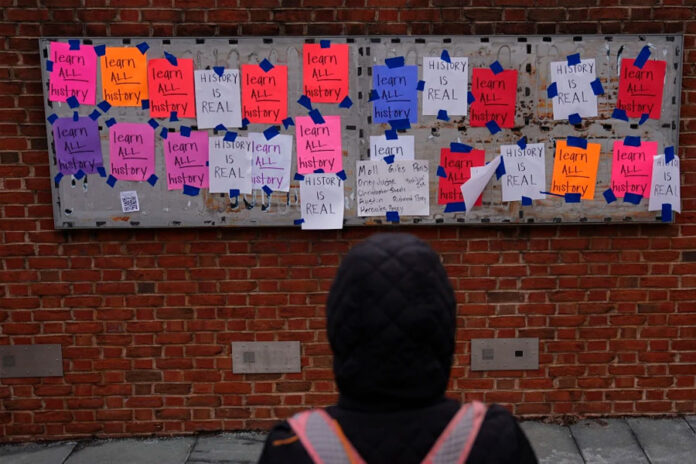
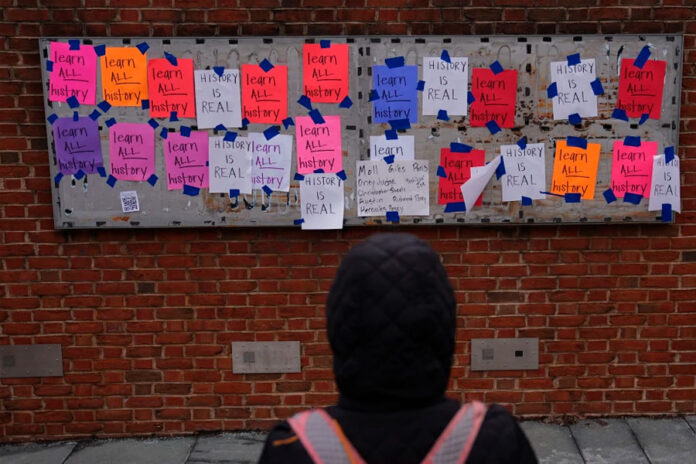
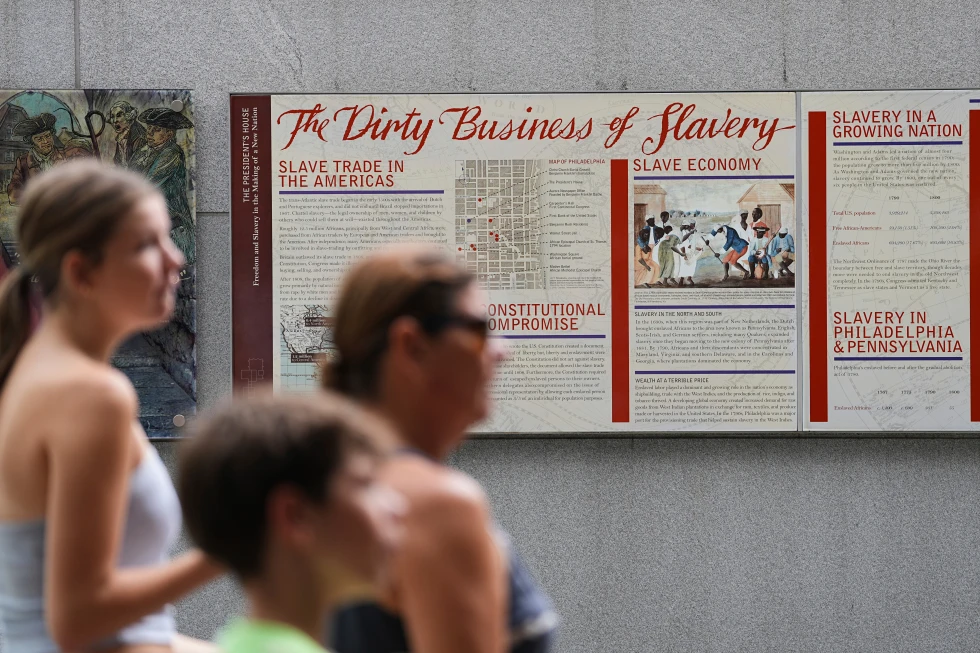
Una persona observa los carteles colocados donde se encontraban unos paneles explicativos --ahora retirados-- que formaban parte de una exhibición sobre la esclavitud en la Casa Presidencial, el 23 de enero de 2026, en Filadelfia. Los papeles dicen: "Aprender toda la historia", "La historia es real". (Foto: AP/Matt Rourke/Archivo)
Una exhibición sobre nueve personas esclavizadas por George Washington debe ser restablecida en su antigua residencia en Filadelfia después de que el gobierno del presidente Donald Trump la retirara el mes pasado, dictaminó una jueza federal el Día de los Presidentes, el feriado que honra el legado del primer mandatario de Estados Unidos.
La ciudad de Filadelfia presentó una demanda en enero después de que el Servicio de Parques Nacionales retirara los paneles explicativos del Parque Histórico Nacional de la Independencia, el lugar donde George y Martha Washington vivieron con nueve de sus esclavos en la década de 1790, cuando Filadelfia fue brevemente la capital del país.
El retiro de los paneles se llevó a cabo en respuesta a una orden ejecutiva de Trump para “restablecer la verdad y la cordura en la historia estadounidense” en los museos, parques y monumentos del país. Le pidió al Departamento del Interior garantizar que esos sitios no muestren elementos que “denigren de manera inapropiada a los estadounidenses, pasados o vivos”.
La jueza de distrito Cynthia Rufe dictaminó el lunes que todos los materiales deben ser restablecidos en su estado original mientras se resuelve una demanda que impugna la legalidad de la orden de retirarlos. Les prohibió a funcionarios de Trump instalar reemplazos que expliquen la historia de otra manera.
Rufe, designada por el presidente republicano George W. Bush, inició su orden escrita con una cita de la novela distópica “1984”, de George Orwell, y comparó al gobierno de Trump con el llamado Ministerio de la Verdad que aparece en el libro, un departamento oficial que revisaba los registros históricos para alinearlos con la narrativa gubernamental.
“Como si el Ministerio de la Verdad de ‘1984’ de George Orwell existiera ahora, con su lema ‘La ignorancia es fuerza’, a este tribunal se le pide determinar si el gobierno federal tiene el poder que dice tener: el de disimular y desmantelar verdades históricas cuando tiene cierto dominio sobre los hechos históricos», escribió Rufe. «No lo tiene”.
Durante una audiencia en enero, ella le había advertido a abogados del Departamento de Justicia que estaban haciendo declaraciones “peligrosas” y “horripilantes” cuando afirmaron que funcionarios de Trump pueden elegir qué partes de la historia de Estados Unidos mostrar en sitios del Servicio de Parques Nacionales.
El Departamento del Interior no respondió de momento a una solicitud de comentarios sobre el fallo, dado a conocer mientras las oficinas gubernamentales estaban cerradas por el feriado federal.
La jueza no proporcionó un cronograma sobre cuándo debe restablecerse la exhibición. Los funcionarios federales pueden apelar el fallo.
El sitio histórico está entre varios en los que el gobierno ha retirado discretamente contenido sobre la historia de las personas esclavizadas, las personas LGBTQ+ y los indígenas americanos.
La señalización que ha desaparecido del Parque Nacional del Gran Cañón decía que los colonos obligaron a las tribus nativas americanas “a salir de sus tierras” con el fin de que se estableciera el parque y “explotaron” el paisaje para la minería y el pastoreo.
La semana pasada, una bandera arcoíris fue retirada del Monumento Nacional Stonewall, donde clientes de un bar se rebelaron contra una redada policial y fueron un catalizador del movimiento moderno por los derechos de las personas LGBTQ+. El gobierno también ha eliminado referencias a las personas transgénero de su página web sobre el monumento, pese a que varias mujeres trans de raza negra fueron figuras clave en el alzamiento popular.
La exhibición de Filadelfia, creada hace dos décadas en una alianza entre la ciudad y funcionarios federales, incluía detalles biográficos sobre cada una de las nueve personas esclavizadas por los Washington en la casa, incluidas dos que escaparon.
Entre ellas estaba Oney Judge, quien nació en la esclavitud en la plantación familiar de Mount Vernon, Virginia, y más tarde escapó de la casa de Filadelfia en 1796. Judge huyó hacia el norte a Nueva Hampshire, un estado sin esclavitud. Washington hizo que la declararan fugitiva y publicó anuncios para solicitar su regreso.
Debido a que Judge había escapado de la casa de Filadelfia, el Servicio de Parques Nacionales la añadió en 2022 a una red nacional de sitios de la organización secreta de resistencia llamada Ferrocarril Subterráneo, en la que la agencia se comprometió a “honrar, preservar y promover la historia de la resistencia a la esclavitud mediante la huida y la fuga”.
Rufe señaló que el retiro de los materiales sobre Judge “oculta información crucial que vincula el sitio” con la red.
Sólo los nombres de Judge y de las otras ocho personas esclavizadas —Austin, Paris, Hercules, Richmond, Giles, Moll y Joe, quienes tenían cada uno un solo nombre, y Christopher Sheels— permanecieron grabados en un muro de cemento después de que empleados federales usaran una palanca para arrancar las placas el 22 de enero.
Hercules también escapó en 1797 después de que lo llevaran a Mount Vernon, donde los Washington tenían muchos otros esclavos. Llegó a la ciudad de Nueva York pese a haber sido declarado esclavo fugitivo y vivió bajo el nombre de Hercules Posey.
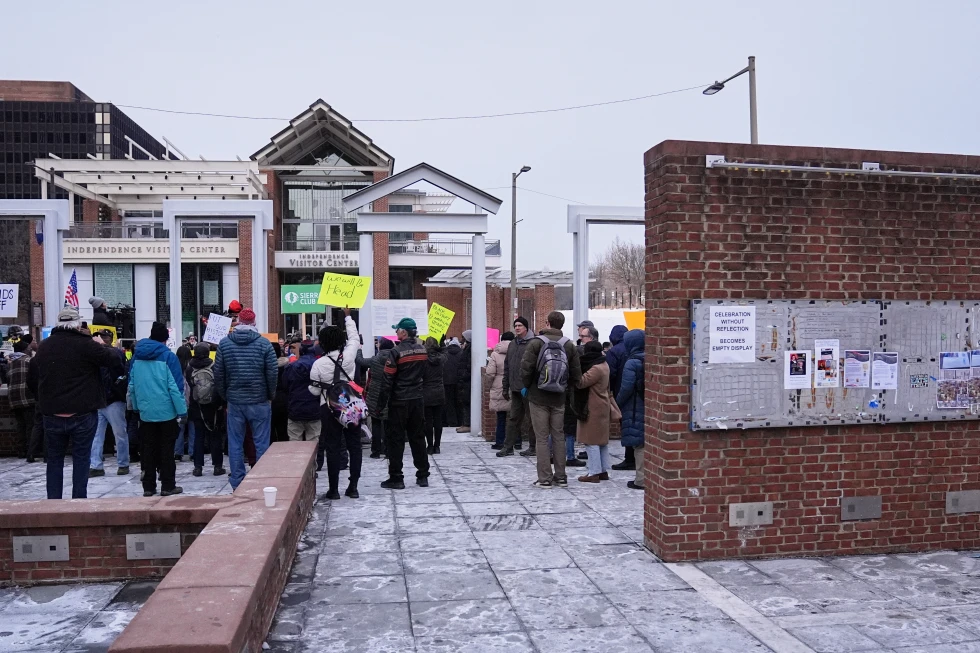
Varios políticos locales y líderes comunitarios negros celebraron el fallo, que se conoció mientras muchos estaban afuera, manifestándose en el lugar para exigir el restablecimiento de la exhibición.
El representante estatal Malcolm Kenyatta, demócrata de Filadelfia, declaró que la comunidad se impuso frente a un intento del gobierno de Trump de “blanquear nuestra historia”.
“Los habitantes de Filadelfia contraatacaron, y no podría estar más orgulloso de cómo nos mantuvimos unidos”, expresó.
El pasado 12 de febrero la concejala del Distrito 7 de Filadelfia, Quetcy Lozada, presentó una serie de resoluciones que buscan atender tres crisis interrelacionadas que afectan de manera significativa a residentes de Filadelfia, particularmente en comunidades negras y latinas: el aumento de las tasaciones de propiedades, la presencia de armas en espacios públicos y los títulos de propiedad enredados, un problema que amenaza la estabilidad de familias de bajos recursos.
Un panorama crítico para las comunidades latinas y negras
Aunque la pobreza ha disminuido en la ciudad —de 27 % en 2013 a 22 % en 2023— los latinos siguen siendo el grupo con mayor tasa de pobreza, alcanzando un 33 %, pese al crecimiento de hogares latinos de mayores ingresos. La comunidad latina sigue enfrentando desigualdad estructural y cargas desproporcionadas en vivienda y seguridad pública.
Audiencia solicitada sobre tasación de propiedades y carga fiscal
Lozada presentó una resolución para autorizar al Comité de Vivienda, Desarrollo Vecinal y Personas sin Hogar a investigar la Oficina de Tasación de Propiedades (OPA), su metodología, el proceso de apelaciones y el impacto que las recientes valuaciones tienen sobre los propietarios de vivienda.
Según la resolución, el 26 % de los propietarios gasta más del 30 % de sus ingresos en vivienda, una carga que se agrava con los aumentos acumulados de impuestos prediales tras años de retrasos en las tasaciones. El ajuste reciente provocó incrementos que equivalen a tres años de aumentos en uno solo, dejando a muchos residentes en una situación económica precaria.
Los efectos son especialmente severos en vecindarios latinos y negros, donde las tasaciones han aumentado de manera desproporcionada, y es que las revaluaciones de 2024 incrementaron los valores más rápidamente en barrios de bajos ingresos y comunidades racializadas, reproduciendo patrones de sesgo histórico en la valuación de viviendas.
Además, estudios académicos han demostrado que propietarios negros y latinos enfrentan tasaciones por debajo del valor real, afectando su capacidad de acceder a créditos y construir patrimonio, lo que profundiza desigualdades ya existentes.
El problema se agrava en el contexto del reciente proceso de revaluación de propiedades de la ciudad para 2025, que elevó el valor de las viviendas en más de 30 % en algunas zonas, especialmente en áreas en proceso de gentrificación, afectando a propietarios con ingresos bajos o fijos.
Audiencia sobre armas de fuego en parques y espacios recreativos
En una segunda resolución, Lozada solicitó una audiencia conjunta entre el Comité de Seguridad Pública y el Comité de Parques y Recreación para examinar la presencia de armas de fuego en áreas recreativas de la ciudad, la efectividad de las leyes vigentes y estrategias de prevención de violencia.
Aunque la tasa de homicidios en Filadelfia cayó a su nivel más bajo en 60 años en 2025, la ciudad registró 935 víctimas de tiroteos, y casi el 40 % de los incidentes se concentraron en solo 12 vecindarios, muchos de ellos con altas poblaciones afroamericanas y latinas.
De acuerdo con datos presentados en la resolución, entre 2019 y 2022 hubo 300 incidentes de violencia armada en parques e instalaciones recreativas. Las políticas de “zonas libres de armas” no han sido suficientes por sí solas; estudios en salud pública muestran que estas medidas requieren combinarse con aplicación consistente de la ley, estrategias de prevención y participación comunitaria para reducir la violencia de manera efectiva.
El impacto es particularmente grave entre jóvenes afroamericanos: uno de cada ocho hombres negros en Filadelfia recibe disparos o muere antes de los 25 años, según datos de la Universidad de Pensilvania.
Para familias latinas, especialmente en vecindarios donde las instalaciones recreativas son un recurso central para la niñez, esta situación incrementa el miedo y reduce el acceso a espacios seguros para la comunidad.
Audiencia sobre títulos de propiedad enredados
El Comité de Derecho y Gobierno celebró una audiencia sobre la resolución 260029 para examinar el problema de los títulos de propiedad enredados, que se produce cuando una vivienda pasa de un miembro de la familia a otro sin que la escritura se actualice legalmente.
Este problema afecta de manera desproporcionada a familias de bajos ingresos, muchas de ellas latinas y afroamericanas, y puede derivar en:
Pérdida de acceso a programas de ayuda
Impedimentos para realizar reparaciones o solicitar asistencia
Riesgo de robo de escrituras
Acumulación de deudas fiscales
Para enfrentar la situación, la Oficina del Registro de Testamentos creó la Unidad de Autorización de Títulos, que ya ha logrado resolver 118 títulos en el último año. Se estima, sin embargo, que miles de propiedades en la ciudad presentan algún tipo de irregularidad en su escritura.
El registrador de testamentos, John Sabatina, afirmó que la unidad “ayuda a los residentes a pasar de la sucesión a la propiedad mediante asistencia legal”, un paso clave para evitar que familias pierdan sus hogares.
Este problema afecta de manera particular a comunidades latinas, donde las transferencias informales de vivienda entre familiares son comunes y el acceso a servicios legales puede ser limitado. Combinado con aumentos en las tasaciones y el riesgo de ejecuciones fiscales, los títulos enredados representan una amenaza real para la estabilidad intergeneracional de la propiedad.
Las resoluciones impulsadas por Lozada buscan abordar problemas profundos que afectan directamente a la estabilidad económica, la seguridad y el derecho a la vivienda, especialmente en comunidades latinas históricamente marginadas.
En una sesión del Concejo Municipal, Quetcy Lozada presentó dos resoluciones enfocadas en preocupaciones que dijo, ha estado escuchando directamente de sus residentes.
La primera solicita una vista pública conjunta para examinar la Oficina de Evaluación de Propiedades (OPA), incluyendo su metodología, el proceso de apelaciones y el impacto que el aumento en las tasaciones y los impuestos a la propiedad está teniendo en los dueños de vivienda. “A medida que suben los valores, tenemos que asegurarnos de que el sistema sea justo y no represente una carga injusta para las familias trabajadoras, nuestros envejecientes y los residentes de toda la vida”.
La segunda resolución solicita una vista pública conjunta para atender la presencia de armas de fuego en espacios recreativos públicos. “Nuestros parques y áreas de juego deben ser lugares seguros para cada niño y cada familia, y debemos fortalecer la aplicación de la ley y las estrategias para combatir la violencia armada. Estas vistas se tratan de responsabilidad, justicia y de mantener nuestras comunidades seguras y fuertes”.
Este contenido forma parte de Every Voice, Every Vote, un proyecto colaborativo gestionado por The Lenfest Institute for Journalism. El apoyo principal para Every Voice, Every Vote en 2024 y 2025 es proporcionado por la William Penn Foundation, con financiamiento adicional de The Lenfest Institute for Journalism, Comcast NBCUniversal, The John S. and James L. Knight Foundation, Henry L. Kimelman Family Foundation, Judy and Peter Leone, Arctos Foundation, Wyncote Foundation, 25th Century Foundation y Dolfinger-McMahon Foundation. Para obtener más información sobre el proyecto y ver la lista completa de patrocinadores, visita Every Voice, Every Vote . El contenido editorial se crea de manera independiente a los donantes del proyecto.
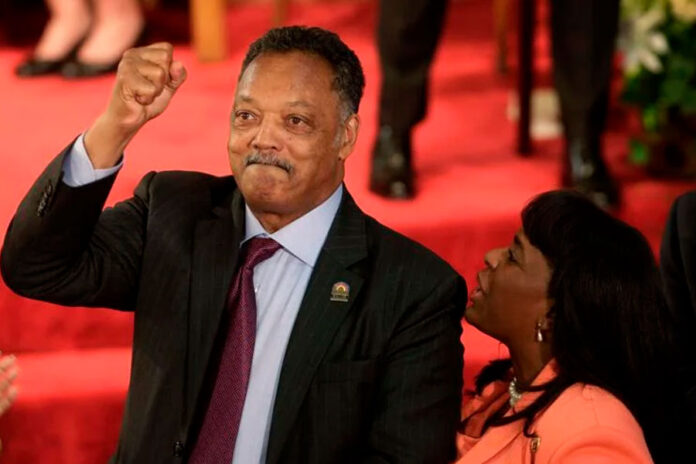
El reverendo Jesse Jackson hace un gesto a un amigo en el balcón de la iglesia baptista de la Calle 16 en Birmingham, Alabama, el 15 de septiembre de 2013. La iglesia celebraba una ceremonia en memoria de cuatro niñas asesinadas por una bomba colocada ante el lugar 50 años antes por miembros del Ku Klux Klan. A la derecha se ve la representante estadounidense Terri Sewell, demócrata de Alabama. (Foto: AP/Dave Martin/ Archivo)
El reverendo Jesse L. Jackson, protegido del reverendo Martin Luther King Jr. y candidato presidencial en dos ocasiones, que lideró el Movimiento por los Derechos Civiles durante décadas tras el asesinato del venerado líder, murió el martes. Tenía 84 años.
Su hija, Santita Jackson, confirmó que Jackson murió en casa rodeado por su familia.
Como joven organizador en Chicago, Jackson fue convocado a reunirse con King en el Motel Lorraine, en Memphis, poco antes de que mataran a King, y después se posicionó públicamente como el sucesor de King.
Jackson encabezó toda una vida de cruzadas en Estados Unidos y en el extranjero, defendiendo a los pobres y a los desfavorecidos en temas que iban desde el derecho al voto y las oportunidades laborales hasta la educación y la atención médica. Logró victorias diplomáticas con líderes mundiales y, a través de su Coalición Rainbow/PUSH, canalizó los clamores por el orgullo negro y la autodeterminación hacia las salas de juntas corporativas, presionando a ejecutivos para que Estados Unidos fuera una sociedad más abierta y equitativa.
Y cuando declaraba: “Soy alguien”, en un poema que repetía a menudo, buscaba llegar a personas de todos los colores. “Puede que sea pobre, pero soy alguien; puede que sea joven, pero soy alguien; puede que reciba asistencia social, pero soy alguien”, entonaba Jackson.
Era un mensaje que asumió de manera literal y personal, tras haber pasado de la oscuridad en el Sur segregado a convertirse en el activista por los derechos civiles más conocido de Estados Unidos desde King.
“Nuestro padre fue un líder servidor —no solo para nuestra familia, sino para los oprimidos, los que no tienen voz y los pasados por alto en todo el mundo”, dijo la familia Jackson en un comunicado publicado en internet. “Lo compartimos con el mundo y, a cambio, el mundo pasó a ser parte de nuestra familia extendida. Su inquebrantable creencia en la justicia, la igualdad y el amor elevó a millones, y les pedimos que honren su memoria continuando la lucha por los valores por los que vivió”.
A pesar de profundos problemas de salud en sus últimos años, incluida una rara afección cerebral que afectó su capacidad para moverse y hablar, Jackson continuó protestando contra la injusticia racial hasta la era de Black Lives Matter. En 2024, apareció en la Convención Nacional Demócrata en Chicago y en una reunión del Concejo Municipal para mostrar apoyo a una resolución que respaldaba un alto el fuego en la guerra entre Israel y Hamás.
“Aunque ganemos”, les dijo a los manifestantes en Minneapolis antes de que el agente cuyo rodilla impidió que George Floyd respirara fuera condenado por asesinato, “es alivio, no victoria. Siguen matando a nuestra gente. Detengan la violencia, salven a los niños. Mantengan viva la esperanza”.
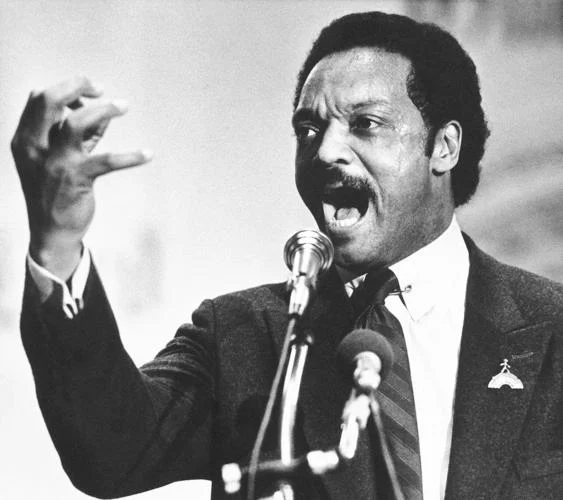
El candidato en las primarias demócratas para la presidencia Jesse Jackson habla con un grupo de seguidores en una iglesia baptista en Dayton, Ohio, el 14 de abril de 1984. (Foto: AP/Rob Burns/Archivo)
Llamados a la acción, pronunciados con una voz memorable
La voz de Jackson, impregnada de las conmovedoras cadencias y la poderosa insistencia de la iglesia negra, exigía atención. En la campaña y en otros ámbitos, usó rimas y consignas como: “Esperanza, no droga” y “Si mi mente puede concebirlo y mi corazón puede creerlo, entonces puedo lograrlo”, para transmitir sus mensajes.
Jackson tuvo su cuota de críticos, tanto dentro como fuera de la comunidad negra. Algunos lo consideraban un exhibicionista, demasiado ansioso por buscar los reflectores. Al mirar atrás sobre su vida y legado, Jackson le comentó a The Associated Press en 2011 que se sentía bendecido por poder continuar el servicio de otros líderes que lo precedieron y sentar una base para los que vendrían.
“Parte del trabajo de nuestra vida fue derribar muros y construir puentes, y en medio siglo de trabajo, básicamente hemos derribado muros”, dijo Jackson. “A veces, cuando derribas muros, quedas marcado por los escombros que caen, pero tu misión es abrir huecos para que otros detrás de ti puedan pasar corriendo”.
En sus últimos meses, en los que recibió cuidados las 24 horas, perdió la capacidad de hablar y se comunicaba con familiares y visitantes tomándoles las manos y apretándolas.
“Me emociono mucho al saber que estos discursos ahora pertenecen a la historia”, le dijo su hijo, Jesse Jackson Jr., a la AP en octubre.
El reverendo Jesse Jackson saluda mientras sube al estrado en el tercer día de la convención Nacional Demócrata en Filadelfia, el 27 de julio de 2016. (Foto: AP/J. Scott Applewhite)
Un estudiante deportista atraído por el Movimiento por los Derechos Civiles
Jesse Louis Jackson nació el 8 de octubre de 1941 en Greenville, Carolina del Sur, hijo de la estudiante de secundaria Helen Burns y de Noah Louis Robinson, un hombre casado que vivía al lado. Jackson fue adoptado posteriormente por Charles Henry Jackson, quien se casó con su madre.
Jackson fue el mariscal de campo estrella del equipo de fútbol americano en la escuela secundaria Sterling High School en Greenville, y aceptó una beca de fútbol americano de la Universidad de Illinois. Pero después de que, según los reportes, le dijeran que los negros no podían jugar como mariscal de campo, se trasladó a North Carolina A&T en Greensboro, donde se convirtió en el quarterback titular, fue estudiante destacado en sociología y economía y presidente del cuerpo estudiantil.
Al llegar a ese campus tradicionalmente negro en 1960, apenas meses después de que estudiantes allí iniciaran sentadas en un restaurante sólo para blancos, Jackson se sumergió en el floreciente Movimiento por los Derechos Civiles.
Para 1965, se unió a la marcha por el derecho al voto que King lideró de Selma a Montgomery, Alabama. King lo envió a Chicago para lanzar la Operación Breadbasket, un esfuerzo de la Conferencia de Liderazgo Cristiano del Sur para presionar a las empresas a contratar trabajadores negros.
Jackson calificó su tiempo con King como “cuatro años fenomenales de trabajo”.
Jackson estaba con King el 4 de abril de 1968, cuando el líder de los derechos civiles fue asesinado en el Motel Lorraine en Memphis, Tennessee. El relato de Jackson sobre el asesinato fue que King murió en sus brazos.
Con su gusto por lo dramático, Jackson usó un suéter de cuello alto que, según dijo, estaba empapado con la sangre de King durante dos días, incluso en un servicio conmemorativo de King celebrado por el Concejo Municipal de Chicago, donde dijo: “Vengo aquí con el corazón apesadumbrado porque en mi pecho está la mancha de sangre de la cabeza del doctor King”.
Sin embargo, varios asistentes de King, incluido el redactor de discursos Alfred Duckett, cuestionaron si Jackson podría haber tenido sangre de King en su ropa. No hay imágenes de Jackson en fotos tomadas poco después del asesinato.
En 1971, Jackson rompió con la Conferencia de Liderazgo Cristiano del Sur para formar la Operación PUSH, originalmente llamada People United to Save Humanity (Personas Unidas para Salvar a la Humanidad). La organización, con sede en el South Side de Chicago, declaró una misión amplia, desde diversificar las fuerzas laborales hasta registrar votantes en comunidades de color en todo el país. Mediante demandas y amenazas de boicots, Jackson presionó a las principales corporaciones para que gastaran millones y se comprometieran públicamente a diversificar sus plantillas.
Las campañas constantes a menudo dejaron a su esposa, Jacqueline Lavinia Brown, la novia de la universidad con la que se casó en 1963, al frente de la crianza de sus cinco hijos: Santita Jackson, Yusef DuBois Jackson, Jacqueline Lavinia Jackson Jr., y dos futuros miembros del Congreso, el representante federal Jonathan Luther Jackson y Jesse L. Jackson Jr., quien renunció en 2012 pero busca la reelección en las elecciones de medio término de 2026.
El Jackson mayor, quien fue ordenado ministro baptista en 1968 y obtuvo su maestría en Divinidad en 2000, también reconoció haber engendrado una hija, Ashley Jackson, con una de sus empleadas en Rainbow/PUSH, Karen L. Stanford. Dijo que entendía lo que significa nacer fuera del matrimonio y la apoyó emocional y financieramente.
Las aspiraciones presidenciales se quedan cortas, pero ayudan a “mantener viva la esperanza”
A pesar de haberle dicho una vez a un público negro que no se postularía a la presidencia “porque los blancos son incapaces de apreciarme”, Jackson se presentó dos veces y lo hizo mejor que cualquier político negro antes del presidente Barack Obama, al ganar 13 primarias y asambleas partidarias para la nominación demócrata en 1988, cuatro años después de su primer intento fallido.
Sus éxitos dejaron a sus seguidores coreando otra consigna de Jackson: “Mantengan viva la esperanza”.
“Pude postularme a la presidencia dos veces y redefinir lo que era posible; elevó el techo para las mujeres y otras personas de color”, le dijo a la AP. “Parte de mi trabajo fue sembrar semillas de las posibilidades”.
El representante federal John Lewis dijo durante una entrevista de C-SPAN en 1988 que las dos postulaciones de Jackson para la nominación demócrata “abrieron algunas puertas por las que alguna persona de una minoría podrá pasar y convertirse en presidente”.
Jackson también impulsó un cambio cultural, sumándose a los llamados de miembros de la NAACP y otros líderes del movimiento a finales de la década de 1980 para identificar a los negros en Estados Unidos como afroestadounidenses.
“Que nos llamen afroestadounidenses tiene integridad cultural: nos coloca en nuestro contexto histórico adecuado”, dijo Jackson en ese momento. “Cada grupo étnico en este país tiene una referencia a alguna base, alguna base cultural histórica. Los afroestadounidenses han alcanzado ese nivel de madurez cultural”.
Las palabras de Jackson a veces le trajeron problemas.
En 1984, se disculpó por lo que pensó que eran comentarios privados a un reportero, al llamar a la ciudad de Nueva York “Hymietown”, una referencia despectiva a su gran población judía. Y en 2008 fue noticia cuando se quejó de que Obama estaba “hablándoles con condescendencia a los negros” en comentarios captados por un micrófono que no sabía que estaba encendido durante un receso en una grabación televisiva.
Aun así, cuando Jackson se unió a la multitud jubilosa en el Grant Park de Chicago para recibir a Obama la noche de las elecciones, tenía lágrimas corriéndole por el rostro.
“Desearía por un momento que el doctor King o (el asesinado líder de los derechos civiles) Medgar Evers… hubieran podido estar allí 30 segundos para ver los frutos de su trabajo”, le dijo a la AP años después. “Me sentí abrumado. Fue la alegría y el recorrido”.
Influencia en acontecimientos en el país y en el extranjero
Jackson también tuvo influencia en el extranjero, reuniéndose con líderes mundiales y logrando victorias diplomáticas, incluida la liberación del teniente de la Marina Robert Goodman en Siria en 1984, así como la liberación en 1990 de más de 700 mujeres y niños extranjeros retenidos tras la invasión de Kuwait por parte de Irak. En 1999, logró la libertad de tres estadounidenses encarcelados por el presidente yugoslavo Slobodan Milosevic.
En 2000, el presidente Bill Clinton otorgó a Jackson la Medalla Presidencial de la Libertad, el mayor honor civil del país.
“Los ciudadanos tienen el derecho de hacer algo o no hacer nada”, dijo Jackson, antes de dirigirse a Siria. “Nosotros elegimos hacer algo”.
En 2021, Jackson se sumó a los padres de Ahmaud Arbery dentro de la sala del tribunal en Georgia donde tres hombres blancos fueron condenados por matar al joven corredor negro. En 2022, entregó en mano una carta a la Fiscalía Federal en Chicago, pidiendo cargos federales contra el exagente de la Policía de Chicago Jason Van Dyke por la muerte en 2014 del adolescente negro Laquan McDonald.
Jackson, quien dejó el cargo de presidente de Rainbow/PUSH en julio de 2023, reveló en 2017 que había buscado tratamiento para el Parkinson, pero continuó haciendo apariciones públicas incluso cuando la enfermedad hacía más difícil que los oyentes lo entendieran. A principios de este año, los médicos confirmaron un diagnóstico de parálisis supranuclear progresiva, un trastorno neurológico potencialmente mortal. Fue ingresado en un hospital en noviembre.
Durante la pandemia de coronavirus, él y su esposa sobrevivieron tras ser hospitalizados con COVID-19. Jackson se vacunó temprano, instando en particular a los negros a protegerse, dado su mayor riesgo de malos resultados.
“Es el asunto inconcluso de Estados Unidos: somos libres, pero no iguales”, le dijo Jackson a la AP. “Hay una verificación de la realidad que ha traído el coronavirus, que expone la debilidad y la oportunidad”.
A person views posted signs on the locations of the now removed explanatory panels that were part of an exhibit on slavery at President's House Site in Philadelphia, Jan. 23, 2026. (Photo: AP/Matt Rourke/File)
An exhibit about nine people enslaved by George Washington must be restored at his former home in Philadelphia after President Donald Trump’s administration took it down last month, a federal judge ruled on Presidents Day, the federal holiday honoring Washington’s legacy.
The city of Philadelphia sued in January after the National Park Service removed the explanatory panels from Independence National Historical Park, the site where George and Martha Washington lived with nine of their slaves in the 1790s, when Philadelphia was briefly the nation’s capital.
The removal came in response to a Trump executive order “restoring truth and sanity to American history” at the nation’s museums, parks and landmarks. It directed the Interior Department to ensure those sites do not display elements that “inappropriately disparage Americans past or living.”
U.S. District Judge Cynthia Rufe ruled Monday that all materials must be restored in their original condition while a lawsuit challenging the removal’s legality plays out. She prohibited Trump officials from installing replacements that explain the history differently.
Rufe, an appointee of Republican President George W. Bush, began her written order with a quote from George Orwell’s dystopian novel “1984” and compared the Trump administration to the book’s totalitarian regime called the Ministry of Truth, which revised historical records to align with its own narrative.
Demonstrators gather to protest removal of explanatory panels that were part of an exhibit on slavery at the President’s House Site in Philadelphia, Feb. 10, 2026. (AP Photo/Matt Rourke, file)
“As if the Ministry of Truth in George Orwell’s 1984 now existed, with its motto ‘Ignorance is Strength,’ this Court is now asked to determine whether the federal government has the power it claims — to dissemble and disassemble historical truths when it has some domain over historical facts,» Rufe wrote. “It does not.”
She had warned Justice Department lawyers during a January hearing that they were making “dangerous” and “horrifying” statements when they said Trump officials can choose which parts of U.S. history to display at National Park Service sites.
The Interior Department did not immediately respond to a request for comment on the ruling, which came while government offices were closed for the federal holiday.
The judge did not provide a timeline for when the exhibit must be restored. Federal officials can appeal the ruling.
The historical site is among several where the administration has quietly removed content about the history of enslaved people, LGBTQ+ people and Native Americans.
People walk past an informational panel at President’s House Site Tuesday, Aug. 19, 2025, in Philadelphia. (Photo: AP/Matt Rourke/File)
Signage that has disappeared from Grand Canyon National Park said settlers pushed Native American tribes “off their land” for the park to be established and “exploited” the landscape for mining and grazing.
Last week, a rainbow flag was taken down at the Stonewall National Monument, where bar patrons rebelled against a police raid and catalyzed the modern LGBTQ+ rights movement. The administration has also removed references to transgender people from its webpage about the monument, despite several trans women of color being key figures in the uprising.
The Philadelphia exhibit, created two decades ago in a partnership between the city and federal officials, included biographical details about each of the nine people enslaved by the Washingtons at the home, including two who escaped.
Among them was Oney Judge, who was born into slavery at the family’s plantation in Mount Vernon, Virginia, and later escaped from their Philadelphia house in 1796. Judge fled north to New Hampshire, a free state, while Washington had her declared a fugitive and published advertisements seeking her return.
Because Judge had escaped from the Philadelphia house, the National Park Service in 2022 added it to a national network of Underground Railroad sites where the agency pledged to “honor, preserve and promote the history of resistance to enslavement through escape and flight.»
Rufe said the removal of materials about Judge “conceals crucial information linking the site» to the network.
Only the names of Judge and the other eight enslaved people — Austin, Paris, Hercules, Richmond, Giles, Moll and Joe, who each had a single name, and Christopher Sheels — remained engraved in a cement wall after federal employees took a crowbar to the plaques on Jan. 22.
Hercules also escaped in 1797 after he was brought to Mount Vernon, where the Washingtons had many other slaves. He reached New York City despite being declared a fugitive slave and lived under the name Hercules Posey.
Several local politicians and Black community leaders celebrated the ruling, which came while many were out rallying at the site for its restoration.
State Rep. Malcolm Kenyatta, a Philadelphia Democrat, said the community prevailed against an attempt by the Trump administration to “whitewash our history.”
“Philadelphians fought back, and I could not be more proud of how we stood together,” he said.
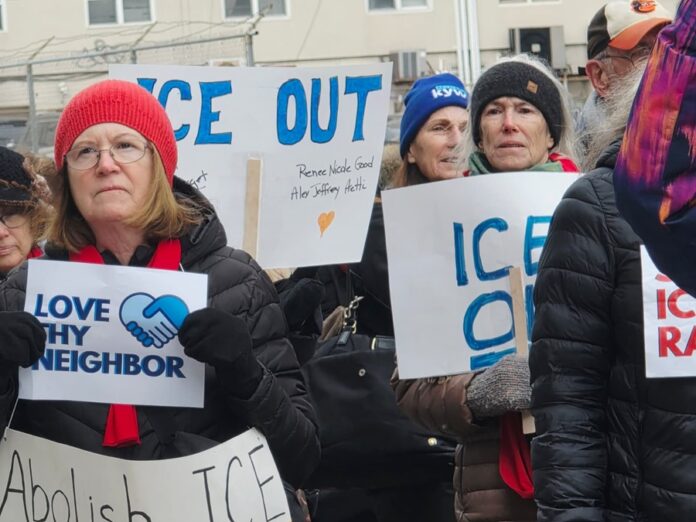
Signs with all kinds of messages about ICE were displayed throughout the march. (Photo: Haydeé Rosario / Impacto staff)
A group of community organizations, religious groups, and local representatives gathered on Presidents’ Day in front of the ICE offices in Center City to hold a protest and march in support of the immigrant community. The demonstration is part of a series of mobilizations that have taken place for several consecutive weeks. Attendees are demanding that government entities sign ordinances to prohibit any form of support or collaboration with ICE. Many of those present belong to organizations that provide direct assistance to immigrants, and they attended with a message of peace and solidarity in the midst of the challenges this community is facing.
With signs reading “In a democracy people don’t disappear,” “ICE is killing us,” and “Stop ICE raids,” participants reiterated their call for an end to ICE operations nationwide.
State Senator Art Haywood, who participated in the event, explained the purpose of the gathering: “This is our vigil every Monday at 11 a.m. We are here as interfaith and community leaders, and we hold vigil for all those who have been detained, brutalized, and subjected to these cruel raids. We also hold vigil for the workers and ICE agents who have been called to carry out an immoral task. We pray for ICE agents to step away from these practices and we pray in solidarity for the immigrants who are being subjected to these brutal raids.”
The senator emphasized that the movement seeks to build broader public support: “We believe that the more Americans defend humanity and treat people with love—both here at the vigil and when we talk with our neighbors—that love will help us create change in our nation. We believe love is a strategy for change.”
During the event, many participants wore a red band. “This is a red band that has two meanings. One represents the blood that has been shed by those who have been victims of ICE. And the second represents the heart—our love for our neighbors—which is what brings us together at this event.”
Among those present were families and members of different religious congregations. Janice Schwartz Donohue, a member of the Reform Congregation Tzedek Israel, expressed: “We are members of the Reform Congregation Tzedek Israel. We are part of an interfaith coalition with many different groups involved. In Judaism, we believe in justice. I am here in the name of the pursuit of justice, no matter which side of the aisle you’re on. What has happened in the United States is that ICE has become too powerful, in my opinion. Whether you’re a Democrat or a Republican, we want to ensure that our immigrants are safe, whether they came here legally or not. We are here to show how deeply we care.”
Lenore Eiseman added: “I truly believe ICE agents should not be masked, that they should show themselves and have court orders to carry out any procedure—and not simply take anyone from the street without justification.”
Some participants voiced support for encouraging more Americans to join these events, raise their voices, and show solidarity, as this is the power they say they are trying to mobilize through these weekly vigils.
The gathering concluded with prayers and calls to continue the vigils in the coming weeks, reaffirming the commitment of the participating organizations to continue demanding policies that protect the immigrant community.