By expanding access to affordable education, the Shapiro Administration is strengthening Pennsylvania’s workforce, both inside and outside state government.
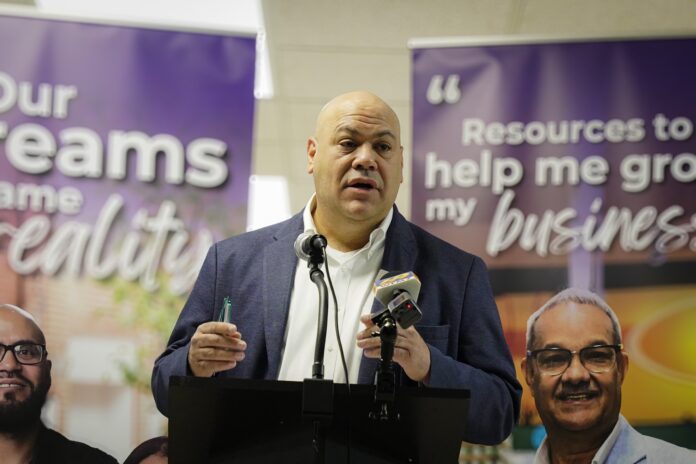
Harrisburg, PA – Secretary of Administration Neil Weaver today announced an agreement with Holy Family University to provide tuition discounts to Commonwealth employees and their spouses. These education benefits build on Governor Josh Shapiro’s commitment to fostering a strong and effective state government workforce and creating opportunities for all Pennsylvanians.
Eligible Commonwealth employees and their spouses will receive a 25 percent tuition discount for select graduate and undergraduate programs offered online and at the university’s campuses in Philadelphia and Newtown, Bucks County.
“Tuition discounts are a smart investment in the Commonwealth’s future. By lowering barriers to education and uplifting our employees, we can innovate to deliver high-quality services, streamline operations, and embrace smarter, more efficient ways of doing business, said Secretary of Administration Neil Weaver. “For state employees, it can open additional paths to career advancement. For their families, it provides the chance to reach higher and dream bigger. We appreciate the collaboration with Holy Family University to offer these life-changing opportunities.”
«We are proud to support the Commonwealth of Pennsylvania in investing in its greatest resource — its people. As a mission-driven institution, Holy Family University is committed to expanding access to education that transforms lives and strengthens communities,” said Holy Family University President Dr. Anne Prisco. “This initiative reflects our commitment to working learners — those balancing jobs, families, and aspirations for a better future. We are proud to help remove barriers to education and provide flexible, affordable pathways to success for Commonwealth employees and their spouses.»
The Shapiro Administration is committed to making state government work for Pennsylvanians and delivering real results. On his first day in office, he signed an executive order to emphasize skills and experience in Commonwealth hiring and provide additional pathways where possible to qualify for jobs without a college degree. Last year, the Governor he established the Hire, Improve, Recruit, and Empower (HIRE) committee within his Administration to focus on initiatives to attract the next generation of public servants, compete with other employers in a competitive labor market, recruit and hire for historically hard to fill jobs, and ensure the Commonwealth’s workforce is representative of the diverse backgrounds and beliefs of Pennsylvania’s residents. The Shapiro Administration has also expanded internship, fellowship, and apprenticeship programs to provide hands-on learning and an introduction to public service.
Under Governor Shapiro’s leadership, the Office of Administration has enhanced benefits to make higher education more attainable and affordable for Commonwealth employees and their families. Employees may be eligible for tuition discounts and scholarships, reduced interest rates on student loans, as well as student loan forgiveness under the federal Public Service Loan Forgiveness (PSLF) Program. View all higher education benefits.
By offering educational and advancement opportunities, encouraging health and wellbeing, and fostering work-life balance, Governor Shapiro has prioritized supporting the Commonwealth’s workforce so that it can better provide the services that Pennsylvanians need and deserve.
Job seekers can learn more about working for the Commonwealth of Pennsylvania by visiting employment.pa.gov to view and apply to current job openings, receive notifications about new vacancies in their field, and see all the Commonwealth benefits available to employees.
San Juan.– El Negociado de Energía de Puerto Rico (NEPR) informó este miércoles que le pedirá a LUMA reembolsar 16.477.598 de dólares a sus clientes por detener en agosto y septiembre el cobro de interconexión de la Cláusula PPCA, que cubre los gastos asociados exclusivamente a la compra de energía.
Según explicó el NEPR en un documento judicial, el 15 de febrero de 2024, LUMA presentó un escrito relacionado con los costos de interconexión proyectados de aproximadamente 100.800.000 de dólares, a ser recuperados mediante la Cláusula PPCA.
LUMA propuso que dicha suma fuera recuperada durante 15 meses, comenzando el 1 de abril de 2024 hasta el 30 de junio de 2025, mediante un pago mensual aproximado de 6 a 7 millones de dólares.
LUMA estimó que el costo a ser recuperado mediante la Cláusula PPCA, a través de la propuesta de factores para el periodo de 1 de abril al 30 de junio de 2024, ascendía entre 18 y 21 millones de dólares.
Posteriormente, entre los meses de julio a diciembre de 2024, el NEPR determinó no recuperar del consumidor dinero para dicho concepto dado que no eran necesarios en ese momento.
No obstante, los costos de interconexión se comenzaron a recuperar del consumidor nuevamente a partir del mes de enero de 2025, a razón de 8,2 millones de dólares mensuales.
Ante ello, el NEPR autorizó recuperar del consumidor, hasta el mes de septiembre de 2025, un monto total de 76.049.193 dólares.
Pero, el ente regulador decidió dejar sin efecto este monto aprobado para costos de interconexión para los meses de agosto y septiembre de 2025, que ascienden a 16.477.598 de dólares.
«De esta forma, se puede transferir inmediatamente a los clientes de LUMA el monto por tal concepto», afirmó el NEPR en el documento.
Por consiguiente, el NEPR ordena a LUMA presentar dentro de cinco días una propuesta del factor PPCA de conformidad con lo establecido..
Esta determinación se emite con el propósito de garantizar la disponibilidad de fondos exclusivamente para los proyectos que están en curso. Cuando los restantes proyectos estén en marcha, se autorizará recuperar sus costos de interconexión del consumidor, especificó el NEPR.
Por otro lado, se ordena a LUMA crear una cuenta de reserva restringida con los fondos transferidos por la AEE, con el único propósito de sufragar los costos asociados a los costos de interconexión del Tranche 1.
De igual manera, se ordena a LUMA, una vez recibido el desembolso de la AEE, notificar al NEPR inmediatamente.
Fotografía que muestra el exterior de la sede de la 'Escuela Libre de Homeopatía de México' con carteles de protesta este martes, en Ciudad de México (México). (Foto: EFE/Mario Guzmán)
La Ciudad de México se ha convertido en un punto crítico para cientos de migrantes, que permanecen varados ante la falta de documentos y entre el miedo y la desconfianza hacia las instituciones, agravando la crisis migratoria en la capital mexicana.
El llamado «efecto frontera», que antes se concentraba en ciudades fronterizas como Tijuana (norte) o Tapachula (sur), se ha instalado en la capital del país, ante las nuevas restricciones migratorias en EE. UU. y desde el regreso del presidente Donald Trump a la Casa Blanca el 20 de enero.
Tania Rodríguez Zafra, directora de la organización civil Ayuda en Acción México, explicó a EFE que en los últimos seis meses ha cambiado la dirección y concentración del flujo migratorio hacia Estados Unidos, especialmente debido al fin de las citas CBP-One para solicitar asilo en ese país y el aumento de deportaciones.
Antes, muchas personas llegaban directamente a las fronteras norte o sur, buscando cruzar o iniciar trámites, pero ahora, las nuevas reglas han empujado a las personas migrantes a detenerse en el centro del país, expuso Rodríguez Zafra.
En México, se reciben entre 500 y 800 solicitudes de asilo cada día, según datos de la Comisión Mexicana de Refugiados (Comar), obtenidos por Ayuda en Acción.
«Entonces decimos: ¿Dónde quedan todos? Si las fronteras están casi desiertas, pues todos se están asentando en Ciudad de México, esperando una oportunidad de que se puedan abrir otra vez las fronteras de Estados Unidos», apuntó Rodríguez.
Un informe de Ayuda en Acción revela que el 44 % de 351 personas migrantes encuestadas en la capital, principalmente provenientes de Venezuela, Cuba y Centroamérica, no pueden avanzar ni establecerse, debido a barreras legales, amenazas de deportación y desconfianza institucional.
Entre los testimonios de «aspirantes estructuralmente bloqueados» recogidos en el informe, está el del venezolano Luis Miguel, quien sobrevive con un empleo en una fábrica, pero está «desilusionado» con la calidad de vida.
«Si la página vuelve a abrirse, me voy», afirma Luis Miguel.
Refugio o rechazo
Ante la creciente inmovilidad migrante en la capital, el gobierno de Ciudad de México ha puesto en marcha un plan para habilitar albergues para personas en movilidad, lo que ha desatado protestas vecinales en zonas como Peralvillo y Azcapotzalco, donde el principal reclamo ha sido la falta de planeación y consulta previa.
En el barrio de Peralvillo, el descontento creció tras el cierre de un inmueble que albergaba un hospital y la Escuela Libre de Homeopatía de México, donde se atendía a vecinos de colonias cercanas como Tepito, Morelos, Tlatelolco y Guerrero, muchos de ellos comerciantes sin seguridad social e incluso personas migrantes.
Isis María Infante, médica y docente de la escuela, dijo a EFE que su molestia no es en contra de la población migrante, quienes han sido «parte de los beneficiarios de esta institución», sino el hecho de que el gobierno «utilice» a las personas en movilidad como un «escudo» para justificar lo que consideran una «expropiación» del predio, acusando de «xenofobia» a quienes se oponen.
«Nosotros como mexicanos estamos sufriendo una situación terrible en Estados Unidos. No tiene absolutamente nada que ver (con xenofobia). Nosotros aquí estamos luchando por nuestra escuela que le da atención a comunidades que están en una situación de necesidad extrema», afirmó Infante, quien labora desde hace tres años en la institución fundada en 1912.
Como alternativa a los albergues, Ayuda en Acción apuesta por atender la «problemática estructural» de la movilidad, por lo que a finales de 2024 abrió la primera casa de transición en la capital, enfocada en mujeres y población LGTBI, que reciben un alojamiento temporal y apoyo para regularización de documentos, empleo y vivienda, pues «hay gente que quiere solamente una oportunidad», apuntó Rodríguez Zafra.
«Las personas que realmente opten por tener una vida digna y una estabilidad entran al programa y las que no, pues seguirán esperando a que abra Estados Unidos. Pero nosotros (…) creemos que por lo menos este año no se van a abrir las fronteras», advirtió la experta.
Disability Pride Month is an opportunity to celebrate the lives, resilience, and leadership of people with disabilities. It also allows us to recommit to dismantling the systems that marginalize and criminalize them. At the ACLU of Pennsylvania, our work in disability rights is part of a broader fight for justice that recognizes the interconnected issues of ableism, racism, and economic injustice.
For over a decade, we have fought for the rights of individuals with disabilities, particularly those who are Black, brown, or low-income. Our efforts span schools, jails, hospitals, and legislative halls to advance dignity, access, and justice for all.
Here’s an overview of our fight, year by year:
In 2013, we collaborated with the Disability Rights Network of Pennsylvania (now known as Disability Rights Pennsylvania) to file a federal lawsuit to end the use of solitary confinement, referred to as “Restricted Housing Units,” for individuals with serious mental illnesses in state prisons. Isolation can often worsen psychiatric symptoms rather than offer the necessary treatment and support.
In 2014, we lobbied our state legislature to require police training on mental health and disabilities, because policing should never be the default response to disability.
From 2015 to 2019, we challenged the Department of Human Services repeatedly for abandoning Pennsylvanians with psychiatric disabilities in jails, often for months, because of a critical shortage of treatment beds. These individuals, many unfit for trial and in psychiatric crisis, languished in cells instead of receiving the care the state is legally and morally obligated to provide. The carceral system cannot—and should not—substitute for mental healthcare.
This year, we also joined the national ACLU and other affiliates and allies in opposing the so-called “One Big Beautiful Bill,” which would cut Medicaid coverage for millions of people, with an enormous impact on people with disabilities. Access to healthcare is not up for political negotiation; it is a right, and we will continue to fight for people with disabilities to obtain the care they need.
For more than a decade, we’ve addressed harmful practices in schools impacting students with disabilities, resulting in these students being disproportionately and inappropriately disciplined, by being suspended, arrested, physically restrained, or placed in isolation. This work is the ACLU-PA’s most sustained work on disability rights.
Nationwide and in Pennsylvania, a Black student with a disability is the student most likely to face serious punishment in school or to be referred to law enforcement and arrested. Statewide, Black boys with disabilities are arrested at the highest rates of any students, roughly six times the rate of students as a whole.
Our work has been to document these harmful practices, identify policy and practices that need to be changed, and to advocate for school policies and practices that lead to these students being treated fairly.
Since 2013, we’ve produced a series of impactful reports and factsheets. Beyond Zero Tolerance: Discipline and Policing in Pennsylvania Public Schools, originally published in 2013, identified patterns of punishment impacting students with disabilities (especially Black students) based on a review of all 500 districts in the state. In 2022, we published a follow-up report documenting that in Allegheny County, students with disabilities were disproportionately referred to law enforcement and arrested, and in most cases, it was for minor incidents. Many school districts underreported these arrests, causing the extent of the problem to be hidden from view, raising significant questions about accountability and discrimination.
Educating school district-level leaders has been a priority in our work. Since 2018, we’ve organized five “school policing summits,” mini-conferences for school district leaders (senior staff and board members) where the group meets with experts to explore how to minimize the use of police in everyday school matters. Presentations on law enforcement contact with students with disabilities have been a central component of each summit, including our most recent one held in Pittsburgh in 2024. Some 50 Pennsylvania public school districts have participated in these mini-conferences. We’ve also partnered with the FISA Foundation, Heinz Endowments, and The Pittsburgh Foundation to present on a “Race and Disability” webinar series and discuss the intersections of race, disability and discipline in K-12 schools.
I have had the personal privilege to serve on a PA Developmental Disabilities Council advisory committee, where we helped to fund programs working to dismantle the school-to-prison pipeline for young people with disabilities. Finally, I have been significantly involved in the work of the Learning Disabilities Association of America, a nationwide network headquartered in PA, where I have served on its professional advisory board and have presented on “race, disability and school discipline” at its recent national conferences.
A Vision for Disability Justice
Disability justice requires more than just legal victories or minor policy adjustments; it calls for radical imagination and structural change. It envisions a world where disabled individuals are neither criminalized, marginalized, nor tokenized, but where their leadership actively shapes the systems and solutions necessary for everyone to thrive.
This Disability Pride Month, we reflect not only on our progress but also on the activists, community leaders, and visionaries within the disability community who continue to drive us toward justice. The work is far from finished. Together, we must create systems that prioritize access, dignity, and collective liberation.
Harold Jordan, Nationwide Education Equity Coordinator, ACLU of Pennsylvania
El Servicio Nacional de Meteorología (SNM) de San Juan emitió para este miércoles una advertencia de calor para 59 de los 78 municipios de la isla por temperaturas que podrían sobrepasar los 100 grados Fahrenheit.
Estas temperaturas extremas se esperan que se sientan entre las 10:00 de la mañana y las 4:00 de la tarde para las zonas urbanas y costeras de Puerto Rico, indicó el SNM en un comunicado de prensa.
La agencia informó además que concentraciones moderadas o altas de polvo del Sahara continuarán en toda la zona y el aumento de los vientos promoverá condiciones de brisa fuerte.
Ante la advertencia de calor, la agencia meteorológica recomendó beber mucha agua, evitar actividades intensas durante la parte más caliente del día y usar ropa ligera, entre otros.
El SNM exhortó también a los ciudadanos que trabajan o pasan tiempo al aire libre, que tomen precauciones adicionales, como descansos frecuentes en lugares con sombra o con aire acondicionado. También use ropa liviana y holgada.
People wait in line outside the Ada County Courthouse for the Bryan Kohberger sentencing, Wednesday, July 23, 2025, in Boise, Idaho. (Photo: AP/Drew Nash)
Friends and relatives of four University of Idaho students murdered in their rental home by Bryan Kohberger delivered powerful statements of love, anguish and condemnation as his sentencing hearing began Wednesday.
“This world was a better place with her in it,” Scott Laramie, the stepfather of Madison Mogen, told the court. ”Karen and I are ordinary people, but we lived extraordinary lives because we had Maddie.”
The father of Kaylee Goncalves taunted Kohberger for leaving his DNA behind and getting caught despite being a graduate student in criminology at nearby Washington State University at the time.
Bryan Kohberger appears at the Ada County Courthouse, for his sentencing hearing, Wednesday, July 23, 2025, in Boise, Idaho, for brutally stabbing four University of Idaho students to death nearly three years ago. (Photo: AP/Kyle Green/Pool)
“You were that careless, that foolish, that stupid,” Steve Goncalves said. “Master’s degree? You’re a joke.”
Kohberger broke into the home through a kitchen sliding door and brutally stabbed the four friends, who appeared to have no connection with him. No motive has been offered, though Kohberger was to be given an opportunity to speak later in the hearing.
Dylan Mortenson, a roommate who told police of seeing a strange man with bushy eyebrows and a ski mask in the home that night, sobbed as she described how Kohberger, seated across the room in an orange jumpsuit, “took the light they carried into each room.”
Dylan Mortensen gets a hug after speaking at the sentencing hearing of Bryan Kohberger at the Ada County Courthouse, for his sentencing hearing, Wednesday, July 23, 2025, in Boise, Idaho, for brutally stabbing four University of Idaho students to death nearly three years ago. (Photo: AP/Kyle Green/Pool)
“He is a hollow vessel, something less than human,” Mortenson said. «A body without empathy without remorse.”
Mortenson and another surviving roommate, Bethany Funke, described crippling panic attacks and anxiety after the attack.
“I slept in my parents’ room for almost a year, and had them double lock every door, set an alarm, and still check everywhere in the room just in case someone was hiding,” Funke wrote in a statement read by a friend. “I have not slept through a single night since this happened. I constantly wake up in panic, terrified someone is breaking in or someone is here to hurt me, or I’m about to lose someone else that I love.”
Alivea Goncalves’s voice didn’t waver as she asked Kohberger questions about the killings, including what her sister’s last words were. She drew applause after belittling Kohberger, who remained expressionless as she insulted him.
Steve Goncalves, father of victim Kaylee Goncalves speaks at the sentencing hearing of Bryan Kohberger at the Ada County Courthouse, Wednesday, July 23, 2025, in Boise, Idaho, for brutally stabbing four University of Idaho students to death nearly three years ago. (Photo: AP/Kyle Green/Pool)
“You didn’t win, you just exposed yourself as the coward you are,» Alivea Goncalves said. «You’re a delusional, pathetic, hypochondriac loser.”
Police initially had no suspects in the killings, which terrified the rural western Idaho city of Moscow. Some students at both universities left mid-semester, taking the rest of their classes online because they felt unsafe.
Police used genetic genealogy to identify Kohberger as a possible suspect and accessed cellphone data to pinpoint his movements the night of the killings. Online shopping records showed Kohberger had purchased a military-style knife months earlier, along with a sheath like the one at the home.
Alivea Goncalves, sister of victim Kaylee Goncalves speaks at the sentencing hearing of Bryan Kohberger at the Ada County Courthouse, Wednesday, July 23, 2025, in Boise, Idaho, for brutally stabbing four University of Idaho students to death nearly three years ago. (Photo: AP/Kyle Green/Pool)
Kohberger was arrested in Pennsylvania about six weeks after the killings. He initially stood silent when asked to enter a plea, so a judge entered a “not guilty” plea on his behalf.
Both the investigation and the court case drew widespread attention. Discussion groups proliferated online, members eagerly sharing their theories and questions about the case. Some self-styled armchair web-sleuths pointed fingers at innocent people simply because they knew the victims or lived in the same town. Misinformation spread, piling additional distress on the already-traumatized community.
As the criminal case unfolded, Latah County Prosecutor Bill Thompson announced that he would seek the death penalty if Kohberger was convicted. The court-defense team, led by attorney Anne Taylor, challenged the validity of the DNA evidence, unsuccessfully pushed to get theories about possible “alternate perpetrators” admitted in court, and repeatedly asked the judge to take the death penalty off of the table.
But those efforts largely failed, and the evidence against Kohberger was strong. With an August trial looming, Kohberger reached a plea deal. Prosecutors agreed to drop their efforts to get a death sentence in exchange for Kohberger’s guilty plea to four counts of first-degree murder and one count of burglary. Both sides agreed to a proposed sentence of four consecutive life sentences without parole, plus an additional 10 years for the burglary charge. Kohberger also waived his right to appeal any issues in the case.
Philadelphia Phillies' Cristopher Sánchez pitches during the first inning of a baseball game against the Boston Red Sox Tuesday, July 22, 2025, in Philadelphia. (Photo: AP/Matt Slocum)
PHILADELPHIA.— As recently as two years ago, Cristopher Sanchez was a pitcher in transition, earning some major league time yet frequently shuttling between the Phillies and their Triple-A affiliate in the Lehigh Valley.
He was also trying to establish himself, at both levels, as a starting pitcher, one who has now not only has shown an affinity for pitching for length, but pitching as effectively as anyone in baseball.
The 28-yeaer-old Sanchez showed his stuff again Tuesday night, pitching a complete game, 4-1 victory over the Boston Red Sox. In the course of a 106-pitch gem, he allowed a fourth-inning home run to Rob Refsnyder and also struck out 12 batters and induced 13 ground ball outs.
While only becoming a regular starter late in the 2023 season, Sanchez wiped away his early career inconsistency and became an All-Star last season, and probably should have been one this season. He is 9-2 with a 2.40 ERA, has gone six innings or more over his last nine consecutive outings.
“That just tells me that the work we’ve been doing since the offseason is working,” Sanchez said of his consistency. “And that’s something I take a lot of pride in.”
With a vulnerable bullpen and usual second-starter Aaron Nola suffering a bad season start before going down with an injury, Sanchez’s growth is something the Phillies desperately needed. He has responded with a cool demeanor and an arsenal that includes a high-90s fastball often tempered with a killer change-up.
“He has electric stuff,” Bryce Harper said of Sanchez after the Phillies improved to 58-43. “He’s done a great job for us. Just throws strikes. He’s kind of evolved into an ace for us.”
Sanchez also has an understanding with manager Rob Thomson … he isn’t usually a pitcher who asks to come out of a game. Hence, when Sanchez kicked into an unusual celebration after striking out Refsnyder for the second time in the game to end the eighth inning, it turned out this show still had an inning to go.
“No, I always wait for the manager to tell me I’m done,” Sanchez said. “I wait for him to come to me.”
Thomson went to his second ace starter after the eighth, “just to see if he was OK.
“He said, ‘No, I’m not tired, I’d tell you if I was tired,’” Thomson said. “So we sent him back out.”
It took only 10 pitches in the ninth for Sanchez to finish out his third career complete game. With it will come yet more recognition that this guy is on the list of potential National League Cy Young Award candidates.
That’s a long way from the hopeful pitcher splitting time between the minors and majors just a few seasons ago.
“That was very hard, but I never gave up,” Sanchez said. “I was staying strong, both mentally and physically, and I was always ready for the opportunity whenever it came.”
Personas detenidas en Camboya por supuestamente pertenecer a grupos criminales que se dedican a las estafas en línea. (Foto: EFE/TRA)
La Policía de Camboya detuvo en las últimas cuatro semanas a 3.075 extranjeros acusados de pertenecer a centros de estafa, un megaoperativo que empezó un día después de que Amnistía Internacional (AI) acusara a las autoridades del país de ser cómplices de estos delitos que están en auge en el Sudeste Asiático.
La agencia estatal Kampuchea explicó este miércoles, citando a fuentes policiales, que entre el 27 de junio y el 22 de julio se llevaron a cabo redadas en 138 localizaciones de todo el país, con las que rescataron a 153 vietnamitas que eran víctimas en estos sitios, donde eran obligados a cometer estafas en línea.
Sobre los detenidos, 1.028 son chinos, 693 vietnamitas, 366 indonesios, 105 indios, 101 bangladesíes, 82 tailandeses, 81 paquistaníes, 57 coreanos, 13 nepalíes, cuatro malasios y un número no precisado de personas de Filipinas, Laos, Camerún, Nigeria, Uganda, Sierra Leona, Mongolia, Rusia y Birmania (Myanmar).
Las autoridades añadieron que ciudadanos de «otros países» también fueron arrestados, sin especificar sus procedencias. Asimismo, adelantaron que están trabajando para repatriar a buena parte de los detenidos, si bien algunos identificados como líderes de estas operaciones permanecerán recluidos en Camboya.
Durante las redadas, las fuerzas de seguridad confiscaron numerosos teléfonos móviles, computadores, presuntos narcóticos, armas de fuego, uniformes similares al de la Policía china y municiones.
«Tras los allanamientos, todos los lugares implicados fueron clausurados para evitar nuevas actividades ilícitas. Esta ofensiva a gran escala a nivel nacional subraya la firme determinación de Camboya para combatir los delitos cibernéticos transfronterizos», concluye el escrito.
El martes pasado, el primer ministro, Hun Manet, ordenó a las autoridades «prevenir y acabar con las estafas en línea», cuyos centros similares a prisiones han proliferado en los últimos años en Camboya.
A finales de junio AI dijo que el Estado camboyano ha fracasado flagrantemente en la adopción de medidas para poner fin a los abusos generalizados contra los derechos humanos» en estos sitios, en los que «hay trata de personas, tortura, trabajo forzoso, trabajo infantil, privación de libertad y esclavitud».
Por todo ello, la organización, que entrevistó a víctimas de estas redes criminales, cree que existe «aquiescencia» por parte del Ejecutivo camboyano, y «apunta a su complicidad en los abusos contra los derechos humanos que se están cometiendo».
Desde febrero se ha desarrollado un megaoperativo en Tailandia, China y Birmania que ha liberado a centenares de extranjeros que trabajaban en centros de estafa, que se cree están gestionados por mafias chinas, en zonas fronterizas de estos países.
Maria, who requested to use only her first name out of fear of deportation, is photographed Thursday, June 26, 2025, in Sacramento. (Photo: AP/Godofredo A. Vásquez)
For nearly 20 years, Maria would call her sister — a nurse in Mexico — for advice on how to manage her asthma and control her husband’s diabetes instead of going to the doctor in California.
She didn’t have legal status, so she couldn’t get health insurance and skipped routine exams, relying instead on home remedies and, at times, getting inhalers from Mexico. She insisted on using only her first name for fear of deportation.
“It changed immensely, like from Earth to the heavens,” Maria said in Spanish of Medi-Cal, California’s Medicaid program. “Having the peace of mind of getting insurance leads me to getting sick less.”
At least seven states and the District of Columbia have offered coverage for immigrants since mostly 2020. But three of them have done an about-face, ending or limiting coverage for hundreds of thousands of immigrants who aren’t in the U.S. legally in California, Illinois and Minnesota.
The programs cost way more than officials had projected at a time when the states are facing multibillion-dollar deficits now and in the future. In Illinois, adult immigrants ages 42-64 without legal status have lost their health care to save an estimated $404 million. All adult immigrants in Minnesota no longer have access to the state program, saving nearly $57 million. In California, no one will automatically lose coverage, but new enrollments for adults will stop in 2026 to save more than $3 billion over several years.
Cuts in all three states were backed by Democratic governors who once championed expanding health coverage to immigrants.
Health care providers told The Associated Press that everything, especially the fear of being arrested or deported, is having a chilling effect on people seeking care. And states may have to spend more money down the road because immigrants will avoid preventive health care and end up needing to go to safety-net hospitals.
“I feel like they continue to squeeze you more and more to the point where you’ll burst,” Maria said, referencing all the uncertainties for people who are in the U.S. without legal permission.
Medical assistant Citlalli Llamas, top, administers a round of vaccines to a 16-month-old boy at a CommuniCARE+OLE clinic Thursday, June 26, 2025, in Davis, Calif. (Photo: AP/Godofredo A. Vásquez)
‘People are going to die’
People who run free and community health clinics in California and Minnesota said patients who got on state Medicaid programs received knee replacements and heart procedures, and were diagnosed for serious conditions like late-stage cancer.
CommunityHealth is one of the nation’s largest free clinics, serving many uninsured and underinsured immigrants in the Chicago area who have no other options for treatment. That includes the people who lost coverage July 1 when Illinois ended its Health Benefits for Immigrants Adults Program, which served about 31,500 people ages 42-64.
One of CommunityHealth’s community outreach workers and care coordinator said Eastern European patients she works with started coming in with questions about what the change meant for them. She said many of the patients also don’t speak English and don’t have transportation to get to clinics that can treat them. The worker spoke to the AP on condition of anonymity to protect patients’ privacy.
HealthFinders Collaborative in Minnesota’s rural Rice and Steele counties south of Minneapolis serves low-income and underinsured patients, including large populations of Latino immigrants and Somali refugees. Executive director Charlie Mandile said they’re seeing patients rushing to squeeze in appointments and procedures before 19,000 people age 18 and older are kicked off of insurance at the end of the year.
CommunityHealth CEO Stephanie Willding said she always worried about the stability of the program because it was fully state funded, “but truthfully, we thought that day was much, much further away.”
“People are going to die. Some people are going to go untreated,” Alicia Hardy, chief executive officer of CommuniCARE+OLE clinics in California, said of the state’s Medicaid changes. “It’s hard to see the humanity in the decision-making that’s happening right now.”
A spokesperson for the Minnesota Department of Human Services said ending the state’s program will decrease MinnesotaCare spending in the short term, but she acknowledged health care costs would rise elsewhere, including uncompensated care at hospitals.
Minnesota House Speaker Lisa Demuth, a Republican, said the state’s program was not sustainable.
“It wasn’t about trying to be non-compassionate or not caring about people,» she said. «When we looked at the state budget, the dollars were not there to support what was passed and what was being spent.”
Demuth also noted that children will still have coverage, and adults lacking permanent legal status can buy private health insurance.
Health care providers also are worried that preventable conditions will go unmanaged, and people will avoid care until they end up in emergency rooms – where care will be available under federal law.
One of those safety-net public hospitals, Cook County Health in Chicago, treated about 8,000 patients from Illinois’ program last year. Dr. Erik Mikaitis, the health system’s CEO, said doing so brought in $111 million in revenue.
But he anticipated other providers who billed through the program could close, he said, adding: “Things can become unstable very quickly.”
Pediatrician Irving Phillips, left, examines a 16-month-old boy at a CommuniCARE+OLE clinic Thursday, June 26, 2025, in Davis, Calif. (Photo: AP/Godofredo A. Vásquez)
Monthly fees, federal policies create barriers
State lawmakers said California’s Medi-Cal changes stem from budget issues — a $12 billion deficit this year, with larger ones projected ahead. Democratic state leaders last month agreed to stop new enrollment starting in 2026 for all low-income adults without legal status. Those under 60 remaining on the program will have to pay a $30 monthly fee in 2027.
California health officials estimate roughly 200,000 people will lose coverage after the first full year of restricted enrollment, though Gov. Gavin Newsom maintains that even with the rollbacks, California provides the most expansive health care coverage for poor adults.
Every new bill requires a shift in Maria’s monthly calculations to make ends meet. She believes many people won’t be able to afford the $30-a-month premiums and will instead go back to self-medication or skip treatment altogether.
“It was a total triumph,” she said of Medi-Cal expansion. “But now that all of this is coming our way, we’re going backwards to a worse place.”
Fear and tension about immigration raids are changing patient behavior, too. Providers told the AP that, as immigration raids ramped up, their patients were requesting more virtual appointments, not showing up to routine doctor’s visits and not picking up prescriptions for their chronic conditions.
Maria has the option to keep her coverage. But she is weighing the health of her family against risking what they’ve built in the U.S.
“It’s going to be very difficult,” Maria said of her decision to remain on the program. “If it comes to the point where my husband gets sick and his life is at risk, well then, obviously, we have to choose his life.”
___
This story has been corrected to show that the community health center in Minnesota is named HealthFinders Collaborative, and that the state agency the spokeswoman works for is the Minnesota Department of Human Services. This story also was updated to remove an incorrect detail about the federal tax and spending package; the Senate cut a provision that would have trimmed Medicaid expansion funds for states that offer health benefits to immigrants.
A pesar del estilo errático de negociar aranceles practicado por la Casa Blanca y las redadas contra los trabajadores extranjeros, junto a las amenazas intermitentes de despedir al jefe del banco central, los indicadores básicos de la economía estadounidense siguen sólidos. La inflación aumentó levemente a 2.7 por ciento en junio, mientras que el desempleo ha permanecido en 4.1 por ciento, desde fines del año pasado. El sentimiento de los consumidores ha mejorado, según el índice de la Universidad de Michigan, con la bolsa de valores alcanzando récords, después del colapso de abril causado por los aranceles. Pero esa calma puede ser ominosa, porque el 1 de agosto expira el nuevo plazo para la imposición de aranceles contra todos. Aun así, está contribuyendo a la calma relativa la expectativa que el presidente Donald Trump prorrogará el plazo otra vez, como lo ha hecho al menos dos veces antes.
No obstante, han principiado a aparecer algunas grietas en el panorama económico. La bolsa de valores ha estado muy sensible a las repetidas amenazas de despedir al jefe del banco central. También, debido a las redadas, ha disminuido el número de trabajadores extranjeros, mientras el desempleo ha aumentado en algunos sectores dependientes de trabajadores extranjeros, tales como la agricultura, el entretenimiento y la hospitalidad. Además, han aumentado los precios de algunos artículos importados, tales como los muebles, los juguetes y las prendas de vestir, especialmente en aquellas empresas que no aumentaron inventarios antes del alza de los aranceles. A pesar del titubeo en la política arancelaria, el arancel promedio efectivo de Estados Unidos ya está cercano a casi 20 por ciento, desde 2.5 por ciento en enero.
*Analista y consultor internacional, ex-director de la Oficina de la CEPAL en Washington. Comentarista de economía y finanzas de CNN en Español TV y radio, UNIVISION, TELEMUNDO y otros medios.