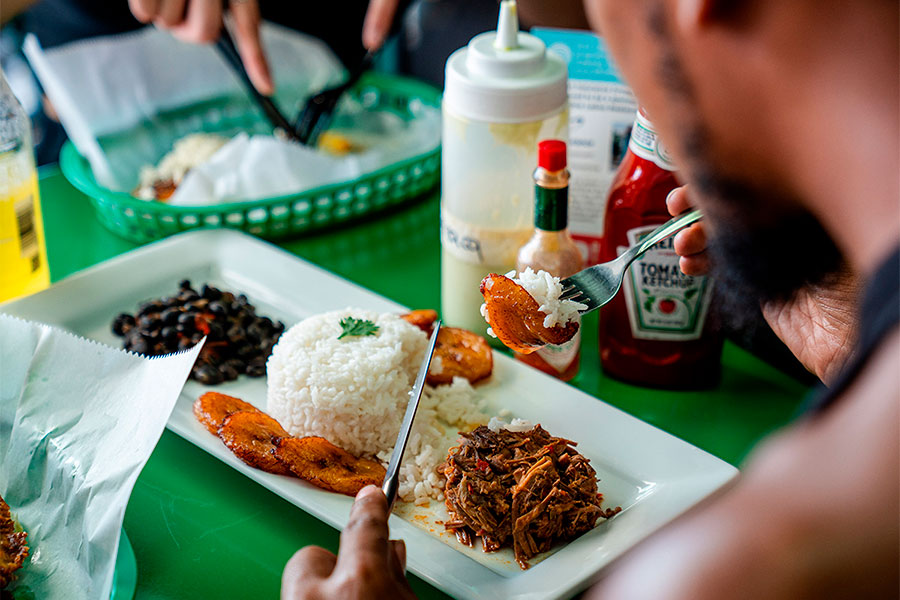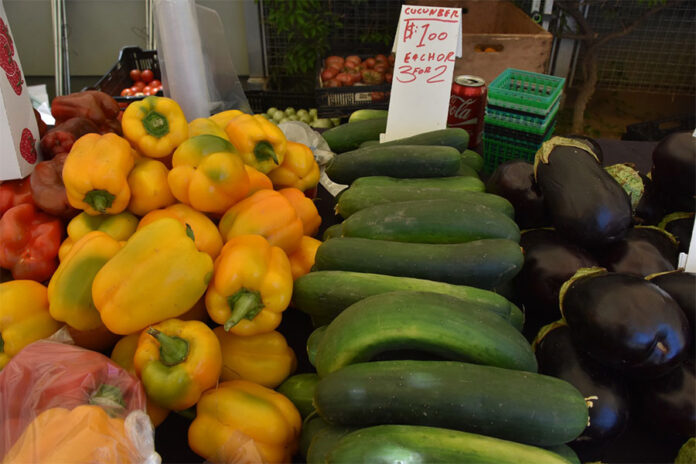



At the facilities of Iglesia La Primitva food was distributed as is customary every Monday. (Photo: Impacto staff)
Every Monday, from 10 a.m. to 12 p.m., Iglesia La primitiva becomes an essential support point for the community, distributing food to families in need thanks to a partnership with the organization Philabundance. However, this Monday, November 16, was special: in addition to the regular distribution, residents received turkeys to celebrate Thanksgiving. Despite the low temperatures, dozens of people arrived seeking relief during difficult times.
Pastor José Rivera accompanied by Zoraida Colón and Emily Ortiz. (Photo: Impacto staff)
Pastor José Rivera explained that this work continues consistently from the church’s location at 3027 North Fifth Street in Philadelphia. “Every Monday we are distributing food here,” he said, noting that on Fridays they receive the food to store and prepare it for the following week’s distribution. “There is a work team that comes, stores it, and then on Monday they are here preparing the bags… the bags of food that are distributed to the community,” he added.
Canned goods and non-perishable foods are the main items in food distribution. (Photo: Impacto staff)
During a tour of the facilities, the pastor introduced the volunteers responsible for coordinating the effort: Zoraida Colón and Emily Ortiz, who organize, classify, and store all the products in the ministry’s refrigerators. “These are the refrigerators where we put the food inside. When it arrives, we place the food here. Milk, juices in the freezer,” he explained while showing the area where fresh items are kept.
The traditional turkeys for celebrating Thanksgiving could not be missing from the food distribution. (Photo: Impacto staff)
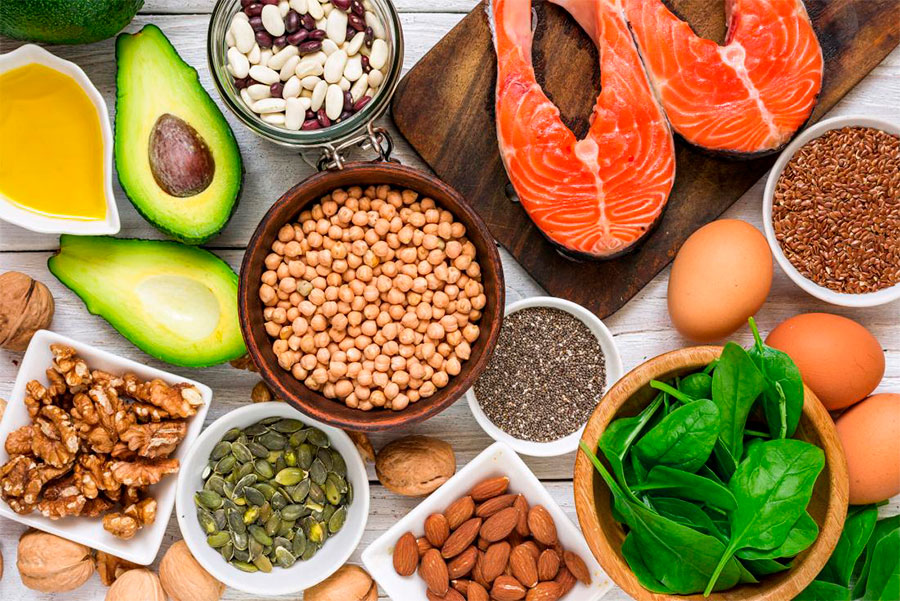
The foods distributed vary depending on availability, but they always include essential products. “Canned food. There is peanut butter… vegetarian chili… sometimes they send us fruit… tuna fish… canned beans… beans and lentils, cereal, cornflakes, milk, oil…,” the pastor detailed. Due to the upcoming Thanksgiving holiday, they also included boxes of stuffing and turkeys so families could celebrate the tradition.
At the facilities of Iglesia La Primitva food was distributed as is customary every Monday. (Photo: Impacto staff)
Rivera recalled that this initiative began approximately ten years ago under the leadership of Reverend Ismael Flores, who is now retired. “He had the vision to begin this ministry,” he said. For a time, they operated the Food Share program, which provided fresh fruits and vegetables; however, it became impossible to continue due to limited space to store refrigerated items. “It was decided not to continue, and now we have continued the initiative,” he explained while describing the project’s evolution.
Food supplied by Philabundance is delivered to the community. (Photo: Impacto staff)
Food insecurity remains a serious concern in many sectors of Philadelphia. Families face uncertainty and fear due to the challenges of accessing enough food. From Iglesia La primitiva, the commitment remains to offer support, resources, and hope to those who need it most especially during festive seasons like Thanksgiving, when a simple turkey can make a meaningful difference on a family’s table.
En las facilidades de Iglesia La Primitiva se entregaron alimentos como es costumbre todos los lunes. (Foto: Impacto staff)
Cada lunes, de 10 de la mañana a 12 del mediodía, Iglesia La Primitiva se convierte en un punto de apoyo esencial para la comunidad, entregando alimentos a familias necesitadas gracias a la colaboración con la organización Philabundance. Sin embargo, el pasado lunes 16 de noviembre fue especial: además de la distribución regular, los residentes recibieron pavos para celebrar el Día de Acción de Gracias. A pesar de las bajas temperaturas, decenas de personas acudieron buscando alivio en medio de tiempos difíciles.
Pastor José Rivera acompañado Zoraida Colón y Emily Ortiz (Foto: Impacto staff)
El pastor José Rivera explicó que esta labor se mantiene de manera constante desde la sede ubicada en la 3027 Norte Calle Cinco, en Filadelfia. “Todos los lunes estamos distribuyendo comida aquí”, señaló, indicando que los viernes reciben los alimentos para almacenarlos y prepararlos para la entrega de la semana siguiente. “Hay un equipo de trabajo que viene, lo guarda y luego el lunes están aquí preparar las bolsas… las bolsas de comida que se distribuye a la comunidad”, añadió.
Enlatados y comida no perecedera son los alimentos principales en la entrega de alimentos (Foto: Impacto staff)
Durante el recorrido por las instalaciones, el pastor presentó a las voluntarias responsables de coordinar la labor: Zoraida Colón y Emily Ortiz, quienes organizan, clasifican y almacenan todos los productos en las neveras del ministerio. “Estas son las neveras que nosotros ponemos las comidas adentro. Cuando llegan, ponemos comida aquí. Leche, jugos en el freezer”, explicó mientras mostraba el lugar donde se conservan los artículos frescos.
Los tradicionales pavos para celebrar acción de gracias por podían faltar en la entrega de comida (Foto: Impacto staff)
Los alimentos que se entregan varían según la disponibilidad, pero siempre incluyen productos esenciales. “Comida enlatada. Hay peanut butter… vegetarian chili… Nos envían a veces fruta… tuna fish… habichuelas en lata… habichuelas y lentejas, cereal, cornflakes, leche, aceite…”, detalló el pastor. Debido a la cercanía del Día de Acción de Gracias, también se incluyeron cajas de stuffing y pavos para que las familias pudieran celebrar la tradición.
En las facilidades de Iglesia La Primitiva se entregaron alimentos como es costumbre todos los lunes. (Foto: Impacto staff)
Rivera recordó que esta iniciativa comenzó hace aproximadamente diez años, bajo el liderazgo del reverendo Ismael Flores, quien ya está jubilado. “Él tuvo la visión de poder comenzar este ministerio”, dijo. Durante un tiempo operaron el programa Food Share, que ofrecía frutas y vegetales frescos; sin embargo, fue imposible continuarlo debido a la falta de espacio para almacenar los productos refrigerados. “Se decidió no continuar y ahora nosotros hemos seguido la iniciativa apuntó al explicar la evolución del proyecto.
Alimentos distribuídos por Philabundance se entregan a la comunidad (Foto: Impacto staff)
El tema del hambre sigue siendo una preocupación seria en muchos sectores de Filadelfia. Las familias enfrentan incertidumbre y temor ante la inseguridad alimentaria que afecta a la ciudad. Desde la Iglesia La Primitiva, el compromiso es seguir ofreciendo apoyo, recursos y esperanza a quienes más lo necesitan, especialmente en épocas festivas como Thanksgiving, donde un simple pavo puede marcar la diferencia en la mesa de una familia.
Noé Jacinto presentó su exposición Entre Máscaras y Sonidos en Filadelfia. (Foto: Suministrada)
El arte se convierte en un puente cuando logra transmitir la esencia de una comunidad. Así lo demuestra el pintor oaxaqueño Noé Jacinto, quien presentó recientemente en Filadelfia su exposición individual “Entre Máscaras y Sonidos”. Aunque radica en México, la entrevista con Impacto ocurrió mientras el artista se encontraba en Washington D. C., donde coordinaba su próxima muestra en el Centro Cultural Mexicano. Sobre este nuevo proyecto comentó: “Acabo de tener una reunión para plantear mi próxima exposición individual aquí”.
Una exposición creada en Estados Unidos
La muestra presentada en el Consulado Mexicano de Filadelfia fue concebida durante una estancia de cinco meses en el país. El artista explicó que todo el proceso creativo ocurrió aquí: “La muestra fue pensada y hecha en Estados Unidos. Estuve viviendo cinco meses acá y produje toda la obra para esta colección”. Inaugurada el 6 de agosto y clausurada el 28 de octubre, la exposición reunió 13 pinturas originales que reflejan su identidad y la riqueza cultural de su comunidad sin olvidar su esencia de la celebración del Día de los muertos.
Oaxaca como inspiración
Para Jacinto, esta exposición tiene un profundo significado personal. Él mismo lo describe así: “Fue algo muy significativo porque habla de México, de Oaxaca, que es mi estado, y también de mi pueblo”. El artista creció rodeado de danza, música y celebraciones tradicionales porque su pueblo se distingue por su vibrante carnaval, festividad que ha marcado su vida desde la infancia. “El Carnaval es nuestra máxima fiesta. Hay mucho color, movimiento y música. Yo soy danzante desde muy pequeño y los papalotes no pueden faltar”.
Noé Jacinto presentó su exposición Entre Máscaras y Sonidos en Filadelfia. (Foto: Suministrada)
La fuerza del color y la música
La colección Entre Máscaras y Sonidos toma su nombre del corazón de estas tradiciones. Su obra, caracterizada por un estilo cubista y geométrico, incorpora una paleta intensa que refleja la energía cultural de su comunidad. Desde niño convivió con la música gracias a su familia: “En mi familia hay músicos; mi padre, mi madre y mi abuelo tocan la guitarra.” Todo ello influyó directamente en el desarrollo de esta exposición.
El origen de la colección
La primera pieza creada, Carnaval de Pinotepa de Don Luis, dio nacimiento al concepto completo. A partir de ella, el artista desarrolló las demás pinturas, manteniendo una línea visual que celebra el movimiento y la identidad oaxaqueña.
Un trabajo inspirador
Al preguntarle si considera esta exposición como una propuesta inspiradora, su respuesta es clara: “Claro”. Además, representa un regalo cultural para la comunidad hispana de Filadelfia, a la que agradece profundamente, especialmente ahora que forma parte de la exposición colectiva Migrantes del Mictlán.
El artista cerró con un mensaje inspirador: “Permítanles a los niños conocer el arte y desarrollarlo; eso es lo que necesitamos para que el arte siga creciendo a nivel mundial”.
Consejo de Seguridad de las Naciones Unidas. (Foto: EFE/JUSTIN LANE/Archivo)
La Presidencia de la Autoridad Nacional Palestina (ANP) celebró la adopción por parte del Consejo de Seguridad de la ONU de una resolución de Estados Unidos sobre Gaza basada en el plan de 20 puntos de Donald Trump, y urgió a implementarla «de inmediato sobre el terreno» para garantizar el retorno a la normalidad en la Franja palestina.
En un comunicado publicado por la agencia oficial palestina Wafa, la ANP -que gobierna de forma limitada en Cisjordania por la ocupación israelí- destaca que la resolución establece «el derecho del pueblo palestino a la autodeterminación y al establecimiento de su Estado independiente».
«El Estado de Palestina reitera su afirmación de estar dispuesto a asumir plenamente sus responsabilidades en la Franja de Gaza, en el marco de la unidad de territorio, pueblo e instituciones, considerando a la Franja parte integrante del Estado de Palestina», indica.
Para el Gobierno palestino, es necesario ponerla en práctica para que se garantice el retorno a la normalidad en Gaza, se proteja a su población, se prevenga el desplazamiento, se asegure la «retirada total» de las tropas israelíes, se posibilite la reconstrucción, se «detenga el debilitamiento de la solución de dos Estados» y «se impida la anexión» de Gaza a Israel.
Por ello, expresa su «plena disposición» a cooperar con Estados Unidos, los miembros del Consejo de Seguridad, los Estados árabes e islámicos, la Unión Europea y la ONU «con el fin de garantizar la implementación de esta resolución de manera que se ponga fin al sufrimiento del pueblo palestino en la Franja de Gaza, Cisjordania y Jerusalén Este».
Todo ello, añade, para que «se promueva la vía política hacia la paz, la seguridad y la estabilidad entre palestinos e israelíes, sobre la base de la solución de dos Estados fundamentada en el derecho internacional y la legitimidad internacional».
La resolución, aprobada con 13 votos a favor y las abstenciones de China y Rusia, estipula una Fuerza de Seguridad Internacional (ISF, por sus siglas en inglés) hasta diciembre de 2027 que tendrá la labor de asegurar las fronteras de Gaza con Israel y Egipto, proteger a los civiles y los corredores humanitarios y capacitar a una nueva fuerza policial palestina.
Joselito Hernández, uno de los tres cantantes de El Gran Combo de Puerto Rico, se saca una selfie con los otros artistas y músicos que participan en el nuevo especial navideño del Banco Popular de Puerto Rico durante su presentación este lunes en Fine Arts de Hato Rey en San Juan. (Foto: EFE/Jorge Muñiz)
San Juan.– El Banco Popular de Puerto Rico presentó este lunes su nuevo especial navideño, ‘Estampas de mi tierra’, en el que participan artistas como Olga Tañón, Manny Manuel, Chuwi y El Gran Combo y se resalta la unión de la familia puertorriqueña durante la Navidad.
A la presentación, que se llevó a cabo en Fine Arts de Caribbean Cinemas en Popular Center, en San Juan, acudieron varios músicos de El Gran Combo, así como otros artistas que participan del proyecto como Fiel a La Vega, Victoria Sanabria, Manolo Ramos, Decimanía, Luis Daniel Colón y Christian Nieves.
También aparecen en el especial navideño Anthony García -cantante de El Gran Combo- y su hija Darianisse García, Los Pleneros de la Cresta junto a Young Miko, Roy Brown, y Obie Bermúdez junto a Janina, entre otros.
La dirección del especial estuvo a cargo de Maleja Rodríguez, quien asumió este reto por primera vez, y Robinson Rivera, mientras que la dirección musical la encabezó Luis Amed Irizarry.
«Trabajar en el especial es uno de mis sueños, porque es un proyecto culturalmente esperado en Puerto Rico, muy icónico y le da la oportunidad a directores emergentes a realizar este proyecto musical», dijo a EFE Rodríguez.
Según relató, reforzó la temática del proyecto con la unión familiar y esas estampas típicas y tradicionales de la Navidad en Puerto Rico.
«Es la tradición de nosotros, la música de nosotros, la unión que tenemos como familia y amigos, y más que todo, esa fiesta grande que hacemos en todas las Navidades junto con canciones muy emocionales», destacó.
Algunas de las canciones que despertarán pasiones son ‘En la vida todo es ir’ interpretada por Fiel a la Vega y Roy Brown, ‘Amor y control’ por Anthony García y su hija, ‘Mi bandera’ por Chuwi, y ‘Canto a Borinquen’ por Victoria Sanabria, Luis Daniel Colón y Decimanía.
El resto del repertorio lo completan ‘Alegría y paz’ por El Gran Combo, ‘No vamo’ a cambiar’ por Los Pleneros de la Cresta y Young Miko, ‘Una fotografía’ por Manny Manuel, ‘Bello Amanecer’ por Manolo, ‘El Wanabí’ por Elena y Montalvo, ‘Esto es vida’ por Obie y Janina y ‘Quiero a mi pueblo’ por Tañón y Genio La Musa.
El especial se transmitirá el 7 de diciembre a las 8:00 de la noche por los canales de televisión Telemundo, Punto 2, WAPA, WIPR, TeleOnce, UniMás 11.2, Canal 13, Sistema TV, Canal 85 de Liberty y Molusco TV.
En Estados Unidos, el mismo podrá verse por Mega TV Orlando, Mega TV Miami, WAPA América y Molusco TV. Además, estará disponible por 24 horas a través de YouTube.
El director de la Agencia Federal para el Manejo de Emergencias (FEMA) de EE. UU., David Richardson, renunció este lunes tras un breve mandato marcado por críticas a su gestión de las inundaciones en Texas en julio pasado.
Richardson estuvo seis meses al frente de la institución y fue cuestionado por coordinar lo que muchos críticos tacharon de lenta ante las lluvias que anegaron Hill Country, en Texas, donde murieron más de 130 personas.
Durante esa crisis, Richardson se encontraba de vacaciones, y su supuesta falta de experiencia en manejo de emergencias generó aún más críticas.
De acuerdo con un portavoz del Departamento de Seguridad Nacional (DHS), la alta funcionaria Karen Evans asumirá el mando de la agencia.
Evans dirigió anteriormente la iniciativa privada US Cyber Challenge, dedicada a ciberseguridad y tecnología, y no tiene experiencia previa en manejo de emergencias.
De su retorno al poder, el presidente Donald Trump ha sugerido reformar o incluso eliminar la FEMA, con el objetivo de que los estados asuman un mayor papel en la respuesta a emergencias derivadas, aunque jasta ahora, los planes para la reforma de la agencia no han sido concretados.
PHILADELPHIA. – United States Attorney David Metcalf announced that Clift Seferlis, 55, of Garrett Park, Maryland, entered a plea of guilty today before United States District Judge Mark A. Kearney on 17 counts of mailing threatening communications and eight counts of obstruction of free exercise of religious beliefs, arising from numerous threats sent to Jewish organizations and entities.
Seferlis was charged with those offenses by information last month, following his arrest in June on a criminal complaint and warrant in connection with such threats.
As presented in court filings and admitted to by the defendant, from at least March 2024 through at least June 2025, Seferlis used the United States mail to transmit at least 40 letters and at least two postcards to more than 25 Jewish organizations and entities located in multiple jurisdictions, including, but not limited to, synagogues, Jewish museums, Jewish community centers, Jewish schools, Jewish non-profit organizations, and a Jewish delicatessen. In many of these letters and postcards, Seferlis threatened to destroy physical buildings and/or to injure individuals.
Specifically, Seferlis caused the U.S. Postal Service (“USPS”) to deliver threatening communications to these institutions on or about the following dates:
Jewish Institution 1, a synagogue in Washington, D.C.
(March 6, 2024; January 24, 2025)
Jewish Institution 2, an entity in Philadelphia, Pennsylvania
(April 4, 2024; July 29, 2024; January 18, 2025; March 5, 2025; May 7, 2025; May 9, 2025)
Jewish Institution 3, an entity in Fairfax, Virginia
(January 18, 2025)
Jewish Institution 4, a synagogue in Gaithersburg, Maryland
(February 3, 2025)
Jewish Institution 5, an entity in Fairfax, Virginia
(February 7, 2025)
Jewish Institution 6, a synagogue in Hagerstown, Maryland
(March 2025)
Jewish Institution 7, an entity in Rockville, Maryland
(May 12, 2025)
Jewish Institution 8, an entity in Washington, D.C.
(May 29, 2025; June 3, 2025)
Jewish Institution 9, an entity in Washington, D.C.
(June 3, 2025)
Jewish Institution 10, a synagogue in Brookline, Massachusetts
(June 3, 2025)
Each communication listed above contained a threat to injure the occupants of the receiving institution.
As court filings further detail, the defendant, by threat of force, intentionally obstructed and attempted to obstruct congregants and other attendees in the enjoyment of their free exercise of religious beliefs, by threatening to harm the occupants of:
Jewish Institution 1, a synagogue in Washington, D.C.
(March 6, 2024; January 24, 2025)
Jewish Institution 11, a synagogue in Rockville, Maryland
(January 25, 2025)
Jewish Institution 12, a synagogue in Falls Church, Virginia
(January 31, 2025)
Jewish Institution 13, a synagogue in Gaithersburg, Maryland
(February 3, 2025)
Jewish Institution 14, a synagogue in Washington, D.C.
(February 10, 2025)
Jewish Institution 15, a synagogue in Hagerstown, Maryland
(March 2025)
Jewish Institution 16, a synagogue in Brookline, Massachusetts
(June 3, 2025)
Further, the offenses against Jewish Institution 12, Jewish Institution 13, Jewish Institution 14, and Jewish Institution 15 included the threatened use of a dangerous weapon, fire, or explosives.
Seferlis waived venue as to those institutions and synagogues not in the Eastern District of Pennsylvania and agreed to be charged in this District.
Seferlis is scheduled to be sentenced on March 16. He faces a maximum possible sentence of 169 years in prison, three years of supervised release, and a $5,650,000 fine.
This case was investigated by FBI Philadelphia, with assistance from FBI Baltimore, the U.S. Postal Inspection Service, the Montgomery County (Md.) Police Department, and the United States Attorney’s Office for the District of Maryland’s Greenbelt office. The Anti-Defamation League, Secure Community Network, and Delaware Valley Intelligence Center also provided assistance with this case. The case is being prosecuted by Assistant United States Attorney Mark Dubnoff and Trial Attorney Taylor Payne of the Department of Justice’s Civil Rights Division.
Washington.- El presidente de Estados Unidos, Donald Trump, declaró este lunes que no está «contento» con México por el combate al narcotráfico, por lo que no descarta un ataque contra los cárteles en ese país.
«¿Autorizaría el lanzamiento de ataques en México para frenar las drogas? Por mí está bien», expresó el mandatario en una rueda de prensa en la Casa Blanca, y agregó: «No digo que lo vaya a hacer. Pero estaría orgulloso de hacerlo».
Trump aseguró que mantiene conversaciones con el Gobierno de México y que el país latinoamericano «sabe» cuál es su postura.
«Pongámoslo así: no estoy contento con México», declaró el presidente, tras apuntar que cientos de miles de personas han muerto en Estados Unidos por las drogas.
Las palabras de Trump suponen un cambio de tono, pues hasta ahora ha elogiado a la presidenta mexicana, Claudia Sheinbaum, por su cooperación con Estados Unidos en el combate al narcotráfico.
El mandatario dio estas declaraciones a la prensa en el Despacho Oval en medio de la Operación Lanza del Sur que ha ordenado para combatir el narcotráfico en Latinoamérica y que ha elevado especialmente la tensión con Venezuela ante un posible ataque estadounidense dentro de su territorio.
Desde septiembre, el Ejército estadounidense ha destruido una veintena de lanchas en el Caribe y el Pacífico, cerca de Venezuela y Colombia, matando extrajudicialmente a más de 70 personas, a las que califica de «narcoterroristas».
En la misma rueda de prensa de este lunes, Trump dijo que no descarta ninguna opción con respecto a una posible intervención militar en territorio venezolano y en que está abierto a hablar con el presidente de Venezuela, Nicolás Maduro.
«No descarto nada, simplemente tenemos que encargarnos de Venezuela», dijo.
Josh Shapiro, gobernador de Pensilvania. (Foto: Archivo)
Today’s webinar aligns with a recommendation from PCCD’s Resources for Victims of Gun Violence Initiative to provide training on trauma-informed reporting.
Under the Shapiro-Davis Administration, support for critical gun violence prevention program has increased by 107%.
Harrisburg, PA — Today, Lieutenant Governor Austin Davis, the Pennsylvania Commission on Crime and Delinquency (PCCD), and the Philadelphia Center for Gun Violence Reporting hosted an educational webinar on best practices and trauma-informed reporting in the aftermath of gun violence, a need identified in PCCD’s recent Resources for Victims of Gun Violence needs assessment.
“Gun violence is declining across our Commonwealth, and that’s no accident. It’s the result of strategic state investments in public safety through agencies like PCCD. Convenings like today’s are essential not only in sustaining this momentum, but also in ensuring that we’re not adding to the trauma and hurt that too often lies behind the headlines,” said Davis, who serves as the Chair of PCCD. “As we continue to address the root causes of gun violence, support victims and communities, and foster healing across Pennsylvania— we must also ensure that those telling these stories are doing so in the most accurate, evidence-based, and trauma-informed ways. With the right tools, members of the media can be key partners in building safer communities.”
The Philadelphia Center for Gun Violence Reporting led the webinar, providing insightful presentations on writing about gun violence in an ethical and empathic way, while avoiding further harm.
Webinar topics included:
Gun violence in PA: stats and trends
Understanding survivor experiences
Harmful vs. helpful narratives
Avoiding stereotypes and sensationalism
Centering community voices
Interviewing survivors and families with care
«Every facet of our work has demonstrated the need for news reporting that is trauma-informed, community-informed, and framed around public health solutions to prevent gun violence,” said Jim MacMillan, Founder and Director, Philadelphia Center for Gun Violence Reporting. “So, it was incredibly reaffirming to learn that the new statewide Resources for Victims of Gun Violence initiative had reached the same conclusion.”
In 2023, Davisdirected PCCD’s Victims’ Services Advisory Committee to start a new statewide Resources for Victims of Gun Violence Initiative to identify existing resources and address gaps to better support survivors, families, and communities in Pennsylvania affected by gun violence.
Over the past year, PCCD contracted with ICF to conduct a needs assessment to lay the groundwork for supporting Pennsylvania individuals and communities most impacted by gun violence. Earlier this year, PCCD released four regional reports, including a statewide report, detailing needs and recommendations for the areas surveyed. The reports contain input from individuals, families, and service providers across a total of 44 Pennsylvania counties.
Key findings:
Basic needs are essential: Housing, transportation, and food insecurity remain major barriers in healing.
Local trust matters: Individuals affected by gun violence prefer hyperlocal, culturally relevant providers who understand their communities. Many learn about services through friends, family, or trusted community leaders—not official channels.
Youth need tailored supports: Youth exposed to violence emphasized the need for connection through food, creative outlets, and social media, as well as education on gun safety and conflict resolution.
Support must last: Many survivors feel overwhelmed by offers of services immediately after a violent event but struggle to find help when they’re ready. Services must be available beyond the crisis period
Statewide recommendations:
Train journalists on trauma-informed reporting and interactions with violence-affected individuals.
Make services available long term, beyond the initial crisis period.
Develop hyperlocal communications to build awareness and trust in services.
Expand gun safety education and access to secure firearms storage devices.
Since January 2023, strategic investments by the Shapiro-Davis Administration have been making Pennsylvania communities safer, reducing gun violence, and supporting victims. The recently passed 2025-26 budget builds on these important investments with a $5.65 million increase for PCCD’s successful Violence Intervention and Prevention (VIP) Grant Program. The VIP program reduces community violence by relying on community groups that are most in tune with specific local needs. Under Governor Shapiro’s leadership, state funding for the VIP program has increased from $30M to $62M – an increase of 107%.Additionally, the budget includes critical funding for the Victims Compensation Assistance Program, a financial lifeline for victims in the aftermath of crime.
Since 2022, homicides have declined by 34.8% statewide, from 1,029 murders in 2022 to 671 murders in 2024.
Visit the PCCD website to learn more about the Shapiro-Davis Administration’s work to make Pennsylvania communities safer, the Resources for Victims of Gun Violence Initiative, or to watch a recording of today’s webinar.
The new state-level Earned Income Tax Credit — created in the2025–26 budget Governor Shapiro signed last week — cuts taxes for working Pennsylvanians.
This is the seventh tax cut signed into law by Governor Shapiro in less than three years.
Modeled after the federal Earned Income Tax Credit (EITC), the state-level credit equals 10 percent of the federal credit — putting more money back in Pennsylvanians’ pockets and providing meaningful support to families across all 67 counties.
Harrisburg, PA – Today, Governor Josh Shapiro, Lieutenant Governor Austin Davis, Pennsylvania Department of Revenue Secretary Pat Browne, legislative leaders, and community partners visited the Widener University Commonwealth Law School tax preparation clinic in Dauphin County to highlight how the new Working Pennsylvanians Tax Credit (WPTC) — created in the 2025–26 budget the Governor signed last week — will deliver $193 million in tax relief to 940,000 working Pennsylvanians beginning next tax season.
Modeled after the federal Earned Income Tax Credit (EITC), the new state-level credit equals 10 percent of the federal credit. Anyone who qualifies for the federal EITC will now automatically receive both credits, helping reduce taxes owed and put more money back in hardworking Pennsylvanians’ pockets.
The Working Pennsylvanians Tax Credit is the seventh tax cut signed into law by Governor Shapiro in just three years and reflects his continued commitment to cutting taxes and lowering costs for working families.
“From day one, I’ve made cutting taxes and lowering costs for working families a top priority,” said Governor Shapiro. “Pennsylvanians are feeling the impact of rising costs, and while federal policies have only made that harder, my Administration is focused on cutting taxes and helping working families get ahead. This new Working Pennsylvanians Tax Credit will put up to $805 back in the pockets of hardworking Pennsylvanians, giving them more resources to support their families. ”
“Working families are doing everything they can to build their American dream, and our job is to make that just a little bit easier,” said Lt. Gov. Davis. “Starting next year, nearly a million Pennsylvanians who qualify for the federal Earned Income Tax Credit will automatically receive the new state credit as well — putting meaningful relief directly into the hands of the people who need it most. That support helps families cover essentials, keep up with the cost of raising kids, and strengthens local economies across the Commonwealth.”
Pennsylvanians qualify for the Working Pennsylvanians Tax Credit based on income and number of dependents. The maximum state credit is $805.
Filing will be simple and automatic:
When Pennsylvanians file their federal and state taxes, the Pennsylvania Department of Revenue will automatically calculate the state credit.
Anyone who qualifies for the federal EITC will now automatically qualify for the state credit, helping reduce taxes owed and put more money back in hardworking Pennsylvanians’ pockets.
Free tax preparation services — including the Widener Commonwealth Law & Central PA Law Clinic, part of a United Way-led Volunteer Income Tax Assistance (VITA) program — will continue supporting Pennsylvanians with filing assistance.
Last year, the United Way Capital Region’s 20 VITA clinics prepared more than 4,500 federal tax returns, helping residents secure $4.5 million in refunds.
“Research has consistently shown that children in families who receive the Earned Income Tax Credit are more likely to graduate from high school, go to college, and be employed as adults. The credit also improves the health of families, including reducing babies born with low birthweights,” said Revenue Secretary Browne. “These benefits are undeniable — and the credit also has been proven to help low-income workers of all races and ethnicities. That’s why this investment that Governor Shapiro fought for in our new state version of the Earned Income Tax Credit is so important. It’s going to be extremely impactful for nearly one million Pennsylvanians.”
“I’ve seen firsthand how meaningful the federal Earned Income Tax Credit is for the clients we serve,” said Heidi Neuhaus, Director of the Volunteer Center, United Way of the Capital Region. “I’m honored to stand with Governor Shapiro as we highlight a brand-new, state-level Earned Income Tax Credit that was just signed into law. This credit will help nearly a million Pennsylvanians and put more money back into the pockets of the working individuals and families we support every day. Our volunteers were proud to testify before the House Finance Committee in favor of creating a state-level credit, and we are eager to see the positive impact it will have in communities across the Commonwealth. We are grateful to Governor Shapiro and his Administration for making this a priority.”
“We know this tax credit will make a real difference because we hear it from our members every day, in every corner of the state,” said Karen Showalter, Senior Director, MomsRising. “So many of them tell us that even though they’re working hard and caring for their families, they still can’t get ahead. More and more are juggling paid work while also caring for young children or aging parents — often both — and struggling to keep everything afloat. Programs like this provide meaningful relief. One of our members in Pittsburgh, a single mom, told us, ‘An extra $700 isn’t just a number on paper — it’s groceries that stretch a little further, gas in the tank without holding my breath at the pump, and the kind of breathing room that keeps the lights on and the stress down.’”
Examples of the tax credits Pennsylvanians will receive:
A single working parent with three children earning $23,300 will receive the maximum of $805 from the state credit.
A single working parent with two children who earns $50,000 per year will receive the maximum of $154 from the state credit.
A single working parent with three children who earns $45,000 per year will receive the maximum of $349 from the state credit.
A married couple with two children making $30,470 will receive $715 from the state credit.
A married couple with three children making $60,000 will receive $183 from the state credit.
This chart shows the maximum federal EITC and the corresponding maximum Working Pennsylvanians Tax Credit — equal to 10 percent of the federal amount — along with the estimated number of Pennsylvanians who will benefit in Tax Filing Year 2025.
ESTIMATED BENEFICIARIES — Tax Filing Year 2025
Federal EITCAmount of CreditMaximum
Working PennsylvaniansTax CreditMaximum
Pennsylvanians Benefiting
Qualifying Dependent(s) Claimed
Maximum Federal Credit
MaximumState Credit
Approximate Number
Zero
$649
$65
261,739
One
$4,328
$433
314,291
Two
$7,152
$715
230,575
Three or more
$8,046
$805
133,641
Total
940,246
The Working Pennsylvanians Tax Credit builds on six additional tax cuts Governor Shapiro has enacted since taking office, including:
Expanding the Property Tax/Rent Rebate (PTRR) program — the largest targeted tax cut for seniors in nearly two decades. Last year, more than 522,000 Pennsylvanians received over $319 million dollars in rebates.
Expanding the Child and Dependent Care Enhancement Tax Credit — now matching 100 percent of the federal credit. Last year, this credit delivered $136.5 million to nearly 219,000 working families.
Allowing student loan interest deduction up to $2,500.
Lowering the Corporate Net Income Tax (CNIT) — saving businesses more than $1.5 billion, with the rate continuing to drop. This budget cuts the CNIT another half percent.
Increasing Net Operating Loss (NOL) deductions to help small businesses grow.
«As the Trump Administration drives up prices for the average family, we’re responding with policies to help Pennsylvania’s working families save more of their hard-earned income,” said House Speaker Joanna McClinton. “I am proud to have steered the Working Pennsylvanian Tax Credit through the House twice this year, because it is good for everyone — saving people money while boosting local economies and helping small businesses.»
“I am so honored to have voted for this tax credit — it is truly essential,” said Senator Patty Kim. “As many of you know, we recently went through a SNAP snafu and saw far too many working families struggling. In the midst of that darkness and uncertainty, Governor Shapiro fought hard to protect them, and we’re grateful for that leadership. Now it’s our turn as a state to step up, do our part, and give something back to the people who are working to feed their families.”
“All across Pennsylvania, working families are doing everything they can to make ends meet,” said Representative Christina Sappey. “Many are dual-income households earning modest wages, juggling rent or mortgage payments, child care, health care and everyday essentials. When those basic costs outpace paychecks, families struggle — and our entire economy feels the impact. This new tax credit will support working families and benefit our economy.”
“The working families tax credit is a real win for Pennsylvanians — it puts more money back in your pocket at a time when costs keep rising,” said Representative Justin Fleming. “Most Pennsylvanians living in poverty are children, and one of the best ways to secure their future is by making smart, targeted investments like this tax cut that support families and strengthen local economies.”
Thanks to strong fiscal management, the Commonwealth ended FY2024–25 with revenues $321 million above projections, an $11 billion surplus, including nearly $8 billion in the Rainy Day Fund — earning the state its strongest credit ratings in over a decade.
The Widener clinic, part of the Volunteer Income Tax Assistance (VITA) network, partners annually with United Way to offer free tax preparation for low-income Pennsylvanians. Led by Professor Michael Hussey, law students and alumni prepare approximately 250 returns each year and increasingly help residents file PTRR claims.
Governor Shapiro has made cutting costs and delivering support to working families a top priority. The 2025–26 budget reflects that commitment, funding programs that lower everyday expenses, expand opportunity, and strengthen communities across the Commonwealth.
Read more about Governor Shapiro’s 2025‑26 budget, view the Governor’s remarks as prepared here, or watch the Governor’s deliver remarks here