Fotografía cedida por Visit Films de una escena de la película "La Pecera". (Foto: EFE/Visit Films)
La cineasta puertorriqueña Glorimar Marrero explora en su filme «La Pecera» el duelo y los estragos del «colonialismo estadounidense» en su país a través del cáncer de una artista.
«La película nos sirve un poco como una carta activista para hablar sobre el tema del colonialismo y para sembrar la semilla de la búsqueda de información adicional», dijo Marrero en entrevista con EFE.
El filme fue parte de la selección internacional de ficción del Festival de Sundance que terminó su edición presencial el pasado domingo en Park City, Utah (EE. UU).
«La pecera», de coproducción puertorriqueña y española, arranca con la revelación de que el cáncer de Noelia, una artista plástica interpretada por Isel Rodríguez, ha hecho metástasis y que, para sorpresa de todos, decidirá ya no tratarlo.
Aunque su novio protector y su familia buscarán hacerla cambiar de opinión, la mujer decide regresar a Vieques (Puerto Rico), su lugar de origen, para retomar la lucha con activistas que buscan limpiar los residuos tóxicos en el territorio que en el pasado era una base de pruebas militares estadounidense.
«Para mí era importante trabajar temas vinculados a la enfermedad, la autodeterminación y la colonia», expresó la directora, quien comenzó a escribir su largometraje tras la muerte de su madre en 2013 a causa de la misma enfermedad que vive su personaje principal.
Esta invasión territorial que ha sufrido Puerto Rico en su historia se expresa a manera de metáfora en la película a través de la invasión del cáncer que enfrenta Noelia.
«El cuerpo femenino colonizado con un cáncer me servía para hablar de la enfermedad en Vieques (Puerto Rico), así fue como quise desarrollarlo», contó Marrero.
La cineasta presenta un viaje físico emprendido por la protagonista, pero también uno sensorial, pues el contacto que Noelia tiene con telas, el agua, la arena e incluso su propio cabello, sumergen al espectador -sin palabras- a un mundo interno y doloroso.
«Ella es una artista plástica. Me imagino a Noelia como una persona muy del cuerpo, muy sensorial, con sus sentidos muy despiertos y precisamente por eso, la enfermedad la jamaquea (sacude) tanto y la hace tomar las decisiones que toma», contestó Rodríguez.
La actriz de «El cuartito» tuvo que consultar a varias mujeres que habían sufrido enfermedades complicadas para poder entender un poco cómo era que debía encarnar el dolor que experimenta su personaje.
«Me hicieron muchas descripciones de cómo les empezó esa enfermedad, pero también su vida privada, su vida íntima. Les hice preguntas sobre si salían, si bebían, cómo era el sexo con esta situación para yo poder entender acercarme por lo menos un chispito (poco)», declaró.
UNA COMUNIDAD FEMENINA
Otra postura política de Marrero en el filme fue la elección consciente de narrar una historia protagonizada y hecha por mujeres.
«Sabía que las figuras centrales serían femeninas, que el recorrido pasaría por una mujer de cuarenta y pico de años y su lazo con la madre, pero el proyecto también cuenta con activistas comunitarias viequenses, quería mostrar a estas lideresas», mencionó la cineasta.
Asimismo, la gran mayoría de los puestos de liderazgo en los distintos departamentos de la producción del filme fueron ocupados por mujeres como un «asunto ético de trabajo para fortalecer a la comunidad femenina de cineastas», explicó Marrero.
La película, que se rodó en tan solo 20 días, también es parte del Festival de Cine de Göteborg en Suecia y estará presente en otro «prestigioso festival europeo» que aún no pueden confirmar.
Además, Marrero adelantó que actualmente ya se encuentra trabajando en un nuevo filme también de coproducción española.
El «globo espía» de China que está volando sobre EE. UU. y que lo seguirá haciendo por «unos pocos días» ha desencadenado una crisis diplomática entre Washington y Pekín, que ha motivado la suspensión del viaje que el secretario de Estado, Antony Blinken, tenía previsto hacer al país asiático.
El Pentágono afirmó este viernes que el aparato vuela sobre EE. UU. y que se está trasladando en dirección este, después de que el jueves informara que había sido avistado en Montana, en el noroeste del país.
El portavoz del Pentágono, general Pat Ryder, precisó en una rueda de prensa que el globo se encuentra a 60.000 pies de la superficie (18.288 metros) sobre el centro del territorio continental de EE. UU.
«El globo ha cambiado su trayectoria», indicó Ryder sin querer adentrarse en detalles sobre su ubicación exacta y señalando que «es probable» que vuele sobre el país por unos «pocos días».
Detalló que el dirigible es «maniobrable» y que debajo de su dispositivo de vigilancia cuenta con un espacio de carga grande, cuyo contenido no precisó.
Pese a que han concluido que por el momento no supone una amenaza, el portavoz estadounidense subrayó que el Comando de Defensa Aeroespacial de América del Norte (NORAD, en inglés) sigue sus movimientos «de cerca».
«Los comandantes militares han evaluado que no hay ninguna amenaza física o castrense para la gente en la superficie», remarcó el general, aunque continuarán vigilando sus movimientos y revisando «las opciones» disponibles.
EE. UU. ha decidido no destruir el aparato por no plantear un peligro en la actualidad y por el temor de que la caída de sus escombros sí que pueda ser peligrosa para la superficie.
Ryder insistió en que se trata de un aparato de «vigilancia» y no, como ha dicho China, un globo «civil utilizado con fines de investigación, principalmente meteorológicos». Afirmó que tan pronto como fue detectado actuaron «de inmediato» para evitar que recopilara información «sensible».
EE. UU. confirmó el jueves que el aparato estaba sobrevolando Montana, un estado del noroeste de EE.UU. y fronterizo con Canadá que alberga uno de los tres campos de silos de misiles nucleares existentes en territorio estadounidense.
Los otros dos campos de silos atómicos se ubican en dos estados limítrofes con Montana: Dakota del Norte, al este, y Wyoming, al sur.
Tras esa revelación, Bliken decidió aplazar su viaje a China horas antes de su partida este viernes por la noche porque la presencia del globo en el espacio aéreo estadounidense se trata de «una clara violación» de la soberanía y la ley internacional, por lo que es «inaceptable».
Así se lo transmitió el jefe de la diplomacia estadounidense en la mañana de este viernes al director de la Oficina de Asuntos Exteriores (de China), Wang Yi, al que también le transmitió que espera poder viajar a China «lo antes posible cuando las condiciones lo permitan».
Bliken tachó hoy de «irresponsable» la presencia de un globo espía chino en EE. UU. en una comparecencia ante la prensa junto a su homólogo surcoreano, Park Jin.
Opinó que esta acción de Pekín era «perjudicial» para las conversaciones que iban a tener lugar en su viaje al país asiático, el primero de un titular de Exteriores de EE. UU. desde 2018.
«Cualquier país que vea violado su espacio aéreo de esta manera creo que respondería de forma similar y solo puedo imaginar cuál hubiera sido la reacción en China si estuvieran en el otro lado», añadió el canciller estadounidense.
A su juicio, lo sucedido justifica el aplazamiento de la visita hasta que se den las condiciones para ese viaje, aunque el diálogo entre ambos países se mantiene abierto.
«Estados Unidos seguirá teniendo abiertas líneas de comunicación con China, en parte para abordar este incidente», aseguró Blinken, para quien ese diálogo es importante para evitar el conflicto.
El mundo, agregó, «espera que Estados Unidos y China gestionen su relación de forma responsable. Estados Unidos seguirá actuando de una manera que refleje esa responsabilidad y espera de sus homólogos chinos lo mismo».
Entretanto, mientras el globo atraviesa el país norteamericano, la cúpula del Pentágono ha recomendado de manera firme al presidente, Joe Biden, no adoptar ninguna «acción cinética» contra el aparato por la seguridad de las personas en la superficie ante la posible caída de escombros.
Biden supo de la presencia del globo el martes y desde entonces ha seguido recibiendo «regularmente informes y actualizaciones por parte de su equipo de seguridad nacional», indicó la portavoz de la Casa Blanca, Karine Jean-Pierre, a los periodistas a bordo del avión presidencial Air Force One.
Pese a que Pekín lamentó «la entrada no intencionada» del aparato en el espacio aéreo estadounidense, Jean-Pierre reiteró que la presencia del globo es «una violación clara» de la soberanía del país y de la ley internacional, además de algo «inaceptable», aunque dijo estar al tanto de esas declaraciones «de arrepentimiento».
Sobre qué va a pasar con la relación entre EE. UU. y China tras este incidente, la portavoz remarcó que Biden «siempre va a poner» la seguridad de los estadounidenses primero.
«Con este presidente estamos más preparados que nunca para superar a China, proteger nuestra seguridad nacional y potenciar un Indopacífico libre», subrayó Jean-Pierre, al tiempo que apuntó que muchos de esos esfuerzos han sido bipartidistas, lo que muestra «el alineamiento» dentro de EE. UU. sobre estos temas.
PHILADELPHIA (AP) — President Joe Biden hasn’t announced a reelection campaign, but some of the themes likely to be the centerpiece of that expected run should be on display Friday night when he addresses a national Democratic Party meeting.
The president plans to focus on his administration’s accomplishments creating jobs and stimulating domestic manufacturing as he and Vice President Kamala Harris speak at a Democratic National Committee gathering in Philadelphia.
“I would argue the Biden economic plan is working,” Biden said before flying to Philadelphia, reacting to a new jobs report showing that employers created a net 517,000 jobs last month, exceeding economists’ expectations. He called the tally ”strikingly good news.»
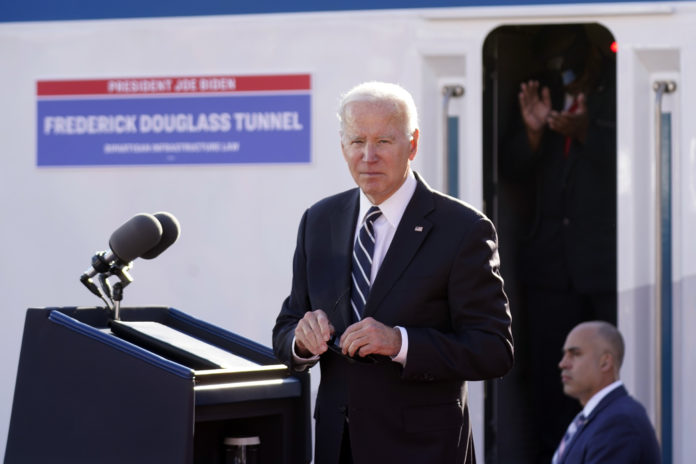
Prior to their evening speeches, Biden and Harris visited a water treatment plant and celebrated $15 billion in funding to remove lead pipes from service lines around the country, including in Philadelphia. That comes from a bipartisan infrastructure package Congress passed in 2021, which is also bankrolling railway projects the president spent this week trumpeting.
“The issue has to do with basic dignity,” Biden said. “No amount of lead in water is safe. None.”
With the State of the Union address coming next week, Biden has renewed calls for political unity, something he’s acknowledged being unable to achieve despite his promises to do so as a candidate in 2020. But those appeals haven’t tempered Biden’s broadsides against his predecessor, Donald Trump, and the Republican Party’s continued fealty to the former president’s “Make America Great Again” movement.
“Look, this is not your father’s Republican Party,” the president said this week at a separate DNC fundraiser in New York. “This is a different breed of cat.”
The president is facing increasing pressure in Washington, where a special counsel is investigating how classified documents turned up in his home and a former office, and a Republican-controlled House is investigating everything from the administration’s immigration procedures at the U.S.-Mexico border to the overseas ties of the president’s son Hunter.
That’s made some top Democrats anxious to see Biden stay on the political offensive.
“The president is trying to solve the problems of the nation on infrastructure, on microchips, on gun safety, on health care, and I think he’s going to talk about doing that,» said Randi Weingarten, a DNC member and president of the American Federation of Teachers. “And then also compare (that) to the GOP, which seems to be on a revenge agenda.”
Biden’s speech comes the day before the DNC is set to approve an overhauled presidential primary calendar starting next year that would replace Iowa with South Carolina in the leadoff spot. New Hampshire and Nevada would go second, followed by Georgia and Michigan — a change the president has championed to ensure that voters of color have more influence deciding the party’s White House nominee.
The new calendar would be largely moot if Biden runs again, since party elders won’t want to oversee a drawn-out primary against him. The president is addressing the Democrats as the party has been solidly unified in its opposition to the new Republican-controlled House and with no major Democratic challenger thought to be preparing to run against him.
Biden’s expected announcement of a reelection campaign is still likely weeks away. But Biden’s advisers have been preparing for one for months, making staffing arrangements and readying lines of political attacks against Republicans seen as early presidential front-runners, including Trump, who launched his campaign in November, and Florida Gov. Ron DeSantis.
Alan Clendenin, a DNC member from Florida, said Biden has strengthened the economy, reestablished U.S. global standing and promoted inclusive values — the opposite of what Trump and DeSantis stand for.
“They predicted gloom and doom. He’s proved them all wrong,” said Clendenin, who kicked off a DNC Southern caucus meeting by noting that Florida has begun lagging behind other states in key policy areas and joking of its governor, «That’s what happened when you’re led by the devil.”
Biden repeatedly denounced “extreme MAGA Republicans” as a threat to the nation’s democracy in the runup to last fall’s midterm elections, when his party pulled off a stronger-than-expected showing. The president has since worked to portray today’s GOP as beholden as ever to Trump, saying at the New York fundraiser, “You’d think that what would happen is that there would be a little bit, as we Catholics say, (of) an epiphany.»
“Well, instead, it’s been the exact opposite,” Biden said. «They’ve just doubled down.”
The president will have a harder time campaigning on future legislative accomplishments now that the GOP controls the House. A coming fight over extending the nation’s legal debt ceiling may only harden partisan clashes.
Republican House Speaker Kevin McCarthy said he and the White House would continue talking about ways to avoid a debt limit crisis. But, referring to federal spending, McCarthy said, “The current path we’re on we cannot sustain.”
Biden has also suggested that simply bashing Republicans won’t be enough, noting that Democrats have seen their support among Americans without a college degree decline “because a lot of people think we left them behind.”
Weingarten, whose union represents 1.7 million members, said «there’s a lot of grievance in the country about the loss of good union jobs” but Biden had solidified pension funds, promoted union membership and helped reduce costs for low income families.
“Regardless of what has happened in the past,» she said «I would say that Joe Biden is a working person’s president.”
Imagen de archivo que muestra el logo de la policía de Puerto Rico. (Foto: EFE/Jorge Muñiz)
San Juan, Puerto Rico.– Tres puertorriqueños podrían enfrentar 20 años en prisión si son encontrados culpables por fraude y conspirar para incurrir en fraude postal por ingresar a Puerto Rico aparatos médicos ilegales y supuestamente adulterados y mal etiquetados.
Elberto Berdut Teruel, Wanda L. Carballo Cabrera y María Santos Carballo enfrentan también una confiscación de bienes o productos por 327.047 dólares tras ser acusados por un jurado federal el pasado miércoles, informó este viernes la Fiscalía Federal en Puerto Rico.
Según documentos de la corte, los acusados se enriquecieron ilegalmente a través de la compañía Magnetic Healer of PR Inc., con la que vendían presuntos imanes sanadores, los cuales alegaban que curaban y prevenían enfermedades como la covid-19, migrañas, depresiones, insomnio, Parkinson, Alzheimer, autismo y cáncer.
Berdut era el presidente, secretario y tesorero de Magnetic Healer of PR Inc, mientras que Carballo y Santos eran empleadas de la compañía.
De acuerdo con el pliego acusatorio, los tres acusados generaron ganancias producto de las ventas de estos imanes, los cuales eran alterados y erróneamente etiquetados bajo la Ley de Alimentos, Drogas y Cosméticos (FDCA, en inglés).
Uno de los objetivos de la FDCA es asegurar que los aparatos y medicamentos que se venden para prevenir, curar o tratar enfermedades son seguros para aquellos que intentan usarlos y que estén etiquetados con información correcta.
La FDCA, a su vez, prohíbe, entre tantas cosas, el transporte en comercio interestatal de algún aparato que esté adulterado o mal etiquetado.
Ante ello, los imanes que los acusados vendían estaban mal etiquetados bajo la FDCA, pues los inculpados vendieron estos aparatos sin la notificación ni la aprobación de parte de la Administración de Alimentos y Drogas de Estados Unidos (FDA, inglés).
De acuerdo con el pliego, los acusados obtenían las partes para elaborar los imanes a través del correo por vendedores fuera de Puerto Rico, para luego montarlos en la isla.
Los acusados promocionaban los imanes en las redes sociales y páginas web, entre ellas, www.elbertoberdut.com y www.magneticbiotherapy.com.
A su vez, los acusados falsamente alegaron que los aparatos no necesitaban la aprobación de la FDA, pues presuntamente la agencia federal los había aprobado, e incluso, incluían el logotipo de la dependencia.
Los acusados tendrían este viernes su vista inicial ante el juez Bruce McGiverin en el Tribunal Federal de San Juan.
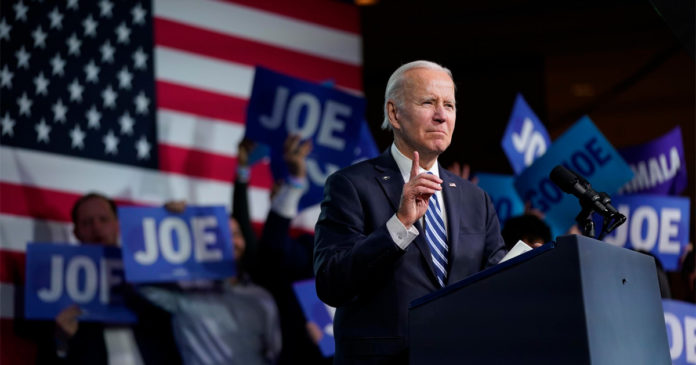
President Joe Biden speaks at the Democratic National Committee Winter Meeting, Friday, Feb. 3, 2023, in Philadelphia. (Photo: AP/Patrick Semansky)
PHILADELPHIA. — President Joe Biden sounded like a candidate making his case for a second term Friday night as he rallied a raucous meeting of national Democrats who chanted, “Four more years!”
The only thing missing was an official announcement — that’s not expected for at least several weeks.
Taking the stage at the Democratic National Committee gathering in Philadelphia, Biden boasted about helping create millions of jobs and said his administration had made the country’s most significant federal investments in public works, health care and green technology in decades. He also slammed Republican extremism, suggesting that party is still too behold to former President Donald Trump’s Make America Great Again movement.
“Let me ask you a simple question. Are you with me?” a grinning Biden asked as hundreds of party leaders from around the country interrupted him with cries of “Four more years! Four more years!”
He later added, to nearly as loud applause, “America is back and we’re leading the world again.”
President Joe Biden speaks about his infrastructure agenda while announcing funding to upgrade Philadelphia’s water facilities and replace lead pipes, Friday, Feb. 3, 2023, at Belmont Water Treatment Center in Philadelphia. (Photo: AP/Patrick Semansky)
Vice President Kamala Harris was just as defiant about the GOP and its staunch opposition to issues like abortion rights.
“There are those who want to stand in the way of our momentum,” she said. «The extremist, so-called leaders, who want to distract and divide our nation as they ban books, as they reject the history of America, as they criminalize doctors and nurses and the sacred right to vote.”
At a DNC fundraiser before taking the stage, Harris referenced Democrats’ stronger-than-expected showing in last fall’s midterm elections and reminded a smaller crowd, “It’s not the time to pat ourselves on the back. It’s the time to see it through.»
“And that’s going to take as much work, if not more, than everything that everyone here put into where we are today.»
Biden was equally looking to the future, telling the same reception, “No matter who is president, things are going to change radically in the next 15 years.”
President Joe Biden stands on stage with Vice President Kamala Harris and Jana Curtis, founder of Get the Lead Out Riverwards, before he speaks about his infrastructure agenda while announcing funding to upgrade Philadelphia’s water facilities and replace lead pipes, Friday, Feb. 3, 2023, at Belmont Water Treatment Center in Philadelphia. (Photo: AP/Patrick Semansky)
“And the question is, Are we going to be leading the pack?” he added. “Or are we going to be the end of it?”
The pair got a boost before arriving at the DNC: a jobs report released hours earlier showed employers created a net 517,000 jobs last month, exceeding economists’ expectations, which Biden called ”strikingly good news.»
Also in Philadelphia on Friday, Biden and Harris visited a water treatment plant and hailed $15 billion in funding to remove lead pipes from service lines around the country. That comes from a bipartisan infrastructure package, which is also bankrolling railway projects the president spent this week trumpeting.
President Joe Biden talks with Nolyn Pace as Vice President Kamala Harris watches as he speaks about his infrastructure agenda while announcing funding to upgrade Philadelphia’s water facilities and replace lead pipes, Friday, Feb. 3, 2023, at Belmont Water Treatment Center in Philadelphia. (Photo: AP/Patrick Semansky)
“The issue has to do with basic dignity,” Biden said. “No amount of lead in water is safe. None.”
With the State of the Union address coming next week, Biden has renewed calls for political unity, something he’s acknowledged being unable to achieve despite his promises as a candidate in 2020. But those appeals haven’t tempered Biden’s broadsides against Trump and the former president’s MAGA movement.
“This ain’t your father’s Republican Party,” Biden said, adding that the GOP agenda was so extreme that “we have to keep pointing out what the other team wants.” Of Trump loyalists, he said, «These aren’t conservatives.”
Back in Washington, the president is facing increasing pressure as a special counsel investigates how classified documents turned up in his home and a former office, and a Republican-controlled House examines everything from the administration’s immigration procedures at the U.S.-Mexico border to the overseas ties of the president’s son Hunter.
That’s made some Democrats anxious to see Biden stay on the political offensive.
“The president is trying to solve the problems of the nation on infrastructure, on microchips, on gun safety, on health care,» said Randi Weingarten, a DNC member and president of the American Federation of Teachers. “Compare (that) to the GOP, which seems to be on a revenge agenda.”
Vice President Kamala Harris speaks before President Joe Biden about his infrastructure agenda while announcing funding to upgrade Philadelphia’s water facilities and replace lead pipes, Friday, Feb. 3, 2023, at Belmont Water Treatment Center in Philadelphia. (Photo: AP/Patrick Semansky)
Biden’s speech comes the day before the DNC is set to approve an overhauled presidential primary calendar starting next year that would replace Iowa with South Carolina in the leadoff spot. New Hampshire and Nevada would go second, followed by Georgia and Michigan — a change the president has championed to ensure that voters of color have more influence deciding the party’s White House nominee.
The new calendar would be largely moot if Biden runs again, since party elders won’t want to oversee a drawn-out primary against him. Democrats have been solidly unified in their opposition to the new Republican-controlled House, while no major Democratic challenger is thought to be preparing to run against Biden.
Biden’s advisers haven’t waited for his official reelection announcement, already spending weeks making staffing arrangements and readying lines of political attacks against Republicans seen as early presidential front-runners, including Trump, who launched his campaign in November, and Florida Gov. Ron DeSantis.
Alan Clendenin, a DNC member from Florida, said Biden has strengthened the economy, reestablished U.S. global standing and promoted inclusive values — the opposite of what Trump and DeSantis stand for.
“They predicted gloom and doom. He’s proved them all wrong,” said Clendenin, who kicked off a DNC Southern caucus meeting by noting that Florida has begun lagging behind other states in key policy areas and joking of its governor, «That’s what happened when you’re led by the devil.”
Biden repeatedly denounced “extreme MAGA Republicans” as a threat to the nation’s democracy in the runup to the midterms and gloated a bit Friday about the results.
Vice President Kamala Harris speaks at the Democratic National Committee Winter Meeting, Friday, Feb. 3, 2023, in Philadelphia. (Photo: AP/Patrick Semansky)
“People looked at me like I was nuts,” he said, referring to his repeated criticisms last fall. “They’re nuts. I’m not nuts.”
The president, meanwhile, will have a harder time campaigning on future legislative accomplishments now that the GOP controls the House. A coming fight over extending the nation’s legal debt ceiling may only harden partisan clashes.
Republican House Speaker Kevin McCarthy said he and the White House would continue talking about ways to avoid a debt limit crisis. But, referring to federal spending, McCarthy said, “The current path we’re on we cannot sustain.”
Biden has also suggested that simply bashing Republicans won’t be enough, however, noting that Democrats have seen their support among Americans without a college degree decline. He said Friday night that his party «stopped talking to” blue-collar workers.
«We have to get working-class people to say we see them,” the president added.
In a more lighthearted nod to the coming Super Bowl, Biden declared “Fly, Eagles, fly!” and called fans in Philadelphia “the most informed, obnoxious fans in the world.»
That would ostensibly include his wife, Jill, who is a diehard Eagles supporter.
Miami.- El caso de un hombre de 32 años sin hogar que sufre esquizofrenia y fue condenado a 150 años de cárcel por posesión de pornografía infantil está en manos de un juez de Miami-Dade, Florida (EE.UU.), que decidirá si el desamparado termina o no de cumplir esta condena calificada por un medio local como «injusticia extrema».
Jared Stephens, condenado en 2018 tras mostrar en una tienda de electrodomésticos unas imágenes de pornografía infantil desde un ordenador portátil, compareció este jueves ante el juez William Altfield, quien está considerando reducir la sentencia a partir de una moción presentada por la defensa, informó el Miami Herald.
Los fiscales estatales, sin embargo, señalaron en la audiencia de hoy que su intención es mantener la sentencia de privación de libertad de 150 años para Stephens, quien según el citado medio padece esquizofrenia sin tratar durante años.
En 2016, Stephens, entonces de 25 años, se paseaba por una tienda de electrodomésticos con una computadora portátil reproduciendo un video de abuso infantil, con la intención de que fuera visible por las cámaras de seguridad, según indica el informe de arresto.
Este exluchador de la Universidad Estatal de Arizona, que pernoctaba en la calle tras años de esquizofrenia sin tratar, se apostó en la entrada de la tienda examinando imágenes ilícitas mientras los compradores pasaban, hasta que llegó la Policía y lo detuvo.
En 2018 fue sentenciado a 150 años de cárcel, seguido de 120 días en otra cárcel del condado Miami-Dade, una condena que «no tiene paralelo en los tribunales locales por un delito similar», afirma el medio.
La sentencia dictada por la jueza Verónica Diaz, del Tribunal de Circuito de Miami-Dade, fue de 147 años más que el período de tres años que los fiscales estatales propusieron inicialmente en un acuerdo de culpabilidad.
También resultó «docenas de veces» mayor que la sentencia típica por posesión de pornografía infantil, detalla el rotativo.
En una apelación en mayo de 2020, a la que tuvo acceso EFE, el Tribunal de Apelaciones del Tercer Distrito del Estado de Florida dictaminó que «Stephens no ha demostrado ningún error reversible en esta apelación que le diera derecho a un nuevo juicio o a una nueva sentencia».
«La Legislatura de Florida tiene la prerrogativa de establecer la duración de las sentencias de prisión por delitos, y el Estado tiene un interés apremiante en eliminar la posesión de pornografía infantil y proteger a las víctimas de la pornografía infantil. En consecuencia, afirmamos las condenas y sentencias de Stephens», concluye el documento.
Sin embargo, en una audiencia reciente, apunta el Herald, la Oficina de la fiscal estatal Katherine Fernández Rundle sugirió que pueden «estar abiertos» a que se reduzca la sentencia de Stephens, si acepta recibir tratamiento de salud mental.
Según trascendió hoy, Stephens fue evaluado recientemente por un psicólogo de cara a una nueva revisión del caso ante el juez Altfield, del décimo primer circuito judicial de Florida, como última oportunidad para conseguir una reducción de condena.
Una nueva audiencia está programada para el 14 de febrero.
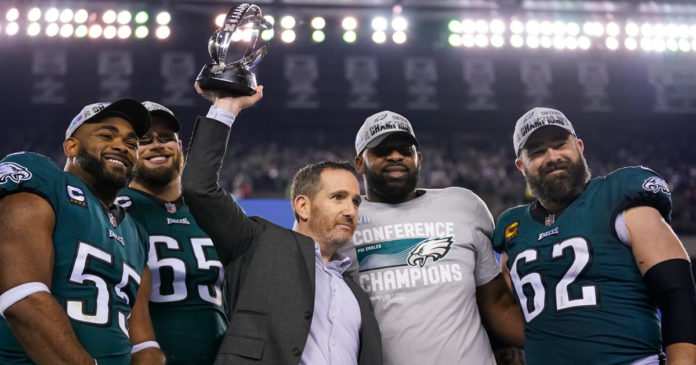
Philadelphia Eagles general manager Howie Roseman, center, stands with defensive end Brandon Graham (55) offensive tackle Lane Johnson (65), defensive tackle Fletcher Cox, and center Jason Kelce (62) after the NFC Championship NFL football game between the Philadelphia Eagles and the San Francisco 49ers on Sunday, Jan. 29, 2023, in Philadelphia. The Eagles won 31-7. (Photo: AP/Matt Slocum)
PHILADELPHIA. — Jason Kelce felt the pull of retirement after the Eagles slogged through a miserable 2020 season and a second Super Bowl any time soon seemed like a joke. The Christmas album crooner,honorary Mummer and All-Pro center — how many players have all those titles in their NFL.com bio? — considered walking away at the end of last season. His future was one of the more pressing offseason questions on tap, so Philadelphia Eagles coach Nick Sirianni shipped the big guy two cases of beer to coax him to stay.
So Kelce stayed.
“I’ve learned now I don’t know when that last game is going to come,” the 35-year-old Kelce said.
Hey, at least Kelce knows for sure when the last game this season is going to come.
Kelce has tried not to consider that the Super Bowl against Kansas City could be his final game as an Eagle. But he’s not the only veteran Eagle and Super Bowl champion with a murky future. Kelce, Fletcher Cox and Brandon Graham are the lone holdovers from former coach Andy Reid’s last season with the Eagles in 2012. There’s a chance none of the three will be back for the 2023 season.
“I know them personally and they are tough guys, tough-minded,” Reid said. “They’re good leaders, fun to be around, and they’re good football players. Each one has their own characteristic, but in general I’d tell you that about all of them, great team guys.»
Lane Johnson completes the four veteran anchors and was a rookie in former coach Chip Kelly’s first season in 2013.
Philadelphia Eagles quarterback Jalen Hurts, left, offensive tackle Lane Johnson (65) and teammates react after the NFC Championship NFL football game between the Philadelphia Eagles and the San Francisco 49ers on Sunday, Jan. 29, 2023, in Philadelphia. The Eagles won 31-7. (Photo: AP/Seth Wenig)
The tenured stars — the Core Four — have won a Super Bowl under former coach Doug Pederson and won just four games in 2020. They’ve been hurt and set records. They’ve also raised the standard on what it means to be an Eagle. The best way to do that is go out and win the big one in style.
“Since the day I got here, that’s all they talk about,” defensive tackle Javon Hargrave said. “Tell me how they feel when they went to the Super Bowl and all the memories they had. It’s pretty cool to have people who have done it before.”
Hargrave’s nod to the veterans was interrupted when Graham pulled on his gaudy Super Bowl jacket — with tags dangling from the sleeve — at the neighboring locker. All they need is a new ring to complete the ensemble.
Philadelphia Eagles offensive tackle Lane Johnson (65) reacts after running back Kenneth Gainwell (14) rushed for a first down against the New York Giants during the second half of an NFL divisional round playoff football game, Saturday, Jan. 21, 2023, in Philadelphia. (Photo: AP/Matt Slocum)
If they beat the Chiefs, some might go out in Philly on top
This is no ordinary game for Kelce. On the Kansas City side, there’s Reid, the coach who drafted him. Also over there is his brother, tight end Travis Kelce, marking the first time siblings will face off in the Super Bowl. One more thing, Kelce’s wife Kylie is pregnant and the couple is bringing their ob-gyn to Arizona just in case.
Kelce has been as durable as they come, with the Super Bowl putting him at 149 consecutive games.
“He’s out there at practice every day limping around and giving his all to the team,” tight end Dallas Goedert said.
Philadelphia Eagles’ Brandon Graham smiles while speaking during a news conference at the NFL football team’s training facility, Thursday, Feb. 2, 2023, in Philadelphia. The Eagles are scheduled to play the Kansas City Chiefs in Super Bowl LVII on Sunday, Feb. 12, 2023. (Photo: AP/Matt Slocum)
Let’s take a look at some of the foursome’s finer moments:
_____
Jason Kelce. Age 35. Center. Sixth-round pick, 2011. Five-time first-team All-Pro.
The burly, bushy-haired Bird has been a stalwart of the offensive line since he was drafted and as an Iron Man after he missed most of the 2012 season with a partially torn MCL and torn ACL. He’s in the last season of his contract.
He’s a fan favorite and has done it all outside the football field, such as singing the national anthem at a 76ers game, partying with the Phanatic and pounding a beer to a roaring ovation at a Phillies postseason game.
But the moment that endeared him for life to the Philly faithful came at the 2018 Super Bowl parade when he dressed as one of Philadelphia’s famed Mummer’s and the ultimate underdog delivered a fiery, profane speech that whipped the crowd into a frenzy.
“No one likes us! No one likes us! No one likes us! We don’t care,” Kelce exclaimed. “We’re from Philly! (Expletive) Philly. No one likes us! We don’t care!”
San Francisco 49ers quarterback Josh Johnson, left, passes under pressure from Philadelphia Eagles defensive end Brandon Graham during the first half of the NFC Championship NFL football game between the Philadelphia Eagles and the San Francisco 49ers on Sunday, Jan. 29, 2023, in Philadelphia. (Photo: AP/Matt Rourke)
___
Brandon Graham. Age 34. Defensive end. First-round pick. 2010. 2020 Pro Bowl
The most famous moment in Eagles history is the trick play that saw QB Nick Foles catch a touchdown to lead them past the New England Patriots for the franchise’s first Super Bowl victory. Right behind it? Graham’s strip-sack of Tom Brady in the same game with 2:21 left in the fourth quarter. Derek Barnett recovered and the Eagles hung on to win 41-33.
He missed most of last season with a torn Achilles but came back to post a career-high 11 sacks. Graham said he’s not retiring and was excited about testing free-agency for the first time in his career.
“I know I’m not the guy I was early on,” he said. “I do feel like I’m still pass-rushing the same. I’m able to be dominant in the run game. I’m enjoying being the leader for the guys.”
Philadelphia Eagles wide receiver DeVonta Smith (6) celebrates his touchdown catch with wide receiver A.J. Brown (11) and center Jason Kelce (62) during the first half of an NFL divisional round playoff football game against the New York Giants, Saturday, Jan. 21, 2023, in Philadelphia. (Photo: AP/Chris Szagola)
___
Lane Johnson. Age 32. Right tackle. First-round pick. 2013. Two-time first-team All-Pro
Johnson, signed through 2025, bypassed surgery late in the season and has played through the postseason with a torn adductor in his groin. He did not allow a sack all season. But Johnson has received kudos for his openness in dealing with his mental health. Johnson took a leave during the 2021 season as he battled anxiety and depression and has since shared his story at depression treatment clinics in the area.
“I felt the shame, I felt like it was a crutch,” Johnson said last year.
Philadelphia Eagles center Jason Kelce talks to the media before an NFL football workout, Thursday, Jan. 26, 2023, in Philadelphia. The Eagles are scheduled to play the San Francisco 49ers Sunday in the NFC championship game.(Photo: AP/Chris Szagola)
Cox added seven sacks this season to give him 65 in his career. Cox was briefly released last season before signing a new deal for essentially one season. He may not be back in Philly next season but he’s not calling it quits.
“I’m still playing at a high level,” Cox said. “That hasn’t crossed my mind once, at all.”
Philadelphia Eagles owner Jeffrey Lurie hoists the George Halas Trophy after the NFC Championship NFL football game between the Philadelphia Eagles and the San Francisco 49ers on Sunday, Jan. 29, 2023, in Philadelphia. The Eagles won 31-7. (Photo: AP/Matt Slocum)
The Philadelphia Eagles are playing for another Super Bowl title because they weren’t afraid to make difficult decisions following a disastrous 2020 season.
Just three years after hoisting the Lombardi Trophy for the first time in franchise history, the organization was at a crossroads following a 4-11-1 finish in the pandemic-altered season. Philadelphia had gone from winning it all to winning one playoff game to losing in the wild-card round to last place.
Coach Doug Pederson and the front office didn’t see eye-to-eye. Franchise quarterback Carson Wentz was debating his future after being benched for a terrible performance in the first season of a lucrative contract extension he’d received two years earlier.
Pederson was fired and Wentz was traded three years after finishing third in NFL MVP voting and helping put the Eagles in position to win that Super Bowl by going 11-2 before he was injured.
Those moves laid the foundation for a rebuild that only ended up being a quick retool.
Pederson was an excellent coach in Philadelphia, turning Chip Kelly’s mess into a championship team in just two years. He led the Eagles to a pair of division titles and three playoff appearances in five seasons.
He took his aggressive coaching style, strong leadership skills and sharp mind to Jacksonville this season and transformed the Jaguars from doormat to AFC South champions.
But Pederson had to go in Philadelphia because he disagreed with management on some issues, including his assistant coaches. His loyalty ended up costing him his job.
Owner Jeffrey Lurie and general manager Howie Roseman were criticized for meddling and interfering with game plans and play-calling.
Nick Sirianni came to Philadelphia with no fanfare after three seasons as an offensive coordinator in Indianapolis. The perception in Philly was Lurie and Roseman wanted a young coach they could mold and compel to follow their plans.
If that was the case, it’s hard to argue with their success.
After a rough start in 2021, Sirianni led the Eagles to a playoff berth in his first season with Jalen Hurts as the starting quarterback.
Hurts and the rest of the team took a giant leap this season and here they are at 16-3, one win away from another parade on Broad Street.
“This is not a time for reflection,” Hurts said after the Eagles dominated the 49ers in the NFC championship game. “It’s really hard for me to do that. I try to enjoy the moment, but my joy comes in winning. I know the job isn’t done. I never knew how far we would come, I never knew how far we’d go, but I never said it couldn’t be done.”
The first step for management was deciding to make tough decisions. Trading Wentz meant absorbing a $33.8 million cap hit. Their next moves had to pay off for it to work out.
Hurts came to Philly as a surprise second-round pick to provide insurance for the oft-injured Wentz and play a utility role somewhat similar to New Orleans’ Taysom Hill. Now, he’s a finalist for AP MVP and Offensive Player of the Year.
“He is a great young leader. He is a terrific young quarterback,” Lurie said. “When we drafted him it was the upside we were banking on. We thought he had a huge upside. It takes a couple years. And somebody so dedicated as Jalen and such a great teammate. Inevitably he is going to maximize everything he has and that’s what he’s done. And he’s got great teammates and great coaches.
“I can’t understate it takes everybody. Talk about the owner, talk about the head coach, talk about the quarterback, talk about the GM. We’re only as good as the staff that we have and in a way that is the secret sauce — the culture, and the staff.”
During Lurie’s 29 years as owner, the Eagles have reached the playoffs 17 times, advanced to the NFC title game seven times and are 1-1 in the Super Bowl going into next Sunday’s game against former coach Andy Reid and the Kansas City Chiefs.
Lurie once proclaimed he wanted the Eagles to be the “gold standard” for NFL teams. His hometown New England Patriots filled that role for two decades with Bill Belichick and Tom Brady.
Silver isn’t bad, though, especially in the form of a Lombardi.
El entrenador de los Eagles de Filadelfia, Nick Sirianni (centro), es empapado por el defensive tackle Fletcher Cox, durante la segunda parte del juego por el campeonato de la Conferencia Nacional de la NFL contra los 49ers de San Francisco, el domingo 29 de enero de 2023, en Filadelfia. (Foto: AP/Matt Slocum)
Los Eagles de Filadelfia buscarán otro título de Super Bowl por que no tuvieron miedo de tomar decisiones difíciles tras una desastrosa temporada 2020.
Apenas tres años después de que levantaron el trofeo Lombardi por primera vez en la historia de la franquicia, la organización se vio en una encrucijada tras terminar con foja de 4-11-1 en 2020. Filadelfia pasó de ganarlo todo, a un triunfo en postemporada, al último lugar.
El entrenador Doug Pederson y la directiva no estaban en el mismo camino. El quarterback franquicia Caron Wentz debatía su futuro tras ser enviado a la banca en su primera campaña de su lucrativa extensión de contrato que recibió dos años antes.
Pederson fue despedido y Wentz canjeado tres años después de que terminó tercero en la votación al MVP y ayudó a los Eagles a quedar en posición de ganar el Super Bowl con marca de 11-2 antes de lesionarse.
Esos cambios sentaron las bases para una reconstrucción que terminó siendo una reorganización.
Pederson fue un gran entrenador en Filadelfia y transformó a un desastroso equipo con Chip Kelly en apenas dos años. Lideró a los Eagles en un par de títulos divisionales y tres apariciones en playoffs en cinco campañas.
Llevó su agresivo estilo, fuerte liderazgo y mente aguda a Jacksonville esta temporada y transformó a los Jaguars en campeones de la División Sur de la Conferencia Americana.
Pero Pederson se tuvo que ir debido a que no estaba de acuerdo con algunos problemas en la dirigencia de Filadelfia, incluyendo sus asistentes. Su lealtad le costó su empleo.
El dueño Jeffrey Lurie y el gerente general Howie Roseman fueron criticado por interferir en el plan de juego y decisiones de jugadas.
Nick Sirianni llegó a Filadelfia sin fanfarrias tras tres campañas como coordinador ofensivo de Indianápolis. La percepción en Filadelfia ers que Lurie y Roseman querían un joven entrenador que pudieran moldear.
Si ese es el caso, no se puede argumentar en contra de su éxito.
Tras un difícil 2021, Sirianni llevó a los Eagles a la postemporada en la primera campaña de Jalen Hurts como el quarterback titular.
Hurts y el resto del equipo dieron un gran paso al frente esta temporada y están aquí con marca de 16-3 y a una victoria de otro desfile en Broad Street.
“Este no es el momento para reflexionar”, indicó Hurts tras el dominio de los Eagles ante los 49ers en el duelo de campeonato de la NFC. “Es difícil para mí. Intento disfrutar el momento, pero mi gusto viene de ganar. Sé que el trabajo no ha terminado. Nunca pensé que tan lejos llegaríamos, pero nunca dije que no pudiera hacerse».
Representación de la comunidad latina de Filadelfia durante uno de los eventos culturales organizados en el Love Park. (Foto: PL)
“Mexicans” crossing the border to destroy the American Culture (whatever that is), and to take our jobs (maids, gardeners, car washers and agricultural harvesting), jobs which I know for a fact that no Anglo individuals are lining up for.
And if Anglos did happen to take those jobs back, a head of lettuce might cost $10 and a dozen eggs $24.
But I must say the Hispanic’s are sneaky and strategical. For years they and other Latinos have been jumping fences or pillows and marrying outside of their ethnic groups.
The White/Hispanic combination represents 42% of intermarriage; while in comparison, the White/Asian combination represents only 15%, the White/Black combination 11%, the Hispanic/Black combination 5%, and the Hispanic/Asian combination 3%. Notably, the Pew report neglects to discuss the role of “Hispanic” racial appearance and identity.
If this intermarriage rate continues, we will all soon have Latinos at our holiday meals and events.
Mexicans and other Latino groups have snuck in their foods, drinks and holidays and cultural events. While Mexicans lead the way, Puerto Ricans, Dominicans, Cubans, Salvadorans, and many other Latino groups have added their food, drinks, and cultural activities to their communities; thus, changing the so-called American food and holiday menu.
Representation of the Latino community of Philadelphia during one of the cultural events organized at Love Park. (Photo: PL)
For more than 40 years salsa has outsold Ketchup. And think about the fact that almost everyone seems to know what a taco is and what a hard shell or soft-shell tacos is; or what is a taco salad, a burrito, a quesadilla or a tamal. Almost everyone has consumed Mexican food or a cerveza/beer from Mexico. But, by now, American gringo companies have bought up many of the Mexican beer labels. Oh, I almost forgot about Mezcal and Tequila (what one gringo friend jokingly called “to-kill-ya”), and the famous Margaritas with or without salt.
The public already knows the difference between corn and flour tortillas. On top of that, they know the difference between jalapenos and serrano’s, and many have enjoyed a jalapeno popper. At my Jewish bakery you can find jalapeno bagels and down the road you can even get jalapeno pizza and jalapeno jam, while many can tell you the name of their favorite burritos and enchilada. Of course, they knew about mole, and soon they will be bottling Horchata (rice based sweet drink) for Anglo babies.
Every major grocery chain now has a large section of Mexican and Latino foods. They make big profits out of these sales, and there you can find a wide variety of salsas and tortillas. To avoid selling a tortilla wrapped food as a burrito, some businesses have taken to calling it a wrap. “To wrap or not to wrap. That is the question.”
Gringos and the beer industry have taken over the Cinco de Mayo day and made it a serious competitor to the Irish St. Patrick’s beer drinking pay day. I can’t see how any politician could find a way to ban this beer busting Sloppy Nacho eating holiday. And they would probably have to jail all the Mariachi groups across America and close down the Spanish language Radio and television stations, including those Spanish preaching evangelical ministers who are on the air.
Not to mention the many dance instructors who make good money teaching gringos’ cumbias, salsa, bachata dancing and other wonderful Latin dance steps.
Many phone answering machines now ask you to push a different number if you want Spanish (in spite of an old racist movement that wanted English Only spoken), and many of the call centers are in Mexico; not to mention electronic and auto assembly plants positioned and profiting by being in Mexico, as they give some workers low wages instead of a decent wage and benefits, which would deter many from going north.
One friend joked about pressing buttons for language saying in his telephone answering voice “press one for English. Two for Spanish or three for Stupid”.
Colorful Taco trucks are everywhere, and many of u have our favorite trucks; and much of their food is better and cheaper than that of the restaurant cuisine.
Venezuelan food is gaining ground in the gastronomy of Filafelfia. (Photo: PL)
Plus, in the winter, many of the vegetables and fruits are coming from Mexico; and no one will stop these crops from jumping the border wall
Will Americans now be asked not to go to Mexico and those living there now be forced to return or have their citizenship voided?
The Gov. of Arkansas outlawed the word Latinx. And I guess that this is the point of the racist spear for now. But I dare her to try to ban tacos.
Since there is now a movement to ban books, some of us wonder when there will be a right-wing ban on Mexican foods and drinks. Well, a friend jokingly spurted “I will fight it and they will have to rip my Hatch New Mexican chilis and tequila from my cold dead hands.”
Since right wing politicos want to ban the books, but are too afraid to ban our food and drinks, we will have to begin writing our history on the labels of foods and beverages produced for public consumption. Dr. Bronner’s Magic organic soap company in Vista, California, puts its world philosophy on all their products. And this educational effort is one fight that can be easily won by the Mexicans with the help of other Latinos and progressive people of all colors. And we will continue to paint beautiful murals of the history of a people and their aspirations for a better world.
In this corner, the Mexicans and other Latinos are winning this part of the Cultural War.