


Inicio Blog Página 1241

Agenda

Colorismo: opresión, inclusión y poder

El Simposio Anual Arturo A. Schomburg adopta un tema anual diferente que explora varios aspectos de la intrincada y compleja relación de las influencias de la diáspora africana dentro de la cultura latinoamericana en el extranjero y en los Estados Unidos. El 27 simposio este año, profundiza en los orígenes y efectos del colorismo latino y la anti negritud en individuos, familias, comunidades, sociedades y sistemas. El evento nos ayuda a comprender cómo las personas de color perpetúan el racismo y cómo reconocer esa complicidad para generar cambios. Taller Puertorriqueño, 24 de febrero, 18:00 a 21:00 – 25 de febrero, de 9:00 a 16:00.

Colorism: Oppression, Inclusion and Power

The Arturo A. Schomburg Annual Symposium takes on a different yearly theme that explores various aspects of the intricate and complex relationship of the African diaspora influences within Latin American culture abroad and in the United States. The 27th symposium this year delves into the origins and effects of Latino Colorism and Anti-Blackness on individuals, families, communities, societies, and systems. The event helps us to analyze how people of color themselves perpetuate racism and why it is crucial to acknowledge that complicity to create change. Taller Puertorriqueño, February 24, 6:00 pm to 9:00 pm – February 25, 9:00 am to 4:00 pm.

Mes de la Historia Afroamericana

El tema nacional de 2023 es la “resistencia negra”, que explora la lucha contra la represión desde los primeros días de América. Un grupo de oradores se enfocarán en la iglesia, la educación, los medios y las elecciones, y cómo estas áreas resistieron a la opresión histórica. El evento imparte un mensaje de educación y aliento, diseñado para estimular la discusión y unir culturas en la promoción del tema nacional. Se recomienda inscripción previa. Más información con Ronda l. Daviston rdaviston@pa.gov (717) 787-6166, y Wesley E. Alexander, wealexande@pa.gov (717) 783-1286.

Celebrate black history month

The national theme for 2023 is “black resistance”, which explores how blacks have fought repression from America’s earliest days. The event will focus on the church, education, media and voting, and is meant to impart a message of education and encouragement, designed to stimulate discussion and bridge cultures in furtherance of the national theme. This virtual event will be hosted on Microsoft teams. Pre-registration is recommended. A live link will be provided. For more information, please contact Rhonda L. Daviston, rdaviston@pa.gov (717) 787-6166 y Wesley E. Alexander, wealexande@pa.gov (717) 783-1286.

Improving Social Determinants of Health

Business, civic, and organizational leaders from across the city and region are invited to join us in person for a necessary conversation with regional experts about building a more collaborative approach to enhancing the health of our communities. Realize the connection between social determinants of health and economic prosperity in our city while learning about the financial, talent, and brand competitiveness benefits businesses can gain by prioritizing and engaging in improving population health. Organizes The Chamber of Commerce. Thursday, February 23, 9:00 am – 11:30 am, Thomas Jefferson University, Jefferson Alumni Hall.

Mejorar determinantes sociales de la salud

Los líderes empresariales, cívicos y comunitarios de toda la ciudad están invitados a una conversación necesaria con expertos regionales sobre la construcción de un enfoque más colaborativo para mejorar la salud de nuestras comunidades. Darse cuenta de la conexión entre los determinantes sociales de la salud y la prosperidad económica en la ciudad mientras se aprende sobre los beneficios financieros, de talento y de competitividad que las empresas pueden obtener al priorizar y participar en la mejora de la salud de la población. Organiza Cámara de Comercio. Jueves, 23 de febrero, 9:00 am – 11:30 am, Universidad Thomas Jefferson, Jefferson Alumni Hall.

Becas para el grado K-8 disponibles

Ayuda para más de 160 escuelas con pago de matrícula disponible a través del Children’s Scholarship Fund Philadelphia. Las becas de kínder a octavo grado todavía están disponibles para familias de escasos recursos que buscan una opción educativa segura y de calidad en una escuela con pago de matrícula para el otoño de 2023. Children’s Scholarship Fund Philadelphia (CSFP) está aceptando solicitudes para el año escolar 2023-2024. La fecha límite para la beca es hasta el 01 de marzo.

Aid for 160+ tuition-based schools available

Aid for 160+ tuition-based schools available through Children’s Scholarship Fund Philadelphia. K-8th grade scholarships are still available for under-resourced families looking for a safe, quality educational option at a tuition-based school for fall 2023. Children’s Scholarship Fund Philadelphia (CSFP) is accepting applications for the 2023-2024 school year until March 1. Scholarship deadline: k-8th grade applications due march 1.

Blue Cross RiverRink Winterfest

Experience a riverfront winter wonderland at the Blue Cross RiverRink Winterfest. Glide around an enormous ice-skating rink, snap a photo next to the festive holiday tree and warm up with a hot beverage next to a fire pit or inside a cozy cabin. Entry into Winterfest is free. Ice skating, cabins and firepits can be reserved in advance. Blue Cross RiverRink Winterfest, 101 S. Christopher Columbus Boulevard, Through March 6, 2023.

Electrical Light Show in Franklin Square

Franklin Square celebrates the winter season with nightly spectacle of light shows inspired by Benjamin Franklin’s legendary kite and key experiment. Free light shows —set to a soundtrack of seasonal tunes— illuminate the square every 30 minutes from 5 p.m. until close. Before or after the show, grab a burger or beverage fireside from the on-site Square Burger, play a round of festive Chilly Philly Mini Golf or hop aboard the classic Park Liberty Carousel. At Franklin Square, 200 N. 6th Street, through February 26, 2023.

Building digital skills for your future

(Photo: Credit/Daniel Jackson)

Digital skills are more important than ever. Paying bills, job searching, and shopping are all done online. We communicate, make art, and organize our lives with computers. Even the way we work has changed, and employers are looking to hire people comfortable with technology. According to the National Skills Coalition, there is substantial demand for digital skills among entry level and middle skill jobs. They also say that over the next decade, half of tasks across all industries are expected to go digital and approximately two-thirds of jobs will require some level of digital skills.

The question then is, how do you get started? Chances are you have some experience with a smart phone. Your phone is a great jumping off point but most work is done on laptop or desktop computers, so one of those will be important. In addition, an internet connection is essential for a computer to do almost anything today. As such, the next step to building your digital skills will be to get set up with a computer and an internet connection.

Of course, computers usually aren’t cheap, not to mention the monthly internet bills. Luckily there is a way to get help: the Affordable Connectivity Program. ACP is a federal program that can cover up to $30 per month towards your internet bill. This means that if you sign up for an internet plan that costs less than $30 a month (which are available through Comcast, Verizon, and more), you can get your home connected for free. ACP also can help you purchase a computer through certain internet providers so that you only pay between $10 and $50 for it. There are a lot of different ways to qualify (and there’s no citizenship requirement) so it’s worth checking to see if you do.

We offer workshops and personalized assistance for learning digital skills. Call 267-270-2452 for more information. (Photo: Daniel Jacson)

For more details, go to Affordableconnectivity.gov or call 877-384-2575.

Once you have a computer and internet access, the next step is practice. If you can navigate online or have a family member that can help you get started, there are websites where you can go to build essential skills for free. Here are a few I recommend:

typing.com – Essential skills classes in English and Spanish. Making an account is optional.

digitalliteracyassessment.org – Take lessons, test your skills, and earn certificates. Making an account is optional but unlocks more features. English only.

applieddigitalskills.withgoogle.com – Wide range of subjects, activities, and skill levels. Focuses on Google apps and requires a Google account (aka a Gmail). Available in English and Spanish.

Set a goal for something you want to be able to do on the computer and pick out lessons that get you there. Even if you can’t anticipate the exact skill needed by a particular job, the more comfortable you are with computers, the easier it will be to pick up new skills. If you prefer in person learning or need additional support, Esperanza can help. We offer workshops and personalized assistance for learning digital skills. Call 267-270-2452 for more information.

For more details, go to http://Affordableconnectivity.gov or call 877-384-2575. (Photo: Ilustrativa/Pexels)
We offer workshops and personalized assistance for learning digital skills. Call 267-270-
2452 for more information. (Photo:Credit/Daniel Jackson)

Knowing how to use a computer is more important than ever, but the good news is that there are also more resources than ever to help. Whether you’re looking to expand the knowledge you already have, or are just starting to learn, now is the perfect time to get started.

Tribal Casinos and One Chicano

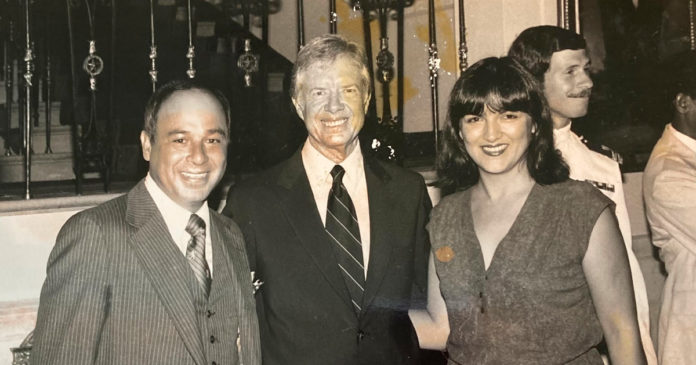
Manny and his wife Bettie Baca with President Carter, photo courtesy of Tino Fierr.

It was not until 1981 before the Seminole Indian tribe in Florida began a campaign to keep high-stakes bingo on their reservation. The District Attorney for Broward County was working to shut them down.

The tribe needed a strong advocate who would fight for them – a top, expensive, full-service lobbying firm. But these firms were not interested in this bingo issue, nor could the tribe afford them. It was a lose-lose situation, it seemed, and few wanted to take the risk of working on this issue.

And then someone whispered to them the name of Manny Fierro, an aggressive Chicano Lobbyist in Washington D.C. A native of El Paso, Texas, Fierro was a Chicano activist who cut his organizing skills in Kansas before becoming a lobbyist in Washington D.C. He was contacted by the Seminoles to find a way to continue having bingo games.

Manny and his wife Bettie had been ipso facto the Ambassadors for Chicanos and other Latinos living in D.C. and were working to get more money for head start, educational programs, and training for Latinos. At that time there were few elected congressional Latinos. They led a nonprofit that was called “El Congreso” and sponsored the first large black-tie dinners and programs in the capitol for Latinos. They got Latinos appointed to positions in the Federal government and helped to elect some of the first Latinos to Congress.

Soon this couple was on the key list for special events at the White House and elsewhere. Manny had more smoke and mirrors than most carnival magicians; he did all this and took many risks to make a difference for the poor.

Manny had a smart and strategic mind and was not afraid to confront federal agencies, congressional offices, and state offices. While small in stature he was larger than life when defending the poor and downtrodden. He was of La Raza/The People and was not afraid of anything.

In those days it was especially hard to fight for justice and keep money coming in to support the struggle for equality

And then he was asked to work with a tribe to get them economic justice.

The Broward County District attorney was keeping the Seminole Indian tribe from having Bingo on the reservation. This was known as High Stakes bingo and could be played every night.

On his drive to meet with the Seminole leadership Manny noticed a billboard at a church advertising “Bingo” on Wednesdays. The church was right next to the reservation.

Manny immediately realized the racial and economic issues with the situation. If the church can have bingo, then the Seminoles should have it. Of course, those in power were not interested in doing anything for the Native Americans. Being the good and aggressive bulldog that he was on issues of economic injustice, Manny carried this argument to anyone who would listen.

The Seminoles filed a legal suit demanding to be allowed bingo on their reservation. The suit won at the lower levels but was appealed to the Supreme Court where it was affirmed that if churches could have bingo so should the Indians.

This inspired tribes in other states to file legal suits to get the right to have gaming on their reservations. As this moved forward, not all tribes were given the opportunity to establish gambling. Manny, like a modern Don Quixote, fought real windmills of resistance and disbelief.

Soon Congress was debating a federal bill that would give tribes a wider scope into the lucrative Gaming business.

Manny was the architect of this scheme to empower First Nation People and he set up a governing structure for this venture. There was no road map or history that Manny could rely on for the arguments that he needed to make and the work that needed to be done. He knew it was unfair and racist and that was enough for him. Even many other Chicano leaders did not understand why or what Manny was doing.

But it is clear that Manny was the person who got the ball rolling. Soon economically strapped tribal bodies had an income that surpassed their wildest dreams.

Manny was the captain of this fast-moving ship at a time of turbulent waters and, in the process he ruffled feathers in Congress and even among some tribes. He served as Executive Director (consultant and lobbyist) of the Gaming structure until 1991 when it was taken over by the Native people who wanted to direct this most important project themselves. The structure was growing quickly.

If you go into any Indian Casino in this country and ask the management or the head of the tribal government how the Tribal Gaming effort was started, they will not be able to know that Manny Fierro was the spark and leadership that got this industry in the door. He pushed the development of NIGA (National Indian Gaming Association).

 Movements do not keep good records of their beginnings. For example MLK did not start the Civil Rights Movement nor the Montgomery Bus Boycott. There were incredible organizers and volunteers in the beginning and yet we only remember MLK and Rosa Parks.

In a case at the University of Colorado, Black Athletes, and I, the only Mexican, were organized by radical white Students SDS (Students for a Democratic Society) in 1968 to protest MLK’s assassination. As a result of all the demonstrations, the university funded the first scholarship programs for minorities. But among the records of the minority programs at the university, we do not exist.

Thus, our search for more details of Manny’s work is hard to uncover given the archaeological work needed. But the research continues.

The world lost this meteor man Manny Fierro on April 1, 2004.

One Indian fellow mentioned that while the white man took away their land, practiced genocide, put them on poor land called a reservation, and broke almost every treaty that was signed, they had somehow survived. And that now they were taking money from those who had oppressed them. Yep, some see it as another way for a group getting reparations.

Today, these gaming operations bring in revenues of between $27-30 billion. And many tribes are using much of their profits to help tribal members and the surrounding communities.

But along with this good work they should honor their true history, the work done by Manny, congressional leaders, lawyers, and tribal leadership.

Those individuals dreamed the Impossible and through hard work made it a reality.

Contributors Bettie Baca, Tino Fierro, and Alex Rodriquez.  Photo courtesy Tino Fierro.

Students Who Reach for the Stars Land in Honor Roll

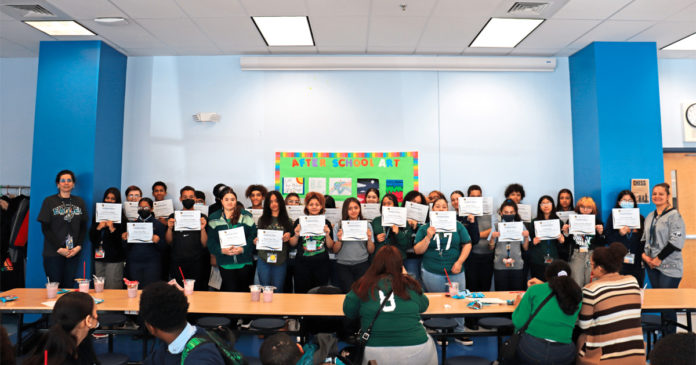
One of many groups of middle school students who achieved honor roll this quarter.

On Friday, February 10th, some of Esperanza Academy’s Middle School students received a special breakfast to celebrate their admittance to Honor Roll! Each quarter, students who had consistent A’s and B’s in their classes are given a unique breakfast and an honor roll pin. The ceremony is a memorable time carved out of the day to give extra kudos to the students’ hard work and dedication.

This shiny pin is a proud display of the student’s hard work and success.

Each grade is celebrated separately, as there are fortunately many students who have achieved honor roll status. In fact, many remarked that this breakfast seemed to have the largest amount of sixth grade students to achieve honor roll. Each student was given a yummy smoothie topped with whipped cream and a special pin on their Esperanza Academy lanyard.

The bracelet allows students certain privileges around campus.

In addition to achieving honor roll, some students also received star student status. To be a star student, the child must have straight A’s in their classes. This is a prestigious honor that is awarded with a “star student” bracelet, which works as a hall pass and bumps students to the front of the lunch line.

A student smiles as they go up to receive their award.

It was a special time honoring the diligence and dedication of many students. Esperanza Academy is proud of each student in their building and is grateful to have students that are working hard and giving their best. It is important to celebrate our wins and encourage each other as we grow and learn together.

Vaccine Champions in Hunting Park

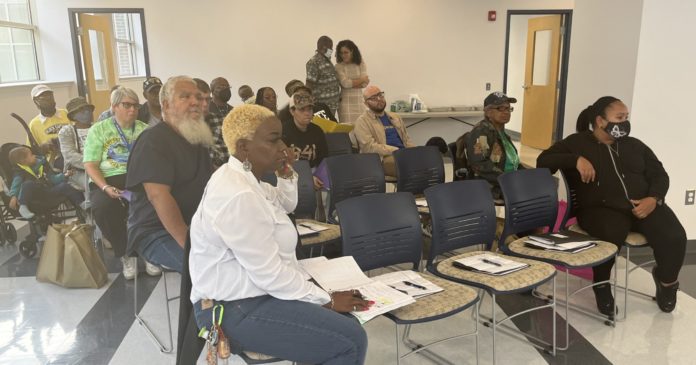
Three community members have become vaccine champions. They are involved with Esperanza’s Our Voices, Our Vaccines project. They have been a great asset to the project as they have helped with the development and dissemination of health materials in the community. Mr. Wally and Ms. Connie are block captains and Ms. Gwen is a community champion. All three of them are part of this group. They all live locally in Hunting Park and they help their community in a variety of different ways. Specifically, they advocate for their neighbors, and they help keep their blocks safe, beautiful, and clean. Additionally, they welcome newcomers that move in, and they strive to be approachable to make people feel comfortable.

Ms. Connie, Ms. Gwen, and Mr. Wally had to make a major shift when the COVID-19 pandemic started in 2020, it was challenging for their block as they had to adapt and figure out their new normal; however, they continued to show up for their neighbors and helped them navigate through the challenging times. Throughout the pandemic, they shared flyers with their neighbors about COVID-19 and safely checked in with one another during quarantine. During the height of the pandemic, they helped their neighbors by running small errands for them and offering rides to the vaccination clinics.  They were seen as trusted voices, and they made sure neighbors had access to benefits and resources that would help them. They continue to support their neighbors by making sure that they are informed so that they can make the best decisions for their health and their family’s health.

They are all thankful for the development of the COVID-19 vaccine as it has helped prevent serious disease and complications. They believe it is important for their neighbors to know the facts and they all try to help de-bunk myths about the COVID-19 vaccine and other vaccines within their own block. They mentioned that there are a lot of false rumors in the community about the COVID-19 vaccine. To combat inaccurate information, they typically canvas their block and pass out flyers that contain factual information about vaccines. When they canvas, they talk to their neighbors about the importance of wearing a mask when sick and remind their neighbors that parents should talk with their healthcare provider to make a plan for their children to get vaccinated as well. They also mentioned that some people are afraid of the vaccine and that is why they do not want to get vaccinated. When this occurs, they try to meet people where they are and provide their neighbors with the right information.

Ms. Connie, Mr. Wally, and Ms. Gwen want their neighbors and their community to be well, united, and prosperous. They agreed that their community is resilient and brave and that working together can make Hunting Park a good place to live and raise a family. They are a wonderful asset to the Esperanza network and the community as they are extremely dedicated. Lastly, they are committed to using science to inform, support, and advocate for positive change. 

This article is part of Esperanza’s community COVID-19 and flu vaccine project (Our Voices, Our Vaccines), which informs and engages Latinos on public health and vaccination programs impacting their well-being.

La Isla albergará al Instituto de Investigación Aeroespacial

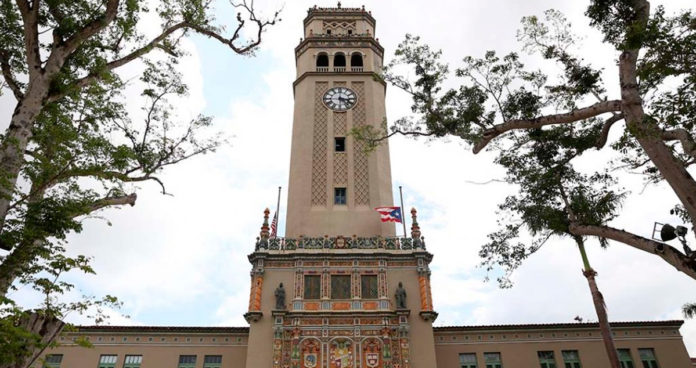
Fotografía de archivo en donde aparece la emblemática torre del campus de San Juan de la Universidad de Puerto Rico. (Foto: EFE/Jorge Muñiz)

La Universidad de Puerto Rico (UPR) anunció que el Congreso de EE. UU. aprobó una asignación de 7,5 millones de dólares para construir el Instituto de Investigación Aeroespacial (AIR) en el Recinto Universitario de Mayagüez (RUM, oeste).

Los fondos, que llegarán al RUM a través del Instituto Nacional de Estándares y Tecnología del Departamento de Comercio de EE. UU., se utilizarán para construir el edificio aledaño al Departamento de Ingeniería Mecánica (INME), que albergará laboratorios de vanguardia, según se explicó en un comunicado.

«Esta asignación representa el punto de transición entre un antes y un después en el tema aeroespacial en el Recinto Universitario de Mayagüez y en la isla», indicó la doctora Sheilla N. Torres Nieves, catedrática de INME y gestora de la propuesta.

Según contó Torres, la UPR llevaba desde 2017 tratando de conseguir los fondos de agencias federales para la construcción el AIR.

Por su parte, el presidente de la UPR, Luis A. Ferrao, sostuvo que «esta asignación millonaria de parte del Congreso de los Estados Unidos (país del que la isla es un Estado Libre Asociado) solidifica nuestra posición como líder en el mundo de la academia ya que nos permite ampliar tanto nuestra infraestructura como nuestra oferta curricular y nuestra capacidad de investigación».

«Esta asignación se da en un momento histórico en el que la industria aeroespacial está en pleno crecimiento en la isla. Del mismo modo, nuestros estudiantes han mostrado gran interés en esta área, a través de investigaciones e internados», agregó.

«Por otra parte, los reclutadores siempre nos cuentan de lo capacitados que son nuestros egresados. De manera que estamos en una fórmula ganadora. Con el desarrollo de esta instalación y el fortalecimiento del currículo ganan los estudiantes, la universidad, el país y las organizaciones que los reclutan», puntualizó Ferrao.

La edificación será de unos 1.116 metros cuadrados y contará con cuatro pisos de laboratorios especializados, entre estos de propulsión, navegación y sistemas no tripulados, auditorios, oficinas para investigadores, así como espacios para estudiantes y reuniones. Se espera que esa etapa de edificación tome de dos a tres años.

Semana del Aprendizaje Mediante Dispositivos Móviles

(Foto: Ilustrativa/Pexels)

La UNESCO implementó un programa de actividades, orientadas a determinar la contribución de las tecnologías móviles al logro del Programa Educación para Todos (EPT).

Uno de los principales objetivos es divulgar cómo las tecnologías móviles contribuyen a la mejora de la enseñanza y el aprendizaje, adecuando al sector educativo a los avances del siglo XXI. Por otra parte, se pretende reforzar el uso correcto y el acceso a estas tecnologías, así como fomentar la lectura y la alfabetización.

En la actualidad se estima que de los 7.000 millones de personas que habitan este planeta, 6.000 millones tienen acceso a un móvil inteligente, tableta y ordenador portátil. Tales dispositivos electrónicos incrementan las oportunidades y acceso al sector educativo, especialmente en zonas con escasos recursos educativos tradicionales.

¿En qué consiste el M-Learning o aprendizaje móvil?

El Mobile Learning (M-Learning) o aprendizaje móvil es un tipo de aprendizaje mediante el uso de dispositivos móviles (teléfonos inteligentes, tablets, pocket PC) con conectividad inalámbrica, caracterizado por la flexibilidad y accesibilidad a la información.

Esta modalidad de aprendizaje móvil se sustenta en el uso de aplicaciones o apps, siendo algunas de ellas son la creación de listas de alumnos y tareas: Google Talk, Wunderlist, la creación de agendas para clases: Google Calendar, la creación de notas: Evernote, Colomote, Penuntimate, y la creación de contenido: DownCast, Socrative, SoundCloud.

El sector educativo es una de las áreas que más se beneficia con el aprendizaje móvil, adecuándose a la nueva era de la información a través de imágenes, videos y otros recursos en las aulas y espacios educativos.

La UNESCO elaboró el documento «Directrices para las políticas de aprendizaje móvil», con la finalidad de adaptar el espacio educativo al mobile learning, mediante la aplicación de los siguientes lineamientos:

Promover el uso seguro y responsable de las tecnologías móviles.

Crear políticas relacionadas con el aprendizaje móvil.

Capacitar a los docentes para impulsar el aprendizaje mediante tecnologías móviles.

Crear y adaptar contenidos pedagógicos para su uso en dispositivos móviles.

Elaborar estrategias para el acceso en condiciones de igualdad para todas las personas.

Garantizar las opciones de conectividad, con criterios de equidad.

Ventajas del m-learning

Incrementa el alcance del sector educativo.

Maximiza la eficiencia de la educación a un bajo costo.

Promueve la igualdad de oportunidades.

Fomenta el aprendizaje personalizado.

Permite la capacidad de respuesta inmediata y de evaluación por parte de los docentes.

Fomenta el aprendizaje colaborativo, así como la creación de comunidades estudiantiles.

Facilita la accesibilidad a estudiantes con discapacidad.

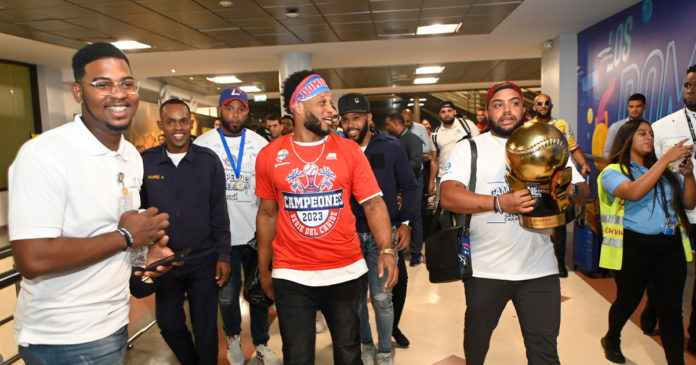
Los Tigres del Licey llegan triunfantes con la corona de la Serie del Caribe

Jugadores de los Tigres de Licey, de República Dominicana, son recibidos tras ganar la Serie del Caribe Gran Caracas 2023 contra los Leones del Caracas, en el Aeropuerto Internacional Las Américas en Santo Domingo (República Dominicana). (Foto: EFE/Víctor Calvo)

Los Tigres del Licey regresaron triunfantes el 11 de febrero, a su país, tras conquistar la víspera la edición 65 de la Serie del Caribe que se celebró con ocho equipos en Venezuela.

El avión llegó con un retraso de algo más de dos horas, aunque esto no importó que decenas se alinearan en la zona de salida de pasajeros del Aeropuerto Internacional de Las Américas, ubicado a unos 25 kilómetros al este de la capital.

«Soy dominicano, siempre estoy dispuesto a representar a mi país, lo que soy como jugador se lo debo a mi país», expresó sonriente la segunda base Robinson Canó, uno de los más importantes jugadores dominicanos de los últimos 20 años en las Grandes Ligas.

Canó, de hecho, fue el Jugador Más Valioso del Clásico Mundial de Béisbol que República Dominicana ganó invicto en 2013. El intermedista también forma parte de la plantilla caribeña que disputará la quinta versión de ese evento en marzo próximo.

«Cada Serie del Caribe tiene su encanto especial, lo hicimos (ganar) ante más de 40.000 aficionados en Caracas y eso me hace sentir muy contento de formar parte de este equipo campeón», agregó Canó, quien aportó liderazgo y experiencia a los Tigres en la serie.

Los jugadores fueron recibidos a ritmo de merengue, bailarines y silbatos ensordecedores que ambientaron un escenario festivo que gustó a los peloteros.

Los Tigres ganaron su Serie del Caribe número 11, líderes como equipo, y dieron a República Dominicana su corona 22, el país con más coronas en el evento, también llamado la «Pequeña Serie Mundial».

El equipo representativo dominicano se impuso 0-3 a los locales Leones de Caracas en el partido por el título, tras derrotar en semifinales a los Yaquis de Ciudad Obregón mexicanos.

El lanzador dominicano César Valdez fue elegido el Jugador Más Valioso de la final, tras derrotar a los Leones de Caracas en la ronda regular y también en el partido por la corona.

El capataz José Offerman guio al equipo a conquistar el título caribeño.

Thomson to NL champ Phillies as camp begins: Ease into this

Philadelphia Phillies manager Rob Thomson watches batting practice before Game 2 of baseball's World Series between the Houston Astros and the Philadelphia Phillies on Saturday, Oct. 29, 2022, in Houston. Phillies manager Rob Thomson had a simple message before the National League champions took the field Thursday, Feb. 16, 2023, for their first spring training workout for pitchers and catchers. “Make sure that we ramp up appropriately and make sure we don't push it to try to impress anybody," Thomson said. "Just go out there, be yourself.” (Photo: AP/Eric Gay/File)

CLEARWATER, Fla. — Philadelphia Phillies manager Rob Thomson had a simple message before the National League champions took the field Thursday for their first spring training workout for pitchers and catchers.

“Make sure that we ramp up appropriately and make sure we don’t push it to try to impress anybody,» Thomson said. «Just go out there, be yourself.”

Thomson said there are three parts of the season — the first week of spring training, the first week of spring training games and the first week of regular-season games — that make him nervous because they are different levels of intensity.

“This part of camp is all about health,” Thomson said. “Make sure we ease into this. Stay under control. Making sure we come out of this thing in a good place.”

The Phillies were the final team to earn a playoff spot last season.

Thomson became the interim manager, replacing Joe Girardi, on June 23, with the Phillies at 22-29. Under him, Philadelphia went 65-46 and beat St. Louis, Atlanta and San Diego to capture the NL pennant in the Phillies’ first postseason appearance since 2011.

Their World Series run ended in a six-game series loss to Houston.

There already was a sense of excitement at camp on Thursday.

“I’m hungry, and I wanted to get back there as quick as possible,” right-hander Zack Wheeler said. “I think that’s probably how a lot of guys feel around here. Speaking for myself, I want to get back there.”

And that ends any concerns about complacency.

“As I see these guys come into camp, I feel the excitement they have,” said Thomson, who had the interim manager tag removed and received a two-year contract during the postseason. “Now my thought is turning more to reining them in a little bit, and making sure they don’t do too much.”

While slugger Bryce Harper will start the season rehabbing after elbow surgery, president of baseball operations Dave Dombrowski has been busy.

New faces include shortstop Trea Turner, infielder Josh Harrison and pitchers Taijuan Walker, Gregory Soto, Craig Kimbrel and Matt Strahm.

“Obviously the guys that were here, it makes it a little easier for us to just have that chip on our shoulder,” Wheeler said. «We’ve had some really good additions. Those guys are going to help out a bunch.”

NOTES: Soto is having visa issues and is not in camp. Thomson said the left-hander lives about 20 minutes from the Phillies’ complex in the Dominican Republic and is doing spring training workouts there.

Domínguez y Filis pactan por 7,25 millones y 2 años

El relevista de los Filis de Filadelfia Seranthony Domínguez lanza en el noveno inning del primer juego de la Serie Mundial ante los Astros de Houston. (Foto: AP/Eric Gay)

El relevista dominicano Seranthony Domínguez y los Filis de Filadelfia alcanzaron el jueves un acuerdo por 7,25 millones de dólares y dos años para evitar el arbitraje salarial.

Domínguez cobrará 2,5 millones esta temporada y 4,25 el año próximo. El acuerdo incluye una opción del equipo por 8 millones para 2025 y el pago de medio millón de dólares en caso de no ejecutarla.

El derecho había pedido un aumento, de los 727.500 dólares que cobró el año pasado a 2,9 millones, cuando las partes intercambiaron cifras previo a un arbitraje salarial el mes pasado. Los Filis le ofrecieron 2,1 millones.

Domínguez se sometió a una cirugía Tommy John el 30 de julio de 2020, y reapareció en un montículo en el último día de la campaña de 2021.

El pitcher de 28 años registró una foja de 6-5, con efectividad de 3.00 y nueve salvamentos, al alcanzar un tope personal de 54 apariciones de relevista. Acumuló una foja de 2-0 y efectividad de 1.69 en nueve apariciones durante la postemporada con los campeones de la Liga Nacional, acreditándose victorias en los primeros juegos de la serie divisional ante Atlanta y luego en la Serie Mundial contra Houston.