7.1 C
Philadelphia
spot_img
Inicio Blog Página 1213

Primeros resultados sin sorpresas en los fortines republicanos y demócratas

ARCHIVO/EFE/EPA/MICHAEL REYNOLDS

Washington. – Los primeros resultados de esta jornada electoral en Estados Unidos se saldaron sin sorpresas en los respectivos fortines de los republicanos y de los demócratas en Carolina del Sur y Vermont, donde se impusieron los candidatos que predecían las encuestas.

En Carolina del Sur, uno de los estados más conservadores del país, el senador republicano Tim Scott fue reelegido y se impuso sin problemas a su rival demócrata, según las proyecciones de los principales medios del país.

En el estado clave de Georgia, el gobernador republicano Brian Kemp, que en 2018 ganó una ajustada elección contra la demócrata Stacey Abrams, se impuso hoy por un margen mucho más amplio a la misma candidata, en una reedición de esa contienda.

Ninguna de las batallas electorales resueltas por el momento es de las consideradas clave para el futuro político de Estados Unidos, es decir, aquellas que se considera que pueden decantar el control del Senado y de la Cámara de Representantes de lado de un partido o de otro.

Este martes los estadounidenses están llamados a las urnas en las conocidas como elecciones de medio mandato para elegir a la totalidad de los miembros de la Cámara Baja, a un tercio de los senadores y a varios gobernadores y cargos estatales y locales.

Terminan las elecciones intermedias

Según cifras de la Oficina del Censo, la tasa de votación de los latinos en 2016 fue del 47,6 %, por el 48 % en 2012, a pesar de la anticipada ola de hispanos que se presuponía iba a votar por el encendido discurso antiinmigrante de Trump.EFE/ EPA/John G. Mabanglo/Archivo

Las elecciones de medio término de Estados Unidos están llegando a su fin

Millones de estadounidenses ya han votado de forma anticipada, presencial o por correo en los comicios que definirán las composición de la Cámara de Representantes y de una tercera parte del Senado.

Algunas máquinas de conteo electrónico fallaron en el condado de Mercer, en Nueva Jersey, y en el condado de Maricopa, en Arizona, donde alrededor del 20 % de los dispositivos estaban teniendo problemas para leer las boletas, según Stephen Richer, registrador del condado. El conteo final de los votos no se vería afectado por las averías, confirmaron las autoridades.

El expresidente republicano Donald Trump y sus seguidores aprovecharon los inconvenientes para afirmar sin motivo que esta era una evidencia de fraude electoral por parte de los demócratas.

Algunos sitios de votación en Carolina del Norte se retrasaron en la apertura porque los trabajadores llegaron tarde, aunque los funcionarios pueden extender el horario de votación. Y en un condado de Pensilvania, los lugares de votación se apresuraron a reponer las escasas boletas de papel.

En la víspera de la votación, Nancy Pelosi reconoció que el ataque a su esposo impactará la decisión sobre su futuro político. Mientras, en un evento en Georgia, el senador republicano Lindsey Graham (Carolina del Sur) afirmó que admitir a Puerto Rico y Washington D.C. como estados «diluiría nuestro poder».

Según las encuestas previas, la Cámara de Representantes de Estados Unidos quedará en manos de los republicanos a partir de enero, dificultando más la tarea legislativa y la agenda del presidente Joe Biden.

Los republicanos también pueden ganar el control del Senado, pero esa decisión puede tardar varios días en conocerse. Por un lado, si ninguno de los dos candidatos principales obtiene mayoría absoluta en Georgia, habrá una segunda vuelta el 6 de diciembre. Además, en un estado como Pensilvania, el voto ausente comienza a contarse después de terminar con la jornada del día y el voto adelanto presencial.

Los primeros colegios de votación en abrir fueron los de los estados de Nueva York, Nueva Jersey, Connecticut, Virginia y Maine.

Los estudios de opinión han coincidido en que, al decidir los 435 escaños de la Cámara de Representantes, los electores colocarán en la mayoría al Partido Republicano, en momentos en que los asuntos más importantes para los ciudadanos son la inflación y la economía en general.

El Senado, donde están en disputa 35 de los 100 escaños y también los republicanos ahora son ligeramente favoritos, se puede decidir en un puñado de estados, como Pensilvania, Georgia, Nevada y Arizona.
Si eso es así, los demócratas necesitarán ganar tres de esos cuatro estados para retener el control del Senado.

Junto a los comicios congresuales, 36 estados eligen sus gobernadores, al igual que legisladores estatales y funcionarios locales.

Tradicionalmente el partido que controla la Casa Blanca pierde escaños en las elecciones legislativas, particularmente si es mayoría en el Congreso. Solo en dos ocasiones -1946 y 2002-, el partido del presidente de Estados Unidos ha ganado escaños en el Congreso en elecciones de medio término.

Al sumar y restar escaños esta noche, hay que recordar que en 2020 los demócratas ganaron la Cámara baja 221-213 y que el Senado quedó en sus manos, tras una división de 50 a 50, gracias a que la vicepresidenta de Estados Unidos, Kamala Harris, como presidenta de la Cámara alta, puede emitir votos de desempate.

Democrats beat Trump-backed GOP candidates in liberal states

Democrat Wes Moore, his wife Dawn, and their children, react after Moore was declared the winner of the Maryland gubernatorial race, in Baltimore, Tuesday, Nov. 8, 2022. (AP Photo/Bryan Woolston)

WASHINGTON. — Democrats easily repelled Republicans backed by former President Donald Trump in several left-leaning states Tuesday, while tougher tests that could decide control of Congress and the future of Joe Biden’s presidency awaited in more competitive territory.

Despite their liberal history, states like Massachusetts, Maryland and Illinois have elected moderate Republican governors in the past. But the Republicans this year appeared to be too conservative in these states, handing Democrats easy victories in midterm elections that could otherwise prove difficult for the party.

Massachusetts and Maryland also saw historic firsts: Democrat Maura Healey became the first openly gay person and first woman elected as Massachusetts’ governor and Wes Moore became the first Black governor of Maryland.

In Florida, a one-time battleground that has become increasingly Republican, Gov. Ron DeSantis won a second term, defeating Democratic challenger Charlie Crist, a former congressman. The victory continues DeSantis’ rise as a national Republican star as he eyes a possible 2024 White House run. Florida Sen. Marco Rubio also won reelection, fending off a challenge from Democrat Val Demings and further illustrating the state’s rightward shift.

The outcome of races for House and Senate will determine the future of Biden’s agenda and serve as a referendum on his administration as the nation reels from record-high inflation and concerns over the direction of the country. Republican control of the House would likely trigger a round of investigations into Biden and his family, while a GOP Senate takeover would hobble Biden’s ability to make judicial appointments.

Democrats were facing historic headwinds. The party in power almost always suffers losses in the president’s first midterm elections, but Democrats had been hoping that anger from the Supreme Court’s decision to gut abortion rights might energize their voters to buck historical trends.

Even Biden, who planned to watch the evening’s election returns at the White House, said late Monday night that he thought his party would keep the Senate but “the House is tougher.” Asked how that would make governing, his assessment was stark: “More difficult.”

In Georgia, Democratic Sen. Raphael Warnock and Republican challenger Herschel Walker were vying for a seat that could determine control of the Senate. In Virginia, Democratic Reps. Abigail Spanberger and Elaine Luria were fending off spirited Republican opponents in what could serve as early signals of where the House majority is heading as Republicans hope to reclaim suburban districts that shifted to Democrats during Donald Trump’s tumultuous presidency.

Republicans are betting that messaging focused on the economy, gas prices and crime will resonate with voters at a time of soaring inflation and rising violence.

AP VoteCast, a broad survey of the national electorate, showed that high inflation and concerns about the fragility of democracy were heavily influencing voters.

Half of voters said inflation factored significantly, with groceries, gasoline, housing, food and other costs that have shot up in the past year. Slightly fewer — 44% — said the future of democracy was their primary consideration.

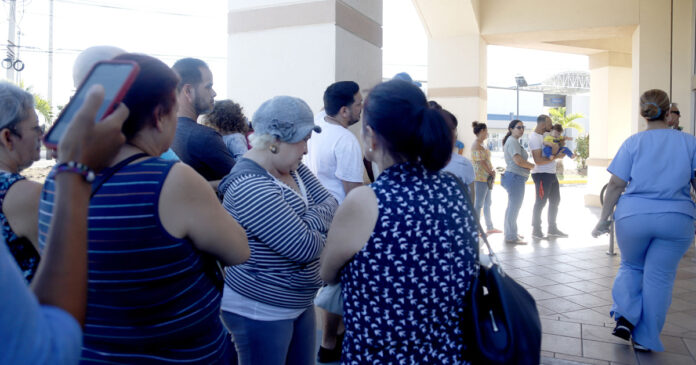
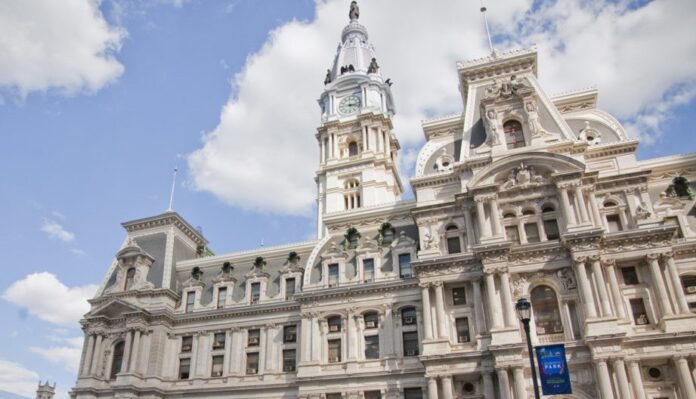
Few major voting problems were reported around the country, though there were hiccups typical of most Election Days. Some tabulators were not working in a New Jersey county. In Philadelphia, where Democrats are counting on strong turnout, people complained about being turned away as they showed up in person to try to fix problems with their previously cast mail-in ballots.

In Maricopa County, Arizona, which encompasses Phoenix and is the state’s largest county, officials reported problems with vote-tabulation machines in about 20% of voting places. That fueled anger and skepticism about voting that has been growing among some Republicans since the state went narrowly for Biden in 2020.

Voters also were deciding high-profile races for Senate or governor in places such as Pennsylvania, Nevada, Wisconsin, Arizona and Michigan. Contests also were on the ballot for secretaries of state, roles that typically generate little attention but have come under growing scrutiny as GOP contenders who refused to accept the results of the 2020 campaign were running to control the management of future elections.

In the first national election since the Jan. 6 insurrection, the country’s democratic future is in question. Some who participated in or were in the vicinity of the attack are poised to win elected office Tuesday, including several running for House seats. Concerns about political violence are also on the rise less than two weeks after a suspect under the spell of conspiracy theories targeted House Speaker Nancy Pelosi’s San Francisco home and brutally beat her 82-year-old husband.

The 2022 elections are on track to cost a projected $16.7 billion at the state and federal level, making them the most expensive midterms ever, according to the nonpartisan campaign finance tracking organization OpenSecrets.

Republicans entered the final stretch of the campaign in a strong position to retake control of at least one chamber of Congress, giving them power to thwart Biden’s agenda for the remaining two years of his term. The GOP needed a net gain of just one seat to win the U.S. Senate and five to regain the U.S. House.

All House seats were up for grabs, as were 34 Senate seats — with cliffhangers especially likely in Pennsylvania, Georgia and Arizona. Thirty-six states are electing governors, with many of those races also poised to come down to the slimmest of margins.

The dynamic was more complicated in state capitals. The GOP faced unexpected headwinds in flipping the governor’s office in conservative Kansas. Democrats, meanwhile, were nervous about their prospects in the governor’s race in Oregon, typically a liberal bastion.

In other governors’ races, Healey bested Geoff Diehl in Massachusetts and Moore beat Dan Cox in Maryland, while Illinois Gov. J.B. Pritzker defeated state Sen. Darren Bailey. Cox and Bailey were among the far-right Republicans that Democrats spent tens of millions of dollars to bolster during the primaries, betting they would be easier to beat in general elections than their more moderate rivals.

If the GOP has an especially strong election, winning Democrat-held congressional seats in places like New Hampshire or Washington state, pressure could build for Biden to opt against a reelection run in 2024. Trump, meanwhile, may try to capitalize on GOP gains by formally launching another bid for the White House during a “very big announcement” in Florida next week.

The former president endorsed more than 300 candidates in the midterm cycle and is hoping to use Republican victories as a springboard for a 2024 presidential campaign.

“Well, I think if they win, I should get all the credit. And if they lose, I should not be blamed at all. But it will probably be just the opposite,” Trump said in an interview with NewsNation.

It could be days or even weeks before races — and potentially, control of Congress — are decided. Some states with mail voting, such as Michigan, saw an increase in ballot returns compared with the 2018 midterm. Those votes can take longer to count because, in many states, ballots must be postmarked by Tuesday but might not arrive at election offices until days later. In Georgia’s Senate race, the candidates must win at least 50% of the vote to avoid a Dec. 6 runoff.

¿Cómo se vota en Estados Unidos?

Míchigan
Una votante rellena este martes su papeleta de voto en su Centro de Votación del Condado de Fairfax en Fairfax, Virginia. (Foto: EFE/Shawn Thew)

Washington. – EE. UU. celebra este martes elecciones de medio mandato, donde los problemas con las máquinas de votación en el condado clave de Maricopa (Arizona) han despertado el fantasma de las dudas sobre el proceso que ya se produjeron en los comicios presidenciales de 2020, alentadas por el expresidente Donald Trump.

EFE ha visitado el centro de votación instalado en la biblioteca Martin Luther King Jr. Memorial en Washington D.C. para conocer los detalles del proceso para sufragar.

El primero de los pasos que deben seguir los votantes consiste en identificarse y verificar su dirección de residencia, además de firmar el registro.

Tras la identificación, los electores disponen de un recibo con un código de barras que deben escanear para obtener una papeleta electrónica o física.

Tanto el voto electrónico como el físico, una vez rellenado, deben ser escaneados por una máquina que contabilizará su voto al final del proceso, aunque algunos centros electorales se habían quedado sin papeletas electrónicas a poco más de las cinco de la tarde (22.00 hora GMT).

También existe una vía para que aquellas personas que no están registradas en el sistema puedan obtener una papeleta especial, para lo que tienen que cumplimentar parte de un formulario junto al funcionario electoral y solo pueden acceder al voto en papel y no al electrónico.

Al acabar la votación, los estadounidenses pueden coger pegatinas con el lema «I voted» antes de salir de los centros para demostrar su compromiso con las elecciones del país.

Durante la jornada de este martes apenas se han registrado incidencias en EE.UU., aunque en Maricopa, el segundo mayor distrito electoral de Estados Unidos, se han producido problemas con las máquinas de votación en algunos centros.

El Departamento de Elecciones de Maricopa, que cuenta con 233 puntos de votación, anunció este martes que el 10 % de los centros estaban sufriendo problemas con las máquinas para votar.

En una rueda de prensa posterior, funcionarios electorales del condado elevaron la cifra al 20 %, lo que supondría unos 40 centros de sufragio.

Aun así, las autoridades subrayaron que los electores pueden depositar sus papeletas en una caja con seguridad y que serán contadas más tarde.

Maricopa ya fue centro de la polémica en los comicios presidenciales de 2020, donde el demócrata Joe Biden ganó por 45.000 sufragios a Trump, tras un segundo recuento de las papeletas y en medio de las denuncias infundadas de fraude por parte del segundo.

El expresidente republicano (2017-2021), que ha utilizado a lo largo de este martes su perfil en su red social, TRUTH, para hacerse eco de denuncias infundadas sobre la integridad del proceso electoral, criticó que Maricopa fuera foco de nuevo de problemas.

Power balance in Congress on ballot for Pennsylvania voters

Jeremy Shaffer, the Republican candidate for Pennsylvania's 17th Congressional District, talks after receiving the support of the Fraternal Order of Police Fort Pitt Lodge #1 in Pittsburgh, Oct. 19, 2022. (Photo: AP/Gene J. Puskar)

HARRISBURG, Pa. — Three races among Pennsylvania’s congressional delegation have taken shape as some of the closer contests in the country this year as voters decide whether to shift majority control in the U.S. House from Democrats to Republicans.

Pennsylvania’s delegation has been redistricted twice in recent years — first because of a court challenge and again as a result of the 2020 census — and the state has lost one seat in Congress this year because of its anemic population growth.

Democratic U.S. Reps. Matt Cartwright in the Scranton area and Susan Wild in the Lehigh Valley both find themselves in rematches with Republican candidates they narrowly beat two years ago.

A third competitive seat, just north of Pittsburgh, consists largely of the voters who elected Democratic U.S. Rep. Conor Lamb to Congress for the past couple terms. It became vacant for this year’s election when Lamb chose not to seek reelection in what was an ultimately failed attempt to get his party’s nomination for U.S. Senate.

Polls close at 8 p.m., although a judge in Luzerne County ordered polling places to stay open until 10 p.m. after they ran low on supplies.

As is happening across the country, Pennsylvania’s competitive congressional races have Democrats emphasizing support for abortion rights and Republicans reminding voters how inflation and other economic problems are affecting their lives.

Roughly 8 in 10 Pennsylvania voters say things in the country are moving in the wrong direction, according to AP VoteCast, an expansive survey of more than 3,100 voters in the state.

About half the state’s voters say the economy and jobs are the most important issue facing the country, according to the survey. And about 8 in 10 voters rate the nation’s economy as either not so good or poor.

The Supreme Court’s decision to overturn Roe v. Wad e also played a role in most voters’ decisions, with about 8 in 10 calling it a factor in how they cast their ballots. Only about a quarter called it the single most important factor in their vote.

Most voters say they are confident ballots will be counted accurately, according to the survey, though nearly 3 in 10 said they were either not too confident or not at all confident.

In northeastern Pennsylvania, Republicans hope conservative activist and former Trump administration official Jim Bognet will reverse his 3.6 percentage point loss to Cartwright in 2020. A flip of that seat in a region where the GOP has been making gains in recent years would resonate in Washington, given President Joe Biden spent his early childhood in Scranton.

“It’s a referendum on Biden,” Bognet campaign manager Joe Desilets said. “Especially because Cartwright is so close to him.”

Cartwright’s campaign director, Kunal Atit, calls Cartwright “the only Democrat who could hold this district,” with “cross-party appeal that has been demonstrated time and again through actual election results.”

Wild’s quest for a third term has her facing off against former Lehigh County Commissioner Lisa Scheller, head of a manufacturing business. Wild, a former Allentown city lawyer, edged Scheller by 3.7 percentage points two years ago. Redistricting added GOP-friendly Carbon County to the map.

Wild’s campaign argues Scheller has cut her U.S. workforce and sent jobs overseas, while Scheller blames Wild’s support for spending bills under Biden for voters’ economic problems.

The third competitive district, in the suburbs north of Pittsburgh and encompassing all of Beaver County, pits election lawyer Chris Deluzio, a Democrat, against Republican businessperson and former Ross Township Commissioner Jeremy Shaffer, a Republican who lost a 2018 state Senate race.

Shaffer said he would position himself in Congress as “a pragmatic, common sense problem solver” and wants term limits and nonpartisan redistricting policies. Deluzio’s campaign biography notes his involvement in the effort to establish a faculty union at the University of Pittsburgh last year.

“The union way of life is a huge thing here in western Pennsylvania,» Deluzio campaign manager Matt Koos said. “And there’s no doubt that the Dobbs decision has put abortion access at the front of voters’ minds.”

Elsewhere in the state, two Republican incumbents face no opposition this fall: Reps. Guy Reschenthaler south of Pittsburgh and John Joyce in a sprawling district that runs from Gettysburg to Johnstown.

In Pittsburgh, Democrats are concerned about potential voter confusion because the Republican running against Democratic state Rep. Summer Lee is named Mike Doyle, the same name as the city’s longtime Democratic congressman, who is retiring at the end of the year.

The version of the state’s congressional district map that was drawn after the 2010 census had been particularly friendly to Republicans, producing a durable 13-5 GOP majority until it was thrown out by the state’s Democratic-majority Supreme Court in 2018. Since then, the delegation has been evenly split between the two parties.

After the Republican-controlled Legislature and Democratic Gov. Tom Wolf deadlocked on talks to produce new districts using 2020 census numbers, the state Supreme Court in a 4-3 vote in February chose a map that had been proposed by a group of Democratic Party-aligned voters who had sued in 2021.

___

This story has been corrected to show that all Luzerne County polls were ordered to stay open until 10 p.m., instead of several allowed to stay open.

GOP hopes to keep legislative control despite new districts

Pennsylvania Capitol in Harrisburg, Pa., on April 4, 2022. Pennsylvania voters on Tuesday, Nov. 8, will send dozens of new representatives and senators to the Legislature, thanks to a slew of retirements and new district maps that were revamped by the state's redistricting commission. (Photo: AP/Matt Rourke/File)

HARRISBURG, Pa. — Pennsylvania voters on Tuesday will send dozens of new representatives and senators to the Legislature, thanks to a slew of retirements and new district maps that were revamped by the state’s redistricting commission.

Republicans hold solid leads in both chambers — 29-21 in the Senate and 113-90 in the House — and are generally expected to retain majority control of both chambers for the coming two-year session.

Democrats have not held a majority in either chamber since 2010.

The GOP is targeting pickup opportunities in rural areas outside Pittsburgh, a region that has been steadily moving away from Democrats for decades, as well as the northeast, where a similar trend has been playing out. Longtime Democratic incumbents in the House are retiring in Lackawanna, Luzerne, Greene and Mercer counties.

Democrats see a mirror image in the state’s most populous region, the Philadelphia suburbs, where their candidates have been performing better in local, state and national election cycles. In Bucks County, and in the growing Pocono Mountains region north of Philadelphia, Democratic strategists see demographic tail winds this year, along with hopes they can overcome incumbents in suburban Chester, Delaware and Montgomery counties.

Polls close at 8 p.m., although a judge in Luzerne County ordered several polling places to stay open until 10 p.m. after they ran low on supplies.

The results of redistricting were felt by sitting lawmakers in the spring primary, when some were forced into nomination races with colleagues from their own party and others lost to challengers from outside the Legislature.

Two of the most powerful Republican lawmakers in the state, House Appropriations chair Stan Saylor of York County and Senate Appropriations chair Pat Browne of Lehigh County, both lost primaries. The top-ranking state senator, President Pro Tempore Jake Corman, R-Centre, gave up his seat to run for governor but lost the primary to fellow Sen. Doug Mastriano, R-Franklin.

Mastriano has kept his seat, which doesn’t go before voters for two years, while he ran for governor against Democratic Attorney General Josh Shapiro.

All six Senate retirements this year are Republicans.

The result has been months of under-the-radar campaigning by ambitious senior Republicans to succeed the departing legislative leaders, efforts that will play out in caucus votes before year’s end. Others have been positioning themselves to fill other leadership spots that are also becoming available because of retirement and defeat.

One practical result of the legislative elections may be that Republicans, assuming they retain control of both chambers, will have the power to put on the 2023 spring ballot one or all of six potential constitutional amendments.

Those proposals would amend the state constitution to say it establishes no right to an abortion or abortion funding, to authorize election audits by the state auditor general, to let governor candidates pick their running mates, to temporarily allow otherwise outdated lawsuits over child sexual abuse, to mandate voter ID, and to reduce the governor’s power over state regulations.

Fetterman, Oz in bruising US Senate race in Pennsylvania

This combination of photos shows Pennsylvania Lt. Gov. John Fetterman, a Democratic candidate for U.S. Senate, Oct. 8, 2022, in York, Pa., left, and Mehmet Oz, a Republican candidate for U.S. Senate, Sept. 23, 2022, in Allentown, Pa. (Photo: AP/Matt Rourke/File)

HARRISBURG, Pa. — Control of the U.S. Senate could depend on whether Pennsylvanians elect Democrat John Fetterman or Republican Dr. Mehmet Oz on Tuesday, capping a bare-knuckled and extraordinary campaign for an open seat.

Fetterman, Pennsylvania’s towering and plainspoken lieutenant governor, spent much of the campaign recovering from a stroke in May, while fending off attacks by Oz that questioned whether he was honest about its effects and fit to serve.

With two weeks to go in the race, Fetterman turned in a rocky debate performance, struggling to complete sentences, jumbling words throughout the hourlong televised event and fueling concern inside his party that it damaged his chances.

To underscore the importance of the race, President Joe Biden campaigned in Pennsylvania for Fetterman three times in the final three weeks, while former President Donald Trump came in to hold a rally for Oz, his endorsed candidate.

Oz, 62, carried his own baggage into the election in the presidential battleground state. The smooth-talking and wealthy heart surgeon-turned-TV celebrity just moved from his longtime home in neighboring New Jersey — a mansion overlooking the Hudson River, just across from Manhattan — and barely won a bruising primary in which opponents cast him as an out-of-touch Hollywood liberal.

Polls show a close race, with the economy weighing heavily on voters.

Roughly 8 in 10 Pennsylvania voters say things in the country are moving in the wrong direction, according to AP VoteCast, an expansive survey of more than 3,100 voters in the state.

About half the state’s voters say the economy and jobs are the most important issue facing the country, according to the survey. And about 8 in 10 voters rate the nation’s economy as either not so good or poor.

The Supreme Court’s decision to overturn Roe v. Wade also played a role in most voters’ decisions, with about 8 in 10 calling it a factor in how they cast their ballots. Only about a quarter called it the single most important factor in their vote.

Most voters say they are confident ballots will be counted accurately, according to the survey, though nearly 3 in 10 said they were either not too confident or not at all confident.

With his “every county, every vote” slogan, the tattooed and hoodie-wearing Fetterman, 53, sought to bring the Democratic Party back to rural areas. Along the way, he vowed to be the Democrats’ “51st vote” to pass foundational legislation to protect rights to abortion, same-sex marriage, unions and voting, as well as to raise the minimum wage.

Fetterman has characterized a vote for Oz as a vote to outlaw abortion — ridiculing Oz’s comment that he wants “women, doctors, local political leaders” to decide the fate of abortion — and painted Oz as a soulless TV salesman who hawked useless health supplements for money and will say or do anything to get elected.

He also wielded a wicked social media campaign that brought in a torrent of small-dollar donations and mercilessly trolled Oz for his carpetbaggery and ultra-wealthy lifestyle, plowing new ground in how campaigns might use the medium.

Pennsylvania’s seat is coming open because second-term Republican Sen. Pat Toomey decided against seeking a third term. Polls close at 8 p.m., although a judge in Luzerne County ordered all polling places to stay open until 10 p.m. after some ran low on supplies.

Oz would be the first Muslim to serve in the U.S. Senate.

Oz, a political novice, left his lucrative daytime TV career for politics in a new state and had the help of national political headwinds against Democrats, such as rising inflation. Still, he struggled to persuade conservatives that he is one of them, while campaigning to win suburban swing voters and peel off Black and Latino voters, who lean heavily Democratic.

He relentlessly attacked Fetterman over flip-flopping on natural gas drilling and progressive stances on things like criminal justice reform. Fetterman, as lieutenant governor, had set out to free the over-incarcerated, rehabilitated or innocent. But Oz and Republicans often cast it as freeing dangerous criminals to roam the streets, distorting Fetterman’s positions in the process.

Oz also challenged Fetterman over whether he had been honest about the effects of the stroke and pressed Fetterman to release his medical records. Fetterman refused, and also refused to let his doctors answer questions from reporters.

The stroke left Fetterman occasionally stumbling over words and unable to quickly process spoken conversation into meaning, a common effect of a stroke called auditory processing disorder. Fetterman has insisted he will recover fully, but he also required closed-captioning during media interviews and the lone debate between the men.

He tried to turn his recovery into a strength, accusing Oz of trying to capitalize on his disability and saying it had made him more empathetic toward people with medical problems.

The election was the most expensive for a U.S. Senate seat in this mid-term election cycle, surpassing $300 million. Money from national groups poured in, and Oz spent more than $25 million of his own fortune on the race.

___

This story has been corrected to show that all polls in Luzerne County were ordered to stay open until 10 p.m., instead of several allowed to stay open.

At stake in Pennsylvania governor race: Abortion, presidency

This combination of photos shows Pennsylvania Democratic gubernatorial candidate state Attorney General Josh Shapiro on June 29, 2022, in Philadelphia, left, and Pennsylvania Republican gubernatorial candidate Doug Mastriano on Sept. 29, 2022, in Erie, Pa., right. (Photo: AP)

HARRISBURG, Pa. — Voters electing a new governor of Pennsylvania are choosing Tuesday between Democrat Josh Shapiro and Republican Doug Mastriano, with the future of abortion rights on the line, as well as management of the 2024 presidential election in a swing state that is often decisive.

Shapiro, the state’s two-term elected attorney general, smashed Pennsylvania’s campaign finance record in a powerhouse campaign in a year in which Democrats nationally faced headwinds, including high inflation.

Mastriano, a retired Army colonel and state senator, is a relative political novice who ran a hard-right campaign and refused for much of it to talk to mainstream news organizations, scuttling prospects for a debate with an independent moderator.

Polls suggest Shapiro is leading Mastriano, who has driven off moderate voters by being a prominent ally in former President Donald Trump’s effort to stay in power — despite his election loss in 2020 — and marching to the U.S. Capitol on Jan. 6, 2021, where he watched pro-Trump demonstrators attack police.

He struggled to raise money as he was hit with a deluge of Shapiro campaign ads but tried to counter it with an energetic campaign that relied on a passionate grassroots volunteer force and daily videos uploaded to Facebook to connect with followers.

They are vying to succeed Democratic Gov. Tom Wolf, who is constitutionally barred from seeking a third term and has endorsed Shapiro. The winner will likely share power with entrenched Republican majorities in the state Legislature.

A Shapiro victory would make him the first governor of Pennsylvania to be elected to succeed a member of his party since 1966.

Polls close at 8 p.m., although a judge in Luzerne County ordered all polling places to stay open until 10 p.m. after some ran low on supplies.

Issues including the economy and abortion rights weighed heavily on voters.

Roughly 8 in 10 Pennsylvania voters say things in the country are moving in the wrong direction, according to AP VoteCast, an expansive survey of more than 3,100 voters in the state.

About half the state’s voters say the economy and jobs are the most important issue facing the country, according to the survey. And about 8 in 10 voters rate the nation’s economy as either not so good or poor.

The Supreme Court’s decision to overturn Roe v. Wade also played a role in most voters’ decisions, with about 8 in 10 calling it a factor in how they cast their ballots. Only about a quarter called it the single most important factor in their vote.

Most voters say they are confident ballots will be counted accurately, according to the survey, though nearly 3 in 10 said they were either not too confident or not at all confident.

Mastriano, 58, has used a hard-right platform to lock down the party’s furthest-right voters, secure Trump’s endorsement and win a crammed, nine-way primary election.

Shapiro, 49, a political force strong enough to clear the Democratic primary, came into the race as the all-time highest-vote getter in a single election in Pennsylvania, breaking the record in his 2020 reelection.

With no primary challenger to force him to the left on key issues, Shapiro took middle-of-the-road positions on policies around education funding, COVID-19 mitigation and energy.

Meanwhile, he endorsed Austin Davis, a state lawmaker, to be his running mate and, possibly, the first Black lieutenant governor in a state that has never elected a Black governor or U.S. senator.

In light of June’s Supreme Court decision on abortion rights, Shapiro vowed to protect Pennsylvania’s existing 24-week law. He also touted his office’s fight in court to protect the state’s 2020 election from Trump’s efforts to overturn it.

Mastriano has said he supports a complete ban on abortion, with no exceptions, and had been a point person in Trump’s drive to stay in power and spread his lies about a stolen election.

He dwelled on some national GOP talking points — blaming crime and inflation on Democrats — but he also spread conspiracy theories and took a hard line on cultural issues.

Those stances — as well as his actions on Jan. 6 — have prompted some GOP officials to predict he was too extreme to win a general election in Pennsylvania.

Mastriano did more than any other candidate for governor in the U.S. to subvert the 2020 presidential election, and Democrats have accused him of preparing to subvert the next one from the governor’s office with his pledges to decertify voting machines and make voters re-register.

___

This story has been corrected to show that all Luzerne County polling places were ordered to stay open until 10 p.m., instead of several allowed to stay open.

Un solo ganador en EEUU se lleva premio récord de 2.040 millones en lotería

(Foto: EFE/JIM LO SCALZO)

Nueva York, EE. UU.- Un solo ganador que compró la lotería de la Powerball en California (Estados Unidos) se ha llevado el premio más alto de la historia en ese sorteo, de 2.040 millones de dólares, según anunciaron este martes las autoridades.

El bote de la Powerball, una lotería que se juega en todos los estados y territorios de EE.UU., había ascendido a cifras nunca vistas en los dos últimos sorteos porque nadie tuvo la suerte de acertar todos los cinco números y el extra de la «bola», que supone la guinda.

La Administración de Lotería de California anunció en su cuenta de Twitter que el boleto que acertó los seis números se vendió en un establecimiento de Altadena, y es la primera vez que una persona gana más de 1.000 millones gracias al juego de azar en el estado.

Este premio fue particular, ya que el sorteo debía realizarse la noche del lunes pero un fallo técnico en uno de los estados obligó a retrasarlo a esta mañana, con lo que el bote se incrementó, sobrepasando los 2.000 millones en apenas unas horas.

Pese a la espectacularidad de la cifra, el ganador solo recibirá 930 millones tras tasas e impuestos si decide cobrar su premio de inmediato, pero si lo fracciona en pagos anuales durante 29 años, podría cobrarlo en su integralidad.

La última vez que alguien acertó los seis números de la Powerball fue el 3 de agosto, cuando un afortunado que compró el boleto en Pensilvania se llevó 206,9 millones, pero su último premio histórico fue en 2016, cuando tres ganadores en California, Florida y Tennessee se repartieron 1.586 millones.

Los suburbios de EE.UU.: ¿aliado electoral o tumba para los demócratas?

(Foto: EFE/SHAWN THEW)

Warrenton, Virginia, EE. UU.– En 2020, los suburbios estadounidenses se convirtieron en un inesperado aliado del presidente Joe Biden al darle la victoria en varias circunscripciones clave; en 2022, muchos temen que se conviertan en una tumba para los demócratas.

A pocas horas de que se conozcan los resultados de las elecciones legislativas de medio mandato, los republicanos tienen al alcance de las manos el control de la Cámara de Representantes y tal vez incluso del Senado, gracias en buena parte a votaciones que tienen lugar en los suburbios de estados como Georgia, Pensilvania o Nevada.

En Pensilvania, de hecho, se libra una de las competiciones más reñidas del Senado: la que disputan el idiosincrático e indescriptible progresista John Fetterman y el popular médico televisivo «trumpista» Mehmet Oz.

Aunque un escaño parezca poca cosa, en la Cámara Alta la trascendencia es máxima. A día de hoy, los demócratas tienen una ajustadísima mayoría técnica -el voto de desempate de la vicepresidenta, Kamala Harris-, algo que los conservadores solo necesitan un representante más para cambiar.

LEJOS DE TRUMP

En Pensilvania, muchos votantes de los suburbios de Filadelfia, la ciudad más poblada del estado, se pasaron a los demócratas después de 2016, al ganar Donald Trump las elecciones presidenciales, repelidos por sus exabrutpos y declaraciones racistas.

La tendencia se ha repetido en varios suburbios del país, donde habitualmente reside la gente con educación universitaria que trabaja en las grandes ciudades.

Sin embargo, hoy por hoy, el resultado de la pugna entre Fetterman y Oz continúa siendo uno de los mayores misterios de la jornada electoral, y muchos republicanos tienen sus esperanzas puestas en que se revierta esa tendencia demócrata de los suburbios.

Las encuestas les dan la razón: según un reciente estudio publicado por The Wall Street Journal, las mujeres blancas que viven en los suburbios han pasado a preferir mayoritariamente a representantes republicanos, motivadas sobre todo por el estado de la economía, el asunto que ha copado el debate electoral.

LOS SUBURBIOS DE VIRGINIA

Este viraje conservador en los suburbios fue lo que le dio la victoria, en el estado de Virginia en 2021, al gobernador republicano Glenn Youngkin, que arrasó en varias circunscripciones que apenas un año antes habían votado a Biden.

Su estrategia: unir a los fervientes seguidores del expresidente Trump con los votantes más moderados que residen en los suburbios, preocupados de asuntos como las políticas identitarias en las escuelas o las guerras culturales.

Si bien el puesto de Youngkin no está en juego este 8 de noviembre, varios escaños clave en la Cámara Baja dependerán en gran medida de los votantes de los suburbios de Virginia, como en el distrito 2, que incluye la localidad de Virginia Beach, o el 5, donde el gobernador republicano se impuso con autoridad el año pasado.

Un paseo por el centro de votación anticipada de Fauquier County, en Virginia, (distrito 5) da una idea de las prioridades de votantes suburbanos demócratas y republicanos en media docena de entrevistas a pie de urna.

Para los progresistas, las ideas más repetidas fueron las de luchar contra la deriva autoritaria de los conservadores y salvaguardar el derecho al aborto.

Es el caso de Scott, que votará demócrata porque «la democracia es más importante que la inflación».

Kate, por su parte, cree que salvaguardar el acceso a los cuidados reproductivos es la cuestión clave de los comicios, por lo que también votará a los progresistas.

En el caso de los votantes republicanos, sin embargo, todos citaron la situación económica y en particular la alta inflación como razón para inclinarse hacia la derecha.

Así lo apuntó Mark, para quien los demócratas han sido unos pésimos gestores de la buena situación económica lograda durante la presidencia de Trump.

LOS TEMAS DE LA CAMPAÑA

La batalla por los suburbios recorre todos los problemas y reclamos del país: las preocupaciones económicas, la inseguridad ciudadana, la frontera, el aborto, el futuro de la democracia…

En Colorado, un condado poblado en un 40 % por latinos será clave para determinar un escaño de la cámara de Representantes, lo que dará una idea de la influencia del Partido Demócrata sobre los electores hispanos en un momento en que los conservadores presumen de haberse ganado su voto.

Algo similar ocurrirá en varios distritos de Texas, donde los votantes latinos serán clave para decidir la nueva composición de la Cámara de Representantes.

LOS SUBURBIOS DE MARYLAND

En Maryland, donde viven muchos de los que trabajan en las instituciones que tienen su sede en la capital estadounidense, Washington, la situación es bien diferente: los demócratas van camino de conseguir ansiadas victorias que, además, tendrán un perfil histórico.

El veterano de la guerra de Afganistán Wes Moore va camino de convertirse en el primer gobernador afroamericano del estado, mientras que su compañera electoral, Aruna Miller, sería la primera mujer de ascendencia asiática en ocupar el puesto de vicegobernadora.

Un paseo por las calles de Silver Spring, un suburbio de Maryland cercano a la capital estadounidense, arroja una visión muy diferente del votante medio a la de Virginia. Aquí la mayoría se reconoce demócrata y preocupado por la deriva antidemocrática del Partido Republicano.

Aun así, no faltan los votantes preocupados por la economía o por el aumento del crimen y la inseguridad, que hace que mujeres como Grace o Samantha, ambas de edad avanzada, se planteen votar republicano al menos en las elecciones a fiscal general del estado.