Banco Central de los Estados Unidos. (Foto: Archivo)
The recent pause by the central bank of the United States, after 10 consecutive interest rate hikes starting in March 2022, was “to assess additional information and.” Other factors, such as lower energy prices, have contributed to lower inflation since last year, from around 9 percent to close to 4 percent, still at double the central bank’s 2 percent objective.
But the economy is still strong, as indicated by the labor market, with an unemployment rate of 3.7 percent in May. Even some interest rate sensitive sectors, such as the housing market which declined last year, have regained strength this year. Also, some dire predictions about a deep recession have been heard less.
However, several authorized observers have warned that it may be premature to proclaim the end of the battle against inflation.
The President of the Federal Reserve Bank of Atlanta Raphael Bostic, who favors pausing interest rate hikes because he believes inflation can be subdued “without severe economic dislocation,” admits “further slowing in the labor market will probably be necessary.”
Other observers are more emphatic. First Deputy Managing Director Gita Gopinath of the International Monetary Fund, recently said “there is not much historical precedent … that inflation is likely to come down without much of a hit to growth.”
Finally, the Annual Economic Report 2023 of the Bank for International Settlements, the banker of the central banks, says “the ‘last mile’ may pose the biggest challenge.”
HARRISBURG, Pa. — Pennsylvania’s state Senate on Tuesday approved legislation that is designed to reduce the number of people on probation and in jail, by limiting the length of probation and preventing people from being sent back to jail for minor violations.
The bill passed on a 45-4 vote and now goes to the House of Representatives, where two similar Senate bills have died without votes in previous legislative sessions. However, with the House now controlled by Democrats, the bill’s backers said they were optimistic that it will reach Democratic Gov. Josh Shapiro’s desk.
Sen. Anthony Williams, D-Philadelphia, said the state’s probation system is in urgent need of reform.
“I can’t tell you how many generations of people have been lost to the probation process,» he said during floor debate.
The bill, which has the backing of the Senate’s Republican and Democratic leaders, has emerged as part of a nationwide reconsideration of probation and parole measures, as states try to find alternatives to prison for nonviolent offenders and the mentally ill.
Pennsylvania is among the states with the highest rates of people under community supervision, according to federal statistics.
The case of rapper Meek Mill helped shine a light on it after he spent most of his adult life on probation — including stints in jail for technical violations — before a court overturned his conviction in a drug and gun case in Philadelphia.
The bill aims to limit the length of probation sentences and the circumstances under which a non-violent offender on probation can be sent to jail. It does not, however, put a cap on the length of a probation sentence.
Under it, a judge can order an end to probation, regardless of any agreement on a sentence between a prosecutor and the defendant. Judges would also no longer have wide latitude to extend probation.
State law currently does not limit the length of probation sentences and critics say non-violent offenders are often incarcerated for technical violations that aren’t crimes, disrupting their families and employment. It also disproportionately affects racial minorities, they say.
Under the bill, probation review conferences would be required within certain periods of time, including two years for someone who committed a misdemeanor and four years for someone who committed a felony. Probation review cases can be held earlier for good behavior.
Probation would be required to end unless the defendant commits a crime that demonstrates that they are a threat to public safety, has not completed certain treatment or has not paid restitution under some circumstances.
The bill also prohibits courts from extending someone’s probation for not paying fines or court costs if they are found to be unable to afford it.
A child welfare agency in Pennsylvania failed to protect children from horrific abuse and neglect, allowing them to languish for years in homes overtaken by animal waste and garbage, a prosecutor said Tuesday as he announced criminal charges against five caseworkers.
Three caseworkers and two supervisors at Lackawanna County’s Office of Youth and Family Services in Scranton were arrested on felony charges of child endangerment and failing to report abuse, days after state authorities downgraded the county agency’s license.
The caseworkers knew that children were living in dangerous, deplorable conditions, but “instead of coming to the rescue, they chose to walk away,” said District Attorney Mark Powell. In some cases, he said, the workers “falsified reports to make it seem like everything was OK when they knew it wasn’t.»
A Lackawanna County spokesperson declined to comment on the allegations — which involve eight children in three households — or whether any reforms were planned at the child welfare agency.
In one case, police went to a house for a report of loose dogs and found what court documents described as a house of horrors: Broken windows, piles of junk, swarms of mites or fleas, walls and floors covered in animal feces and urine, and an “overwhelming smell of feces, rotten garbage, fly activity, and decay” that required an officer to use a respirator.
The children in the home, ages 9 and 10, were underfed, covered in flea bites and slept on the floor without a pillow or blankets. The younger child was not toilet trained, according to court documents.
The mother said she knew she was failing to provide a safe home for her children — and told police she’d repeatedly and fruitlessly begged the Office of Youth and Family Services for help, according to a police affidavit.
She was “desperately seeking help, tools, treatment, and services, which never came,” police said.
Last week, following an annual inspection, the Pennsylvania Department of Human Services downgraded the county’s license to provisional status and ordered it to submit a plan of correction.
In response to the state inspection, the Office of Youth and Family Services tried to shift blame to Scranton police, whom the agency accused of running a “questionably motivated criminal investigation» into its practices.
“Bad actors in the police department are routinely using threats and intimidation» to investigate the child welfare agency, county officials said in their formal response. “The investigation’s primary outcome appears to be the denigration and defamation of both individuals in the agency as well as the entire mission, vision, and practice of the agency.»
A message was left with Scranton Police Chief Thomas Carroll seeking a response to the agency’s claims.
The county agency also blamed staff shortages for some of the problems, saying it was trying to increase its ranks and take other steps to address the shortcomings identified in the state inspection.
Powell, the district attorney, said a lack of staff had nothing to do with the criminal behavior of some of the agency’s employees.
“The children in these cases didn’t fall through the cracks because OYFS was understaffed. These cases were on the agency’s radar for a long time,” said Powell, adding that referrals had come from neighbors, landlords, teachers, code inspectors, medical professionals and others.
He said the abuse and neglect that children suffered because of the agency’s indifference was “heartbreaking and unacceptable.”
The defendants were identified as Randy Ramik, 59, of Clarks Green; Bryan Walker, 51, of Eynon; Erik Krauser, 45, of Dickson City; Sadie O’Day, 34, of Scranton; and Amy Helcoski, 50, of Scranton. Each defendant was freed on $20,000 unsecured bail with an order to return to court next month.
Court documents did not list attorneys for any of the defendants. A woman who answered the phone at a number for Ramik hung up on a reporter. The other defendants could not be reached.
Los delitos de odio aumentaron un 20,2 % en California entre 2021 y 2022, reveló un informe del fiscal estatal Rob Bonta, quien solicitó a las autoridades locales prestar mayor atención en la aplicación de las leyes que castigan estos crímenes en el estado.
Los delitos de odio denunciados en California aumentaron de 1.763 incidentes en 2021 a 2.120 el año pasado, explicó la Fiscalía en su informe anual.
Los delitos por prejuicio contra los hispanos aumentaron 6,6 % al pasar de 197 en 2021 a 210 en 2022.
Los negros siguen siendo las personas que reportan más delitos de odio. En 2022 los reportes de esa comunidad aumentaron un 27,1 % al pasar de 513 incidentes reportados en 2021 a 652 un año después.
En contraste, los delitos de odio contra los asiáticos se redujeron en un 43,3 %, al pasar de 247 en 2021 a 140 reportados el año pasado.
Los delitos de odio relacionados con la orientación sexual de las personas aumentaron un 29 %, de 303 en 2021 a 391 en 2022.
Bonta dijo en un comunicado que los resultados son “un claro recordatorio” de que todavía queda mucho trabajo por hacer para combatir el odio en California.
El funcionario instó a las fiscalías locales y a los departamentos de policía a revisar los hallazgos y a “comprometerse a tomar medidas”.
«Un ataque contra uno de nosotros es un ataque contra todos nosotros. Se requiere que todos trabajemos juntos para combatir el extremismo y fomentar un entorno seguro e inclusivo para todos los californianos. Ahora más que nunca es fundamental que nos mantengamos unidos. No hay lugar para el odio en California”, puntualizó.
Robert Harris empapado de sudor mientras trabaja erigiendo una cerca en Houston el 27 de junio de 2023. (Foto AP /David J. Phillip)
La ola de calor que está agobiando a Texas, llevando al límite su red eléctrica y amenazando con provocar temperaturas récord en el estado, se extenderá a otras partes del país en los próximos días, vaticinan expertos.
“De hoy en adelante el calor se extenderá … hacia el norte hacia Kansas City y a todo el estado de Oklahoma, y al Valle del Río Mississippi… a la región noroeste de Florida y partes del oeste de Alabama”, declaró Bob Oravec, del Servicio Meteorológico Nacional.
Se prevén temperaturas récord de 43 grados centígrados (110 grados Fahrenheit) en partes del oeste de Texas el lunes y no habrá alivio antes del feriado del 4 de Julio, indicó Oravec.
Cori Iadonisi, de Dallas, lo resumió todo en pocas palabras: “Aquí está haciendo demasiado calor”.
Iadonisi, de 40 años, dice que le comenta a sus amigos que mejor se vayan a su estado de origen, el estado de Washington, durante el verano.
En Texas “no puedes salir, no puedes dar un paseo caminando”, se quejó la mujer.
¿QUÉ ES UNA CÚPULA DE CALOR?
Una cúpula de calor ocurre cuando una alta presión estacionaria con aire cálido se combina con aire cálido del Golfo de México y el calor del sol encima, explicó John Nielsen-Gammon, profesor de ciencias atmosféricas en la Universidad de Texas A&M.
“Para cuando llega la mitad del verano, es difícil hacer que el aire cálido se mueva”, dijo Nielsen-Gammon. “Si ocurre, esta es la temporada del año para que ocurra”.
Nielsen-Gammon señaló que julio y agosto no tienen tanta luz solar porque el sol se está retirando del solsticio de verano, que fue el miércoles.
“Algo que es un poco inusual en esta ola de calor es que tuvimos un abril y mayo con bastante lluvia, y usualmente esa humedad adicional sirve como aire acondicionado”, explicó Nielsen-Gammon. “Pero el aire atmosférico es tan caliente que no pudo evitar el surgimiento de esa ola de calor y, de hecho, agregó más humedad”.
El calor seguía alto por segunda semana consecutiva luego que el operador de la red eléctrica de Texas, Electric Reliability Council of Texas, le pidió a la ciudadanía reducir voluntariamente su consumo de electricidad debido a la alta demanda.
El Sistema de Información Nacional Integrada sobre Calor (conocido como NIHHIS por sus siglas en inglés), reporta que más de 46 millones de personas del oeste de Texas y el sudeste de Nuevo México hasta la región noroccidental de Florida están actualmente bajo advertencia por calor. El NIHHIS es una iniciativa conjunta entre los Centros para el Control y la Prevención de Enfermedades y la Oficina Nacional de Administración Oceánica y Atmosférica.
La ola de calor ocurre luego que el domingo unas tormentas mataron a tres personas y dejaron a más de 100.000 sin electricidad en Arkansas, Tennessee, Georgia, Mississippi y Luisiana, según poweroutage.us.
Hace pocos días, el condado más poblado de Oregon presentó una demanda por 1.500 millones de dólares contra más de una docena de compañías de combustibles para compensar los costos relacionados con fenómenos climáticos ligados al calentamiento global, incluyendo una cúpula de calor en 2021.
El condado Multnomah, donde está Portland y donde usualmente el clima es más bien templado, alega que la contaminación combinada de las compañías fue un factor en las altas temperaturas que mataron a 69 personas en ese condado.
Theodore J. Boutrous Jr., abogado de Chevron Corp., declaró en un comunicado que la demanda “presenta aseveraciones inéditas e infundadas”.
¿CUÁLES SON LAS REPERCUSIONES PARA LA SALUD?
El calor extremo puede ser particularmente peligroso para poblaciones vulnerables como niños, ancianos y quienes trabajan en exteriores.
Los síntomas de insolación incluyen sudor prodigioso, náuseas, mareos y desmayos. Para evitar los efectos de calor extremo se recomienda beber líquidos fríos, colocar sobre la piel pañuelos mojados con agua fría y permanecer en espacios con aire acondicionado.
Cecilia Sorensen, médica y profesora asociada de ciencias ambientales en el Centro Médico de la Universidad de Columbia, dice que los problemas de salud asociados con el calor están en aumento debido al calentamiento atmosférico.
“Hay enormes problemas en Texas ahora mismo debido a la escasez de energía y la combinación de crisis climáticas”, aseveró Sorensen. “Este también es uno de esos ejemplos en que, si tienes los medios económicos para tener un aire acondicionado, estarás en mejores condiciones, lo que abre interrogantes sobre la desigualdad social relacionada con clima y salud”.
En Texas, las temperaturas diarias promedio han aumentado en 2,4 grados — 0,8 grados por década — desde 1993, según la Oficina Nacional de Administración Oceánica y Atmosférica, en medio de inquietudes sobre el cambio climático causado por la actividad humana.
Denver (CO).– El Consejo Municipal de Denver votó este lunes por unanimidad a favor de la creación del primer Distrito Histórico Cultural enfocado en la comunidad méxico-americana, mexicana y latina, que en la actualidad representa casi un tercio de la población de la capital de Colorado.
El proyecto, impulsado por la conceja Amanda P. Sandoval (Distrito 1), se centra en el Parque La Raza, en el noroeste de Denver, un sector donde la mitad de los residentes son de origen hispano.
Sandoval explicó en un comunicado que, aunque Denver ya cuenta con dos distritos históricos y culturales, este es el primer distrito “que reconoce el deseo de la comunidad (hispana) de reconocer el significado cultural del parque”.
Las gestiones para la creación del distrito comenzaron luego de que la División de Preservación de Sitios Históricos de Denver recientemente concluyera el primer estudio en la historia de la ciudad (fundada en 1858) sobre el Contexto Histórico de Latinos/Chicanos en Denver.
El estudio sugirió que el centro del nuevo distrito fuese el Parque de La Raza por los elementos presentes en ese espacio verde, incluyendo la Plaza de La Raza, el mural “El Viaje” por el artista local David Ocelotl García y la escultura “La Raza Unida” por el renombrado escultor Emanuel Martínez. Y es el único lugar de Denver con un kiosko mexicano (pabellón cubierto en el centro de la plaza).
Además, en ese parque se celebran eventos comunitarios propios de los latinos, como el Día de la Raza, el Día de los Muertos y, hace pocos días, Xupantla (el solsticio de verano). Pero durante varias décadas (especialmente durante las décadas de 1970 y 1980), allí se realizaron numerosas movilizaciones del Movimiento Chicano.
En aquella época, la zona noroeste de Denver carecía de centros recreativos y las piscinas públicas no siempre estaban abiertas a los hispanos. De hecho, la única alberca del área fue cerrada por falta de mantenimiento hace unos 40 años, sin planes de reabrirla.
“El Parque de La Raza ha sido el corazón palpitante de generaciones de habitantes de Denver. La importancia del parque trasciende sus características físicas y realmente ha llegado a representar a las comunidades latinas y chicanas más amplias de la zona norte de Denver y de toda la ciudad”, expresa la petición (iniciada por Sandoval) para la creación del nuevo distrito.
“Me gustaría agradecer a quienes nos precedieron y lucharon por nuestros derechos chicanos y me ayudaron a guiarme a través del cambio de nombre del parque y de esta designación histórica cultural. ¡Que Viva La Raza!”, comentó Sandoval.
En 2022 comenzó un proyecto de renovación de la zona de juegos y de otras mejoras de infraestructura. Por su parte, Sandoval y otros dirigentes hispanos impulsarán otros reconocimientos para el nuevo distrito, como que el Parque de La Raza sea designado tanto como sitio histórico de derechos civiles y como sitio histórico nacional.
Según el Buró del Censo, en Denver residen unas 711.000 personas, con unos 211.000 hispanos.
Pennsylvania Will Receive $1.16 Billion in New Federal Funding to Expand Affordable, High-Speed Internet Access Across the Commonwealth
Harrisburg, PA – Governor Josh Shapiro announced the Commonwealth would receive more than $1.16 billion in federal funding to expand broadband in unserved and underserved areas to ensure every Pennsylvanian has access to affordable, high-speed internet. The funding is coming to Pennsylvania through the federal Broadband Equity, Access, and Deployment (BEAD) Program and is part of President Biden’s “Internet for All” initiative.
The BEAD funding will extend broadband infrastructure to areas of the Commonwealth that currently lack access to reliable, high-speed internet. Thanks to this significant investment, the Shapiro Administration will now have the resources to connect Pennsylvanians to the internet and ensure they can attend school, start and grow businesses, and access telemedicine anywhere they live.
Since day one, Governor Shapiro has said extending and expanding access to broadband across the Commonwealth and making connections more reliable and affordable for Pennsylvanians is a top priority of his Administration.
“By expanding access to affordable, high-speed internet to every Pennsylvanian, we can create real opportunities for our students, businesses, and communities to learn, grow, and thrive,” said Governor Josh Shapiro. “Thanks to this historic investment from the federal government, my Administration has the resources to work with our community partners across the Commonwealth to bring reliable internet at high speeds and for affordable prices to every corner and every community in the Commonwealth.”
The $1.16 billion in BEAD funding to the Commonwealth will be administered by the Pennsylvania Broadband Development Authority (Authority), an independent, bipartisan agency created by law in December 2021.
“We’re thrilled the Commonwealth is receiving this historic allocation — we’ve worked hard over the last year to ensure Pennsylvania received the funding it needs to address the connectivity issues impacting our communities finally,” said Brandon Carson, Executive Director of the Pennsylvania Broadband Development Authority. “Everyone in the Commonwealth should have access to affordable, high-speed internet, and the Authority is committed to making that a reality.
In preparation for this announcement, the Authority worked with Penn State Extension to identify more than 50,000 locations in Pennsylvania that lack access to high-speed internet but weren’t included in the federal government’s initial survey. So far, the Federal Communications Commission (FCC) has upheld more than 28,000 of those challenges, making those locations eligible for federal BEAD funding and helping ensure Pennsylvania received its share of the BEAD funding.
The Authority is now working to complete a five-year action plan for Pennsylvania’s BEAD allocation, which must be submitted to the National Telecommunications and Information Administration (NTIA) by August 12, 2023. Pennsylvania will receive the BEAD funding in 2024 following the NTIA’s plan approval. The Authority plans to award subgrants to approved, eligible applicants before the end of 2024.
This past Friday, the Authority encouraged Pennsylvanians to participate in community engagement events around the Commonwealth throughout the summer. Feedback will be collected from these events and an online survey to help shape broadband programs, including the five-year BEAD action plan.
Pennsylvania has received more than $1.5 billion in federal funding allocations for its broadband efforts. In addition to the BEAD funding, Pennsylvania also received $279 million in funding through the Capital Projects Fund and $6.6 million in federal planning funds in 2022.
Visit the Pennsylvania Broadband Development Authority’s website to learn more about its work to close the digital divide in the Commonwealth.
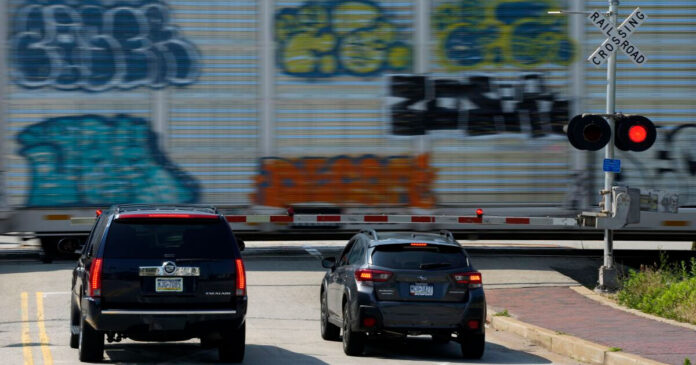
A CSX freight train rolls through a crossing in Homestead, Pa., Sunday, June 18, 2023. Spurred on by train derailments, some states with busy criss-crossing freight railroads are pursuing their own safety remedies rather than wait for federal action amid industry opposition and questions about whether they even have authority to make the changes. (Photo: AP/Gene J. Puskar)
HARRISBURG, Pa. — Spurred on by train derailments, some states with busy criss-crossing freight railroads are pursuing their own safety remedies rather than wait for federal action amid industry opposition and questions about whether they even have authority to make the changes.
Legislatures in at least a dozen states have advanced measures in recent weeks, including some in states such as Minnesota that have witnessed disruptive derailments.
Some of the new requirements include provisions long resisted by the railroad industry. It contends it’s capable of making improvements and that its growing efficiency — including significantly longer trains and a much smaller workforce — doesn’t compromise safety.
In large part, states want limits on the length of trains that routinely stretch more than 2 miles long and on how much time trains can block road crossings — which can disrupt traffic and block emergency response vehicles.
Freight cars sit in Norfolk Southern’s Conway Terminal in Conway Pa., Saturday, June 17, 2023. Spurred on by train derailments, some states with busy criss-crossing freight railroads are pursuing their own safety remedies rather than wait for federal action amid industry opposition and questions about whether they even have authority to make the changes. (Photo: AP/Gene J. Puskar)
They are also pursuing rules to maintain the current standard of two-person crews, bolster the trackside detectors used to identify equipment problems and require more notice to local emergency responders about hazardous freight.
The railroads argue that the industry’s overall safety record has been improving even as trains have grown longer and crew sizes shrank over the decades. So Norfolk Southern CEO Alan Shaw said in an interview that he doesn’t think it makes sense to regulate those areas.
“We’re going to follow the science and we’re going to follow the data,” Shaw said. “We’re looking for investments in safety that are going to drive favorable outcomes.”
And the state efforts to regulate rail are fraught with legal uncertainty over whether only the federal government can enforce such requirements. And Congress and federal regulators are considering similar measures.
Ohio moved quickly, with the Republican-controlled government enacting a new law within two months of the Norfolk Southern train derailment in East Palestine.
The evacuation from the fiery crash extended into Pennsylvania, where the state House of Representatives approved a wide-ranging safety bill in early June.
The sponsor, Rep. Rob Matzie, a Democrat whose western Pennsylvania district is home to a major rail freight handling hub, said he is satisfied with the state’s legal standing.
Norfolk Southern locomotives are moved in Norfolk Southern’s Conway Terminal in Conway, Pa., Saturday, June 17, 2023. Spurred on by train derailments, some states with busy criss-crossing freight railroads are pursuing their own safety remedies rather than wait for federal action amid industry opposition and questions about whether they even have authority to make the changes. (Photo: AP/Gene J. Puskar)
He said he is sick of hearing that the East Palestine derailment is an isolated incident, that the rail companies are making improvements or that the federal government will order safety improvements.
“It’s now time for this state to act,” Matzie told colleagues during floor arguments. “We can’t wait for federal regulations, which always seem to be in the works, but never quite get done. Or for federal laws that will never ever see the light of day.»
States maintain that Congress long ago gave them the authority to regulate aspects of rail safety that federal regulations don’t cover and that courts require federal law to be clear about when that responsibility rests exclusively with a federal agency.
Railroads, however, argue that federal law broadly gives federal agencies exclusive jurisdiction to regulate rail transportation and that state laws ostensibly aimed at rail safety often do not actually improve safety.
Prior experiences haven’t exactly inspired confidence that the federal government will act quickly.
For instance, a 2008 law requiring the deployment of positive train control systems — equipment designed to prevent train-to-train collisions, over-speed derailments and other accidents — wasn’t fully implemented until almost 2021.
Then in 2018, then-President Donald Trump’s administration dropped a proposed rule that would have required trains hauling highly flammable liquids like crude oil to be fitted with advanced braking systems.
Two rail union officials — Jason Doering and Matt Parker — who have both lobbied for legislation in Nevada for years said it’s important for states to act because they’re not optimistic that Congress will pass meaningful reforms over the strong lobbying of the railroads in a polarized political climate. Plus, they said “the federal government’s approach to rail safety has historically been more reactionary than proactive.”
The Norfolk Southern derailment in East Palestine spurred legislation in Congress that advanced out of committee in the Democratic-controlled Senate, but its future in that chamber — not to mention the Republican-controlled House — is uncertain amid industry opposition.
Sen. Sherrod Brown, an Ohio Democrat who is a lead sponsor, said earlier this month that they are still trying to line up support and predicted “pressure by the rail lobby and, frankly, from some Republican leaders to weaken or kill the bill.”
Even though government data shows that derailments have declined in recent years, there were still 1,049 of them last year — roughly three a day. More than three quarters of them happen at slow speeds in railyards and don’t cause significant damage.
The industry contends that it remains the safest way to transport hazardous materials over land. Norfolk Southern and all the major railroads have announced steps to improve safety— such as by installing more trackside detectors that railroads use to spot problems and prevent derailments — though regulators and lawmakers have urged them to do more.
Norfolk Southern locomotives are moved in Norfolk Southern’s Conway Terminal in Conway, Pa., Saturday, June 17, 2023. Spurred on by train derailments, some states with busy criss-crossing freight railroads are pursuing their own safety remedies rather than wait for federal action amid industry opposition and questions about whether they even have authority to make the changes. (Photo: AP/Gene J. Puskar)
Investigators are still working to determine exactly what caused the East Palestine derailment. In a preliminary report, they said the likely cause was an overheating bearing on one of the railcars — but wasn’t flagged by a trackside detector early enough to prevent an accident.
Joseph L. Schofer, a retired professor of civil and environmental engineering from Northwestern University, said some rules being proposed at the state and federal level — for instance, minimum crew size — have nothing to do with the East Palestine derailment because that train actually had three people in its crew.
He also said state-to-state rules will result in chaos.
“What one state does to regulate the industry will have impacts on all states,” Schofer said. “Logically we ought to be able to establish a comprehensive, integrated rule set, based on a firm understanding of the rail industry as an integrated whole.”
Some bills were percolating before the East Palestine derailment.
In March, Utah Gov. Spencer Cox signed legislation creating an Office of Rail Safety, with backers citing disputes with railroads over widening roads at hundreds of rail crossings, but also derailments there.
“This is the most substantive state safety bill for my industry in over 50 years,” a union representative, Danny Brewer, told lawmakers at a February hearing.
The new law empowers state employees to take over the safety inspections otherwise performed by federal inspectors, and also to scrutinize rail crossings and seek federal penalties for trains blocking highway crossings without justification.
New York is advancing wide-ranging legislation that includes standards for more safety equipment after Gov. Kathy Hochul called for rail safety measures, citing the East Palestine derailment.
In Minnesota, Gov. Tim Walz signed a bill that requires railroads to promptly provide information to public safety agencies about hazardous materials being transported.
Norfolk Southern locomotives are moved in Norfolk Southern’s Conway Terminal in Conway, Pa., Saturday, June 17, 2023. Spurred on by train derailments, some states with busy criss-crossing freight railroads are pursuing their own safety remedies rather than wait for federal action amid industry opposition and questions about whether they even have authority to make the changes. (Photo: AP/Gene J. Puskar)
The Kansas Senate approved a bill to limit trains to 8,500 feet, but it is sitting in a House committee at least until the session resumes in January. Gov. Laura Kelly supports it, her office said.
Some measures have hit roadblocks.
In Nevada, Republican Gov. Joe Lombardo vetoed legislation passed by the Democratic-controlled Legislature on party-line votes that would have capped train length at 7,500 feet. Lombardo said in his veto message that the bill was a “policy overreach” and possibly unconstitutional.
In Pennsylvania, the House-approved bill faces doubters in a Republican-controlled Senate where top Republicans suggest that it goes beyond state enforcement powers.
“There’s some concern that what the House passed lacks enforceability,” Senate Majority Leader Joe Pittman, a Republican, said in an interview. «And I don’t think we’re ever well-served to pass bills that can’t have proper enforcement.”
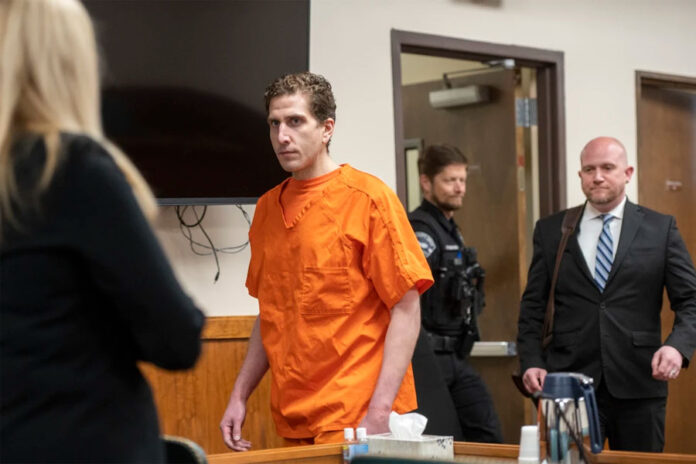
Bryan Kohberger enters the courtroom for his arraignment hearing in Latah County District Court, May 22, 2023, in Moscow, Idaho. Prosecutors say they are seeking the death penalty against Kohberger, the man accused of stabbing four University of Idaho students to death in November 2022. Latah County Prosecutor Bill Thompson filed the notice of his intent to seek the death penalty in court on Monday, June 26. (Photo: AP/Zach Wilkinson/The Moscow-Pullman Daily News/File)
Boise, Idaho. — Prosecutors say they are seeking the death penalty against a man accused of stabbing four University of Idaho students to death late last year.
Bryan Kohberger, 28, is charged with four counts of murder in connection with the deaths at a rental house near the Moscow, Idaho, university campus last November. Latah County Prosecutor Bill Thompson filed the notice of his intent to seek the death penalty in court on Monday.
A not-guilty plea was entered in the case on Kohberger’s behalf earlier this year. A hearing in the case is scheduled for Tuesday.
The bodies of Madison Mogen, Kaylee Goncalves, Xana Kernodle and Ethan Chapin were found on Nov. 13, 2022, at a rental home across the street from the University of Idaho campus. The slayings shocked the rural Idaho community and neighboring Pullman, Washington, where Kohberger was a graduate student studying criminology at Washington State University.
Police released few details about the investigation until after Kohberger was arrested at his parents’ home in eastern Pennsylvania early Dec. 30, 2022. Court documents detailed how police pieced together DNA evidence, cellphone data and surveillance video that they say links Kohberger to the slayings.
Investigators said traces of DNA found on a knife sheath inside the home where the students were killed matches Kohberger, and that a cellphone belonging to Kohberger was near the victims’ home on a dozen occasions before the killings. A white sedan allegedly matching one owned by Kohberger was caught on surveillance footage repeatedly cruising past the rental home around the time of the killings.
But defense attorneys have filed motions asking the court to order prosecutors to turn over more evidence about the DNA found during the investigation, the searches of Kohberger’s phone and social media records, and the surveillance footage used to identify the make and model of the car. The motions are among several that will be argued during the hearing Tuesday afternoon.
In an affidavit filed with the motions, defense attorney Anne Taylor said prosecutors have only provided the DNA profile that was taken from traces found on the knife sheath, not the DNA profiles belonging to three other unidentified males that were developed as part of the investigation.
Defense attorneys are also asking for additional time to meet case filing deadlines, noting that they have received thousands of pages of documents to examine, including thousands of photographs, hundreds of hours of recordings, and many gigabytes of electronic phone records and social media data.
Idaho law requires prosecutors to notify the court of their intent to seek the death penalty within 60 days of a plea being entered. In his notice of intent, Thompson listed five “aggravating circumstances” that he said could qualify for the crime for capital punishment under state law; including that more than one murder was committed during the crime, that it was especially heinous or showed exceptional depravity, that it was committed in the perpetration of a burglary or other crime, and that the defendant showed “utter disregard for human life.”
If a defendant is convicted in a death penalty case, defense attorneys are also given the opportunity to show that mitigating factors exist that would make the death penalty unjust. Mitigating factors sometimes include evidence that a defendant has mental problems, that they have shown remorse, that they are very young or that they suffered childhood abuse.
Idaho allows executions by lethal injection. But in recent months, prison officials have been unable to obtain the necessary chemicals, causing one planned execution to be repeatedly postponed. On July 1, death by firing squad will become an approved back-up method of execution under a law passed by the Legislature earlier this year, though the method is likely to be challenged in federal court.
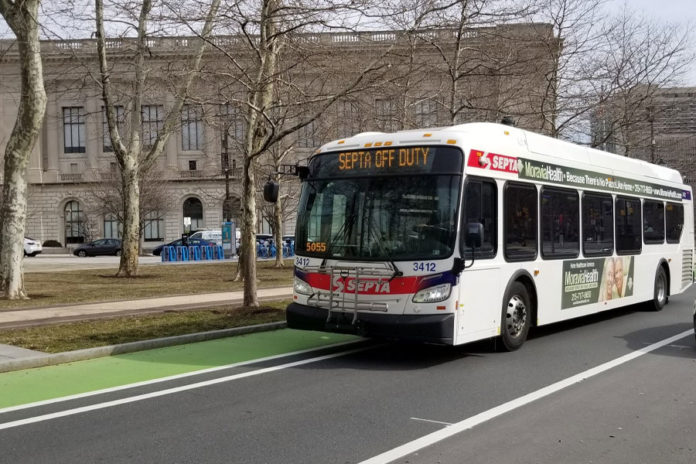
Today, the U.S. Department of Transportation’s Federal Transit Administration (FTA) announced 130 awards totaling nearly $1.7 billion from President Biden’s Bipartisan Infrastructure Law for transit projects in 46 states and territories. This funding invests in more than 1,700 American-built buses that will be manufactured with American parts and labor. Nearly half of these buses will be zero-emission models, bringing the total number of zero-emission transit buses funded by the Bipartisan Infrastructure Law over two years to more than 1,800 – and more than doubling the number of zero-emission transit buses on America’s roadways. Many of the grant recipients have pledged to buy standardized buses and vans and avoid customization, which will result in faster delivery and lower costs.
In addition to investing in the future of transit, the awards announced today also invest in America’s workers. Twenty-two of the funded projects will operate with project labor agreements to ensure their efficient and timely completion, and 34 projects have committed to the gold standard model of registered apprenticeship, with supportive services such as childcare for employees. In addition, the zero-emission bus grants include millions of dollars in funding for workforce programs that will train today’s internal combustion mechanics to become tomorrow’s electric motor technicians. and the projects will include millions of dollars in funding for workforce programs that help transition today’s diesel mechanics to tomorrow’s electric motor technicians. The awards announced today are part of President Biden’s Investing in America agenda, which is rebuilding our nation’s infrastructure and creating a manufacturing and innovation boom powered by good-paying jobs that grow the American economy from the bottom up and middle out.
“Every day, over 60,000 buses in communities of all sizes take millions of Americans to work, school, and everywhere else they need to go,” said U.S. Transportation Secretary Pete Buttigieg. “Today’s announcement means more clean buses, less pollution, more jobs in manufacturing and maintenance, and better commutes for families across the country.”
Today’s investment is the second bus grant package funded by President Biden’s signature Bipartisan Infrastructure Law, which has now invested more than $3.3 billion in American transit buses and the infrastructure that supports them. Over the next three years, record funding for American transit investment secured under President Biden’s leadership will provide almost $5 billion more.
“Today, we are creating new opportunities to dramatically improve the lives of millions of Americans who ride on buses every day,” said FTA Administrator Nuria Fernandez. “Thanks to the President’s Bipartisan Infrastructure Law, these grants will help deliver a cleaner and more modern mode of transportation, designed to reach everyone, and to work for everyone, particularly in places that haven’t received enough resources in the past.”
Federal support for bus projects over the last several years has been instrumental in moving people and helping communities advance toward their climate goals. For example, Sun Tran in Tucson added five electric buses in 2021 with help from an FTA bus grant. The agency now has 10 electric buses on the road and plans to transition to a fully zero-emission fleet by 2050. By replacing diesel buses, Sun Tran has decreased greenhouse gas emissions by nearly 230,000 pounds per year and reduced noise pollution.
Examples of projects selected to receive FY 2023 funding include:
The Washington Metropolitan Area Transit Authority (WMATA) will receive $104 million to convert its Lorton, VA, bus garage to a fully electric facility, buy approximately 100 battery-electric buses, and develop a workforce training program for drivers, mechanics, and first responders to ensure safe and efficient operations of the fleet. This project will support WMATA’s plans to accelerate its transition to a 100-percent zero-emission bus fleet and create good paying construction jobs, which will be supported through a project labor agreement and registered apprenticeships.
King County Metro Transit in Seattle, Washington, will receive $33.5 million to buy approximately 30 battery-electric buses and charging equipment and train workers to maintain the electric fleet. The project will convert 27 bus routes that serve low-income areas and expand Metro’s apprenticeship program, including promoting transit careers for residents in underserved communities.
The Ohio Department of Transportation will receive $29.3 million to help 10 transit agencies serving both rural and urban communities buy dozens of low- or no-emission buses that will replace older vehicles. The agencies will expand their fleets to support essential services, train workers in good-quality careers, and begin the decarbonization transition for several of Ohio’s major transit systems. The new battery electric, CNG, and propane powered buses supported by this grant will provide better reliability, improve air quality, and lower maintenance costs across the state.
Iowa City, Iowa will receive nearly $23.3 million to buy four electric buses to replace older diesel vehicles that have exceeded their useful life and to replace its operations and maintenance facility, originally constructed in the 1980s. The project will improve transit system conditions, create more reliable and reduce greenhouse gas emissions.
The Seneca Nation of Indians in Western New York will receive nearly $6 million to replace an outdated maintenance facility with a new building that will serve as an operations hub for the Seneca Nation Department of Transportation, including the Seneca Transit System (STS). The building, which will allow STS to store and maintain transit buses, will serve as the jumping-off point for services in five New York counties.
The projects announced today are supported by FTA’s Grants for Buses and Bus Facilities and Low- and No-Emission (Low-No) Vehicle programs. The Buses and Bus Facilities program provides federal funding for transit agencies to buy and rehabilitate buses and vans and build and modernize bus facilities. The Bipartisan Infrastructure Law provides nearly $2 billion through FY 2026 for the program. For FY 2023, approximately $473 million for grants was available under this program.
FTA’s Low-No program makes funding available to help transit agencies buy or lease American-built low- or zero-emission vehicles, including buses and vans; make facility and station upgrades to accommodate low- or zero-emission vehicles; and purchase supporting equipment like chargers for battery electric vehicles. The Bipartisan Infrastructure Law provides $5.5 billion through FY 2026 for the Low-No Program – more than six times greater than the previous five years of funding combined. For FY 2023, approximately $1.22 billion was available for grants under this program.
For recipients of funding for zero-emission projects, free technical assistance by the Joint Office of Energy and Transportation is available to support transit agencies’ shift to low- or zero-emission transit vehicles. For more information, visit RideElectric.gov.
In response to the Notice of Funding Opportunity, FTA received 475 eligible project proposals totaling approximately $8.7 billion in requests.