La actriz puertorriqueña Rita Moreno a su llegada a la ceremonia de los Óscar. EFE/ALLISON DINNER
La actriz puertorriqueña Rita Moreno afirmó que la representación latina en la industria cinematográfica es «aún insuficiente» y que debe ser esta comunidad quien luche por visibilizarse porque «nadie» lo hará por ella.
«La representación (latina) es aún insuficiente. Eso me entristece, deberíamos estar mucho mejor y tener más visibIlidad de la que tenemos. Esto es chocante, pero depende de nosotros mismos cambiar las cosas porque nadie de fuera nos va a ayudar en esto», explicó Moreno en declaraciones a EFE este domingo a su paso por la alfombra roja de la 96 edición de los Óscar.
La primera latina de la historia en ganar un Óscar, por su papel de Anita en el musical ‘West Side Story’ (1961), también aprovechó para mostrarle su apoyo a mujeres hispanas nominadas como America Ferrera, quien se postula a mejor intérprete de reparto por ‘Barbie’: «Deseo que tengan mucha suerte».
Asimismo, la también celebridad EGOT, como se conoce a los ganadores durante su carrera de un premio Emmy, Grammy, Óscar y Tony, quiso mostrar su descontento ante la «exposición negativa» que se hace de las mujeres en la alfombras rojas.
«Todo el mundo luce genial hoy, pero tengo que decir que hay una cosa que sigue estando mal. Continúa habiendo una exposición negativa de las mujeres en la alfombra roja. Eso es muy triste», concluyó.
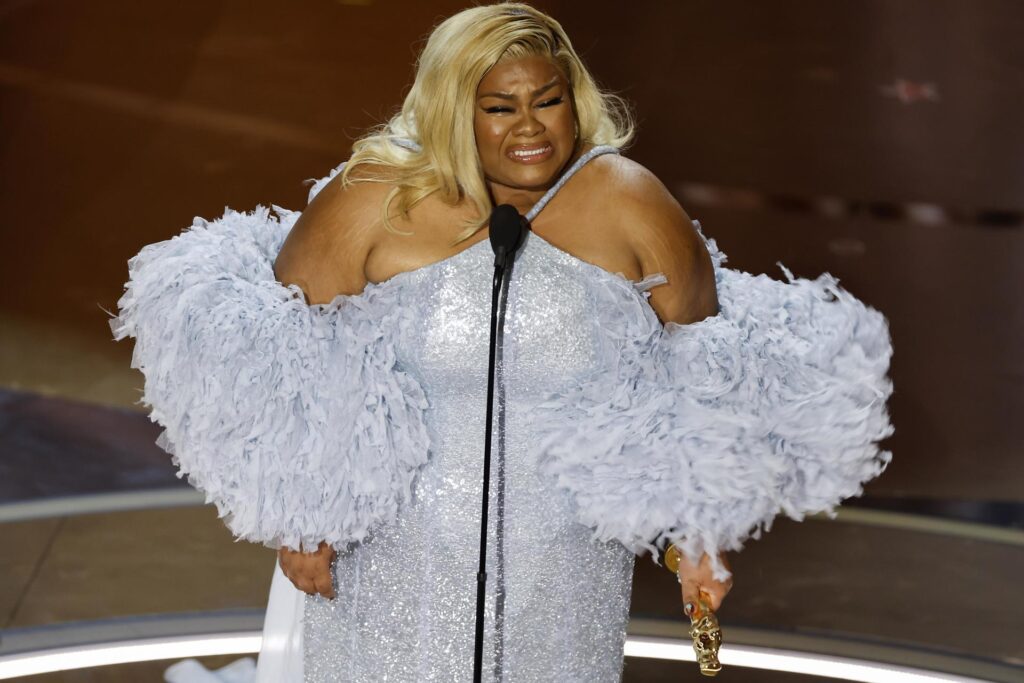
Da'Vine Joy Randolph llega a los Oscar el domingo 10 de marzo de 2024, en el Teatro Dolby en Los Ángeles. (AP Photo/Ashley Landis)
La estadounidense Da’Vine Joy Randolph cumplió con los pronósticos y ganó el Óscar en la categoría de Oscar como Mejor Actriz de Reparto. por su papel en ‘The Holdovers’ durante la 96 edición de los premio de la Academia de Hollywood.
Da’Vine Joy Randolph, oriunda de Mt. Airy y exalumna de la Universidad de Temple, su actuación en “The Holdovers” le ha valido el reconocimiento, con el Globo de Oro y el Premio Critics Choice.
Randolph ganó el domingo la estatuilla a la mejor actriz de reparto por su interpretación como la encargada de la cafetería de un internado de Nueva Inglaterra que lidia con el duelo y la pérdida. El Oscar culminó la temporada en la que se impuso en los Premios del Sindicato de Actores de la Pantalla (SAG), los BAFTA de la Academia Británica de Cine y Globos de Oro.
Randolph agradeció a Dios, a su publicista, y a todos los que cryeron en ella. Ella obtuvo una nominación al Tony en 2012 por “Ghost The Musical” y sus papeles cinematográficos incluyen “Dolemite Is My Name” (“Yo soy Dolemite”) y “The United States vs. Billie Holiday” (“Los Estados Unidos contra Billie Holiday”). En la pantalla chica, estuvo en “Empire” y “Only Murders in the Building”.
Para su victoria, Randolph venció a Emily Blunt de “Oppenheimer”, Danielle Brooks de “The Color Purple” (“El color púrpura”), America Ferrera de “Barbie” y Jodie Foster en “Nyad”.
Da’Vine Joy Randolph celebra tras ganar un Óscar, este 10 de marzo de 2024, en el Dolby Theatre de los Ángeles, durante la edición 96 de los Premios de la Academia. EFE/ Caroline Brehman
Philadelphia Eagles defensive tackle Fletcher Cox (91) leaves the field after an NFL wild-card playoff football game against the Tampa Bay Buccaneers, Monday, Jan. 15, 2024, in Tampa, Fla. Eagles six-time Pro Bowl defensive tackle Cox announced his retirement on Sunday, March 20, 2024. (Photo: AP/Phelan M. Ebenhack/File)
PHILADELPHIA. — Philadelphia Eagles six-time Pro Bowl defensive tackle Fletcher Cox announced his retirement on Sunday.
Cox, a first-round pick in 2012, played all 12 of his seasons in Philadelphia and holds the franchise record for sacks (70) by a defensive tackle, trailing only Reggie White, Trent Cole, Clyde Simmons and Brandon Graham in career sacks.
He joins six-time All-Pro center Jason Kelce in retirement. Graham signed a one-year deal on Saturday to return to the Eagles for his 15th season.
“I fulfilled a lifelong dream by making it to the NFL. But what I didn’t know at the time was how much of an honor and privilege it would be to represent the city of Philadelphia and the Eagles organization for the next 12 seasons,” Cox wrote on Instagram.
Cox was selected No. 12 overall in 2012 in Andy Reid’s last season in Philadelphia. He helped the Eagles beat Tom Brady and the New England Patriots in the Super Bowl following the 2017 season and had his best year in 2018 when he was a first-team All-Pro.
“What made Fletcher truly special is that his influence extends even further behind the scenes,” Eagles owner Jeffrey Lurie said in a statement. “The six-time team captain was a key figure in establishing a championship culture in our building. As nasty as he was on the field, he was a master of his craft while also serving as a big brother and mentor to so many young players over the years.
“He had a tremendous amount of respect for the game of football and the legacy he would one day be leaving behind, and that was reflected in the way he set the standard every single day whether on the practice field or in the locker room. That standard will live on for many years thanks to his leadership and the respect he earned from everyone in the building.”
Gavinn McKinney died of fentanyl poisoning at a friend’s house in December 2021. McKinney was part of the Thunder Clan of the Citizen Potawatomi Nation. He also had Kickapoo and Assiniboine heritage. (Trennie Burch)
Gavinn McKinney amaba las zapatillas Nike, los fuegos artificiales y el sushi. Estudiaba Potawatomi, uno de los idiomas de sus ancestros nativos americanos. Le encantaba cargar a su sobrina y oler su aroma de bebé. En su cumpleaños número 15, el adolescente de Durango, Colorado, pasó una tarde fría de diciembre cortando leña para ayudar a vecinos que no podían pagar para tener calefacción en sus hogares.
McKinney casi llegó a su cumpleaños 16. Murió a causa de envenenamiento por fentanilo en casa de un amigo en diciembre de 2021. Sus amigos dicen que era la primera vez que probaba drogas duras.
A su servicio fue tanta gente que algunos tuvieron que quedarse fuera de la funeraria.
Ahora, sus compañeros están tratando de cimentar el legado de su amigo en una ley estatal. Recientemente testificaron ante legisladores estatales en apoyo a un proyecto de ley que ayudaron a redactar para asegurar que los estudiantes puedan llevar naloxona consigo en todo momento sin miedo a que sea confiscada o a ser sancionados.
Los distritos escolares tienden a tener políticas estrictas sobre medicamentos. Sin un permiso especial, los estudiantes de Colorado ni siquiera pueden llevar sus propias medicinas de emergencia, como un inhalador, y no se les permite compartirlas con otros.
“Nos dimos cuenta de que realmente podríamos lograr un cambio si nos esforzábamos de corazón”, dijo Niko Peterson, estudiante de último año en Animas High School en Durango y uno de los amigos de McKinney que ayudó a escribir el proyecto de ley. “Ser proactivo en lugar no hacer nada va a ser la mejor solución posible”.
Algunos distritos escolares o condados en California, Maryland y en otros lugares tienen reglas que permiten expresamente a los estudiantes de secundaria llevar naloxona. Pero Jon Woodruff, abogado gerente en la Legislative Analysis and Public Policy Association, dijo que no estaba al tanto de ninguna ley estatal como la que está considerando Colorado. La organización de Woodruff, que tiene su sede en Washington, DC, investiga y redacta borradores de proyectos legislativos sobre el uso de drogas.
La naloxona es un antagonista de los opioides que puede revertir una sobredosis. Disponible sin receta como un aerosol nasal, se la considera una protagonista clave en el freno a la epidemia de sobredosis por su uso en emergencias, pero solo una herramienta en una estrategia de prevención. (La gente a menudo se refiere a la naloxona como “Narcan”, uno de los nombres de marca más reconocibles, similar a lo que pasa con los pañuelos desechables, a los que, independientemente de su marca, se los llama “Kleenex”.)
El año pasado, la administración Biden respaldó una campaña publicitaria que alentaba a los jóvenes a llevar consigo el medicamento de emergencia.
Las leyes de acceso a la naloxona en la mayoría de los estados protegen a los buenos samaritanos, incluidos los jóvenes, de la responsabilidad si dañan accidentalmente a alguien mientras administran naloxona.
Pero sin políticas escolares que la permitan explícitamente, la capacidad de los estudiantes para llevar naloxona a clase queda en un área gris.
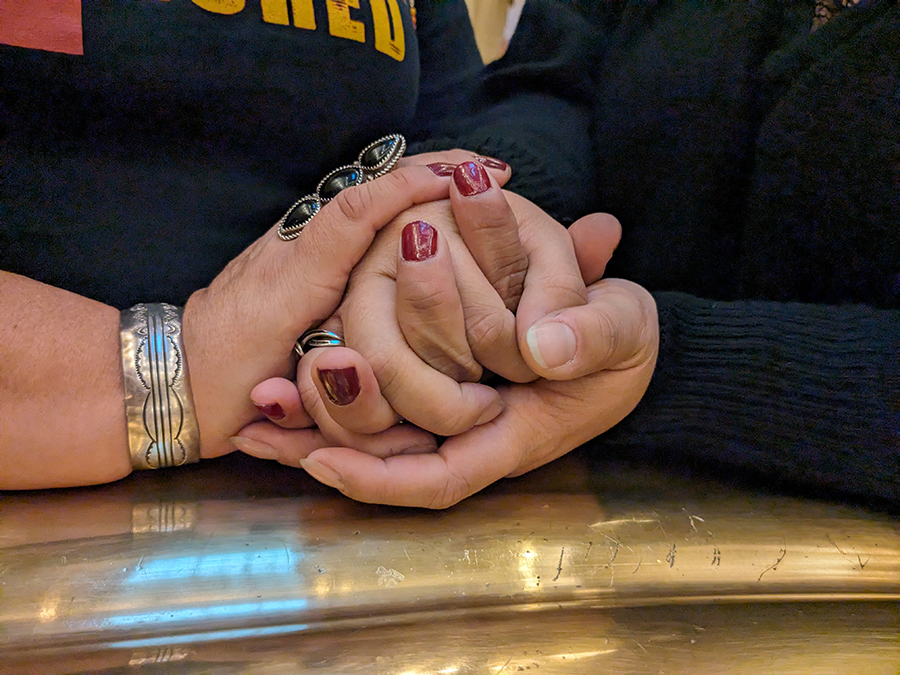
Gavinn McKinney’s mother and one of his sisters hold hands after a February committee hearing at the Colorado state Capitol on the bill that McKinney inspired. (Rae Ellen Bichell/KFF Health News)
En 2022, Ryan Christoff trabajaba en Centaurus High School en Lafayette, Colorado, adonde también estudiaba una de sus hijas. En septiembre de ese año, sus compañeros de trabajo le confiscaron la naloxona a una compañera de clase de su hija.
“Ella no tenía nada más que el Narcan consigo, y se lo quitaron”, dijo Christoff, quien le había proporcionado el Narcan confiscado a esa estudiante y a muchos otros después que su hija casi muriera por envenenamiento por fentanilo. “Deberíamos querer que cada estudiante lo lleve consigo”.
Randy Barber, vocero del Distrito Escolar del Valle de Boulder, dijo que el incidente “fue un caso aislado y desde entonces hemos trabajado para asegurarnos de que las enfermeras estén alertas”. El distrito ahora anima a todos a considerar llevar naloxona, dijo.
La devastación de una comunidad se transforma en acción
En Durango, la muerte de McKinney golpeó duro a la comunidad.
Los amigos y familiares del joven dijeron que no consumía drogas duras. La única sustancia a la que era “adicto” era la salsa picante Tapatío, incluso llevaba un poco en el bolsillo a los juegos de los Rockies.
Después de la muerte de McKinney, la gente comenzó a hacerse tatuajes de la frase por la que era conocido, que estaba estampada en su sudadera favorita: “El amor es la cura”. Incluso algunos de sus profesores se la tatuaron.
Pero fueron los compañeros de clase, junto con sus amigos de otra escuela secundaria de la ciudad, quienes convirtieron su pérdida en un movimiento político. “Estamos haciendo que las cosas sucedan en su nombre”, dijo Peterson.
La tasa de mortalidad por envenenamiento a causa del fentanilo ha aumentado en los últimos años, con más de 1,500 niños y adolescentes en el país muertos el mismo año que McKinney.
La mayoría de los jóvenes que mueren por sobredosis no tienen antecedentes conocidos de consumo de opioides, y muchos de ellos probablemente pensaron que estaban tomando opioides recetados como OxyContin o Percocet, no las píldoras falsas recetadas que contienen cada vez más una dosis letal de fentanilo.
“Lo más probable es que el grupo más grande de adolescentes que están muriendo sean realmente adolescentes que están experimentando, en lugar de adolescentes que tienen un trastorno de uso de opioides de larga data”, observó Joseph Friedman, investigador de uso de sustancias en UCLA, a quien le gustaría ver que las escuelas proporcionen una educación precisa sobre drogas falsificadas, como con el plan de estudios Safety First de Stanford.
Permitir a los estudiantes llevar un medicamento de bajo riesgo que salva vidas es, en muchos aspectos, lo mínimo que las escuelas pueden hacer, dijo Friedman.
“Yo argumentaría que lo que las escuelas deberían estar haciendo es identificar a los adolescentes de alto riesgo y darles el Narcan para llevarlo a casa y enseñarles por qué es importante”, dijo Friedman.
En un artículo en The New England Journal of Medicine, Friedman identificó a Colorado como un área crítica para las muertes por sobredosis en adolescentes de secundaria, con una tasa de mortalidad de más del doble que la del país de 2020 a 2022.
“Cada vez más, el fentanilo se vende en forma de píldoras, y esto está sucediendo en gran medida en el Oeste”, dijo Friedman. “Creo que la crisis de sobredosis en adolescentes es un resultado directo de eso”.
Si los legisladores de Colorado aprueban el proyecto de ley, “creo que es un paso realmente importante”, dijo Ju Nyeong Park, profesor asistente de medicina en la Universidad Brown, quien dirige un grupo de investigación centrado en cómo prevenir las sobredosis. “Espero que la Legislatura de Colorado lo haga y que también otros estados sigan el ejemplo”.
Park dijo que los programas integrales para analizar drogas en busca de contaminantes peligrosos, un mejor acceso a tratamientos basados en evidencia para adolescentes que desarrollan un trastorno por uso de sustancias, y la promoción de herramientas de reducción de daños también son importantes.
“Por ejemplo, hay una línea directa nacional llamada Never Use Alone (Nunca Uses Solo) a la que cualquiera puede llamar de manera anónima para ser supervisado de forma remota en caso de emergencia”, dijo.
Tomando el asunto en sus propias manos
Muchos distritos escolares de Colorado están capacitando al personal en cómo administrar naloxona y la tienen en las instalaciones escolares a través de un programa que les permite adquirirla del estado a poco o ningún costo.
Pero para Peterson y otros estudiantes de secundaria del área, fue claro que tener naloxona en la escuela no era suficiente, especialmente en lugares rurales. “Los profesores que están capacitados para usar Narcan no van a estar en las fiestas en donde los estudiantes consumen drogas”, dijo.
Y no es suficiente esperar que los adolescentes la tengan en casa.
“No va a ser útil si está en la casa de alguien a 20 minutos fuera de la ciudad. Será útil si está en su mochila siempre”, dijo Zoe Ramsey, otra amiga de McKinney y estudiante de último año en Animas High School.
Pero estudiantes del área, y administradores escolares, no estaban seguros: ¿Los estudiantes podrían meterse en problemas por llevar el antagonista de opioides en sus mochilas, o por dárselo a amigos? ¿Podría una escuela o distrito ser considerado responsable si algo saliera mal?
“Nos informaron que estaba en contra de las reglas llevar naloxona, y especialmente distribuirla”, dijo Ilias “Leo” Stritikus, quien se graduó de Durango High School el año pasado.
Ilias, junto con Ramsey y Peterson, ayudaron a formar el grupo Students Against Overdose. Juntos, convencieron a Animas, que es una escuela autónoma, y al distrito escolar cercano, de cambiar las normas. Ahora, con el permiso de los padres, y después de recibir capacitación sobre cómo administrarla, los estudiantes pueden llevar naloxona en las instalaciones escolares.
Karla Sluis, vocera del Distrito Escolar 9-R de Durango, dijo que al menos 45 estudiantes han completado la capacitación. Los distritos escolares en otras partes del país también han determinado que es importante clarificar sobre la capacidad de los estudiantes para llevar naloxona.
“Queremos ser parte de salvar vidas”, dijo Smita Malhotra, directora médica principal del Distrito Escolar Unificado de Los Ángeles en California.
El condado de Los Ángeles tuvo uno de los recuentos de muertes por sobredosis en adolescentes más altos que cualquier otro condado del país: de 2020 a 2022, murieron 111 adolescentes de 14 a 18 años.
“Todos los estudiantes pueden llevar naloxona en nuestros campus escolares sin enfrentar ninguna disciplina”, dijo Malhotra. Agregó que el distrito también está fortaleciendo el apoyo entre pares y organizando sesiones educativas para familias y estudiantes.
Las Escuelas Públicas del Condado de Montgomery en Maryland tomaron un enfoque similar. El personal escolar tuvo que administrar naloxona 18 veces durante el transcurso de un año escolar, y cinco estudiantes murieron a lo largo de un semestre.
Cuando el distrito organizó foros comunitarios sobre el tema, Patricia Kapunan, la oficial médica del distrito, dijo: “Los estudiantes fueron muy elocuentes sobre querer acceso a la naloxona. Es muy poco probable que un estudiante lleve algo en su mochila que piense que podría causarle problemas”.
Entonces, también, clarificó su política. Mientras tanto, los medios de comunicación locales informaron que estudiantes de secundaria encontraron a un joven desmayado, con los labios morados, en el baño de un McDonald’s enfrente de su escuela, y usaron Narcan para revivirlo. Fue durante el almuerzo en un día de escuela.
“Narcan no es nuestro camino para salir de la crisis de uso de opioides”, dijo Kapunan. “Pero fue crítico usarlo primero. Como conocer el número 911”. Ahora, con el apoyo del distrito y del departamento de salud del condado, los estudiantes están capacitando a otros estudiantes sobre cómo administrar naloxona. Jackson Taylor, uno de los estudiantes entrenadores, estimó que, un sábado reciente, capacitaron a unos 200 en el transcurso de tres horas.
“Fue increíble, un paso hacia la solución del problema”, dijo Taylor.
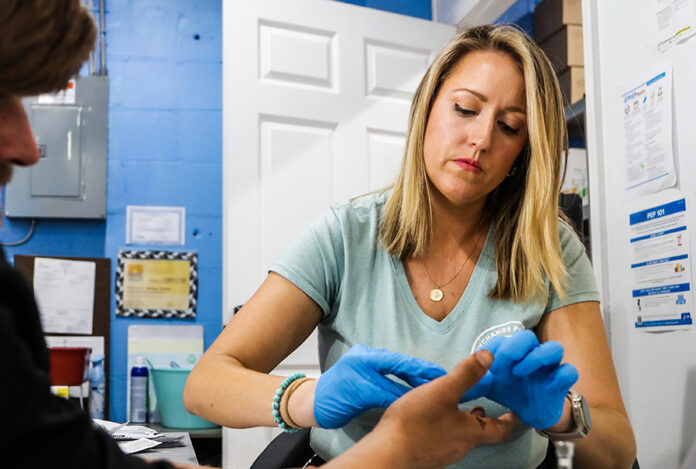
A client of IDEA Exchange Pinellas in St. Petersburg, Florida, gets his finger pricked as he is tested for HIV and hepatitis C by program director Amanda Bonham-Lovett. (Dirk Shadd/Tampa Bay Times)
TREASURE ISLAND, Florida. — Andrew McClave Jr. amaba levantar pesas. El mesero de 6’ 4” de altura parecía un fisicoculturista. Hasta posó para una foto inflando sus músculos con el ex luchador profesional Hulk Hogan.
“Era muy dedicado al entrenamiento”, dijo su padre, Andrew McClave Sr. “A tal punto que si no iba, era como si no hubiese tomado su medicamento”.
Pero su pasión tuvo un precio. Según un informe policial, un amigo le dijo a la Policía de Treasure Island que McClave, de 36 años, sufría problemas de espalda y tomaba pastillas para el dolor que no habían sido recetadas por un doctor.
A finales de 2022, el amigo descubrió a McClave tirado en la cama sin pulso. Según el informe de la autopsia, un médico forense detectó en su organismo cantidades letales de fentanilo, cocaína y xilacina, un sedante veterinario comúnmente utilizado en caballos. En el informe también se menciona la enfermedad cardíaca como factor contribuyente.
McClave es una de las más de 260 personas que murieron en un solo año en Florida por sobredosis accidentales de xilacina, según un análisis del Tampa Bay Times de datos de médicos forenses de 2022, el primer año en que funcionarios estatales comenzaron a dar seguimiento a la sustancia. Las cifras de 2023 todavía no han sido publicadas.
La cantidad de muertes refleja cómo la xilacina se ha insertado en el suministro de drogas ilícitas de Estados Unidos. Las entidades reguladoras federales aprobaron el sedante para animales a principios de la década de 1970, y la droga se utiliza en caballos para facilitar procedimientos como exámenes bucales o tratamientos para cólicos, explicó Todd Holbrook, especialista en medicina equina de la Universidad de Florida.
Los primeros casos de personas tomando xilacina se registraron en Philadelphia, y luego la droga se extendió al sur y al oeste del país.
Lo que no está claro es qué papel juega exactamente el sedante en las muertes por sobredosis, ya que en los datos de Florida no figura ninguna muerte exclusivamente por xilacina. Según el análisis del Tampa Bay Times, el analgésico fentanilo fue parcialmente responsable en casi todos los casos, excepto en dos, en los que la xilacina aparecía como causa de muerte.
La cocaína o el alcohol fueron factores influyentes en los casos que no involucraron fentanilo.
Según Lewis Nelson, presidente del departamento de medicina de emergencia de la Rutgers New Jersey Medical School de la Universidad Rutgers, el fentanilo suele hacer “el trabajo pesado”, mientras que la xilacina puede aumentar el riesgo de sobredosis, pero no sustancialmente.
Pero la xilacina parece complicar la respuesta a las sobredosis de opioides cuando ocurren, y hace más difícil salvar a las personas. La xilacina puede reducir el ritmo respiratorio a niveles peligrosos, según funcionarios federales de salud, y no responde a la naloxona, la droga para revertir las sobredosis, conocida también por su nombre comercial Narcan.
Además, muchas personas consumen el sedante para caballos sin saberlo ya que puede estar mezclado con otras drogas, y por lo tanto no son conscientes de los riesgos.
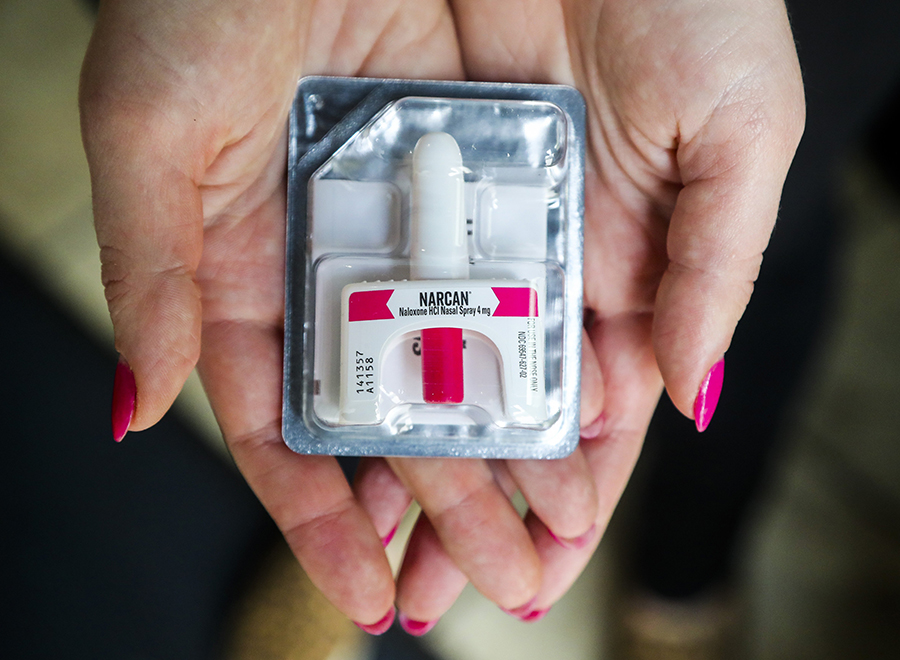
Narcan nasal spray is available at IDEA Exchange Pinellas, an anonymous needle exchange in St. Petersburg, Florida. The medication is used to revive someone during an opioid overdose and is available as an over-the-counter treatment, but it doesn’t reverse the effects of xylazine. (Dirk Shadd/Tampa Bay Times)
En 2016, legisladores en Tallahassee clasificaron la xilacina como una droga de categoría 1, en la que también están la heroína y el éxtasis. Y otros estados incluyendo Pennsylvania, Ohio y West Virginia han tomado medidas para clasificarla. Pero la droga no está prohibida a nivel federal. Un proyecto de ley pendiente en el Congreso criminalizaría el uso ilícito de la xilacina en todo el país.
En abril, el gobierno federal designó la combinación de fentanilo y xilacina, a veces llamada “droga tranq”, como una amenaza emergente. Un estudio en 20 estados y Washington, DC encontró que las muertes por sobredosis de fentanilo ilícito y xilacina se dispararon entre enero de 2019 y junio de 2022, aumentando de 12 casos por mes a 188.
“Tenemos que seguir esforzándonos”, dijo Amanda Bonham-Lovett, directora de un programa de intercambio de jeringas en St. Petersburg. “Y no dejar que esto se convierta en un problema más grande”.
“Un buen modelo de negocio”
Hay poca información definitiva que explique el aumento en el uso de xilacina y su impacto en las personas que consumen la droga.
La Administración de Control de Drogas (DEA) dijo en septiembre que el sedante está ingresando al país por distintas vías, incluso desde China, y se está mezclando con el fentanilo que entra por la frontera suroeste de Estados Unidos. La oficina del fiscal general de Florida está procesando un caso de tráfico de drogas en el condado de Orange en el cual la xilacina venía de un proveedor de Nueva Jersey.
Bonham-Lovett, que dirige IDEA Exchange Pinellas, el programa de intercambio de jeringas anónimo del condado, dijo que algunos residentes locales que usan drogas no están buscando xilacina, y no saben que la están haciendo.
Una teoría es que los traficantes están agregando la xilacina al fentanilo porque es barata y también afecta al cerebro, dijo Nelson.
“Tiene sentido que si el fentanilo se mezcla con un agente psicoactivo, se pueda usar menos fentanilo y obtener el mismo efecto”, dijo. “Es un buen modelo de negocio”.
En Florida, tres cuartas partes de las personas que murieron por sobredosis de xilacina fueron hombres, según el análisis del Tampa Bay Times. Casi el 80% de los que murieron eran blancos y la edad promedio, 42 años.
Los condados de la costa este de Florida registraron el mayor número de muertes. El condado de Duval encabezó la lista, con 46 casos de sobredosis. Tampa Bay registró 19 muertes.
El Tampa Bay Times determinó que en más de 80 casos, incluyendo el de McClave, la cocaína también aparecía como causa. En 2018, la DEA publicó una advertencia sobre la cocaína mezclada con fentanilo en Florida.
En el caso de McClave, la policía de Treasure Island encontró lo que parecía ser marihuana y una pequeña bolsa de plástico con residuos blancos en su habitación, según un informe policial. Su familia todavía se pregunta cómo pudo tomar drogas tan poderosas, y no ha podido superar su muerte.
McClave era un ávido pescador que capturaba róbalos y meros en el Golfo de México, dijo su hermana, Ashley McClave. Soñaba con ser capitán de barcos de alquiler.
“Siento que he perdido todo”, dijo su hermana. “Mi hijo no podrá aprender a pescar con su tío”.
Heridas misteriosas
Otro problema desconcertante para los funcionarios de salud es el vínculo entre el uso crónico de xilacina y las heridas abiertas.
Estas heridas están apareciendo en toda el área de Tampa Bay, dijeron los directores de programas de intercambio de jeringas. La señal reveladora es un tejido oscurecido y con costras, dijo Bonham-Lovett. Aunque las lesiones pueden ser pequeñas al principio, del tamaño de una moneda de diez centavos, pueden crecer y “extenderse por toda la extremidad de una persona”, dijo.
Incluso aquellos que inhalan fentanilo, en lugar de inyectárselo, pueden desarrollar estas heridas. El fenómeno no tiene explicación, dijo Nelson, y no se observa en animales.
IDEA Exchange Pinellas ha registrado al menos 10 casos desde su apertura en febrero de 2023, dijo Bonham-Lovett, y han puesto en práctica un plan de tratamiento exitoso. El personal lava las heridas con agua y jabón y luego las venda.
Una persona tuvo que ser hospitalizada en parte debido a los efectos de la xilacina, dijo Bonham-Lovett. La mujer de San Petersburgo de 31 años, que pidió no ser identificada porque le preocupaba su seguridad y el estigma asociado con el consumo de drogas, dijo quela internaron enel Hospital St. Anthony en 2023.
La mujer, que usa fentanilo a diario, tenía una infección por estafilococos resistente a algunos antibióticos desde hacía años, y recientemente una herida se le había extendido a la mitad del muslo. No había oído hablar de la xilacina hasta que IDEA Exchange Pinellas le habló sobre el sedante. Se siente agradecida de haberlo descubierto a tiempo.
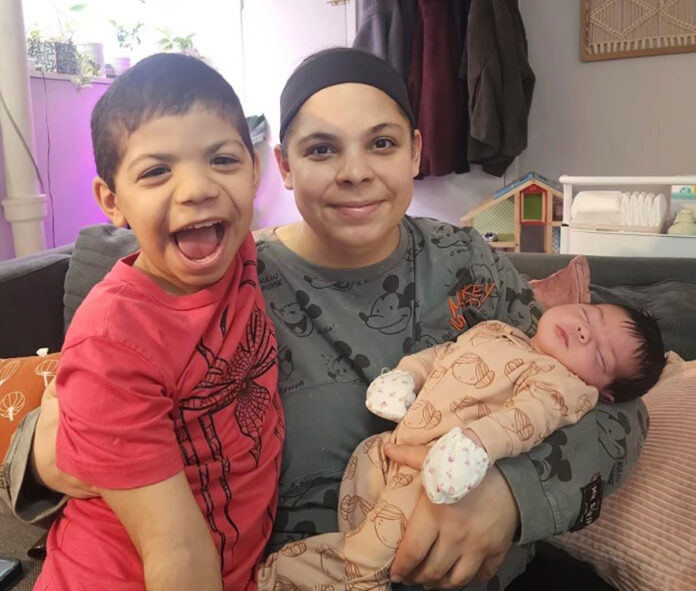
Years after she had her first child, Joaquin (left), Mary Delgado found out that she had endometriosis and that IVF was her only option to get pregnant again. The news from her doctor “broke me inside,” Delgado says, “because I knew it was so expensive.” Delgado, who is on Medicaid, traveled more than 300 miles round trip for lower-cost IVF, and she and her partner, Joaquin Rodriguez, used savings they’d set aside for a home. Their daughter, Emiliana, is now almost a year old. (Joaquin Rodriguez)
El primer embarazo de Mary Delgado se desarrolló según lo previsto, pero cuando lo intentó de nuevo siete años más tarde, no pudo concebir.
Después de 10 meses, Delgado, que ahora tiene 34 años, y su pareja, Joaquín Rodríguez, fueron a ver a una ginecóloga obstetra. Las pruebas mostraron que tenía endometriosis, una afección que estaba interfiriendo con la concepción.
La única opción para Delgado, según la doctora, era la fertilización in vitro (FIV).
“Cuando me lo dijo, me destrozó”, contó Delgado, “porque sabía que era muy costosa”.
Delgado, que vive en Nueva York, está inscrita en Medicaid, el programa de salud federal-estatal para personas con bajos ingresos. El costo aproximado de $20,000 de una ronda de FIV supondría un esfuerzo económico para cualquiera, pero para alguien que está bajo Medicaid —cuyos ingresos máximos anuales para un hogar de dos personas en Nueva York son algo más de $26,000— el tratamiento puede resultar inalcanzable.
Las grandes empresas suelen promocionar la ampliación de los planes de seguros laborales para que cubran los tratamientos de fertilidad, incluida la congelación gratuita de óvulos y los ciclos ilimitados de FIV, como un beneficio para sus empleados.
Pero las personas con ingresos más bajos, a menudo de minorías, tienen más probabilidades de estar cubiertas por Medicaid o por seguros más limitados que no tienen esta cobertura. Esto plantea la cuestión de si la asistencia médica para crear una familia es sólo para personas acomodadas o con generosos paquetes de beneficios.
“El sistema de salud estadounidense no quiere que los pobres se reproduzcan”, afirmó Delgado quien no trabajaba para cuidar a su hijo, que nació con un raro trastorno genético que requirió varias intervenciones quirúrgicas antes de cumplir los 5 años. Su pareja, que trabaja para una empresa que se encarga del mantenimiento de los taxis amarillos de la ciudad, tiene un plan individual a través del mercado de seguros estatal, pero no incluye cobertura de fertilidad.
Algunos expertos médicos cuyos pacientes se han enfrentado a estos problemas dicen entender por qué las personas en la situación de Delgado piensan que el sistema está en su contra.
Sea o no intencional, muchos aseguran que esta desigualdad genera una mala imagen de Estados Unidos.
“Es algo que llama la atención en una nación que proclama preocuparse por los menos afortunados y que trata de hacer todo lo posible por ellos”, dijo Eli Adashi, profesor de ciencias médicas en la Universidad Brown y ex presidente de la Society for Reproductive Endocrinologists.
Sin embargo, los esfuerzos por agregar la cobertura de los tratamientos de fertilidad a Medicaid se enfrentan a muchas resistencias, según Ginsburg.
A lo largo de los años, Barbara Collura, presidenta y CEO de Resolve: The National Infertility Association, ha escuchado muchas explicaciones de por qué no tiene sentido cubrir el tratamiento de fertilidad para los beneficiarios de Medicaid. Dijo que los legisladores se preguntan: “Si no pueden pagar un tratamiento de fertilidad, ¿tienen idea de lo que cuesta criar a un hijo?”.
“Así que, como país, estamos juzgando quién puede tener hijos y quién no”, dijo Collura.
También persiste el legado del movimiento eugenésico de principios del siglo XX, cuando los estados aprobaron leyes que permitían esterilizar contra su voluntad a personas pobres, no blancas y discapacitadas.
“Como defensora de la justicia reproductiva, creo que tener un hijo es un derecho humano, y ofrecer apoyo es una cuestión ética de gran envergadura”, afirmó Regina Davis Moss, presidenta y CEO de In Our Own Voice: National Black Women’s Reproductive Justice Agenda.
Pero a la hora de establecer la cobertura —especialmente cuando está implicada la red de salud pública— a veces hay que tomar decisiones difíciles, porque los recursos son limitados.
Incluso si los programas estatales de Medicaid quisieran cubrir los tratamientos de fertilidad, tendrían que sopesar ese beneficio frente a la inversión en otros tipos de atención, incluida la de maternidad, señaló Kate McEvoy, directora ejecutiva de la Asociación Nacional de Directores de Medicaid. “Se reconoce como primordial y urgente la atención materna”, afirmó.
Medicaid paga alrededor del 40% de los nacimientos en Estados Unidos. Y desde 2022, 46 estados y el Distrito de Columbia han optado por ampliar la cobertura posparto del programa a 12 meses, frente a los 60 días anteriores.
Tradicionalmente, se considera que una pareja es infértil si lleva 12 meses intentando el embarazo sin éxito. El año pasado, la ASRM amplió la definición de infertilidad para incorporar a los aspirantes a padres más allá de las parejas heterosexuales, incluidas las personas que no pueden quedarse embarazadas por razones médicas, sexuales o de otro tipo, así como las que necesitan intervenciones médicas como óvulos o esperma de donantes para lograr un embarazo.
La Organización Mundial de la Salud (OMS) define la infertilidad como una enfermedad del aparato reproductor caracterizada por la imposibilidad de quedarse embarazada tras un año de relaciones sexuales sin protección. Considera que el elevado costo de los tratamientos de fertilidad es un importante problema de equidad y ha pedido mejores políticas y financiación pública para mejorar el acceso.
Independientemente de cómo se defina el problema, los planes de salud privados suelen negarse a cubrir los tratamientos de fertilidad porque no los consideran “médicamente necesarios”. Veinte estados y Washington, DC tienen leyes que obligan a los planes a ofrecer algún tipo de cobertura de fertilidad, pero esas leyes varían mucho y sólo se aplican a las empresas cuyos planes están regulados por el estado.
En los últimos años, muchas empresas han comenzado a ofrecer tratamientos de fertilidad en un intento por reclutar y retener al mejor talento profesional. En 2023, el 45% de las empresas con 500 empleados o más cubrían la FIV y/o la terapia farmacológica, según la consultora de prestaciones Mercer.
Pero eso no ayuda a los beneficiarios de Medicaid. Sólo los programas de Medicaid de dos estados ofrecen algún tratamiento de fertilidad: Nueva York cubre algunos medicamentos orales para mejorar la ovulación, e Illinois cubre los costos de preservación de la fertilidad, para congelar los óvulos o el esperma de las personas que necesitan un tratamiento médico que probablemente las dejará estériles, como el del cáncer. Otros estados también consideran agregar servicios de preservación de la fertilidad.
En el caso de Delgado, Medicaid cubrió las pruebas para diagnosticarle endometriosis, pero nada más.
Por eso buscó en Internet opciones de tratamiento y encontró un grupo de clínicas llamado CNY Fertility que parecían mucho menos caras y que además ofrecían financiación interna. Con sede en Syracuse, Nueva York, la empresa cuenta con un puñado de clínicas en ciudades del norte del estado y en otros cuatro lugares de Estados Unidos.
Aunque Delgado y su pareja tuvieron que viajar más de 300 millas, ida y vuelta, a Albany para someterse a los procedimientos, el ahorro valió la pena. Pudieron realizar un ciclo completo de FIV, incluidos los medicamentos, la extracción de óvulos, las pruebas genéticas y la transferencia del óvulo al útero, por $14,000. Para pagarlo, utilizaron $7,000 del dinero que habían ahorrado para comprar una casa y financiaron la otra mitad a través de la clínica de fertilidad.
Delgado quedó embarazada al primer intento y su hija, Emiliana, tiene ahora casi un año.
Delgado no tiene nada en contra de las personas con más recursos o mejor cobertura, pero le gustaría que el sistema fuera más equitativo.
“Tengo un problema médico”, dijo. “No he hecho la FIV porque quiero elegir el sexo”.
Una de las razones por las que CNY es menos costosa es sencillamente porque la empresa, de propiedad privada, decide cobrar menos, explicó William Kiltz, su vicepresidente de marketing y desarrollo empresarial. Desde sus comienzos en 1997, la empresa se ha convertido en una gran clínica con un gran volumen de ciclos de FIV, lo que contribuye a mantener los precios bajos.
En este momento, más de la mitad de sus clientes no viven en el estado, y muchos ganan bastante menos que un paciente típico de otra clínica. El 20% gana menos de $50,000 y “tratamos a un buen número de pacientes con Medicaid”, dijo Kiltz.
Ahora que su hijo, Joaquín, está matriculado en una buena escuela, Delgado ha empezado a trabajar para una agencia que presta servicios de salud en el hogar. Después de trabajar 30 horas semanales durante 90 días, podrá optar por un seguro médico.
En esta imagen de archivo, el logo de UNICEF visto en la sede de la agencia de la ONU en Colonia, Alemania, el 5 de febrero de 2008. (Foto: AP/Hermann J. Knippertz/Archivo)
Más de 230 millones de mujeres y niñas han sufrido mutilación genital femenina, la mayoría de ellas en África, según un informe de la agencia de Naciones Unidas para la infancia publicado el viernes.
En los últimos ocho años, unos 30 millones de personas han pasado el procedimiento por el que se extirpan parcial o totalmente los genitales externos, calculó UNICEF en su reporte publicado con motivo del Día Internacional de la Mujer.
El porcentaje de mujeres y niñas que sufren mutilación genital femenina está disminuyendo, añadió la agencia, que advirtió de que los esfuerzos para erradicar la práctica son demasiado lentos frente al rápido crecimiento de la población.
“La práctica de la mutilación genital femenina está disminuyendo, pero no lo suficientemente rápido”, afirmó UNICEF.
La práctica, que se cree erróneamente que controla la sexualidad de la mujer, puede causar hemorragias graves e incluso la muerte. Las niñas son sometidas a este procedimiento entre la infancia hasta la adolescencia. A largo plazo, puede provocar infecciones urinarias, problemas menstruales, dolor, disminución de la satisfacción sexual y complicaciones en el parto, así como depresión, baja autoestima y trastorno de estrés postraumático.
“También se observa una tendencia preocupante: cada vez más niñas son sometidas a la práctica a edades más tempranas, muchas de ellas antes de cumplir los cinco años. Esto reduce aún más la posibilidad de intervenir”, manifestó Catherine Russell, directora ejecutiva de la agencia.
Unos 144 millones de mujeres y niñas han sufrido mutilación genital femenina en África, además de alrededor de 80 millones más en Asia y otros seis en Oriente Medio, dijo el reporte. Somalia encabeza la lista de lugares donde se sigue practicando la que se conoce también como circuncisión femenina: el 99% de la población femenina de entre 15 y 49 años fue sometida a ella.
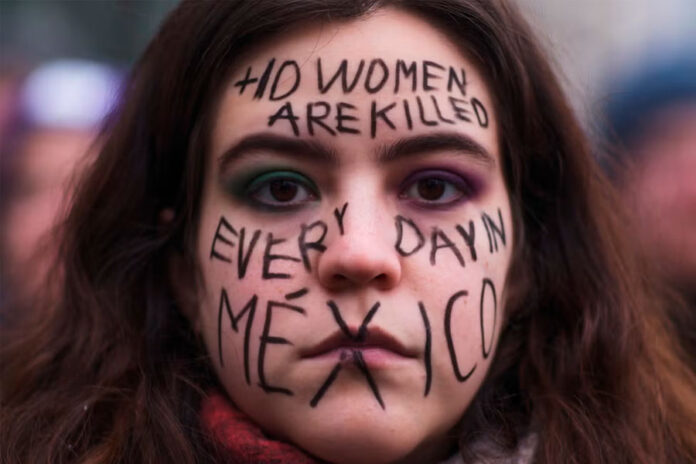
Una mujer de México con un mensaje pintado en la cara en el que dice: "Más de 1o mujeres son asesinadas cada día en México", en un acto por el Día Internacional de la Mujer en Berlín, Alemania, el 8 de marzo de 2023. (Foto: AP/Markus Schreiber/Archivo)
Las mujeres latinoamericanas llegan a otro 8 de marzo, Día Internacional de la Mujer, con motivos para protestar en las calles por sus derechos.
Las exigencias de igualdad a los gobiernos acumulan cuentas pendientes y este año, además, enfrentan nuevas amenazas de retroceso con la llegada al poder de hombres, como el presidente ultraderechista argentino Javier Milei, que han desechado abiertamente las políticas contra la discriminación.
La violencia de género se mantiene como uno de los problemas más acuciantes, acumulando muertes de mujeres y sin que la política pública haya corregido los índices de impunidad que van aparejados a las agresiones y feminicidios.
Pero no es la única deuda del sistema con ellas, que aún lidian con menos espacio en posiciones de poder y mayor precariedad laboral.
Según cifras de la Comisión Económica para América Latina y el Caribe, una mujer es asesinada por razones de género en el continente cada dos horas.
Además, en posiciones de decisión, las mujeres no llegan a ocupar ni uno de cada tres puestos en gabinetes ministeriales en Latinoamérica. Les corresponde el 28,7% de estos espacios en el promedio regional y solo en dos países, Chile y Costa Rica, se llega o supera la paridad.
Peor es la realidad de las trabajadoras. Son las que asumen mayoritariamente los trabajos no remunerados, usualmente en la esfera privada. En el mejor escenario, el de las brasileñas, dedican un 22,1% de su tiempo de trabajo a tareas no pagadas. Pero en la mayoría de países latinoamericanos, esta dedicación sin remuneración oscila entre un 30% y un 42% de tiempo de trabajo.
En cambio, en el caso de los hombres, apenas de un 15% a un 23% de su tiempo de trabajo se va a tareas no retribuidas. En ningún país, supera el 25% de su tiempo, según Cepal.
De ahí que estén previstas multitudinarias manifestaciones el 8 de marzo, con reivindicaciones por las cuentas pendientes y ante el riesgo de retrocesos.
Mientras en Argentina las mujeres temen que el gobierno Milei suponga la pérdida de conquistas como el aborto legal, en México la casi segura llegada de una mujer a la presidencia será un examen para un país con un alto índice de violencia de género.
ARGENTINA
El combativo movimiento feminista convocó a marchar en todo el país, en rechazo a los intentos de Milei de derogar la ley de interrupción voluntaria del embarazo, en repudio a la violencia machista y contra el empeoramiento de la situación económica de las mujeres con las medidas de ajuste del nuevo ejecutivo.
Dos días antes del 8 de marzo, Milei –que llegó al poder el 10 de diciembre— volvió a apuntar contra la ley de aborto de 2020 y sostuvo que “es un asesinato agravado por el vínculo”.
La norma contempla el derecho a un aborto libre y gratuito hasta la semana 14 de gestación y amplía ese plazo en caso de violación o riesgo para la vida de la mujer.
Florencia Alcaraz, una de las fundadoras del movimiento Ni Una Menos contra la violencia de género, dijo a The Associated Press que ahora “con el desfinanciamiento del sistema de salud y una retirada del Estado en un montón de planos, lo que está en riesgo es el acceso y el goce de una vida reproductiva saludable y con menos riesgos”.
Sobre el ajuste económico, afirmó que los despidos, el aumento de tarifas y el recorte de planes sociales «nos afectan como trabajadoras, madres, jubiladas y cuidadoras… Toda crisis económica afecta mucho más a las mujeres”.
Milei eliminó el Ministerio de las Mujeres, Géneros y Diversidad y lo redujo a una subsecretaría contra la violencia de género.
El Centro de Economía Política Argentina dijo que todas las políticas que el año pasado iban destinadas a reducir las desigualdades de género “están mostrando reducciones muy importantes en términos reales”, como en el programa Acompañar para casos de violencia de género que “perdió un 30% de su poder adquisitivo desde la asunción de Milei”, agregó en un comunicado. El gobierno no respondió públicamente.
MÉXICO
Las próximas elecciones de junio de México podrían llevar por primera vez a una mujer a la presidencia, en uno de los países más violentos contra ellas, lo que abrió el debate sobre si esto irá acompañado de un avance en políticas de género.
Ninguna de las dos candidatas, la oficialista Claudia Sheinbaum y la opositora Xóchitl Gálvez, ha incluido el aborto entre sus ofertas de campaña, pero sí se plantean medidas para la igualdad y la protección de las mujeres.
Las cifras de feminicidios en los últimos años han sobrepasado los 3.000 casos por año.
La activista María de la Luz Estrada, coordinadora del Observatorio Ciudadano Nacional del Feminicidio, dijo que espera que quien llegue a la presidencia enfrente al “conservadurismo de este país” e impulse políticas que “rompan con los estereotipos”.
Mariana Reyna, directora de la Asociación Guerrerense contra la Violencia hacia la Mujer, también lo ve con optimismo, pero prefiere esperar a las acciones concretas. “Hay anuncios de que va haber un compromiso, pero eso no es garantía. Hemos visto mucho retroceso ahorita. Yo veo una ruta difícil”.
Sheinbaum, exalcaldesa de Ciudad de México, anunció estar dispuesta a dar rango constitucional a la igualdad de las mujeres, a asegurar el derecho a una vida libre de violencia y erradicar la brecha salarial.
Para disminuir los feminicidios, se comprometió a activar un programa similar al que aplicó en la alcaldía capitalina para prevenir y denunciar la violencia familiar, promover fiscalías especializadas y obligar a que cada muerte de una mujer sea investigada como feminicidio.
Por su parte, Gálvez pretende atacar la alta incidencia de feminicidios y desterrar lo que ha considerado la “falsa idea” de que la violencia contra niñas y mujeres indígenas responde a costumbres culturales.
Sobre el aborto, despenalizado en 2021 por la Suprema Corte de Justicia, ha afirmado que ya es un derecho y que no dará “ni un paso atrás”, pero no ha hecho ofertas concretas para garantizar a las mexicanas una interrupción segura del embarazo.
Aunque en México no está permitido que una mujer vaya a la cárcel por abortar, sólo en trece de los 32 estados del país se ha legalizado la interrupción del embarazo, lo que genera trabas.
COLOMBIA
Es uno de los países más flexibles de Latinoamérica sobre interrupción voluntaria del embarazo, desde hace dos años cuando la Corte Constitucional aprobó la despenalización hasta la semana 24 de gestación. Un avance que las defensoras de los derechos de la mujer todavía celebran, mientras piden su efectiva implementación sin dilaciones.
En el acceso a las esferas políticas, el gobierno del izquierdista Gustavo Petro ha buscado paridad en los ministerios y postuló a tres abogadas como candidatas a fiscal general.
No obstante, los feminicidios siguen siendo una gran preocupación. Al menos 21 mujeres fueron asesinadas en enero, de acuerdo con la Procuraduría. Uno de los casos más recientes fue el de Laura Lopera, de 20 años, encontrada sin vida dentro de una maleta en Medellín. Las autoridades señalaron como presunto responsable a un canadiense que habría sido su pareja y huyó de Colombia.
CHILE
El gobierno del izquierdista Gabriel Boric, que se ha declarado abiertamente feminista, cuenta con el gabinete más paritario de la historia del país y por primera vez con una mujer al cargo del Ministerio del Interior.
Tras siete años de tramitación, se aprobó la ley integral contra la violencia a las mujeres, que fortalece la institucionalidad para proteger a las víctimas de violencia, incluye a niños como víctimas y no solo como testigos, amplía el concepto de violencia a las relaciones de noviazgo e incorpora la violencia gineco-obstétrica.
Esta ley es valorada por Gabriela Rosero, jefa de ONU Mujeres Chile, como un “gran avance” que sitúa al país al nivel de otros en la región y en el mundo para “fortalecer el sistema de prevención”.
En el camino de deudas pendientes, una ley de aborto más abierta que la que existe, donde se permite el aborto terapéutico en tres causales desde 2017, pero que presenta muchos obstáculos en la práctica por la objeción de conciencia de profesionales e instituciones enteras.
ECUADOR
El aumento de la violencia criminal y la mirada esquiva del gobierno de turno, de tinte conservador, ponen con saldo rojo la lucha de las mujeres por la igualdad, lo que significa que en materia de derechos hay un retroceso, según activistas.
Para la activista y profesora de la Universidad Central, Milena Almeida, se registran los más altos niveles de violencia contra las mujeres, algo en lo que ha incidido el contexto de inseguridad y la reciente declaración del conflicto armado interno en el país.
El año pasado hubo 321 femicidios, de ellos, 172 tienen relación con estructuras criminales, aseveró. Y eso, dijo, es debido a que el Estado no tiene voluntad política ni destina fondos para hacer cumplir los derechos de las mujeres, a lo que se suma un sistema judicial lento o inoperante para protegerlas.
Este Día Internacional de la Mujer, además, llega sumergido en la polémica por un caso de una violación grupal a dos estudiantes de secundaria de un reconocido colegio privado por parte de tres de sus compañeros. “Es una muestra de que no hay enfoque de género en las familias, en los establecimientos educativos y tampoco voluntad de hacer cumplir los derechos de las mujeres por parte del Estado”, manifestó Mayra Tirira, abogada y vocera de la organización feminista Surkuna.
BOLIVIA
Pese a los avances en papel, como la exigencia de paridad en la Asamblea y en candidaturas presidenciales o la ley contra el acoso y la violencia política a las mujeres, la igualdad tampoco está garantizada en Bolivia. Las mujeres políticas bolivianas no tienen un poder de decisión real, según activistas.
“En Bolivia aún no se cumple a cabalidad el derecho de la mujer a decidir, porque los varones aún no nos ven como iguales y es difícil que desde el poder se les dé su lugar”, dijo Tatiana Mariaca, responsable de la unidad de género en la ong Bolivia de Conexión, dedicada a mitigar las desigualdades.
“El problema de las leyes es que tenemos muy buenas en el papel, pero no se respetan”, agregó.
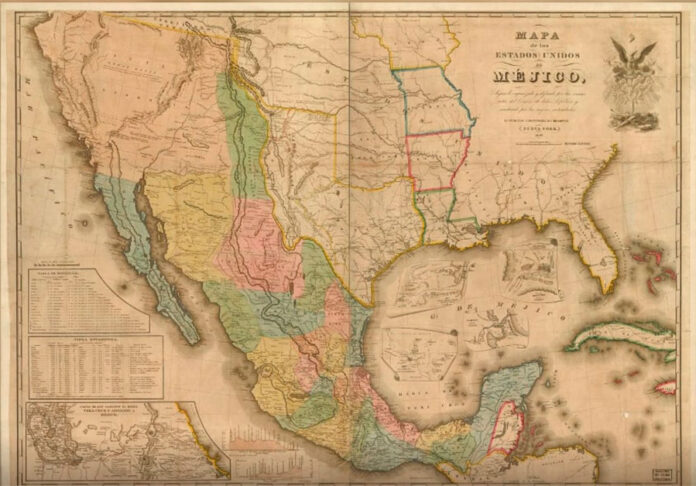
Mapa de México Anterior a Guadalupe Hidalgo – 1846 Disturnell, Juan, 1801-1877 | Museo Nacional de Historia de la Mujer.
Como afirmaba Gandhi, «la verdadera fuerza no proviene de la capacidad corporal, sino de la voluntad del alma». Es precisamente esa valentía frente a la vida lo que muchas mujeres hispanas han demostrado y continúan demostrando, a pesar de permanecer en las sombras.
En la Antigüedad, las mujeres solían tener reconocimiento, pero la Revolución Industrial trajo un cambio drástico, marcó un antes y un después. La discriminación laboral que enfrentaron fue solo el comienzo de una serie de pérdidas, que incluyeron su estatus y reconocimiento social.
La huelga de las camiseras de Nueva York, conocida como la «Marcha de las veinte mil» en 1909, fue un llamado enérgico por la igualdad salarial y condiciones laborales justas. Este evento marcó una denuncia pública contra una injusticia social prolongada.
En este ambiente de lucha de las mujeres, que también contaba con el apoyo de hombres descontentos con esa postergación, surgió la “Procesión del Sufragio Femenino” el 3 de marzo de 1913 (día anterior a la toma de posesión del presidente electo Wilson). Miles de personas se unieron en protesta para marchar en Washington, D.C. y reclamar que la Enmienda 19ª fuese aprobada autorizando el voto femenino. No fue hasta la finalización de la I Guerra Mundial, el 4 de junio de 1919, que se aprobó por el Congreso de Estados Unidos el derecho al voto de las mujeres. Fue ratificado el 18 de agosto de 1920.
“LAS OLVIDADAS ENTRE LAS OLVIDADAS”
Las mujeres norteamericanas se consideraban “olvidadas”; sin embargo, en la historia del Movimiento por los Derechos de la Mujer siempre se recuerdan nombres como los de Elizabeth Cady Stanton, Lucretia Mott, Carrie Catt, Susan B. Anthony, Lucy Stone y Alice Paul, entre otras. Pero no aparecen nombres hispanos.
¿OLVIDO O ERROR?
Como podrán imaginar, las mujeres hispanas son, una vez más, las “olvidadas entre las olvidadas”. Injusticia sobre injusticia, porque las hispanas han sido –y son– relevantes y han marcado –y marcan– la diferencia en la historia de Estados Unidos. Jugaron un papel muy importante en la lucha por el sufragio femenino en el país; americanas biculturales y bilingües que estuvieron presentes en todas las fases de esa lucha.
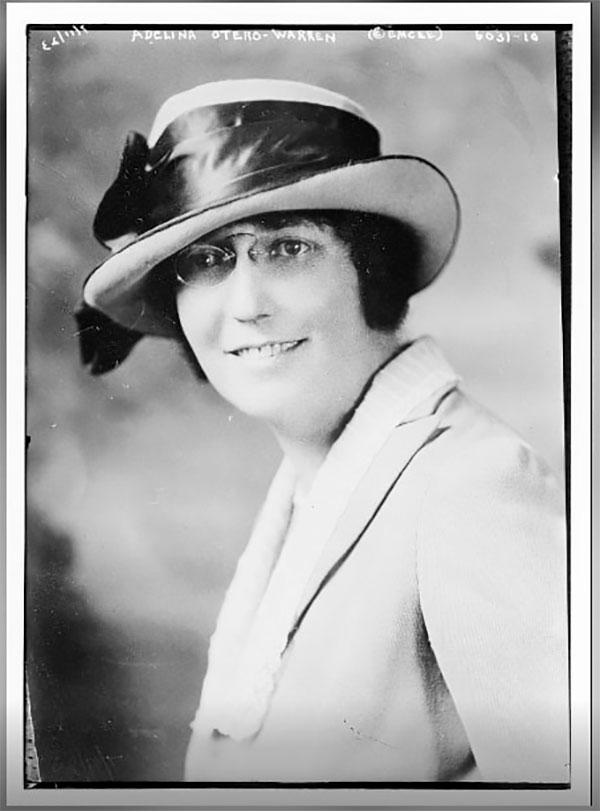
Se establecieron en todo el país asociaciones cívicas, desde las cuales, incluso en la actualidad, se sigue luchando por diversas causas. Aurora Lucero-White Lea y Adelina “Nina” Otero-Warren, convencieron a Alice Paul y a la Unión del Congreso (posteriormente conocido como Partido Nacional de la Mujer) sobre la importancia de dirigirse a las mujeres de habla hispana que vivían en Estados Unidos. Juntas, el 21 de octubre de 1915, reunieron a ciento cincuenta sufragistas anglosajonas e hispanas en las calles de Santa Fe para hacer una declaración en apoyo del sufragio femenino. Este evento, conocido como la Marcha de Santa Fe, atrajo a cientos de personas.
Lucero y Otero sabían que la causa sufragista femenina calaría en las mujeres hispanas que viviesen en Estados Unidos, en especial en aquellas que habían nacido o provenían de territorios fronterizos como Nuevo México, Arizona, Texas y California.
Ellas conocieron cómo, antes de la ocupación estadounidense y la anexión de los territorios donde nacieron o de donde provenían sus familias, las mujeres gozaban de más derechos bajo el ordenamiento jurídico español y mexicano que posteriormente bajo el derecho común inglés. Según la ley mexicana y española, las mujeres eran reconocidas legalmente como “personas” con derechos inherentes, como heredar, ser propietarias de tierras u otros bienes, trabajar y ganar dinero, litigar en tribunales y conservar sus apellidos de soltera al contraer matrimonio.
Ninguno de estos derechos los tenía la mujer casada bajo el derecho inglés, que es la fuente del derecho estadounidense. Aunque bajo los acuerdos del Tratado de Guadalupe Hidalgo, los ciudadanos mexicanos de Arizona, California, oeste de Colorado, Nevada, Nuevo México, Texas y Utah se convirtieron automáticamente en ciudadanos estadounidenses en 1849 (con la promesa de igualdad de derechos bajo el Tratado), la realidad fue otra. Rápidamente fueron rebajados a ciudadanos de segunda.
Adelina Otero-Warren – 11 de julio de 1923. Servicio de noticias Bain, Museo Nacional de Historia de la Mujer.
Las familias mexicano-españolas perdieron gran parte de sus tierras y títulos, y fueron relegadas a trabajos agrícolas, domésticos y de procesamiento de alimentos. La vida de las mujeres también experimentó cambios drásticos bajo la ocupación estadounidense, ya que perdieron los derechos adquiridos bajo la tradición legal española y mexicana.
No les quedó más remedio que trabajar por necesidad a cambio de un salario. Hay muchas otras mujeres hispanas, como María Guadalupe Evangelina de López, Selina Solomons, Gertrudis “Tules” Barceló, María Amparo Ruiz de Burton, Jovita Idár, Luisa Capetillo, Ana Roqué de Duprey y Genara Pagán, que también están entre las grandes olvidadas de la historia de la lucha por el voto femenino en Estados Unidos.
A Pagán le tocó luchar un poco más que a sus colegas por el voto femenino ya que, al ser puertorriqueña, se convirtió en ciudadana estadounidense cuando en 1917 el Congreso firmó la Ley Jones-Shafroth. Por un lado, la ciudadanía concedida les respetaba su propia ciudadanía puertorriqueña, pero por otro no conllevaba la estadidad de la isla ni el derecho a emitir votos federales. Genara Pagán revivió la causa sufragista femenina en 1920, tras la aprobación de la 19ª enmienda, cuando intentó registrarse para votar y fue rechazada.
Las sufragistas puertorriqueñas continuaron presionando para que se aprobasen proyectos de ley que otorgasen derechos a las mujeres en la isla. En 1929, la legislatura puertorriqueña extendió los derechos de voto a las mujeres que supiesen leer y escribir. En 1935 todas las puertorriqueñas tuvieron acceso al voto, gracias a una reforma realizada por medio de leyes locales en lugar de una reforma constitucional a escala federal.
Después de obtener el derecho al voto, las hispanas no se detuvieron. Se propusieron ingresar en instituciones desde las cuales pudieran ejercer su influencia, lo que supuso una nueva lucha, ya que en estas instituciones se caracterizaban por el predominio masculino.
Una de las pioneras en esta conquista fue Soledad Chávez de Chacón. Se convirtió en la primera latina elegida para un cargo estatal (secretaria de estado) en Estados Unidos. En 1934 logró ser elegida para la Cámara de Representantes de Nuevo México, y se convirtió en la cuarta latina en ocupar ese cargo.
En este mes en el que se reconoce a la mujer, es un momento propicio para rescatar del olvido a algunas de estas heroínas, recordar cómo respondieron y superaron las adversidades, y, sobre todo, aprender que el mal llamado “sexo débil” no lo es en absoluto. Por el contrario, somos fuertes y poderosas, ayer como hoy.
Amidst a complex international landscape marked by ongoing conflicts, economic concerns, and electoral dynamics, March 8th marks International Women’s Day. Nevertheless, it is crucial to take stock of the progress, achievements, and setbacks in gender equality indicators that society has fought for over a century.
Over the past few decades, female performance indicators have grown in many fields. According to UN Women, more women now hold positions as heads of state or government. They also frequently lead ministries in many countries, and their numbers are growing in top leadership positions in corporations, banks, chambers of commerce, and other areas. Furthermore, their visibility in non-profit organizations is increasingly evident.
However, it is clear that progress is slower in some areas, and even setbacks can be detected. The latest Avon Progress Report on Women’s Global Progress, published annually by the beauty company Avon, a leader in such initiatives, reveals that the number of women who believe that income and salary inequalities exist has increased from 46% in 2023 to 52% in 2024.
The study also reveals that 53% of women believe that barriers are preventing them from starting their own businesses or becoming entrepreneurs. The number of respondents who believe that it is more difficult for women to reach a senior management position in a large company has increased. However, more single women are now buying homes than their male counterparts.
The disadvantages of being a woman are also reflected in the effort to achieve greater gender equality. This, in turn, should not be seen as a mere parity of numbers or women in positions of relevance, but also of laws that recognize and reward the invisible work that usually falls on women’s shoulders.
It is important to analyze the situation of women who choose to be mothers. In many cases, having 3 or 4 children can negatively affect their chances of promotion to corporate positions. This is due to the responsibilities of parenting, which can make it difficult to pursue professional development. In contrast, women who do not have children have more freedom to dedicate time to their careers, which allows them to climb positions more easily. This translates into better chances of obtaining a higher pension in the future.
However, the money for their pension will be produced by the first woman’s 4 children, who are now the productive population. This creates an injustice due to the inability of governments to recognize and reward the commitments and burdens of motherhood.
During Women’s History Month, it is also important to seize the moment to condemn the violence that continues to prevail in many homes. Another worrying indicator is that of security, as 72% of respondents said they feel unsafe walking alone at night, exercising outdoors, traveling on public transportation, or taking a taxi.
These are just some of the struggles faced by women in this country. As more women integrate into decision-making positions, more progress will be made.
At the local level, in Pennsylvania, and particularly in Philadelphia, which has just elected its first female mayor, women in general and Latinas in particular have been leaving a mark of excellence that has accelerated their rise to leadership positions. It suffices to mention public leaders such as María Quiñones, Nilda Ruiz, Alba Martínez, Carolina di Giorgio, Johana Otero, Quetcy Lozada, and many others.
In this edition, Impacto highlights Cynthia Figueroa, a Puerto Rican professional who currently heads JEVS, one of the largest and most prestigious non-profits in the country. She manages a team of nearly two thousand employees and volunteers and benefits more than one and a half million people with her educational, solidarity, and home care campaigns, including many immigrants, especially refugees from all backgrounds.
Let us hope that the high leadership of Philadelphia, which will have a strong female presence at the helm for the next few years, will help to advance the search for women’s equity in all fields. However, this must begin by recognizing those areas where their disadvantaged situation must be balanced through laws and regulations that help to restore the balance.