


-0.9 C
Philadelphia
spot_img
Inicio Blog Página 1062

No confidence vote to go ahead after president’s resignation

Temple university.

PHILADELPHIA. — The Temple University faculty union says it still plans to go forward with a no-confidence vote scheduled next month on two top officials following the announcement of the resignation of the university president.

The resignation of Jason Wingard — the first Black president at Temple University, following a tenure of less than two years — will take effect Friday. Wingard, 51, has led the 33,600-student university since July 2021.

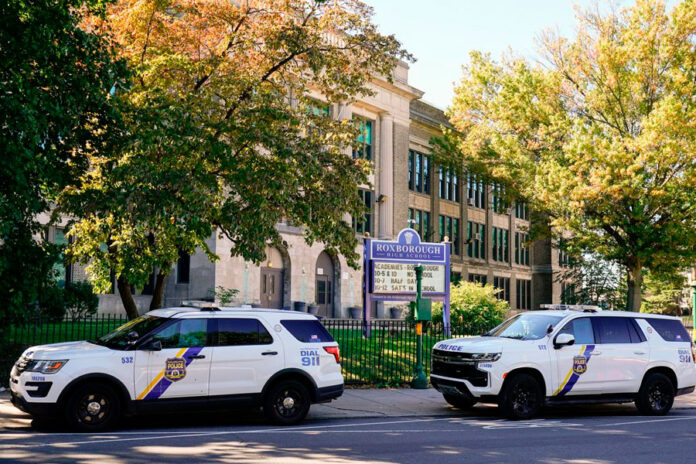
The university said Tuesday the board of trustees had accepted Wingard’s resignation and “a small group of senior Temple leaders” would be designated to guide the university while another president is being sought. Officials vowed the “highest level of focus” on urgent issues facing the university, “particularly campus safety.”

The Temple Association of University Professionals had scheduled a no confidence vote for the week of April 10 on Wingard; Mitchell Morgan, the board of trustees chairman; and Gregory Mandel, the university’s provost. The union called Wingard’s resignation a step in the right direction but said the vote on Morgan and Mandel would go forward.

“Our vote is about more than the individuals on the ballot, it is about the future of Temple University – our university,” the association said Tuesday night, saying “hundreds of faculty members, academic professionals, librarians, and undergraduate and graduate students” were calling for a new vision for the university’s future.

The special committee announced by the board to address serious concerns was “notably missing … students, faculty, staff and the broader north Philadelphia community,» the union said.

Union members have cited concerns over falling enrollment, financial issues and labor disputes. During an emergency town hall meeting earlier this month, faculty members spoke of a reduction of faculty positions, non-renewal notices on contracts and increasing class sizes, WHYY reported.

Wingard told a panel of state lawmakers last week that Philadelphia’s homicide rate has wrought a climate in which students, faculty, parents and staff are afraid. A Temple University police officer was shot and killed near the north Philadelphia campus last month, the first line-of-duty death of an officer in university history.

The university had also been dealing with a strike by graduate students who are teaching and research assistants, a walkout that lasted for six weeks before their union ratified a new contract earlier this month.

Detienen organización criminal que operaba en el suroeste y oeste Puerto Rico

Las autoridades federales y puertorriqueñas gestionan este miércoles la detención de una veintena de personas, acusadas por pertenecer a una organización dedicada al narcotráfico en la zona suroeste y oeste de Puerto Rico. Imagen de archivo. (Foto: EFE/Jorge Muñiz)

San Juan, Puerto Rico.– Las autoridades federales y puertorriqueñas gestionan este miércoles la detención de una veintena de personas, acusadas por pertenecer a una organización dedicada al narcotráfico en la zona suroeste y oeste de Puerto Rico.

Específicamente son 22 las personas vinculadas a la venta de drogas en los municipios de Sabana Grande, San Germán, Lajas y Cabo Rojo, detalló la Fiscalía federal en Puerto Rico en un comunicado de prensa.

El grupo fue acusado por un gran jurado federal el pasado 22 de marzo, especificó la fuente federal en el comunicado.

Según el pliego acusatorio, se alega que desde el año 2019 al presente, la organización distribuía heroína, crack, cocaína, marihuana, fentanilo y otros medicamentos controlados como Oxycodine (Percocet) y Alprazolam (Xanax) en sectores y residenciales públicos (barriadas populares) en los mencionados municipios.

Los acusados, según detalla el documento judicial, tenían acceso a diferentes vehículos, los cuales utilizaban para transportar dinero, narcóticos y armas de fuego.

Además, ofrecían servicio de entrega a sus clientes en estacionamientos u otros lugares más convenientes para estos.

Los integrantes de la organización utilizaban la fuerza, violencia e intimidación para controlar las áreas donde operaban.

De los 22 integrantes del grupo, 21 enfrentan también una acusación por posesión de armas de fuego al momento de traficar la droga.

Si son encontrados culpables, los acusados podrían enfrentar una pena mínima de 10 años en prisión hasta una máxima de cadena perpetua.

38 dead in Mexico fire after guards didn’t let migrants out

A pair of Venezuelan sisters comfort each other sitting on a sidewalk outside an immigration detention center where dozens of migrants fearing deportation set mattresses ablaze, starting a fire that killed dozens in Ciudad Juarez, Mexico, Tuesday, March 28, 2023. The sign behind the sisters reads in Spanish "No more inhuman policies." (AP Photo/Fernando Llano)

CIUDAD JUAREZ, Mexico — When smoke began billowing out of a migrant detention center in the Mexican border city of Ciudad Juarez, Venezuelan migrant Viangly Infante Padrón was terrified because she knew her husband was still inside.

The father of her three children had been picked up by immigration agents earlier in the day, part of a recent crackdown that netted 67 other migrants, many of whom were asking for handouts or washing car windows at stoplights in this city across the Rio Grande from El Paso, Texas.

In moments of shock and horror, Infante Padrón recounted how she saw immigration agents rush out of the building after fire started late Monday. Later came the migrants’ bodies carried out on stretchers, wrapped in foil blankets. The toll: 38 dead in all and 28 seriously injured, victims of a blaze apparently set in protest by the detainees themselves.

“I was desperate because I saw a dead body, a body, a body, and I didn’t see him anywhere,” Infante Padrón said of her husband, Eduard Caraballo López, who in the end survived with only light injuries, perhaps because he was scheduled for release and was near a door.

But what she saw in those first minutes has become the center of a question much of Mexico is asking itself: Why didn’t authorities attempt to release the men — almost all from Guatemala, Honduras, Venezuela and El Salvador — before smoke filled the room and killed so many?

“There was smoke everywhere. The ones they let out were the women, and those (employees) with immigration,” Infante Padrón said. “The men, they never took them out until the firefighters arrived.”

“They alone had the key,” Infante Padrón said. “The responsibility was theirs to open the bar doors and save those lives, regardless of whether there were detainees, regardless of whether they would run away, regardless of everything that happened. They had to save those lives.”

Immigration authorities said they released 15 women when the fire broke out, but have not explained why no men were let out.

President Andrés Manuel López Obrador said Wednesday that both immigration agents and security guards from a private contractor were present at the facility. He said any misconduct would be punished.

Pope Francis on Wednesday offered prayers at the end of his general audience for the victims who died in the “tragic fire.”

Surveillance video leaked Tuesday shows migrants, reportedly fearing they were about to be moved, placing foam mattresses against the bars of their detention cell and setting them on fire.

In the video, later confirmed by the government, two people dressed as guards rush into the camera frame, and at least one migrant appears by the metal gate on the other side. But the guards don’t appear to make any effort to open the cell doors and instead hurry away as billowing clouds of smoke fill the structure within seconds.

“What humanity do we have in our lives? What humanity have we built? Death, death, death,” thundered Bishop Mons. José Guadalupe Torres Campos at a Mass in memory of the migrants.

Mexico’s National Immigration Institute, which ran the facility, said it was cooperating in the investigation. Guatemala has already said that many of the victims were its citizens, but full identification of the dead and injured remains incomplete.

U.S. authorities have offered to help treat some of the 28 victims in critical or serious condition, most apparently from smoke inhalation.

Advocacy groups blamed the tragedy on a long series of decisions made by leaders in places like Venezuela and Central America, and by immigration policymakers in Mexico and the United States, as well of residents in Ciudad Juarez complaining about the number of migrants asking for handouts on street corners.

“Mexico’s immigration policy kills,» more than 30 migrant shelters and other advocacy organizations said in statement Tuesday.

Those same advocacy organizations published an open letter March 9 that complained of a criminalization of migrants and asylum-seekers in Ciudad Juarez. It accused authorities of abusing migrants and using excessive force in rounding them up, including complaints that municipal police questioned people in the street about their immigration status without cause.

The Mexican president had said Tuesday that the fire was started by migrants in protest after learning they would be deported or moved. “They never imagined that this would cause this terrible misfortune,” López Obrador said.

Immigration activist Irineo Mujica said the migrants feared being sent back, not necessarily to their home countries, but to southern Mexico, where they would have to cross the country all over again.

“When people reach the north, it’s like a ping-pong game — they send them back down south,” Mujica said.

“We had said that with the number of people they were sending, the sheer number of people was creating a ticking time bomb,» Mujica said. «Today that time bomb exploded.”

The migrants were stuck in Ciudad Jaurez because U.S. immigration policies don’t allow them to cross the border to file asylum claims. But they were rounded up because Ciudad Juarez residents were tired of migrants blocking border crossings or asking for money.

The high level of frustration in Ciudad Juarez was evident earlier this month when hundreds of mostly Venezuelan migrants tried to force their way across one of the international bridges to El Paso, acting on false rumors that the United States would allow them to enter the country. U.S. authorities blocked their attempts.

After that, Ciudad Juarez Mayor Cruz Pérez Cuellar started campaigning to inform migrants there was room in shelters and no need to beg in the streets. He urged residents not to give money to them, and said authorities removed migrants intersections where it was dangerous to beg and residents saw the activity as a nuisance.

For the migrants, the fire is another tragedy on a long trail of tears.

About 100 migrants gathered Tuesday outside the immigration facility’s doors to demand information about relatives. In many cases, they asked the same question Mexico is asking itself.

Katiuska Márquez, a 23-year-old Venezuelan woman with her two children, ages 2 and 4, was seeking her half-brother, Orlando Maldonado, who had been traveling with her.

“We want to know if he is alive or if he’s dead,” she said. She wondered how all the guards who were inside made it out alive and only the migrants died. “How could they not get them out?”

Editorial Roundup: Pennsylvania

storm

LNP/LancasterOnline. March XX, 2023

Editorial: Pennsylvania lawmakers must enact sensible gun safety legislation

Martin School in the School District of Lancaster has students in kindergarten through eighth grade. That means most of the students there are younger than 14.

And yet one brought a gun to school.

Thankfully, the firearm wasn’t loaded, or else this could have gone a whole different and terrible way.

We actually don’t need to imagine what might have happened. Abigail Zwerner, a first grade teacher in Virginia, was shot by a 6-year-old student in her classroom in January.

The Virginia boy’s family claimed in a statement that the 9 mm handgun — legally purchased by the boy’s mother — had been “secured” in their home. Nevertheless, the boy was able to get his hands on the gun and carry it to school in his backpack, police said.

Because she’s a teacher, Zwerner’s first thought was that she needed to get her other students, whom she called “my babies,” to safety — despite the serious injuries she sustained (ruptured bones in her hand, a bullet in her chest, a collapsed lung).

Last week, she told NBC’s “Today” show that the shooting has “changed me. It’s changed my life.”

Of course it has. Shootings — no matter where they take place — change even the lives they don’t claim.

And their prevalence has altered our national psyche; the threat of gun violence is pervasive.

Which is why we keep imploring the Pennsylvania Legislature to pass sensible gun legislation.

In the Virginia case, the 6-year-old will not be charged, but the local prosecutor told NBC News that he is still reviewing the case to determine whether anyone else should face criminal charges. We hope the adults in that child’s home face some consequences.

Virginia has no laws requiring the safe storage of guns, but it is at least illegal in that state to leave a loaded, unsecured firearm “in such a manner as to endanger the life or limb of any child under the age of 14.”

Pennsylvania, however, has “no law that imposes a penalty on someone who fails to secure an unattended firearm and leaves it accessible to an unsupervised minor,” according to the Giffords Law Center to Prevent Gun Violence.

The gun that the Lancaster student took to school had been reported stolen — which is good. But there’s no Pennsylvania law that requires gun owners to report lost or stolen firearms to law enforcement.

Lancaster city passed its own such ordinance in 2009 but was sued in 2015 by the National Rifle Association. The NRA cited a long-standing Pennsylvania law that prohibits municipalities from enacting regulations that, as The Philadelphia Inquirer explained, “are stricter than what is allowed in state law.”

The lawsuit eventually was dropped, but it had the chilling effect the NRA undoubtedly hoped it would.

Philadelphia now hopes that the Pennsylvania Supreme Court will strike down the state’s preemption law as unconstitutional. Beset by a crisis of gun violence, that city is seeking to implement its own gun ordinances, including one that would require reporting lost or stolen firearms to law enforcement.

No wonder.

As The Associated Press reported last week, “Since 2018, Pennsylvania’s Legislature — long controlled by Republicans — has not seriously entertained any new firearm restrictions.”

In fact, lawmakers have gone — and continue to go — to great lengths to pander to the gun lobby.

Could that change now that Democrats narrowly control the state House and the Democratic former state attorney general, Josh Shapiro, is governor?

That was the hope of those who rallied at the state Capitol in Harrisburg on Thursday to mark the fifth anniversary of March For Our Lives, a movement launched after the February 2018 shooting in which 14 students and three staff members were fatally shot at a high school in Parkland, Florida.

We share their hope.

But we know that it won’t be easy to convince enough state lawmakers to finally pass the commonsense reforms that polls show the majority of Pennsylvanians want.

Consider these remarks, reported by the AP and uttered Thursday by Franklin County state Rep. Rob Kauffman, the ranking Republican on the Pennsylvania House Judiciary Committee.

Kauffman offered up the usual pro-gun lobby blather: Stricter gun laws won’t stop criminals who commit crimes with guns. And he took issue with those who compare driving laws with gun regulation.

“I know it’s hard for folks with serious tragedies to relate to that, but many of us, that’s where our minds are — that you cannot affiliate a driver’s license and gun ownership because one is a constitutional right and one is not,” he said.

The flip side of this statement is that gun-rights advocates like Kauffman cannot relate to the “folks” driven by tragedy to rally outside the state Capitol for gun safety legislation.

What Kauffman also seems to be saying is that the Second Amendment trumps the “unalienable rights” promised in the Declaration of Independence: life, liberty and the pursuit of happiness. He implies that government has been rendered powerless by the Second Amendment to pass laws to improve gun safety. But not even the late conservative U.S. Supreme Court Justice Antonin Scalia believed that.

In 2008, Scalia wrote, “Like most rights, the right secured by the Second Amendment is not unlimited. (It is) not a right to keep and carry any weapon whatsoever in any manner whatsoever and for whatever purpose.”

Unfortunately, many Pennsylvania lawmakers are too cowardly to take on even the mildest gun safety reforms — like requiring safe storage or the reporting of stolen guns. They offer up legislation pandering to culture-war concerns because that’s easier than addressing the actual harms that firearms pose to Pennsylvanians — children, teachers, all of us.

We could resign ourselves to a future in which schoolchildren will continue getting their hands on firearms, and lawmakers in Harrisburg will continue to serve up platitudes and excuses. But we deserve better, so let’s demand better.


Uniontown Herald Standard. March 26, 2023

Editorial: As our population ages, more nurses are needed

When the contractions start, when the device next to the hospital bed is beeping loudly, or when indigestion might actually be something more serious, you want a nurse to be there.

Problem is, we are dealing with a critical shortage of nurses. The caregivers who guide us through those moments when we are at our most sick and vulnerable have increasingly been retiring or otherwise decamping from the profession. It’s an issue in this region, across Pennsylvania and around the country. Physician assistants are also in increasingly short supply.

Here are some numbers: Vacancy rates stand at 32% in Pennsylvania for certified registered nurse practitioners and support staff, according to a recent industry survey. The vacancy rates are at 30% for registered nurses providing direct care, and 17% for clinical nurse specialists. Overall, Pennsylvania has one of the worst nurse shortages in the country. To give you an idea of where things stand, the Pittsburgh Post-Gazette reported earlier this year that UPMC had more than 3,000 openings for nurses. Though nursing pays relatively well, some nurses reached a breaking point following the extreme stresses of COVID-19 and decided to abandon ship.

Wayne Reich Jr., president of the Pennsylvania Nurses Association, pointed out, “They come out of nursing school, they see what the conditions are like, and they leave the profession.”

And a look at the commonwealth’s demographics does not offer reassurance – we have a large population of older residents, with more and more baby boomers creeping into the years when they will need more and more health care. The National Nursing Workforce Survey found that the median age of registered nurses is 52 – given the demands of the job, many of these nurses will want to retire over the next 15 years or so. It’s estimated that nursing numbers will need to increase by 9% in order to meet our health care needs by 2030, and we’ll also need 33% more nurse practitioners and 34% more physician assistants.

The Pennsylvania State System of Higher Education (PASSHE) hopes to relieve the shortage by requesting an infusion of $12 million from the Legislature, a portion of which it would use for financial aid for students interested in pursuing careers in nursing or as physician assistants. The Hospital and Health System Association of Pennsylvania has said the state needs to create a health care workforce council. State Sen. Camera Bartolotta, the Carroll Township Republican, is one of the forces behind a sensible measure that would do away with the requirement that nurse practitioners must be affiliated with a doctor. If it is finally approved – versions of the bill have been in the pipeline for almost a decade – it would allow nurse practitioners to work independently.

Also, more steps need to be taken to bring men into the profession.

Barack Obama once said, “America’s nurses are the beating heart of our medical system.” We can’t afford to let that heartbeat get fainter.


Wilkes-Barre Citizens’ Voice. March 23, 2023

Editorial: Don’t tie pensions to inflation

Government employees need not fret how wild swings in financial markets will affect their pensions. Public employment is the last bastion of the “defined benefit” pension plan.

Public pension plans — funded by workers, taxpayers, and plan investments — must pay the defined benefit.

The standard for the private sector is the “defined contribution” plan, by which workers and some employers contribute to a plan, such as a 401(k), without any guarantees.

State law considers a defined benefit to be, well, defined. It does not require benefits to increase over time for retirees, because the benefit is determined during each employee’s active career by factors such as longevity, salary and contribution rates.

For years, lawmakers sporadically increased retirees’ benefits because public employees and their unions are an important political constituency and because the big state and school pension plans were solvent and generated enough money to cover the costs.

Legislators have not authorized a cost of living adjustment since 2002, because their own greed and incompetence has made doing so unaffordable and politically untenable. In 2001, with flush pension funds to plunder, lawmakers shamefully gave themselves a 50% pension increase and cut in state and school employees for 25%. They decided that investment revenue alone would cover the costs, so the governments did not pay into the plan. Lawmakers added the COLA for existing retirees in 2002.

Then a series of financial calamities occurred, casting the plundered plans deep into distress.

Those plans, still badly underfunded, consume about $5 billion a year in state contributions and require each of 500 school districts annually to contribute an amount equivalent to about 35% of its payroll.

Tuesday, the House and Senate Democratic policy committees jointly conducted a hearing on increasing pension benefits for retirees whose last COLA was in 2002. That increase made the average benefit $847 a month.

Witnesses called for not only increasing the (un)defined benefit, but ensuring automatic increases based on inflation.

Retroactively increasing defined benefits is a dubious step. But lawmakers, who insult taxpayers by tying their own automatic annual pay increases to the rate of inflation, should not even consider tying retiree pension benefits to inflation.


Scranton Times Tribune. March 27, 2023

Editorial: Just disclose settlement

Pennsylvania law is clear that governments may not seal settlements of cases brought against them, or which they might bring as plaintiffs, because citizens are the government and taxpayers foot the bill.

Yet, the Pittston Area School District has tried to make an end run around disclosing the details of settlements with four victims of a former district band director, Brendan J. Carter, whom a court deemed a violent sexual predator and sentenced to 7-to-14 years in prison in 2021.

District lawyers Sam Falcone and John E. Freund III have acknowledged a settlement and that the district did not admit any wrongdoing, which is a standard settlement term. The plaintiffs’ attorney, Neill T. O’Donnell, has filed legal documents stating that the case is “settled, ended and discontinued with prejudice.”

But when The Citizens’ Voice, The Times-Tribune’s sister paper in Wilkes-Barre, filed a Right-to-Know request for the settlement, the district rejected the request with a semantic dodge. It replied that the relevant documents “do not exist in the possession, custody and control” of the district.

Perhaps not, but they certainly exist “in the possession, custody and control” of the district’s publicly paid lawyers. As noted by Melissa Melewsky, a media law attorney for the Pennsylvania NewsMedia Association, government agencies “have a legal duty to obtain settlements from law firms or insurance companies.”

Damages will be covered primarily by an insurer, which the taxpayers pay for such purposes. The district should stop obfuscating and disclose the settlements.

END

Mass shootings seldom shift partisan policies despite outcry

Girls write messages on crosses at an entry to Covenant School, Tuesday, March 28, 2023, in Nashville, Tenn., which has become a memorial for the victims of Monday's school shooting. (Photo: AP/John Amis)

Public outrage is swift following mass shootings, such as the killing of six people at a Christian elementary school in Nashville. Sorrow and sympathy are widespread. But what comes next from policymakers is likely to depend on which political party is in charge of a state.

Don’t expect new gun controls in Republican-led states, such as Tennessee or Texas.

But when similar tragedies occur in Democratic-led states, more gun limits are likely — even if they already have restrictive laws.

Mass shootings generally don’t seem to change a state’s basic political makeup.

“Democratic-led states tend to focus more on firearm restrictions whereas Republican-led states do not and often emphasize lessening regulations on guns,” said Jaclyn Schildkraut, executive director of the Regional Gun Violence Research Consortium at the Rockefeller Institute of Government.

The fact that responses seem predicated by Republican and Democratic labels is perhaps an indication of the nation’s political polarization — and of differing viewpoints that pin the problem primarily on violent individuals or their easy access to weapons.

TENNESSEE SHOOTING RESPONSE

Following Monday’s shooting at The Covenant School in Nashville, tensions ran high among state lawmakers meeting across town in the state Capitol. Democrats called for action on gun control — and got their microphones cut off by Republican leadership for criticizing their GOP colleagues’ love of the Second Amendment.

«Prayers are good, but faith without works is dead,» Democratic state Sen. Raumesh Akbari implored with a biblical reference. «Let’s not let another preventable tragedy unfold without this legislature taking real action.”

Any action from Republican lawmakers, however, is more likely to move in a different direction. Republicans this year have introduced bills that would make it easier to arm teachers and allow college students to carry weapons on campus.

On the same day as the Nashville shooting, a federal judge approved a legal settlement lowering the minimum age to carry handguns without a permit in Tennessee from 21 to 18. That came just two years after a new law set the age at 21.

BLUE STATES

Michigan’s new Democratic legislative majority took its first steps earlier this month toward passing a sweeping gun safety package.

The Senate voted along party lines for a red-flag law that would allow guns to temporarily be removed from people with potentially violent behavior. It also passed measures requiring anyone purchasing a rifle or shotgun to undergo a background check, which is currently only required for handgun purchases, and to store guns safely where they cannot be accessed by minors.

Much of the package was crafted by Democrats nearly 15 months ago following a shooting at Oxford High School. But the bills saw little movement until Democrats won control of the Legislature from Republicans in last fall’s elections. They’ve gained momentum after a gunman killed three people last month at Michigan State University, not far from the state Capitol.

In Colorado, the Democratic-led Legislature was pursuing a variety of new gun restrictions after five people were killed last November at an LGBTQ nightclub in Colorado Springs. After another shooting injured two administrators a Denver high school last week, Democratic majorities are pushing through hours of Republican filibusters to send several gun control bills to Democratic Gov. Jared Polis.

The bills would expand who can petition to temporarily remove a firearm from someone who poses a danger, raise the minimum age for purchasing a firearm from 18 to 21 and institute a three-day waiting period when buying a gun. While Polis supports those three bills, he has demurred from questions around a fourth bill that would ban semi-automatic firearms. That bill faces a steeper battle to become law.

A young girl places an item at a growing memorial,Tuesday, March 28, 2023, in Nashville, at an entry to Covenant School for the victims of Monday’ shooting. (Photo: AP/John Amis)

RED STATES

Republican-led Florida responded to a 2018 shooting that killed 14 students and three staff members at a Parkland school by passing laws that raised the gun-buying age to 21, imposed a three-day waiting period for purchases and authorized red-flag laws to temporarily remove guns from people. But that marked a bit of an exception for Republican states.

In Texas, minority party Democrats have filed numerous gun-control bills after a shooter killed 19 children and two teachers last May at Robb Elementary School in Uvalde. Relatives of some of the victims have joined Democratic lawmakers at Capitol rallies urging action. Some proposals would raise the age for owning so-called assault weapons, limit firearm transfers among people and create requirements for safe firearm storage.

But GOP state leaders have made clear from the start that these bills do not have the necessary votes to pass.

Instead, Texas officials responded last summer with about $105 million for school safety and mental health initiatives. The Senate also passed a bill earlier this month that would require the reporting of court-mandated mental health hospitalizations to the FBI’s National Instant Criminal Background Check System for people as young as 16. That bill now is pending in the House.

Students from Central Visual Arts and Performing Arts High School in St. Louis, where a gunman killed two and injured seven others last fall, also have traveled to the Missouri Capitol to urge greater gun-control measures. But Democratic-sponsored bills to create a red-flag law allowing temporary gun removals have yet to receive a hearing in the Republican-led Legislature.

Instead, the Legislature approved $20 million for safety grants to schools across the state in response to the shooting, and is considering more money for the program. A House committee also recently endorsed budget amendments that would provide several hundred thousand dollars for mental health care, art supplies and musical instruments at the school.

Urgen a Legislatura de Nevada a ampliar cobertura de salud a indocumentados

Fotografía cedida por Rico Ocampo donde aparece junto a su familia en el parque Disney en Los Ángeles, California. (Foto: EFE/Álbum Rico ocampo)

Inmigrantes indocumentados y activistas pidieron este martes a la Legislatura estatal de Nevada la aprobación de un proyecto de ley que ampliaría el acceso a la salud pública a todos los nevadenses sin importar su estatus migratorio.

Decenas de personas llegaron a Carson City para urgir la aprobación del proyecto de ley de Oportunidades de Salud, Planificación y Expansión de Nevada de 2023 (Ley Hope).

El inmigrante mexicano Rico Ocampo compartió con la Legislatura la historia de su hermano Carlos, que murió a los 17 años por cáncer.

Ocampo y su hermano fueron traídos a EE.UU. por sus padres de forma irregular y por ello no tenían derecho a recibir asistencia del programa de salud pública Medicaid.

“Fuimos despojados de nuestra dignidad, obligados a cargar solos con el peso de la enfermedad y la muerte de Carlitos. Las personas indocumentadas somos humanos y merecemos acceso a la atención médica como todos los demás”, dijo Ocampo en un comunicado.

Agregó que Nevada “necesita cambiar el sistema de salud actual para brindar apoyo y esperanza a las familias que han vivido situaciones similares».

Después de la muerte de Carlos, la familia tuvo que asumir más de 300.000 dólares en deudas médicas, su casa fue embargada y la perdieron

El 14% de la población de Nevada no tuvo seguro médico de 2013 a 2017, según cifras del Centro Guinn.

Según estimaciones, 210.000 residentes de Nevada en el 2017 eran inmigrantes no autorizados.

El proyecto de Ley HOPE es respaldado por el senador estatal Fabián Doñate, que se unió a profesionales de la salud y defensores de la comunidad para impulsar el proyecto.

Illinois y California han aprobado en años anteriores legislaciones para dar acceso a los indocumentados a atención médica bajo el programa Medicaid.

México dice que responsables por muerte de migrantes ya están ante Fiscalía

El secretario de Relaciones Exteriores, Marcelo Ebrard, habla durante una conferencia de prensa el 13 de febrero de 2023 en el Palacio Nacional, de Ciudad de México. Imagen de archivo. (Foto: EFE/Isaac Esquivel)

Ciudad de México.– Los responsables directos de los hechos en los que murieron al menos 38 migrantes por un incendio ocurrido el lunes por la noche en una estación migratoria en Ciudad Juárez, Chihuahua, norte de México, ya fueron presentados ante la Fiscalía General de la República (FGR), informó este martes el canciller mexicano, Marcelo Ebrard.

Aunque Ebrard refirió esa información, no precisó la cantidad ni la identidad de los presentados ante la FGR.

En una serie de mensajes en Twitter, Ebrard indicó además que en el transcurso del día estableció contacto con los Gobiernos de Colombia, Ecuador, Guatemala, Honduras, El Salvador y Venezuela «para informar de la tragedia ocurrida en Ciudad Juárez y apoyar a sus consulados para auxiliar a víctimas y familias afectadas».

Explicó que la Secretaría de Relaciones Exteriores (SRE) «ha solicitado a la Secretaría de Gobernación y al Instituto Nacional de Migración (INM) la información necesaria para compartirla con los países hermanos mencionados.

«Les he compartido (a los gobiernos) que según se nos ha informado por esas dependencias, los responsables directos de los hechos han sido presentados ante la FGR», expuso.

Además, dijo que les transmitió «la profunda indignación de México por lo acaecido y la voluntad del Gobierno y pueblo de México por esclarecer los hechos y sancionar a los responsables».

«Es una gran tristeza lo ocurrido. Dejo cualquier consideración de índole política para otros momentos. Cada cual debe hacer lo que le corresponde en esta hora», apuntó Ebrard.

La tarde de este martes, el Gobierno mexicano había elevado a 40 el número de migrantes muertos por un incendio en un centro del Instituto Nacional de Migración (INM) en Ciudad Juárez, en la frontera con Estados Unidos, y situó el de heridos en 28, pero horas más tarde corrigió la cifra de fallecidos en 38.

Por la mañana, la FGR indicó en un comunicado que los migrantes identificados «son de las siguientes nacionalidades: 1 colombiano, 1 ecuatoriano, 12 salvadoreños, 28 guatemaltecos, 13 hondureños y 13 venezolanos», aunque sin precisar fallecidos y heridos.

La presencia de migrantes en la frontera México-Estados Unidos se ha intensificado este año desde que Estados Unidos anunció nuevas medidas, que incluyen la deportación inmediata de migrantes de Haití, Venezuela, Nicaragua y Cuba que lleguen por tierra bajo el Título 42.

El Gobierno mexicano también ha afrontado críticas de organizaciones de derechos humanos por aceptar las políticas estadounidenses y desplegar a más de 20.000 elementos de las Fuerzas Armadas en las fronteras para tareas migratorias.

Según organizaciones civiles mexicanas, 2022 fue el año más trágico para los migrantes en México, pues unos 900 murieron en el intento de cruzar sin documentos desde el país hacia Estados Unidos.

La región vive un flujo migratorio récord, con 2,76 millones de indocumentados detenidos en la frontera de Estados Unidos con México en el año fiscal 2022.

Gobernador de Puerto Rico asegura que no descansará hasta lograr la estadidad

El gobernador de Puerto Rico, Pedro Pierluisi, habla hoy durante su mensaje anual sobre la situación del Estado ante la Asamblea Legislativa en San Juan (Puerto Rico). (Foto: EFE/Thais Llorca)

San Juan, Puerto Rico.- El gobernador de Puerto Rico, Pedro Pierluisi, aseguró este martes que no descansará hasta lograr la estadidad o anexión de la isla a Estados Unidos y la igualdad de derechos para los puertorriqueños.

«Esa igualdad es la que merecen todas las hijas y los hijos de esta patria puertorriqueña y no voy a descansar hasta que la logremos», subrayó durante su mensaje anual sobre la situación del Estado ante la Asamblea Legislativa.

En este sentido, Pierluisi dijo que «espera que pronto se presente la medida que viabilice una consulta avalada por el Congreso (federal) que permita lograr esa igualdad».

La Cámara Baja estadounidense aprobó a mediados de diciembre un proyecto de ley sobre el estatus de Puerto Rico que autoriza la celebración en noviembre próximo de un referéndum vinculante en la isla para definir su futuro político.

Está pendiente que el Senado federal refrende la medida, que estipula que en el plebiscito se elija entre estadidad, independencia o soberanía en libre asociación.

«Si hay algo que se sigue comprobando a diario es que la lucha por la igualdad de derechos con los ciudadanos americanos va de la mano de nuestro desarrollo económico, de la reconstrucción en curso, de la justicia social y de una calidad de vida para nuestro pueblo», agregó el mandatario.

Puerto Rico es territorio estadounidense desde 1898 y está considerado como un Estado Libre Asociado, con Constitución propia y con un importante grado de autonomía, aunque EE. UU. se reserva apartados como defensa, moneda, inmigración y aduanas, entre otros.

«Miles de nuestros hermanos se han mudado a Estados Unidos en búsqueda de la igualdad que deberíamos tener en nuestra tierra», lamentó el gobernador de la isla caribeña.

En asuntos presupuestarios, el gobernador anunció que se presentará esta noche ante la Junta de Supervisión Fiscal un presupuesto del Gobierno central de 12.740 millones de dólares y que el presupuesto consolidado ascenderá a 31.163 millones de dólares.

«Estoy seguro de que ese presupuesto nos brindará los fondos necesarios para atender cabalmente los servicios esenciales que merece nuestro pueblo», sostuvo Pierluisi.

Un tribunal restaura la condena en un caso famoso en EE. UU. por un pódcast

Syed, de 41 años en la actualidad, ha defendido siempre su inocencia. Su novia, Hae Min Lee, que murió en 1999 cuando tenía 18 años, fue estrangulada y enterrada de forma clandestina en un parque. Imagen de archivo. (Foto: EFE/Rodrigo Sura)

Un panel de una corte de Apelaciones de Maryland (EE. UU.) restauró este martes la condena por asesinato contra Adnan Syed, un hombre que pasó dos décadas en prisión por el asesinato de su exnovia y cuyo caso se hizo famoso por el pódcast sobre crímenes «Serial».

En una decisión que contó con el apoyo de dos de los tres jueces del panel, el tribunal dispuso que vuelva a celebrarse la vista en que la condena de Syed fue revocada.

En septiembre una jueza anuló la condena de asesinato en primer grado contra él, después de que los fiscales y la defensa presentaran documentos cuestionando la integridad del juicio y las pruebas presentadas contra Syed, que pasó 23 años en prisión.

Syed, de 41 años en la actualidad, ha defendido siempre su inocencia. Su novia, Hae Min Lee, que murió en 1999 cuando tenía 18 años, fue estrangulada y enterrada de forma clandestina en un parque. En su día, las autoridades acusaron a Syed de haberse peleado con ella en un coche antes de asesinarla.

En su argumentación para restaurar la condena, el panel de jueces de la Corte de Apelaciones de Maryland sostuvo que un tribunal de menor instancia violó el derecho del hermano de la víctima, Young Lee, a acudir y a que se le notificara la celebración de la audiencia en la que se revocó la condena de Syed en septiembre.

Asimismo, ordenó que vuelva a celebrarse una nueva vista para estudiar la anulación de la condena de Syed.

Cuando se revocó la condena, el hermano de la víctima sostuvo que la Fiscalía estatal de la Ciudad de Baltimore (Maryland) le había avisado con menos de un día de antelación sobre la audiencia en la que se anuló la sentencia y que los fiscales no le proporcionaron detalles suficientes para entender lo que pasó.

Este caso se hizo famoso a raíz de «Serial», un pódcast de 2014 sobre crímenes en el que se abrieron nuevas cuestiones sobre el asesinato la novia de Syed.

Desde entonces, la historia de Syed ha sido materia de libros, documentales televisivos y de otros pódcasts que han espoleado la batalla legal que se ha desarrollado en los últimos años para anular la condena.

La policía estatal actualiza la lista de los ‘diez más buscados’

La lista de los 10 más buscados

La Policía Estatal de Pensilvania (PSP) publicó recientemente su lista de los Diez más buscados con nuevas incorporaciones que reemplazan a los fugitivos que han sido capturados.

Tres nuevos sospechosos están en la lista de los Diez Más Buscados de la PSP. Jordan Alexander Allen es buscado por asalto agravado con arma de fuego, Samuel Irizarry es buscado por intento de homicidio y Rakeem Markell Jones es buscado por intento de homicidio.

Los fugitivos se seleccionan para la lista de los Diez más buscados según la gravedad del delito y la disponibilidad de información sobre el sospechoso. Un póster de los diez más buscados está disponible aquí.

“La Policía Estatal de Pensilvania y sus socios encargados de hacer cumplir la ley federales y locales están comprometidos a mejorar la seguridad pública sacando a los fugitivos peligrosos de las calles”, dijo el Mayor George Bivens, Comisionado Adjunto Interino de Operaciones. “Le pedimos a cualquier persona que tenga información sobre el paradero de cualquier persona buscada que se presente y brinde una pista a las fuerzas del orden”.

Las pistas se pueden enviar a través del sitio web de Pennsylvania Crime Stoppers, pacrimestoppers.org, o llamando al 1-800-4-PA-TIPS. Todos los consejos para Crime Stoppers de Pensilvania son anónimos y pueden ser elegibles para una recompensa en efectivo.

Uno de los antiguos fugitivos más buscados fue detenido con base a una pista enviada a Crime Stoppers. El informante fue recompensado con $ 5,000.

Para obtener más información sobre la Policía Estatal de Pensilvania, visite psp.pa.gov.