Inicio Blog Página 106

Songs, signs, and sacrifice: Philadelphia families fight for their schools

Before the arguments began — before the placards were raised, the microphones tested, and the overflow rooms filled beyond capacity — there was singing. The young cadets of the Maritime Academy Charter School Sea Shanty Chorus stood near the entrance of the meeting on the afternoon of February 26 and filled the room with their voices. Children — clear-eyed, earnest, dressed neatly in matching blue and white sailor suits. They were unaware of the full weight of what the adults in that room were about to decide. Their song rose above the noise of the crowd. It carried the innocence of students who still believe that the people in charge will do right by them. It was the most powerful moment of the night, which hadn’t even begun.

What followed was hours of testimony, tears, pointed accusations, and raw grief dressed up as public comment. The Board of Education convened to hear a presentation on Accelerating Opportunity: The School District of Philadelphia Facilities Master Plan — a sweeping $2.8 billion proposal to modernize 159 school buildings, co-locate programs in others, and close 18 campuses beginning in 2027–28. The plan covers all 307 district facilities and represents the most significant reimagining of Philadelphia’s public-school landscape in a generation.

The room told its own story before a single word was spoken. Bright T-shirts moved through the crowd like a field of flags — yellow for Lankenau, blue for Welsh, red for Moffet. Each color represented a school. Each school represented a community. Each community represented families who had driven, walked, and taken buses to this building to deliver one message: not without us.

Superintendent Dr. Tony B. Watlington Sr. opened with a question. «How do we give our children the best shot at life?» He was not asking rhetorically. «How do we drive faster academic performance in the nation’s sixth-largest city? This plan is our blueprint, our north star, it’s our roadmap. I want to center the children in our city.» He added that joy and wellness are not footnotes to his vision — they are foundational to it. «One of our core values in our plan is joy for the school students and work around wellness policies.»

Alejandro Alvarez, a student at John B. Stetson, speaks confidently about his school’s repeated pleas for repairs and the lack of response from the School District. His school is now on the closure list. (Photo: screenshot)

He spoke of progress: buildings rebuilt, playgrounds installed, hydration stations in every school. He spoke of 85 buildings still rated unsatisfactory or poor, and a district with more seats than students. What the plan does not speak to — at least not directly — is how those buildings got that way. Philadelphia’s schools did not crumble on their own. In 2011 and 2012, the state cut $287 million from the district’s budget. Federal stimulus dollars evaporated. In 2013, 24 schools closed. More than 10,000 students — most of them Black, most of them low-income — were displaced. A Pennsylvania appellate court ruled the state’s funding formula unconstitutional in 2023. New dollars have followed — slowly. The damage is layered and still visible in every cracked ceiling and broken boiler on the closure list.

Board members had an opportunity to respond to the proposal. Wanda Novalés, Vice President of the Board of Education, did not mince words. She acknowledged the superintendent’s work. She appreciated the plan’s scope and complexity. But she had spent time in the community. She had listened. And what she heard could not be set aside. «This conversation cannot just be about buildings,» Novalés said. «The standard cannot just be operational efficiency.» She named what others had only implied. These neighborhoods have been under-resourced — not by accident, but by design. Doing nothing, she said plainly, is not leadership. And of Stetson: the students there have borne the cost of the district’s historical neglect. That is not a metaphor. It is a fact.

Several elected officials came to testify. City Councilwoman Quetcy Lozada opened by thanking every parent and teacher who had shown up. Then she leveled her gaze. «Teachers, parents, and students — the general public — all feel excluded from this conversation,» she said. «We are talking about our children, not numbers, not data.» She questioned the data driving closure decisions, noting that buildings in worse condition had been left off the list entirely. She named schools that deserved investment, not abandonment: Moffet, Welsh, and Harding Elementary. And she declared that Stetson posed a health safety risk to anyone in the building. «The conditions are deplorable. Invest in Stetson now! I urge the school district to slow down — slow down — and visit every school.»

When Alejandro Alvarado, a student at John B. Stetson Middle School, approached the podium with the composure of someone who has been carrying a truth for too long, he echoed the sentiments of City Councilwoman Quetzy Lozada. «It isn’t fair to close our school after 12 separate calls to make repairs — especially to our roof,» he said. «Don’t punish students for issues that we did not cause.» He spoke for every child sitting inside a building that had been promised repairs but was handed neglect instead.

City Councilwoman Jamie Gauthier arrived with sincere disenchantment with the proposal and the past lack of care for these schools. «I don’t have words to describe how disappointed I am with the proposal presented today,» she told the board. «The plan sucks resources out of the West and the Southwest. It significantly disadvantages Brown and Black students. Ninety percent of those impacted by this plan are Black or Latino. This is not a solution, and could cause irreparable harm.»

State Senator Anthony Hardy Williams arrived with a guest — a mother, and a 93-year-old retired Philadelphia public school teacher, whose quiet presence spoke before she said a word. Williams became emotional at the podium. He told the board he was the last surviving member of his childhood circle of school friends. He said he owed it to his father, his mother, and the teachers who shaped him to stand in that room and speak. The chamber went still.

During open public comment, one mother refused to stop speaking when her time expired. She had more to say, and she said it. When staff asked her firmly to step away from the microphone, the room erupted. «Let her speak!» The shout came from everywhere at once — the overflow rooms, the back rows, the hallway. It was not chaos. It was clarity. These parents had not come to be managed. They had come to be heard.

A public town hall is scheduled for March 12, where 90 registered speakers — prioritizing those from affected schools — will be heard. The full plan is available at philasd.org/fpp.

The complete February 26 board meeting, which lasted more than 8 hours, is available to watch online here.

At the close of the meeting, no vote was taken on Accelerating Opportunity: The School District of Philadelphia Facilities Master Plan. No decision was reached.

Edificios icónicos de Nueva York se iluminan para celebrar independencia Rep. Dominicana

El cónsul de República Dominicana en Nueva York, Jesús Vázquez (c), habla junto al representante federal Adriano Espaillat (d) y la presidenta del Instituto Duartiano de los Estados Unidos, Arelis Mejía, durante la celebración del Día de Independencia este viernes, en Nueva York (Estados Unidos). (Foto: EFE/Ruth E. Hernández)

Los dominicanos celebran este viernes un hito con el primer encendido de 16 edificios icónicos de Nueva York con los colores de su bandera para celebrar el Día de la Independencia de la República Dominicana, un acto llamado a reconocer la presencia y contribución de esta comunidad en la Gran Manzana.

Los quisqueyanos celebran hoy el 182 aniversario de su independencia desde Nueva York, la ciudad que alberga su mayor población en la diáspora y en la que han destacado por sus aportes a la economía como dueños de variados negocios, educadores, científicos, políticos, o en el sector servicios.

De acuerdo con el consulado, alrededor de un millón viven en esta ciudad en la que han estado presentes desde 1613, cuando el comerciante Juan Rodríguez, que nació en la República Dominicana, se convirtió en el primer habitante no indígena de lo que hoy es Manhattan, y que más adelante, entre 1960 y 1990, fue destino de la mayor emigración de ese país.

«¡Viva la República Dominicana!, ¡Viva Juan Pablo Duarte!», gritaba con entusiasmo un grupo, mientras agitaba con emoción su emblema nacional blanco, rojo y azul durante un acto en que se colocó una ofrenda floral en el parque que lleva el nombre de Juan Pablo Duarte (1813-1876).

Duarte, que ideó y lideró varias organizaciones para luchar por la independencia, junto a Francisco del Rosario Sánchez y Matías Ramón Mella, es uno de los padres de la patria.

El cónsul, Jesús Vázquez, que estuvo acompañado por representantes de la Policía Nacional de República Dominicana y policías dominicanos en Nueva York, destacó allí que la «identidad y compromiso inquebrantable por la República Dominicana, el ideario de Duarte», convoca a los dominicanos «a vivir la libertad con responsabilidad, a defender la justicia y la unidad nacional».

«Reafirmamos que la dominicanidad se mantiene viva en cada acto de servicio, cada gesto de solidaridad y en cada logro de nuestra gente. Celebramos no sólo una fecha histórica, sino la fuerza de una comunidad que trabaja, emprende y progresa sin olvidar sus raíces», afirmó.

El cónsul destacó entre los logros que 5.000 dominicanos son miembros de la policía de la ciudad y cinco son jefes de departamentos, sin olvidar los avances de la comunidad en otros estados, donde han sido elegidos como alcaldes y legisladores.

Por su parte, el representante federal Adriano Espaillat, primer dominicano electo al Congreso de EE. UU. y presidente del Caucus Negro e Hispano, señaló complacido que los dominicanos han llegado también a la NASA.

Fotografía que muestra el exterior de una pastelería especializada en postres dominicanos este viernes, en Nueva York (Estados Unidos). (Foto: EFE/Ruth E. Hernández)

Un paseo por el Alto Manhattan, principal barrio dominicano

Una caminata por el Alto Manhattan, el barrio dominicano por excelencia, muestra en sus calles una vibrante comunidad, trabajadora y de sonrisa fácil aún al desconocido.

Restaurantes, bodegas, salones de belleza, negocios de envío de dinero, reposterías y joyerías son algunos de los comercios establecidos a lo largo de sus calles, que desde hace años también han dado la bienvenida a otros vecinos y emprendimientos latinos, entre ellos mexicanos, ecuatorianos y salvadoreños.

El merengue que sale de los negocios o de las mesas de venta en las aceras acompaña cada paso, donde el visitante o residente encuentra diversos productos de consumo, de belleza, ropa o cosméticos.

Los merengues del famoso cantante dominicano Fernando Villalona se escuchaban en el restaurante donde Yazmin trabaja, celebrando la festividad de la patria. La trabajadora, que emigró de Bonao hace nueve años pero viaja con frecuencia a su país, dijo a EFE que está «muy contenta» con la independencia.

Por contra, José Manuel, que vendía chicharrones de cerdo y yuca en un puesto ambulante en una esquina del bulevar Juan Pablo Duarte en el Alto Manhattan, y su amigo José, aseguraron a EFE que no tenían motivos para celebrar.

De acuerdo con José, todos los gobiernos que han gobernado en su país no han defendido los ideales de los libertadores. «Han sido iguales a los que se sacaron del poder», afirmó al proclamarse la libertad.

La celebración de la independencia concluye con la iluminación de edificios como el Empire State y la estación Grand Central, así como de paisajes emblemáticos del norte del estado, como las cataratas de Niágara.

Según el congresista Espaillat, el histórico momento se debe a que la gobernadora Kathy Hochul reconoce que la comunidad dominicana ha crecido y se ha establecido más allá de la ciudad.

Calpulli reaviva el México ancestral en el Teatro Esperanza con su poderoso espectáculo “México Nativo”

(I–D) Alberto López Herrera, director de Educación en las Artes y cofundador de Calpulli; Christopher Cortez e Isabella Vergara, bailarines de Calpulli; Bill Rhoads, vicepresidente senior de Esperanza Arts Center; Criis Vega y Cindy García, bailarines de Calpulli y Juan Castaño, director ejecutivo y cofundador de Calpulli (Foto: José Somalo)

El espectáculo interactivo de la compañía de danza mexicana Calpulli, “México Nativo: danzas de los primeros pueblos” rindió homenaje el pasado 21 de febrero en el Teatro Esperanza a las civilizaciones prehispánicas que nos precedieron y que continúan inspirándonos hoy, mexika, purépecha, zapoteca y totonaca. Calpulli también rememoró en su espectáculo de alrededor de una hora, a los pueblos que existieron antes, tales como los mayas, olmecas y toltecas.

A través de danza, vestuarios e instrumentos originarios de las civilizaciones prehispánicas la obra, creada por el cofundador de Calpulli Alberto C. López Herrera, representa rituales que honran la tierra, el espíritu y la comunidad, conectando pasado y presente. Destacable en esta presentación fue la demostración de cómo las tradiciones permanecen vivas a través del movimiento y el ritmo. No faltó una muestra de bailes folclóricos en alguno de los cuales, como el baile de los viejitos, el público tuvo la oportunidad de participar.  

La presentación celebró el legado cultural pasado y presente y sirvió como recordatorio de que las tradiciones permanecen vivas dentro del movimiento y el ritmo.

Calpulli hizo vivir a los asistentes una historia en la que usó los lenguajes universales de la danza, la música y el espíritu méxico-americano para conectar con mensajes universales de amor y esperanza.

Para expandir la inspiración artística y conectar con el público, el espectáculo contó con un narrador –Juan Castaño– que complementó la presentación del grupo con la explicación de tradiciones indígenas, culturas, geografía, arte, música, danza e idiomas para fomentar la apreciación intercultural de la audiencia. El público agradeció el espacio destinado a realizar preguntas contestadas por los cofundadores Castaño y López Herrera y los bailarines que ejecutaron la presentación (Christopher Cortez; Cindy García; Criis Vega e Isabella Vergara). La dirección artística corrió a cargo de Grisel Pren, la dirección musical fue de George Sáenz y el director musical asociado fue Yahir Montes. El vestuario lucido fue diseño de Alberto C. López.   

El evento tuvo un fuerte componente educativo realizándose además un taller interactivo en el que un entusiasmado público tomó el escenario aprendiendo y ejecutando pasos y movimientos de baile explicados por López Herrera y que incluyeron un potente zapateado y la enseñanza del uso y lenguaje del pañuelo.

Herrera, ex–director artístico de Calpulli y actual director de arte con el programa “Artes en la Educación” quien es junto a Juan Castaño, director ejecutivo, cofundador del grupo, reflexionaba al finalizar el taller señalando que “me encanta compartir la cultura, como humanidad, nos tenemos que concentrar más en compartir nuestra cultura, nuestra propia identidad y nuestras conexiones con otras culturas, eso ayudaría mucho a que las personas fueran más humanas, a compartir y ver las oportunidades que tenemos; nos unen más cosas que las que nos separan”.

Comentando acerca de algunas de las piezas presentadas nos señaló que “hay tantas uniones en México… de dónde viene esta danza, su origen, por qué se baila así y por qué tenemos un traje que se parece mucho a un traje español, por qué zapateamos de esa manera, todos esos detalles que nos enriquecen más, en lugar de separarnos”.     

Castaño, cuando las luces del teatro se apagaron y el público abandonaba la sala, evocó su primer encuentro con Esperanza como “una experiencia muy especial”. Se encontraba satisfecho con la presentación recién efectuada, ya que aquel primer encuentro al que se refería tuvo lugar durante la pandemia y el programa que se presentó fue virtual.

El grupo se entusiasmó por esa conexión con Esperanza y su público “porque tiene una misión y muestra una trayectoria artística de la que es un orgullo poder formar parte”. También señaló orgulloso que “todo lo que pensamos y sentimos hablando con Esperanza se vio hoy con el público tan animado, con tanto calor y tantas ganas de participar”.

El director ejecutivo de Calpulli, afirmó que están deseando volver a Teatro Esperanza.

“Esperamos regresar muy pronto. Fue un placer estar aquí”.

Bill Rhoads, vicepresidente senior del Centro de Arte Esperanza comentó que “es maravilloso ver a tanta gente joven viniendo y participando en el show”. Rhoads nos compartió que la audiencia está llenando el teatro en cada actuación programada esta temporada pero que “en particular en la actuación de hoy hubo tantos chicos interesados en las tradiciones y no solamente escuchando sino saliendo al escenario, lo cual es fantástico”, se congratulo.

El espectáculo concluyó invitando a todos los asistentes a un nuevo show el próximo 21 de marzo en el que Teatro Esperanza presentará a la famosa artista colombiana de la costa Pacífica nominada al Grammy, Nidia Góngora. Las entradas pueden reservarse en  esperanzaartscenter.us

Latinos son los «fans más ávidos» del béisbol en EE. UU. ante el comienzo del Clásico Mundial

Clásico Mundial
Fotografía sin fecha específica cedida por Fox Deportes que muestra a los comentaristas Adrián García (i), y Carlos Álvarez (d), posando junto al exbeisbolista mexicano, Édgar González (c). EFE/Fox Deportes

Los hispanos son ahora los «fanáticos más ávidos» del béisbol en Estados Unidos, donde el Clásico Mundial comienza en una semana con una creciente base de aficionados en Latinoamérica por el impulso de países como México, según dicen a EFE el exjugador mexicano Édgar González y el comentarista Carlos Álvarez.

Más de uno de cada tres latinos en Estados Unidos, el 36 %, se considera «fanático ávido» de las Grandes Ligas de Béisbol (MLB), por encima del 24 % de los blancos y el 15 % de los afroestadounidenses, según la firma Statista.

El fenómeno ocurre ante la creciente representación latina en la MLB, que reporta que son hispanos tres de cada 10 jugadores, el 30 %.

«Se lo atribuyo mucho a que hay muchos jugadores latinos que les ha ido muy bien aquí en el juego de Grandes Ligas. La mayoría de las estrellas o muchísimas de las estrellas en Grandes Ligas son latinos y eso hace que un latino se sienta orgulloso», dijo González, quien jugó para los San Diego Padres y dirigió la selección mexicana.

Como prueba del éxito, el contrato «más jugoso» de la MLB es el del dominicano Juan Soto, quien firmó en diciembre de 2024 un trato histórico de 15 años y 765 millones de dólares con los Mets de Nueva York, apuntó Álvarez, periodista de Fox Deportes.

«Ha aumentado la participación de mexicanos, sobre todo, los cubanos, siempre han estado ahí, puertorriqueños y dominicanos, pero ver también Venezuela cómo está aumentando con su participación, con jugadores, y ese saborcito también que le damos como latinos al béisbol de Grandes Ligas», añadió.

Un campeonato cada vez más mundial

Los especialistas destacaron el creciente interés fuera de Estados Unidos por el Clásico Mundial de Béisbol, que comienza el jueves en Japón y el viernes en Estados Unidos, en San Juan en Puerto Rico, Houston y Miami, donde será la final el 17 de marzo.

El grupo A lo conforman Canadá, Colombia, Cuba, Panamá y Puerto Rico, el B lo componen Brasil, Reino Unido, Italia, México y Estados Unidos, mientras el C incluye a Australia, Taiwán, República Checa, Japón y Corea, y el D lo integran República Dominicana, Israel, Países Bajos, Nicaragua y Venezuela.

«Definitivamente, yo creo que también en nuestros países ese amor por el béisbol no ha mermado, al contrario, ha aumentado y la cantidad de talento que se está generando por ese interés del público y también cómo se están desarrollando ahora los jugadores en América Latina», observó Álvarez.

El comentarista de Fox Deportes lo adjudica al interés de la MLB por llegar al público latinoamericano, con juegos de las Grandes Ligas en México y República Dominicana, algo similar a lo que ha hecho la NFL, que seleccionó a Bad Bunny para su espectáculo de medio tiempo del Super Bowl para ampliar su audiencia latina.

«Eso me parece fabuloso, aunque no haya una buena infraestructura, pero por el interés que esto puede generar, sí, obviamente Estados Unidos y las Grandes Ligas no pueden ignorar a los equipos o los países latinos, yo creo que eso tiene mucho que ver y se desprende del interés que vieron en Grandes Ligas», indicó.

México, «una potencia»

El impulso del béisbol también surge del crecimiento del deporte en México, señaló González, quien observó que el equipo mexicano está en uno de sus mejores momentos.

«Se me hace que sí se está convirtiendo en una potencia porque, si ahorita hablas de los equipos que son favoritos para ganar el clásico, México para mí va a estar entre los primeros 5 equipos y eso te dice que ya ha subido de nivel porque ya es considerado entre los mejores», apuntó.

EE. UU. arresta a 25 personas más por una protesta contra el ICE en iglesia en Minnesota

(Foto: EFE/Carlos Ramírez/Archivo)

El Departamento de Justicia (DOJ) de Estados Unidos anunció este viernes el arresto de 25 personas más por protestar contra el Servicio de Inmigración y Aduanas (ICE) en una iglesia en Minnesota en enero, en la que también quedó detenido el periodista Don Lemon, quien trabajó en CNN.

La fiscal general de EE. UU., Pam Bondi, reveló que el DOJ presentó cargos contra 30 personas más por manifestarse el 18 de enero durante un servicio religioso en una iglesia de Saint Paul para protestar contra su pastor, quien también trabaja para el Servicio de Inmigración, con consignas como «¡Fuera ICE!».

«Bajo mis órdenes, los agentes federales ya han arrestado a 25 de ellos, con más que se sumarán a lo largo del día. NO PUEDES ATACAR UNA CASA DE CULTO. Si lo haces, no te puedes esconder de nosotros, te encontraremos, te arrestaremos y te procesaremos», avisó Bondi en sus redes sociales.

Con ello, suman al menos 39 personas imputadas por la protesta, según el director del FBI, Kash Patel, lo que incluye Lemon, presentador con millones de seguidores conocido por haber trabajado en CNN y que estaba cubriendo la manifestación, aunque ahora sigue su proceso en libertad.

La Administración de Donald Trump intentó en enero presentar cargos contra ocho personas, incluido Lemon, al invocar una ley federal que protege a quienes participan en servicios religiosos en lugares de culto.

Al periodista lo acusaron de conspiración para violar derechos constitucionales y de violar la ‘Ley FACE’, que prohíbe interferir, mediante el uso de la fuerza o amenazas, en el derecho de una persona a practicar su religión.

«Este Departamento de Justicia RESPALDA a los cristianos a y todos los estadounidenses de fe», sostuvo ahora Bondi.

Pero organizaciones religiosas han acusado al Gobierno de Trump de ser selectivo con la defensa de la libertad de culto, pues el 23 de enero, también en Minnesota, denunciaron el arresto de más de 100 miembros del clero en una protesta en el aeropuerto internacional Saint Paul-Mineápolis (MSP) contra el ICE.

Las acusaciones de ahora reflejan la polémica que hubo por las protestas contra las redadas de ICE en Minnesota, donde agentes migratorios mataron en enero a dos estadounidenses que se oponían a los operativos, Renee Good y Alex Pretti.

Shapiro promete utilizar “todas las herramientas” para impedir la apertura de centros de detención de ICE

"Esta tarde, me reuní con defensores y líderes locales para hablar sobre las políticas migratorias de la Administración Trump y su impacto en nuestras comunidades. Reconozco que hay mucho miedo e incertidumbre en este momento. Pero aquí en Pensilvania, estamos preparados para oponernos a los excesos de Donald Trump, y seguiré protegiendo los derechos constitucionales de los habitantes de Pensilvania con todas mis fuerzas". Mensaje del gobernador Josh Shapiro en sus redes sociales (Foto: Facebook)

El gobernador de Pensilvania, Josh Shapiro, se reunió esta semana con líderes locales de los condados de Berks County y Schuylkill County para abordar la preocupación creciente ante los planes del Departamento de Seguridad Nacional de Estados Unidos (DHS, por sus siglas en inglés) de convertir dos almacenes comerciales en centros masivos de detención migratoria operados por el Servicio de Inmigración y Control de Aduanas (ICE).

Según la información difundida por la Oficina del gobernador, en el condado de Berks se proyecta un centro en Upper Bern Township con capacidad para hasta 1.500 personas, lo que prácticamente duplicaría la población del municipio. Las autoridades locales advirtieron que este aumento tendría un fuerte impacto en la infraestructura, incluyendo la generación de hasta 14 veces más aguas residuales de lo permitido, lo que podría provocar el colapso del sistema de tratamiento y de las tuberías de agua.

En materia de seguridad pública, señalaron que la zona es atendida por un único departamento de bomberos voluntarios y depende de la Policía Estatal de Pensilvania, y que además cuenta con solo dos hospitales de cuidados agudos cercanos. Para el gobierno estatal, un incremento tan significativo de la población pondría en riesgo la capacidad de respuesta ante emergencias.

En el condado de Schuylkill, el plan contempla un centro en Tremont Township con capacidad para hasta 7.500 personas. Funcionarios estatales advirtieron que la instalación podría requerir hasta 800,000 galones de agua al día, más del doble de la capacidad actual del sistema, lo que podría vaciar el embalse comunitario en un solo día y dejar a los residentes sin suministro de agua, incluso en caso de incendio.

Además de las preocupaciones en materia de salud y seguridad, la Administración estatal subrayó el posible impacto económico. En Berks, se estima una pérdida anual superior a 800.000 dólares en ingresos por impuestos a la propiedad, lo que afecta al condado, al municipio y al distrito escolar local. En Schuylkill, la cifra superaría el millón de dólares anuales.

El gobernador Shapiro afirmó que su Administración ya envió cartas a la secretaria del DHS, en las que detalla posibles violaciones a las leyes estatales y advierte sobre los efectos negativos que estos centros tendrían en las comunidades. Reiteró que, de continuar el proceso, el Estado utilizará “todas las herramientas disponibles” para impedir la apertura de las instalaciones.

Funcionarios de los departamentos estatales de Salud, Protección Ambiental y Trabajo e Industria también expresaron inquietudes sobre la falta de infraestructura adecuada de agua, de alcantarillado y de seguridad contra incendios para albergar a miles de personas en edificios originalmente diseñados como almacenes comerciales.

Shapiro sostuvo que su prioridad es proteger la salud, la seguridad y los recursos de los residentes de Pensilvania y advirtió que la instalación de estos centros, sin la debida planificación y el cumplimiento de las normas estatales, podría generar consecuencias graves y duraderas para las comunidades afectadas.

Abinader se muestra optimista sobre futuro económico y destaca reserva de tierras raras

El presidente de República Dominicana, Luis Abinader, habla durante su discurso de rendición de cuentas ante la Asamblea Nacional, coincidiendo con el Día de la Independencia Nacional este viernes, en Santo Domingo (República Dominicana). (Foto: EFE/Orlando Barría)

El presidente de la República Dominicana, Luis Abinader, se mostró optimista sobre el futuro económico del país, anunció que el Gobierno instalará una red de puertos secos en la frontera con Haití, y destacó que la nación cuenta con una reserva de tierras raras superior a 150 millones de toneladas.

En su discurso anual sobre el estado de la nación ante el Congreso Nacional (bicameral) dijo que los puertos secos permitirán «dinamizar» las provincias fronterizas, ordenar el comercio, fortalecer el intercambio formal con Haití, que es el segundo socio comercial de la República Dominicana, y cerrar «de manera definitiva las brechas por donde hoy se filtran mercancías de manera irregular».

Esta iniciativa movilizará más de 300 millones de dólares en inversión totalmente privada, añadió el mandatario, quien precisó que se trata de «una decisión estratégica de Estado para fortalecer nuestra soberanía con desarrollo y competitividad».

Al hablar sobre las tierras raras, aseguró que las reservas de 150 millones de toneladas permitirán al país asegurarse de obtener su segunda fuente de ingresos.

«Se trata de la minería más valiosa en este momento «porque estos materiales son la materia prima necesaria para construir las nuevas tecnologías como celulares, semiconductores o chips, industria espacial, cohetes y misiles de la industria militar, entre muchos otros usos», refirió en su discurso.

Futuro económico y combate a la corrupción

El gobernante destacó que el crecimiento económico en enero fue de 3,5 % y que las proyecciones para este año son de 4,5 %, «datos que nos colocan, una vez más, entre las economías de mayor dinamismo del continente y consolidan a la República Dominicana como uno de los motores de crecimiento de la región».

A la vez, subrayó, que, de acuerdo con proyecciones de entidades especializadas como la Universidad de Harvard, la economía dominicana crecerá en promedio 3,8 % durante los próximos 10 años.

Recordó que recientemente el gigante tecnológico Google anunció que invertirá 500 millones de dólares en el país para construir el primer Puerto Internacional de Intercambio Digital en América Latina «y apenas el octavo en el mundo», al tiempo que destacó también la reciente firma con la estadounidense LOD Holdings para desarrollar un puerto espacial comercial en la provincia de Pedernales (suroeste), que conllevará una inversión de 600 millones de dólares.

En otra parte de su discurso y en torno enérgico, expuso que durante su mandato la corrupción «no tiene escondites» ni «silencios cómplices» y que, como prueba de ello, destacó el accionar de su Gobierno contra un fraude millonario detectado en la aseguradora de salud estatal, que la Justicia estima en más de 240 millones de dólares.

Menos pobreza y más empleos

En otra parte de su intervención, Abinader señaló que en el último año la pobreza en general se redujo del 19 % al 17,3 %, mientras que la pobreza extrema pasó de 2,4 % a 2,2 %, citando como fuente a la Comisión Económica para América Latina (Cepal).

Citó datos de la Organización de las Naciones Unidas para la Agricultura y la alimentación (FAO), que indican que la nación caribeña ha experimentado una «significativa» reducción en el índice de subalimentación, pasando del 8,3 % en 2020 a un 3,6 % el pasado año.

En lo relativo a los niveles de empleos, el jefe de Estado, dijo que en 2025 se crearon 133.915 puestos de trabajo, por lo que el país registra 5.139.951 empleos, manteniendo la tasa de desempleo abierta en un mínimo de 5,0 %.

Abinader, quien concluye su segundo mandato en agosto de 2028, habló de números positivos en educación, agua, medio ambiente, deporte, tecnología, seguridad e infraestructura.

Teenage girls are most likely to tear their ACLs. Parents say more must be done to protect them

Plano East varsity soccer player Aliya Jacob, left, controls the ball against Rock Hill's Hanna Schinner during a soccer game, Jan. 30, 2026, in Murphy, Texas.

HARRISBURG, Pa. — Sofia Tepichin was about 30 minutes into her club soccer team practice in October when she spotted a fast-approaching defender. She tapped the ball away and hopped over the defender’s outstretched foot, came down awkwardly, and heard a “pop.”

She immediately fell to the ground, pain shooting through her left knee and knew it wasn’t good. It was, she said, “heartbreaking.”

“And I knew personally that I tore my ACL,” Tepichin said.

Tepichin joined the growing ranks of female high school athletes tearing their anterior cruciate ligament, a devastating knee injury that researchers are pressing the sports world to take more seriously.

Decades of research on prevention methods is available, but parents, researchers and trainers say that teams, coaches and leagues aren’t doing enough to protect the girls and educate parents.

High school female athletes are most vulnerable

Sports fans hear often about high-profile athletes like U.S. Olympic skier Lindsey Vonn tearing their ACLs, and many ACL injuries are chalked up to bad luck or a part of sports that will continue to happen at all competitive levels.

Still, high school-age female athletes suffer these injuries at much higher rates than their male counterparts — up to eight times more likely, one study says — and adults, most often in noncontact situations in sports that require fast changes in direction, researchers say.

Biomechanics researchers, trainers and physical therapists say there are pre-workout warm ups and strengthening routines — such as FIFA 11+ or PEP — that can at least reduce the risk of an injury that takes such a high physical and mental toll on young athletes.

But, they say, most coaches lack training or expert help, and high school girls compete in settings with far fewer resources than the professional and collegiate levels. As a result, risk-reduction routines are rarely included in day-to-day coaching curricula and practices.

“The real crime in this is that the data has been out there for 25 years,” said Holly Silvers-Granelli, a physical therapist and biomechanics researcher who advises athletes, professional teams and major sports leagues on injury prevention. “People are clamoring for answers, and the answers are largely there.”

The trendline of ACL injuries isn’t entirely clear, but the National ACL Injury Coalition — formed by the Aspen Institute and the Hospital for Special Surgery in New York — said its analysis of data from high school athletic trainers showed that the average annual ACL injury rate for high school athletes grew almost 26% from 2007 to 2022.

The rate for girls grew more than 32%, compared to 14.5% for boys, it said.

On their own to recover

When they get injured, high school athletes and their parents often find themselves on their own to deal with it. ACL injuries can require surgery and a year of rehab, physical therapy and strength training, which insurance may not fully cover.

Recovery changes their routine and identity: They miss out on the camaraderie of the team and stand on the sidelines, which can be as hard as the physical trauma, parents say.

Many high school athletes who tear their ACL never perform again at the same level, if they even return to the sport, the National ACL Injury Coalition says. And once injured, they carry a heightened risk of another ACL injury and long-term complications like degenerative joint disease, researchers say.

The coalition has urged the sports world to treat ACL injuries like brain injuries, now that professional and youth sports have tried to improve training, rules and equipment standards to prevent and detect concussions.

Sophia Gerardi, a sophomore at Pennsylvania’s Apollo Ridge High School who tore her ACL during a basketball game in December, was told by her doctors that she’ll forever have to wear a knee brace to play sports. She had surgery in January, will miss volleyball season and hopes to be back for next winter’s basketball season.

Like many girls who tore their ACL, she didn’t recall getting any ACL injury-prevention training.

Surveys of coaches show that many don’t know about risk-reduction programs, aren’t trained to do them or aren’t encouraged to learn about them, said Vince Minjares, who leads the Aspen Institute’s ACL injury prevention project. Some coaches tell Minjares that it takes too much time.

He hopes that’s changing.

What is the solution’

This spring, the American Youth Soccer Organization — one of major national organizations in U.S. youth soccer — will roll out new age- and stage-based neuromuscular training programs aimed at preventing ACL injuries through warm-ups.

Coaches will get a regimen of exercises in bite-sized chunks, with video instructions. The goal is to build good habits before preteens age into more physical and demanding competition.

“My biggest shock was that this didn’t already exist,” said Scott Snyder, AYSO’s senior director of programs and education. “Everyone I talk to says, ‘Yeah, that makes perfect sense,’ but nobody’s done it yet.”

Last year, biomechanical researchers at the Scottish Rite for Children hospital in metropolitan Dallas began providing high school teams with resources typically only available or affordable at the professional and collegiate levels.

They created pre-season injury-prevention trainings, tailored for female athletes, to improve strength and movement quality. At the start of the eight-week program, each athlete gets a free motion-capture 3D-level assessment to identify weaknesses in strength, movement or balance. Another assessment at the end determines if the program reduced risk.

Future trainings could include nutrition and sleep, said Sophia Ulman, who directs the hospital’s Movement Science Laboratory.

“My team and I got tired of studying ‘why, why, why’ when there’s so many different possibilities to answer that question. And we wanted to move into the ‘what is the solution,’” said Ulman. Other biomechanics labs in the U.S. are trying similar outreach, she said.

One of the teams that participated was Plano East High School in Texas, where players — including Tepichin — had suffered a rash of ACL tears the past couple years.

Cristy Cooley, Plano East’s coach, said that getting a hands-on demonstration from trained professionals in proper exercises and movement patterns makes a big difference.

“It’s one thing talking about it,” Cooley said. “But it’s a totally different thing to show us.”

Something’s got to change’

Like other parents, Tiffany Jacob said she learned a lot about preventing ACL injuries that she wished she had known before her daughter — East Plano sophomore Aliya Jacob — tore her ACL last February. For instance, the surgeon told them three days a week of strength training is an absolute must for soccer players.

“Something’s got to change,” Tiffany Jacob said. “Coaches, clubs, something. They have to do something to prevent this because it’s just such a horrible injury.”

Aliya — who knows at least seven other female soccer players who tore an ACL, her mother said — is back playing for East Plano now. She endured twice-a-week physical therapy, the isolation of rehabilitation and, her mother said, “figuring out who you are when you’re not playing soccer.”

Tepichin, a high school senior, recalls her surgeon telling her to take a couple days to get all her sadness and anger out — and then devote herself to her recovery.

She’ll miss her last year of playing high school and club team soccer. Her next time on a field could be for Saint Vincent College in Pennsylvania, where she committed to the NCAA Division III team.

Tepichin has seen a sports psychologist, gotten comfort from others who underwent the surgery — her sister, her father and her friend — and found a new routine after having been constantly busy with two soccer teams and a job.

“There’s not a day that I go that I’m not working out or doing something,” she said, “or getting better for my health and my recovery.”

Shapiro vows to use “every tool” to block opening of ICE detention centers in Pennsylvania

Shapiro
Governador Josh Shapiro. (Foto: Archivo)

Pennsylvania Governor Josh Shapiro met this week with local leaders from Berks County and Schuylkill County to address growing concerns over the U.S. Department of Homeland Security’s (DHS) plans to convert two commercial warehouses into large-scale immigration detention centers operated by Immigration and Customs Enforcement (ICE).

The meeting included state officials and community leaders from both political parties, who have voiced opposition to what they describe as the federal government’s “secret” purchase of the properties and their proposed conversion into facilities that could house thousands of immigration detainees.

According to information released by the governor’s office, a proposed facility in Upper Bern Township in Berks County could hold up to 1,500 people—effectively doubling the township’s population. Local officials warned that such an increase would place significant strain on infrastructure, including the potential production of up to 14 times the legally permitted amount of sewage, which could overwhelm the local treatment plant and water pipeline systems.

In terms of public safety, the area is served by a single volunteer fire department and relies on the Pennsylvania State Police for law enforcement, with only two nearby acute care hospitals. State officials cautioned that such a dramatic population increase could jeopardize emergency response capabilities.

In Schuylkill County, plans call for a detention center in Tremont Township with a reported capacity of up to 7,500 people. Officials warned that the facility could require up to 800,000 gallons of water per day—more than double the system’s current capacity—potentially draining the community reservoir in a single day and leaving residents without water, even in the event of a fire emergency.

Beyond health and safety concerns, the administration highlighted the potential economic impact. In Berks County, the project is estimated to result in more than $800,000 annually in lost property tax revenue, affecting the county, the township, and the local school district. In Schuylkill County, projected losses could exceed $1 million per year.

Governor Shapiro said his administration has already sent letters to DHS Secretary Kristi Noem outlining potential violations of Pennsylvania law and detailing the anticipated harm to local communities. He reiterated that if the federal government moves forward, the state will use “every tool available” to prevent the facilities from opening.

Officials from the state Departments of Health, Environmental Protection, and Labor & Industry also raised concerns about inadequate water, sewer, and fire safety infrastructure to support thousands of individuals in buildings originally designed as commercial warehouses.

Shapiro emphasized that his priority is to protect the health, safety, and resources of Pennsylvania residents and warned that moving ahead without proper planning and compliance with state laws could have serious and lasting consequences for affected communities.

https://www.facebook.com/share/p/1HRddbsDDf

Quakertown under pressure: the anti‑ICE protest that reveals deep community divisions

What exactly happened on February 20th, 2026?  This and many more questions and concerns were brought up at Thursday’s meeting of the Quakertown Community School District.  Residents packed into the chamber of the QCSD.  This led to board member David O’Donnell stating, “we were right,” when he explained that an expected large turnout was the reason for moving up the public comments section at the board’s regularly scheduled meeting.  Before diving into the impassioned public comments delivered by residents, it’s worth examining the events from last week to understand the public’s frustrations.

Students at Quakertown Community High School had been planning a walkout for the week of February 20th to protest the local police’s cooperation with ICE, a federal immigration enforcement agency.  This is not an idea that is new to this generation of students, or even the area.  In fact, many schools across the country have had students participate in various forms of protest, including walkouts, against this administration’s immigration policies. 

With February being Black History Month, it would be wise to remember the clashes between white students, their parents, and law enforcement officers, and black students, parents, and sympathetic white residents, after Brown v Board of Education led to the integration of public schools.  The faint echoes of Kent State University and the death of four students during nationwide protests against the Vietnam War ring across the Borough of Quakertown.  The intent of the students at Quakertown Community High School was not to have their voices silenced, but rather to be heard and supported among their community by expressing their first amendment rights. 

However, on the night of February 19th, a serious threat against the students participating in the walkout was brought to the QCSD Board of Directors and they quickly called a security meeting to discuss a path forward.  The decision was made to cancel the walkout to protect students’ safety and wellbeing, and students and families were alerted to this decision the morning of February 20th, the day of the walkout.  The decision to suddenly cancel the planned walkout was not taken well. 

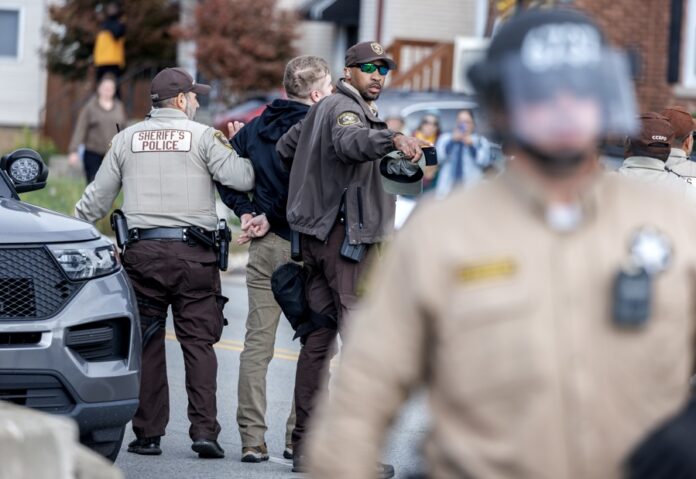
What transpired later that day would make national headlines.  The numbers vary, but around 35 students took the unilateral decision to continue with the walkout and proceeded to leave school grounds and enter the Borough of Quakertown.  Board members stated at Thursday’s board meeting that School Resource Officers followed the students out of the school as they walked onto the streets of Quakertown.  After complaints of “disruptive behavior” by some residents, Quakertown Borough Police quickly descended on the scene.  A group of officers attempted to get some students off of public streets and began detaining them.  In what can only be described as a chaotically violent scene, students began to defend themselves against the officers, as they described the officers using excessive force. 

It was during this moment of chaos that Quakertown Police Chief Scott McElree arrived at the scene.  Chief McElree reportedly arrived in an unmarked vehicle wearing plains clothes, with no identifiable signs of being a law enforcement officer.  As students scuffled with Quakertown police, Chief McElree began to detain a female student defending herself against the group of officers, and he is photographed putting this student in a chokehold and tackling them to the ground.  These images, and other images of violence against students by Quakertown police have caused anger among local residents.  At a Quakertown Borough Meeting Monday February 23rd, local residents called for the resignation of Quakertown Police Chief Scott McElreeA lawyer for a 15 year-old student arrested at the event stated his client faces an aggravated assault charge.  Five students were arrested February 20th

It wasn’t until the evening of Thursday, February 26th at the regularly scheduled QCSD board meeting that residents could voice their frustrations during public comments.  This was the opportunity for an impassioned group of residents to speak at a packed meeting that lasted almost three hours.  Before members of the public could speak, board member David O’Donnell reminded those attending that the Quakertown Borough Police Department is a completely separate entity from the QCSD, emphasizing that the school district is not responsible for the actions of local police. 

He also stressed that Quakertown Community High School was working with the Bucks County Intermediate Unit to provide counseling for students.  As the public comments began, community members repeated concerns of failure by the school board in providing alternatives to the walkout, with some examples being on school property like the gymnasium. 

Richland township resident Michal Rogers hastily and passionately spoke of how he “knew the threat was a gun,” as he let the crowd know he was disappointed with the school not alerting parents to the specificity of Thursday night’s threat.  Mr. Rogers felt that the walkout should have been cancelled for fear of violence against the students participating, and he told members of the board that “he did not want politics in his schools.”

Another resident, David Stubanis of Quakertown, told of how he filmed the entire event beginning with the walkout from the high school and during the clash with local police.  Mr. Stubanis said he was “disgusted by the egregious failures of this school district.”  The Quakertown resident also wanted to know if the board would “cancel the next football game over a threat?  Where does it end?  Does the school board have a bias?”  Echoing residents at Monday’s borough meeting, Quakertown resident Emily Gasparak called for Chief McElree’s resignation.  Calls for the chief’s resignation led to audible cheers throughout the night. 

With no regard to the residents of Quakertown’s views on immigration, the incident between students at Quakertown Community High School and the Quakertown Borough Police Department has left fresh scars on the local community that will take time and some reconciliation to heal.  It is up to the local authorities and those in positions of power, the board members of the QCSD, the teachers, administrators, and parents of the students at Quakertown Community High School, and the Quakertown Borough Police Department to begin the steps to healing these scars that have divided the community. 

The anger of the local residents cannot be ignored for long, as the public seeks accountability from local officials.  A statement from the ACLU on last Friday’s incident lays bare a central argument of those defending the students’ right to protest: “A police officer’s job is to serve and protect their community; this includes protecting people’s rights.”