



This past week in Rome, I had the opportunity to meet Megan Garcia, the mother of 14-year-old Sewell Setzer III of Florida, a young boy who committed suicide after becoming isolated from his real life once he engaged with an artificial intelligence (AI) chatbot. Megan bravely shared her story at a convening of world leaders on children’s health in the digital age – a convening that included Pope Leo XIV.
Sadly, Megan’s loss is being experienced by more parents every day. At this moment, America faces an unprecedented youth mental health crisis. In 2023, four in 10 high schoolers in the United States experienced persistent feelings of sadness or hopelessness, while two in 10 seriously considered suicide. And while these numbers continue to rise, so do the wait times for mental health appointments. As of now, the wait time for appointments can stretch 3-18 months.
During my time working for the Office of the United States Surgeon General, our goal was to help our entire country understand that mental health affects how children, adolescents, and young adults feel about themselves and the world. Their mental wellbeing impacts how they solve problems, how they cope with stress, and overcome challenges; how they build healthy relationships and connect with others. It can even impact how they perform in school, at work, and throughout life.

Sadly, our country has long struggled to address the profound mental health challenges and illnesses that children, adolescents, and young adults face. The Protecting Youth Mental Health national advisory called out the need for more research on the relationship between technology and youth mental health. Early research suggests that the mental health crisis is compounded by quickly changing technology. We have learned hard lessons on the impact of social media on children, which is why many leaders have called for warning labels for social media. Now, with the recent spate of chatbot-connected suicides, the public trust in technologies like social media and artificial intelligence is collapsing.
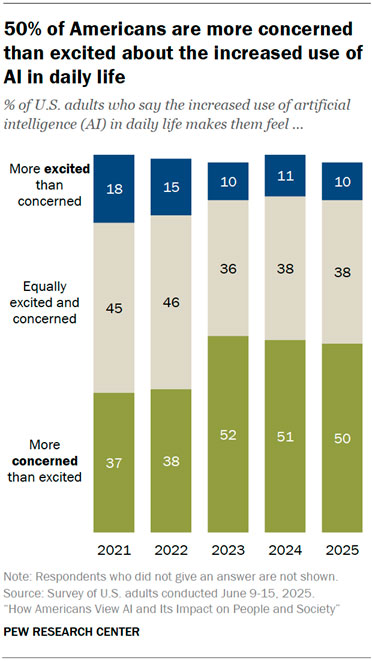
Over 50% of Americans believe AI will negatively affect society. In 2025, Illinois, Nevada, and Texas passed laws severely restricting AI use in mental health care. Recent lawsuits against AI companies over youth suicides linked to chatbots have intensified fears. We have a generation in crisis and new technology that could potentially expand access to care, but right now that technology is creating more dangers than solutions because we are not taking the steps to ensure that safety and wellbeing are prioritized in design and implementation.
While Garcia still mourns her son’s death, she has found purpose in traveling to speak with people like me – policy shapers, advocates, researchers and leaders – as we all start to chart a path forward to protect children in this new world. Every day, leaders are attempting to address the dual crisis of youth mental health and the rapid growth of technology that has become a part of children’s everyday lives. One of the leaders that has stepped forward is Pope Leo XIV, who recently met with international leaders to address the vulnerability of children and adolescents as it relates to AI manipulation.
I had the pleasure of meeting the Pope and fellow leaders from around the world who attended “The Dignity of Children and Adolescents in the Age of Artificial Intelligence” Conference and subsequent gathering at the Vatican. Italy’s Child Foundation, in collaboration with the Child Dignity Alliance, organized a conference whose sole purpose is to examine the ethical, legal, social, and anthropological implications of AI on minors.
What struck me most about our time with Pope Leo XIV, was the Holy Father’s understanding of the importance of young people’s wellbeing for the future of humanity. This is not simply an issue about children – it is an issue about the future of society and the collective, global wellbeing of nations.
Generation Alpha (young people born between 2010-2025) is the first generation entirely born in the 21st century. It is also the largest generation surpassing all previous generations, at over two billion young people globally. Gen Alpha now makes up 24.4% of the global population. As AI and digital natives, Gen Alpha are keenly focused on mental health and technology. Though still young, their influence is already reshaping household spending, media, politics, and education. But, our responsibility as leaders lies in ensuring that technological innovation does not come at the price of their childhood.
This international gathering sought to address how innovation can remain at the service of humanity — and not humans in service of tech. Collectively, society must call on leaders in the tech sector to keep children and adolescent wellbeing ahead of profits and keep human dignity at the center of innovation. One of the event’s organizers, Emilio Puccio – a Human Rights lawyer and the Secretary General of the European Parliament’s Intergroup on Children’s Rights had a specific call to action for leaders at the convening: learn from our mistakes; act before harm is done.
Emilio’s words are important reminders for all who care about young people and their collective wellbeing:“The solution to digital challenges is not exclusively technological, but it is profoundly human. Protection and safety must be engineered into the architecture of technology, not retrofitted after harm occurs. We must learn from the mistakes made with social media platforms and ensure that this time, we act before irreversible damage is done”.