

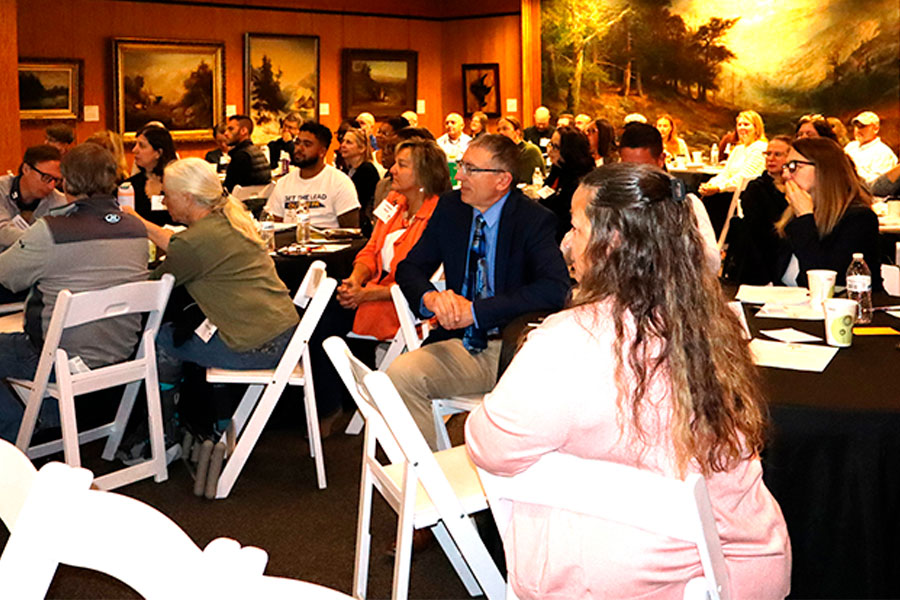
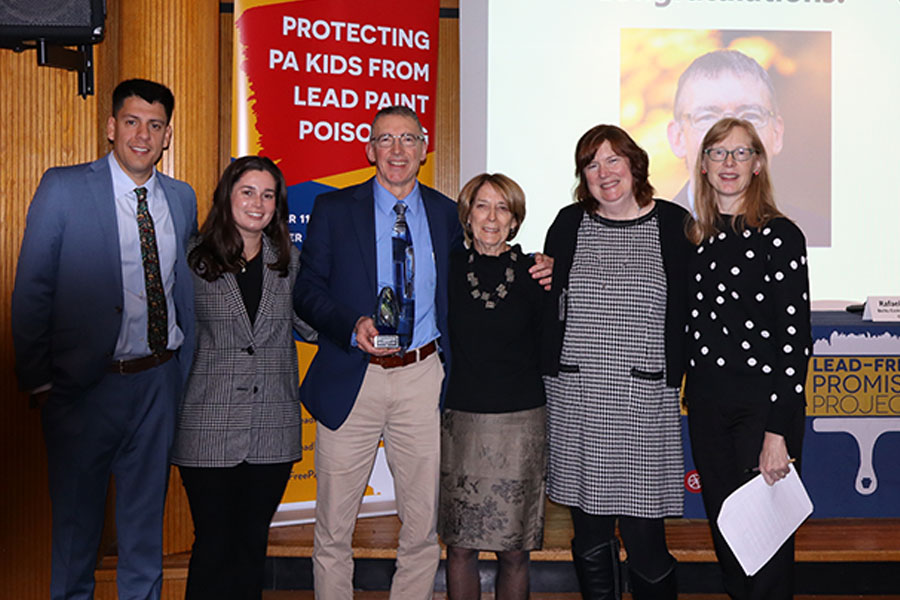
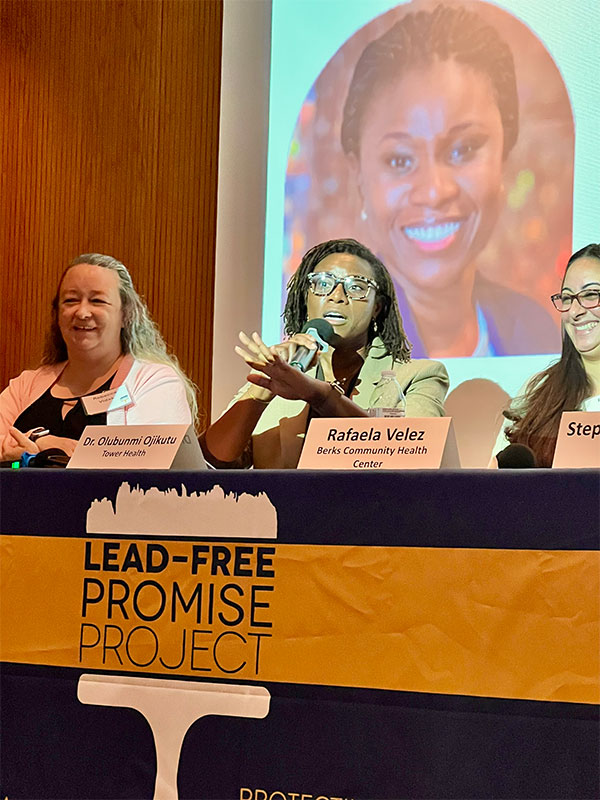
“What I want people to know is that lead poisoning impacts the community for generations,” said Rosemarie Halt, RPh, MPH. Ms. Halt is a health policy consultant for Children First. Ms. Halt, a pharmacist with a master’s degree in public health, spoke on Oct. 28 at “Painting a Lead-Free Future for Children,” the Southeast Pennsylvania Regional Conference of the Lead-Free Promise Project. Children First, a Philadelphia-based child advocacy nonprofit, held the conference at the Reading Public Museum. The project convenes the coalition, which has grown to nearly 80 organizations statewide. Its goal is to end lead poisoning in Pennsylvania’s children.
About 85% of children with lead poisoning are exposed through lead-based paint, Halt said. The federal government banned lead-based paint for residential use in 1978, but in the state’s older communities, roughly 70% of houses were built before then. The keynote speaker, Shannon Burkett, a New York nurse and mother, told the audience how dust from a demolition next door to her Manhattan apartment poisoned her infant son, Cooper, in 2008. She now tells his story in her podcast, “LEAD: How This Story Ends Is Up to Us.” “We are using our kids as canaries in the coal mine,” Burkett said.
Simply painting over lead paint is not enough, she said; its removal must comply with Environmental Protection Agency standards and be done by a certified contractor. Opening and closing windows and doors grinds old paint into dust that settles on floors, where young children pick it up on their hands. Lead tastes sweet, so children will put it in their mouths. Although there is no cure, treatment can lower a child’s lead level, but the harm to speech, learning, and behavior can last.
Halt estimates that 11,500 to 12,000 Pennsylvania children with lead poisoning are never tested. Even when a doctor orders a test, families face hurdles, she said. The most accurate test draws blood from a vein, which means getting a toddler to sit still, and many labs close before working parents can get there. In rural Pennsylvania, the drive is longer.
The coalition is backing House Bill 916, sponsored by Rep. Jose Giral, D-Philadelphia, which would require blood lead tests for every child at 12 and 24 months. It is the third time the bill has been introduced, Halt said, and it has bipartisan support. It passed the House 157-44 in June and now awaits a Senate vote. Halt said the answer is known. The question is whether the state will pay for it.
“Are we willing to invest in these children?” she said.
Where to get help in Philadelphia
- Test your child: Children can be tested for lead for free at any City health center. Medicaid, CHIP, and private insurance also cover the test.
- Lead in your home: The city’s Lead and Healthy Homes Program (215) 685-2788 offers free home inspections and lead removal for eligible families and enforces the city’s lead law.
- Renters: Landlords must certify rental units as lead-safe or lead-free. Ask yours for the certificate.
- Dust from construction or demolition: Call 311.
- Lead in water: Philadelphia Water offers free tests at (215) 685-6300.
- Urgent questions: Poison Control, open 24 hours, 1-800-222-1222.