


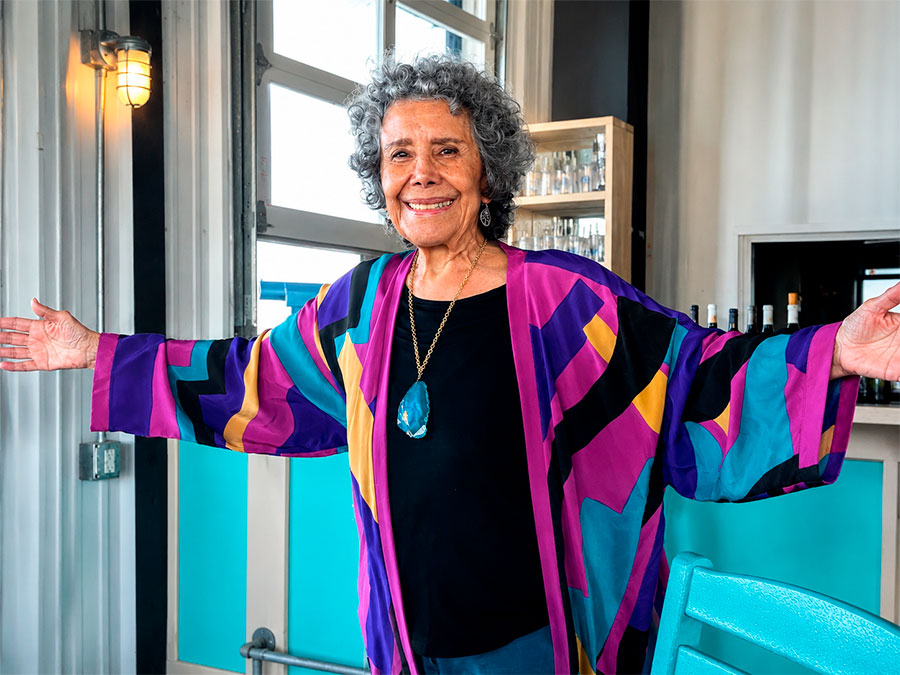
At 86, Tencha Ávila speaks with the clarity of someone who has lived many lives in one. The daughter of Mexican immigrants, raised in the poverty of agricultural camps in Colorado, an administrator in Vietnam during the war, an advocate for farmworkers in Washington, a playwright in New Mexico, and a cornerstone of her husband and family—her story is one of sacrifice, resilience, and cultural pride.
In a conversation with Perla Lara, editor of Impacto, Tencha opened up about the triumphs, struggles, adventures, and lessons of her long life of activism in defense of women’s dignity and the rights of the underserved.
“We are 12 siblings,” she begins. “Only three are men and nine are women.”
Born into a family of migrant farmworkers, Tencha spent her childhood in a colony linked to the Crystal Sugar Factory in Colorado. The conditions were extremely harsh. “We had nothing,” she recalls. “The toilets were outside. We had no electricity. We had to pump water.” Even as a small child, enormous responsibility fell on her shoulders.
“At seven years old, I was already taking care of five children by myself all day,” she says. “When I was nine, I was left for a month caring for seven”. That is because my oldest sister, María, who was 11, that year was taken to work in the fields; and the second oldest was living with my aunts in Chihuahua. But Some of my favorite times were those high School years when I was caring for my seven brothers and sisters. I felt respected and appreciated at home and at school.
While her parents worked long days in the fields, she essentially became a second mother. Her mother, from Chihuahua, had been forced as a child to leave school to work. Her father, from Zacatecas, held a deep attachment to Mexican traditions. Together, they built a home where Spanish, Mexican music, theater, and traditions shaped family life.
“We celebrated posadas every night from December 16 through Christmas Eve,” Ávila recalls. “Imagine that… so poor, yet with such beautiful processions.”
She credits much of her sense of humor and writing style to the influence of Cantinflas. Once a month, she and her father would travel long distances by bus just to watch one of his films. “Cantinflas has a lot to do with how I write,” she explains. “Even if it’s a serious topic, everything comes out funny.”
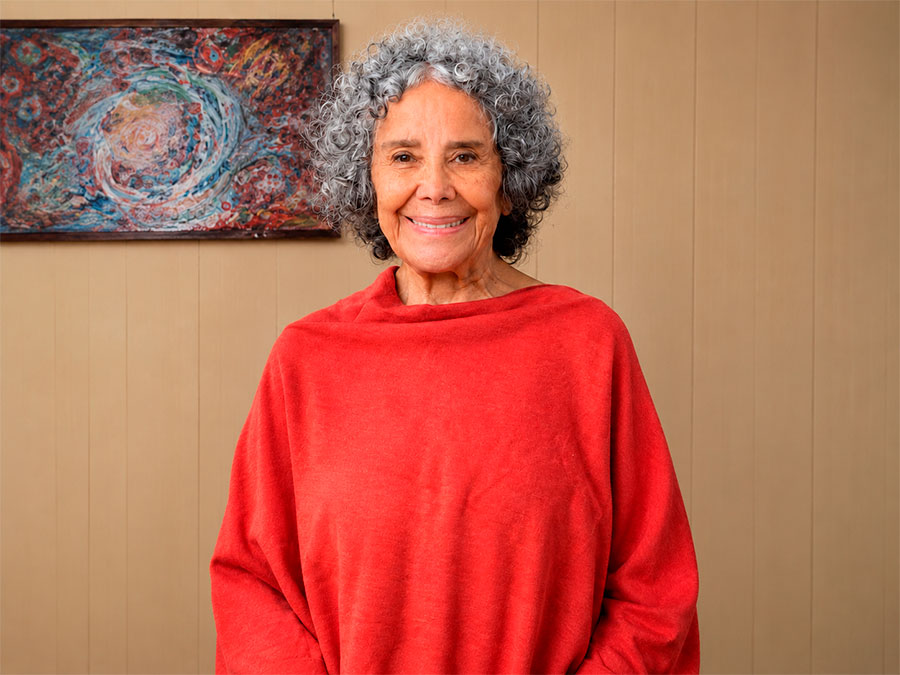
Despite heavy family responsibilities, Ávila excelled in school. She was a cheerleader, a student leader, and a reliable ally to anyone who needed help.
“It was natural for me to help,” she says. “You need help with your homework? I’ll help you.”
A scholarship opened the doors to college, though fear and financial insecurity almost kept her from accepting it. Initially admitted to an elite institution, she chose instead to attend a community college, where she felt she would fit in better.
“I’m gonna make you proud of me,” she remembers telling her mother.
And she did. After graduating at the top of her class, she entered the University of Colorado in Boulder, where she earned degrees in education and communication.
However, economic necessity soon led her into public service. Inspired by the legendary journalist Edward R. Murrow, she moved to Washington, D.C., passed federal exams, and began working in programs associated with the U.S. Department of State.
Later, the United States Information Agency (USIA) sent her to Vietnam during the war. The pay was much better than teaching, allowing her to support her family more. The young and distinguished Chicana managed a language school under the United States Information Service (USIS).
There, she faced another battle: sexual harassment from high-ranking officials. “I was going to keep my dignity,” she states firmly. “No one was going to subject me to their whims…”
In the powerful conversation, Tencha recounts how powerful officials repeatedly tried to coerce her into sexual relationships. One incident involved a high-ranking official sent from Washington.
“He said to me, ‘Don’t you know who I am?’” she recalls. “And I said, ‘Yes, I know who you are… but even if you were the King of Siam, I would not go to bed with you.’”
Her refusal had consequences. “They punished me,” she says. “They took away my salary differential, and then they took my job. But I didn’t care. I said, ‘I’ll find another job.’”
During her years in Vietnam, she met the man who would become her husband, journalist Walter Friedenberg, whose reporting was published in Scripps-Howard newspapers. He was the son of German immigrants, and according to Ávila, they bonded from the beginning over their shared immigrant roots.
“Really, the only thing we had in common,” she says with humor, “was being children of immigrants.” They remained married for nearly 57 years, until his passing.
Tencha is the mother of Christopher, an attorney in Cody, Wyoming, and an adopted daughter, Karina Tanner. She has three great-granddaughters, four great-great-granddaughters, and one great-great-grandson. Her other son, Eric Max, an artist, painter, and comedian, passed away in 2014. In Mexico, she “adopted” a family as well, where she also has grandchildren and great-grandchildren.
Her marriage led her to live across multiple states, countries, and continents. They spent considerable time in England, China, and Mexico, and she has visited 43 countries. She now resides in Santa Fe.
She fondly recalls that while raising their children, she remained alone in London with the young kids while Friedenberg covered the peace negotiations between Egyptian President Anwar Sadat and Israeli Prime Minister Menachem Begin.
“I told him,” She recalls with laughter, “‘if you bring a Jew and an Arab together, they’ll sign peace at Christmas.’” And that is exactly what happened.
Back in Washington, Tencha worked for the Congressional Hispanic Caucus under the leadership of Bill Richardson. One of her main struggles was demanding potable water and bathrooms for farmworkers.
She remembers pushing journalists to cover the issue. After speaking with a New York Times reporter, an editorial appeared; days later, The Washington Post followed, and within five more days another New York Times editorial was published.
“We got three editorials in ten days,” she says proudly. “And finally they were using the word ‘toilet’ instead of ‘sanitary facilities.’”
Her activism was deeply personal. She had grown up in agricultural camps and knew firsthand the humiliations farmworkers endured.
In later years, she returned to another of her great passions: theater. At 53, she enrolled in theater school in Athens, Ohio. Despite the challenge of her age, she adapted and stood out.
“I have loved theater since my father carried me onto a stage inside a sack,” she wrote in her admission essay—a line that delighted the department director and opened the door to the program.
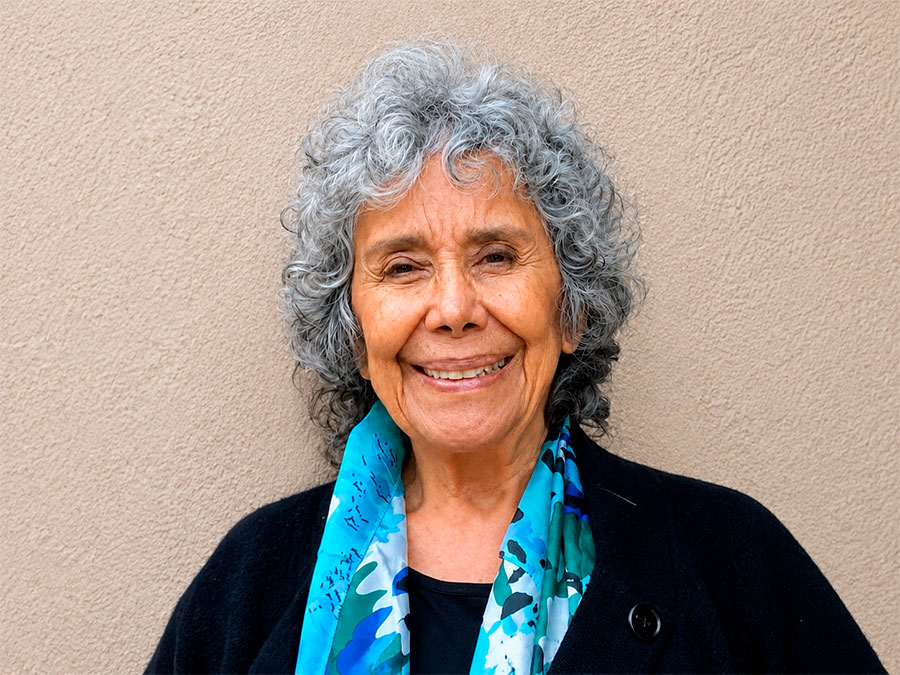
Upon entering, she was asked to present a play, and she submitted Kiss Bessemer Goodbye, which tells the story of Lupita, a young Mexican-American woman fighting her uncle’s entrenched machismo as she seeks to shape her own destiny. The play was selected for production at the university upon her graduation and later reached Off-Broadway. “I am appreciative that many of my Anglo classmates and teachers and professors supported me and helped me to feel whole and equal throughout life”, she asserts.
Today, she often reflects on aging, caregiving, and human fragility. For years, she cared alone for her sick husband—a physically exhausting responsibility that left lasting effects. “No one wants to do that.” She herself faced serious health problems but found the strength to travel across the country to say goodbye to her brother, the legendary Magdaleno Rose-Ávila, who passed away just days after her visit. To her, Leno was like a son.
The life of this remarkable Chicana—marked by decades of poverty, discrimination, displacement, and loss—demonstrates a resilience born, in many ways, from gratitude, an antidote to resentment. Her life, shaped by migration and her parents’ sacrifices, remains deeply rooted in memory, family, and the stories that continue to be woven.
From the agricultural camps of Colorado to the diplomatic circles of Washington and war-torn Vietnam, Tencha Ávila-Friedenberg always carried with her the lessons of a humble Mexican-American home that taught her, above all, to defend her culture and her dignity.
“I was going to keep my dignity at all costs,” she repeats. And she has lived up to that promise, offering life lessons to this day.
From this space, we welcome Tencha, the heiress to the pen of our beloved Leno, who joins the contributors of Impacto.





muchas mi amiga , –
Anahwake Nahtanaba
YO TE AMO CON TODO MI CODASON-Anahwake Nahtanaba