


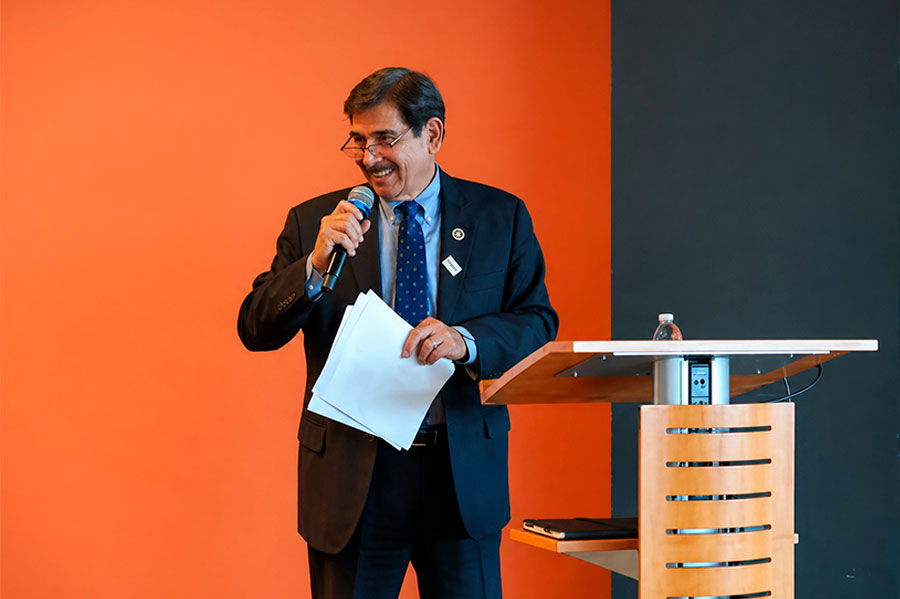
At its first Pennsylvania state convention, LULAC called Latino communities to organize, and build civic power across the Commonwealth.
Philadelphia, PA – LULAC Pennsylvania held its first state convention at Esperanza on April 25, bringing together Latino leaders and community members for Poder: A Latino Call to Action, a day focused on civic power, representation, data, and community action.
The gathering marked a historic step for the League of United Latin American Citizens, and for Latino communities across Pennsylvania. From the opening poem to the closing plena celebration, speakers returned to a shared message: Latino communities are growing and that growth must be matched by representation.
The day began with poetry. Before the speeches and panels, poet Yesenia Escobar opened the convening with words that carried the room through ancestry and collective strength.
“Although we are different, the same fire cooks us all,” Yesenia said. “Together we walked, together we were a shield, and together we raised our voice, because in togetherness our strength is sharpened.”
Founded in 1929, LULAC is one of the nation’s oldest Latino civil rights organizations. Roman Palomares, LULAC National President, used his remarks to place the Pennsylvania convention within that larger history, reminding attendees that LULAC’s work has long been rooted in action, litigation, advocacy, and community leadership.
“For us, this is a historic moment, the first Pennsylvania LULAC state convention,” said Palomares. He noted it was fitting for the convention to finally take place in Pennsylvania, “a state that helped define the very principles of democracy, representation, and constitutional rights.”
He pointed to the organization’s history in civil rights efforts around education, voting rights, military service, immigration protections, and constitutional rights. He also spoke about current legal and civic battles involving birthright citizenship, voting access, electoral maps, DACA, temporary protected status, and due process for asylum seekers.
“Together, we did not sit on the sidelines,” Palomares said. “We stepped forward, we spoke out, and we took action.”
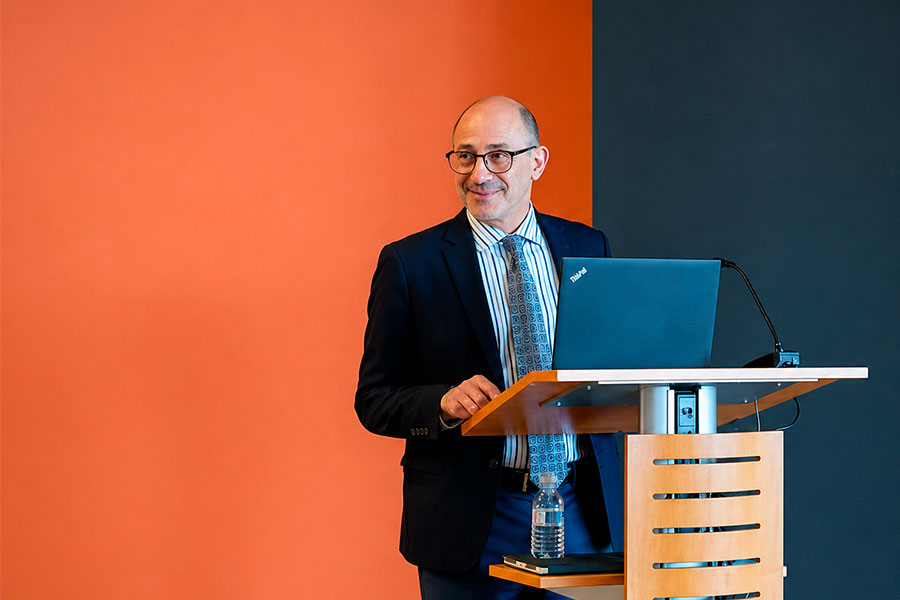
Rev. Danny Cortés of Esperanza welcomed attendees and recognized the significance of hosting LULAC Pennsylvania’s first state convention in a space rooted in Latino community life. He described Esperanza’s mission as one of “opportunity creation,” focused on creating roads, on-ramps, and doorways for people to access resources that improve their lives.
Cortés also spoke about the importance of representation and presence in decision-making spaces.
“If you are not in the room, you ain’t you,” Cortés said, urging leaders to step into spaces where they can advocate for their communities. That message became one of the central themes of the convention: Latino communities cannot afford to be absent from civic life.
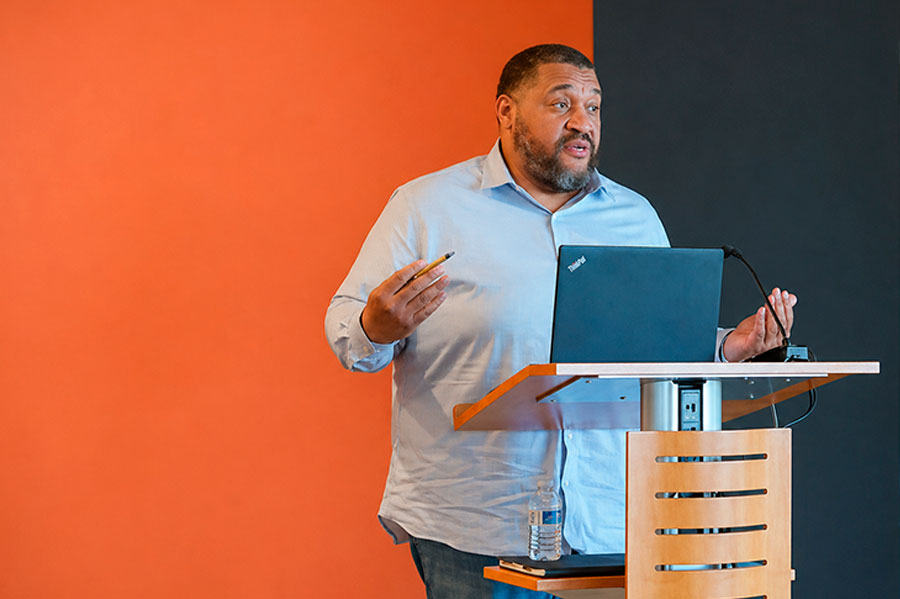
Philadelphia City Commissioner Omar Sabir brought that message directly to the ballot box. He reminded attendees that elections happen more often than many people realize, not only during presidential election years.
“We have to take action now, not tomorrow, not next year, not when we feel like it, not during a presidential election,” Sabir said. “Every six months there’s an election.”
Sabir warned that low turnout can leave communities without the respect and policy priorities they deserve. He returned to a phrase that was repeated throughout the day: inaction is also action.
“If you sit down being quiet, that means that you agree with everything that is going on,” he said.
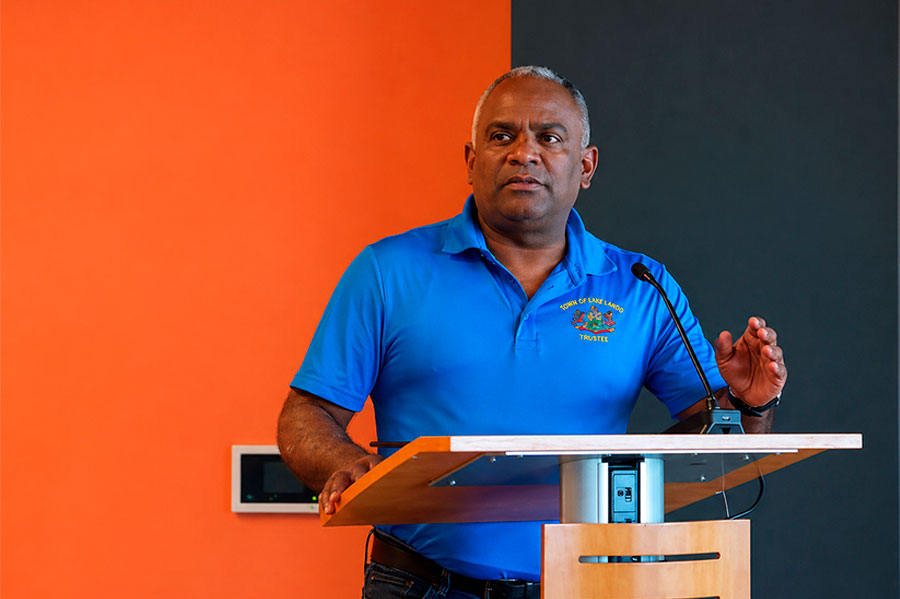
For Pennsylvania State Representative Danilo Burgos, the call to action was also a call to remember.
Burgos, who represents the 197th Legislative District and is the first Dominican American elected to the Pennsylvania House of Representatives, spoke about immigrant families who sacrificed so that future generations could have more. He urged Latino organizations and community members not to get lost in political noise, but to keep the message clear.
“We need our people to vote,” Burgos said.
Burgos spoke about Latino business owners revitalizing towns and corridors across Pennsylvania, including in North Philadelphia, while still being left out of major conversations about growth and investment. He rejected the idea that issues affecting one Latino nationality can be separated from the rest.
“We see it as that’s a Dominican problem, that’s a Mexican problem, that’s a Puerto Rican problem,” Burgos said. “No, it’s our problem. It’s our collective problem.”
Burgos described the current moment as one in which Latinos can defend democracy through civic participation.
“This moment in time is ours,” he said. “But we need to remind each other of that.”
The convention also moved from speeches into data.
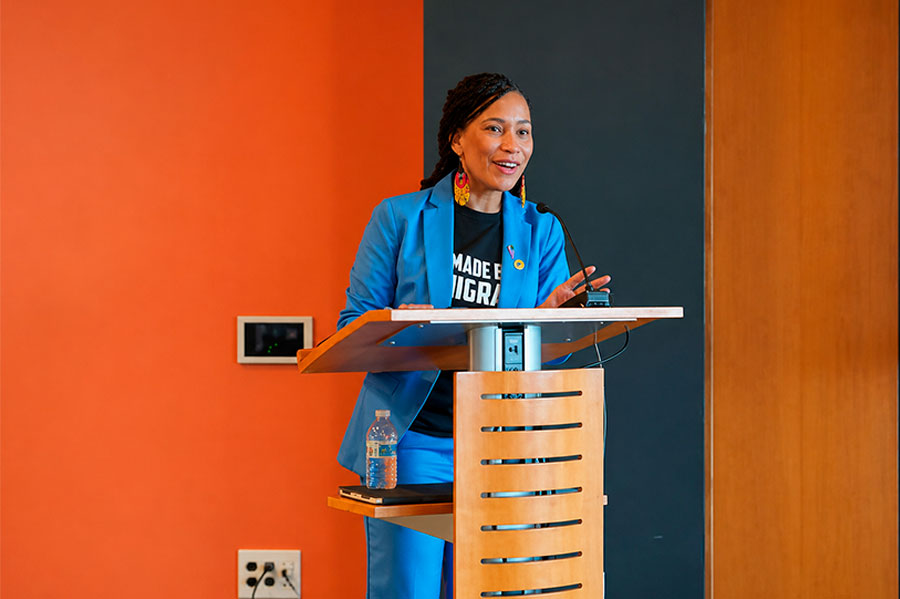
Maridarlyn Gonzalez, LULAC Pennsylvania State Director, presented a Latino data dashboard designed to help community members, advocates, and leaders better understand the realities facing Latinos across the state. She said the dashboard included county and state-level data, with an initial focus on Philadelphia and an interest in expanding the work to other regions, including the Lehigh Valley.
Gonzalez noted that Latinos are the fastest-growing population in Pennsylvania, with important growth not only in Philadelphia, but also in counties such as Lehigh, Berks, Monroe, and Luzerne.
“We are revitalizing towns and corridors and places that people thought were forgotten and disinvested,” Gonzalez said. “We are bringing light and energy into that space.”
The data also pointed to disparities. In Philadelphia, Gonzalez said the median household income for Latinos is about $52,380, lower than the citywide median and far below the estimated income needed for a family with two working adults to live in the city. She also noted education gaps, saying Latinos over the age of 25 were more likely not to have a high school diploma compared to the citywide population.
Even when Latinos reached higher levels of education, Gonzalez said, they still earned less than others with the same level of education in Philadelphia.
The dashboard made visible what many speakers said throughout the day: population growth alone does not guarantee power. Data must become action.
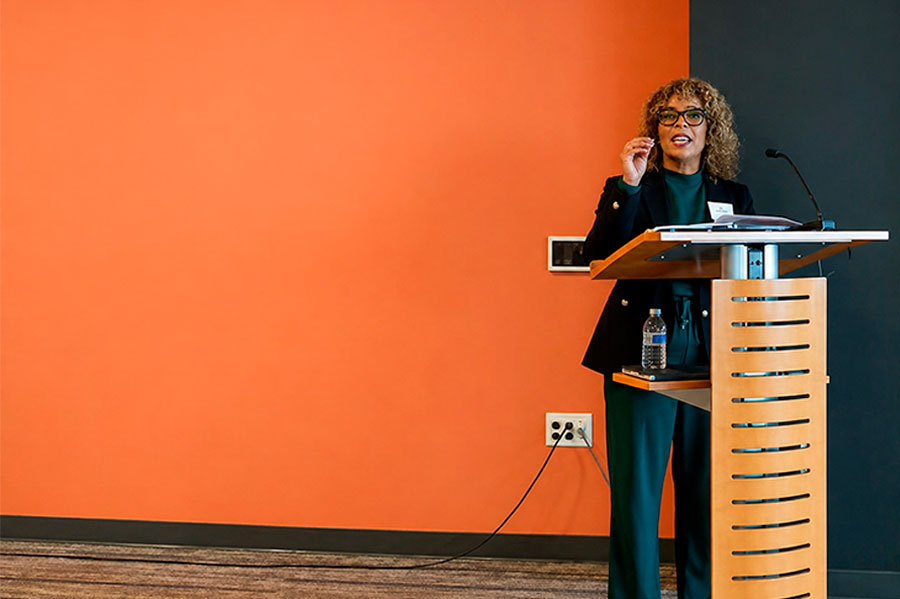
That reality was especially clear in the remarks from Philadelphia City Councilmember Quetcy Lozada, who spoke about the gap between Latino presence and Latino representation.
Lozada, who represents the 7th Council District, said Latinos are the second-largest voting bloc in the United States, but remain underrepresented in elected office.
“This disparity is unacceptable,” Lozada said.
In Philadelphia, Lozada noted that she is the only Latina elected in municipal government. She represents a district that is 55 percent Latino, but said Latino communities live in every corner of the city and across Pennsylvania.
“We have the power to change that narrative,” Lozada said. “Each one of us has a voice that matters, and each vote holds the potential to create a ripple effect in our communities.”
She called civic engagement an everyday commitment, not a one-time event.
“We cannot afford to sit at home allowing others to make the decisions that would determine our future,” Lozada said. “It is time to rise, engage and make our presence felt at the polls.”
Several speakers returned to the problem of having only one seat at the table. When there is only one Latino voice in a decision-making space, that person is often expected to carry an entire community.
As LULAC approaches its 100th anniversary, Palomares shared that the organization is expanding into digital platforms, investing in young leaders, and continuing to defend civil rights through both legal action and grassroots organizing.
He warned against efforts that limit voting access, weaken Latino voting power through redistricting, or create new barriers to the ballot box.
“These cases matter because they go to the heart of representation,” Palomares said.
For Palomares, Pennsylvania’s role is especially important.
“This state plays a decisive role in national elections,” he said. “The Latino community here is growing and becoming more influential.”
His instruction to the room was direct.
“We must organize, we must mobilize,” Palomares said. “We must ensure that Latino families across Pennsylvania are informed, engaged and participating in elections, in the census and in civic life.”
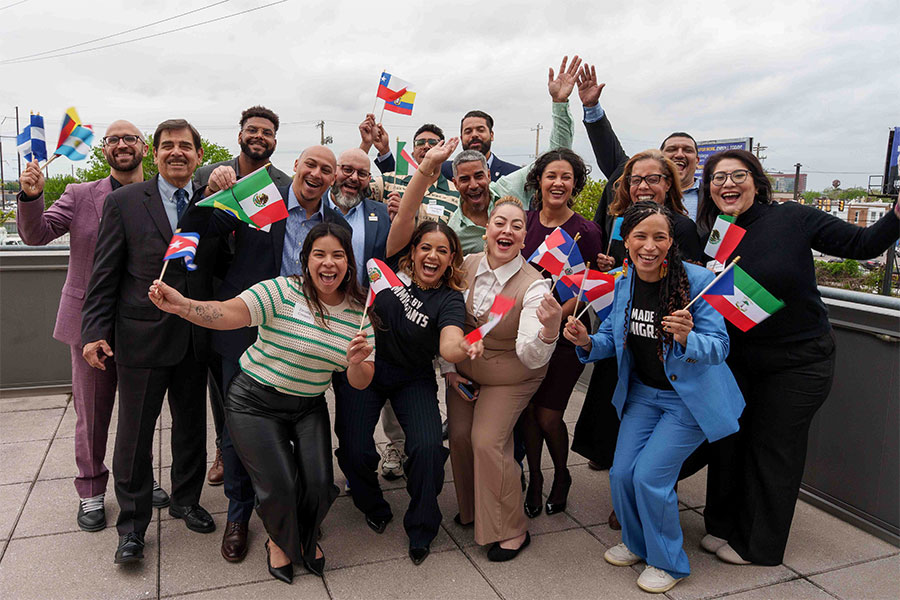
The convention included youth programming, mentorship conversations, community workshops, voter engagement, and a closing plena celebration, bringing together the civic and cultural dimensions. But the heart of the gathering remained the same from beginning to end: Latino communities in Pennsylvania are growing, and the next step is building power that matches that growth.
LULAC Pennsylvania’s first state convention was not only a milestone for the organization. It was a declaration that Latino communities across the Commonwealth are no longer waiting to be recognized. They are organizing to be represented and heard.
“This is not the time to slow down,” Palomares said. “This is the time to double down.”