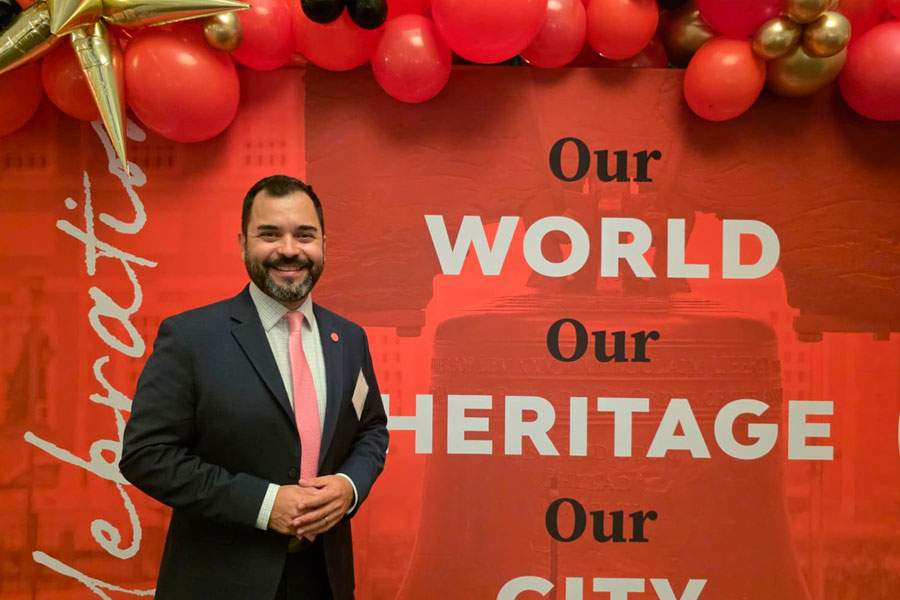
In an Impact Talk, Fernando Treviño-Martínez speaks with the confidence of someone who deeply understands the value of experience. His personal and professional story seems to follow a path that, as he himself says, “closes the circle”: he began as a lawyer in Mexico, defending migrants from consulates in the United States, went through presidential campaigns and high-level posts, and today leads from Pennsylvania a pioneering effort in environmental justice.
From Mexico to Philadelphia: A path marked by migration
Fernando was born and raised in Mexico. He arrived in Philadelphia in 2000 as part of the Mexican Ministry of Foreign Affairs, with a post at the Mexican Consulate. It wasn’t his first assignment; he had already served in San Antonio, Eagle Pass, and New Orleans, always in direct contact with migrant realities. He faced tragedies firsthand, such as identifying and repatriating the bodies of migrants who died at the border. That experience deeply marked him and made him realize that, although he had arrived with a diplomatic visa, the daily lives of thousands of his compatriots were filled with obstacles, injustices, and risks.
“I have always found myself close to the most vulnerable communities,” he explained. That direct contact with the fragility and hope of migrants became his compass.
Politics as a tool for inclusion
His consular experience opened the door to political life. In 2012, President Barack Obama’s reelection campaign invited him to lead “Operation Vote” in Pennsylvania. His mission was to build bridges with historically marginalized communities: Black, Latino, Asian, youth, and women. It was then that he understood that politics was another way of extending the defense of rights and inclusion. It wasn’t just about protecting migrants in legal processes, but about giving them a seat at the decision-making table.
That same work brought him close to then-mayor Michael Nutter, who convinced him to stay in Philadelphia instead of moving to Washington. Alongside Jennifer Rodríguez, he was a key player in creating the Office of Immigrant and Multicultural Affairs, the first of its kind in the city.

Planting the seed: Philadelphia as a World Heritage City
One of the chapters Fernando remembers with the most pride took place in 2015, when Philadelphia was recognized as the first World Heritage City in the United States. At the beginning, he participated in preparing the historical case that justified the candidacy, highlighting the contributions of migrant communities to the city’s identity. But soon his role changed: from researcher, he became political strategist.
He designed the lobbying plan to convince 265 mayors from around the world gathered at the General Assembly of the Organization of World Heritage Cities. Knowing that the vote would take place in Arequipa, Peru, he understood that the Latin American bloc would be decisive. He coordinated a trip with then-mayor Michael Nutter to Mexico, where he secured the support of the then-head of government of Mexico City and the mayor of Puebla. That Latin American base made it possible to win backing from Europe, Asia, and Africa, until achieving unanimous approval.
“Philadelphia empowered a diverse team of leaders. I was the one to close the circle and be the visible face at the world congress—a Mexican with an accent, officially representing the city. That doesn’t happen in many places, and it was an enormous source of pride,” he said.
The Latino vote in Pennsylvania: A national laboratory
His trajectory has been marked by a deep knowledge of demographics, particularly of minorities and of the evolution of the Latino vote in Pennsylvania, a state that became decisive for the White House in the last two presidential cycles. Fernando has been a political analyst for networks such as CNN, Univision, and Telemundo, explaining how the Latino community is increasingly becoming a diverse mosaic of Puerto Ricans, Dominicans, Mexicans, Central Americans, and South Americans.
That diversity, he argues, demands new strategies: “It’s no longer enough to just speak to one group. Now campaigns must be tailored to each community. I learned that during Obama’s campaign, and we still see it today. Pennsylvania is a laboratory that anticipates what Latino politics will look like across the country in the next twenty years.”
From political lobbying to environmental justice
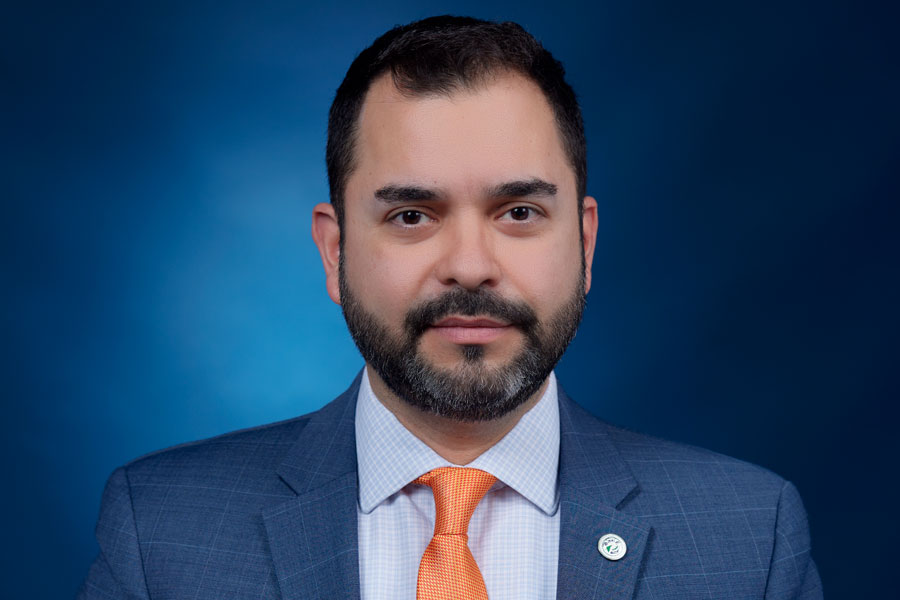
After years as a consultant for campaigns in the U.S. and Latin America, he made a new turn in 2023. The then newly elected governor, Josh Shapiro, offered him an unexpected challenge: to reinvent the Office of Environmental Justice at Pennsylvania’s Department of Environmental Protection (DEP).
Although not an environmental expert, Shapiro told him clearly that there were already enough technicians. What was missing was someone with experience in building trust with excluded communities. Fernando accepted and left behind his consultancy work.
Since then, he has helped lead a transformation, creating a proactive model of community engagement. “We can’t wait until there’s an emergency to talk to a community. We have to build the relationship first,” he explains. His approach has positioned Pennsylvania as a national reference point, to the extent of advising states such as New Mexico on replicating the experience.
Legacy, challenges, and future
Fernando does not hide that the task is complex. The climate crisis, federal budget cuts, and the lack of trust in institutions are real obstacles. However, he insists that the key is to break what he calls a “vicious cycle”: politicians don’t invest in the community because they believe it doesn’t vote, and the community doesn’t vote because it feels ignored. “Someone has to break that cycle. It’s up to us, as a community and as a government, to take that responsibility,” he affirmed.
Ten years after Philadelphia’s recognition as a World Heritage City, Fernando sees his journey as a circle coming full. From representing migrants in consulates to designing presidential campaigns, from serving as a bridge so the Latino voice could be heard in global forums to building trust in communities hit by pollution, his work has one guiding thread: opening paths where there were once closed doors.
“For me, it will always be a source of pride that the city of Philadelphia trusted a Mexican migrant with an accent to represent it to the world. That’s the symbol of what we can achieve: real, present, and transformative Latino leadership,” he concluded.
With that conviction, Fernando continues writing a story that connects past and present, politics and justice, identity and community. His story is about closing circles and opening new beginnings, where his success is not only a source of pride for Latinos but also impacts the present and future environmental well-being of more than 12 million Pennsylvania residents. For this and much more, Impacto honors Fernando Treviño-Martínez as a Life of Impact.
Fernando Treviño-Martínez is Deputy Secretary of Environmental Justice at Pennsylvania’s DEP. He has spearheaded an innovative model of community engagement that restored trust in communities affected by pollution. Under his leadership, the office tripled its staff and updated a policy more than 20 years old. He managed to bring residents, authorities, and businesses to the same table to decide on local investments.
With over a decade of experience in political campaigns in the U.S. and Latin America, he has advised organizations, political figures, and presidential campaigns, in addition to leading outreach to Latino and Asian communities during Josh Shapiro’s campaign. Among other recognitions, he has been honored with Philadelphia Business Journal’s “40 under 40” award.