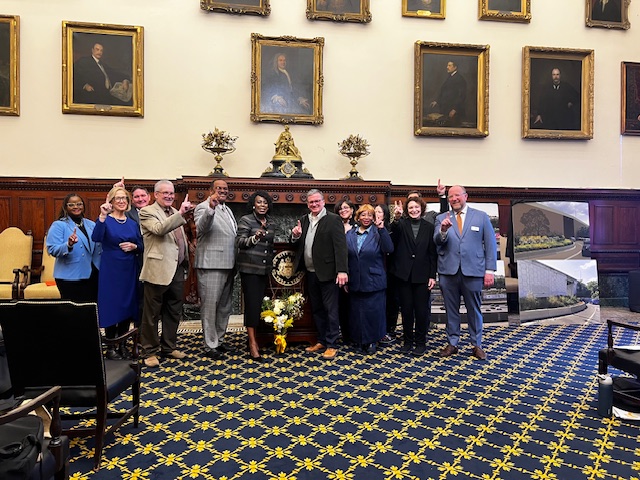
PHILADELPHIA — City Hall Room 202 was filled with excitement and anticipation on last Thursday as Mayor Cherelle L. Parker announced a sweeping new beautification and environmental effort designed to transform Philadelphia ahead of its global moment in 2026.
The initiative, officially titled Gateways to Philadelphia, is a major expansion of the City’s Department of Green and Clean and represents Phase One of a long-term plan to remake Philadelphia into a greener, cleaner, more welcoming city for residents and visitors alike.
With the FIFA World Cup matches, the MLB All-Star Game, NCAA March Madness tournaments, and America’s 250th Anniversary expected to bring millions of visitors, Mayor Parker said the city must prepare not only logistically, but also visually, culturally, and environmentally. “My mom told me that before the company comes, you have to get your house in order,” Parker said to laughter and applause. “That is exactly what we are going to do — by presenting Philadelphia in its best light through our new initiative, Gateways to Philadelphia.”
The first phase of the initiative will focus on Philadelphia’s major highway corridors and entry points — the places where visitors and commuters get their first impression of the city. “These gateways are our front doors,” Parker said. “Right now, too many of them do not reflect who we are or what this city deserves to be.”
Phase One will transform areas along highways and major roadways with trees, flowers, public art, landscaping, lighting, and mural installations, turning neglected or bleak spaces into vibrant corridors of welcome. Work is already underway, with additional projects scheduled to launch this winter in preparation for spring planting and installation. “This is not a one-time cleanup,” Parker stressed. “This is a permanent commitment to a higher standard for Philadelphia.”
The project is being led by the City’s Office of Green and Clean Initiatives in partnership with the Pennsylvania Horticultural Society, Mural Arts Philadelphia, the Pew Charitable Trusts, the Hamilton Family Foundation, and others.
Speakers at the press conference included Michael Carroll, Pennsylvania’s Secretary of Transportation; Carlton Williams, Director of the Office of Green and Clean Initiatives; Matt Rader, President of the Pennsylvania Horticultural Society; and Jane Golden, Founder and Executive Director of Mural Arts.
Williams called the project “a turning point” for how Philadelphia treats its public spaces.“These corridors have been ignored for too long,” he said. “Now they will become places of pride,” Rader said the planting and greening efforts will have long-term environmental and health benefits. “This is about beauty — but it’s also about survival.”
Jane Golden added that murals and public art will ensure the Gateways reflect Philadelphia’s diversity and history.“Every mural is a story,” she said. “These gateways will tell the story of who we are as a city.”
Throughout the conference, Parker returned to one central idea: beautification is economic development. Clean, green, attractive neighborhoods draw residents, businesses, and tourists. “The financial power of beauty is real,” Parker said. “People invest in places that look loved.”
In addition to greening and art, the project will create economic opportunities for residents. The press conference concluded with visual projections of what Philadelphia’s future gateways will look like—highways lined with lush flowers, public art, and sweeping golden ribbon-like designs symbolizing welcome and unity.
The images elicited audible reactions from the audience, offering a glimpse of a transformed Philadelphia. Parker closed by challenging Philadelphians to raise their expectations.“This is how we get hooked on clean,” she said. “This is how we get hooked on green. And once you see it, you’re never going to accept less.” As Philadelphia prepares to host the world in 2026, the Gateways to Philadelphia Initiative signals that the city is not just welcoming guests — it is preparing for a new future.